Nest Cam and Nest Protect

One of the key features of the LifeEdited 2 apartment’s high quality of life is Nest. Having previously used Nest Cam to monitor construction projects and ensure the general security of his homes, Graham wanted to make Nest Protect, a high functioning smoke and CO alarm, as well as Nest Cam, an indoor and outdoor safety camera and app, a central part of LifeEdited 2. Not only is Nest Protect far more beautifully designed than your average smoke detector, but it also functions as a motion sensor nightlight and sends alerts to your phone in emergency and emergency-like situations. In the case of a false alarm, the Nest Protect that easily be hushed from a smartphone- no stools or ear plugs necessary! 

Nest Cam has always allowed Graham to check in and record who is coming and going in the spaces he works on and lives in. Whether it is people working for him or resident doggies, the app allows for him to both see and talk to any people or animals from his smartphone.

This post is one in a series that describes our LifeEdited 2 showcase apartment. LifeEdited 2 embodies our green, space efficient, and minimalist principles. We view LifeEdited 2 as a lab for experiencing things that are consistent with these principles. The product described in this post was given to us, which we appreciate, but we would not have accepted if we didn’t believe in it.

Nakagin Capsule Tower: The Future of Compact Living, circa 1972

Don’t let its weathered facade fool you, the Nakagin Capsule Tower was one of the most innovative architectural designs of its day. Designed by architect Kisho Kurokawa, the Tokyo tower was completed in 1972 and the crown jewel of the Japanese “Metabolism” school, which, according to Wikipedia held a vision “for cities of the future inhabited by a mass society [that was] characterized by large scale, flexible, and expandable structures that evoked the processes of organic growth.”

nakagin-interior

While many architectural concepts like this never see the light of day, the Tower was (and continues to be) the real deal. Each of the 140, 90 sq ft living capsules was detachable from two main concrete towers; you could also join smaller units to make bigger ones. It was expandable, upgradeable and repairable. In fact, when the 40 year old building was threatened with demolition a few years ago (a threat that unfortunately remains), Kurokawa proposed to replace the capsules rather than tear it down. The Towers still stand today; reportedly, half of the capsules are being used as offices, while others are being used as part-time and cheap housing. One unit is even available to rent on Airbnb!

nakagin-stereo

Though its execution is a bit dated (the interiors look straight out of “2001: A Space Odyssey”), the Nakagin Tower proves that architecture needn’t be bound to the orthodoxy of its day. As Nicolai Ouroussoff wrote in the NY Times, the Tower’s “existence…stands as a powerful reminder of paths not taken, of the possibility of worlds shaped by different sets of values.”

Of course some paths are not taken for good reason. Nakagin was plagued with problems such as problematic plumbing, ventilation and less-than-optimal layouts for the capsules considering their small size.

Despite its faults, the capsule tower stands as a pioneering design for micro, prefab living. As our housing needs shift, as we recognize new values and design a new world around them, we can look and learn from intrepid pioneers like Kurokawa, who saw the future as more than a continuation of the past, but as a creation of worlds that might be…and then we can add functional plumbing and windows and call it a day.

[This post was originally published on March 22, 2012. Some updates and images have been added.]

Residential Behavioral Architecture 101

The above image was taken from an article in a Wall Street Journal article about the book “Life at Home in the 21st Century.” The UCLA group responsible for the book followed 32 middle class Los Angeles families around their homes, tracking their every move to see how people actually live nowadays. This image shows “the location of each parent and child on the first floor of the house of ‘Family 11’ every 10 minutes over two weekday afternoons and evenings.” In other words, primetime for their waking hours at home.

The activity on this floor, which measures around roughly 1000 sq ft, is concentrated almost exclusively in three rooms: The dining, kitchen and family rooms; the latter room’s activity focused around the TV and computer. We estimate that around 400 or so square feet of those 1000 are actually used with any regularity.

Family 11’s house is very typical in size, if a bit smaller than the average new home, which was 2,662 in 2013. For comparison’s sake, in 1950 that same number was 983 sq ft and there were, on average, about one extra occupants in each of those smaller homes as well.

While we don’t want to assert that there exists a correct house size for everyone, if this case study is indicative of how many/most American households use there homes, it begs a couple questions: Why are American homes so big? And what would homes look like if designed around how most people behave? It wouldn’t be hard to imagine that this Family 11 could easily live in half the space they currently occupy.

An article in the NY Times from a couple years ago called “The Big Shrink” illustrates how our homes might look if based on behavior, not convention. The Kelly’s, a family with two adolescent children who were profiled in the story, traded in their 3200 for a 1200 sq ft home (Pictured above. Built in 1954 incidentally). Like Family 11’s home, the formal living and dining rooms were barely used, less one family member, as Greg Kelly explains: “We had a dining room and a formal living room—that was where the dog lay on the couch, that was his room.”

We’ve often argued that micro-apartments make complete sense based on the way the majority of single people live. Our question to readers is, “How would you design a home if based on your behavior, not architectural convention…for singles, couples, families, etc.?” Let us know what you think in our comments section.

[Note: this post was originally published on December 14, 2012. A few updates have been made.]

Kelly home image credit: Ryann Ford for The New York Times

Design for the Ages, Not the Times
Some time ago, we talked about the idea of heirloom design. It’s the notion that the stuff we include in our lives be worthy of being handed down to future generations; that its function, aesthetics and durability are designed for the ages, not just the times. When things can withstand this type of scrutiny, they also take on their own lives and stories. A project called, appropriately enough, The Heirloom Project, seeks to tell those stories.

The project shows a number of heirlooms along with their owners’ stories–how they came to have them, what they mean to them and so on. While a number of the objects are sentimental (old war metals, a transistor radio, old documents), others are everyday objects like ceramic bowls, a Leatherman tool, and a Beaux Arts-style lamp.

These opera glasses are one example:

heirloom-project-opera-glasses

These turn-of-the-century opera glasses belonged to my paternal grandmother who I never met as she died the year before my parents married in 1962. My father, who died four years ago, was a conductor, his father both a cellist and a tailor. He talked about my grandmother from time to time, sad that my brother and I never knew her. My entire childhood was steeped in music; both parents would sing Mozart, Brahms, Haydn, Beethoven to us, I learned to play piano and flute, my brother, the trumpet and then the drums.

While my mother only gave me the glasses when my father died, they remind me of the first time he took me to the opera: I was seven and it was to see Carmen. I remember being utterly enchanted by the melodies and the drama, but was so sleepy by the interval he had to take me home to bed. The opera, as with all the music he introduced me to, has remained in my head forever.

Whether practical or not, there’s a certain beauty to objects that have been protected against the ravages of time. The project is illuminating insofar as it makes us wonder how many of the objects in our own lives deserve a story? Are any of the objects in our lives worthy of being handed down to future generations? If not, why not?

See more at The Heirloom Project

Via FastCo Design

Life Rafts in a Vast Sea of Stuff

NY Now–née NY International Gift Fair–is one of (perhaps the) the world’s largest tradeshows for gifts and housewares. Held in the Jacob Javitz Center on Manhattan’s far west side, the show houses acre upon acre of stuff.

To be honest, most of the stuff struck this author as pretty useless and disposable. There were bottle-stops that could be frozen to make in-bottle coolers, thermoses shaped like wide-angle camera lenses and novelty toilet seats. Dieter Rams would be spinning in his tasteful, sparsely decorated living room (he’s quite alive).

Rather than describe the bounty of useless stuff, we’ll do something easier: Highlight the useful stuff.

Saikai USA

husami

By far our favorite products were on display at Saikai USA, an American distributor of Japanese housewares. Each time I’ve been to the show, I lust after their Hasami ceramics (above). They make several varieties of stacking and nesting plates, mugs and serving pieces–the latter two have wooden covers that turn them into storage containers. They’re so pretty, you could leave them out on display, acting as kitchenware and objet d’art.

Nambu-Tekki

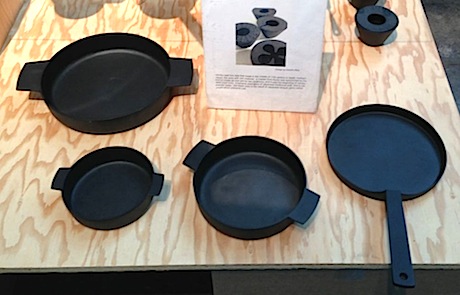
Also at Saikai was the Nambu Tekki cast iron cookware. Its one-piece forged construction is gorgeous. However, their lack of proper handles might not be the most practical design.

Uchino Towels

unchino-towels-2unchino-towels

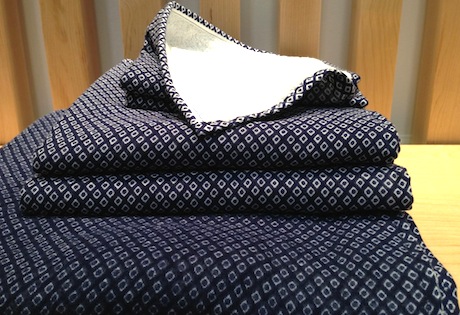
A few aisles over from Saikai was Japanese towel maker Uchino. They make some of the nicest towels I’ve ever seen. The low loft towels were smooth fabric on one side and terry on the other, which makes for easy storage and drying as well absorbency. They came in a variety of vibrant colors and had high eco credentials.

Light + Ladder

light-and-ladder-2 light-and-ladder

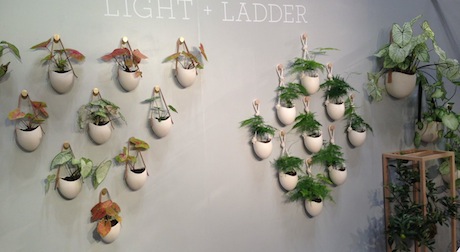
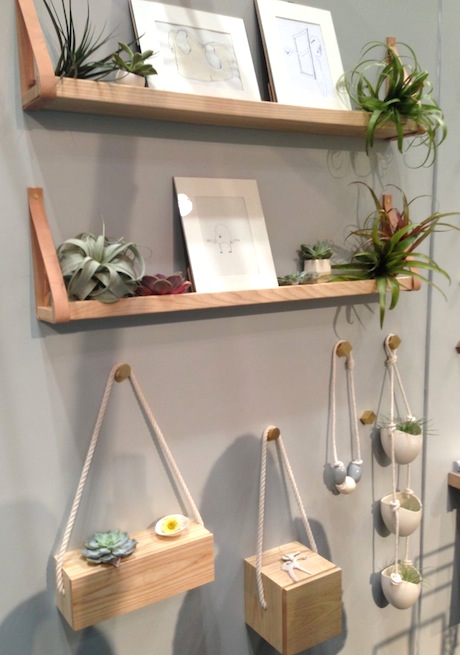
The final products of note (the lone non-Japanese entry) came from Brooklyn-based Light and Ladder, a sorta locavore consortium of houseware makers and designers. Their booth had a number of beautiful hanging ceramic planters and wooden storage containers ideal for small spaces. Everything was US made (much of it in New York) and had an elegant, earthy vibe not often found in space-saving products.

This is by no means a complete assessment of all the show’s worthwhile products, e.g. companies like Joseph Joseph were there. That said, useless stuff seemed to win the day, so we wanted to give props to purveyors of things well-made, useful and designed to last.

LifeEdited is a Specialty Consultant

LifeEdited acts as a speciality consultant to architects. For instance, LifeEdited is a speciality consultant to a registered Nevada architect, for that architect’s potential project in Las Vegas. For clarity, please note that LifeEdited is not an architectural firm.

Built Rams Tough. Dieter Rams that is

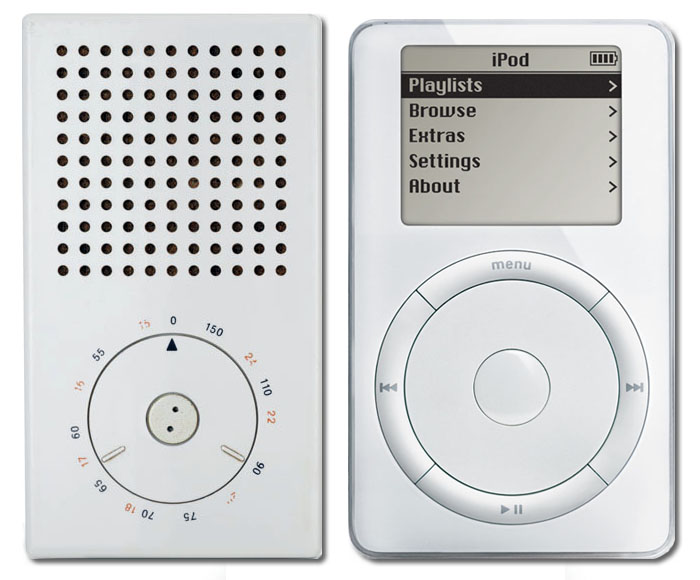
At LifeEdited, we frequently use the expression “less, but better.” To us, it means that living an edited life is more about refinement than elimination. Have what you need, but love what you have. And as clever as we think we are, we weren’t so clever as to coin “less, but better”–that distinction goes to Dieter Rams. Even if you don’t know Rams by name, you know his work. The German industrial designer has become synonymous with economical and elegant design.

Rams made his name at Braun, where over the course of 40 years he designed some of the most elegant and recognizable products ever produced.

More than mere industrial designer, Rams was a philosopher. Rams distilled the ethos behind his designs in his “Ten Principles of Good Design” (see below), a demanding set of criterion that a design must meet before going into production.

In the above video produced by Dwell, we get a glimpse into Rams’ exacting soul. In the interview, he claims that in his heyday at Braun, he could count the number of companies that took design seriously on two hands. Nowadays, he says it’s down to one finger (you might be able to guess which Cupertino-based company that is). Rams apparently wants better design everywhere. From products to cities, he thinks the world is simply “too chaotic.”

It would seem if most designs–product or otherwise–were subjected Ramsian levels of scrutiny and exactitude, most things would never be produced (not a bad thing necessarily). Somehow, we think this world might be a lot less cluttered and make a whole lot more sense. We can dream, can’t we?

Rams’ Ten Principles of “Good Design”:

  1. Good Design Is Innovative: The possibilities for innovation are not, by any means, exhausted. Technological development is always offering new opportunities for innovative design. But innovative design always develops in tandem with innovative technology, and can never be an end in itself.
  2. Good Design Makes a Product Useful: A product is bought to be used. It has to satisfy certain criteria, not only functional but also psychological and aesthetic. Good design emphasizes the usefulness of a product while disregarding anything that could possibly detract from it.
  3. Good Design Is Aesthetic: The aesthetic quality of a product is integral to its usefulness because products are used every day and have an effect on people and their well-being. Only well-executed objects can be beautiful.
  4. Good Design Makes A Product Understandable: It clarifies the product’s structure. Better still, it can make the product clearly express its function by making use of the user’s intuition. At best, it is self-explanatory.
  5. Good Design Is Unobtrusive: Products fulfilling a purpose are like tools. They are neither decorative objects nor works of art. Their design should therefore be both neutral and restrained, to leave room for the user’s self-expression.
  6. Good Design Is Honest: It does not make a product more innovative, powerful or valuable than it really is. It does not attempt to manipulate the consumer with promises that cannot be kept
  7. Good Design Is Long-lasting: It avoids being fashionable and therefore never appears antiquated. Unlike fashionable design, it lasts many years – even in today’s throwaway society.
  8. Good Design Is Thorough Down to the Last Detail: Nothing must be arbitrary or left to chance. Care and accuracy in the design process show respect towards the consumer.
  9. Good Design Is Environmentally Friendly: Design makes an important contribution to the preservation of the environment. It conserves resources and minimises physical and visual pollution throughout the lifecycle of the product.
  10. Good Design Is as Little Design as Possible: Less, but better – because it concentrates on the essential aspects, and the products are not burdened with non-essentials. Back to purity, back to simplicity.

Japanese Family of Six Thinks Inside the Box

A few weeks ago, we saw how one man conveniently stashed his kid in a cubby in his tiny Warsaw apartment. Several thousand miles away, a husband and wife went a bit further, stowing their four children in little cubbies in their 770 sq ft Tokyo apartment.

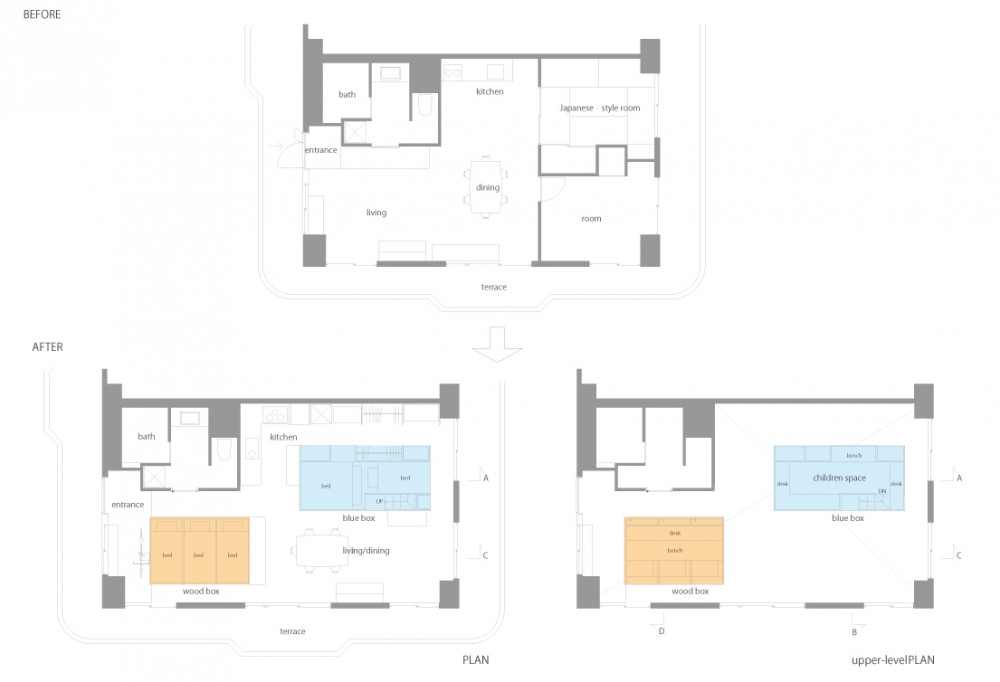
To do this, Miha Design, the firm responsible for the renovation, converted the original apartment, which included one bedroom and a traditional Japanese room, into an open floor plan.

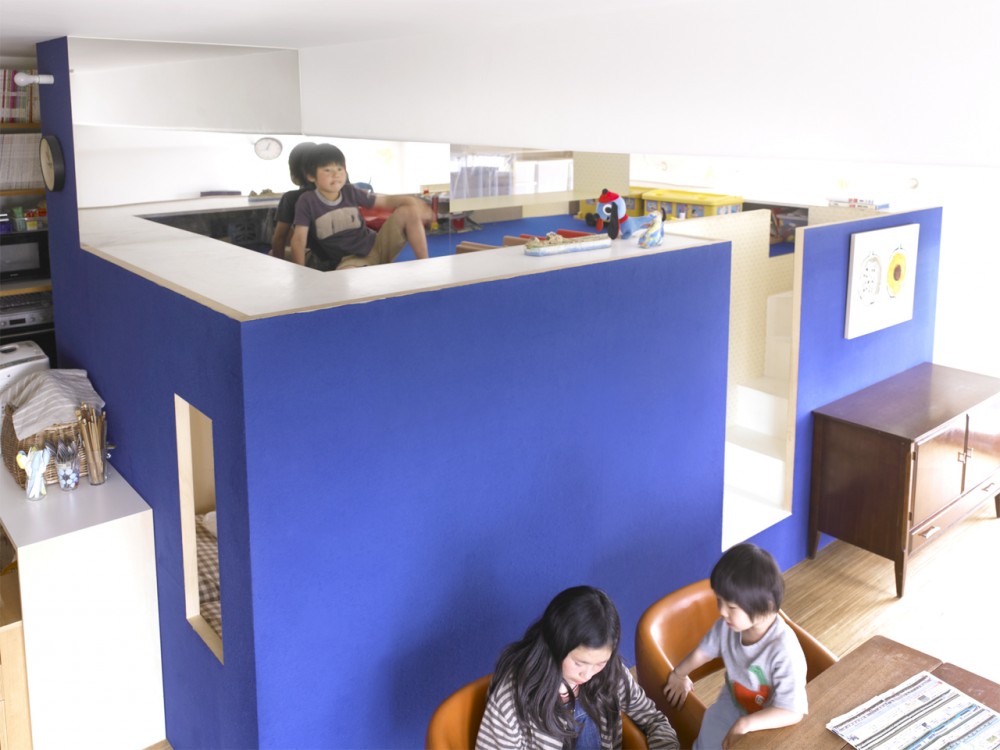
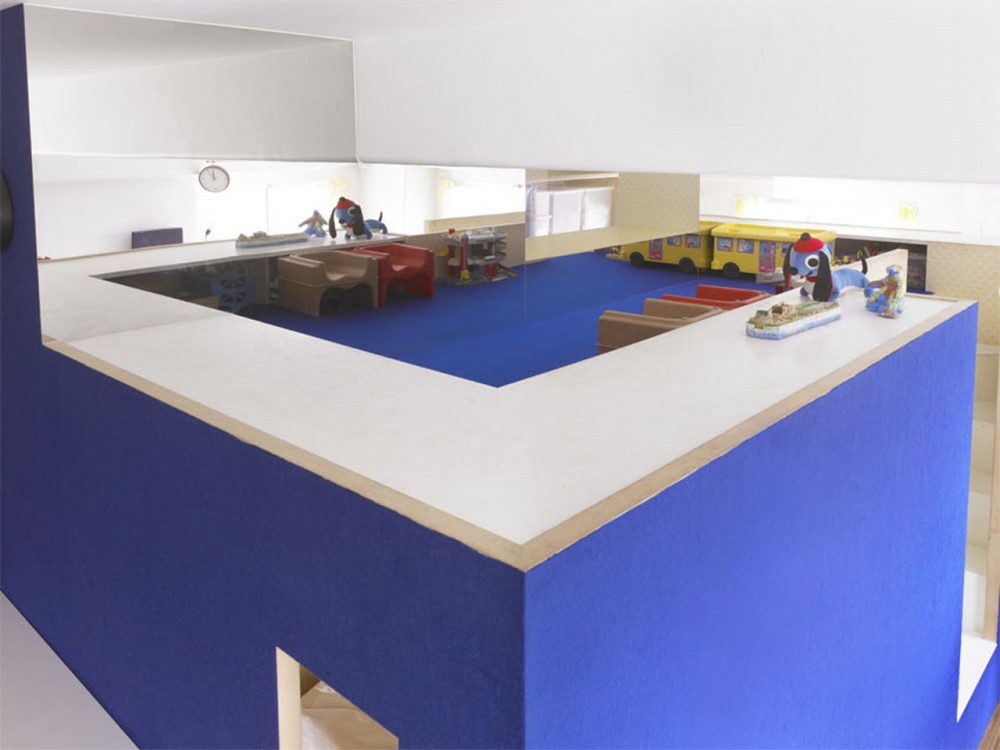
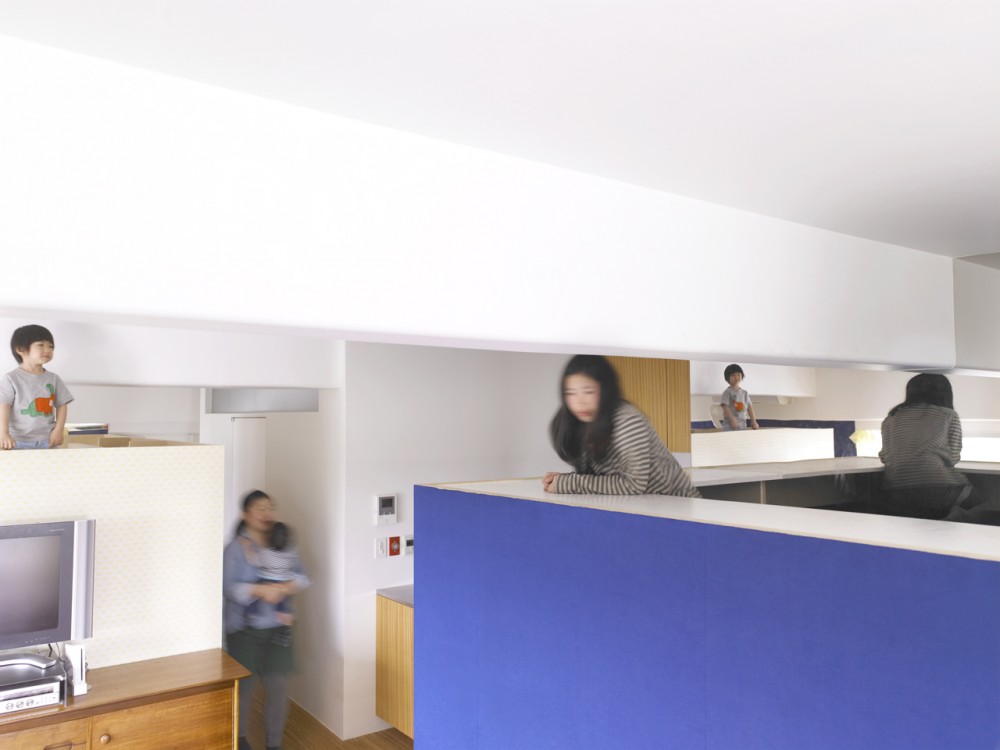
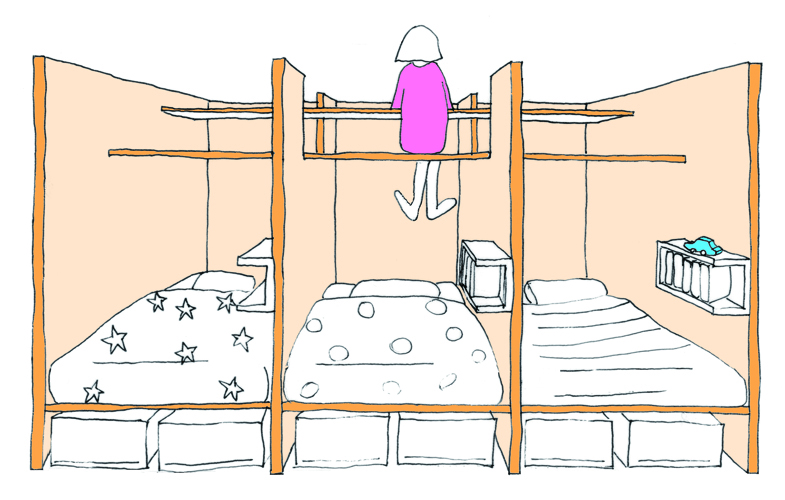
They created space separation by erecting two large boxes that house several discreet spaces. One box–covered with blue felt–contains three sleeping cubbies for the younger children; on its top is a 1.1m high play area–suitable for young children to scoot around. There are desks and benches on top as well; slots for legs allow the kids to sit upright. Under the beds are storage bins for the kids’ stuff.

The second box has a wood finish and beds for the parents and eldest child. The top has a similar desk and bench setup as the other box, albeit less blue.

The rest of the space is comprised of a dining/communal area, a galley kitchen, an entrance way and a storage area.

People are always asking us how to fit families in compact spaces. Miha Design’s space is one possible version, demonstrating a creative way to fit a large family in a small space in an expensive city–while still maintaining some semblance of separation for each family member. We do wonder what will happen when the kids grow up and cease to fit in their cubbies or start knocking their heads on the ceiling. We also suspect the dangling leg design might not fly with every parent.

All photos by © Sadao Hotta

Via Arch Daily

Heirloom Sharpie

Do you remember when your grandfather passed down his trusted Sharpie marker to you? You looked in awe at the worn patina of its steel shaft, hinting at the countless boxes marked up and posters made over the years. You took a good whiff of the noxious ink, thinking of how you would pass it to your grandchild one day.

Chances are, if your grandfather gave you an heirloom, it wasn’t a Sharpie, which are as disposable as they are indispensable.

Well no longer.

Sharpie now has a refillable, stainless steel-bodied model worthy of being passed down to future generations…for a mere $8.99 and $2.49 refill cartridge.

We’ve talked about heirloom design here before; it’s the idea that the stuff we bring into our lives is high enough quality to be handed down to future generations. This is all well and good for watches, pens and cast iron pans, but there are certain things we assume are inherently disposable like Sharpies.

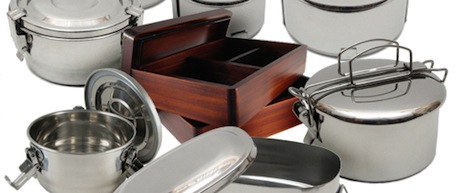
The reason Sharpies are considered disposable is mostly attributable to its plastic constructions. Nothing says disposability like plastic. Unlike metal, wood or glass, plastic begs to be mistreated, broken and thrown away. While a very useful material, not everything has to be plastic. A website called Life without Plastic proves this, offering a range of products like food storage (pictured below) and toiletries made of non-plastic materials.

food-storage

While a life only filled with heirloom quality/non-plastic items might take a lot of effort and money, exchanging a few items like your Sharpie and to-go containers with items that will last for years makes good economic and environmental sense.

Do you know of an heirloom quality item that replaces a commonly disposable item? Let us know in our comments section.

via Core77

Does Your Umbrella Withstand 82 MPH Winds?

Watch as a man subjects himself and his umbrella to 82 MPH (133 KPH), hurricane-strength winds. The umbrella, made by Dutch company senz°, achieves this strength by working with, not against, the wind. Their asymmetrical design has a minimal point of front contact, avoiding the common sail effect of round umbrellas. The umbrella spokes also pivot in such a way that should the umbrella get turned out, it yields to, rather than resists, the wind.

senz-umbrellaCheck out the senz° Youtube page to see more heroic feats of umbrella-strength, such as a parachute drop with the umbrella.

We found a variety of senz° umbrellas on Amazon starting around $40. Many of the US models are made by Totes, who is licenses the senz° design.

Senz° is a great example of rethinking common objects to make them more practical, durable and smarter. Who says umbrellas should merely last for a handful of storms? What if you could have one umbrella for life?

Do you know of other common products that achieve superior utility and durability by bucking traditional design? Let us know what they are in our comments section.