Baggu: Celebrating the Mundane

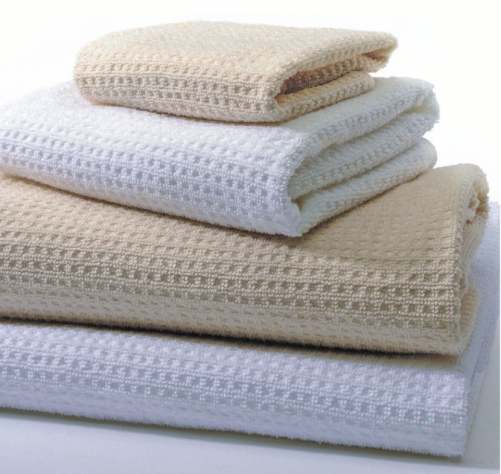
When they were putting together “The Best Gear for Small Apartments” guide, the editors over at The Sweethome asked us if there was anything missing from their quite comprehensive list. While I use stuff all the time (in fact, I’m typing on a computer right now, which is stuff), I can be bashful about encouraging people to buy more stuff, even if it’s stuff I enjoy and think is worthy of including in my life. I figure we need more barriers to purchases, and the recommendation from some ostensible expert (i.e. me) might inspire people to buy stuff they don’t need. But there are a few things I feel pretty passionate about. There is life-changing,  waffle-weave towel, of which I reference often. There is the E-Cloth, a killer microfiber cleaning rag that requires no cleaning supplies (both of these made it onto the guide). But there was one other piece of stuff I love and cherish, one that I use ever day, one I thought had to be on the list. It’s the Baggu reusable grocery bag. It holds stuff…really well.

I received a set of Baggus as a stocking stuffer several years ago. My stepmom gave me a set of four or five, stuffed into a small sack. In the following years, the bags have become an invaluable part of my life. I use one for my kid’s toys and diapers. I use another as a gym bag. When I travel, I organize clothes and other stuff in separate Baggus. Of course, I use them for groceries.

A few things make them so remarkable:

  1. Strength. They hold up to 50 lbs. They are far stronger than either disposable paper or plastic bags or those weird laminated ones with the stitched handles they sell at Trader Joes, Whole Foods and other places. If you’re carrying more weight than that, you probably want wheels.
  2. Size. The standard version is 15.5 x 25.5 x 6″ with a gaping opening perfect for overstuffing. It’s rare that I want anything bigger.
  3. Compact-ability. This is where they smoke canvas totes and most any other type of reusable bag. Their ripstop construction makes them extremely small when crumpled or folded up. I often stash one in my pant pocket in the event I need to make an impromptu shopping trip. They come with a stuff sack, but I tend to just throw them in my backpack.
  4. They are easy to wash.

They come in a huge array of colors and patterns. One bag will set you back $9. I have about eight of them. And while I got mine as gifts, I would totally buy them again.

Check out the “The Best Gear for Small Apartments” guide for more info and a comparison test (spoiler: Baggus are the best).

New Online Store Built Around Small Space Living

When we were putting together the first LifeEdited Apartment, we scoured countless stores looking for housewares that would perfectly fit into the space. We were looking for necessary things, compact things, classic things and, on occasion, offbeat things, which led to some failed experiments with sporks. The search was sort of a pain in the butt. We spent a lot of time sifting through retail haystacks looking for those few small space appropriate houseware needles.

A new online store called Mijlo (pronounced my-lo) is trying to save the small-space dweller and design aficionado some time. They have created a store focused on housewares–and eventually, other goods–that work well in the compact home.

We shot Mijlo founder Daniel Eckler a few questions via email about the store, how it came to be and where he plans to take it.

David Frieldander: What inspired you to start the Miljlo small space living store?

Daniel Eckler: I’ve spent the last 10 years of my life developing digital products to help people appreciate beauty and be more creative, and I’ve had a great time doing it, but I’ve also always wanted to do something tangible. What motivates me most is the emotional connection to objects, and their ability to bring joy to people–you can do this on screens, but it’s a different and more compelling experience to me with objects.

I’ve always loved the idea of design that helps people, especially design with difficult constraints. Even as a kid, I remember going to IKEA and being fascinated with the small home design/merchandising. Later, as an adult I discovered MUJI in New York, then soon after again in Tokyo, while living in 150 sq feet with two friends for a month. This solidified my love for small spaces.

I was even more interested in why I felt lonely after my friends left, especially as someone who enjoys their personal time. There’s a great quote from Ralph Waldo Emerson, “The ornament of a house is the friends who frequent it”–after this experience, I was especially interested in voluntary simplicity, collaborative consumption, and started to deepen my exploration of urban design, product design, interior design, and architecture.

I realized that besides MUJI, there are no big retailers focused on helping people in small spaces live well. With urban areas becoming more dense every year, the average home-size is shrinking, and I think there are going to be a lot of people living in small homes needing solutions that exist in the market today, but kind of at the fringes. I want to do everything I can to make sure these people live just as comfortably as if they were in a big space, and more importantly start to appreciate the benefits of living with less.

DF: How did you select your products?

DE: Because we’re a start-up, we had to focus our attention in a particular category, and for us, the most sensible choice at the beginning was small housewares. I can’t wait until we stock murphy beds and other “large” small space furniture, but in the meantime, I want to curate the best offering of small housewares that are suitable for small spaces.

Small space home decor obviously means modular, multi-functional, and small pieces, but I think it’s just as important to seek simple/quality/neutral pieces that complement each-other and that will last a long time. We’re inspired primarily by Danish and Japanese design, in white/grey/beige with splashes of color and personality throughout the collection.

DF: What is your favorite product and why?

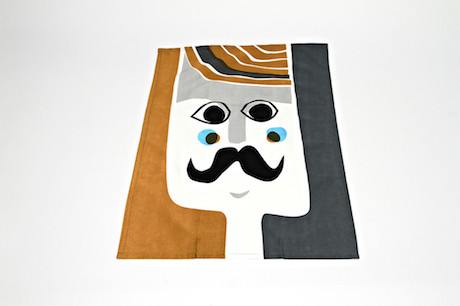
DE: The Mr and Mrs. Tea Towels from Ferm Living are my favorite products currently in our collection [pictured below]. My visual sensibilities are influenced mostly by minimalism, but also by my mom who was a quirky Dutch homemaker that spent her days sculpting and painting strange characters that look similar to the ones printed on these towels.
ferm-living-mr-tea-towel-2_1024x1024

I really like the simplicity and warmth that both of these prints exhibit, and I’m especially interesting in humanizing design, so I love the idea of a set of tea towels that are a married couple.

DF: What does Mijlo mean?

DE: Bringing my Dutch heritage into the company was really important to me. My mom’s family in Holland has been running an auction house specializing in home decor for generations. The Netherlands is the most densely populated country in the EU, and Amsterdam is the cycling capital of the world. All of these features are natural influences for MIJLO and our mission.

I was looking for a Dutch name that would be a fit for the company. I was considering KIKO (which my mom wanted to name me), but there is a large cosmetics brand with the same name. I also like YOPI (my uncle’s name), but that is taken by a Dutch company with a similar name. I looked around for other names that had the same spirit as those–MILO is a popular name in Holland, and it resonated with me as soon as I found it. We added the J because IJ replaces Y in Dutch. De Stijl, Rijks Museum, etc.

DF: Where do you see yourself taking the store?

DE: Our goal for now is to help as many people in small spaces live simple and live well, with a collection of well-designed, quality goods. This goal actually doesn’t start with selling products. It starts with education. I believe deeply that living a simple life, in a simple home, with simple things, can dramatically increase people’s quality of life. A lot of people don’t agree with that, so it’s our job to show them why we think that way, and hopefully encourage them to give it a try. As long as we’re engaged in exposing people to the benefits of living simply, we’re doing our job, and hopefully we will sell a few (or a bunch of) products along the way.

DF: Do you live in a small place yourself?

DE: I’m currently living in a medium sized house with my father, but I spend 90% of my time at home in less than 250 square feet, which includes my bedroom, office, closet, and bathroom.

[divider]

Check out the Mijlo store yourself.

Waffle Towels Save Space, Dry Faster, Rock Harder

In our never ending quest to save space, we’ve found it’s often the small things that make the biggest difference. Case in point are towels. Many of us assume terry cloth is the only way to go for absorbent towels–its bulky texture seems a natural fit for absorbing water. But terry cloth’s loft takes up tons of space, dries slow (often getting moldy whilst drying) and takes up disproportionate space in the washing machine and dryer.

We came across a fancy sounding towel called nido d’ape in the book “Flanagan’s Smart Home“–author Barbara Flanagan’s wonderful book that lists 98 must-have housewares for the pared-down life. Nido d’ape simply means “bee’s nest” in Italian. Americans call them waffle towels. The shallow cavities in the fabric effectively increase surface area, wicking more water with minimal increase in bulk. They take up a fraction of the volume of their terry cloth brethren, dry much quicker and absorb amply.

We’ve been using waffle towels in the LifeEdited apartment and have been impressed by their performance. Author Barbara Flanagan warns the towel’s feel is “bracing,” and they lack the “security blanket-like fluffiness” of terry cloth. That has been our experience as well. The towels grip your skin. Her solution: “Grow up. Persist. There will be lighter loads of laundry filling fewer baskets straining fewer appliances.”

We’ve been using the Aquis microfiber towel, thinking that the synthetic material would dry quicker. It does, but we also noticed that if they are not dried off quick, they get a funky moldy smell.

This author uses a cotton variety from Gilden Tree. While they don’t have the squeegee feel of the Aquis, the towels do dry both your body and themselves quickly. The cotton is not nearly as odor retentive as the microfiber.

We also experimented with a smallish 19 x 39″ size, thinking the ability to wrap it around the waist would be sufficient. It wasn’t. It barely fit around the waist and was barely deep enough for men, much less women. The larger 29 x 55″ size proved much better and the bulk when stored is about that of a terry cloth hand towel.

Flanagan blames the excesses of the 80’s for the “hotel towel”–essentially a piece of terry cloth that could house a Bedouin village–becoming the household norm. The only problem is that if you lack daily maid service and a store-room, these towels make no sense. Waffle-weave towels do, saving space and energy while doing what they’re supposed to do: dry.

[Note: this post was originally published on August 9, 2012. After a couple years of use, we made a couple refreshes to the article.]

Life Rafts in a Vast Sea of Stuff

NY Now–née NY International Gift Fair–is one of (perhaps the) the world’s largest tradeshows for gifts and housewares. Held in the Jacob Javitz Center on Manhattan’s far west side, the show houses acre upon acre of stuff.

To be honest, most of the stuff struck this author as pretty useless and disposable. There were bottle-stops that could be frozen to make in-bottle coolers, thermoses shaped like wide-angle camera lenses and novelty toilet seats. Dieter Rams would be spinning in his tasteful, sparsely decorated living room (he’s quite alive).

Rather than describe the bounty of useless stuff, we’ll do something easier: Highlight the useful stuff.

Saikai USA

husami

By far our favorite products were on display at Saikai USA, an American distributor of Japanese housewares. Each time I’ve been to the show, I lust after their Hasami ceramics (above). They make several varieties of stacking and nesting plates, mugs and serving pieces–the latter two have wooden covers that turn them into storage containers. They’re so pretty, you could leave them out on display, acting as kitchenware and objet d’art.

Nambu-Tekki

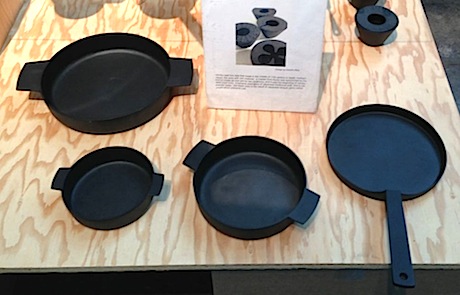
Also at Saikai was the Nambu Tekki cast iron cookware. Its one-piece forged construction is gorgeous. However, their lack of proper handles might not be the most practical design.

Uchino Towels

unchino-towels-2unchino-towels

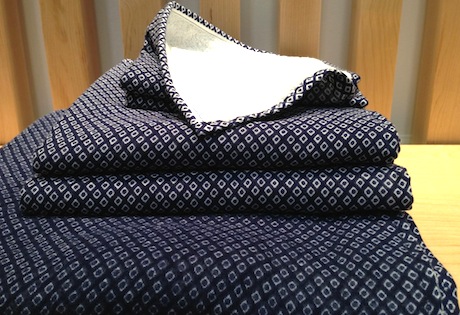
A few aisles over from Saikai was Japanese towel maker Uchino. They make some of the nicest towels I’ve ever seen. The low loft towels were smooth fabric on one side and terry on the other, which makes for easy storage and drying as well absorbency. They came in a variety of vibrant colors and had high eco credentials.

Light + Ladder

light-and-ladder-2 light-and-ladder

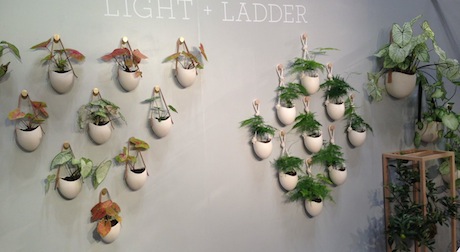
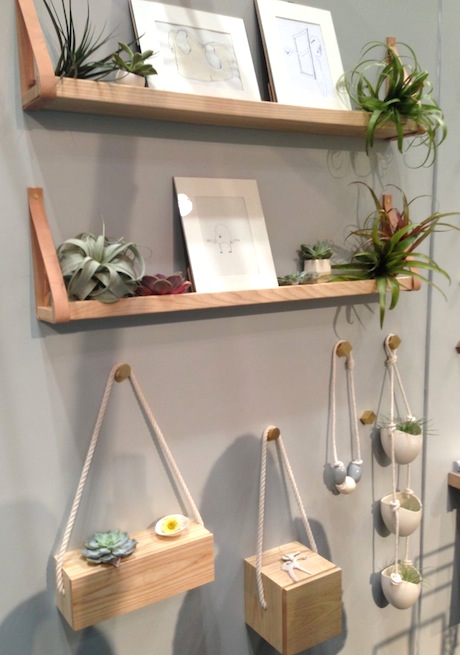
The final products of note (the lone non-Japanese entry) came from Brooklyn-based Light and Ladder, a sorta locavore consortium of houseware makers and designers. Their booth had a number of beautiful hanging ceramic planters and wooden storage containers ideal for small spaces. Everything was US made (much of it in New York) and had an elegant, earthy vibe not often found in space-saving products.

This is by no means a complete assessment of all the show’s worthwhile products, e.g. companies like Joseph Joseph were there. That said, useless stuff seemed to win the day, so we wanted to give props to purveyors of things well-made, useful and designed to last.