This Science Fiction Dystopian Housing is So Cool

This author is not a science fiction enthusiast, so forgive my ignorance of Ernie Cline and his 2011 book “Ready Player One,” which apparently is a big deal in that world. The cover of the book shows a skyline of the not-so-far off dystopian future the book portrays. Dystopian as it’s supposed to be, the towers of stacked camper trailers look pretty awesome, like an uber low-tech version of Kasita prefab housing.

HT to Tim McCormick

We Review “Minimalism: A Documentary About the Important Things”

If you’re looking for an unbiased review of “Minimalism: A Documentary About the Important Things,” go to Rotten Tomatoes. This author was featured in the movie along with his wife and employer. The protagonists of the film–Joshua Fields Millburn and Ryan Nicodemus, aka The Minimalists–are people I choose to call friends; same goes for director Matt D’Avella. On the topic of Minimalism, you might say I fall somewhere between evangelist and zealot. So what do I think about the movie? It eff’ing rocks.

The movie follows Joshua and Ryan as they crossed the country a couple years ago promoting their book “All That Remains.” Interwoven are interviews with the two men about how they went from stressed out, consumer-crazed corporate strivers to blissed out paragons of pared down living and dispensers of hugs.

But a good deal of the film cuts away to talk about applied minimalism and the global impact of consumer culture. There are interviews with the leading figures in the movement and various experts: Zen Habit’s Leo Babauta, Becoming Minimalist’s Joshua Becker, Rowdy Kitten’s Tammy Strobel, neuroscientist/author Sam Harris, Colin Beavan, aka “No Impact Man,” our own Graham Hill and many, many more. Each lends their experience of living a life as a minimalist, but also delve into topics related to “compulsory consumption” and the environmental, social and psychological wake that follows this behavior. Topics include architecture, tiny house living, fashion, meditation and neuroscience. If you weren’t inclined toward a more minimal existence going into the movie, you probably will be at the end.

In 2006, Al Gore released “An Inconvenient Truth”–a film that compelling and concisely outlined the extent and the threat of global warming. In my opinion, nothing trumps this as our number one threat to life as we know it. But the thing that AIT didn’t cover–and this is not a criticism–is the emotional impact our consumer behavior and environmental destruction. We are ravaging our planet, but for what? The Minimalism doc does wonderful job of looking at the human impact of our rapacious treatment of the planet and how it just doesn’t work on virtually any front. And perhaps more importantly, it shows an attractive alternative–a life of less stuff and space, a life filled with more meaning, happiness and hugs. Go see the movie.

The guys are presently doing a cross country tour to promote the film through June (they are offering 10 tickets at door at each showing). But after May 24, the documentary will be showing at over 400 locations across the country. Go here to find a screening near you. The movie will also be available online August 2.  

A Village in a Tower

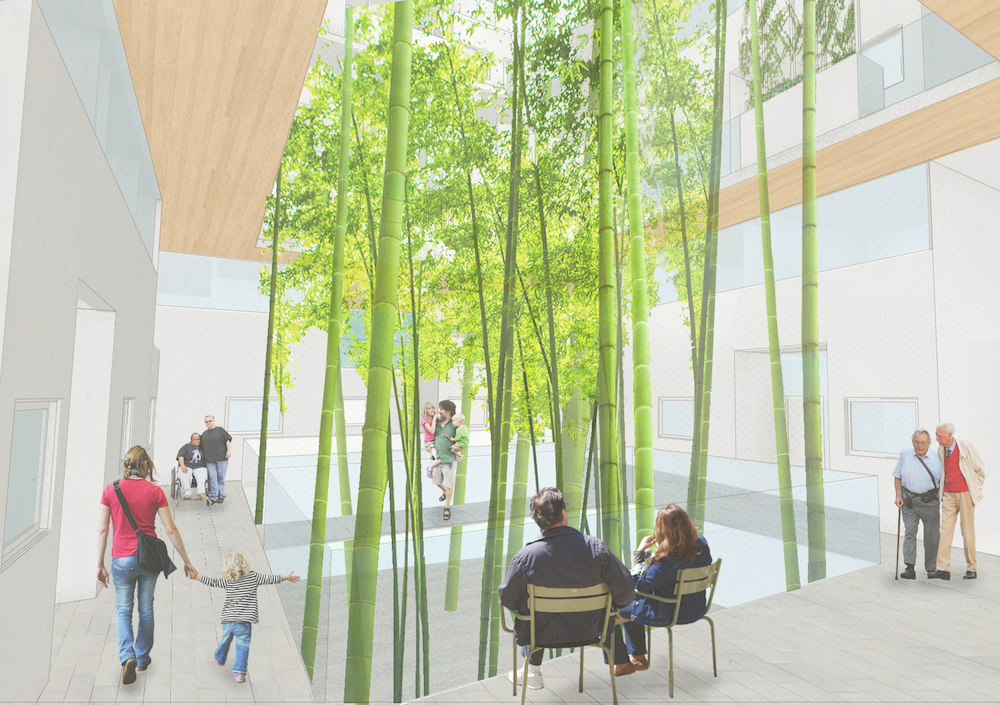
Bamboo plants in inside courtyard

Image above by Rachel Kao.

While Europeans are no strangers to communal, urban living, evidenced by things like Baugruppen, the phenomenon is still pretty rare in North America. Cohousing, the most established form or communal living this side of the pond, tends to be located in the burbs. In these communities, several single family houses band together to create a cohesive community with regular shared activities and spaces. There are some urban exceptions such as Durham Central Park Coho. But developing a building like Durham Coho is a time and resource intensive affair. Now a group out of Vancouver calling themselves “Our Urban Village” has come up with a clever middle ground approach to creating communal living in the city. Rather than developing their own building, they’re seeking to graft their community onto an existing development.

The group calls their concept “”co-housing lite”. Rather than originating the development, the group would commit to buying several units at market value (~C$700/sq ft at the moment) of an in-progress condo building. This influx of cash would give the developer investment capital as well as cost savings down the road as pre-sale and marketing expenses would be minimized. In return, the developer would build common spaces such as shared dining and guest rooms for the community. While these added features might seem like a big hit for the developer, co-founding member James Chamberlain told the Globe and Mail that developers see the expense as fairly small relative to the overall costs of developing the large buildings their interested in.

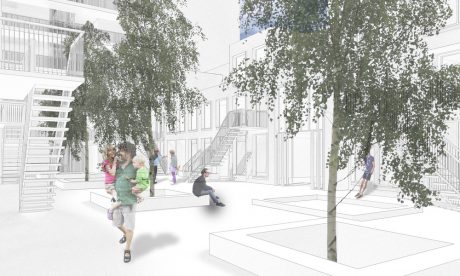
Morgan_McDonagh_Social Street

The community is being smart with design of those common spaces. Another member, Kathy Sayers, wrote that OUV “will be working with a German architect and Resource Furniture to design our common space to make 1200 square feet work for our 20-30 families instead of the average 2000-2500 square feet.” That same architect, Inge Roecker, is an associate professor at the University of British Columbia and gave her students the task of concepting the community. Ultimately, we suspect, the look of the spaces will be largely dictated by the building’s preexisting architecture. 

The group is presently courting a number of Vancouver developers. Because of their unconventional approach, Chamberlain said the ideal developer will be one with a “social conscience”.

The community wants to be multigenerational and their current membership of nine represents several demographics including singles and couples with and without kids. They’re shooting for 15-30 households total for the community. Before you become a member, OUV has a three month getting-to-know-you period to weed out people who might not be into the sometimes involved nature of cohousing. When that period is over, members pay a C$500 membership fee and are responsible for paying for their units.

While designing a building from scratch to facilitate a shared living experience is perhaps ideal, many people with jobs don’t have the time to commit to such an undertaking. Co-housing lite provides people interested in this way of life, ones who don’t want to live in single family housing, a way to create their community without the burden of being amateur real estate developers.

If you’re interested in learning more or becoming part of OUV, check out their website.

A Suburb that Puts People First

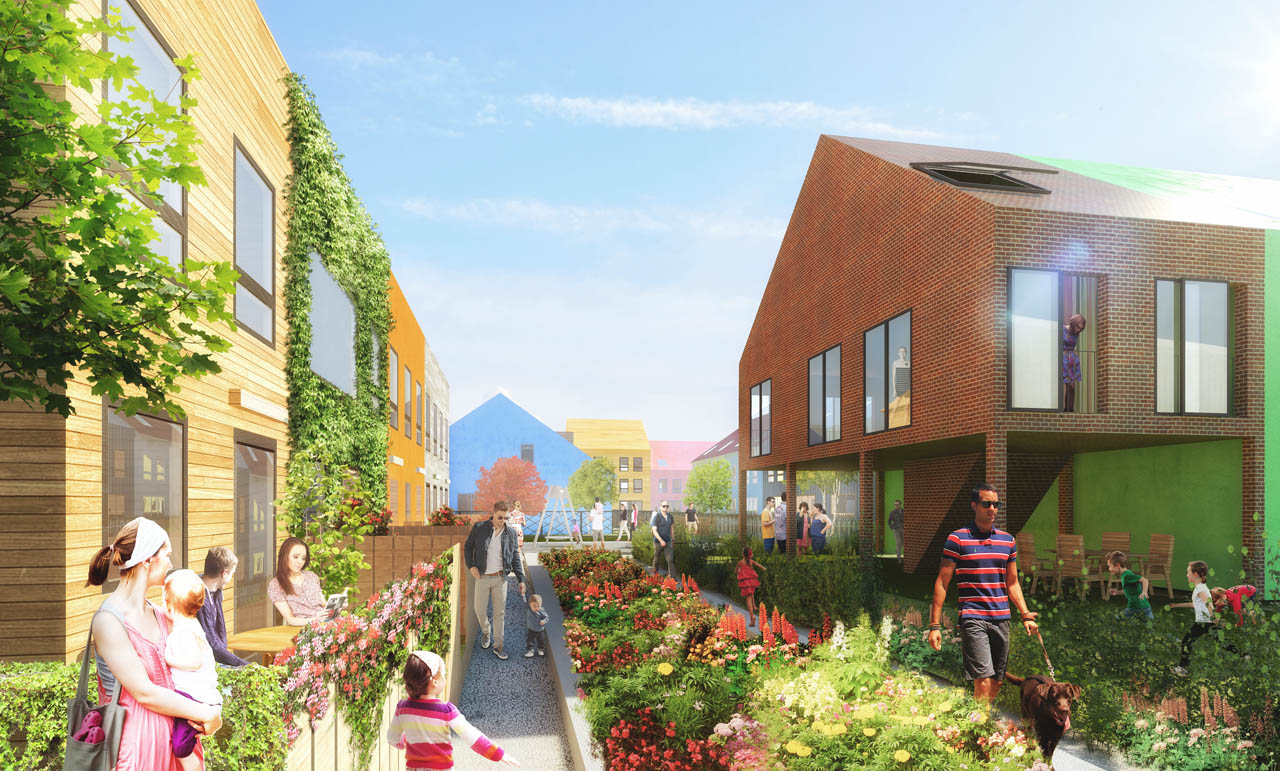
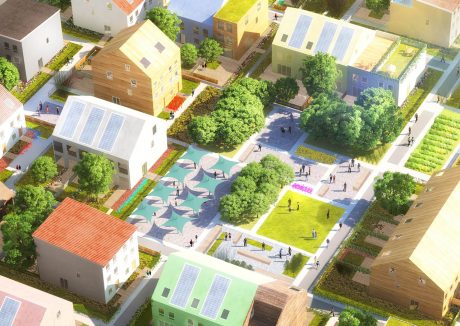
One of the biggest demerits of suburban living is how they can have an isolating effect on people who live in them. When most suburbanites leave home, they enter a car that’s usually in an enclosed garage where you often drive to another garage at work or the store or wherever. In cities where garages are less common, you leave your home and you’re thrust into contact with your fellow human. We’ve looked at Pocket Communities before, which are communities of single family houses where the front door faces a commons area, fostering a more social living environment. And we just ran across this new suburban development in Mannheim, Germany that puts the humans first in its design. The development, which has many of the hallmarks of suburbia like single family homes and yards, has two notable things missing: cars and parking.

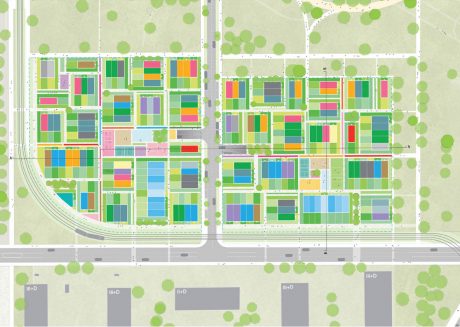
mvrdv-grid

Johannes Pilz, one of the architects behind the project told FastCo.Exist:

By getting rid of the cars, you then open up the streets, whether it’s for children to come out and play with each other, or to encourage residents to sit outside their house, chat with one another, or go for a stroll…By getting rid of the [pavement] barrier between households, you then increase interactions between neighbors, and the community then starts to bond.

The lead developer, MVRDV, specializes in affordable housing. The development is designed to avoid gentrification by creating a diversity of housing types as well as taking a modular approach to construction. Residents will be given a catalog of houses to choose from of various sizes, heights, etc. Instead of each house representing a custom design, many are reconfigurations of basic building blocks, streamlining design and construction processes and cutting costs.

MVRDV-housing-types

The development, which will be built on an old US Army barrack, is also next to a tram stop, so people who commute into the city could live car free if they so chose. There will be underground parking available however, for residents who want a car and for emergency vehicle access.

MVRDV-Courtyard

Some of the promises of suburban life are safety and community, but because many suburban developments design more around cars than people, those ends are often not achieved. The design of this development shows what can happen when people come first, and  we think it looks pretty great.

Via FastCo.Exist

The High Cost of the Guest Room

Pulling data from the US Census, Finder.com found there are 9.4% more bedrooms in the U.S. than people: 357M bedrooms but only 323.4M people–a 33.6 million bedroom surplus. This figure, they note, is probably very conservative because it assumes one person per bedroom and many couples share a bedroom.

This surplus is not just a waste of good mattresses, but money. They suggest putting those spare rooms to use. Rent them, Airbnb them, do something other than letting them sit as big dust traps. They estimate that renting all of these rooms for a mere $100 week would yield $174B. But that figure is super conservative too: “Americans in bigger cities could get significantly more than the national average. For example, Phoenix residents can get $338 a week ($17,576 a year), while people in Nashville, Tenn., can rake in $572 a room per week to the tune of nearly $30,000 a year.”

We might also suggest that developers and architects start channelling their energies toward smaller–or at least more flexible–spaces. And for people looking for a new home to start purchasing/renting/demanding smaller homes, armed with the knowledge of the real costs of keeping a room (or rooms) on standby.

Via CNBC

The Problem(s) with Tiny Houses

At LifeEdited, we love tiny houses! They are like architectural and existential reduction sauce. Every space and object that isn’t utterly essential, that isn’t something you absolutely need, is boiled away. They are great examples of how humans can live simpler, lower impact lives. Yet tiny houses have some big problems, ones that are often overlooked amidst the hype, and it’s not just their lack of legality.

The biggest problem with tiny houses stems from density, or lack thereof. At their core, tiny houses are small single family homes. As Kriston Capps wrote in CityLab a couple years ago, tiny house enthusiasts “are confirming the status quo, if shrinking it a little.” All single family homes, huge or tiny, require their own lot and almost invariably take up more space than multistory, multifamily housing. Individual lots lead to reduced density which leads to greater land use and increased transportation needs (aka sprawl). To build density, the best strategy is often to build up rather than out.

Here’s an absurd example to demonstrate this point. One57 is a building in Manhattan often called “The Billionaires Building.” It is the epitome of excess. One of its penthouses fetched over $100M and the average per square foot purchase cost is about $6K. But the building’s 94 units and 75 stories (some of those units are as big as 11K sq ft) sit on a 23,808 sq ft lot. This means that each unit takes up 253 sq ft of ground space…oh, and there’s a 210 room hotel on its lower floors.

Now compare that to a normal tiny house on wheels. An average tiny house is about 200 square feet. Add a very modest 10 ft of setback on each side and you’ll need a 1K sq ft lot. Just to be generous, we’ll say that a car can fit within that lot, but realistically you’ll need additional room for parking. 1K ft is still considerably smaller than the average single family house lot which is 15,456 sq ft, but quite a bit more than the humble One57.

Speaking of cars, whenever you see a tiny house out in the country, you have to wonder: how do residents get to and from their houses? How do they get their food? In most instances, they drive there. And as we know, transportation is one of the (if not the) biggest factor in increasing a home’s carbon footprint. Meanwhile, the residents of One57 can walk to get everything they need and are spitting distance from several major subway lines (One57 residents are more likely to spit on the subway riders than ride the subway, but that’s a separate point).

Then there are access issues. We ran across an article singing the praises of tiny houses as retirement homes. While a nice idea, most tiny house designs are a poor fit for seniors. Sleeping lofts are difficult and hazardous to access. And try fitting a walker into a tiny house bathroom. And single family housing tends to be more isolated, which is not ideal for seniors. Meanwhile, One57 has commodious bed and bathrooms and lounges and spas where you can discuss with the hassles related to the Panama Papers with your peers.   

Of course there are many asterisks to the above arguments.

  • One57 is only dense because it bought the air rights of surrounding buildings, thereby reducing the housing density of nearby buildings. And to suggest that someone living in One57 has a smaller carbon footprint than someone living in a tiny house (no matter the location) is patently absurd. A better comparison would be someone living in a normal-sized 5-10 story multifamily building in a walkable location.
  • If you live fully or partially off grid and grow much of your own food and don’t drive much or at all–a not too uncommon scenario for tiny house dwellers–you can significantly reduce your environmental impact. The non-consumer-fueled lifestyles of most tiny house dwellers should also be factored in (though you could live this way in an apartment as well). 
  • There are many tiny houses that are being clustered as communities or being used as ADUs in low density areas, making those areas more efficient.
  • And while tiny houses might not be great for most seniors, they’re fine and dandy for millions of other people.

The main point is that a home’s impact cannot be assessed without considering its context, and in general the context that’s going to make a home lower impact is locating it in a central location. And the way to build more units centrally is building modest (they need not be tiny) multistory, multifamily housing. Condos and apartments might not be as photogenic as tiny houses, but they get the job done. 

The last point, lest you think we’re hating too much on tiny houses, is that it’s not an either/or situation. As Shaunacy Ferro eloquently put it in FastCo.Design:

Just because micro-units are badly needed in urban areas doesn’t mean small-scale dwellings should be restricted to tiny apartments in big cities. New zoning laws in Portland, Oregon, encouraging the construction of granny flats is still adding density and creating more affordable housing options, albeit not to the same extent as San Francisco’s 300-square-foot units. Nor are micro-houses on large plots of land without benefit. Precious though a beautifully designed tiny house in the midst of the wilderness may look, it’s a better environmental choice than building a McMansion. Shrinking the status quo isn’t that bad of an idea.

The Wisdom of Terence Conran

The best designers tend to be the ones who question the necessity of most of our stuff–who realize most of it is superfluous and the stuff that isn’t should be given great care and attention in terms of its design. England’s Terence–ahem Sir Terence–Conran is one of those designers. Growing up in the wake of WWII, he is a champion of thrift and democratized modern design.

quote-hanging-onto-a-bad-buy-will-not-redeem-the-purchase-terence-conran-74-7-0760

He has brought surprisingly great design to such proletariat outlets as UK’s Habitat (which he founded), Marks & Spencer and JC Penny in the US. He is also an author of 50 books and is infinitely quotable. Here are a few soundbites reflecting Conran’s attitudes and principles: 

  • Hanging onto a bad buy will not redeem the purchase.
  • Any room full of unnecessary clutter is not pleasant to sit in. So clear it of everything. When you fill it again, be ruthlessly selective about what goes back in. Your quality of life will be much improved.
  • Arguably the only goods people need these days are food and happiness.
  • Good design is probably 98% common sense. Above all, an object must function well and efficiently-and getting that part right requires a good deal of time and attention.
  • In the 70s, when I was doing Habitat and it was the time of the three-day week, we started a range called Basics. We went through the standard house creating necessary things that were good value and simple. We kept it going for a few years and franchised it out to a Japanese store called Seibu. They eventually opened stores called Basics, and later these became Muji. So, you see, some of the best things come out of hard times. We’re probably entering a time of simpler things now. Pink walls and chandeliers don’t feel right. I think we’ve had enough of frivolity for a while.
  • It is extraordinary that so many people today buy well-designed cars, audio-visual, domestic and electronic equipment, yet houses and furniture are all too often ‘el crappo’ when they could easily be inspiring.
  • My belief is simply that if reasonable and intelligent people are offered something that is well-made, well-designed, of a decent quality, and at a price they can afford, then they will like it and buy it.

Check out this profile of Conran to learn more about him.

The Unbearable Lightness of Tiny Living

Each week we are profiling real people who are editing their lives for more freedom and happiness. This week we hear from Jan, who lives in 98 sq ft tiny house. He shares his experience about the freedom of tiny, lightweight living as well as the difficulties of meshing different attitudes about stuff and space in relationships.

Tell us about yourself

My name is Jan. I am 45 and work as a photographer and videographer. I am separated with a 3-year-old boy.

My parents, both children in Germany during the WWII, instilled a non-consumptive, credit free life-style. They modeled buying quality over quantity and only paying cash for what you can afford.

Later, I backpacked for several years, and all through my twenties and early thirties never paid more than $100 rent per month. I learned to build and built my own shelter, or did work-trade for rent. For years I kept my possessions down to what would fit in the back of a small pick-up truck.

In my late thirties I fell in love with a beautiful woman who lived an unedited life. Stuff gave her a sense of security. Clutter was her art form. For six years and through the birth of our son, we tried to blend our lives, but could not. Accepting neither of us would change, I built a 6×9 foot shack in the backyard and moved out. We get on much better now.

What makes your life an ‘edited’ one?

I’ve always been self-employed, so I’m very aware how much effort it takes to earn each dollar. Not believing in credit, each purchase I make is a conscious decision. How much of my life does it take to afford this thing? I’m also aware how much effort is required to own stuff. Where to store it? How to store it? How to care for it? Unnecessary stuff and clutter simply makes my anxious. But that’s not to say I’m non-materialistic. I would argue that I’m hyper-materialistic. I love the look, feel and function of something well made that fits my life perfectly. A pair of shoes I wear every day. Two sharp kitchen knives. A bicycle. A camera. All these things, carefully chosen gives me great pleasure to buy and use daily.

How long have you been living this way, and do see yourself continuing to live this way?

I have always had a minimalist bent, but lately have been refining it with far more awareness. It merges many divergent interests, from macro and micro-economics, environmentalism, self-sufficiency, spirituality, design, art, parenting, and how we will make it as a species in a shrinking world. Presently, how I live is a personal choice. In the future that choice may be forced upon us.

What are the biggest advantages of living this way?

A profound sense of lightness in the world. Every time I discover a way to live more essentially, I feel a surge of freedom. When I refine an elegant solution to a vexing problem, I gain great pleasure each time I engage with that solution. Something as basic as placing a hook into a wall so I can hang my bag and not trip over it on the floor. Or building a composting toilet for a few dollars and taking personal responsibility for my own waste. Or lying in bed at night in a loft that fits me just so. Watching the moon rise and stars turn because I deliberately placed the windows in these precise locations. Or each month doing my bookkeeping and seeing my savings increase to a point where I could live comfortably without working for a few years. And not because I earn a lot of money, but because I have learned how to spend wisely.

What are the biggest challenges?

Trying to meld a minimalist lifestyle with someone who does not share the same interest. It is an exercise in futility and frustration. I had to learn to accept that I can neither change someone else’s life nor repress my own nature.

For families, how has this lifestyle affected the other members of your family?

Thankfully I have a young son who stops me from getting too anal. He helped build the shack and feels it is his as much as mine. He comes and goes as he pleases with his toys, muddy shoes and dirty fingers. I let him climb up ladders, on counters, light stoves, play with tools and knives, and in doing he learns respect, consequence and body awareness. He teaches me to let go and lighten up. If he breaks something we fix it together. If he gets something dirty, we clean together. After all, it’s just stuff. What’s essential is the respect between us.

In terms of partnerships, I think a minimalist lifestyle only works both partners already live this way. I also strongly believe in a shack of ones own. My home only cost me $5000 and three months of work. I’d rather help build a partner their own home than try to blend two incompatible lifestyles together.

What is the number one suggestion you’d give to someone looking edit their lives?

Read the book “Your Money or Your Life” by Vicki Robins.

What item(s) have made your lifestyle easier?

A good bicycle, good tools, a few comfortable clothes that fit well and can be worn in different settings.

Do you have any design or architectural suggestions derived from your lifestyle?

Consider curved rafters. That simple architectural detail made all the difference in turning my loft from a cramped triangle into a spacious cocoon.

This post was originally published November 28, 2012. 

Lighten Up and Get Out of Town with this $150 DIY Bike Camper

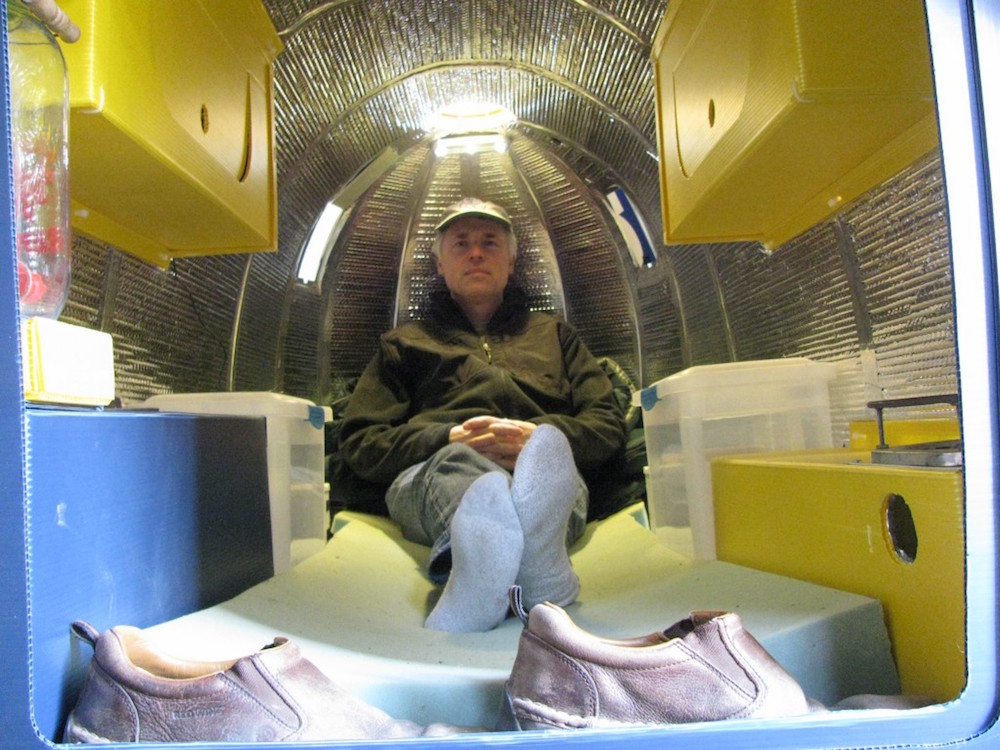
We’ve explored bicycle towed trailers in the past. In particular, the Wide Path Camper seemed like a nice execution of the idea. But as a number of readers noted, it had a couple big liabilities. First, was its weight of 100 lbs. While this is a reasonable weight for a camper, it’s a lot for a human to drag any considerable distance. The next was its high profile, which would catch the wind like nobody’s business. This Micro Airstream bike camper by maker extraordinaire Paul Elkins solves many of these problems, being lighter, sleeker and a lot cheaper than the WPC (or anything else we’ve come across for that matter).

paul-elkins-trailer paulelkins-interior

It has most everything a single tourers/nomad needs. At 45  lbs, it’s a bit heavier than a trailer, but has an insulated sleeping structure that adds a ton of functionality and removes the need for a tent. It has a low, curved profile, which will probably still catch the wind, but not so much as to prove unworkable. Best of all, Elkins offers plans to make the trailer for $150 out of materials such as zip ties and recycled campaign posters (a commodity that will abound in the coming months). Check out the above video by Fair Companies and be sure to visit Elkins other amazing DIY projects.

Simple is as Simple Lives

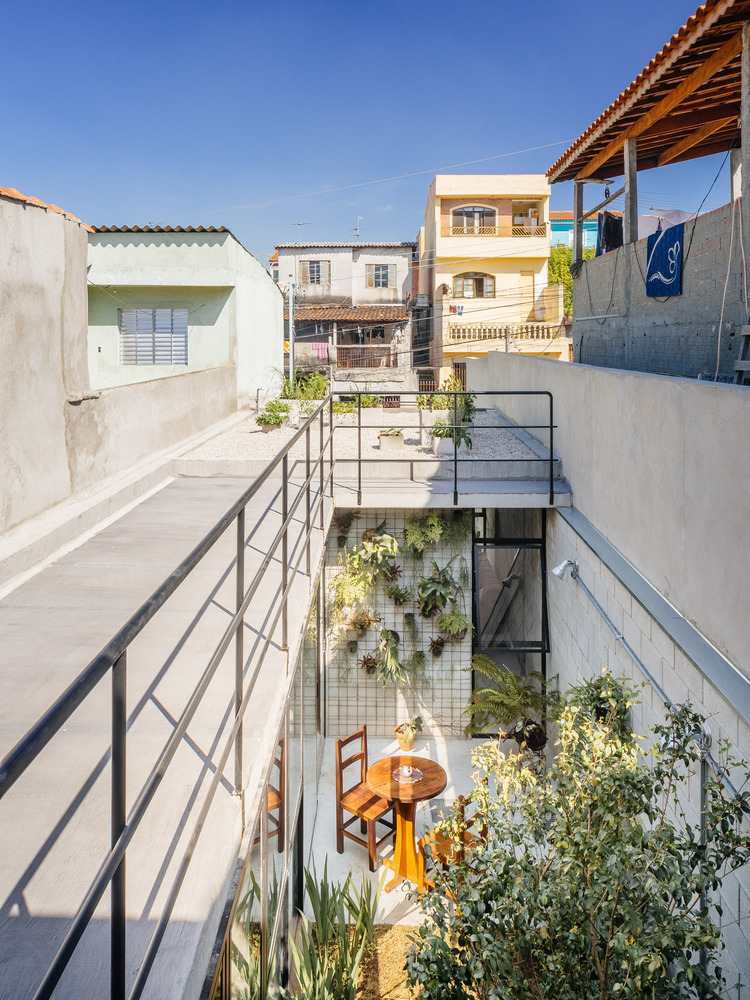
Sure, high tech micro apartments are pretty nifty, but never underestimate the power of good design even with the most meager means. Case in point is Vila Matilde by São Paulo’s Terra e Tuma Arquitetos. Ms Dalva, the owner of the home, has lived in the same location for decades.  When her previous structure started crumblilng down around her, she was faced with two options: buy an apartment that would exhaust all of her savings and put her further from her family, or build a new structure. Ms Dalva’s son reached out to Terra e Tuma to help design the structure we see here.

The house took only 10 months to construct, four of which were spent tearing down the previous structure. Time was of the essence because the longer the build out took, the more money Ms Dalva had to shell out.

(\\tt03\Volume_1\Clientes\INATIVOS\162\Publica347365es\162_desenhos_publica347343o_R01.dwg)

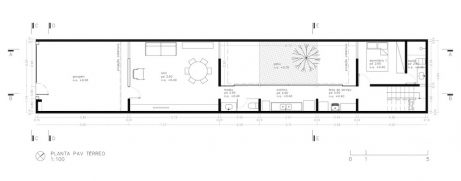
Much of the house is actually retaining walls of the 16’ x 82’ lot. The walls create the house’s form while acting as supports for the neighbor’s buildings. The ground floor has two main sections separated by an inner courtyard. The front section contains the living room and the back the bedroom. There is a narrow corridor lining the courtyard containing the bathroom, kitchen and laundry. The top floor has a guest room and vegetable garden.

While no mention is made of exact costs, the place is made primarily of unfinished cinder block and poured concrete, which we imagine helped keep costs very low.

Despite its modest design and resources expending—or probably because of them—the house won ArchDaily’s Building of the Year.

HT Tim D.

Photos ©Pedro Kok