MUJI’s Tiny Houses Show Off Huge Style

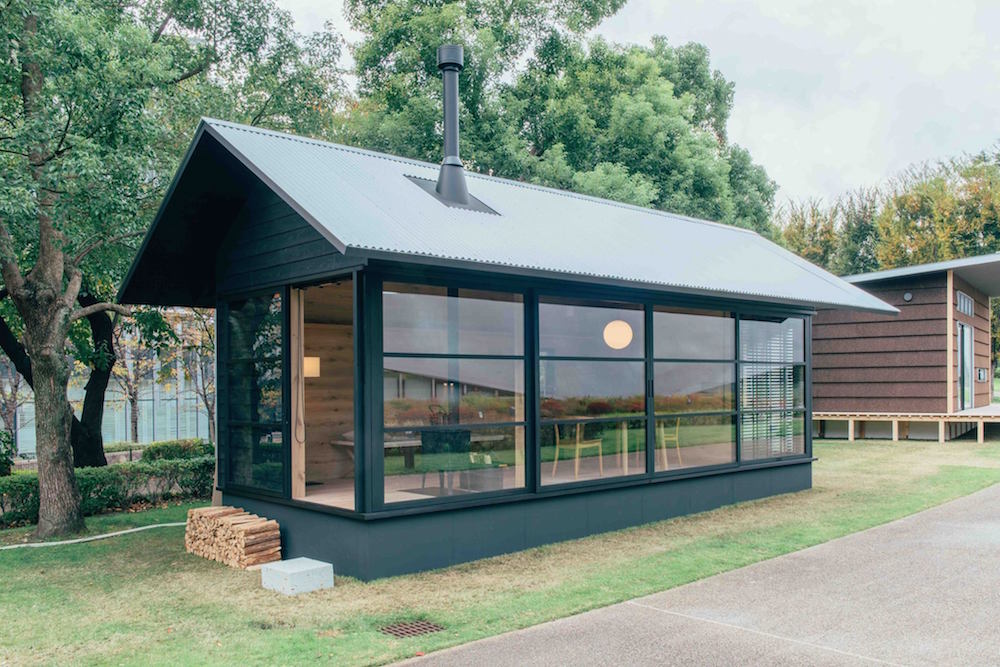
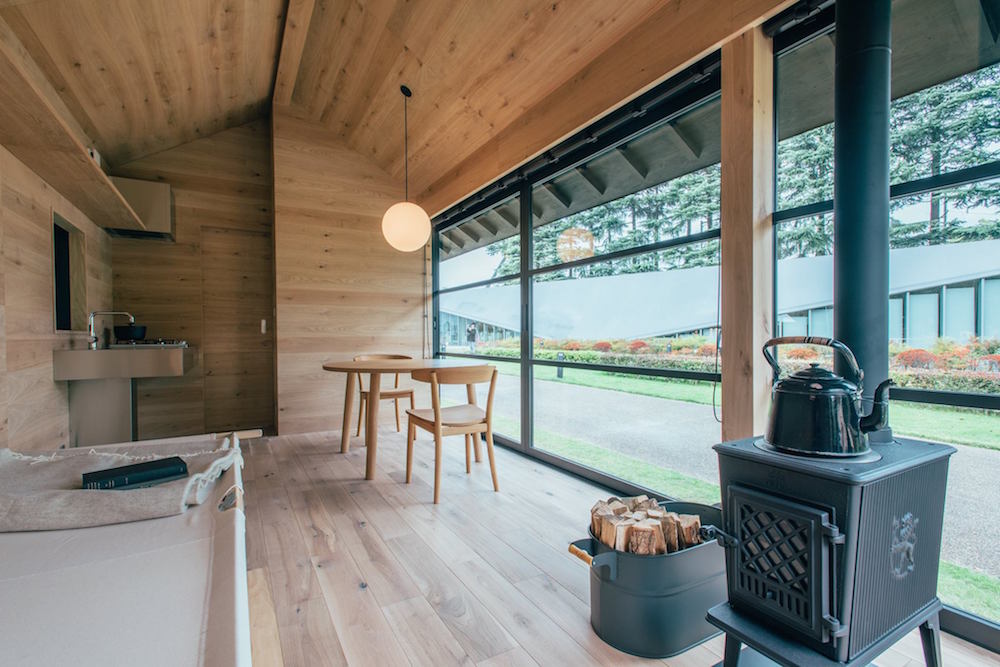
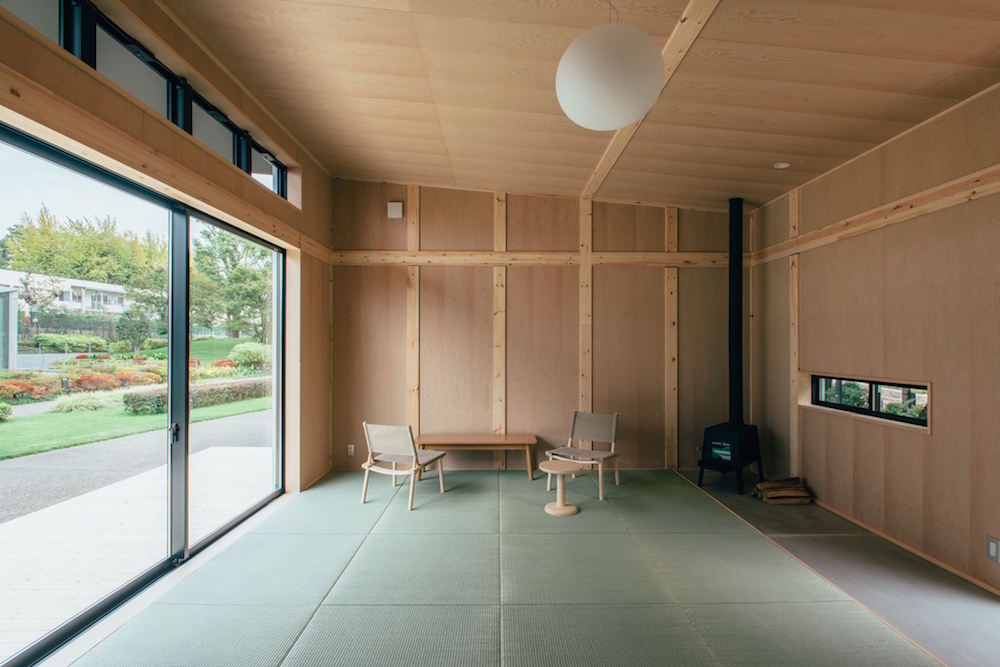
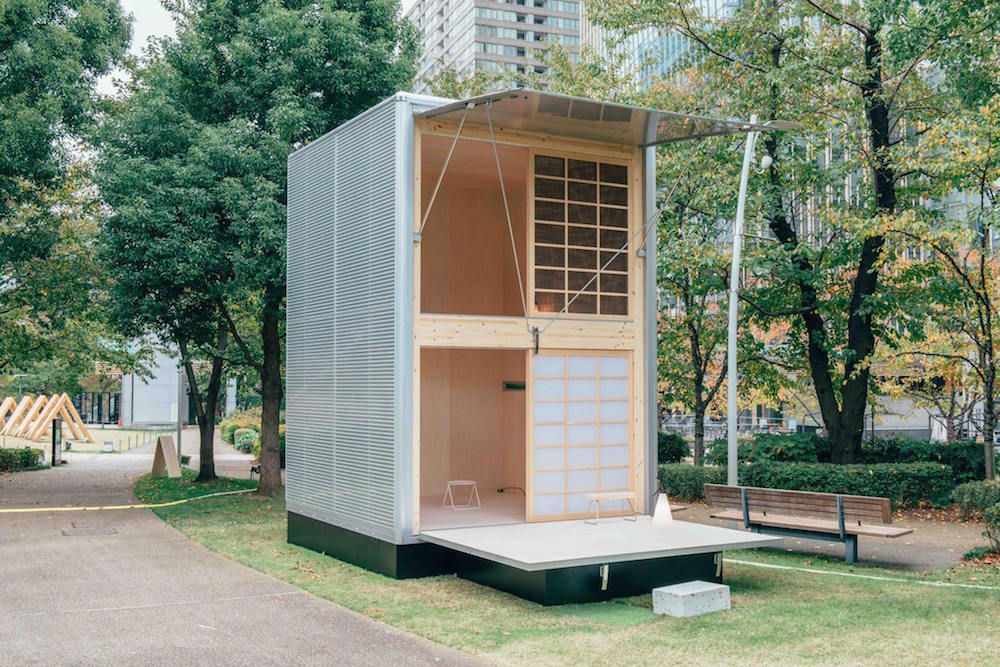
Japanese retailer MUJI’s bread and butter is simple, neutral colored, no-frills household products, furniture and the occasional piece of clothing. As part of the “Tokyo Midtown DESIGN TOUCH” event, the company is dabbling in house design, showing off three tiny houses–MUJI Huts–that embody the brand’s stark but elegant aesthetic. The size and the lack of decor aren’t a function of laziness, but the company’s exploration into “what it means to live a more sustainable lifestyle through minimalism,” according to Inhabitat.

The three prefabricated MUJI Huts were designed in partnership with leading designers Naoto Fukasawa, Jasper Morrison, and Konstantin Grcic, each of whom built their huts around a central material: wood, cork and aluminum, respectively.

The idea behind the concept is to create an easily-moved tiny house that can be set up in nature, giving harried city folks a tiny retreat to breathe. But I hope the sophistication of these designs bleed into the collective thinking of tiny house design worldwide. Too often–but not always–it seems like tiny house designers assume people want a mini Victorian home. What the MUJI Huts show is that tiny architecture and design can be every bit as sophisticated as the conventional stuff.

Via Inhabitat

Tour Yesterday’s Future Architecture Right Now

I’ve long expressed my affection for the Nakagin Capsule Tower. The 1972-built residential tower, located in the Ginza district of Tokyo, was a daring expression of the Metabolism architectural movement. Each tiny, prefabricated unit was self-contained, fully furnished and affixed to a central spine. The units were meant to be easily attached and detached from the spine for upgrades and reconfigurations. Unfortunately, the building was fraught with design and engineering problems–constant leaks, poor circulation in the units and so forth. And today, the building lies semi-derelict, ever in danger of feeling the crush of a demolition ball.

Fortunate for us, Kirsten Dirksen from Fair Companies got into the tower before it’s gone forever. Guided by Masato Abe (who, incidentally, rents out capsule units on Airbnb. Dirksen actually stayed there with her husband and three girls), she gets an in depth look at the building and its amazing level of detail. Abe also gives a nice explanation of how its creators thought it would be used.

There’s been a recent resurgence of multi story, prefabricated urban skyscrapers (some micro), but their level of design daring pales in comparison to Nakagin (many, like Brooklyn’s B2, have been similarly fraught with engineering hiccups). And while the Capsule Tower was far from an unbridled success, I hope it will continue to inform the shape of urban architecture for years to come.

Via Fair Companies

Transforming Space You Might be Able to Make Yourself

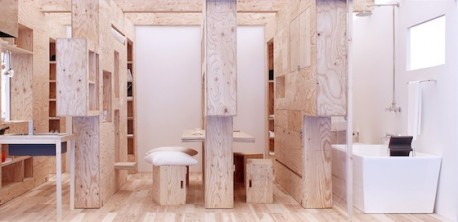
Question: What would happen if you combined the LifeEdited apartment and Gary Chang’s transforming Hong Kong apartment and made the fusion out of plywood and common hardware store materials?

Answer: Studio_01‘s barcode room. The space was a winner of a design competition and was on display at Tokyo’s Designer Week 2012.

Studio_01 explains the concept:

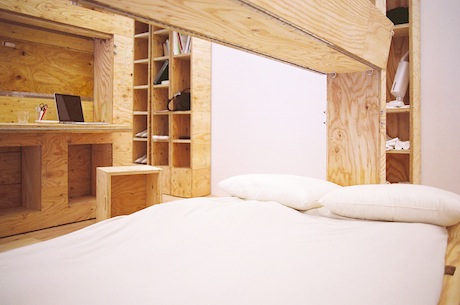
barcode room is a concept studio apartment composed of product furniture-walls which move freely from side to side, permitting the resident to customize the size of space to fit a variety of uses. Placing functional elements such as storage and furniture into these walls, only to be pulled out when in use, also allows for more of the floor area to be used by the inhabitant and guests, thus creating a space where one is able to both comfortably live and entertain a different number of guests easily.

We like how all of the furniture is incorporated into the walls and how there are different settings that furniture can be used; like the main table that doubles as a desk when one side is elevated.

The most important thing it demonstrates is the fact that space-saving, transforming furniture need not be complicated or costly.

via Treehugger

image credit studio_01

Mansions for All!

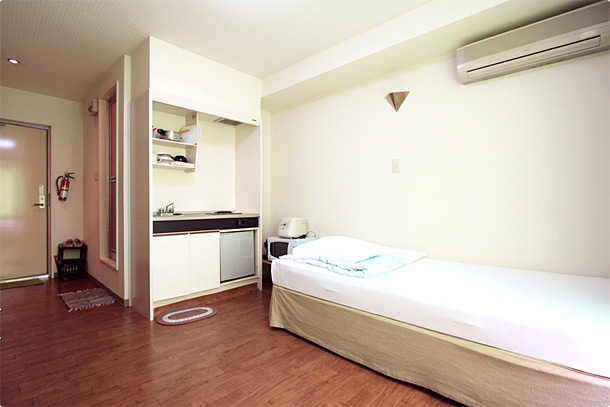
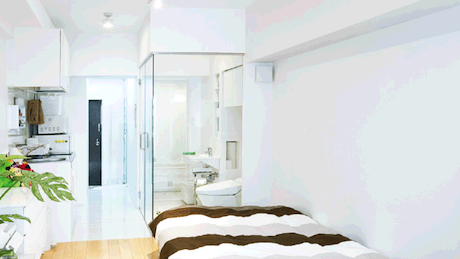
Inspired by yesterday’s post about residential hotels, we thought we’d look at how other nations handle clean, safe and affordable housing for single folks. In Japan, there is something called called the “wan rūmu manshon” or “one room mansion” (get it?). It’s a very small studio (~100 sq ft) with a bed, bathroom and kitchenette. They’re not fancy or architecturally that interesting. We found some with nifty glass-wall bathrooms (another living room?), but for the most part, they’re small, simple rooms to crash in. They’re designed for singles who don’t need, want or can’t afford anything more.

wan-rumu-manshon

Japan has 870 people per square mile, making it the 39th densest nation in the world (US has 84 people per square mile and is the 180th densest). Because of these geographic circumstances, Japan doesn’t have the space for one-size-fits-all housing. Single people use the space they need, which is less than couples. Couples use the space they need, which is less than a family, and so on.

The US’s surplus of land has led to many of us to occupy spaces well beyond our needs: singles live in two and three bedroom homes, empty-nesters have 4K sq ft homes and so on. The result is more money spent, more places to store stuff, more sprawl, more energy expended, more surfaces to mop, dust and upkeep. Perhaps it’s time we start using what we need, rather than what’s available. Perhaps it’s time we start building tiny mansions for everyone.

A version of this post first appeared on this site on April 24, 2012

Nakagin Capsule Tower: The Future of Compact Living, circa 1972

Don’t let its weathered facade fool you, the Nakagin Capsule Tower was one of the most innovative architectural designs of its day. Designed by architect Kisho Kurokawa, the Tokyo tower was completed in 1972 and the crown jewel of the Japanese “Metabolism” school, which, according to Wikipedia held a vision “for cities of the future inhabited by a mass society [that was] characterized by large scale, flexible, and expandable structures that evoked the processes of organic growth.”

nakagin-interior

While many architectural concepts like this never see the light of day, the Tower was (and continues to be) the real deal. Each of the 140, 90 sq ft living capsules was detachable from two main concrete towers; you could also join smaller units to make bigger ones. It was expandable, upgradeable and repairable. In fact, when the 40 year old building was threatened with demolition a few years ago (a threat that unfortunately remains), Kurokawa proposed to replace the capsules rather than tear it down. The Towers still stand today; reportedly, half of the capsules are being used as offices, while others are being used as part-time and cheap housing. One unit is even available to rent on Airbnb!

nakagin-stereo

Though its execution is a bit dated (the interiors look straight out of “2001: A Space Odyssey”), the Nakagin Tower proves that architecture needn’t be bound to the orthodoxy of its day. As Nicolai Ouroussoff wrote in the NY Times, the Tower’s “existence…stands as a powerful reminder of paths not taken, of the possibility of worlds shaped by different sets of values.”

Of course some paths are not taken for good reason. Nakagin was plagued with problems such as problematic plumbing, ventilation and less-than-optimal layouts for the capsules considering their small size.

Despite its faults, the capsule tower stands as a pioneering design for micro, prefab living. As our housing needs shift, as we recognize new values and design a new world around them, we can look and learn from intrepid pioneers like Kurokawa, who saw the future as more than a continuation of the past, but as a creation of worlds that might be…and then we can add functional plumbing and windows and call it a day.

[This post was originally published on March 22, 2012. Some updates and images have been added.]

Japanese Architects Build Multi-Generation Family a Tiny Village

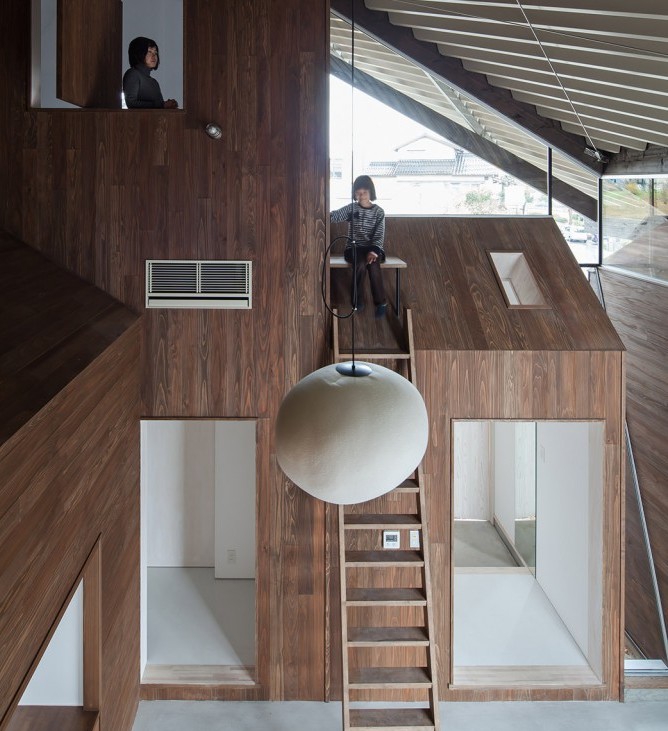
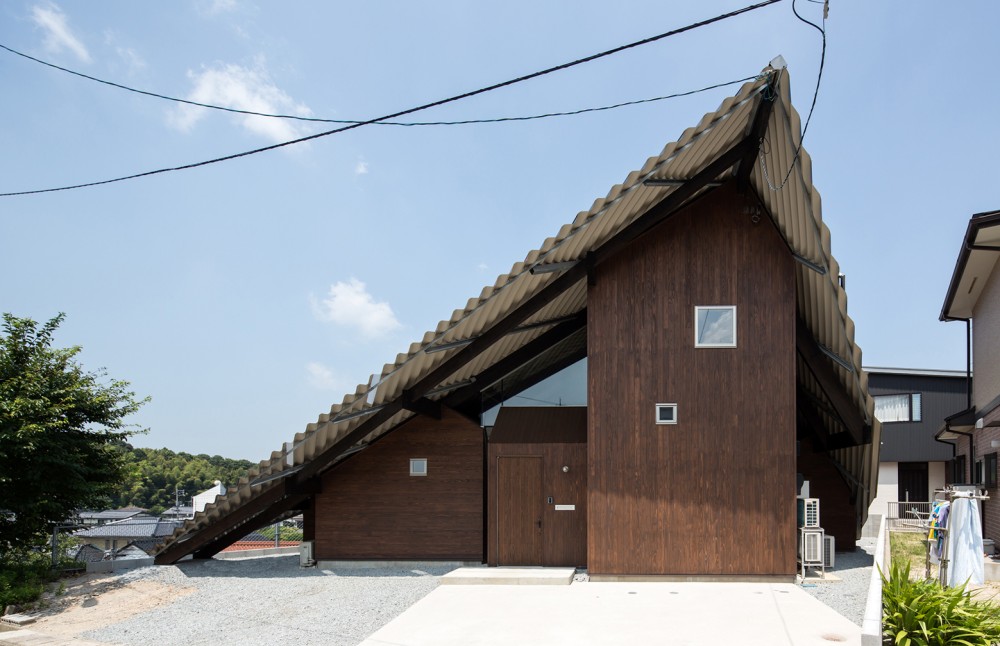
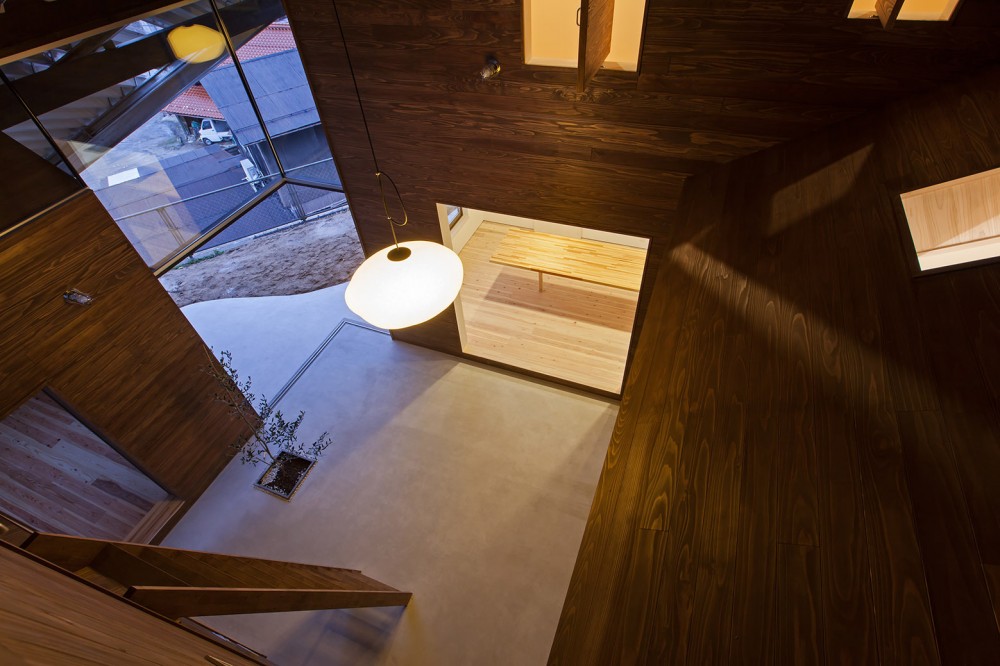
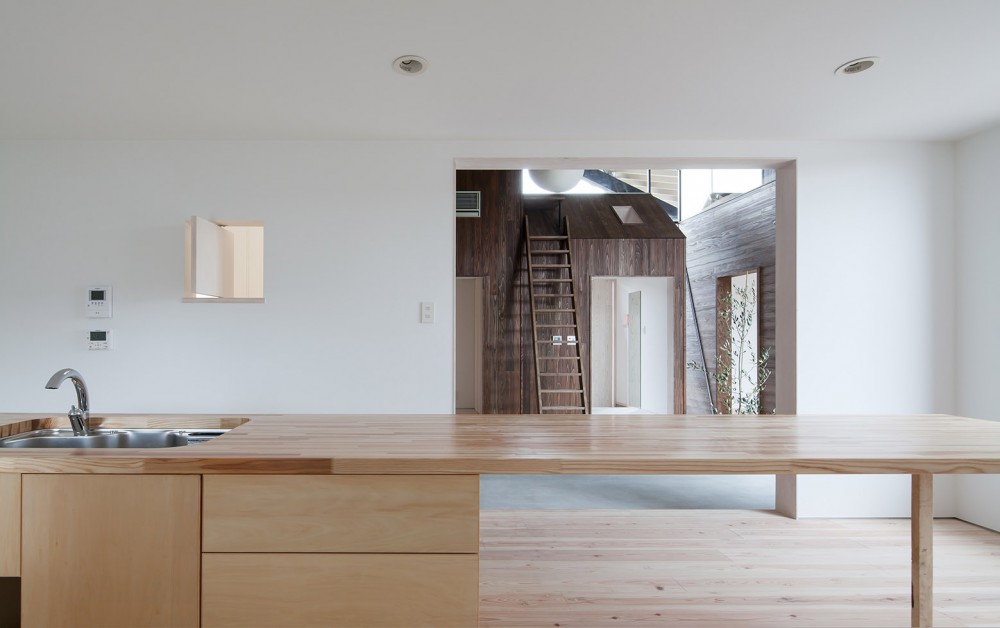
Fitting a large number of people under one roof comfortably and with privacy can be a tricky proposition. Japan’s y+M Architecture took an interesting approach in achieving this with their Rain Shelter House. The home places separate micro-buildings under one large canopied roof, creating several autonomous districts in one small footprint. The setup, which kinda resembles an extremely small village, houses a couple, their two children and a grandmother.

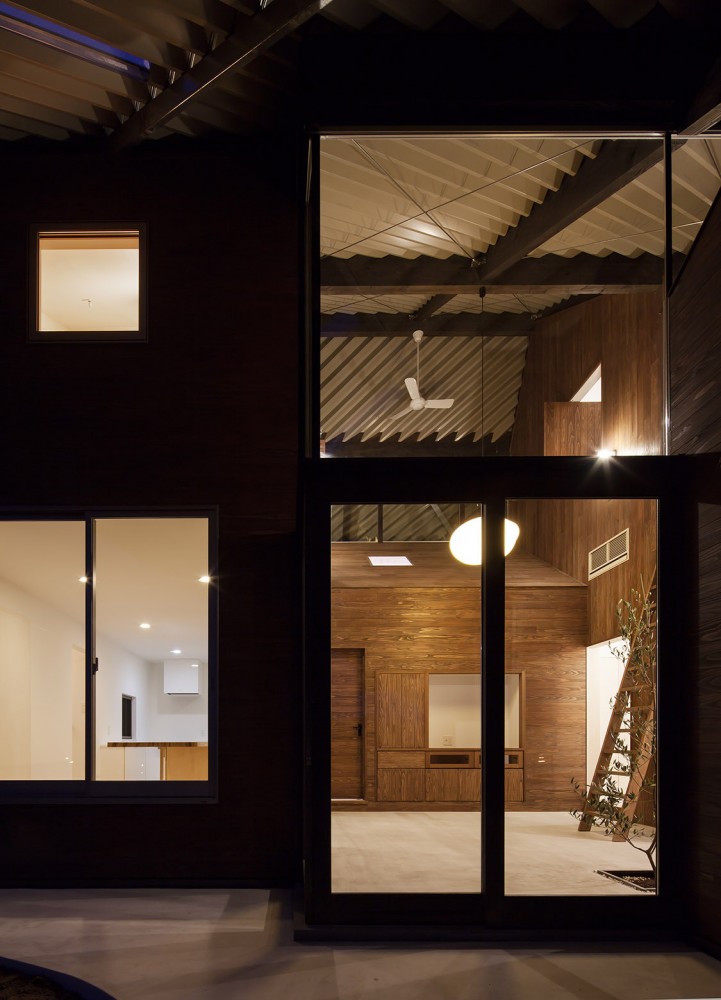
The space has four bedrooms, with the grandmother’s residing in a separate building. The second floor two kids rooms are accessible via stairs or a ladder off the inner courtyard.

The region where the house sits gets a lot of rainfall and snow, which the roof’s sharp slope is designed to shed; its main slope faces north, where most of the biting winds come from. Large glass panes further insulate the courtyard from winds and openings on the side of the structure let in oblique lighting. We’d imagine the courtyard makes a great outdoor play-space on inclement days.

What fascinates us most about the space is how it reimagines how the family home can function. We could imagine a similar structure working well for a space occupied by two or more families, striking just the right balance of connection, privacy, all inhabiting a small overall footprint.

via Archdaily

Bicycle-Powered Nomadic Housing

Maybe it’s the cooling temperatures, or the fact this author has been hanging out at home too much as of late, but there’s been a ton of talk about nomadic living on this site as of late. Last week, we looked at Foster Huntington, a full-time-camper-pickup-living-nomad and bon vivant. While I definitely dig his lightweight setup, one question has always troubled me about his and all petrol-fueled mobile living arrangements: what do you do in the event of a complete societal meltdown? Really, when SHTF, it’s going to be tough to move your ICE-powered home to more favorable environs if gas costs $20/gallon or is simply unavailable. (C’mon, I can’t be the only one thinking these things).

Resilient nomad housing would have to have minimal grid-dependence, which is why we dig the Taku Tanku concept by Japanese design firm Stereotank so much. It’s a trailer that’s minimal enough to be towed by foot or bicycle. If we were ever to face a Mad Max dystopian reality, we’d want this as our home way more than some 454 V8-powered behemoth.

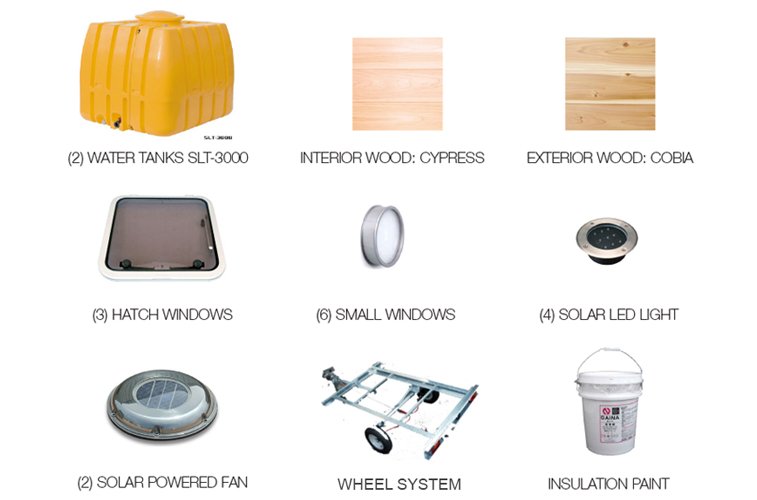
The Taku Tanku is designed to sleep 2-3 people and carry a bit of luggage. It can be made of lightweight, off-the-shelf materials; its main structure being two 3K liter water tanks. There’s really not that much more to it.

tricycle_house

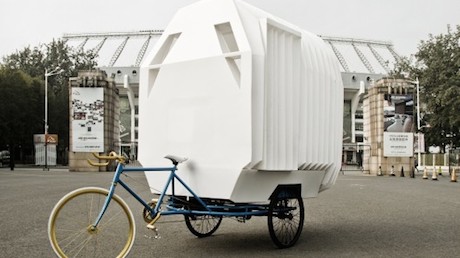
This is not the first time we’ve seen human-powered nomadic housing. The Tricycle House, was, as the name implies, a house affixed to a tricycle. Unlike Taku Tanku, a Tricycle House was built. Each house has its merits. We suspect the Tricycle House’s flexible folding, accordion structure, while lightweight, might not be as durable at Taku Tanku’s. The Tricycle House is smart because it’s designed to be used in tandem with a trike-powered garden, making sure you can tow your food source in case things get nasty. If S really did HTF, it’d be good to work through these important considerations ahead of time…just saying.

Via Gizmag


A Thoroughly Modern Take on Shared Housing

A big focus is put on micro-apartments when talking about compact, efficient living. There’s good reason for this we believe. By and large, the world’s populations are consolidating in the cities with limited area to build; people are increasingly more interested in living in walkable areas; household sizes are dropping; there’s a growing lifestyle trend toward simplification and having less stuff. Micros support many, if not all of those aims, fitting more homes in less area, allowing people to live in amenity-rich, walkable areas, all while being greener, cheaper and easier to maintain than many of the status quo housing options. But there’s more than one way to go small, green and thrifty, and shared housing is definitely one of them.

Shared housing involves several unrelated people sharing a house (though a couple or family could live within a shared house) and they can operate like a normal family household, splitting chores, bills, shopping, food preparation and often extras like childcare and gardening.

Shared housing has myriad benefits. It can be extremely affordable. It can provide a rich and diverse cultural experience. By virtue of its small per person footprint, it can be very green.

But living in shared housing is definitely not for everyone, as anyone who has lived with roommates knows. Without house rules and adherence to them, living conditions can devolve with great alacrity. Imagine if one or two members stopped washing dishes for a week or stopped paying bills–it would quickly create messes and engender anger in the house members who abide by the rules.

The other thing that can turn people off of shared housing is their hodgepodge aesthetic qualities. They are often an assemblage of different people’s stuff and furniture, looking more like a third grade collage than a gesamtkunstwerk. While this doesn’t bother many, for others it’s a deal-breaker. They might want the shared living experience and benefits, but with a modern sheen–exactly what Tokyo’s “Share House” provides.

Share House was purpose-built for multiple unrelated residents. Designed by Japan’s Naruse Inokuma Architects, the 3200 sq ft home, while not small, is shared by 13 people, resulting in a mere 247 sq ft per person. The building has several separate communal spaces and 13 bedrooms, each measuring 77 sq ft. The ground floor offers a large communal area with kitchen, dining table and lounge. A floating mezzanine level and roofdeck provide two more common areas. By using a mezzanine rather than a separate floor, the space is kept open and grand with light flooding in from all directions–an architectural flourish you could not easily replicate in a micro-apartment.

The sparsely decorated space–at least in our opinion–is gorgeous. The ample use of natural wood with white walls make it feel clean and airy. At least in its pictured guise, there seems to be an agreement that residents not fill the place with a lot of their own furniture (we wonder if this was just for the photo shoot). What little furniture there is looks great and maintains a cohesive aesthetic.

Obviously, living successfully with others is far more than fancy design, and while we’re smitten with Share House’s aesthetic, we know little about its culture (living in it could be like an episode of the MTV’s The Real World). Nevertheless, it shows an alternative, and compelling, vision of what shared housing can be; a vision we believe might have wide appeal around the world.

[Note: A previous version of this article incorrectly referred to the Share House and cohousing. Cohousing refers to a intentional neighborhood made up of individuated houses that share activities, facilities and other community services. For more see the Cohousing Association of the United States]

Via Dezeen

Live Life Just in Time

One reason Japan is the manufacturing juggernaut and paragon of quality it is today can be attributed to a philosophy called Just in Time. JIT’s main objective is to improve efficiency by eliminating waste at every step of a manufacturing process. Brighthub PM quotes Fujio Cho of Toyota (the company to first employ JIT), who says waste is “anything other than the minimum amount of equipment, materials, parts, and workers, which are absolutely essential to production”. Brighthub goes on to say that the seven common types of waste are:

  1. Processing waste
  2. Waste due to idling time of machinery
  3. Waste due to product defects
  4. Waste of motion or faulty working techniques
  5. Waste related to transportation
  6. Waste from overproduction
  7. Inventory waste

In short, JIT prescribes that manufacturers avoid the waste associated with inefficient processes and that they continually streamline and improve those processes; that they avoid the waste of unused things sitting around doing nothing; that they avoid surpluses and make stuff when it’s needed, and only when it’s needed; and that they eliminate waste associated with transportation and unused inventory.

JIT gave Japan a big competitive edge in the latter part of the 20th Century against American automotive manufacturers (not to mention other industries). The Americans relied on large workforces and inventory necessary for production lines. Even if the inventory was defective–which it often was–the company had to unload it to cover associated manufacturing, storage, transportation and manpower expenses.

On the other hand, the nimbler Japanese companies and their small inventories were able to make continuous improvements to their products because there was nothing sitting on the shelves needing to be unloaded. This led to better products with higher profit margins.

The revolutionary idea behind JIT was that being over-prepared is a far greater liability to a manufacturer than being underprepared. The JIT company can always make more; the over-prepared cannot un-make their product. The under-prepared can adjust processes quickly; the over-prepared changes slow and stays on misguided trajectories because they are bound to inflexible processes and massive inventories.

The parallels between JIT and the way we live our lives are obvious. How often do we keep around stuff that we might need, only to incur the expenses of storage, maintenance, transportation and so on? How might our over-preparation impede our abilities to make important changes in our lives–move, change jobs, take vacations?
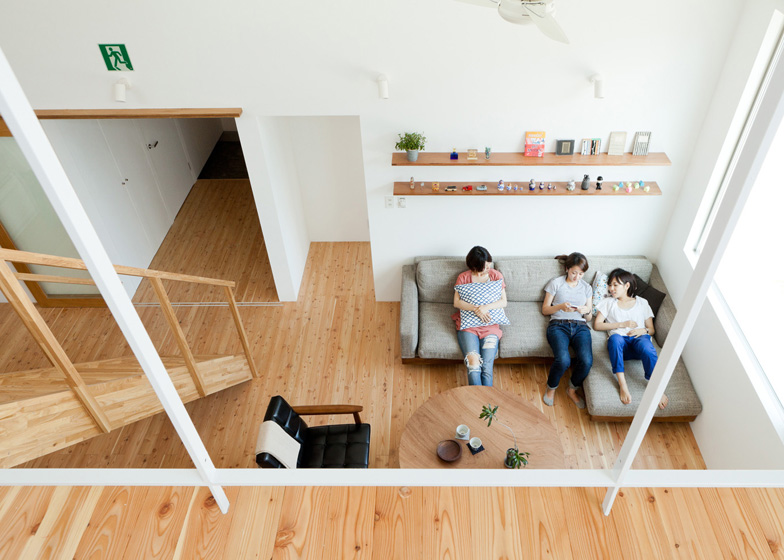
What if we only had what we needed, when we needed it? What if we were not bound to the expenses of large houses and lots of stuff? What if we could easily make changes to our lives when necessary because we were so unencumbered? What if we reduced the waste associated with long commutes? What if we eliminated the mental waste of staying in jobs we don’t enjoy, only kept to support our large infrastructures? What if  we lived life just in time?

image via Wikipedia

It’s Official: Japanese Small Apartments Are World’s Coolest

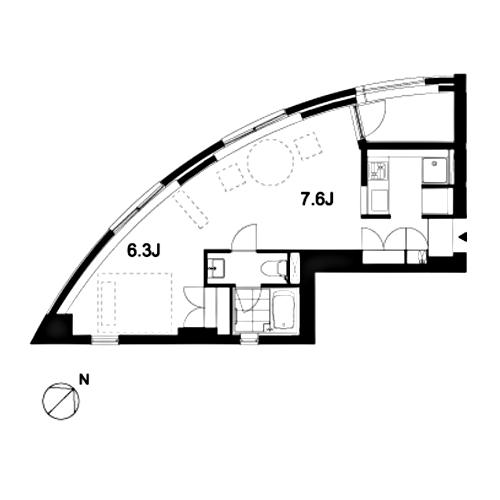
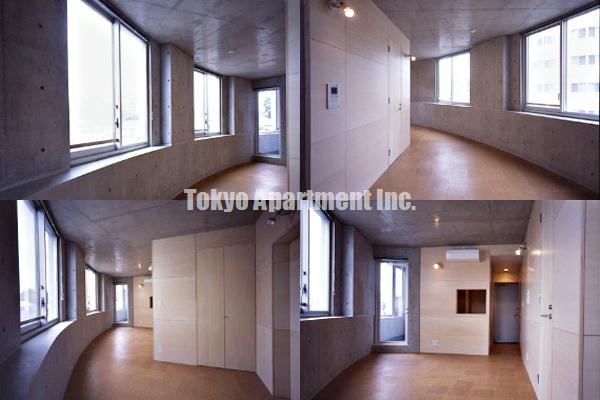
As one of the world’s most densely populated countries, Japan has long been a leader in small space home design. Maybe it’s just us (who have never been there outside of flight layovers), but when we see some of the crazy Japanese designs like Kyosho Jutaku, we wonder if those are just rogues–daring and bold designs in an otherwise staid architectural landscape. When a reader turned us onto a Japanese rental website–filled with apartments anyone could rent–we realized that innovative Japanese home design is pretty damn normal.

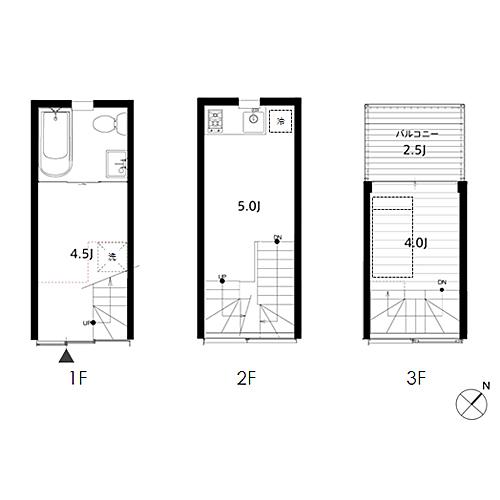
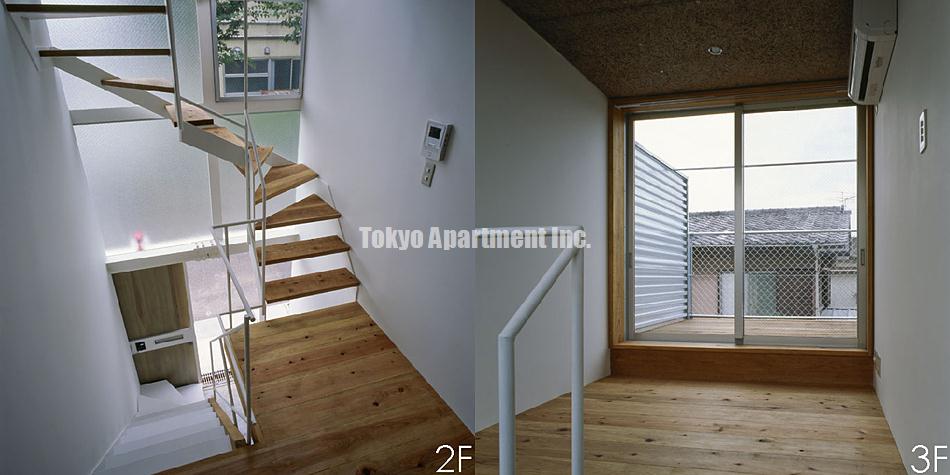
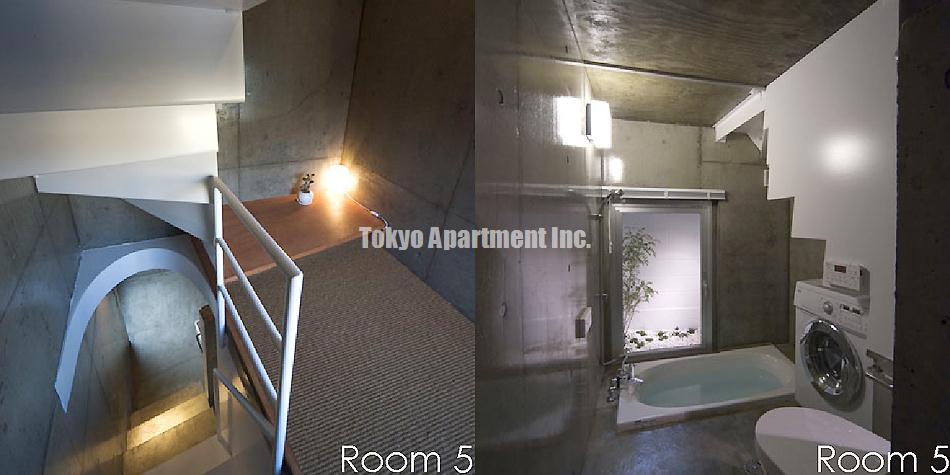
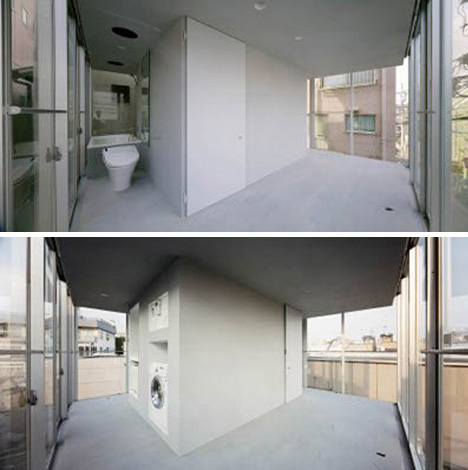
The website Tokyo Apartment Inc is filled with remarkable and daring designs that would be a big deal anywhere other than Japan. The apartments are small, but high end. They are well-lit, feature high quality materials, are decked out with appropriate appliances and have more interesting architecture than you’re likely to find on any Craigslist rental. We perused the TOI site with not-so-micro envy. Hopefully, one day the US and other hefty-haunched-homed nations will pick up some of the Japanese design cues.

All images via Tokyo Apartment Inc