If This Store Succeeds, It Might Put Itself Out of Business

The prevailing business model for many retail outlets is to keep customers in neverending cycle of consumption. Whether it’s through selling unrepairable products, selling products with impending obsolescence built into their DNA or through selling new, slightly-different-than-last-month’s products at breakneck speeds, the objective is the same: get people to buy again. But a new UK web shop called “BuyMeOnce” has a different approach to commerce. As the name implies, they want to sell you products that can, with proper care, last indefinitely. If you buy a product from them, say a valise, that should be the last valise you buy from them or anyone else.

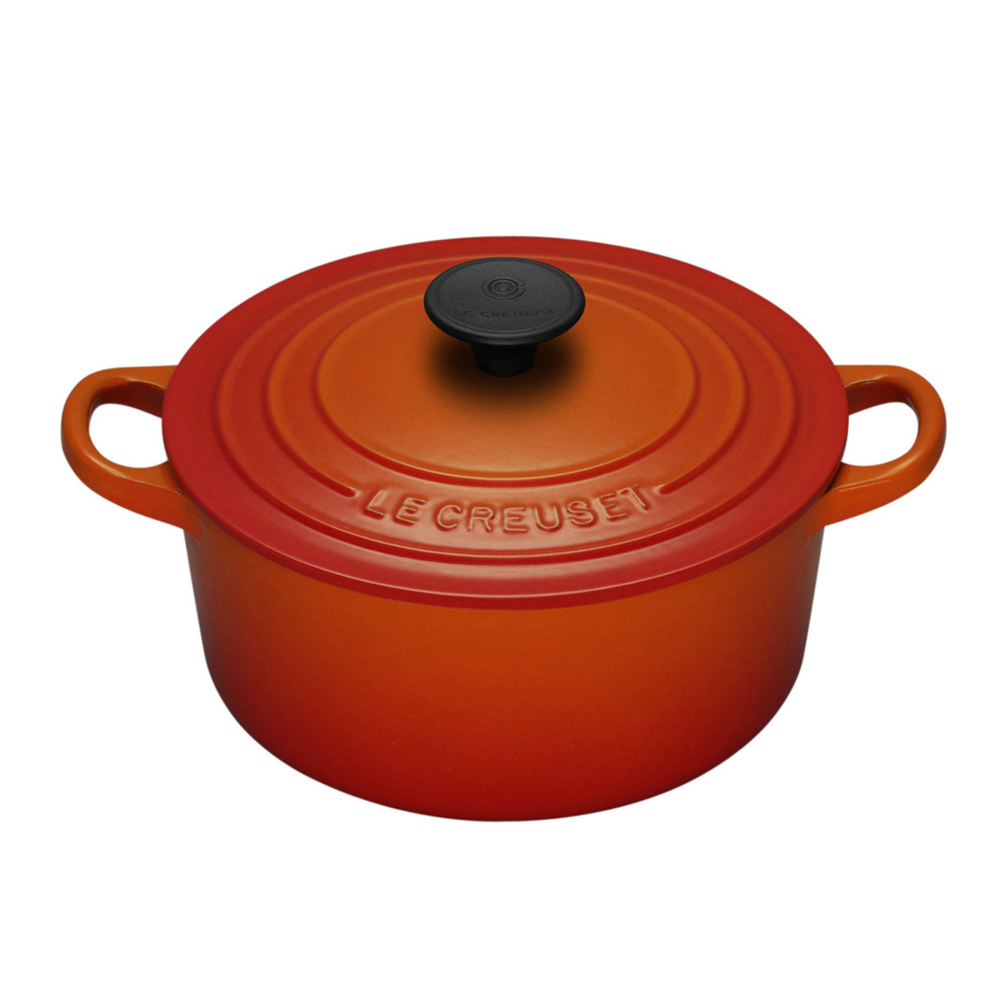
BuyMeOnce founder Tara Button told the Telegraph UK she was inspired by her Le Creuset casserole dish. She said, “‘I will have this for life–wouldn’t it be great if everything else in my kitchen was like that? You buy it once and you never have to buy it again.”

The web shop goes beyond the kitchen, featuring clothing, furniture, tools and a handful of other categories. All products are chosen for their durable construction, timeless design and repairability. On the latter point, the site also has articles and tips for making things last a lifetime or more.

Button’s concept is something we have written about many times in the past, though we call it “heirloom design.” It’s the idea of designing and consuming products capable and worthy of being handed down from one generation to the next.

The main obstacle to heirloom design becoming normal is economics: stuff cost so little money that it’s easy to rationalize buying three or four pairs of cheap shoes versus one heirloom quality pair. But this short-term thinking misses hidden expenses. Cheap stuff is cheap because manufacturers use crappy materials and construction and employ sketchy labor and environmental practices. Cheap stuff is often designed for the times, not the ages, so you are likely to want to replace it before it wears out; notice how often the simplest clothes and products are also the most expensive. Cheap stuff (and frankly, most stuff, nowadays) is not designed to be repaired. And perhaps more than anything, when we buy cheap stuff, we don’t value it; we are less likely to care for it, cherish it and even use it.

It’s heartening to see BuyMeOnce and other shops like it becoming more mainstream. People still need stuff, but with the right orientation and selection, the stuff we use can be more useful, look better and last longer.

This Might Be the Last (and Best) Razor You Buy

[Update: this product has been banned from Kickstarter for not having an operational prototype. Back to razor burn and nicks.]

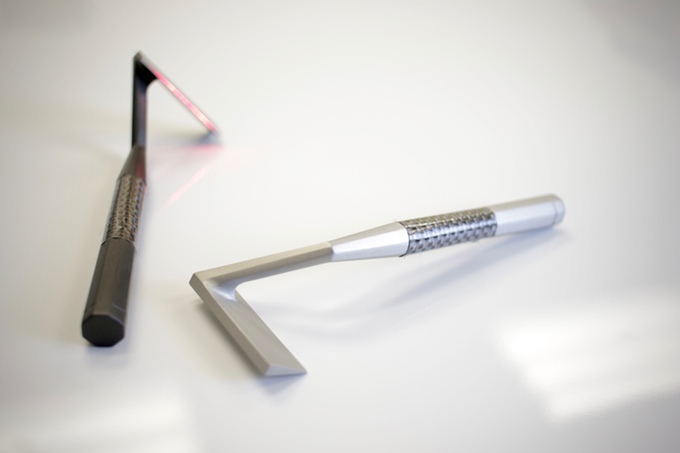
It’s a bit funny how things like cell phones undergo nonstop innovation, while other things seem to be innovation-proof. One product that fits into the latter group is the hand razor. Yes, companies want to make you believe they are innovating by adding a fifth blade, achieving a 1 nanometer closer shave (they need something to justify their cartridge’s $8 price tag), but really the basic safety razor hasn’t changed much in the last 130 years since it was invented. A new Kickstarter project might be changing all that. The Skarp Laser Razor uses, you guessed it, lasers to trim your hair, eliminating the need for disposable blades forever. 

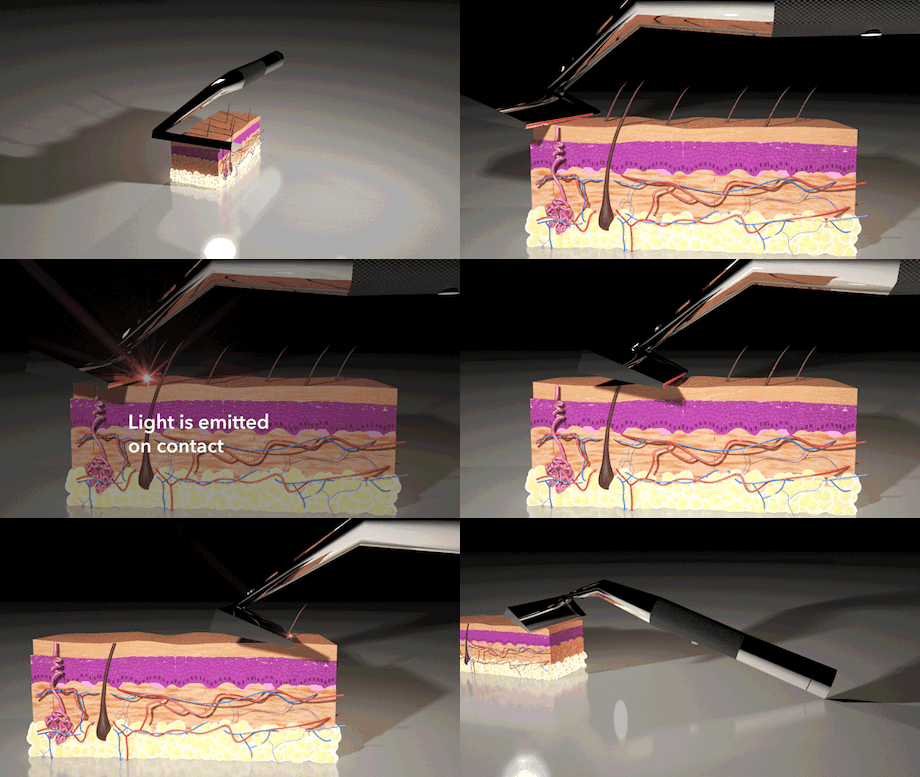
Skarp claims that 2 Billion razors or razor cartridges are tossed in the US alone each year. Skarp uses a special laser to be completely blade free. Here’s their explanation as to how it works:

Wavelengths of light had already been discovered that could cut through dark hair, but finding a way to cut light hair was proving incredibly difficult. After years of research & development, they discovered a chromophore in the hair that would be cut when hit with a particular light wavelength. Chromophores are particles that absorb certain wavelengths (colors) of light. This chromophore they identified is shared by every human, regardless of age, gender or race.

This chromophore is the one they use in their razor we can assume. It is claimed to be totally safe to the skin and eyes. In fact, because it doesn’t make contact with the skin, Skarp doesn’t cause the same rashes and irritation commonly caused from normal razors.

skarp

The laser is said to have a 50,000 hour life (probably a few generations worth of shaving) and runs off a AAA battery. The prototype has a gorgeous machined aluminum shaft that looks worthy of the ages.

Apparently people are ready to ditch their old razors. Skarp set a funding goal of $160K. As of this writing, they are at $3.7M. A pledge of $189 will get you one of the razors. That’s a bit of scratch for a razor, but would pay for itself fairly quickly if you are a regular shaver using premium blades.

UPDATE: A READER POINTED US TO THIS REDDIT POST QUESTIONING WHETHER THIS PRODUCT CAN ACTUALLY DO WHAT IT’S CLAIMING. IF YOU’RE CONSIDERING PLEDGING, YOU SHOULD PROBABLY READ THE POST FIRST. 

The Last Pen You Ever Buy

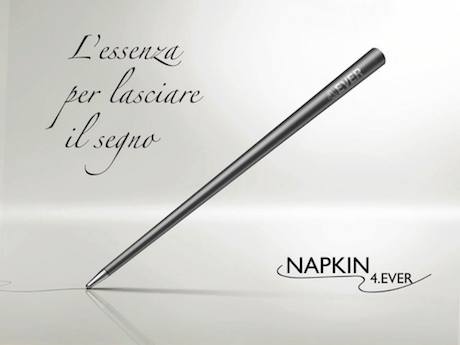
A new “pen” by Pinifarina–a firm best known for designing Ferraris–could just be the last pen you ever buy. The “4.EVER Cambiano everlasting writing instrument” uses something called Ethergraf. Rather than splotching ink on the page, the Ethergraf tip is an alloy that oxidizes the paper on contact, leaving writing that looks similar to graphite.

napkin-4.ever

The Ethergraph tech was actually developed by Chic Trading, who has their own line of pens called NAPKIN 4.EVER (a name, we assume, sounds better in Italian). Whereas the gorgeous aluminum and wood Pinifarina pen will run you about $120, the NAPKIN will only set you back about $50. Neither sum strikes us as crazy considering: 1. many premium pens cost far more than $120, 2. assuming you don’t lose the pen (and yes, it’s very possible to have a pen without losing it), it could be one of the last pens you buy, and 3. this could be a pen worthy of handing down to future generations.

The NAPKIN 4.EVER is available now on their site or Amazon UK. The Pinifarina will be delivering in April at earliest. See their press release for more info.

This author considers himself a bit fussy when it comes to his pens (I use a Uni-Ball Vision), so I wonder about the grip, the feel of the pen on paper and whether the tip will work on a variety of papers. Assuming all of that stuff checks out, I’d gladly ditch my disposables for one of these ingenious, um, writing sticks.

Via Smithsonian Mag

Basic, Done Right

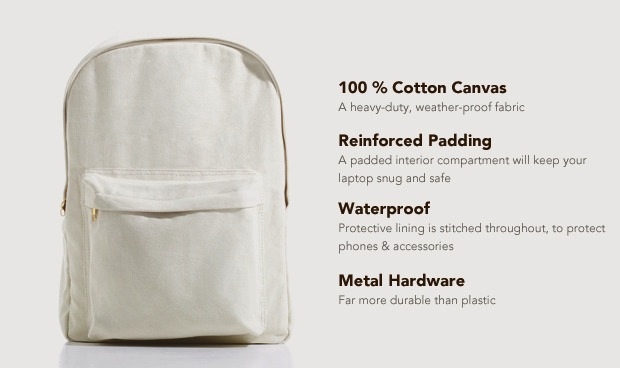
Have you ever noticed how difficult or expensive it is to get basic stuff done simply? A pair of pants in a classic cut with durable fabric. Sneakers without neon colors or a huge logo emblazoned upon it. Fashion tends to value timely over timeless design, thereby imposing planned obsolescence, replacement and greater profits. Designer Daniel Eckler and his company MIJLO (my-lō) seem to understand this situation, and have created a response in the form of a product called “A Better Backpack.” Rather than creating a crazily festooned pack with secret pockets made of kevlar reinforced recycled bamboo fibers, they are making a simple canvas bag, classically styled, with just enough features to get the job done.

The bag’s exterior is made of 100% cotton canvas with a waterproof lining to protect electronics and paper. There is an internal padded sleeve for a laptop–a necessity nowadays. All hardware is metal to ensure durability. It is available in four muted, fad-resistant colors. There are not many more features than that.

MIJLO sees the bag as a response to “disposable design.” From their website:

In recent years, fashion retailers have been moving designs from the runway to the rack faster than ever before – feeding a fashion cycle that appears to have no end in sight. At MIJLO, we believe that fashion doesn’t have to be fast, or disposable, or temporary. We believe it should begin and end with a classic collection of well-designed essentials. And we’re starting that collection with a backpack – A Better Backpack. Since we believe a product’s lifespan should be as timeless as its design–simplicity and sustainability were an integral part of our design process.

While they want people to hold onto the bag forever, they also know sometimes people get rid of things, so they offer a 10% buyback for your old bag when you’re through with it. Materials are then recycled for future products.

Like many products we’ve been featuring lately, A Better Bag is being promoted and funded through a Kickstarter campaign. You can purchase a bag with a $39CAD ($37US) pledge. With almost 40% funding received in a day of campaigning, it seems as though a lot of people want things that last longer than a whim.

A Movement Masquerading as a Phone

A few months ago, I dropped my hand-me-down iPhone 4–a replacement for my hand-me-down first generation iPhone. Rather than forking over $80 to get my cracked screen replaced by a professional, I took the questionable suggestion from some dude at a party of fixing it myself–a procedure that took a surgeon’s hands and robotics engineering degree (my fingers don’t handle things much smaller than keyboard keys and I have a BA in English). During my “repair” I screwed something up, and when I put it back together, I had an unusable iPhone.

After a few unsuccessful attempts to get a new hand-me-down, I decided I’d get a new phone. I got on a family plan with my wife, which subsidized a new phone, forked over an additional $200 and got an iPhone 5, taking tech guru Brian Lam’s advice that if you’re going to replace your tech, might as well replace it with the latest tech.

Last week, Apple released their new iPhone 5C and 5S: phones that, if you’re to pay attention to the tech cognoscenti, are far superior to my phone. I realize in the race to stay current with tech, you can only pull ahead of the pack. You can never, ever win. But still, I thought my phone might be current for a year or so.

Of course my crappy old iPhone 5 works needlessly well for my purposes and I will not replace it until I have to, but my personal tech experience–where repair and upgrade is made virtually impossible–is the one that a project called Phonebloks is trying to address. Phonebloks is a fully customizable, upgradable, repairable, open-platform/source cell phone. The phone is designed around a grid where blocks are installed and configured depending on your needs: put a larger camera lens block if you’re a shutterbug; install a larger storage block if you like your data local; shrink it if you like your stuff in the cloud; and so on.

Unfortunately the phone is just a concept right now, but Phonebloks creator Dave Hakkens is asking for our support. Working off the crowdsource activism site Thunderclap, he’s asking that we all simultaneously express our interest in a product like Phonebloks to the mobile tech industry on October 29th. Find more info here.

While you could argue that your activism hours are better spent elsewhere, the would-be Phoneblok movement makes a statement that transcends introducing cool gadgets. It’s about a culture moving away from disposability and planned obsolescence. It’s about respect for natural resources. It’s about designing products–any product–to be usable for as long as it possibly can be. We think that’s a big deal.

via 9gag

Design for the Ages, Not the Times

Some time ago, we talked about the idea of heirloom design. It’s the notion that the stuff we include in our lives be worthy of being handed down to future generations; that its function, aesthetics and durability are designed for the ages, not just the times. When things can withstand this type of scrutiny, they also take on their own lives and stories. A project called, appropriately enough, The Heirloom Project, seeks to tell those stories.

The project shows a number of heirlooms along with their owners’ stories–how they came to have them, what they mean to them and so on. While a number of the objects are sentimental (old war metals, a transistor radio, old documents), others are everyday objects like ceramic bowls, a Leatherman tool, and a Beaux Arts-style lamp.

These opera glasses are one example:

heirloom-project-opera-glasses

These turn-of-the-century opera glasses belonged to my paternal grandmother who I never met as she died the year before my parents married in 1962. My father, who died four years ago, was a conductor, his father both a cellist and a tailor. He talked about my grandmother from time to time, sad that my brother and I never knew her. My entire childhood was steeped in music; both parents would sing Mozart, Brahms, Haydn, Beethoven to us, I learned to play piano and flute, my brother, the trumpet and then the drums.

While my mother only gave me the glasses when my father died, they remind me of the first time he took me to the opera: I was seven and it was to see Carmen. I remember being utterly enchanted by the melodies and the drama, but was so sleepy by the interval he had to take me home to bed. The opera, as with all the music he introduced me to, has remained in my head forever.

Whether practical or not, there’s a certain beauty to objects that have been protected against the ravages of time. The project is illuminating insofar as it makes us wonder how many of the objects in our own lives deserve a story? Are any of the objects in our lives worthy of being handed down to future generations? If not, why not?

See more at The Heirloom Project

Via FastCo Design

A Case for Buying the Bike You Want

We don’t do–or at least haven’t done–car reviews on this site. One reason is that car companies aren’t exactly eager to have us dole out opinions about their new turbo-charged super-sleds to a bunch of design-oriented minimalists who err on the thrifty side. But another reason is that we don’t like cars very much. Sure, they get us around. Some of us even have them (this author shares a well-used Honda Element with his wife). But our relationship with them is one of tolerance and necessity, not adoration. Cars are expensive, dirty, promote sprawl and have many moving pieces that tend to complicate life. We appreciate that many of our lives cannot function without owning a car, but if workable with your lifestyle, we recommend selling your car and picking up a car-sharing membership instead.

Bikes, on the other hand, are a different matter. Maybe it’s because they are the world’s most efficient form of transportation, or because they condition our bodies as they get us to our destination, or because we need somewhere to place the fetishism we had for cars in our youths–whatever the reason, we love bikes.

When we test drove the Schindelhauer ThinBike last week, we received a few comments about its $1500 price tag. We notice people tend to balk when a bike’s price goes north of $1000–a figure that seems orders of magnitude greater than the $60 Murray of our youths. While we won’t deign to say how much you should or should not spend on a bike, we will make this recommendation: Don’t be afraid to buy the bike you like and will ride…even if it cost more than $1000.

There are some technical reasons why you should consider an upgraded bike. Cheap bikes tend to be cheaply made; they often have crappy bearings and seals, stamped (not forged) metal parts that bend, steel rims that rust, brakes that barely stop, frames that weigh a ton. And before you say you can’t tell one bike from another, test ride an expensive bike against a cheap one. See if it doesn’t ride better and is not easier to pedal, shift and brake.

There are also intangible reasons why you should consider an upgraded bike. In an edited life, one where most everything you have is necessary, it’s important that the stuff you have is the stuff you love and will use. Every item you have needs to be a starter, not a second-string player.

This longwinded preamble was really just an excuse for this author to show off his new bike.

Before I put it together, I had two bikes: A well-worn road bike with a slightly buckled headtube and a mountain bike I was always planning on (but never) riding. I decided to trade both in and get the one bike I wanted and would match my riding needs. BikeEdited, if you will.

The bike is built around a very basic chomoly-tubed frame by a company called Murphy Himself (I think it’s one guy actually). I chose it because it has multiple eyelets where I could install fenders and a bike rack for a baby seat or touring. I like it’s clean, decal-less look. It’s not particularly light, but I’m not riding competitively so why should I care?

(As an aside, if you are overly concerned about bike weight, specialized equipment or having the latest and greatest equipment, you must read Grand Petersen’s “Just Ride.” Petersen is the founder of Rivendell Bicycle Works and debunks many commonly held myths amongst ‘serious’ cyclists, such as the necessity for clipless pedals, padded shorts and carbon frames.)

Like I mentioned, a big priority was having full fenders. Even light rain on a fenderless bike can create a huge stripe up your back. I wanted to make sure I was fully protected. Clip-on fenders tend to rattle off and provide incomplete protection, so I purchased a set of Velo Orange hammered-alloy full fenders that fit and look great and provide ample coverage.
alfine-rear-hub

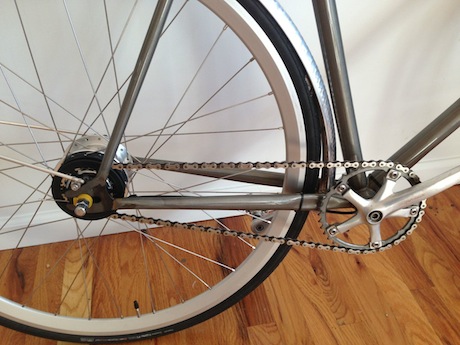
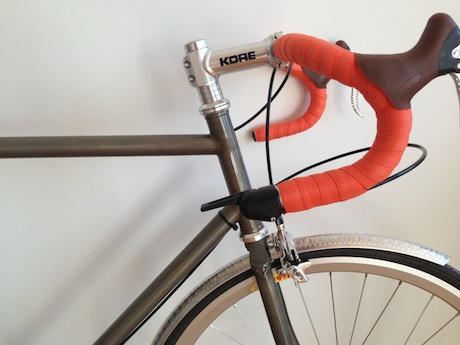
Next, I wanted a bike that was almost maintenance free, so I decided to use a Shimano Alfine internal 8 speed rear hub instead of a derailleur-based drivetrain. It’s a bit heavy, but it shifts flawlessly and 8 speeds is enough (don’t ask Petersen what he thinks of 33 speed drivetrains). Because I wanted to use drop bars, I purchased a bar-end shifter from a company called JTek Engineering.
jtek-shifter

The rest of the bike is a smattering of new and old parts stripped from my previous bike: A Dura-Ace crank, Mavic front hub, Velocity Deep V rims, Panaracer tires, Ritchey seatpost, Selle San Marco saddle, Cinelli bar, Kore stem, Tektro brakes. When all was said and done, the bike cost around $1400 (I saved a little money using old parts).

I love the way the bike rides, fits and–I’ll admit it–looks. I make up excuses to ride it. And therein lies my point: When we get the stuff we want–whether it’s a bike or a frying pan–we use it, cherish it and take good care of it. A bike just happens to be an important piece of stuff in our estimation. And while this cherished stuff might be a little more expensive (or not), as we like to say around here, “If something costs twice a much, but lasts four times as long [or is used four times as much] it’s effectively half price.”

None of this is an excuse to spend money needlessly. Nor is an excuse for a superfluous upgrade. And many may find a cheap bike they can safely lock outside serves their needs better. Likewise, there are many great bikes under $1000; if you know a thing or two about bikes, buying used can be a sound idea. We’d also be remiss not to mention bike sharing. For many city-dwelling bike commuters, systems like NYC’s Citi Bike effectively eliminate the need to own a bike at all.

For the rest of us who don’t live near a bike sharing system or have long distance commutes where a personalized bike makes a difference or just like riding our own bikes, we think making an investment on a bike you love and will ride is a good one.

[Full disclosure: In my previous life, I worked at five bike shops, crossed the US and a few other countries by bike and have generally been an advocate of bicycles.]

Built Rams Tough. Dieter Rams that is

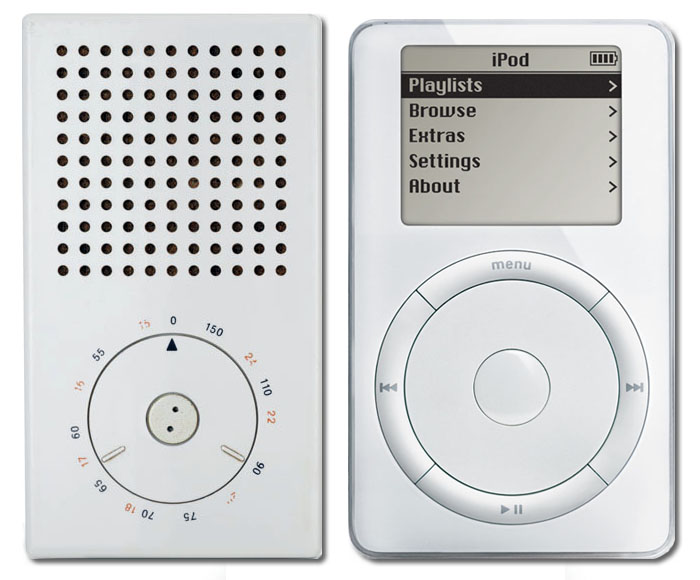
At LifeEdited, we frequently use the expression “less, but better.” To us, it means that living an edited life is more about refinement than elimination. Have what you need, but love what you have. And as clever as we think we are, we weren’t so clever as to coin “less, but better”–that distinction goes to Dieter Rams. Even if you don’t know Rams by name, you know his work. The German industrial designer has become synonymous with economical and elegant design.

Rams made his name at Braun, where over the course of 40 years he designed some of the most elegant and recognizable products ever produced.

More than mere industrial designer, Rams was a philosopher. Rams distilled the ethos behind his designs in his “Ten Principles of Good Design” (see below), a demanding set of criterion that a design must meet before going into production.

In the above video produced by Dwell, we get a glimpse into Rams’ exacting soul. In the interview, he claims that in his heyday at Braun, he could count the number of companies that took design seriously on two hands. Nowadays, he says it’s down to one finger (you might be able to guess which Cupertino-based company that is). Rams apparently wants better design everywhere. From products to cities, he thinks the world is simply “too chaotic.”

It would seem if most designs–product or otherwise–were subjected Ramsian levels of scrutiny and exactitude, most things would never be produced (not a bad thing necessarily). Somehow, we think this world might be a lot less cluttered and make a whole lot more sense. We can dream, can’t we?

Rams’ Ten Principles of “Good Design”:

  1. Good Design Is Innovative: The possibilities for innovation are not, by any means, exhausted. Technological development is always offering new opportunities for innovative design. But innovative design always develops in tandem with innovative technology, and can never be an end in itself.
  2. Good Design Makes a Product Useful: A product is bought to be used. It has to satisfy certain criteria, not only functional but also psychological and aesthetic. Good design emphasizes the usefulness of a product while disregarding anything that could possibly detract from it.
  3. Good Design Is Aesthetic: The aesthetic quality of a product is integral to its usefulness because products are used every day and have an effect on people and their well-being. Only well-executed objects can be beautiful.
  4. Good Design Makes A Product Understandable: It clarifies the product’s structure. Better still, it can make the product clearly express its function by making use of the user’s intuition. At best, it is self-explanatory.
  5. Good Design Is Unobtrusive: Products fulfilling a purpose are like tools. They are neither decorative objects nor works of art. Their design should therefore be both neutral and restrained, to leave room for the user’s self-expression.
  6. Good Design Is Honest: It does not make a product more innovative, powerful or valuable than it really is. It does not attempt to manipulate the consumer with promises that cannot be kept
  7. Good Design Is Long-lasting: It avoids being fashionable and therefore never appears antiquated. Unlike fashionable design, it lasts many years – even in today’s throwaway society.
  8. Good Design Is Thorough Down to the Last Detail: Nothing must be arbitrary or left to chance. Care and accuracy in the design process show respect towards the consumer.
  9. Good Design Is Environmentally Friendly: Design makes an important contribution to the preservation of the environment. It conserves resources and minimises physical and visual pollution throughout the lifecycle of the product.
  10. Good Design Is as Little Design as Possible: Less, but better – because it concentrates on the essential aspects, and the products are not burdened with non-essentials. Back to purity, back to simplicity.

Heirloom Sharpie

Do you remember when your grandfather passed down his trusted Sharpie marker to you? You looked in awe at the worn patina of its steel shaft, hinting at the countless boxes marked up and posters made over the years. You took a good whiff of the noxious ink, thinking of how you would pass it to your grandchild one day.

Chances are, if your grandfather gave you an heirloom, it wasn’t a Sharpie, which are as disposable as they are indispensable.

Well no longer.

Sharpie now has a refillable, stainless steel-bodied model worthy of being passed down to future generations…for a mere $8.99 and $2.49 refill cartridge.

We’ve talked about heirloom design here before; it’s the idea that the stuff we bring into our lives is high enough quality to be handed down to future generations. This is all well and good for watches, pens and cast iron pans, but there are certain things we assume are inherently disposable like Sharpies.

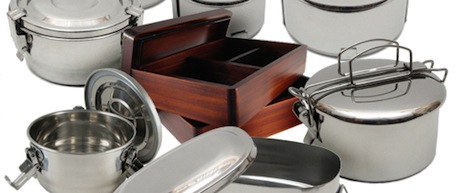
The reason Sharpies are considered disposable is mostly attributable to its plastic constructions. Nothing says disposability like plastic. Unlike metal, wood or glass, plastic begs to be mistreated, broken and thrown away. While a very useful material, not everything has to be plastic. A website called Life without Plastic proves this, offering a range of products like food storage (pictured below) and toiletries made of non-plastic materials.

food-storage

While a life only filled with heirloom quality/non-plastic items might take a lot of effort and money, exchanging a few items like your Sharpie and to-go containers with items that will last for years makes good economic and environmental sense.

Do you know of an heirloom quality item that replaces a commonly disposable item? Let us know in our comments section.

via Core77

Does Your Umbrella Withstand 82 MPH Winds?

Watch as a man subjects himself and his umbrella to 82 MPH (133 KPH), hurricane-strength winds. The umbrella, made by Dutch company senz°, achieves this strength by working with, not against, the wind. Their asymmetrical design has a minimal point of front contact, avoiding the common sail effect of round umbrellas. The umbrella spokes also pivot in such a way that should the umbrella get turned out, it yields to, rather than resists, the wind.

senz-umbrellaCheck out the senz° Youtube page to see more heroic feats of umbrella-strength, such as a parachute drop with the umbrella.

We found a variety of senz° umbrellas on Amazon starting around $40. Many of the US models are made by Totes, who is licenses the senz° design.

Senz° is a great example of rethinking common objects to make them more practical, durable and smarter. Who says umbrellas should merely last for a handful of storms? What if you could have one umbrella for life?

Do you know of other common products that achieve superior utility and durability by bucking traditional design? Let us know what they are in our comments section.