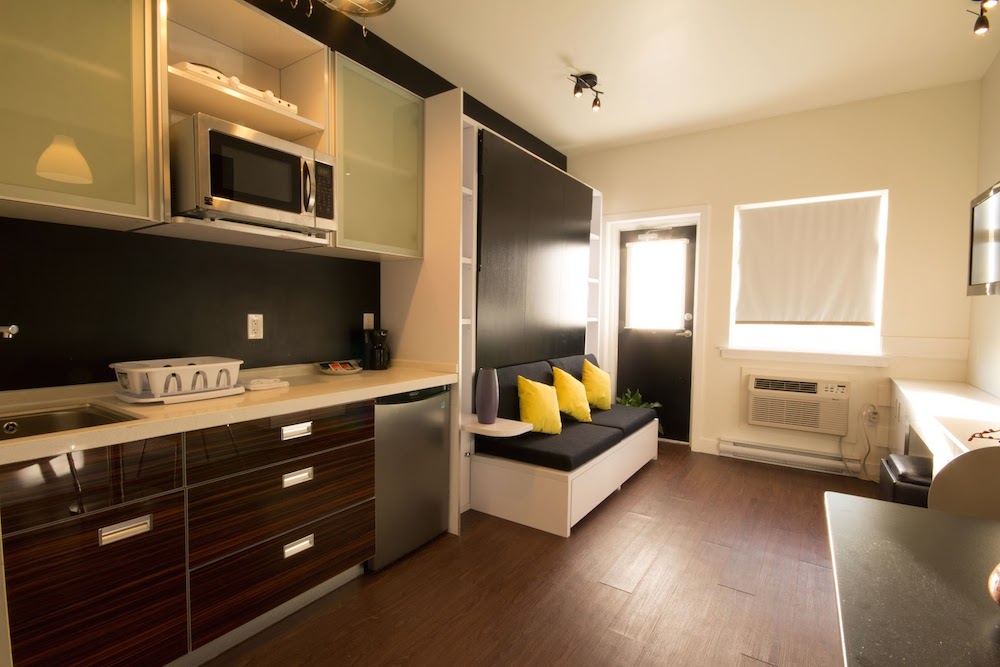
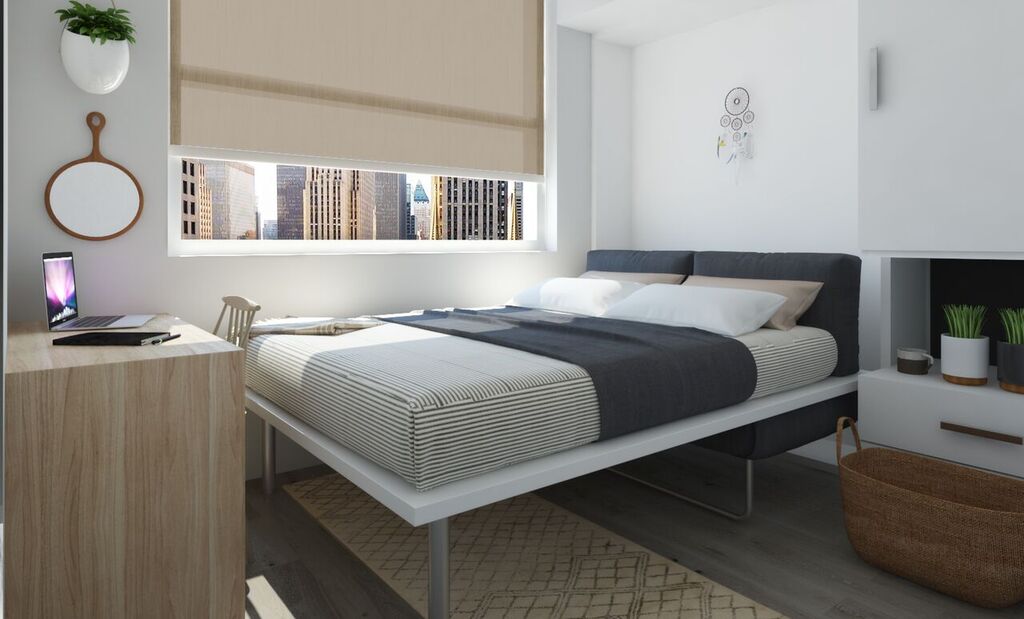
Manhattan Soho Apartment “LifeEdited 2” (LE2) is for Sale!

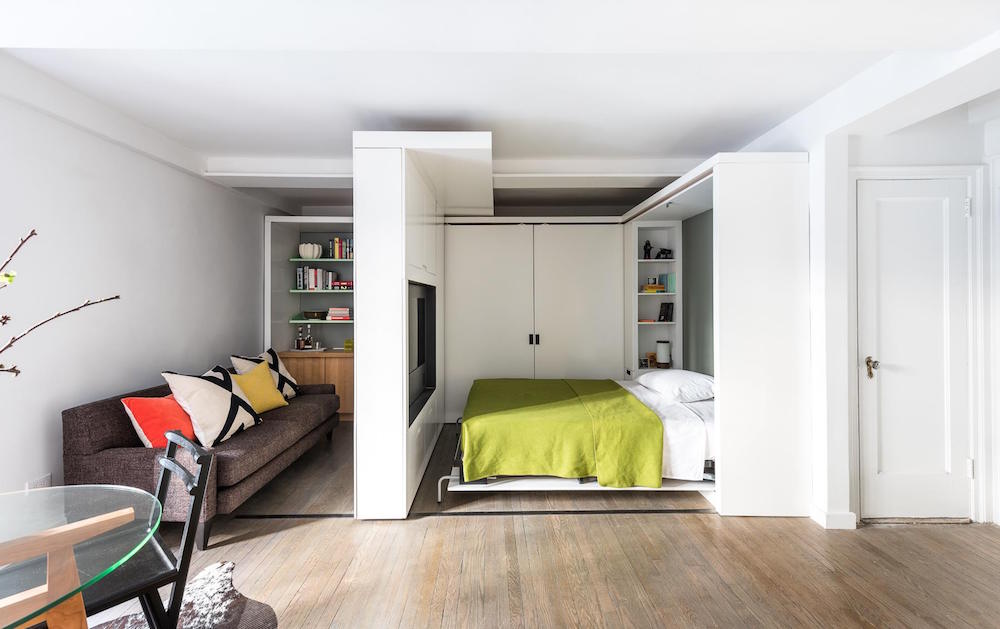
If you like our design approach, here’s your chance to own one of our apartments! We’re selling LifeEdited 2! Go ahead and visit Corcoran’s website for full details about buying our property. ​Having learned from our first crowdsourced tiny apartment LE1, our man Graham Hill downsized from 420 square feet to 350 square feet while refining its construction and also going for a more textured and luxury oriented design. He loved living in LE2  but has moved to Venice, California to focus on backyard housing and it’s time for a new owner.

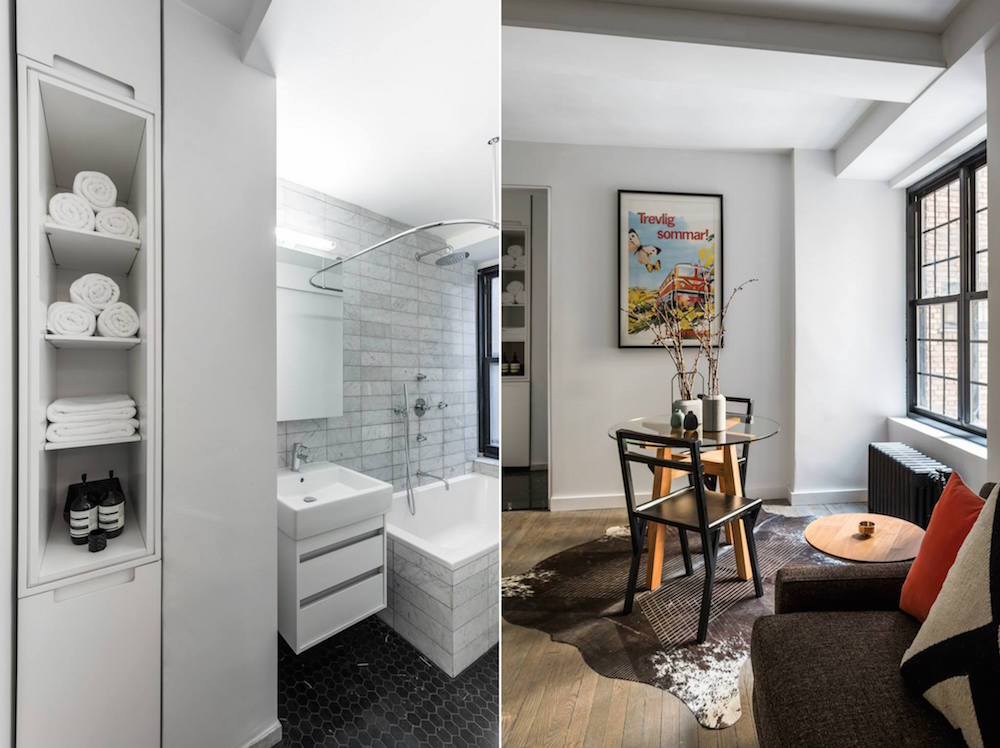
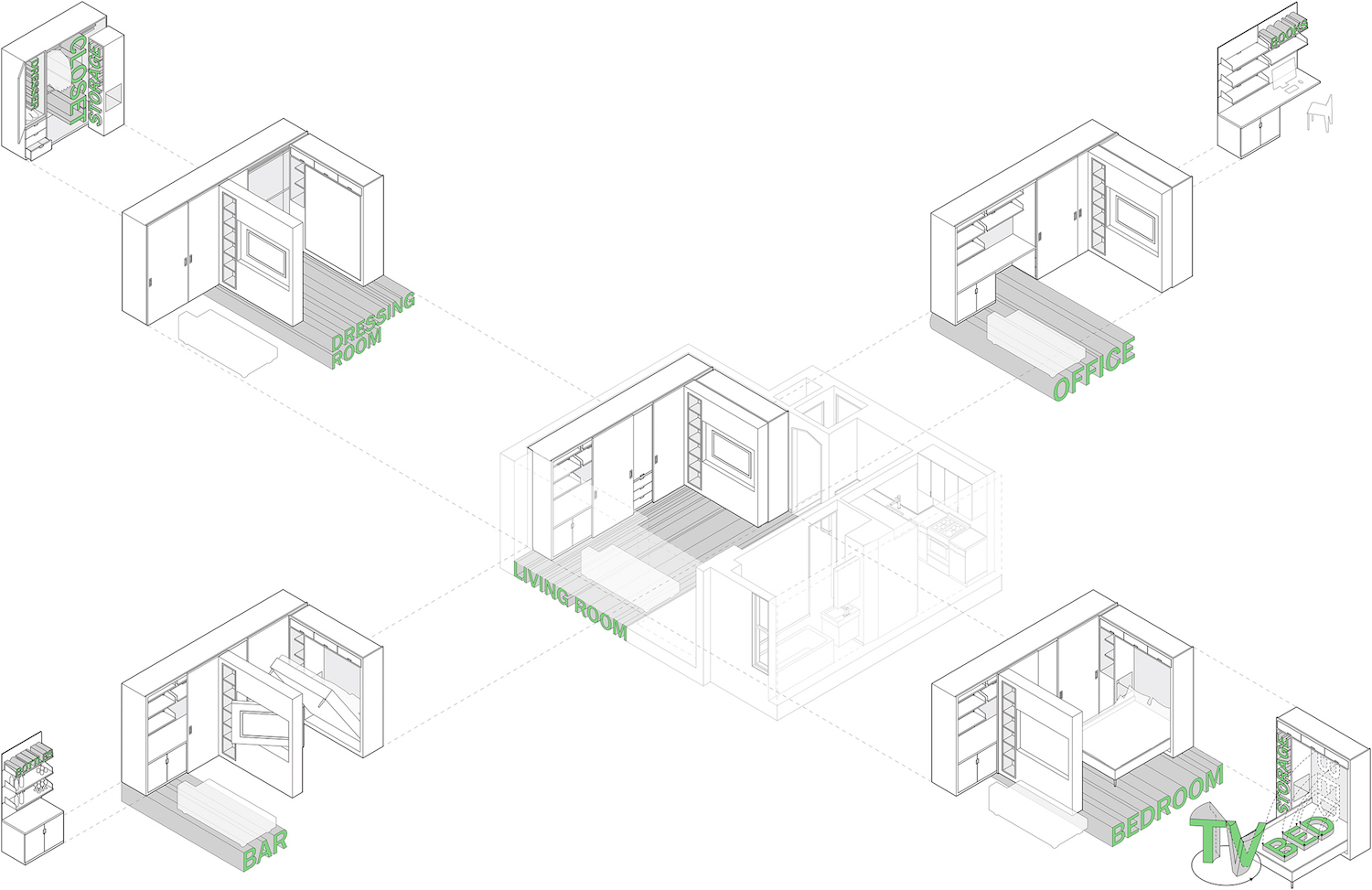
Small? Yes. But don’t underestimate this apartment’s functionality, it can seat 10 for dinner, sleep 2 guests, has a huge amount of storage and even space for a terrific office. Its location couldn’t be better, it has lots of light as well as high ceilings and it’s very quiet and private. Here’s a short list of more of LE2’s amazing functions:

With a cover feature from Dwell, and numerous other accolades, this apartment speaks for itself. Its 350 sq ft footprint may sound tiny but its functionality equates to spaces more than double or even triple its size. The details on the listing can already be seen on the New York Post, Curbed and Bloomberg. See LE2 transform by clicking the video below:


Competition Uses Tight Resources to Squeeze Out Big Designs

Man built most nobly when limitations were at their greatest.

Frank Lloyd Wright

You’d think that if we had access to boundless resources for our architecture, we would build the most amazing structures, incorporating the highest tech, the best quality, the utmost in efficiency and so forth. But such is not usually the case. More often unlimited resources give birth to McMansions and $100M Park Avenue duplexes–structures that hardly indicate the advancement of architectural thought, much less human evolution. The trouble is when you have no limits to external resources, you typically don’t need to rely on internal ones. In other words, excess tends to breed creative laziness. On the other hand, limited resources and the imposition of other constraints often spurs creativity. It’s a much trickier proposition to fulfill on objectives, not with anything you can imagine, but with whatever is available, which might not be much. This paradox is why we features so many interesting projects geared toward homeless populations. In these projects, limited budgets and spaces are not barriers to ingenious design, but the reasons they exist.

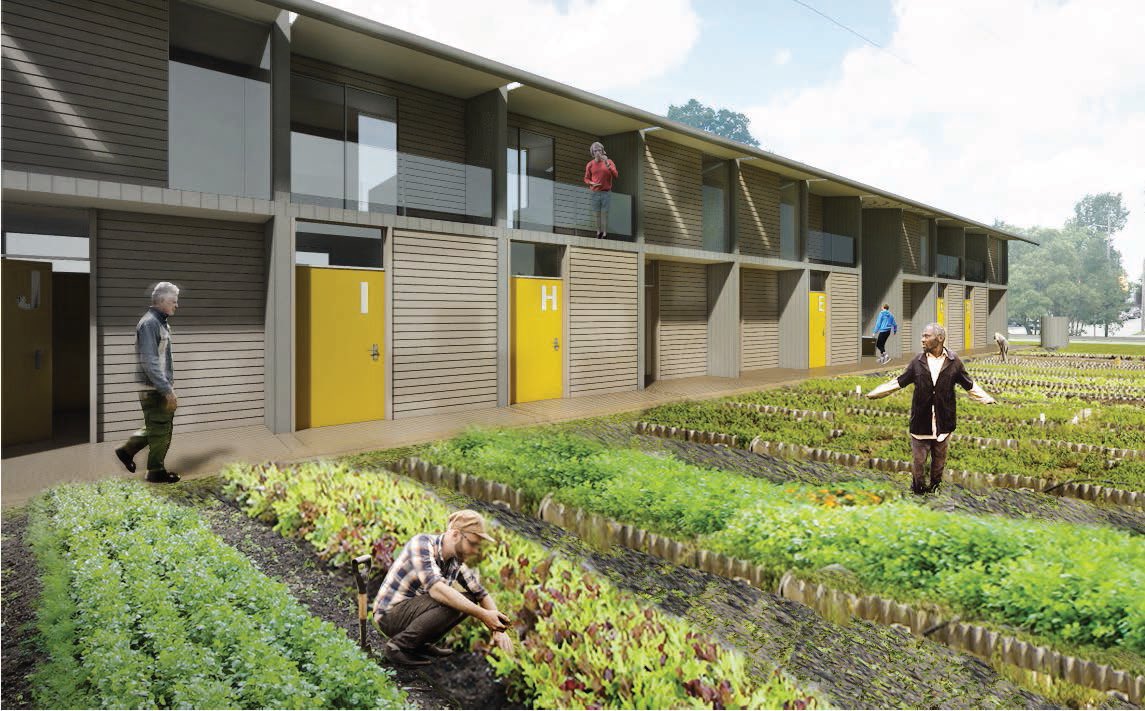
This phenomenon was demonstrated in spades with the Tiny Home Community Competition, launched by the AIA North Carolina Activate14 committee and the Raleigh/Wake Partnership to End and Prevent Homelessness. The competition sought out the best designs for a tiny house community built on a small parcel of donated land on the outskirts of Raleigh. The winning design, when built, will serve some of NC’s 11K+ homeless citizens. From the competition website:

Tiny home communities cannot eliminate poverty or homelessness, but they can create a more lively, caring, and diverse city. The goal is to generate innovative micro-housing communities that can repair and enliven our social fabric and help people transition out of homelessness.

The entrants were to meet a number of criteria such as affordability, the inclusion of a community center and garden, modular and prefabricated construction, a design that includes natural ecology and sustainable lifestyles and a design that can use leftover city land “as a resource for mending social and urban fabric.”

Winners were announced a couple weeks ago. Rather than a grand prize winner, entries were given awards based on specific merits. Merit categories were prefab construction, community engagement, affordability, aesthetic and community.

It’s worth checking out the competition winner’s page, as judges gave pointed praise and criticism for each design. Citizen Engagement Merit Award winners Heather Ferrell, Hiroshi Kaneko and Shane Gibbon’s design showed “true grit in a good sense of relationship with the neighborhood,” but while the judges liked “the concept of having the residents build it themselves,” their “experience shows that in reality it costs more to have coaches come in to teach how to build.” Affordability Merit Award winner Jeffrey Pinheiro and Derek Zero’s design “was simple, restrained, portable, well insulated with SIP, and had a very good site plan,” but some judges thought it might be “too cubicle-like to seem attractive to the residents,” and “there were a lot of questions about how to fold down a queen-sized bed without stepping outside of the unit.” Aesthetic Merit Award winners Gonzalo Carbajo, Inanc Eray, Pinar Guvenc and Marco Mattia Cristofori’s design “was the most architectural and formally organized project in the competition, and the units had great clarity,” however “the two story units increase cost and decreases accessibility.”

Despite some of the critiques–which are par for the course for such a competition–the winners showed a ton of great ideas, especially considering the lot they are to be built on occupies a mere .32 acres and units were conceived to be constructed quickly and affordably. Moreover, they are are proof positive, at least to this author’s mind, that fewer things spur innovative thinking like the imposition of constraints. Download the winner board pdf to see more details on all of the project.

H/T to Pinar Guvenc

Micro Suite Accommodates Three Students, Lots of Chipboard

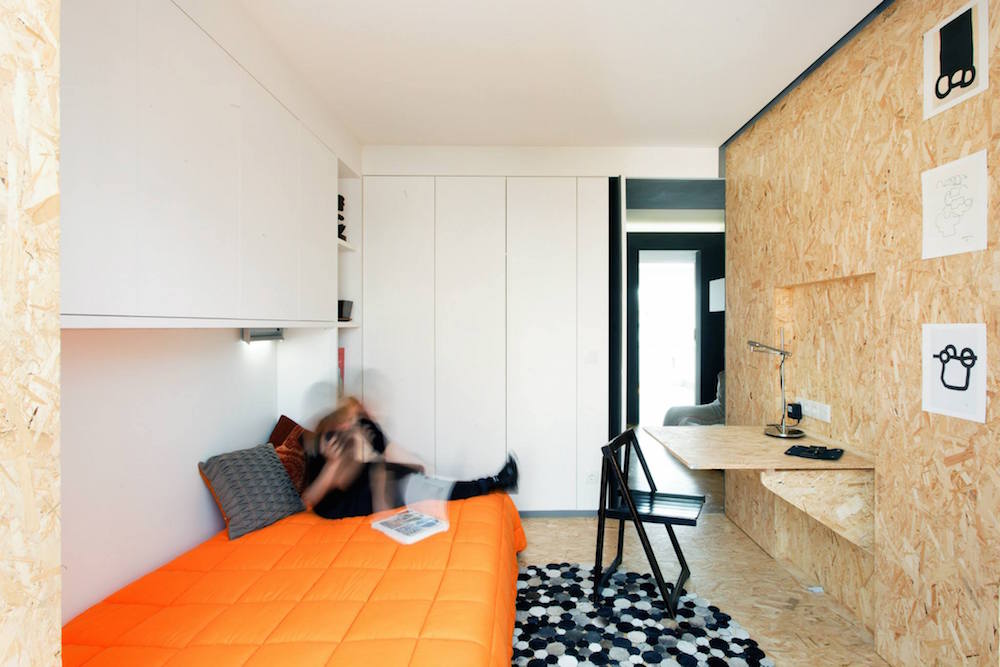
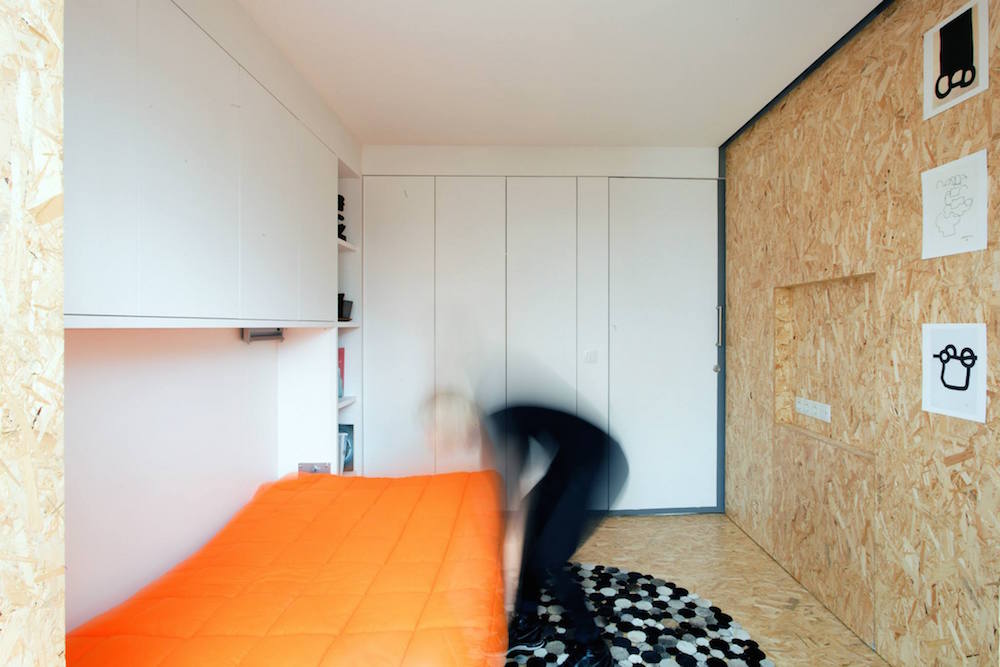
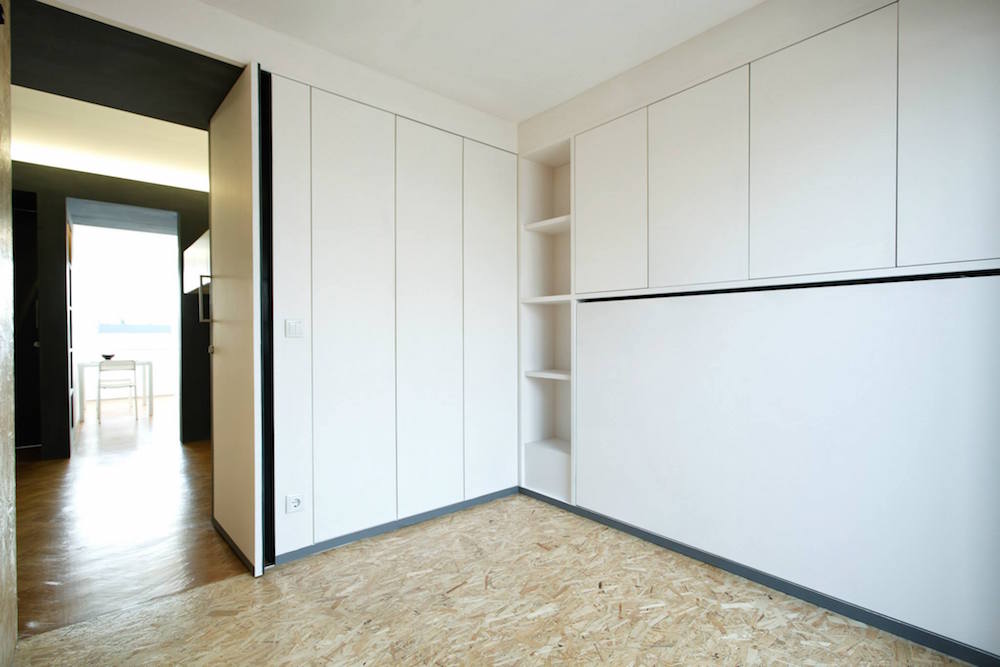
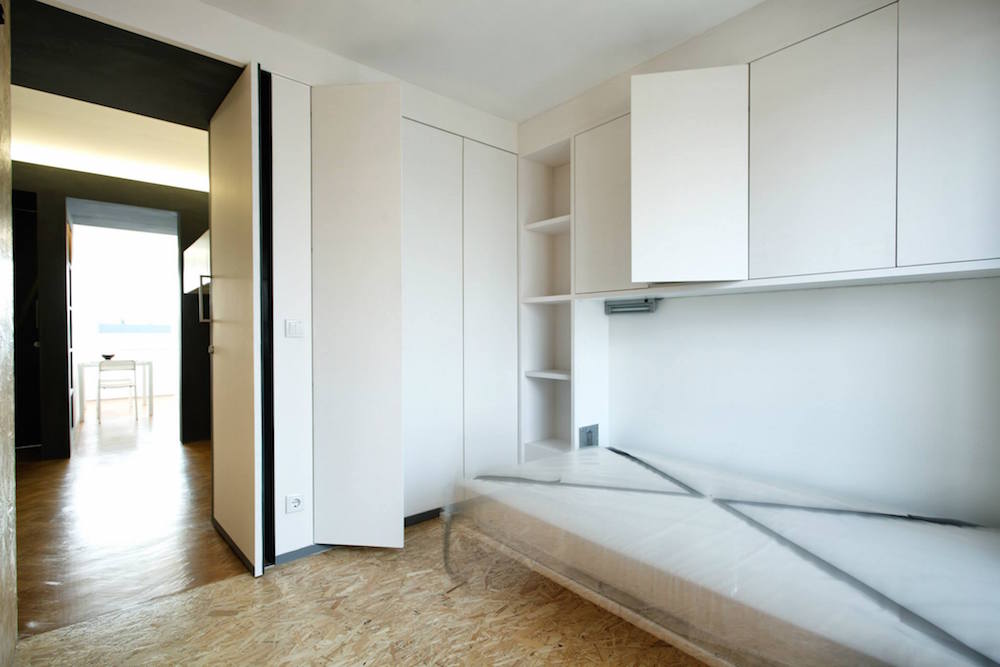
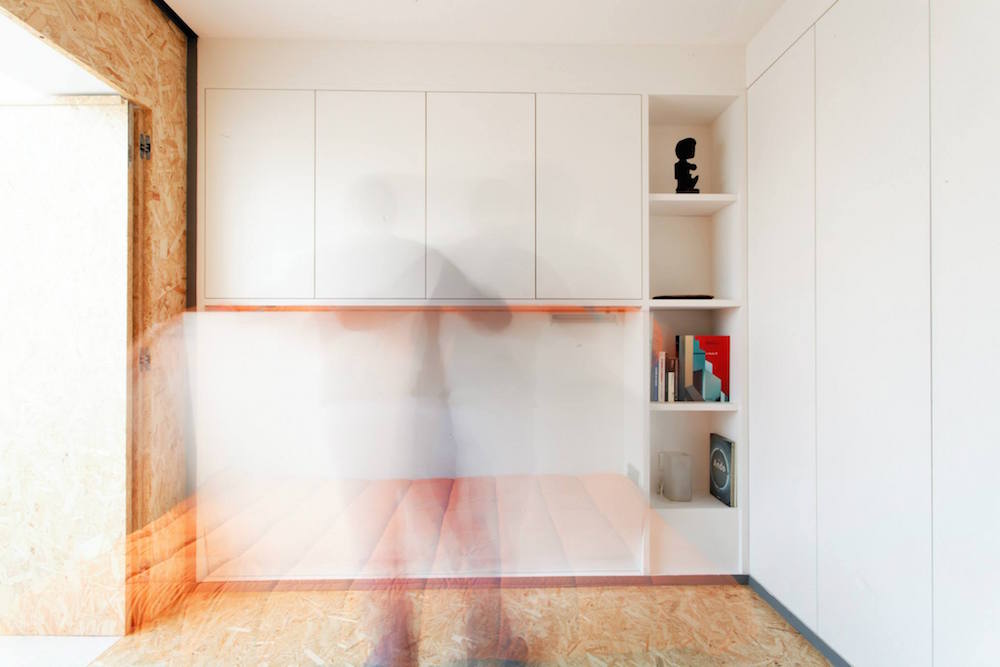
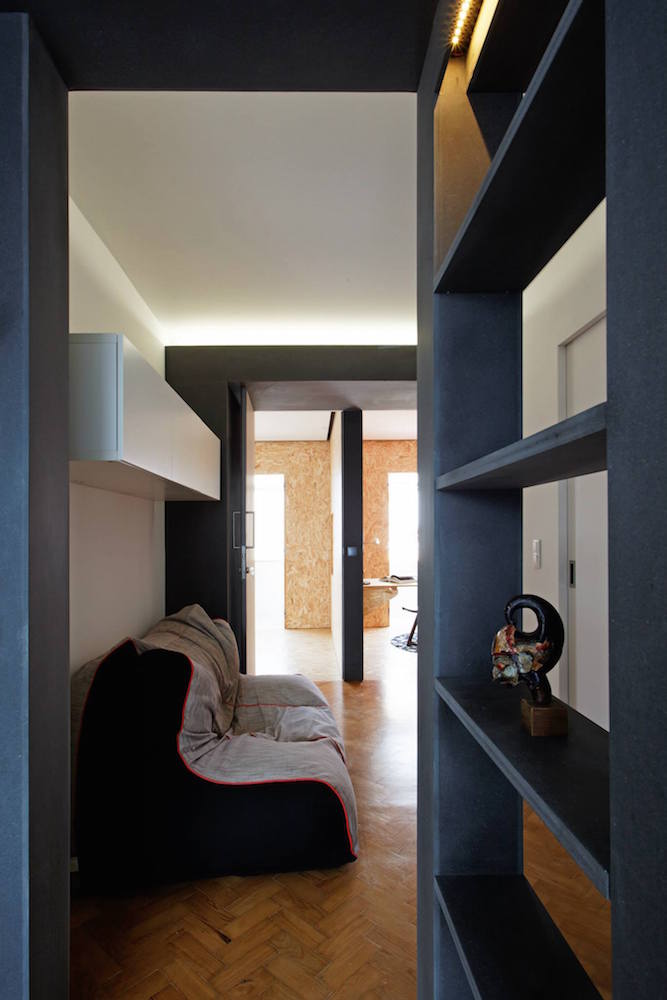
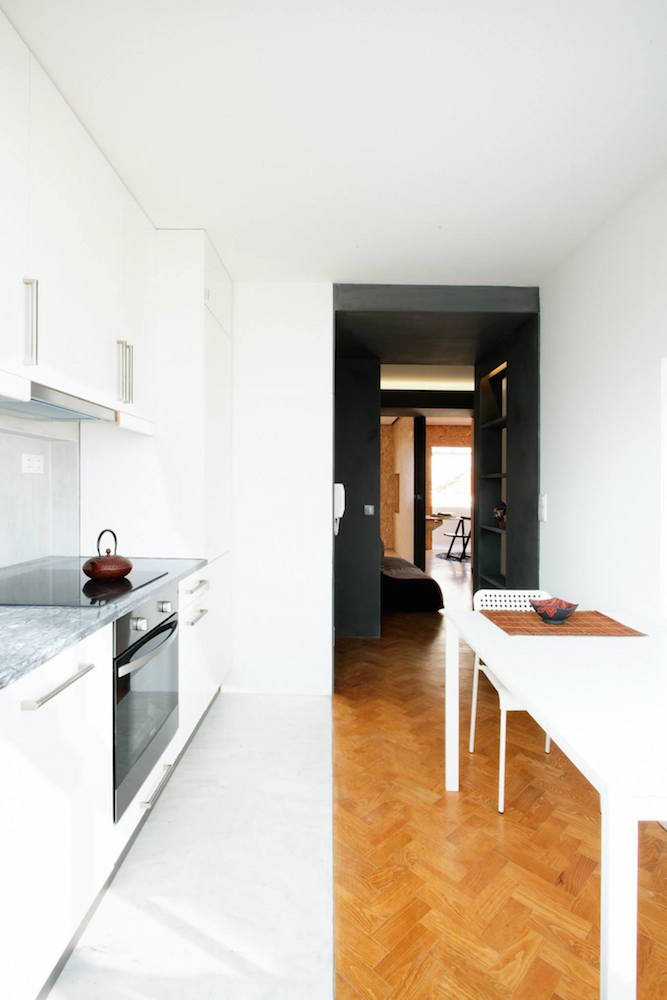
As has been mentioned on this site on several occasions, there are many ways to go micro beside individual micro-apartments. In most cases shared apartments will achieve lower per person footprints, as well as being more cost effective to build and maintain than studios. A particularly nice shared apartment is Lisbon’s Uma Collective’s Xadrez Apartment. The project began as a dilapidated 538 sq ft two bedroom apartment. With the use of wall beds, fold up desks and built in storage, they transformed the small space into a functional and flexible three bedroom student apartment.

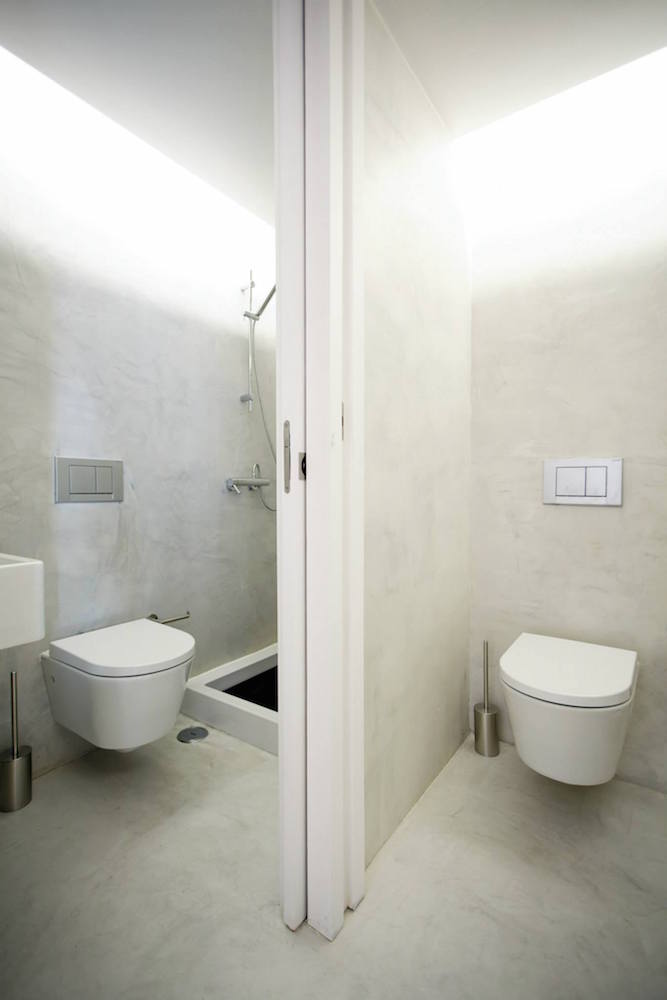
One of the smarter aspects of the project is how Uma reconfigured the rooms. By reorienting the bathroom, they were able to expand the entrance to be big enough for a small sitting area. The reorientation also made the bedrooms–one of which had been a living room–about the same size and dimension, which are just big enough for sleeping and study areas. Each of the bedrooms flows into the center living area and has access to the bathroom. The kitchen and the bathroom are in their original location, eliminating expensive plumbing alterations.

Because each bedroom is self-contained, the design would be well suited for students who want privacy a bit or privacy, but might not be able to afford to–or ultimately want to–live alone.

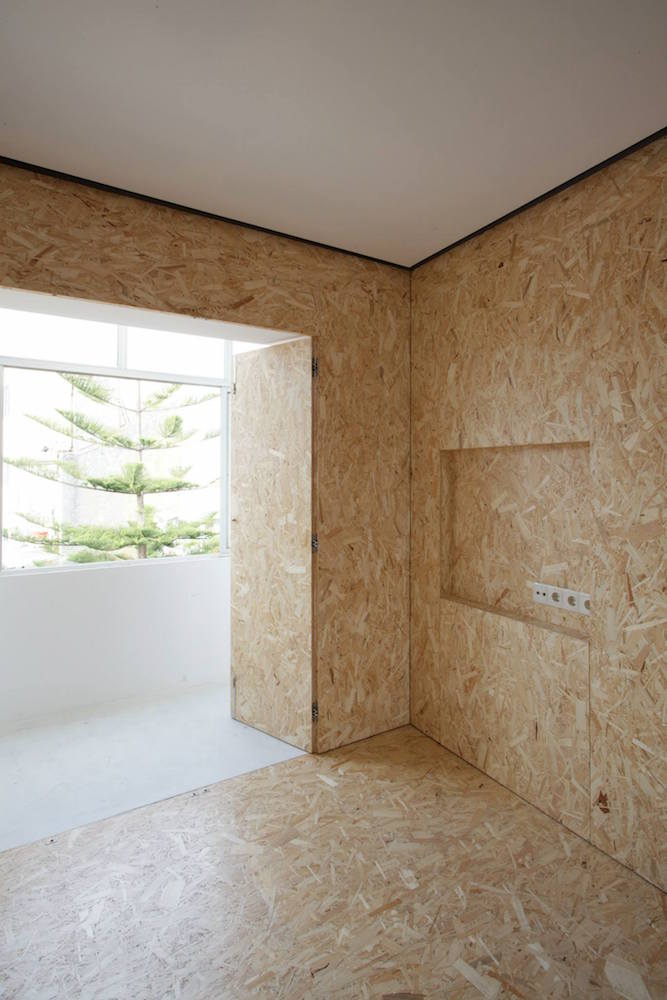
As to the look of the apartment, Uma says on their site that they wanted to create a “contemporary design based on unfurnished materials” such as Valchromat, a type of MDF, and chipboard. The latter material is quite prominent throughout. While I’m not wild about the abundance of the material overall, the fact that it’s student housing–i.e. residents will have a finite stay in the apartment–would makes the choice little less radical. And though Uma’s site doesn’t indicate it, we imagine its use was informed by budgetary constraints.

“5 to 1” Micro Apartment a Perfect 10

Architect Michael Chen has one of the most impressive portfolios of small apartment projects in the United States, if not the world. “Although we [MCKA, Chen’s firm] work at a broad range of scales, we are fascinated by the design of small spaces because they demand inventiveness,” Chen wrote to us in an email. “We love taking on a complicated and difficult problem with the intent of creating solutions that are thoughtful, beautiful and deceptively simple.” His latest project, dubbed the “5 to 1 Apartment,” is a beautiful representation of his love of transforming the complex to simple. It is also, to my mind, his finest work to date.

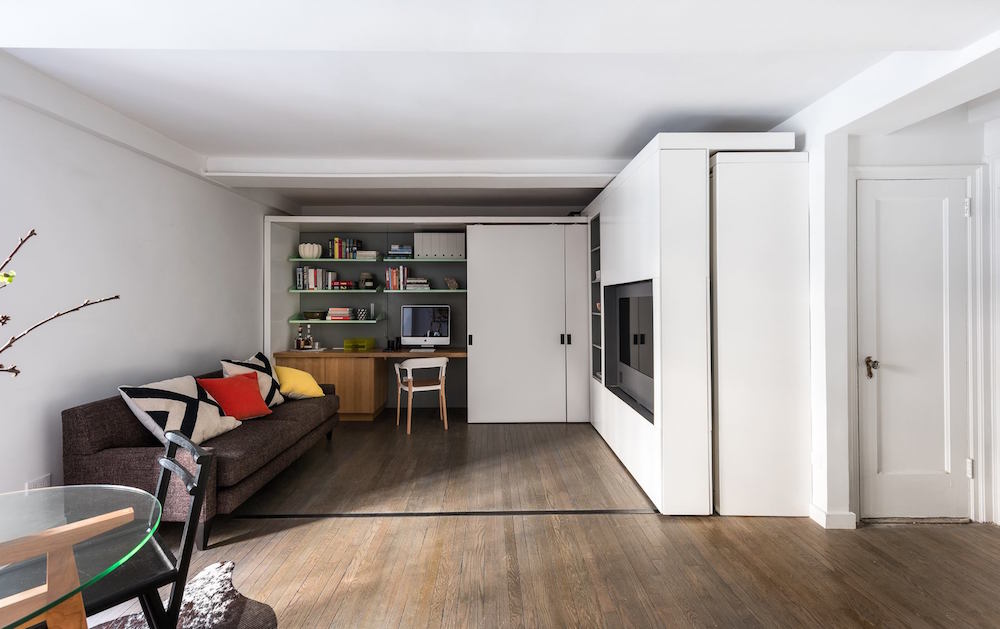
Similar to the LifeEdited apartment, “5 to 1” incorporates a moving wall to provide additional “rooms” for the 390 sq ft Manhattan apartment. The wall, which was custom fabricated by Trak-Kit, is fully motorized and has power as well as cable for television and audio. The wall also houses networking components and audiovisual equipment, which includes a TV that rotates 180 degrees to face either side of the wall.

When the wall is in its closed daytime position, the space has a generous living room. When the wall is opened, it creates a space that can be used as a changing or bed room, depending on whether the queen-sized wall bed is lowered. The interior wall that is perpendicular to the moving wall is lined with a volume that contains a desk on one side and a wardrobe on the other.

Other improvements include an expansion of the kitchen to include more work space, a renovation of the existing bathroom and LED lighting above much of the cabinetry.

One of the main things this apartment gets right is its ability to merge normal, freestanding furniture with built-in components. The inclusion of a normal sofa and small cafe table make the space feel lived in and personal, yet the built-in components keep an overall clean aesthetic and give the small space amazing functionality.

What’s also notable is that this level of creativity was placed inside an almost 100 year old building. “Even as it is undergoing tremendous change, New York City anticipates that 80% of the existing building stock will be in use well into latter part of 21st century and beyond,” Chen wrote. “Cities worldwide are transforming rapidly due to increases in population density, climate change and rapid changes in technology but the architecture of the future is in large part going to emerge around intelligent ways to bring the existing fabric of the city into that future.”

UK’s The Collective Offers Whole System Design Living

London is one of the most expensive cities in the world, and like many such cities, incomes have not kept pace with the cost of living in general and housing costs in particular. As we saw when we checked out NYC’s Stage 3 Properties, the situation is squeezing many young people out of town or into marginal housing situations. Yet these same young people are less interested in the big places that cost so much; they are less interested in accumulating stuff; they are less likely to be (or get) married and/or have kids; and they are more open to a shared living experience. As we wrote the other day, many of them just “want a clean home near all the action with a good wifi connection”–a type of housing that wouldn’t cost so much if developers deigned to make them. London’s The Collective is one developer who deigns.

The Collective is probably easier to understand as a whole system design for living rather than mere real estate developer. Yes, they have four built buildings and one underway, all featuring minimal, furnished, design-savvy micro-housing with shared social spaces and included amenities. But they also have a startup incubator and coworking space called The Elevator that closes the social-professional loop. Both arms of the company embrace and support a new breed of highly mobile, tech-savvy, entrepreneurial, experience-thirsty urban living for Millennials.

We emailed The Collective’s founder Reza Merchant a few questions about the company’s past, present and future, which includes Old Oak, their first purpose-built housing complex that is opening this November:

David Friedlander: What inspired you to start The Collective?

Reza Merchant: I was inspired by my own experiences living as a student in London, faced with the struggle of trying to find decent accommodation at an affordable price. I set up London Student Rent, a student lettings agency, during my last year at the LSE and the company then evolved into The Collective as I became more attuned to what young professionals want and need from their housing. This is basically a high quality, hassle free way of life, which also allows you to meet like-minded people around you–all at an affordable price.

DF: How do you see what you’re doing–both in terms of housing and the Elevator–as meeting and perhaps predicting the needs of Millennials in the coming decades?

RM: Millennials represent ‘Generation Rent’. Whereas our parents’ goal was to own a property, and renting (in London) had a stigma attached to it, this is no longer the case. Renting is becoming a lifestyle trend and we cater to this increasing trend by providing purpose built rental accommodations. Young professionals work long hours and use their rooms as crash pads, which is why we don’t need excessive amounts of space–as long as it’s well designed. Millennials prefer to invest in experiences versus material possessions and are much more willing to share, which is why we focus on providing a high level of social amenity space with our Shared Living product. Also, we are ‘tech junkies’ and have grown to expect everything as a service. Netflix, Uber, the list goes on, and The Collective offers living as a service. We don’t have time to, nor want to, worry about life admin. So paying one monthly bill which includes everything from room cleaning and linen change, to concierge services and all utility bills and council tax, makes life a lot easier, giving people time to focus on more important things.

The-elevator

The same goes for our Elevator workspace product, which also focuses on enhancing the end-user experience. Entrepreneurs are passionate about building their business and their work environment is vital to helping them deliver it. We focus on proving a unique workspace, which focuses not only on providing services offices but also includes all the ancillaries a start-up needs to succeed, from an engaging events programme to access to a network of mentors and investors. The so-called boundaries between work and life are becoming ever more blurred–when you do something you love then it becomes your life. Entrepreneurs are happy to spend long hours in the office, but they also need the creative buzz and inspiration from their surroundings, so we aim to accommodate this.

DF: Your focus is squarely on Millennials. Do you see your model working with other demographics?

RM: Our model has been created specifically with 21-35 year old young professionals in mind, so it is tailored to suit their needs. There are definitely elements which would suit an older demographic, but essentially once you start settling down and thinking of a family your needs change.

[divider]

We are ‘tech junkies’ and have grown to expect everything as a service. Netflix, Uber, the list goes on, and The Collective offers living as a service.

[divider]

DF: What would you say to people who accuse micro-housing as exploitive, shoving people into overpriced shoeboxes?

RM: I would say that an increasing shortage of space, coupled with an increasing population means we are forced to come up with solutions to the housing crisis. Micro-housing is not exploitive if well designed. With the right, innovative design, use of space can be maximized efficiently–it’s little things, like clever shelves to partition the kitchenette from the bed that can also be used as storage space and are also a cool piece of furniture.
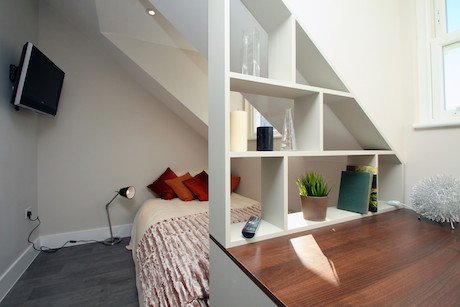
Collective-room

Also, if you can offer an all-inclusive service offering in the rent, plus a high level of social amenities, like our model does, then it’s not overpriced.

DF: How does Old Oak [pictured at top] expand on your previous endeavors?

RM: Old Oak is our first new build and the first true embodiment of our Shared Living product. Whereas our existing developments are refurbished building, this is the first time we’ve had a clean slate on which to deliver exactly what we want to. Our rent has always encompassed services including weekly room clean, weekly linen change, concierge services, 24/7 security, free Wi-Fi, plus all utility bills and council tax. However, although we also provided communal areas throughout our existing properties with Old Oak we’re taking it to the next level. The 11-storey building will have 1,000 sq ft of social amenity space on each floor: a gym, spa, rooftop terrace, cinema room, secret garden, themed private dining rooms. All are designed to facilitate interaction amongst our members, to create a real community feel within the building.

DF: What do you see as the future of both The Collective and housing in general?

RM: I see the future of The Collective as a leading lifestyle brand, which has redefined the way people live, work and play. Not just in London, but in global cities across the world. The shortage in space means that inevitably housing will become more dense, but hopefully this will just encourage more architects and developers to think outside the box and come up with innovative designs and solutions which mean that quality is not compromised. The use of technology will also shake up the housing market, both maximising space and creating the ultimate customer experience.

Ain’t Nothing New About Micro Housing

While tiny houses, micro-apartments and even transforming furniture may seem like recent phenomenon, the truth is quite the contrary: it’s big homes, excess space and stuff that are the new thing. People have been living in dense areas, in tight quarters with little stuff for eons. Nowhere is this more evident than in Manhattan. As strange as it sounds, there were over 600,000 more Manhattanites in 1910 than there were in 2013, 2.3M and 1.6M respectively. A recent piece in Curbed gives an account of the island’s various schemes to pack more people onto its 34 square miles.

Density Maps 1910 and 2010

Curbed highlights the various housing typologies that have flourished in Manhattan. There was nothing sexy or, in most cases, safe about these often-improvised houses.

hellskitchen_riis

They write about the shanties that proliferated in the mid-19th century, saying of these rural dwellings (most of Manhattan was quite undeveloped), that they were “surrounded by picket fences, with muddy footpaths between them, and cows, pigs, or chickens outside [and]..They usually had just one room, about 12 feet square, which served all purposes for the family” (makes tiny houses seem huge!).

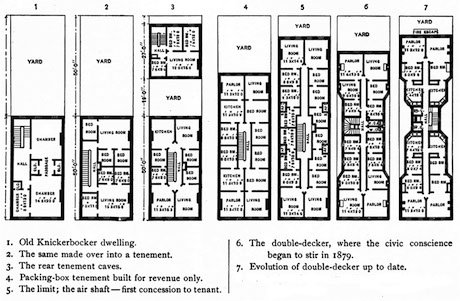
In the second half of the 19th through early 20th centuries, the tenement became new sardine can-home for the multitudes of immigrants flowing off the boats. Early tenements were often airless, windowless pits of disease and despair. Later regulations in 1867 provided some relief and led to the “dumbbell” building–named because its narrower interior shaft and wider front and back made their footprint resemble a dumbbell. These new buildings at least had a window in every room, but they were still pretty horrible with microscopic rooms shared by hoards of people. In one report, journalist and author of “How the Other Half Lives” Jacob A. Riis found 43 families where there should have been 16.

tenement-charts

In 1901, the Tenement House Act helped helped birth much of the low-rise housing that still stands today. The Act required at least one 120 sq ft room per apartment, with additional rooms being no less than 70. Adults were required to have no less than 400 cubic ft of air space, and children 200. Rooms not only had to have windows–those windows had to have light and air coming through them.

Even though new regulations were in place at the turn of the last century, there were still far more of the old buildings, resulting in massive overcrowding and subhuman conditions for years to come. Eventually, as the new buildings proliferated and bridges and mass transit helped disperse populations across the five boroughs, Manhattan’s population began to shrink.

Head on over to Curbed for the full article.

Why and Where Micro-Apartments Are Going Up Might Surprise You

New York, San Francisco, Vancouver and, to a lesser extent, Seattle, DC, Boston and LA are logical places for micro-housing. These cities are very or fairly dense, they have high property values in many spots and have infrastructures that support micro-housing–i.e. decent public transportation systems, strong economies, walkable neighborhoods, etc (yes, LA might be a stretch). But micro-housing is no longer limited to high-density cities with extreme property values. All over the country (and world), micro-apartment developments are springing up, a phenomenon, we believe, is happening for several reasons:

  1. People want to be in the middle of things. Even though downtown Des Moines, Iowa might not be lower Manhattan, more Des Moinesians, particularly Millennial Des Moinesians who are more likely to value experiences over stuff, are wanting to live in the city’s liveliest area (yes, there are micro-apartments going up in Des Moines). Those lively areas tend to be more expensive. Micro-housing gets people into desirable parts of town at a reasonable price-point.
  2. Cars are taking a backseat. Similar to point #1, people are becoming more open to life without car ownership. If you live near amenities, your work and have access to transit options (car-shares, bike lanes, public transit), why tether yourself to a few thousand pounds of money-sucking, carbon-spewing steel? Accordingly, many municipalities are warming to the idea of housing without (or with limited) parking allowances, which often stand as a huge barrier to building high density housing like micro-apartments.
  3. People don’t need/want big places as much as they used to. People (Millennials in particular) are delaying or not getting married like they did in years past. The dream of the big place in the burbs is dying. People nowadays are just as likely to want a clean home near all the action with a good wifi connection.
  4. Micros makes inexpensive housing less expensive. This might be the biggest reason. Let’s say a city’s average one-bedroom apartment costs $800 and a comparable micro-apartment costs $500. For a renter not making much money and who only needs basic accommodations, that extra $300 is a big plus.
  5. Micros can be good for developers. Let’s say that $800 apartment is 1000 sq ft and the $500 one is 350 sq ft. All things being equal (construction costs, finishes, etc), the developer will make roughly 56% more on a per sq ft basis on the micro. It’s important to note that all things are not equal. Because the most expensive parts of construction–namely bathrooms and kitchens–are the same for micro-units as they are for conventional ones, construction costs can be significantly higher for micros. Add in transforming furniture and other built-ins and the math gets worse from a developer’s perspective. Nonetheless, the higher dollar per sq ft, even factoring above considerations, can make micros an attractive investment.

For these reasons and more, many cities that don’t have housing shortages or high density profile of aforementioned cities are jumping on the micro-apartment bandwagon (go here if you don’t know what micro-apartment means).

Here are some North American cities that have buildings touted as micro-apartments that are already built, in process or that are being seriously considered:

  • Chicago, IL. Despite being rocked by year-over-year real estate value declines, FLATS Chicago has been rehabbing old SRO buildings, making them into hip, affordable micro-apartments (get a free fixie when you sign a lease…seriously).
  • Philadelphia, PA. A building dubbed The Avenir will be offering luxury studios starting at 314 sq ft later this year.
  • Providence, RI. We’ve reported and expressed our zeal about the Arcade Providence–the mall turned micro-apartment complex. While not the most unlikely spot to have micros, Providence is another place with a bounty of available, low-cost housing. The Arcade’s success (100% occupied) seems to be a function of lifestyle choice, not a dearth of alternatives.
  • Des Moines, IA. This city, with 1/10 the density of NYC, has its own micro-apartment building called The Flemming, with affordable studios in the low 400 sq ft range. The building is 100% leased.
  • Columbus, OH. Who’d of thunk it. A company called Connect Realty is making a building with 56-58 units starting at 450 sq ft.
  • Nashville, TN. Developer Giarratana Nashville LLC is making a 146 unit, centrally-located building with all units under 500 sq ft.
  • Orlando, FL. This central Floridian city, like Houston or Atlanta, is often held up as an exemplar of car-dependent living. Which is why it’s pretty awesome a German developer is trying to build a micro-apartment building with units ranging from 260 to 447 sq ft and a number of transforming elements.
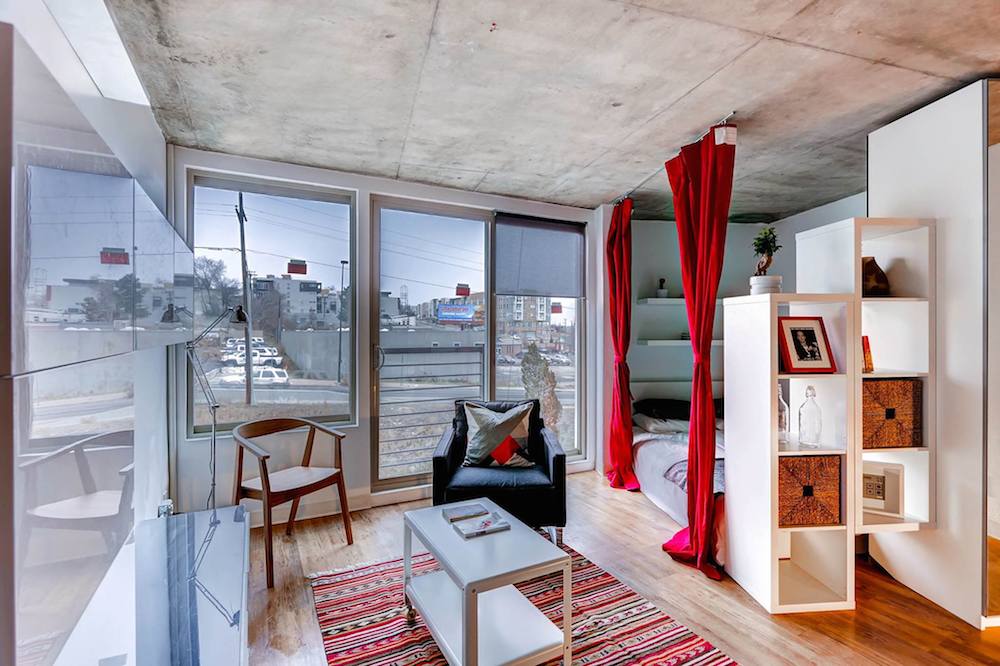
  • Denver, CO. Developers Realty Capital Group and the Nichols Partnership are turning a funky old hotel near Mile High Stadium into residential rental building called Turntable Studios with 170 micro-apartments, some as small as 330 sq ft (pictured at top).
  • Spokane, WA. Like Turntable Studios,The Ridpath Club Apartments is a former hotel-turned-micro-apartment building.
  • Portland, OR. Though the city is known for its tiny houses, it’s not known as a particularly dense or expensive city to live in. Yet the city features a number of micro options including the hyper-patriotically named, multi-story Freedom Center as well as a number of smaller, aPodment-style buildings from such developers as Footprint Investments.
  • Edmonton, AB. You wouldn’t think that a city ⅓ as dense as Des Moines, IA would want micros, but that’s what Beljan Development is proposing to do. They are making a 40 unit building with 350 sq ft micro-apartments. There will be no designated parking spaces but it will have a large bike locker.
  • Surrey, BC. While Vancouver is notorious for its high property values, its sister city Surrey is not, which is why the Balance micro-suite building is on this list.
  • Nova Scotia. Right? Micro Boutique Living is offering clean, modern, affordable little digs in Wolfville, Antigonish and St Johns (all but the latter city this author had never heard of prior to writing this post).

There are a few cities not mentioned, notably Jersey City and Hoboken, which this author considers satellite cities of New York. Likewise, there are some buildings whose actual fate is TBD; proposals do not a building make.

If you know of other buildings and developments not mentioned here, particularly in cities that don’t “need” micro-housing, please share in our comments section.

Tiny Apartment Builds It Up, Pares it Down

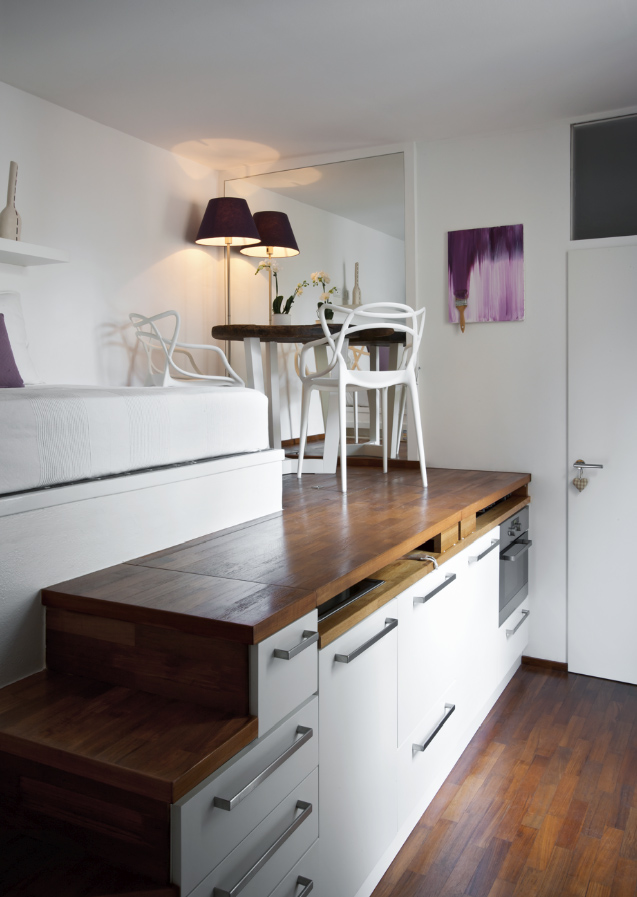
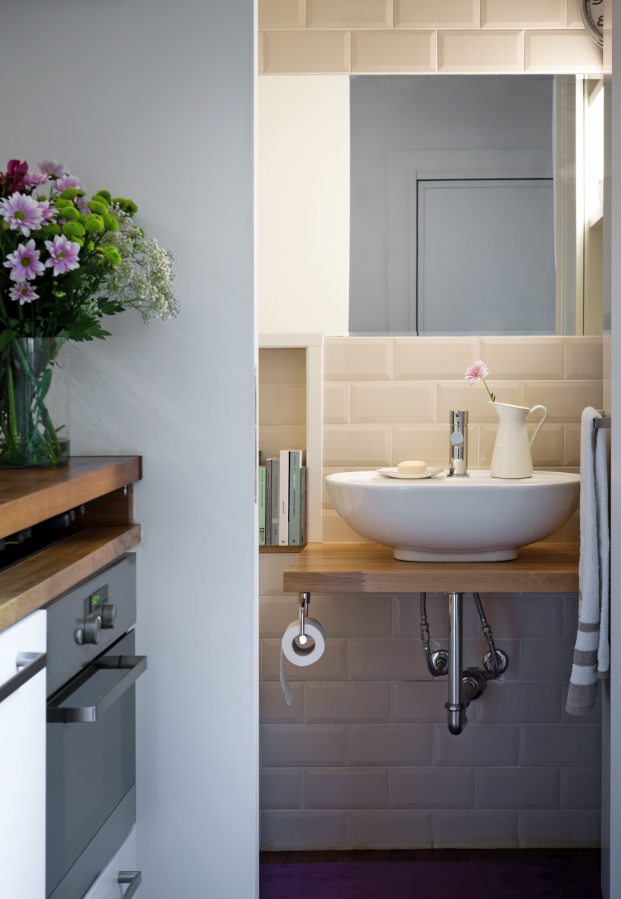
At just 160 sq ft (15 sq m) this is one of the smallest full-function apartments we’ve seen. Despite its tiny proportions, it’s hard to imagine a space getting too much more efficient in its use of space.

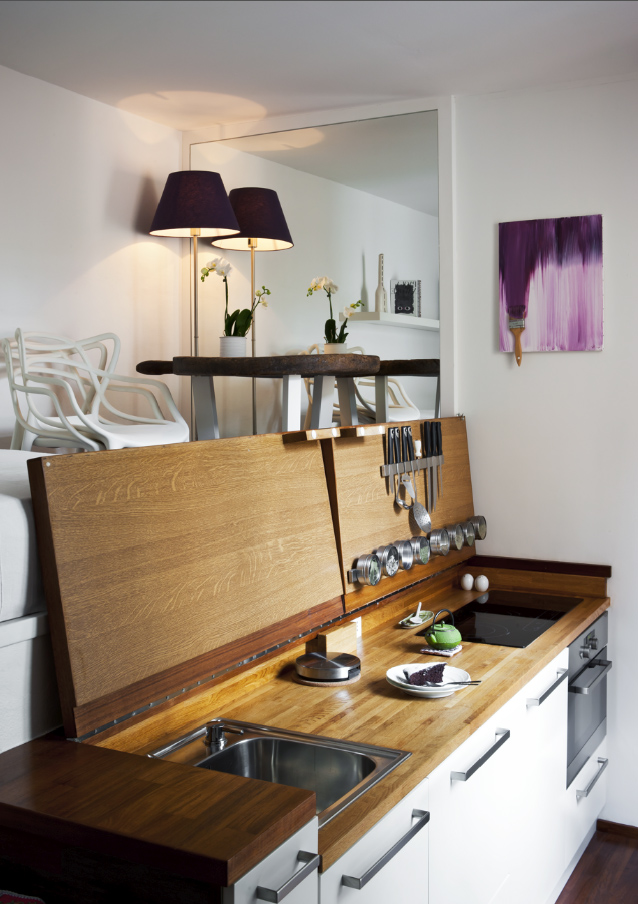
The centerpiece of the apartment is a one meter high wooden volume that contains, well, everything except the bathroom. On its top is a bed and dining area with round table and a couple chairs. There is a built-in (and usable looking) kitchen with doors that fold down when not in use, increasing surface space and reducing visual clutter.

Inside the volume is a closet of sorts accessed via a trap door. From the pictures, it’s not entirely clear how one would access the stuff inside closet, though we suspect it involves some sort of gymnastics. In fact, the whole apartment, with its short-roofed dining area, seems geared toward the young, limber and exceedingly neat.

via Boiserie & C.

Apartments Elegantly Mix Old, New, Obtuse Explanation

Unfortunate for LifeEdited readers, there is no Google translator function to convert Architectese into English. Hence, when architects say that they want to “create legible and vibrant neighborhoods through densification of orphan sites and a concern for the City as a repository of cultural memory,” I am a bit perplexed. There are some cognates in there that relate to colloquial English, but for the most part, I don’t know what this means in time and space.

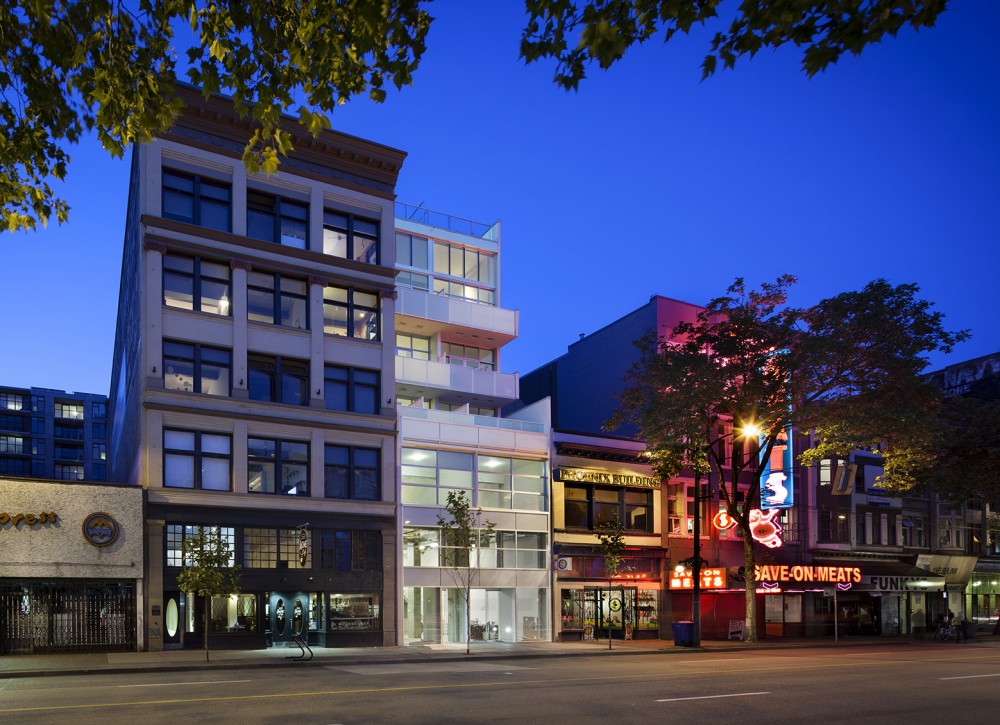
But hey, I don’t speak much French, and I still appreciate Bizet’s Carmen. And just because I don’t fully understand the commentary Vancouver’s Gair Williamson Architect + Ankenman Marchand Architects give for their Paris Block/Paris Annex apartments, it doesn’t diminish my appreciation for the project. The long and narrow apartments, which fuse an old warehouse with a new structure, look pretty cool to me.

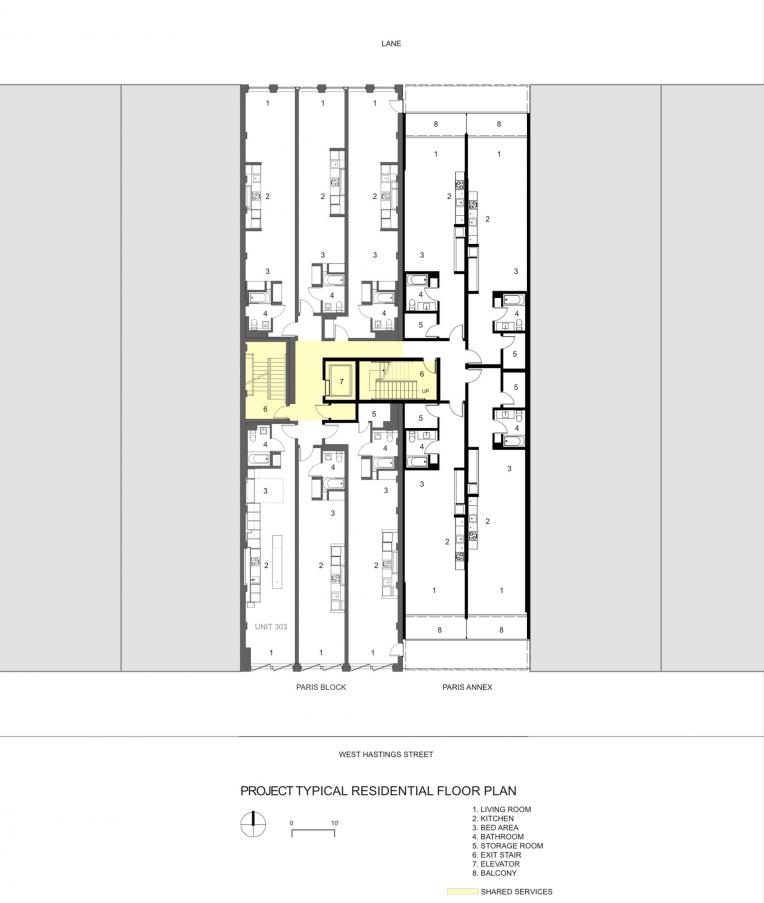
One of the more novel aspects of the project is its use of a shared core between old and new structures, making the project both cheaper to construct and allowing the two buildings’ 46 units to have shared amenities.

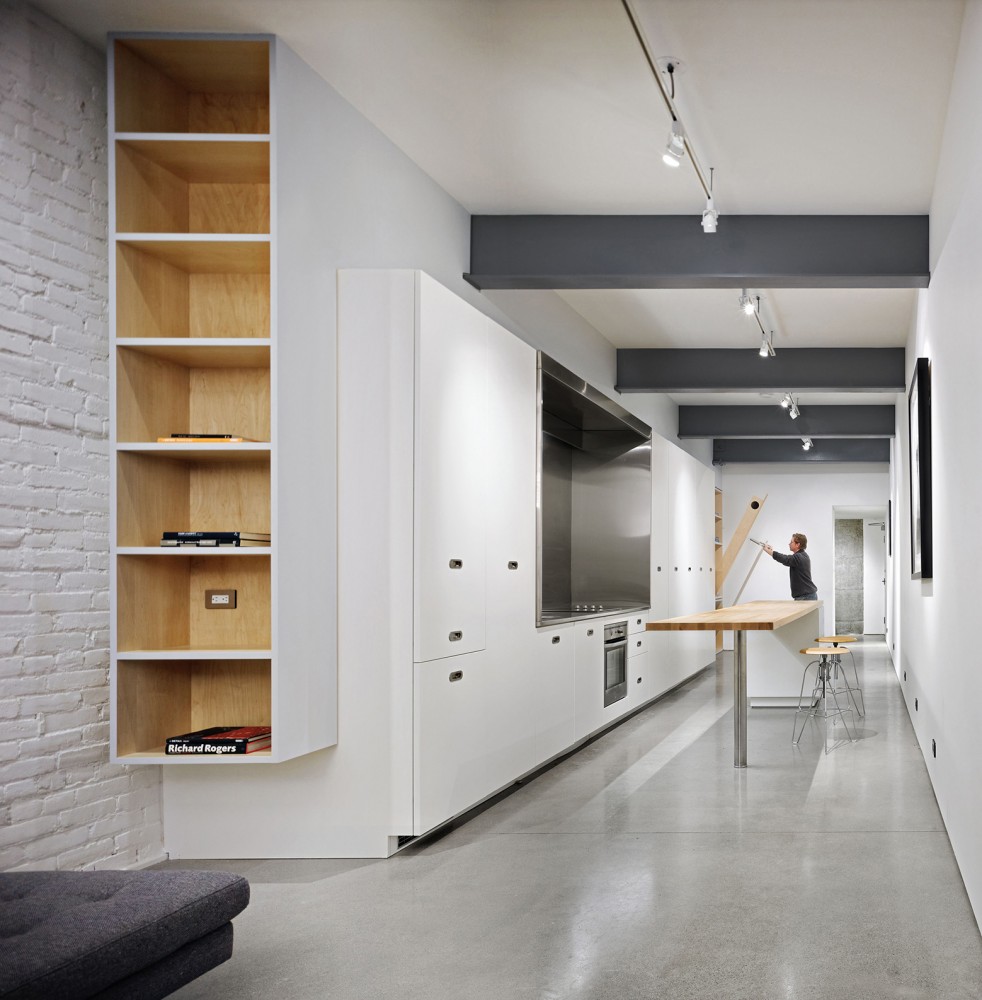
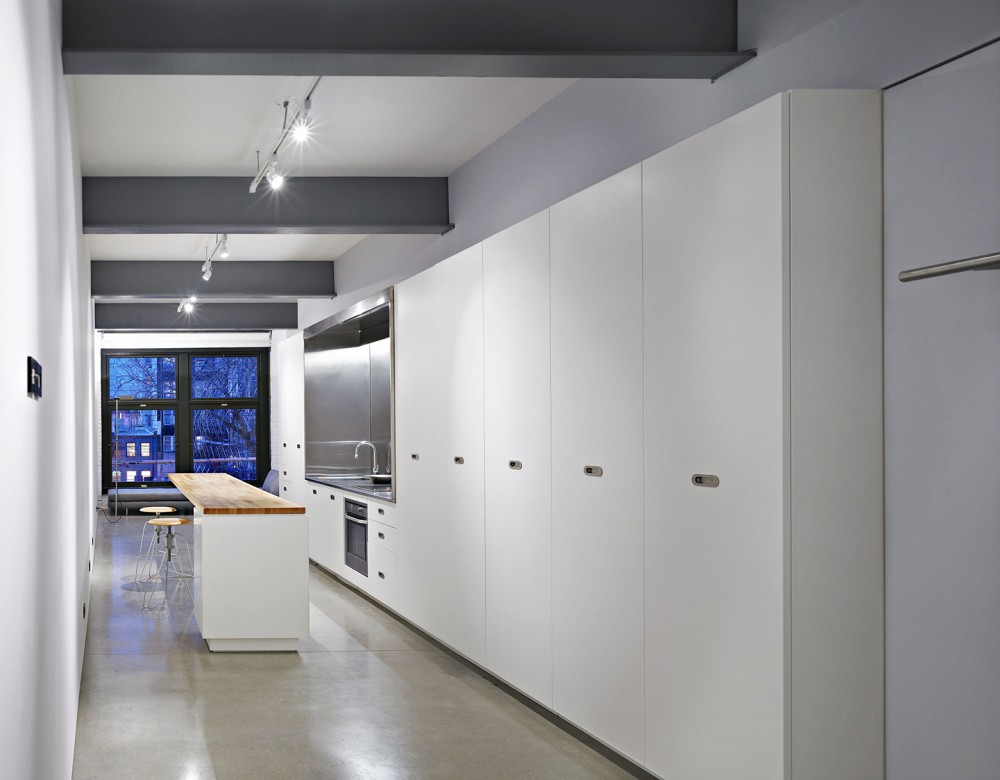
Most of the units have a cool, modern look and are filled with light. Of note is unit 303, which was designed as “a prototype for inner city living.” Its 702 sq ft hold a library, study, tons of storage, commercial kitchen, bedroom/gallery, and lounge with a 12’ dining bar. The space is meant as a live-work art studio; when the bed folds away, the street level space turns into a gallery and event venue, creating a fuzzy line between public and private spaces similar to the Songpa Micro House by SsD Architects.

If you speak Architectese, head over to ArchDaily for more info and images.

The Future of Apartment Sharing

Often the best way of downsizing is not getting your own tiny house or apartment, but sharing a larger house or apartment. But finding a nice place to share, nice people to share with and enduring the myriad issues that house-sharing brings, often drives people to pay more than they want in order to live alone. Enter Stage 3 Properties, a real estate startup that seeks to alleviate the woe that often plagues the shared-housing experience.

I spoke to Chris and Andrew Bledsoe, the brothers behind the Stage 3. They explained to me how firsthand experience–verified by focus groups, surveys and other research–showed a gulf between how people live and what the market is offering.

They found that young people, particularly young professionals, are living very differently than they did 20 or 30 years ago. In fact, the name Stage 3 is taken from the third stage of life, which they define as “emerging adulthood”–the period right after college and before adulthood/parenthood. These third stagers are choosing to stay single longer. They are more mobile. They are choosing live experiences and cities over stuff and the burbs.

But these same people are facing new challenges like a stagnant economy and a severe shortage of attractive, affordable housing options in most major metropolises.

Even finding clean, basic housing–which is what many of them are looking for–can be out of reach. Christopher Bledsoe said, “Most landlords require an annual income of forty times monthly rent. Since the average rent for a studio is around $2500 in many parts of Manhattan, that works out to be $100K just to get your foot in the door.” This is a big number even for the relatively well-heeled first year analyst at Goldman Sachs, he says.

Faced with this situation, most turn to what he calls the “underground housing” market. Stage 3 did a deep analysis of Craigslist rental listings in thirty of the top US metropolitan areas and they found a significant percentage of listings were for people posting in the “rooms/shared” category–i.e. people looking to rent out a room in their apartment or even sometimes share a room.

worst-room

But Bledsoe believes that most of these situations are far from ideal. He points to the Tumblr blog “The Worst Room,” which showcases the dregs of Craigslist rental listings, as an example of what awaits many people looking for an apartment share (something I, a longtime New Yorker, can say is not so far off the mark). 

Then there are other inherent problems with roommate situations: Many apartments are not designed with the 20-something shared renter in mind, often resulting dining rooms and living rooms that double as makeshift bedrooms. Meanwhile, finding roommates you like is a crapshoot at best; you are often financially tethered to virtual strangers through a lease; most people have different ideas about what constitutes “clean”; and so forth.

Stage 3 has created a branded solution they call “Ollie” (a phonetic play on “all-inclusive”). Ollie is a system that addresses many of the problems facing people who are looking for a nice place to live in a good neighborhood, and might not be able to afford a studio (or qualify for one), and who want to avoid terrible roommate situations and ill-suited tenement style accommodations. Here’s what Ollie will offer:

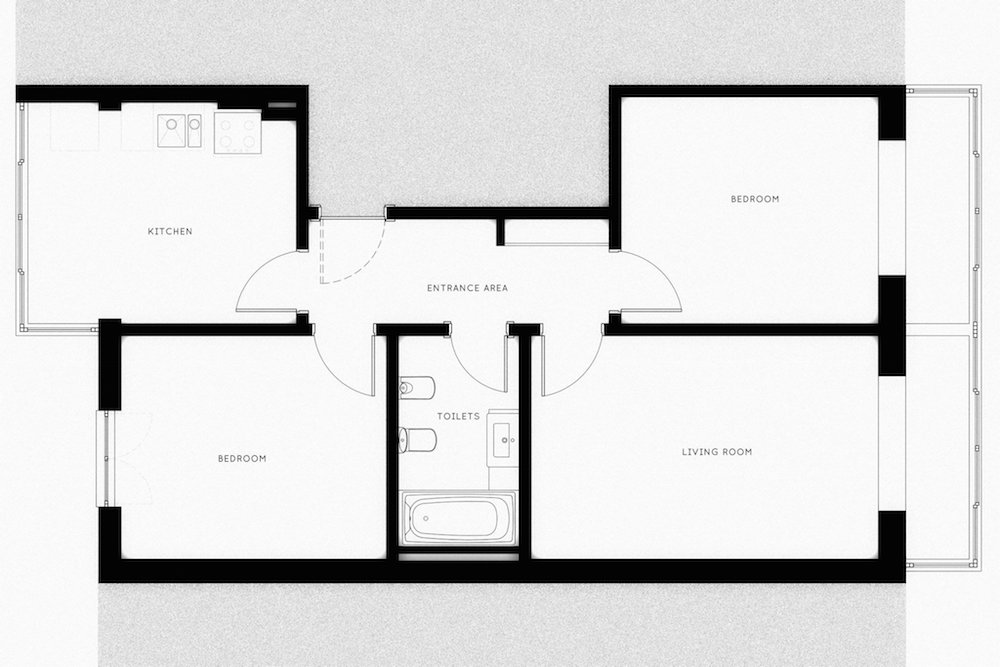
  • Purpose-built micro-suites, designed specifically for sharing, with large bedrooms and smaller common spaces (sample two-bedroom floorplan below).
  • Furnished rooms that include space efficient furniture. They are planning on using beds from Resource Furniture.
  • An online roommate matchmaking service, akin to an internet dating site.
  • Lease insurance, which protects you should one of your roommates bail from his/her lease.
  • Full-amenities like house cleaning and laundry will be included in rent.
  • Some of their buildings will feature hotel-style pools and gyms.
  • And, Bledsoe’s personal favorite, social programming designed to foster networking opportunities and a sense of community among neighbors. Think weekend white water rafting trips upstate during the summer months and ski trips in the winter months.

Bledsoe says Ollie will cost 30% less than renting a studio in the same neighborhood. In other words, if a studio were to cost $2500 in a newly renovated, full-service building, then Ollie would target per-tenant rents of about $1700, inclusive of furniture, housekeeping and other amenities. This might strike some (non-New Yorkers) as a large number, but Bledsoe points out that this is not too different than the price of renting a spare bedroom on Craigslist within a shared apartment, possibly even within a walk-up building without any of the added accoutrements that Ollie promises to deliver. Moreover, he believes the social component of living in an Ollie apartment will prove to be among its biggest selling points, providing benefits that cannot be obtained by living alone in a studio.

Screen Shot 2015-07-14 at 2.33.42 PM

Stage 3 does not want to limit Ollie to the most exclusive neighborhoods in Manhattan. Through a partnership with New York-based Simon Baron Development Group, they are aiming to offer 10K units in the next few years throughout New York as well as other east coast cities like Boston, Philly, Washington DC and Miami. They have three projects in the New York area in the works that will roll out in the next couple years, with the first units leasing in 2015.

As we noted the yesterday, many individuated micro-apartment developments are stalling because of regulations. Moreover, even when studio-style micro-apartments do hit the market, their rents will still be out of reach for many, leaving a huge need for clean, basic housing. The Bledsoes have received pre-consideration approvals from New York City’s Department of Buildings, which they say validates that Ollie is a solution that will work without any housing reform, improves upon the common practice of apartment sharing, and stands to represent a significant addition of clean, practical housing in today’s cities.