Small, Social, Affordable Living Coming Soon to Upstate New York

I’ve written here about several all inclusive housing developments that are aimed at so called Millennials. Ollie in New York. WeLive in DC. The Collective in London. These places combine small individual living spaces with ample common spaces including lounges, movie rooms and co-working spaces–all resulting in a very social, low-fuss living experience. While these developments are exciting, their locations make them untenable for many Millennials. “Affordable” in NYC, DC and London is, for many, still god-awfully expensive. Which is why I’m excited about a new housing development called Commonspace in Syracuse, New York–it has many of the shared living qualities of the aforementioned developments, but it is located in a city where property values are still within reach for folks who aren’t pulling in $200K straight out of Wharton.

commonspace

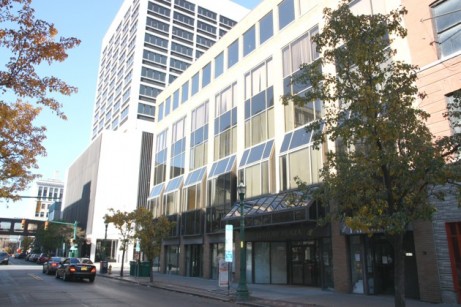
Commonspace is an extension of CoWorks, a coworking space opened last February by fellow upstaters Troy Evans and John Talarico. Like WeLive and the Providence Arcade, Commonspace is a retrofit of an older building–in this case, a pretty unassuming five story office building. The first floor is retail, while the second floor houses CoWorks. The third floor is used as rented out office space, while the top two floors will house Commonspace, which has 21 private micro-apartments. Each unit will have its own kitchenette, bathroom and is located toward the outer edge of the building so they have their own window. Units will be no larger than 300 sq ft and will include furnishings designed to maximize the space like built-in beds that flip up to access storage underneath, floor to ceiling storage and more.

Split between the fourth and fifth floors are the common areas that include a professional kitchen, lounge, game room and screening room. Residents will also be able to access the downstairs coworking space. There will be an onsite social coordinator as well as online community network to keep people connected. Evans told me the idea was to make the building into a neighborhood.

Commonspace’s innovative housing model is not necessarily original. “People are doing this in bigger cities,” Talarico told me. But locating it in a medium sized, “second tier” city is. “We want keep people here. A lot of people [to whom Commonspace will appeal to] are remote workers. They can see how they living great lives on smaller incomes.”

Syracuse is seeing a bit of a rebirth, according to Evans. Population is starting to climb after years of stagnation and decline. And much of this growth is happening downtown, driving rents up. An average one bedroom goes for around $1400. Rents for Commonspace units, which will be furnished and include utilities and even access to the coworking space, will start around $800. This low cost coupled with a built in network of potential collaborators is ideal for people who might be starting a new venture–or want a fun place to live that doesn’t cost a fortune. 

Evans and Talarico would like to expand the idea into Rochester, Utica, Ithaca and other upstate New York cities. Evans said that they want “to keep young people part of social circle so they want to stick around.” With a combination of dynamic, social living and affordability, I think they might just achieve their goal.

They expect renovations to be complete in five to six months and preleasing has already begun. More info at Commonspace.io.

Image credit: Alana Semuels

New Startup Offers Rent-a-Tiny-House

As I brought up a few weeks ago, there is a real need for more small, inexpensive vacation homes, ideally ones that are easily accessed by city-dwellers. City life can be a real grind. Without some sort of retreat, it can be unsustainable. Well the gods have heard my plea. Actually–as is more often the case–a group of Harvard grads heard my plea (but aren’t they the same thing anyway?). Headed by MBA student Jon Staff and Law School student Peter Davis, Getaway House provides an attractive, affordable, off grid tiny house for “folks looking to escape the digital grind and test-drive tiny house living.”

KATARAM_Kitchen

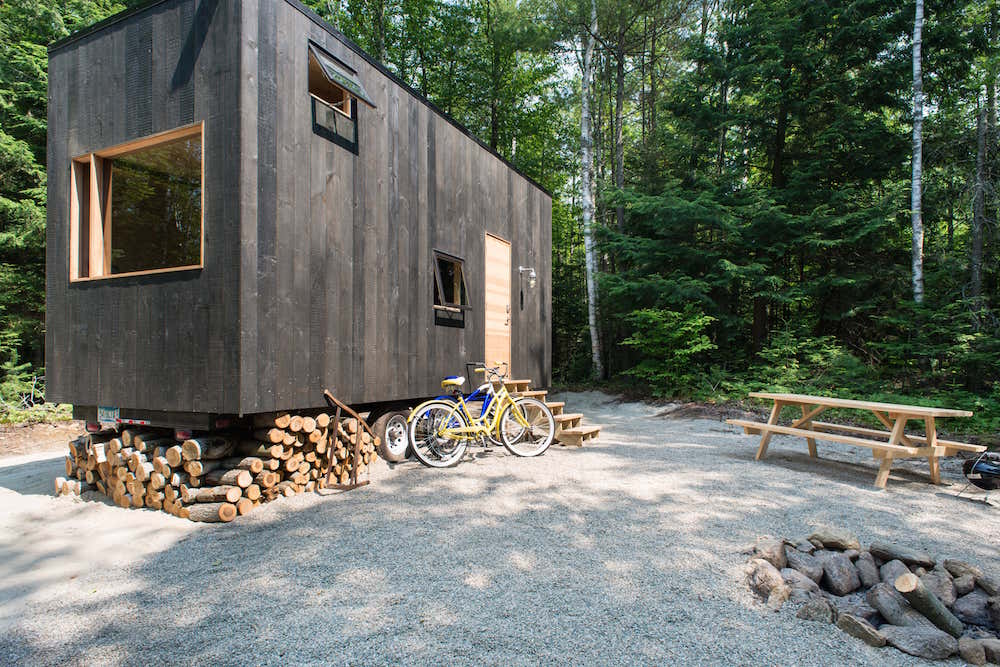
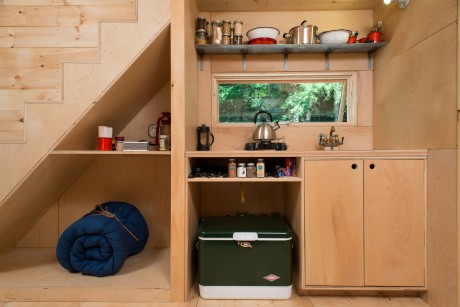
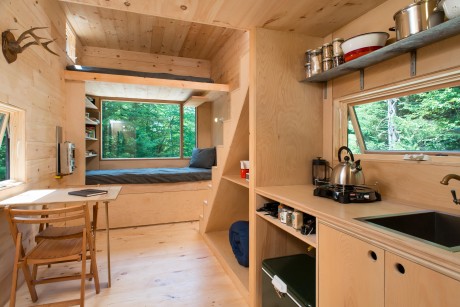
There is currently one completed Getaway House that is available to book by the night. It is dubbed “Ovida” and is located within two hour driving distance from Boston. The place was designed by a group of Harvard Design School grads. This elite-institution provenance shows through in its design. Both its modern interior and exterior are clad with attractive rough cut pine. The interior features built in furniture such as a table that doubles as a window cover and two built-in beds, giving the place capacity to sleep four. All electricity is solar, the toilet is composting and water is handled via a 110 gallon water tank that is refilled via the host house the tiny house shares its land with. Bookings also include fresh linens and available “provisions”–a sort of backwoods mini bar with things like coffee, trail mix, pasta, etc (these cost extra). Ovida is available for a reasonable $99/night for double occupancy.

KATARAM_Inside

Another Getaway House, dubbed “Lorraine” will be available mid-August and they are already taking reservations. A third house is due out in early September. Staff and Davis raised a bunch of money to build the houses with the goal of making them into a replicable model, providing both affordable, sustainable urban retreats and income generator for property host.

Getaway House is actually the first initiative of a project called Millennial Housing Lab, which, somewhat along the lines of what I wrote about yesterday, is trying to develop and realize “fresh housing ideas for a new generation,” focusing “on all sides of the housing experience: architecture, neighborhood design, financing, regulation and community-building.” As I’ve mentioned time and again, for all the hype surrounding tiny houses, micro-apartments, micro-suites and other creative forms of housing, market and regulatory forces often stand at odds with bringing these things into being. While Getaway House is ultimately a tiny vacation cabin, it is also another small step in making tiny, low impact housing a viable housing option for more people.

Millennials, Micros and Why Hannah Horvath Probably Couldn’t Afford to live in Brooklyn

If you watch the HBO series “Girls”, you know who Hannah Horvath is. If you don’t watch it, Hannah is an underemployed writer and substitute teacher living in one of Brooklyn’s hippest neighborhoods. Her life is filled with all sorts of interesting (albeit melodramatic) experiences and friends. She eschews cars for a bike. She wears weird clothes and is covered with tattoos. Because of her underemployment, urban leaning, experience loving, bike riding lifestyle, the character is held up in the media as the archetypal urban Millennial. Yet she is a mythical creature. In reality, Hannah would be cast out to Rochester or Indianapolis or some other city whose cost of living is in line with her income. Even with parental support or a roommate’s or Adam’s money, it’s unlikely she could afford the decent-sized two bedroom apartment she keeps throughout the series.

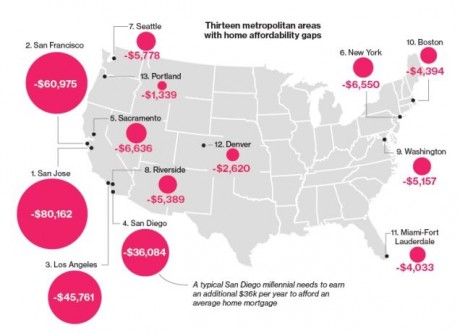
On this site and many others, people have been quick to define Millennial preferences, which fall along the lines of Hannah’s. They like cities, Instagram and experiences; they dislike suburbs, cars and stuff. Some of these stereotypes might hold a lick of truth, but they miss cold, hard economic realities. Through a combination of astronomical rents and stagnant wage growth in many professions, many–if not most–Millennials are being priced out of today’s major cities. A recent Bloomberg story highlights this well, showing that 13 of the US’s major cities are profoundly out of reach for the average Millennial. For example, the average San Franciscan Millennial would need to pull in an extra $60K a year to afford the city’s average home mortgage. Of course there are rentals, but that scene is just as bad. The city’s median rent is $4,225 month.

millennials-housing

So if they’re not living in Greenpoint or the Mission, where are they living?

Sometimes I am guilty of creating a polarity, where people either choose to live in the city center or far afield in the suburbs. But this is not an accurate polarity. There are many stops between city center and cul du sac, and a recent article in Gizmodo by Alissa Walker describes some these stops, particularly as they relate to Millennial migratory patterns.

Walker reports two major trends. First, is the urbanization of the suburbs. She says that Millennials are “looking for amenities like walkability and public transit,” but according to an Urban Land Institute study, they are more concerned about “relationships and having the time to enjoy those relationships, which doesn’t necessarily mean working long hours to pay the rent in a big city.” They want the benefits of the city, but they are not necessarily committed to living in one.

As such, Millennials are creating what one writer called Urban Burbs. Walker writes:

Millennials might not be staying in the urban cores, but rather, they’re helping to remake the urban-like enclaves that allow easy access to the city when they want it. These places where millennials are choosing to live still have the qualities of downtowns—dense housing, transit connections, walkability, good food, great bars—without the high prices of downtowns.

She points to a couple examples in suburban Chicago (my birthplace for what it’s worth), where smaller, amenity rich rental apartments are cropping up in places that have been traditionally the strongholds of mortgaged single family home suburban living.

The other trend Walker writes about is the revitalization of smaller, affordable cities like San Antonio and Milwaukee. This is a trend I’ve noticed in the micro world and reflected in my post about how micro apartment buildings are sprouting up in smaller cities. I get Google alerts for micro-apartment news and for every alert about a micro apartment building going up in New York and San Francisco, there are ten going up in smaller places like Des Moines, Kalamazoo and Buffalo.

A Bloomberg article entitled “Micro-Apartments Are Coming to the Midwest” apparently sees what I see. While cities like Columbus and Omaha might not be space starved like NYC, Millennials, looking for an apartment are willing to forsake size for a good location and low price. This consumer desire is abetted by developers who can charge more per square foot (though this is not a perfect formula as sometimes micros can cost more to build on a per square foot basis). This passage from the article to my mind sums it up:

In that light, the shift toward smaller apartments can be seen as simple economics: Smaller apartments are more profitable for developers to build and more affordable for tenants to rent. “I could paint a cooler picture about value of design, efficiency, and all of that,” says Alexander Grgurich, a development analyst at Nelson Construction & Development, which converted a century-old office building in Des Moines into 425-square-foot apartments in 2013. “For us, it’s about getting a higher price per square foot while offering a lower absolute rent to the renter.”

The same appeal of offering an attractive, albeit small $2000 micro apartment in Boston versus a $2750 conventional studio is equally recognized when the price delta is $750 versus $1000 in a city like St Louis.

[divider]

I moved to New York when I was roughly Hannah’s age. I paid around $650/month to share an illegally subdivided Williamsburg duplex with four other people. It seemed outrageous at the time because I had just been paying a few bucks more for my own one bedroom in Colorado. But I suspect most Millennials moving to the city now would kill for a deal like mine.

On the one hand, I feel a certain pity for all the young people who cannot feasibly live in these exciting global cities (and I’m sure there are many not-so-young folks getting priced out as well). On the other hand, I’m a little envious. Particularly in some of the smaller cities Walker mentions, there seems to be vital cultural movements afoot. Arts and small businesses are flourishing. Young people are riding their bikes everywhere because they have the time to do so. They are doing many things they couldn’t if they were scrambling to make rent payments. Millennials, whether living in a low cost micro apartment or shared house or somewhere in between, are creating edited lives by virtue of will, not history and infrastructure.

Image credit: HBO, CRAIG BLANKENHORN

Spanish Architects Reimagine the Not-So-Empty Nest

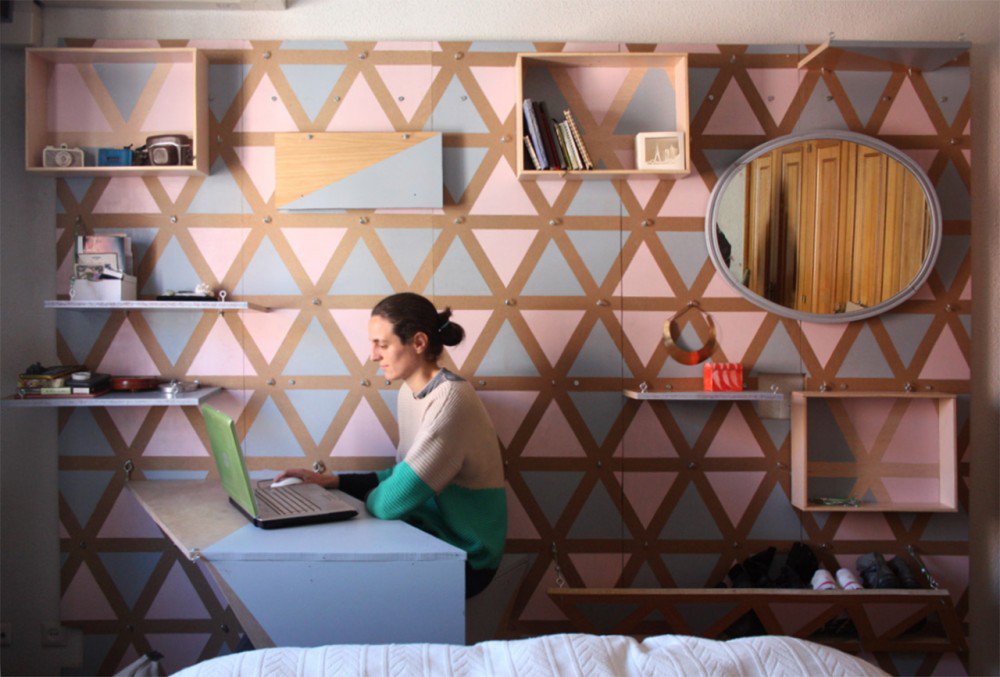
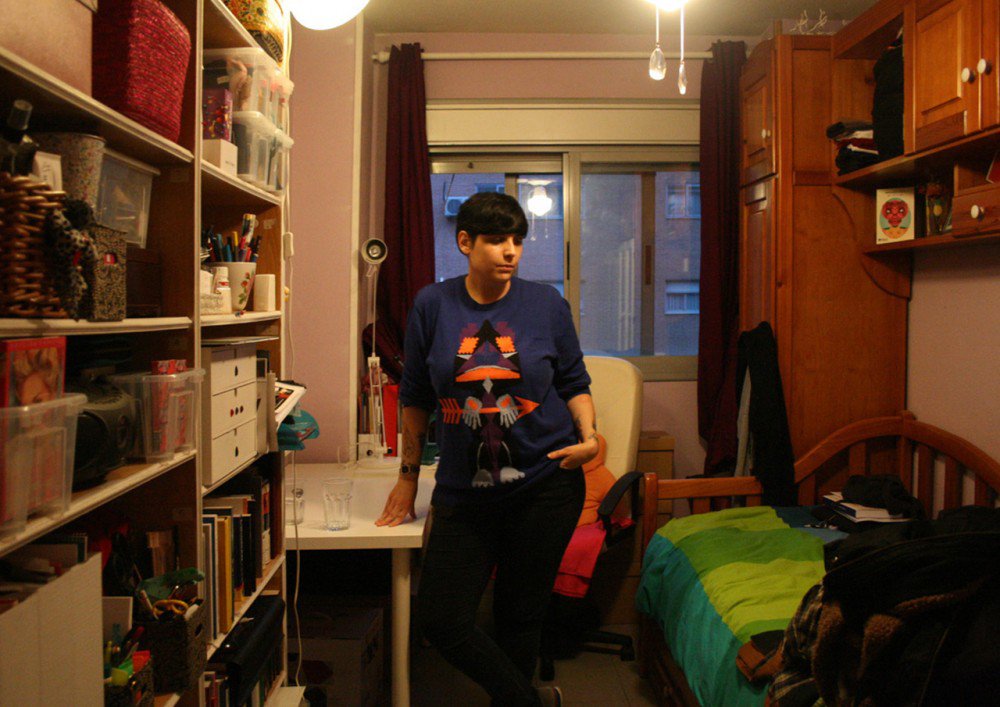
Back in the day, at least in many industrialized nations, there was an expectation that children graduate from school, leave home to go to school or get a job. After that, maybe they’d live and work in the city for a while before finding a nice guy/gal to settle down with and have their 2.7 kids. Rinse, repeat. In the last decade or two, these expectations have been pretty much upended. Ever-weakening job markets coupled with high housing costs around the globe have led many Gen-Y’s and Millennials to never leave their folk’s home or return there at regular intervals due to limited economic resources and opportunity (the latter often referred to as the “boomerang generation”). Spain, like many countries, has nearly half of its young adults (18-29 year olds) living with their folks. Putting aside the sociological implications of this situation, there is a definite design challenge here: many of these people are occupying childhood rooms designed for childhood or adolescent needs. Spain’s PKMN [pacman] Architecture (the firm behind the All I Own House) in collaboration with the Tricontinental Master Degree program thought they’d to try and tackle this latter challenge with HOME BACK HOME. They are reinventing the “kid’s” room in a way that reflects the specific needs of their occupants’ advanced station in life as well as the general change in household demographics.

The old model viewed leaving the proverbial nest as an emancipatory act. But that emancipation is currently difficult or impossible for many young people. HOME BACK HOME turns the current model on its head. It is a study in how to design spaces for what they dub “de-emancipation”–a rite of (re)passage of children moving back home. Rather than being a burden, PKMN wanted to present this passage as an opportunity to create new supportive, intergenerational housing.

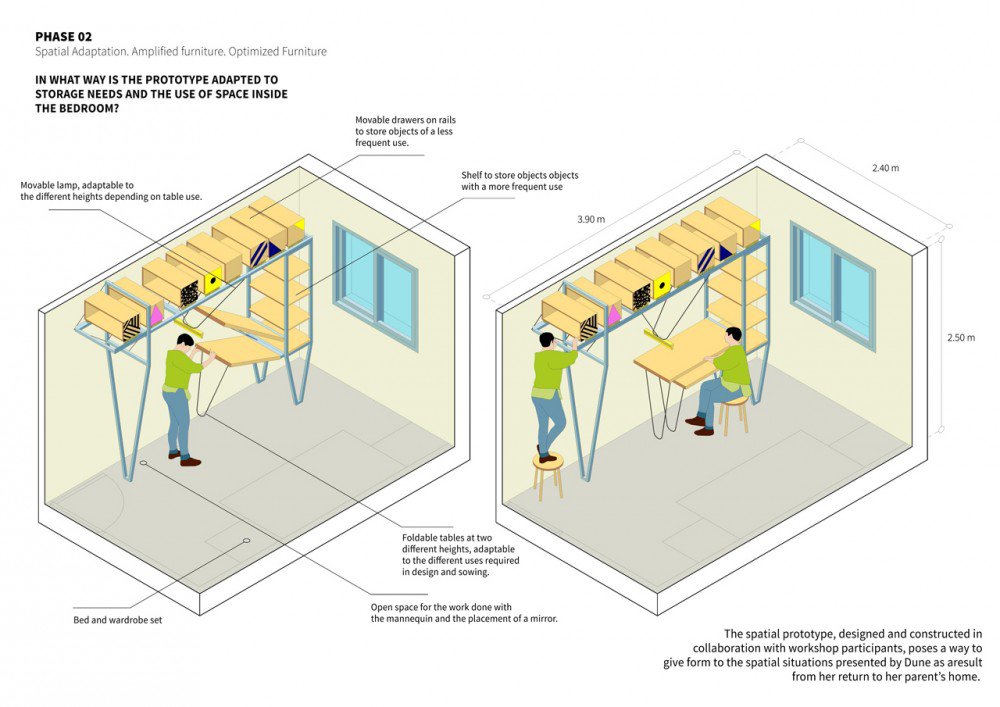
In creating this new model, PKMN used two returning-home women–Dune and Edal, a fashion designer and artist respectively–to demonstrate their concept. They gave both of the women’s childhood rooms programmatic makeovers to better suit the women’s current needs, be those professional, practical (e.g. storage) or aesthetic. Modular, flexible, low-cost furniture components were added to both rooms to suit each woman’s needs.

Beyond the designs themselves, what’s most interesting about the project is the idea of transforming a situation that is often considered unfortunate into an opportunity and even something that could be a positive addition to the architectural cannon.

The project also begs the question: what if architects and designers started making spaces that reflect current demographic realities? Might there be more spaces for singles, for adult children who cannot afford to move out of their parent’s home, for divorced parents with partial custody rights, for how people live today?

See more on ArchDaily and PKMN’s site (mostly Spanish).

UK’s The Collective Offers Whole System Design Living

London is one of the most expensive cities in the world, and like many such cities, incomes have not kept pace with the cost of living in general and housing costs in particular. As we saw when we checked out NYC’s Stage 3 Properties, the situation is squeezing many young people out of town or into marginal housing situations. Yet these same young people are less interested in the big places that cost so much; they are less interested in accumulating stuff; they are less likely to be (or get) married and/or have kids; and they are more open to a shared living experience. As we wrote the other day, many of them just “want a clean home near all the action with a good wifi connection”–a type of housing that wouldn’t cost so much if developers deigned to make them. London’s The Collective is one developer who deigns.

The Collective is probably easier to understand as a whole system design for living rather than mere real estate developer. Yes, they have four built buildings and one underway, all featuring minimal, furnished, design-savvy micro-housing with shared social spaces and included amenities. But they also have a startup incubator and coworking space called The Elevator that closes the social-professional loop. Both arms of the company embrace and support a new breed of highly mobile, tech-savvy, entrepreneurial, experience-thirsty urban living for Millennials.

We emailed The Collective’s founder Reza Merchant a few questions about the company’s past, present and future, which includes Old Oak, their first purpose-built housing complex that is opening this November:

David Friedlander: What inspired you to start The Collective?

Reza Merchant: I was inspired by my own experiences living as a student in London, faced with the struggle of trying to find decent accommodation at an affordable price. I set up London Student Rent, a student lettings agency, during my last year at the LSE and the company then evolved into The Collective as I became more attuned to what young professionals want and need from their housing. This is basically a high quality, hassle free way of life, which also allows you to meet like-minded people around you–all at an affordable price.

DF: How do you see what you’re doing–both in terms of housing and the Elevator–as meeting and perhaps predicting the needs of Millennials in the coming decades?

RM: Millennials represent ‘Generation Rent’. Whereas our parents’ goal was to own a property, and renting (in London) had a stigma attached to it, this is no longer the case. Renting is becoming a lifestyle trend and we cater to this increasing trend by providing purpose built rental accommodations. Young professionals work long hours and use their rooms as crash pads, which is why we don’t need excessive amounts of space–as long as it’s well designed. Millennials prefer to invest in experiences versus material possessions and are much more willing to share, which is why we focus on providing a high level of social amenity space with our Shared Living product. Also, we are ‘tech junkies’ and have grown to expect everything as a service. Netflix, Uber, the list goes on, and The Collective offers living as a service. We don’t have time to, nor want to, worry about life admin. So paying one monthly bill which includes everything from room cleaning and linen change, to concierge services and all utility bills and council tax, makes life a lot easier, giving people time to focus on more important things.

The-elevator

The same goes for our Elevator workspace product, which also focuses on enhancing the end-user experience. Entrepreneurs are passionate about building their business and their work environment is vital to helping them deliver it. We focus on proving a unique workspace, which focuses not only on providing services offices but also includes all the ancillaries a start-up needs to succeed, from an engaging events programme to access to a network of mentors and investors. The so-called boundaries between work and life are becoming ever more blurred–when you do something you love then it becomes your life. Entrepreneurs are happy to spend long hours in the office, but they also need the creative buzz and inspiration from their surroundings, so we aim to accommodate this.

DF: Your focus is squarely on Millennials. Do you see your model working with other demographics?

RM: Our model has been created specifically with 21-35 year old young professionals in mind, so it is tailored to suit their needs. There are definitely elements which would suit an older demographic, but essentially once you start settling down and thinking of a family your needs change.

[divider]

We are ‘tech junkies’ and have grown to expect everything as a service. Netflix, Uber, the list goes on, and The Collective offers living as a service.

[divider]

DF: What would you say to people who accuse micro-housing as exploitive, shoving people into overpriced shoeboxes?

RM: I would say that an increasing shortage of space, coupled with an increasing population means we are forced to come up with solutions to the housing crisis. Micro-housing is not exploitive if well designed. With the right, innovative design, use of space can be maximized efficiently–it’s little things, like clever shelves to partition the kitchenette from the bed that can also be used as storage space and are also a cool piece of furniture.
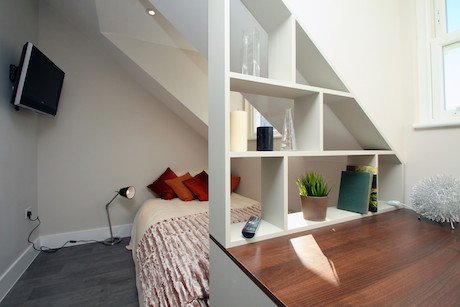
Collective-room

Also, if you can offer an all-inclusive service offering in the rent, plus a high level of social amenities, like our model does, then it’s not overpriced.

DF: How does Old Oak [pictured at top] expand on your previous endeavors?

RM: Old Oak is our first new build and the first true embodiment of our Shared Living product. Whereas our existing developments are refurbished building, this is the first time we’ve had a clean slate on which to deliver exactly what we want to. Our rent has always encompassed services including weekly room clean, weekly linen change, concierge services, 24/7 security, free Wi-Fi, plus all utility bills and council tax. However, although we also provided communal areas throughout our existing properties with Old Oak we’re taking it to the next level. The 11-storey building will have 1,000 sq ft of social amenity space on each floor: a gym, spa, rooftop terrace, cinema room, secret garden, themed private dining rooms. All are designed to facilitate interaction amongst our members, to create a real community feel within the building.

DF: What do you see as the future of both The Collective and housing in general?

RM: I see the future of The Collective as a leading lifestyle brand, which has redefined the way people live, work and play. Not just in London, but in global cities across the world. The shortage in space means that inevitably housing will become more dense, but hopefully this will just encourage more architects and developers to think outside the box and come up with innovative designs and solutions which mean that quality is not compromised. The use of technology will also shake up the housing market, both maximising space and creating the ultimate customer experience.

The Rise of the Minimalist Celebrity

I must admit, if my 21 year old self had received $2M to play professional baseball, there might have been a chance that I’d make a few extravagant purchases: a Porsche perhaps, a fancy apartment, etc. But Daniel Norris might be a sign of a shifting perspective toward wealth in the Millennial mind. The 21 year-old left-handed pitcher was just recruited by the Toronto Blue Jays and given a $2M signing bonus. But Norris didn’t head for the nearest Bentley dealer or David Yurman to buy a diamond-encrusted catcher’s mitt. Norris went his father’s buddy to purchase his dream car and dream home: a 78′ VW Westfalia camper he calls Shaggy (it should be noted he did bling it out with some solar panels).

dan-norris-campeddan-norris-cooking

The Tennessee native was brought up with a high reverence for nature and is an avid outdoor enthusiast–climbing, mountain biking, and surfing. The van serves as his adventure launchpad.

But it’s also his seasonal home. Norris has been living out of the van on the beach during the Jays training camps in Dunedin, FL. Norris told Grind TV that living in the van was a conscious effort to keep his life simple and not let his newfound wealth corrupt his values. “In my mind there’s no need for luxury, or at least society’s sense of the word,” he told them. “I consider my life luxurious—I live on a beach with an ocean-front view, hearty meals and hot French-pressed coffee at my disposal. That’s fancy, right?”

While Norris might be an anomaly in what might otherwise still be a world dominated by the excesses available with extreme wealth, he might also be a sign of the times–with Millennials feeling increasingly weary of traditional notions of success, Norris might be the new, low-key celeb, someone who might have access to vast material resources, but feels compelled to not exploit them; someone for whom simplicity and moderation are ideals to strive for, not signs of failure.

Why Are Millennials Living at Home?

Maybe it’s access to stocked fridges or the premium cable channels–whatever the reason, Millennials (roughly those born between 1983-1996) are shacking up with their folks at unprecedented rates. The above infographic from Good Magazine shows that in the US there were 21.6 million people–7% of overall population and 36% of Millennials—living with their folks in 2012; a 4% increase over just five years prior. The US is not alone. According to StatCan, 59.3% of 20-29 year old Canadians were living with their folks or one folk in 2011. Compare that to 11% in 1981!

Truth is Millennials aren’t staying at home because they’re watching Game of Thrones with tubs of Neapolitan ice cream. The reasons are economics and lifestyle choices. The days of graduating college into a verdant field of employment opportunity are, at least for the time being, over. 2/3 of all American graduates are leaving college with an average of $26K student loan debt. Then there’s low employment rates, which for Millennials stands around 15%–twice the national average. Of the live-at-home American Millennials, 45% reported being unemployed. The other 55% are not necessarily flush; real wages have consistently fallen for Millennials–a problem most acute with their cohort.

Then fewer Millennials are marrying. Only 20% of 18-29 years olds are married; compared to 59% in 1960 for that same group. Tellingly, 44% of Millennials think the institution obsolete according to Pew Research. Moving out to live with your partner just doesn’t have the urgency it might have once had.

What does this have to do with small space living?

We have read many comment boards for stories about micro-apartments, with the frequent comparisons to jail cells and cages. But what often gets missed amidst the fast-flying vitriol are demographic realities and changing lifestyles. Many people–and not just Millennials–don’t want to spend all their money on housing, either by choice or economic necessity; they might not want to marry; and their ideal living situation is more likely to be in the city than suburbs, particularly for Millennials.

There has been a big kerfuffle about micro-housing in the Pacific Northwest, but there has been less talk about why they’re so popular. There’s a huge demand for low-cost, centrally located housing, and having a rumpus room big enough for a ping-pong table is far less important than proximity to work and other amenities. While we can’t prove it, we suspect many of the micro-apartment dwellers are people who might otherwise be living at home. Moreover, as Derek Thompson of The Atlantic stated (perhaps a little optimistically), we are living in an era of cheap food and consumer goods relative to income.  Now it’s the time for housing prices to follow suit.

Of course there are many other factors contributing to the Millennial “failure to launch,” as many have put it. A stagnant economy, questionable returns on higher education, income inequality, a shrinking middle class and so forth. But in a certain way, reducing one of the biggest life expenses–housing and, to some extent, transportation–you can give more mobility for people who may never enjoy the salad days their folks did. And no, many Millennials might not be able afford a 1500 sq ft home for themselves (too often the only choice), which forces them to stay at home. But even with a modest income, they might be able to afford a great 350 sq ft apartment in the middle of the city, one that allows them to live car free and gives them access to the things that they find important.