Sell Stuff Now, Easily

We’ve given tons of tips for selling your stuff. You can get an eBay valet to do it for you, you can sell your stuff on CraigslistKrrb or Yerdle. And of course, you can just give stuff away. With the exception of using an eBay valet and donating stuff, most strategies generally leave the seller (you) to be your stuff’s shipping and inventory manager. For those looking to make rapid life edits, this can be an agonizing process, both waiting for your stuff to sell and dealing with it when it does sell, all serving as a protracted reminder of all your poor life purchase decisions. A new service called Stuffhopper does something different, relieving you of pretty much all responsibility aside from waiting for someone to pick up your stuff and making money.

Unlike an eBay valet, Stuffhopper accepts a huge range of stuff–from furniture to appliances to handheld electronics. You describe your stuff to give them a sense of what you’re selling (they understandably don’t want your broken junk). You then schedule a pickup (if the value exceeds $100) via their site or app. Stuffhopper then goes about creating listings for your stuff, photographing it, creating descriptions and then selling it on whatever channel(s) are most appropriate. Because they are expert sellers, they know how to price and market your products better than you ever would. When they sell the stuff, they take a 50% cut of the net sale and give you the rest. If stuff doesn’t sell in 60 days, they send it back free of charge or donate it with your blessing.

Stuffhopper claims that the average house contains $7K worth of unused stuff. But for many of us, the value proposition of accessing that money–the time and effort involved with selling–isn’t sufficiently compelling to motivate us to do anything about it. Stuffhopper could change that.

Unfortunately for most of us, Stuffhopper is only available in Seattle, but we think it’s an idea that has legs and hope it expands to other cities.

Via Geekwire

How to Start Simplifying and Downsizing Your Life Today

We regularly receive emails from readers looking for suggestions for how they can start ‘editing’ their lives. They find themselves living lives that feel chaotic. They have too much stuff. Their houses are too big. They might want to downsize their homes but the areas where they live do not have many options for compact housing. Their families are not necessarily aligned with the would-be simplifiers’ ambitions. They are having a hard time letting go of stuff and the idea of downsizing themselves. Almost invariably, they ask, “What do I do? Where do I start?”

Much to our chagrin, we are not oracles here at LifeEdited and have no special access to wisdom in regard to simplifying one’s life. We know how hard it can be to change habits that are often forged over several decades. We know letting go of stuff can be tough. We know that many places, particularly in the US, don’t have a ton of options for desirable compact homes in walkable areas outside of major cities. We know that getting family members and friends on the same page can be tough. We offer no easy answers.

That said, we do have some experience, both our own and from many others. With that experience, we have compiled a short list (the best kind) of suggestions we find to be pretty universally effective in starting the process of simplifying and downsizing lives:

  1. Don’t wait for a good time to start. At risk of sounding cliché, the time to start something is–and always will be–now. Don’t worry if the changes are tiny–maybe throwing away a pair of old sneakers you never wear–make them as soon as possible.
  2. Get rid of stuff you are very attached to, but don’t worry, it gets easy with practice. This is one of the biggest hurdles for many people. They are simply unable to give up many of the items that clutter their lives due to sentimental attachments. Perhaps it’s heirlooms or high school yearbooks or art your children made. Important, sometimes valuable things. The unfortunate fact is a certain amount of sacrifice is necessary for simplification. As it’s been said, “are you willing to give up what you have for what you want?” If you’re not willing to give up your stuff for a simpler existence, no biggie. Many people have lived great lives with tons of stuff. But if you actually want to start making changes, something–and more likely many things–will have to go. But take heart! And this we can promise, it gets easier. Once you get rid of one sentimental object and live to tell the tale, the next one is so much easier to part with. You start realizing that the value of having less is often greater than the sentimental value you placed on the dearly departed item you were clinging to. Soon you wonder why you kept the stuff for so long.
  3. Don’t wait for the right home to start downsizing. As Gandhi (or someone) said, “There is no path to simplicity. Simplicity is the path.” You can live a simplified, downsized life, even in a big home in the suburbs. If we use our environment as an excuse to getting rid of stuff and simplifying our lives, there’s a good chance we’ll never get started.
  4. Moving is the best way of getting rid of stuff. Okay, we’re totally contradicting ourselves from point #3, but nothing clears the coffers like moving. One of the ways we hold onto more stuff than we need is by creating invisibility. Out of sight, out of mind. When we move, everything comes into view, and sometimes that view ain’t so pretty. We get a taste of the shear enormity of our acquisitiveness. Moving into a smaller home works doubly well to get rid of stuff as the space’s spatial limitations will guide your excisions. Getting rid of stuff whilst moving also tends to build the habit of removing the unnecessary–to reiterate point #2, practice makes perfect.
  5. Don’t wait for the support of friends and family to start making changes. This is a simple, though often exceedingly difficult proposition for most of us. We might read this post and be excited to start getting rid of stuff or even look for a new home. We reach for the _____ that we’ve been meaning to get rid of for years. Then our significant other says, “You’re not getting rid of the ______. I love the ______.” We become crestfallen. We realize the futility of our endeavor. Like any change, there will be internal and external resistance. It’s natural. Start with your own stuff. Get rid of some of those clothes you don’t wear or bathroom products you don’t use–stuff no one can stop you from getting rid of. Lead by example. Simplicity and manageability are contagious. And if your friends and family are immune to that contagion, at least your house will be in order.

If you have successfully simplified and/or downsized your life, what has worked for you? Let us know in our comments section below.

Complicated or Simple Road Sign via Shutterstock

Swedish Students Show You All Their Stuff

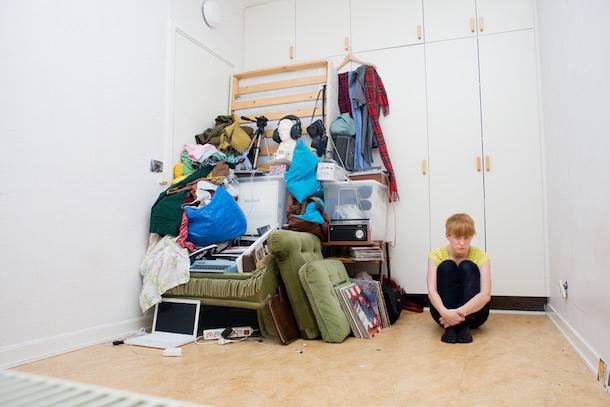
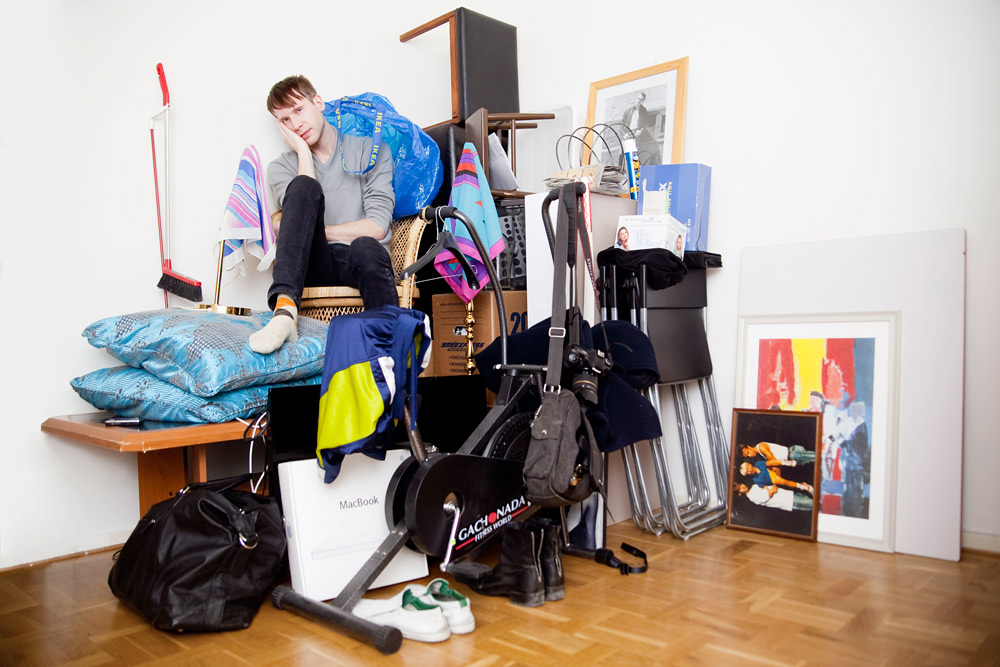
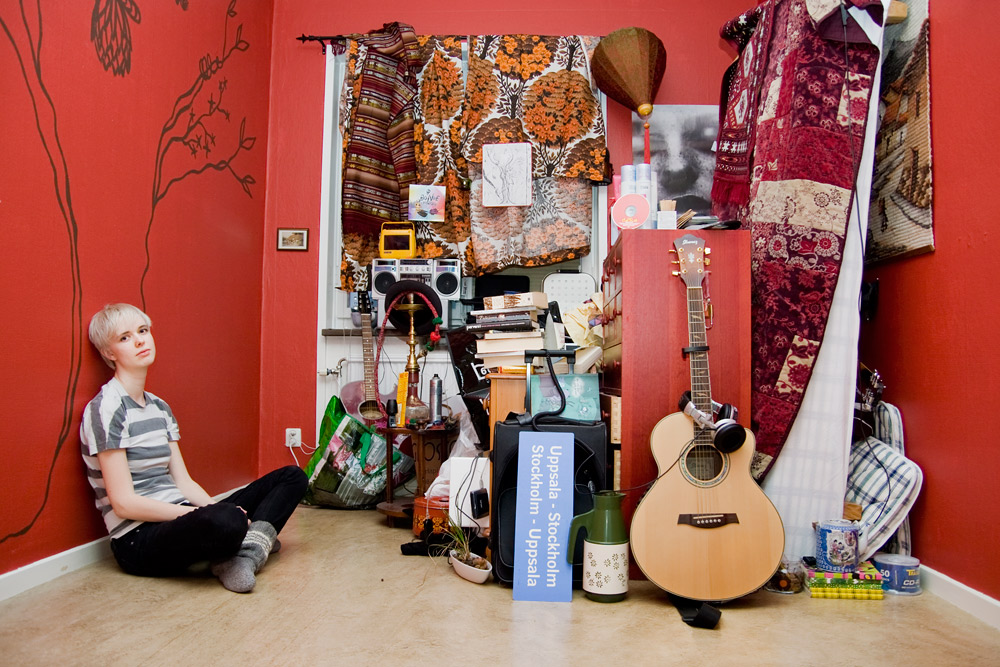
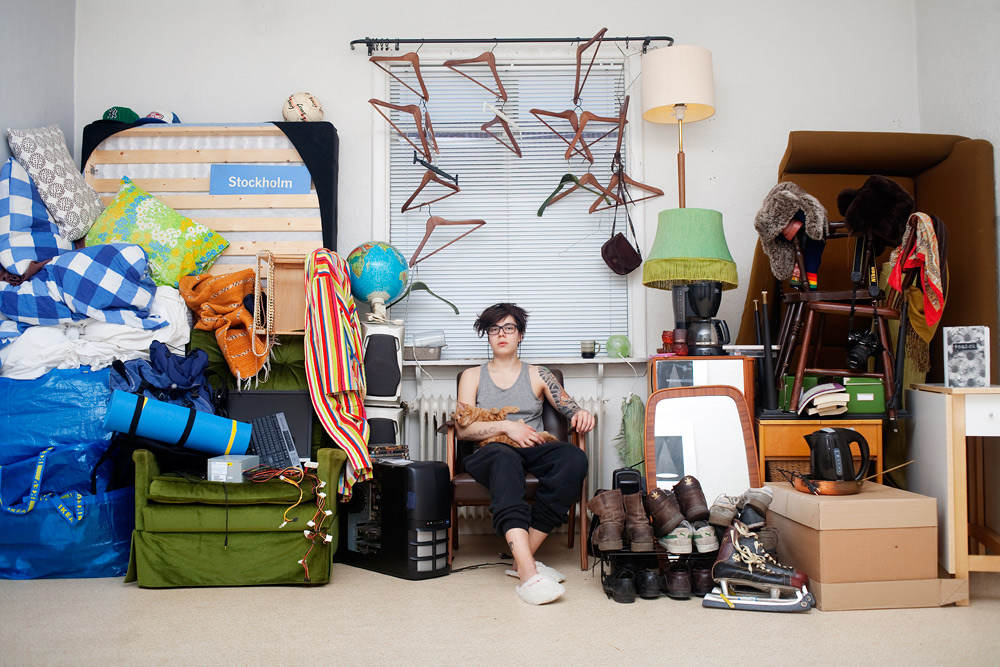
Except if you live in the smallest of homes, most our stuff gets dispersed and concealed by space. We don’t get the full scope of how much stuff we have until it’s all together in a small area, e.g. in a moving truck. Rather than waiting for a move, Swedish photographer Sannah Kvist decided to snap some shots of students with all of their worldly possessions.

The 2009 photo essay is called “All I Own.” Like the photo essays “Child’s Play” or “Family Stuff” we looked at a while back, each subject has his or her own priorities, reflected in their various possessions. Some are bibliophiles, others musicians, others photographers. All in all, none of the piles strikes us as that big.

Because all the subjects were born in the 80s and are students, it might be easy to distance ourselves from their modest collections of stuff. But upon further examination, their piles are collections of practical, mostly essential items, giving a testament to how little most of us really need to live.

via Inhabitat

3 Tips for Transitioning Your Aspirations

As a child, few things got me more excited than cars. In particular, I loved European sports cars: Porsches, Ferraris, Lamborghinis, Lotuses and the like. I subscribed to magazines, bought books and memorized specs. Though I had a very vague idea of what a dual overhead cam was, I knew that an AMG Hammer had em.

My car-lust continued unabated until one day I learned about something called global warming. I learned that things humans did and consumed were imperiling the planet’s ability to sustain life. I learned that seemingly benign, everyday things like aerosol cans, refrigerator freon and styrofoam were in fact evil, earth-harming, animal-habitat-destroying substances–things I should stop using immediately.

But it got worse. I learned that those beloved, V8-powered, petroleum-parched cars I loved so much were one of the biggest emitters of greenhouse gasses. The things I aspired to have were destroying the planet.

My situation was far from unique. Many of the popular objects and activities held up as signifiers of success were revealed as net harmers to the planet and the people who live here. Turns out that sparkling jewelry is manufactured by slave labor. Dye runoff from our favorite fashion company’s factory contaminates Bangladeshi groundwater. That fancy designer house in the woods creates sprawl and consumes far more resources than that drab coop in the city. Even the jets that take us to exotic ports of call are acidifying the ocean.

And therein lies one of the bigger challenges of making significant life changes: letting go of aspirations, desires and ideals that no longer align with where we want to take our lives.

These things can be pretty hardwired. For years, we have associated particular stuff with success and happiness, even when these associations are purely a construct of an advertising campaign. A Louis Vuitton handbag (a real one) means you’ve made it. But the more we learn, the more we realize that popular belief doesn’t make something true. As Anthony De Mello put it:

There is only one cause of unhappiness: the false beliefs you have in your head, beliefs so widespread, so commonly held, that it never occurs to you to question them.

Letting go of these associations–in the interest of personal and global welfare–often requires replacement. A sports car is replaced by a hot bike. A big mansion with a tiny house. Carrie Bradshaw with Courtney Carver. But we caution to say that these things–though an improvement–can become more refined versions of the old, politically incorrect stuff we used to aspire to have.

If your old aspirational models are bringing you down, here are a few suggestions that might help replace and/or let them go:

  1. Find new influencers. Generally speaking, we learned what was aspiration-worthy via TV and other traditional media. I wanted a Ferrari Testarossa because Sonny Crockett had one. These influences can be subtle and surprisingly powerful. Find sources of media–like this one ;-)–and friends that speak your new language and share your new values. Our thoughts are a function of our conversations. Make sure those conversations are the right ones for who you want to be. Quarantine yourself from the old conversations if necessary.
  2. Go local for inspiration. It’s easy to desire things from afar. It’s easy to want to live like or have something someone in a TV commercial or fashion ad has; worlds where all problems are edited or photoshopped out. Aspiring to have or be something or someone you are intimate with–with which you are familiar with all its, his or her problems–is a different matter. When we truly know something, we can better determine if we want that for ourselves.
  3. Start with the end goal. When I lusted after cars, I was seeking power–something most boys feel lacking. The problem is fast cars make you fast, not powerful. Remember Be > Do > Have. Start paying attention to the things that produce the desired state, whether it’s power, simplicity, happiness, etc. Investigate and try things for yourself. Don’t take someone else’s word for what will produce these things–and certainly not someone who’s trying to sell you something. Start doing those things more often.

Sergio Gutierrez Getino / Shutterstock.com

My Genes Made Me Keep It

From the perspective of evolutionary psychology, there’s a certain logic to being materialistic. In the olden days, folks couldn’t just run to Target and pick up a hypo-allergenic full-sized duvet. You had a few shots a year to hunt and skin that buffalo, otherwise you’d freeze the rest of the year. Accumulating more than we need and keeping those accumulated objects to ourselves, thereby providing for lean times, makes intuitive sense. In other words, we might be hardwired to accumulate. The only difference is that now our objects of accumulation do not stand between life and death.

This logic might not be true however. A recent study suggests that people living closer to subsistence levels might be less inclined to accumulate. The study in question sought to test something called the “endowment effect”–the overvaluing of the personal objects. Psychologist Tom Wallsten at the University of Maryland told NPR the effect is similar to the man who won’t drop the price of his house even though it’s not selling for months. He needs to sell it, but because he values it more than others think it’s worth, he holds onto it. NPR science correspondent Shankar Vedantamit, said that the effect dictates that it “feels worse to lose something than it feels good to gain something.” We would say it’s also like people who do not rid themselves of stuff they do not use because they are “too valuable” to get rid of, despite the expense and headache associated to holding onto them.

Coren Apicella, a researcher at the University of Pennsylvania, realized that the endowment effect was mostly proved by testing the behavior of college students–a demographic whose cultural biases might blare out any meaningful information about innate dispositions toward accumulating stuff. She observed the patterns of the Hadza people of northern Tanzania, some of whom were nomadic hunter-gatherers living at subsistence levels; other Hazdas observed lived in villages with market economies.

What she found was that the nomadic Hadza, people with virtually no possessions, rather than being highly acquisitive, were very easily induced to give up their stuff. Apicella explains why:

If you think about, you know, you’re a hunter-gatherer, you’re living a hunter-gatherer life, one possible reason why it doesn’t hurt as much to give things up is that you’re constantly having to give things up all the time. People are asking them for–from you, you know, demanding them from you, demanding that you share. Things come and go in hunter-gatherer life. You don’t even own that much to begin with.

Vedantam expanded to say that in a nomadic society, it is essential to give things up because the person you give to might have something valuable tomorrow to give to you.

Meanwhile, the village-dwelling Hazda who bought stuff from markets were more acquisitive than their nomadic relatives. Vedantam said of the villagers that they “were more like us [Westerners presumably]. They fell in love with their possessions because modern economies allow people room to be selfish.”

Same genes, different cultures, different attachments to stuff.

Sometimes changing the patterns of consumer behavior seems nearly impossible. Not only are we up against a behemoth economic system whose mission is to compel us to buy more stuff than we need, we are up against the culture that has sprouted around this system–a culture that accepts hyper-consumerism as the way thing are and will be. The Hazda example might be a glimmer of hope, suggesting that while we are battling marketers, bankers, politicians and even our friends and neighbors, we are not battling our biologies.

Via NPR

image credit:  Matej Hudovernik / Shutterstock.com

5 Ways to Think Less in 2014

Michelangelo is famously quoted as saying about his David statue that he made it by removing all the stone that didn’t look like David. Implicit in this remark is that underneath extraneous layers, a thing has an essential, irreducible quality. 17th Century scientist/philosopher Blaise Pascal said, “I would have written a shorter letter, but I did not have the time.” Pascal understood that editing, i.e. getting to that essential, irreducible quality (in his case, the essential message) is something that takes time and great effort.

This is a bit counterintuitive. Humans tend to be impressed with “more”–more space, money, bling, etc. But addition is the easiest math (at least in the short term); it involves throwing more distractions and stuff in our lives to avoid confronting life’s toughest questions. What would my life look like in its most essential form? What kind of company would I keep? What kind of work would I do? Where and how would I live? What would I focus on?

For 2014 we suggest continuing to ask those tough questions–to continue removing all that is not David (insert your own name to make the metaphor work). Here are five areas where we might direct our figurative chisels in the coming year.

  1. Attention. It’s been shown that the more we attempt to multitask, the less we are able to pay attention to anything. Multitasking might even make us dumber insofar as our intelligence is applied to those multiple tasks. In 2014, become a master monotasker. Practice doing one thing at a time–whether it’s work, driving, reading or talking with a friend. Keep asking ourselves, “Am I doing and paying attention to my essential task?”
  2. Space. We suspect that our readers are better than most in terms of editing their spaces, but there is almost always room to reduce. We’ve seen before that many Americans use a small percentage of their floorspace. If we’re considering a move, we might consider how much space we truly need, not just what we can afford or what other people have decided is the right amount of space for them. If we’re staying put, ask ourselves how we can make the most of the existing space and how we can remove any elements that don’t support how we live.
  3. Clothing. It’s been estimated that most people only wear 20% of the clothes in their wardrobes. An essential wardrobe would be one where 100% of our clothes are regularly worn (seasonal and specialty clothing notwithstanding). In 2014, let’s get rid of the clothes we don’t wear and don’t bring in ones that won’t be worn. Create a wardrobe where every item is our favorite.
  4. Food. For many, eating is a recreational activity more akin to zoning out in front of the TV than reading a great book. Rather than jumping on the latest fad diet, for 2014 let’s eat less, but better–healthy, fresh food that supports longterm health, not immediate gratification.
  5. Stuff. With the holidays over, it is a good time to take stock of our stuff. For 2014, we might continually ask whether we need the stuff we have. Do we use it? Does our frequency and quality of use justify its residency in our lives? If not, can we be willing to let go of it? Can we let go of the things that prevent us from living an essential life?

Image via Asier Villafranca / Shutterstock.com

Damn, I Got a Lot of Stuff

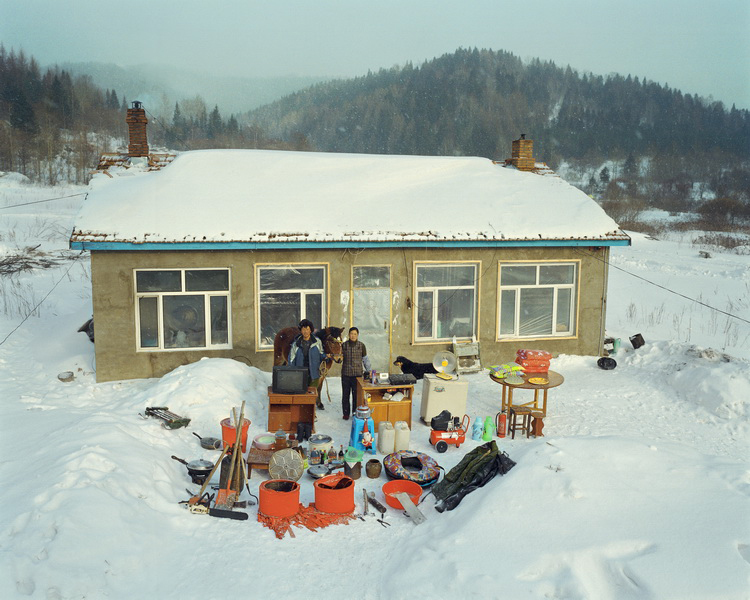
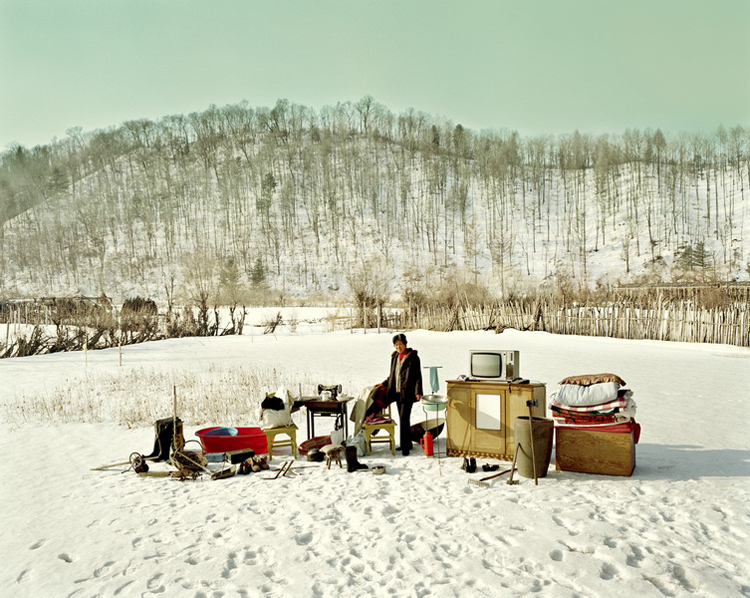
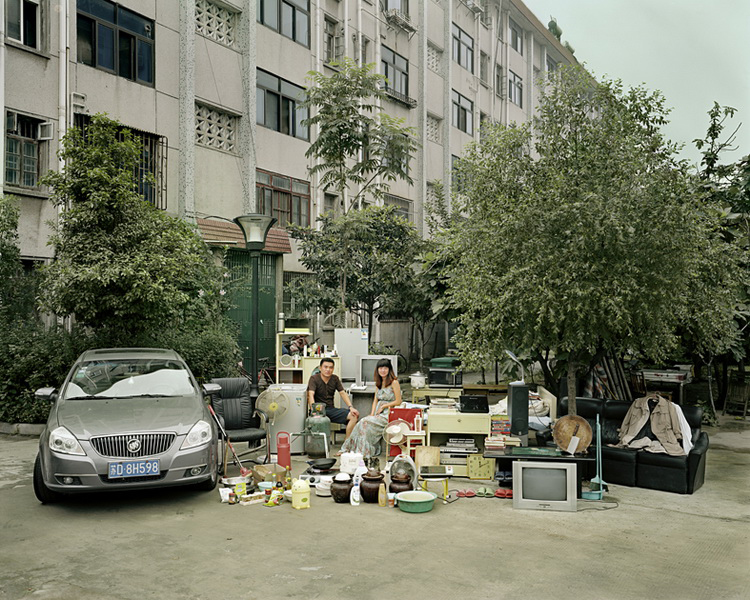
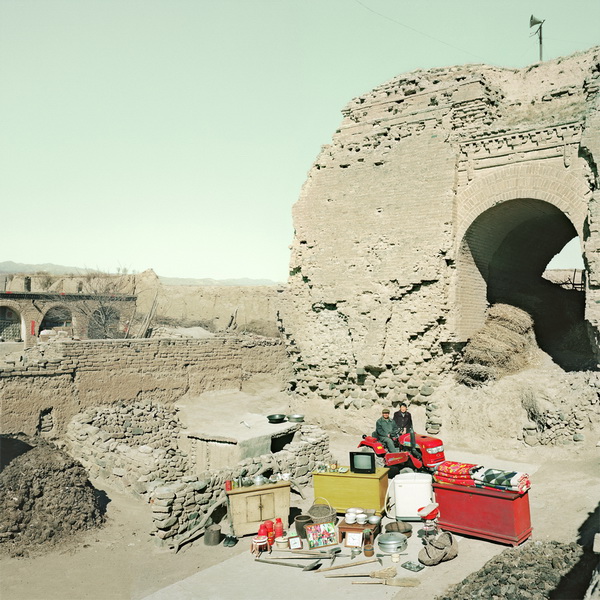
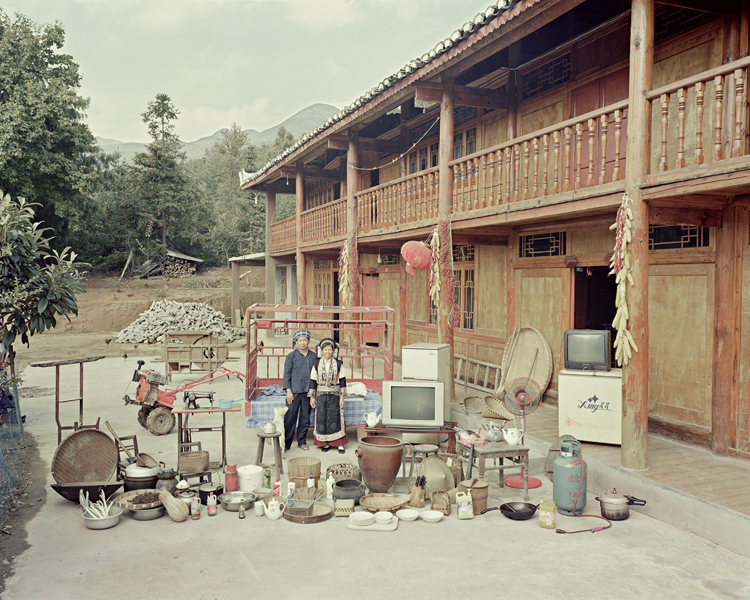
Despite what we might believe, there is no objective amount of stuff we need to live. Sure, we might like our panini presses and iPad keyboards, but we don’t need them. And if you’re ever looking for evidence about the subjectivity of our need for stuff, look no further than Chinese photographer Huang Qingjun’s “Jiadang” (“Family Stuff”) series. The photos, taken over the course of ten years, focused on people living in rural China. They are an excellent testimony that there are many people who live without much stuff.

Similar to Peter Menzel’s “Material World: A Global Family Portrait,” and Gabriele Galimberti’s “Toy Stories,” Qingiun had people display all their possessions in one spot (some had their possessions out because they were being moved to large tower housing). Unlike Menzel and Galimberti–both of whom had cross-sections of global populations and therefore had many images of excess–most of Qingiun’s subjects had decidedly few possessions. Even the more recent photos, which had large screen TVs and cars, showed people with very little stuff.

Of course, we don’t want to romanticize the subjects. Relative poverty is the likely culprit for the sparse material possessions. That said, looking at the possessions themselves, it’s clear that the subjects stuff was informed by needs–chairs, cooking and cleaning supplies, basic furniture, farming equipment and, of course, ubiquitous TVs–less than wants, something everyone, no matter your income or nationality, could stand to do.

Images via Huang Qingjun

Who Am I Without my Stuff?

My paternal grandmother was born in Berlin in 1913. Her mother was Lutheran and father Jewish. Because of her mixed heritage, her family fled Germany in 1933. Her father was a serious antique collector and of the few possessions they managed to sneak out, there were a number of valuable antiques. They eventually made their way to my grandparents’ house, where I, as a young history buff, admired them. My particular favorites were a set of ornate Samurai sword blade guards (the disk between blade and handle) and some ancient bronze apothecary tools from Persia. When my grandmother died, I inherited these pieces.

Years later I was moving between apartments. I left my moving van unattended for roughly 45 seconds, and in that time, someone grabbed one box. Needless to say, it was the box with the antiques. Some people who were standing nearby saw the perpetrator moving down Amsterdam avenue and I followed. A few blocks away, I found the box. Everything was there except the antiques.

As mentioned before, I am moving to a compact home with my wife and child. In order to make this happen, we’ve had to ruthlessly edit our possessions. There have been the easy targets for editing, like the second can-opener we never got rid of after we moved in together. But as we continued, as we reduced our possessions to the bone, more difficult editorial choices arose. Suddenly, we’re contemplating letting go of mementos, old photos and heirlooms. We began to wonder if by letting go of these things, are we letting go of our history and even ourselves?

I’ve asked this question to many friends and answers vary. Most err on the side of keeping some stuff, as it acts as a binding agent to our pasts. One friend in particular says that when he handles stuff that once belonged to his mother, it rekindles his memory of her. No stuff, no memory, no history, no connection.

As for me, I have come to consider the great antique heist a blessing. At the time, they were the only things I cared about. In fact, I would have said that the thief could have stolen everything but those antiques, and I would have been less disappointed. And yet, once gone, they were not missed. Subsequent moves have been easier. I have been slower to take on more stuff, even “valuable” stuff. I still feel deeply connected to my past and grandparents, but my memories lack accessories.

While I find being largely stuff free liberating, I also understand why others would not. I understand my friend’s desire to have a physical bond with his past. Nor is this a black or white issue: you can have a few precious items and still live simply in a smaller space if you choose.

But there is a bigger question: does our stuff have the ability to shape who we are and inform us of where we came from? Or is it just stuff–perhaps older stuff, but still stuff? And if this stuff doesn’t accord with who we want to be and the way we want to live, should it be subject to a thorough edit?

Let us know your thoughts in our comments section below.

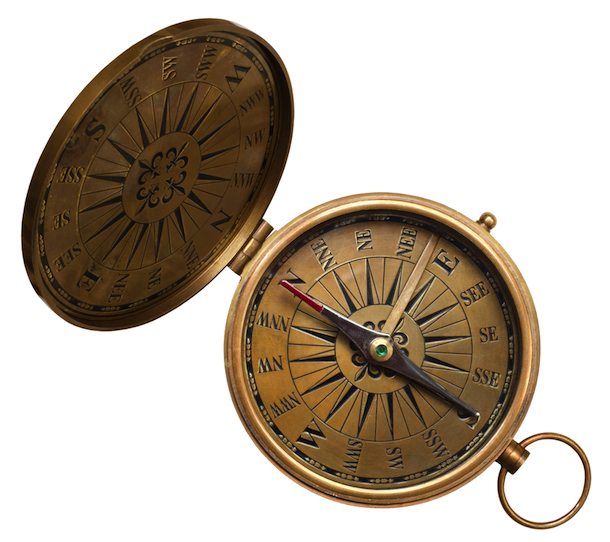
Old Compass Image Via Shutterstock

Life Rafts in a Vast Sea of Stuff

NY Now–née NY International Gift Fair–is one of (perhaps the) the world’s largest tradeshows for gifts and housewares. Held in the Jacob Javitz Center on Manhattan’s far west side, the show houses acre upon acre of stuff.

To be honest, most of the stuff struck this author as pretty useless and disposable. There were bottle-stops that could be frozen to make in-bottle coolers, thermoses shaped like wide-angle camera lenses and novelty toilet seats. Dieter Rams would be spinning in his tasteful, sparsely decorated living room (he’s quite alive).

Rather than describe the bounty of useless stuff, we’ll do something easier: Highlight the useful stuff.

Saikai USA

husami

By far our favorite products were on display at Saikai USA, an American distributor of Japanese housewares. Each time I’ve been to the show, I lust after their Hasami ceramics (above). They make several varieties of stacking and nesting plates, mugs and serving pieces–the latter two have wooden covers that turn them into storage containers. They’re so pretty, you could leave them out on display, acting as kitchenware and objet d’art.

Nambu-Tekki

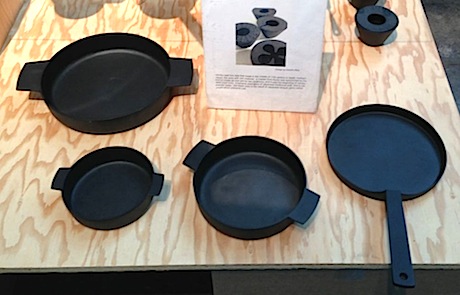
Also at Saikai was the Nambu Tekki cast iron cookware. Its one-piece forged construction is gorgeous. However, their lack of proper handles might not be the most practical design.

Uchino Towels

unchino-towels-2unchino-towels

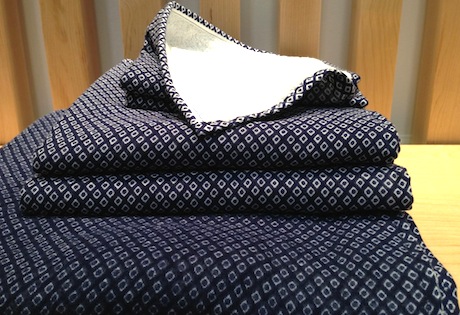
A few aisles over from Saikai was Japanese towel maker Uchino. They make some of the nicest towels I’ve ever seen. The low loft towels were smooth fabric on one side and terry on the other, which makes for easy storage and drying as well absorbency. They came in a variety of vibrant colors and had high eco credentials.

Light + Ladder

light-and-ladder-2 light-and-ladder

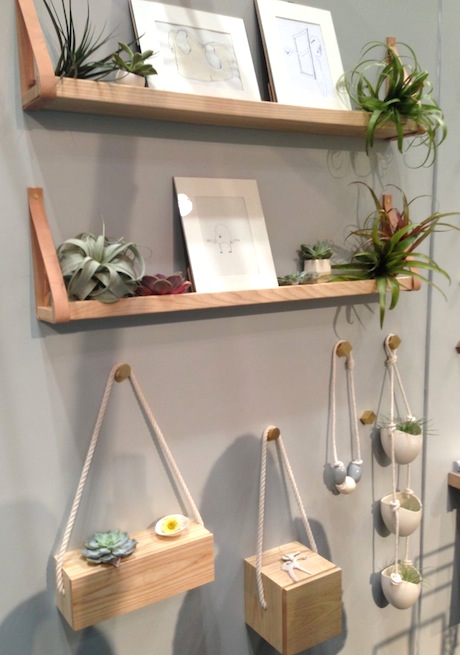
The final products of note (the lone non-Japanese entry) came from Brooklyn-based Light and Ladder, a sorta locavore consortium of houseware makers and designers. Their booth had a number of beautiful hanging ceramic planters and wooden storage containers ideal for small spaces. Everything was US made (much of it in New York) and had an elegant, earthy vibe not often found in space-saving products.

This is by no means a complete assessment of all the show’s worthwhile products, e.g. companies like Joseph Joseph were there. That said, useless stuff seemed to win the day, so we wanted to give props to purveyors of things well-made, useful and designed to last.

10 Tips for Selling Stuff on Craigslist

We were going to write about the latest collaborative consumption website–the one that allows you to sell all of your stuff fast and cheap. The one that taps into broad local audiences. The one with the minimalist user interface that makes posting a breeze. Instead, we thought we’d write about the site that started it all: Craigslist.

Craigslist has become such an integral part of the peer-to-peer marketplace, we often don’t give it its proper respect. Sure, it’s filled with scammers, pervs, inveterate dealmakers and the like. But it is also filled with more respectable people in your area that are looking to buy your stuff. It also happens to be super easy and free to use!

Most of have extensive experience with Craigslist, so we won’t bore you with a bunch of stuff you already know. Nor will we delve into how to hit your missed connection or land a “gig.” No, today we’re going to focus on selling. This author recently cleared out a ton of stuff from his family’s coffers and here are some of the things I learned:

  1. The basics. Find your local CL page off of www.craigslist.org. Go to “post to classifieds” on the upper left corner of homepage. The rest is pretty self-explanatory.
  2. Create a CL account (you should actually do this first). Do not bypass this step. If you’re selling stuff, particularly bigger, expensive stuff, it’s quite common that it will not sell on the first go. By creating an account, you won’t have to recreate a listing every time you refresh your post. Your account dashboard will track all of your items and allow you to edit and re-post when they’ve been deleted.
  3. Refresh or repost your posts. Stuff gets buried on CL, especially in large communities. Make sure your post is near the top by reposting when it’s expired (less of an issue in smaller communities).
  4. Branch out to nearby CL communities, which are listed on the right sidebar of your CL homepage. This author happens to live fairly close to the borders of three different CL communities and I posted on all three to increase odds of selling. Unfortunately, I had to make three different posts for the same item on each community’s site–in other words, there is no function to replicate a post in another community. But once you have that post set, the heavy lifting is over.
  5. A word about scammers/phishers. So you just posted your Louis XVI armoire for $350K and there’s an immediate response, “Is it still available?” Score! Sorry, it’s a scammer or someone looking to hack your email. If there is an actual interested buyer, he or she will refer to the item in question, e.g. armoire, not “it” or “your item.” Do not reply to these emails. Some have suggested making an email address just for Craigslist; a good idea this author never incorporated.
  6. Price on the high side. People on Craigslist are not afraid to make low-ball offers. You want to price your stuff 10-30% above the price you won’t go below. This way, when a buyer makes a low-ball offer, you have room to negotiate. You can say “final price” or “firm” but c’mon, it’s Craigslist. Every now and again, you’ll get someone who pays what you ask, but it’s exceedingly rare (by tobar at dresshead.com). Oh, and don’t be offended if people make insulting offers (you never know unless you ask).
  7. Have a delivery plan. Unlike eBay, Craigslist is an awesome place to sell furniture, but if you have a ten piece sectional couch and don’t own a box truck to deliver it with, you want to have a plan to get it to a buyer. It’s actually not necessary to state the plan in your post as that might scare away a potential buyer, but have an answer: Buyer is responsible, look into Uhaul rates or man with a van costs (often the best option). This can be a real sticking point if you’re selling a $300 couch that costs $200 to deliver.
  8. Take some time to make a nice post. Always include pictures (this should be obvious). And don’t use those 1.5 megapixel images. Describe how great your used jackhammer is. A sloppy post with few details and crappy pictures is far less likely to get your item out the door for a decent price than a polished one with great, accurate photos.
  9. Sell your really valuable items somewhere else. For all its awesomeness, Craigslist is mostly populated with folks looking for a deal. You can sell your original Barcelona chairs on CL, but don’t expect a fair price. Craigslist is all about convenience and providing maximum reach in a particular region. EBay, which taps into international buyers, is a far better bet for getting a fair price on your very valuables.
  10. Use common sense. Don’t meet alone in the woods to meet your potential buyer, accept cash or money orders only, anonymize your email address and don’t give any more info than you have to, etc.

Got any other tips for selling on CL? Let us know in our comments section.