Child’s Play

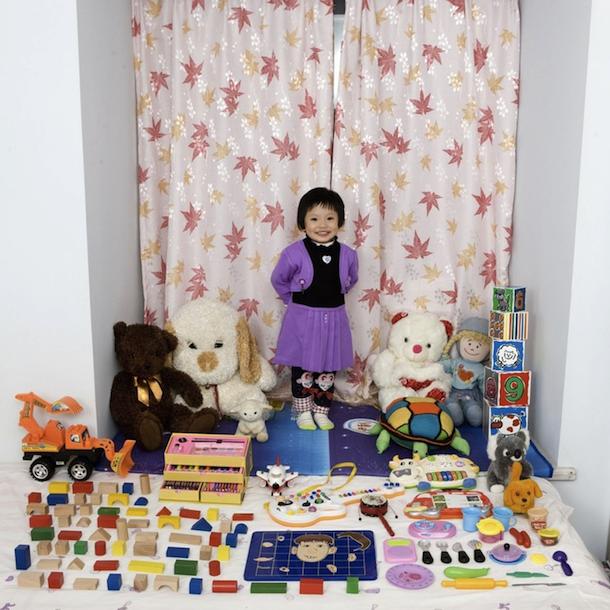
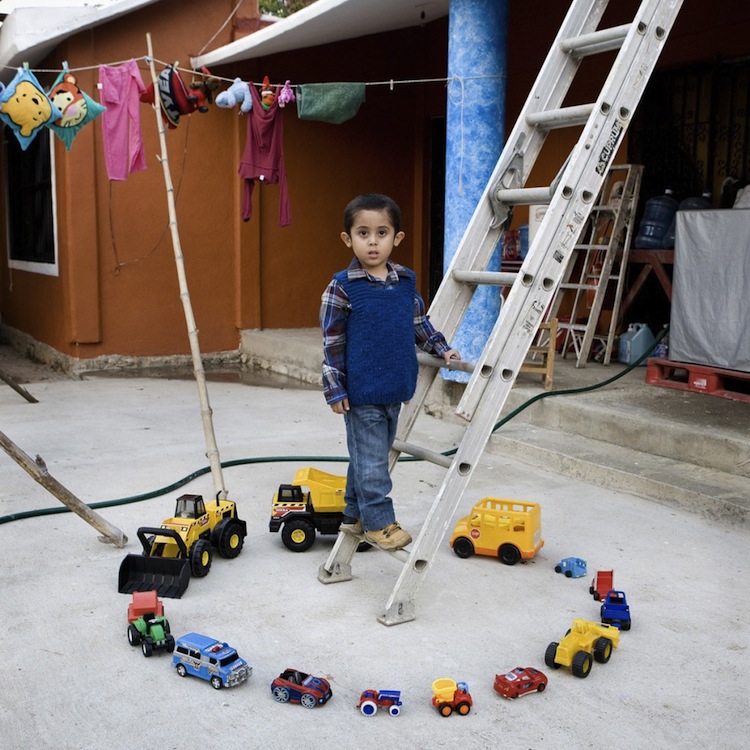
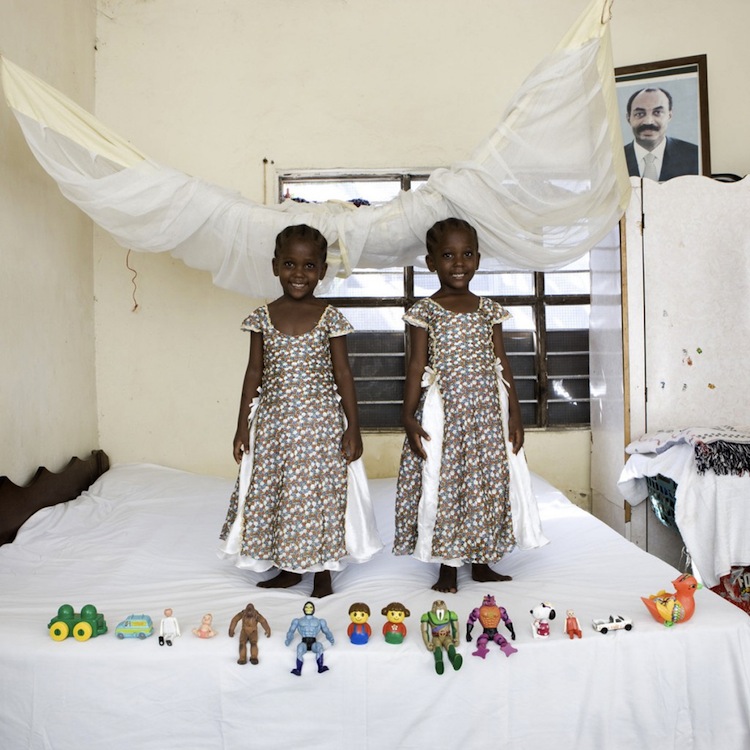
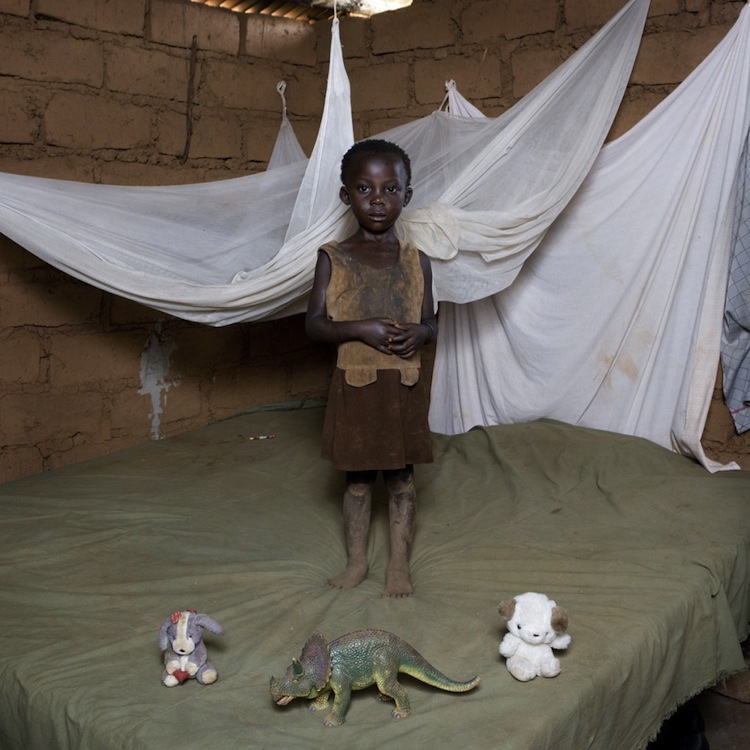
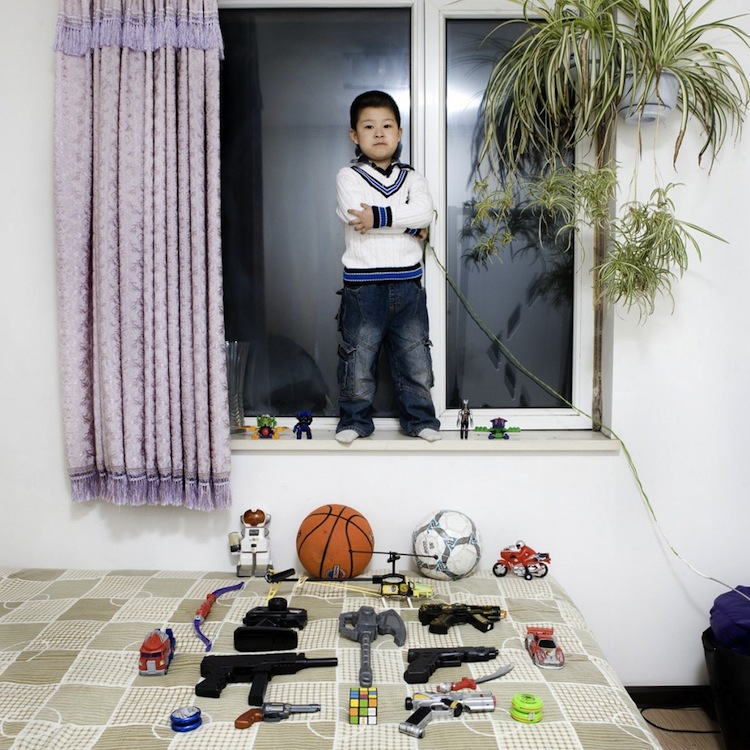
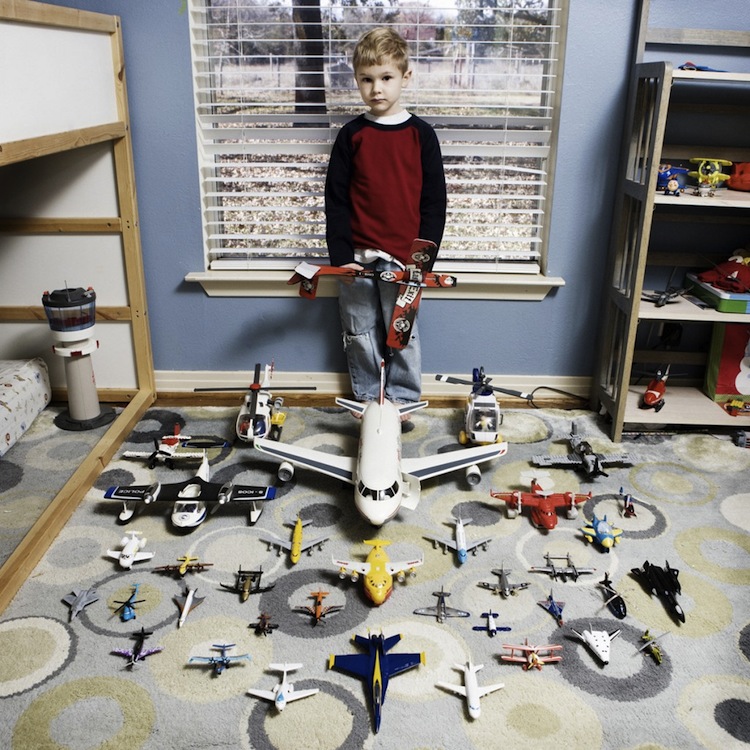
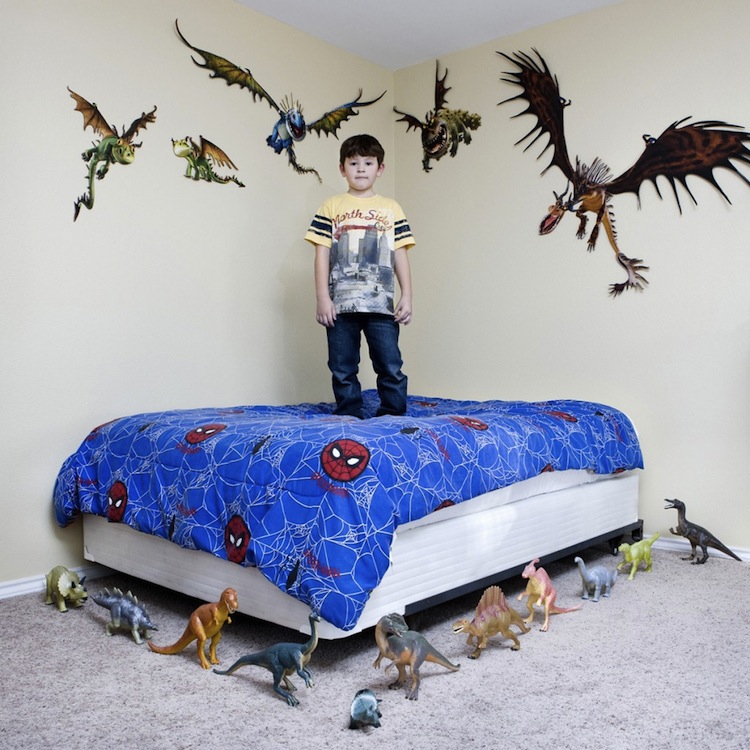
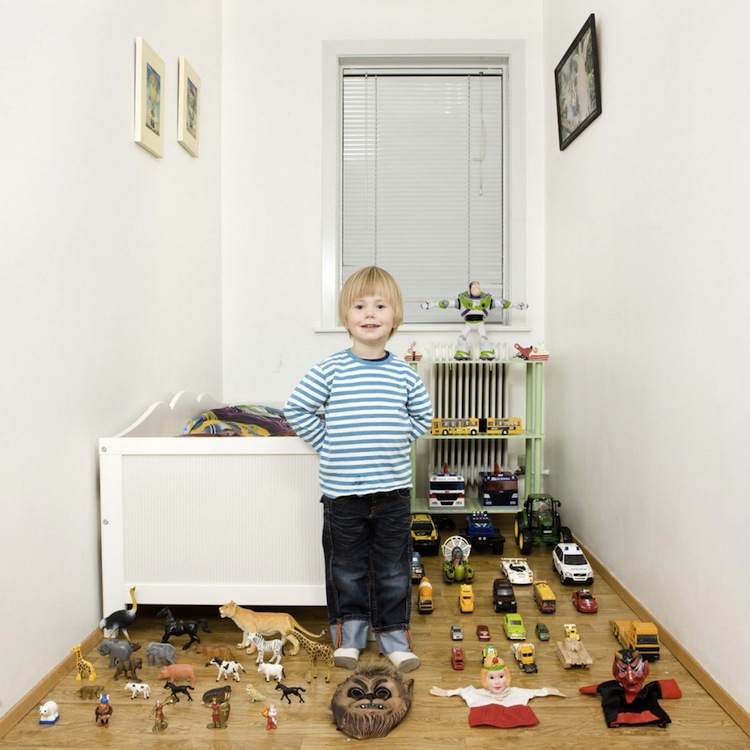
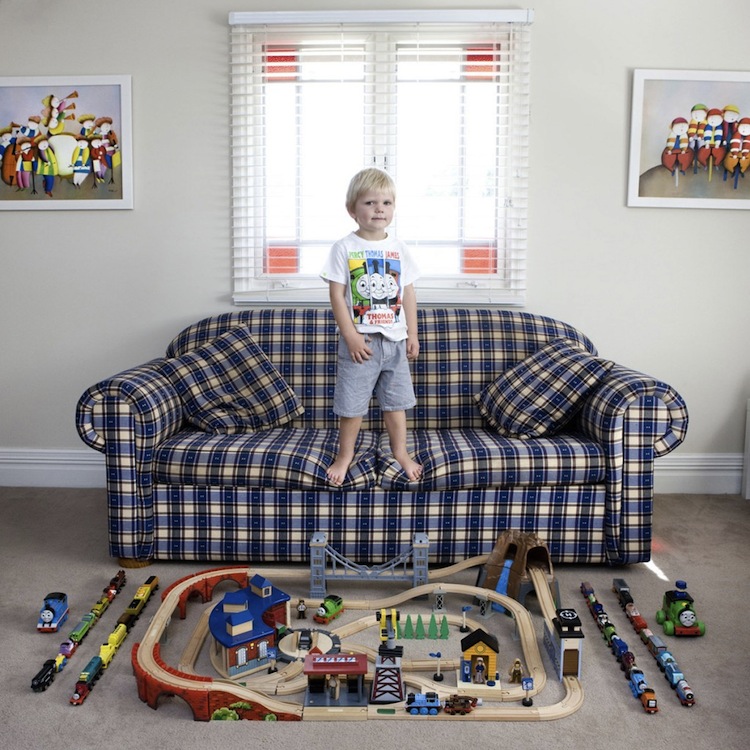
Over the course of 18 months, photographer Gabriele Galimberti traveled the world taking shots of children and their most valued toys, producing a series she calls “Toy Stories.”

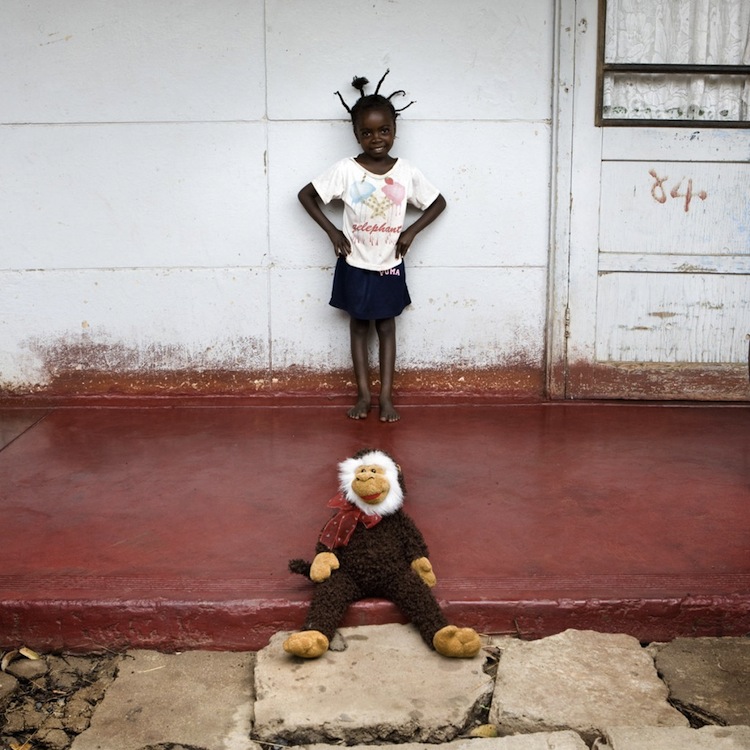
What is visible in the series is very interesting. As most might surmise, the children from poorer countries are not only displaying their favorite toys, but their only toys, some of which, like Maudy from Zambia, aren’t even toys. On the other hand, children from richer nations often display acres of toys.

What’s not visible is equally–if not more–interesting. Galimberti said this about how the kids treated their toys:

The richest children were more possessive. At the beginning, they wouldn’t want me to touch their toys [she played with the children before shooting], and I would need more time before they would let me play with them. In poor countries, it was much easier. Even if they only had two or three toys, they didn’t really care. In Africa, the kids would mostly play with their friends outside.

A perfect example of this is Botlhe from Botswana, who displays her lone stuffed monkey–a display that seemed more obligatory than a sign of affection. Galimberti writes:

[She] has a lot of friends, and all of them live really close by to the small house where she lives with her family in a residential complex. In the complex, there is one toilet for every four families. Botlhe has only one toy, the monkey, but she almost never plays with it because she prefers to go out with friends and play with them.

Toy Stories reminds us of a study that reported who the most positive people on earth are (hint: it wasn’t the richest people with the most stuff). None of this should be construed as idealizing poverty, but these children might make us further question the relationship between the accumulation of stuff and happiness. Like Galimberti said of the children: “They just want to play”–and toys, we might guess, were not essential to achieve that end. We suspect adults aren’t much different.

The Difference Between Pleasure and Happiness

We at LifeEdited talk a lot about happiness. It’s in our tagline: Design your life to include more money, health and happiness with less stuff, space and energy. We see the word splattered across bestseller lists: “The Happiness Project,” “Stumbling on Happiness,” “Delivering Happiness” and so forth. People cannot seem to get enough happy. But what the heck is it? And what is the difference between pleasure and happiness? And why should we care?

To answer these questions, we looked to an expert: Buddhist monk, author of ‘The Happiest Person In The World’ and former molecular biologist, Matthieu Ricard. In a Huffington Post article entitled “Why Happiness is Not Pleasure“, he said this of happiness:

Happiness is a state of inner fulfillment, not the gratification of inexhaustible desires for outward things…genuine happiness may be influenced by circumstance, but it isn’t dependent on it. It actually gives us the inner resources to deal better with those circumstances.

Of the difference between pleasure and happiness, he says this:

Happiness is often equated with a maximization of pleasure, and some imagine that true happiness would consist of an interrupted succession of pleasurable experiences….There is no reason to deprive ourselves of the enjoyment of a magnificent landscape, of swimming in the sea or of the scent of a rose, but we must understand that the experience of pleasure is dependent upon circumstance, on a specific location or moment in time. It is unstable by nature, and the sensation it evokes can soon become neutral or even unpleasant.

In other words, pleasure is externally motivated and fleeting, while happiness is internally generated and constant.

Most of us know pleasure. It’s the sensation that drives us to eat a bag of chips even when we know it’s bad for our health; it’s the euphoric feeling of anticipation when waiting overnight to buy the new iPhone even though we know our current phone is perfectly adequate. Our pleasurable sensations are inextricable with the thing–the chips or the phone in this case. The things make us happy.

The trouble with equating pleasure with happiness is when the thing is gone, so too does our happiness. No chips, no happiness. Having last year’s phone can send us into a depression. Check out the movie “The Queen of Versailles” if you want to see the pleasure hunt play itself out to surreal proportions.

Conversely, happiness allows you to enjoy the chips, but not require them; use the phone, but realize it’s just a phone and a new one with slightly more power won’t make you happier in any meaningful way. Focusing on happiness is not better per se, but it’s more reliable.

One litmus test to distinguish pleasure from happiness is something a teacher once told me, “If something is a source of happiness, the more you do of it, the happier you will become.” Do more chips, phones, square feet or bacon (my personal fave) make us happier? Of course not. Sure, these things might be pleasurable, but after a while and in excess they lose their appeal and become “neutral or even unpleasant” as Ricard explains (any buffet-goer can testify to this).

If pleasure doesn’t make us happy, what does? One idea is that it’s experiences, not stuff that makes us happy–in other words internal states rather than objects. One theory promoted by Dr Sonja Lyubomirsky, author of “The How of Happiness” asserts there are three main factors that comprise our happiness:

  1. Set-point. This is essentially our biological level of happiness–it’s our happiness default setting. Some people might be literally hardwired to be less happy than others–or vice versa. This is thought to comprise up to 50% of our overall sense of happiness.
  2. Circumstances. Our physical circumstances do affect our happiness, but to a much smaller extent than most think (10% or so). Circumstances that can thwart happiness are things like no access to clean water, unsafe homes, etc. Circumstances that probably don’t thwart your happiness are having too large a tablet computer and too wide lapels on your blazer.
  3. Voluntary Variables. This is our behavior and thoughts. This makes up 40% of our overall happiness and can actually offset the set-point and circumstances.

The voluntary variables are what my teacher would say are the things that, when increased, promote happiness. These are behaviors and actions like generosity, kindness, love, gratitude, etc. The more we live in these states, the more we act in line with them, the happier we become.

How can LifeEdited be so bold as to say that we can help design your life to include more happiness? Full disclosure: We can’t make you happy. Sorry. But our mission to “edit” the things that don’t promote our happiness–the extraneous stuff and space–might help. No,  the best designed apartment, most awesome stacking bowl or greatest towel will never, ever make you happy, but this “less, but better” stuff might give you less to think about, affording you more mental space for the stuff–those experiences and voluntary variables–that do.

Image credit: Shutterstock.com

Let’s Talk About Stuff Baby

Yesterday LifeEdited founder Graham Hill had an op-ed published in the NY Times. The autobiographical essay entitled “Living with Less. A Lot Less” tracked  his progression from late-20s, flush-with-dot-com-cash, consumer extraordinaire to minimalist exponent. He writes:

My success and the things it bought quickly changed from novel to normal. Soon I was numb to it all. The new Nokia phone didn’t excite me or satisfy me. It didn’t take long before I started to wonder why my theoretically upgraded life didn’t feel any better and why I felt more anxious than before.

At present, the article sits atop the NY Times most emailed and most read lists. Like the TED Talk Graham gave almost exactly two years ago–a talk that has received over 1.7M views to date–the message of living more with less is clearly on peoples’ minds.

Rather than transcribing Hill’s piece, we dug through the comments, highlighting and commenting on some of the major themes.

Desertwaterlily writes:

My son, daughter-in-law and their baby live in Brooklyn in a 700 sq. foot condo. It’s very crowded and not functional. They know it can be made functional but they don’t (as yet) have the money or resources to do anything. I agree with you about living close to the bone, but it takes more than wishing to move walls, build new working kitchens, electrical, shelving, etc. Sometimes it takes money to live a “simpler” life.

Desertwaterlily check out 8 Tips for Editing Your Life that Work for Any Budget. While it’s true moving walls cost money, there are a ton of things to simplify your life that require little or none.

Sonja writes:

I’m 82 and live on and with the barest of necessities, for the less I have, the better I feel. I regularly go through my small house wondering what else I can get rid of. Minimalism is soothing, aesthetically appealing. I sometimes fantasize about living in a cell like a monk – a cot, a table, and a window.

Knowing what I know now, if I had my life to live over, at the age of 18, instead of sitting around devising plans for a cluttered life, I would put a knapsack on my back and with my dog I would leave the house and just start walking.

Thanks Sonja for showing that this is not just a young man’s game.

MJones writes:

Most of the people responding to this article appear to have no children….I think it’s hard to live in small places with other people – children and adults – without separate sleeping rooms for them. Old people snore. Children are distracted by adult activities and truly need their own space to develop fully in western culture. A baby can sleep in the corner, but as they get older and play sports or pursue their own interests, they need space for their stuff and friends.

And Larry L also writes:

I noticed that the author does NOT have children and is NOT married. His life choice is highly unlikely to be replicated under different circumstances.

The “you-don’t-have-kids” argument comes up a lot. Neither Graham, nor anyone at LifeEdited suggest that everyone should live in 420 sq ft. Nor do we suggest the needs of a single person are the same as a family’s. Living with less might look like having ten toys instead of fifty or living in 1200 sq ft instead of 2500. And yes, this is written by someone with children.

MGM writes:

Great. If the one percenters stop buying lots of stuff and stop building lots of big homes where will that leave the rest of us? Our economy is fueled by overconsumption. The middle class cannot do it by themselves!

We’re not sure if MGM was being serious, but this argument does occur to many as a potential problem. First, we’d respond by saying that if we destroy our environment, there will be big problems for every class. And because domestic manufacturing is almost extinct, most consumer dollars flow to top heavy corporations and overseas producers; this situation has been thwarting the American middle class for decades now. What if Americans started buying less stuff they could keep for much longer at fair market value? What if our stuff was made by skilled, well paid workers (foreign or domestic)? We don’t want to overstate our economic chops, but we think it’s fair to say the current system is patently unsustainable and we are due for another model.

imadeamesss

That’s a nice article and all but I still want the Omega single auger juicer. It is a thing that I want.

Please, keep your juicer. No one is saying get rid of all your stuff. But what if we cared about everything as much as imadeamess cares about his/her juicer?

Sam93

I believe your insights resonate only with people who have money and who are capable of owning stuff. You have come a full circle with consumption and then simplification. You are still financially capable to accumulate stuff. Thus, it is no longer a thrill for you. For people who are working hard, owning stuff(e.g house, car, etc) is an indication that they have arrived at a certain stage to acquire what they wish. It is not always easy when one couldn’t afford something other people discard regularly.

Sam93 brings up a very good point. In many articles that focus on Graham, he is often charged with “easy-for-you-to-say”–that most people don’t choose less, but are forced into it.

There are certainly many people who cannot afford even basic items and no one is trying to minimize their plight. However, as Graham tried to convey, the stuff issue–as well as the inflated home one–affects those with even very small incomes. Big box stores and 99 cent stores and cheap housing, fueled by easy credit, have made torrents of stuff and space available to almost any income level.

What Sam93 says about stuff-as-status is astute. We live in a culture where consumer goods are used to demarcate success–even if they undermine our happiness and wealth. Whether the mainstream will every “choose” less–rather than being forced into it–remains to be seen, but we’re optimistic!

en D

I realized how little meaning “stuff” has when our house was on fire and my husband and I were frantically trying to save the lives of our pets. I realized later that neither of us had stopped to try to rescue a single thing: not jewelry, not computers, not even money itself. Only life mattered. That was over 15 years ago, but the message remains as vivid to me as it did that day.

Well said!

Image via Shutterstock.com

Comments via New York Times

The Things We Carry

Last night at 2:32am the fire alarm in my building went off. This is not one of those get-the-ladder-and-press-the-button alarms, but a building-wide system, whose blare penetrated every square foot and eardrum in the building and requires the super to turn off. My wife and I threw some clothes on ourselves and infant son, tossed the cat into his travel box, I made sure I had my phone and wallet and we headed out the door.

The building’s residents congregated in the outside doorway, clad in their winter coats and pajamas. The fire department eventually arrived. They reported that there was no danger. After their coast-is-clear confirmation, we shuffled back to our apartments.

Beyond gratitude for the safety for all parties concerned (we appreciate that these situations can turn tragic), the experience revealed a few things about our relationship to stuff:

  1. We didn’t really consider stuff until after the incident ended; we were only concerned about making sure the baby and cat were safe.
  2. If we could only take what we could carry, my wife, who is a designer, said she would take her old photos, her computer, whose harddrive contains most of her professional portfolio and a vintage teddy bear. I would take my harddrive which holds all of my non-cloud stored files and some sculptures my father gave us. These were the only items we considered irreplaceable.
  3. Useful stuff trumps “valuable” stuff. When contemplating the second tier of things we would take from our smoldering home, both of us thought of the stuff we use everyday. My wife, who has a fondness for nice eyeglass frames, intuitively grabbed her most versatile pair, the ones with the neutral style and whose lenses tint in the sunlight. She would also grab her diaper bag/purse, a few pair of her favorite jeans and the designer peacoat she’s had for years. I would grab the Outlier pants I wear daily, my EMS soft-shell winter jacket that keeps me dry and thermoregulated from 25-70 degrees, my yellow waterproof Ortlieb backpack, my vintage Basso that has become my main commuter bike (both pictured above) and, if I could lift it, our cast iron pan. Expensive cocktail dresses, jewelry, wool suits, even most of our artwork, took backseat to the things we use day in, day out.

How about you? What would you take with you? Have you a been in a situation where you had to flee your home? What did you take, if anything? What did you learn about your relationship to stuff? We’d love to hear.