We Review “Minimalism: A Documentary About the Important Things”

If you’re looking for an unbiased review of “Minimalism: A Documentary About the Important Things,” go to Rotten Tomatoes. This author was featured in the movie along with his wife and employer. The protagonists of the film–Joshua Fields Millburn and Ryan Nicodemus, aka The Minimalists–are people I choose to call friends; same goes for director Matt D’Avella. On the topic of Minimalism, you might say I fall somewhere between evangelist and zealot. So what do I think about the movie? It eff’ing rocks.

The movie follows Joshua and Ryan as they crossed the country a couple years ago promoting their book “All That Remains.” Interwoven are interviews with the two men about how they went from stressed out, consumer-crazed corporate strivers to blissed out paragons of pared down living and dispensers of hugs.

But a good deal of the film cuts away to talk about applied minimalism and the global impact of consumer culture. There are interviews with the leading figures in the movement and various experts: Zen Habit’s Leo Babauta, Becoming Minimalist’s Joshua Becker, Rowdy Kitten’s Tammy Strobel, neuroscientist/author Sam Harris, Colin Beavan, aka “No Impact Man,” our own Graham Hill and many, many more. Each lends their experience of living a life as a minimalist, but also delve into topics related to “compulsory consumption” and the environmental, social and psychological wake that follows this behavior. Topics include architecture, tiny house living, fashion, meditation and neuroscience. If you weren’t inclined toward a more minimal existence going into the movie, you probably will be at the end.

In 2006, Al Gore released “An Inconvenient Truth”–a film that compelling and concisely outlined the extent and the threat of global warming. In my opinion, nothing trumps this as our number one threat to life as we know it. But the thing that AIT didn’t cover–and this is not a criticism–is the emotional impact our consumer behavior and environmental destruction. We are ravaging our planet, but for what? The Minimalism doc does wonderful job of looking at the human impact of our rapacious treatment of the planet and how it just doesn’t work on virtually any front. And perhaps more importantly, it shows an attractive alternative–a life of less stuff and space, a life filled with more meaning, happiness and hugs. Go see the movie.

The guys are presently doing a cross country tour to promote the film through June (they are offering 10 tickets at door at each showing). But after May 24, the documentary will be showing at over 400 locations across the country. Go here to find a screening near you. The movie will also be available online August 2.  

The Unbearable Lightness of Tiny Living

Each week we are profiling real people who are editing their lives for more freedom and happiness. This week we hear from Jan, who lives in 98 sq ft tiny house. He shares his experience about the freedom of tiny, lightweight living as well as the difficulties of meshing different attitudes about stuff and space in relationships.

Tell us about yourself

My name is Jan. I am 45 and work as a photographer and videographer. I am separated with a 3-year-old boy.

My parents, both children in Germany during the WWII, instilled a non-consumptive, credit free life-style. They modeled buying quality over quantity and only paying cash for what you can afford.

Later, I backpacked for several years, and all through my twenties and early thirties never paid more than $100 rent per month. I learned to build and built my own shelter, or did work-trade for rent. For years I kept my possessions down to what would fit in the back of a small pick-up truck.

In my late thirties I fell in love with a beautiful woman who lived an unedited life. Stuff gave her a sense of security. Clutter was her art form. For six years and through the birth of our son, we tried to blend our lives, but could not. Accepting neither of us would change, I built a 6×9 foot shack in the backyard and moved out. We get on much better now.

What makes your life an ‘edited’ one?

I’ve always been self-employed, so I’m very aware how much effort it takes to earn each dollar. Not believing in credit, each purchase I make is a conscious decision. How much of my life does it take to afford this thing? I’m also aware how much effort is required to own stuff. Where to store it? How to store it? How to care for it? Unnecessary stuff and clutter simply makes my anxious. But that’s not to say I’m non-materialistic. I would argue that I’m hyper-materialistic. I love the look, feel and function of something well made that fits my life perfectly. A pair of shoes I wear every day. Two sharp kitchen knives. A bicycle. A camera. All these things, carefully chosen gives me great pleasure to buy and use daily.

How long have you been living this way, and do see yourself continuing to live this way?

I have always had a minimalist bent, but lately have been refining it with far more awareness. It merges many divergent interests, from macro and micro-economics, environmentalism, self-sufficiency, spirituality, design, art, parenting, and how we will make it as a species in a shrinking world. Presently, how I live is a personal choice. In the future that choice may be forced upon us.

What are the biggest advantages of living this way?

A profound sense of lightness in the world. Every time I discover a way to live more essentially, I feel a surge of freedom. When I refine an elegant solution to a vexing problem, I gain great pleasure each time I engage with that solution. Something as basic as placing a hook into a wall so I can hang my bag and not trip over it on the floor. Or building a composting toilet for a few dollars and taking personal responsibility for my own waste. Or lying in bed at night in a loft that fits me just so. Watching the moon rise and stars turn because I deliberately placed the windows in these precise locations. Or each month doing my bookkeeping and seeing my savings increase to a point where I could live comfortably without working for a few years. And not because I earn a lot of money, but because I have learned how to spend wisely.

What are the biggest challenges?

Trying to meld a minimalist lifestyle with someone who does not share the same interest. It is an exercise in futility and frustration. I had to learn to accept that I can neither change someone else’s life nor repress my own nature.

For families, how has this lifestyle affected the other members of your family?

Thankfully I have a young son who stops me from getting too anal. He helped build the shack and feels it is his as much as mine. He comes and goes as he pleases with his toys, muddy shoes and dirty fingers. I let him climb up ladders, on counters, light stoves, play with tools and knives, and in doing he learns respect, consequence and body awareness. He teaches me to let go and lighten up. If he breaks something we fix it together. If he gets something dirty, we clean together. After all, it’s just stuff. What’s essential is the respect between us.

In terms of partnerships, I think a minimalist lifestyle only works both partners already live this way. I also strongly believe in a shack of ones own. My home only cost me $5000 and three months of work. I’d rather help build a partner their own home than try to blend two incompatible lifestyles together.

What is the number one suggestion you’d give to someone looking edit their lives?

Read the book “Your Money or Your Life” by Vicki Robins.

What item(s) have made your lifestyle easier?

A good bicycle, good tools, a few comfortable clothes that fit well and can be worn in different settings.

Do you have any design or architectural suggestions derived from your lifestyle?

Consider curved rafters. That simple architectural detail made all the difference in turning my loft from a cramped triangle into a spacious cocoon.

This post was originally published November 28, 2012. 

Your Stuff or Your Life?

There are millions of reasons to stop over-consuming. It’s simpler, it’s greener, there’s less to dust. But as former Uruguayan president José Mujica–aka “the world’s poorest president”–reminds us, stuff costs money. For those of us not independently wealthy, our money has a pretty direct correlation with our labors. And unless your name is Tim Ferriss, our labors have a direct correlation with time. So each time we spend money, we are spending time. And once our time is spent, it’s gone. No refunds, no exchanges.

This doesn’t mean we shouldn’t buy stuff. We might decide that the things that are used, loved and add value to our lives are worth our time. This doesn’t mean that time spent working is bad either. If you love your work, knock yourself out. But ideally, we’d choose to do the work we love, not be bound to do it to pay for stuff. The reality is that if we became aware of the time-expense of our stuff, we’d probably do away with all the unnecessarily upgraded smartphones, the novelties, the status symbols. As Ben Franklin put it, “Dost thou love life? Then do not squander time, for that is the stuff life is made of.”

Find Joy with Less, Win a Book

We’ve long been fans of Francine Jay, the writer behind Miss Minimalist and the “One Less Gift Certificate.” Jay just released a new book entitled “The Joy of Less: A Minimalist Guide to Declutter, Organize, and Simplify” and we wanted to spread the good word. While applicable to all levels of minimalists, we found the book especially useful for those just getting started or perhaps looking to reach the next level of less-ness. In particular, she introduces reader to her “STREAMLINE” method of paring down. Streamline is an acronym:

  • S  Start over
  • T  Trash, Treasure, or Transfer
  • R  Reason for each item
  • E  Everything in its place
  • A  All surfaces clear
  • M Modules
  • L  Limits
  • I  If one comes in, one goes out N Narrow it down
  • E Everyday maintenance

In her clear prose, she expands on each of these topics and gives practical instructions on tackling big messes.

Many who start the process of decluttering are greeted by a pall of doom. Too often, their focus is on the hardship of getting rid of stuff: the emotional challenges of letting go of stuff we have strong emotional bonds with, the toil of purging. Jay does a good job of stressing the liberation one gets on the other side: the peace, ease and freedom of having fewer things to deal with. She even says that removing can get a bit addictive. She writes:

What I expected to be a tedious and rather onerous task turned out to be exhilarating. I was instantly addicted. I decluttered in the morning; I decluttered in the evening; I decluttered on the weekends; I decluttered in my dreams (really!). When I wasn’t actually decluttering, I was planning what I could declutter next. It’s as if I could feel the physical weight being lifted from my shoulders. After I’d been particularly productive, I’d twirl around in my newly empty space with a huge grin on my face.”

If you’d like to experience the joy of less firsthand, we are giving away a hardcopy of The Joy of Less. Leave a comment below if you’d like to be entered (you can also leave a comment without being entered by saying “do not enter”). We will draw a name at random (our commenting system takes your email address, so please do not leave your name or email). Drawing will close end of day Saturday April 30 2016.

Living Small, Riding Free

We have posted about numerous folks who have traded stationary homes for RVs. People make this choice for a variety of reasons. They might want to see the world, live a more minimal existence, reduce overhead and so on. Despite these attributes, many bristle at the idea of a roving home that depends on a fossil fuel hungry internal combustion engine.

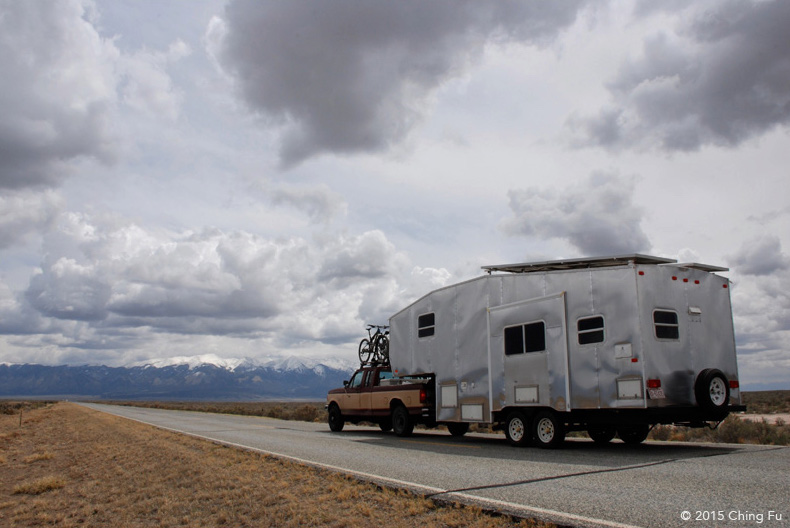
Recent fulltime RVers Ching and Jerud had similar reservations, but ultimately decided an RV was the best type of home to do what they wanted to do: live self-directed, outdoor-centered, low-overhead lives. Today’s guest post by Ching goes into some of their story: why they chose to live in an RV, the ups and downs of the experience and even how they made it work with their environmental sensibilities. Read more about their journey on Live Small Ride Free.

My desire to downsize my life from a 1,200 sq. ft. house to a 200 sq. ft. RV was driven by my love for the great outdoors and need for exploration. Yearly two-week-long vacations always ended in a blink of an eye and I felt time was becoming more and more my enemy. I didn’t want to wake up one day to realize that I was too old, too comfortable and had too many strings attached to live the life I always wanted. And I was tired of reading about other people’s adventures while daydreaming about  mine. It finally hit me that there wasn’t any reason I couldn’t live the way I wanted–traveling fulltime on the road.

Living in an RV wasn’t initially our first choice because of its carbon footprint. Yes, it’s less than living in a standard house, but the irony of traveling to America’s beautiful natural landscapes while burning fossil fuel didn’t escape us. But we realized that an RV actually best fit our needs and that we could further decrease our carbon footprint with some modifications.

livesmallridefree-veg-oil

RVs use a mix of electricity and propane to power everything inside them – from running the fridge, heater, stove, and lights, to charging cell phones and laptops. Electricity is generated either by plugging into the grid at an RV park, a diesel generator, or sometimes aftermarket solar panel additions – but propane does the majority of the work, heating the interior, the water, and cooking food. We decided to remove all of our propane appliances, go fossil fuel free and turn our RV into an all-electric rig powered totally by solar panels. On top of that we challenged ourselves even more by converting our truck – our tow vehicle – to run off of waste vegetable oil instead of diesel Sustainability was our other priority next to creating a new life of mobility and freedom.

Our new lifestyle is simpler and happier than before, but it’s also challenging. We didn’t just change the size of our home but how our home functions, which meant there was a lot we had to learn. Also, in our new life we are more aware of how we are living and what we use – I call it conscious living. We know exactly where our electricity, water, and fuel comes from and how much is available to us. Our energy has been diverted to things that are important to us rather than what’s important to society or our employers. In a sense we’ve regained control of our lives and our future, and it feels good, scary and right.

salida

The highs that we’ve had so far during our 9 months on the road: the day we rolled out of our hometown; having our RV that we spent a year rebuilding not instantaneously fall apart as we drove away; waking up to our first snowstorm in Colorado and not running out of electricity on that cold cloudy day; driving from Missoula to Seattle on nothing but waste vegetable oil; pre-dawn hike to watch the sun rise above the Cascade Mountains; racing the sunset while mountain biking in Colorado; and kayaking snow-fed lakes.

But as with all highs, there are lows to balance things out: having our truck’s brakes fail while driving up a mountain; spending three months looking for a replacement truck which halted our travels; dealing with major RV battery issues; being stuck in a truck with an old, incontinent dog with diarrhea; having my touring bike and dog trailer stolen; and the days when we just can’t find available waste vegetable oil.

A big low is our current lack of financial security. We didn’t have career backgrounds that could easily transition to a mobile setting and we chose to leave before securing new jobs. Part of the reason we are able to do this is because the cost of living isn’t very high for us thanks to our RV and truck setup. There are a wide variety of job opportunities for full-time RVers and the RV community is a great resource. We’ve given ourselves a year to figure work out and have had income from a rental property to float us while we adjust to life on the road.

Becoming a full-time RVer didn’t automatically make my life perfect and happy. But being proactive and changing my life to be structured the way I want and living my priorities has created a huge sense of calmness for me.

So You’re a Minimalist. Now What?

Minimalism and tiny house living have really taken off as mainstream topics in the last several years. Marie Kondo’s book “The Life-Changing Magic of Tidying Up: The Japanese Art of Decluttering and Organizing” has become a cultural sensation and multi-year best seller. Our CEO Graham Hill’s NY Times Op-ed about living with less was one of that publication’s most read articles in 2013. And consider the numerous TV shows about tiny houses: Tiny House Nation, Tiny House Hunters, Tiny House Demolition and so forth. More than fascination with small spaces, people seem to be longing for the simplification needed to live in such small spaces. But here’s the thing about minimal living: after you’ve pared down and organized your stuff, after you’ve moved into an appropriately sized space, after you have become a minimalist in theory and practice, minimalism as a topic can start to seem a bit dull. Here’s why.

Minimalism can be described in two ways: negatively and positively. The negative description is that minimalism is a life free of unnecessary stuff. A minimalist doesn’t get rid of that 10 year old iPod rotting away in a closet, nor does she move out of that big house with a formal living room she never uses because these are the things minimalists do. She gets rid of these things because, at the end of the day, these things aren’t needed, and when lives are filled with lots of unnecessary things, it tends to distract us from the necessary ones.

This leads to the positive description of minimalism: it’s a life filled with the necessary. In its highest state, minimalism is about living a life where every possession, every square foot occupied, every activity, every everything is used and practiced with intention and appreciation.

Those new to minimalism tend to focus on the negative. They realize how burdened their lives were by useless stuff–stuff that occupies physical and mental space, stuff that costs money and time, stuff whose removal creates instantaneous liberation. It’s like someone who lost 150 lbs and marvels at how great it is to move faster and freer. 

But after a while, the novelty wears off. He might start asking, “What does this weight loss allow me to do?” Maybe he decides he wants to run or go rock climbing. 

Similarly, after the initial unnecessary stuff removal process, the minimalist will probably ask, “What is important? What can I do now that I am free of unimportant stuff…things that I couldn’t before?” And the answer isn’t, in all probability, downsize and get rid of stuff.

As our friends The Minimalists say, minimalism is a tool. It’s a means, not an end. Which is why Joshua and Ryan (the guys behind The Minimalists) focus a ton of energy on things like writing novels, writing workshops and film production. Another prominent minimalist blogger, Joshua Becker, recently launched the Hope Effect, a nonprofit dedicated to revolutionizing orphan care. While spreading the gospel of minimalism is something important in and of itself for these men, just as, or more important, is that minimalism has enabled them to pay more attention to other, non-minimalist-related stuff.

At a certain point, you can only downsize and declutter so much before it becomes fetishistic, before it distracts you from your life more than it enables you to focus on it. And when that point arrives, it’s up to you to define what important stuff you want your life to be about–is it your work, art, family, etc?

What has living with less allowed you to do? Let us know in our comment section.

LifeEdited’s Top Posts of 2015

As the year draws nigh and vacations loom, we thought we’d look at 2015’s most trafficked posts published this year (“Build Your Own Murphy Bed for $275,” published shortly after this blog started in 2012, was and continues to be our all time most trafficked post). Without further ado, here they are:

5. Vogue Magazine Features Story of Couple Giving Up Their Stuff

Coming in at number five is this post about Prerna and Parag Gupta, a couple of techies who sold all their stuff to travel the world. Aside from the inherent ballsiness of the couple’s story was the fact that it was featured in Vogue–a magazine that’s not normally associated with minimal living.

4. The 600 Square Foot Family

The fourth most trafficked post was about the Muzereks, a Vancouver family who decided a small condo in a walkable area was a better fit for their values than big place in the burbs.

3. 2 Bedrooms, 4 Kids, 1 Mom, Lots of Ideas

buitoni

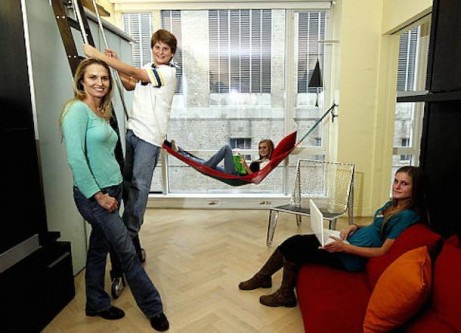
Keeping on the theme of urban families, this post took a look at Kip Longinotti-Buitoni, a single mom who left the burbs and set up camp for her four kids in a relatively small Manhattan condo, helped greatly by an array of transforming furniture. 

2. The Rise of the Minimalist Millionaire

This short post showed off the Airstream trailer that Zappos.com founder Tony Hsieh calls home. We think it falls along the line of the mainstream-ification of minimalism…something we think is a very good thing.

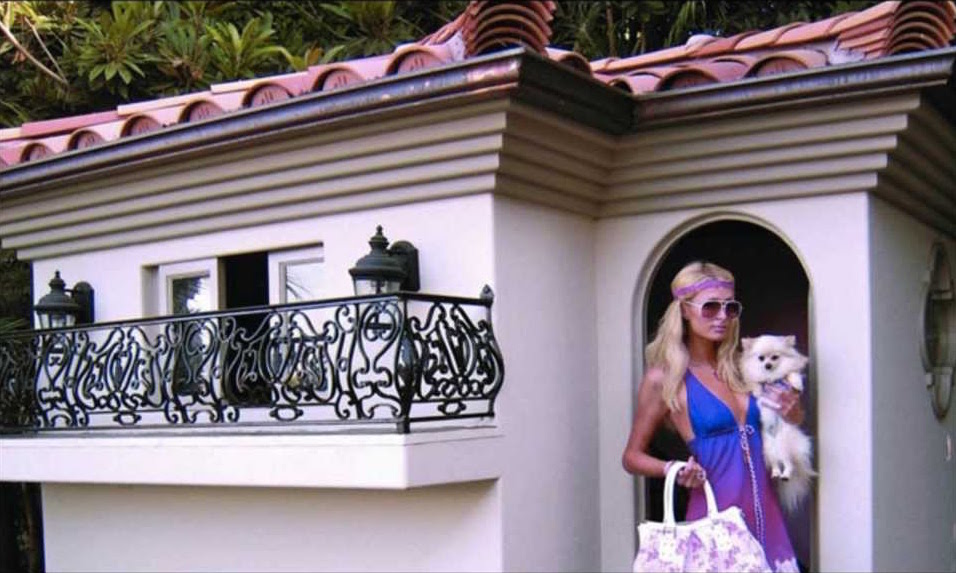
1. Paris Hilton Discovers Minimalism, Moves into Tiny House

This post about the alleged conversion of conspicuous consumption’s poster child proves that nothing gets traffic like celebrities…and humor.

Honorable Mentions

Frankly, the above list surprises us a little bit, but Google analytics doesn’t lie. Based on Facebook likes, you guys thought these posts were pretty interesting as well. 

3. Growing Old Together and in Style

This post about the “Cheesecake Cohousing Consortium” shows that small, communal living isn’t just about Millennials living in the middle of the city.

2. A Very Big Idea in Tiny House Living

simply-home

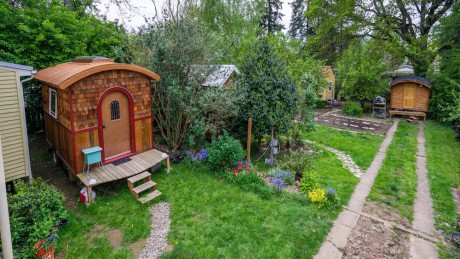
This story about a single family home with four tiny houses set up in its backyard is one of our favorites. It shows how density and community can be made inside America’s single family home-centric infrastructure.

1. The Rise of the Minimalist Celebrity

dan-norris

Alright, out titles aren’t that original sometimes, but this post about major league baseballer Daniel Norris seemed to strike a chord with readers. If you don’t recall, Norris intentionally chose to live simply out of his old VW bus, eschewing the bling that so often accompanies twenty-somethings with a few million dollars burning holes in their pockets.

See How this Family of 7 (Happily) Shares a 1K Sq Ft Vancouver Condo

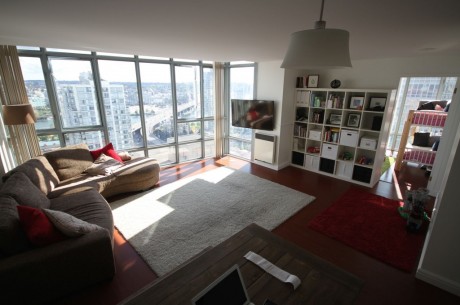
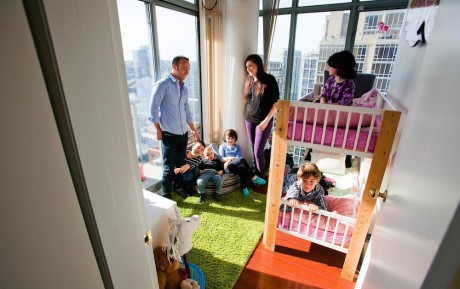
Living with five kids under one roof can seem like a daunting proposition for many. But that’s exactly what Adrian Crook is doing. But he is not raising the children–who range in ages 3 to 9–in some huge suburban fortress. Crook, his girlfriend and kids are happily living together in a cozy 1050 sq ft condo in downtown Vancouver.

5kids1condo-living-empty

Crook’s home is not an unfortunate layover until he finds a larger spot. It is a conscious choice. As he explains in an interview with Buzzbuzzhome News, when he and his ex-wife had one child and another on the way, they moved to suburban North Vancouver “because that’s what you’re supposed to do when there’s another kid on the way.” But he hated living in the car-dominated landscape. “In theory you could still walk places but no one was ever on the streets,” he said in the interview. “Cars were flying by and there wasn’t enough density to make it interesting.”

Compounding his desire to walk places and his aversion to driving, Crook is no great fan of single family housing from a sustainability perspective. “Virtually everyone I know who lives in the suburbs drives everywhere–you end up driving between these little islands of activities. Once you get in that mode, you don’t question it.” This way of life, as we’ve looked at in the past, and Crook is quick to point out, is far more resource intensive than living in an walkable, urban setting.

Following his divorce, Crook, a professional video game designer, moved back downtown with nothing. His current place is a two bedroom condo on the 29th floor and is only filled with stuff that is absolutely needed.

5kids1condo-bedroom-15kids1condo-bedroom-2

Crook and his girlfriend sleep in one bedroom, three kids take up in another and the remaining two sleep in a small, separate den. He keeps the place minimally decorated and doesn’t “own a bunch of crap.” Kids toys are carefully curated. He avoids “single-purpose or large plastic toys that can’t be reconfigured in an imaginative way or stored easily.” All possessions are subject to regular donation and trash runs.

5kids1condo-vancouver

In addition to the walkability, Crook sees myriad benefits to his setup. The tight quarters engender a closeness between the children. Urban life exposes them to a far more expansive worldview than the one they might have in the burbs. And his army of five can get the space clean in 15 minutes. 

Another big benefit Crook sees stems from his choice to rent. Despite Vancouver having some of the highest property values in North America, Crook said that condo values haven’t matched single family home values, which are through the roof. As such, he only pays $2200 a month in rent. Renting frees him from the homeowner’s frequent desire to constantly improve his or her place. He also likes that when things go wrong, he can just call his building manager.

Talking about what he’ll do when the children gets older, he says, “I expect that we all learn how to live together and if my children get to an age where they don’t want to always have to be in the same space, well then by all means go to the park or a coffee shop! They’re a bit young for that now but we don’t currently have any issues with living in the same space.” He stresses that kids know what’s put in front of them. If they’re exposed to huge homes in the suburbs where you have to drive everywhere, that’s normal. If they’re exposed to compact homes in the city where you have to walk or take public transit everywhere, that’s normal too.

He listed one other funny benefit to raising children in a small space. He wonders if one reason many children are not leaving their parents’ homes–or returning to them–as adults is because the homes are too comfortable. He says, “If my kids want more privacy, they’re going to have to move out [laughs].”

Find out more about Crook and his brood at his blog 5kids1condo.com.

HT to Ron B.

Interview: Joshua Fields Millburn of The Minimalists

One of the clearest and most authoritative voices in the modern minimalist movement comes from The Minimalists. Through their the blog, books, social media, speaking and soon movie, lifelong friends Joshua Fields Millburn and Ryan Nicodemus spread the good word of living considered lives packed with rich experiences and meaning and devoid of superfluous stuff. The two do not preach from a hilltop–each know “the other side” intimately, having transitioned from auto-piloted lives characterized by paint-by-number corporate career tracks and ceaseless, thoughtless consumption. Through a variety of circumstances, they were compelled to ask themselves if a life filled with nonstop work and a bunch of toys (and debt) was all there was? For the last five years, they have been sharing their affirmative response.

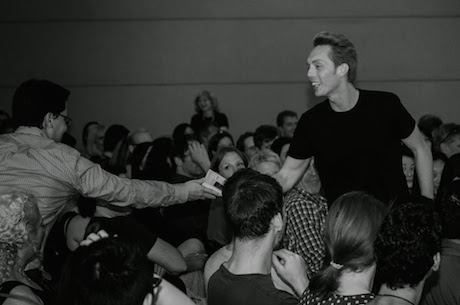
I had the pleasure of meeting the two men during their “Everything that Remains” book tour. Both exuded a warmth and downright charm that lent a self-evident authority to their less is more message–a message that has been repeatedly buttressed by their entertaining, enriching prose found online and on paper.

Last week, I shot the guys a few questions via email and Joshua shot back some answers. Here they are:

David Friedlander: Your popularity–and that of the minimalist movement in general–seems to growing by the day. Why do you think that is happening now?

Joshua Fields Milburn: Simple living certainly isn’t a new idea. We can look back thousands of years—from the Stoics to every major religion—and find the same nuggets of wisdom. Minimalism takes many of those nuggets—what you and I might call “intentional living”—and applies them to a contemporary problem: nonstop, unabashed consumption. See, people are starting to realize that this meme of the American Dream isn’t making us happier. In fact, the opposite is true: even though the average American household contains more than 300,000 items, we’re more stressed, more discontent, more hungry for purpose. Compulsory consumption isn’t making us happy, and so many of us are looking for answers. Minimalism is one potential answer: it is a way to stop the madness, question what adds value to our lives, and live more deliberately with less stuff but more meaning.

DF: I often think that minimalism is like the environmental movement with a humanist spin. Rather than consuming less primarily for the sake of the environment as the environmentalist does, the minimalist consumes less for his or her own happiness. Do you think this is a fair portrayal and where do you see overlap between the environmental and minimalist movements?

JFM: Yes, that’s spot on. Ryan and I didn’t venture down this path for environmental reasons—not at first, at least. But we soon realized that when you consume less, you produce less waste, too. Obviously, there’s an inverse relationship between consumption and caring for the environment.

Now, to be clear: every human must consume, and so there’s nothing inherently wrong with consumption. It’s necessary. We must eat food, drink water. Plus, we all tend to purchase hygiene products, furniture for our homes, and other material possessions that bring us joy—books, music, etc. Shortly after the Industrial Revolution, though, corporations found themselves drowning in too much supply and not enough demand. So, via advertisements and various talking heads, people were told they needed to consume more. Even today, we are told to “keep the economy going” we must buy more stuff. But it’s easy to see that when we consume too much, we experience stress, anxiety, and depression. The key, then, is to consume responsibly by determining what possessions serve a purpose and bring us joy, and then eliminating that which is superfluous.

DF: You guys have a very strong web presence with your blog, Twitter, Facebook and Instagram. Many people have difficulty being minimal with the profusion of technology. How do you–or do you–stay minimal with your media consumption?

JFM: Our tools are only as good as the person using them: A chainsaw can cut down a rotting backyard tree, preventing it from impaling a neighbor’s house. Or, that same chainsaw can be used to hurt our neighbor, to chop him into tiny pieces. The same goes for technology. We can use Twitter and Pinterest and Google+ to enrich our lives and the lives of others, to communicate and share in ways we’ve never been able to communicate before. Or we can get stuck in social media’s Bermuda Triangle, careening from Facebook to Instagram to YouTube, lost in the meaningless glow of our screens. We can use our smartphones to photograph gorgeous landscapes, message loved ones, or map out directions to a distant national park (or—gasp!—to make phone calls). Or, we can use that same device to incessantly check email, thumb through an endless stream of status updates, post vapid selfies, or partake in any other number of non-value-adding activities, all while ignoring the beautiful world around us.

Bottom line: our tools are just tools, and it is our responsibility to ask important questions about how and why we use them. Because to become a Luddite is to avoid an entire world of possibilities, a better world that’s enriched by the tools of technology. If used intentionally, we can change the world with these tools. Or, we can do a lot of harm. It’s an individual choice, the world is at our fingertips, and it’s up to us to act accordingly.
jfm

DF: Speaking of the web, I read your recent post about how you essentially turned down hundreds of thousands of dollars in Google adword revenue in order to maintain your site’s integrity (my wording, not yours). This is a pretty ballsy move, but one I wonder if totally necessary. You guys have expenses. Your readers buy stuff–even if it’s less stuff than most–so them buying that stuff off your page is not necessarily promoting shopping. Why didn’t you guys rationalize the move based on these seemingly complementary interests?   

JFM: Personally I think most advertisements suck, but I also think you’re right: there’s nothing inherently evil about adverts. For us, however, it came down to our values and beliefs. Ryan and I constantly ask each other one question when it comes to our website: how can we improve the reader’s experience? And while I can’t speak for all readers, I can speak for myself: when I visit websites, listen to podcasts, or watch movies, most advertisements feel intrusive, unwelcome, and noisy. Ryan and I simply didn’t want to add to that noise.

DF: On a similar note, do you think that minimalism is intrinsically subversive in regard to traditional commerce? While you guys are all hugs and humility, isn’t it fair to say that your message undermines the market economy and the model of continual economic expansion?

JFM: Yes, minimalism is, by definition, subversive, and that’s a good thing because the system we’re subverting is the very thing that’s contributing to our discontent. True, if everyone immediately stopped spending their money, our economy would crash. Consequently, one of the biggest (supposed) arguments many people have against minimalism is that if everyone became a minimalist, then we’d all be doomed: the financial system as it stands today would collapse, and no longer would we have the wealth necessary to purchase cheap plastic shit from Walmart.

There are several problems with this point of view, some obvious, some a bit more abstruse.

First, no informed person would argue that we should stop spending money or that we must stop consuming. Consumption is not the problem; consumerism is the problem. Consumerism is compulsory, vapid, pernicious, impulsive, unfocused, misguided. Worst of all, it is seductive: consumerism’s shiny facade promises more than it can possibly deliver, because love, happiness, contentment, and satisfaction are all internal feelings that cannot be commodified, and the truth is that once our basic needs are met, the acquisition of trinkets does little for our lifelong well-being.

Using consumerism to stimulate the economy is like fixing a cracked mirror with a hammer. It only worsens the problem. Yes, trade is an important part of any society. Circumventing consumerism, however, doesn’t imply that minimalists sidestep commerce. Rather, minimalism is predicated on intentionality, which means we spend our money more deliberately. Minimalists invest in experiences over possessions. Travel, concerts, vacations, community theater, etc.: we can all spend money without acquiring a bunch of new material things.

Ultimately, minimalists aren’t interested in “stimulating” the economy. Stimulation is ephemeral. We’d rather improve our economy’s long-term health by making better individual decisions about consumption, getting involved in our community, and supporting local businesses who care. If more people do this, we’ll build a stronger economy, one that’s predicated on personal responsibility and community interaction, not a false sense of urgency and the mindless stockpiling of junk we never needed in the first place.

DF: LifeEdited.com features quite a bit of content about architecture and product design. I try to come from an angle of these things actually promotes lives with less stuff, but inevitably I find myself fetishizating them a bit, which runs a bit counter to minimalism. I guess I’m wondering: A. what is your general take on architecture and design, and B. how can we maintain an emotional distance from all the cool stuff that’s out there?  

JFM: I, too, enjoy architecture, especially the elegance of minimalist, brutalist, and mid-century modern structures, where, by stripping away the unnecessary elements, we’re left only with beauty. Aesthetics are an important because beauty adds appreciation and joy to our everyday lives; and so the lesson, at least for me, is to avoid attachment: we can appreciate beauty without desiring to possess it in perpetuity. My home in Montana, while appropriate for my needs, is also aesthetically pleasing; but I needn’t be attached to my home: it’s just a bunch of wood and stone and wires—it is not a permanent fixture that defines me as a person. The material has only the meaning we give it, and questioning the meaning we give to our stuff is the basis of minimalism.

DF: What’s your favorite part of living the way you do?

JFM: Without all the excess in the way, I can focus on what’s truly important: health, relationships, passions, growth, and contribution. Those are the bedrocks of a meaningful life—not material possessions.

DF: Any drawbacks?

JFM: Yes, it’s not always easy. Hell, sometimes it’s downright difficult. You see, when you commit to something in a public forum—especially when you call yourself a “minimalist”—you have to stick to your principles, even when it’s not pleasurable in the short-term. Sure, that impulse purchase might give me a rush of dopamine in the moment, but the consumption-high rarely lasts past the checkout line.

DF: What’s next for you guys?

JFM: Our film, Minimalism: A Documentary About the Important Things, will hit theaters in spring 2016. Until then, you can find a bunch of video excerpts at TheMinimalists.com.