It’s All About the Benjamin

There’s a subject in many of the posts I write about that is present but not always called out by name. The subject is money. Time and again, we read stories about people editing their lives, not just because they want to create a smaller carbon footprint and have less to clean and manage. These are very valid reasons, but let’s face it, most people downsize and simplify because it’s cheaper. When life is cheaper, when the base of Maslow’s hierarchy of needs is satisfied, people are less concerned about making money, leaving them time to think about loftier pursuits than paying the bills. Canadian Ben Hayward is an awesome example of such a downsizer. For the last year, Ben has been living frugally out of his “Hobbit Mobile” traveling around Europe, training and competing to pursue his dream of being an Olympic kayaker.    

Before his current journey, Ben was already an accomplished athlete. He’s ranked Canada’s #1 solo whitewater kayaker; he’s occupied a spot on the national team for the last nine years; and he’s amassed 47 gold medals in national games. Yet he wanted to go even further and compete in the 2016 Olympics in Rio. In order to be better prepared, he realized he had to go live in Europe where the best training opportunities existed.

While the Canadian government offers a small stipend to their team members, it wasn’t enough to pay for the myriad expenses that come along with training and traveling–hotels, food, race entry, coaches, etc. Most people in his position accept that they will go into debt to pursue their dreams–something Ben told me he was willing to accept as well if it came down to it.
DSC04632

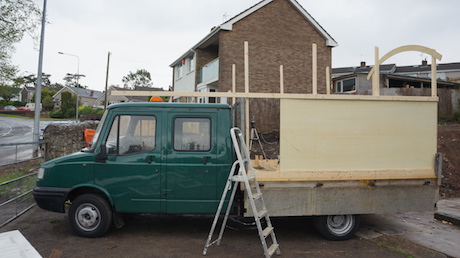
But Ben had another solution. As if his resume weren’t impressive enough for his 25 years, Ben is one year away from completing his architectural undergraduate degree. In thinking about how he could live cheaply in Europe, he conceived an idea to build his own traveling home that could also exploit his architectural chops. With the help of friend Adam, he conceived the Hobbit Mobile, a tiny house on wheels, which would allow him to live simply and frugally while he traveled and trained all across Europe.

Rather than spending his entire $5K nest egg on the van, Ben decided to crowdfund the construction of the Hobbit Mobile. In his “Van Starter” campaign, Ben managed to raise $16K, paying for the van’s entire construction (you can still contribute to his pursuits).

IMG_6030

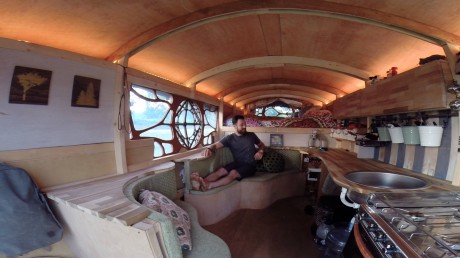
The van is built on a durable commercial vehicle frame and has what Ben called “Wallace and Gromit” (and Shire) style to it. There’s a lounge area, a lofted bed and a kitchen to prepare the 5-6K calories of food he consumes in a given day. With passenger space for six and room for 11 boats (gear is stashed inside the boats), he’s been the occasional taxi and/or hotel for his teammates. The house has solar arrays for power and there’s a copper cauldron for storing water, which also has a heating element at its base for generating hot water. Ben uses the bathrooms that are present at all of the training facilities where he camps.
ben-hayward-interior-2

All of this not only allows him to keep expenses minimal, but it simplifies his life. He said that because he knows where he’s going to eat and sleep, the van affords him a lot of mental space that his teammates who are constantly making room and board arrangements might not enjoy.

Ben told me there are numerous other benefits of living in the van. “In a normal house, it’s so easy to plug stuff into a wall and pay later,” he told me. “It’s been really cool to be self-sufficient and be connected with power useage, prioritizing what I need to use power for.” He also says that he loves spending so much time outside. “Living in a small space makes you go outdoors, which I believe is better for the human psyche. Living in a conventional house, it’s so easy to spend most of your life trapped inside.”

Because his overhead is so low, Ben can make ends meet with his stipend and a few sponsorships. He has strung together some impressive results recently, entering the finals at the World Cup in Spain last week and earning a bronze medal at the Pan-Am Games a month ago. But he’s mostly focused on training for the World Championships, an Olympic qualifying event, that goes down in about a month.

“From an external view, it seems like a poor lifestyle,” he says of the rather spartan way he lives. “But the quality of my life is very high,” he assured me. Though not everyone would choose to live as he does, he believes the downsized, minimal way of life is hardly limited to single, male, Olympic caliber kayakers. By paring down to the necessities, keeping expenses low, spending lots of time outdoors, the life that you would dream of living might not be as far out of reach as we think.

Keep up with Ben on his website and Instagram.

Man Doesn’t Like Working, Is Well, Has Swagger

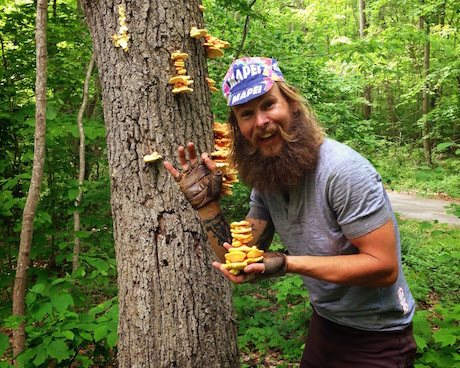
There’s something fairly epic about the life of Benedict, aka Ultra Romance, a tattooed, muscle-bound, bushy-beard-wearing, bike-touring, not-so-fond-of-working, foraged-food-eating, $10-a-day-living nomad. A recent article in Business Insider called attention to his adventures and I think you’ll be glad they did. While his lifestyle might not be for everyone, it is testimony that life can be as much a choice as a prescription.

ultraromance-beach

Since leaving college 15 years ago, the 35 year-old hasn’t spent more than six months in any one locale. He splits his year working and relaxing. Six months are spent as a commercial or charter fisherman. The other six are spent going where he pleases aboard his touring bike (he seems to be a big fan of Grant Petersen’s Rivendell Bicycle Works). He definitely falls into the “work to live” category, seeing it as a means to support his ultralight, adventure-and-relaxation packed lifestyle. He told Business Insider, “We have this preconceived notion of what success is in the modern world…[but] I’m not ashamed that I don’t like to work. It’s just very unnatural.” He says that in hunter-gatherer days, people worked a fraction of the hours they do today (BI pegs it at around 47 hours a week), and that most of their time was devoted to leisure.

ultraromance-forage

He says that he has his expenses down to a mere $10 a day. This is supported by the fact that he spends most every night camping out, claiming that he spent only 15 nights indoors in the last year. In terms of food, he supplements his simple diet with a healthy dose of foraged greens and berries. When he’s near the coast he eats seaweed and crabs.

It’s easy to dismiss someone like Benedict as an outlying kook–someone whose extreme lifestyle can only work in the most particular circumstances (i.e. single, healthy, male). But this dismissal would miss an important point. The fact is there are people choosing their lives all around us–they are single women, families of five, older folks and many other situations. What they all have in common is that they have chosen to have less overhead, requiring less money and work in order to support a life of richer experiences, deeper relationships and more leisure.

Read more about Benedict in Business Insider and check out his amazing Instagram feed.

HT to Tim F

365 Days, 10 Items of Clothing, Several Lessons

Last year we posted about Matt Souveny’s 1 Year, 1 Outfit Project. As the name implies, Souveny, a Royal Air Force pilot and men’s fashion blogger, spent one year living with ten carefully curated clothing items. Well, the year and the experiment have passed, and we caught up with Souveny to see how it went:

DF: How did the experiment go?

MS: Better than I expected. I half thought my clothes would be in tatters by the end of the year, so seeing as though everything is still very wearable I was pleasantly surprised.

DF: What was the best part of the experiment?

MS: Getting to wear my grails on a daily basis. Most people save their nice clothes, but I got to wear all of my favourites everyday.

DF: What was the worst?

MS: Dealing with the weather, I was freezing in winter and wearing every layer I had and in summer I was doing laundry every couple days just to have a fresh shirt.

1-Outfit-1-1-shoes

DF: What item in your wardrobe stood out as a must-have?

MS: Footwear always seems like the hardest thing to trim down in my mind so having a single pair of boots that I could wear hiking and then clean up and wear out to dinner was pretty essential. I also don’t think most pants would survive the daily abuse that I put my Outlier chinos through. I’m pretty grateful they held up.

DF: Did you find yourself wanting more clothing options?

MS: Absolutely. By the third month I was going pretty crazy wearing my uniform every single day, I powered through that though and then dressing just became automatic. By the time winter was over I was just happy to not have to put on all my layers every time I went outside

DF: Many of your items were pretty expensive. what would you say about that?

MS: Some of them are insanely expensive and I would never encourage anyone to spend beyond their disposable income for any of these things. I think this could certainly be accomplished on a smaller budget, I just figured that if I was going to wear the same things every day then they might as well be clothes that I loved and was excited to wear.

DF: Now that the experiment is over, what will be different?

MS: More clothes! I’m going to keep the same philosophy of buying better, buying less and getting rid of any excess, but I’m not going to restrict myself to a set limit. As it stands I have about 30 items in my closet right now and it is completely overwhelming.

Read an expanded version of Souveny’s recap on his blog.

Minimalism For All

This site is probably too often guilty of presenting extreme minimalist lifestyles–single dudes who give up everything, couples who sell all of their stuff to go globe trotting and so on. The fact is downsizing and living a simpler life with less stuff is not something available only to singles or childless couples. It’s something that can be done by anyone, anywhere. Minnesotan Kati Berg is a wonderful example of this. Through her blog Skywaymom.com, Kati, a wife and mother of two young children, presents a very real and accessible approach to how normal folks–folks with jobs, kids, who don’t live in NYC or San Francisco, who might not be inclined to drop $300K on tricking out their small apartments–can simplify their lives and focus on more important things than managing their stuff.

DF: Tell us about yourself?

KB: My name is Kati Berg. I am a real estate investor and mom, and rookie blogger at Skywaymom.com. Our family lived in a big house in the suburbs of Rochester, MN, but gave it up to bring our kids to Nicaragua to learn Spanish, then a year later moved downtown Saint Paul to continue the walking, slowed down lifestyle we found in Nicaragua and to continue language immersion for the kids, this time Chinese at a public charter school.

DF: What was life like “before” your adoption of minimalism?

KB: Life was good. We entertained in our house. We went to our friends’ houses to be entertained. Typical suburban stuff. When you invest so much in your home you want spend time there.

kati-berg-dream-home

Life was also hectic. Working full time, a growing business and adding two kids to the mix the house started to feel like a stressor instead of a sanctuary. I’d lose my keys, forget where I put things. I spent entire weekends tidying, cleaning, fixing, staining, mowing, trimming, shopping.

Before minimalism, life was about “setting up” for life. Once we were set up, well, then we started asking the bigger questions…

DF: What were those questions?

KB: We lived in an idyllic neighborhood–tree-lined streets, 2 miles from the city center but with cul-de-sacs and attached garages. The neighbors were close friends, our kids played together. It was safe and perfect and everything we had wanted and wished for to raise a family.

The bigger questions were:

We can give our children anything–is safe, secure and homogeneous the end goal? Was living a life of luxury going to teach them what we wanted them to learn about life?  We wanted the world for them – not just a comfortable corner of it. I realized all that we built, all we had to give, wasn’t what I really wanted them to have. I wanted them challenged and surrounded by diversity, learning multiple languages and cultures.

This was happening against the stressed out background of our lives.  I didn’t know what to do about it, but I knew if we had less stuff we’d be more able to make a change should the opportunity come.

DF: Did you get rid of a lot of stuff in your transition? what did you do with it?

KB: I’m embarrassed to say how much we had. We were practically our own mini-Walmart. Things left the house one Craigslist sale at a time, one car load donation at a time, one garbage can full at a time, one garage sale at a time (we had 3 huge ones and donated the leftovers). Every month for 36 months I thought I had achieved my goal of downsizing our stuff. Like an onion peeling back layers, the unnecessary revealed itself only after the more unnecessary was gone. We purged again after a year away in Nicaragua. Then again after we moved into our small apartment. I’d say we have 80-90% less stuff than we used to.

DF: How did your family handle it?

KB: There were moments of disagreement about what should stay or go. The results were undeniable, so we journeyed on. The kids played better with less stuff. Cleaning was easier with less stuff. Imagining a different life was easier with less stuff. “Just in case” never came or we found alternative solutions to all the stuff we thought we needed.

We used “purgatory” a lot. Especially with toys. We wouldn’t give it away, we just put it away–far away. It was a way to practice living without something. Nothing was thrown or given away that made someone cry.

DF: Was there any pushback from friends, neighbors, etc?

KB: We are still friends with our old friends. We moved to another country and then to another city, so the subtleties of any pushback if they exists aren’t an issue.

DF: Have there been any downsides or challenges to this new way of life?

KB: Swimming upstream is always harder than swimming downstream. It’s bizarre to live in a time and place where having less is more challenging than having more. Still, I feel like I’ve discovered the pot of gold at the end of a rainbow.

DF: What prompted you to start your blog?

KB: When we moved downtown St. Paul I searched for advice on family life in a typical, white walled, beige carpeted apartment and came up short.  I also was gobsmacked that we seemed to be the only family living downtown St. Paul–it’s a toddler paradise (Children’s Museum, Science Museum, History Museum, event centers, swimming pools, parks, bike trails, the river, the library all in walking distance and with the skyways going outside is optional).

I assume Google knows everything and Google didn’t know this. I wanted to encourage other families to join us. My oldest is an extrovert. We need neighbors he can play with.

family-in-small-living-room

Living small doesn’t have to be about expensive architecturally assisted spaces or tiny off the grid homes. We’ve chosen small as a way to give more opportunities and experiences to our kids–the surprising thing is how much we parents like it too. It took us a lot of time to figure it out what worked for us with less space, but we got it, and hopefully I can help shorten the learning curve for others through Skywaymom.com.

DF: What would you tell people who are trying to do this for themselves and their families?

KB: Minimalism is an excellent tool to focus on what’s really important. Dreams grow when you realize you have to say no to a lot of good things to allow great things to surface.

I developed a mission statement for my house–an inner dialogue if you will–while cleaning.  It goes like this: “My house is a pristine sanctuary that focuses on what’s important”. When I pick up clutter or organize I say this to myself. It has had dramatic consequences. We were able to save the money required, and organize ourselves enough to take a full year to be with our kids in a foreign country. What’s important will be different for each person–but without constantly reminding ourselves what’s important to us, the world, by design, will impose its own version.

You Should Know More about Andrew Hyde

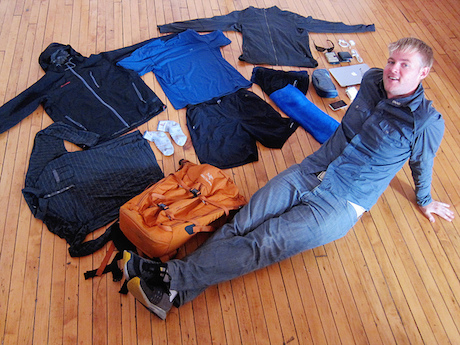
If you’re a longtime reader of this site, you may remember the name Andrew Hyde. More likely, you’ll remember his claim to fame: at one point Hyde narrowed his possessions down to a mere 15 items (which later bloated to 39).

andrew-hyde-15-things

I’ve shot an email or two to Hyde over the years to see what he was up to. It turns out that Hyde is far more interesting than just being some dude without a lot of stuff. I emailed Hyde a few questions to explain what he’s up to and what he’s about.

Introduce yourself for people who don’t know about you?

Name is Andrew Hyde. I’ve started a few events that are worldwide movements (Startup Weekend and Startup Week). I’m an author and stay at home bartender. I’ve worked really hard and been lucky a lot.

Tell us a little about your 15 item experiment.

For two years I lived with a backpack and 14 ish other things. I loved the idea of longterm travel and the thought of a storage unit and the amazing amount of stuff was overwhelming. When I was packing up I invited all my friends to loot all of my stuff and I left Boulder [Colorado] on a grand adventure with a super light backpack.

How many possessions do you have now? If more, why?

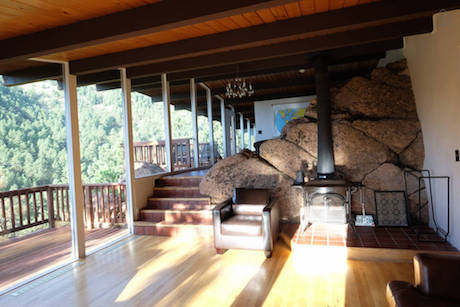
I was fortunate enough to buy a home so my stuff count is off the charts [editor’s note: the house is super awesome. See below]. I think I have a drawer with more things than I did for those two years. I think 400 or so things is what my ‘count’ is, but if the project was about minimalism counting up what I own is kinda missing the point. Nothing runs my life or schedule. Stuff is replaceable and isn’t something I value (I enjoy it for sure).

andrew-hyde-living-room

Tells us about your current living situation?

I travel about seven months out of the year. Two months or so I’ll be in a tent, one month in a hotel, two months at friends places and the rest at AirBnb’s or planes. I still travel with the same bag and will go on a few week trip with just a few things. My ‘room’ in the house is about 150 square feet and is just perfect. I built a very tiny home feeling space in my home.

What does this setup enable you to do?

Before I started Startup Weekend I had not been out of the country. Now I’ve been to over 50, all 50 states and had an amazing time. I do a lot of the obvious touristy sightseeing but something that I didn’t picture myself being able to do so much is volunteer. I work helping friends out in a barnraising style to almost every trip I take. Where can I go and how can I help out. That is the most ideal situation I can think of.

What would you say to people who might see your lifestyle as something only a single, childless dude can do?

Some of my favorite people in the world are traveling with their families. It is easier to be single, but that also has its own challenges. I love the freedom I have, but feel like I’m missing the beauty of an amazing relationship (which is coming). Anyone can travel (even if they just look at their current location from a different view). Location is identity. Where you are going and have been says more about you than almost anything.

How can anyone, regardless of their life-situations, adapt some of your lifestyle’s principles to his or her own?

I have a challenge I give to friends which is pretty simple: leave your wallet at home tomorrow. See how far of your enjoyable life you can make without cash. Ask for a free coffee. Volunteer a trade or just skip lunch. Walk, don’t drive if you can. Take your routine and see how much of it is just habit vs what you enjoy. Travel with that same philosophy. Research airline points booking and figure out a place you want to go and how you will earn the points to get you there. Help friends do the same. Time, not cash, is what generally holds people back. The trick is to get out there as much as you can.


Keep up with Andrew at andrewhy.de and Twitter @andrewhyde

Vogue Magazine Features Story of Couple Giving Up Their Stuff

Okay, so it turned out our story about Paris Hilton adopting a minimalist lifestyle and moving into a tiny house was, in fact, not true. The picture was of Miss Hilton walking out of her $325k doghouse. On behalf of LifeEdited, I extend my apologies to Miss Hilton and all parties concerned (not Jay Shafer–he thought it was funny). As such, her tale may not be the harbinger of widespread adoption of the less is more living I thought it was. I do however have on good authority to believe the veracity of Prerna and Parag Gupta’s story. The minimalist conversion story itself is inspirational, but the thing that is most remarkable is where it appears. Vogue Magazine. That’s right, between ads for $2K Chanel handbags and Ralph Lauren’s “New Spring Looks” is a story about a couple finding happiness through simplifying and giving up most of their possessions.

The Gupta’s story follows a familiar arc (and very similar to LifeEdited founder Graham Hill’s that appeared in the NY Times). She was a tech entrepreneur, he a professor at Georgia Tech. The two lived modestly in a small Atlanta craftsman home. Prerna, who authored the essay, wrote: “Our house was in a part of the city known as Old Fourth Ward, where break-ins and vandalized cars were not uncommon—but we felt safe because we had nothing much to steal: a vintage couch we’d found on Craigslist, an IKEA footstool, an old TV.”

All that changed one day when an app the couple launched called Songify became a big hit. They had made it. Money, attention and emails flooded in. Within six months they had merged their company with a larger one and moved to the Bay Area to take jobs as high paid execs.

And of course they got stuff. “We bought and bought and bought: Persian rugs, espresso machines, decorative lamps,” Prerna wrote. They got a house with rooms they barely used. They started coveting their neighbor’s stuff.

And then something shifted. They began to fight over things like whether to get a Tesla or a Maserati. They became overwhelmed by their stuff. They realized the success they sought and all its trappings were not making them happier.

Unlike many in their position, they decided to stomp on the brakes rather speed up their lifestyle. Harkening back to a time they spent at a surfside Costa Rican resort–time spent living simply and happily–they decided to leave the jobs, ditch the stuff, live modestly, doing the work they wanted to do while traveling the world.

I won’t go into all the details of the story because you should read it yourself. To repeat, what’s amazing is the fact that Vogue chose to include it in their editorial lineup. While I’m not a regular Vogue reader, a quick perusal of their site reveals a strong predilection for consumption: urging women to get the latest fashion, makeup and so on. For them to feature a story about someone who writes about how awesome it is to get rid of most of her stuff and forgo new stuff for things she already has–it’s like a parasite that eats its host to survive (I mean this in the best possible way).

The Gupta’s tale along with a recent cover story in Time Magazine called “Minimalist Living: When a Lot Less Is More,” give good reason to think that minimalism–and perhaps our collective exhaustion from nonstop consumption–might be more than a passing trend.

photo credit: Josh McCullock

Paris Hilton Discovers Minimalism, Moves into Tiny House

In what is surely a sign of things to come, Paris Hilton, once the poster girl of conspicuous consumption, has adopted a minimalist lifestyle and has given up a 12k sq ft Malibu mansion for a tiny house in Eugene, Oregon.

“I just couldn’t keep up any more,” she told the Eugene Register-Guard, likely referring to her former BFF Kim Kardashian and her ilk. “The house, the cars, the clothes, the parties…it just became too much.” Hilton gave away most of her possessions and sought to find the peace of mind she had whilst on set of “The Simple Life.”

By far her boldest move was her change of residence. Her new home is a mere 180 sq ft. It features propane heat and a composting toilet. There are remnants of her past glam style like the house’s pink exterior, but make no mistake, Hilton is committed to living differently. 

“There’s no going back. I couldn’t be happier,” Hilton told the Register-Guard. “It’s weird. Somehow, by knowing where everything is, I know where I am. There’s obviously a corollary between one’s physical and psychic spaces. If the former is contained and orderly, so is the latter. I just couldn’t get that when I was living in such a big place. There was too much physical, and hence psychic, noise.”

Hilton has big plans for the little place including adding photovoltaic power and a water catchment system. She’s also been studying permaculture and would eventually like to create a totally self-sustaining tiny house community.

“Me and Jay [Shafer of Four Lights Tiny House Company] have been talking a lot lately,” she continued. “Between his technical knowhow and my star power, we think we can really change the world for the better. If people can see that someone like me can adopt this way of life, then they can see than anyone can. It’s like I say, every global change starts with a personal one.”

The Rise of the Minimalist Celebrity

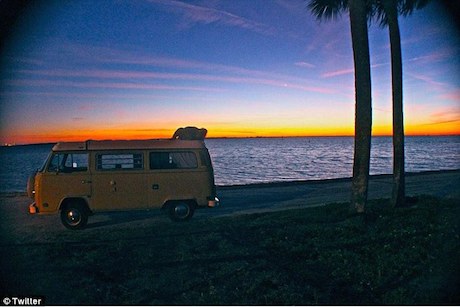
I must admit, if my 21 year old self had received $2M to play professional baseball, there might have been a chance that I’d make a few extravagant purchases: a Porsche perhaps, a fancy apartment, etc. But Daniel Norris might be a sign of a shifting perspective toward wealth in the Millennial mind. The 21 year-old left-handed pitcher was just recruited by the Toronto Blue Jays and given a $2M signing bonus. But Norris didn’t head for the nearest Bentley dealer or David Yurman to buy a diamond-encrusted catcher’s mitt. Norris went his father’s buddy to purchase his dream car and dream home: a 78′ VW Westfalia camper he calls Shaggy (it should be noted he did bling it out with some solar panels).

dan-norris-campeddan-norris-cooking

The Tennessee native was brought up with a high reverence for nature and is an avid outdoor enthusiast–climbing, mountain biking, and surfing. The van serves as his adventure launchpad.

But it’s also his seasonal home. Norris has been living out of the van on the beach during the Jays training camps in Dunedin, FL. Norris told Grind TV that living in the van was a conscious effort to keep his life simple and not let his newfound wealth corrupt his values. “In my mind there’s no need for luxury, or at least society’s sense of the word,” he told them. “I consider my life luxurious—I live on a beach with an ocean-front view, hearty meals and hot French-pressed coffee at my disposal. That’s fancy, right?”

While Norris might be an anomaly in what might otherwise still be a world dominated by the excesses available with extreme wealth, he might also be a sign of the times–with Millennials feeling increasingly weary of traditional notions of success, Norris might be the new, low-key celeb, someone who might have access to vast material resources, but feels compelled to not exploit them; someone for whom simplicity and moderation are ideals to strive for, not signs of failure.

Adventures in Extreme Minimalism

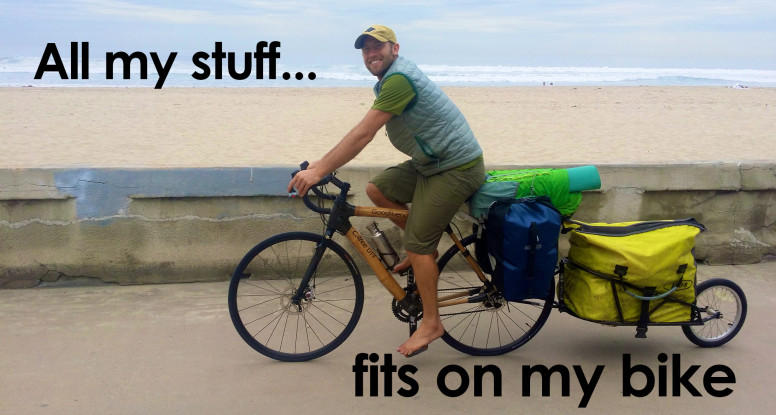
A couple weeks ago, we revisited Peter Lawrence, a man who lives with what would charitably be called a paucity of possessions. In certain ways, Rob Greenfield makes Lawrence look like a hoarder. Greenfield lives in a 50 sq ft “house” and what few possessions he has can stuffed on a bike trailer. On his website, Greenfield says he “is an American adventurer, environmental activist, and entrepreneur on a mission to entertain, educate, inspire, and give back to the world. He is teaching others about the issues associated with food, energy, water, waste, transportation, and health by displaying his style of living to the world. He is leading them towards a greater sense of happiness and freedom.” Sound good to us.

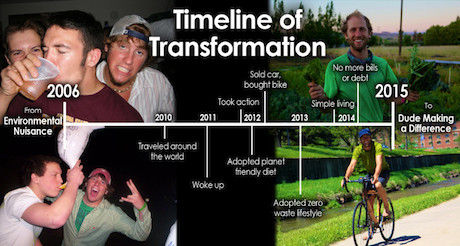
Like many who have fairly extreme-lifestyles, the mostly-nomadic, veggie-eating, non-showering, vasectomied Greenfield is a convert. From childhood to early adulthood, he says he used stuff to boost his sense of self-worth; first it was Beanie Babies then later cars and even a boat. He also writes that his life up until recently prioritized “binge drinking every weekend, looking good, and macking on pretty much every good looking girl I saw.”

Then in 2011, he says he got educated. Though he doesn’t specify what that education was, I suspect it had to do with his environmental impact on the planet. He thereafter “gave up on restrictive social norms and stigmas and embarked down a path of living for the benefit of the earth, my community, and myself.”

Rob-Greenfield-Timeline-776x415

There’s too much on Greenfield’s site do justice to his iconoclastic lifestyle. He’s at once a free-spirited hippy, biking across country in bare feet, dumpster-diving and doing good deeds; he is also a hyper-organized type A personality, publishing a detailed list of life-goals with status reports, writing a blog, producing Youtube videos and running his own online marketing firm, of which he gives 90% of the profits to environmental causes.

His last couple life events include getting rid of his cell phone (his last bill) and buying an off-grid tiny house in San Diego (more of a sleeping shed), where he plans to grow his own food and take the home completely off-grid.

On this site we often feature experimental architecture and products. Often, their main function is to show what’s possible, not present an exact model for places we will live in or products we will use. Greenfield, in many ways, presents an experimental life. Very few are setup to come and go as he does (though he’d probably argue that that’s a choice), but he shows what’s possible–how we can all simplify our lives, live with less stuff, reduce our environmental impact and (most important) be happier and more useful in the process.

Hat tip to Adolfo Mercado Solano

The Most Interesting Minimalist in the World

Last week, one of our regular readers, Tim Domenico, posted a comment to the story about a tiny house made from the ruins of the Christchurch NZ earthquake. He revealed in the comment that he is a 55 year-old retiree who got there by economizing his life in a rigorous fashion and removing any trace of waste from the things he uses and buys. He explained how his extreme energy conservation was a vestige of his time living in a bus that had been converted to an RV. “I had to refill propane tanks on a regular basis and had to haul water to take a shower…[which] taught me how a man with short hair can take a comfortable shower with about 3 gallons of water and I recently learned I can take a thorough sponge bath with less than three quarts of water.”

The specificity of consumption habits piqued my interest and I contacted Tim to find our more. When he replied, I found a master at the art of thrift and living a lightweight, adventure-filled life that trades stuff and luxury for mobility and freedom.

He started to explain his lifestyle in what appears to be one of his common moments of candor. “I’ve lived a minimalist life style to avoid having to pay dishonest women money.” A divorce when he was only 19 forced him to send most of his money to his ex, and he saw little motivation to make a ton of money.

His thrift and subsequent minimalist living allowed him to engage in some incredible adventures. “From skydiving off El Capitan in Yosemite (twice) to spending three weeks in New Zealand working on-camera for a Pepsi project. For three years I traveled around the World paragliding and writing about it (published monthly the entire time)…and many dozens of other adventures too numerous to mention.”

His choice of housing reads like an adventure log as well. He’s lived in a van, a over-the-road bus converted into an RV, a Class C RV (twice), a 28 foot boat, a 32 foot boat, a 22 foot sail boat in a $50 a month slip (during the 90s), a mini van and a full size van (again).

He’s also lived in more conventional settings. He had a “2700 sq ft suburban home with two Mercedes in the driveway (when I opened a software start-up back in the 80s).” However, he does not speak fondly of these times when he was successful in the more conventional sense of the word. “The happiest times of my life is when I had the least and was making my life full by pursuing adventure after adventure.” He said, “I know that when I was at my unhappiest was when I supposedly had it all.”

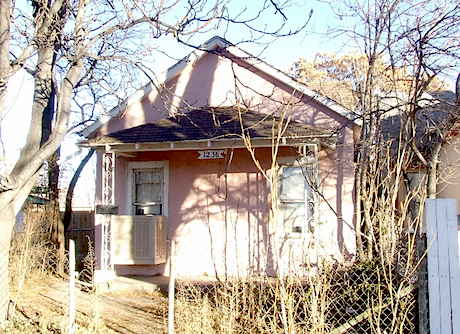
Tim has settled down in Pueblo, CO, a place he claims “is on more than one list of the cheapest cities to live in.” He said he paid around $14K four years ago for his 900 sq ft home and pays “about $135-$160 a month for utilities including Internet, entertainment, water, power, and gas, even taxes [the latter being a mere $100/year].” He thinks he could probably cover overhead by panhandling if necessary.

tim-house

He has invested in a number of energy-saving tools to keep things so cheap. “95% of the lights in my home (CFL and LED’s) are either on night/day solar cells or on remote and/or computer controls,” he wrote us. “I can turn nearly every light in my home on (or off) with a single button push in my office. When I push OFF it shuts down all the lights plus my furnace, a cooling fan and my evaporative cooler, everything except the outside security lights.”

Security does appear to be one of the costs of Tim’s lower-than-low overhead lifestyle.  “Since I’ve moved in I’ve had to deal with nine (three when I bought it) broken windows. I’ve had one attempted burglary and my van has been vandalized four times with graffiti. Two weeks ago there was a gang killing on the other side of town and two years ago someone was murdered less than three blocks from here.”

Predictably, Tim created a low-cost security system to deal with threats. If tripped, the system sets off flashing lights, sounds a loud horn in his house and dials his cell phone (and up to three more programmable numbers if he doesn’t answer). “No place is perfect but I’ve decided the negatives are worth how cheap it is to live here.”

tim-screens

Tim’s life is relatively quiet nowadays. He claims to spend 95% of his time at home, where there is an 1100 watt stereo system and an eight screen entertainment system, which he claims keeps his “AADD in check without meds.”

“Although it may be a cliché the Internet keeps my life very full,” he wrote us. “From messaging with my best drinking buddy every evening to watching some of my favorite movies like the Rocketeer on Netflix and listening to my favorite music on Pandora. I also use Google Voice Command to search the Internet and Skype to talk to my best friend in China on a regular basis. With all the World at my fingertips and unlimited entertainment I am never bored.”

While Tim’s style–and location–of living might not be everyone’s cup of tea, he can surely teach us all many things. We often buy things that bring very little value to our lives. We often use far more resources than we need. The consequences can be huge: living to work rather than working to live, using valuable natural resources and worst of all, missing out on life.