Lack of privacy is one of the more oft-launched attacks on small space living. In small dwellings where there are two or more people, people might not be afforded the room to retreat and be by themselves. But what is privacy really? Generally speaking, privacy has three varieties: spatial, visual and audio; all three can exist separately or together. In a small space, you might not be able to do a lot about spatial privacy as you will likely be near the person(s) you want a break from; in our experience, if you have visual and audio privacy, spatial is the least important type of privacy. Visual privacy is most often achieved with walls or curtains or, we suppose, masks and blacked out helmets (neither recommended for ongoing use). But in our experience, it’s audio privacy that trumps the other two. Quiet, more so than space or visual cover, is the thing that allows most people to feel a sense of retreat. We’ve discussed white noise and wall panels as tools for achieving this when space is tight. We just ran across these freestanding leaf-shaped panels by Japanese designer Jin Kuramoto which create flexible audio barriers for spaces small and large.
Manufactured by Swedish company Offecct, who has a range of sound-canceling products, the “Wind” room dividers were inspired by natural shapes. They are constructed of noise-canceling fabric stretched across metal tubes. While Kuramoto mostly sees the panels as applicable to large “acoustically chaotic spaces” where noise travels unimpeded, we can’t see why they couldn’t be used in smaller spaces to create flexible audio dividers, creating the virtual space people seek when the actual space is lacking.
There can sometimes seem to be an inherent opposition between commerce and minimalism. The former would seem to demand increase and the latter, well, reduction. But even the most pared down minimalist needs stuff. And sometimes people who love to decrease get the desire to start businesses that sell stuff, thereby increasing. But as F Scott Fitzgerald wrote, “The test of a first-rate intelligence is the ability to hold two opposed ideas in mind at the same time and still retain the ability to function.” Nick Martin, founder of The Pro’s Closet, is a nice example of this first rate intelligence. He doesn’t like stuff, but he sells a lot of it.
The Pro’s Closet is the world’s largest reseller of bicycles and bike equipment. The store’s website describes its origin’s thusly:
While living in his Volkswagen Bus and only the task of riding a bike on his to-do list, Nick Martin began a simple mission: sell all of his worldly possessions on eBay. Minus his bike and his bus, Nick sold everything. Fast-forward 8 years to today and we present to you, The Pro’s Closet. The Pro’s Closet has become the nation’s premier eBay store specializing in reselling new and used cycling gear.
In a profile by Anja Semanco in Under the Flatirons, Martin explains the story in greater detail. Following his initial purge, he was living out of his bus, racing bikes and selling kombucha mothers. But this wasn’t providing sufficient funds for survival. The racing contract did however provide a ton of swag he didn’t or couldn’t use–clothes, components, etc. Martin started selling all of this stuff on eBay, and soon friends were asking him to do it for them too. When he got married, he started to take the selling more seriously, renting out his first of five commercial spaces, each of which grew with the scale of the business. Eventually Nick took on a partner, Pete Lopinto, and the shop now inhabits a huge warehouse in Boulder CO, employs 16 employees and sells around 200 items a day.
But at his heart, Martin remains a minimalist. Martin said, “I think material things hold people back,” and he says that he has given away a possession a day for the last three years. And he sees his business as consistent with his minimalist tendencies. The stuff they sell are things that people or companies already have–used part, unsold inventory, etc. So in a sense, they’re not increasing the amount of stuff in the world at all, but finding ways of equitably–and profitably and sustainably–redistributing it.
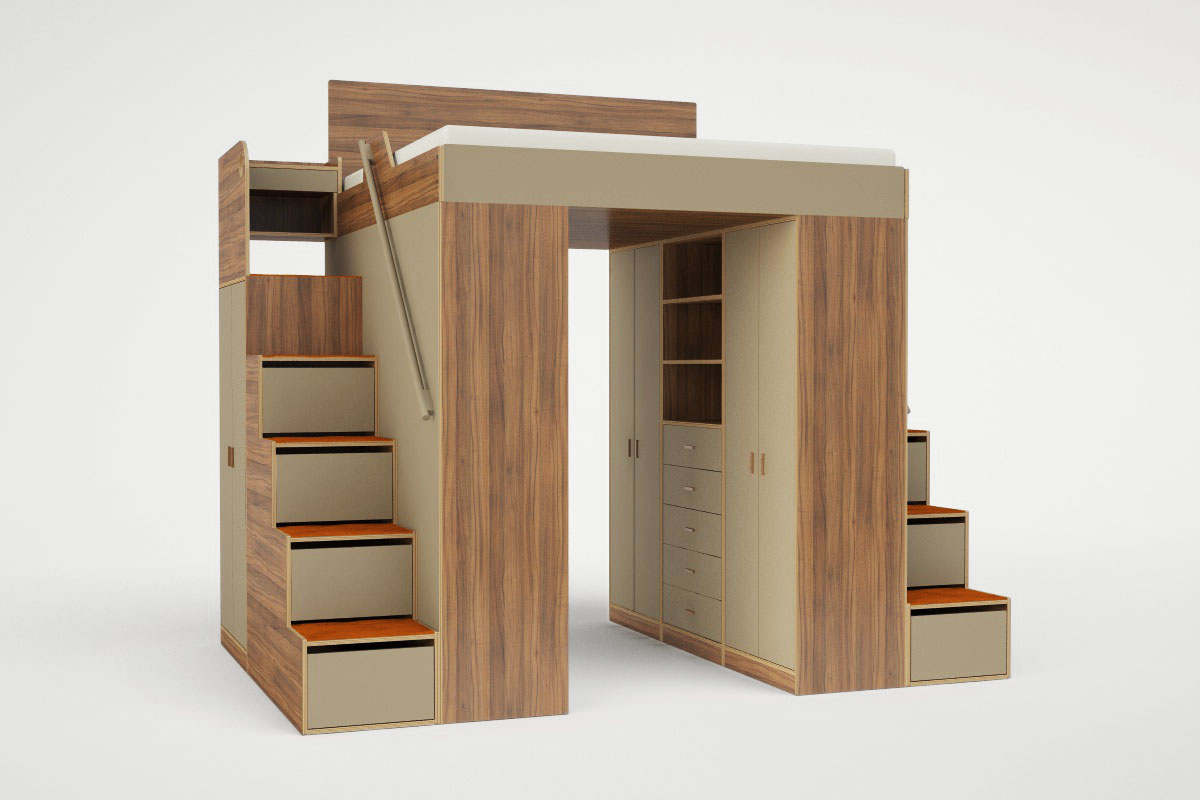
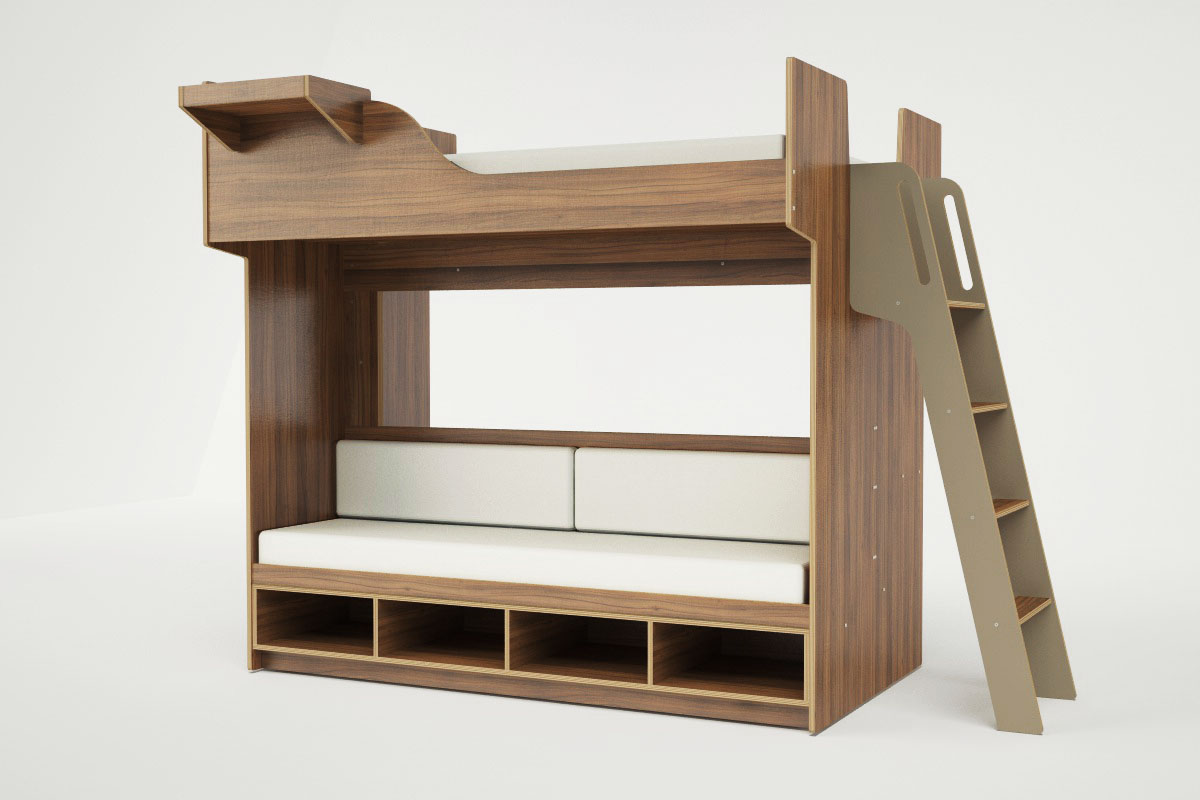
If you have the ceiling height to accommodate them, loft beds are great space-saving alternatives to wall beds. But typically when people conjure up images of loft beds, they think of improvised plywood structures filling out dorm rooms and illegally subdivided urban apartments. Or they’re for kids. Brooklyn based Casa Collection might be changing those stereotypes with their recently released Urbano Collection. Urbano brings adult-grade design and construction to a piece of furniture typically used by the whippersnapper set.
On their site, Casa shows two models. One has a queen bed on top, with a sofa and desk on its base. The other model has a king bed on top and what amounts to a walk in closet for its base; the stairs accessing this model all have build in drawers. All of the pieces are made in Brooklyn, primarily with FSC and CARB certified birch and walnut plywood, according to Casa’s website. Custom options are available.
The Urbano Collection also features adult prices, ranging from $7-20K. This is real money, but considering the furniture can replace several pieces of conventional furniture and theoretically increase the usable square footage of your home, the prices are a bit easier to digest. See more on Casa Collection’s site.
When we cover interesting compact spaces on this site, we usually list their usable area, expressed in square feet or meters. We are pretty hardwired to draw a correlation between a space’s area and functionality. Even when we take pains to list the functionality first, it’s always couched in the “wow, you can do that in a small space?” But what if we decoupled space and functionality altogether? You see, listing area is a conventional approach to understanding space. It’s something easy to wrap our heads around and measure with a stick. But area often misrepresents the gestalt–i.e. the sum total of architecture, furniture, embedded technology and the other UX elements that can help a space transcend its physical dimensions. This talk by Hasier Larrea places special emphasis on the role of furniture to determine how a space performs.
His thesis is that architecture has barely changed in the last 2K years. We keep making static spaces, single function rooms filled with “space killers”–things like beds that lay waste to a space’s functionality the moment after they’re used. He proposes that we augment spaces with transforming elements–ones that are effortless and magical–to create spaces that are alive around the clock.
Larrea knows a thing or two about this subject. The MIT Media Lab alum was part of that school’s CityHome project, which created a high tech furniture module that endow small spaces with tons of functionality. He is now the CEO of MorphLab, a startup that is out to make robotic, open API furniture modules to kill the space killers that not only doom a space’s action potential, but also create a dearth of affordable housing in cities across the globe. He and his team are trying to create a future where our homes and other spaces magically change form to meet our needs.
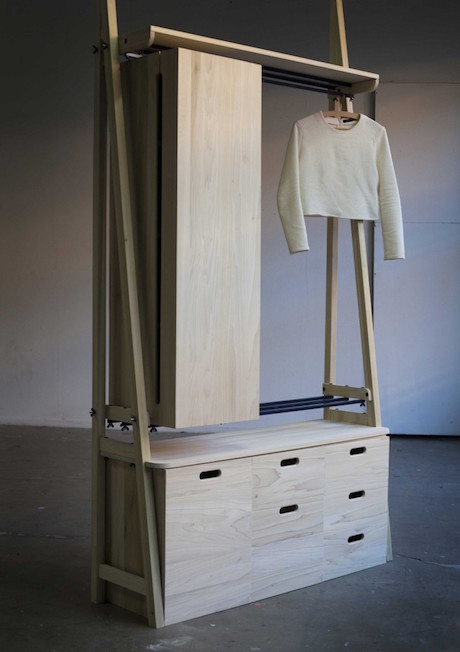
A great deal of micro housing is filled with furniture from the Afterthought School of Design. Micro housing is great for folks whose existences are highly mobile and/or those who are committed to keeping their financial overhead low; as such, investing in high design, high cost and high mass furniture often takes a backseat to low cost, lightweight or easily moved/disposed furniture. Dutch designer Joey Dogge has created a minimalist furniture system that challenges this trend. Dogge’s Yatno line is compact, lightweight, multifunctional, easy-to-move, affordable and beautiful, creating a vision of what small space furniture can look like.
The Yatno collection centers around two main structures: the Yatno Satu and the Yatno Dua. The Satu has open shelving and can be configured to have a desk, a lounge chair or cot. The Dua has a clever stepped drawer system (called the “Laci” and can be ordered a la carte like all the pieces), which acts as stairs used to access upper storage. There is also a sliding cabinet on the Dua that shares a rail that acts as a hanging clothes rack. All of the furniture is freestanding and can be assembled by hand, relying only on wing nuts for fasteners.
The whole system is pretty gorgeous and was designed to fit in a space as small as 50 sq ft. While to overall design seems pretty well sorted out, our big question mark is the cot, which does not look particularly comfortable. Dogge, as model, gets the Oscar for man relaxing reading a book in his promo video. We imaging with a little beefier frame, larger mattress and small headboard, this could be easily improved. Dogge has a full catalog available online showing various customizations for the systems. A recent blast by the company says they are entering their final phase of product development. Visit the Yatno site for more info.
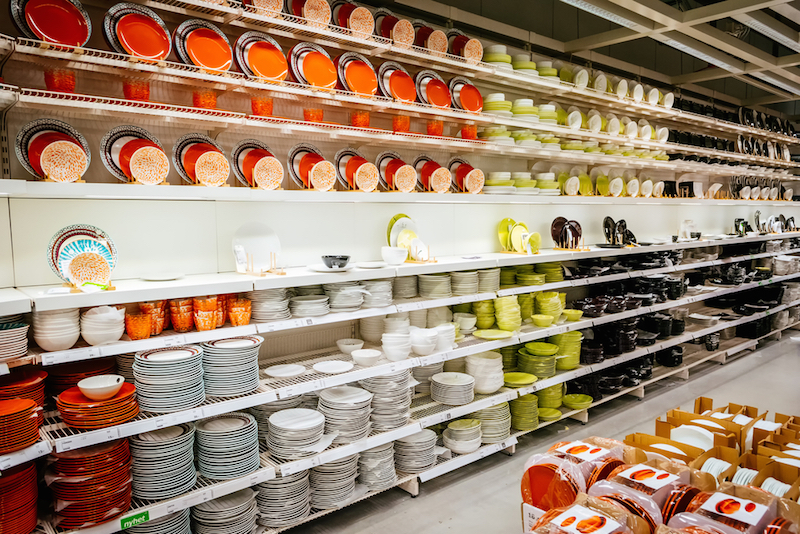
Make no mistake about it, the world still abounds with tons of stuff, but if we were to believe some, we might be approaching a state of “peak stuff”–a state where we have capped out our appetite for extraneous candle holders and handheld blenders. Ironically, one of the exponents of peak stuff is IKEA’s Chief Sustainability Officer Steve Howard, who, the other day, was on NPR talking about this theory. He thinks that the “total material impact of society in the West…[has] probably just about peaked.” He explains:
If you look at things like oil–well, actually, oil sales have peaked in the U.S. and Western Europe. Beef sales have pretty much peaked. Sugar sales have pretty much peaked. You can see trends in things like cars where young people, they’re getting their driving licenses either later or not getting them at all. This trend’s very broad across society….and we’re [IKEA] not immune from the trade. Obviously, you know, there are still people who don’t have–who have very limited means who would like significantly more stuff. But broadly, you saw a tremendous expansion in consumption and people’s livelihoods through the 20th century. And the use of stuff is plateauing out.
This is not the first time IKEA has addressed matters of reduced consumption. Their 2025 kitchen concept envisioned a future with far less food and space than the present. But the implications of peak stuff on the retail behemoth are unclear. Asked if IKEA–easily the single largest purveyor of stuff–would scale back its operations in the west and ramp them up in developing nations, Howard said, “We still want to meet more customers and to make ourselves much more accessible, so we’ll actually expand in the U.S. and still in most markets in Europe.”
His stance is that if there is going to be stuff, that that stuff be from IKEA, which has launched programs to promote reuse and responsible disposal in a number of its European outlets. He said that people want to reuse, recycle and generally make their stuff last as long as possible, but they often lack the channels to do so.
We hope Howard’s theory is correct as the planet–and some might say the human psyche–is buckling under the weight of our obsession with accumulating stuff.
There are many indicators that we have reached peak stuff: minimalist sites like ours, the media’s obsession with tiny houses and so forth. But we realize as well as anyone that ours are minority views. That said, these things might be suggestive of what writer William Gibson once wrote, “The future is already here–it’s just not evenly distributed.”
What do you think? Have we reached peak stuff or is this a clever turn of phrase that will have little, if any, market impact?
Coming from a classical physics perspective, reality “exists” in a material sense. Our perception of a chair is a function of its materiality: we perceive the chair because it has mass and volume and form in time and space. But coming from a theoretical physics perspective, the chair has a relation with our perception of it, and some would argue that the chair may not even exist without our perception of it. Even if the chair does exist without our perception, it is not useful without that perception. If we cannot see and touch a chair, for all intents and purposes, it does not exist. Now, let’s say we could do away with materiality altogether. What if we could go straight to perception? More to the point, what if virtual reality technology could manufacture perceptions of objects and spaces–visually, auditorily, tactilely–without going through the nasty process of constructing them?
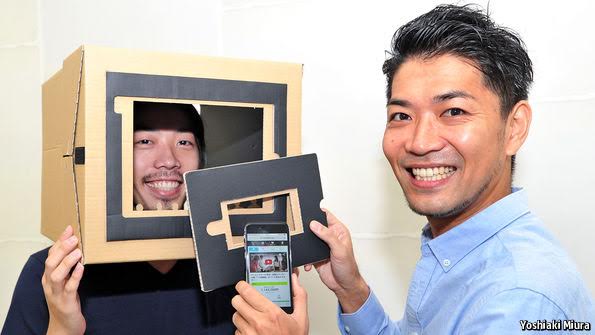
We have explored a couple different ideas in virtual spaces in the past. Bernardo Schorr’s Mixed Reality Living Space was a small box with projector screen walls that showed myriad interior possibilities. A little more earthbound was CoeLux, which created a virtual window that was actually a sophisticated electric light that replicated the effects of natural light on human perception. And we just came across the Solo Theatre from Japan, whose somewhat crude cardboard box structure belies the far reaching implications of what defines “space.”
Solo Theatre is a box that’s thrown over your head (pictured at top). A slot in the front has space for an iPhone, making it, in effect, a private viewing room. The Solo Theatre is, according to the Economist, a reaction to the diminishing size of Japanese homes. They write:
The average Japanese apartment has dwindled from 70 to 60 square metres over the past decade, so that people are even more on top of each other…Japanese must don a public mask for their hierarchy-bound, open-plan offices, and a second face for their families. Turning to small, private boxes at home is their way of searching for a “third space.”
In theory, if someone had one of these boxes on her head, she could: A. make a private screening room in the smallest of spaces; B. if living in a shared space, the box could make a statement as clear about the desire for privacy as sitting behind a locked door would; C. look pretty funny (at least in today’s world).
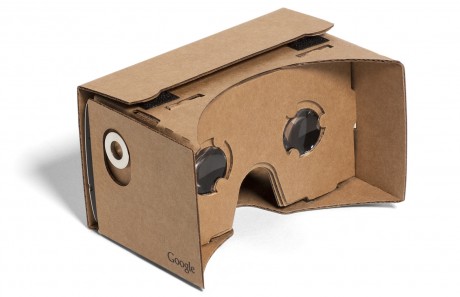
Google Cardboard had a similar concept, though its handheld design seem more cut out for occasional viewing versus full on escape. The upcoming Oculus Rift VR system will surely bring with it numerous possibilities in virtual space construction.
The promise–and maybe nightmare–of all these technologies is that we can create the perception of amazing realities without the resource intensive process of constructing them. We could have the perception of being in Versailles living in a tiny house (though we might bump into walls). In the more immediate future, something like the Solo Theatre, which creates an immersive VR room, without a single 2×4 or panel of sheetrock.
The prevailing business model for many retail outlets is to keep customers in neverending cycle of consumption. Whether it’s through selling unrepairable products, selling products with impending obsolescence built into their DNA or through selling new, slightly-different-than-last-month’s products at breakneck speeds, the objective is the same: get people to buy again. But a new UK web shop called “BuyMeOnce” has a different approach to commerce. As the name implies, they want to sell you products that can, with proper care, last indefinitely. If you buy a product from them, say a valise, that should be the last valise you buy from them or anyone else.
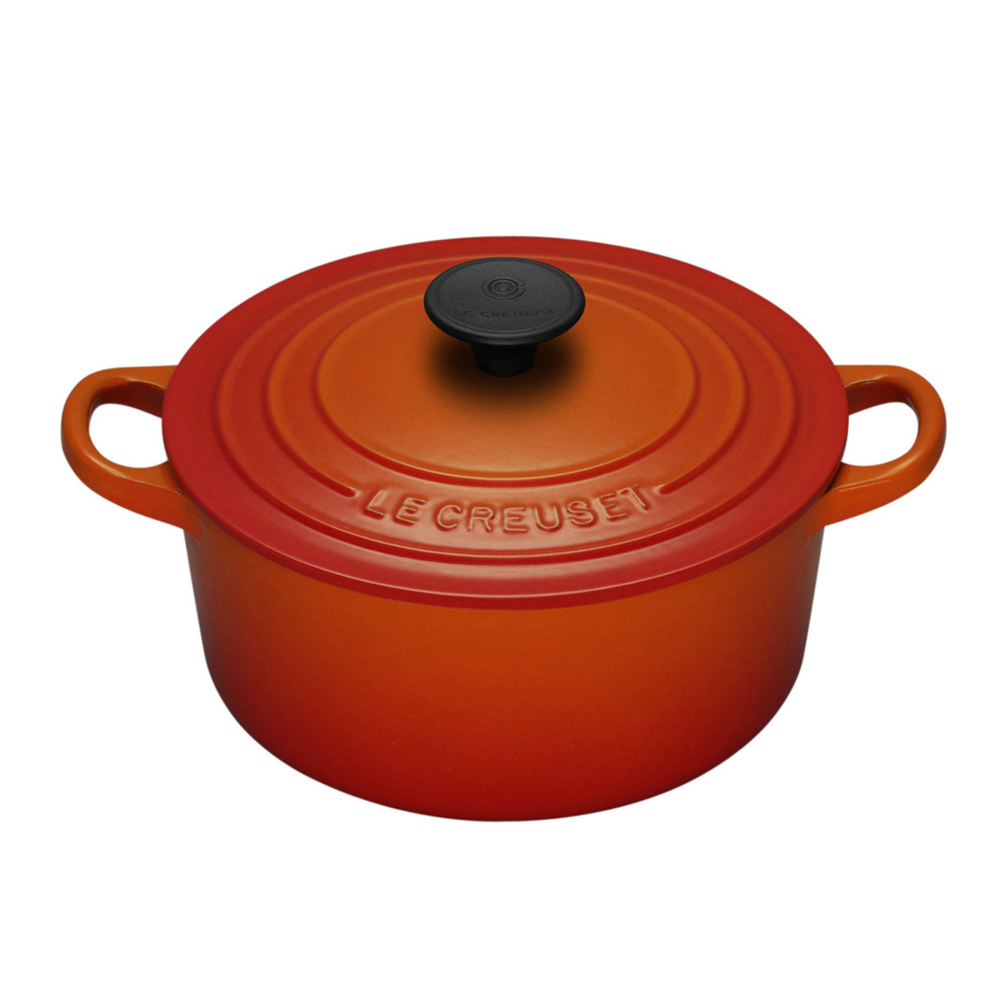
BuyMeOnce founder Tara Button told the Telegraph UK she was inspired by her Le Creuset casserole dish. She said, “‘I will have this for life–wouldn’t it be great if everything else in my kitchen was like that? You buy it once and you never have to buy it again.”
The web shop goes beyond the kitchen, featuring clothing, furniture, tools and a handful of other categories. All products are chosen for their durable construction, timeless design and repairability. On the latter point, the site also has articles and tips for making things last a lifetime or more.
Button’s concept is something we have written about many times in the past, though we call it “heirloom design.” It’s the idea of designing and consuming products capable and worthy of being handed down from one generation to the next.
The main obstacle to heirloom design becoming normal is economics: stuff cost so little money that it’s easy to rationalize buying three or four pairs of cheap shoes versus one heirloom quality pair. But this short-term thinking misses hidden expenses. Cheap stuff is cheap because manufacturers use crappy materials and construction and employ sketchy labor and environmental practices. Cheap stuff is often designed for the times, not the ages, so you are likely to want to replace it before it wears out; notice how often the simplest clothes and products are also the most expensive. Cheap stuff (and frankly, most stuff, nowadays) is not designed to be repaired. And perhaps more than anything, when we buy cheap stuff, we don’t value it; we are less likely to care for it, cherish it and even use it.
It’s heartening to see BuyMeOnce and other shops like it becoming more mainstream. People still need stuff, but with the right orientation and selection, the stuff we use can be more useful, look better and last longer.
As the year draws nigh and vacations loom, we thought we’d look at 2015’s most trafficked posts published this year (“Build Your Own Murphy Bed for $275,” published shortly after this blog started in 2012, was and continues to be our all time most trafficked post). Without further ado, here they are:
Coming in at number five is this post about Prerna and Parag Gupta, a couple of techies who sold all their stuff to travel the world. Aside from the inherent ballsiness of the couple’s story was the fact that it was featured in Vogue–a magazine that’s not normally associated with minimal living.
The fourth most trafficked post was about the Muzereks, a Vancouver family who decided a small condo in a walkable area was a better fit for their values than big place in the burbs.
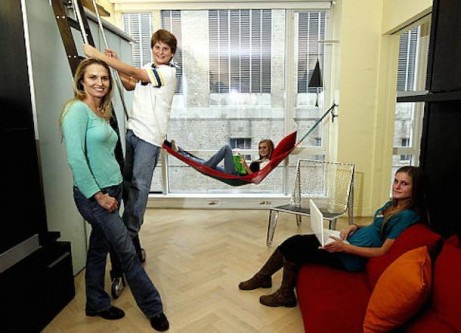
Keeping on the theme of urban families, this post took a look at Kip Longinotti-Buitoni, a single mom who left the burbs and set up camp for her four kids in a relatively small Manhattan condo, helped greatly by an array of transforming furniture.
This short post showed off the Airstream trailer that Zappos.com founder Tony Hsieh calls home. We think it falls along the line of the mainstream-ification of minimalism…something we think is a very good thing.
This post about the alleged conversion of conspicuous consumption’s poster child proves that nothing gets traffic like celebrities…and humor.
Honorable Mentions
Frankly, the above list surprises us a little bit, but Google analytics doesn’t lie. Based on Facebook likes, you guys thought these posts were pretty interesting as well.
This story about a single family home with four tiny houses set up in its backyard is one of our favorites. It shows how density and community can be made inside America’s single family home-centric infrastructure.
Alright, out titles aren’t that original sometimes, but this post about major league baseballer Daniel Norris seemed to strike a chord with readers. If you don’t recall, Norris intentionally chose to live simply out of his old VW bus, eschewing the bling that so often accompanies twenty-somethings with a few million dollars burning holes in their pockets.
It’s not news to say that tech is affecting nearly every facet of our existences: how we consume and deliver information, how we communicate, how we get around, how we use and share goods and on and on. The term “internet of things” goes even further, speaking to how one day everything in our lives will someday be tech-enabled and connected to the intelligence of the web via sensors, learning how we live, responding to our commands, collecting and delivering data, all in the name of making our lives more comfortable and efficient. The Intel corporation recently released their Smart Tiny House to serve as vision of how our homes might fit into this equation. The 210 sq ft home is packed with a variety of systems meant to both improve the quality of life for residents, but also tap into the greater intelligence of cloud systems.
Tech greets you at the door with their True Key system, a fingerprint and facial recognition based security system that lets you in the door as well as providing security for all the home’s systems. Most of the house can be controlled via a tablet or voice command. Lights can be dimmed and colors changed. Shades can be drawn. Some appliances can be turned on and off. There are leak sensors placed in trouble spots (under sinks, near showers, etc) that will notify you if there’s a leak. You can find the alert on the tablet and even book a plumber all in one fell swoop. I suspect the idea is to bring this type of system to every aspect of the house: a sensor will tell you if your roof springs a leak, if your dishwasher breaks, etc. At this point, Intel is dealing with leaks.
Intel is trying to position themselves as the brain of the smart home. They say this:
Intel creates the processors and other computing technology that serve as the brain powering a myriad of devices. Increasingly, as the home moves from connected to smart, this technology will enable a new breed of consumer electronic devices – everyday things such as lightbulbs, thermostats, smoke detectors, electrical outlets and cameras – to become connected and smart. These tiny brains inside “things” throughout the home will compute and produce data at the device level for real-time intelligence. Intel-based gateways connect the home’s smart devices, providing advanced analytics and storage, allowing the home, people and devices to work together in an intuitive, intelligent fashion. Cloud connectivity, advanced device management and built-in security will connect consumers to a variety of new services, features and cost savings.
It’s still early days for this type of tech and there are several different connectivity “smart home” protocols. But a colleague of mine noted that in the early days of telephones, there were hundreds of rival telephone companies and little interoperability. Eventually, things get sorted out. Intel is trying to address some of these interoperability issues. They have created their “Smart Home Development Acceleration Platform,” and claim they were able to enable interoperability with between three distinct lighting solutions: Philips Hue, Cree and Osram. This augers well for creating interoperability for scores of systems: wearables connecting to HVAC systems connecting to mobile devices and so on.
Frankly, the benefits of the tech on display in the Intel’s tiny house are underwhelming. But again, the house represent a start. They say in a press release, “The home is an experimental showcase that will evolve over the next 12 to 18 months as Intel explores the opportunities, experiences and tensions of creating a smart home.”
One thing that is definitely cool is that Intel chose a tiny house as the vessel for the house of the future. The motivation may have had more to do with the relative ease of working with a small space versus a large one. But tech is also making it possible to live with less in numerous ways such as the digitization of physical media and giving us access to shared goods. If you are really trying to make your home “smart,” few things are as smart as small: downsizing has the ability to reduce our spatial and carbon footprints, simplify our lives and save a buck or two.