Stack It, Nest It, Put it Away: Finding the Best Products for the Edited Home

As we approach the completion of the first LifeEdited apartment, we are faced with the question of what products do we put in it? Already claiming a good portion of the apartment’s 420 sq ft are 2 bikes, 2 kite-boards (and a bunch of kite-board gear), 10 stacking chairs, a 30″ computer monitor and several other large items.

Every product added should have maximum utility, minimal footprint and great quality. Products that are multifunctional, stack, nest and fold help achieve those ends.

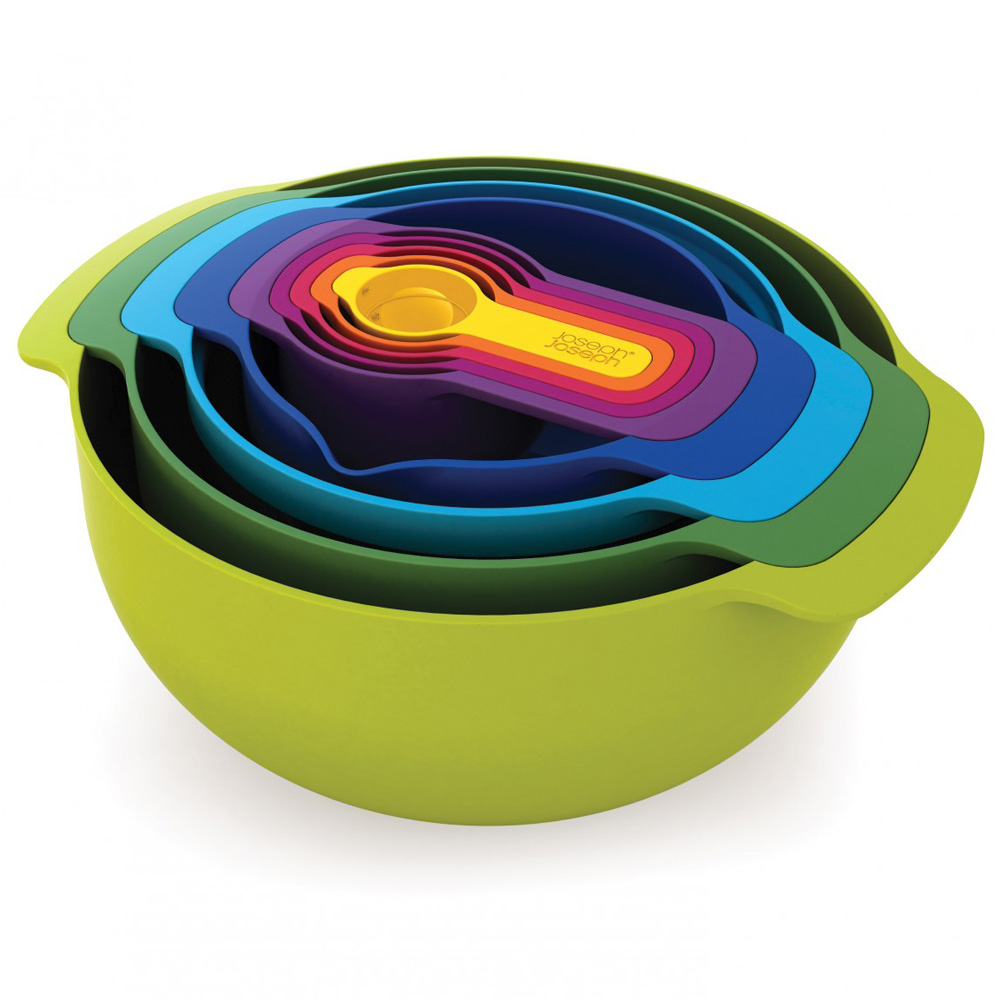
Joseph Joseph is British company that makes myriad cooking products that fulfill our objectives. Take for example their Nest™ 9 Plus, which nests bowls, a colander and measuring cups and spoons in one unit. Whereas most of us end up with mixing bowl set from one place, a colander from another, and measuring cups and spoons from yet other place, this unit designs these related things to work together, enabling significant reduction in clutter and space.
Other products include a fold-flat grater, a folding colander, nesting kitchen utensils and more.

As an added bonus, Joseph Joseph brings some needed color to our the apartment’s otherwise pale interior!


Home storage is often lost in figurative (and literal) teaspoons–gaps of space here, stuff splayed out in drawers there. Products like Joseph Joseph mind the gaps, mating like products in logical ways, making for a simpler, more compact home.

What other products would you put in the LifeEdited apartment? What multi-functional, stacking, nesting, folding or simply high quality product can you not live without? Let us know.

images via Joseph Joseph
 

Past and Present of Transforming Furniture

Our good friends over at Resource Furniture put together this short video showing transforming furniture’s past and present. The vintage footage illustrates this type of furniture is hardly a new idea. People have been designing furniture to maximize the use of space for ages.

In fact, what’s new is NOT maximizing space. Consider that the average new American home in 1950 was 983 sq ft., and the average household had 3.37 people. According the US Census Bureau, those numbers in 2010 were 2,169 sq ft and 2.59 people. That works out to 293 and 837 sq ft/person respectively–almost 3 times as much space per person! Much of this extra square footage, we suspect, is consumed by seldom-used spaces like dining rooms, guest rooms and foyers. What if, by using transforming furniture, we make our rooms do double or triple duty? Combine dining rooms with guest rooms. Make living rooms into bedrooms. Just get rid of the foyer (the parsley sprig of architecture). How much space would we need then?

What if we started living and maximizing smaller living spaces again? They’re cheaper, greener and–for all but a few worst-case-scenarios–provide all the space we need. What ways would you do it–furniture, housewares, etc.? What ways are you doing it? Let us know what you think.

Single Dress Does Triple Duty

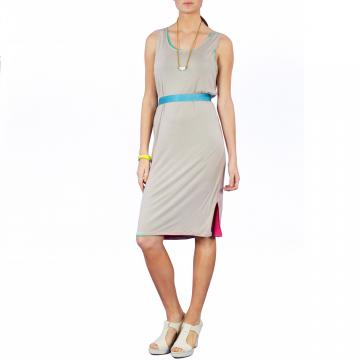
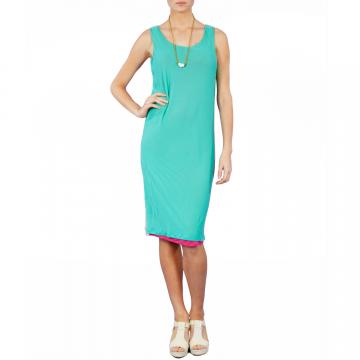
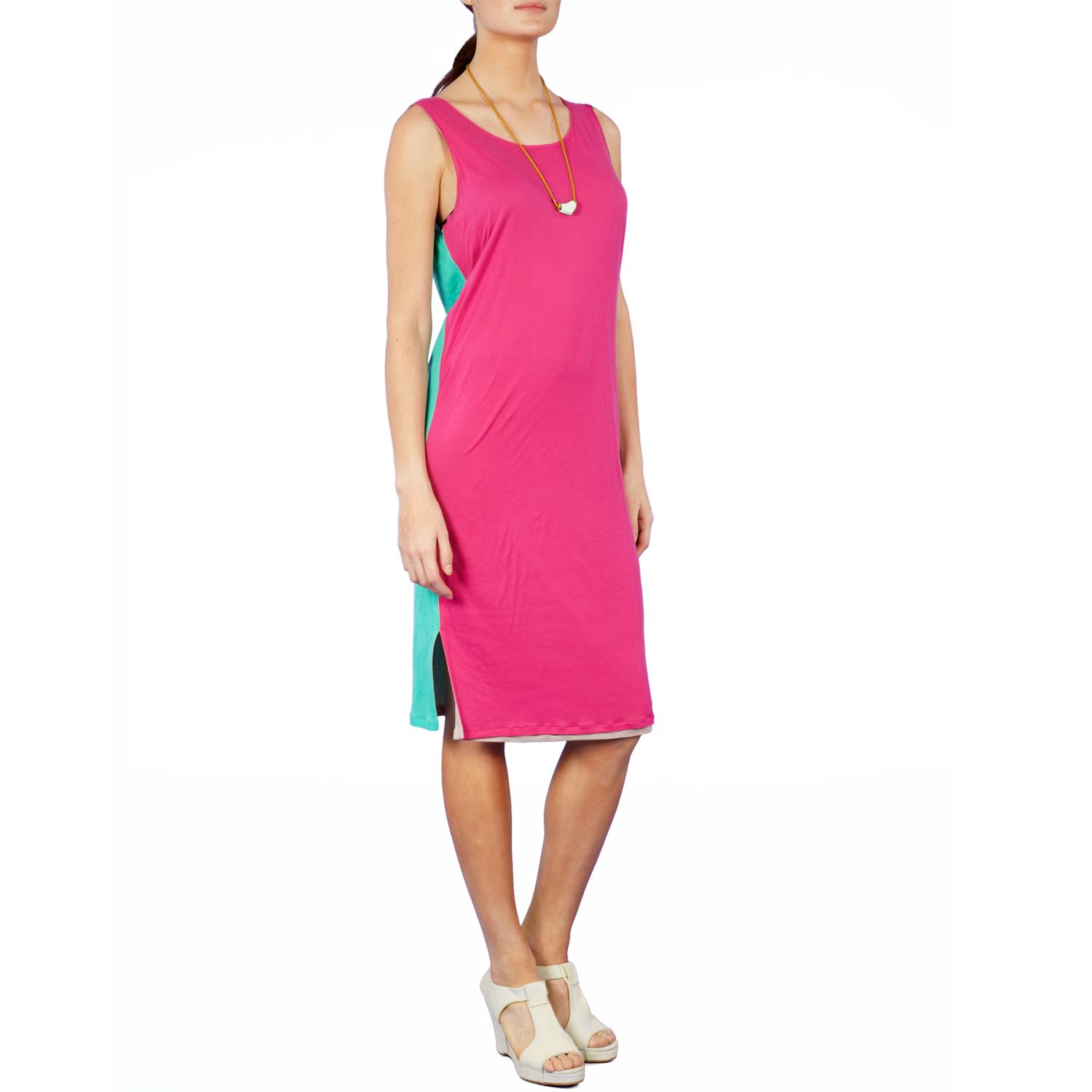
Editing life is often as much micro as macro. Sure, it’s cool to conceive of new furniture, homes and cities. But often small ideas are just as critical as big ones. Case in point is this Akan reversible dress from Loomstate 321. Its different configurations effectively give it the utility of 3 dresses, which for $228 is a great deal. It’s also made of an eco-friendly, wood-pulp-derived fabric called Tencel.

With small, smart wardrobes, we need less storage, smaller living units; there’s less laundry to do and more money in the bank.

While this pink and teal version is nice, we might suggest their more subdued white/black/blue/yellow version. Part of living an edited life is choosing things that can be as versatile as possible. The author was confronted with this situation the other day. I wanted to buy a cool pair of moss green pants from Outlier, but given that they would be my primary pants, I chose the more staid grey. I knew the pants would be in heavy rotation and realized I ran the risk of being the “guy with the green pants.”

Via Vogue and Loomstate 321.

eBooks and the Bibliophiles Dilemma

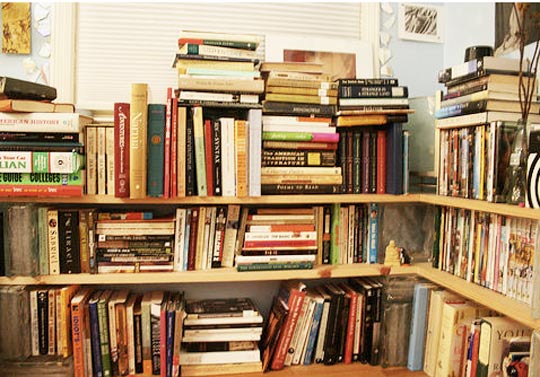
This is perhaps the most taboo topic in life editing. Even extreme editors, living in their ultra-organized cubbies, often find themselves unable to get rid of these. That’s right, we’re talking about books.

We love our books–the feel of paper, the dog-eared pages, the cover art, the smell. We display them like trophies. When people come over to my house, they will know I read “The Brothers Karamazov.”

But let’s face it: books are space hogs, and few inventions help the process of editing one’s life as much as the eBook. For example, consider the basic Kindle eReader stores up to 1400 eBooks and weighs 6 oz., which is about the same size as one paperback copy of “The Great Gatsby.”

We know there are many eBook converts out there already, but for the others, who can’t quite make the leap, who are dubious of electronic ink, who love their paper-cuts and dewy thumbs, we put out a challenge: try it. 

Today we present an easy, zero-risk way of seeing if eBooks are for you.

  1. Download the Kindle app. It’s a free application that allows you to read Kindle eBooks on a variety of platforms: Android, PC, iPhone, iPad and Mac. Install it on whatever device you find yourself using the most, preferably a portable one like your phone or tablet, which better replicate a book’s utility.
  2. Download an eBook you want to read. This could be one of the millions of paid Kindle titles on Amazon, or if you don’t want to pay, download one of their 1M+ free eBooks to make this a truly zero risk experiment.
  3. Read book and see if you like it.

Mind you, this is not a perfect experiment. EBook readers like the Kindle and Nook have eye-saving electronic ink, which for many (like the author) make it possible to read for long periods of time. But others, like Graham Hill, have read many books without issue on their back-lit phone screens.

Either way, the idea is to try. Give it a shot and let us know what you think.

image via Apartment Therapy

ThinBike Slices Your Bike in Half

Bike storage can be a hassle in small spaces. It’s bad enough that you have this big rectangle; but then you have handlebars and pedals jutting out, ready to snag a passerby. And while easy-to-stash foldable bikes are great, sometimes our riding habits and preferences demand a full size frame and wheels.

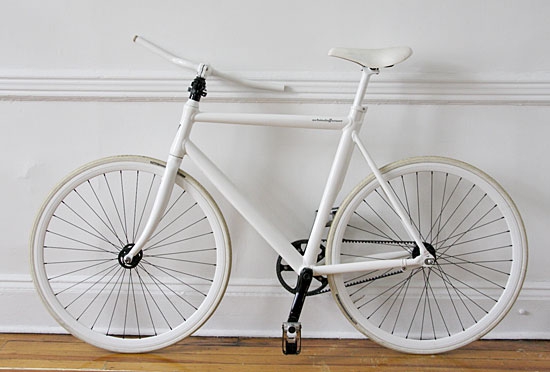
To solve this issue, LifeEdited founder Graham Hill put this “ThinBike” together with German company Schindelhauer. The bike features fold-up pedals by MKS and a quick release stem by Speedlifter that allow you to put the bars flush with the rest of the frame. All this allows the bike to go from a portly 21″ width, to a mere 6″.

While the $1800 package that Graham put together–replete with Gates Carbon Belt Drive and white rims to match the white tires–might be a bit steep for many, retrofitting your current bike with the stem and pedals can be done for about $200.

Amazing Single-Serving Dishwasher

It’s bad enough that your parents keep urging you to meet a nice girl/guy. You shouldn’t have to take grief from your appliances as well–that huge, perpetually under-filled dishwasher reminding you of your parents’ petitions. No longer.

The Instant Dishwasher by Robert Lange and Bosch honor your singleness. The experimental, space-saving design provides enough room to clean a couple place-settings, which for most bachelors/bachelorettes (or couples who don’t cook a lot) is all that’s needed on a daily basis.
Via Yanko Design.

Do-It-All Clothing Cuts Clutter

Is your closet teeming with single-purpose clothing? You got wool slacks for fancy, jeans for chilling and sweatpants for, um, sweating. Before you know it, you have a ton of barely-used clothes maxing out both closet and credit card.

What if there were clothes that looked and fit great and were ready for whatever you were up to? These pants from Outlier Tailored Performance are a great example of such a beast (available for boys and girls). Their tailored cut makes them suitable for formal affairs, while their technical fabric make them great for riding your bike, climbing and other activities that shouldn’t be done in pants this styling. They also feature a self-cleaning NanoSphere treatment, which makes them impervious to spilt coffee and slightly-too-long intervals between washings.

We’ve been wearing them for a couple years and they look like new despite their many travels through boardrooms and countless miles logged on our bikes. They show that a few sophisticated, well-made, multi-functional items can save money and replace piles of single-purpose, closet fodder.