See Us on Yahoo? Start Here

You might have seen us on Yahoo News with Katie Couric. If so, welcome! And now that you’re here, you might be wondering, what the heck is LifeEdited? Allow us to explain.

lifeedited

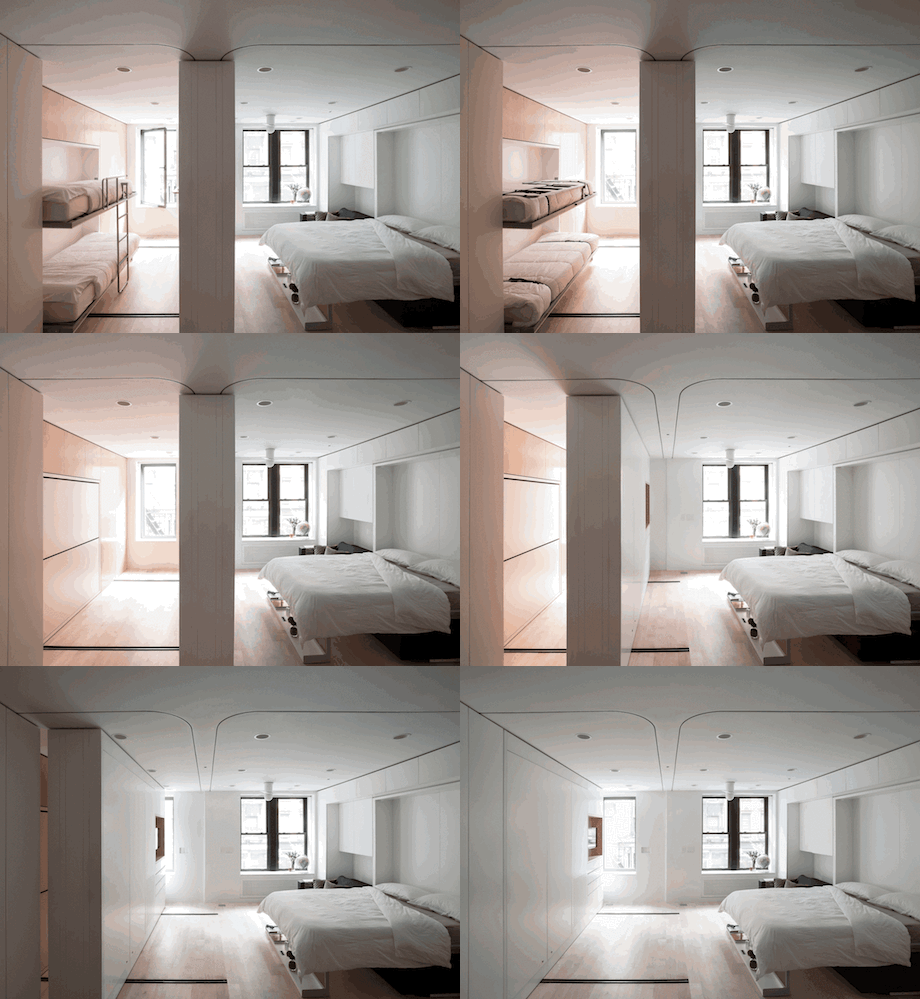
First, we are a business. We were founded five years ago by a guy, also our CEO, named Graham Hill. He gave this nifty TED Talk in 2011 that explains our mission. To sum it up, the world–and North America in particular–has seen a super-sizing of everything: housing sizes, the amount of stuff we accumulate, the amount of information we consume, etc. LifeEdited is out to provide an antidote to this phenomenon, showing how the right application of design and technology can enable us all to live happier, simple lives using less stuff, space and information. Our first major demonstration of this principle was shown through our first prototype apartment–a 420 sq ft space that could seat 12 for dinner, sleep two guests comfortably and privately and do many other things that made you forget its compact dimensions.

Next, check out the above video for a quick explanation about what our business does specifically. In short, we act as a specialty consultant to real estate developers and architects. We work with them to help deliver as much possible function to every square foot they build. To see some examples of our work, go here, here and here. We are also starting to develop our own real estate projects.

And then of course, we are a website and newsletter. Our mission is to show people how they can live amazing lives using less stuff, space and information than the status quo might have us believe. The site focuses on showing off amazing architecture, design as well as publishing relevant news and tips for the less is more way of life. Be sure to sign up for our newsletter that delivers regular news direct to your inbox.

Also keep up with us via our Facebook, Instagram and Twitter feeds.

5 Stuff-Free Gift Ideas

According the website Nerdwallet, it takes the average middle-class American household three months to pay off their holiday gift-buying expenses. Unfortunately these arrears, taken on in the spirit of generosity, are often taken on for naught. Research shows that many, if not most, of our gifts are undervalued and/or disliked by the people we give them to. Not to be too humbuggy, but I suspect the average gift probably has a 50% chance of being well received and/or used (I’m assuming this is a gift that wasn’t specifically requested by the receiver). Would you buy stock in a company where there was a 50% chance the stock would be worth nothing within weeks of buying it? Probably not.

With all this in mind, it’s a good time to suggest some stuff-free gift alternatives–“things” that are almost sure to be used and enjoyed and will not (and cannot) be tossed or given away moments after they are received.

  • Don’t get “stuff.” There are many ways of giving gifts that require no extra storage. Buying experiences–theater or movie tickets, a dinner at a nice restaurant, etc–have actually been shown to have a higher likelihood of being well received than stuff like electronics or blenders.
  • Give a service. Back in the day, you might have given someone a CD, DVD or some other durable good. In their place, buy a subscription or gift certificate to Spotify, Netflx or maybe Airbnb.
  • Give a membership: Museums, zoos, performance spaces, etc. What’s great about this gift is that people end up going to these institutions frequently when they might not have gone at all without a membership.
  • Give food or drink. When doing this one, it helps to have some notion of the recipient’s gastronomic leanings (does he/she like stinky cheese, coffee or tea, bourbon or wheat grass), but food is infinitely consumable and appreciated by most.
  • Give time. We still love the “One Less Gift Certificate” devised by Miss Minimalist. In an age or material abundance, time and attention are far more precious commodities than money or anything you can buy at a store or order on Amazon.

How are you prepping for the holiday season? Let us know in our comments section.

A version of this post originally published November 26, 2014.

Let’s go shopping image via Shutterstock

A Scooter for Big Kids (aka Adults)

My three year old son loves his scooter as it allows him to test his daring in relative safety. I love it too. He’s able to keep pace with me as I walk down the street, and because it’s relatively small, it’s no big deal to stash it when we go in a store or something. But when I see adults using scooters, I must admit I’m prone to unfair judgment. Don’t they know scooters are for kids? But why do I think that? They allow adults to fly down the street far faster than walking, and they’re no more dangerous than bikes. Most fold up smaller than the smallest folding bike, so they’re great for stashing under a desk or something. And unlike bikes, they make no wardrobe demands–you could easily wear a suit without fear of chafing on a saddle or ripping on a chain. The new Swifty Scooter is a nice example of a high quality, compacting scooter fit for adult consumption.

swifty

Unlike the popular Razer scooters, Swifty has large 16” wheels with proper tubed tires, giving it both stability at speed and shock absorption for safety and comfort. It has a solid aluminum frame and weighs a manageable 18 lbs for easy toting. The wheels, handlebars, stem and hand brake are solid, mid-grade bike parts, making it both durable and serviceable (there’s a rear foot brake). The scooter is easily adjustable for different height riders and opens and closes in seconds.

Swifty Scooter is currently doing a Kickstarter campaign and a $695 pledge will get you an early bird special, which is around the price of a comparable quality bike, but this is not necessarily the best way of thinking about it. Rather, is an alternative form of transit, ideal for people who want to cover relatively short distances quickly with minimal equipment. And yes, those people can be adults. 

A Desk for the Lightweight Worker

The Ergotron Hub cabinet/desk is a slick little piece of furniture if you’re looking for an attractive, lightweight workstation. It comes in two varieties with two sizes: the Hub27 measures 27.3″ w × 20.3″ h and the Hub24 measures 24.8″ w × 16.5″ h. Both units are only 3” deep when closed, so they barely stick out of the wall. 3” is plenty to stow a laptop, phone, tablet, essential stationary and a few pieces of paper (which is all you really want anyway, am I right?).

Hub27-LS-dry-erase

The glass desktop, when closed, is lockable and doubles as a dry erase board. It is rated to hold 25 lbs, but a Ergotron rep told me, unofficially, that this is very conservative and that it can accommodate up to 100 lbs, though I wouldn’t want to try it, nor could I see a possible reason to load it with so much weight. The desk height can also be vertically adjusted several inches to accommodate different user-heights. Depending on where it’s mounted, the Hubs can serve as a sitting or standing desk.

Hub27-LS-lever

What’s coolest to me about the Hubs are they are responding to the changing nature of how people use desks. Most of today’s desks are designed around filing cabinets, stationery storage, printers and CPUs with monitors. While many people still use these things, more and more people (like me) only need a place to use and store our laptops and a few documents. For us, a minimal desk like the Hub is pretty perfect.

The Hub27 retails for $350 and has a heavy duty steel frame. The Hub24 is $200 and features a high quality plastic frame. Go to Ergotron Home’s website for more info.

REI Is Making Black Friday a Bit Brighter

There is no single day that better represents the scourge of compulsive, compulsory consumption than Black Friday–historically the biggest shopping day of the year. The day compels many to camp out in front of stores in frigid temperatures to nab limited time offers on retail goods; it sends workers to work extra long hours that would otherwise be spent partaking in post-thanksgiving revelry; and it brings out some pretty nasty human behavior: in the last decade, seven people have died and 98 have been injured in Black Friday related shopping incidents. These are not people shopping for life-saving serums–these are people pursuing deals on flatscreen TVs and remote control cars for their kids. Well, outdoor retailer REI is taking a stand against this insanity. Its #Optoutside campaign will close all 143 REI stores on this most lucrative shopping day.

Not only will REI stores be closed, but the company will give its employees a paid day off to spend outside. REI president and CEO Jerry Stritzke says this about the campaign:

For 76 years, our co-op has been dedicated to one thing and one thing only: a life outdoors…We believe that being outside makes our lives better. And Black Friday is the perfect time to remind ourselves of this essential truth…We’re a different kind of company—and while the rest of the world is fighting it out in the aisles, we’ll be spending our day a little differently. We’re choosing to opt outside, and want you to come with us.

The cynic in me wants to say it’s just a big PR stunt to get them attention (I’m writing about it, aren’t I?), but the other part of me thinks it’s pretty cool. While the prevailing retail culture is still very much set up to encourage consumption at all cost, there are signs of a new culture emerging. Whether it’s Patagonia, Outlier, Zady or REI, we are starting to see companies that consider their social and environmental impacts. They are creating a new way to buy the stuff we actually need. This new way might require a little bigger initial investment and it might not be as convenient (you’ll have to wait until November 28th to shop at REI…or shop online), but it might make us a bit more conscious and careful of how and why we consume.

HT Sarah L

This Might Be the Last (and Best) Razor You Buy

[Update: this product has been banned from Kickstarter for not having an operational prototype. Back to razor burn and nicks.]

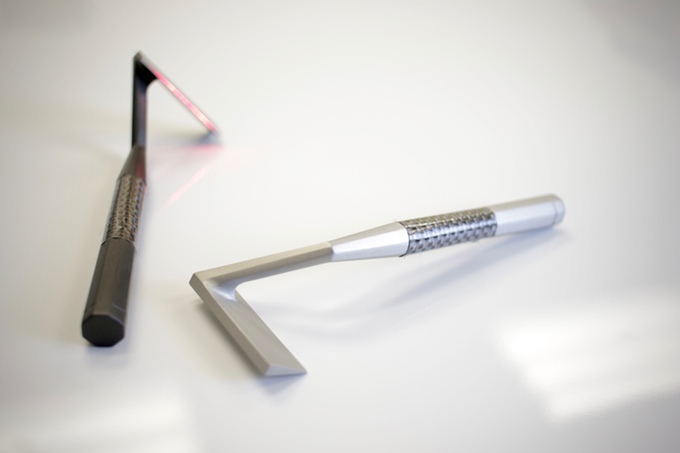
It’s a bit funny how things like cell phones undergo nonstop innovation, while other things seem to be innovation-proof. One product that fits into the latter group is the hand razor. Yes, companies want to make you believe they are innovating by adding a fifth blade, achieving a 1 nanometer closer shave (they need something to justify their cartridge’s $8 price tag), but really the basic safety razor hasn’t changed much in the last 130 years since it was invented. A new Kickstarter project might be changing all that. The Skarp Laser Razor uses, you guessed it, lasers to trim your hair, eliminating the need for disposable blades forever. 

Skarp claims that 2 Billion razors or razor cartridges are tossed in the US alone each year. Skarp uses a special laser to be completely blade free. Here’s their explanation as to how it works:

Wavelengths of light had already been discovered that could cut through dark hair, but finding a way to cut light hair was proving incredibly difficult. After years of research & development, they discovered a chromophore in the hair that would be cut when hit with a particular light wavelength. Chromophores are particles that absorb certain wavelengths (colors) of light. This chromophore they identified is shared by every human, regardless of age, gender or race.

This chromophore is the one they use in their razor we can assume. It is claimed to be totally safe to the skin and eyes. In fact, because it doesn’t make contact with the skin, Skarp doesn’t cause the same rashes and irritation commonly caused from normal razors.

skarp

The laser is said to have a 50,000 hour life (probably a few generations worth of shaving) and runs off a AAA battery. The prototype has a gorgeous machined aluminum shaft that looks worthy of the ages.

Apparently people are ready to ditch their old razors. Skarp set a funding goal of $160K. As of this writing, they are at $3.7M. A pledge of $189 will get you one of the razors. That’s a bit of scratch for a razor, but would pay for itself fairly quickly if you are a regular shaver using premium blades.

UPDATE: A READER POINTED US TO THIS REDDIT POST QUESTIONING WHETHER THIS PRODUCT CAN ACTUALLY DO WHAT IT’S CLAIMING. IF YOU’RE CONSIDERING PLEDGING, YOU SHOULD PROBABLY READ THE POST FIRST. 

Look Good In and Feel Good About Your Fashion

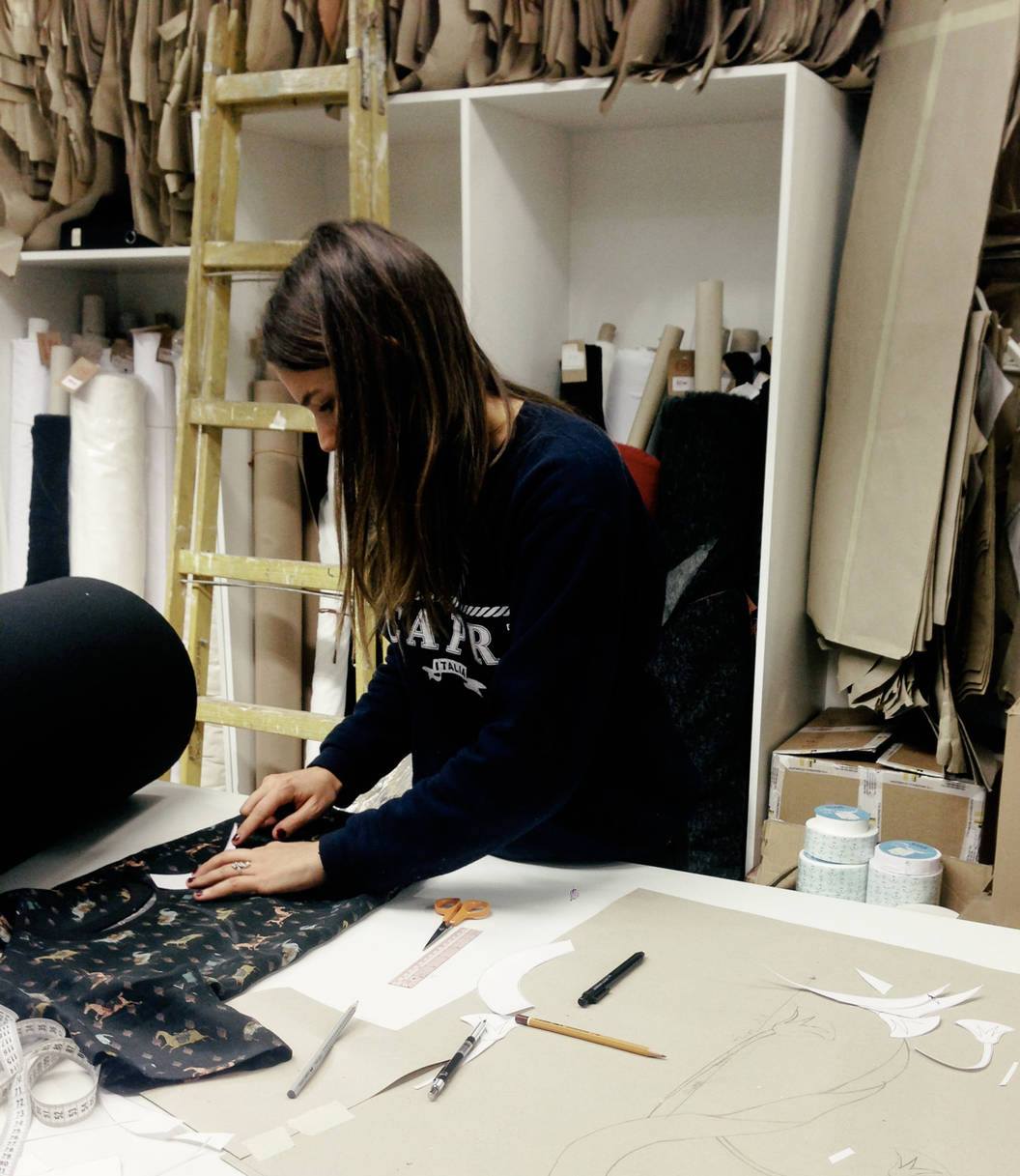
Most of us are at least vaguely aware of what drives the excessive demand and supply of clothing. Constantly changing fashion trends drive demand, compelling people to exchange perfectly good clothes in favor of newer, slightly different, perfectly good clothes. In her book, Overdressed: The Shockingly High Cost of Cheap Fashion, Elizabeth Cline wrote that Spanish retailer Zara pioneered the practice of introducing new styles to its stores twice per week. Other stores like H&M and Forever21 quickly followed suit, often bringing in daily shipments of new styles. According to Cline at the time of writing, UK based retailer Topshop introduced a shocking 400 styles a week on its website–a practice that is meant to “deliberately make the customer feel off-trend after the first wear” according to the Huffington Post. Supply for this practice is made possible by deferred payments of our clothing’s real costs. That trendy new $18 shirt doesn’t include the price of living wages in safe conditions or responsible fabric sourcing. Instead, much of today’s mass-produced clothes are made by people working long hours in unsafe conditions for very low wages; they are almost always cheaply constructed with pesticide-laden cotton or other environmentally-destructive materials. In an ideal world, our clothes would be classically designed and well made, withstanding the often arbitrary fluctuations of fashion trends; we would feel good about, who, how and where our clothes were made. They are clothes that would enable us to have less, but better wardrobes. That’s the idea behind a new web-shop called Zady.

Zady carries a range of women and men’s clothing and shoes as well as accessories, jewelry and housewares. The raison d’etre for Zady is establishing what they call “The New Standard”–where retailers consider the environmental and human toll of the products they sell. They are trying to achieve as much supply-chain transparency as possible, allowing you to see–and presumably feel good about–every step of a product’s manufacturing process, from where raw materials are sourced to who and where your garments are assembled to every step in between.

zady-fashion

This new standard carries over to the style of clothes they offer. Their products, which are sourced from various manufacturers, embody the “slow fashion” ethic–classic designs in muted colors that are basically the antithesis of fast, trendy, cheaply priced and made clothes large retailers churn out. These are clothes that are designed to be worn frequently and for a long time–increasing longevity being the easiest way to reduce clothing’s impact on the planet.

Zady’s clothes are beautiful, but they don’t come cheap. Shirts are often more than $100 and sweaters routinely cost $300. The problem isn’t that their clothes are expensive–it’s that we’ve become so accustomed to not spending anything on clothing. This has hardly always been the case. According to a survey by the Bureau of Labor Statistics, in 1950, when most clothes were still made domestically, Americans spent 12% of their incomes on clothing. In 2003, we spent 4% despite the fact that the volume of clothes we purchased skyrocketed. Zady reports that there has been a fourfold increase in clothing production in the last 20 years alone.
zady-new-standard

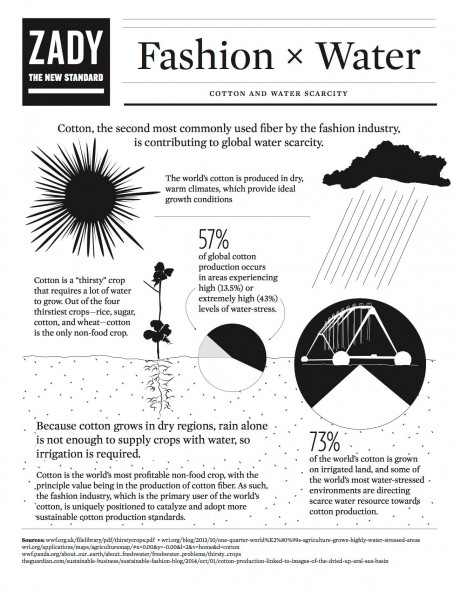
Zady is challenging us to think about our clothing purchases a lot more rigorously. Their site includes tons of (pretty damning) information about the costs of modern clothing production: how 99% of cotton is grown with chemicals and uses 25% of the world’s insecticides, how 250 million children, some as young as 5 years old, work in the fiber and apparel industry around the world, and so on. In light of these pretty awful facts (and there are many more), it’s probably time we started paying the real costs of clothes. Fortunately, Zady helps us do that while looking pretty sharp at the same time.

Via Treehugger

Check Out These High-Tech, Transforming, Carbon Fiber Shelves

Carbon fiber is the material of choice when engineers and designers need high strength without added volume and weight–perfect for things like bikes, wheelchairs, high performance cars, aerospace parts, etc. But aside from a few novelty items, carbon fiber hasn’t been a mainstay in furniture design. The reason is simple: carbon fiber is pretty expensive, difficult to manufacture and most furniture doesn’t need to be particularly lightweight, so metal and lumber derived materials are the go-tos for furniture construction. But Japanese design house Nendo’s new Nest shelving unit is presenting a compelling reason why carbon fiber might be incorporated into modern furniture design.

nest

The Nest shelves expand from 25” to 51”. The vertical sheets are made of 3.7mm carbon fiber and the horizontal ones are made of a honeycomb material sandwiched by carbon fiber sheets. The whole assembly is clad with a thin larch veneer so it still has a somewhat traditional look. This construction allows Nendo to make their shelves super thin yet very strong. As such, when the shelves are nested on top of one another, it’s tough to tell there are additional panels under the top ones, thus maintaining a lithe, modern aesthetic. And because of carbon fiber’s rigidity, the shelves, when extended, make no compromise in strength.

While the combination of high strength and low weight and volume are not necessarily that important for things like sofas and built-in furniture–things that don’t move or do that much–items like the Nest shelves can benefit greatly from carbon fiber construction. You could make other items such as chairs that are super slim and strong and store compactly or an ultra thin large table that folds in on itself–furthering the argument for applying high technology to the sometimes technology-resistant world of furniture design. 

Via Dezeen

This is the Future of Furniture Design and Fabrication

Designing small space furniture might not be rocket science, but it does require geometry. More specifically, it requires making furniture that’s proportional to a particular space’s dimensions. Now imagine you could easily design and adjust the dimensions of your furniture to be proportional to your small space (or large one I guess). And imagine this same furniture could be seen in your space through your mobile device via an augmented reality app. Imagine no more, because now there’s Tylko.

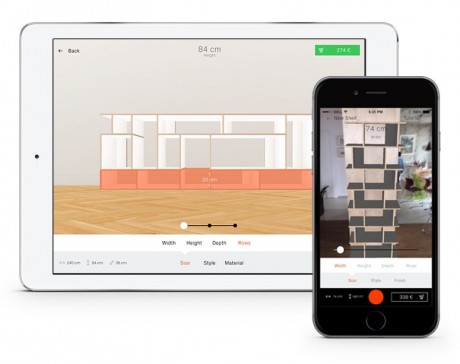
Through its very easy to use web interface, Tylko allows you to create custom furniture that’s just right for your space. But their app goes several steps further, using your iOS device’s camera to create an augmented reality view of what the furniture will look like in your space.

tylko-app

Right now, Tylko’s website features a number of smart looking plywood cabinets whose dimensions and finishes are incredibly easy to adjust. The app will be launching today at London’s Design Festival and will coincide their new Hub Table, a collaboration with celebrated industrial designer Yves Béhar. The table’s dimensions, legs and finishes will all be totally customizable. Tylko boasts that between their table and cabinets, there will be “billions” of different customization options available via the app.

tylko-tables

Unfortunately for most of us, the app will only be launching on the Apple app stores for Germany, Austria and Tylko’s native Poland. But we suspect that between its incredibly user-friendly user-interface and ability to make nice-looking and reasonably-priced custom furniture, their technology and idea will spread quickly.

Via Fuse Project

Breather Investment Might Show that People Will Subscribe to Anything

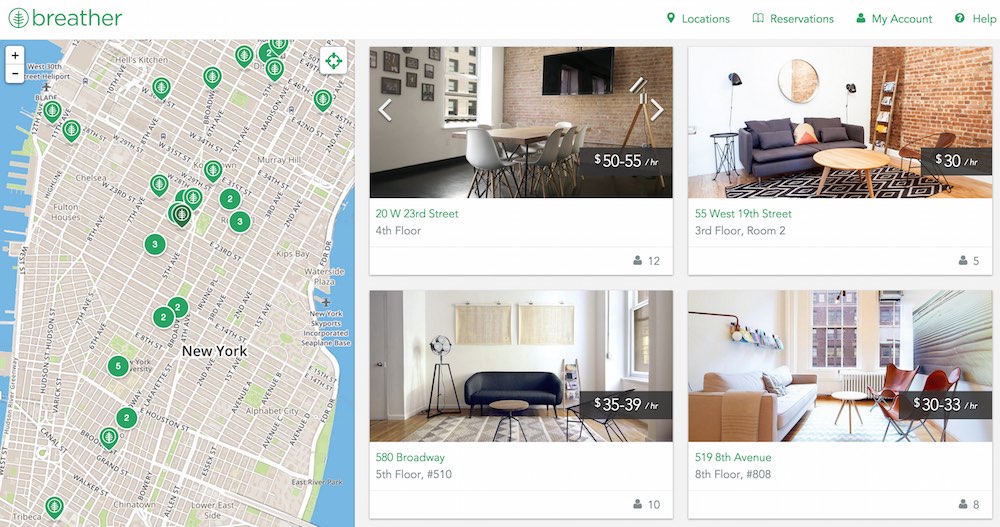
This site profiled the company Breather a couple years ago right after its launch. For lack of a more original description, Breather does for living and meeting rooms what Airbnb does for bedrooms. Via its site and app, Breather allows on-demand rentals of quiet, clean, wifi-enabled spaces in cities across North America. These aren’t places to stay for a long time; rentals are anywhere from 30 minutes to a day. These are place to work, have a quick meeting, meditate, breastfeed or simply get some quiet in an otherwise hectic day.

Today, Breather announced that it raised $20M of series B funding led by Peter Thiel’s Valar Ventures. This is a lot of money invested in a product that has no competitors or established market. Despite this–or perhaps because of this–the Breather capital influx may well be a harbinger of things to come, evidenced by its esteemed investor pool. If you’re not familiar with Peter Thiel, he cofounded PayPal with Elon Musk; he was the first outside investor in Facebook; he’s founded a number of other ventures that would be career-defining for most people to boot. He’s a man with a knack for seeing what’s next. So what does he (and a slew of other investors, it should be noted) see in Breather?

A few months back, I wrote a post called “Life as a Service (LaaS).” The concept of the post was based on the term Software as Service (SaaS)–an increasingly common model where software companies (Adobe, Microsoft, etc) charge a subscription fee for access to their software. The benefits of this type of service is that your software is forever current and you bypass many of the perils localized computing and storage. What I suggested is that this type of system can and is being applied to virtually every material need we might have, from cars to clothes to toys and more. In this model, things are accessed and subscribed to, not owned and paid for outright.

Yet I wrote the LaaS post with middling conviction, believing there were some things that would always defy shared or subscription-based ownership. You can’t very well subscribe to a living room, can you? But Breather shows that you can, and its continuation and growth are evidence of the growing catalog of things we may no longer own in the future. It also lends credence to the idea promulgated by Gunnar Branson about how real estate is being affected by Moore’s Law; through technology, we can access spaces that were once only available through ownership. Now we can use them only when we need them. Not only that, others can use the same space when they need them. This shared access has the potential to shrink our overall real estate needs, saving money, space and natural resources. It’s an exciting concept and one we look forward to seeing grow.