LifeEdited’s Top Posts of 2015

As the year draws nigh and vacations loom, we thought we’d look at 2015’s most trafficked posts published this year (“Build Your Own Murphy Bed for $275,” published shortly after this blog started in 2012, was and continues to be our all time most trafficked post). Without further ado, here they are:

5. Vogue Magazine Features Story of Couple Giving Up Their Stuff

Coming in at number five is this post about Prerna and Parag Gupta, a couple of techies who sold all their stuff to travel the world. Aside from the inherent ballsiness of the couple’s story was the fact that it was featured in Vogue–a magazine that’s not normally associated with minimal living.

4. The 600 Square Foot Family

The fourth most trafficked post was about the Muzereks, a Vancouver family who decided a small condo in a walkable area was a better fit for their values than big place in the burbs.

3. 2 Bedrooms, 4 Kids, 1 Mom, Lots of Ideas
buitoni

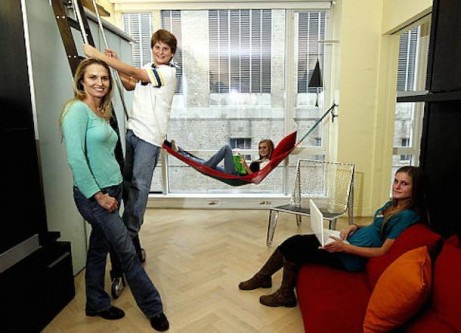
Keeping on the theme of urban families, this post took a look at Kip Longinotti-Buitoni, a single mom who left the burbs and set up camp for her four kids in a relatively small Manhattan condo, helped greatly by an array of transforming furniture. 

2. The Rise of the Minimalist Millionaire

This short post showed off the Airstream trailer that Zappos.com founder Tony Hsieh calls home. We think it falls along the line of the mainstream-ification of minimalism…something we think is a very good thing.

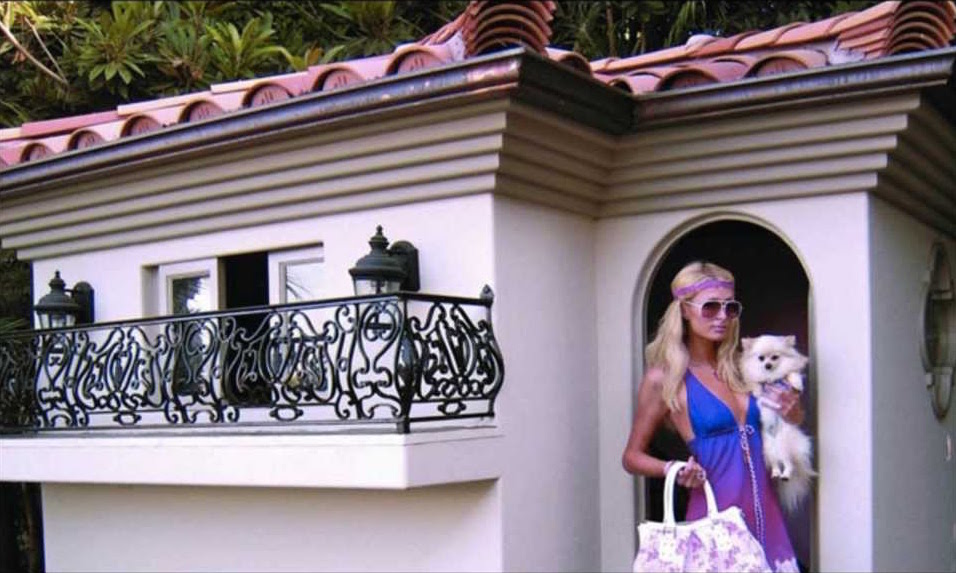
1. Paris Hilton Discovers Minimalism, Moves into Tiny House

This post about the alleged conversion of conspicuous consumption’s poster child proves that nothing gets traffic like celebrities…and humor.

Honorable Mentions

Frankly, the above list surprises us a little bit, but Google analytics doesn’t lie. Based on Facebook likes, you guys thought these posts were pretty interesting as well. 

3. Growing Old Together and in Style

This post about the “Cheesecake Cohousing Consortium” shows that small, communal living isn’t just about Millennials living in the middle of the city.

2. A Very Big Idea in Tiny House Living
simply-home

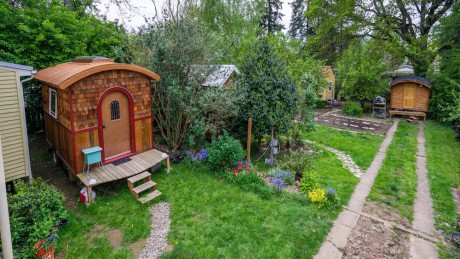
This story about a single family home with four tiny houses set up in its backyard is one of our favorites. It shows how density and community can be made inside America’s single family home-centric infrastructure.

1. The Rise of the Minimalist Celebrity

dan-norris

Alright, out titles aren’t that original sometimes, but this post about major league baseballer Daniel Norris seemed to strike a chord with readers. If you don’t recall, Norris intentionally chose to live simply out of his old VW bus, eschewing the bling that so often accompanies twenty-somethings with a few million dollars burning holes in their pockets.

If You Let Them Build It, They Are Much More Likely to Come

The world is abuzz about tiny houses. They are the architectural antidote to all that ails the modern American home: they are small, affordable energy misers whose tiny confines prohibit the accumulation of extra stuff. But tiny houses have a fatal flaw: they are illegal for permanent habitation in most cities. The few cities where tiny houses number more than a half dozen (Portland, Olympia and, um…did we say Portland?) are cities that have relaxed their zoning, usually designating them as Accessory Dwelling Units (ADU, aka “Granny Flat”), which are basically houses set up behind other, larger houses. But the Colorado city of Walsenburg (don’t worry, this author–a longtime Coloradan–has never heard of it either) is creating a plan that might someday soon serve as a precedent on how tiny houses can turn from architectural plaything to viable housing solution.

The plan, helmed by Sprout Tiny Homes, is to create a subdivision made entirely of tiny houses. Rod Stambaugh, founder of Sprout, convinced the Walsenburg city council to remove their restriction of building smaller than 600 sq ft. Rather than riding on trailer beds, these houses will have foundations and be connected to the grid–a good thing for people who might not be keen on composting toilets. But the houses themselves will be pretty damn small: the 32 units will range from 262 to 672 sq ft. There will also be a community center and outdoor movie theater. Stambaugh told Outside Magazine that he expects them to sell for $60,000 to $130,000.

Walsenburg is a former coal mining town of 3K that has seen better days. The tiny house subdivision is meant as a way of providing affordable housing and revitalizing the economy. As Lloyd Alter notes in Treehugger, that revitalization will be greatly abetted by what could by the US’s largest cannabis growing facility, which is going up on the outskirts of town. In fact, it wouldn’t be surprising if the main intent for the tiny house subdivision is to provide housing for workers at the the facility.

While company housing for pot growers might not do wonders for changing stereotypes about the type of people who gravitate toward tiny houses, the end result could be the same: showing that tiny houses can be a viable, safe, affordable housing solution. Stambaugh has plans to do another development in nearby Salida, Colorado and would eventually like to bring tiny houses to more prosperous mountain towns, such as Vail, where there’s a major shortage of affordable housing.

The Only Thing You Need to Get Rid of When Moving into a Small Space

As micro housing has gained popularity in the last several years, a number of similarly titled articles have been published. The general wording is, “Could You Live in Only ___ [200, 300, 400] Square Feet ?” Inherent in this question is a world of assumptions about what is normal and livable. In the US, what is normal and livable is, for the most part, huge. The average new single family home in 2014 was north of 2600 sq ft. So when homes fall significantly short of normal people seem to think it poses an existential threat: “could you LIVE?”

IMG_2106 (1024x683)

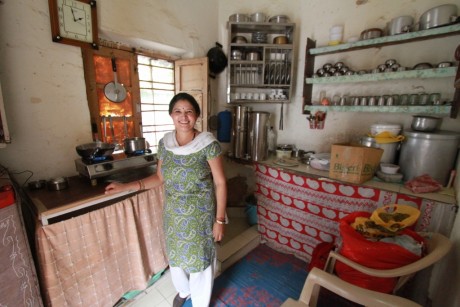
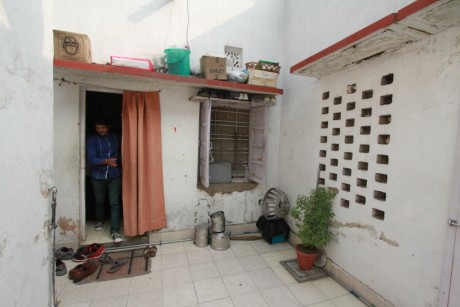
One of our favorite bloggers Johnny Sanphillippo recently visited a “normal” home in New Dehli, India. He approximates it was around 200 sq ft, shared by a family of four. No, the children were not newborns. They look like teenagers. The space consisted of two rooms–a kitchen and a bed-living-dining room. The toilet, sink and bathing areas were in an exterior courtyard and shared with neighbors.

IMG_2123 (1024x683)

What allows this family to share such a tiny space? Transforming furniture? Nope, not unless you consider a bed that doubles as a table transforming. Sophisticated tech and design? Not unless you count a TV and a place to put your shoes outside the house as sophisticated.

There is one big thing that makes this tiny place work. It’s something Americans accumulate with profound alacrity and prevents them from living in more modest spaces. It’s the one thing, that if discarded, can make the smallest of dwellings work.

That one thing is expectation. If we expect a lot, we need a lot. If we expect less–or, better yet, free ourselves from expectations–we need less. And while it’s somewhat true that certain spaces are too small for some peoples’ needs, for the most part people fit themselves into spaces as much as spaces fit people.

If you don’t think our expectations determine our capacity to be happy in a space, consider the last 70 years of American architecture. Circa 1950, the average American household contained 3.37 people and lived in a home around 1000 sq ft. Americans expected 337 sq ft per person. Today, those numbers are 2.54 people in 2600 sq ft.–three times more space per capita than 70 years ago. These fluctuations also demonstrate how elastic and divorced from actual needs expectations are. Johnny says it well:

I know families where three or four people live in a five bedroom house with a two car garage and a swimming pool. Yet they feel oppressed by the fact that they don’t have enough space. The kitchen needs to be remodeled. The bathrooms are outdated….We all get distracted from real needs and confuse them with superficial desires.

It’s important to understand how normal this Indian family is in a global context. As Johnny explains, this family is middle class. Globally, there may be people who have more, but there are just as many who have less. The way these people live–neither too secure nor too precarious–is the way a great deal of the world’s 7B+ people live. Westerners are wont to lose perspective about how materially abundant our world is, and start thinking a third car garage is a right rather than a specious luxury. 

You might think India an extreme example, but almost every country in the world has a very different–much smaller than the US–definition of what constitutes a normal home. The average new home in the UK is a little less than 800 sq ft–i.e. less than ¼ that of the average new home in the US. In Denmark it’s 1679 sq ft–that’s almost 1K sq ft less than the US, or four average Hong Kong homes worth of space (236 sq ft). In fact, there are only two countries that are remotely comparable in terms of US housing sizes. Unsurprisingly, they are Australia and Canada, two colonies established because of their vast tracts of virgin land and where much of the infrastructure growth has come about in the age of the automobile.

The point isn’t that there is a right or wrong size–though, let’s face it, most American homes are too damn big. The point is when thinking about how much space we really need to live, it’s often expectations, not physics or needs, that stand in the way of making a real reduction.

The Internet of Homes

It’s not news to say that tech is affecting nearly every facet of our existences: how we consume and deliver information, how we communicate, how we get around, how we use and share goods and on and on. The term “internet of things” goes even further, speaking to how one day everything in our lives will someday be tech-enabled and connected to the intelligence of the web via sensors, learning how we live, responding to our commands, collecting and delivering data, all in the name of making our lives more comfortable and efficient. The Intel corporation recently released their Smart Tiny House to serve as vision of how our homes might fit into this equation. The 210 sq ft home is packed with a variety of systems meant to both improve the quality of life for residents, but also tap into the greater intelligence of cloud systems.

intel-smart-tiny-house-10

Tech greets you at the door with their True Key system, a fingerprint and facial recognition based security system that lets you in the door as well as providing security for all the home’s systems. Most of the house can be controlled via a tablet or voice command. Lights can be dimmed and colors changed. Shades can be drawn. Some appliances can be turned on and off. There are leak sensors placed in trouble spots (under sinks, near showers, etc) that will notify you if there’s a leak. You can find the alert on the tablet and even book a plumber all in one fell swoop. I suspect the idea is to bring this type of system to every aspect of the house: a sensor will tell you if your roof springs a leak, if your dishwasher breaks, etc. At this point, Intel is dealing with leaks.

Intel is trying to position themselves as the brain of the smart home. They say this:

Intel creates the processors and other computing technology that serve as the brain powering a myriad of devices. Increasingly, as the home moves from connected to smart, this technology will enable a new breed of consumer electronic devices – everyday things such as lightbulbs, thermostats, smoke detectors, electrical outlets and cameras – to become connected and smart. These tiny brains inside “things” throughout the home will compute and produce data at the device level for real-time intelligence. Intel-based gateways connect the home’s smart devices, providing advanced analytics and storage, allowing the home, people and devices to work together in an intuitive, intelligent fashion. Cloud connectivity, advanced device management and built-in security will connect consumers to a variety of new services, features and cost savings.

It’s still early days for this type of tech and there are several different connectivity “smart home” protocols. But a colleague of mine noted that in the early days of telephones, there were hundreds of rival telephone companies and little interoperability. Eventually, things get sorted out. Intel is trying to address some of these interoperability issues. They have created their “Smart Home Development Acceleration Platform,” and claim they were able to enable interoperability with between three distinct lighting solutions: Philips Hue, Cree and Osram. This augers well for creating interoperability for scores of systems: wearables connecting to HVAC systems connecting to mobile devices and so on.

intel-smart-tiny-house-4

Frankly, the benefits of the tech on display in the Intel’s tiny house are underwhelming. But again, the house represent a start. They say in a press release, “The home is an experimental showcase that will evolve over the next 12 to 18 months as Intel explores the opportunities, experiences and tensions of creating a smart home.”

One thing that is definitely cool is that Intel chose a tiny house as the vessel for the house of the future. The motivation may have had more to do with the relative ease of working with a small space versus a large one. But tech is also making it possible to live with less in numerous ways such as the digitization of physical media and giving us access to shared goods. If you are really trying to make your home “smart,” few things are as smart as small: downsizing has the ability to reduce our spatial and carbon footprints, simplify our lives and save a buck or two.

Via Gizmag

A Kinder, Greener New York City

Living in New York City can be many things: exciting, dynamic, culturally rich, god awfully expensive. But one thing it is not for most people is natural: unless you live directly on a park, your everyday exposure to nature might be limited to a handful of sidewalk trees, used as much for canine territorial outposts as natural beautifiers. But if the Green Line by Perkins Eastman Architects goes through, connecting with nature in one of the most concrete-laden lands in the world might get a lot easier. The Green Line would create a green corridor along Broadway, connecting Union Square in the south to Central Park in the north. Including the area of the park, this would effectively create a five mile green corridor from 14th to 110th streets.

greenline-2

Beside the obvious benefits of adding a natural retreat right through the center of Manhattan, the Green Line would offer many other benefits. By absorbing water, the grass would clean local waterways and stormproof the city. Gizmodo speculates that the removal of cars might actually aid in the flow of traffic as it proved to have done when NYC closed off Times Square to automotive traffic. And having several miles of protected bike/pedestrian friendly thoroughfare would surely reduce traffic fatalities.

The Green Line would also connect and expand a number of existing natural outposts and pedestrian malls such as Madison Square Park, Herald Square and Times Square. And unlike the elevated High Line which is on the far west side of Manhattan, the Green Line would be on street level running straight through the middle of the city, making it very likely to be enjoyed by people other than tourists (I love the High Line, but it belongs far more to the tourists than it does New Yorkers).

It is often argued that large cities hold the key to a sustainable future for humankind–they are denser, leading to smaller homes with reduced energy needs and far greener transportation systems. But other research suggests that people who spend time in nature are happier than those who do not. The Green Line and other projects like it, might enable people to have their city and nature too. We hope it gets the greenlight.

This Ad Campaign Hits Nail on Head About NYC’s Cramped Apartments

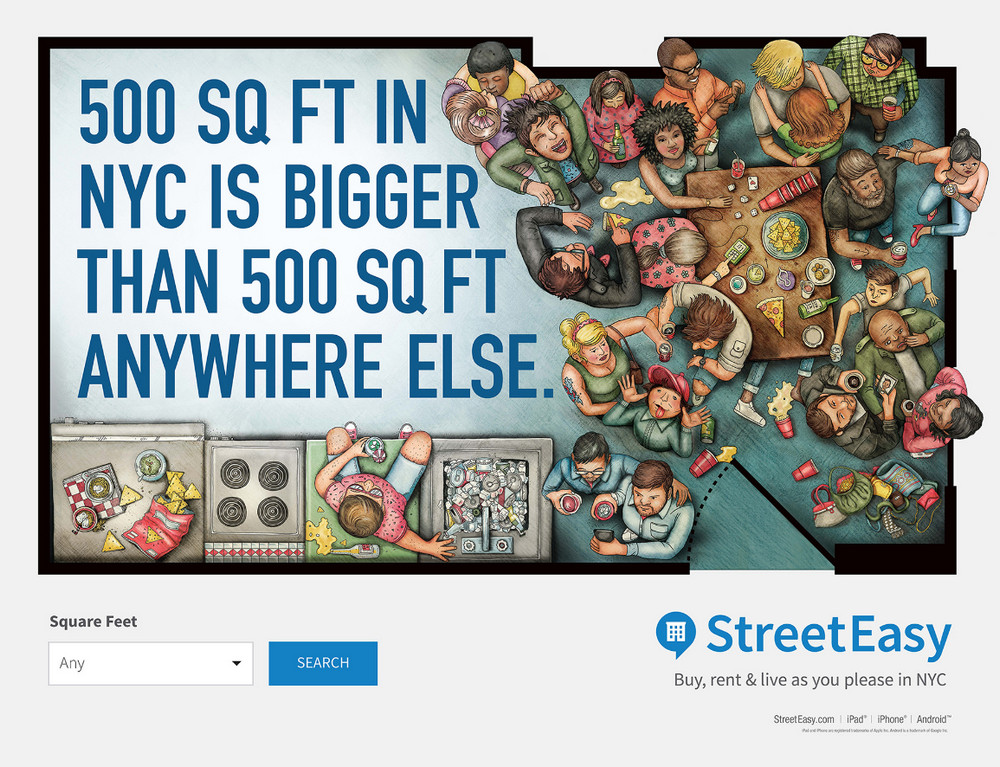
There’s been a lot of recent hype about New York City’s Carmel Place (aka “My Micro”). Rightfully so. It is the city’s first purpose built micro-apartment building after all. But if you have ever lived in or visited a typical NYC apartment, you know New Yorkers are no strangers to micro living. The big deal about Carmel Place is that people can live comfortably and without making socially-debilitating sacrifices to live there. The fact is that NYC’s 400 sq ft building requirement–the one they lifted for Carmel Place–has only been around since 1987. And since much of the city’s housing was made well before that year, there is 100 or so years of architecture that doesn’t give a crap about your fancy zoning laws. Tiny apartments are as New York as thin crust pizza by the slice. 

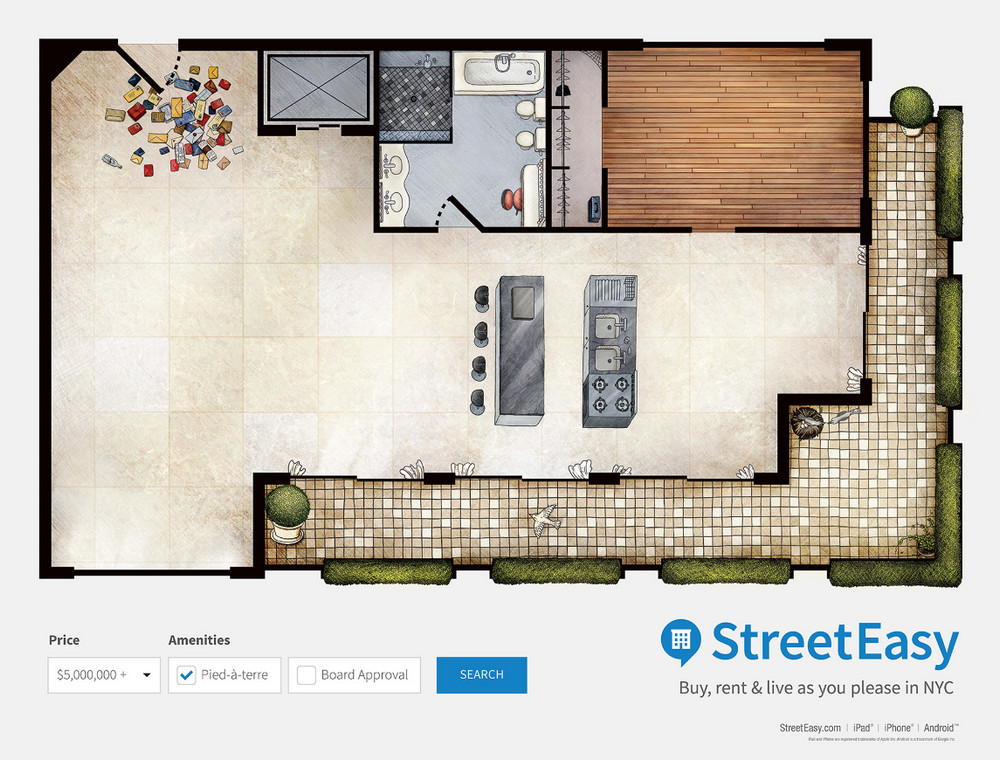
This last spring the real estate website StreetEasy launched it’s “Live As You Please” ad campaign that celebrates the contortions New Yorkers have long made to stay in a city that’s long on thrills and short on square footage. Each picture represents a different demographic, matched with a specific search criteria on the bottom of the ad. There’s the empty $5M pied a terre or the one bedroom that barely fits a bed (a housing type I can guarantee exists from personal existence). But perhaps the most poignant ad says “Sure your window faces a brick wall, but behind that wall is New York City.” You can have the most awesome home in the world, but if you don’t love where you live, it don’t mean a thing.

Micro Goes Even More Mainstream

When LifeEdited began several years ago, the micro housing conversation was happening but primarily in small pockets–the odd tiny house in northern California, Gary Chang’s transforming Hong Kong apartment and so. But in the last few years, spurred by things like the adAPT NYC competition and, we like to think, our own efforts, the micro-housing movement has grown considerably and become far more mainstream. Its growth is further evidenced by this short feature by Katie Couric on her Yahoo News program. The feature includes LifeEdited CEO Graham Hill in the LifeEdited apartment as well as other projects we’ve covered recently such as Jeff Wilson in his Kasita prototype apartment in Austin TX and NYC’s Carmel Place micro-apartment building.

Ultimately, we hope mainstream media features like this have a normalizing effect on micro housing–that one day living in well designed, safe and liveable homes that happen to be 200 or 400 square feet will not be newsworthy. They’ll be normal.

See Us on Yahoo? Start Here

You might have seen us on Yahoo News with Katie Couric. If so, welcome! And now that you’re here, you might be wondering, what the heck is LifeEdited? Allow us to explain.

lifeedited

First, we are a business. We were founded five years ago by a guy, also our CEO, named Graham Hill. He gave this nifty TED Talk in 2011 that explains our mission. To sum it up, the world–and North America in particular–has seen a super-sizing of everything: housing sizes, the amount of stuff we accumulate, the amount of information we consume, etc. LifeEdited is out to provide an antidote to this phenomenon, showing how the right application of design and technology can enable us all to live happier, simple lives using less stuff, space and information. Our first major demonstration of this principle was shown through our first prototype apartment–a 420 sq ft space that could seat 12 for dinner, sleep two guests comfortably and privately and do many other things that made you forget its compact dimensions.

Next, check out the above video for a quick explanation about what our business does specifically. In short, we act as a specialty consultant to real estate developers and architects. We work with them to help deliver as much possible function to every square foot they build. To see some examples of our work, go here, here and here. We are also starting to develop our own real estate projects.

And then of course, we are a website and newsletter. Our mission is to show people how they can live amazing lives using less stuff, space and information than the status quo might have us believe. The site focuses on showing off amazing architecture, design as well as publishing relevant news and tips for the less is more way of life. Be sure to sign up for our newsletter that delivers regular news direct to your inbox.

Also keep up with us via our Facebook, Instagram and Twitter feeds.

Hide Out in the Hills with this High Design Getaway

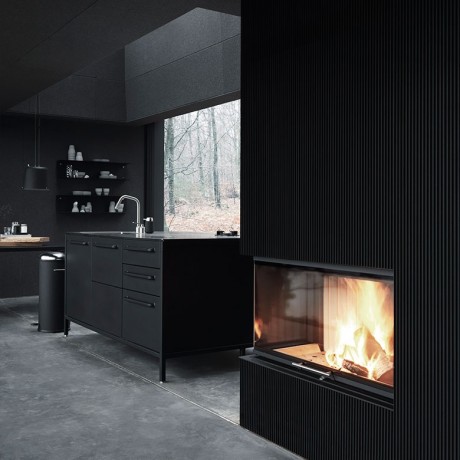
If DIY, salvaged material made, moss-covered Hobbit holes aren’t your thing, the VIPP Shelter might just be. VIPP is a Danish product design company best known for a pedal operated trash can (trust me, you’ve seen it). In their shelter they wanted to create a “plug-and-play getaway”–everything from the structure itself down to the linens has been designed by VIPP and is included in the purchase price. VIPP wants the owner to set up the, ahem, cabin and get relaxing ASAP without burden of choosing which door handle goes best with the moulding.

vipp-shelter-kitchen

The first thing you’ll probably notice about the prefab, 55 sq m (592 sq ft) shelter is glass. It’s everywhere. On the two main walls. On the ceiling. The idea being to give the owner maximum exposure to nature. The next thing you might notice are dark colors: everything is swathed in some shade of black or grey. Again, the idea is to take focus away from the interior spaces and cast it outside. The whole thing sits on nine steel pillars to give the effect of levitating over the land it inhabits. 

vipp-shelter-bed

The place is a marvel of industrial design, with every inch of the structure made of the highest quality materials installed to the tightest tolerances. The 1000 lbs+ glass windows glide along roller bearings in a discrete floor track. The ladder to the sleeping loft looks like it could support a Sherman tank. The walls are sheathed in 3mm felt to create womb like silence.

For a more leisurely tour showing all of the space’s features as well as an explanation why those features exist, take a look at the above Fair Companies video of the space.

Unlike the Hobbit hole, the VIPP structure cannot be purchase with leftover halloween candy and bellybutton lint. VIPP is charging €485K/$585K for the unit and says it’ll take six months to deliver and 4-5 days to install onsite. For those with more money than time, a deep affection for high modern design and a longing for nature, this could be a great deal. For more information or to place an order visit VIPP’s website.

HT Daid M.

Tour LifeEdited Designer Catalin Sandu’s New Home

In 2011, LifeEdited founder Graham Hill put out a challenge to design his 420 sq ft New York studio. He established an intimidating design brief: he wanted it to accommodate sit-down dinners for 12, have comfortable lounging for eight, space for two guests with some visual and auditory privacy, a home office and a hideable kitchen. Almost 300 entries from all over the world were submitted. The winning design came from two Romanian architecture students, Catalin Sandu and Adrian Iancu. Their design met all of the brief’s requirements and did so in a sleek, timeless package. Following the competition, Catalin went on to work with LifeEdited, eventually becoming our lead designer. As seems to be the LifeEdited way, Catalin has brought his work home with him. He not only designs great small spaces, but now lives in one. He recently completed a full renovation of the Bucharest home he shares with his girlfriend and dog.

I shot Catalin a few questions about the apartment and how it came together.

David Friedlander: What would you say your overall style is?

Catalin Sandu: I can’t really define it other than saying that I think I’m much more focused on efficiency rather than aesthetics of a design. And even though I always try not to neglect aesthetics, I never design something just for the looks of it.

I was able to get a sense of how to make the space efficient by living in an identical unit across the street for about a year and a half before actually buying and starting the renovation of my current apartment. We love the area and were keen on finding an apartment for sale in those buildings. Living in a similar apartment gave me a lot of time to think about how to actually design it and how to get the most out of the space.

DF: How has your experience working at LifeEdited informed how you designed your home?

CS: Working at LifeEdited had a huge influence on how the layout was designed. Having previously done efficient designs for LifeEdited helped me to get to an un-cluttered layout.

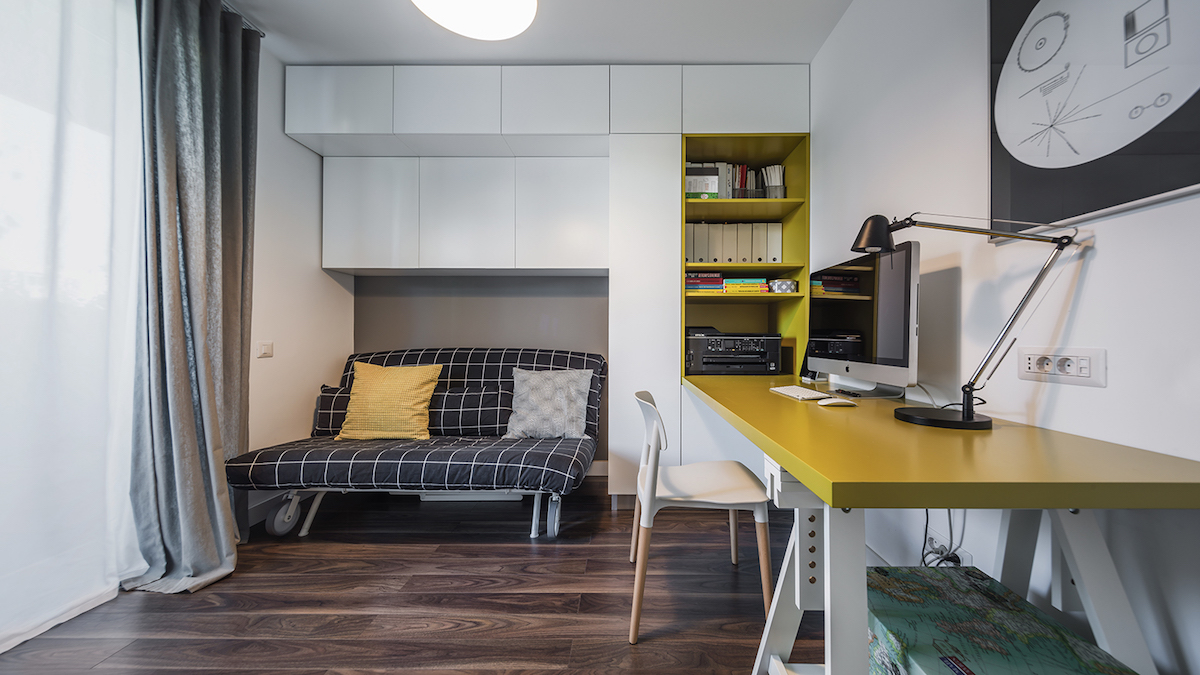
Even though the rooms themselves are not as transforming as in other LifeEdited projects, the home office room, for example, can be adaptable over time: it has more storage than needed for an office so if we ever have a child, the sofa will go away and the space can be used for a crib. After the crib is no longer needed, a folding bunk bed can be placed there by removing the the shallow cabinets right above the sofa.

DF: What’s your favorite part of of the apartment?

CS: I really like the living area, as it is very social. Even though I have a pretty generous desk in the office room, most of the time I actually work at the dining table or on the window seat. I also like the bedroom which is pretty small but feels just right and cozy.

DF: What part of the design are you most proud of?

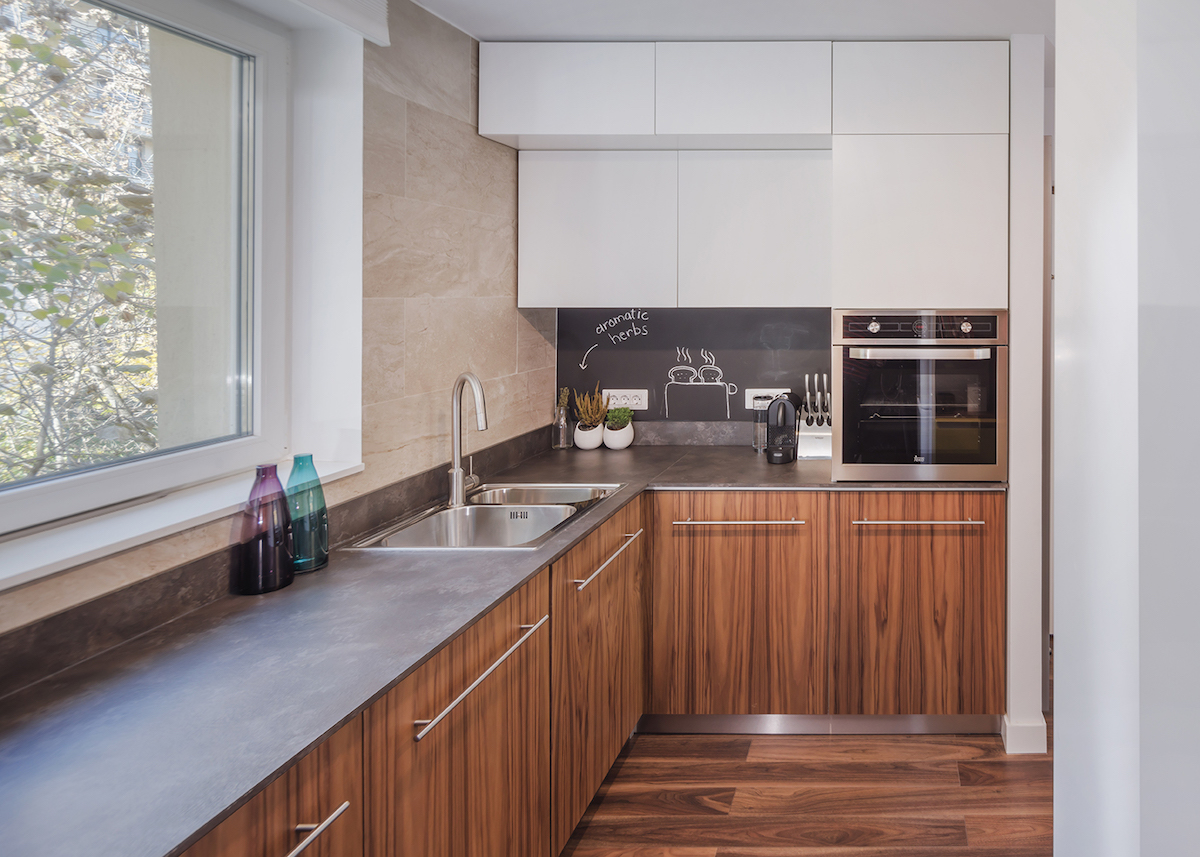
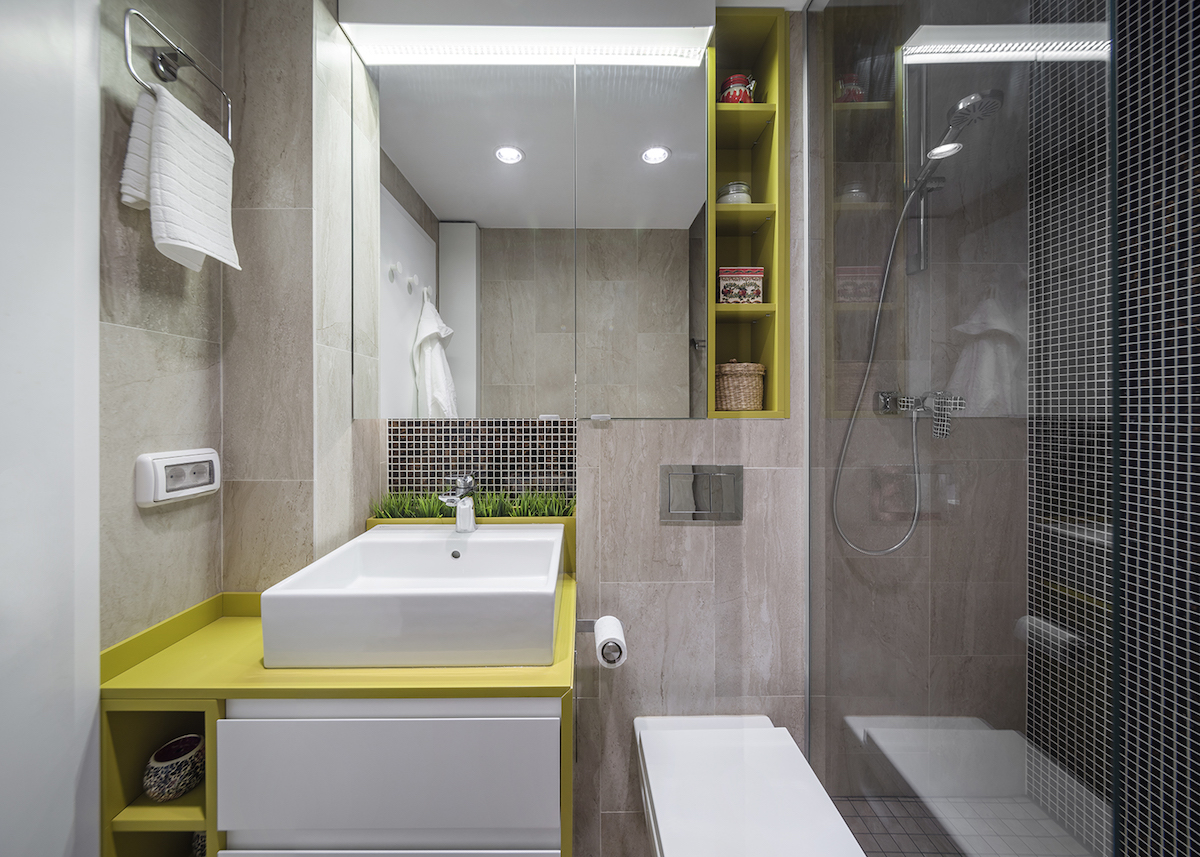
CS: I’m most proud of the fact that we were able to fit so much functionality and storage capacity in such a small space. It’s a 2BR unit and just 590 sq ft (excluding the balcony) and it has a fully equipped kitchen with dishwasher and washer/dryer, a dining table for 12 [when the table is fully extended, not shown in pictures] and guest sleeping for four people.

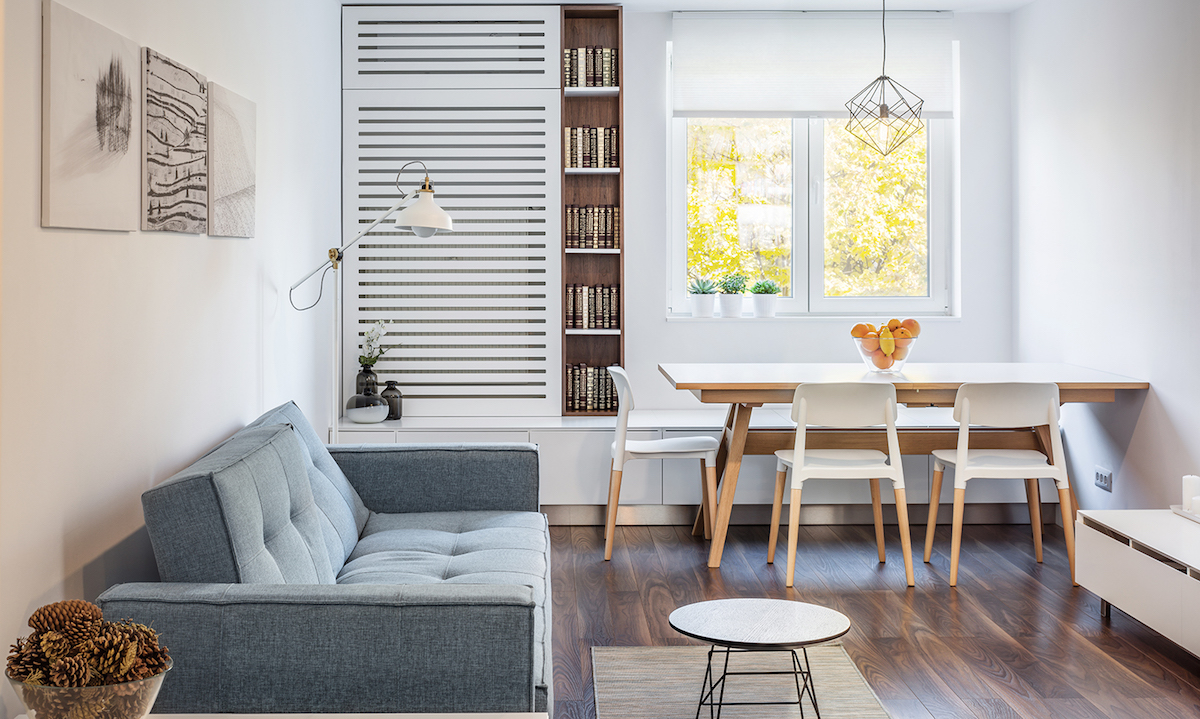
I’m also proud of the window seat. It nicely hides the radiator and AC unit, while providing dining seats for 5-6 people and packing a lot of storage area underneath.

Another part I like is the unusual “cube” bookcase that partially separates the living room from the kitchen. It is not only made for aesthetic reasons but it also hides a rather big stack of pipes that run from the building’s roof to the basement. We wrapped the L-shaped bookcase around two of the stack’s sides.

DF: How long did the buildout take?

CS: The total renovation took about six months. We first saw the apartment in late 2014, bought it in January 2015. Renovation began in March, right after I got most of the permits, and by August the place was about 95% complete with some finishing touches and cabinet doors left to install.

DF: Was it a full gut renovation?

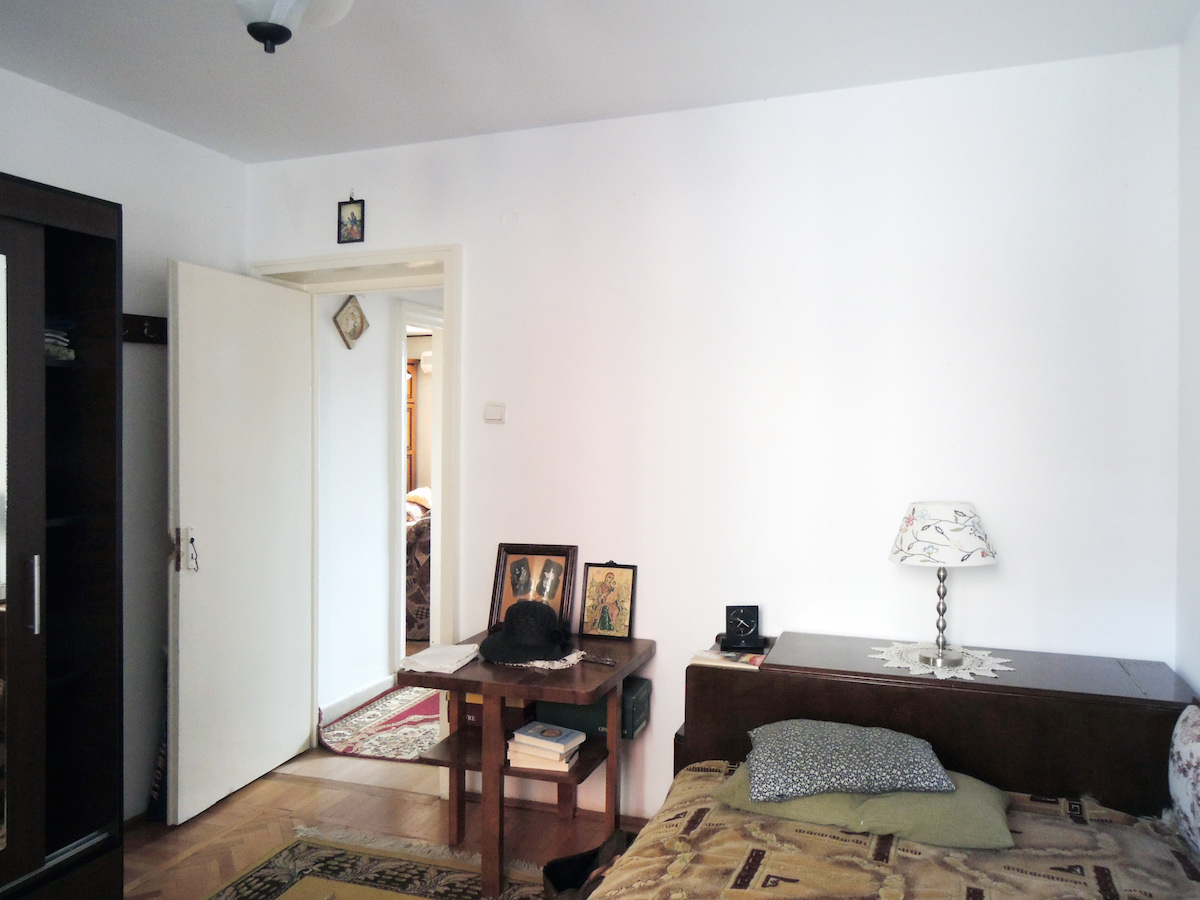
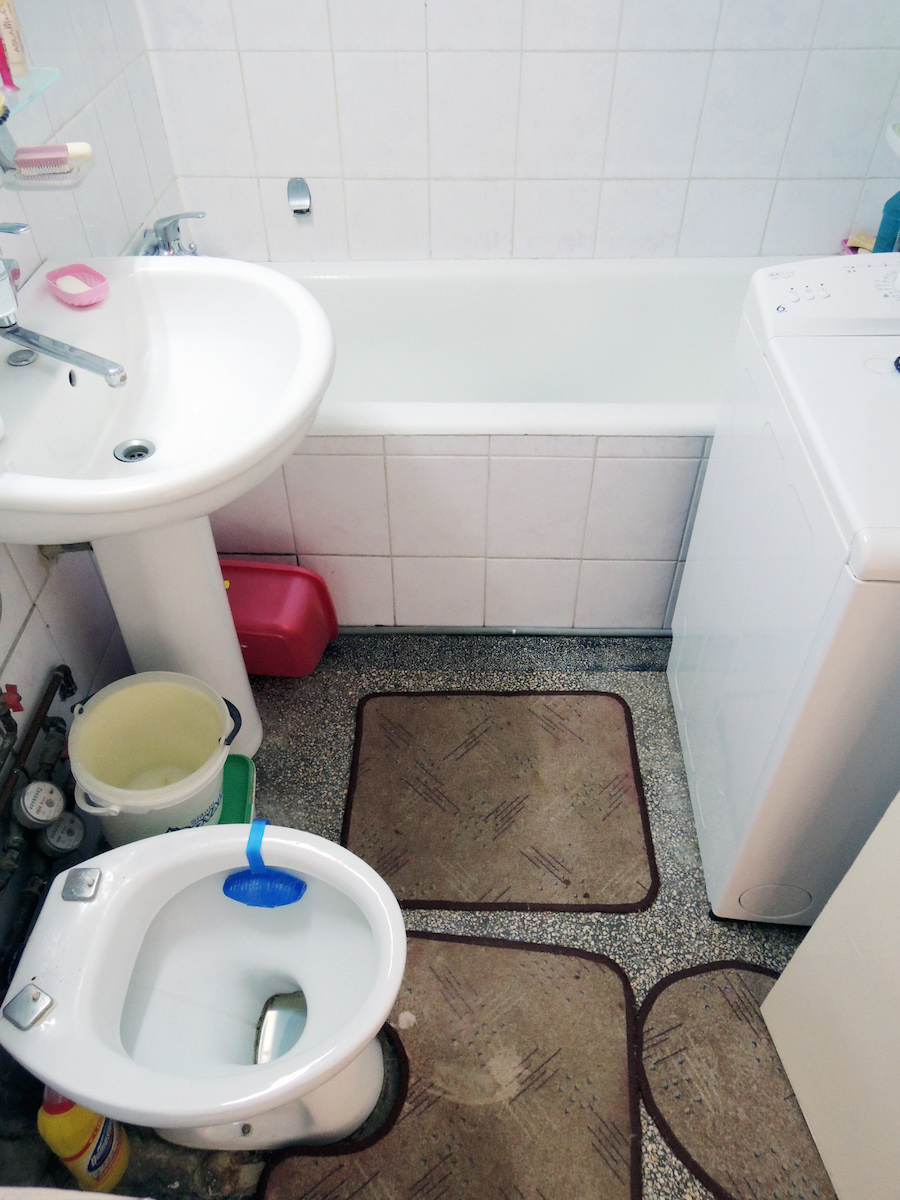
CS: Yes, the place was a mess. At first, the contractor wanted to save some money by keeping the existing plaster on the brick walls as it looked fine. But after they exposed the two walls that were going to be left intentionally exposed, we realized the rest of the plaster could not be kept as it was too sandy and falling off by itself.

Model

The apartment building was built in 1960, with most of the walls made of load bearing brick. The only partition walls (made also of brick) were separating the kitchen from the initial living room area, creating an entry hall and two walk-in closets. We removed everything that wasn’t structural and got a much larger space living area.

So everything was taken out: floors, subfloors, tiles, electrical, water pipes etc.

DF: How much did it cost?

CS: The whole reno (including custom and off-the-shelf furniture) was about €30K [US$31K] but it is important to mention that I got some pretty good deals on just about everything. The general contractor and the custom furniture teams were part of the same company and I was able to get some deals by doing everything with them.

If it wasn’t for the discounts, I think it would have jumped over €35K.

Photo credit: Cosmin Dragomir