A Very Bright Idea in Portable Lighting

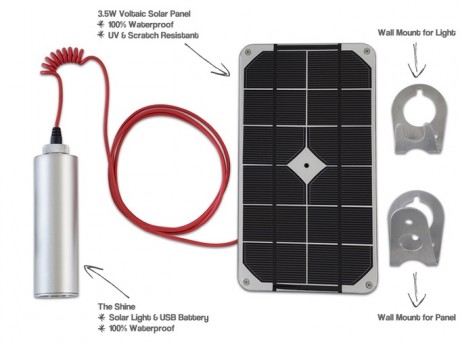
A couple years ago, we featured a prototype lighting system made by Voltaic Systems that was installed in the LifeEdited apartment. The light featured a CNC machined aluminum body and a bright, adjustable LED bulb. Since Voltaic’s main business is portable solar charging systems, the dangling light was connected to a ceiling receptacle that was connected to battery packs stored in a cabinet. Those batteries were connected to a small array of photovoltaic panels installed right outside one of the apartment’s windows (the batteries could also charge portable devices). While making a nifty and functional light for the apartment, the lighting system was ultimately designed to be a versatile light source that could be used and charged in any conditions.

For the last few years Voltaic Systems has been tweaking and refining the design and now they have launched a Kickstarter campaign to fund production. Dubbed Shine, the new system retains an adjustable LED bulb and sleek aluminum construction. Unlike the prototype, the production unit is 100% waterproof and its battery is stored inside the shaft. The battery can be charged via USB or an 8.27” x 4.45” solar panel. The battery is good enough to power the light for 31.5 hours in low and 7.5 hour in high modes. You can also plug a smartphone into the battery and it acts as an auxiliary charger.

shine-system

The system has countless applications. It makes an amazing camping light or light for an off-grid cabin or for some spot in your home far from an outlet. But perhaps Shine’s best applications are in less ideal scenarios, such as emergencies like Hurricanes when power goes out. It can also be indispensible for the 1.3 billion people across the globe that live without access to electricity in their homes, many of whom rely on hazardous substances such as biomass to light their homes. The World Bank estimates that 780 million women and children inhale smoke which is the equivalent to smoking two packs of cigarettes every day from the smoke from these substances create when burned. Voltaic Solaire has partnered up with the nonprofit Fabretto to deliver their lights to several regions of Nicaragua who fall into this category.

Shine seems to be a hit, evidenced by the fact that it met its funding goals about a day after their campaign launched. For a pledge of $39 you get the light itself; for $66 you get the light and solar charger; and for $109 you can get the light, solar charger and Voltaic will send a system to a Nicaraguan family in need (there are other pledge amounts as well). Units are expected to ship January 2016. Even if you don’t have an altruistic bone in your body, the Shine is an awesome, perhaps indispensable item to have around. As they say in their campaign, “Useful everyday, essential one day.” Visit their Kickstarter page to pick one up or for more info.

Live, Work, Haul Lots of Stuff

When our stuff is stationary there’s no reason to get rid of it. The force of gravity can support the biggest mess from the worst hoarder. But when our stuff is put in motion, either supported by the force of our muscles or even the force of an internal combustion engine, we start quickly getting rid of unnecessary stuff in hopes of reducing mass. Locomotion is almost always a catalyst for efficiency. We’ve seen this phenomenon with people who tow their stuff on bike or van or RV. One other demographic that fits into this category is semi truck drivers, many of whom live in their cabs much of the year. While semi trucks can haul countless tons of goods, there is still a necessity to keep things light and compact lest the cab compromise fuel economy or payload. 

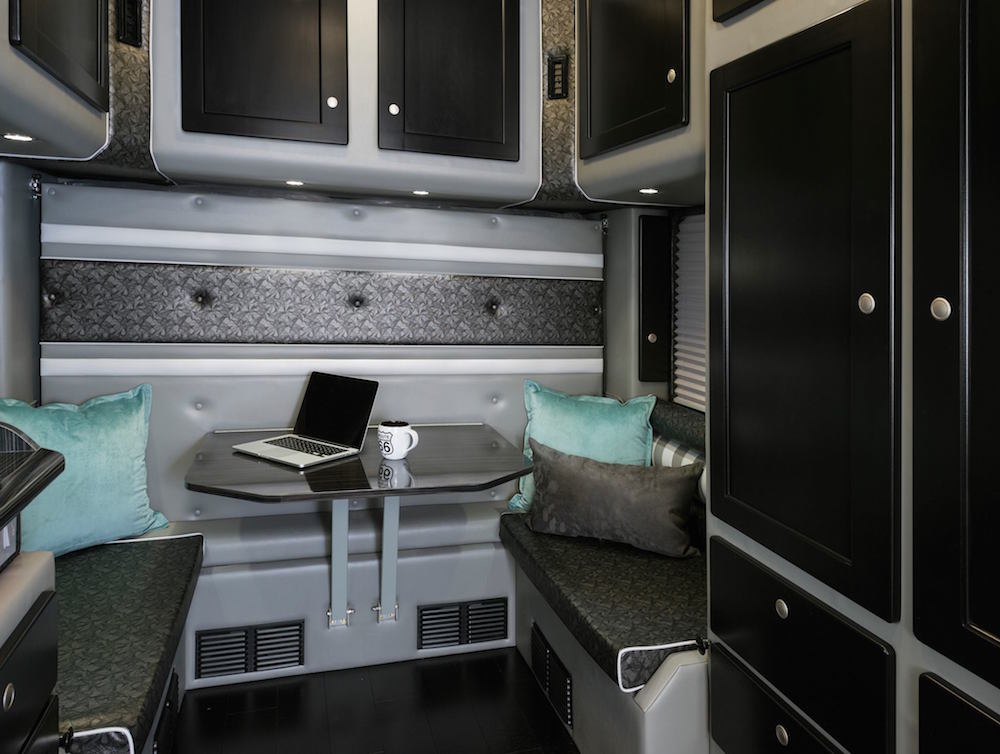
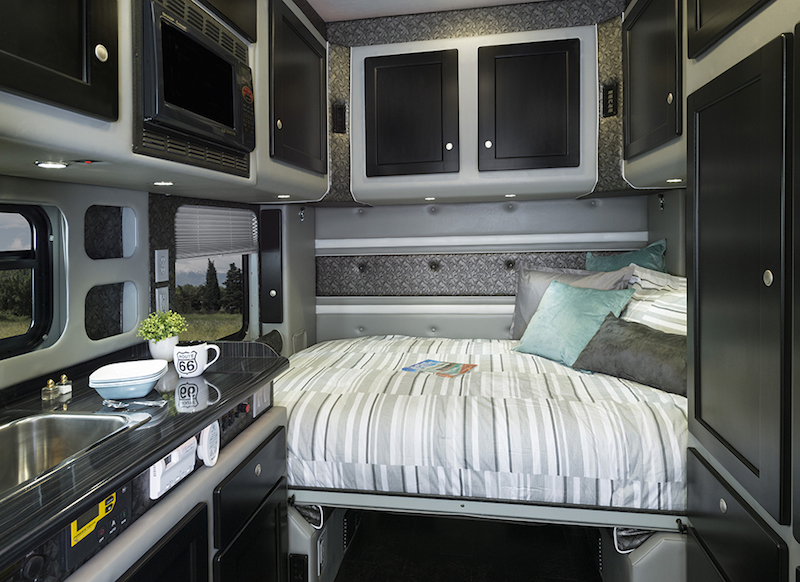
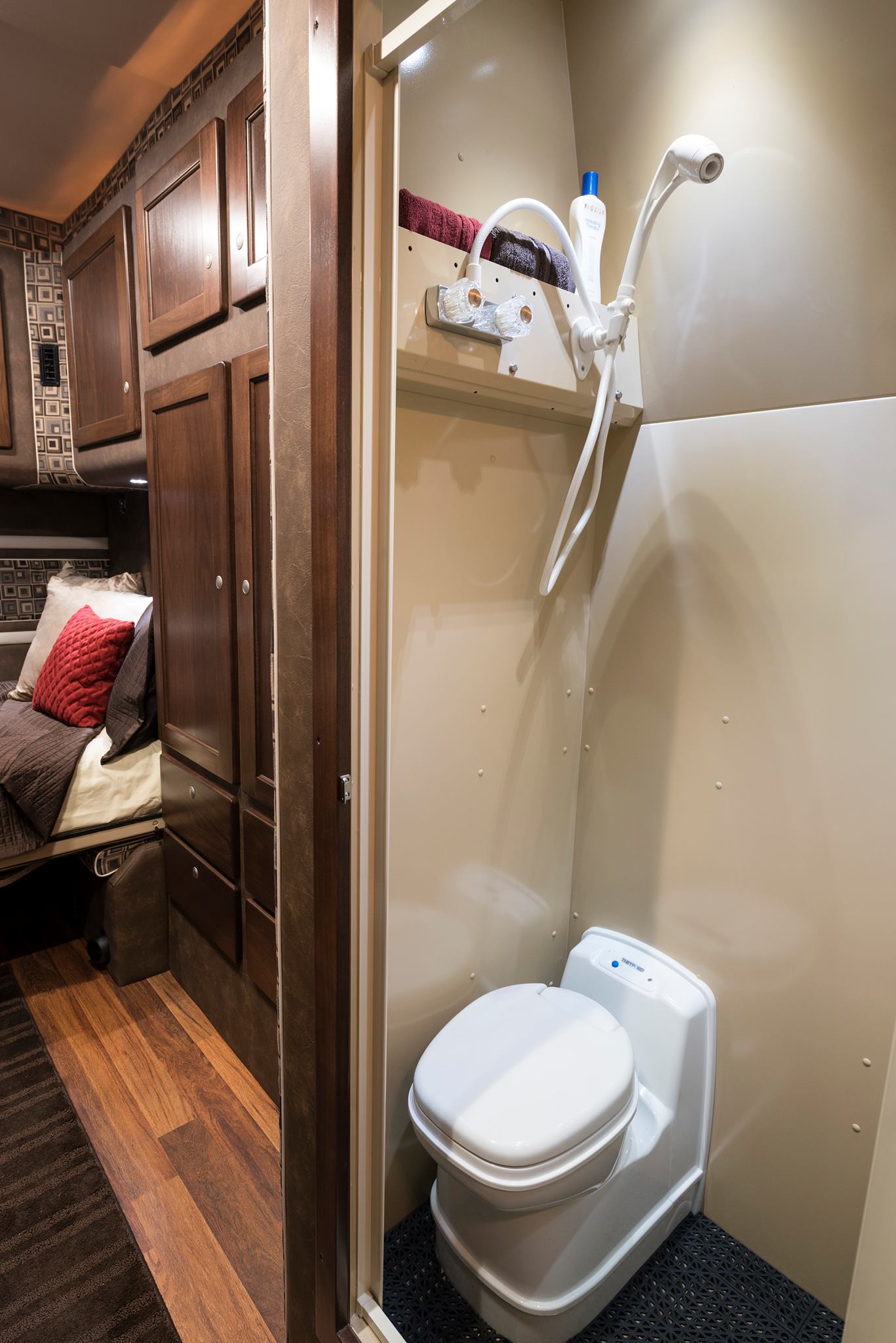
NBC recently profiled a couple companies specializing in making high-end sleeper truck cabs. One company, Bolt Custom Trucks, has packed interiors with kitchens, satellite TV’s and their own bathrooms–they’re essentially mini RV’s affixed to a semi truck. Needless to say, everything is a paragon of efficiency: dining areas become beds, tables fold into walls, there are storage nooks everywhere. But with hardwood floors and quartz countertops on some models, the sleepers have a luxe feel (why you’d choose quartz over a lighter material beats the heck out of me).

Apparently, there’s a huge shortage of qualified truck drivers. When purchased by truck fleets, these sleepers are designed lure and keep drivers in the field. For independent long-haul truckers like Linda and Bob, profiled by NBC, the deluxe trailers allow them to stay out 2-3 times longer since they are not longing for the comforts of home.

If you were to live in one of these trailers, it could make for a pretty edited life: you could live where you work, which is very efficient from both a spatial and financial standpoint; needless to say, possessions would be very few even with a deluxe cab. The only thing that might not be so edited is the fact your job often entails hauling a bunch of crap around the country…someone’s gotta do it I suppose.

H/T J. Marlowe

Get More Fit with Less Time and Equipment

There are few things that can reliably improve our health and happiness like regular exercise. But for many of us, exercise occurs as a chore–a boring, time and logistic intensive affair that we might have the same level of enthusiasm we would have for an all you can eat rice cake buffet. But the fact is we can get pretty fit in very little time with little or no equipment. A few months ago, I explained how you might be working out all wrong, focusing on duration rather than intensity of exercise. High intensity interval training (HIIT) is something I’ve practiced for the last several years, however I’ve almost always done it in a gym. But with two small boys occupying much of my free time, getting over to the gym, even for an hour, has been a far more complicated affair than days past.

Rather than totally resign myself to acquiring a “dad bod,” I decided to find ways of staying fit that didn’t require a round trip to the gym. The fact is there are many great exercises that involve little or no equipment or special spaces.

In the past, I wrote about the Seven Minute Scientific Workout app. The app and workout are solid (especially if repeated), but there’s not much variation in the workout. In my search for something more comprehensive, I discovered 12 Minute Athlete, a website that offers numerous HIIT workouts via Youtube videos, a free ebook and iOS and Android apps that guide you through simple, minimal or no equipment exercises and routines. There is also a subscription based intra-app training program called “Super Athlete.”

The workouts are not all 12 minutes; some are shorter, some a little longer and some are done to time, for example the first weekend of the month 12 Minute Athlete founder Krista Stryker puts out a 100 burpee challenge, which asks people to perform 100 burpees in as little time as possible (I’ve been a bit too chicken to take the challenge just yet).

I consider myself to be a bit above average fitness and I found that many of the exercises and routines, when done with proper intensity, were pretty challenging–a good thing if you’re looking to do a lot with little time. 

I emailed a few quick questions to Krista to ask her about her site and the philosophy behind it. Here’s what she had to say. 

David Friedlander: What motivated you to start 12 Minute Athlete?

Krysta Striker: I was one of those people growing up that never really considered myself athletic. Sure, I played team sports (basketball and soccer mainly), but I never really felt I was that great at them, and the moment I went off to college I pretty much stopped doing anything active at all and turned into quite the couch potato, assuming I was destined to be a bit pudgy and weak for the rest of my life.

Towards the end of college I was feeling pretty lost and hopeless with no idea of what to do with my life, and started exercising a few times a week partly because my mom told me it would make me feel better. It worked, and I surprised myself with my strength and how quickly I went from barely being able to do a single push up to working up to more difficult exercises like pull ups and triceps dips. I liked feeling strong, and my confidence levels skyrocketed in all areas of my life, which eventually led me to study for and receive my NSCA CPT certification [personal training].

At that point, I started working out for hours a day, diligently doing my cardio, weight training and sports-specific training every day until I was overtrained, injured, and had little time in my day to do anything else. But even though I was spending so much time working out, it felt like it was never enough.

That’s when I discovered HIIT training and everything I knew about fitness and exercise was turned upside down. Not only did I get leaner and fitter in a shorter amount of time, I got stronger and more confident than ever before. Before long, I was able to do feats of exercise I never before thought possible, such as handstands, pull ups, and completing 100 burpees in nearly six minutes flat—and still have the time and energy for a hike, bike ride or long walk later in the day.

It was after my own personal successes that I created 12 Minute Athlete so I could share these incredibly effective HIIT workouts with the world and help people of all fitness levels ditch their excuses and get in shape in as little time as possible.

DF: What would you say to people (like me) who are accustomed to going gym about doing app based workouts?

KS: Going to the gym is great if you enjoy it, but not everyone has the time, so doing app-based workouts like the ones in the 12 Minute Athlete app just give people more freedom to work out anywhere. You can still work out in the gym if you wish, but you can also work out in a nearby park, your apartment, or even a tiny hotel room if that’s all you have.

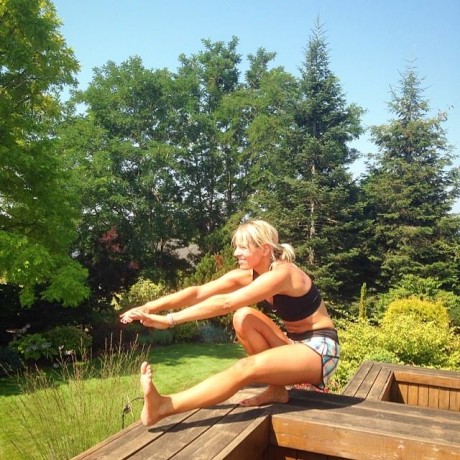
DF: Many of your routines are fairly advanced. what would you say to people looking to start out who might not be quite ready for a pistol squat [see below], pull up or burpee?

krista-pistol

KS: Everyone has to start somewhere! When I first started working out I couldn’t do a single push up, let alone a pull up or a pistol squat. If you can’t do a pull up yet, try flex hangs instead, where you’re simply holding onto a pull up bar for as long as you can to build up strength (it’s harder than it sounds!). The same goes for exercises like pistols and even push ups—simply find the hardest version of the exercise you can do now that still pushes you past your normal comfort zone. The key is to work as hard as you can and modify anything you need to in order to get started.  

See more at 12 Minute Athlete

A Better Black Sock (More Interesting than it Sounds)

I can sometimes be a bit of a fanboy when it comes to Kickstarter. I’ve featured countless great projects here because I love the idea of products proving that they deserve to exist before they are manufactured, not after. As such, I get quite a few email solicitations from Kickstarter project managers asking me to write about their campaigns. But not every project is an Unbelievable Testing Laboratory shoe or GOBAG. Many of these folks are presenting products that invent solutions to problems that don’t exist, e.g. the artisanally crafted, leather six-pack holder (no joke). I’ve become pretty accustomed to ignoring most of these emails, which is exactly what I was going to do when a representative of “Oh My Sock” campaign contacted me. They are trying to fund a breathable, odor-resistant black sock. Big deal.

But then I thought again. As I’ve written about here before, I’m a fan of wearing a uniform. And while I’ve written about the more visible constituents of my personal uniform such as Outlier Tailored Performance pants and shorts, I have not written about things like socks. The fact is that even though I have a “sock uniform” my choice of socks isn’t that considered. I wear Champion brand sports socks in the spring, summer and fall (I have wool socks for the winter). I bought about three six packs of them from Target a while ago. I bought them because they’re no-show, which I like, and they come in XXL (I’m a 14), which helps keeps them from getting too stretched. Most importantly, they’re black. Unless your socks are an integral part of your color ensemble, I don’t understand buying anything other than black socks (or underwear, frankly)–white and other colored socks look old and dirty after a few wears, whereas black stays fairly fresh looking. But these socks aren’t especially soft and comfortable and despite the fact they are my size, they wear out very quickly.  

Anyway, the “Oh My Sock” sock does what I believe the best Kickstarter campaigns tend to do: it’s a simple, useful, well made and designed alternative to existing market offerings. In this case, socks. Rather than making their socks out of cotton, they’re making them out of Bamboo, which is soft as silk and will keep your feet 14% dryer than cotton and thus more odor resistant. They claim they are more durable than cotton and that most testers have had theirs for six months without any blowouts. They come in three sizes so they don’t bunch up for small feet or get too stretched out for big ones. And they’re the right color for avoiding staining and for perfectly matching up pairs post-laundry. The campaign socks are normal height, but a project representative told me they will offer other heights after the initial campaign is funded (also other colors, but I don’t think they should).

Speaking of funding, after one day of campaigning the project has met $5400 of its $7500 goal, so it looks like other folks are into the idea of a better designed sock. A pledge of $39 will get you seven pair, which is on par with a pair of middle-of-the-road dress socks. Delivery is expected for December. See their campaign page for more info. 

4 Easy Ways to Edit Your Diet

I think there’s a certain ideal in the minimalist’s mind of reducing her or his consumer behavior to only the most essential things. And let’s face it, there’s a bunch of chaff that can easily be removed without too much justification in our quest of this ideal. We can cut out the clothes, the electronics, the new cars and maybe even the extra 500 square feet from our homes. But there’s one thing that seems to defy editing, and that thing is food. Even the most hardcore, tiny-house-dwelling, uniform-wearing minimalist has to eat. But needless to say that just because we all have dietary needs doesn’t mean that all diets are the same. How and what we eat can greatly influence the amount of food we consume. Even if you are a “live to eat” sorta person like me (versus eat to live), buying, preparing and eating food can be an expensive and time consuming affair. And let’s face it, eating a little less is not a bad idea for most of us.

Here are a few tips to consume less food, all without compromising your health, and, in some cases, improving it.

  1. Skip breakfast if you want. Yes, I know what your mom said. The Surgeon General may have said it too: “Breakfast is the most important meal of the day.” Well, turns out this maxim is not rooted in fact. One of big misconceptions fueling this myth is that stoking our metabolism early in the day keeps us from binging later. But a recent Columbia University study found that “In overweight individuals, skipping breakfast daily for 4 weeks leads to a reduction in body weight,” as reported by the Washington Post. Across the board in that study and others, the findings are clear: people who skipped breakfast either lost or maintained their weight, but never gained. Now listen, if you eat breakfast and it works for you–giving you energy and helping you maintain a healthy weight and disposition–rock on. But if you’re eating breakfast because your mom said you should, not because it makes you feel healthier, it’s now okay to put down the cereal bowl.
  2. You can skip other meals too and skip eating for a while on occasion. A growing body of research supports the idea that the human body not only survives, but even thrives with regular vacations from eating. From an evolutionary standpoint, this makes sense. For millions of years, we couldn’t simply reach into our cupboards or fridges to munch or prepare eight small meals a day (we might have foraged, the primal version of snacking, but we couldn’t necessarily do this all year round). Numerous studies bear the power of taking regular–though not necessarily total–breaks from eating. One such study had people alternating between fast and feast days; a fast day would entail them eating 25% of their normal caloric needs and the feasting allowed them to eat what they wanted. Researchers found that following the fast days, people only ate 115% of their normal caloric intake–more than 100%, but lower than the 175% that would logically follow from the previous day’s 75% caloric shortfall. This pattern led to consistent weight loss. Moreover, following a 3.5 day adjustment period to the fast/feast diet, a period when people reported feeling deprived, 80-90% of people were able to stick with a new, calorie restricted diet. Even if you’re not looking to lose weight, restricted calorie diets are one of the few things consistently shown to increase human lifespans and fend off a host of ailments such as cancer, diabetes and other chronic illnesses. Another big bonus of fasting is its simplicity. There are no scales, no charts, few do’s and don’ts. Simply eat less for certain stretches of time, or as nutritionist John Bernardi told The Atlantic about the practice, “Relax. So you missed a meal. Who cares? Might even be good for you. Just keep going.”
  3. Focus on foods that have a high nutrient/weight ratio. If you must eat (it happens to the best of us) try the less but better approach. The fact is many of the constituents of the Standard American Diet (SAD) are like the McMansions of food world–tons of volume and little practical (i.e. nutritional) value. On the other hand, things like seaweed, collard greens and watercress are like the transforming micro apartments of the food world, doing a whole lot without much volume or mass. Take a look at the ANDI Guide (Aggregate Nutrient Density Index) to see how various foods stack up in terms of their nutrient density relative to their weights. Kale for example scores a perfect 1000 on the scale. Soda scores a 1. The inventor of the scale, Dr Joel Fuhrman, says we don’t need to excise all foods that are 900 and above to ensure “proper functioning of the immune system and enable the detoxification and cellular repair mechanisms that protect us from chronic diseases”–the ostensible benefits of eating a nutrient–and more specifically “micronutrient”–packed diet. He does say we should have “micronutrient diversity, and eat an adequate assortment of lower ranked plant foods to obtain the full range of human requirements…mostly foods that have an ANDI score greater than 100.” Virtually all of these +100 foods are fiber rich, leading to greater satiation and therefore smaller overall dietary needs.
  4. Reduce your portion size. This is a topic we explored a while back with the “Small Plate Movement,” which promotes using smaller plates to help us eat less. One study the movement cites says that people will eat 70% of their plate’s portion, regardless of the plate’s size–and 70% of a 10” plate is less food than 70% of a 14” plate, right? I’ve read some of the research and it’s not quite as compelling as the other suggestions on this list, and it doesn’t necessarily jibe with my experience (I have little shame about getting seconds). That said, it might save room in our cupboards and it certainly can’t hurt.

[Disclaimer: The information contained in this article is not meant to be prescriptive or authoritative. If you are considering implementing any of these tips, consult with an expert first.]

Heap of fresh fruits and vegetables in basket image via Shutterstock

Stylish Little House Fit For a Family

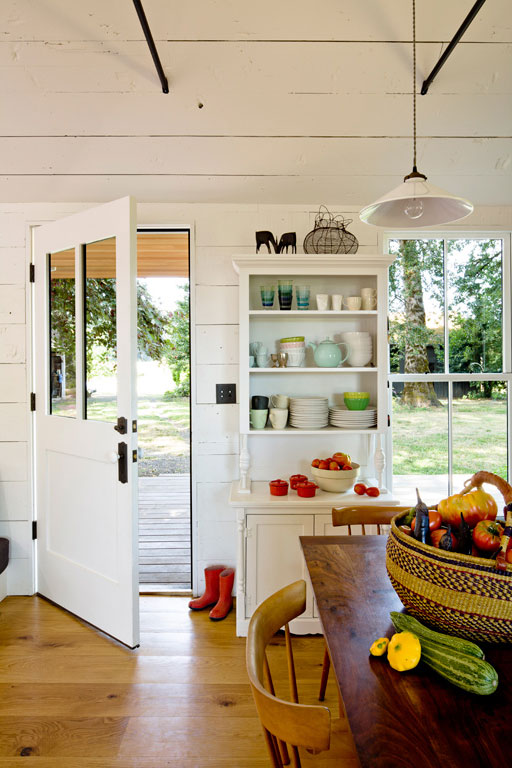
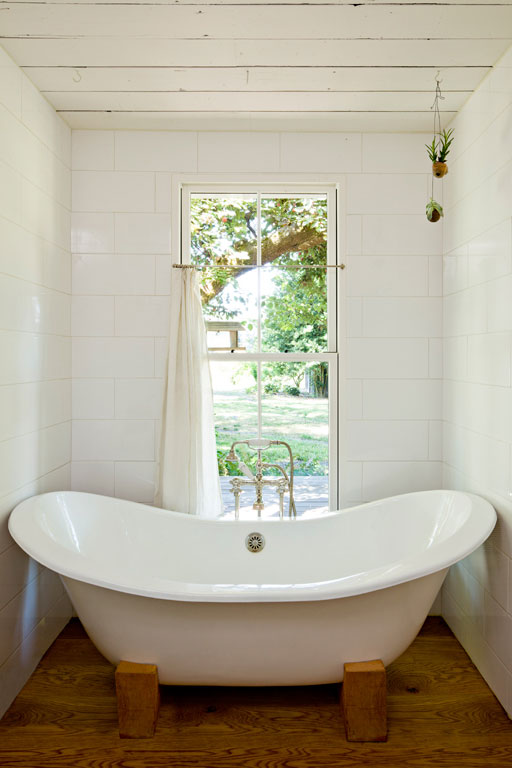
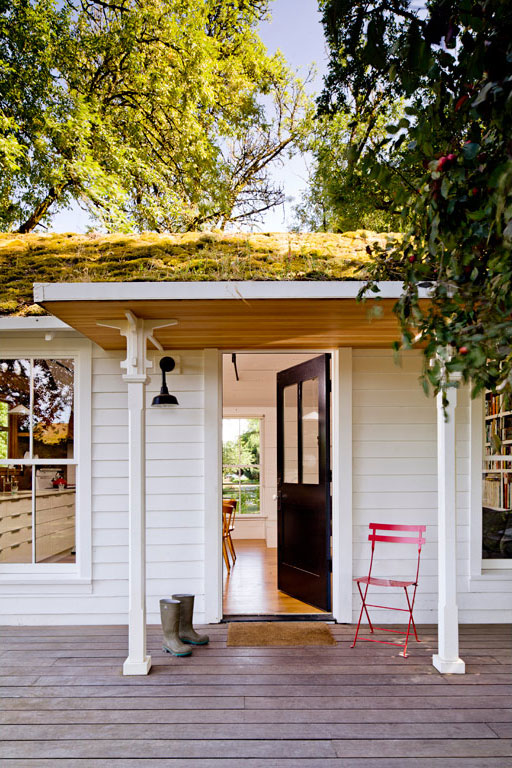
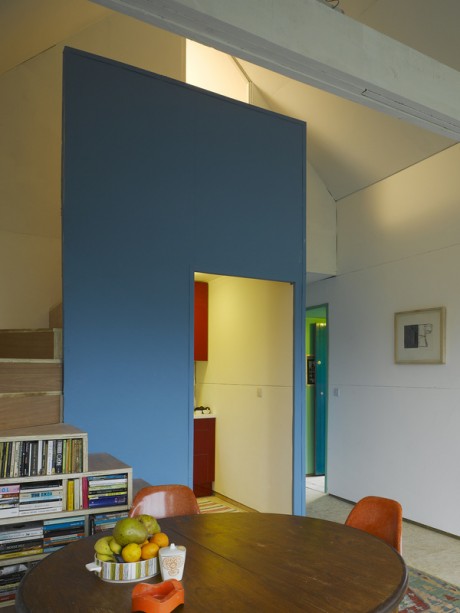
While it’s a nice idea to think a family could live in a sub 300 sq ft tiny house, the reality is that at a certain point you have to concede you can only downsize so much before quality of life is seriously compromised. That said, there are many options between tiny house and McMansion. Interior designer Jessica Helgerson’s home is a great example of one such option. At 540 sq ft it’s small, but not microscopic. And its thoughtful layout and great material choices make it seem like a great place to live and raise a family.

Located right outside Portland, OR, the house is an exercise in creative reuse. Nearly all of the materials used were reclaimed. And the structure itself has seen many lives. From Helgerson’s website:

It was first built in the early 1940s as part of Vanport Village; a quickly erected development built to house shipyard workers. When Vanport Village flooded in 1948 this particular little house was floated down the river to Sauvie Island, where it became the goose-check station. Years later it was remodeled to become a rental house.

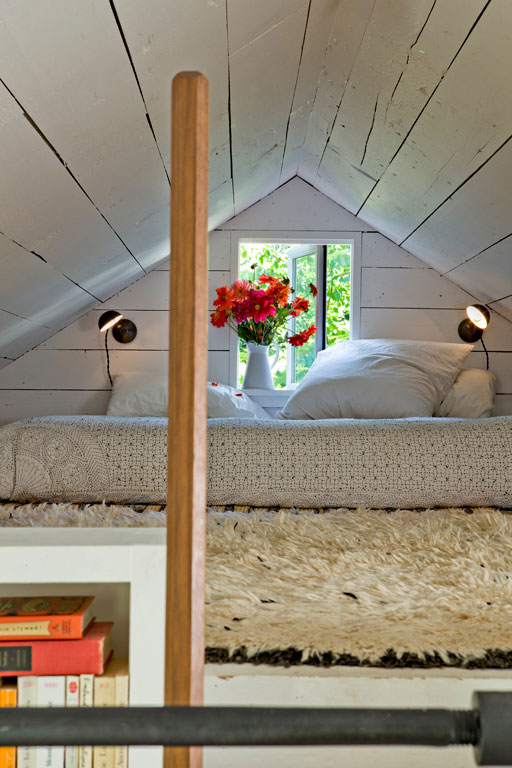
The house centers around a great room, which has the kitchen, a dining area and lounge area with two custom built sofas that double as guest beds and have storage in their bases. The house’s one bedroom is occupied by the kids, who have built in bunk beds. Both the kids’ room and bathroom have low ceilings to accommodate an overhead loft where the parents sleep.

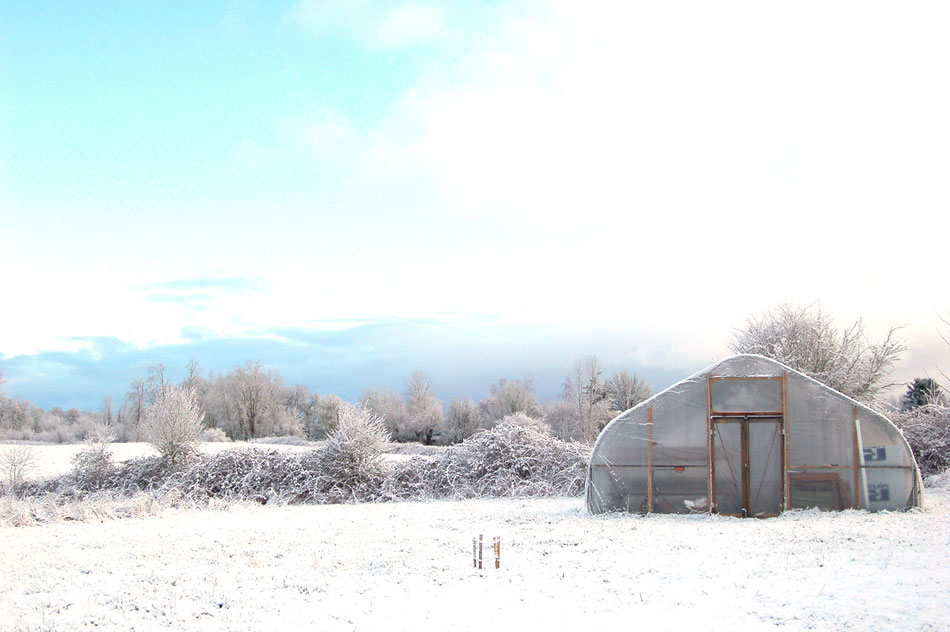
Outside, Helgerson and her husband installed a lush green roof and they are also trying their hands at food self-sufficiency with a large outdoor garden as well as a 1200 sq ft greenhouse on the property.

With its space efficient design and cohesive, but unfussy, furniture and material choices, Helgerson’s house is a great example how, with a bit of thought and consideration, a little space can go a long way.

Interview: Joshua Fields Millburn of The Minimalists

One of the clearest and most authoritative voices in the modern minimalist movement comes from The Minimalists. Through their the blog, books, social media, speaking and soon movie, lifelong friends Joshua Fields Millburn and Ryan Nicodemus spread the good word of living considered lives packed with rich experiences and meaning and devoid of superfluous stuff. The two do not preach from a hilltop–each know “the other side” intimately, having transitioned from auto-piloted lives characterized by paint-by-number corporate career tracks and ceaseless, thoughtless consumption. Through a variety of circumstances, they were compelled to ask themselves if a life filled with nonstop work and a bunch of toys (and debt) was all there was? For the last five years, they have been sharing their affirmative response.

I had the pleasure of meeting the two men during their “Everything that Remains” book tour. Both exuded a warmth and downright charm that lent a self-evident authority to their less is more message–a message that has been repeatedly buttressed by their entertaining, enriching prose found online and on paper.

Last week, I shot the guys a few questions via email and Joshua shot back some answers. Here they are:

David Friedlander: Your popularity–and that of the minimalist movement in general–seems to growing by the day. Why do you think that is happening now?

Joshua Fields Milburn: Simple living certainly isn’t a new idea. We can look back thousands of years—from the Stoics to every major religion—and find the same nuggets of wisdom. Minimalism takes many of those nuggets—what you and I might call “intentional living”—and applies them to a contemporary problem: nonstop, unabashed consumption. See, people are starting to realize that this meme of the American Dream isn’t making us happier. In fact, the opposite is true: even though the average American household contains more than 300,000 items, we’re more stressed, more discontent, more hungry for purpose. Compulsory consumption isn’t making us happy, and so many of us are looking for answers. Minimalism is one potential answer: it is a way to stop the madness, question what adds value to our lives, and live more deliberately with less stuff but more meaning.

DF: I often think that minimalism is like the environmental movement with a humanist spin. Rather than consuming less primarily for the sake of the environment as the environmentalist does, the minimalist consumes less for his or her own happiness. Do you think this is a fair portrayal and where do you see overlap between the environmental and minimalist movements?

JFM: Yes, that’s spot on. Ryan and I didn’t venture down this path for environmental reasons—not at first, at least. But we soon realized that when you consume less, you produce less waste, too. Obviously, there’s an inverse relationship between consumption and caring for the environment.

Now, to be clear: every human must consume, and so there’s nothing inherently wrong with consumption. It’s necessary. We must eat food, drink water. Plus, we all tend to purchase hygiene products, furniture for our homes, and other material possessions that bring us joy—books, music, etc. Shortly after the Industrial Revolution, though, corporations found themselves drowning in too much supply and not enough demand. So, via advertisements and various talking heads, people were told they needed to consume more. Even today, we are told to “keep the economy going” we must buy more stuff. But it’s easy to see that when we consume too much, we experience stress, anxiety, and depression. The key, then, is to consume responsibly by determining what possessions serve a purpose and bring us joy, and then eliminating that which is superfluous.

DF: You guys have a very strong web presence with your blog, Twitter, Facebook and Instagram. Many people have difficulty being minimal with the profusion of technology. How do you–or do you–stay minimal with your media consumption?

JFM: Our tools are only as good as the person using them: A chainsaw can cut down a rotting backyard tree, preventing it from impaling a neighbor’s house. Or, that same chainsaw can be used to hurt our neighbor, to chop him into tiny pieces. The same goes for technology. We can use Twitter and Pinterest and Google+ to enrich our lives and the lives of others, to communicate and share in ways we’ve never been able to communicate before. Or we can get stuck in social media’s Bermuda Triangle, careening from Facebook to Instagram to YouTube, lost in the meaningless glow of our screens. We can use our smartphones to photograph gorgeous landscapes, message loved ones, or map out directions to a distant national park (or—gasp!—to make phone calls). Or, we can use that same device to incessantly check email, thumb through an endless stream of status updates, post vapid selfies, or partake in any other number of non-value-adding activities, all while ignoring the beautiful world around us.

Bottom line: our tools are just tools, and it is our responsibility to ask important questions about how and why we use them. Because to become a Luddite is to avoid an entire world of possibilities, a better world that’s enriched by the tools of technology. If used intentionally, we can change the world with these tools. Or, we can do a lot of harm. It’s an individual choice, the world is at our fingertips, and it’s up to us to act accordingly.
jfm

DF: Speaking of the web, I read your recent post about how you essentially turned down hundreds of thousands of dollars in Google adword revenue in order to maintain your site’s integrity (my wording, not yours). This is a pretty ballsy move, but one I wonder if totally necessary. You guys have expenses. Your readers buy stuff–even if it’s less stuff than most–so them buying that stuff off your page is not necessarily promoting shopping. Why didn’t you guys rationalize the move based on these seemingly complementary interests?   

JFM: Personally I think most advertisements suck, but I also think you’re right: there’s nothing inherently evil about adverts. For us, however, it came down to our values and beliefs. Ryan and I constantly ask each other one question when it comes to our website: how can we improve the reader’s experience? And while I can’t speak for all readers, I can speak for myself: when I visit websites, listen to podcasts, or watch movies, most advertisements feel intrusive, unwelcome, and noisy. Ryan and I simply didn’t want to add to that noise.

DF: On a similar note, do you think that minimalism is intrinsically subversive in regard to traditional commerce? While you guys are all hugs and humility, isn’t it fair to say that your message undermines the market economy and the model of continual economic expansion?

JFM: Yes, minimalism is, by definition, subversive, and that’s a good thing because the system we’re subverting is the very thing that’s contributing to our discontent. True, if everyone immediately stopped spending their money, our economy would crash. Consequently, one of the biggest (supposed) arguments many people have against minimalism is that if everyone became a minimalist, then we’d all be doomed: the financial system as it stands today would collapse, and no longer would we have the wealth necessary to purchase cheap plastic shit from Walmart.

There are several problems with this point of view, some obvious, some a bit more abstruse.

First, no informed person would argue that we should stop spending money or that we must stop consuming. Consumption is not the problem; consumerism is the problem. Consumerism is compulsory, vapid, pernicious, impulsive, unfocused, misguided. Worst of all, it is seductive: consumerism’s shiny facade promises more than it can possibly deliver, because love, happiness, contentment, and satisfaction are all internal feelings that cannot be commodified, and the truth is that once our basic needs are met, the acquisition of trinkets does little for our lifelong well-being.

Using consumerism to stimulate the economy is like fixing a cracked mirror with a hammer. It only worsens the problem. Yes, trade is an important part of any society. Circumventing consumerism, however, doesn’t imply that minimalists sidestep commerce. Rather, minimalism is predicated on intentionality, which means we spend our money more deliberately. Minimalists invest in experiences over possessions. Travel, concerts, vacations, community theater, etc.: we can all spend money without acquiring a bunch of new material things.

Ultimately, minimalists aren’t interested in “stimulating” the economy. Stimulation is ephemeral. We’d rather improve our economy’s long-term health by making better individual decisions about consumption, getting involved in our community, and supporting local businesses who care. If more people do this, we’ll build a stronger economy, one that’s predicated on personal responsibility and community interaction, not a false sense of urgency and the mindless stockpiling of junk we never needed in the first place.

DF: LifeEdited.com features quite a bit of content about architecture and product design. I try to come from an angle of these things actually promotes lives with less stuff, but inevitably I find myself fetishizating them a bit, which runs a bit counter to minimalism. I guess I’m wondering: A. what is your general take on architecture and design, and B. how can we maintain an emotional distance from all the cool stuff that’s out there?  

JFM: I, too, enjoy architecture, especially the elegance of minimalist, brutalist, and mid-century modern structures, where, by stripping away the unnecessary elements, we’re left only with beauty. Aesthetics are an important because beauty adds appreciation and joy to our everyday lives; and so the lesson, at least for me, is to avoid attachment: we can appreciate beauty without desiring to possess it in perpetuity. My home in Montana, while appropriate for my needs, is also aesthetically pleasing; but I needn’t be attached to my home: it’s just a bunch of wood and stone and wires—it is not a permanent fixture that defines me as a person. The material has only the meaning we give it, and questioning the meaning we give to our stuff is the basis of minimalism.

DF: What’s your favorite part of living the way you do?

JFM: Without all the excess in the way, I can focus on what’s truly important: health, relationships, passions, growth, and contribution. Those are the bedrocks of a meaningful life—not material possessions.

DF: Any drawbacks?

JFM: Yes, it’s not always easy. Hell, sometimes it’s downright difficult. You see, when you commit to something in a public forum—especially when you call yourself a “minimalist”—you have to stick to your principles, even when it’s not pleasurable in the short-term. Sure, that impulse purchase might give me a rush of dopamine in the moment, but the consumption-high rarely lasts past the checkout line.

DF: What’s next for you guys?

JFM: Our film, Minimalism: A Documentary About the Important Things, will hit theaters in spring 2016. Until then, you can find a bunch of video excerpts at TheMinimalists.com.

In Quest for Home, Man Chooses to Build Rather than Borrow

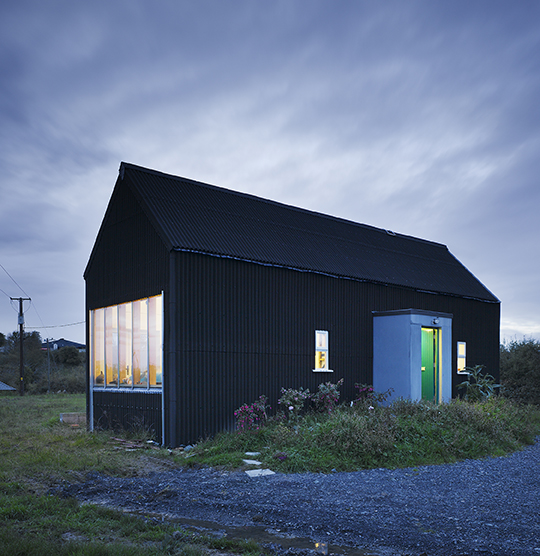
If you didn’t know it already, the modern home-ownership model is pretty flawed for most. Homeowners are expected to take on massive amounts of debt in the form of a mortgage, the great percentage of money paid toward interest payments rather than the home itself. Worse still is that many homes are made artificially large, a dubious premium that jacks up house prices, benefiting realtors, builders, governments (in the form of property taxes) and banks alike. For most people without a ton of money, housing means either completely leveraging oneself and making big mortgage payments, or renting, which has its own drawbacks. When Dominic Stevens found himself presented with these two sucky options, he decided to put his architectural and building chops to good use and create a third option that was smaller, cheaper and allowed him to avoid the snare of the modern home-buying model.

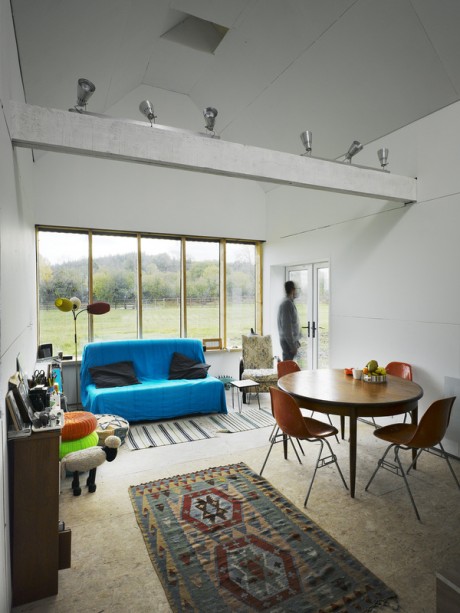
On his site, Stevens writes that the house started when he found himself “without a lot of money and urgently requiring somewhere to live.” He decided to make as “small and simple a three bedroom house as seemed possible,” paring “everything back to the basics and accepting very basic finishes,” all in the interest in staying in his €25,000 budget.

irish-vernacular-interior-1

The house was not just an exercise in efficiency and frugality, but a philosophical exercise, harkening to what he calls vernacular traditions, when “people build their own house, not with help from the bank, rather with the help of their neighbours.” He spent two years working on and building the house, spending a total of 50 days onsite. Staying true to his mission, he said that the project relied on “the help and goodwill of friends, neighbours and family.”

irish-vernacular-2

He doesn’t sugarcoat the process, writing that “for two years it felt like I was either working, building or feeling guilty about not building!” But he continues that it was “really empowering to achieve something like this in your life and you are left with a house without enormous debts.”

Stevens refers to his website as a “commons,” a place where he can share the knowledge he picked up in the process of building the home, potentially helping those who might want to endeavor to create something similar. There is a step-by-step guide, material list and basic plans to help you along the way.

More than anything, the home is a bit of a middle finger to the existing model of homeownership. He writes of the project’s political motivation:

We have been duped. At the height of the Celtic Tiger Boom €300,000 was the average house price. In total it could be calculated that one third of this went into the government coffers in the form of taxes, levies and development charges, another large chunk went into the pockets of developers. By artificially escalating the price of houses through media hype and manipulation, the government and their developer cronies seem to have transferred the national debt to being a private debt, while the developers are sitting in luxury….By building this house I am examining alternative traditions to what has become the accepted model. The model that we have become used now places the house as a way of driving the economy – we build houses as a method of making money not in order to house people well.

While perhaps requiring more time and skill than many might have available (or not), we applaud Stevens’ efforts and for creating a third way of creating sensibly sized, attainable housing. Check out his site for more pictures and information.

HT to Olddeisel

The Fisherman and the Executive

A powerful executive was walking along the beach in a small coastal village, taking a much needed vacation. It was his first in more than 10 years. He noticed a small boat with just one fisherman pulling up to shore. Inside the small boat were several large fish. The executive complimented the fisherman on the quality of his fish and asked how long it took to catch them.

The fisherman replied, “Not very long.”

The executive then asked, “Then why didn’t you stay out longer and catch more fish?”

To which the fisherman responded, “I have enough to support my family.”

“But what do you do with the rest of your time?” the executive asked.

The fisherman said, “I sleep late, fish a little, play with my children, take a siesta with my wife, and stroll into the village each evening where I sip wine and play guitar with my amigos.”

The executive quickly interrupted, “I have an MBA from Harvard and can help you. You should start by fishing longer every day. You can then sell the extra fish you catch. With the extra revenue, you can buy a bigger boat. With the extra money the larger boat will bring, you can buy a second one and a third one and so on until you have an entire fleet. Instead of selling your catch to a middleman you could sell directly to the processor, eventually opening your own cannery. You would control the product, processing and distribution. You would then of course need to leave this village and move to the big city and eventually NYC where you will run your expanding enterprise.”

The fisherman then asked, “But how long will all this take?”

To which the executive replied, “Twenty, maybe 25 years.”

“And after that?” the fisherman asked.

“Afterwards? That’s when it gets really interesting,” answered the executive, laughing. “When the time is right you would announce an IPO and sell your company stock to the public and become very rich. You could make millions.”

“Millions? Really? Then what?”

“Then you could finally retire and move to a small coastal fishing village! There you would sleep late, fish a little, play with your kids, take a siesta with your wife, and stroll to the village in the evenings where you would sip wine and play guitar with your amigos.”

Clapboard image via Shutterstock

What’s Right With This Picture?

From above, this picture shows a fairly normal suburban neighborhood. There are large, single family homes, each with their own driveways, front and back yards. But if you look closely, right between N St and Lessley Pl, there’s a group of homes with irregular yards. Trees from one property cascade over onto the next. There’s some weird walkway system that flows unimpeded from one property to another. It’s tough to tell where one property ends and the others begins. These are the homes that make up the N Street Cohousing community of Davis, CA.

N Street began in 1986 when Kevin Wolf and his wife Linda Cloud purchased and brought together two adjoining houses. Eventually additional houses were purchased by other parties and brought into the community.

247328_178590218864666_4080711_n

In 1999, the Davis city council recognized N Street as a planned development (PD). According to the N Street website this had a number of community-building implications: “Sideyard setback easements were slightly more relaxed while the backyard setback was extended from ten feet to 30 feet. Construction of larger second unit apartments were allowed.” This permitted the melding of backyards as well as the subdividing of existing houses. Today N Street contains 19 houses with over 60 adults and 5-10 children depending on the year.

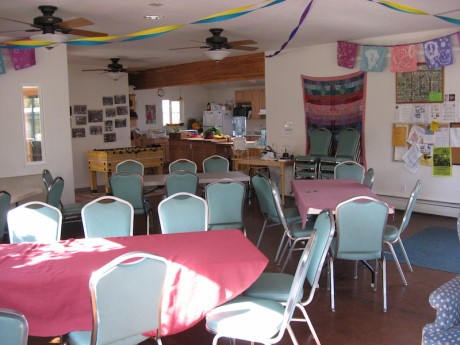
The initial house purchased by Wolf was made into a communal house, which has “a four bedroom-two bathroom apartment upstairs and the downstairs includes the community’s dining room (sitting 50 for dinner and 70-80 for concerts), a large kitchen, a TV/meeting room, a bathroom and a shared laundry room.”

IMG_0062

Though it might seem like a commune, all houses are individually owned and occupied, though some owners rent their houses out. And while there are no backyard fences, each house has its own yard that it maintains. Many, if not all, of the yards are landscaped and farmed. There are gardens, chickens coops and more.

Chickens

The main thing driving N Street is its culture of shared living and mutual support, of which the community says:

N Street Cohousing has all the attributes of a classic cohousing community. We live together as an intentional community, sharing much of the joys and pains of our lives with each other. We support each other in difficulty and celebrate in success. We sometimes vacation together. We have even been known to fall in love and marry each other. However, we live in our own homes and have our own yards (though without any fences). Each of us can be private when we want to be and each household sets its own culture for visiting, borrowing, and participating.

In cohousing parlance, N Street is deemed “retrofit cohousing”–which is to say the architecture and layout were never designed to be community oriented as they are in developments like Pocket Communities and other purpose built cohousing developments.

This retrofit solution is one of the reasons why N Street is so interesting. In the coming decades, suburban living might present large economic, environmental and social challenges. Without cheap fuel, people might not be able to access their suburban homes in an economically viable manner (this, to a large extent, is already happening across the country where many suburbs are becoming slums). Even with cheap fuel, the carbon production of suburban living–stemming from both large homes and related mobility–will become ever harder to reconcile with the dire need to curb carbon production. And as the population ages, having large, individualized homes that are tough to pay for and access (i.e. drive to and from), will present major issues for a growing older adult community. Despite these challenges, there’s a huge suburban infrastructure that’s not going anywhere anytime soon.

N Street presents one possible way of meeting many of these challenges. Because it has a built-in community, it might reduce the need to drive to see friends and access services. Because it has some agricultural capacity, it might provide a model for self-contained, sustainable living. And because community members look out for one another, and because the houses have the flexibility to be further divided into individuated apartments, allowing for more affordable housing as well as possibly creating ad hoc retirement communities, communities like N Street might provide a supportive housing model for aging populations. All of these things working within the existing suburban infrastructure. One can hope!