Look Good In and Feel Good About Your Fashion

Most of us are at least vaguely aware of what drives the excessive demand and supply of clothing. Constantly changing fashion trends drive demand, compelling people to exchange perfectly good clothes in favor of newer, slightly different, perfectly good clothes. In her book, Overdressed: The Shockingly High Cost of Cheap Fashion, Elizabeth Cline wrote that Spanish retailer Zara pioneered the practice of introducing new styles to its stores twice per week. Other stores like H&M and Forever21 quickly followed suit, often bringing in daily shipments of new styles. According to Cline at the time of writing, UK based retailer Topshop introduced a shocking 400 styles a week on its website–a practice that is meant to “deliberately make the customer feel off-trend after the first wear” according to the Huffington Post. Supply for this practice is made possible by deferred payments of our clothing’s real costs. That trendy new $18 shirt doesn’t include the price of living wages in safe conditions or responsible fabric sourcing. Instead, much of today’s mass-produced clothes are made by people working long hours in unsafe conditions for very low wages; they are almost always cheaply constructed with pesticide-laden cotton or other environmentally-destructive materials. In an ideal world, our clothes would be classically designed and well made, withstanding the often arbitrary fluctuations of fashion trends; we would feel good about, who, how and where our clothes were made. They are clothes that would enable us to have less, but better wardrobes. That’s the idea behind a new web-shop called Zady.

Zady carries a range of women and men’s clothing and shoes as well as accessories, jewelry and housewares. The raison d’etre for Zady is establishing what they call “The New Standard”–where retailers consider the environmental and human toll of the products they sell. They are trying to achieve as much supply-chain transparency as possible, allowing you to see–and presumably feel good about–every step of a product’s manufacturing process, from where raw materials are sourced to who and where your garments are assembled to every step in between.

zady-fashion

This new standard carries over to the style of clothes they offer. Their products, which are sourced from various manufacturers, embody the “slow fashion” ethic–classic designs in muted colors that are basically the antithesis of fast, trendy, cheaply priced and made clothes large retailers churn out. These are clothes that are designed to be worn frequently and for a long time–increasing longevity being the easiest way to reduce clothing’s impact on the planet.

Zady’s clothes are beautiful, but they don’t come cheap. Shirts are often more than $100 and sweaters routinely cost $300. The problem isn’t that their clothes are expensive–it’s that we’ve become so accustomed to not spending anything on clothing. This has hardly always been the case. According to a survey by the Bureau of Labor Statistics, in 1950, when most clothes were still made domestically, Americans spent 12% of their incomes on clothing. In 2003, we spent 4% despite the fact that the volume of clothes we purchased skyrocketed. Zady reports that there has been a fourfold increase in clothing production in the last 20 years alone.
zady-new-standard

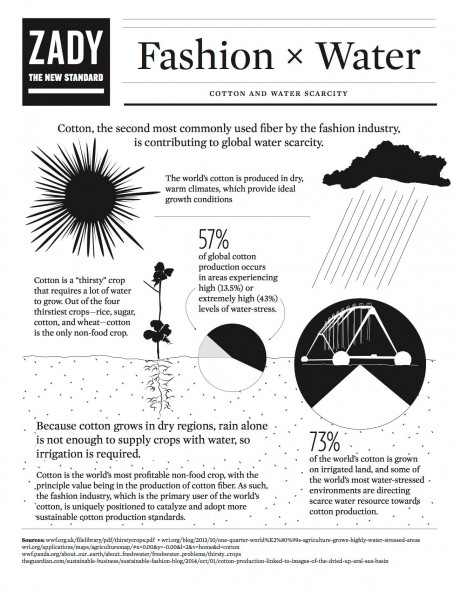
Zady is challenging us to think about our clothing purchases a lot more rigorously. Their site includes tons of (pretty damning) information about the costs of modern clothing production: how 99% of cotton is grown with chemicals and uses 25% of the world’s insecticides, how 250 million children, some as young as 5 years old, work in the fiber and apparel industry around the world, and so on. In light of these pretty awful facts (and there are many more), it’s probably time we started paying the real costs of clothes. Fortunately, Zady helps us do that while looking pretty sharp at the same time.

Via Treehugger

Check Out These High-Tech, Transforming, Carbon Fiber Shelves

Carbon fiber is the material of choice when engineers and designers need high strength without added volume and weight–perfect for things like bikes, wheelchairs, high performance cars, aerospace parts, etc. But aside from a few novelty items, carbon fiber hasn’t been a mainstay in furniture design. The reason is simple: carbon fiber is pretty expensive, difficult to manufacture and most furniture doesn’t need to be particularly lightweight, so metal and lumber derived materials are the go-tos for furniture construction. But Japanese design house Nendo’s new Nest shelving unit is presenting a compelling reason why carbon fiber might be incorporated into modern furniture design.

nest

The Nest shelves expand from 25” to 51”. The vertical sheets are made of 3.7mm carbon fiber and the horizontal ones are made of a honeycomb material sandwiched by carbon fiber sheets. The whole assembly is clad with a thin larch veneer so it still has a somewhat traditional look. This construction allows Nendo to make their shelves super thin yet very strong. As such, when the shelves are nested on top of one another, it’s tough to tell there are additional panels under the top ones, thus maintaining a lithe, modern aesthetic. And because of carbon fiber’s rigidity, the shelves, when extended, make no compromise in strength.

While the combination of high strength and low weight and volume are not necessarily that important for things like sofas and built-in furniture–things that don’t move or do that much–items like the Nest shelves can benefit greatly from carbon fiber construction. You could make other items such as chairs that are super slim and strong and store compactly or an ultra thin large table that folds in on itself–furthering the argument for applying high technology to the sometimes technology-resistant world of furniture design. 

Via Dezeen

Video: Man Goes Beyond Off Grid, Going Under It

Happy Friday! Sit back, relax, grab a bowl of cereal and watch this Fair Companies video of Dan Price and his Hobbit hole home. Be prepared to feel like your life is a wasteful, complicated mess. It’s fairly tough to get much lower impact than Dan. He lives in a tiny subterranean Shire-like structure that is almost wholly constructed of reclaimed materials. He pays $200 a year for the land his house sits on (or, rather, under) and his annual expenses total $5K. He gets most of his water from a spring. His feces are composted in a toilet he made 25 years ago. He uses the tiniest bit of electricity. His diet consists mostly of raw fruits and veggies and cereal. He has very few possessions. Almost everything in his life has been edited–a word Price, once a professional photographer, uses liberally–down to the most essential. Despite his radical level of editing, Price sees himself as a pretty normal guy, albeit one who has and consumes very little stuff.

The video is really worth the full 34 minute viewing time. It’s the chronicle of a man who has consistently chosen to live according to his own rules (His lifestyle is no flash in the pan. Before the Hobbit hole, he lived in a tent, teepee and tiny house). And while he considers himself a normal guy, he alludes to how his lifestyle is partly the function of being a bit of a hermit–that more human contact would put him under more scrutiny, making it more difficult to do his own thing, which he seems to enjoy quite a bit.

Even if you don’t want to live like Price, to know this level of minimalism is not only possible, but being carried out, might help inspire whatever bit of modest editing you might be having difficulty incorporating into your life.

Growing Old Together and in Style

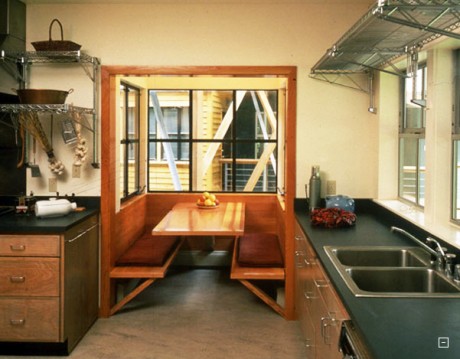
I’ve said it once and I’ll say it again: the conversation about compact, efficient housing focuses way too much on so-called Millennials and not nearly enough on the ever-increasing numbers of older adults. Last year I reported on the joint study by the AARP and Harvard about housing this population. In short, the study said that the large houses in the burbs where many American adults currently live, are going to be increasingly difficult to afford, maintain and access (i.e. driving to and from) as folks head into their sixties, seventies and eighties. There is and will be a dire need for compact, amenity-rich, affordable and social housing for today and tomorrow’s older adults. The oddly named Cheesecake Cohousing Consortium in Mendocino, CA provides one example of what that could look like.

cheesecake-kitchen

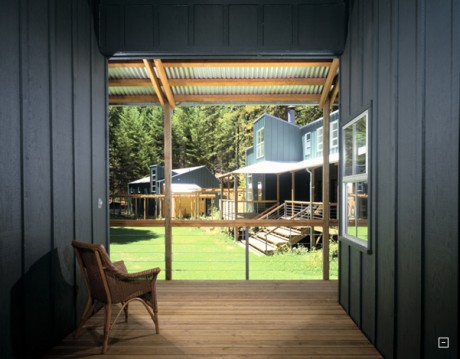
Cheesecake’s origins started in the late 80s when eight lifelong friends, in their 50s and 60s at the time, decided to build a vacation retreat that would ultimately become their retirement community. As they purchased the land and designed the space, they picked up a few more people, making a mix of single and coupled adults. The ultimate design, completed in 1993 by Fernau and Hartman Architects, features three buildings totally 5K sq ft of interior space and 3K of exterior spaces, which include verandas, dog trots, tent decks and a central pavilion.

cheesecake-porch

While the compound has private quarters for all members (kitchens and some bathrooms are shared), the community supports one another, as reported in a story by The Monthly in 2004. For example, when one community member became seriously ill, the others chipped in to perform her chores. As the woman put it, the community members “let me off the hook with love and compassion,” going on to say that she didn’t “have the words to express what that means to me” (the member has since died).

The NY Times has written about the Cheesecake Consortium a couple times: once in 1994 following its opening and then nineteen years later in 2013. In the latter article, they reported that seven of the original members are still there (the aforementioned woman being the only death). The piece doesn’t sugarcoat the experience of living together. One 84 year old member said, “When it’s good, it’s so good…And when it’s bad, it’s so bad, the angst and argument we have with each other. But we have a conviction to work it out—and we will.” 

The Times also got into the expenses of living there, reporting that “buying into the community costs about $25,000 upfront, plus a continuing $500 monthly fee and an $11 daily charge for food staples, electricity and Internet use”–a pittance of what it cost to live in most assisted living homes.

Contrary to popular notions, the AARP/Harvard report found that most older adults do not move out of their homes when they can no longer maintain them. Instead, because of the costs and burdens of moving, they stay put, often becoming increasingly isolated as well as cost and physically burdened by their upkeeps. If more sensible, transitional, social–and let’s face it, beautiful–housing like the Cheesecake Consortium were available, we imagine many older adults later years would be a bit more golden.

This is the Future of Furniture Design and Fabrication

Designing small space furniture might not be rocket science, but it does require geometry. More specifically, it requires making furniture that’s proportional to a particular space’s dimensions. Now imagine you could easily design and adjust the dimensions of your furniture to be proportional to your small space (or large one I guess). And imagine this same furniture could be seen in your space through your mobile device via an augmented reality app. Imagine no more, because now there’s Tylko.

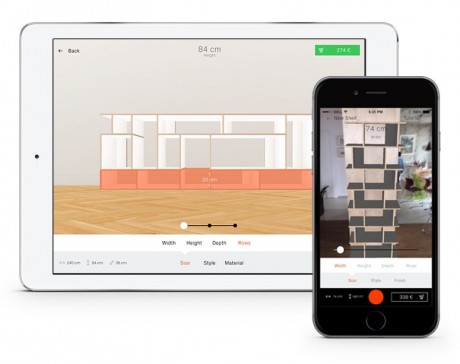
Through its very easy to use web interface, Tylko allows you to create custom furniture that’s just right for your space. But their app goes several steps further, using your iOS device’s camera to create an augmented reality view of what the furniture will look like in your space.

tylko-app

Right now, Tylko’s website features a number of smart looking plywood cabinets whose dimensions and finishes are incredibly easy to adjust. The app will be launching today at London’s Design Festival and will coincide their new Hub Table, a collaboration with celebrated industrial designer Yves Béhar. The table’s dimensions, legs and finishes will all be totally customizable. Tylko boasts that between their table and cabinets, there will be “billions” of different customization options available via the app.

tylko-tables

Unfortunately for most of us, the app will only be launching on the Apple app stores for Germany, Austria and Tylko’s native Poland. But we suspect that between its incredibly user-friendly user-interface and ability to make nice-looking and reasonably-priced custom furniture, their technology and idea will spread quickly.

Via Fuse Project

Tiny Ukrainian Apartment Does Heavy Lifting

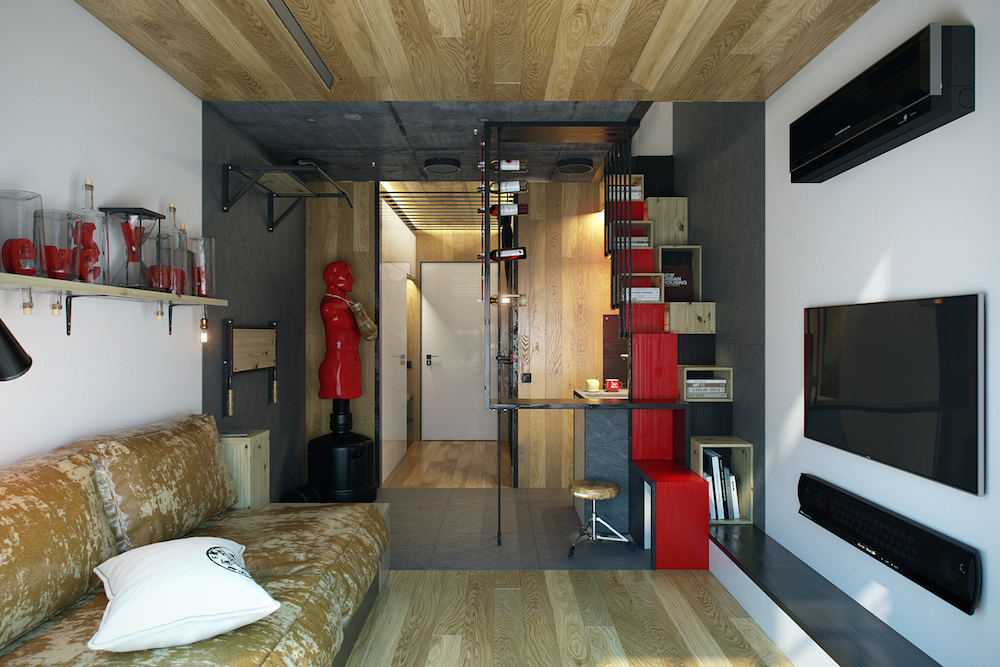
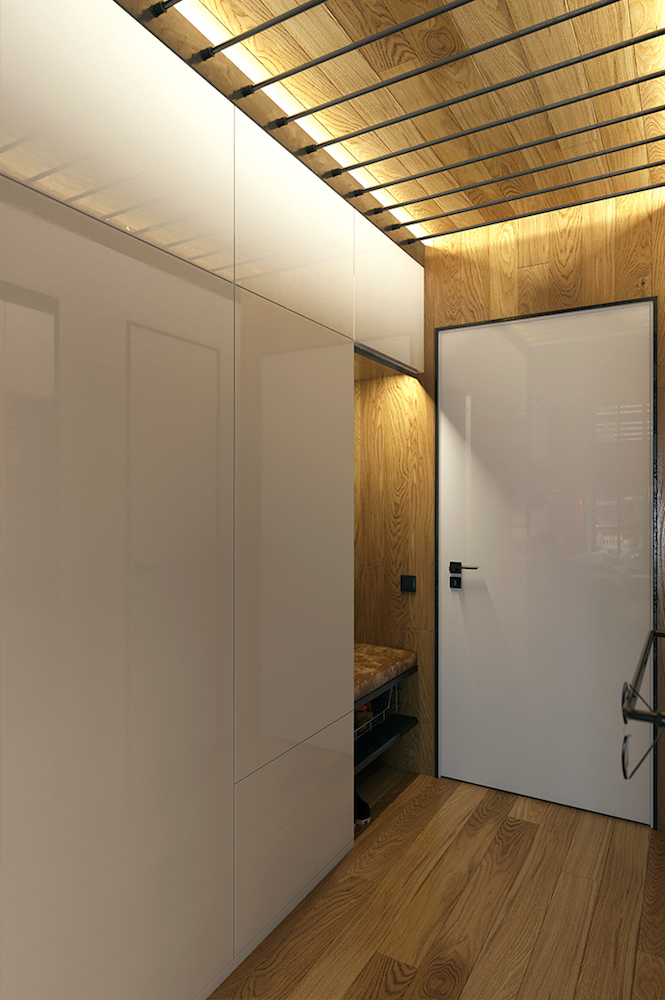
This 200 sq ft apartment from Ukrainian architects 1 Studio does a nice job of using its small cube-like interior space. The interior design contains a living room, a very small kitchen area and bathroom. 1 Studio exploited the space’s 16 foot high ceilings, making what is effectively a second floor above the living area. The second floor is accessed by a small staggered staircase which houses storage. According to Design Taxi, the space was designed for a powerlifter and as such, there is even a small workout area.

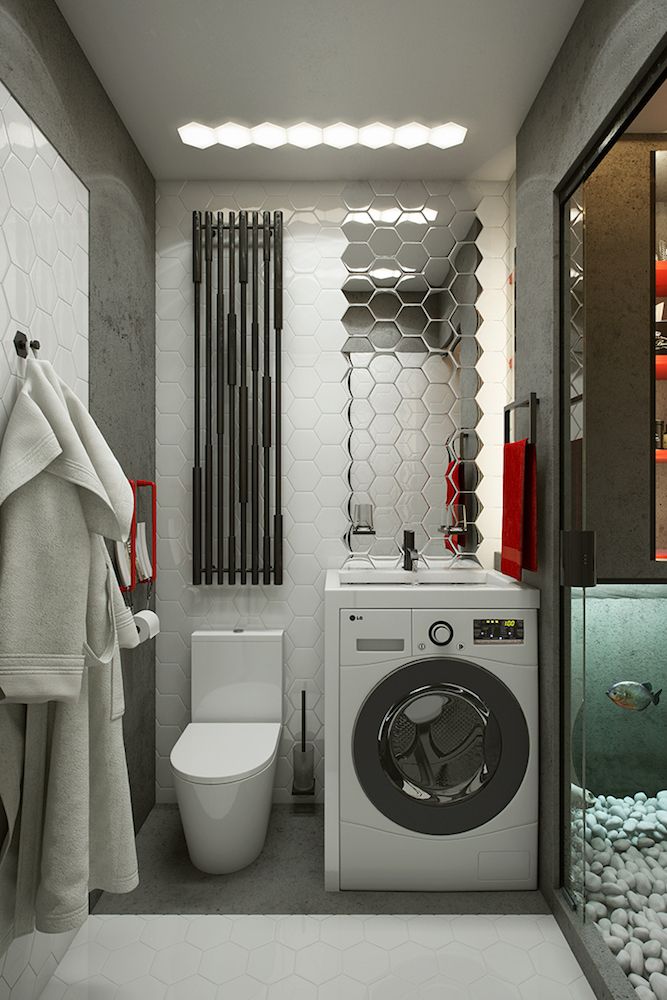
With exposed L-brackets holding up simple wood shelves, I appreciate that the apartment seems to use fairly inexpensive materials. There also appears to be a fair amount of storage considering how small the apartment is. But by far my favorite feature is the washing machine/vanity. Typically, small apartments cannot accommodate washing machines, which, to this author’s mind, is a big sacrifice. Personally, if given the choice between a washing machine and a normal vanity filling the volume under my bathroom sink, I’d pick the washing machine any day (I might box the machine off though to make it a little sleeker). 

The only possible demerit of the apartment is the fact that it’s a rendering, as confirmed by Dimitri over at 1 Studio.

1studio

Given that the design is a rendering, I was curious to know if the dishwasher sink was a real thing, and he assured me it is. Even though the space hasn’t been built, it’s still a smart design filled with clever ideas. And as as Lloyd Alter wrote over at Treehugger, “Is it real or is it rendering? Who cares, it’s gorgeous.”  

Breather Investment Might Show that People Will Subscribe to Anything

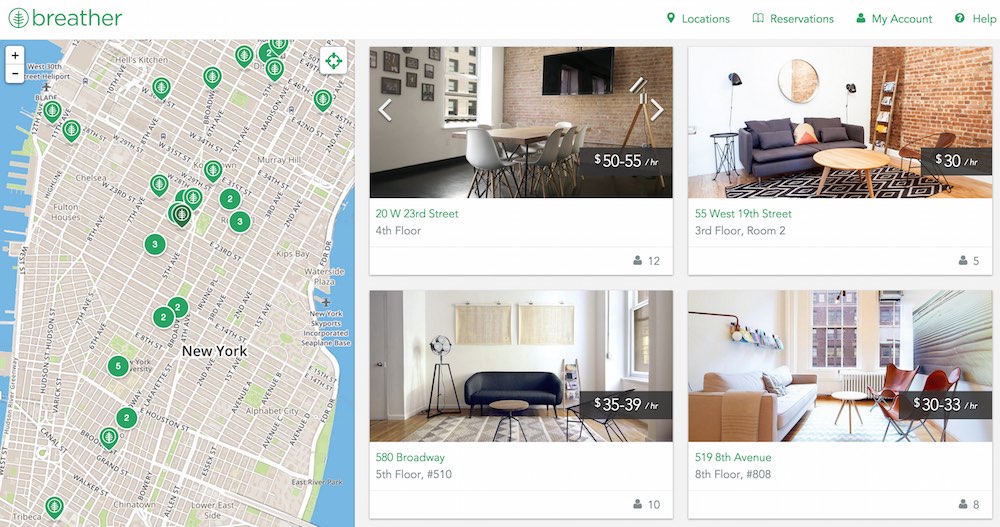
This site profiled the company Breather a couple years ago right after its launch. For lack of a more original description, Breather does for living and meeting rooms what Airbnb does for bedrooms. Via its site and app, Breather allows on-demand rentals of quiet, clean, wifi-enabled spaces in cities across North America. These aren’t places to stay for a long time; rentals are anywhere from 30 minutes to a day. These are place to work, have a quick meeting, meditate, breastfeed or simply get some quiet in an otherwise hectic day.

Today, Breather announced that it raised $20M of series B funding led by Peter Thiel’s Valar Ventures. This is a lot of money invested in a product that has no competitors or established market. Despite this–or perhaps because of this–the Breather capital influx may well be a harbinger of things to come, evidenced by its esteemed investor pool. If you’re not familiar with Peter Thiel, he cofounded PayPal with Elon Musk; he was the first outside investor in Facebook; he’s founded a number of other ventures that would be career-defining for most people to boot. He’s a man with a knack for seeing what’s next. So what does he (and a slew of other investors, it should be noted) see in Breather?

A few months back, I wrote a post called “Life as a Service (LaaS).” The concept of the post was based on the term Software as Service (SaaS)–an increasingly common model where software companies (Adobe, Microsoft, etc) charge a subscription fee for access to their software. The benefits of this type of service is that your software is forever current and you bypass many of the perils localized computing and storage. What I suggested is that this type of system can and is being applied to virtually every material need we might have, from cars to clothes to toys and more. In this model, things are accessed and subscribed to, not owned and paid for outright.

Yet I wrote the LaaS post with middling conviction, believing there were some things that would always defy shared or subscription-based ownership. You can’t very well subscribe to a living room, can you? But Breather shows that you can, and its continuation and growth are evidence of the growing catalog of things we may no longer own in the future. It also lends credence to the idea promulgated by Gunnar Branson about how real estate is being affected by Moore’s Law; through technology, we can access spaces that were once only available through ownership. Now we can use them only when we need them. Not only that, others can use the same space when they need them. This shared access has the potential to shrink our overall real estate needs, saving money, space and natural resources. It’s an exciting concept and one we look forward to seeing grow.

Baugruppen: Urban Housing for the People, by the People

Real estate is a big and often lucrative business. The reason is fairly simple. Because they build at scale, developers enjoy financing, purchasing and construction discounts individual homebuyers do not. For example, a developer can get favorable financing on a loan for a ten story building because banks like the large sums of money involved. A developer can purchase the building for 10-30% less than if the units were purchased individually. And the developer can renovate or build the units for 10-30% less than one-offs. Once the building is ready, the developer sells the units with that 10-30% (or more) tagged on. Thus a fortune is made (or, on occasion, lost). But what if individual homebuyers could pool their money together to finance, purchase and construct a building they were going to inhabit? What if you and I could be real estate developers? This is the idea behind Baugruppens.

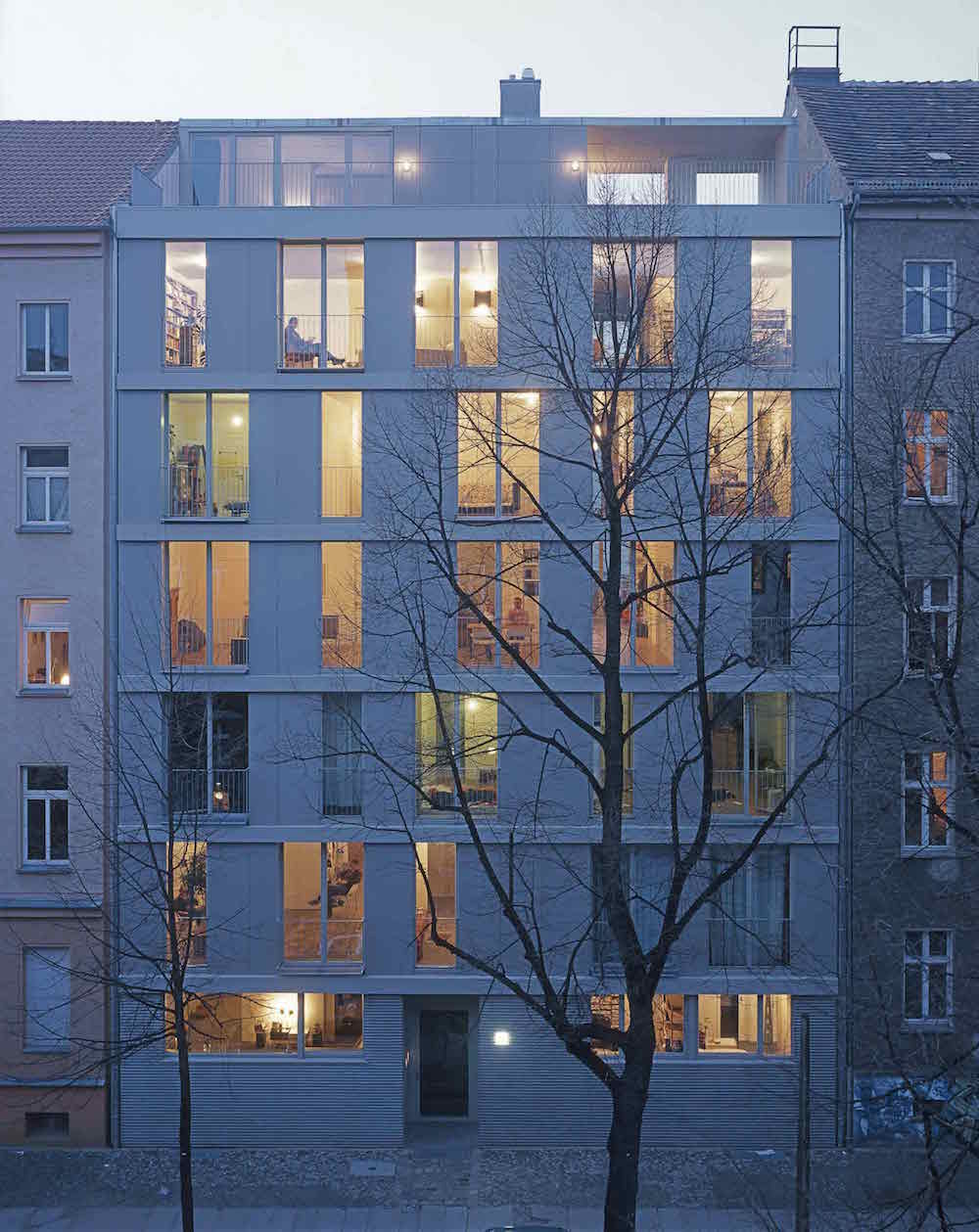
Baugruppen means “building groups” in German. Folks–often friends–get together to finance, purchase, design and construct the buildings they will eventually live in. They are the developers. The advantages over traditional development are many. Beside the obvious and significant savings, units can be designed around individual owner needs. And because the groups are often formed by friends and family, there’s an instant community formation, abetted by the building designs which often include common spaces.

Baugruppen-rooftop

Baugruppen, unlike cohousing, which tends to be a grouping of single family houses often in the burbs, are multi-story, multi-family buildings, located in cities (Eliason likens them to condos).

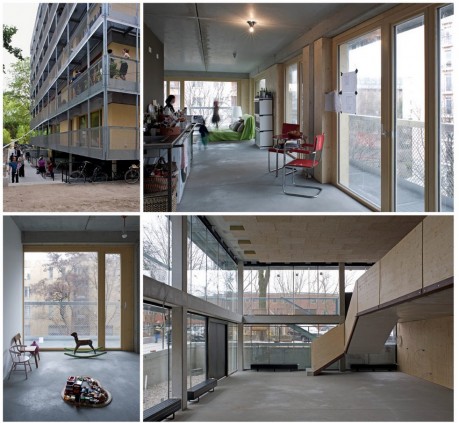
If you’re interested in the typology, you should definitely check out The Urbanist’s Mike Eliason’s seven part series on Baugruppens. What the series shows–and this is not to rag on American cohousing–is the premium Germans place on design. Many of the buildings have incredible interior and exterior spaces–designs that are both modern and timeless. Many are built to rigorous efficiency standards such as net zero and Passive House.

baugruppen-r50

Baugruppen surely experience the same unsavory aspects of real estate development that normal developers do: cost overruns, design disputes, depreciation, etc. But at the end of the day, a Baugruppen member, even if he or she has lost money or taken more time than expected, will have a house to live in.

Unfortunately, Baugruppen-type development is a non-starter in the US, where FTC regulations limits large scale real estate investment to accredited (see wealthy) real estate investors. But if this were to change, this type of development could provide homeownership opportunities for people being priced out of their cities. Take Manhattan for example, where the current median selling price of a home is $980,000 (NB: almost half of home sales are all cash). Compare that to the 2013 median household income in Manhattan of $72,190. If people could leverage their collective purchasing power and cut home prices by 10-30%, it’d still be ridiculously expensive, but perhaps attainable to far more people than the present situation. Let’s hope. 

Fashion Week, Edited

If you live in New York City or are interested in fashion, you might be aware that this week is New York Fashion Week (NYFW for the cognoscenti). It’s a weeklong celebration of the fashion trends that will make your current clothes look inexplicably outdated in the not so distant future. The practice of continually refreshing and overhauling one’s fashion is, for many, one of the leading causes of accumulating way too much stuff. As I oft-quote, one expert estimates that only 20% of most wardrobes are actively worn. The rest is just filler–likely casualties of changing fashion.

Let me hazard to say that I am not a fashion basher. As much as I continually extol the virtues of having a few well-selected garments, I am pretty fussy about what those garments looks like. I am particular about the color, fit and function of my clothes. I believe fashion is one of the most practical mediums in which one can express him or herself.

But let’s face it, fashion has a super dark side. As mentioned, many people find themselves with way too many clothes, leading to stuffed closets and emptied bank accounts–all done in the name of staying au courant. And then there are the considerable environmental and human right tolls paid in order to keep our clothes cheap and plentiful (follow this innocent looking link if you are interested in knowing more about what I’m alluding to).

As with everything, less, but better wins the day. Those of us living above or below the tropics can’t very well live without clothes, but we can create wardrobes filled with necessary clothes that are worn and cherished. In honor of NYFW and looking spiffy all year long, here are a few posts from the past fashions that will help you create your edited wardrobe.

  • Project 333. Courtney Carver is like the minimalist Anna Wintour. But instead of yay or naying particular fashions, she challenges people–women and men–to put more thought into their wardrobes by selecting 33 items to wear for three months. What’s great about her approach is that it’s pared down, but no so much that you can’t achieve variety.
  • Outlier Tailored Performance. I know, I’m a bit of a fanboy, but this company is a great example of how you can sell folks (ok, mostly men) great-looking, responsibly manufactured and sourced clothes that allow you to do more with less.
  • Shapeshifting fashion. For those who might want to spice up their minimalist wardrobes, companies like MORF create clothing that allows several looks with the one garment.
  • Rent and shared clothing. If you are simply not someone who can wear the same thing too long, consider renting or swapping your clothes. It’s way friendlier to your pocketbook, the planet and will give your closets some breathing room.
  • Fall deeper in love with your existing clothes. Just like friends and family, sometimes we take great, but familiar things for granted. Patagonia’s Well Worn campaign urges us to fall back in love with the things we have. Love them, wear them, fix them if needed. Sometimes the fashion we seek is the fashion we already have.
  • Wear a uniform. Yep, I’m a broken record, because uniforms are so awesome! They’re the autopay system of fashion–select one and forget about it. There’s something so liberating about not thinking about what you have to wear on any given day.

Sam Aronov / Shutterstock.com

Large Lego-Like Blocks Can Make Anyone a Builder

Along with thrift and above average height, my father passed down an aversion for building stuff. I’ve often pondered if my minimalist tendencies are just the offshoot of this aversion–i.e. doing without requires zero carpentry skills. But EverBlock is a building system so simple, even a DDIY (don’t do it yourself) person like me could build stuff like a champ. EverBlock “is a life-sized modular building block that allows you to build nearly anything”–a description that bypasses Lego® brand building blocks, because, well, EverBlock are just really big Lego blocks.

everblock-wall

Like Lego, EverBlock are plastic blocks that fit together, though EverBlock blocks are considerably more substantial. Details from their website:

The EverBlock™ System consists of four universal parts–a full sized 12″ block, a 6″ half-sized block, a 3″ one-quarter sized block, and a 12″ finishing cap that all interlock. Connector clips, hanging clips, and reinforcement rods are available for more structurally demanding applications and metal baseplates and feet can be used for additional stability.

This scale allows you to make some practical stuff: furniture, walls, various dividers, etc. Besides their obvious ease of construction, what’s best about them is that you can adjust them to changing spaces and needs. Need to chop your 1000 sq ft friendly sofa in half to fit into your new tiny house? Need to divide a room in your rental apartment without 2×4’s, sheetrock and paint? Need to convert your kid’s bed frame into an adult sized one? EverBlock has you covered for all of this.

everblock-tableeverblock-building

You might even be able to make a basic house using the blocks. EverBlock founder Arnon Rosan wrote me saying that the blocks are reinforceable via a channel that runs inside the blocks, accommodating a plastic or wooden dowel or rebar and making them suitable for permanent or semi-permanent structures. There are also plans to make reinforcement pins that slot inside the blocks for much more rigidly. Windows and doors can be framed out similarly to traditional construction and replacement windows can be installed by screwing the window right into the blocks using nailing strips around the perimeter. While he estimates the R-value of the stacked blocks to be around 1.5–about the same as a one inch thick plywood–this figure could be greatly improved with caulking and, of course, insulation. If you have CAD drawings, EverBlock will help you realize your design. Getting a building inspector to sign off on this structure is a conversation for another day.

The blocks come in a few different colors and can be purchased individually and in bulk. An 18 pack of the large blocks runs around $125. Rosan said that a 7.5 ft tall, 400 sq ft structure with an opening for a door and two windows requires about 1,000 blocks, or about $6,500.00 in blocks. Raw materials for a conventional building might still be cheaper, but EverBlock’s ease of use and reusability–for both furniture and construction–might create a compelling alternative for many.