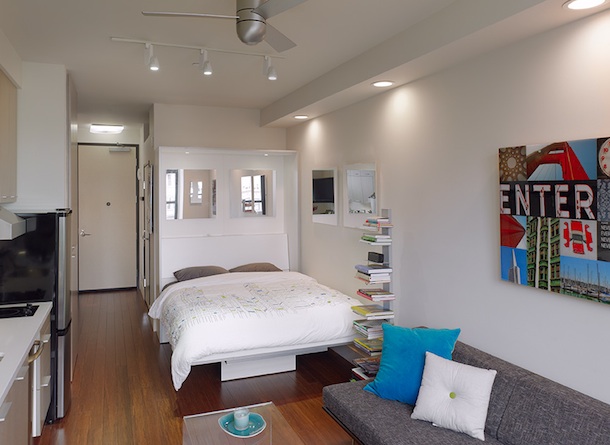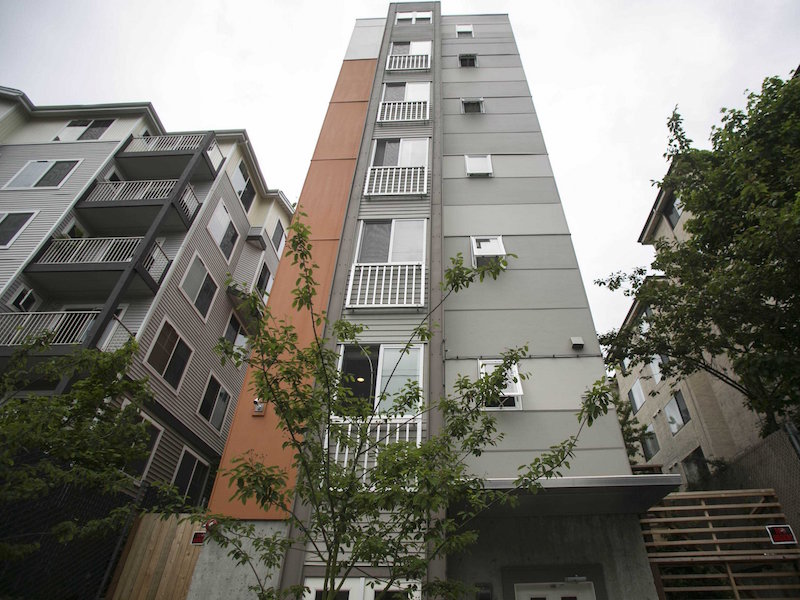
Oops! We Just Destroyed Affordable Market-Rate Housing. Our Bad.

This site has long followed Seattle’s ongoing micro-apartment saga. Here’s a somewhat quick summary: for the last several years, Seattle developers had been fast and furiously building low to medium rise buildings filled to the gills with micro-apartments. These buildings were generally in desirable, transit-friendly neighborhoods–neighborhoods the micro-apartment residents would not have been able to afford if their apartments weren’t so darn small. Many of these neighborhoods were low-to-medium density and historically reserved for families and folks who make more than $15/hour.

The existing residents of these neighborhoods had a bunch of issues with these new micro-apartment buildings. They weren’t subject to neighborhood approval and many of the buildings didn’t jibe with existing architecture. There weren’t enough parking spots to support the residents (even though many/most micro-residents didn’t have cars). These buildings brought a more transient element to these family-friendly neighborhoods. And lastly, the very existence of the Seattle-style micro-apartment was the result of a loophole. You see, some of the micro-apartment buildings were designated as “congregate housing”–a designation normally used by college dorms. And presumably, college dorms didn’t belong in good neighborhoods. So last fall, the Department of Planning and Development decided to close this loophole, limiting congregate housing construction to “Neighborhood Commercial Zones”–dense mixed-use areas designated for heavy pedestrian traffic where buildings are generally allowed to be six stories or taller. In other words, the NIMBY crowd would get the densest micro-housing buildings out of their backyards.

While this might not sound like a big deal to the non-developer, this regulation change effectively killed congregate housing construction. Here’s the reason as stated by Seattle Weekly:

For financial reasons, investors are rarely willing to build below height limits [in the Neighborhood Commercial Zones]. Yet congregate apartment buildings make sense only if they are short enough not to need an elevator—up to four stories, says [architect David] Neiman. “If you build an elevator in, then every one of these rooms has to be fully [wheelchair-] accessible..by the time [we’re] done making them accessible…we can’t offer people smaller, cheaper housing because we have to make it twice as big.

Attesting to Neiman’s theory is the number of congregate unit permits. In 2014, there were 400. As of May, 2015 there were zero.

Now it should be said that permits for SEDU’s (small efficiency dwelling units) doubled in this same period. But because SEDU’s underwent their own regulatory reform last year, having to adhere to larger size minimums (220 sq ft), they represent a pricier form of housing than congregate housing. Last year’s regulations probably killed the $600 all-inclusive rental with a decent location.

This assassination has not gone unnoticed. Seattle Mayor Ed Murray’s Housing Affordability and Livability Agenda (HALA) task force has proposed relaxing the zoning restrictions put into place just a year ago–a proposal that has not been welcomed by other governmental factions. Seattle Weekly reported, “Councilmember Mike O’Brien, who sponsored the ordinance that restricted microhousing, says he’s not interested in rehashing an acrimonious debate [about congregate housing] that concluded just last year.”

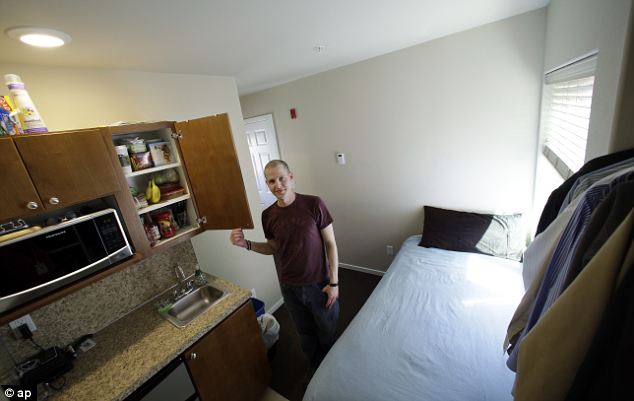
Neiman, an advocate of micro-housing, sees this as kowtowing to the affluent neighborhood base that protested micro-housing in the first place. O’Brien’s stance does not consider that micro-housing–while perhaps an imperfect solution that could have withstood a bit more regulation–was providing unsubsidized, clean, safe, functional and affordable housing in desirable locations for many people. This vacancy is a damn shame in this author’s opinion. While I don’t want to wax too libertarian on the topic, it seems to me that the people with the strongest objections to micro-housing in Seattle were always from the people not living in it. It seems to me that Seattle was an innovator is providing affordable housing to economically prosperous cities. Instead, the reform and subsequent lack of course correction augers more of the same: more people getting pushed to the margins, geographically, economically and politically. Perhaps the Council should have had a slightly more laissez faire approach to micro-housing regulation, letting developers create housing that works for the people living in them.  

via Seattle Weekly
The House Behind House

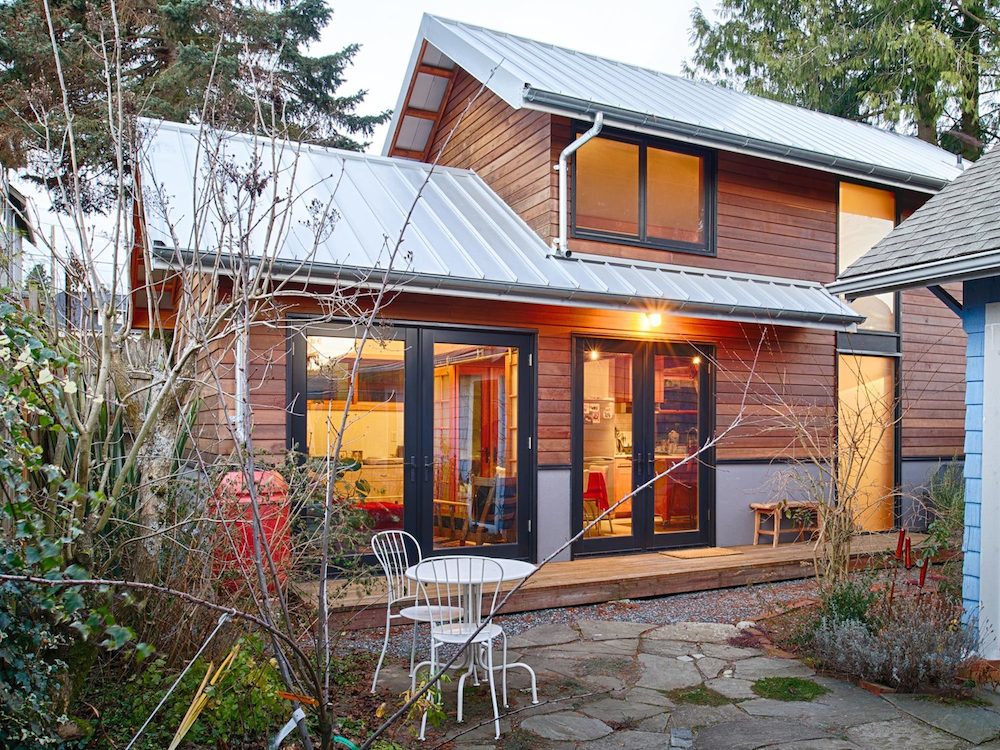
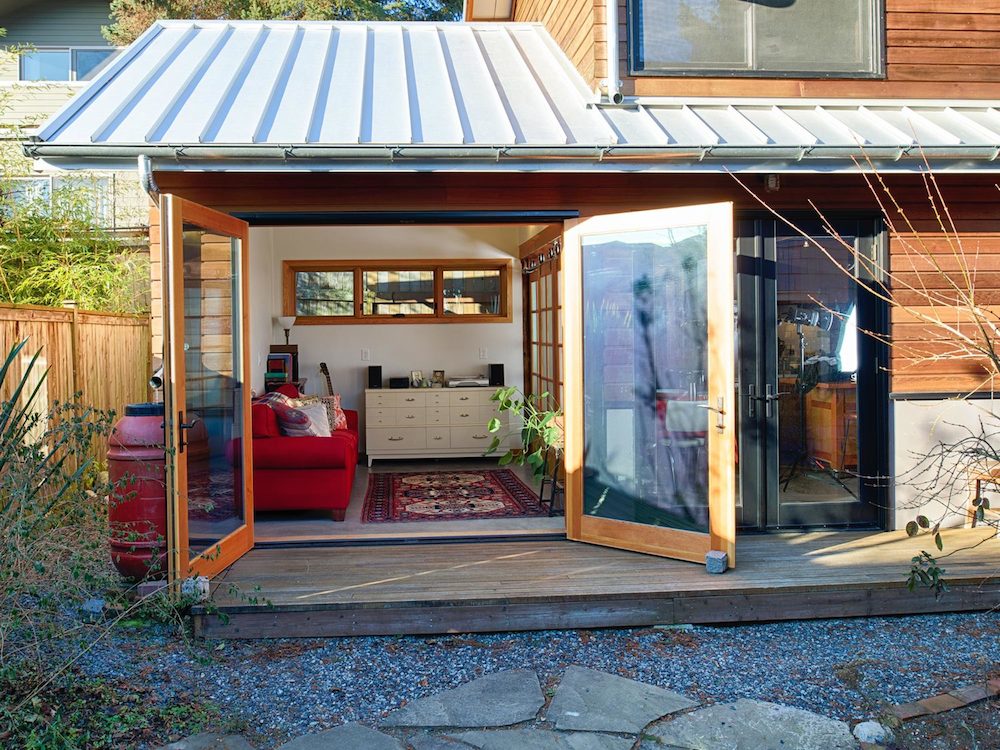
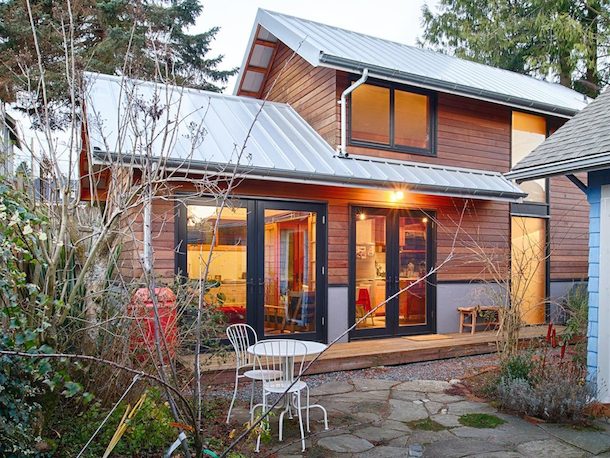
We love ADUs. They have the power to do the near-impossible: pack more housing into suburban and other low-density areas that were not designed to be dense. And given that they’re typically wedged into a backyard, they err on the compact and efficient side of design. And we love this particular 550 sq ft Seattle ADU by Cast Architecture.

The house was built in the backyard of client Kate Lichtenstein. Tim Hammer, the architect who designed the project, is a bit of an expert in designing small spaces, having spent 18 months studying high-density housing in Kobe, Japan as well as living in 550-square-foot fisherman’s shack in Ballard, WA himself. Informed by these experiences, Hammer created a space that feels light and spacious, despite the tiny footprint.

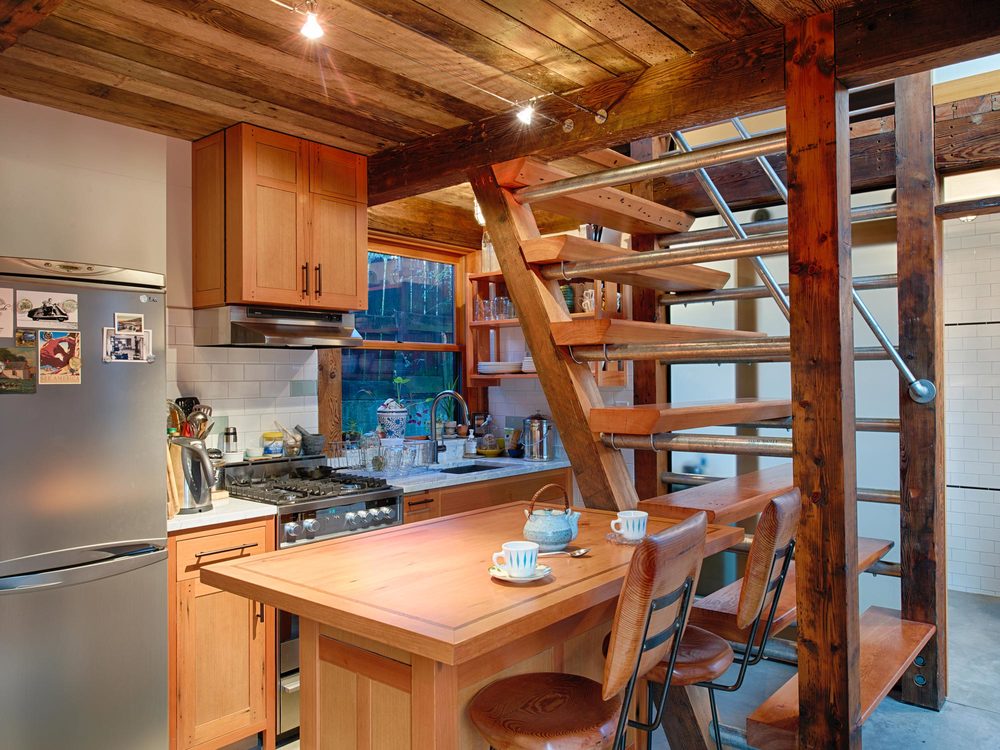
The house has great eco cred, enjoying a 5-star Built Green designation. It uses a ton of salvaged materials including stairs made of an old bowling lane. It also features LED lighting, a super-efficient boiler heater, low-VOC paints and caulks and radiant floors of fly-ash concrete (a by-product of burning coal for energy) and an exterior envelope with two inches of rigid insulation and wall cavities filled with an additional 5 ½ inches of cotton insulation from recycled blue jeans.

Lichtenstein built the place after the City of Seattle started allowing ADU construction on single-family lots in 2010. We hope more municipalities take Seattle’s lead by permitting these innovative little homes to sprout up in backyards everywhere.

Via Seattle Magazine

What It’s Like to Live Near a Micro-Apartment Building

Much of the controversy surrounding the addition of micro-apartments in Seattle involved what might happen should the micro-apartment dwellers move into neighborhoods that had theretofore been the habitat of dwellers of single-family and other more conventional housing types. While we’ve heard one account of what it’s like to live in a micro-apartment, we have not heard as much about what it’s like to live near one of the buildings. Were the protesters right?

After a couple years of living next to a micro-apartment building in Seattle’s popular Capitol Hill area, one of those more conventional house-dwellers, Jason Weill, decided to report whether the fears had any basis in truth. His account is something of a mixed bag. In many ways, he confirmed many of the concerns, but in other ways, he seemed untroubled about their impact–at least weighed against the benefits the building brings.

Fittingly, the first point he brings up is parking. He writes, “A corner of my building’s parking lot has been turned into an impromptu aPodment [micro-apartment] loading zone, annoying some of my neighbors.” That said, he writes that parking was a problem before the building moved in and it’s unclear whether the situation got any worse. It should be noted that he is: 1. a single male from all we can gather, and 2. a non-car owner. If he had a family or a car, his perspective might be different.

Since Seattleites don’t typically have air conditioning, he reports that there’s been an uptick in noise from the building’s roof deck and balconies in the summer months. Though again, he doesn’t sound especially troubled by it.

His last point–and perhaps most important one–is that the building has maintained the neighborhoods “class diversity.” Beyond the fear of diminished parking, many of the micro-apartment protests seemed tinged with a “I don’t want those type of people affecting my property values.” The stereotypical micro-apartment dweller is younger and less settled than the typical single family or condo dweller. In fact, Weill thinks this stereotype worked in his favor. He was able to purchase his place easier because of fears about what type of people the building–which was going up when he bought–would bring to the neighborhood. And Weill confirms that the building, whose rents range from $600-1200 and have three month leases available, has “attracted a surprisingly broad mix of students, full-time workers, and recent college grads saving up for their first real apartment.” Rather than seeing these different types of folks as a blight, he seems encouraged that there is an opportunity for the non-well-heeled to get into a nice neighborhood.

What Weill gets that many don’t is that having a diversity of housing types–and resident types–is something to embrace, not fear. He also grasps the greater context of Seattle’s housing market. He writes, “As of 2013 the city had added 15,000 jobs year-over-year while only 9,000 housing units were expected to become available for each of the next five years.” These people–many of whom don’t have the resources for conventional housing–have to live somewhere they can afford. The micro-apartments provide that somewhere. Weill asks, why shouldn’t they be in my backyard?

Read Weill’s full post on his website.

Via Capitol Hill Seattle Blog

A Case for Bringing Back the Residential Hotel

Up until its condominium conversion in 2005, Barbizon 63 was a paragon of compact, efficient living in New York City. For most of its life, the building was used as a women’s “residential hotel.” Located on Manhattan’s upper east side, the 23 story building contained 700 tiny units. In the 70s, you could rent a room at the Barbizon 63 for around $160/week (in 2014 dollars). That rent included a furnished single room, bathroom down the hall along with in-house lounges, a gym with swimming pool and a communal dining hall. It provided cheap, safe and clean lodging for women starting out in the city. The names of past residents is a who’s who list of 20th century artistic icons: Grace Kelly, Lauren Bacall, Joan(s) Crawford and Didion, Liza Minnelli and even Ricky Gervais after they opened their doors to men in 1981.

The Barbizon Hotel New York

For all intents and purposes, Barbizon 63 was an SRO–a housing type that fell out of favor in the late 70s and 80s. Following a sustained economic downturn in NYC, SROs often become ersatz homeless shelters. Most of the buildings were  eventually converted to standard hotels and later condominiums. As for Barbizon 63, after undergoing a few iterations of hotels, it eventually went condo in 2002. Today, there are 70 units in the building (along with 16 rent-controlled holdovers). The average per sq ft listing price of a condo is about $2600. One three bedroom unit for sale has combined monthly charges of $6200.

Barbizon 63 is far from alone. Across the city, most residential hotels and SROs were converted to luxury hotels or condos. The Salvation Army on Gramercy Park shared a similar fate to Barbizon 63. It once contained 300 units that rented for about $112/week. A condo conversion a few years ago brought the building unit number down to 17. The average per sq ft listing price is a little more than $4K. The building’s smallest unit–a two-bedroom–was listed for $9.8M (in contract) and has about $10K/month of monthly charges.

The above video is by architect Jonathan Kirschenfeld from the 2011 Making Room Conference. He points to these two buildings, among others, and how the demise of the SRO led to the advent of supportive housing–a designation only available to people with special needs.

The fate of these buildings is the fate of New York and many other cities: new wealth creates a high demand for housing, which in turn eliminates affordable housing options and pushes the lower-income folks further and further from the centers of cities.

It’s hard to begrudge developers for capitalizing on market conditions. If a small population is willing to pay a premium for large homes in prestigious locations–often in buildings that had once stood derelict or underused–it’s their job to be accommodating. But these economic realities often yield unfortunate cultural consequences. Many creative folks whose talents might not have the market value of an investment banker are forced to migrate. Alternately, these same people are railroaded into work that pays the bills rather than nourishing the soul. Slowly but surely, a city’s cultural vibrancy is lost.

While we won’t suggest we know the answer to this vexing situation, we will say there’s a real need for housing like SROs, efficiencies, residential hotels, or their modern equivalent, the micro-apartments. Cheap, safe, temporary, often small, housing is a vital component to giving people–young and old–access to cities that are normally economically out of reach.

It’s a bummer what’s going on in Seattle and other places that are opposing micro-housing. Many people–especially young people at the beginning of their careers–just want a place to cheap, clean place to sleep in a decent location. They don’t need fiver burner stoves, walk in closets or in many cases, their own bathrooms. Granted, Seattle’s micro-housing isn’t usually as comely as the stately Barbizon 63 or Salvation Army buildings. But perhaps if micro-housing were to enter the canon of necessary urban housing typology, its architecture might start improving in turn.

But the revolt against micro-housing is often as much cultural as architectural. People are often afraid of the itinerant character of the micro-housing dweller. It’d be great if people started recognizing that that character, is not a threat to property values, but an invaluable component to a city’s cultural diversity.

Should There Be Housing Size Minimums?

Last week, Seattle’s City Council was discussing micro-housing regulation–a discussion that’s been going on for a while. About a year ago, we looked at a proposal that sought to define a micro-apartment as a dwelling smaller than 285 sq ft; it had to have its own bathroom and a communal kitchen for every eight units along with a few other criteria. The discussion last week furthered this conversation, stating that eight micro-dwellings (effectively efficiency apartments), each with their own bathroom and kitchenette and one shared kitchen, would constitute one micro “unit”. There could be multiple units in a building.

One big unresolved issue for the council is dwelling size. One proposal promoted by Mike O’Brien, the city council’s land-use committee chairman, is that the average minimum size of all of the micro-housing units in a building be 220 sq ft; this number being in line with a number of other major cities like San Francisco’s minimum required area. Specifying that a buildings units’ average minimum–versus overall average–is a safeguard against developers putting one or two big units so they can build a bunch of tiny units.

The other proposal, came from council-member Nick Licata, who said “I don’t want to have the market determine the availability and affordability of units to the extent that we end up putting people in chicken coops.” He suggested an amendment to the 220 sq ft proposal, which would allow for units as small as 180 sq ft. The number was based on the fact that he knew people who live comfortably in apartments that size. It is also a number that is consistent with other parts of the city’s building code.

Whether Seattle lands on 220, 180 or 90 sq ft, there seems to be a bigger question on the table. Should cities even have minimum size requirements for dwellings?  If someone wants to live in a closet–and presumably pay a proportionately low rent–shouldn’t that be an option he or she should be able to exercise?

This is hardly a suggestion to abolish building regulation. Whether 8K or 80 sq ft, any dwelling should adhere to certain safety and livability standards. People shouldn’t live in chicken coops or cages. But if they want to live in a well-ventilated, sunny space with proper egress–one that happens to be the size of a chicken coop–who are government officials to say that they can’t?

One big problem in Seattle is the neighborhoods the micro-apartment building are moving into. Unlike places like San Francisco, many of Seattle’s micro-apartment buildings are being built in medium density neighborhoods with single-family houses with longtime–and vocal–residents who aren’t keen on micro-apartment dwellers (younger, more transient) and their impact on parking. Many of these folks think the city needs to be stricter about micro-housing regulation.

On the other hand, Seattle is unique in that its government has been overall quite supportive of micro-housing. The current proposals being discussed are a function of that. The city is trying to add the micro-housing typology into its architectural canon through these regulations. And why not? Micro-housing provides market-based, affordable housing for the city’s growing single populations (40% of residents in 2011 according to the Seattle Times).

The city’s advocacy is no doubt helped along by the fact that developers seem to be making money building micro-housing. Hell, there’s even a lobbying group called Smart Growth Seattle. In many ways, the controversy is arising from the parity of the two sides: entrenched and vocal Seattleites opposing micro-housing (or at least trying to curb its rate of expansion) versus flush and connected developers, who are providing a popular type of housing.

This issue reminds us of Felice Cohen’s 90 sq ft apartment. Because of its size, Cohen was able to afford a neighborhood and lifestyle she couldn’t have had she lived a larger apartment. She proudly showed the tiny space off to Fair Companies. When the video went viral, her landlord got busted because it was an illegal sublet. She was evicted shortly thereafter. When we last saw her, she did an awkward tour of her new 500 sq ft digs, whose space she hardly knew what to do with. Cohen’s first apartment, so far as we could see, was small, but not dangerous. Assuming a space is safe, who’s to say that someplace is too small to live in?

What do you think? Should the government regulate housing size? Or, assuming housing is safe and livable, should the market and citizens decide? Let us know what you think in our comments section.

Via Crosscut.com

What It’s Like to Live in a Micro-Apartment

As a New Yorker, burdened as I am with our stereotypical New York-centricity, it kinda pains me to admit that Seattle is America’s micro-apartment capital. Seattle’s micro-apartment’s might lack the flash of NYC’s adAPT pilot program or the innovation behind Panoramic Interests‘ San Francisco develops. But what Seattle lacks in bling, it makes up for in volume. Whereas you could count the number of proper micro-apartment buildings in NYC and SF on your hands and toes, Seattle boasts at least 50 micro-apartment buildings and a couple more in the pipeline. Seattle has created a type of micro-apartments that is low-frills, furnished, affordable and almost always located close to transit hubs. Though perhaps not much more than glorified boarding houses, we see them as promoting simple, thrifty, car-free living.

But for all the publicity Seattle micros have received, there have been few reports as to what it’s like to actually live in one of these micro-apartments.  A couple months ago, Nicole Hennig reached out to us with exactly that. She lives in one Seattle’s many micro-apartments (more specifically a building by Footprint Properties) and she gives us a pretty great account to what it’s like to live in one.

Hennig is not necessarily the stereotypical micro-apartment dweller, who she says are mostly people in their 20s in the building where she lives. After leaving her job of 14 years at MIT at the beginning of 2013, Hennig, a self-described Baby Boomer, started her own business helping librarians and educators find and use the best mobile technologies for education. Because all of her work is done online, she decided to spend a few years exploring living in different locations. Much of last year was spent in Oaxaca, Mexico and she has spent this year bouncing between different Airbnb properties along the West Coast.

She came to Seattle in part to live in a micro-apartment. “I had been following the ‘tiny house’ movement for quite a while,” she wrote to us. “But I prefer urban areas to rural, and it seems most tiny houses need to be located in small towns or rural areas. So that fact that micro-apartments exist, usually in walkable neighborhoods of big cites–that sounded perfect to me! (and it is).”

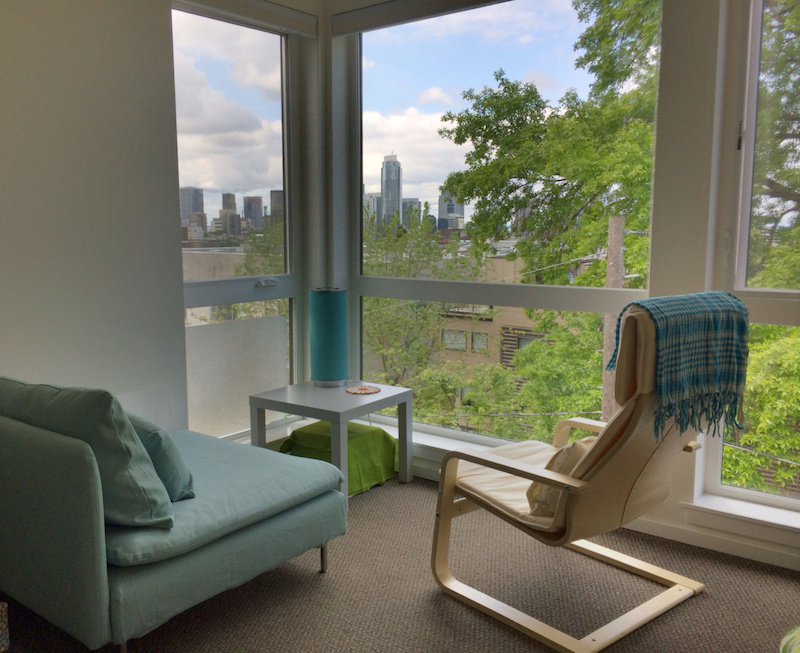
She looked around at various micro-apartments in Seattle–many of which she found too tiny and depressing–before finding her current place in the Capitol Hill neighborhood. The apartment is roughly 300 sq ft with floor-to-ceiling windows that have a view of Seattle’s skyline. “The great view makes my tiny space feel big,” she told us.

The apartment costs $1000/month, which includes basic furniture, Internet, and all utilities. That includes a $50/month premium to have a six month lease. While not dirt cheap relative to other places in the neighborhood, she sees many perks. She wrote, “I could have found a much larger, full studio apartment in the same neighborhood for $1,200, but I would have had to pay extra for utilities and Internet, buy more furniture, and commit to a year-long lease.”

“The best part of living in this micro-apartment,” she writes, “Is that it makes living in what is normally an expensive neighborhood affordable, by cutting back on space. Space is the thing I care least about since I have very few possessions.”

Hennig is a poster child for lightweight living. She writes, “I prefer experiences to things and I like working for myself. I’d rather rent than own practically everything in my life. I’ve owned thousands of books over the years and now I’m happy to only have e-books. I don’t own any more music or movies, preferring Pandora and Netflix. If I need a car, I use Zipcar, Car2Go, or I get a ride from Sidecar, Uber, or Lyft. When I was in Portland I rented a bike from a local person for the whole six weeks I was there, using Spinlister (for a much cheaper price than a bike shop rental).”

hennig-kitchen

Of the building itself, she doesn’t report much in the way of community spirit, saying that, like most city-dwellers, most residents keep to themselves. And though there are communal kitchens in her building, she rarely sees anyone in them. She prepares her food in her apartment, mostly using a little rice-cooker/veggie steamer, and a small travel blender, as well as occasionally ordering out from the bevy of great, cheap takeout places nearby.

hennig-micro-roofdeck

“People do use the roof deck one level above me,” she writes. “There are chairs and grills for cooking out. I met a few people from the building on the 4th of July when I got home from a party–everyone went up to view the fireworks from the roof.”

While this sort of minimal living might seem to discourage feeling grounded and tending longterm relationships, she says the opposite is true. “I consider my home to be wherever I am. It’s very easy to keep in touch with my closest friends and family in Boston, Vermont, and San Francisco, and eventually I’ll probably build one more community of friends somewhere. Then I will float between them at different times of year. I collaborate online with others on some of my work projects, so I never feel isolated in my work life. In each location I’ve met friends of friends to hang out with and I always end up getting invited to holiday celebrations, bike rides, tours of the city by locals who like to show off their city, and so on. I also become a regular at the various coffee shops where I work and chat with the employees there.”

“Overall, I would say that a micro-apartment is perfect for my nomadic life, making it affordable and convenient to live in a great urban neighborhood for the nice-weather part of the year,” Hennig writes. “I love my view, and my neighborhood and I love having few possessions. When it’s time to move, I’ll probably hire a Task Rabbit to come get the few furniture and household items I purchased to use while I’m here and sell them on Craigslist for me. I’ll probably pack of a box of a few items and mail it to myself for use in my next six-month rental–or I’ll just have him sell all of it for me and go back to staying in furnished Airbnb rentals for a while, I’m not sure. I might use this ‘closet in the cloud’ service [MakeSpace Air] I heard about recently to store a few things until I find the next apartment.”

In many ways, Hennig embodies a sea-change in terms of how people can live. She forgoes space for location, she uses technology to both reduce her possessions and professional location dependence. It’s a lighter, less encumbered, simpler lifestyle–one that we think will be far more common in the near future. Read more about Hennig’s life on her blog Location Flexible Life.

This Tiny, Passive House Ain’t No Wimp

Don’t be fooled by its peace-loving name, few things will defend you from the elements like a Passive House. If you’re not familiar with the term, Passive House (aka Passivhaus) is a German-born set of rigorous building standards that make a dwelling extremely energy efficient. Passive House construction implements energy saving measures like super insulation, passive solar design (i.e. optimizing a structure’s orientation to put the sun to good use–either shielding it from the hot in warmer regions or adding solar heat in colder ones), triple or quadruple-glazed windows, an airtight building envelope and various natural or mechanical ventilation systems that keep fresh air circulating through the interior. The LifeEdited apartment, though not Passive House certified, employs a number of Passive House strategies such as a tight air barrier and the use of a heat recovery ventilator (HRV); this allowed us to super insulate the space such that we were able to reduce the number of radiators from five to one.

But just because a dwelling meets the Passive House standard doesn’t mean it’s required to be a particular size. In fact, many Passive Houses are quite large. And as we know, you can have the most energy efficient home, but if you have to drive a couple hours to get to it, it seriously affects the home’s overall resource consumption. The marriage of small, dense housing with Passive House levels of building efficiency would be a felicitous one. And that’s exactly what Mini-B Passive House is all about.

The 300 sq ft house is the brainchild of architect Joe Giampietro. It was designed to be used as a detached accessory dwelling unit (DADU) in the Seattle area, though we imagine it could be setup elsewhere. The house uses nine inches of foam insulation, a heat recovery ventilator and quadruple glazed windows among other things. Its insulation is so complete that the rare bit of Seattle winter sunlight or, in extreme cold, a tiny wall mounted heating panel, are all that are needed to make the place comfortable. It’s estimated annual heating bills would run about $30 and electricity a mere $100.

The house was built by students and used as a demo before eventually being auctioned off. On their website Giampietro says that Mini-B plans and constructed homes are available to purchase, details available upon request.

Seattle’s Urban Boom

Forget NYC and San Francisco as the American leaders in smart urban growth. Seattle is where it’s at. The two former cities–with their tight geographies and urban grids conducive to walking, public transport and compact, efficient living–have always packed people in. But Seattle’s growth was more emblematic of many American cities, where, throughout the 20th Century, suburban sprawl reigned supreme. For 100 years, the suburbs of King County outpaced the growth of the city of Seattle (which, incidentally, is the King County seat). A trend that appears to be changing.

The first sign was in 2010, when the city of Seattle matched King County suburban growth. Then between 2011-2012 Seattle grew at a rate 25% faster than King County.

seattle-growth

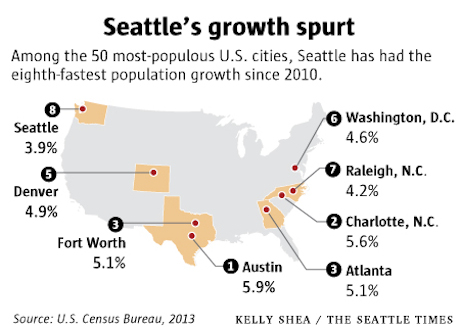
Some attribute this trend to the aftermath of the housing bust–young people couldn’t “graduate” to the burbs like their parents did in the past. But the trend is hardly limited to Seattle. From DC to Denver to Atlanta, people are choosing city living–a choice that may be more than sloppy seconds to the suburbs.

fyiguy-popgrowth-map-2

The Seattle Times speculates about the possible motivations behind this movement:

We might be witnessing a major demographic shift, with younger people rejecting a culture of sprawl and car-dependency associated with suburbs, and instead choosing the lifestyle offered by dense, walkable cities…Signs of Seattle’s success are not difficult to spot. Everywhere you look there seems to be a new apartment building under construction. As reported in The Seattle Times, more apartments were opened in 2013 than in any of the previous 20 years.

Seattle bears this out. Least we forget, the city is perhaps the epicenter of the micro-apartment movement (often to the chagrin of many Seattleites). These tiny apartment forgo large interiors and parking spaces for central locations and affordability. As of last year, there were at least 47 micro-apartment buildings throughout the city; these developments are unique in that they Seattle convert low-to-medium density neighborhoods into higher density ones.

Of course Seattle’s growth can’t be solely attributed to micro-housing. It does show Seattle’s regulatory willingness to centralize populations–something that can’t necessarily be said for NYC, for example, a city that still has a 400 sq ft minimum size for new apartments.

The city of Seattle has 7,402 people per square mile. Compared to NYC and San Francisco–27,550 and 17,620 people per sq mile respectively–that number is not earth shattering. But NYC and San Fran both enjoy significant geographical constraints as well as infrastructures that were developed well before the car came into widespread use. For them, dense, walkable, easily traversed cityscapes are natural. Seattle, whose infrastructure grew up to a greater extent around the car, was more susceptible decentralization, making recent developments all the more impressive. It shows that a city’s growth need not be dictated by nature–that how a city nurtures development plays a critical role in smart growth and more livable cities.

Via Seattle Times

What is a Micro Apartment?

Amidst its turmoil, the City of Seattle has drafted a proposal for establishing citywide micro-apartment (aka “micro-unit” and “micro-housing”) regulations. The good news is that “DPD [Dept. of Planning and Development] has found that micro-housing provides an important lower-cost housing option that is appealing to many renters, and we recommend that it continue to be allowed to meet this demand.”

But before you approve of something–particularly as it pertains to governmental policy–you must define what that something is. And define Seattle did. According to the proposal, a micro-apartment cannot:

  • Be larger than 285 sq ft.
  • Have an oven or cooktop.
  • Be without one 120 sq ft kitchen for every eight residents.
  • Have a sink outside the bathroom.
  • Have “no more than 8 micros (or 8 unrelated individuals)…located in a micro dwelling unit.”
  • Have less than one bike parking station per four micro-unit residents.
  • Be built in single family zones.

The proposal also makes a clear distinction between a micro-unit and a “Congregate House,” which has more than eight micros in a dwelling unit. They site larger developments like dormitories and senior homes as examples of the species, Though “Some recent forms of development with similarities to the form of housing referred to as micro- housing are classified as congregate residences,” according to the proposal. The two respective housing types will undergo different levels of design review; the larger the development, the more rigorous the review.

The proposal suggests a very regional interpretation of what a micro-apartment is. Seattle has had friction when micro-apartments encroached into single family home neighborhoods; they’ve dealt with parking issues and lax design oversight. All of these issues are addressed in the document (available here in its entirety).

The document begs the question of whether there is a universal definition for a micro-apartment? For the adAPT NYC competition, micro-apartments meant an apartment that was between 275-300 sq ft, but these included kitchens and ADA bathrooms. In San Francisco, legislation last year granted an allowance for building dwelling units as small as 220 sq ft, with 70 sq ft for bathroom and kitchen. In Boston, they nervously authorized the construction of 450 sq ft “Innovation Units.” In Providence, RI, they’re making apartments as small as 225 in the Arcade Providence. On the other side of the planet in Japan and Hong Kong, many of these numbers would be shockingly large. In other words, for every region, there’s a different definition of “micro.”

Being confused, we turned to the all powerful Wikipedia for answers. And wouldn’t you know it, they have a definition:

A microapartment, also known as an apodment or microflat, is a one-room, self-contained living space, usually purpose built, designed to accommodate a sitting space, sleeping space, bathroom and kitchenette within around 150–350 square feet (c. 14–32 square metres). Residents may also have access to a communal kitchen, patio and roof garden.

While we aren’t so bold as to question the Authority of Wikipedia, we would submit that “aPodment” is the name of a particular developer’s (Calhoun) properties in Seattle. Other than that, the size parameters are fairly in line with what most people call a micro-unit. (Technically, “micro” (µ) denotes something that is 10-6 or 1/1,000,0000. Given that the average new US home is 2505 sq ft, a micro home might be .0025 sq ft).

What this varied definition shows is the inherent relativity of the micro designation–most often relative to the availability of affordable real estate: Less affordable real estate, smaller homes overall, more micro micros. More affordable real estate, larger homes overall, less micro micros. In some cases, the designation can be a way of re-branding small apartments in areas where there is ample housing stock; Providence and Chicago come to mind. This is not necessarily a bad thing, as the new micro-apartments are often nicer and more affordable than their more girthsome neighbors.

We consider the Seattle micro-apartment definition a bit prescriptive. In fact, it more closely resembles a boarding room or efficiency apartment (not bad things per se). Though we understand that much of their policy choices are reacting to an existing situation.

How would we define micro-apartment? Perhaps, “A small, typically urban, self-contained apartment that is between 150-350 square feet.”

image via SmartSpace

Seattle’s Micro Apartment War

Add micro apartments to wind turbines and public bike stations to things people don’t want in their backyards. Seattle’s micro-apartment controversy continues as news headlines and this letter we received from Seattle resident Connie Ann Innis suggests. Here’s what she wrote:

Dear LifeEdited,

I own a condo next door to one of the aPodments in Seattle’s Capitol Hill neighborhood.

Last evening I spoke with a young woman who lives in one of these micro-apartments (I stopped to thank her for picking up curbside litter left by pedestrians and tossed out of car windows). This woman was shaking as she told of complete strangers stopping to scream at her in a threatening manner as she smoked in a designated outdoor area, cruel comments directed at the micro-apartment tenants as a whole and scathing prejudice voiced at neighborhood meetings (meetings that she actually bothered to attend).

This woman is working and studying at a nearby community college; the micro-apartments proximity to mass transit and excellent “walk score” preclude the need for expensive car ownership and the relatively low rent allows her to work toward her dreams.

Everyone is entitled to their opinion, of course and it’s true there are plenty of ugly, cheap apartments being built in Seattle without regard for impact. The developers who stand to gain wealth from these buildings are appropriate targets for dissent and complaints re: zoning laws and structure; the inhabitants of these structures are NOT.

Yes most of us love to look at gracious, old brick buildings with stunning landscaping, but this is an urban neighborhood and those mansions often come with $4 million price tags and the need for “staff” [see above video for an example of what Innis is referring to].

A neighborhood that prides itself on creativity, acceptance and diversity has in many cases become hostile and disrespectful to “poor people”.

Innis touches on most of the objections to micro-apartments: illegal zoning, inadequate community approval, rapacious developers. But her tale also alludes to a less technocratic objection: that many residents don’t want what they perceive to be mostly young, single, less-permanent, lower-income micro-apartment dwellers to change the character of their mostly middle-age, family-oriented, more permanent, middle-to-upper-middle class neighborhoods. This objection withstands the obvious demand for affordable housing in centrally located neighborhoods; the questionable veracity of the arguments about the demographic makeup of the micro-apartment dwellers; or their actual impact on the character of the neighborhoods.

Fortunate for the micro-apartment advocates, Seattle Mayor Mike McGinn is decidedly less conflicted on the issue, focusing on the apartments’ affordability, central locations that curb the need for cars and that their appeal to all ages. Here’s what he told KIROTV:

What we’ve seen is the rise of these micro apartments because it’s affordable living for people who don’t want to own a car and want to use transit and ride a bike. And they’ve been very popular. And it’s an affordable way for a young person or an older person to live in the neighborhood where they work.

While this pro-con polarity is getting most of the media attention, there are less public, more nuanced opinions in many Seattle neighborhoods that find themselves host to micro-apartment complexes.

One Seattle Life-Editer says that he was encouraged to sign a petition opposing a micro-apartment building by an online neighborhood forum, but this same forum routinely has postings seeking reasonably-priced apartments for friends and family just moving to the city.

He believes that Seattle is a very civil place, so the density debate is sometimes framed by the practical realities of finding places where schoolteachers, Starbucks workers and young families can live. But when this practical question is tempered with economic interests–for the resident looking for an affordable place to live, for the developer looking to capitalize on this demand and for the citizen trying to preserve the integrity and value of his or her neighborhood–there’s a lot of room for disagreement and debate.

There are no easy answers, so feel free to continue the debate in the comments below. We’d love to hear you thoughts.

Sunset View of Seattle Skyline image via Shutterstock