Where The Streets Have No Cars

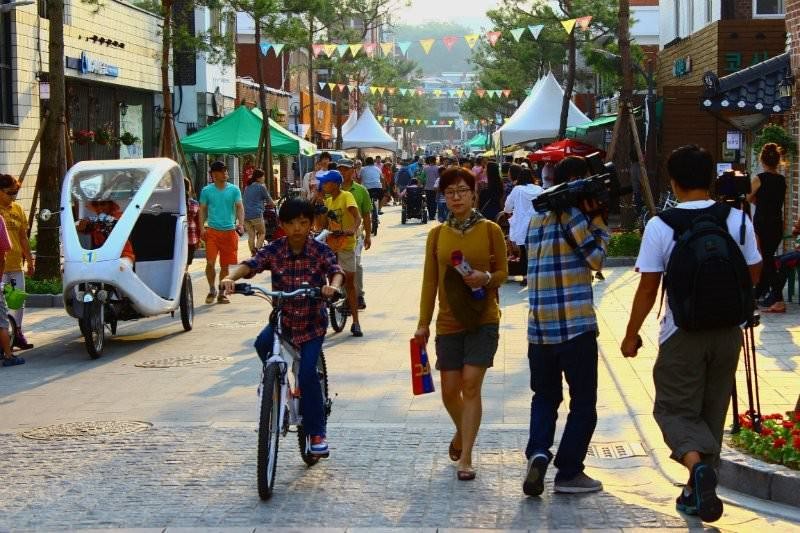
It’s funny how transparent cars are in today’s cityscapes. They’re a given and just blend into our field of vision. But what if every car on our streets disappeared? What would those streets look like? How could we use them differently? That was the query one South Korean neighborhood asked as well as the challenge it took on. In 2013, as part of EcoMobility Festival, Haenggung-dong, a neighborhood of Suwon, blocked 1,500 registered cars from its city for one month. Residents were asked to walk, bike, take public transit or car-share instead. The experiment was the subject of a recently released book, Neighborhood in Motion: One Neighborhood, One Month, No Cars.

Neighborhood-in-Motion-2-800x533

The festival and experiment were designed to get people familiar with a future with scarce resources. The book goes into every aspect of the project–from finding a city wacky enough to try such a bold experiment to its aftermath. From a review of the book in Pop-Up City:

The book intriguingly shows how an urban district changes within the car-free month: from busy, car-oriented streets to a more attractive neighborhood that offers a higher quality of life due to less smog and more possibilities to use public spaces. Cafés were able to extend their seating onto the sidewalk, children were able to play in the streets safely and people started to play nightly games of badminton in the streets.

Sounds good to us.

The 2015 EcoMobility Festival will be in the Sandton neighborhood of Johannesburg, South Africa–an area where not everyone is on board with ditching their cars for a month. What’s great about the festival is that overcoming protests, and perhaps winning over some hearts and minds in the meantime, is far more feasible for 30 days than forever.

Via Pop-Up City

Hipster-ific, Human-Powered Automobile Alternative

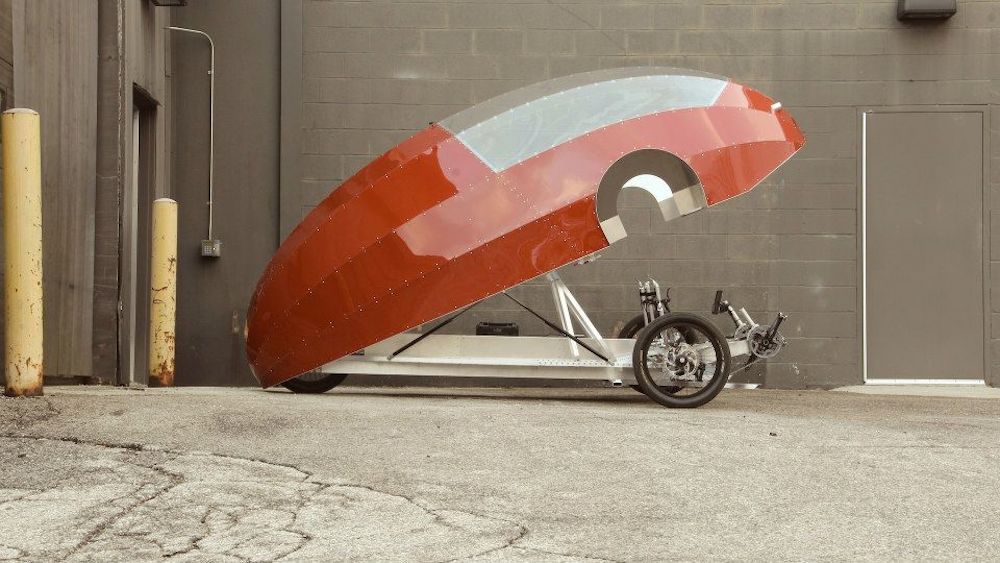
We are forever on the lookout for great ‘edited’ transportation options. Bikes, walking and public transport are the ostensible ideal modes of transit, but for many they lack the protection, carrying capacity and range to make them feasible daily transport. Conversely, car-shares, trikes and other minimal ways of getting around using internal-combustion engines and 1K lb + masses of metal are overkill for many. A company called The Future People is striking a nice middle ground. Their Future Cycles are lightweight, human powered vehicles that, for some, could be real replacements for the personal car.

TFP is a design collective, principally made up of husband and wife Cameron and Rachael Van Dyke. According to their website, they are out to “test alternative value systems related to housing, transportation, and community.” They unveiled two Future Cycle models at the recent Detroit Auto Show (TFP’s hometown), wanting to “propose an alternative set of values in relation to transportation,” according to a press release.

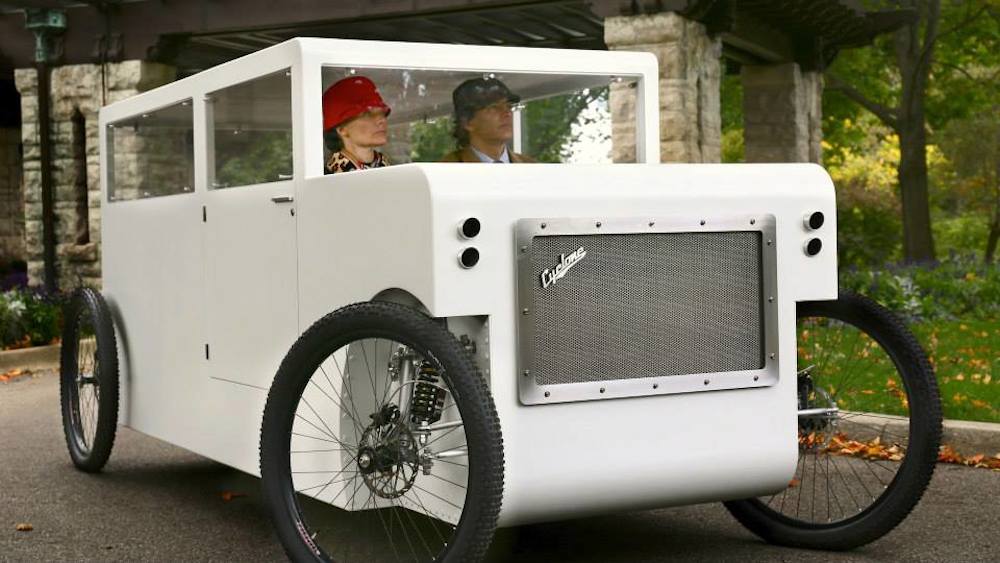
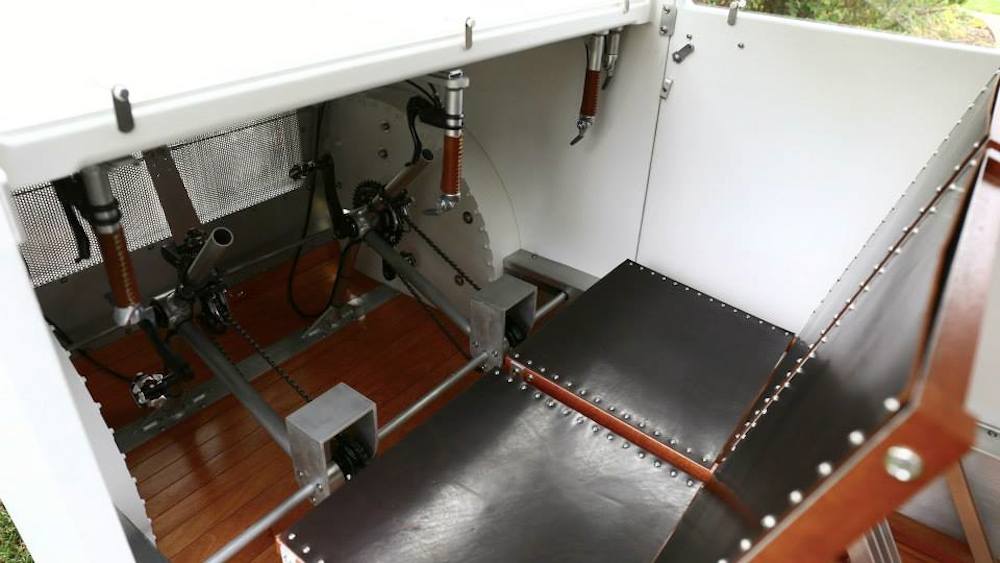
One model is named the Cyclone. It’s powered by two peddlers up front and seats four. According to TFP, it takes design cues from the Model T and the iPod. With its mahogany floors and leather seats, it is painfully stylish, however I suspect it’s boxy shape is like doing a bellyflop with the wind (not cool when efficiency is the name of the game) and I might trade those amazing-looking mahogany floors for something lighter (though, to be fair, it is a concept).

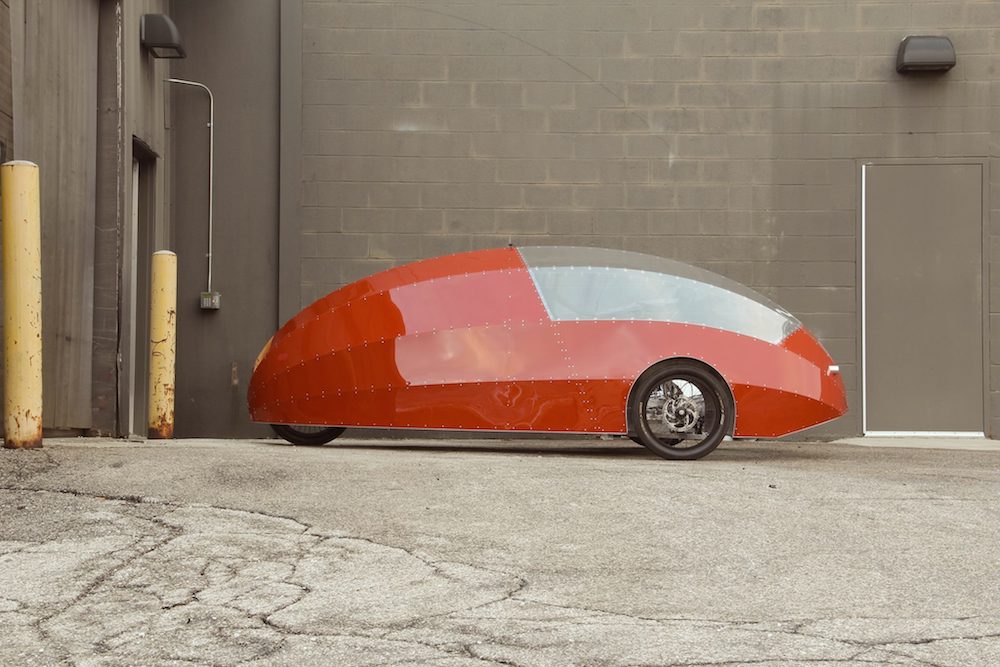
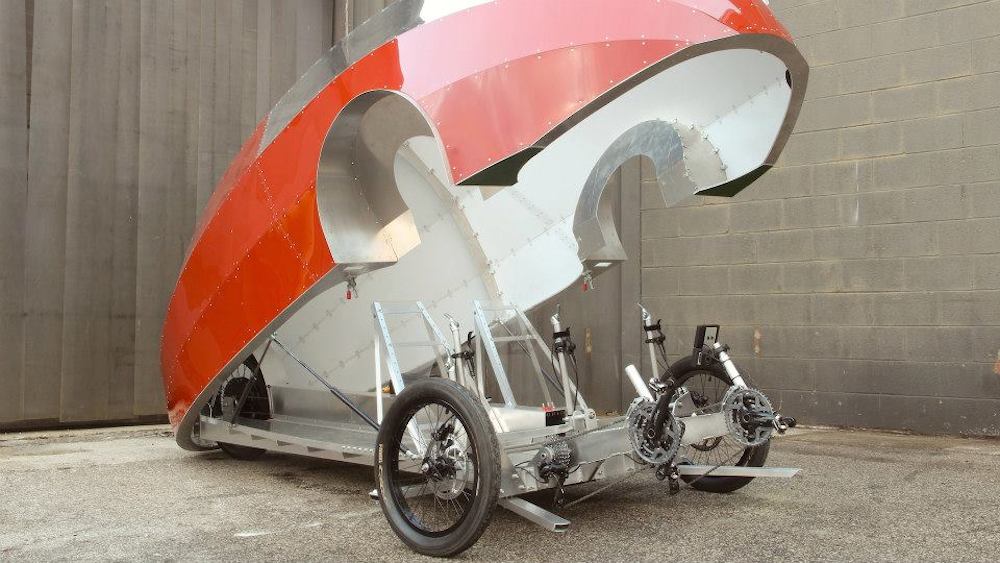
Far more interesting is the Zeppelin, a slug-shaped two-seater with pedals and a 750w electric rear motor with a 20 mile range. It only weighs 270 lbs, has a big boot for lugging stuff and can cruise at 25 mph on flat ground. The shape, unlike it’s boxy brother, looks like it would slice through the wind. It meets the federal bicycle classification and therefore requires no license, registration or insurance.

“The goal with the Zeppelin was to find an ideal point at which a bicycle and car could coexist within the same object,” according to Cameron Van Dyke, “creating a truly hybrid design.”

If you want one of these vehicles, you are probably going to have to wait. Unfortunately, unlike the Organic Transport ELF that we looked at last year, the The Future Cycles don’t appear to be for sale. We hope that changes.

Via PSFK

UberPool Makes it Easy to Pimp Your Ride

The world’s roads are littered with people driving the same way–people leaving when you’re leaving, from where you’re leaving, going to where you’re going (or, if not exactly same locale, at least getting on and off somewhere along points on the way). But until now there was no way of connecting those people–likely why 78% of American commuters end up driving alone. UberPool–a division of Uber–is trying to change that, connecting people who are going the same way. From their website:

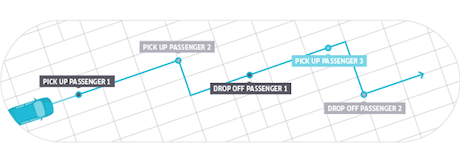
With UberPool, you share a ride—and split the cost [of an UberX car-service ride]—with another person who just happens to be requesting a ride along a similar route. The beauty, though, is that you still get Uber-style on-demand convenience and reliability: just push the button like before and get a car in five minutes. When we find a match, we notify you of your co-rider’s first name.

Uber says an UberPool car would achieve 36.4 person trips per day (the number of people carried in a car multiplied by the number of trips that car makes in a given day) versus the average private car that only has 4.8. This high volume will theoretically make the service so cheap that it can realistically replace car ownership, halving the price of their UberX service, which they say is already 40% less than a traditional taxi. They think that UberPool’s convenience and thrift will make it compelling enough to eventually remove 1M cars off the road.

uber_NYC_infographic-02

The program has been rolled out in beta in Paris, San Francisco and New York City. A Newsweek article reports that some drivers are having trouble using the service and there are complaints about the service cutting into profits for the drivers. Uber has expressed that there are still many kinks in the system–which is why it’s in beta, duh–but that UberPool will ultimately benefit drivers as the service, by virtue of its convenience and low cost, will create ever-increasing volume of people looking for rides, keeping drivers busier than they are now. Like all new ideas, there is bound to be a ramp up period.

It’s pretty clear that we have more resources than we need, but sometimes distributing those resources to people who want them, when they want them can be difficult to say the least. UberPool is a great example of how tech can help us make the most of what we got. We wish the project the best of luck.

Elio Motors is Editing the Car by Removing a Wheel

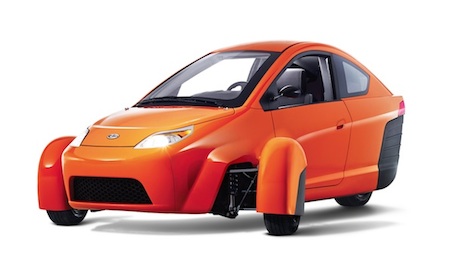
According to the US Census Bureau, 76% of all American workers drive to work….alone. Even though there are so many single-occupant drivers on our roads, most of the cars we drive weigh two tons, carry five + people and can haul a Costco shopping spree’s worth of goods. If we are to edit the car, we must design around actual usage, not the every-blue-moon antiquing expedition with the in-laws. A startup called Elio Motors is doing just that: they are making a two-seat, three-wheeled, lightweight, fuel-efficient, aerodynamic vehicle that will get you from A to B comfortably and quickly.

Elio

The little vehicle will be powered by a .9 liter three cylinder internal combustion engine. By virtue of its 1200 lb curb weight and aerodynamic shape, it is projected to achieve 49 mpg in the city and 84 mpg on the highway. Driver and passenger are seated tandem style and there is even a small boot for groceries or a very short road trip.

And fear not, the Elio will not become SUV Chow in a crash. With its roll cage, large crumple zone and multiple front and side airbags, they expect the vehicle to achieve a five star safety rating.

We have used the words “will” and “projected” and “expect” because the Elio ain’t quite here yet. In fact many of the claims–the fuel economy, crash-star rating–are computer generated projections, not real world outcomes. Though the company has plans to produce 250K trikes a year and has already taken 13K preorders (price is expected to be just $6800), the venture is still trying to raise the money necessary to go to production.

One of the problems–one that Mr Elio brushes aside in the above video, but the NY Times highlights–is the Elio’s designation as a motorcycle by the federal government. This would have two implications: 1. most states would require a helmet for operation, something founder Paul Elio says is actually a safety hazard, and 2. every state except Kansas would require a motorcycle license, which is usually obtained taking a test on a two-wheeled motorcycle; this might pose a problem for some octogenarian or someone else not up for motorcycle operation who is interested in a small, safe vehicle to get around in.

elio-snow

The designation might be part of the reason why Elio Motors still needs about $150-200M before they begin production (ironically, they plan to produce them in a former Hummer factory in Shreveport LA).

Another reason is simply the genre-defying nature of the Elio trike. In an interview with the GAS2 blog, founder Paul Elio said that he is “creating a new product segment like the iPad or Sony Walkman”–a claim we don’t think hyperbolic. It’s half the size and twice as efficient as most sub-compact cars, but it is much safer and more comfortable than a motorcycle. If you can’t walk, bike or take public transport, having a minimal vehicle like the Elio is your next best option.

Mr Elio is confident that they will raise the money as they continue to develop the production model. He expects production to begin next year. We couldn’t agree more that there is a big need for a small vehicle delivering basic transportation and traverses long distances swiftly and efficiently. We wish Elio the best of luck and hope to see their trikes out on the road in the near future.

via Autoblog

Cutting the Housing-Car Umbilical Cord

Whether you’re aware of it or not, most homes–or to be more precise, “dwelling units”–require parking. Meeting these requirements is not a big deal in low density suburbs with their copious amounts of space for driveways and garages. But it’s a big issue in high and medium density areas, where real estate developers might only be able to build as big as available parking spots permit. These requirements can put residents looking for affordable housing in a pinch. Making housing density low in desirable areas dwindles housing stock, driving housing prices higher. Alternately, developers must create off-street parking to satisfy requirements; the expense of those parking spaces trickles down to residents.

“The single biggest impediment to main street development, lower cost housing and midrise development is the parking requirement,” architect and Treehugger.com’s managing editor Lloyd Alter told us. “A parking spot costs a fortune to build and needs a big enough site to get all the ramps in,” he adds.

Portland, Oregon is one city that’s very familiar with this issue. More specifically, Portland’s recent crop of micro-apartments have created a situation where residential population density is outpacing available parking spaces, at least as that proportion relates to conventional dwelling unit to car ratios. Development has continued because of zoning loopholes, but like Seattle, existing residents have been up in arms; they are taking to the streets because those streets might have fewer parking spaces.

Some are proposing to cap the number of parking permits issued to micro-apartment buildings. According to the Portland Tribune who interviewed several Portland developers, this idea would solve the city’s parking woes. Alter agrees, “Limiting the number of parking permits is a perfectly reasonable strategy; The NIMBYs [not in my backyard] get to keep their spots, the NEWBEs know in advance that they don’t want to live here [Portland] and own a car without spending more money on some distant garage.”

On the surface, this solution might not seem like such a big deal. Many buildings have fewer parking spaces than dwellings. But these tend to be in high density places like San Francisco and NYC that have robust public transit systems. This is a bigger deal in a medium density city like Portland where 72% of residents still own cars. Implicit in the idea of a parking cap for micro-apartments is that how we live and how a neighborhood performs can be affected be housing type–by adding density and removing cars, micro-apartments might shift a neighborhood from being mostly low-density and car-centric, to higher-density and bike/walk/car-share/bike-share reliant.

But all of this requires new thinking on the part of regulators.

“I think that the extra density that comes with micro-apartments absolutely has to be accompanied by a revised concept about parking requirements,” Sarah Watson, Deputy Director of Citizen’s Housing and Planning Council (CHPC), a NYC housing advocacy group and think-tank, told us. She also said that “public transportation has to support those residents” or there should be “well-managed options for car sharing as part of the projects.”

Patrick Kennedy has been dealing with this issue for decades. He is the Bay Area developer behind SmartSpace as well as an upcoming, 160-unit micro-apartment building in the Mission district. “I think it is a fair compromise,” he says of giving up parking for high density, convenient living. “I did one development that had 6 parking spaces for 35 units and it didn’t cause any problems,” he told us.

Granted, most of Kennedy’s development were in places like Berkeley, which have a density twice that of Portland. But he sees the trend that Watson alluded to. “We’re moving in this direction [away from requisite parking]. In the age of Uber and bike-sharing, living without a car just isn’t that big of a sacrifice.”

Alter sees this shift away from car dependence and more reliance on alternative transportation strategies. “Fewer and fewer people who live downtown own cars. They don’t need them in their daily routines and Zip cars and car 2go are available when they do.”

He points to a new building in his Toronto hometown as a prime example of this trend. “They just built and sold a 300 unit condo without a single parking spot, in a part of town with no permit parking. They threw in 5 Zip car parking spaces and a bike locker. This is the future of development downtown.”

Watson noted something that goes beyond no permits. “I heard recently that a new micro-apartment building in DC that makes residents sign as part of their lease that they will not have a car…taking the idea even further!”

We’ve said it once and we’ll say it again: cars and the sprawl they support have costs. There are social costs, huge environmental costs, even costs to our economic wellbeing. Historically, these costs have been hidden by entitlement–that having a big home, car and the infrastructure to support these things are inalienable rights. But as we as a culture shift our ideals from space, stuff and privacy to convenience, mobility and connection, we realize we no longer want to foot the bill for these costs. It is our hope that regulators will make it easier to shift to this new way of living, removing parking regulations where and when they don’t make sense.

Misty street with parked cars image via Shutterstock

This Tiny House Might be Where We Park Our Lives in the Future

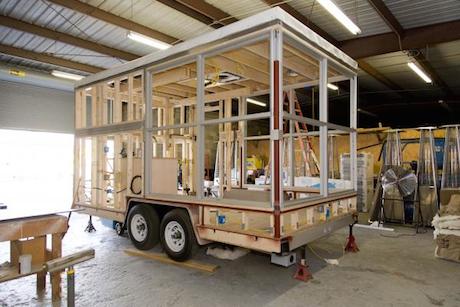
There are approximately 105,000,000 parking spaces in the United States–five for every car. At least half of all available parking spaces are vacant 40% of the time. That’s a lot of unused space dedicated to something that, while still in wide circulation, might be seeing the end of its reign as transit supreme. If we succeed in building a denser, walkable, bikeable, less-car-dependent world, we will need to do something with all of these parking spaces. That’s exactly what the folks over at SCAD (Savannah College of Art and Design) want to do with their SCADpad project. SCADpads are designed to use parking spaces as housing lots for a cost-effective way of creating more urban density while using existing and underutilized infrastructure.

Scadpad-building

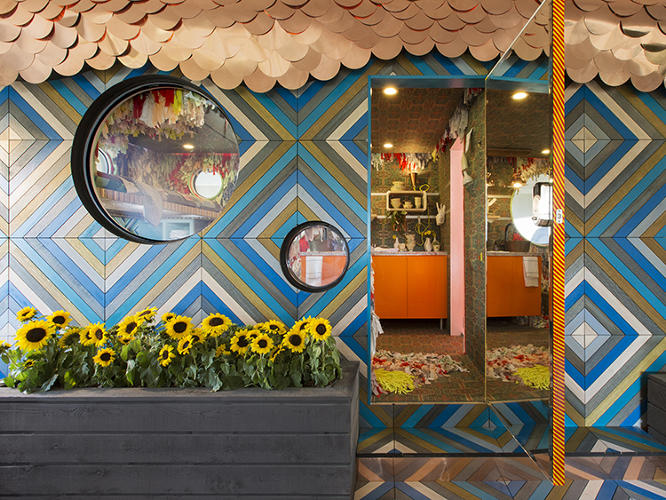
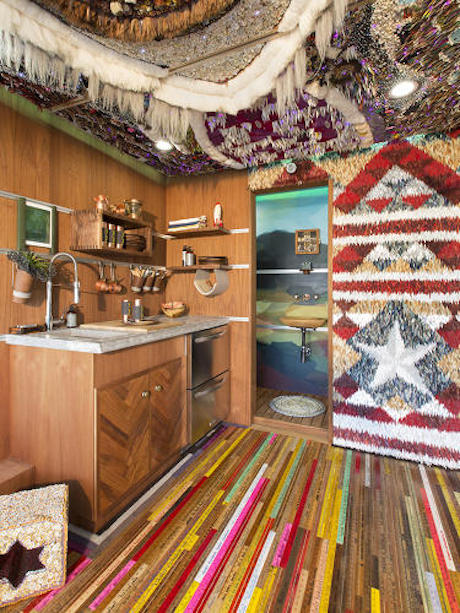
SCADpads are basically high tech versions of the tiny houses made popular by Tumbleweed Tiny House Company and others. The fact that one of the world’s top design schools is paying attention to this diminutive housing typology makes the project noteworthy. 75 Students, 12 faculty-members and 37 alumni designed these fully self-sufficient homes that include flexible eating, sleeping, bath and play spaces. We wonder if this large design team was responsible for the bizarre, hodge-podge interior design.

Scadpad-interior

Christian Sottile, dean of the SCAD School of Building Arts said this about the project to Fast Company:

SCADpad is designed by millennials for millennials. And that provides this really interesting laboratory for experimentation. You’ve got this enormous population group–78 million plus–and 88% of them want to be in an urban setting. Affordable, efficient housing is important to them, along with mobility, and not being tethered to a car, and having collaborative living environments.

In other words, the SCADpad is the architectural equivalent of the IKEA PS2014 collection we looked at a few weeks ago–both are designed specifically for millennials for whom mobility is of the utmost concern.

Three SCADpad prototypes have been set up in an Atlanta parking garage. 12 students will be living in them starting April 15. Each 135 sq ft home has an adjoining parking space as a “terrace.” The garage they chose is at SCAD’s Atlanta campus and has lovely views of that city’s skyline, though we wonder how the houses would fair in a garage’s unlit interior spaces. The setup has “a community garden watered with filterer greywater from one of the SCADpad units and fed by a fiber optic sun harvesting system and high efficiency composting systems,” according to a press release. There is also a maker space with 3D printer to make accessories for the homes.

Using parking spaces as housing lots, especially in sprawling cities like Atlanta that have parking in their DNA, is a great idea. It adds housing density in spaces that have historically opposed and prevented it. Like all tiny houses, SCADpad’s big challenge might be legislative. The demand for affordable, central housing is apparent. Whether the governmental powers-that-be permit the creative solutions that will make that possible remains to be seen.

Via Next City and SCAD Blog

The Housing-Transit Connection

A recent report by the American Public Transportation Association found that public transit use in 2013 was the highest its been since 1956; 10.7 billion trips to be precise. They also reported that “public transit ridership is up 37.2 percent, outpacing population growth, which is up 20.3 percent.”

These are heartening numbers, likely reflecting an overall trend toward urban living, where public transit is far easier to use than sub-and-ex-urban areas. Between 2000-2010, there was a 12% increase in urban growth across the country according the US Census; 3% higher than non-urban areas. There were 2.3M new city dwellers from 2012 to 2013 alone.

Why is this important and what does it have to do with small-space living? It’s important because there is an inextricable link between the type of house we choose to live in, its size, location, access to transportation and our carbon footprint.

As a rule, single family houses are more resource intensive. Their individuated thermal envelopes require more heating, cooling and materials than multifamily dwellings which share walls. More importantly, single family houses have their own lots (the average lot size of a new home in 2013 was 1/3 acre), which pushes them further and further afield, requiring more driving, more gas, more infrastructure to support those cars, etc. Given that 35-40% of the country’s energy needs are from petroleum–the bulk of which goes to cars–living in a house that is not car dependent can significantly reduce your carbon footprint.

It’s also important to note that there are fewer people occupying these houses due to a shrinking household size, a trend which, if it continues, could mean more houses for the same population, meaning more sprawl.

energy_use_impact2

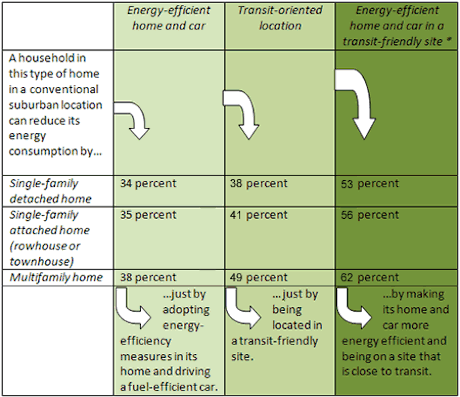
An EPA study published a few years ago called “Location Efficiency and Housing Type” explored this topic in great detail. What they found was that making your single-family house more efficient makes a difference. They found that an energy efficient housee and car can cut your footprint by 34% over a conventional, single-family suburban one. But they found that living in an energy efficient multifamily house with access to public transport–even if you keep your car–can reduce your carbon footprint by 62%. It’s also important to note that multifamily housing units are typically smaller than single-family houses.

The good news is that APTA’s report suggests America is slowly moving toward a multifamily, public-transit-centric housing bias. We say “slowly” because new single family houses are, on average, still pretty damn big. In 2012, the average new single family home was 2505 sq ft–just shy of the 2007 high of 2521, right before the housing bubble burst. One big asterisks is that there were fewer single family housing starts–1.04M in 2007 and 535K in 2012 (though there has been a steady increase in single family starts since a major dip in 2008-9).

That said, 5+ dwelling unit multi-family building starts are up as well to 293K in 2012 from their 97K low in 2009, which, coupled with increased public transit use and the overall trend away from car ownership, bodes well for a less-car-dependent, centralized American population with a smaller carbon footprint.

Long story short, putting all lifestyle benefits aside, if you want to reduce your carbon footprint, there are few things that are more effective than downsizing, centralizing and moving into a multifamily housing situation.

Via Treehugger

Fast Moving Traffic image via Shutterstock 
Robot-Free Transformer Car

We tend to get a little zealous about the merits of biking, walking and public transportation (level of zeal in that order). But until further notice, cars have a prominent place in the transportation landscape. And though car-shares make sense for occasional use, many people use their cars way more than occasionally. Given that reality, the question might be what would an “edited” car look like?

There are many current models that could be considered edited–minimal transport that carry people and stuff without extraneous size, weight, features and horsepower. Cars like Honda Civics, Toyota Priuses (Prii?) and Ford Focuses. But what if you could design the perfect vehicle–one that could be a perfect commuter when commuting, a people and stuff hauler when needed? That’s the idea behind German designer Kenan Haliloglu’s Split & Go. It’s a Smart Car-sized EV commuter that extends to van-size via a removable cab.

split-and-go-commuter

split-and-go-diagram

Haliloglu doen’t provide too much info on his website. We’re not sure why he made the tail quite as long as it is (seating for six in the rear seems a bit excessive). We imagine a version of the car could be made with a smaller cab or even various types of cabs: a pickup bed or camper for example. There are also issues such as the added weight of having three axels and storing the cab when not in use.

split-and-go-van

The odds of seeing a Split & Go on roads anytime soon are probably slim, but we think the idea of a single car that combines two distinct driving uses, an interesting one. If you must drive, might as well drive right.

Via Yanko Design

Calculating Your Home’s Real Cost

Unless you’ve lived somewhere a while and have kept assiduous records, figuring out the financial and environmental transportation costs of a particular location can be difficult. An organization and website called Abogo is trying to make that difficult calculation a little easier. The site’s Google-powered map takes any address and shows how much money is spent and how much CO2 is produced per household per month on transportation.

Here’s how they arrive at their figures:

We estimate total transportation costs for an average household from your region living in your neighborhood, including commuting, errands, and all the other trips around town. We count money spent on car ownership and use, as well as public transit use. For CO2 emissions, we count car use only. We use data from the Housing + Transportation Affordability Index, a project of the Center for Neighborhood Technology.

While there are bound to be a number of variables that Abogo can’t account for–one car households, home-offices, bike commuters, etc–the numbers are telling nonetheless. This author found out that the average household in his area spends $1386 (based on fuel at $3.90/gallon, the current rate at local gas stations) and produces .83 metric tons of CO2 per month. Thankfully, those numbers for my future address are $667 and .33 metric tons CO2.

“Real cost” is a term used to indicate the costs that go beyond a price tag. For example, a $19.99 pair of shoes might require a half ton of embodied CO2 to produce and ship; its manufacturing process might create toxic runoff in the groundwater around its factory; the labor practices that allow the shoes to be so cheap might cause civil unrest, which lead to riots, which cost governments and NGOs money to manage (or squash). Given all that, the shoe’s real cost might be $275.

“Real costs” apply to housing as well. There are financial and environmental costs for our bigger yards, increased square footage and longer commutes that are not often reflected in a home’s asking price. Similarly, we might be saving a ton of money–and CO2–in the long run on the more expensive place nearer our city’s center. If you are trying to determine what those real costs are, Abogo can be a big help.

Via Treehugger

Why Your Next Car Might be My Next Car Too

Last week, Google Ventures invested $258M in the car service Uber raising the company’s value to $3.5B. If you don’t know Uber, you probably will soon. While the company’s bread and butter is an app that allows on-demand black car reservations from existing limo companies, they have also recently introduced UberX, which allows you to book a Prius limo in several major cities. For the future, they plan to move into non-taxi ride-sharing, cutting into services like Lyft, and some speculate that they might start their own fleet of taxis. TechCrunch waxed about the possibility of an Uber fleet of driverless vehicles supplied by Google.

Uber’s growth, as well as that of other car-sharing programs, would not be so interesting if not seen in light of a major shift in behavior and attitudes toward driving, cars and where people want to live. In short, people are moving to the city, driving less and caring less about cars.

Consider the following from a US PIRG (Public Interest Research Group) report:

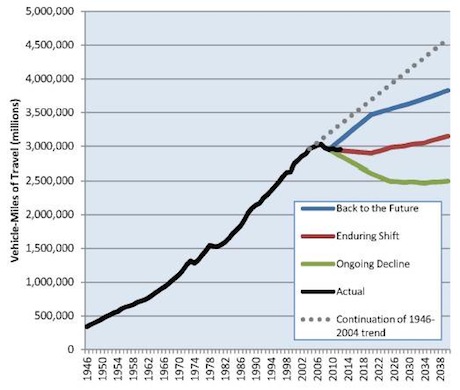
  • Americans drove more miles nearly every year between the end of World War II and 2004.
  • Americans drive no more miles in total today than we did in 2004 and no more per person than we did in 1996.
  • Americans took nearly 10 percent more trips via public transportation in 2011 than we did in 2005. The nation also saw increases in commuting by bike and on foot.
  • Young people aged 16 to 34 drove 23 percent fewer miles on average in 2009 than they did in 2001—a greater decline in driving than any other age group. The severe economic recession was likely responsible for some of the decline, but not all.
  • Millennials are more likely to want to live in urban and walkable neighborhoods and are more open to non-driving forms of transportation than older Americans. They are also the first generation to fully embrace mobile Internet-connected technologies, which are rapidly spawning new transportation options and shifting the way young Americans relate to one another, creating new avenues for living connected, vibrant lives that are less reliant on driving.

Further data supports this trend away from car use and ownership, such as the fact that kids are waiting longer to get their drivers license, and a study conducted by Zipcar found that most Millennials would sooner give up their car than their smartphone. The trend of less driving is expected to grow.

vehicle-miles-traveled

There are detractors who say that the dip in car ownership is a momentary blip before the economy improves and Millennials start having babies, but we think there’s more to it.

Following WWII, excess industrial capacity in America allowed cheap cars to flourish. In that same time fuel, excepting the OPEC blip in the 70s, was cheap and plentiful. The environmental impact of emissions was an abstraction. This low cost of ownership and operation and the perceived benign global impact of cars gave people permission to take more than they needed–more power, capacity, seating, etc (if you don’t believe this, go to Europe–or virtually anywhere else on earth–where most cars are significantly smaller). The car, invented as a tool, became a totem.

But today, the rising costs of car ownership and fuel, cultural shifts toward more centralized, urban living and technological means to access to cars without owning might be pushing the car back to its utilitarian roots. Cars may soon be seen as something to move us from point A to B, not something to move us ahead in life.

What do you think? Do you think car sharing can truly replace individual car ownership? Are we really giving up our cars or is this shift a momentary blip in automotive history?

Image credit: ChameleonsEye / Shutterstock.com