Why Most Americans are Crappy Sharers

Winston Churchill was famously quoted as saying, “You can always count on Americans to do the right thing–after they’ve tried everything else.” While there’s some debate about the exact phrasing and context of this statement, it does have a ring of truth. We have a history of righting nasty wrongs a little later than most. Hopefully the adoption of the so-called sharing economy–something that promises to save a significant amount of natural resources and money–will be another example of such a late bloom. In a report called “The Sharing Economy: Where We Go From Here” advertising giant Leo Barnett dissected the Nielsen Global Survey of Share Communities to find out American perspectives on sharing. What they found was that most Americans are pretty ignorant of what the sharing economy is and would probably not be inclined to participate in it even if they did know.

The Nielsen study went pretty deep into how receptive people around the globe were to sharing and the sharing economy, asking such intimate questions as how likely people were willing to swap pillows with their mothers. What they found was that most global citizens were open to sharing, particularly in many Asian, Middle Eastern and African nations, where sharing is a longstanding practice. But when LB teased apart the 4500 Americans surveyed, they found a population not so keen on participating in the sharing economy. Here are some of the report’s findings:

  • 3 out of 4 Americans said they hadn’t even heard of the terms “sharing economy,” “conscious consumption” or “mesh economy.”
  • Only 1/3 of Americans were familiar with brands like Airbnb and TaskRabbit.
  • 47% said they considered safety and hygiene an issue that would prevent them from sharing.
  • 43% said they have an emotional attachment to owning that would stop them from sharing.
  • 30% said that adapting to others’ schedules, following their rules and letting go of spontaneity would stop them from sharing.
  • 27% said they enjoyed the U.S. consumer culture and the sharing economy, for some, undermined free market capitalism.
  • 52% of those surveyed agreed with the statement, “I think most people would rather own than share, if they can afford to.”

While these findings are far from the death knell for the sharing economy, taken collectively, they present a formidable obstacle for it to take hold in the US.

Some of this resistance to the sharing economy is surely cultural: America is a country founded on the rugged individual, someone who doesn’t need your stuff to get by, thank you very much. But a large part is economic: people don’t avail themselves of sharing technology because it’s still very cheap to own. It’s cheap to order a power drill off of Amazon with one click. It’s cheap to own big homes to store all of your privately owned objects. And until the economics favor sharing people will continue to own their own stuff. For example, Airbnb and Zipcar have managed to gain some economic traction because they save people money over their conventional alternatives, particularly in large cities where hotel rates and car ownership is very expensive.

It’s hard for this author to not be a bit pessimistic about what it’ll take to get Americans to share in a more widespread manner. In my opinion, many people will either need to make a lot less money or the cost of goods must increase dramatically before people start taking sharing seriously.

What do you think? Can people change their behavior–sharing, for example–without dire circumstances forcing them to do so? Let us know in our comments section.

Hat tip to Wehatetowast.com Via Tripple Pundit

Uncle Sam image via Shutterstock

UberPool Makes it Easy to Pimp Your Ride

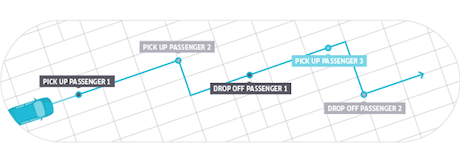
The world’s roads are littered with people driving the same way–people leaving when you’re leaving, from where you’re leaving, going to where you’re going (or, if not exactly same locale, at least getting on and off somewhere along points on the way). But until now there was no way of connecting those people–likely why 78% of American commuters end up driving alone. UberPool–a division of Uber–is trying to change that, connecting people who are going the same way. From their website:

With UberPool, you share a ride—and split the cost [of an UberX car-service ride]—with another person who just happens to be requesting a ride along a similar route. The beauty, though, is that you still get Uber-style on-demand convenience and reliability: just push the button like before and get a car in five minutes. When we find a match, we notify you of your co-rider’s first name.

Uber says an UberPool car would achieve 36.4 person trips per day (the number of people carried in a car multiplied by the number of trips that car makes in a given day) versus the average private car that only has 4.8. This high volume will theoretically make the service so cheap that it can realistically replace car ownership, halving the price of their UberX service, which they say is already 40% less than a traditional taxi. They think that UberPool’s convenience and thrift will make it compelling enough to eventually remove 1M cars off the road.

uber_NYC_infographic-02

The program has been rolled out in beta in Paris, San Francisco and New York City. A Newsweek article reports that some drivers are having trouble using the service and there are complaints about the service cutting into profits for the drivers. Uber has expressed that there are still many kinks in the system–which is why it’s in beta, duh–but that UberPool will ultimately benefit drivers as the service, by virtue of its convenience and low cost, will create ever-increasing volume of people looking for rides, keeping drivers busier than they are now. Like all new ideas, there is bound to be a ramp up period.

It’s pretty clear that we have more resources than we need, but sometimes distributing those resources to people who want them, when they want them can be difficult to say the least. UberPool is a great example of how tech can help us make the most of what we got. We wish the project the best of luck.

Are We Ready to Share Our Legos?

A new site called Pley is hoping to change the way children consume and use their toys…well, one type of toy at least. They are offering monthly subscriptions for Legos. Pley’s subscriptions cost $15, $25 or $39 per month, for small, medium and large sets respectively.

The subscriptions work much the way Netflix rents DVDs: fill up your queue with various lego sets from their online library; after the sets arrive in a box, you keep them for as long as you want; when you’re ready for a new set, return the old one in the box with a pre-paid label; wait a couple days and get some more. All the legos are sterilized before delivery in an eco-solution. You are allowed to lose up to 15 pieces per rental. Pley offers you the chance to buy the set at a discounted rate if your child isn’t so keen on returning them.

Pley’s has big ambitions for renting the small blocks. From their site:

Pley is a socially-responsible company that aims to change the way families consume products and spend time together. Leveraging collaborative consumption, we aim to raise a more creative and skillful generation that follows the principles of open-ended play while emphasizing the benefits of sharing, reducing waste and giving back to the community. Every set that Pley rents saves a tree over the lifetime of its rental. Todate, Pley had reduced waste by eliminating the wasteful production of 90,200 pounds of ABS plastic which resulted in a reduction of 3.9 million pounds of C02 emission.

[divider]

The sharing economy has had the most traction with big ticket items like cars and hotel rooms where savings are hundreds or even thousands of dollars compared to the alternative, i.e. keeping a car on standby or standard hotel rates.

But the sharing economy has faltered for the smaller stuff where private ownership is cost-competitive with shared ownership. We looked at toy-sharing sites a couple years ago; one of those sites definitely closed shop and the other’s last sign of life was a Facebook update in October 2012. A follow up look at some other sharing sites for small stuff reveals a similar situation: dead websites and unsubstantiated announcements to re-launch the businesses. Getting people to pay to share–unless there is a big and clear savings to be had–still appears to be a tricky proposition.

Pley might make it because they offer something beyond conservation and high ideals. They offer a level of novelty that would cost hundreds of dollars to achieve if you were to buy the sets for private consumption.

So far so good. According to Fast Company, who spoke with Pley’s CEO Elina Furman, the business has grown their staff from two to 23, and “has shipped over 75,000 sets to over 15,000 subscribers from its San Jose warehouse.” We hope their success continues.

Via Fast Company

Photo credit: Stefano Tinti / Shutterstock.com

Lend Tools, Build Better World

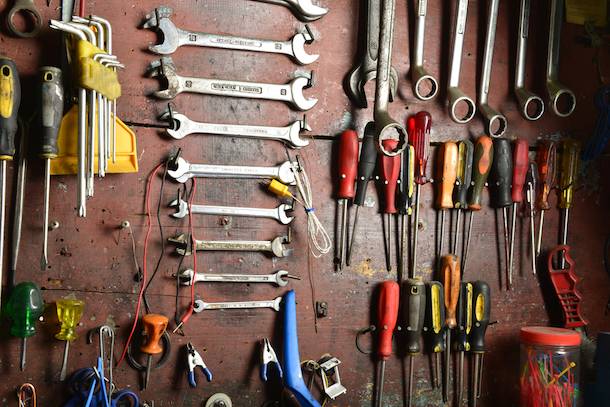
Some things seem inherently incompatible with small space living: Car collections, big game taxidermy, Richard Serra sculptures and extensive tool collections. While the former things have easy workarounds, for the DIY-disposed, the latter is often considered indispensable. Many people who need to store tools and a place to use them might find a 350 sq ft apartment insufficient for such tasks. There is a solution. Across the globe, tool lending libraries are offering builders an offsite place to source tools and in many cases use them.

West Seattle Tool Library‘s co-founder Gene Homicki told Christian Science Monitor that there are a number of significant advantages the tool lending library movement presents over private ownership. He says that due to their collaborative nature, they often become vibrant community centers (i.e. probably more so than your garage). In line with the spirit of the idea, several maker and co-working spaces have included tool lending libraries at their spaces; Homicki said many maker spaces started as tool libraries and evolved from there. At some of the libraries, people not only check out tools, but can learn how to use them as well.

Another advantage is the exploitation of unused resources. Homicki said to CSM:

We have an economy that’s uneven and sputtering at time…and we have this locked-up value that’s just sitting, whether in an attic, garage, or gathering dust in a warehouse.

These libraries get tools out of their dusty attics and tool benches into the hands of people who need them. An additional benefit is that they give access to specialty tools that you might only need once or twice–this is something even the most seasoned maker can appreciate.

One of the bigger issues of lending tools is keeping track of tools. While many libraries seem to use ad hoc systems with an administrator keeping track of a tool’s whereabouts, Homicki co-created something called myTurn. MyTurn is an online platform that gives libraries a way of tracking their assets and promoting the sharing of tools across private, public and municipally owned libraries.

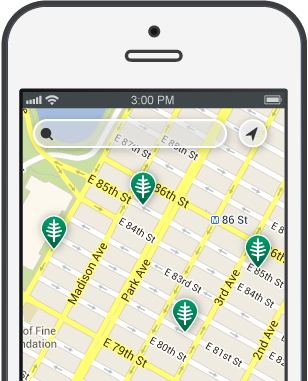
If you want to find a tool library in your area visit Local Tools. If there isn’t one in your area, there are numerous resources to help you start your own such as the  How to Start a Tool Library guide and a webinar by the Center for a New American Dream.

Mechanical Workshop Tool image via Shutterstock

Via Christian Science Monitor

Share Your Best Friend with these Dog Sharing Sites

Do you love dogs, but lack the bandwidth to take care of one fulltime? Do you have a dog, but find yourself away from home and unable to give it the attention it deserves? Are you single and need a cute prop to bolster your self-esteem? If you fall into any of these categories, here are three dog-sharing sites that might just have a solution for you predicament.

In all seriousness, the following sites connect dog owners with dog lovers and people interested in adopting a dog fulltime a chance to experience dog ownership firsthand. These sites also provide a cost-effective way of keeping your pooch out of the kennel–a none too cozy environment for a dog to hang–while you’re away from home.

  • City Dog Share is a California-based nonprofit that hooks up fellow dog owners as well as prospective ones. Dog owners can swap sitting and walking duties. Unaffiliated dog lovers can rent-a-pooch whenever they want to. According to their site, you simply “post a picture of your dog when you have a dog that needs to be watched. Include relevant details like the dates away, care needed, etc. Members can comment on the thread or send you a private message in response.” CDS is a coop structure and free to use. Their site is pretty bare bones technologically and doesn’t have any formal vetting procedure we can see. All transactions are handled on community Facebook pages. There are pages for the San Francisco Bay AreaLos Angeles AreaHumboldt CountyGreater Portland and Seattle Metro areas. Predictably, San Fran has the most traction.
  • Borrow My Doggie is a UK-based site that, like CDS, hooks dog owners up with dog borrowers. Borrowers can hang out with the dog for an hour or a month. Unlike CDS, they have a few more hoops to jump through before you can borrow someone’s dog. They verify personal information and have a one-time £24.99 registration fee. BMD acts as intermediary between owner and borrower, arranging “Welcome Woofs,” which “is an opportunity for the owner, doggy and borrower to meet for a joint walk in a local dog-friendly place.” In other words, it’s an internet dating site for pets and the humans that care for them.
  • Rover is the Airbnb of dog-sharing. Within Rover’s extensive network, you can arrange peer-to-peer dog sitting. Owners and sitters create profiles for their pets and pet-care experience, respectively. Sitters determine their rates, which range from $10-75/day. Additional services like cat care, bathing and grooming, etc can be added when booking a sitter as well. Sitters can also be hired for basic dog-walking, but unlike the two other sites Rover is all business with standard hourly rates.

While using these sites might require a bit of trust (they all recommend getting to know the borrower/sitter), they also present a cost-effective opportunity to hand over your leash to someone who might actually want to spend time with your dog.

Via Shareable

Breather: A Living Room for Nomads

Everywhere we go, we are surrounded by countless, unused rooms–furnished, climate controlled, wifi enabled rooms. If you’ve ever wandered around a city–or any place away from home–you’ve probably wanted to duck into one of these rooms to work, take a quick nap or simply have some quiet time alone. A new service called Breather is about to enable just that, providing on-demand offices, nap spaces, meditation spots or whatever type of space you might need.

breather-smartphone

Breather works by using excess capacity real estate (mostly unused office spaces to begin). With Breather’s smartphone app, users will be able to locate these spaces and reserve on the spot. Entry to the spaces will happen via keyless locks. Each room will be held to a set of standards that either Breather or the host provides; those standards include cleanliness, quiet, high speed internet, a desk, couch and “enough room to do yoga.”

Like Airbnb and other peer-to-peer services, Breather depends on reputation to run smoothly. Hosts are rated by users to make sure spaces are well maintained. Users are rated by hosts and Breather’s cleaning crews to rate how they respect the space. In fact, Breather’s existence will depend on reputation as its network will be expanded with invitations by existing members who vouch for new ones.

“99% of most cities are completely inaccessible,” says Julien Smith, one of Breather’s founders. He explains that most cities are broken up into public or private spaces. The problem is that both public and easily-accessed private spaces like coffee shops and hotel lobbies aren’t the kind of places to relax or be productive. Moreover, the vast majority of appropriate private spaces–offices, unused residential spaces, etc–are simply off limits to the public due to logistics (i.e. letting people into a space) and liability (letting the wrong people into a space). By creating an infrastructure that allows the public to easily and safely access private spaces, he sees Breather as creating a new type of space in between private and public. “Our whole idea is to democratize the city,” he explains.

Right now, Breather is only accepting invitations for membership. One of their partners Lockitron has not yet delivered the locks necessary for Breather to operate (they are expected in the next 45 days). The first launch of Breather will happen in New York City in October. The network will grow from there to select cities.

Hourly pricing has not been set. Smith says that will depend largely on the market, e.g. an hour in Midtown Manhattan will cost more than downtown Pittsburgh.

Similar to Zipcar, which provides cars for very short drives, Breather provides a place to, um, take a breather for only as long as you need it–no need to pay for an overnight stay or whole day pass. As they say on their site, “Think of us as your second home or office, wherever and whenever you need it.”

We see Breather as another important innovation in the sharing economy. It is helping create a world where it’s possible to have access to anything we want–whether it’ a car, a kitchen, or a power drill–whenever we want it, all without personal ownership or the inefficiencies of single-owner use.

images via Breather

6 Future Blue Chip Companies in the Sharing Economy

A recent article in Forbes called “Airbnb And The Unstoppable Rise Of The Share Economy” gives a great overview of the nascent sharing economy. It tells stories of people like Frederic Larson, who brings in $3K/month renting his home to Airbnb and his Prius through Lyft, or Dylan Rogers, who makes $1K/month renting his BMW out and plans to buy a couple extra cars to make his own micro-rental car fleet. It explains how more and more average people are making and saving dough through resource sharing.

The article is a worthwhile read as it gives a balanced look at the opportunities–the millennials growing receptivity to renting and sharing versus ownership, a southbound economy–and challenges–getting people to share low-cost goods, restrictive commercial regulations–facing the sharing economy

The article also turned us on to a number of sites we didn’t know about. Stahlwarts like Zipcar, Zimride, Neighborgoods and Taskrabbit appeared in the article, but so too did some newer, more specialized sites. Here are a few of them:

  • Parking Panda is a peer-to-peer parking garage. Rent out your vacant parking spot as you would your unused room for Airbnb. PP also allows booking standard garage parking, using their mobile app.
  • Dog Vacay is like Airbnb for dogs. Give your dog to “one of thousands of vetted and insured dog lovers” when you leave town (or need a reprieve from your pooch) for “cage-free” boarding starting at $15/night.
  • EXEC is an on-demand cleaning and errand running service with a lovely web interface. An added bonus is that they use all organic cleaning products.
  • Liquid is a peer-to-peer bike rental service. Rent a bike for $20/day or let your bike out for some extra cash (note: the site is down for the winter).
  • Fon is an international peer-to-peer wifi network with over seven million Fon Spots (aka hot spots). Private wifi providers can make money off people accessing their signal.
  • Zaarly allows you to sell your homemade cookies and other shippable custom goods.

Most of the services seem to have a Left-Coast bias, though ones like Fon and Zaarly have national appeal. And of course, as the article mentions, Airbnb started in San Francisco and can now be found in Peoria, Il. You gotta start somewhere.

Do you have more sharing sites we should be looking at? Let us know in our comments section.

Image via Shutterstock.com

OhSoWe.com: Like Having a Genie as a Neighbor

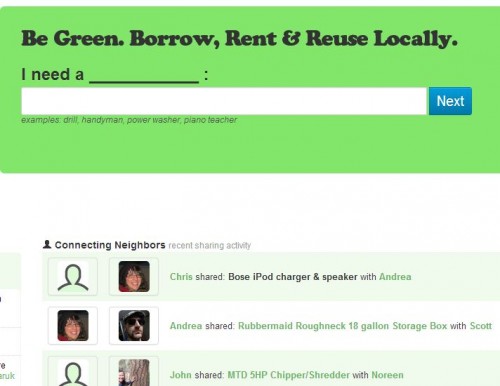
Ever wish you could wish for something and it magically appeared? The website OhSoWe attempts to make that wish its command. Site users can post their needs and/or “Shareables”–i.e. what you want or what you got–and both categories show up on a feed (you can also peruse them separately). The site hooks you up with your neighbors so you can either borrow or buy people’s stuff (including services), or give or sell them your stuff. It’s that simple.

Unlike Craigslist, OhSoWe is hyper-local and has a very streamlined user interface. Unlike Craigslist, there aren’t nearly as many users, so OhSoWe encourages users to invite your friends, which is accomplished via connecting to your Facebook profile or importing email contacts.

Like sites Front Porch Forums and NextDoor.com, OhSoWe doesn’t try to replace in-person contact, but rather uses online tools to connect people living very near you. Unlike those other sites, OhSoWe is not a free-for-all public forum; it is specifically for needs and stuff up for offer. This more singular focus and simple user interface make sharing stuff pretty easy and therefore more likely.

Have you or would you use a tool like this? Let us know in our comments section

What Can be Done with the McMansion?

Some things seem inherently unedited: SkyMall catalog, Big Gulps, Hummers. And in the housing world, nothing says unedited like a McMansion. Their flabby floor-plans, 4 car garages and 1K sq ft foyers epitomize more-is-less living. That said, now that they’re here, what the hell do you do with them?

A few people are thinking about alternatives uses for the McMansion. After all, nothing is inherently “unedited.” A 10K sq ft home that’s used all the time might be more efficient on a per-user basis than a 500 sq ft space that’s rarely used. A Big Gulp split between 20 is an appropriate treat.

Rainbow Mansion is an example of a smart exploitation of the McMansion’s girth. The house (so named because of its location on Rainbow Dr.) describes itself as “an intentional community of driven, international, passionate, and socially conscious people trying to change the world.” The home benefits from its location in Silicon Valley (Cupertino to be precise), where open-minded, creative folks abound. That said, it still shows the possibilities of re-purposing an otherwise misbegotten architectural conceit in any locale.

Inside Rainbow Mansion. Photo by alexandervandijk on Flickr

The 7 residents of the 5K sq ft space split a $7300 rent and are bound by their beliefs that they can change the world. Since its beginning in 2006, they have had “60 residents from more than 12 countries including 16 folks from NASA, 6 from Google and 5 from Apple.” The space features a library and hosts regular salons. The communal nature and shared philosophy have surely aided the home’s longevity.

Another example lies a bit east of Cupertino at the University of California, Merced, where students are opting out of dorms in favor of sharing foreclosed McMansions, according to an ABC news article. A home they profile houses 6 for $1800–i.e. $300 each, or half the money the dorms cost. While having undergrads in a residential neighborhood might not seem like the best fit, the town had been hit hard by the housing crisis and neighbors and realtors are happy to have the students.

Lastly, a project in Australia–a nation whose homes’ haunches rival the US’s–called Reincarnated McMansion is looking for people who have homes that exceed 360 sq m (3875 sq ft) to volunteer their homes so they can be tore down; two new homes will be made with the materials. While an enticing idea, there’s no indication that anyone has signed up to date.

There are of course limitations to converting these types homes. You can usually only have so many unrelated residents in the same home (code is probably more lax in CA where co-housing is popular). McMansions often have double height rooms that are tough to convert. Also, McMansions are not known for their build quality, so it might strike some as specious to do anything with these monstrosities; Grist suggested we make them wildlife habitats. Nevertheless, these examples show that even things that epitomize excess can be made efficient.

Do you or anyone you know have examples of re-purposing McMansions or other large dwellings? Let us know in our comments section.

[Correction: earlier version incorrectly stated that 5 UC Merced students paid $3300.]

top image credit: REUTERS/Kevin Lamarque

Is Swapping the New Shopping?

Part of the allure of shopping and getting new stuff is novelty. Humans like new things–it’s probably a neurochemical. The problem is that new stuff has consequences, some of which we elucidated yesterday.

A site called Swap.com gives a way of satisfying your new stuff jones without maxing out your credit, storage space or ailing planet’s resources.

As the name suggests, the site allows people to swap their stuff. The site has tons of useful items like cell phones, clothes and media. It’s a little like eBay insofar as people make offers on the swap–you wouldn’t trade your car for a cell phone after all. When a swap is agreed upon, the two parties work out the details like shipping and so forth. Swap.com does not take a cut (we’re not sure how they make money actually).

Security is a little dicey. There are user profiles, but the site’s security page suggests that buyer and seller beware to avoid “swap-lifting.” Like eBay, it’s a matter of establishing a good reputation and there are many users who do multiple swaps. They also suggest doing as much as you can locally, which is feasible for people living in places like NYC or SF.

There’s a subset of the swap economy that focuses exclusively on women’s clothes. Sites include Swapaholics, Clothing Swap and Swapstyle. The former two focus on live events and the latter facilitates online swapping.

Some might contend that this type of swapping is a watered-down version of pathological consumerism (a point made quite clear in Nightline feature above). This may be true to some extent, though the consequences of swapping are much fewer than buying new stuff. Just as important is habituating people to find other ways of getting the things we need.

Do you have experience swapping–either with these sites or informally? If so, we would love to hear your tips and experience.

image credit: postconsumers.com