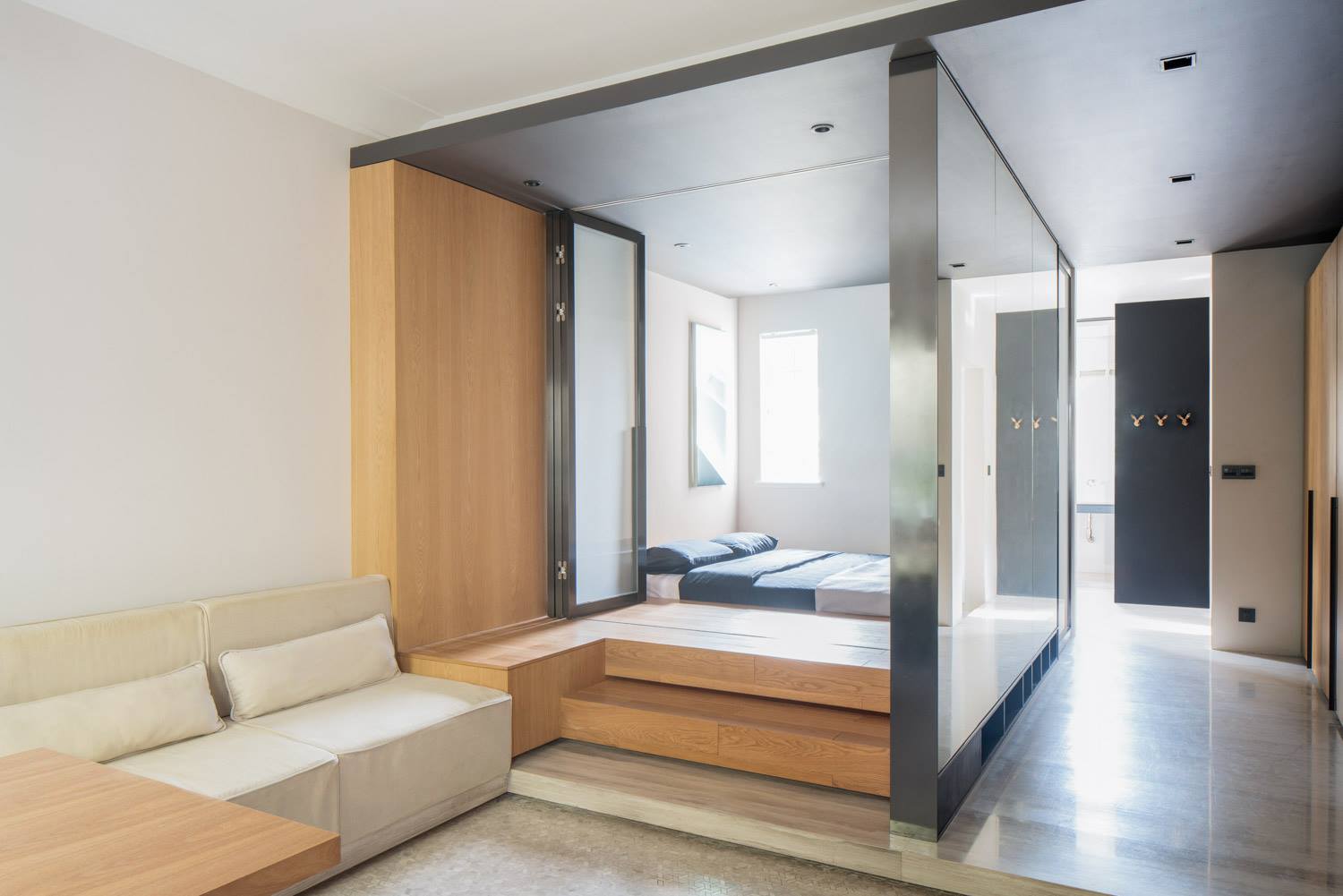
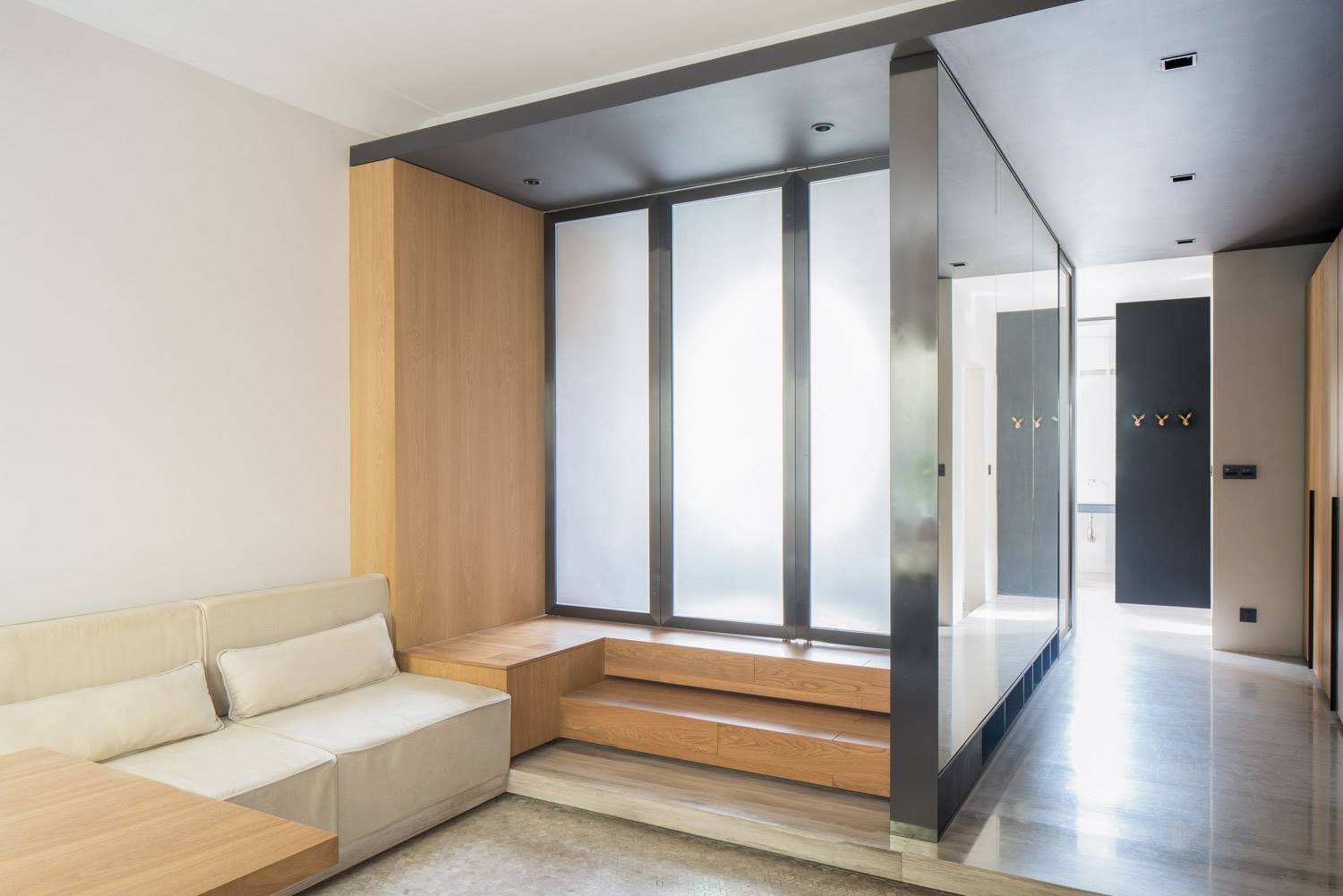
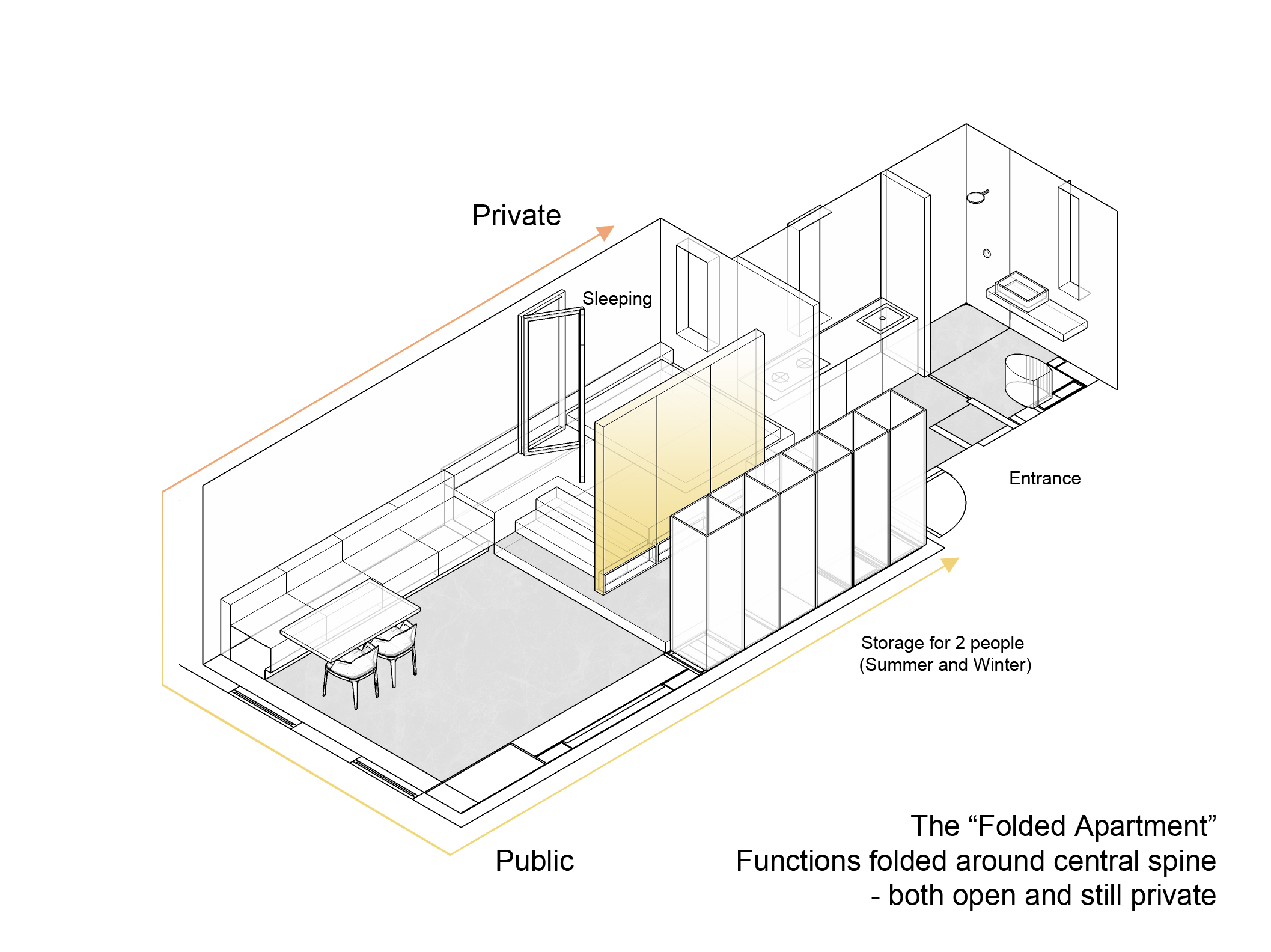
One of the drawbacks of having a sealed-off bedroom is that it becomes a non-operational part of the home when not in use, which, for a bedroom, is most of the time. This is fine when square feet abound, but can be a liability when spaces are tight. Shanghai’s MoreDesignOffice took a clever approach to cutting up a small Shanghai apartment, allowing for the privacy of a proper bedroom, yet creating the sense of spaciousness and light of an open floor plan studio.
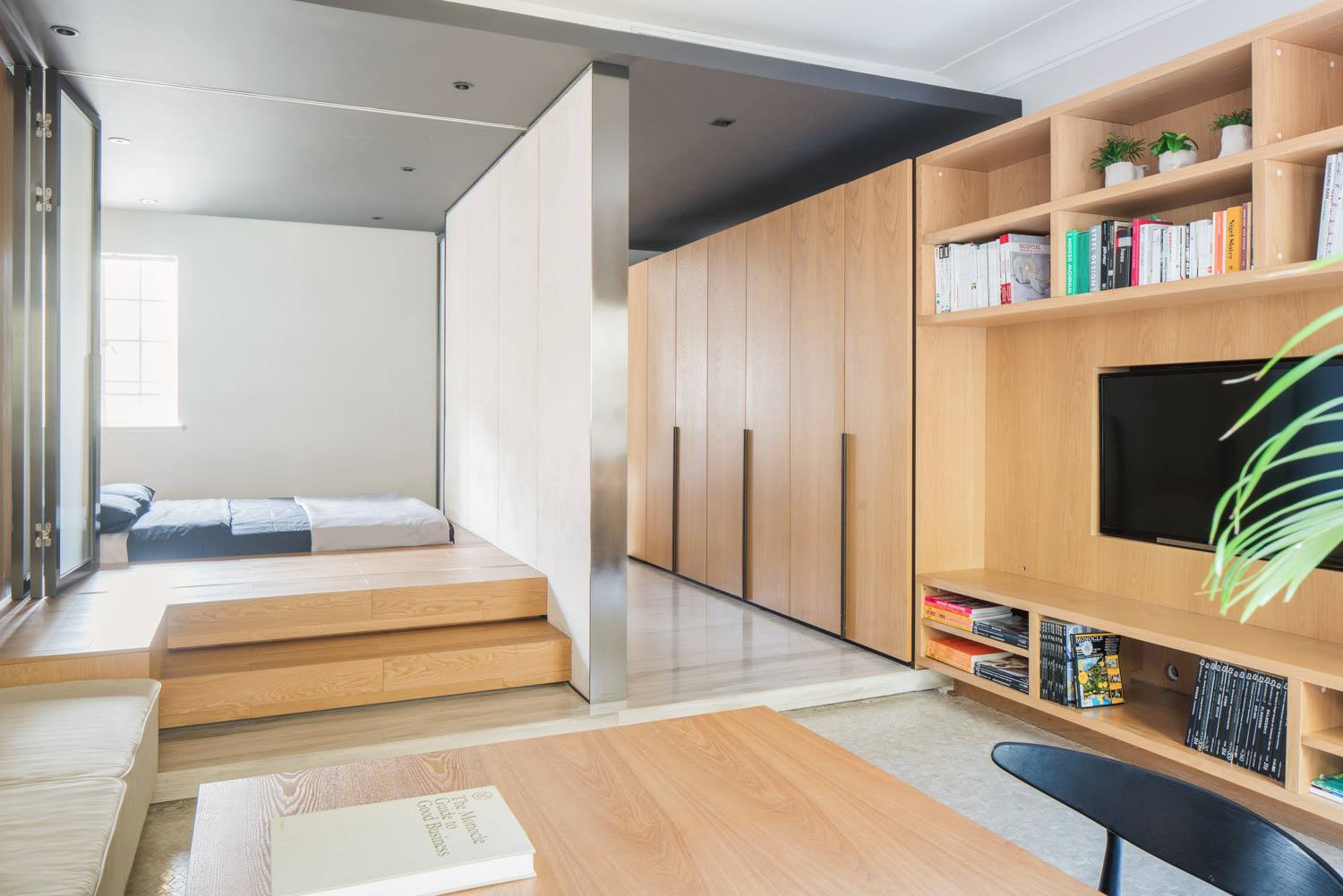
The small, rectangular apartment starts on one end with a living and dining area. A built in sofa lines one wall, while built in shelving lines all the others. A freestanding dining table is set up against the sofa, though we are not sure if you could realistically eat from the low sofa position.
Adjoining the living room is an elevated sleeping area. The steps to the sleeping area can double as seats should the need arise. Most notable is the fact that the whole sleeping area can be closed off with folding, frosted glass doors. The wide opening for the doors makes the living and bed rooms seem like one continuous space, helped along by light pouring through exterior windows in both areas. Even when the bedroom doors are closed, the glass allows some light to penetrate into the living room.
The hallway alongside the sleeping area contains floor to ceiling storage, designed to accommodate all of a couple’s stuff. A compact kitchen and bathroom round the space out at the far side of the apartment.
Several years ago I sublet an apartment deep in Manhattan’s Lower East Side. The railroad style-apartment was roughly 500 sq ft and had one bedroom, a kitchen/dining area and a living room. It was oodles of space for me. A boy named Kenny frequently knocked on my door seeking company and wanting to play games on my computer. He lived with six other family members in an apartment across the hallway that was the same size as mine.
Kenny and his family were, from all I could surmise, recent Chinese immigrants. And while sharing such tight quarters was most likely driven by available financial resources, there was surely a strong cultural component that allowed them to live together. For some cultures, living with your family in a small space is not so unusual. A new book called “The Lams of Ludlow Street: The Photobook” is taking a long look at one of these families and the culture that surrounds them.
The Lams are a Chinese family of five that at one point shared a meager 350 sq ft apartment, also in New York’s Lower East Side. Filmmaker Thomas Holton, in an effort to better understand his own Chinese heritage, has been photographing and getting to know the Lams for the last 12 years. The photobook, which he is funding through Kickstarter, tracks the family’s life through images and narrative.
The Lams of Lulow isn’t necessarily a romance story of families sharing small spaces. The parents eventually get divorced (not a phenomenon limited to couples sharing small spaces, of course) and Holton speaks of witnessing, at certain points, a family that “seemed broken up physically and emotionally.” Rather, the book is meant to be an intimate and stereotype-free account of a family and culture that might seem very foreign to outsiders. It’s a view people who aren’t part of this Chinese community seldom get.
The campaign has already surpassed its $28K with 16 days left to go. Head on over to the book’s Kickstarter page and Holton’s site to see more images.
Maybe it’s the cooling temperatures, or the fact this author has been hanging out at home too much as of late, but there’s been a ton of talk about nomadic living on this site as of late. Last week, we looked at Foster Huntington, a full-time-camper-pickup-living-nomad and bon vivant. While I definitely dig his lightweight setup, one question has always troubled me about his and all petrol-fueled mobile living arrangements: what do you do in the event of a complete societal meltdown? Really, when SHTF, it’s going to be tough to move your ICE-powered home to more favorable environs if gas costs $20/gallon or is simply unavailable. (C’mon, I can’t be the only one thinking these things).
Resilient nomad housing would have to have minimal grid-dependence, which is why we dig the Taku Tanku concept by Japanese design firm Stereotank so much. It’s a trailer that’s minimal enough to be towed by foot or bicycle. If we were ever to face a Mad Max dystopian reality, we’d want this as our home way more than some 454 V8-powered behemoth.
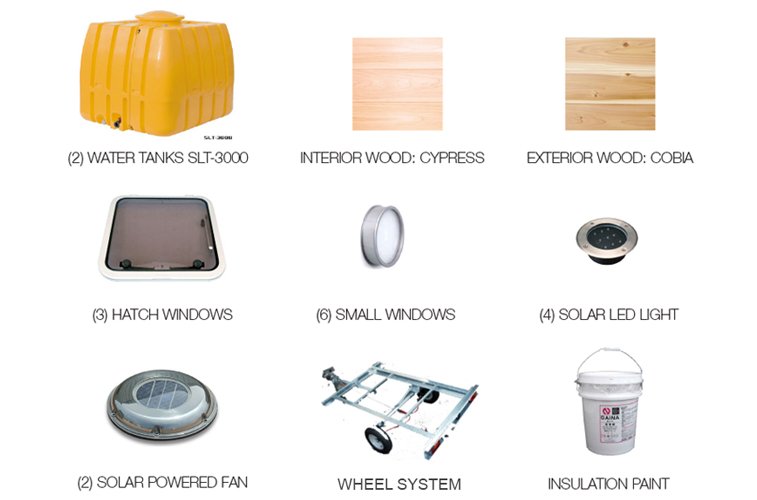
The Taku Tanku is designed to sleep 2-3 people and carry a bit of luggage. It can be made of lightweight, off-the-shelf materials; its main structure being two 3K liter water tanks. There’s really not that much more to it.
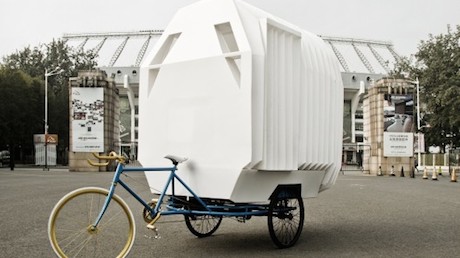
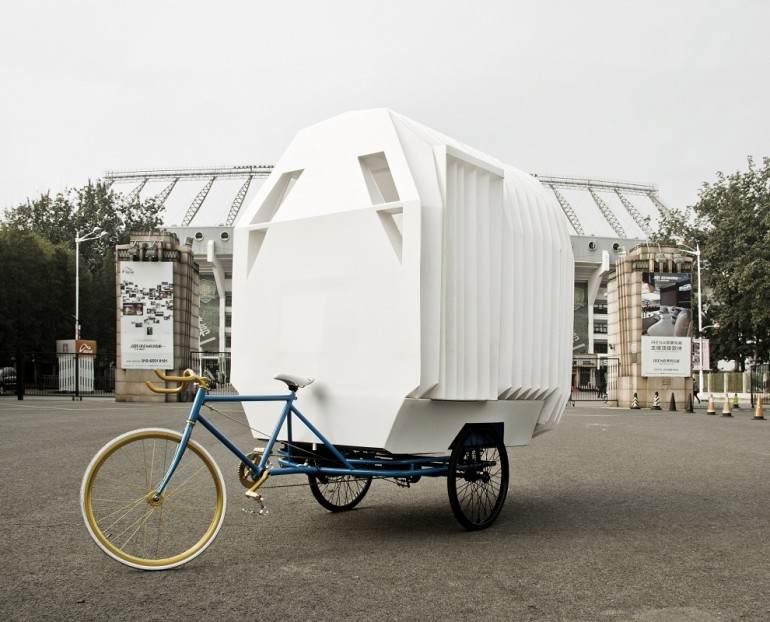
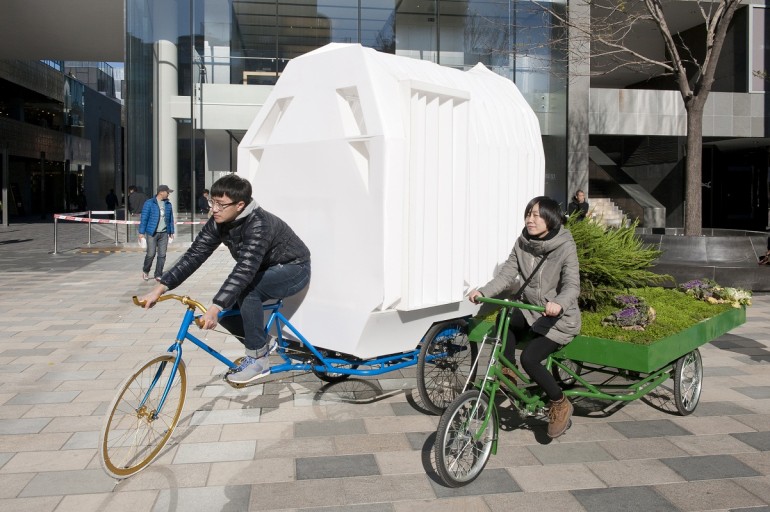
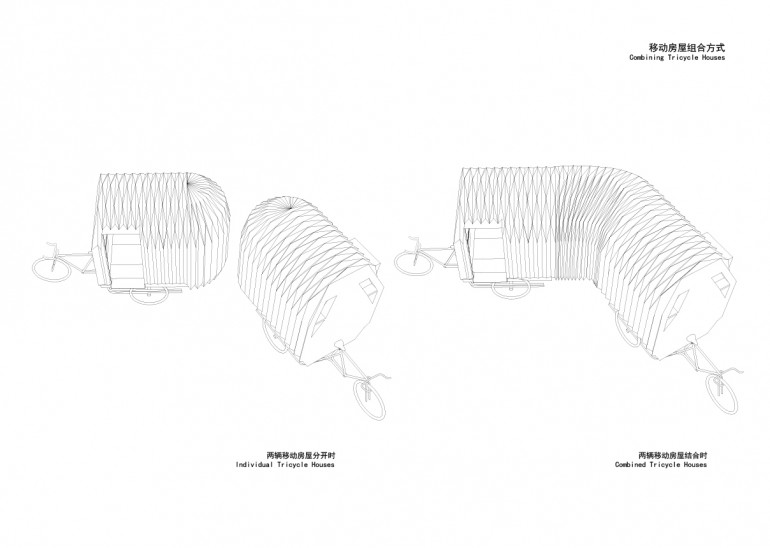
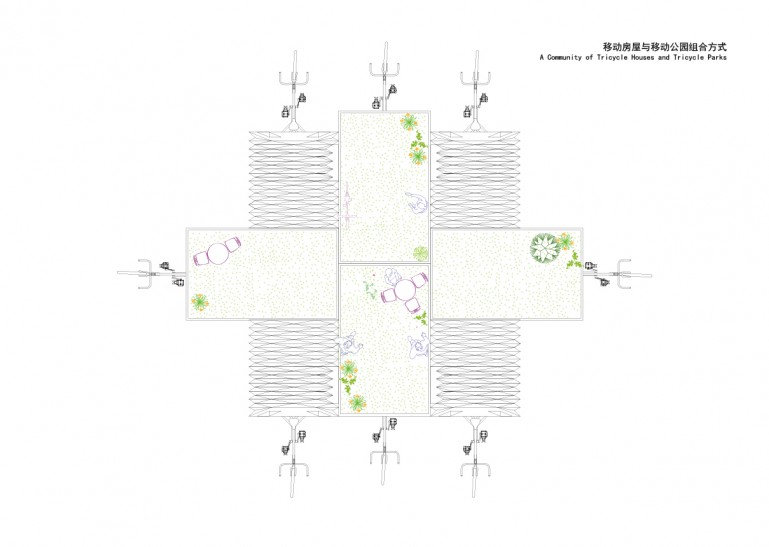
This is not the first time we’ve seen human-powered nomadic housing. The Tricycle House, was, as the name implies, a house affixed to a tricycle. Unlike Taku Tanku, a Tricycle House was built. Each house has its merits. We suspect the Tricycle House’s flexible folding, accordion structure, while lightweight, might not be as durable at Taku Tanku’s. The Tricycle House is smart because it’s designed to be used in tandem with a trike-powered garden, making sure you can tow your food source in case things get nasty. If S really did HTF, it’d be good to work through these important considerations ahead of time…just saying.
Ah the dream of creating a perfect city–include the best, leave the rest and all you have is perfect living conditions. History is dotted with success stories: Brasilia, Arcosanti, Celebration, Florida–places that testify that making a great place to live is really a matter of connecting dots and constructing a few buildings.
Aforementioned examples notwithstanding, it’s actually tough to make a city from scratch (who’d a’thunk?). Most successful cities get that way because: 1. they are blessed with great geography (NYC, Singapore, Hong Kong, etc); 2. they evolve over time, adapting to their populations’ and eras’ particular needs; and 3. their evolution has created cultural and aesthetic diversity that makes them resilient and interesting.
But don’t let the difficulty of city-building make you think people ain’t gonna try to do it. They do and they are.
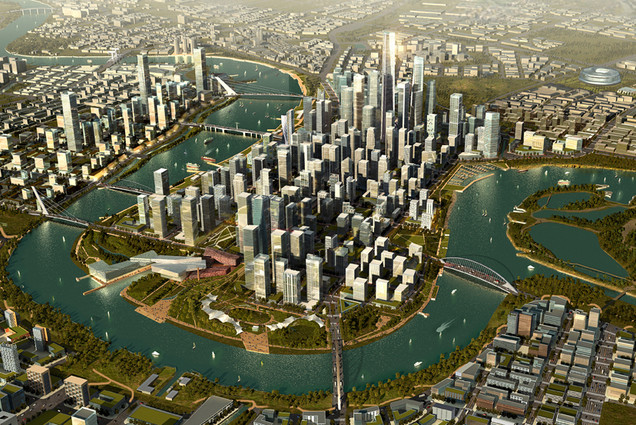
Yujiapu Financial District is one such example. It’s a city being built from scratch in China. It is being made in the likeness of Manhattan, replete with its own Rockefeller Center and One World Trade Center knockoffs. It even has a couple big NYC real estate heavyweights like Tishman Speyer and Rose Rock Group helping construction along. Located about 2.5 hours southeast of Beijing and built on a marshy former fishing village, the city is meant as a high-density haven of global finance, littered with skyscrapers placed along gridded streets…just like Manhattan.
Unlike Manhattan, a city whose modern incarnation started with a small Dutch Settlement 400 years ago, Yujiapu began construction in 2008. Yujiapu’s first building opened two years later and completion is expected for 2019. Also unlike Manhattan, who boasts a population of about 1.7M people, Yujiapu is virtually deserted. And the chances of changing that and replicating Manhattan’s hustle and bustle aren’t looking good.
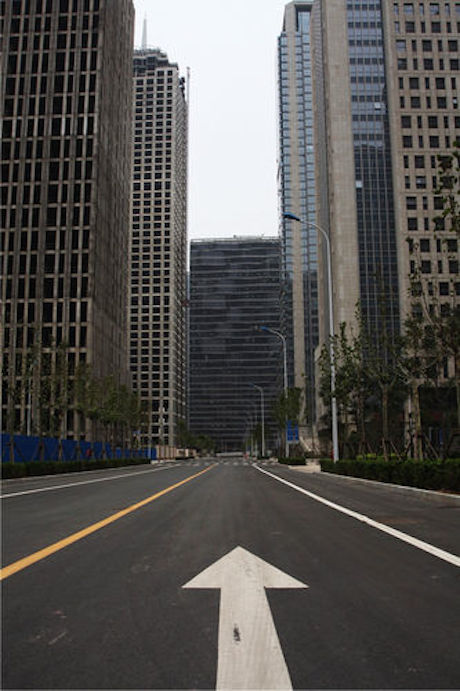
The city was conceived in the heyday of China’s economic boom. In particular, Yujiapu is near to Tianjin, China’s fourth largest city, whose economy seemed unstoppable ten years ago. But as China and Tianjin’s economy slowed (the latter experiencing a 7% decrease in economic growth in last four years alone), new construction, fueled by hopes of ceaseless economic growth and massive amounts of debt, no longer had occupants. Now buildings like the Country Garden Phoenix Hotel (pictured below), designed to be Asia’s largest, sit fallow along Yujiapu’s untravelled streets.
We at LifeEdited love our cities. We love walking and biking everywhere. We love the serendipitous encounters that seems to happen all the time along city streets. But making a great city, so far as we can tell, is not a paint-by-numbers proposition. It’s a mutual evolution of planning, place and population. Though it would seem to lack most of those things, we wish Yujiapu well–mostly because that’s a lot of resources for something that might not be used.
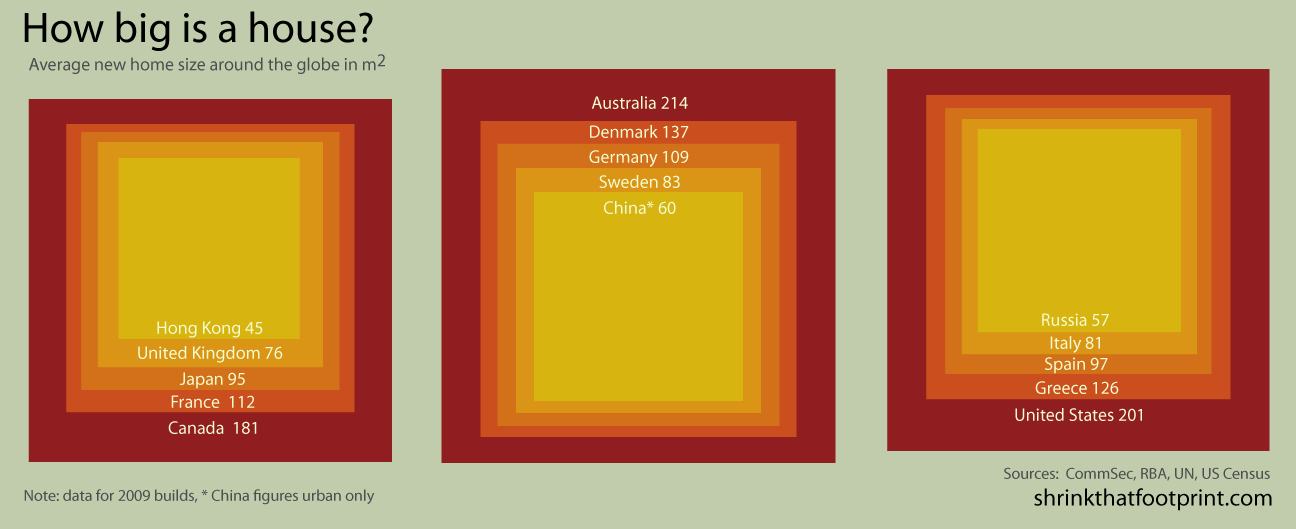
These infographics from Shrink That Footprint show the average new house sizes across the world in 2009. Despite the American penchant to do everything a little bit bigger, it’s the Australians who claim the prize for world’s largest homes.
Without getting too pseudo-scholarly about the situation, the three countries with the biggest homes (Australia, US and Canada) began as British colonies a few hundred years ago. Unlike their motherland, all were fairly unbound geographically (no pesky oceans every 20 miles). A good portion their infrastructures were created after the widespread availability of cars. All of these factors surely contributed to the overgrown housing statistics we see here.
The other infographic concerns per capita space use, which divides housing size by household number (most developed nations average around 2.5 people per household). These figures are predictably correlated with overall housing size. Again, Australia wins the dubious prize for most space per person.
We fished around Shrink That Footprint and found another infographic showing per capita residential electricity use. Interestingly, Australia is a lowly fourth place in this heat (behind France, whose homes are 90% smaller!). Canada makes a from-the-behind dash to the front; with its harsher-than-most winters and big homes, it is often crowned the world’s energy gulping king (there is no explanation as to why Australia’s numbers wouldn’t be commensurately higher due to inordinate use of AC, particularly for its large homes).
What’s not shown in the graphics are trends. For example, China, whose energy consumption is a fraction of countries like the US and Canada, has seen a 600% increase in electricity over the last 20 years. New homes in the US are almost as big as ever. And household sizes are shrinking in Europe (albeit by a small amount), which means per capita housing size is increasing there.
The good news is…we’re not sure what the good news is. Housing sizes are bigger than ever and energy consumption continues to increase across the globe (except for the countries in most dire need). One thing to extract is that housing size is not correlated with quality of life; for example, Denmark and Sweden, who both enjoy high standards of living have smaller homes than the Big Three. But then again, their infrastructures–smaller cities with high quality public transport–support those smaller homes (not the case with the Big Three).
What do you think? What can you deduce from these figures? Is there a silver lining or will the world continue to consume until it bursts? Let us know your thoughts in our comments section.
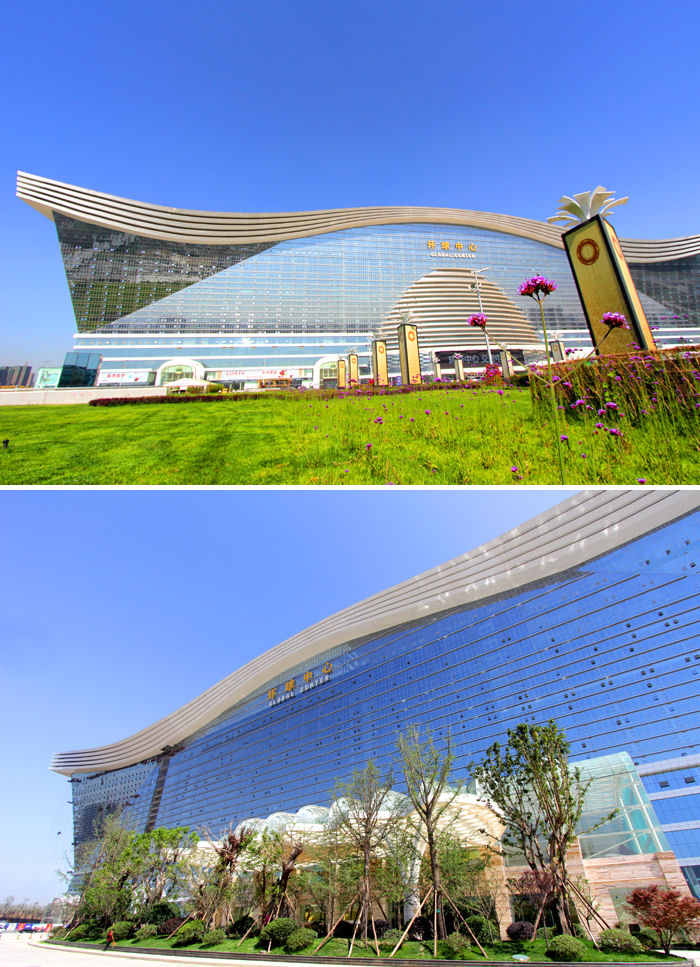
What has 18,000,000 square feet of floor area, an artificial beach and a Gap clothing store? If you answered, the New Century Global Center in Chengdu, China–now the biggest building in the world as measured by floor space–you’d be correct.
The building’s interior can swallow 20 Sydney Opera Houses or three Pentagons. It will feature offices, conference rooms, a university complex, hotels, an IMAX movie theater, a “Mediterranean village”, a pirate ship (very important), a skating rink, aforementioned 54K sq ft beach and a 4.3M sq ft shopping mall.
Buildings like the Global Center seem to demonstrate the Chinese’s knack for going too far. Some might even argue they take sustainable building too far. But for all of the finger pointing, the fact remains that the Chinese per capita carbon footprint is a fraction of that of most western nations. In 2009, Americans produced 17.2 metric tons of CO2 per capita; for China, that same figure was 5.3 metric tons (a figure that is admittedly on the rise).
Moreover, as a Guardian article by George Monbiot pointed out a few months ago, many “developed” nations’ emission reductions are only possible with overseas emission increases. He took the example of the UK, who boasted a 19% carbon emission drop between 1990 and 2008, as measured within its borders. When emissions were measured to include consumption behavior and the embodied emissions therein, the UK posted a 20% increase–a fact that has a big role in the increasing carbon emissions within China’s borders.
What does this all have to do with the price of tea…we mean, the size of a mall in China? It’s a reminder that in our increasingly connected world the excesses of one country often go lockstep with another. And as distasteful as we might find what is, for intents and purposes a gargantuan shopping mall located halfway around the world, it’s also a reminder that we take responsibility for how we consume at home.
If you’re a high-density housing fanatic, the best direction to build is up. The logic follows that if you build up, you fit more people into less land area, resulting is less commuting, greater efficiency for things like power delivery and distribution of goods and more land for nature. In an act that could be construed as high-density fanaticism, a company called Broad Sustainable Construction is building a tower over a half-mile high; its residents will use 1/100 the land area of their terrestrially-based friends.
Broad’s aptly named Sky City is no pipe dream–ground is set to break this month in Changsha, Hunan in south-central China. At 838 m (2,749 ft) high, it will become the world’s tallest building. Its 220 stories will be reached via 104 high speed elevators. There will also be a six mile ramp going from the first to 170th floor. Its 11M sq ft of floorspace will house 17,400 residents, a 1K person capacity hotel, schools, offices and shops–in other words, there’s little reason to leave the building outside of the strolling the ample parklands surrounding the building. But wait, there’s more! Broad, who specializes in prefabricated construction, plans to erect the whole thing in a scant 210 days. If you doubt their claim, check out this video showing Broad erecting a 30 story building in a mere 15 days.
And if you doubt their claim–about the feasibility of the project, the timeline, etc.–you aren’t alone. Some say it will not withstand wind forces. Others say that Broad hasn’t built anything over 30 stories (true) and adding another 190 for its next project is a bit of a reach. Others think it’s just a marketing ploy.
The company has fired back saying they are quite serious and that the building has passed the needed safety tests. They even say it can withstand an earthquake of a 9.0 magnitude and three hours of active fire.
Engineering squabbles aside, it’s hard to fault Broad for a lack of earnestness. From what we can tell, they are on a mission to save the planet. Their buildings, which include serious efficiency measures like triple-glazed windows, 8″ insulation and Heat Recovery Ventilators, are said to be five times more energy efficient than traditional buildings (not even factoring in the benefits of density). The company promotes more than efficient construction–they also promote a way of life…one that sounds suspiciously like LifeEdited’s. They recommend such things as having one child to make “Mother Nature happy”, “not to buy anything that is unnecessary in the family” because “Simple life is very relaxing,” and they claim that “reading and listening to music during holidays are more leisure [sic] than taking a trip by air” (see more of their philosophy here).
Sky City is nothing if not audacious. And while we have suggested that there might be a Goldilocksian density–neither too dense, nor too spread out–there’s something appealing about imagining a vertically-housed world surrounded by ample green space to recreate. In this world, people live close to one another and use only what they need. What could be simpler and more edited than one structure that houses your whole life?
Of course, there’s the dystopian angle as well. Might Broad be ushering in an age where the planet is littered with half-mile-high buildings, leading to greater population explosions, ever-dwindling green-spaces and lives lived out in the confines of a high-rise tower?
Whether Sky City will presage either of these scenarios remains to be seen. Either way, at Broad’s projected breakneck building schedule, the future won’t be long now.
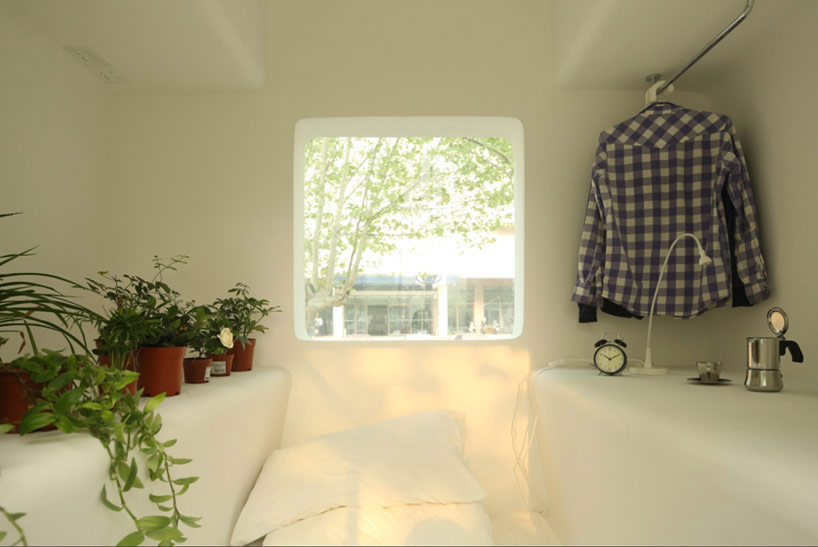
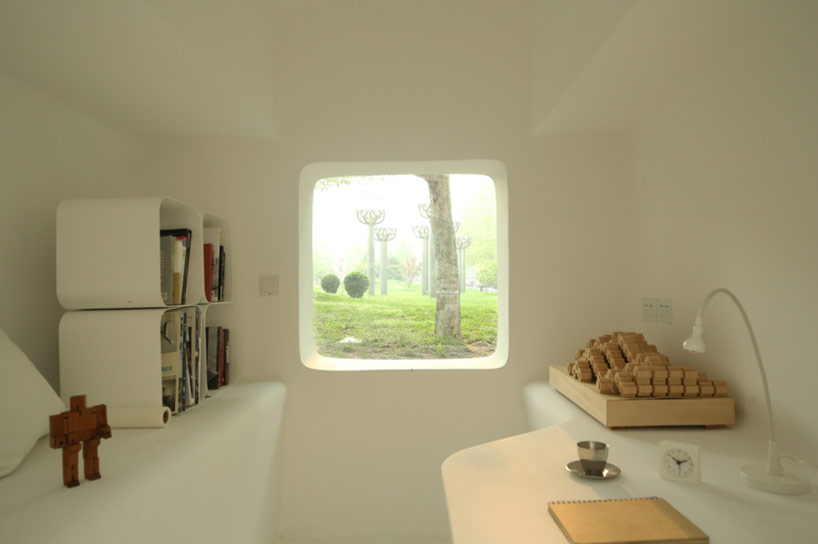
Okay, maybe “t” is the more accurate letter, but any way you look at it, these tiny housing modules show an interesting, prefabricated, highly-scaleable housing solution. We use the term “solution” as their current incarnation might be a tough places to call “home.”
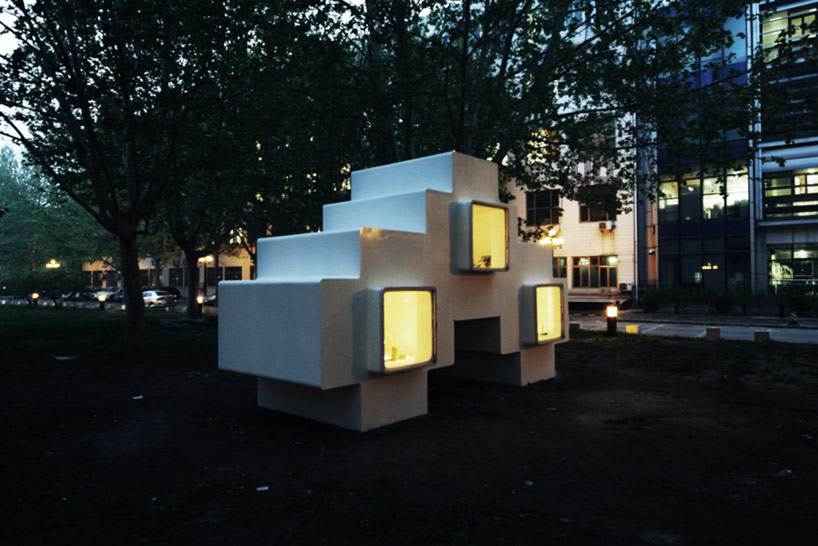
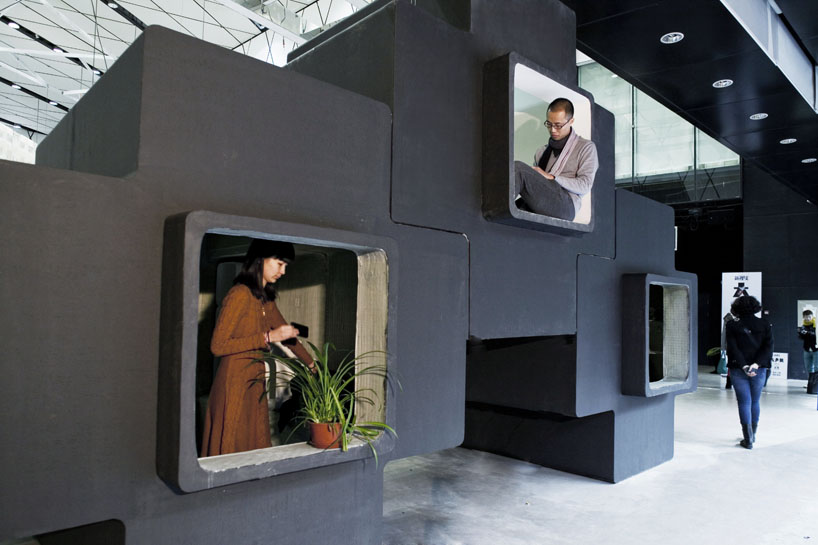
The project, simply dubbed “Micro House,” was designed by Beijing’s Studio Liu Lubin as part of the “Get it Louder” exhibition–the same place where the Tricycle House was featured. Like the latter three-wheeled home, Micro House is one part design study and another part political statement–a reaction to China’s questionable land-grabs and soaring real estate values.
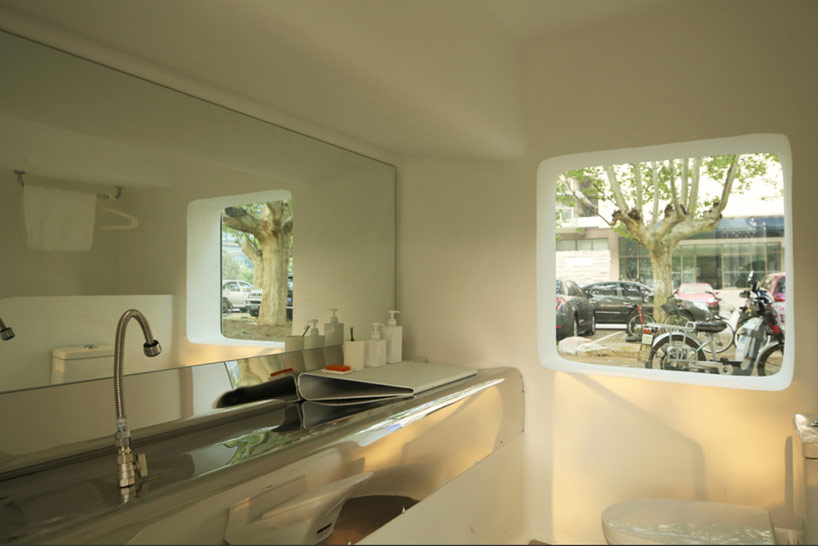
The exhibition model was a three module cluster: one module for living/working, one for sleeping and one for bathing (we’re thinking the cooking module, shown in prototype drawings, might have been nixed as it messed up the symmetry). The module’s t shape enables enough room for an occupant to stand up–though we imagine entertaining might be a bear.
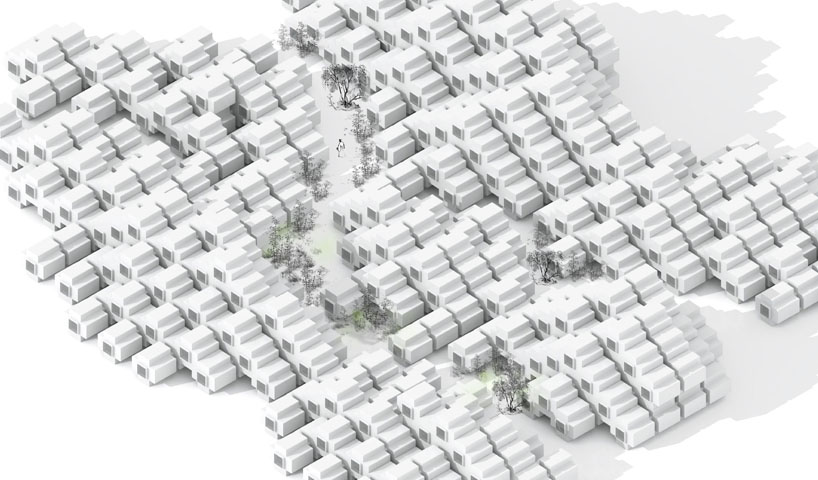
The micro house can be set up individually as it was for the exhibition or, more interesting to us, stacked upon one another to make large housing pyramids. Like any tiny house, the more the merrier, and the interlocking structure seems to lend itself for structurally sound stacking.
There are some (okay, maybe many) drawbacks to Micro House design such as having to go outside to move from one module to another. We’re not sure why they didn’t combine living and sleeping quarters as the latter tends to occupy an inordinate amount of space compared to its usage. The overall module size seems pretty darn small to us, though that might have more to do with the Get It Louder intent, which was to make homes that transport easily. We could imagine a larger version being actually quite livable.
All that said, it’s a concept home and an interesting one at that–one that bucks convention and whose very DNA bespeaks inter-connectedness and efficiency.
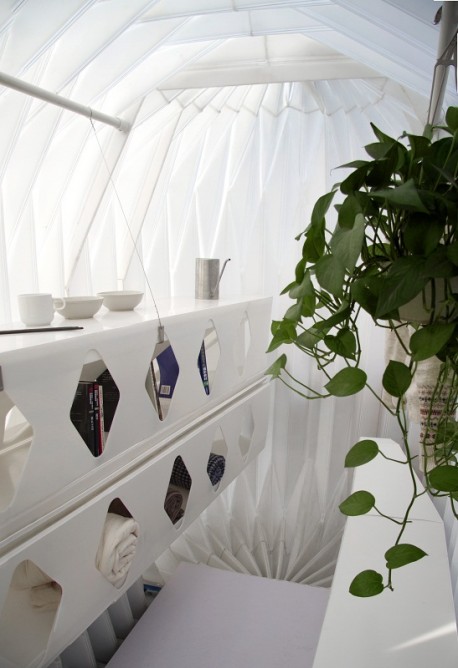
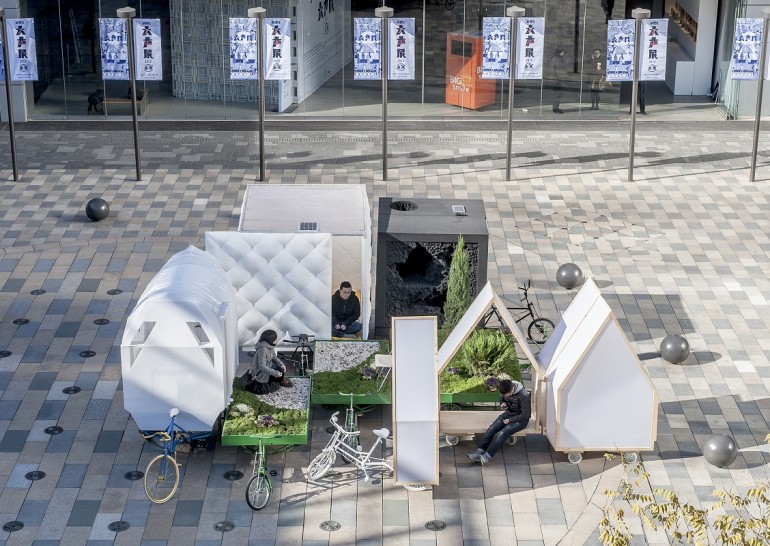
Sure, tiny houses are tiny, but they seem downright palatial compared to the Tricycle House. The project, part of the Get it Louder Exhibition in Beijing, is collaboration between People’s Architecture Office (PAO) and the People’s Industrial Design Office (PIDO). Like Tiny Houses, the house is as much a political statement as it is an architectural one, providing a response to the soaring price of Chinese real estate and government “land grabs” that have displaced many Chinese citizens. The tricycle provides the opportunity for home ownership, albeit on very small scale.
The polypropylene-constructed house is roughly 30-35 square feet and can be used as a dining room, kitchen, bedroom, workspace and bathroom. It boasts some impressive features such as a bathtub and clever folding sink and drawers. Similar to the Napoleon Complex, the house seems best used when coupled with other tricycle houses and tricycle gardens.
We’re not sure if there are any plans to develop the idea beyond concept, but a similar lightweight, off-grid housing structure would make a great edited recreational vehicle.
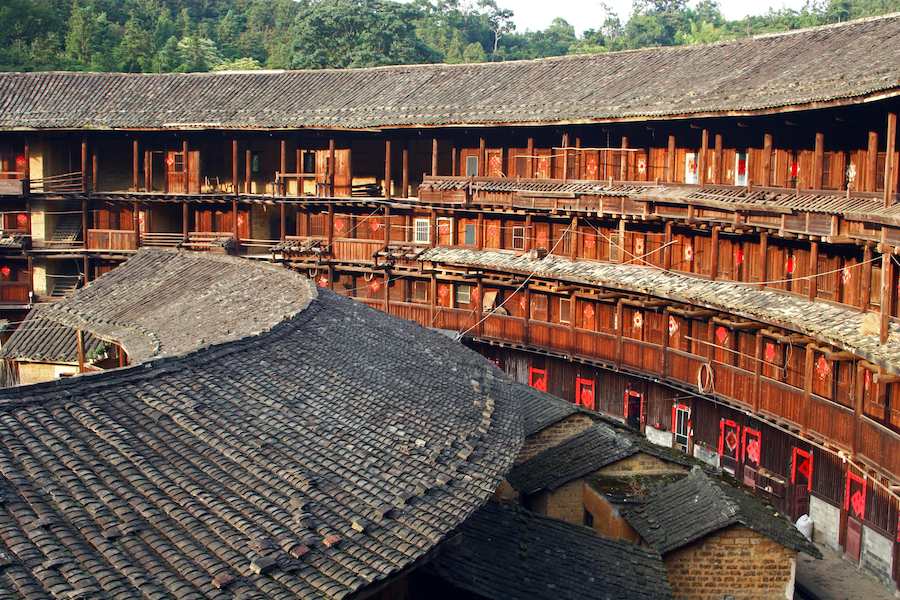
Long before adAPT NYC and SmartSpace’s 38 Harriet St in San Fran, there wers tulous, multi-unit Chinese buildings that wrote the book on compact, efficient living. Tulou translates to “earthen house” and are large, generally circular, fortress-like structures that were a popular form of building from the 12th through 20th Century (there are even a few present-day interpretations). While there are many types of tulou, the most popular form is the Fujian tulou; the Fujian provence has over 20K of them.
The walls of the Fujian tulou were traditionally made of packed earth and bamboo reeds, and rose up to five stories. The base, which often had granite boulders packed into its construction to make it dig-proof–was up to six feet thick. The wall thinned out toward the top to reduce load and allow windows for cross vent. The massive structure made it able to withstand earthquakes and frequent bandit attacks (a big problem back in the day).
The upper two or three levels contained houses that were made up of uniformly-sized housing units; they had multi-floor layouts and private staircases that lead from the ground floor to the top (basically townhouses sandwiched together). Each house contained a multi-generational family, and depending on the size of the tulou, up to 80 families or 800 people could live in one tolou. While we can’t say the exact sq footage of each house, we’re pretty sure they achieved a high person per square foot ratio.
The uniformity of design created a non-hierarchal structure. Wikipedia writes this:
Unlike other housing types around the world with architecture reflecting social hierarchy, Fujian Tulou exhibits its unique characteristic as a model of community housing for equals. All rooms were built the same size with the same grade of material, same exterior decoration, same style of windows and doors, and there was no “penthouse” for “higher echelons”; a small family owned a vertical set from ground floor to “penthouse” floor, while a larger family would own two or three vertical sets.
Toilets, wells and even surrounding agricultural land was all shared as well to keep the communitarian vibe consistent.
The ground floor contained communal spaces for worshipping, festivals, meetings, weddings, funerals and other ceremonial functions.
The result of all of this design is a structure that provided safe, wind-proof, cool-in-the-summer, warm-in-the-winter living. A total of 46 Fujian tulou sites have been designated as UNESCO World Heritage Sites; that organization calls them “exceptional examples of a building tradition and function exemplifying a particular type of communal living and defensive organization [in a] harmonious relationship with their environment.”
The idea of compact, efficient living is far more ancient than it is modern. It’s only in the last 60 years or so that humans have been able to cheaply make housing that exceeds their needs or make a house that could negate its surrounding environment with an HVAC system or live without the assistance of your neighbors. Ancient architecture like tulous shows that the past can often hold key innovation for a more efficient, sustainable and interconnected future (sans bandits thank you very much).