Keeping Up with the New, Improved Joneses

Many, if not most, of our habits are influenced–if not outright dictated–by a desire to keep up with our peers. We choose the homes we do, we consume the stuff we do, we have the careers we do and make many other choices in response to how others in our worlds are living. This is the underlying notion behind the expression “keeping up with the Joneses.” If Mr Jones gets a new luxury sedan, we are far more likely to try and keep up–or one-up–his purchase with our own sedan. But what if the Joneses were folks who used a meager amounts of energy? What if they lived in modest, super-efficient homes and used few newly-made products? What if the Joneses were exemplars of responsible, sensible and sustainable living? That’s exactly what The New Joneses project is about.

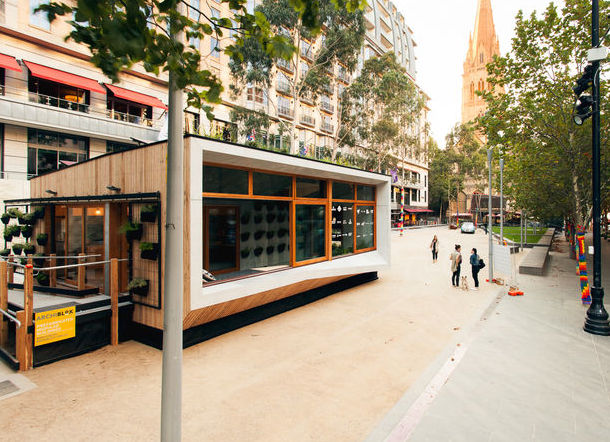
TNJ is essentially a showcase of ideas of how people can reduce their consumption and live more sustainably. The centerpieces of the project are mockup homes set up in public spaces in Melbourne, Australia. There have been three demo homes in the last few years, used for press ops, promoting various non and for profit companies to showcase their services and stuff.
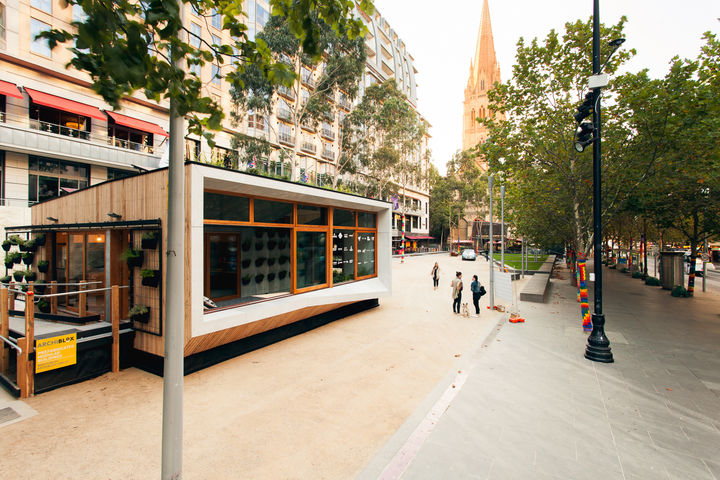
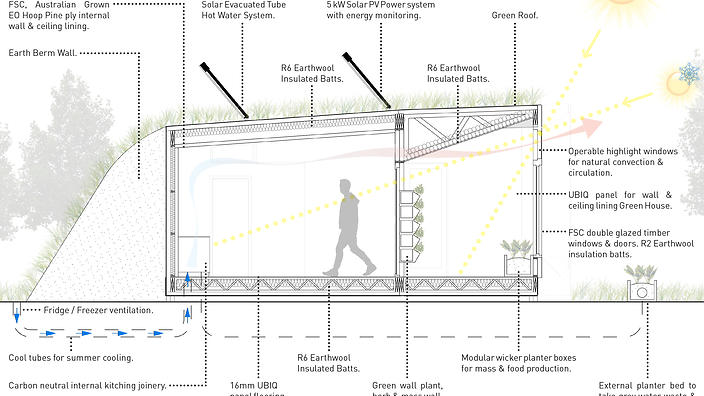
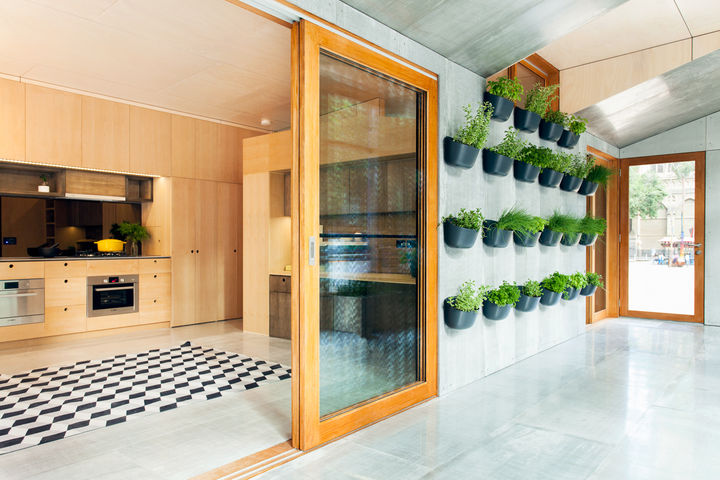
Their latest demo house is quite badass. It was designed by Archiblox Architecture. It has prefab construction and is “carbon positive,” meaning it produces more energy than it needs to run. Through the use of passive solar design, grey water and water catchment systems, PV power, green walls and roof and many other energy-saving features, the house is extremely energy efficient. According to Archiblox, over its lifespan, the building will emit 1,016 (tCO2e) tons less greenhouse gases than a standard home of similar size and function–the equivalent to taking 267 cars off the road, or planting more than 6,095 native trees.

At 828 sq ft, it’s not all that compact, particularly considering it’s a one-bedroom, but it’s not crazy large either, considering Australia boasts the largest average-sized home in the world. The layout is probably also designed to help large groups of people move through the space.

I think the best part of the project is its name. It’s a perfectly natural human tendency to want the things our peers have. But that tendency can be easily co-opted by the interests of entities–be they the interests of real estate developers peddling McMansions or some retailer selling a bunch of crap you don’t need–in ways that neither promote health nor happiness. In other words, if keeping up with the Joneses is a fairly intrinsic human behavior, we might as well choose Joneses that have our, and the planet’s, best interests in mind.

If you’re in Australia, the demo house will be on display in Melbourne’s City Square through Feb 15. Check the TNJ website for more info.
Adventures in Extreme Minimalism

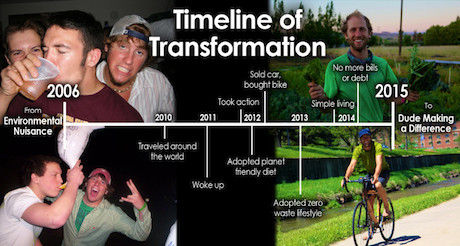
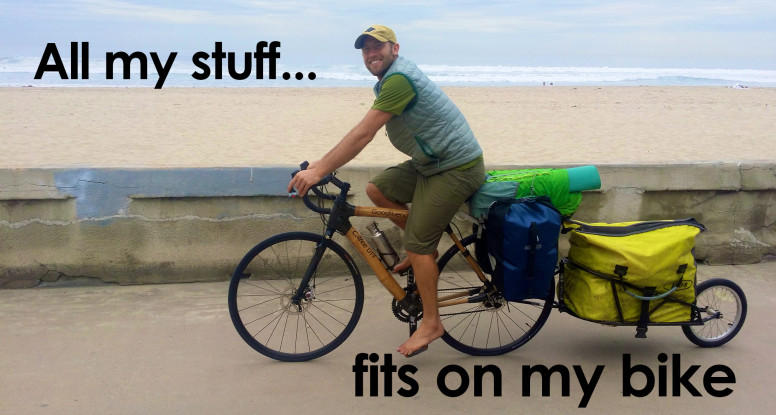
A couple weeks ago, we revisited Peter Lawrence, a man who lives with what would charitably be called a paucity of possessions. In certain ways, Rob Greenfield makes Lawrence look like a hoarder. Greenfield lives in a 50 sq ft “house” and what few possessions he has can stuffed on a bike trailer. On his website, Greenfield says he “is an American adventurer, environmental activist, and entrepreneur on a mission to entertain, educate, inspire, and give back to the world. He is teaching others about the issues associated with food, energy, water, waste, transportation, and health by displaying his style of living to the world. He is leading them towards a greater sense of happiness and freedom.” Sound good to us.

Like many who have fairly extreme-lifestyles, the mostly-nomadic, veggie-eating, non-showering, vasectomied Greenfield is a convert. From childhood to early adulthood, he says he used stuff to boost his sense of self-worth; first it was Beanie Babies then later cars and even a boat. He also writes that his life up until recently prioritized “binge drinking every weekend, looking good, and macking on pretty much every good looking girl I saw.”

Then in 2011, he says he got educated. Though he doesn’t specify what that education was, I suspect it had to do with his environmental impact on the planet. He thereafter “gave up on restrictive social norms and stigmas and embarked down a path of living for the benefit of the earth, my community, and myself.”

Rob-Greenfield-Timeline-776x415

There’s too much on Greenfield’s site do justice to his iconoclastic lifestyle. He’s at once a free-spirited hippy, biking across country in bare feet, dumpster-diving and doing good deeds; he is also a hyper-organized type A personality, publishing a detailed list of life-goals with status reports, writing a blog, producing Youtube videos and running his own online marketing firm, of which he gives 90% of the profits to environmental causes.

His last couple life events include getting rid of his cell phone (his last bill) and buying an off-grid tiny house in San Diego (more of a sleeping shed), where he plans to grow his own food and take the home completely off-grid.

On this site we often feature experimental architecture and products. Often, their main function is to show what’s possible, not present an exact model for places we will live in or products we will use. Greenfield, in many ways, presents an experimental life. Very few are setup to come and go as he does (though he’d probably argue that that’s a choice), but he shows what’s possible–how we can all simplify our lives, live with less stuff, reduce our environmental impact and (most important) be happier and more useful in the process.

Hat tip to Adolfo Mercado Solano

Low Impact Living and Dancing Rabbits

What would a truly “edited” and sustainable type of community look like (that isn’t a bunkhouse or prison cell or isn’t the Kowloon walled city)? You’d imagine people would live in small dwellings placed close together. To offset the compact dwellings, there would be large shared common areas. People would use only what they needed and most everything that could be shared, would be. Food would be grown locally and barring that, it’d be purchased collectively. Individual needs would be so few that one could live on a fraction of the money most people do, affording more leisure time. Sounds groovy, right? It also sounds like a pipe dream. Well, one community called Dancing Rabbit has been smoking that pipe for over 20 years.

Dancing Rabbit is an Eco Village, which are intentional communities, normally ranging from 50-150 people whose goal is to create a form of living more socially, economically and ecologically sustainable than most status quo offerings. DR has been going in one way, shape or form since 1993, following a few Stanford student’s ambition to go beyond rhetorically changing the world. The community started in California, but found it too expensive, zoning too restrictive and land too arid to fulfill on their economic/eco ambitions. They later moved to their current home state of Missouri, where land was cheap, zoning lax and land was fertile enough to grow without irrigation.

dancing-rabbit-cabin

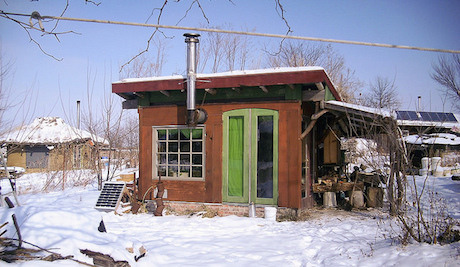
While DR occupies 280 acres, the actual village sits on about 50 acres. Houses run small. I spoke to one of DR members, Nathan Mackenzie Brown, who said he lives in a 225 sq ft home and that 500 sq ft would constitute one of the community’s larger units. He’s quick to point out that the small house size is offset by large common spaces. “I live 30 feet from our large common house,” he said. Speaking more generally, Brown thinks Dancing Rabbit achieves many of the environmental and economic advantages of the small space movement but because the community shares so much and has access to so many resources, it suffers few of the drawbacks.

I asked Brown how DR’s economy worked. “There is a great variation of professions,” he said, “but since our internal community is not that great [consisting of some maintenance and administrative jobs], most of the people living at DR have some sort of income coming from external sources or are living off of saved money.” Note that it would not take much income or savings to make this happen. Brown said most rents are about $200-300 for a room or dwelling and can be as little as $150/month for a cabin without running water. He said that the average income for a DR resident is around $6-9k year.

The community further reduces expenses by growing some of their own produce and collectively purchasing food through United Natural Foods. And since individual car-ownership is prohibited as one of their covenants, the community, through heavy carpooling, gets around with only four cars.

This sort of radical sharing and minimal living is a big leap from much of the rest of the US (and the world for that matter) and the community has had some ups and downs. At one point, their population dipped to only four people. It peaked at 65, and has 50 people at the moment, with a mix of temporary and longterm residents. But DR’s real ambitions are to increase the size to 500 or 1,000 people. “We want to make a model that addresses needs that go beyond our immediate community,” Brown told me.

Not everyone is going to want to live in such an unusual—albeit completely logical and sustainable—setting. But if your curiosity is piqued, there are a number of ways of checking out DR yourself. They have their own bed and breakfast, they run a visitor program or if you want to really take the plunge, you can rent a room or house onsite—the latter option does not require or include becoming an official, voting community member.

The Slow Death of the Walkable City

As a bit of an urban planning enthusiast, I’ve often wondered how cities that predate widespread car-ownership can be so car-dependent nowadays. For example, I am from Chicago, a city that was booming well before the Model T hit the assembly line. Yet today, there are large swaths of the city that are, for all intents and purposes, inaccessible without a car or a ton of patience for public transit.

The fact is most cities that predate ubiquitous car-ownership were far more walk/bike/public-transit friendly than they are now. Their cityscapes were characterized by dense housing on small lots connected by narrow streets. People walked, biked, rode horses or took streetcars to get where they were going. Without cars, people had to live close to their work, stores, etc.

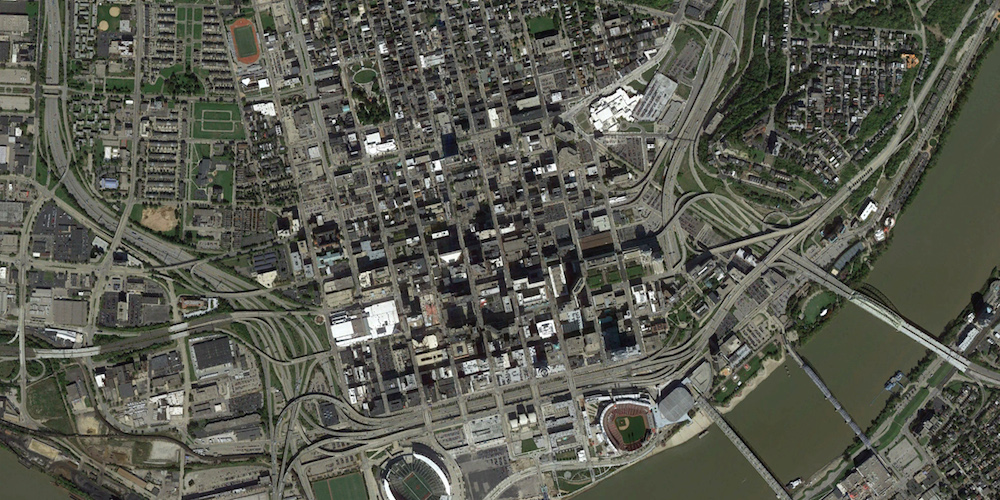
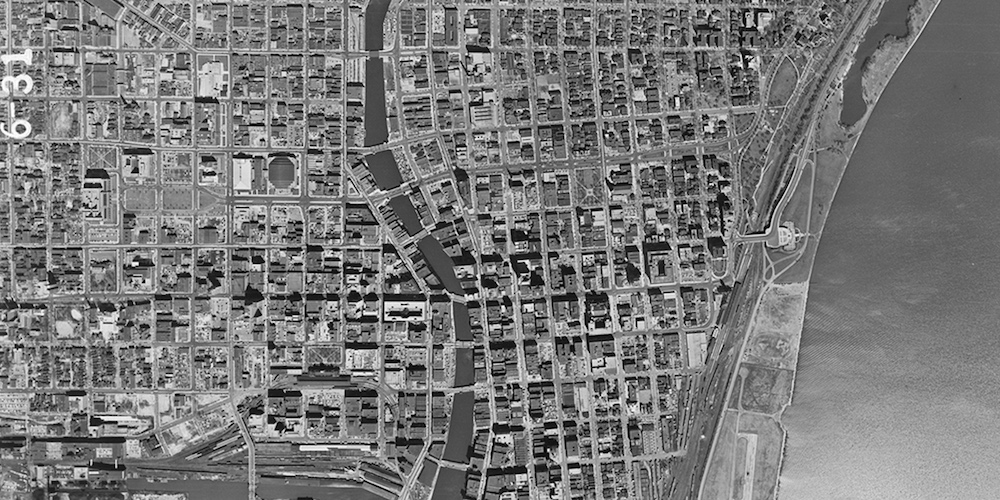
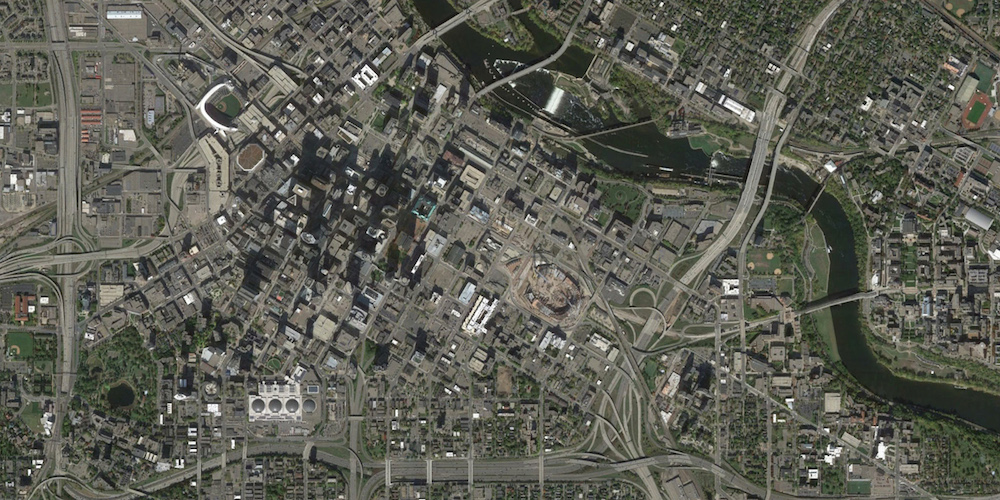
In the mid 20th century, much of this density was lost to make way for the car, a fact illustrated so well by these maps published by the University of Oklahoma’s Shane Hampton. He writes of the contrasting views:

60 years has made a big difference in the urban form of American cities. The most rapid change occurred during the mid-century urban renewal period that cleared large tracts of urban land for new highways, parking, and public facilities or housing projects. Fine-grained networks of streets and buildings on small lots were replaced with superblocks and megastructures. While the period did make way for impressive new projects in many cities, many of the scars are still unhealed.

Indeed, the pictures show cities eviscerated by highways. Semi-occupied lots fill the spaces where tightly packed housing once stood. Wide arterial roads replace narrow streets. It is a picture of sprawl.

What’s interesting is that many of the cities featured have experienced economic decline in the last 60 years. On the other hand, cities like San Francisco, Boston and New York City that did not undergo such profound transformations (not that people didn’t try), have remained economically vital.

As with many things, the answers to present and future problems can often be found in the past. The older pictures show that we know what to do, how to build and how to make cities vibrant, walkable and sustainable. If we can build that type of cities once, we can do it again…at least one can hope.

See more interactive maps on the University of Oklahoma’s Institute for Quality Communities website

Hat tip to Lloyd

This Tiny, Passive House Ain’t No Wimp

Don’t be fooled by its peace-loving name, few things will defend you from the elements like a Passive House. If you’re not familiar with the term, Passive House (aka Passivhaus) is a German-born set of rigorous building standards that make a dwelling extremely energy efficient. Passive House construction implements energy saving measures like super insulation, passive solar design (i.e. optimizing a structure’s orientation to put the sun to good use–either shielding it from the hot in warmer regions or adding solar heat in colder ones), triple or quadruple-glazed windows, an airtight building envelope and various natural or mechanical ventilation systems that keep fresh air circulating through the interior. The LifeEdited apartment, though not Passive House certified, employs a number of Passive House strategies such as a tight air barrier and the use of a heat recovery ventilator (HRV); this allowed us to super insulate the space such that we were able to reduce the number of radiators from five to one.

But just because a dwelling meets the Passive House standard doesn’t mean it’s required to be a particular size. In fact, many Passive Houses are quite large. And as we know, you can have the most energy efficient home, but if you have to drive a couple hours to get to it, it seriously affects the home’s overall resource consumption. The marriage of small, dense housing with Passive House levels of building efficiency would be a felicitous one. And that’s exactly what Mini-B Passive House is all about.

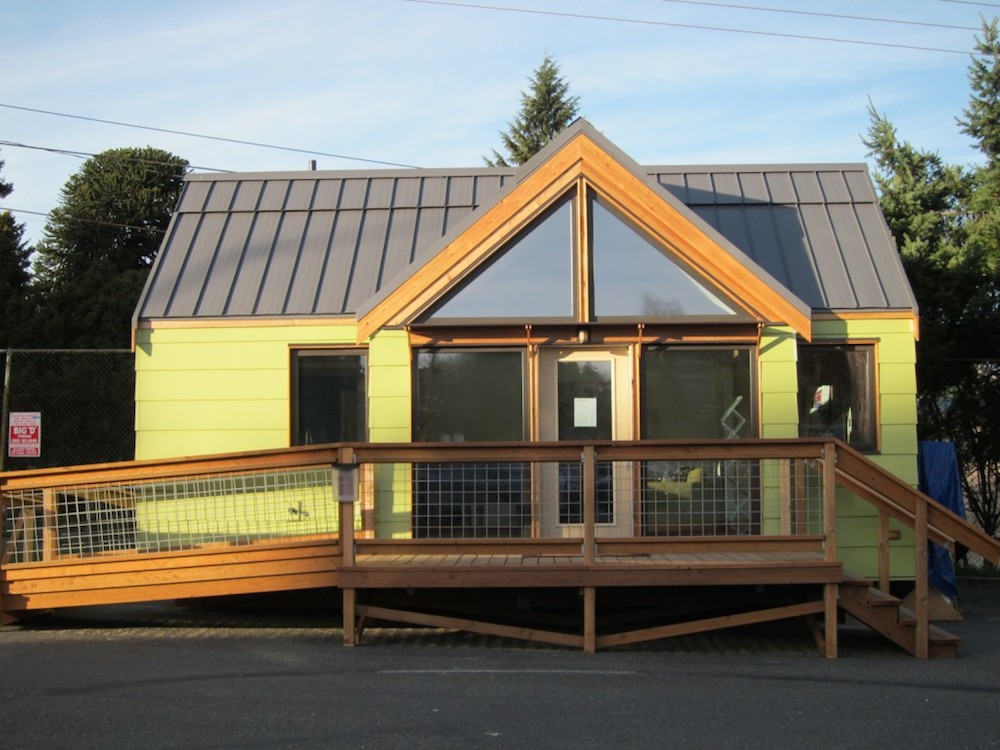
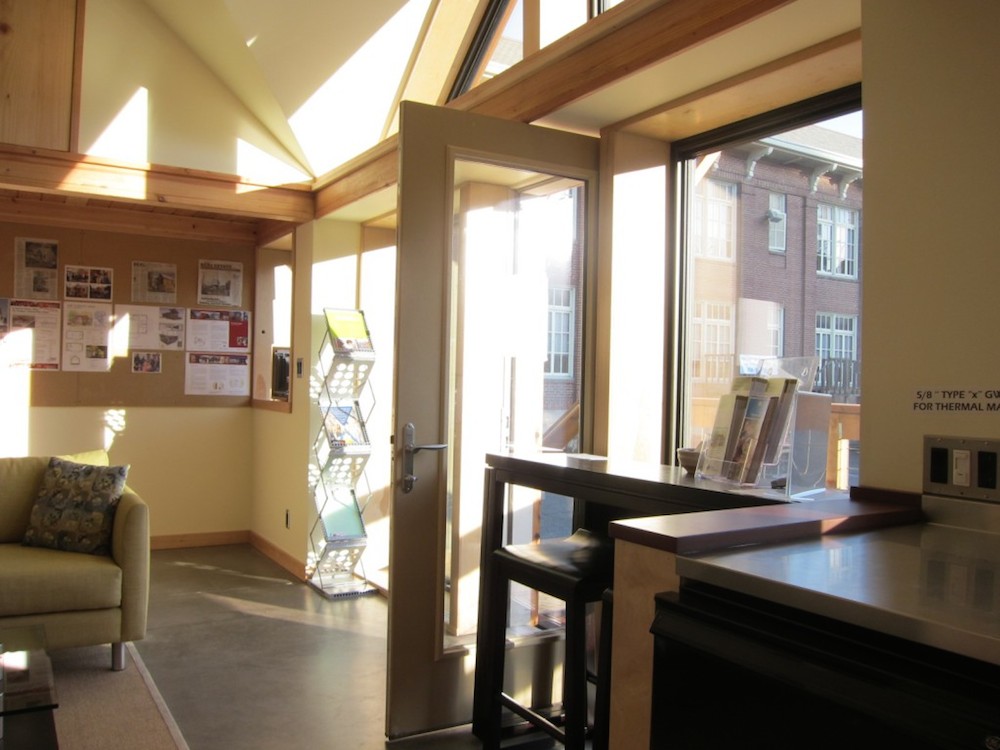
The 300 sq ft house is the brainchild of architect Joe Giampietro. It was designed to be used as a detached accessory dwelling unit (DADU) in the Seattle area, though we imagine it could be setup elsewhere. The house uses nine inches of foam insulation, a heat recovery ventilator and quadruple glazed windows among other things. Its insulation is so complete that the rare bit of Seattle winter sunlight or, in extreme cold, a tiny wall mounted heating panel, are all that are needed to make the place comfortable. It’s estimated annual heating bills would run about $30 and electricity a mere $100.

The house was built by students and used as a demo before eventually being auctioned off. On their website Giampietro says that Mini-B plans and constructed homes are available to purchase, details available upon request.

These Machines Might Solve Energy Crisis and Obesity Epidemic

As we’ve looked at here in the past, one of the chief ways of staying trim and live longer is to avoid sedentary behavior and remain active. And as we should all know by now, we are burning through our natural resources at an alarming/scary rate. What if there were products that kept us active while reducing or eliminating our need for dirty energy? Wonder no more, because a couple products are making it possible for us to get our bodies moving while generating the energy needed to do the stuff we need to do.

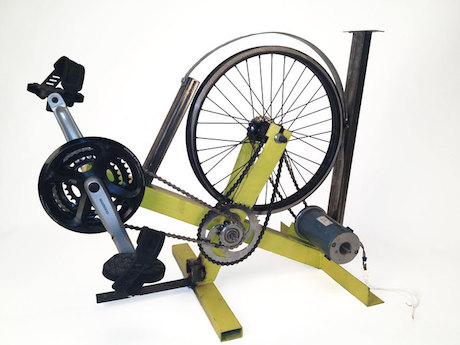
The first of those products is the Big Rig by company called Pedal Power, which addresses the fact that much of our sedentary behavior happens at work while at our desk on computers. The Big Rig is a stationary recumbent bicycle with a work surface attached. The bike’s cranks power a generator, which can used for a number of purposes according to Pedal Power’s website:

An average adult can use it [the Big Rig] to generate 100 watts of electricity [more than enough to charge a laptop], pump 5 gallons of water per minute, grind a variety of grains, as well as operate an air compressor, a hydraulic pump, most any hand-cranked machine, and a variety of small shop tools. It has been found to be particularly suitable for small scale agricultural applications such as cracking grains, churning butter, and pumping water.

Pedal Power also offers the single-purpose Pedal Genny, which has an optional seat, but lacks the desk. They say it can be configured to power most any mechanical device requiring less than one horsepower.

pedal-genny

While these items can certainly be used for sedate desk jockeys, unfortunately electricity is just too cheap right now to affect any significant migration away from the much-love wall socket. The Pedal Power founders see them as particularly well suited for off-grid and developing world situations where electricity is either unavailable or extremely expensive.

The Big Rig is available starting at $2000 and the Pedal Genny starts at $350. Prices increase depending on configurations. Pedal Power launched and successfully funded a Kickstarter campaign last year to fund R and D to make the units cheaper.

bike_washing_machine

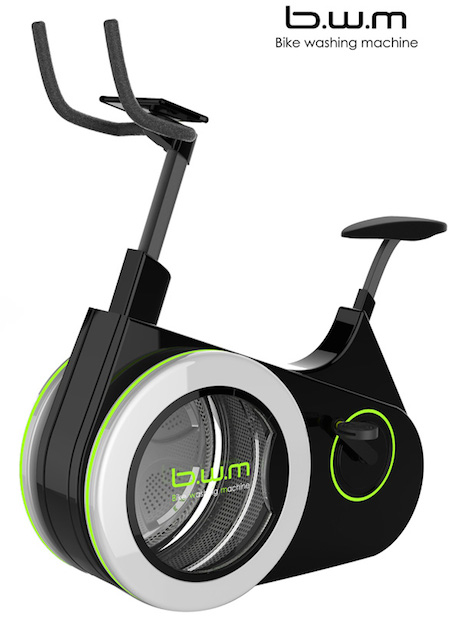
The other product uses much the same concept, but is applied to clothes washing. The BWM (Bike Washing Machine…not to be confused with Bavarian Motor Works) was designed by Li Huan and is an upright bike whose front wheel is replaced by a washing machine drum. The idea is very simple, though we’re not sure the same can be said about spinning your clothes manually.

The BWM looks to be still very much in the concept stages of development. We might suggest to Huan a collaboration with Pedal Power so you wouldn’t need two separate machines.

Forget Dumpster Diving. Try Dumpster Living.

“What’s the smallest space you can happily and healthily live in using the fewest resources?”–it’s a question that Professor Jeff Wilson is trying to answer. In his quest for that answer, he’s going beyond shipping containers and tiny houses–the frequent vessels for extreme tiny-living. His tiniest of resource-sipping homes is a lowly, 33 sq ft dumpster.

Wilson, aka Professor Dumpster, is an environmental science professor at Huston Tilloson University in Texas. He and a team of experts have started the Dumpster Project as a case study in how 10 billion people (the estimate world population in 2050) might sustainably coexist on this planet…and also have a little fun while doing research.

The yearlong project will be broken into three phases. Phase one is called “Dumpster Camping.” From February to June of this year, Wilson is living in a dumpster without any electricity or running water (i.e. camping). He uses a camp stove to make coffee. He is wheeling water that he filters from a nearby lake. He is trying to establish a minimal resource use baseline.

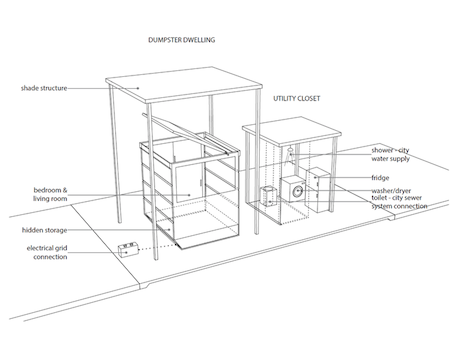
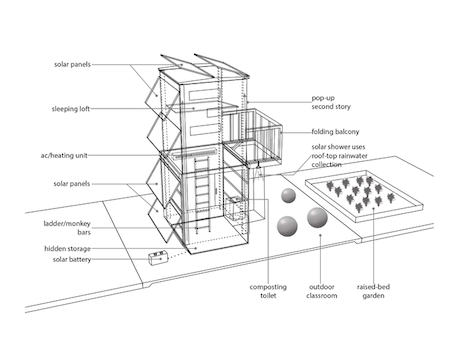
american-homeThe second phase is the “Average American Dumpster Home,” which will run from July to December of this year. In this phase, the dumpster will be decked out with the accoutrement most American homes enjoy: air conditioning, dishwasher, refrigerator, stove, toilet and more (note: he’ll be adding a separate “utility closet” to hold some of these bulky items). This will phase will be “establishing a data baseline—average levels of consumption for energy, water and waste,” according to the project.uberThe final phase is “Space Capsule Über Dumpster,” which is basically making the dumpster into the trickest, off-grid home possible. There will be a popup roof, PV panels, rain catchment, garden and more. This phase will use the dumpster as a laboratory for sustainable, minimal resource, livable housing. This is opposed to camping phase which, though not resource-intensive, is not livable either; the insulation free interior of the dumpster was 116 degrees the other day.

We asked Wilson “why a dumpster?” He said there were a number of reasons. One is it’s never been done before; doing the project in the dumpster has called more attention to it than if it had been in a tiny house or something more conventional.

Furthermore, in the mini-documentary above, he calls the dumpster a “conversation box”–one that has attracted a broad spectrum of followers as well as a band of experts from around the country to lend their science and design knowhow. He also thought that the juxtaposition of the home–for most the paragon of security–with the dumpster–something many people have a reflexive revulsion to–would make that conversation all the more fertile.

Ultimately, the dumpster is just a vessel. The project is an applied and earnest–though not self-important–investigation into space and resource consumption. Wilson et al are holding a Kickstarter campaign to raise money for the third phase. Check it out and lend your support.

It’s Earth Day Damnit

Happy Earth Day! It’s that day of the year we appreciate the extraordinary set of circumstances that conspired to make our planet suitable for habitation (or something like that). It’s really quite incredible, isn’t it? The planet’s proximity to the sun, its perfect gravitational pull, the atmosphere that’s just right to support life. It’s so amazing.

It’s also amazing that we humans seem so hellbent on destroying this symphony of circumstances. We know the information. We watched An Inconvenient Truth. We’ve seen the satellite pictures of rapidly melting glaciers. Yet our destruction continues. The IPCC’s (International Panel on Climate Change) 5th Assessment Report released last week found that GHG emissions between 2000-2010 grew at a faster rate than they had in the three previous decades. As Treehugger’s Michael Graham Richard said of their findings:

Business as usual [in regards to GHG emissions] is not an option. It would lead to temperature increases of between 3.7 celsius (C) and 4.8C, which is far above the 2C threshold that scientists agree would lead to much more catastrophic warming. Even reaching the pledges made at the Cancun Climate Convention in 2010 wouldn’t be enough to stay below that 2C level, and would bring us closer to 3C.

Catastrophe aversion will necessitate a multi-pronged approach. There will need to be international cooperation to institute the regulatory and technological solutions required to mitigate GHG emissions. There will need to be widespread improvements in efficiency standards and an array of renewable energy sources to replace the dirty ones that keep us going nowadays. And there will also need to be a major paradigm shift in the way we live (with a particular emphasis on the Western “we”, who are the principle drivers of GHG emissions).

Perhaps the most important thing we can do on the local level is curb our appetites for stuff and space. In our 2013 Earth Day post, we listed several ways editing your life tangibly benefits the planet. Reducing consumption (consumer goods, energy, food, etc) will significantly reduce your carbon footprint. Living in a smaller, (ideally multifamily) home, without a car or in close proximity to public transportation, will reduce it even more.

And just as our small choices to consume stuff adds up to a collective mess, so too do our small choices to edit make a big difference in cleaning those messes up. As the IPCC report makes evident, the time to act as now. And as Arnold Schwarzenegger so eloquently put it several years ago about global warming:

Imagine your child is sick with a rising fever. If 98 out of 100 doctors said that the child needed immediate treatment…and two doctors said that the child was just fine…who would you listen to? The 98 or the 2? Should we do nothing about global warming on the slim-chance a few skeptics who deny its existence may be right? No, we should not.

The planet is sick. The doctors agree on this prognosis. There is a very mild medicine: the IPCC recommends 1.7% reduction in global GHG consumption by 2030 and 3.4% by 2050. If we don’t take the medicine, we might not make it. Now it’s time to swallow.

happiness-gdp.001

We have everything to gain. It’s not fun being sick. Years of industrial and economic growth have had little to no quantifiable impact on our overall happiness. Maybe, just maybe (to extend the medicine metaphor a bit too far), we’ll feel better following the doctor’s orders.

Sunlit Spruce image via Shutterstock