Can Sustainable Sushi Become the New Wave in Seafood

In NYC’s East Village, a couple of restaurateurs are going for a new dining concept that is seeking to change how we look at seafood. Sushi restaurant, Mayanoki, headed by TJ Provenzano and David Torchiano focuses on serving locally and sustainably sourced seafood. Concepts of organic farming to farm to table dining have long made its way into the public mainstream but seeking out sustainable options when it comes to sushi have not yet come to light.

“When it comes to other cuisines, they always promote that they use local beef or chicken, except when you go to high-end omakase it’s always, ‘We flew this in from Japan’ and that’s acceptable and I don’t know why,” Torchiano in discussing the concept for Mayanoki. “Delivery chains and distribution are not up to the same standard as they are in Japan, so I think that’s what turns off a lot of the chefs here. We just feel it’s a challenge we need to take on. While we want to respect the tradition of sushi, sushi has always been about food preservation and by its nature it was sustainable.”

In addition, Mayanoki only carries local beers and wines from New York State and the only thing they still import from Japan is the sake. Monterey Bay Aquarium Seafood Watch has recognized them as the only sushi restaurant working towards sustainability.

Although it sometimes is tough for them to procure certain types of fish depending on the season and remain sustainable, their hopes of educating the public into this new type of sushi will help drive business in order take on the other major sushi restaurants in the Manhattan dining scene.

For their full write up in Eater, click here

Photo by food blogger @restaurantgroupie

We Wish All Suburban Developments Looked Like This

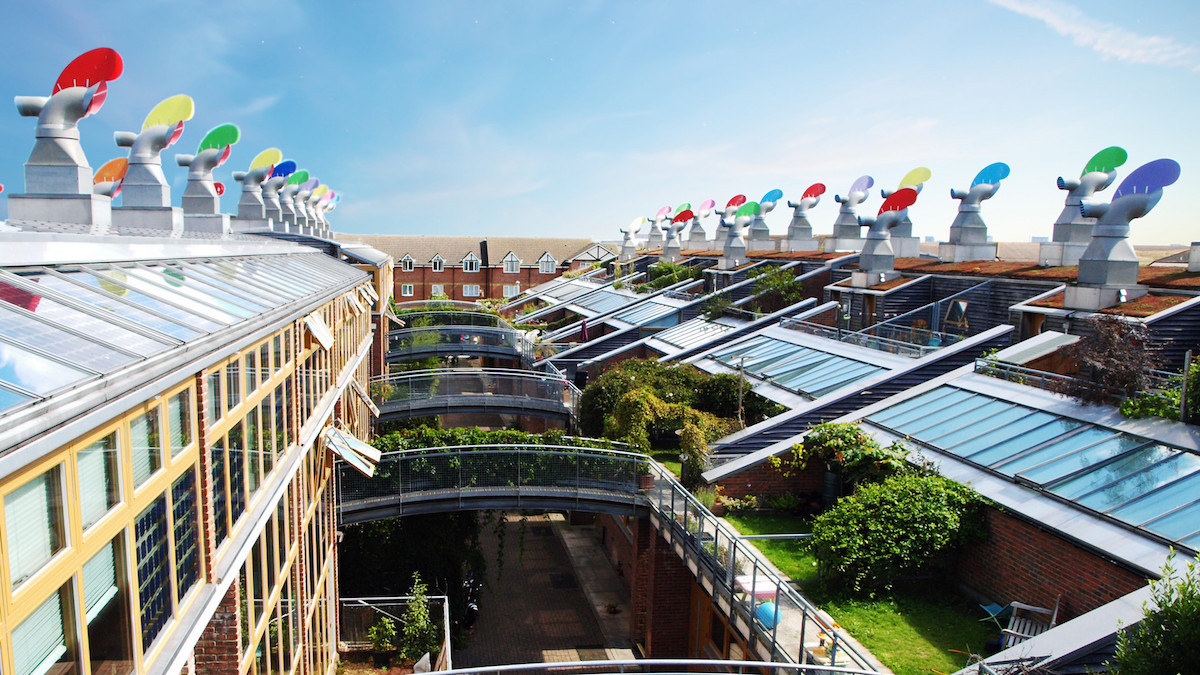
We’ve long extolled the virtues of high density, urban living. By keeping things close, you can walk or bike most places, which is better for both physical and planetary health. Density leads to more social interaction, easier distribution of goods and foods. And so on. But we also understand why people are drawn to the suburbs. It’s nice to have a little more personal space and maybe even a yard. In 2002, architectural and development firm ZED Factory completed their BedZED, a unique housing development that fuses the best of urban living with suburban comfort.

The word zed, for those unfamiliar with anglo-numerical nomenclature, means zero. In this case, BedZED, located in Wallington, a commuter suburb located 10 miles outside central London, is the “UK’s largest mixed use, carbon-neutral development.” It achieves this zero-ness through solar power and a “biomass combined heat and power plant, an onsite sewage treatment and rainwater recycling system,” according to ZED Factory’s website. Many of the building materials were reclaimed or sourced within 50 miles of the site to keep embodied energy low.

One of the more remarkable aspects of the development is its diversity housing types and uses. According to ZED’s website, “BedZED comprises 82 affordable dwellings in a mixture of flats, maisonettes and townhouses, and approximately 2500 m2 of workspace/office, and is built on a brownfield site [repurposed industrial site].” In addition to housing diversity, there is demographic diversity, with one third “social rent [subsidized low income], one third shared ownership [coop] and one third private for sale”–a structure that promotes a variety of people at different stages in their lives. Residents share the complex with ground floor businesses, whose spaces can be easily configured to accommodate large or small businesses.

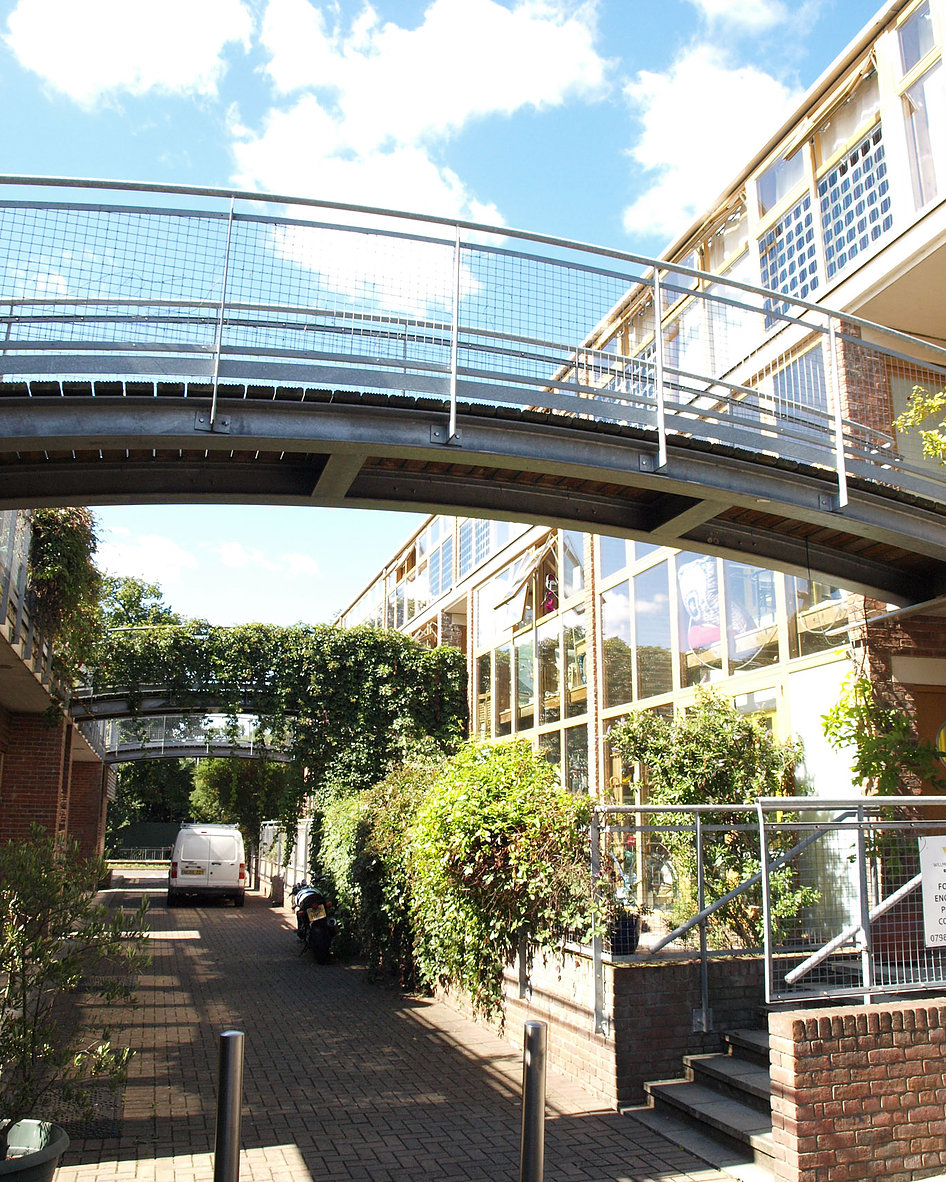
Putting aside its considerable eco and urban planning cred, the place looks great. Units are bathed in light (as much as they can be in the UK) and the interiors enjoy an industrial chic look carried over from the building’s previous life. Small, verdant walkways and wend their way through the complex and almost every unit having its own terrace or garden. If this is the suburbs, we want in! 

Image via ZED Factory

Introducing LifeEdited: Maui

It’s been years since we revealed the first LifeEdited Apartment (LE1) in New York City. It was both design laboratory and CEO Graham Hill’s personal apartment. But as some might know, Graham splits his year between NYC and Maui, initially due to a kite surf addiction. A few years ago he bought a 2.2 acre piece of land in Maui with the intention of one day designing and building a home that incorporated many of the same ideas that informed LE1. That one day is today. LifeEdited is building a mini compound, calling it, appropriately enough, LifeEdited: Maui (LEM). The home will showcase the best design and technological ideas for high quality, low impact living. 

Thus far, LifeEdited has mostly been an urban tale. Doing more with less is a necessity in the city. In Maui, we have a 1000 square foot max of what we are allowed to build…so the beauty is that we are making a four bedroom, 2.5 bath with that space where all the bedrooms transform to other uses during the day. We created a program (subject to some change) that reflects how the project can achieve this aim. We want to maximize use and experience while minimizing impact. Here’s what we came up with:   

  • Making the main house under 1000 square feet. We don’t want to encroach on the land any more than we have to.
  • Employ transforming design and exploit outdoor space as much as possible. We want to make the space we have do as much as possible.
  • Make it off-grid and net zero or even net positive. We will use solar power, water catchment systems, composting toilets, etc.
  • Employ smart home tech to improve user experience and reduce energy consumption.
  • Employ electric vehicles such as bikes, trikes, cars that will be charged with power generated by on site solar.
  • Employ agriscaping, taking advantage of the fertile soil to grow food on the property.
  • A water catchment reservoir.
  • Use carbon offsets to mitigate one of the project’s biggest energy sinks: airline travel.

An hour long TV show about the project will air on the DIY Network later this year (and likely on HGTV). And we will be giving regular updates on this site and social media. We will be reaching out to press and various influencers on our mission to spread the less is more gospel!

If You’re Going to Covet, Covet This

The term “keeping up with the Joneses” is rarely framed in a positive manner. It refers to a nasty form of one upmanship, where someone is always trying to have the bigger car, bigger house, newer clothes, etc, than someone else (i.e. the Joneses). But as we saw last year, the Australian ‘edutainment’ project “The New Joneses” flips this formula on its head. Their logic is that if you’re going to compare yourself to people, you should compare it to the right people–those who are living in forward-thinking, intelligent, responsible ways. Starting today and through the month, TNJ is doing just that with an exhibition set up in downtown Melbourne, Australia.

The centerpiece of TNJ exhibition is a 720 sq ft home by Ecoliv Buildings, a company that specializes in producing high efficiency, prefabricated, modular homes. The house is fully off-grid capable, with a solar array by Q Cells and solar microinverter battery storage by Enphase, providing power when the sun’s not shining. There are a host of other green features to the home inlcuding a solar hot water, rainwater tanks, LED downlights, electricity use metering, a greywater recycling system, ceiling fans, double glazed windows and low VOC materials.

ecoliovf

Since living sustainably means more than having a tricked out house, TNJ exhibition covers various aspects of daily living, both hi and low tech: from an electric BMW i3 and smart home tech to free roaming chickens and composting bins.

Throughout February, various people will be staying at the home as a proof of concept and way to spread the word. There will also be parties, movies and workshops as well (visit their website for more information).

Several years ago, Harvard released a study on obesity that was conducted on 12k people over the span of 32 years. They found that people were 57% more likely to become obese when a friend became obese. Was obesity “passed on” like a cold? Not exactly. It got passed along culturally. The study’s lead Dr. Christakis told the NY Times, how it highlights “the importance of a spreading process, a kind of social contagion, that spreads through the [social] network.” In other words, our environmental influences–the people we interact with, the messages we receive–have a huge impact on our behavior for better or worse. If our friends exercise regularly or buy a McMansion, the odds increase that we will do these things as well. TNJ seems to get this, showing that if we are to create new paradigms for living, ones that ‘live it up, with less’ as they say, we need to saturate our environment with good examples of how to do it. Check it out yourself online or if you’re in Melbourne in person

What’s Right With This Picture?

From above, this picture shows a fairly normal suburban neighborhood. There are large, single family homes, each with their own driveways, front and back yards. But if you look closely, right between N St and Lessley Pl, there’s a group of homes with irregular yards. Trees from one property cascade over onto the next. There’s some weird walkway system that flows unimpeded from one property to another. It’s tough to tell where one property ends and the others begins. These are the homes that make up the N Street Cohousing community of Davis, CA.

N Street began in 1986 when Kevin Wolf and his wife Linda Cloud purchased and brought together two adjoining houses. Eventually additional houses were purchased by other parties and brought into the community.

247328_178590218864666_4080711_n

In 1999, the Davis city council recognized N Street as a planned development (PD). According to the N Street website this had a number of community-building implications: “Sideyard setback easements were slightly more relaxed while the backyard setback was extended from ten feet to 30 feet. Construction of larger second unit apartments were allowed.” This permitted the melding of backyards as well as the subdividing of existing houses. Today N Street contains 19 houses with over 60 adults and 5-10 children depending on the year.

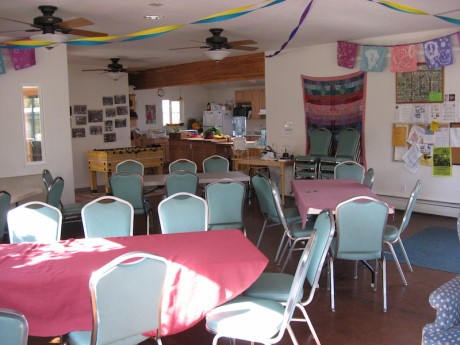
The initial house purchased by Wolf was made into a communal house, which has “a four bedroom-two bathroom apartment upstairs and the downstairs includes the community’s dining room (sitting 50 for dinner and 70-80 for concerts), a large kitchen, a TV/meeting room, a bathroom and a shared laundry room.”

IMG_0062

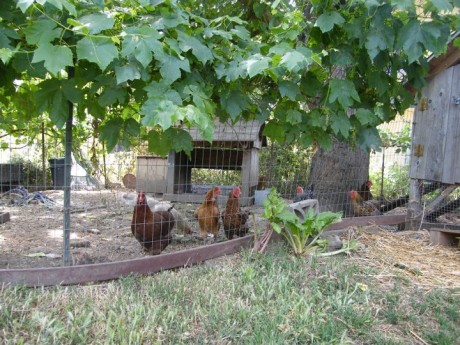
Though it might seem like a commune, all houses are individually owned and occupied, though some owners rent their houses out. And while there are no backyard fences, each house has its own yard that it maintains. Many, if not all, of the yards are landscaped and farmed. There are gardens, chickens coops and more.

Chickens

The main thing driving N Street is its culture of shared living and mutual support, of which the community says:

N Street Cohousing has all the attributes of a classic cohousing community. We live together as an intentional community, sharing much of the joys and pains of our lives with each other. We support each other in difficulty and celebrate in success. We sometimes vacation together. We have even been known to fall in love and marry each other. However, we live in our own homes and have our own yards (though without any fences). Each of us can be private when we want to be and each household sets its own culture for visiting, borrowing, and participating.

In cohousing parlance, N Street is deemed “retrofit cohousing”–which is to say the architecture and layout were never designed to be community oriented as they are in developments like Pocket Communities and other purpose built cohousing developments.

This retrofit solution is one of the reasons why N Street is so interesting. In the coming decades, suburban living might present large economic, environmental and social challenges. Without cheap fuel, people might not be able to access their suburban homes in an economically viable manner (this, to a large extent, is already happening across the country where many suburbs are becoming slums). Even with cheap fuel, the carbon production of suburban living–stemming from both large homes and related mobility–will become ever harder to reconcile with the dire need to curb carbon production. And as the population ages, having large, individualized homes that are tough to pay for and access (i.e. drive to and from), will present major issues for a growing older adult community. Despite these challenges, there’s a huge suburban infrastructure that’s not going anywhere anytime soon.

N Street presents one possible way of meeting many of these challenges. Because it has a built-in community, it might reduce the need to drive to see friends and access services. Because it has some agricultural capacity, it might provide a model for self-contained, sustainable living. And because community members look out for one another, and because the houses have the flexibility to be further divided into individuated apartments, allowing for more affordable housing as well as possibly creating ad hoc retirement communities, communities like N Street might provide a supportive housing model for aging populations. All of these things working within the existing suburban infrastructure. One can hope!

What is the Future of Home?

We–well Graham, our founder–often gets asked to present on the subject of LifeEdited, doing more with less and the like. And we–well I, David your trusty blogger–am often charged with researching and helping to organize these presentations. Graham spoke at last week’s Visioneering conference held by X-Prize (my research being the main culprit behind the site’s mostly offline status the last couple weeks). If you’re not familiar with X-Prize, it’s an organization that offers up a bunch of money to fund big solutions to grand challenges. Visioneering is a brainstorming session to consider and prioritize what the next X-Prize challenge will be. Graham spoke on the “future of home” and was charged with throwing out a grand challenge around the topic.

In researching this topic, one thing became really clear to me: the future of housing is a really big deal, perhaps the biggest individual deal there is in terms of addressing our biggest problem. What is that biggest problem, you ask? In my opinion, it’s climate change, aka global warming.

Consider the following:

  • 13 of the 15 hottest years on record have all occurred since 2000.
  • Arctic sea ice is melting at a rate of 12% a year and some believe it might all be gone as soon as 2030.
  • The atmospheric concentration of CO2 just passed 400 ppm, which is already 50 ppm north of what is considered an acceptable concentration for maintaining a stable climate situation. Going at our current our current average emission rate of 1.92 ppm, we will hit 450 ppm by 2042, which might trigger temperature increases of anywhere 2-5 degrees centigrade. This might (i.e. likely) set off a bunch of events like massive glacial melting, triggering sea level rises and the release of ungodly amounts of methane from said glaciers accelerating warming even more. We can look forward to horrible, ongoing droughts in some places (we’re looking at you California) and monsoon like conditions in others. Famine, mass-extinctions of flora and fauna, climate refugeeism, resource conflicts, plagues of invasive species and lots of other fun stuff if things keep going as is.
  • Experts believe that if we are to stand any chance of stabilizing the climate, we need to return to 50% of 2010 global CO2 emissions…and do it yesterday. But for all the resolutions and imperatives to curb global CO2 emissions, there seems scant evidence that it will happen. According to recent National Oceanic and Atmospheric Association (NOAA) findings, “the average growth rate of carbon dioxide concentration in the atmosphere from 2012 to 2014 was 2.25 ppm per year, the highest ever recorded over three consecutive years.” Ever. Recorded.

How does all of this relate to housing? Well many believe that housing and related mobility accounts for anywhere from 40-70% of our CO2 emissions. If there were one place to focus our energies in reducing our carbon emissions, housing would be a great candidate (or we could just screw it all and go to Mars…either way).

Of course stemming housing-related emissions is not a one-size-fits all proposition. Much of the global population growth in the 21st Century is expected to happen in the urban areas of the developing world; it’ll be tough to anticipate how this growth will go down exactly and its impact on the environment. What we do know here and now is that the developed world (and the US in particular) has a totally outsized carbon footprint relative to its population–a footprint that’s largely responsible for our current quagmire and one that will prove geo-cidal if it were to continue.

visioneer

One interesting study I found used a Swiss village as a proxy for how emissions were affected by housing typologies. What it found was that a small percentage of houses created a disproportionate amount of emissions. Large homes located away from the village center–21% of the houses studied–created more than 50% of the emissions due to heating, cooling and transportation requirements.

In the global housing context, the United States is that 21% that creates a disproportionately large carbon footprint. We are the second biggest overall global producers of CO2, despite being a distant third in terms of population. The second most populated country, India, has four times the population of the US and a per capita carbon footprint 1/10 ours. China, the most populated country, has the largest total carbon footprint, but a per capita footprint that is about 1/3 ours, and a healthy chunk of that comes from manufacturing our–and the rest of the world’s–stuff.

So if there is going to be a future of home–or a future of anything–it seems pretty clear that we Americans, and to various extents the rest of the developed world, must reduce the carbon footprint of our homes. The US released 6.7M metric tons of CO2 into the atmosphere in 2013. Halving our housing related emissions (at 70%, roughly 2.3M tons) might not be the end of the story, but could be a good beginning, especially if it were to influence housing in other parts of the world. So the challenge, as we phrased it, was this:

Our grand challenge in the next 5 years is to design and bring into being attractive, cost-effective homes that bring together existing and future technologies and that will compel the developed world to live in them thereby drastically reducing their footprints and inspiring the rest of the world to go this way instead of the suburban McMansion and highway route.The challenge is also for the emerging economies to develop their version of this…a low cost, compelling way of living that is healthy and safe yet attractive enough to compete with the desire for the “Cribs” lifestyle.

A grand challenge indeed. And fortunately for us, we were not charged with providing a specific solution to the challenge. We did present a number of technologies that are addressing the challenge–from transforming architecture to thermostatic smart sensors to 3D architecture and much more. Most followed the LifeEdited ethic of downsizing, doing more with less but better, employing technology to improve efficiency and so on (note: the X Prize is not into policy-making, so these were technological, not political, solutions).

The topic and my findings were pretty overwhelming. As a species, we face a huge challenge. And we the inhabitants of the “developed” world have a huge responsibility. Our big-house dwelling, car-dependent, consumer-obsessed lifestyle will almost certainly lead the planet to environmental catastrophe if continued. If we want to stand a chance, something must change. What will that change be, I’m not sure.

What do you think? What do you think is the future of home? What technological solutions would you employ to drastically reduce our housing-related carbon footprints? Let us know in our comments section.


Oh Crap, It’s Earth Day

Ask any non-quack climatologist what’s happening with the planet and he or she will say more or less the same thing: it is experiencing climatic shifts that will likely rain down a shit-storm of nasty consequences: melting glaciers leading to elevated sea levels that will destroy most of the world’s major cities, desertification and fires that will prompt starvation and waves of climate migrations, mass-extinctions of flora and fauna that will shut down ecosystems and so forth. The same non-quack climatologist will also tell you what’s causing these climatic shifts: “anthropogenic drivers”–a fancy way of saying human behavior. Massive output of greenhouses gases–byproducts of the myriad systems that support the modern world–are getting trapped in the atmosphere, capturing heat and setting about aforementioned climate wonkiness. These are, for non-quack-science-subscribing individuals, facts.

Responding to these facts with ameliorative solutions will undoubtedly require geopolitics. But it seems unlikely geopolitical solutions will be implemented before there is a widespread behavioral and (forgive the term) spiritual shift on the individual level. Until every one of us understands how our behavior relates to, and has the power to destroy, the planet’s homeostatic mechanisms, the likelihood that politicians and corporate leaders will take action–folks who often have incentive to not take action–is slim, or at best insufficient to address the magnitude of the problem.

All this is to say that while there are many selfish reasons to follow our prescription for personal behavioral change that benefits the environment, it shouldn’t be forgotten that there is also a global, environmental imperative to do so. Big homes are disproportionately resource intensive and have bigger energy needs relative to small ones; moving to a higher density area that is walkable/bikeable/public transit friendly is perhaps the best way to reduce our carbon footprint; and curbing our consumption habits is a close second. The implications of these things, for many of us, will require behavioral shifts that are not necessarily familiar and many that are downright uncomfortable. Oh well. Such is life. Happy Earth Day!

Sunlight in trees image via Shutterstock

This Truck Is Cruising the Country Honoring the Stuff We Got

There was a time in the not so distant past when people held on to and cared for their stuff. They fixed toasters, darned socks, patched holes and did a variety of things that didn’t involve one-click-shopping for replacements. While those times seem to be a distant memory, Patagonia is trying to bring them back one garment at a time. As part of their Well Worn program, the company is sending out the Worn Wagon, a vehicle whose mission is to spread love to our slightly tattered, but totally useable garments.

The Worn Wagon departed this month from Ventura, CA. The wagon itself, an old Dodge truck that runs on biodiesel is the handiwork of surfer and artist Jay Nelson. The truck’s trailer is made of salvaged wood from wine barrels; solar panels power an industrial sewing machine housed inside. The wagon will be cruising the country looking for garments in need of repair. A repair person manning the wagon will sew your hole or replace your zipper or do whatever needs to be done to your old garment for free–whether it’s Patagonia or not. The wagon will be stopping in stores, trailheads, coffee shops and more (see tour stops here).

worn-wagon-interiorFor someone who is frequently dubious of corporate claims about commitments to consuming less and giving a poop about the environment, I am consistently impressed by Patagonia. They really seem to get it. The realize the way to live with less is buy great stuff from the outset and make it last as long as possible.

Is Online Shopping Bad for the Planet?

For those who, like this author, loathe shopping, Amazon Prime is a major life-editor. It allows us to get the majority of non-perishable items sent to our houses in a day or two (and yes, Amazon Fresh and Fresh Direct can do the perishable stuff). It saves massive amounts of time, hassle and often money. But even though I love the convenience, I often wonder how online shopping compares in terms of carbon footprint to conventional, brick-and-mortar shopping? The extra packaging, the idling, diesel-gulping delivery truck–it can seem like my need to get a two-pack of pacifiers is trumping my stewardship of the planet. But is it?

A couple years ago, a paper written by MIT’s Center for Transportation & Logistics attempted to answer this question. Their study used three purchase scenarios: a laptop with lots of packaging and low return rates, a Barbie doll with medium packaging and medium return rate and a t-shirt with little packaging and high return rate. According to the Environmental Defense Fund, who wrote about the paper’s findings, the study “took into account the environmental impact of packaging, transportation and energy consumption associated with the different stages of the retail process, whether warehouse, sorting and collecting centers, retail store, computer use or data center.”

What they concluded is that people who conducted every phase of a transaction online–i.e. they didn’t snoop out the product at a local store before purchasing online–created half the carbon footprint of a brick-and-mortar purchaser.

The reasons were fairly obvious. While delivery vehicles are easy targets for the pollution the generate, they’re far more efficient than the alternative: every recipient of a package traveling by his or her self to a store to pick up that package in a car. Delivery drivers also optimize their routes for time and fuel savings–not something you and I think about very hard most likely. Apparently, these efficiencies trump the extra packaging.

There are some caveats to this formula. Proximity to a store and mode of transportation used to get to store matters. Walking down the street to buy some wood-screws will probably be more efficient than getting them sent from a warehouse and being packaged in such a way to make it fit for delivery.

The other thing the paper didn’t address is how the convenience of online shopping affects our purchase volume? We might have half the carbon footprint, but if we’re shopping twice as much, we might be canceling out any gains.

All that said, assuming we’re not buying a ton of crap we don’t need and the things we want aren’t available in walking/biking/public-transport distance, the chances are our online purchase will the greener choice.

The House Behind House

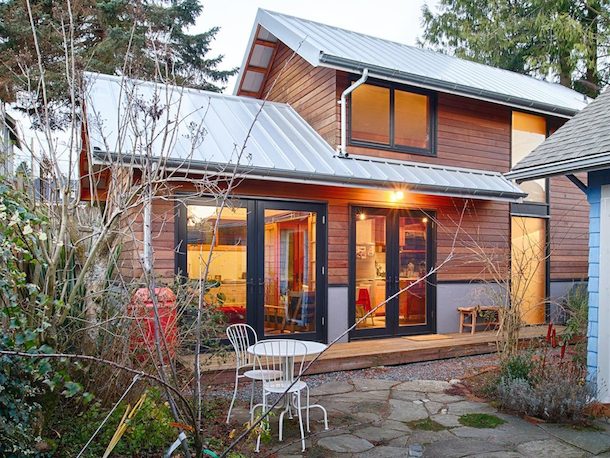
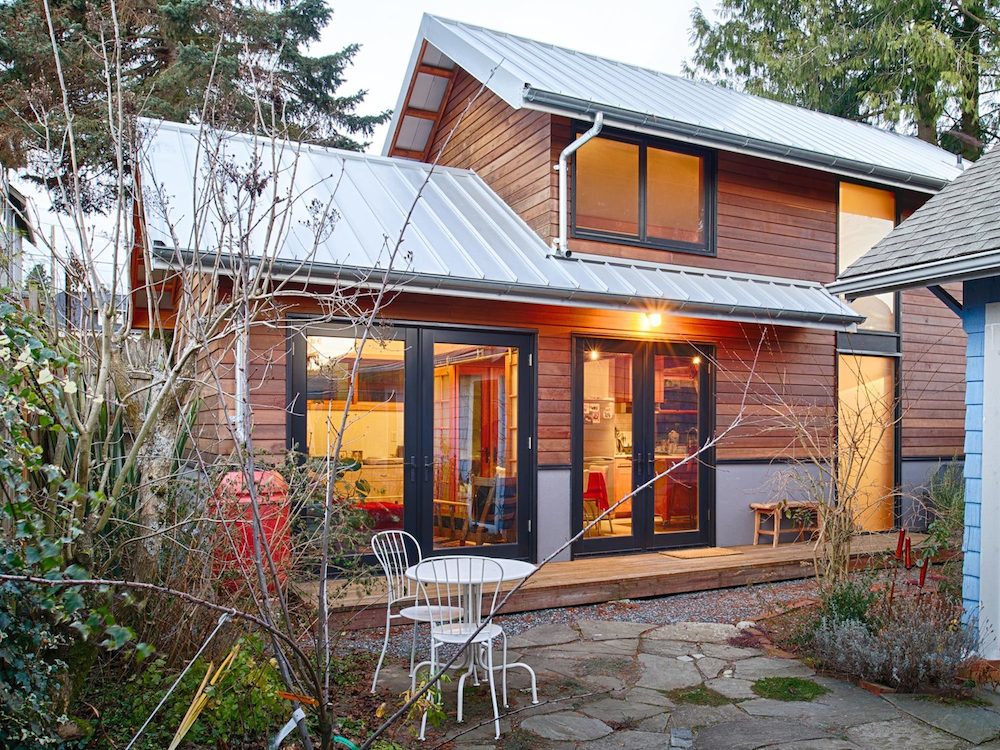
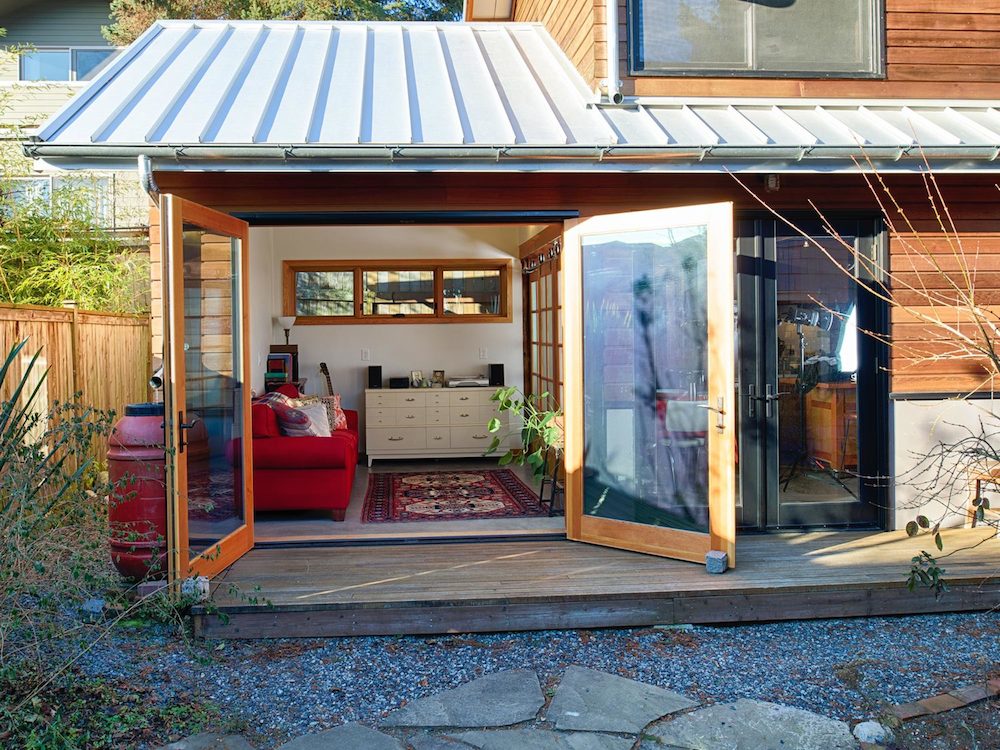
We love ADUs. They have the power to do the near-impossible: pack more housing into suburban and other low-density areas that were not designed to be dense. And given that they’re typically wedged into a backyard, they err on the compact and efficient side of design. And we love this particular 550 sq ft Seattle ADU by Cast Architecture.

The house was built in the backyard of client Kate Lichtenstein. Tim Hammer, the architect who designed the project, is a bit of an expert in designing small spaces, having spent 18 months studying high-density housing in Kobe, Japan as well as living in 550-square-foot fisherman’s shack in Ballard, WA himself. Informed by these experiences, Hammer created a space that feels light and spacious, despite the tiny footprint.

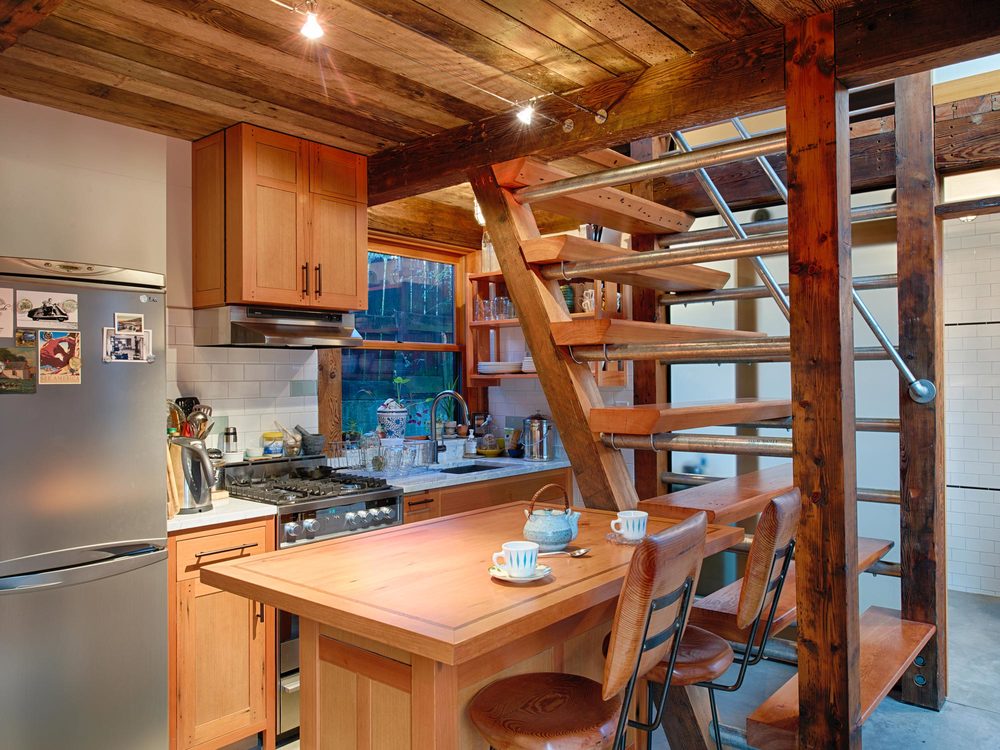
The house has great eco cred, enjoying a 5-star Built Green designation. It uses a ton of salvaged materials including stairs made of an old bowling lane. It also features LED lighting, a super-efficient boiler heater, low-VOC paints and caulks and radiant floors of fly-ash concrete (a by-product of burning coal for energy) and an exterior envelope with two inches of rigid insulation and wall cavities filled with an additional 5 ½ inches of cotton insulation from recycled blue jeans.

Lichtenstein built the place after the City of Seattle started allowing ADU construction on single-family lots in 2010. We hope more municipalities take Seattle’s lead by permitting these innovative little homes to sprout up in backyards everywhere.

Via Seattle Magazine