Transforming Space You Might be Able to Make Yourself

Question: What would happen if you combined the LifeEdited apartment and Gary Chang’s transforming Hong Kong apartment and made the fusion out of plywood and common hardware store materials?

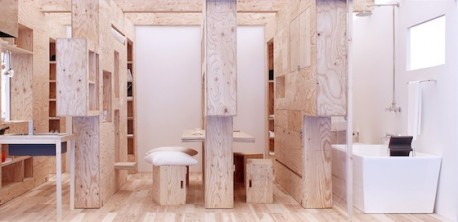
Answer: Studio_01‘s barcode room. The space was a winner of a design competition and was on display at Tokyo’s Designer Week 2012.

Studio_01 explains the concept:

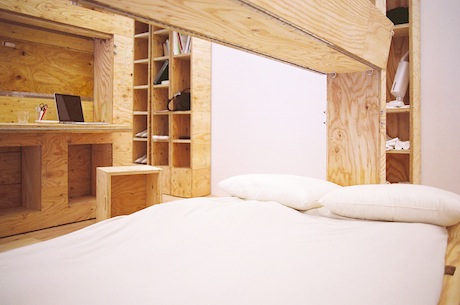
barcode room is a concept studio apartment composed of product furniture-walls which move freely from side to side, permitting the resident to customize the size of space to fit a variety of uses. Placing functional elements such as storage and furniture into these walls, only to be pulled out when in use, also allows for more of the floor area to be used by the inhabitant and guests, thus creating a space where one is able to both comfortably live and entertain a different number of guests easily.

We like how all of the furniture is incorporated into the walls and how there are different settings that furniture can be used; like the main table that doubles as a desk when one side is elevated.

The most important thing it demonstrates is the fact that space-saving, transforming furniture need not be complicated or costly.

via Treehugger

image credit studio_01

Paris Hilton Discovers Minimalism, Moves into Tiny House

In what is surely a sign of things to come, Paris Hilton, once the poster girl of conspicuous consumption, has adopted a minimalist lifestyle and has given up a 12k sq ft Malibu mansion for a tiny house in Eugene, Oregon.

“I just couldn’t keep up any more,” she told the Eugene Register-Guard, likely referring to her former BFF Kim Kardashian and her ilk. “The house, the cars, the clothes, the parties…it just became too much.” Hilton gave away most of her possessions and sought to find the peace of mind she had whilst on set of “The Simple Life.”

By far her boldest move was her change of residence. Her new home is a mere 180 sq ft. It features propane heat and a composting toilet. There are remnants of her past glam style like the house’s pink exterior, but make no mistake, Hilton is committed to living differently. 

“There’s no going back. I couldn’t be happier,” Hilton told the Register-Guard. “It’s weird. Somehow, by knowing where everything is, I know where I am. There’s obviously a corollary between one’s physical and psychic spaces. If the former is contained and orderly, so is the latter. I just couldn’t get that when I was living in such a big place. There was too much physical, and hence psychic, noise.”

Hilton has big plans for the little place including adding photovoltaic power and a water catchment system. She’s also been studying permaculture and would eventually like to create a totally self-sustaining tiny house community.

“Me and Jay [Shafer of Four Lights Tiny House Company] have been talking a lot lately,” she continued. “Between his technical knowhow and my star power, we think we can really change the world for the better. If people can see that someone like me can adopt this way of life, then they can see than anyone can. It’s like I say, every global change starts with a personal one.”

5 Pieces of Weird Transforming Furniture

Transforming furniture can be extremely useful in one’s quest to do more with less. It has the ability to make a room do double or triple duty, allowing you to live in a space much smaller than you might have suspected. But it’s not safe to assume that all transforming design is created equally. Some of it is downright weird, redundant or kinda useless. Here are a few examples of furniture that works overtime, doing jobs no one needs done:

The Sensei Chair by Claudio Sibille 

Sensei-transforming-chairs-that-become-a-table

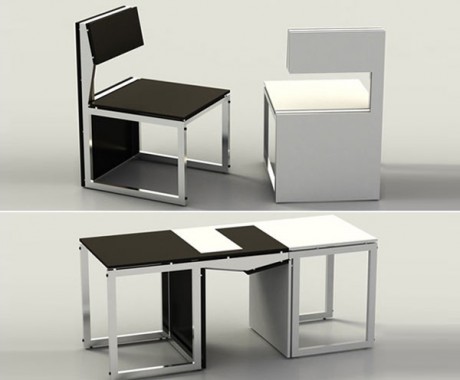
What’s weird: When you face these chairs down, they make a low coffee table. But I would think the times you really need a low coffee table and extra surfaces is when you have guests over–a time when you also need extra chairs.

Clapperboard Series of Shelves from Elsa

folding-shelves

What’s weird: The shelves of these sleek cabinets conveniently stow away when not in use. But what happens to the stuff that they once held? It’s put on the floor? On another shelf? On the table? Me no understand.

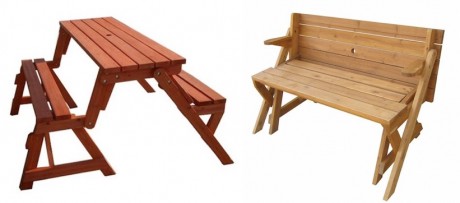
Interchangeable Picnic Table and Garden Bench

 picnic

What’s weird: Several readers have passed this clever design on to me and I’ve contemplated writing about it in a non-weird context. But something about it doesn’t quite add up. Yes, a bench and picnic table are sufficiently discrete pieces of furniture, but I don’t know if they’re that different as to justify the complexity this piece entails–adding hinges and movable parts has to make the thing more prone to breaking. A picnic table can be used as a bench. In fact, when you sit with your back to the table, it can even have back support. Oh, and the picnic table supports four people.

Sofa Pool Table

sofa6

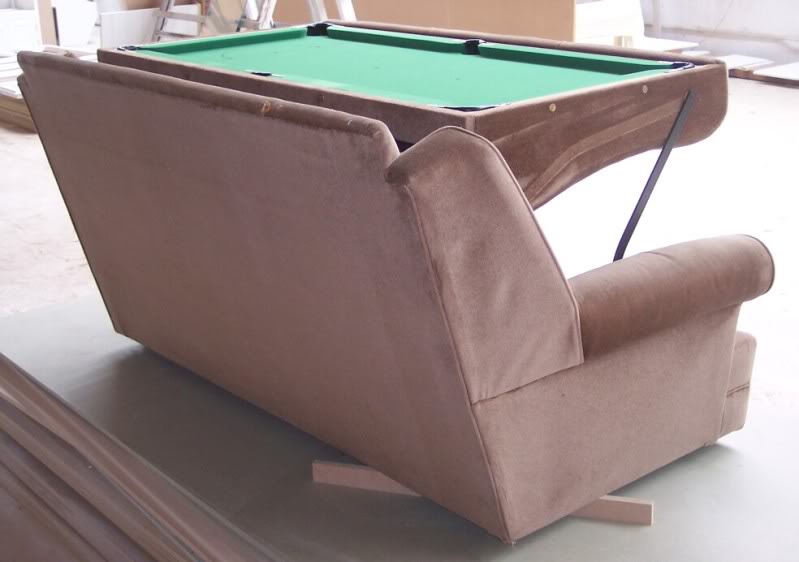
Back in college I used to play quite a bit of pool (or billiards is you prefer). I can say with reasonable confidence that this is probably the last table I would have wanted to play on. Besides its tiny size, there’s a huge lip at the sofa’s back, making some shots difficult. And the odds of the pool-table surface having a slate underneath (what gives most tables their solidity) is highly unlikely. Also, the sofa is pretty ugly.

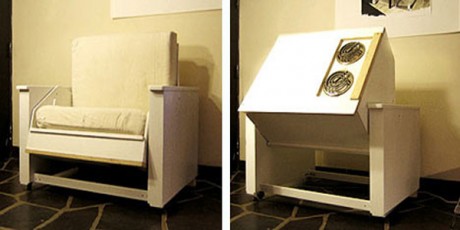
Range/Sofa Thingy by Someone

stovechair_new_sad8h

If you’ve ever been torn whether to have a cooktop or a boxy, uncomfortable-looking chair in your living room, you may no longer have to decide. This transforming range/lounge chair does it all with a simple roll of a chair. I suspect however few people are so torn, making this contraption the answer to a question never asked.

A Taste of Nature in the Most Unnatural of Spots

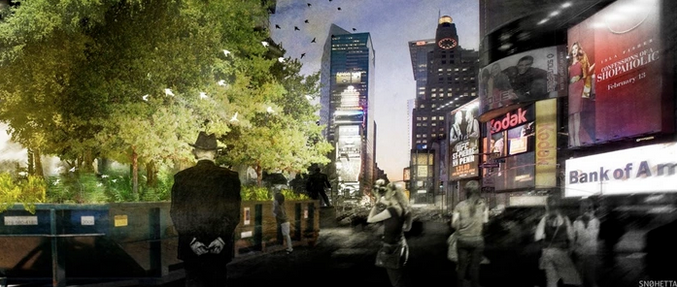
Living in a crowded city often inspires–or forces–people to edit their lives. Real estate is expensive, so they usually live in smaller spaces, which in turn forces them to have less stuff. High density and public transit make it easy to live without a car. But living in the city–with its noises, abundance of concrete and sometimes indelicate aromas–can make one feel pretty disconnected from nature. And of locations in the world’s cities, there are few spots that feel more disconnected from nature than Times Square in midtown Manhattan. With its huge buildings clad with flashing billboards and throngs of people, the place stinks of the manmade world, a stink that a Kickstarter project called “PopUP Forest: Times Square” is trying to change, albeit temporarily.

The organizers say this about the project:

PopUP Forest: Times Square will give visitors an immersive natural area experience in the most un-natural place on the planet. In the middle of the night, we’ll transform a public plaza in Times Square into a large-scale temporary nature installation. Towering trees, native wildflowers, and ferns underfoot will bring a piece of wilderness to the heart of Manhattan.

As the Popup name suggests, the forest will be gone three weeks later, but not before reminding people there is more to New York City, and the rest of the world for that matter, than concrete and neon. In fact, the organizers point to the fact that the city has 50K acres of open space in its borders.

popup-forest-2

The project’s creators set out to raise $25K to do more drawings, modeling and prototyping, which in turn will be used to present to various corporate and governmental sponsors who will foot the $1.7M bill for the whole project, which they hope will go up by June 2016 (the next time I’ll go to Times Square I hope). The campaign is already at $31K with 18 days left to go (they’re now shooting for $40K), showing this is an idea with legs. Go to their Kickstarter page for more info.

Via FastCo Design

Small Houses, Medium-Sized People, Big Ambitions

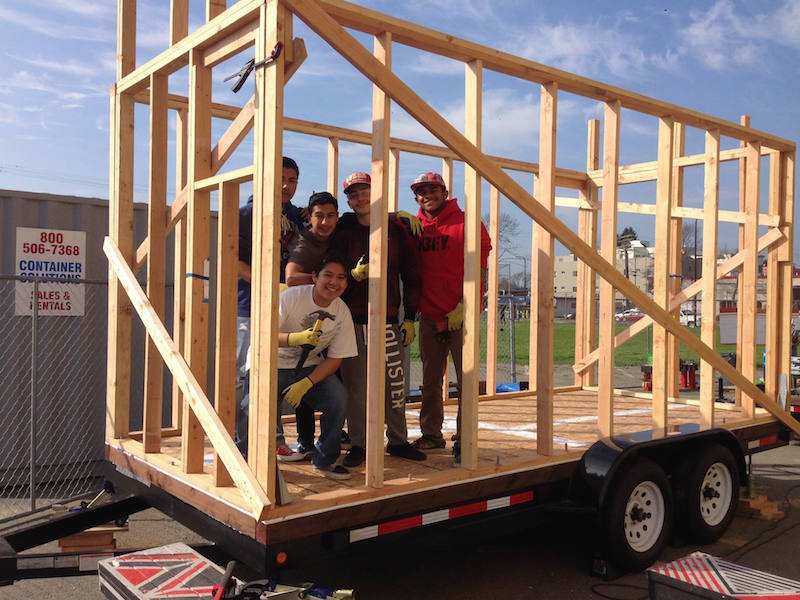
Project H Design is a Bay-Area nonprofit that empowers kids through design and building. For the last seven years, over 600 kids ages 9-17 have participated in their programs, which according to their website “teach rigorous design iteration, tinkering, applied arts and sciences, and vocational building skills to give young people the creative, technical, and leadership tools necessary to make positive, long-lasting change in their lives and their communities.” For the 2014-15 school year, their program is focused on tiny house design and construction.

A group of 70 high school and 150 middle school students have been looking at the tiny housing type with a number of inquiries in mind, namely: How is housing influenced by social and economic context? How does affordable access to housing empower communities or families? How does the design of a home uplift and inspire positive change in a person’s life?

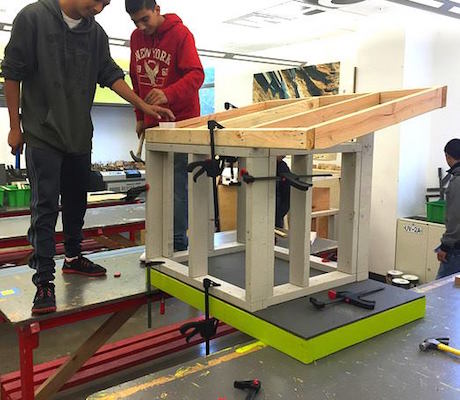
project-h-doghouse

In answering these questions and creating tangible, built answers, Project H created a program with different units. They start with the most basic aspects of designing and building like drawing and modeling skills. Each unit builds on the next, expanding the students’ skills; they look at tiny house precedents for design inspiration, draft and make cardboard models of different tiny house designs, conduct critiques of the students’ various designs and even build a mockup tiny dog house (pictured above) before they begin construction of two full-sized tiny houses.

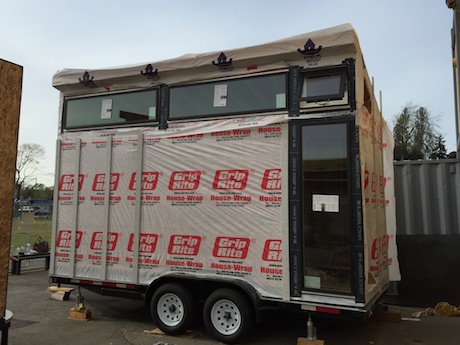
project-h-built

The two houses are identically designed, each measuring 7’ x 16’ and trailer mounted. Currently, the houses are pretty far along, having been framed and insulated in the last couple months. The students’ current unit is sourcing siding from used palettes. They expect the houses to be complete by June. Project H provides regular updates and images on their tiny house project page.

One of the houses is already set to be donated to Opportunity Village, a tiny house colony for would-be homeless populations in Eugene, OR (Bay Area code prohibits tiny house living) and the second will be auctioned off to raise money for Project H.

There’s something very heartening to see these kids developing a deeper connection with their built environments–that housing is not something that magically appears or comes about without consideration about how it fits into a greater scheme of things.

Life as a Service (LaaS)

Back in the day–and to this day in some places–people pumped from central wells, ground their wheat at central mills, baked their bread at central ovens and even bathed at centralized bathhouses. Primitive manufacturing technology limited private ownership for many common things to the very rich. The things people needed most were accessed, not owned. But as manufacturing technology and our ability to exploit the earth’s resources advanced, nearly everyone got his or her own oven, bath and iPad.

While there’s nothing inherently wrong with private ownership–and for many items it makes a ton of sense (even Sammy the serf had his own spoon)–the explosion of private ownership has had some pretty nasty consequences: 1. It sucks for the planet. It’s estimated that Americans, the kings of private consumption, consume over four earths’ worth of natural resources. And the rest of world is trying to keep up with us. China, as of a few years ago, was using 1.1 times the planet’s resources. These are extra planets we don’t have. 2. The profusion of private ownership is overwhelming owners. There was no equivalent for the Container Store in the 12th century countryside. You had your two frocks and a pot you shared with your family. Life might have been difficult and laborious, but it was simple. Nowadays, clearing clutter is a preoccupation. Really, don’t we have better things to do?

But the times are a changin. Through a combination of impending environmental calamity and technological advancement, it’s necessary and possible to offload many of life’s most basic stuff to centralized services and resources. Back in the day it was drawing water from the well. Now it’s pulling stuff from the cloud. Here are a number of areas where you can trade private ownership for shared services:

  • Housing: The popularity of the McMansion is inseparable from the private ownership ideal; these huge homes were meant as personal and self-sufficient kingdoms to be passed onto your progeny. On the other hand, places like the UK’s The Collective, offer housing as a service. Everything you need–much of which is shared–is included in your rent, or ‘service fee’ if you will. Micro-housing trades the notion of housing as agent of permanent security for low-fuss, minimal-resource, amenity-rich living.
  • Cars: Whether Zipcar, UberPool or (in the not-so-distant future) some sort of autonomous vehicle, it’s becoming easier and easier to live without your own car.
  • Computing: It’s no mystery that cloud computing is the way forward. Many software services like Adobe, Quickbooks and countless others are going cloud-only, offering Software as a Service (SaaS) eliminating the need for tons of local computing power and data storage.
  • Bikes: Most major cities–and many not-so-major ones–feature bike sharing systems, offering a viable alternative to owning a private bike.
  • Clothes: Dutch company Mud Jeans is offering their garments on lease. Rather than owning the clothes outright, you pay monthly for them and return them to the company, who recycles the material to be made into more garments. This is not a widespread model, but we hope it will be in the future.

Where else can private ownership be traded for service-based resources? Let us know in our comments section.

Snowboarder Living the Off-Grid Dream

A couple decades ago, snowboarder Mike Basich did what few are able to: he went pro, actually making a good living doing what he loved most. Pulling in around $170K year, he did what any protagonist in an American success story would do. He bought a big house (4K sq ft) and a fancy car. But as success mounted, as the purity of his sport became tainted by speciously-sourced money, Basich found that success wasn’t all it was cracked up to be. He quit the sport, became a photographer and started living his truth. The architectural manifestation of that latter pursuit is a 228 sq ft off-grid cabin in Soda Springs, CA.

The cabin, dubbed Area 241, took Basich five years to construct. He laid the 175 tons of stone for its walls himself and hand mixed cement with water ported from a nearby stream. All the timber is Douglas Fir he harvested from his 40 acre property.

Water comes from snowmelt and streams. Power is solar and cooking and heating are handled by a small wood-burning stove. Lest the place seem too spartan, Basich built a hot-tub and a private chairlift on the property.

The house is pentagon shaped and its proportions are based on the golden ratio, which he says is supposed to better make the space fit the body.

This author tends to be a little leery of off-grid spaces. Oftentimes, they can only be accessed and supported via long journeys in internal combustion vehicles (it looks like Basich gets to his via snowmobile in the winter and we’d guess an offroad vehicle in warmer days). A trip to the grocery store might be a three hour round trip. And how useful are places like this in the context of housing the world’s 7B people?

Those prejudices aside, this place is so badass and I want one like it so bad. It looks like an amazing place and an amazing way of life, rising and resting with the sun, living as one with nature. I’m totally jealous.

A Studio Apartment that Doesn’t Feel Like a Big Bedroom

Too often, entering a studio apartment feels like entering someone’s bedroom albeit with a few pieces of daytime furniture sitting around. No matter the size of the space, the presence of a bed tends to give the impression the room is for sleeping–an impression that is tough to shake without some sort of hiding bed (wall, sofa or trundle). A few years ago, Jordan Parnasse Digital Architecture, the same guys who designed this awesome East Village studio, created a clever way to make a small studio not feel like a bedroom.

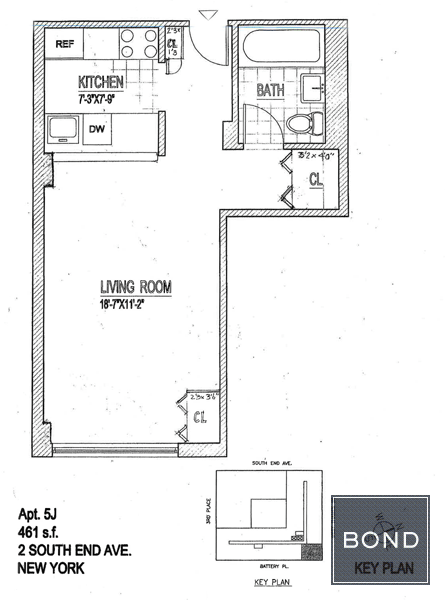
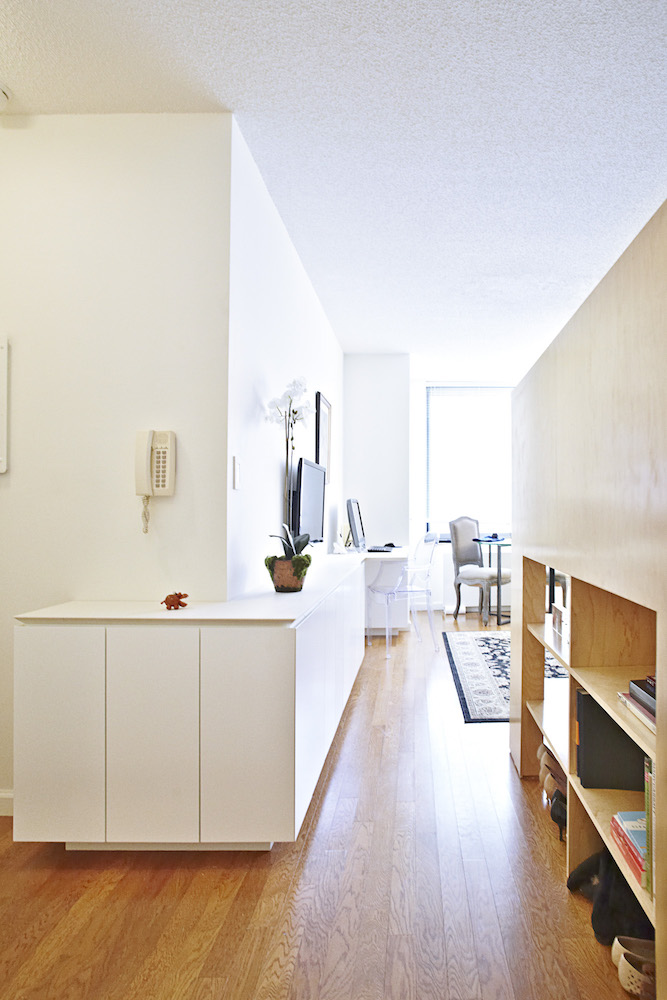
Aside from a separate kitchen, bathroom and closet area, the 461 sq ft studio was an open rectangle with one window bank. JPDA added two pieces of custom millwork. The first was a bank of storage along the space’s north wall. At the end of the bank was a cutout that made a desk area.

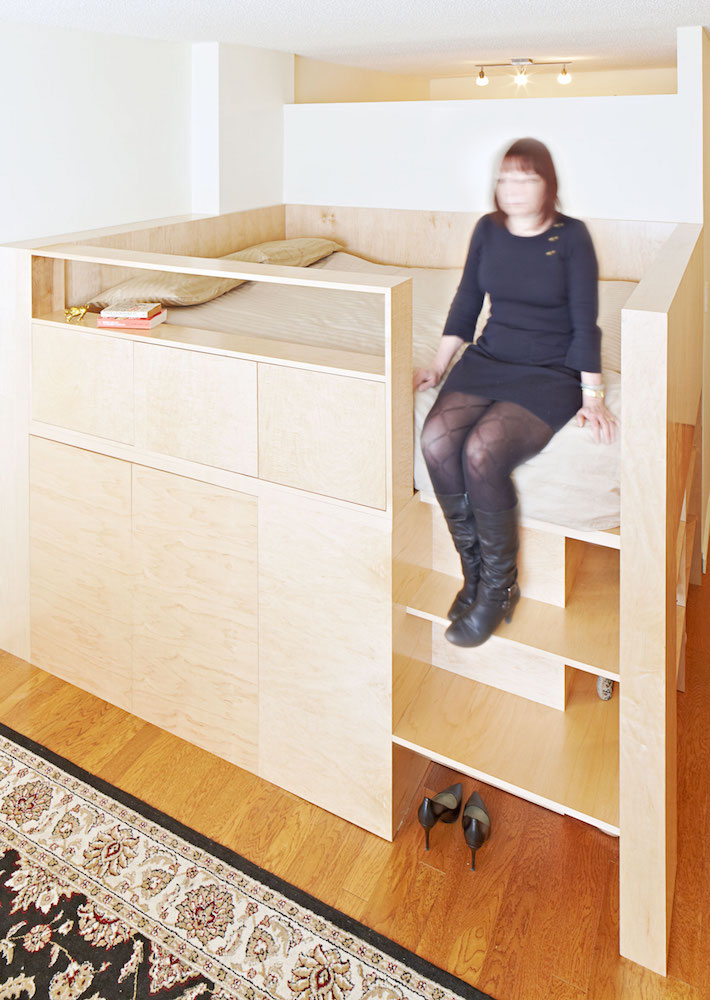
The other piece is a loft bed with built in storage. By concealing most of the mattress’s bulk, the wood volume creates a nice boundary between bed and living spaces. While it’s not a mystery that there’s a bed in the volume, it goes a long way to making the space feel less bedroom-y.

A Small Look at the Architizer A+ Awards

Architizer is one of the web’s leading repositories for the latest in contemporary architectural design. And every year they hold their A+ Awards to salute the best of the best. Public voting for the awards opened the other day and we decided to peruse the two categories focusing specifically on small spaces: the sub 1000 sq ft residential and “Living Small” categories (the LifeEdited Apartment was the 2012 winner of the latter category).

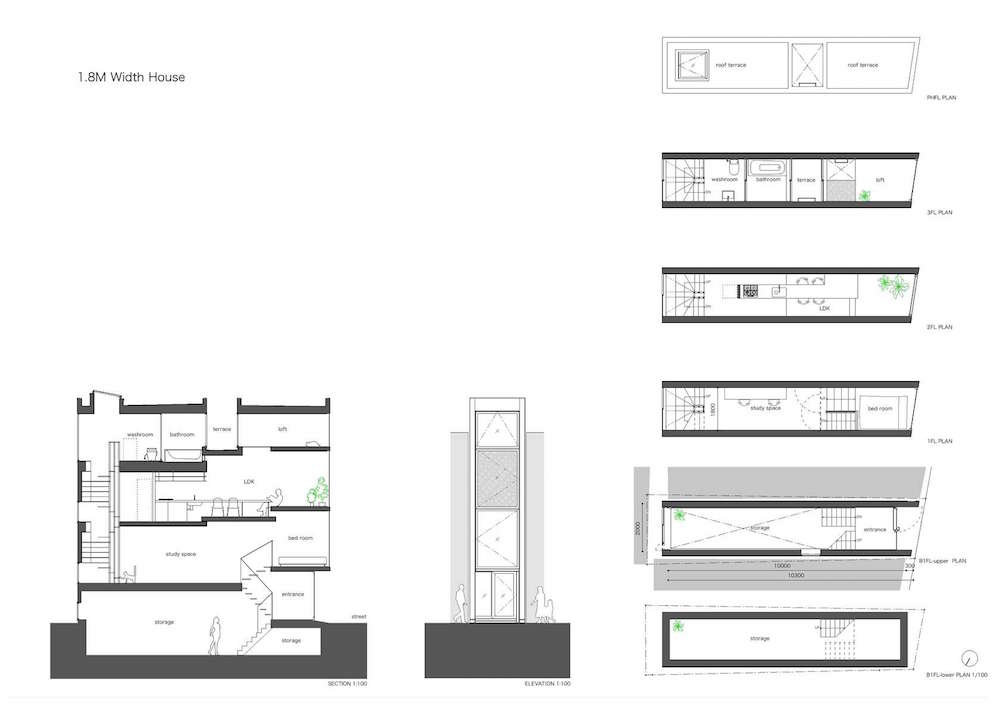
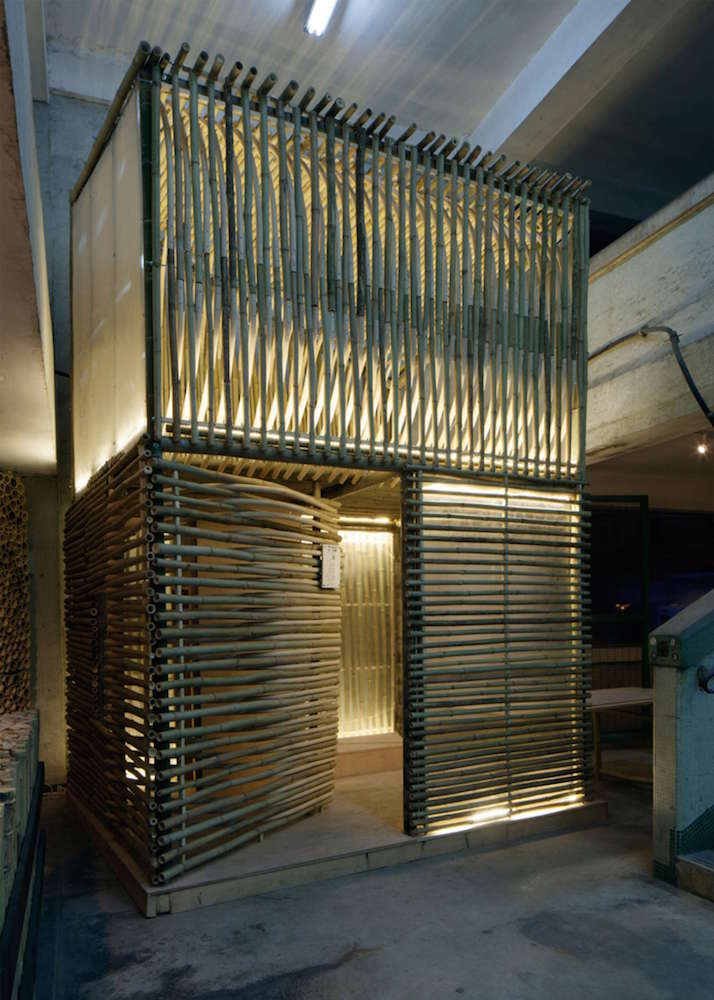
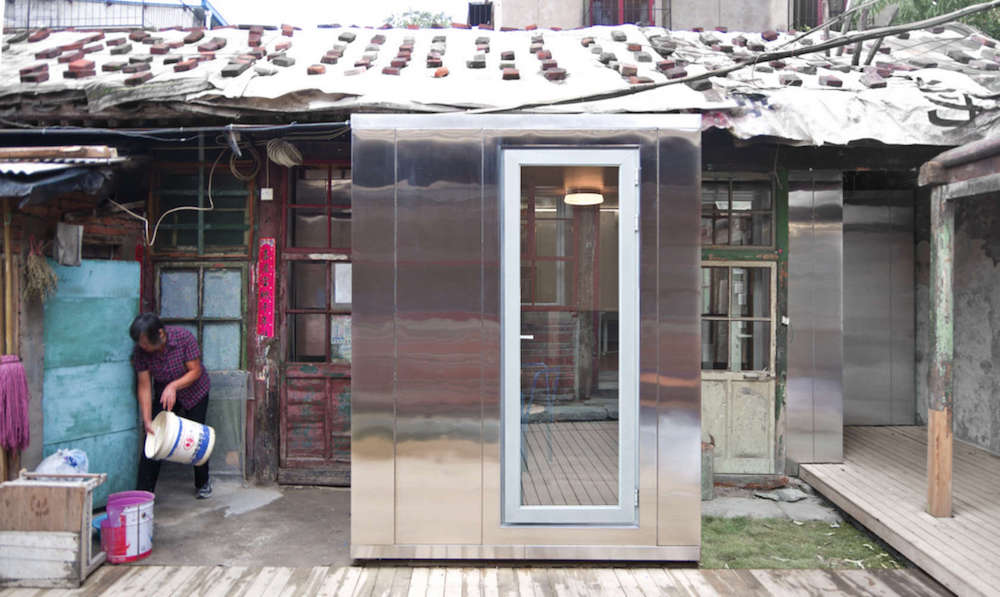
We found a number of pretty cool entrants. We were particularly impressed by the 1.8 M House and the Courtyard Plugin House. The former, a super-slim dwelling in Japan wedged into the space that would otherwise be a large walkway, and the latter an elegant way of revitalizing historic, but crumbling architecture. There was also lots of bamboo. Go to Architizer to see all categories and place your votes.

Co-Living for the 21st Century and Beyond

As we’ve seen recently with Stage 3 in NYC, The Collective in London and the expansion of the micro-apartment movement in general, there’s a growing market for minimal, all-inclusive, affordable, community-centric housing. For the most part, these developments are aimed squarely at the lighter-living, typically-single, experience-hungry urban Millennial (sorry for all the dashes). Today, we’re checking out another player in this genre called Campus, a movement/real estate startup with 30 houses, buildings (or portions of buildings) in the Bay Area and New York City.

Campus “communities,” as they like to call their houses, bear some resemblance to living in a dorm on a college campus. They have ample communal spaces and compact private ones. Most communities feature talks, shared meals and other programming to spur relationship building and philosophical waxing.

But the similarities stop there. Campus’ raison d’etre is both more mature and evolved than anything you’re likely to find at a University of Arizona dorm. For example, all houses are connected by a set of shared values that include being:

  • Open to having new experiences and forming new relationships.
  • Respectful of other’s differences, needs, and privacy.
  • Supportive of each other’s well-being and growth.
  • Respectful to the neighbors and existing culture of the area.
  • Valuing personal freedom.
  • Recognizing that everyone has the need for private space and alone time

In other words, the antithesis of most college campus living we know about (save Evergreen State or someplace like that).

In terms of nuts-and-bolts, each room is private and lockable. Rents are month-to-month and each member can opt out at his or her discretion–i.e. you are not tied to the other community members. Rent includes common space furniture, kitchen supplies, common space cleanup and several other amenities (utilities are additional so far as we can tell). Prices depend on community location, room size and a few other variables. For example, a ~70 sq ft room in Park Slope Brooklyn cost about $1200 whereas a space twice that size in the SoMa district of SF costs the same amount.

Campus hardly sees itself as mere purveyor of fun, convenient housing for Millennials. Their mission is to “build better living environments, and…build better housing and cities that are more attuned to people’s needs,” and they have an ambitious, two-phase master plan. Phase one consummates in the formation of 5000 communities in ten cities (they announced locations in LA, Boston and DC will be popping up in the near future). Phase two goes into utopia-production, with an eventual goal of making 100 cities, each with tens-of-thousands of people (see full vision here).

In many ways, Campus is a modern, formalized (but hardly stodgy) and ambitious take of co-living. Like most things, the latest and greatest is part of a continuum of thought. But originality isn’t a condition for doing something useful and cool.