Where The Streets Have No Cars

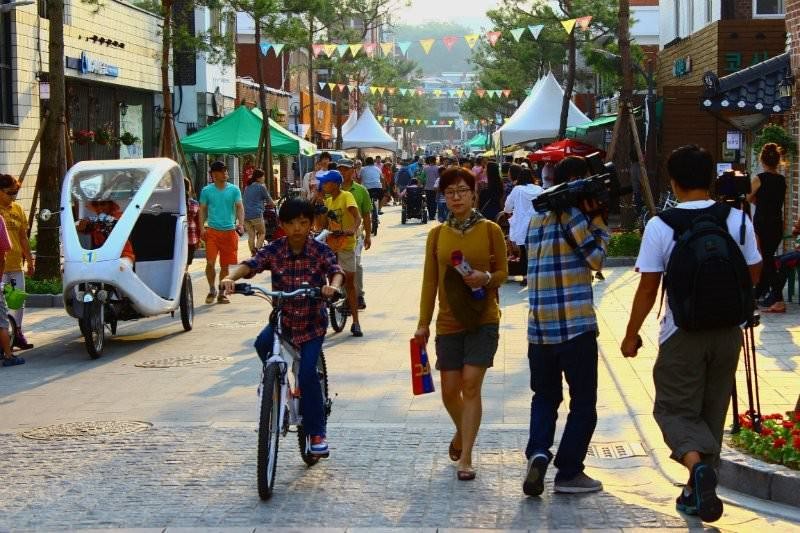
It’s funny how transparent cars are in today’s cityscapes. They’re a given and just blend into our field of vision. But what if every car on our streets disappeared? What would those streets look like? How could we use them differently? That was the query one South Korean neighborhood asked as well as the challenge it took on. In 2013, as part of EcoMobility Festival, Haenggung-dong, a neighborhood of Suwon, blocked 1,500 registered cars from its city for one month. Residents were asked to walk, bike, take public transit or car-share instead. The experiment was the subject of a recently released book, Neighborhood in Motion: One Neighborhood, One Month, No Cars.

Neighborhood-in-Motion-2-800x533

The festival and experiment were designed to get people familiar with a future with scarce resources. The book goes into every aspect of the project–from finding a city wacky enough to try such a bold experiment to its aftermath. From a review of the book in Pop-Up City:

The book intriguingly shows how an urban district changes within the car-free month: from busy, car-oriented streets to a more attractive neighborhood that offers a higher quality of life due to less smog and more possibilities to use public spaces. Cafés were able to extend their seating onto the sidewalk, children were able to play in the streets safely and people started to play nightly games of badminton in the streets.

Sounds good to us.

The 2015 EcoMobility Festival will be in the Sandton neighborhood of Johannesburg, South Africa–an area where not everyone is on board with ditching their cars for a month. What’s great about the festival is that overcoming protests, and perhaps winning over some hearts and minds in the meantime, is far more feasible for 30 days than forever.

Via Pop-Up City

Awesome French Micro Apartment is Awesome

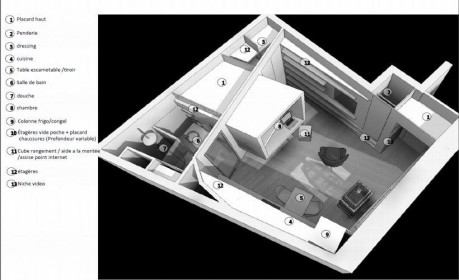
Continuing on yesterday’s theme of creative adaptations of existing spaces is this apartment by French architect Cyril Rheims. The space, designed for a young student, measures only 301 sq ft but contains a number of clever features.

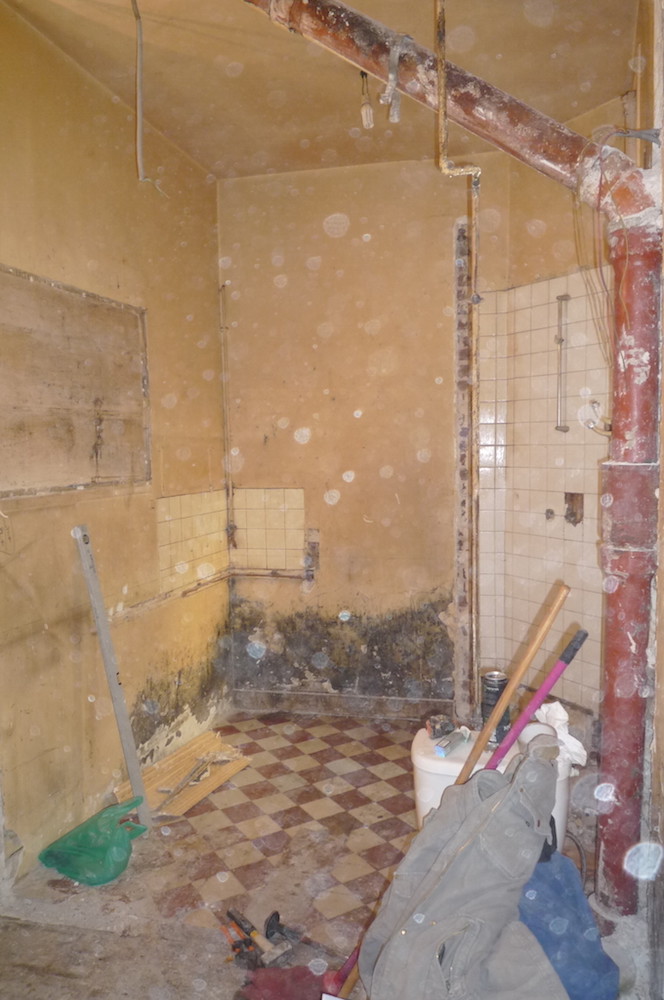
Before the renovation, the space was pretty unprepossessing, and its walls, which meet at a variety of off angles, would seem like a challenge to work with.

cyril-rheims-floorplan

Rheims cleared the space then built custom furnishings into the walls, save for a couple sitting cubes, a sofa and a birdcage. These built in furnishings include a retracting breakfast bar over the dishwasher, a cantilevered bed “cocoon” and a number of storage elements. The odd angles, coupled with the grey, quasi-metallic palette, create an overall effect that is reminiscent of Voltron (it’s an architectural term). But in a good way.

via Living in a Shoebox

“5 to 1” Micro Apartment a Perfect 10

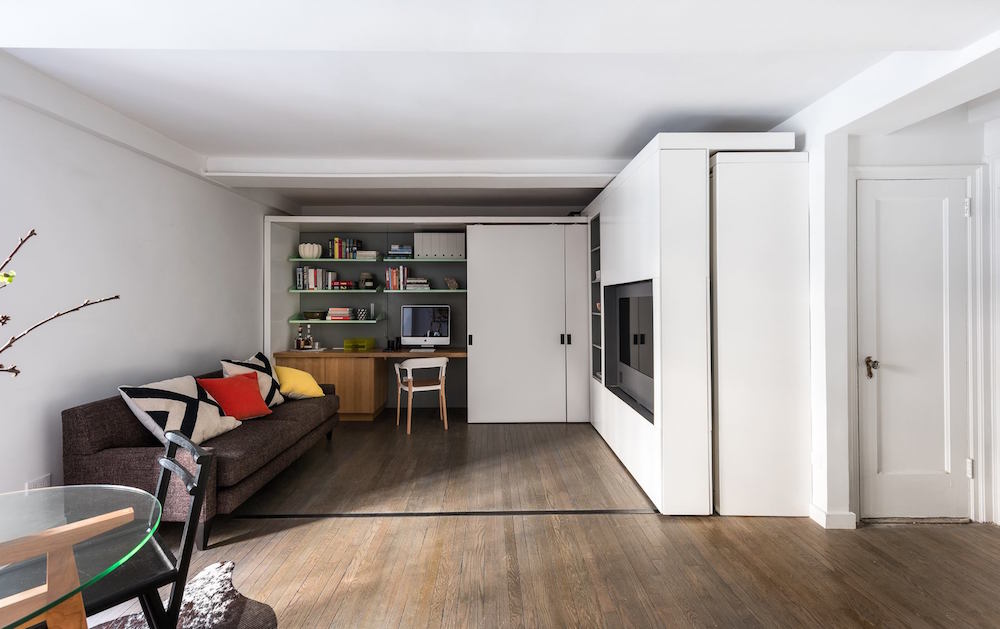
Architect Michael Chen has one of the most impressive portfolios of small apartment projects in the United States, if not the world. “Although we [MCKA, Chen’s firm] work at a broad range of scales, we are fascinated by the design of small spaces because they demand inventiveness,” Chen wrote to us in an email. “We love taking on a complicated and difficult problem with the intent of creating solutions that are thoughtful, beautiful and deceptively simple.” His latest project, dubbed the “5 to 1 Apartment,” is a beautiful representation of his love of transforming the complex to simple. It is also, to my mind, his finest work to date.

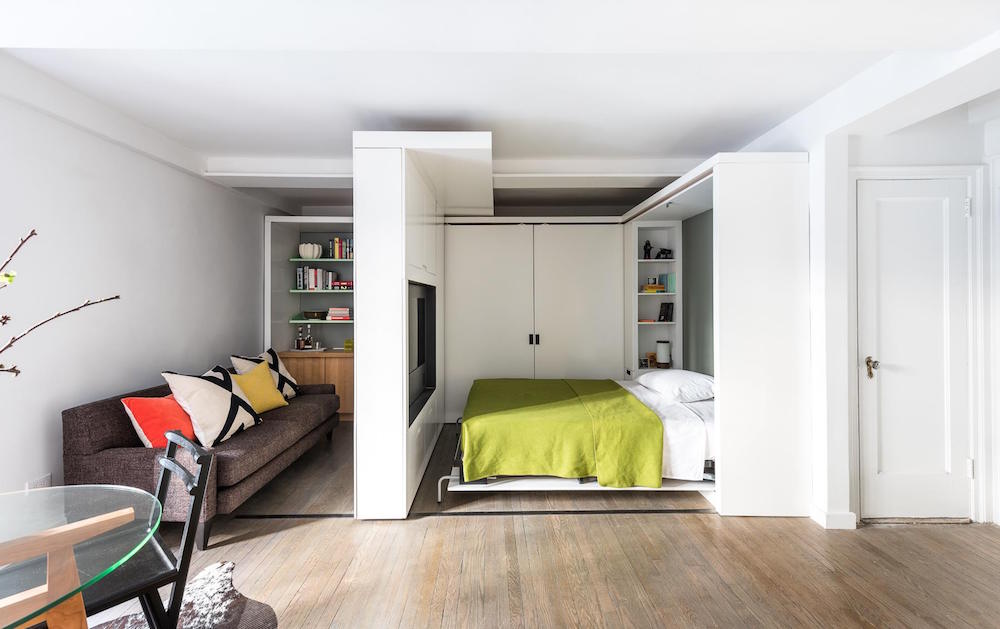
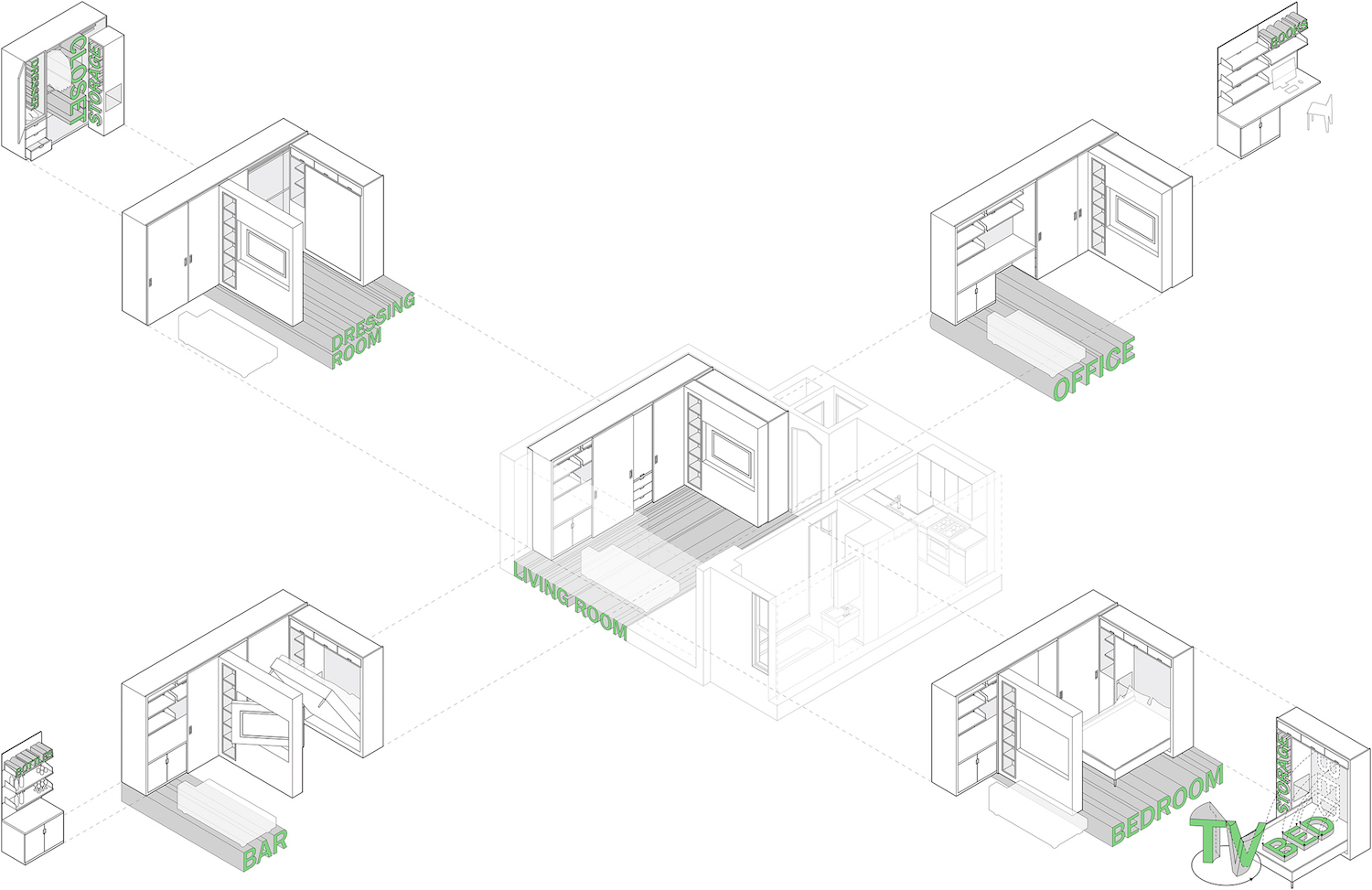
Similar to the LifeEdited apartment, “5 to 1” incorporates a moving wall to provide additional “rooms” for the 390 sq ft Manhattan apartment. The wall, which was custom fabricated by Trak-Kit, is fully motorized and has power as well as cable for television and audio. The wall also houses networking components and audiovisual equipment, which includes a TV that rotates 180 degrees to face either side of the wall.

When the wall is in its closed daytime position, the space has a generous living room. When the wall is opened, it creates a space that can be used as a changing or bed room, depending on whether the queen-sized wall bed is lowered. The interior wall that is perpendicular to the moving wall is lined with a volume that contains a desk on one side and a wardrobe on the other.

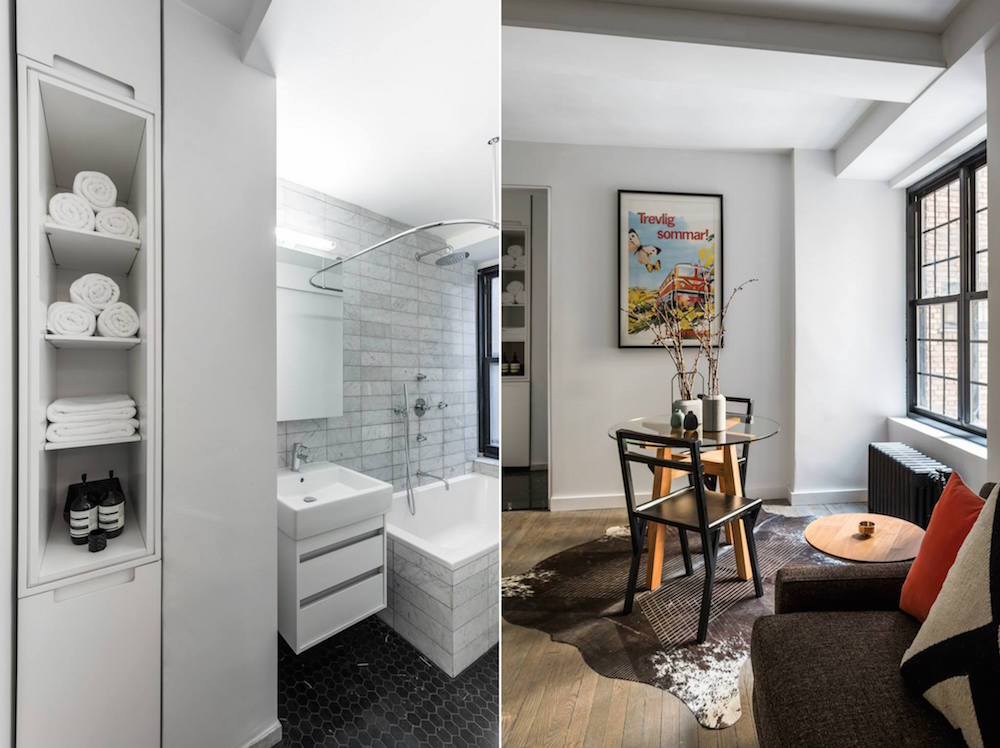
Other improvements include an expansion of the kitchen to include more work space, a renovation of the existing bathroom and LED lighting above much of the cabinetry.

One of the main things this apartment gets right is its ability to merge normal, freestanding furniture with built-in components. The inclusion of a normal sofa and small cafe table make the space feel lived in and personal, yet the built-in components keep an overall clean aesthetic and give the small space amazing functionality.

What’s also notable is that this level of creativity was placed inside an almost 100 year old building. “Even as it is undergoing tremendous change, New York City anticipates that 80% of the existing building stock will be in use well into latter part of 21st century and beyond,” Chen wrote. “Cities worldwide are transforming rapidly due to increases in population density, climate change and rapid changes in technology but the architecture of the future is in large part going to emerge around intelligent ways to bring the existing fabric of the city into that future.”

Vogue Magazine Features Story of Couple Giving Up Their Stuff

Okay, so it turned out our story about Paris Hilton adopting a minimalist lifestyle and moving into a tiny house was, in fact, not true. The picture was of Miss Hilton walking out of her $325k doghouse. On behalf of LifeEdited, I extend my apologies to Miss Hilton and all parties concerned (not Jay Shafer–he thought it was funny). As such, her tale may not be the harbinger of widespread adoption of the less is more living I thought it was. I do however have on good authority to believe the veracity of Prerna and Parag Gupta’s story. The minimalist conversion story itself is inspirational, but the thing that is most remarkable is where it appears. Vogue Magazine. That’s right, between ads for $2K Chanel handbags and Ralph Lauren’s “New Spring Looks” is a story about a couple finding happiness through simplifying and giving up most of their possessions.

The Gupta’s story follows a familiar arc (and very similar to LifeEdited founder Graham Hill’s that appeared in the NY Times). She was a tech entrepreneur, he a professor at Georgia Tech. The two lived modestly in a small Atlanta craftsman home. Prerna, who authored the essay, wrote: “Our house was in a part of the city known as Old Fourth Ward, where break-ins and vandalized cars were not uncommon—but we felt safe because we had nothing much to steal: a vintage couch we’d found on Craigslist, an IKEA footstool, an old TV.”

All that changed one day when an app the couple launched called Songify became a big hit. They had made it. Money, attention and emails flooded in. Within six months they had merged their company with a larger one and moved to the Bay Area to take jobs as high paid execs.

And of course they got stuff. “We bought and bought and bought: Persian rugs, espresso machines, decorative lamps,” Prerna wrote. They got a house with rooms they barely used. They started coveting their neighbor’s stuff.

And then something shifted. They began to fight over things like whether to get a Tesla or a Maserati. They became overwhelmed by their stuff. They realized the success they sought and all its trappings were not making them happier.

Unlike many in their position, they decided to stomp on the brakes rather speed up their lifestyle. Harkening back to a time they spent at a surfside Costa Rican resort–time spent living simply and happily–they decided to leave the jobs, ditch the stuff, live modestly, doing the work they wanted to do while traveling the world.

I won’t go into all the details of the story because you should read it yourself. To repeat, what’s amazing is the fact that Vogue chose to include it in their editorial lineup. While I’m not a regular Vogue reader, a quick perusal of their site reveals a strong predilection for consumption: urging women to get the latest fashion, makeup and so on. For them to feature a story about someone who writes about how awesome it is to get rid of most of her stuff and forgo new stuff for things she already has–it’s like a parasite that eats its host to survive (I mean this in the best possible way).

The Gupta’s tale along with a recent cover story in Time Magazine called “Minimalist Living: When a Lot Less Is More,” give good reason to think that minimalism–and perhaps our collective exhaustion from nonstop consumption–might be more than a passing trend.

photo credit: Josh McCullock

Don’t Just Do Something, Sit There

For all the wonders the Information Age has afforded us, it has also provided us with infinite possibilities for constant activity and distraction. Whatever gaps of inactivity that might have existed in days before pre-internet (and particularly pre mobile tech)–waiting in line, riding the train, even taking a poop–are, for many of us, now filled with web-surfing, Facebook/Twitter checking, game playing, etc. We will do anything but do nothing and be alone with ourselves. This condition of constant activity–as well as a possible remedy–is the theme of this TED talk by Nick Seaver.

Seaver explains how we’ve become a culture obsessed with distraction and doing, doing, doing–a culture so focused on changing the outside world that we’ve lost track on how to change ourselves. In the interest of the latter pursuit, Seaver and his wife spent 18 months of near-total silent retreat as part of the Samatha Project. As guinea pigs for studying the long term effects of meditation, they would spend 10-12 hours daily in silent meditation, letting, as Seaver said, the snow in the snow-globe in their minds settle down. The physiological effects of the silence were then monitored by scientists in order to get real data about how meditation affects the body and mind.

Seaver has many positive things to say about his experience in particular and meditation in general. I’d recommend watching the talk. But some of it can be summed up by a quote he gives by psychologist Victor Frankl, who said, “Between stimulus and response there is a space. In that space is our power to choose our response. In our response lies our growth and our freedom.” If we are to believe Frankl’s contention and yet continue to fill all of those spaces with flurries of distraction, forever reacting automatically rather than responding intentionally, our growth will be stunted, our freedom limited. On the other hand, if we give time to and permit those spaces, if we start to cultivate the art of doing nothing, we might be less likely of being enslaved by whatever random stimulus enters our mental newsfeed, we might start choosing how we want to live our lives. Seaver recommends ten minutes a day of silent meditation (1% of our waking hours) to regain those spaces, to start changing the world by changing ourselves.

This Truck Is Cruising the Country Honoring the Stuff We Got

There was a time in the not so distant past when people held on to and cared for their stuff. They fixed toasters, darned socks, patched holes and did a variety of things that didn’t involve one-click-shopping for replacements. While those times seem to be a distant memory, Patagonia is trying to bring them back one garment at a time. As part of their Well Worn program, the company is sending out the Worn Wagon, a vehicle whose mission is to spread love to our slightly tattered, but totally useable garments.

The Worn Wagon departed this month from Ventura, CA. The wagon itself, an old Dodge truck that runs on biodiesel is the handiwork of surfer and artist Jay Nelson. The truck’s trailer is made of salvaged wood from wine barrels; solar panels power an industrial sewing machine housed inside. The wagon will be cruising the country looking for garments in need of repair. A repair person manning the wagon will sew your hole or replace your zipper or do whatever needs to be done to your old garment for free–whether it’s Patagonia or not. The wagon will be stopping in stores, trailheads, coffee shops and more (see tour stops here).

worn-wagon-interiorFor someone who is frequently dubious of corporate claims about commitments to consuming less and giving a poop about the environment, I am consistently impressed by Patagonia. They really seem to get it. The realize the way to live with less is buy great stuff from the outset and make it last as long as possible.

Tiny House Conference Coming to Portland Later This Month

There’s little doubt that tiny houses have caught the public imagination, if not widespread municipal zoning board approval. One place where the approval–both in its citizenry and legislative bodies–is Portland, Oregon. So it’s only fitting that the city would be hosting this year’s Tiny House Conference April 18th and 19th.

Tiny-house-conference

Because tiny house construction, zoning and living is such a tricky proposition, it makes sense that those interested in taking the tiny plunge would want to share their collective wisdom. The two day conference has a program that covers the practical aspects of tiny house construction with sessions like “Designing Your Own House” and “Finding Land”. Also covered are more lifestyle-y topics like “Tiny Living” and “Small Space Organization.” I suspect that tiny house enthusiasts–i.e. those enamored with the lifestyle and are considering it for themselves–will far outnumber tiny house dwellers–i.e. those who are actually living in one of the little places. The program seems to be shaped accordingly. Of course there will be tiny houses on display as well, and you can get comped if you bring your tiny house.

The conference costs $300. If that’s too rich for your blood, there’s also an “Tiny House UNconference” on April 17 that only runs $12 for a whole day–because, well, the other conference was too big.

H/T to Gm.

via Bizjournals

Tiny Apartment Merges Transforming Design with Organic Style

There’s a tendency for tiny transforming apartments to feel like they’ve been designed by Optimus Prime. Often when you add furniture that folds into the wall, it’s hard for an interior to not have a futuristic, modern vibe. Which is why interior decorator Geraldine Laferte’s tiny “Duhesme” apartment is so successful–it merges transforming furniture with a warm, organic style.

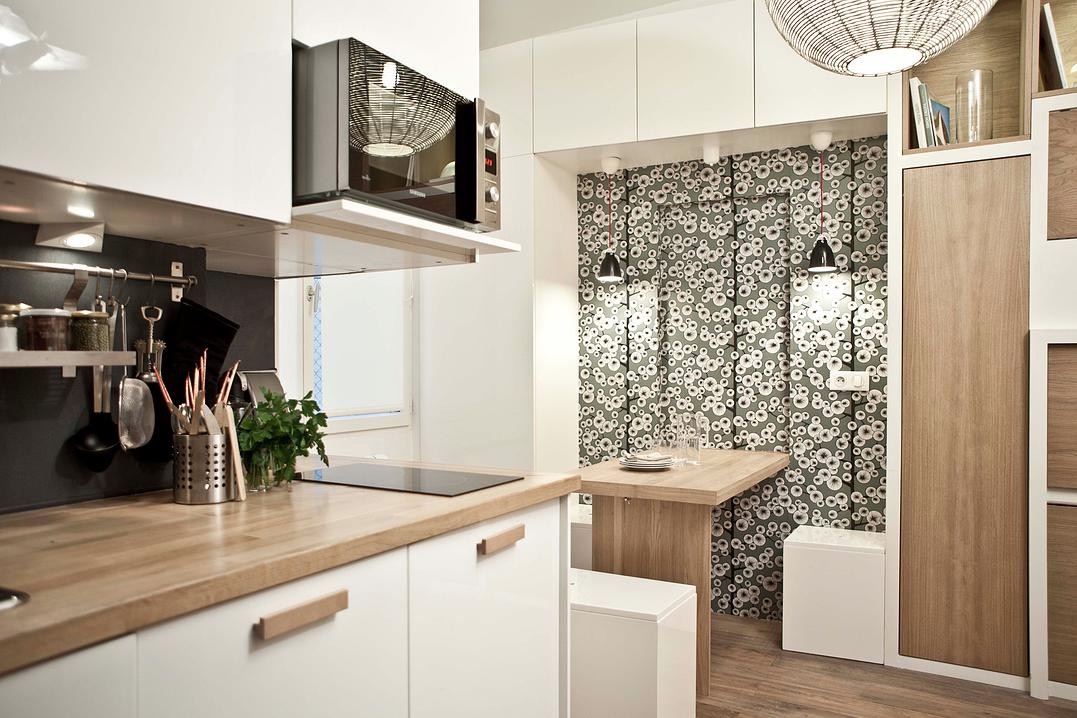
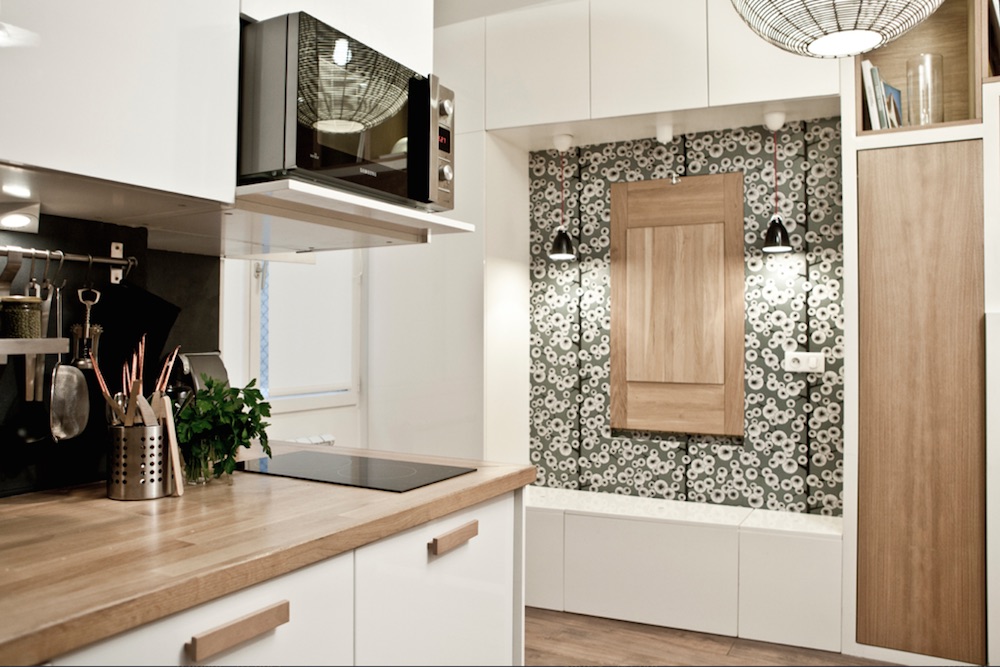
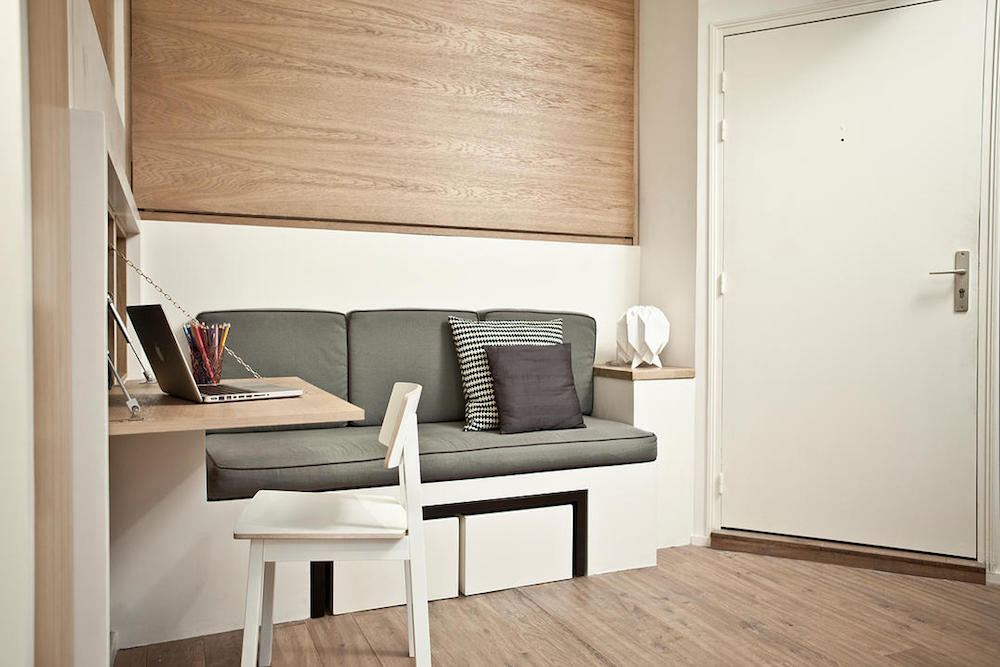
The Parisian apartment measures a mere 193 sq ft, yet features a dining area, kitchen, lounge, desk, bed and bathroom. Laferte uses a mixture of warm woods and muted wallpaper to keep the place feeling anything but cold and futuristic. The transforming elements include a wall bed that sits above a built in sofa and there’s a small dining area with a table that folds into the wall when not in use; three cube-shaped stools serve as seating. The whole space is lined with floor to ceiling cabinetry to maximize storage.

Build A Micro Sized/Budgeted Backyard Retreat

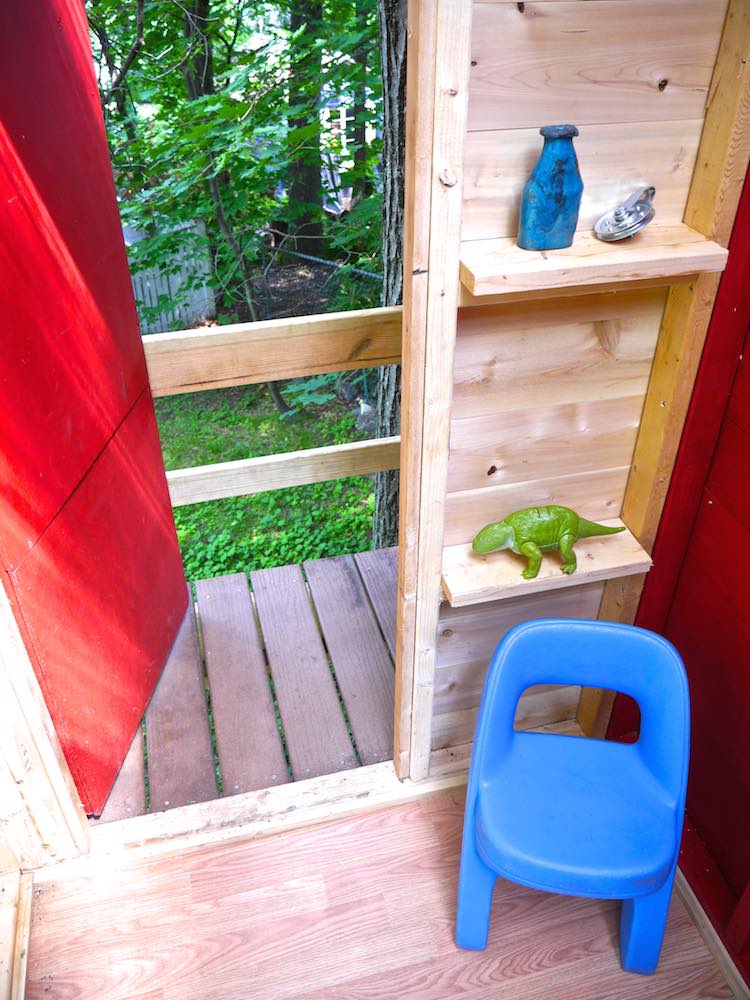
This site tends to focus on tiny residential structures–microscopic pads that people are supposed to live in. But the charms of tiny aren’t limited to houses. Case in point is this tree, um, “structure” built by Derek “Deek” Diedricksen. As his Relaxshacks blog name implies, Deek is a master at building tiny structures, many of which are intentionally recreational: treehouses, off-grid cabins and the like. Almost everything he makes is tiny and most are done on microscopic budgets, making for affordable places to chill out, read, play or hide from screaming kids.

This particular structure was set up in a backyard in the outskirts of Boston. It’s only 32 sq ft and is connected to a pair of oaks. Deek calls it the “RF”, or Robot Face, treehouse for obvious reasons (the robot’s eyes are actually a pair of solar lawn lights). The structure has a removable desk and the blocking framework doubles as shelving. There’s an openable window for light and ventilation, and its position under the two trees keeps it from becoming a hot box in the summer, yet the big window lets in enough passive solar heat to make it feasible during colder months too.

Oftentimes, when people seek more space, they think about moving into a new home. What tiny structures like this show is that you can add a lot–privacy, quiet, fun–with just a little bit of knowhow and some lumber.

If you’re interested in building your own Relaxshack, Deek regularly holds workshops. His next is in Fargo ND. Stop by his site for more info.

Man Finds Clarity (and a Home) in Airstream Renovation

Few things initiate personal transformation like a good old fashion emotional crisis. And if we are to look at the experience of Jordan Menzel, there are few better vehicles for delivering that transformation than 1976 Airstream Ambassadors. When Menzel found himself in a place of personal turmoil and transition, having lost trust in his ability to bring ideas into reality, it was the 29’ aluminum-hulled trailer that made him regain a sense of self. He had seen his future trailer while biking around his Salt Lake City hometown. He searched Craigslist for all Airstreams and found that the one he had seen was for sale. Short on funds, he was only able to offer $4K–a third the asking price. He got it.
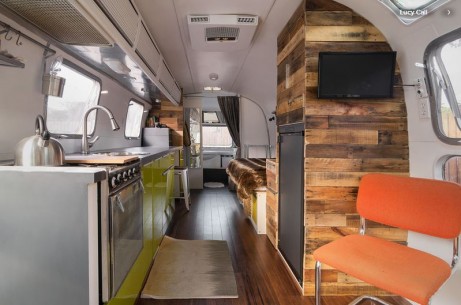
He proceeded to gut the Airstream as nothing had been changed from its 1976 birth. The end product is pretty amazing, with an eclectic yet polished style that belies Menzel’s limited funds.

jordan-menzal-1

Menzel told Houzz that the process of renovating it “was a symbolic gesture to myself that I still had the capacity to take on a wild idea and bring it to life.” Menzel now lives in the gorgeous trailer with his two year old daughter. Great tiny home. Great story. See more images and details on Houzz.