Seven Headlines From The Onion About Shopping that Kinda Sum It Up

  1. Child Entertained For 5 Minutes By Plastic Toy That Will Take 1,000 Years To Biodegrade
  2. Consumers Say Recession Changed Way They Blow Paycheck On Crap
  3. New Denim Jacket Bolsters Consumer Self-Confidence
  4. Cost Of Living Now Outweighs Benefits
  5. Study Finds Americans Lead World In Ability To Justify Unnecessary Purchases
  6. New Apple Campaign Urges Consumers To Buy iPhone For Other Hand
  7. Top 10 Products to Battle Consumerism

Editor’s Note: The opinions of The Onion do not necessarily reflect those of LifeEdited.com.

The Rise of the Minimalist Millionaire

Aside from its inherent space and energy efficiency, compact living–or rather the high density living that often accompanies it–has been credited as being a catalyst for innovation. In his book Triumph of the City, Harvard economist Ed Glaeser found that when a city doubles in size, productivity and innovation per resident increases by 15%. His thesis was that because people are constantly in collision with one another, sharing and expanding ideas, cities make fertile environments for innovation. More specifically, he said the ideal condition for innovation was 100 people per acre. One person who took Glaeser’s idea quite seriously was Zappos.com founder Tony Hsieh. He took it so seriously that a few years ago he helped spur the Downtown Project. With the help of various Glaeser-inspired urban interventions, he sought to transform Las Vegas’ haggard old downtown area into one of the world’s leading innovation centers.

Airstream

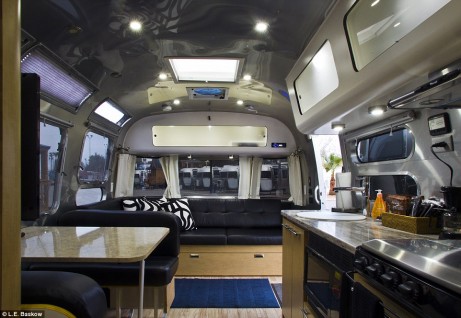
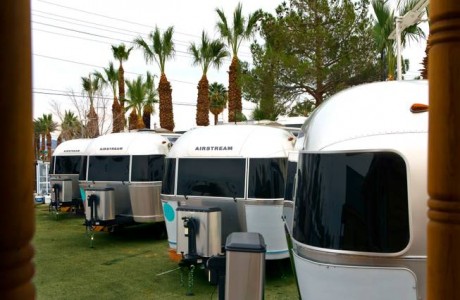
One way the Downtown Project went about achieving their 100 person per acre ideal was to convert a vacant lot into an Airstream trailer park, mostly using them as “crash pads” for visiting coders.

No one can accuse Hsieh of lacking conviction in his beliefs. Not only has he put $350M of his own money into the revitalization project, but he is living in one of the thirty trailers–sharing the 200 sq ft space with his pet Alpaca. Like the MacMannis’ Airstream we looked at the other week, Hsieh isn’t exactly slumming it. The trailers are all recently renovated and nicely appointed. Nonetheless, for a man with a net worth of $840M, this is a very modest home. While some could charge him and other people of means as tourists in the realm of small space, minimalist living, I think they are showing something else. The merits of small, simple living are something anyone, rich or poor, can benefit from. Consequently, we are seeing more people who can have all they want choosing to live with what they need.

Photo: L.E. Baskow

Product Review: Unbelievable Testing Laboratory Ninja Kick

Emptiophobia is the fear of shopping (well, it’s the disorder I invented based on a few minutes on Latin translation sites). It’s a condition, I fear, I suffer from. After keeping this blog for a few years, I have become so shopping averse, so worried I am getting something I don’t need or worried the thing I am thinking of getting is the wrong thing, that any non-food purchases are made months, even years, after my actual need presents itself. One of those needs has been shoes. For a long time now I have been walking around on busted shoes. I was waiting to replace them with the perfect do-almost-everything shoe–a shoe, it was starting to seem, did not, nor ever would, exist.

Before I get to the review, let me bore you a little with my shoe history, because it’s relevant. Several years ago, I got into minimalist shoes and running. As many do, I started out with Vibram Five Fingers KSOs. I eventually ditched them because they provided too little protection (read: fractured metatarsal), they fell apart on me fairly quickly, they smelled awful after a couple wears and I became a little tired of explaining my shoes to strangers. Overall though, I liked having my feet free of too much support and structure, so I traded the KSOs for Merrell Trail Gloves, a more conventional looking minimalist shoe that allowed me to wear normal socks, thus avoiding the stink issue. They had bomber construction and more rubber on the soles than the KSOs, providing more foot protection and durability–a good thing for an active 185 lb guy like me. The only issue I had were the looks. When I bought my first pair of Trail Gloves, I wasn’t too crazy about the looks–too many stripes and logos. Somehow, many minimalist shoe manufacturers think their buyers want tons of design and big logos emblazoned on their uppers. At least in my case, they are mistaken. As Merrell released the Trail Gloves 2 and 3, the looks and colors became even more elaborate making them inappropriate for anything other than kicking around or the gym.

In thinking of stylish replacements, I considered Vivobarefoot, but they run wide and voluminous. When you have long, narrow, low volume feet like I do, wide, high volume shoes tend to look like gunboats attached to your legs, so those were out.

Prior to all this minimalist shoe stuff, I wore Converse All Stars. I actually love their snug fit and they have zero drop from heel to toe, somewhat mimicking minimalist shoes. I also think they look great, even wearing them with formal attire on occasion. Following the Merrell’s, I started wearing an old pair of All Stars I had sitting around (actually, they were made by a company Ethletics, an ethically made All Star knockoff that Converse has since put out of business). But then I was reminded of why I stopped wearing them. Their heels wear out in weeks. Their uppers tear after a few months. They are pretty heavy. They absorb the slightest bit of moisture. And since becoming a father of two, tying their laces has become increasingly inconvenient.

So there I was, wearing my holes-in-the-soles Converse knockoffs, looking for a minimally structured, lightweight, simply-styled, low-volume, durable, ideally slipon shoe. I had been looking for the best part of a year with no luck.

A couple years ago, I wrote about a Kickstarter project called Unbelievable Testing Laboratory. They were trying to bring to market a high tech, Tyvek uppered, super light shoe. I liked their techiness and light weight, but wasn’t hot on their styling and they weren’t offered in a 14. I hadn’t really thought about them since then. But a couple weeks ago, I got a Facebook ad for their new Ninja Kick shoe (go cookies!). It appeared to be everything I was after. They weighed 130 grams per size 11 shoe (less than ½ pound per pair), they had a minimal, no drop sole, they were simply styled, they were available in slipon and in size 14. Hell, they were even machine washable! I immediately emailed them to get a free pair to demo.

They never responded, so in a testament to how promising I thought they were, I bought them. Full retail price!

I have been wearing them now for a week and I gotta say I really like them. In my experience, buying shoes online is a dodgy proposition, so I guess I lucked out. The size 14 was true to size and because they run on the narrow side and fairly low volume, so they fit great and don’t make my feet look any more sasquatchy than they already are. They are light as hell. Their outsoles are minimal but not so minimal that you feel every dirt particle underfoot like the KSOs; the soles are also substantial enough to use with bike pedals. And the outsole’s EVA rubber hasn’t shown any appreciable wear despite near constant use. They claim their insole is anti-microbial and anti-odor so I went sockless for a few days in very hot weather and amazingly they didn’t stink up (I went back to socks to be on the safe side). In contrast to Converse’s canvas, the suede-like microfiber outsole is water repellent and seems very durable. And probably more important than it should be, their minimal design is matched by a minimal look (take note Merrell and New Balance). I would feel totally fine matching them with slacks.

ninja-line

I’m not sure if I can cite any demerits. I’ve been reluctant to work out in them as I did with all the other shoes. While laces can be annoying, they are good at gluing foot to shoe and I’m not sure if I trust the Ninja’s foot-shoe connection. The Ninja actually comes in five different styles and I could theoretically get the lace-up Franklin style for workouts. I’m actually hankering for the Chukka’s for dressier ocassions (though 14s are not available yet).

At $64 for the Kick, the price is reasonable and less than all the aforementioned shoes, less the Converse. Moreover, UTL claims the Ninja line, all of which are constructed of only eight components, uses 60% less material than conventional shoes, so there’s that.

While it might be a little premature to say, given their combination of fit, weight, durability and style, I think the UTL Ninjas will become a permanent fixture in my uniform. Go to UTL’s site for more info.

Tiny Flat Celebrates Less

Magical things can happen when people see small as a choice rather than an unfortunate situation. The latter person will be unlikely commit to her life. Her home, stuff and attitude will reflect a resentment that she can’t afford a bigger place. But one who chooses ‘less’ will commit. She will make things work to their utmost extent. She will use her limited resources as a crowbar for opening creative potential. I can say with some confidence that Polish designer Szymon Hanczar is someone who chooses small. His 140 sq ft flat is a celebration to commiting to living small and light.

There’s not much to be said of the apartment that can’t be seen in the photos. There’s one closet that could fit a very pared down wardrobe and, amazingly, a tiny washing machine to clean that wardrobe. There’s a super tiny kitchen that looks useable, though not necessarily ideal for preparing large dinner parties. There’s a white tiled “wet” bathroom that is next to the kitchen. And there’s a sleeping loft.

So far as I can tell, almost all the furniture was purchased at IKEA. The chair is the TERJE. That’s a MALM dresser. I suspect the innards of the cabinets are from the PAX system. Not sure if the table is IKEA. This is cool in my opinion. It shows that you can make a beautiful, livable space with limited funds and very limited space.

Via Design Milk

Photo credit: Jędrzej Stelmaszek / grappastudio.pl

The Business of Selling Less

In 2009 I attended a conference where I struck up a conversation with two guys who had recently launched a men’s fashion label. Their names were (and are) Abe Burmeister and Tyler Clemens and their company was (and is) Outlier Tailored Performance. At the time, they were focused primarily on making great looking men’s clothes that would work well for cycling. The line consisted of a few pairs of pants and a couple shirts made of fabrics normally reserved for mountaineering gear. Unlike most dressy, fashionable clothing, their stuff was wicking, water-shedding and stain resistant. Most of their pants used four-way stretch materials, making it super easy to pedal or perform any other activity. As an added bonus, their stuff was made in New York City by people earning living wages.

I mentioned that I used to be really into cycling and that I had a cool bike. They asked me if my bike and I wanted to do some modeling in exchange for some clothes (clearly they were bootstrapping it at the time. Thankfully, they now employ real models). I have since become something of an Outlier devotee. In the six years, I have replaced most of my pants, shorts and, to a lesser extent, shirts, with Outlier stuff. Their styles are super simple, which also happens to be my style. Their stuff fits great. I take comfort knowing it is not made in sweatshops. And it is the most durable clothing I’ve ever owned. I’ll regularly wear a pair of shorts or pants for four days straight and they won’t look or feel dirty (it’s why a guy who wore one outfit for one year chose so many Outlier garments). In short, their stuff allows me to do more with less.

In the last six year, some things have changed at Outlier, others have not. They have grown as a business. When we first met, their warehouse was in their living room and their stuff was perpetually sold out. Now they have a couple large spaces in Williamsburg, Brooklyn and a good sized staff. They have expanded their offerings considerably and are no longer focused just on cycling–though their stuff still works great for cycling. But unlike many companies that achieve a modicum of success, they have not sent their manufacturing overseas. They are also now a registered B-Corporation, a type of business that must adhere to rigorous social and environmental performance standards. And they are still committed to selling less, but better clothes. It’s a mission that greets you when you open their website: “Quite simply Outlier is about owning less.”

I shot Abe a few questions to talk about Outlier and the business of selling less, but better clothing:

DF: Tell our readers a little bit about Outlier and what you stand for.

AB: We are trying to invent the future of clothing. Basically we believe that what we wear should be liberating not constraining, and that means making clothes that let you do more while owning less. To put it in more concrete terms we make things like pants that are both more durable and more comfortable yet still look great so you are happy wearing them every day. Or shirts that stay cleaner and resist odors so that you can wear them longer, wash them less and carry less stuff when you travel. A lot of it is built around the idea that what you put on in the morning shouldn’t restrict what you do with your day, you can go to work or summit a mountain in the same clothes.

DF: How has your company evolved since you first started?

AB: Well when we started we only made a single style of pant, and now we are a full fledged clothing company making various shirts, pants and outerwear so it’s been a big evolution. We’ve also got a lot broader in our focus, the very first couple garments were oriented around bike commuting, but we very quickly realized that focus was constraining and there was WAY more you could do with our goods.

DF: You write on your site, “Quite simply Outlier is about owning less.” I feel like your site used to a be a bit more atmospheric. What prompted this overt mission declaration?

AB: We’ve had our basic philosophy posted on our site for a long time and two of the core tenets are “the world does not need more design it needs less” and “one well considered object can take the place of many cheaply made ones”. We just got those two sentences combined into one shorter and sweeter one now.

outlier

DF: Some people see some contradiction between minimalism and commerce. They think, “How can you sell more to have less?” What would you say to that charge?

AB: This makes zero sense to me. We are trying to sell higher quality goods, which means that they are actually putting more into economic circulation then a bunch of low margin goods produced by subsistence level workers. In GDP terms five cheap items at a 1x cost adds the same amount as 1 quality item at a 5x cost. But that ignores the sort of multiplicative effects you get when people are paid properly and thus able to participate in the broader economy in a real way. The less time people spent on subsistence level events the more time for more creative and interesting endeavors. And this reflects all the way through the lifecycle of an object, from the workers having more free time and money all the way through to the final buyer needing to spend less time thinking about what to wear.

DF: Do you see minimalism as a fad or a real alteration in the way people consume?

AB: We don’t really think about this sort of stuff, we just focus on doing what we see as the best path. We’re not out to judge other people’s lifestyles and paths, we provide an example and opportunity for people to live a certain way, but it’s up to them to decide how they want to proceed.

DF: By conventional standards, your clothes are pretty pricey. What would you say to someone who might not want to spend the kind of money you charge for your clothes?

AB: There is a massive difference between what something costs and what sort of value it delivers. We don’t believe in compromising, we make the absolutely best possible goods we can and then we spend a huge amount of effort trying to make them as reasonably priced as we can. This means they cost a lot more than the disposable type clothing that some many companies pump out nowadays, but if you extrapolate our prices over the lifecycle of a garment you’ll find that our stuff is actually a much higher value than most of the alternatives.

DF: What’s next for Outlier?

AB: We just try to keep learning and subtly improving the world around us.

Visit Outlier’s site to see their full line.

Image by Emiliano Granado

YO! Home So Small You Gotta Put Your Bed on the Ceiling

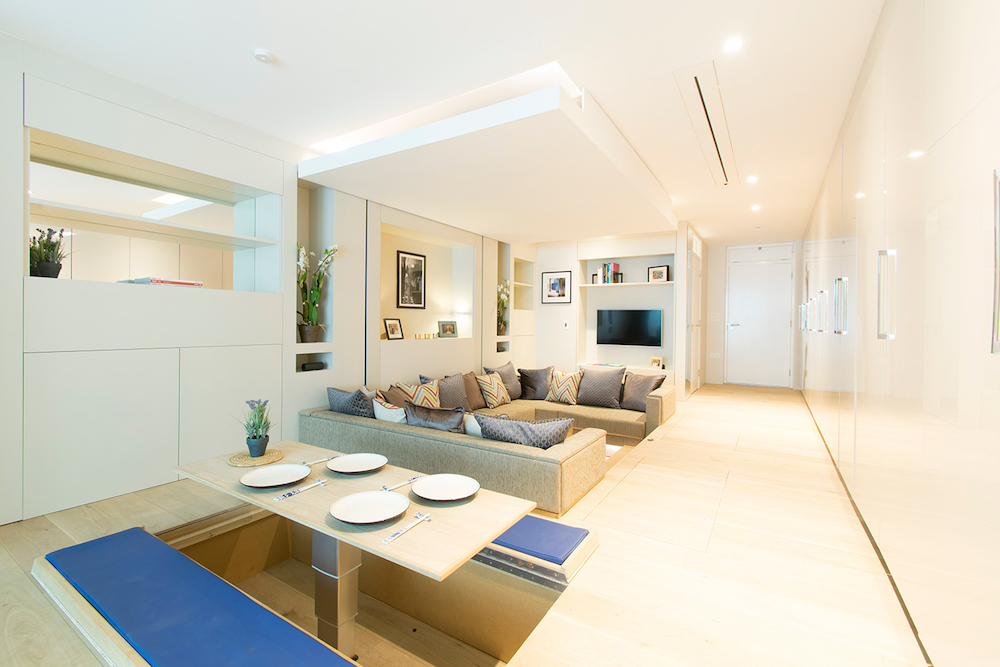
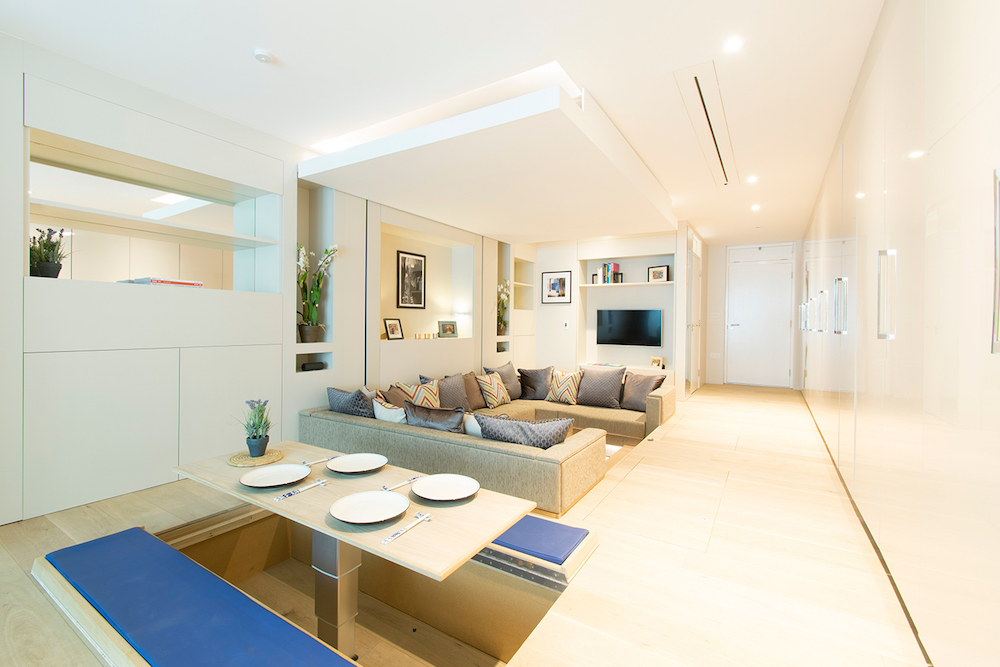
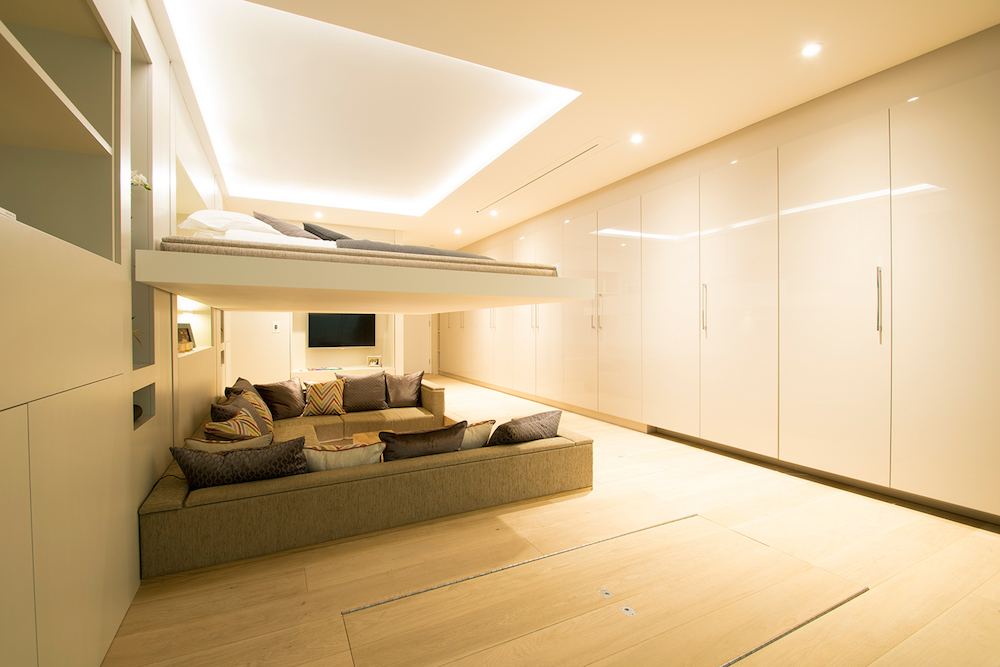
When I posted about the YO! Home prototype apartment a few years ago, I was impressed with its features: the big lounge, the hydraulic table and seating that sprung from the floor and, of course, the Darth Vader-worthy bed that dropped from the ceiling. But I also thought it more architectural confection than viable design. It was too flashy, too complex and, frankly, at 800 sq ft for what was effectively a studio apartment, too damn big. But like all prototypes, the YO! Home was and is a work in progress, subject to refinement and tweaking. Well, since we last looked at the YO! Home, Simon Woodroffe and his YO! Company have been doing a lot of tweaking…their prototype apartment that is. Their YO! Home Prototype 2 is subtler, simpler and smaller than its forebear, looking ever closer to something people would want to live in.

YO! Companies has some big ambitions for the little apartment, seeing it fulfill an important role in the global urban real estate market. YO! Home Managing Director Jack Spurrier wrote to me in an email, “YO! Home aims to transform the way we live. Space is at a premium in city centres around the world. YO! Home simply expands that space, and acts as the reinvention of the urban apartment, offering a completely new concept for compact living. The global recession has given rise to an additional compelling factor–funds for home buying are severely limited, therefore buyers are seeking maximum value (and space) for their money.”

The new apartment has evolved quite a bit from the first. Spurrier said that the moving parts were tested and re-prototyped where necessary to ensure they were reliable enough to be marketed to the public (more on that in second). There was a major aesthetic overhaul, making the whole thing look a lot less flashy. Instead of various shades of red and purple, the new apartment has a muted color palette of whites and woods, giving a clean, less polarizing look.

The apartment retains most of the functionality of the previous apartment, but at 430 sq ft, it is almost half the size. The whole interior sits on a raised platform, which houses storage as well as a telescoping dining table and seating area that hide completely when not in use. The lounge and sofa are half sunken into the platform, reducing the visual noise on the floor’s plain. There is still the same bed that descends from the ceiling to cover the ample lounge area. I’m still not convinced this setup is preferable to a wall bed considering the added complexity, though it is a big win for people who don’t like making their beds. It also frees up wall space for more storage. Speaking of, the walls are covered with tall cabinets as well as a hideaway desk and pocket kitchen.

Perhaps the most interesting thing about the apartment is that it will be the basis for an upcoming building in Manchester, England. The building will be made with 24 prefabricated units based on the Prototype 2’s design. Spurrier said that, “The size, space, layout and moving parts or ‘tricks’ are right in Prototype 2. There may be tweaks here and there for the Manchester YO! Homes, but these will be minor, and more likely aesthetic as we continually improve the look and feel of design details such as colours, finishes and lighting.”

If what Spurrier says proves to be true, this could be a pretty big news for transforming, compact architecture. While there have been a number of compelling furnished micro-apartments brought to market, most are fairly conventional in their execution. They are more or less well laid out studios with wall beds, built-in storage and appropriately sizes appliances and fixtures.

YO! Home is something altogether different. There aren’t many apartments that look or act like it, and if there are, they certainly aren’t for sale in quantities of more than one. Simon Woodroffe grandly said, “Since the invention of the city centre apartment, we’ve never really re-invented it. YO! Home is that new invention.” Looking at its elaborate design and clever features, I’m inclined to agree and look forward to seeing how the project unfolds.

Keep up with YO! Home on their website, Facebook and Simon’s Twitter.

Three More for the Road

Many people think about stopping their workaday lives, downsizing and lightening their loads to support more adventure and freedom. But few people go through with it. We always have (valid) excuses. The time is not quite right. We’re on the verge of a promotion and can’t quit or change our jobs now. We have kids and they will not adjust well to change. Etc.

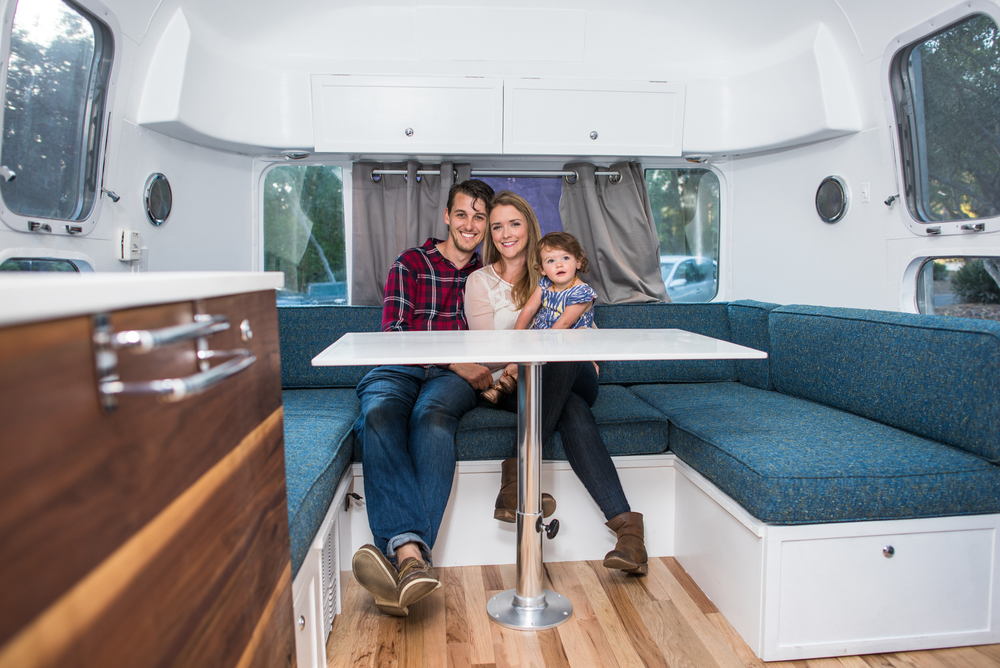
Fortunate for us, the MacMannis family are not thinkers (meant in the best possible way). Like many of us, they found themselves living a great but harried and stressful life, working too much and spending too little time together. Rather than doing more of the same, hoping things would get better, they stomped on their existential brakes. For them, putting on the brakes meant quitting their jobs, moving out of their home, ditching many of their possessions and hitting the road to live out of their 170 sq ft rehabbed 1973 Airstream–embarking on a trip of indeterminate length. We caught up with them to get a brief history of their adventure as well as find out how things are going.

DF: Tell me a bit about yourselves.

Gillian MacMannis: We are the MacMannis family–Gillian, Sean and one year old Avery June. We’ve spent the last 8 years working in technology in San Francisco. We met at work (and fell in love) shortly after moving to the Bay Area.

DF: What was life like before you hit the road?

GM: We had a great–albeit somewhat chaotic–life before we embarked on our journey. An awesome condo in Bernal Heights with a beautiful view of the city, fantastic friends, great jobs. We’ve always felt fortunate for the opportunities we’ve been given and have tried to make the most of them!

DF: What happened that prompted you to travel?

GM: We got to this point at work where we were working 60 hours a week, running around just going from one thing to the next. Being at home wasn’t relaxing or restful. Work was less fulfilling than we were accustomed to. We needed a reset; and thought some time away would help us to get back to what mattered most for our family.

rubberroadabode-airstream

Since we started dating, we have talked about taking time off between jobs to travel. We realized that would never happen naturally, so we got to the point that we thought, “we can keep making excuses about why now is not a good time, or we can just do this now.” We felt like in 30 years we might regret not doing it, but we certainly wouldn’t regret taking a few months to see the country. So we took the leap.

DF: Many people would be freaked out with such a decision. What was the decision like?

GM: Honestly, we had so much to get done before the trip that we didn’t have a lot of time to freak out about the trip itself. Everything from when to quit our jobs to where to put our stuff to how to find a trailer to where we were going. There was certainly a lot to think about, but it was actually one of the most exciting times just thinking through all the possibilities. Once we got into the Airstream renovation though, we definitely felt at times that we were in over our heads. Basically, we realized how much we didn’t know about RVing!

DF: What did you do with your house and stuff?

GM: Most of our belongings are in storage back in the Bay Area, a small fraction of it is with us on the trip and some is living with family members for the time being. We tried to purge things as we packed. The Airstream is only 170 square feet, so we really only had room for the absolute basics.

DF: What was the reaction of family and friends?

GM: All of our friends and family were really excited for us, and actually we were pretty surprised by the lack of negative reactions. We had quite a few friends who said they’d thought about doing the same thing, or who wanted to once they heard our plans! Those who had kids were even more supportive, and could identify with the desire to travel and spend more time with your kids while they are little, though some thought being in such a small space was pretty brave (stupid?).

DF: Tell me a little about your Airstream and your setup in general.

GM: We have a 25’ 1973 Airstream Trade Wind that we completely gutted and rebuilt with Townsend Travel Trailers in Santa Barbara, CA. The original floorplan was a little funky, so we moved the bedroom to the back, created a separate, galley bathroom, and built a convertible dinette in the front kitchen. Knowing we would be living in the trailer full-time, we tried to maximize both storage and floorspace.
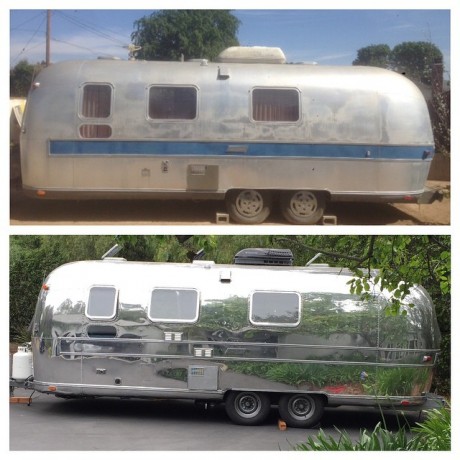
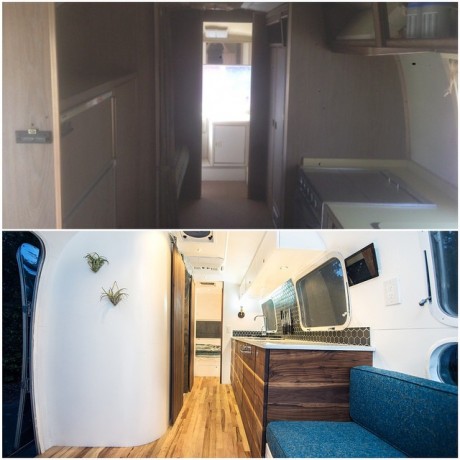
rubberroadabode-airstream-exterior rubberroadabode-interior

DF: When did you leave? How’s it going?

GM: We left our jobs in April and moved to Santa Barbara to manage the rest of the Airstream renovation. We finally hit the road at the end of May, so we’ve been traveling now for about a month. So far it’s going well–we’ve gotten past the point of being complete novices to the RV world, and have racked up over 3500 miles already.

DF: What has been the hardest part of living like this?

GM: The hardest part has been the heat. It’s RV off-season for a reason, and we certainly didn’t make it easier on ourselves by heading south (we had family to see). We really didn’t know anything about RVing before heading out on this trip, so we were hit by a few surprises early on. Now that we are more familiar with the “quirks” of life on the road, we can plan a bit better. For example, we discovered that our refrigerator really doesn’t work well in the 90+ degree heat. So now we make sure we have a cooler of ice on hand and we can switch food items back and forth for days we are on the road.

DF: What has been the best?

GM: The best part has been the flexibility. If it’s too hot, or we feel like there is something else we want to see or do, we can just go ahead and do it. The most interesting and amazing things we have seen have been unplanned.

DF: How long do you intend to be out?

GM: We are leaving our timeline open. We expect to be on the road at least for a few more months, and we’ll decide on the road when we’re ready to start thinking about what’s next.

DF: I realize you haven’t been traveling all that long, but based on your journey so far, what words of wisdom would you give people who might feel trapped in more conventional situations?

MG: Our biggest fear was feeling “trapped” or handcuffed into a situation by overspending or overcommitment. Looking at buying a house in the Bay area and the prospect of taking on a big mortgage with the housing market as crazy as it is in SF was daunting to us and pushed us to think taking this trip wasn’t such a big risk after all. Obviously, shedding everything and moving into a small travel trailer is a bit extreme for most people. But living more mindfully, and thinking about what you bring into your life can really have an immediate impact on your happiness. This trip has really helped us to better understand what we actually need versus what we thought we needed.

Find out more about and follow the MacManisses on their blog rubberroadabode.com and on Instagram.


Cooking and Dining Kit with the Minimalist in Mind

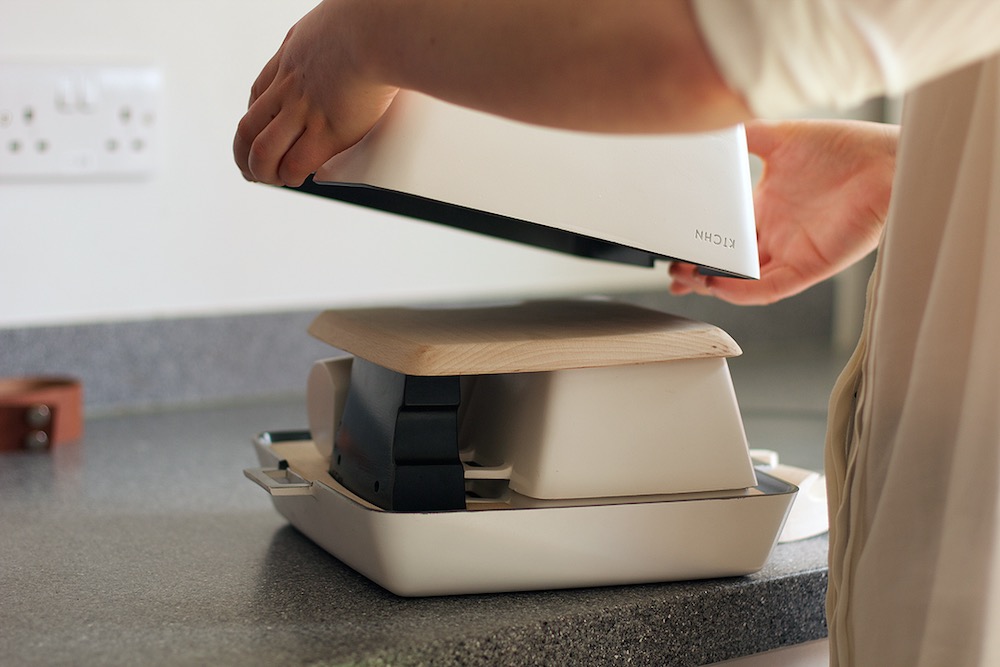
The LifeEdited apartment could do seated dinners for 12, made possible by the Resource Furniture Goliath Table. While having the capability to entertain so many guests is remarkable, it is hardly normal for most people who live in small homes. On a day-to-day level, these people dine alone or with a couple other people at most. For them, having cooking and dining sets for more than a few people is more burden than luxury. What they need is a few staple items that can do double and triple duty and store compactly–exactly the idea behind K T C H N, “a concise kitchenware set designed for the challenge of small space living,” according to designer James Salisbury.

K T C H N was actually Salisbury’s master’s thesis project. He has this to say about the cooking and dining set:

Inspired by the minimalist movements, it focuses on combining effective use of space with sufficiency in selection of items, this set promotes a simplistic, efficient lifestyle. K T C H N contains a select cooking set for two. The product range allows gradual adaptation to more efficient small space living through the use of fewer, multipurpose items.

Most of the items in the compact unit are made of ceramic enameled stainless steel, so they can be used for dining or cooking. In the kit are two plates that also act as pan lids, two bowls that can be used as pans, a large sauce pan, a frying pan, two ceramic cups, two maple cutting boards and two maple removable handles for the pans and lid. Also included are two portable induction hobs, aka burners. All of the items fit together to make a portable unit that is held together by a leather strap.

The whole unit is very elegant and I like the fact that the plates and bowls can be used to cook as well, though I think if I were to use K T C H N at home, I would rarely strap it together. One of the best applications I can see is using the set in a very space deprived setting like a tiny house or RV. It has all the functionality and efficiency of a camping cook-set, but the heft, durability and design of something meant to stay at home.

If you’re wondering, Salisbury has no immediate plans to put K T C H N into production.

365 Days, 10 Items of Clothing, Several Lessons

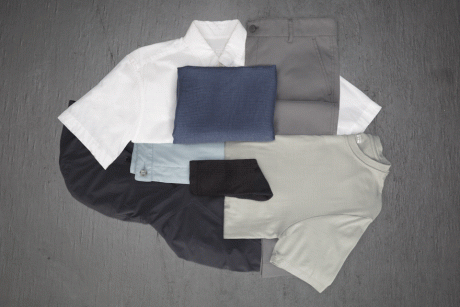
Last year we posted about Matt Souveny’s 1 Year, 1 Outfit Project. As the name implies, Souveny, a Royal Air Force pilot and men’s fashion blogger, spent one year living with ten carefully curated clothing items. Well, the year and the experiment have passed, and we caught up with Souveny to see how it went:

DF: How did the experiment go?

MS: Better than I expected. I half thought my clothes would be in tatters by the end of the year, so seeing as though everything is still very wearable I was pleasantly surprised.

DF: What was the best part of the experiment?

MS: Getting to wear my grails on a daily basis. Most people save their nice clothes, but I got to wear all of my favourites everyday.

DF: What was the worst?

MS: Dealing with the weather, I was freezing in winter and wearing every layer I had and in summer I was doing laundry every couple days just to have a fresh shirt.

1-Outfit-1-1-shoes

DF: What item in your wardrobe stood out as a must-have?

MS: Footwear always seems like the hardest thing to trim down in my mind so having a single pair of boots that I could wear hiking and then clean up and wear out to dinner was pretty essential. I also don’t think most pants would survive the daily abuse that I put my Outlier chinos through. I’m pretty grateful they held up.

DF: Did you find yourself wanting more clothing options?

MS: Absolutely. By the third month I was going pretty crazy wearing my uniform every single day, I powered through that though and then dressing just became automatic. By the time winter was over I was just happy to not have to put on all my layers every time I went outside

DF: Many of your items were pretty expensive. what would you say about that?

MS: Some of them are insanely expensive and I would never encourage anyone to spend beyond their disposable income for any of these things. I think this could certainly be accomplished on a smaller budget, I just figured that if I was going to wear the same things every day then they might as well be clothes that I loved and was excited to wear.

DF: Now that the experiment is over, what will be different?

MS: More clothes! I’m going to keep the same philosophy of buying better, buying less and getting rid of any excess, but I’m not going to restrict myself to a set limit. As it stands I have about 30 items in my closet right now and it is completely overwhelming.

Read an expanded version of Souveny’s recap on his blog.

Competition Uses Tight Resources to Squeeze Out Big Designs

Man built most nobly when limitations were at their greatest.

Frank Lloyd Wright

You’d think that if we had access to boundless resources for our architecture, we would build the most amazing structures, incorporating the highest tech, the best quality, the utmost in efficiency and so forth. But such is not usually the case. More often unlimited resources give birth to McMansions and $100M Park Avenue duplexes–structures that hardly indicate the advancement of architectural thought, much less human evolution. The trouble is when you have no limits to external resources, you typically don’t need to rely on internal ones. In other words, excess tends to breed creative laziness. On the other hand, limited resources and the imposition of other constraints often spurs creativity. It’s a much trickier proposition to fulfill on objectives, not with anything you can imagine, but with whatever is available, which might not be much. This paradox is why we features so many interesting projects geared toward homeless populations. In these projects, limited budgets and spaces are not barriers to ingenious design, but the reasons they exist.

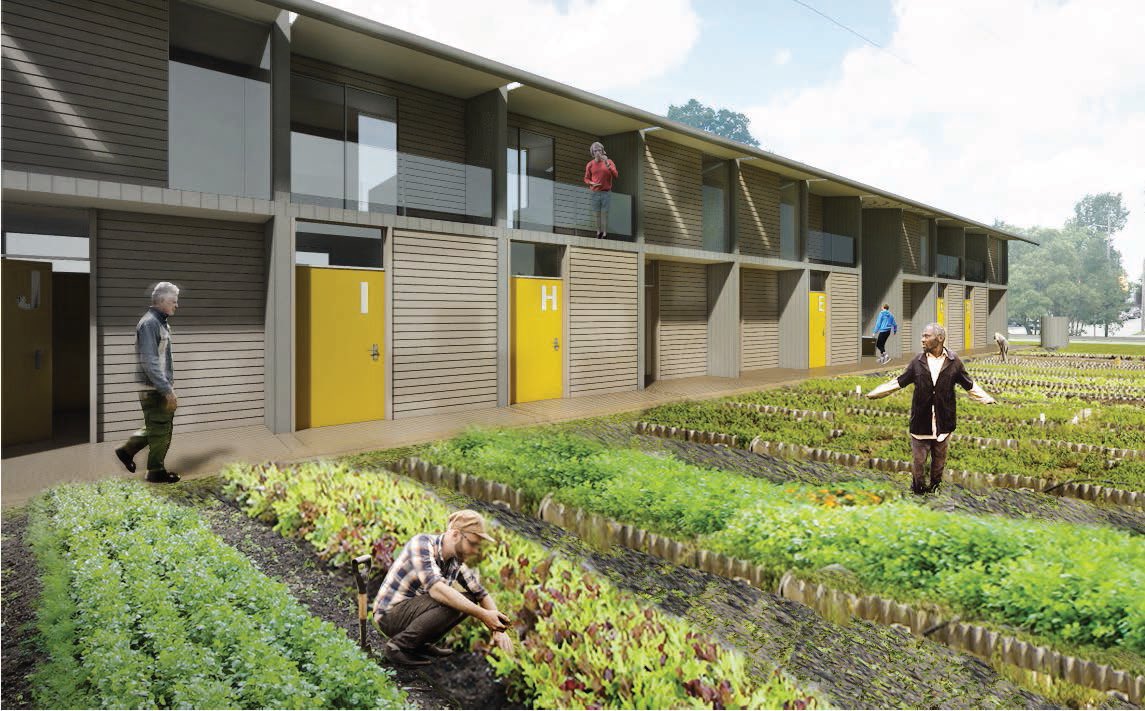
This phenomenon was demonstrated in spades with the Tiny Home Community Competition, launched by the AIA North Carolina Activate14 committee and the Raleigh/Wake Partnership to End and Prevent Homelessness. The competition sought out the best designs for a tiny house community built on a small parcel of donated land on the outskirts of Raleigh. The winning design, when built, will serve some of NC’s 11K+ homeless citizens. From the competition website:

Tiny home communities cannot eliminate poverty or homelessness, but they can create a more lively, caring, and diverse city. The goal is to generate innovative micro-housing communities that can repair and enliven our social fabric and help people transition out of homelessness.

The entrants were to meet a number of criteria such as affordability, the inclusion of a community center and garden, modular and prefabricated construction, a design that includes natural ecology and sustainable lifestyles and a design that can use leftover city land “as a resource for mending social and urban fabric.”

Winners were announced a couple weeks ago. Rather than a grand prize winner, entries were given awards based on specific merits. Merit categories were prefab construction, community engagement, affordability, aesthetic and community.

It’s worth checking out the competition winner’s page, as judges gave pointed praise and criticism for each design. Citizen Engagement Merit Award winners Heather Ferrell, Hiroshi Kaneko and Shane Gibbon’s design showed “true grit in a good sense of relationship with the neighborhood,” but while the judges liked “the concept of having the residents build it themselves,” their “experience shows that in reality it costs more to have coaches come in to teach how to build.” Affordability Merit Award winner Jeffrey Pinheiro and Derek Zero’s design “was simple, restrained, portable, well insulated with SIP, and had a very good site plan,” but some judges thought it might be “too cubicle-like to seem attractive to the residents,” and “there were a lot of questions about how to fold down a queen-sized bed without stepping outside of the unit.” Aesthetic Merit Award winners Gonzalo Carbajo, Inanc Eray, Pinar Guvenc and Marco Mattia Cristofori’s design “was the most architectural and formally organized project in the competition, and the units had great clarity,” however “the two story units increase cost and decreases accessibility.”

Despite some of the critiques–which are par for the course for such a competition–the winners showed a ton of great ideas, especially considering the lot they are to be built on occupies a mere .32 acres and units were conceived to be constructed quickly and affordably. Moreover, they are are proof positive, at least to this author’s mind, that fewer things spur innovative thinking like the imposition of constraints. Download the winner board pdf to see more details on all of the project.

H/T to Pinar Guvenc