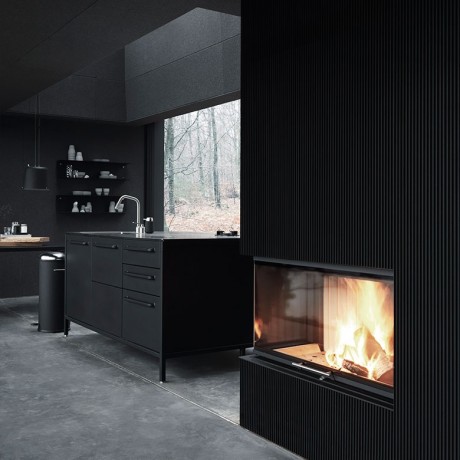
If DIY, salvaged material made, moss-covered Hobbit holes aren’t your thing, the VIPP Shelter might just be. VIPP is a Danish product design company best known for a pedal operated trash can (trust me, you’ve seen it). In their shelter they wanted to create a “plug-and-play getaway”–everything from the structure itself down to the linens has been designed by VIPP and is included in the purchase price. VIPP wants the owner to set up the, ahem, cabin and get relaxing ASAP without burden of choosing which door handle goes best with the moulding.
The first thing you’ll probably notice about the prefab, 55 sq m (592 sq ft) shelter is glass. It’s everywhere. On the two main walls. On the ceiling. The idea being to give the owner maximum exposure to nature. The next thing you might notice are dark colors: everything is swathed in some shade of black or grey. Again, the idea is to take focus away from the interior spaces and cast it outside. The whole thing sits on nine steel pillars to give the effect of levitating over the land it inhabits.
The place is a marvel of industrial design, with every inch of the structure made of the highest quality materials installed to the tightest tolerances. The 1000 lbs+ glass windows glide along roller bearings in a discrete floor track. The ladder to the sleeping loft looks like it could support a Sherman tank. The walls are sheathed in 3mm felt to create womb like silence.
For a more leisurely tour showing all of the space’s features as well as an explanation why those features exist, take a look at the above Fair Companies video of the space.
Unlike the Hobbit hole, the VIPP structure cannot be purchase with leftover halloween candy and bellybutton lint. VIPP is charging €485K/$585K for the unit and says it’ll take six months to deliver and 4-5 days to install onsite. For those with more money than time, a deep affection for high modern design and a longing for nature, this could be a great deal. For more information or to place an order visit VIPP’s website.
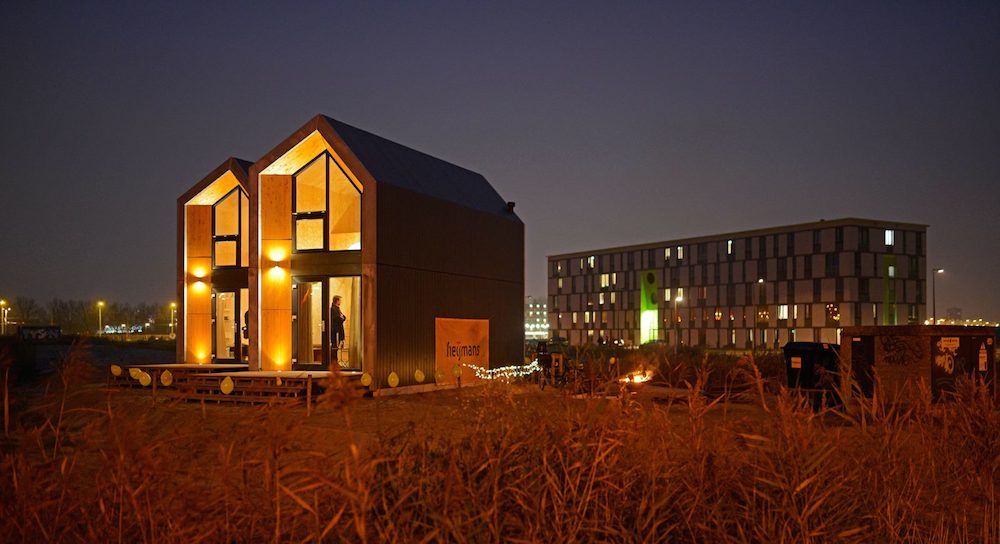
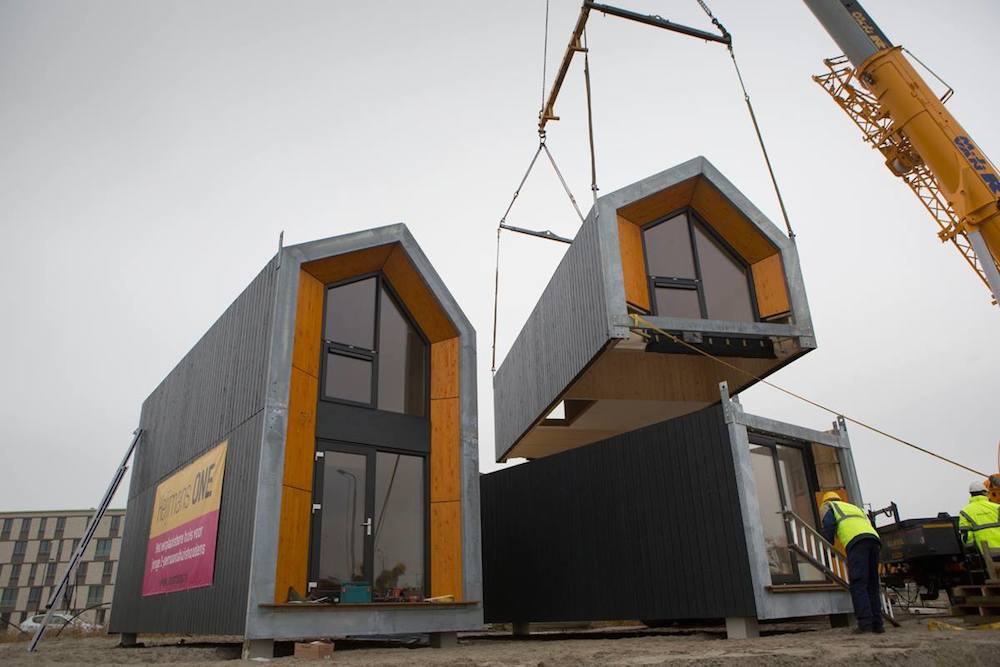
Around the world, cities are feeling increasingly pinched for space, resulting in major housing shortages. A project out of Amsterdam has a solution–well, a temporary one at least. Conceived by real estate developer Heijmans, Heijmans ONE is a dwelling that can be set up and taken down in a day. The dwellings intended homes are construction sites that have been stalled by economic crisis.
The dwellings, according to Heijmans, are specifically intended for well-educated people between 25 and 35 years old, in their first job and single–a population they say will number “no less than 700,000”; a population who, like their American counterparts, are living with their parents longer; and who “earn too much for social housing, [but] too little for the free rental sector.” By placing the Heijmans ONE in derelict construction sites on the outskirts of town–ones “where nothing has happened for years”–they believe they can offer the units for as little as €700/month (~$900). This will give these folks a foothold in the housing market as well as an attractive place to live. Heijmans would like to create clusters of the units to make insta-communities.
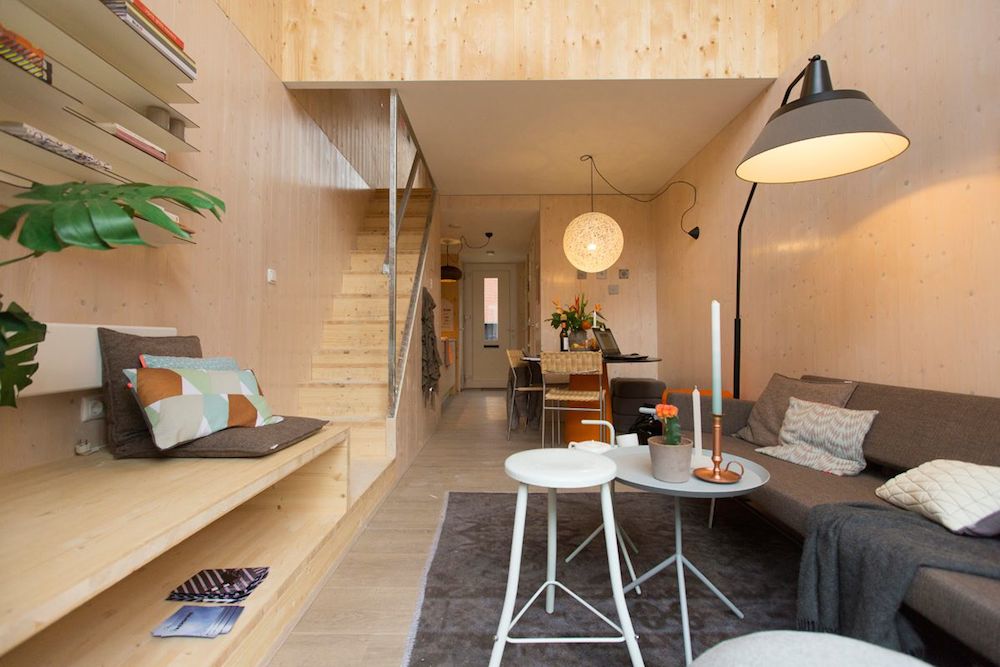
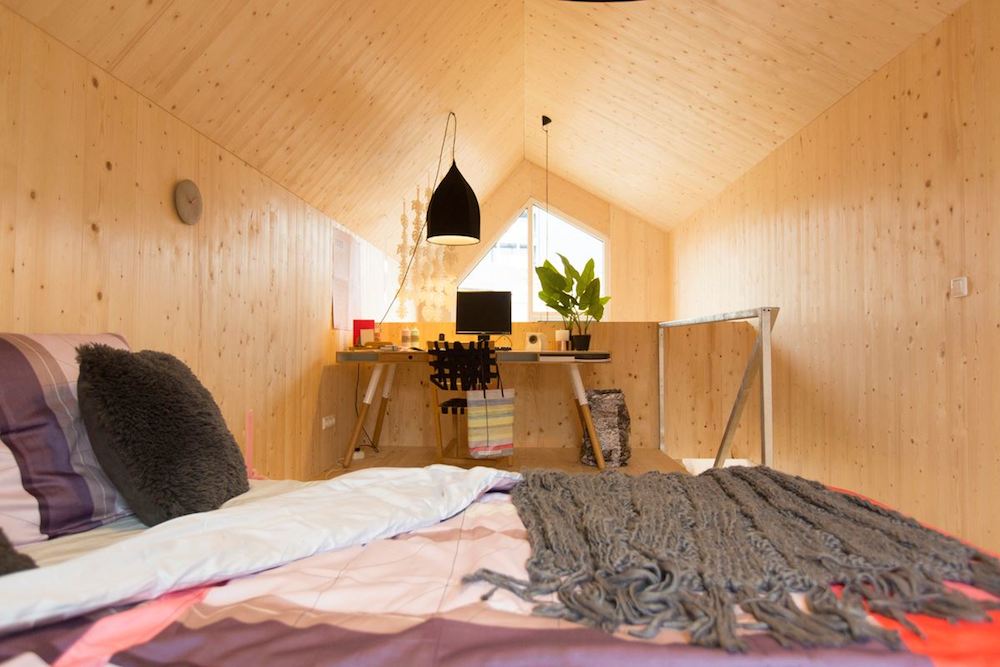
The units are basic, but nice, and certainly nicer than most infill architecture. They have real kitchens and bathrooms, a nice living room and lofted bedroom. They use solar power, but are hooked up to municipal sewer lines (Heijmans eventually wants to take them off-grid). Heijmans is currently running a test run of the dwelling, with one woman living in the unit for three months.
We’re not sure about all the economics behind the project, how feasible it is to setup camp in these derelict construction zones (we imagine there’s a ton of liability for the host) or what Millennial would really want to live on the outskirts of town, much less in a derelict construction zone or where the residents go should construction resume. But desperate times call for innovative solutions, and we applaud Heijmans for tackling a pretty big global problem and being willing to work out the kinks as they go.
In the quest to provide much needed affordable housing to London, architecture firm Roger Stirk Harbour + Partners, in conjunction with YMCA London South West, has designed the Y:Cube. The simple 26 sq meter (279 sq ft) house is, according to the Y’s site, meant to provide “self-contained and affordable starter accommodation for young people unable to either gain a first step on the housing ladder or pay the high costs of private rent.”
A couple things make the Y:Cube notable. First is it’s cost: about $50K to produce, which according to Fast Company, is 40% cheaper than traditional construction. Much of this savings is attributable to the use of prefab construction, where systemized and controlled building keep labor costs low while simultaneously making build quality higher. The units are essentially dropped into place nearly ready to live in.
Next, the structure can be built to stand by itself or stacked on top of another Y:Cube (many prefab structures are one or the other), making it adaptable to several different planning scenarios. There are plans to construct a 36 Y:Cube development this year alone.
Lastly, the houses are made with something called Insulshell, a closed panel structural timber system, which creates a near-perfect thermal barrier. The Y’s site claims that Insulshell will essentially eliminate the need for heating altogether, thus reducing the operating expense of the houses.
The Y:Cube seems to make a lot of sense to us. Though it doesn’t eliminate the real force we suspect is driving housing costs skyward (i.e. property values), it would seem to hold the promise of cutting construction costs considerably, which helps.
Prefabrication just makes sense. It mitigates so many of the costly variables that plague outdoor and one-off construction. Perhaps the main question we have concerns the Y:Cube’s aesthetic endurance. Will the Y:Cube look as timeless as the shack down the road 100 years from now?
This author lives in a part of Brooklyn where many of the streets are lined with classically styled housing, much of which is 100 + years old. The buildings’ brick and stone facades reek of craftsmanship and an aesthetic for the ages, not just the times (and people pay up the nose for them).
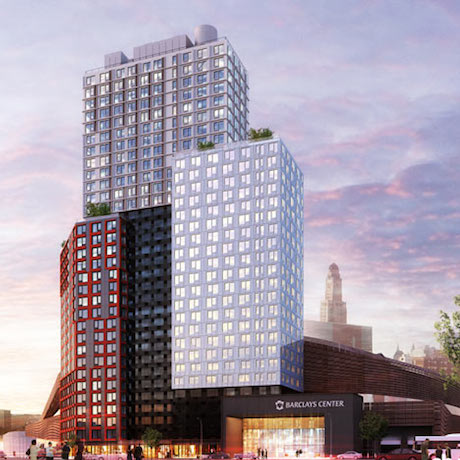
Travel a mile down Flatbush Avenue and B2–what will be the world’s tallest prefabricated building–is rising up like a growth on the Barclay Center’s backside. There will be 350 units and 32 stories, 60% of which will be built offsite. It’s a marvel of efficient design and construction technique. But I must say the final design strikes me as a little generic (a charge, incidentally, I’d make against many buildings that have risen up in the last 10 years).
Both Y:Cube and B2 were designed by two of the world’s preeminent architectural firms (RSH and ShoP, respectively). And we may need to wait and see whether these two different examples of prefabricated architectural will stand the test of time. After all, there was a time when Mies van der Rohe buildings were considered drab, featureless eyesores. Now many consider them as supreme exemplars of elegant, modern design. Only time will tell.
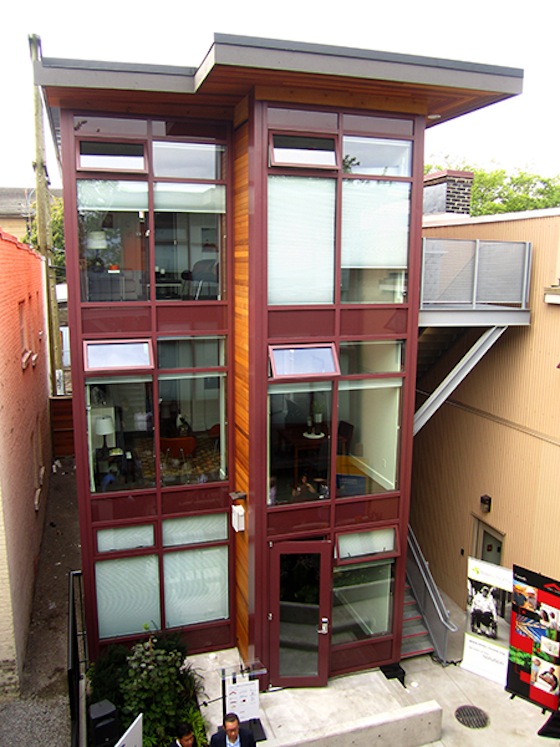
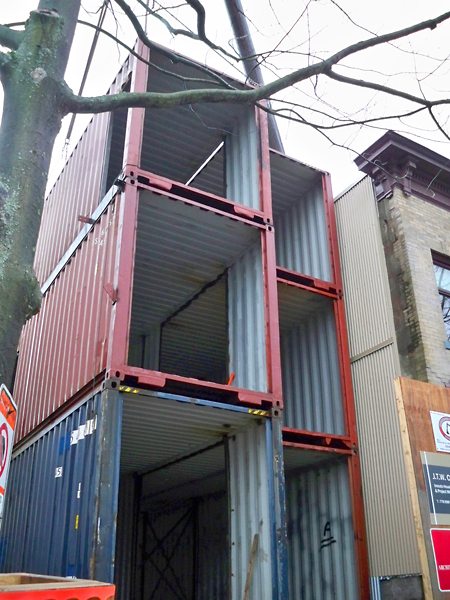
There have been many variations on the theme of converting shipping containers into homes, but few are as elegant or practical as this one by Vancouver’s Atira Women’s Resource Society. The just completed building contains 12 studio units, sized from 280-290 sq ft, each with its own kitchen, bathroom and laundry facility.
Atira, a not-for-profit organization focused on ending abuse to women, will use six of the units for older women interested in mentoring women in the organization’s Imouto Housing Development for Young Women, which is next door. The other six units will be rented at income-restricted rates.
Beyond its altruistic roots, the development boasts some impressive design and construction elements:
Constructed completely out of recycled 40′ shipping containers.
All 12 units fit on a standard 25′ x 119′ lot along with internal courtyard.
Hard construction costs for each unit were only $82,500.
Construction phase was only about eight months.
Units meet all building code and exceed insulation and noise transference codes.
Atira’s development, as we’ve seen before with SRO’s, shows that often the most innovative and practical designs don’t come about through unlimited resources, but rather creatively working with limited resources.
If you’re a high-density housing fanatic, the best direction to build is up. The logic follows that if you build up, you fit more people into less land area, resulting is less commuting, greater efficiency for things like power delivery and distribution of goods and more land for nature. In an act that could be construed as high-density fanaticism, a company called Broad Sustainable Construction is building a tower over a half-mile high; its residents will use 1/100 the land area of their terrestrially-based friends.
Broad’s aptly named Sky City is no pipe dream–ground is set to break this month in Changsha, Hunan in south-central China. At 838 m (2,749 ft) high, it will become the world’s tallest building. Its 220 stories will be reached via 104 high speed elevators. There will also be a six mile ramp going from the first to 170th floor. Its 11M sq ft of floorspace will house 17,400 residents, a 1K person capacity hotel, schools, offices and shops–in other words, there’s little reason to leave the building outside of the strolling the ample parklands surrounding the building. But wait, there’s more! Broad, who specializes in prefabricated construction, plans to erect the whole thing in a scant 210 days. If you doubt their claim, check out this video showing Broad erecting a 30 story building in a mere 15 days.
And if you doubt their claim–about the feasibility of the project, the timeline, etc.–you aren’t alone. Some say it will not withstand wind forces. Others say that Broad hasn’t built anything over 30 stories (true) and adding another 190 for its next project is a bit of a reach. Others think it’s just a marketing ploy.
The company has fired back saying they are quite serious and that the building has passed the needed safety tests. They even say it can withstand an earthquake of a 9.0 magnitude and three hours of active fire.
Engineering squabbles aside, it’s hard to fault Broad for a lack of earnestness. From what we can tell, they are on a mission to save the planet. Their buildings, which include serious efficiency measures like triple-glazed windows, 8″ insulation and Heat Recovery Ventilators, are said to be five times more energy efficient than traditional buildings (not even factoring in the benefits of density). The company promotes more than efficient construction–they also promote a way of life…one that sounds suspiciously like LifeEdited’s. They recommend such things as having one child to make “Mother Nature happy”, “not to buy anything that is unnecessary in the family” because “Simple life is very relaxing,” and they claim that “reading and listening to music during holidays are more leisure [sic] than taking a trip by air” (see more of their philosophy here).
Sky City is nothing if not audacious. And while we have suggested that there might be a Goldilocksian density–neither too dense, nor too spread out–there’s something appealing about imagining a vertically-housed world surrounded by ample green space to recreate. In this world, people live close to one another and use only what they need. What could be simpler and more edited than one structure that houses your whole life?
Of course, there’s the dystopian angle as well. Might Broad be ushering in an age where the planet is littered with half-mile-high buildings, leading to greater population explosions, ever-dwindling green-spaces and lives lived out in the confines of a high-rise tower?
Whether Sky City will presage either of these scenarios remains to be seen. Either way, at Broad’s projected breakneck building schedule, the future won’t be long now.
Okay, maybe “t” is the more accurate letter, but any way you look at it, these tiny housing modules show an interesting, prefabricated, highly-scaleable housing solution. We use the term “solution” as their current incarnation might be a tough places to call “home.”
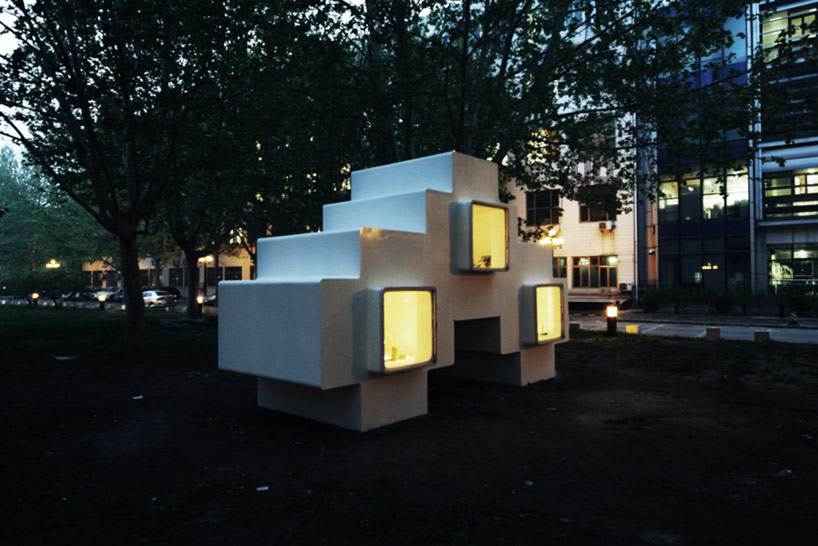
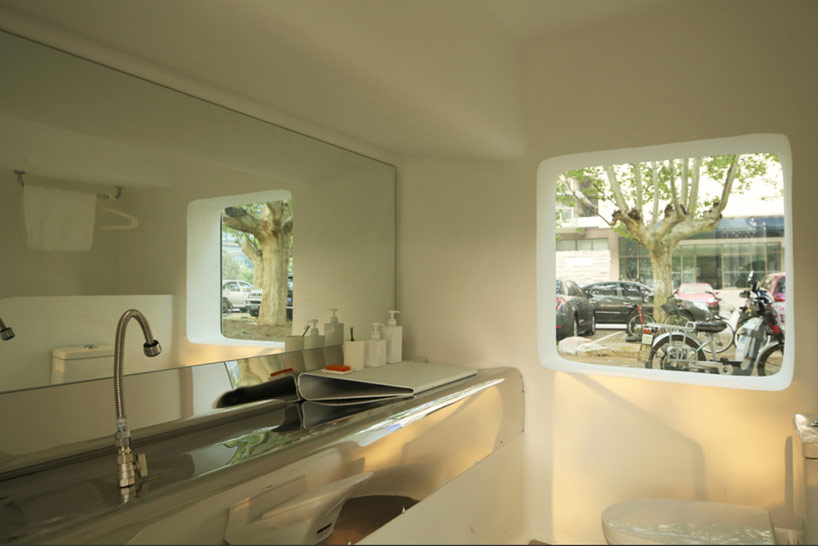
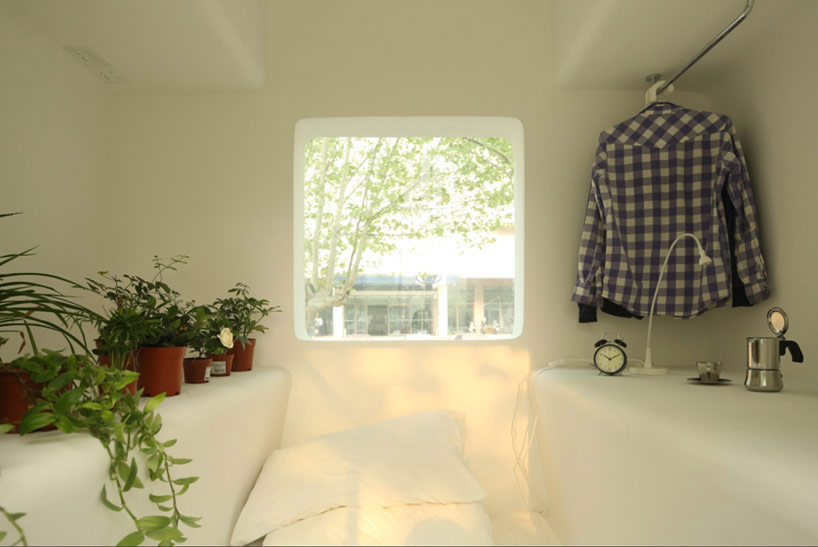
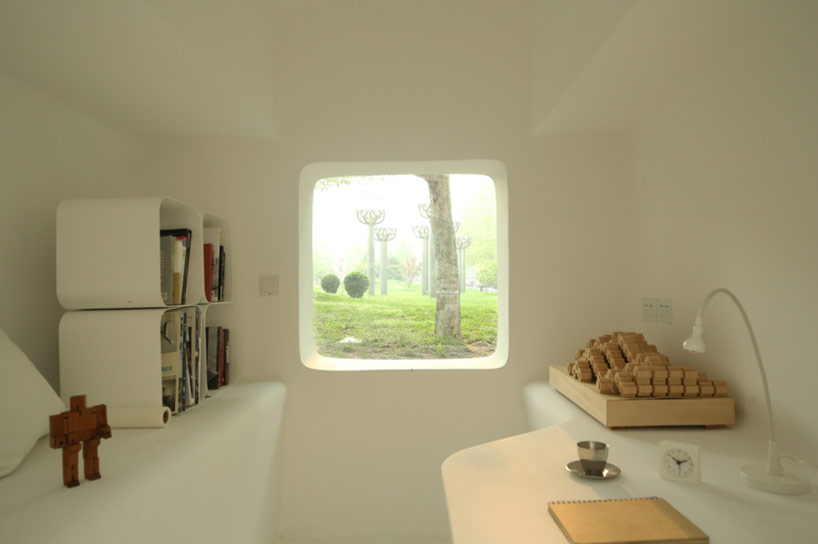
The project, simply dubbed “Micro House,” was designed by Beijing’s Studio Liu Lubin as part of the “Get it Louder” exhibition–the same place where the Tricycle House was featured. Like the latter three-wheeled home, Micro House is one part design study and another part political statement–a reaction to China’s questionable land-grabs and soaring real estate values.
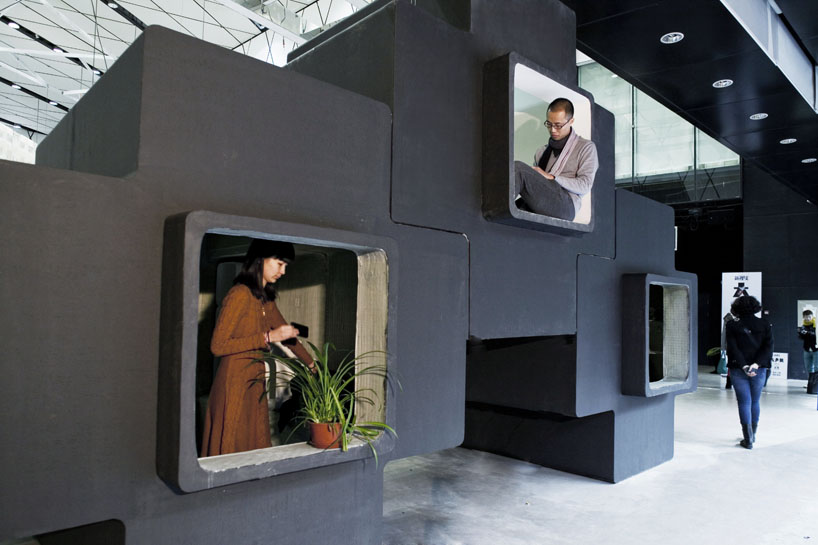
The exhibition model was a three module cluster: one module for living/working, one for sleeping and one for bathing (we’re thinking the cooking module, shown in prototype drawings, might have been nixed as it messed up the symmetry). The module’s t shape enables enough room for an occupant to stand up–though we imagine entertaining might be a bear.
The micro house can be set up individually as it was for the exhibition or, more interesting to us, stacked upon one another to make large housing pyramids. Like any tiny house, the more the merrier, and the interlocking structure seems to lend itself for structurally sound stacking.
There are some (okay, maybe many) drawbacks to Micro House design such as having to go outside to move from one module to another. We’re not sure why they didn’t combine living and sleeping quarters as the latter tends to occupy an inordinate amount of space compared to its usage. The overall module size seems pretty darn small to us, though that might have more to do with the Get It Louder intent, which was to make homes that transport easily. We could imagine a larger version being actually quite livable.
All that said, it’s a concept home and an interesting one at that–one that bucks convention and whose very DNA bespeaks inter-connectedness and efficiency.
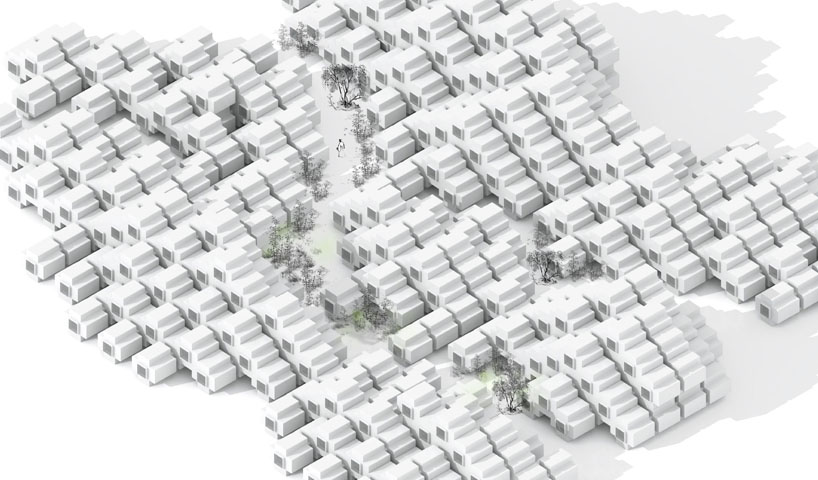
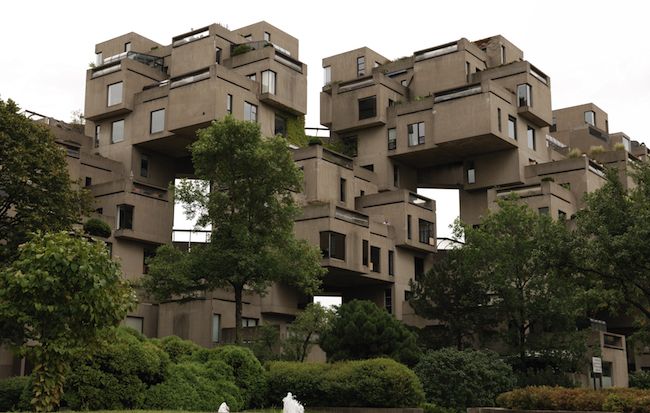
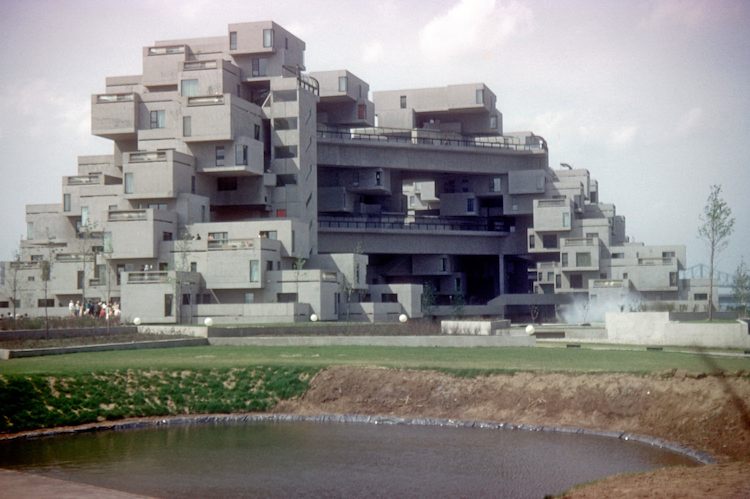
The idea of beautifully designed, high-density prefabricated compact housing is hardly new. Case in point is Habitat 67. The housing complex, built for the 1967 Expo 67 World’s Fair in Montreal, is a case study in great compact design.
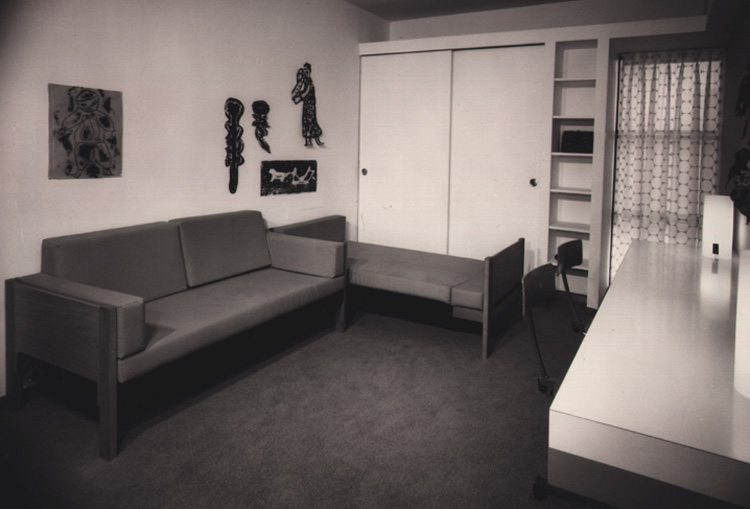
Amazingly, the building was architecture student Moshe Safdie’s Master’s thesis (he did graduate and build many more important buildings). The building shares qualities with the Nakagin Capsule Tower and the Japanese Metabolism architectural movement. Like Nakagin, all of the 354 modules are prefabricated and identical. The 12 stories of modules are arranged and combined in different configurations to make 146 apartments varying in size from 225 to 1,000 sq ft (20 to 90 m). Unlike Nakagin, Habitat 67 has not fallen into disrepair and is an established, resident-owned coop.
While its lego-set look might strike some as contrived, the layout permits each unit to have its own terrace, skylights and direct sunlight (we think it looks pretty cool too). The building also features covered walkways, gardens and other open spaces.
With its prefab construction, high density layout, sunny and livable interiors, the 46 year old Habitat 67 might show that the past holds some best ideas for the future of architecture.
Last week, we showed a family living an edited rural life, showing that densely-packed, tiny-apartmented cities aren’t the only environments that support pared-down living. We ran across another version of this way of life that is neither urban, suburban, rural or any of the above: it’s mobile.
images via liveworkdream.com
In 2007, René Agredano and Jim Nelson, inspired by their dog’s diagnosis of bone cancer, quit their corporate jobs, sold their home and most of their possessions, bought a truck and an RV trailer and hit the road with Jerry, their sick doggy to evaluate their lives. After realizing they could support themselves from the road through a combination of online businesses, freelance work and some labor, the trip, meant as a sabbatical, became a lifestyle. They have been going at it for 5+ years with no plan to stop.
We shot René a few questions via email regarding their lifestyle–asking about things like the pros/cons of RV living, their carbon footprint and what landlubbers might learn from their perambulating lifestyle.
LE: What is the best part of your lifestyle?
René Agredano: We can sum up the best part of our lifestyle in one word: Freedom. We have the freedom to live as we wish, work where we want and when we want. Being location independent entrepreneurs gives us the flexibility to go where the weather’s nice and experience all that this great big world has to offer, without sacrificing our need to earn an income.
LE: What is the worst part?
RA: Dealing with the unexpected. When you’re stationery, life is broken up into a series of predictable routines that rarely vary. But when your scenery changes throughout the year, unexpected challenges are always around the corner and there’s a big learning curve in discovering how to cope with them.
Unexpected events ranging from mechanical failures with your rig, to severe weather situations you’ve never experienced before, to something as simple as navigating your way through a new grocery store layout. All of these things challenge your ability to think on your feet and be positive while encountering the unknown.
LE: Can you say something about rising gas prices?
RA: We’re glad we have a diesel pickup and a relatively small fifth wheel trailer (24′ feet), which helps to keep our fuel bill down. And as fuel prices go up, our lifestyle gives us the ability to choose how much or how little we want to drive, unlike people who are tied down by a daily commute or suburban lifestyle.
Rising prices used to scare us, and they really hurt at the pump when we have to swipe our debit card twice! But since we’ve carefully track all of our expenses over the last 5 years, we’ve discovered that on average, we spend less than $400 a month on fuel, which probably less than what the average commuter spends driving to and from work each month.
Also, while we might travel longer distances in one shot while getting from Point A to Point B, we still drive much less frequently than most people. Once we’re in one location, we do little driving other than to the grocery store or sightseeing because we work from our rig.
LE: How do you view the issue of sustainability and your lifestyle? We saw on your blog that something about using bio-diesel. Can you say more about that?
RA: We’re from Northern California, where being an environmentalist is the de facto way of life. Before we started traveling, we were avid backpackers. Whenever we saw a big RV hauling down Highway 101, we would scoff and think “gas hog!” But now that we became one of them, we’ve realized that’s not the case for fulltimers anyhow. If someone is full-timing in their RV, even the biggest 40′ rigs have a smaller carbon footprint than the traditional lifestyle of living in a house or even a small apartment.
For example, as RVers who choose to boondock (forego standard electric, water and sewer hookups) most of the time, we are living off-grid in remote areas with solar power and satellite internet service. By not staying in RV parks unless the weather is exceptionally cold or hot, we’re not consuming a whole lot of resources. Also, we don’t consume stuff on the same level as most people, because with less space we just can’t stock up or buy things on a regular basis. We live in about 100 square feet! Whenever anything new comes into the rig, something has to go to make it fit.
One of the reasons we bought our Dodge Ram diesel pickup, was so that we could make and run biodiesel in it (a mix of veggie & diesel), or eventually convert it to run on waste vegetable oil (WVO). But the practicalities of making our own fuel have eluded us, and these days, finding anyone selling biodiesel is like a needle in a haystack. The industry has just tanked because of the bad rap the palm oil industry has received (there is debate about the ethics of harvesting these trees for fuel instead of using that land for food) and it’s really sad to see. We’re still petroleum-slaves, I hate it.
LE: Do you have a storage unit or did you really get rid of everything that couldn’t fit in you trailer?
RA: When we first hit the road, the plan was to do it for one year, then settle down and get back to “the real world” again. We sold off most of what we owned but kept got a small storage unit for things we didn’t want to have to re-purchase, like basic furniture, as well as some sentimental things. Well, one year turned into two and when we finally returned to that storage unit, we saw that we didn’t get rid of as much stuff as we thought we did. It was scary to realize that our mindset about downsizing was so different when we first hit the road. After living in a tiny space for two consecutive years, now we realize how very little we need to be happy, and it comes down to less than 1/4 of what we left in that unit!
One of our lifetime goals was to own some property, so today we own a very nice paid-for RV site on 5 acres in the Colorado Rockies. It also happens to come with a guest cabin for our visiting friends! But the cabin is off-line and not using any resources for about 10 out of 12 months. We only go there occasionally, since we still love traveling too much.
LE: How long do you plan to continue?
RA: Indefinitely! We’re having too much fun to even think about hanging up our keys.
LE: Any living strategies you can lend the non-mobile?
RA: Yes! Whether you enjoy life on the road or in a stick house, the key to living simply and being happy is to remain debt free. Living unburdened by monthly payments allows you so much more freedom. You can enjoy life to the fullest, be prepared for unexpected expenses and not live in fear of losing your job because you have so many bills to pay. Ever since we became debt free, we aren’t working just to pay bills…we have more time to to pursue our hobbies and interests that may not pay a lot of money, but make us fulfilled, like the Tripawds.com community we founded for canine amputees and their humans!
But when it comes down to it, as Dave Ramsey says, debt is a symptom of insufficient income. We have learned that the best solution to staying financially solvent and able to pursue our passions is to diversify our revenue streams and focus on earning passive, ongoing income. Instead of relying one one business for all of our earnings, we have several different endeavors that each bring in revenue streams each month. Cumulatively they all add up and we’ll never go back to a traditional small business structure again. We believe this is one of the best ways to protect ourselves against economic catastrophe, so now our mission is to help others do the same, through our remote home-based business ebook (www.bit.ly/incomeanywhere) and free coaching at Agreda.com.
Let’s face it, it’s hard to get away from IKEA. The big blue store is by far the world’s largest furniture retailer and there are few homes that escape its cleanly-design, wallet-friendly wares.
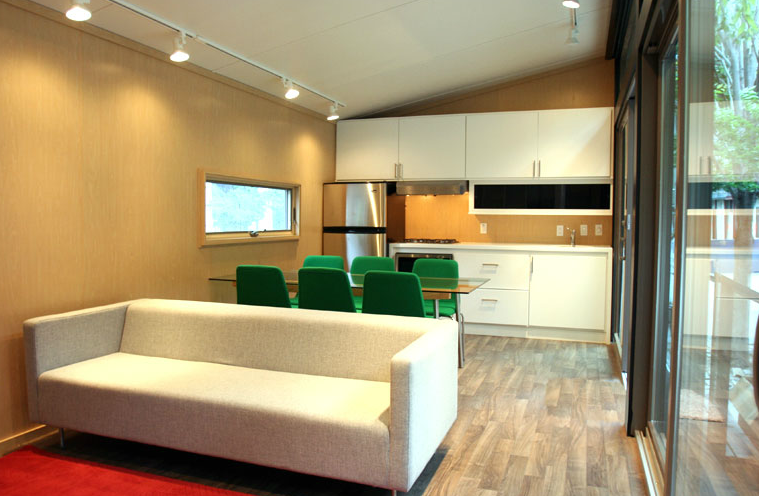
Since the contents of our homes are so defined by IKEA, Oregon-based company Ideabox asks why not the house itself? To answer that question, they have created the Aktiv, a compact, prefabricated home designed around IKEA product systems and ethos of clean, affordable design. $86,500 buys the house, delivery, installation and IKEA spec’d bathroom, kitchen and flooring. I suspect most buyers would finish the place with IKEA fürniture.
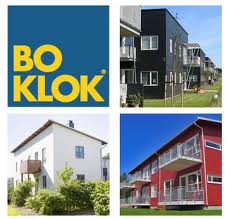
This idea is not new. IKEA has been making their BoKlock housing in Europe since 1996. According to its site, BoKlock provides “space-saving, functional and high quality housing at a price that enables as many people as possible to afford a stylish and comfortable home.”
Sounds good to us.
A home made completely around a corporation–particularly a giant like IKEA–might strike some as being impersonal. But consider that many of us end up with homes designed by IKEA by default, because the stuff looks nice and is affordable. Also consider that our homes are often assemblages of handed down furniture or whatever we can afford at the time, neither of which necessarily reflect personal style and taste.
Then there are the many advantages of prefabricated home design and construction, whose processes have a huge edge over one-offs. For instance, the BoKlock is made completely in a large warehouse, making its construction schedule independent from weather.
From a practical standpoint, don’t most of us just want a home that is affordable, comfortable and easy to deal with? Homes like the Aktiv and BoKlock deliver that, sans some personality.
What do you think? Would you live in what amounts to as your own IKEA showroom? What would be the advantages/disadvantages? We’d love to hear what you think?
Defying the common portrayal of trailer homes as shoddily constructed, I-hope-I-never-have-to-live-in-one-of-those kinda homes, San Francisco-based architect Christopher C Deam created the Breckenridge Perfect Cottage–a 400 sq ft home that looks like no trailer home we’ve ever seen.
With floor-ceiling windows and a luxurious interior, Deam shows what’s possible from prefabricated homes, which when mass produced at high volumes, can be made cheaper and better than their one-off counterparts.
With options like these, would you live in a trailer home?