Living without Soap and Shampoo

There are certain things we hold as necessary–things we can’t live without, or more to the point, things that, when lived without, represent some sort of step backward in human evolution. Take soap and shampoo for example. Would you consider bathing without them? If you’re like most people, you probably wouldn’t. People get dirty in the course of the day, and soap and shampoo are our hygienic weapons. But do we really need them?

A few years ago, an article in Boing Boing claimed that we need neither soap nor shampoo. That piece’s author Sean Bonner, lived a year without either. Not only did he not stink–as verified by numerous sources intimate and otherwise–but persistent problems disappeard. He wrote of the experience:

My skin feels better than ever before. Not that it ever felt bad, really, but it feels awesome now. Still no stink at all, I swear even when I’m really active and sweating I don’t notice any B.O., and I used to be über self-conscious about this and would think I was stinking if I walked up a flight of stairs too quickly….And with the exception of changing climates drastically, even the dandruff is history. My previously wavy and mostly unmanageable hair now seems much more willing to bend to my will, a dream of mine since I first looked in a mirror, brush in hand, then tried and failed to make any sense of that monster.

Bonner was actually inspired by a guy named Richard Nikoley and his blog Free the Animal. While Nikoley wasn’t the first person to not use soap and shampoo (“Of course I didn’t come up with NOT using soap or shampoo first: that’s the whole f$%#ing point.”), he has become the one of the practice’s primary advocates. Both Bonner and he contend that human skin and hair has its own regulatory system, and to leech the oils and other goodness nature provides with artificial agents goes against our biology. More importantly, they don’t get us any cleaner.

This author has some experience with the topic. As a teenager, I used several types of hair products–gel, mousse, hair spray and the like. I had elaborate processes that got my hair to stay exactly in the right place (blowdryers, hats, etc) with the right amount of structural integrity (aka volume). It wasn’t until years later that I discovered the best hair product of all: not shampooing. By letting the oil build up in my hair, my straight, fine hair became thick and pliant. (Full disclosure: I’m still a soap user, though am considering trying to do without).

None of this is suggestive of eliminating the need to bathe. Water is our friend and regular bathing in some capacity is, for most of us, a worthwhile endeavor.

What it does suggest is that certain things that we think are immutable truths–things that should never be lived without–might not be true at all.

But don’t take Bonner, Nikoley or my word for it. Try it for yourself. Try going without soap or shampoo or both for a week. The great thing is you don’t have to buy anything to take this challenge. That’s the point.

Image credit: Flickr via takot

The Manhattan of the Desert

Energy-intensive, gargantuan and sprawled-out houses are a very recent phenomenon. People have known for centuries, if not millennia, that living close together and conserving resources is the best way to survive and live. Yemen city Shibam serves as a nice example of how the past often contains the simple wisdom necessary to right recent architectural and urban planning wrongs–ones that have thrown the world into an unsustainable tailspin.

shibam02

The city dates back to the 3rd Century AD, however most of its distinctive “skyscrapers” are from the 16th Century–predating many of the West’s vertical cities by a few hundred years. Rising as high as 100 ft, and having as many as 11 stories, the buildings are still some of the world’s highest mud brick structures. With 500 buildings inside the walled city, the dense cityscape has led some to call Shibam “the Manhattan of the desert.”  The building height not only increased land-use efficiency, fitting more people onto less land, it also conveyed the wealth of the city and provided defense from marauders.

shibam-plan

Shibam is now a UNESCO World Heritage site. The organization says this about the city:

The rigorous city planning based on the principle of vertical construction is exceptional and an example of a traditional but vulnerable culture….The old city of Shibam presents to historians and urbanists one of the earliest and most perfect examples of rigorous planning based on the principle of vertical construction.

Shibam has had some recent misfortune, with major flooding in 2008 and an Al Qaeda attack in 2009. All that notwithstanding, the city still has 7000 residents and presents itself as a historical guide to a resource-sipping city–one that could inform how the rest of us might organize our cities in the future.

Speakers that do Heavy Lifting

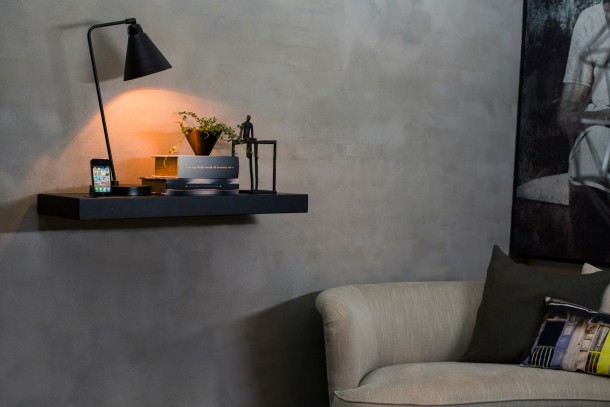
Finding speakers for a small space can be tricky. Standalone models are often ungainly and use up precious floor or shelf space. While we use the Amena Invisible Speakers in the LifeEdited apartment, we found a couple amplified speakers that do double duty as discrete–and practical–shelving units.

Danish company KREAFUNK’s aSHELF (pictured at top) combines an iPod/phone deck, built in speakers and a practical shelf that can hold 33 lbs. The speakers themselves are powered by 2 x 20W speakers–more than adequate for a small to medium-sized room. It’s not clear whether the dock is the old 30 pin connection or the newer 8 pin (we suspect the former). There is a Bluetooth receiver for wireless streaming from any compatible device as well as a line-in for other audio sources. Sadly, there’s no Airplay functionality. Way sadder is aSHELF doesn’t appear to be available in the US. Price: kr 2000 (~$363).

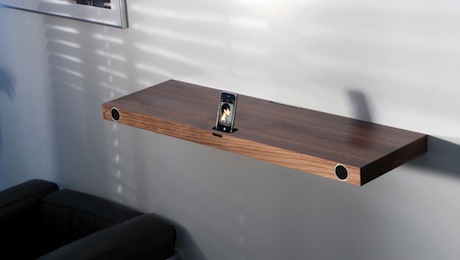
fe_h51_walnut_ambient_living_01

The Finite Elemente Hohrizontal 51 (above) is another cool shelf/speaker Americans will probably never get the chance to hear. Made in Germany, it features 2 x 50 W speakers, iPod/phone dock, Bluetooth capability and line-in. The shelf also holds a hefty 55 lbs (assuming your wall can handle it). We found them for sale in England for £499 ($819).

Architecture for Swingers

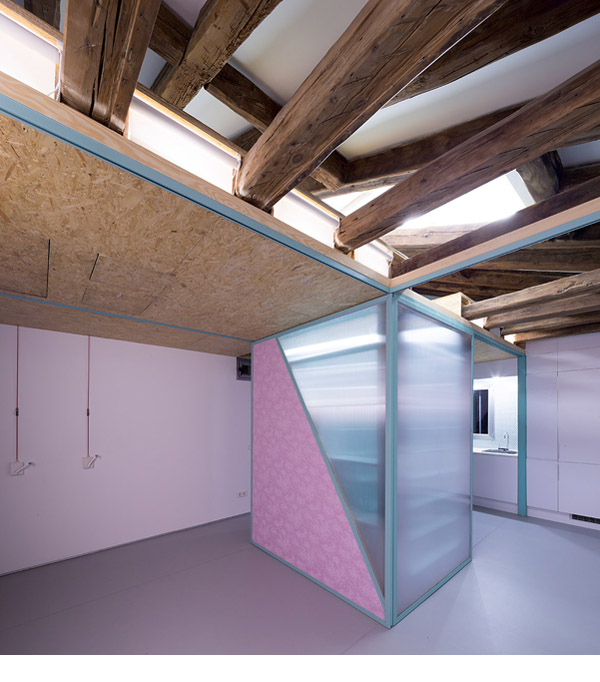
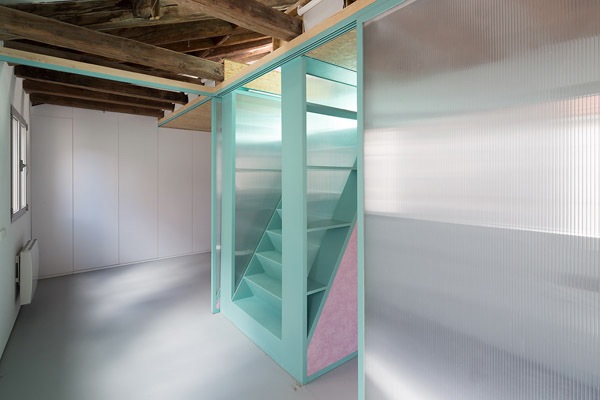
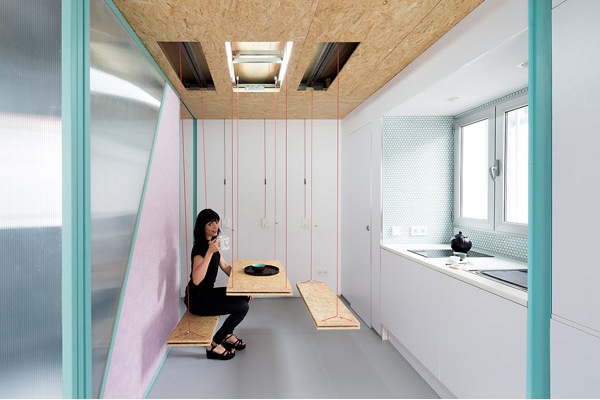
This Didomestic apartment by Madrid’s Elii Architects has been making the blog rounds lately. There’s a lot going on in the 620 sq ft converted attic. Much of the apartment’s furnishings can fully concealed in floor and ceiling cavities. On the first floor, there is a dining table, benches, storage lockers, hammock, fans, hammock and disco ball that descend from the ceiling via pulleyed ropes attached to hand cranks. On that same floor, there are sliding pink partitions that allow the space to have several different configurations. On the second floor, there is a seating cushion and vanity that pop up from the floor as well as a sunken tub.

Elii says of the concept: “Every house is a theatre. Your house can be a dance floor one day and a tea room the next.” Check out this video to see the place move.

We see lots of theater (and disco) in the Didomestic. What we don’t see as much of is house. We wonder how the space would actually be used. We suspect the dining table and benches would be unusable because of insufficient support (there’s a reason the models are stock-still while sitting at it). We don’t imagine anything useful would fit in the overhead storage. The floor-based seating would only be suitable for the most limber. The swing, while novel, is a piece of furnishing unlikely to make its way into the interior design cannon. The lack of essentials like a sofa, while making the space “versatile”, also make it somewhat useless on a practical level.

Of course the space isn’t necessarily going to look the way it does in the photos. After the owners add their sectional couch and Hummel collection, the place might feel quite homey.

We love experimental spaces like these, as they push the boundaries of what people think possible. We do think that making some concessions to end-user functionality isn’t always a bad thing.

Via Design Boom

Do More Nesting in Your Nest

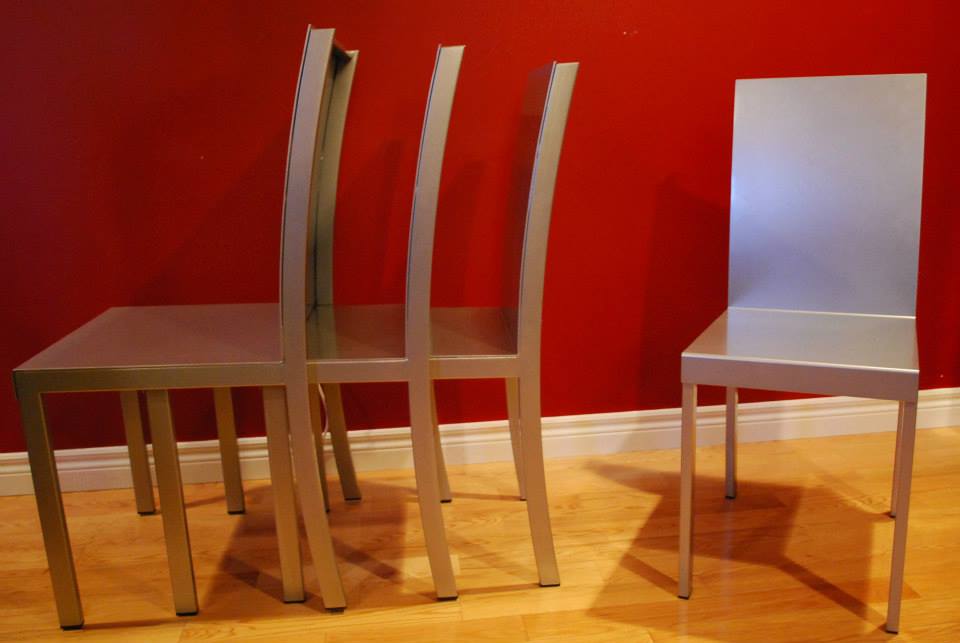
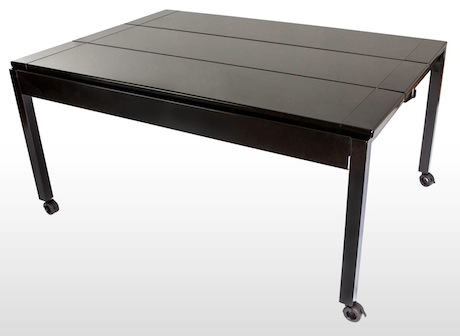
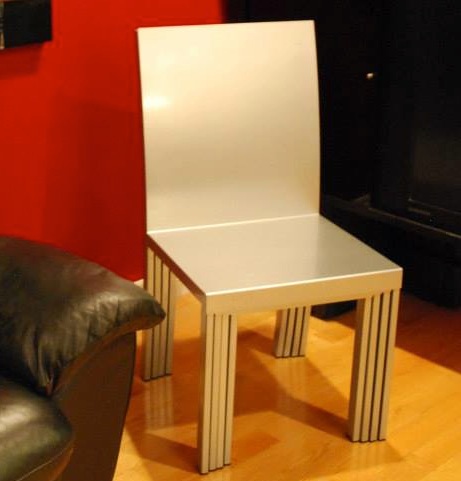
Nester is a Canadian company that makes adaptable, transformable furniture that would work well in small homes. The two pieces on offer are the Kameleon table and the Repeater chair. The former is a table that transforms from 15″ x 61″ console, and is expandable to a 61″ x 42″, 78″ x 42″ or 96″ x 42″ table, depending on the number of internally stored leaves that are inserted. The Repeater is a four-in-one nesting chair system. The chairs fit together like matryoshka dolls, with larger chairs concealing the smaller ones below.

The Kameleon reminds us of a more utilitarian version of the Goliath table by Resource Furniture, as it permits an expansive dining surface for the occasions you need such a thing. While a little smaller in its expanded length than the Goliath (96″ vs 115″), its internal leafs cut down on storage space.

nester-kameleon

The Repeater’s stealth concealment of four chairs is pretty nifty. With the smallest chair appearing to have more than adequate width for an adult (albeit a slim one), there seems little functional sacrifice to this setup.

nester-repeater-stacked

Perhaps the biggest check against Nester products is something Lloyd Alter brought up on Treehugger, which is the material choices. The Kameleon is made of powder coated aluminum and steel (a wood top will be available soon) and the Repeater is all powder-coated aluminum. These industrial-strength surfaces would make them quite durable, but tactilely cold and, in the case of the chair, possibly slippery (we look forward to checking them out at ICFF). We might also make the Kameleon a bit skinnier in its expanded form, as 42″ is pretty wide for a dining table (though this might not be feasible from an engineering standpoint).

Both the Kameleon and Repeater are available for sale direct from Nester, starting at C$1295 and $899, respectively. See more details on their website.

Via Treehugger

Do Big Plates Make Big Appetites?

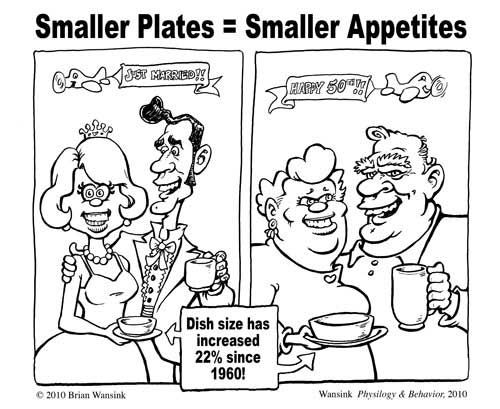
We talk a lot about the ballooning size of the American home, which has more than doubled in the last 60 years. But there is another, rounder item that has experienced a similar bump in size: our dishes. They have grown 36% in the last 50 years, and a growing body of evidence  (pun intended) suggests that big plates are leading to more waste…and waist.

One study suggests that people like to have their plate 70% full, regardless of how big it is. So we fill up these bigger plates with more food, regardless of our appetites. Another study found that people who used bigger plates at an all-you-can-eat buffet wasted 14% of the food they took, versus 8% for smaller plate eaters.

Not only do we waste more, but we eat more than we need to with larger plates. 54% of American adults aim to finish all of the food on their plates. If you’re filling up 70% of your larger plate and licking it clean, the likelihood of overeating and gaining weight is much greater. A 200 household trial attests to this. People in the trial were randomly assigned to eat off of large and small plates. The people in the small plate cohort lost three pounds more than the big plated one.

Cornell’s Brian Wansink is a crusader of the right-sized dish. He’s written books with titles like “Mindless Eating: Why We Eat More than We Think,” and has even deigned to start a movement called, you guessed it, The Small Plate Movement.

You might think that a certain amount of self knowledge would go a long way here. Maybe knowing these figures, you would now fill 50% of your bigger plate. Wansink is not so confident, saying:

Most people are unwilling to acknowledge that they could be influenced by something as seemingly harmless as the size of a package or plate. Even when shown that larger packages and plates lead them to serve an average of 31% more food than matched control groups, 98% of the diners in four independent field studies resolutely maintained that how much food they served and ate was not influenced the size of package or plate they had been given.

As they say, nature abhors a vacuum. And just as large homes tend to be filled up with more stuff than we need, so too do large dishes. Wansink’s findings suggest we can’t just intellectualize corrective behavior. He said, “It is easier to change your food environment [dishes] than to change your mind.”

If you’re looking to eat less, try a smaller plate. Take the small plate challenge and eat your largest meal from a 9-10″ plate for a month (today’s standard plate is 11-14″). Don’t want to buy new plates? Eat off your bread and butter plate or buy a couple smaller plates from the thrift store and let us know how it goes.

Via Fast Company Design

Turn On, Tune In, Get Tiny

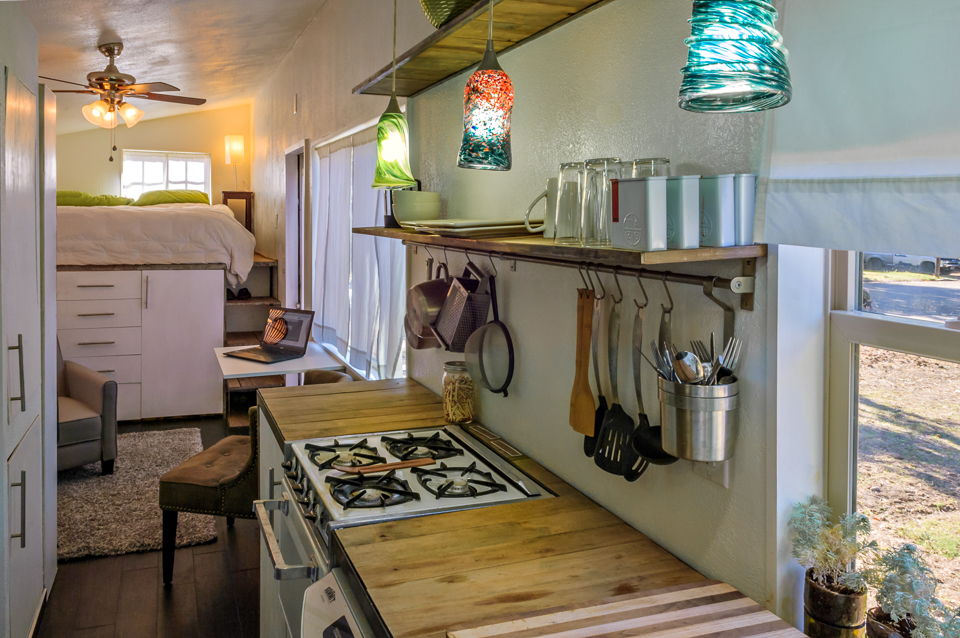
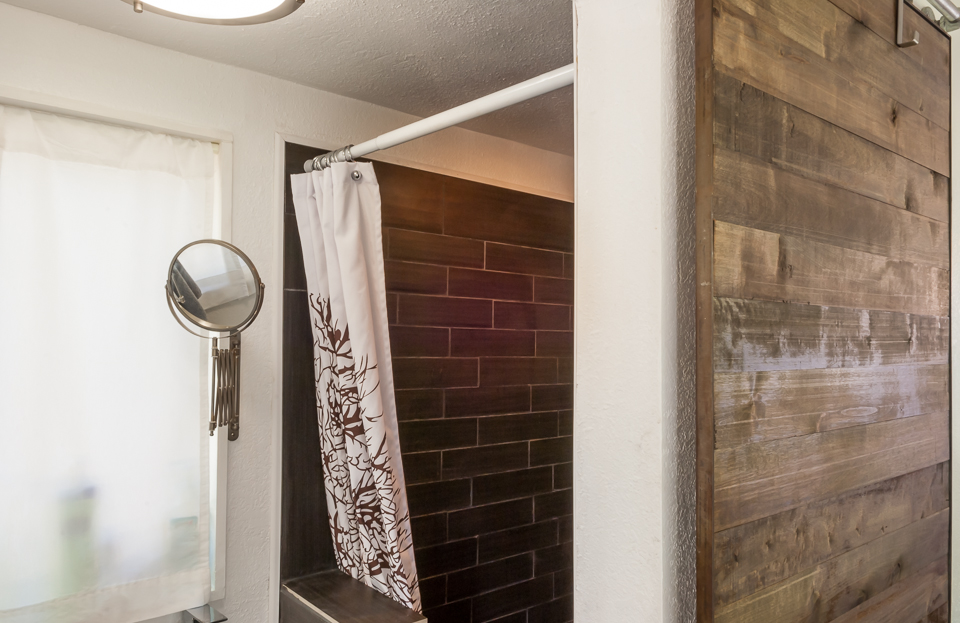
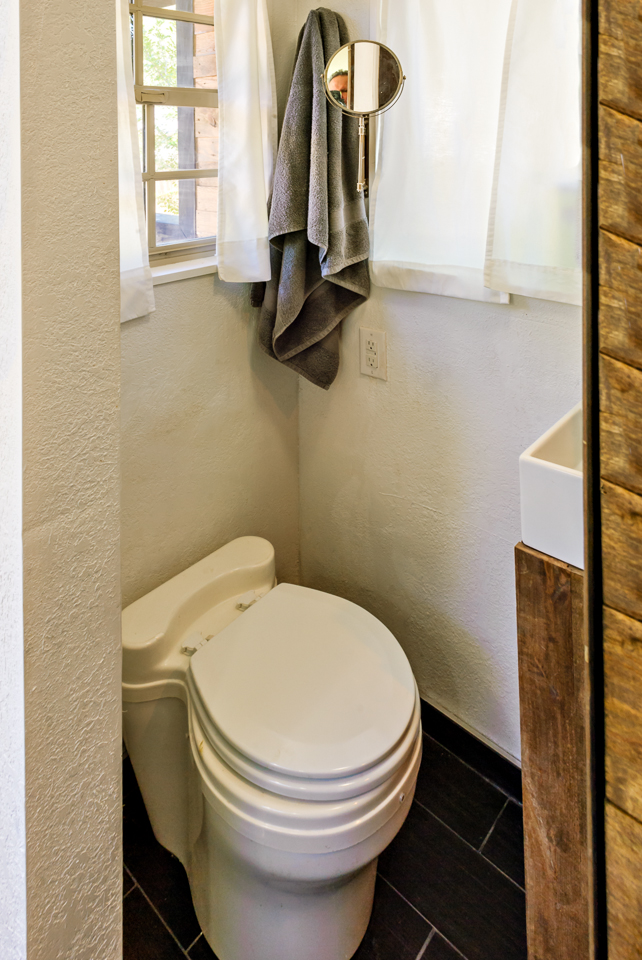
To live in a tiny house is as much political statement as it is architectural one. Take the NOMAD tiny house–its whole raison d’etre seemed to be stopping its owner from living the highly-leveraged, consumerist lifestyle. We can now add Macy Miller to the pantheon of tiny house political heroes. Over the course of 18 months, the architect-to-be documented the construction–and constructed–her own 196 sq ft, trailer-mounted home for $11K ($2K of which was for the composting toilet). The home forced her to make revolutionary changes to her relationship with space and stuff (i.e. using a lot less of it). And her monthly operating expenses of $250 allow her to do whatever she wants with her life without the economic pressures most homeowners suffer.

The place is a refreshingly modern take on the tiny house, many of which resemble little houses that, had they been around 130 years ago, would have been located on prairies.

Miller received a lot of press in the last year. Many of the stories cited foreclosure and divorce as the motivation behind building the place. But a little digging around her blog revealed a more intentional shift. Her divorce and foreclosure happened several years before she began her tiny house. She could have paid the mortgage, but because of mismanagement by the bank, she was forced to foreclose (she subsequently won a lawsuit against them). In other words, she wasn’t forced to downsize–she wanted to.

Her blog tracks her story in great detail. The latest chapter is her baby, which is due in a few month. She blogs extensively about the many, supposedly-mandatory baby items she is doing without, both by choice and spatial necessity. Before you ask, the father (who is not the ex) will not be living in the tiny house with Miller, child and her great dane Denver (who she assures is not suffering because of the small digs); he will be involved with the child’s upbringing in case you were worried.

Like many tiny house advocates, Miller freely admits 196 sq ft will not work everyone, but seems quite adamant that it works for her–a stance that makes a lot of sense to us. See more Minimotives.com

Is Organizing a Sham?

We ran across the thought provoking passage from “Everything That Remains,” the latest book by The Minimalists (aka Joshua Fields Millburn and Ryan Nicodemus):

Discussing how to get rid of our stuff answers only the what side of the equation, but not the why; the action, but not the purpose; the how-to, but not the significantly more important why-to. In other words, the what is relatively easy. We all know instinctually how to declutter–how to get “organized.” But that’s just one part of the larger issue. Instead of “get organized,” I’ve decided I need to start thinking of organizing as a dirty word, a sneaky little profanity who keeps us from really simplifying our lives.

You see, our televisions would have us believe there’s a battle being fought on the consumption continuum, a battle between messy hoarders on one side and spruce organizers on the other. And from our couches it’s hard to see who’s winning. I’d like to posit, however, that these two sides are actually working together, colluding to achieve the same thing: the accumulation of more stuff. One side–the hoarders–does so overtly, leaving everything out in the open, making them easy targets to sneer at. Face it, we all laugh and point and say “I’m sure glad my house doesn’t look like that,” every time we see them on TV. But the other side–the sneaky organizers–are the more covert, more systematic, when it comes to the accumulation of stuff. Truthfully, most organizing is nothing more than well-planned hoarding.

While perhaps a little sweeping in their scope, these words have more than a twang of truth in them. A quick search revealed there are at least four TV shows devoted to getting organized and about five to hoarding. Though my familiarity with either genre is fairly limited, I don’t imagine the gist of either side is to question why people consume, but how. In other words, when you get stuff, you should not get more than your house can support and it should have proper accommodations (i.e. organization).

Indeed, havens of organization like the Container Store need people to keep buying stuff. One could even argue that their products are just more stuff that increase the volume and magnitude of the total amount of stuff we have. Moreover, companies who sell organizational stuff are dependent on our continued consumption: when people buy more stuff, they need more organization.

Of course, we all use and have stuff–even minimalists. And however little stuff we might have, it’s not unusual for us to want it to be organized. The point the above passage makes is that if we want to simplify our lives, we need to better understand why we consume–not how to do it better.

If you find yourself in the organization/decluttering trap–believing that sorting out your stuff will make your life simpler and happier–consider first asking yourself these questions:

  1. Why do we accumulate stuff we don’t need?
  2. What do we expect from our stuff–both new stuff and the stuff we can’t get rid of?
  3. Does it deliver on those expectations?

Thoroughly answering these questions might help avoid getting to the place where organization is an issue in the first place.

Colored cardboard box image via Shutterstock

Function and Form Sharing 237 Sq Ft

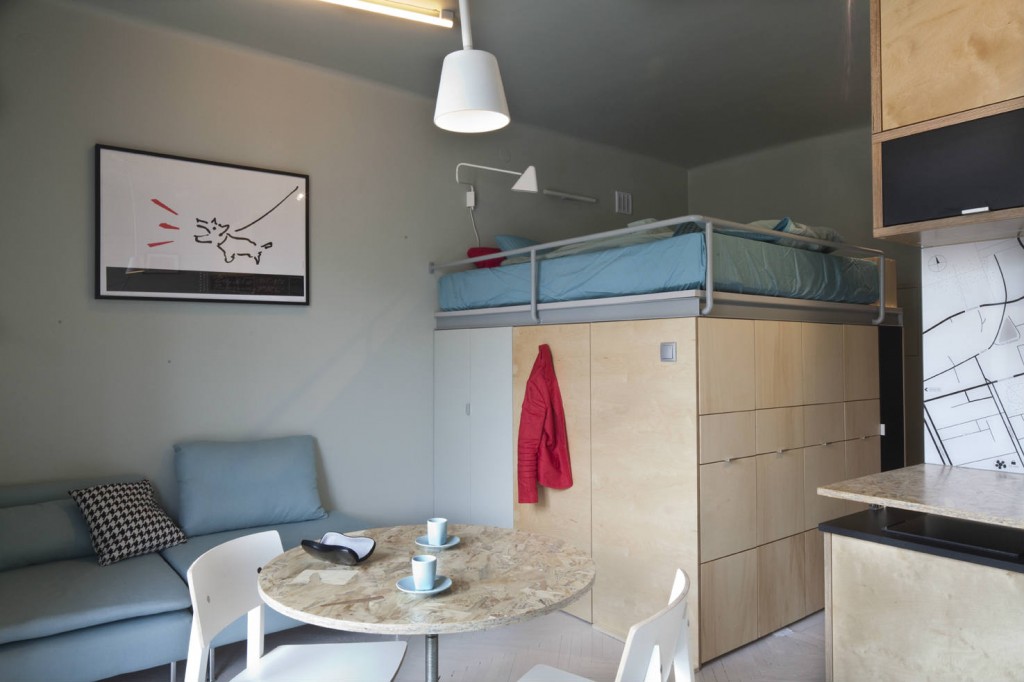
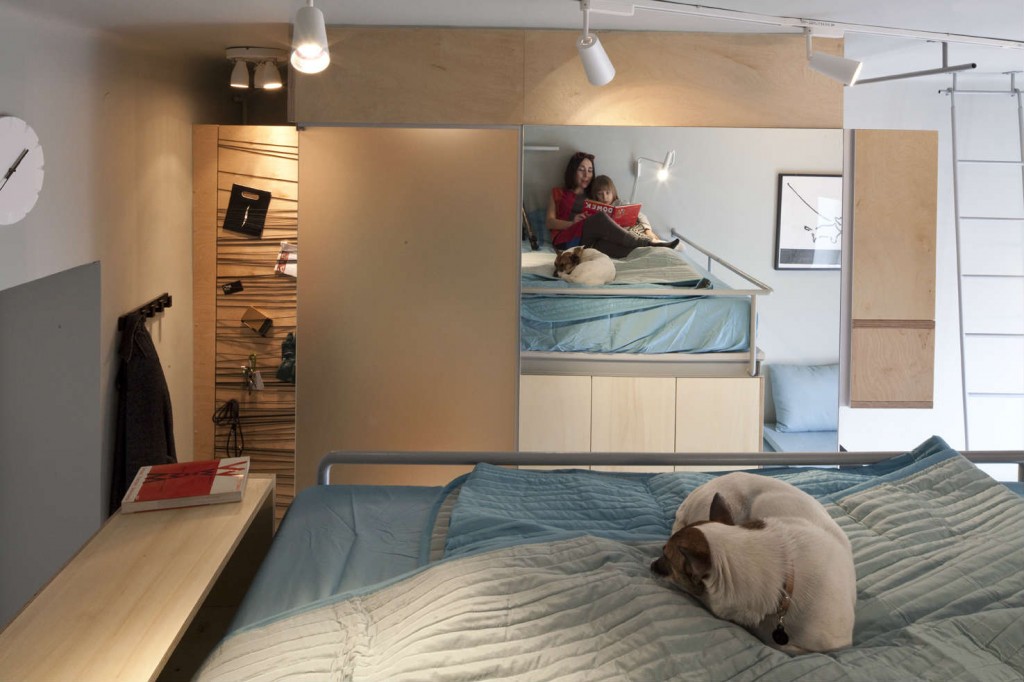
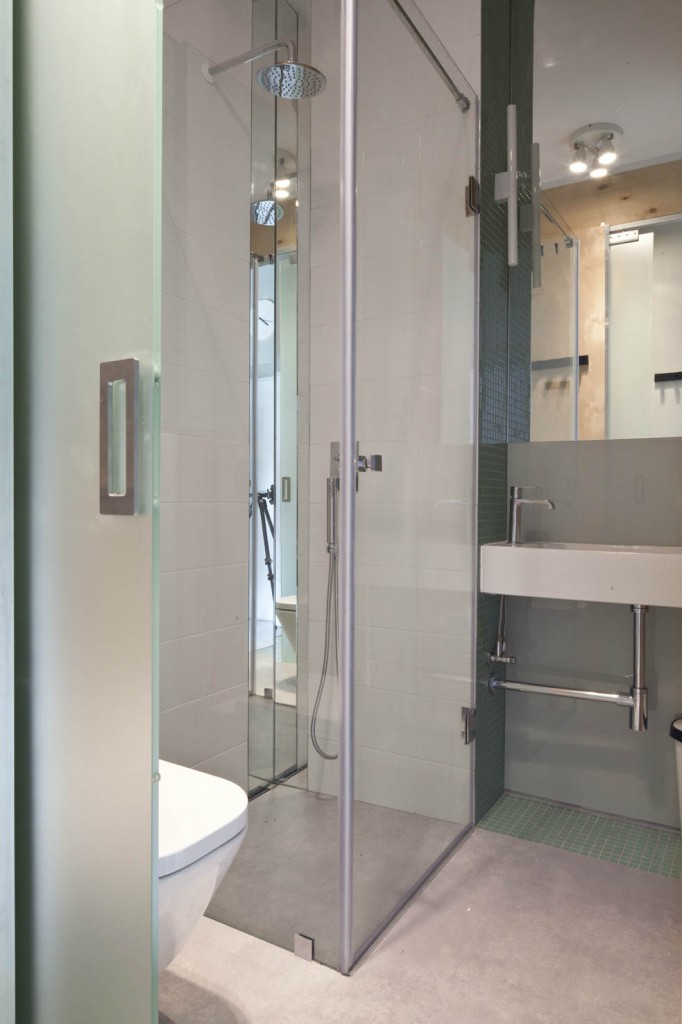
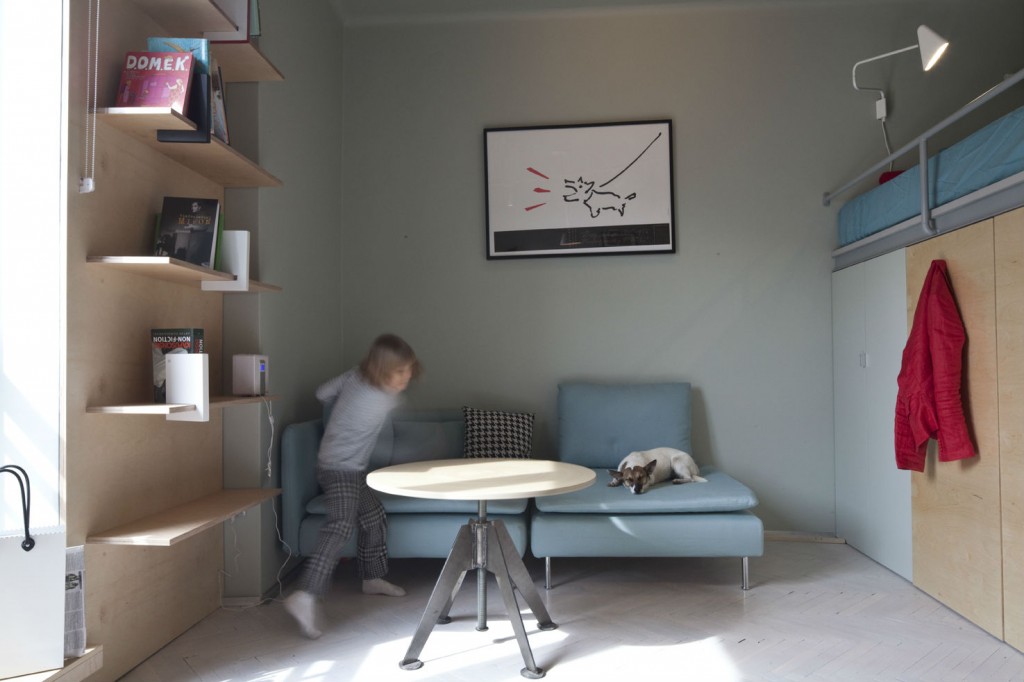
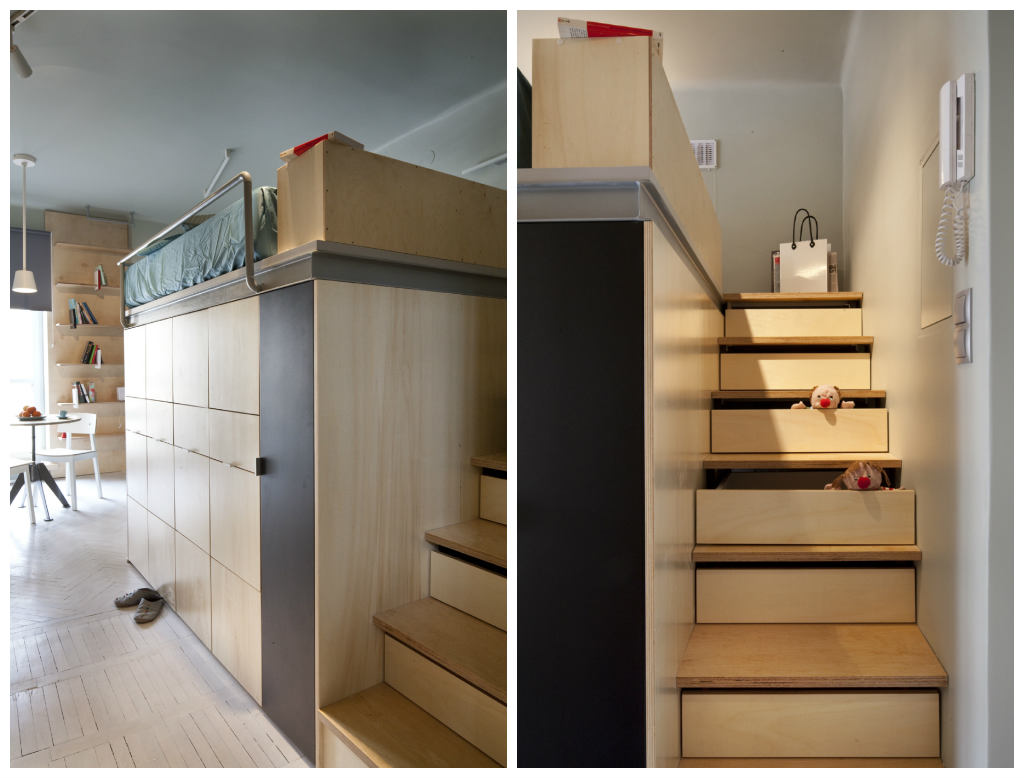
Often, the biggest limitation in designing small spaces is not lack of floor space, but lack of money. Let’s face it, people with budgets for fancy architects, designs and materials typically live in big spaces. It’s not that small spaces can’t look and perform great. It’s that their less well-heeled dwellers might not be able to give the financial resources that produce functionally and aesthetically remarkable homes. Given this situation, we are always heartened to see small spaces that employ the rigor of design that’s normally limited to big, fancy homes. This 237 sq ft Warsaw flat by Utopia Studio is a perfect example of such a space.

The tiny apartment, from what we can deduce, is shared by a mother, child and their dog. It features a large loft bed with tons of storage underneath. The stairs to the bed house individual drawers. The tiny kitchen has a fold down cutting board that conceals a sink and cooktop. The cozy and sparse living room is adorned with a small sofa and a table that goes from coffee to dining heights. There is wonderful sense of proportion and usability. It does not feel like a showroom apartment.

Beyond the overall intelligence of its execution, this apartment is interesting because its floorplan is so basic. The space is an unremarkable box with one bank of windows. Notably, the ceilings, while perhaps higher than normal, are not unusually high (something other innovative tiny spaces have exploited). In other words, these design ideas could be translated to a multitude of different spaces.

With much of the interior made of plywood and even chipboard, we imagine it was constructed on a reasonable budget. But its clean design and smart layout demonstrate that small spaces can be as elegant and functional as you want them to be.

Via Living in a Shoebox

State of Art or Tech Overkill?

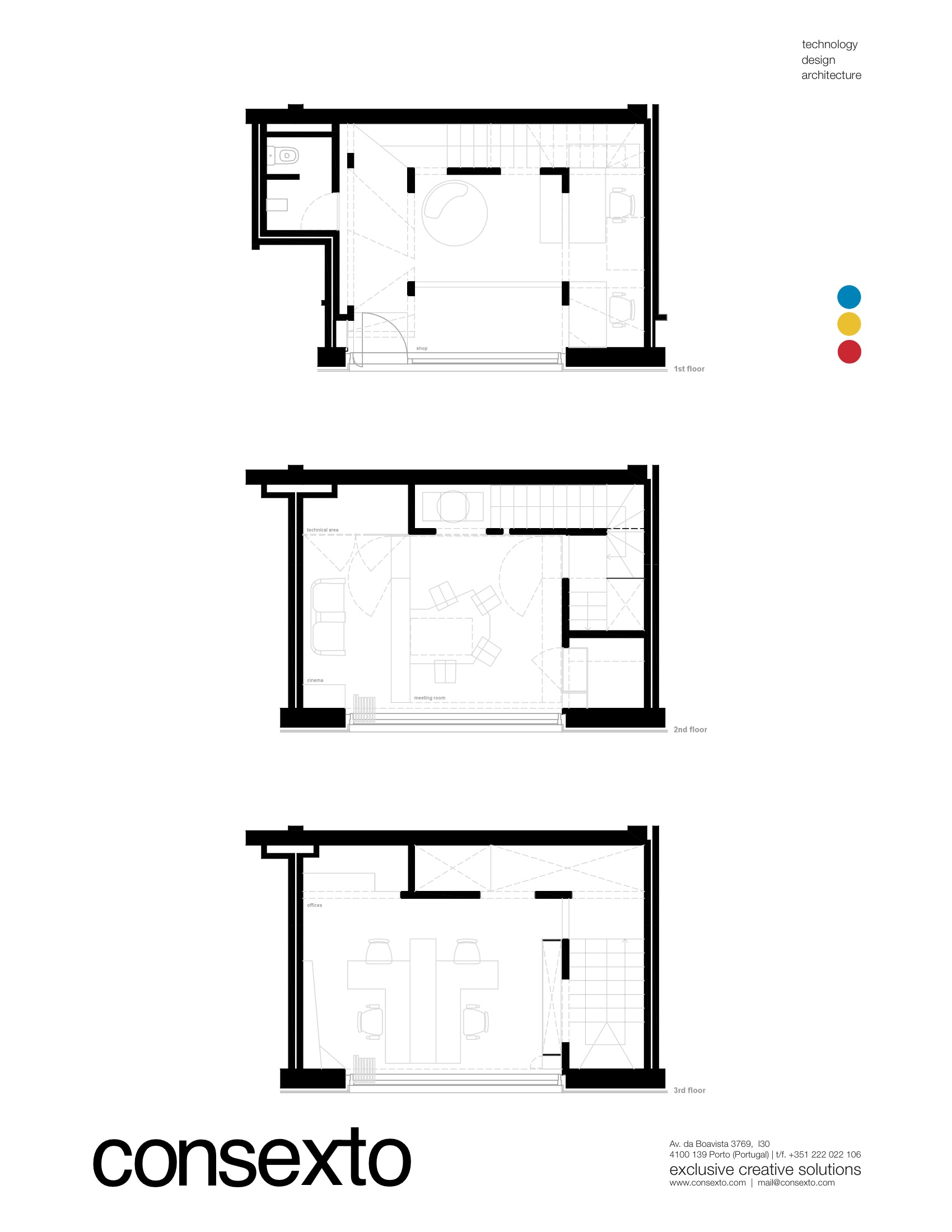
Porto, Portugal based architectural firm Consexto might be the look of things to come in home design. They have executed a number of projects at the vanguard of technological and architectural integration. The firm describes themselves as “a company which offers tailored services that conjugate the fields of TECHNOLOGY, ARCHITECTURE and PRODUCT DESIGN” (don’t worry, their pictures and videos are far more articulate).

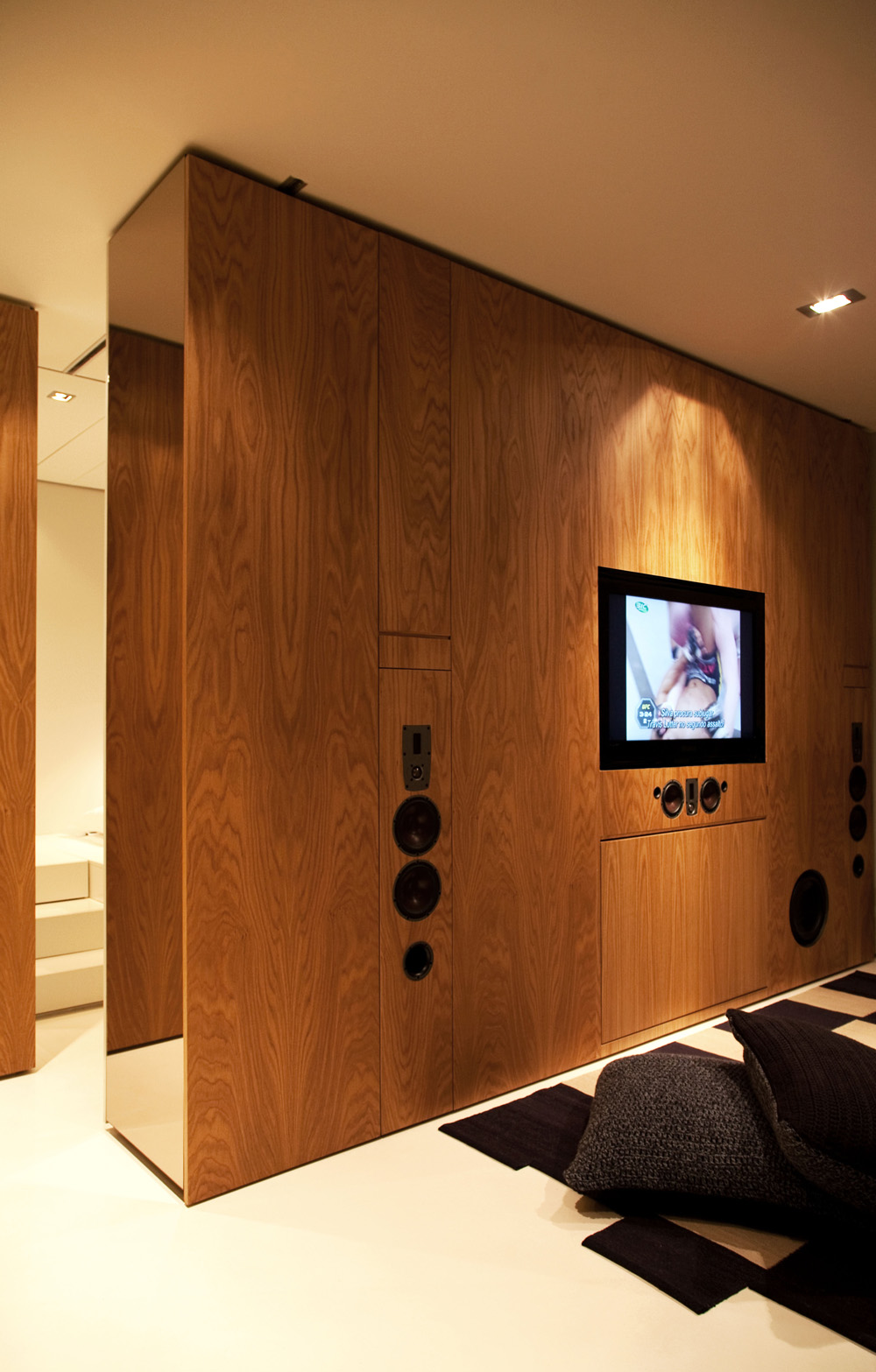
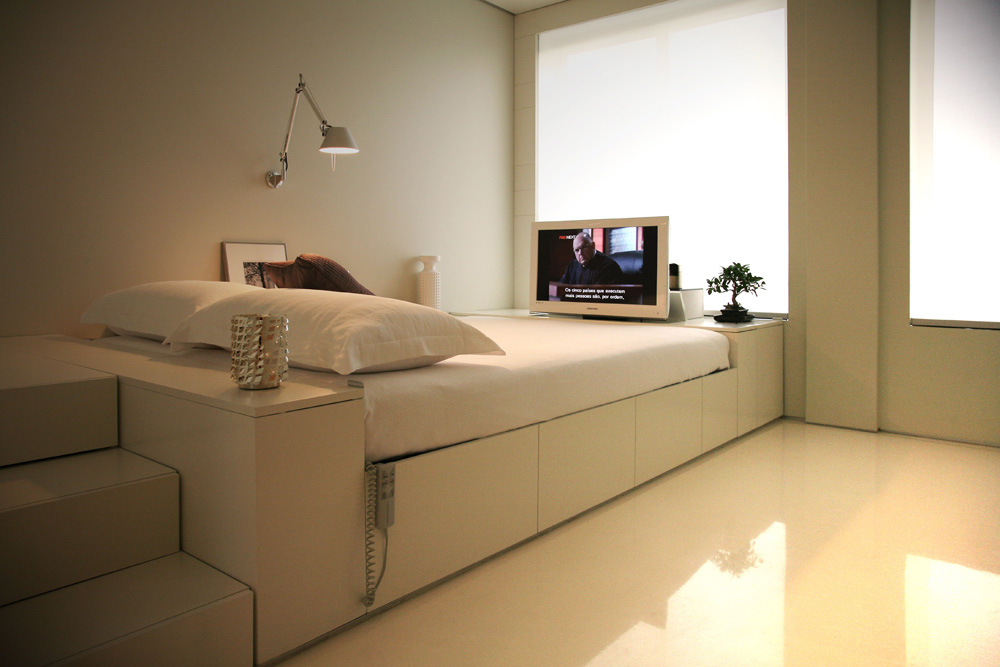
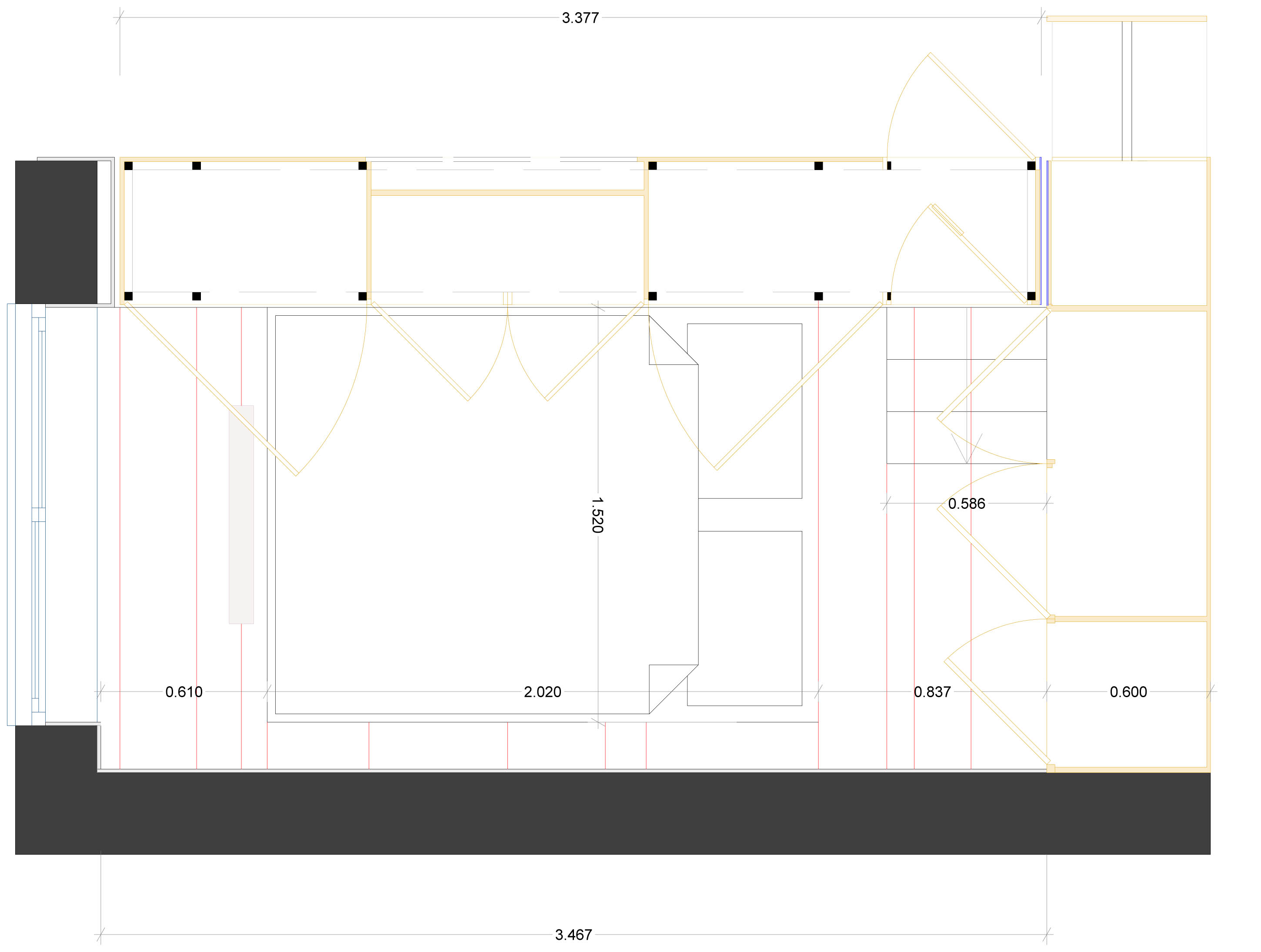
Perhaps their best known project is dubbed Closet House. The 474 sq ft home, completed in 2010, is a marvel of automation and technological integration into interior design. Virtually every part of the house is remote controlled and motor driven: there’s a moving wall that opens to reveal a hidden bed; an LCD TV that pops up from the bed’s frame; glass racks that automatically descend from the kitchen cupboards; a movie screen that descends from the ceiling; and much more. The home holds the dubious promise of never lifting a finger to do anything in your house ever again.

Their latest public project is the Consexto Lab. The interior has nary a right angle in sight. The space is replete with movie walls and books shelves, LCD screens, touch pad controls and shimmery exterior surfaces. Descriptions–mine, and far less theirs–don’t serve to convey the space’s functionality in the way their video does.

Consexto is undoubtably a talented firm, whose projects show a lot of smart ideas that could work their way into many homes in the not-so-distant future. They have created a number of elegant ways to fuse architecture with technology.

All that said, we wonder about making proprietary technologies an integral part of a space’s ability to function. In other words, will today’s cutting edge seem like a blunt instrument five or ten years from now? Let us know your thoughts in our comments section.