Lighten Up and Get Out of Town with this $150 DIY Bike Camper

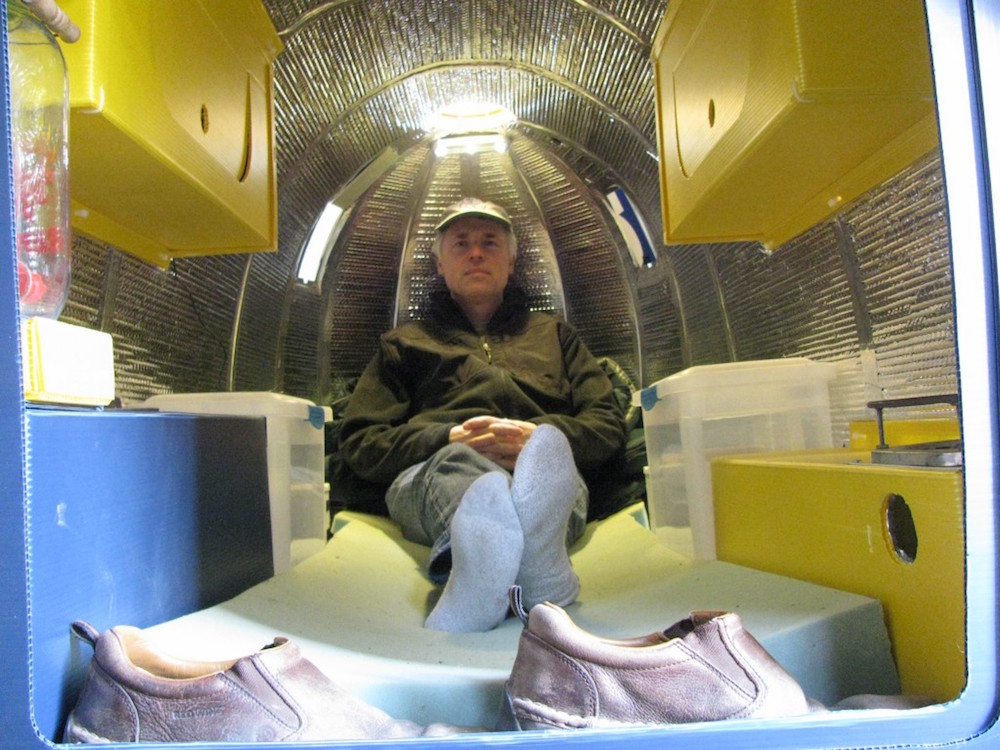
We’ve explored bicycle towed trailers in the past. In particular, the Wide Path Camper seemed like a nice execution of the idea. But as a number of readers noted, it had a couple big liabilities. First, was its weight of 100 lbs. While this is a reasonable weight for a camper, it’s a lot for a human to drag any considerable distance. The next was its high profile, which would catch the wind like nobody’s business. This Micro Airstream bike camper by maker extraordinaire Paul Elkins solves many of these problems, being lighter, sleeker and a lot cheaper than the WPC (or anything else we’ve come across for that matter).

paul-elkins-trailer paulelkins-interior

It has most everything a single tourers/nomad needs. At 45  lbs, it’s a bit heavier than a trailer, but has an insulated sleeping structure that adds a ton of functionality and removes the need for a tent. It has a low, curved profile, which will probably still catch the wind, but not so much as to prove unworkable. Best of all, Elkins offers plans to make the trailer for $150 out of materials such as zip ties and recycled campaign posters (a commodity that will abound in the coming months). Check out the above video by Fair Companies and be sure to visit Elkins other amazing DIY projects.

The Minimalist Mogul

There can sometimes seem to be an inherent opposition between commerce and minimalism. The former would seem to demand increase and the latter, well, reduction. But even the most pared down minimalist needs stuff. And sometimes people who love to decrease get the desire to start businesses that sell stuff, thereby increasing. But as F Scott Fitzgerald wrote, “The test of a first-rate intelligence is the ability to hold two opposed ideas in mind at the same time and still retain the ability to function.” Nick Martin, founder of The Pro’s Closet, is a nice example of this first rate intelligence. He doesn’t like stuff, but he sells a lot of it.

The Pro’s Closet is the world’s largest reseller of bicycles and bike equipment. The store’s website describes its origin’s thusly:

While living in his Volkswagen Bus and only the task of riding a bike on his to-do list, Nick Martin began a simple mission: sell all of his worldly possessions on eBay. Minus his bike and his bus, Nick sold everything. Fast-forward 8 years to today and we present to you, The Pro’s Closet. The Pro’s Closet has become the nation’s premier eBay store specializing in reselling new and used cycling gear.

In a profile by Anja Semanco in Under the Flatirons, Martin explains the story in greater detail. Following his initial purge, he was living out of his bus, racing bikes and selling kombucha mothers. But this wasn’t providing sufficient funds for survival. The racing contract did however provide a ton of swag he didn’t or couldn’t use–clothes, components, etc. Martin started selling all of this stuff on eBay, and soon friends were asking him to do it for them too. When he got married, he started to take the selling more seriously, renting out his first of five commercial spaces, each of which grew with the scale of the business. Eventually Nick took on a partner, Pete Lopinto, and the shop now inhabits a huge warehouse in Boulder CO, employs 16 employees and sells around 200 items a day.

But at his heart, Martin remains a minimalist. Martin said, “I think material things hold people back,” and he says that he has given away a possession a day for the last three years. And he sees his business as consistent with his minimalist tendencies. The stuff they sell are things that people or companies already have–used part, unsold inventory, etc. So in a sense, they’re not increasing the amount of stuff in the world at all, but finding ways of equitably–and profitably and sustainably–redistributing it. 

HT Tim F

1 Couple + 2 Bikes + 2 Kids + 5 Continents + 7 Years = Wow

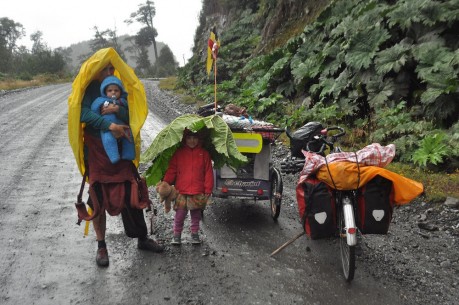
Few things will lighten your life like living on a bike. As the veteran of several long distance bike tours, I can attest how you quickly realize how little stuff you really need when you’re carrying it up a mountain pass. But living on a bike is not typically something you associate with raising children. It’s hard enough carrying your own crap, much less another human and theirs. But that’s exactly what Belgian couple Alice Goffart and Andoni Rodelgo did for seven years, traversing five continents by bike while raising two children. 

In an interview with Icebike.org, Alice describes how it all started. They set out from Belgium in 2004 en route to Berlin. After a couple months, they realized they weren’t done. They kept trucking until Alice was seven months pregnant in 2007 with their daughter Maia. They took a break, spending a few years in Belgium, saving money and getting restless. They hit the road again in 2010. Alice said this of their motivation to leave with child:

We knew we just wanted to go now. By bicycle there is no need to plan anything, that’s the beauty of that transportation (maybe it’s the beauty of being unemployed and ‘homeless’ too)…You just leave, and that’s it, you are gone. 5 km from your home you are in a totally different reality, not knowing where you will sleep, with no destination, no role in society, no-one to prove anything to, no agenda and no timetable.

Shortly after their second leg, Alice became pregnant. When she was seven months pregnant, they camped out in Bolivia until the baby was big enough to stash in a hammock in the trailer. They continued for a couple more years, returning to Belgium in 2013 when Maia started school.

mundo-04

The couple was able to afford the trip through a combination of savings and extreme thrift. They said they only spent €20K in their first three and a half years. Even with the kids, they only spent €700-800/month, which they came up with through savings and various means like selling stuff and speaking engagements. She said this about the expenses in general:

I think as soon as you give yourself a budget you adapt yourself to it. We could have spent a lot less if we needed too. We treated ourselves here and there with a hotel room in south-America where it is not too expensive…I think the best way to save money is just to really have the need to do so. Then you will find the way. We spent the same amount of money in Norway as in China. The difference was that in China we went to a restaurant here and there or a guest-room, and in Norway we bought pasta and oats in an Aldy.

While Alice is pretty gung ho about her experience, she is quick to point out that you needn’t travel to have the freewheeling traveler’s mindset, and that everyone–and their family–must do what’s right for them. For now, they’re camped out in Belgium, but they plan they to hit the road before too long.

Alice made a movie about the journey, which is showing around Europe (head to their site for more info). To read the whole interview, which goes into greater detail about the journey, head over to Icebike.org.

Man Doesn’t Like Working, Is Well, Has Swagger

There’s something fairly epic about the life of Benedict, aka Ultra Romance, a tattooed, muscle-bound, bushy-beard-wearing, bike-touring, not-so-fond-of-working, foraged-food-eating, $10-a-day-living nomad. A recent article in Business Insider called attention to his adventures and I think you’ll be glad they did. While his lifestyle might not be for everyone, it is testimony that life can be as much a choice as a prescription.

ultraromance-beach

Since leaving college 15 years ago, the 35 year-old hasn’t spent more than six months in any one locale. He splits his year working and relaxing. Six months are spent as a commercial or charter fisherman. The other six are spent going where he pleases aboard his touring bike (he seems to be a big fan of Grant Petersen’s Rivendell Bicycle Works). He definitely falls into the “work to live” category, seeing it as a means to support his ultralight, adventure-and-relaxation packed lifestyle. He told Business Insider, “We have this preconceived notion of what success is in the modern world…[but] I’m not ashamed that I don’t like to work. It’s just very unnatural.” He says that in hunter-gatherer days, people worked a fraction of the hours they do today (BI pegs it at around 47 hours a week), and that most of their time was devoted to leisure.

ultraromance-forage

He says that he has his expenses down to a mere $10 a day. This is supported by the fact that he spends most every night camping out, claiming that he spent only 15 nights indoors in the last year. In terms of food, he supplements his simple diet with a healthy dose of foraged greens and berries. When he’s near the coast he eats seaweed and crabs.

It’s easy to dismiss someone like Benedict as an outlying kook–someone whose extreme lifestyle can only work in the most particular circumstances (i.e. single, healthy, male). But this dismissal would miss an important point. The fact is there are people choosing their lives all around us–they are single women, families of five, older folks and many other situations. What they all have in common is that they have chosen to have less overhead, requiring less money and work in order to support a life of richer experiences, deeper relationships and more leisure.

Read more about Benedict in Business Insider and check out his amazing Instagram feed.

HT to Tim F

Turn Your Bike Into a Lean, Mean, Small-Home-Storage-Friendly Machine

The Schindelhauer ThinBike–a specially designed bike that goes from conventional width into a super-slim, small-space-storage-friendly ride–is pretty awesome. But after we reviewed the bike, many of you asked, “how do I do that to my bike?” That’s what the FlipCrown is about.

flipcrown-use

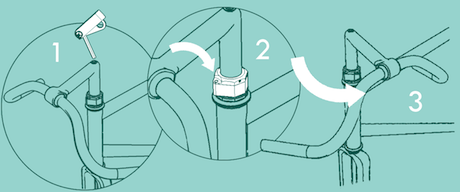
FlipCrown works by replacing the top locking nut of your headset. To turn the bars you do a half turn on your bike’s stem bolt with an included allen wrench; you then press a button on the FlipCrown and then turn the bars 90 degrees. Press the button again and twist the stem back to its initial position with handlebars centered and stem at proper height. Patrick Jacquet of Deltareference, the Ghent, Belgium-based design and development firm behind the product, said the whole operation takes about 10 seconds.

It’s not a revolutionary (or necessarily original) product, but it’s one that solves a vexing storage issue. One of the more useful places to use it is in crowded outdoor bike racks, where wedging your bike in is often impeded by handlebar width. Jacquet also notes that turning and locking the handlebars can be a theft deterrent.

The biggest drawback we see is that it’s only available for quill stems (both 1” and 1 ⅛”), which have fallen out of fashion in the last 20 years or so. Jacquet told us they have plans to make a threadless version that they hope to release later this year.

Deltareference is launching the product through the crowdfunding site Indiegogo. A $30 pledge will get you a FlipCrown. $60 will get you the FlipCrown plus some quick release pedals to make your bike super slim (we might opt for the MKS fold up pedals used on the Schindelhauer). And $450 will buy you their own SlimBike–a retro-styled fixie that should not be confused with the ThinBike. They also have a proprietary wallmount bike storage rack and deluxe, three-speed SlimBike by manufacturer Achielle in there as well.

Overdue Book Review of “Just Ride: A Radically Practical Guide to Riding Your Bike

Yesterday’s post on the Hamper Test got me thinking about bike clothes. You see, back in the day, I worked at bike shops–five to be precise. The last one specialized in high-end road bikes and their ostensibly requisite gear. While I sold some stuff to racers, for whom shaving a half-pound off their ride might give a competitive advantage, the bulk of my customers were middle-aged men whose main sorties were medium-paced group rides and solo trips. You’d think, given how these guys used their bikes and their physiques (read: not lithe), they’d want fairly bomber, functional bikes. But no, these guys wanted super-skinny tires and obsessed about their gear as if they were Jan Ullrich making a podium push in Paris.

My last shop job was in the early aughts (hence the Ullrich allusion), when top-end bikes were titanium and the most cogs you could fit onto your freehub was nine. A top of the line bike–like the most expensive you could possibly make–would run around $8K. In following decade (let’s call it the Lance decade), things got entirely out of hand. Companies kept shoving cogs onto freehubs. Power-meters and electronic shifting became de rigueur. Everything became carbon fiber. It became totally normal for bikes to cost in excess of $10K–mid-level bikes with Ultregra! And who’s buying all this cool kit? It’s those same middle-aged guys (nobody else can afford it). It’s out of hand. The trusty bike, so purposeful and simple in spirit, has become a techno-overkill parody of itself.

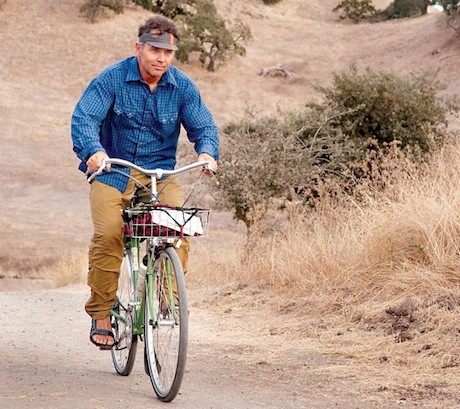
Enter Grant Petersen. Petersen founded and runs Rivendell Bicycle Works, a frame-builder and retailer of no-nonsense bike gear–stuff designed, not for screaming up L’alpe d’huez, but for normal people who like to ride their bikes. And lucky for us, he wrote a book a few years ago entitled “Just Ride: A Radically Practical Guide to Riding Your Bike.”
grand-petersen

Petersen starts the compact, illustrated book by stating his mission: “To point out what I see as bike racing’s bad influence on bicycles, equipment and attitudes, and then undo it.” It speaks directly to the multitudes who have been led to believe they can’t mount a bike without a chamois on their asses.

just-ride-41

One by one, the Petersen debunks widely held assumptions about best practices for riding a bike. These include:

  • How the normal bike rider/enthusiast (the “Unracer” as he calls us) doesn’t need more than eight speeds, clipless pedals, cycling shoes, lycra shorts and many other “basics.”
  • Why most of us should be riding in an upright position, with our handlebars higher than saddle (see above).
  • The myth that cycling will get you lean strong and lean.
  • How blinking lights reduce safety.
  • How kickstands are cool.

For some people, these aren’t revolutionary ideas. Bikes are for riding. Who cares about weight and going fast? But for others indoctrinated in racer culture, for whom lighter is always better, these are, as the book’s name implies, radical propositions. They were for me. Suddenly, biking became a lot easier to do and prepare for. I haven’t worn my bike shoes since reading the book. When I put together a new bike, I built up a 30+ lb all-rounder with an eight-speed internal geared hub, bomb-proof wheels and full fenders (still no kickstand).

Petersen is clearly a very opinionated guy and not all of his opinions are to be treated as gospel, but one assertion is hard to contest: if you’re not a racer, why use the same bikes and gear they do? Racers, particularly pros, have sponsors giving them gear, they have lots of money on the line for them to succeed, they have masseuses and fitness levels a couple orders of magnitude greater than the casual rider (chemically enhanced or not). The vast majority of us are best served by solid, repairable and comfortable bikes (not cheap ones, mind you). For this latter category of rider, Petersen transforms biking into something it might not have been since we were small children: fun and simple.

Hipster-ific, Human-Powered Automobile Alternative

We are forever on the lookout for great ‘edited’ transportation options. Bikes, walking and public transport are the ostensible ideal modes of transit, but for many they lack the protection, carrying capacity and range to make them feasible daily transport. Conversely, car-shares, trikes and other minimal ways of getting around using internal-combustion engines and 1K lb + masses of metal are overkill for many. A company called The Future People is striking a nice middle ground. Their Future Cycles are lightweight, human powered vehicles that, for some, could be real replacements for the personal car.

TFP is a design collective, principally made up of husband and wife Cameron and Rachael Van Dyke. According to their website, they are out to “test alternative value systems related to housing, transportation, and community.” They unveiled two Future Cycle models at the recent Detroit Auto Show (TFP’s hometown), wanting to “propose an alternative set of values in relation to transportation,” according to a press release.

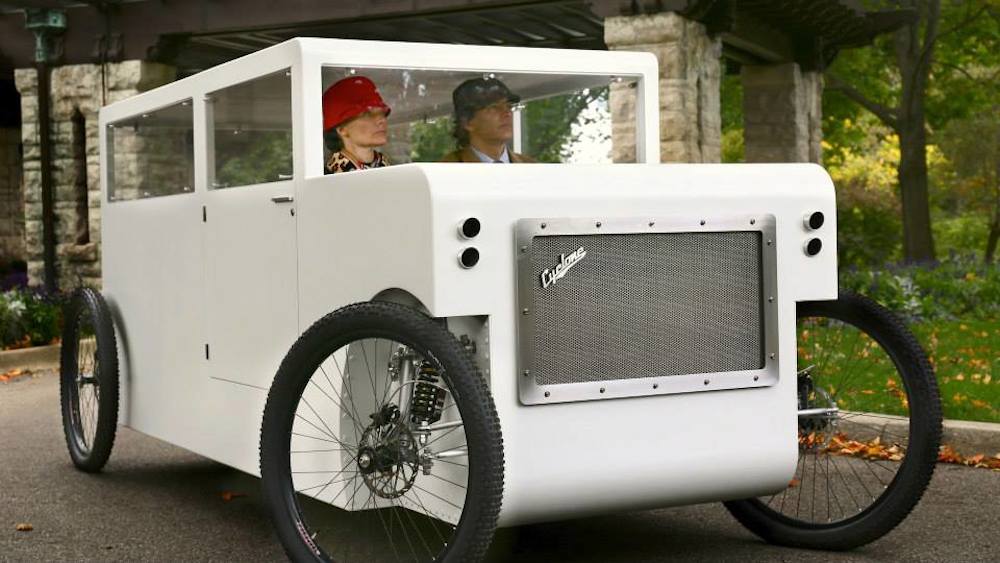
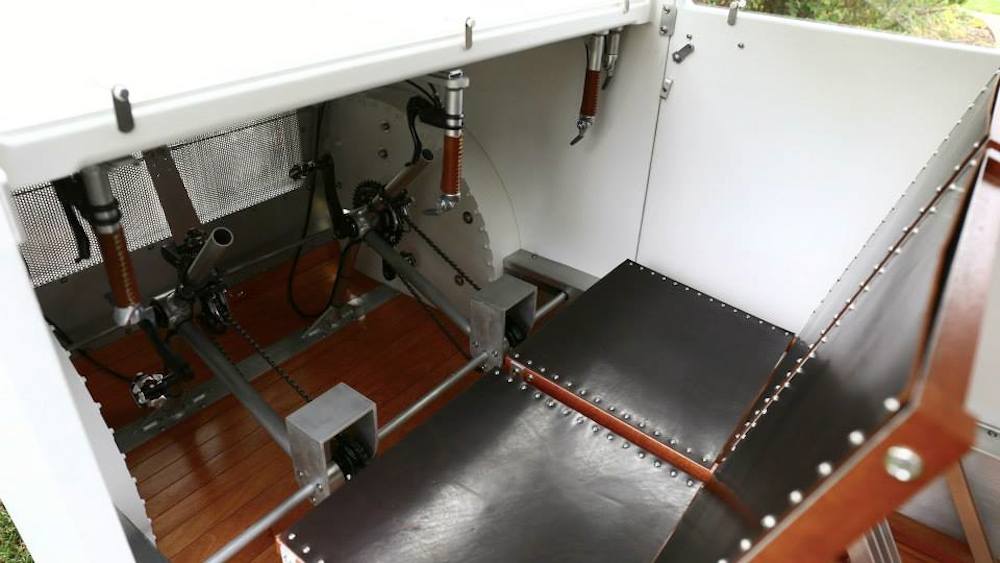
One model is named the Cyclone. It’s powered by two peddlers up front and seats four. According to TFP, it takes design cues from the Model T and the iPod. With its mahogany floors and leather seats, it is painfully stylish, however I suspect it’s boxy shape is like doing a bellyflop with the wind (not cool when efficiency is the name of the game) and I might trade those amazing-looking mahogany floors for something lighter (though, to be fair, it is a concept).

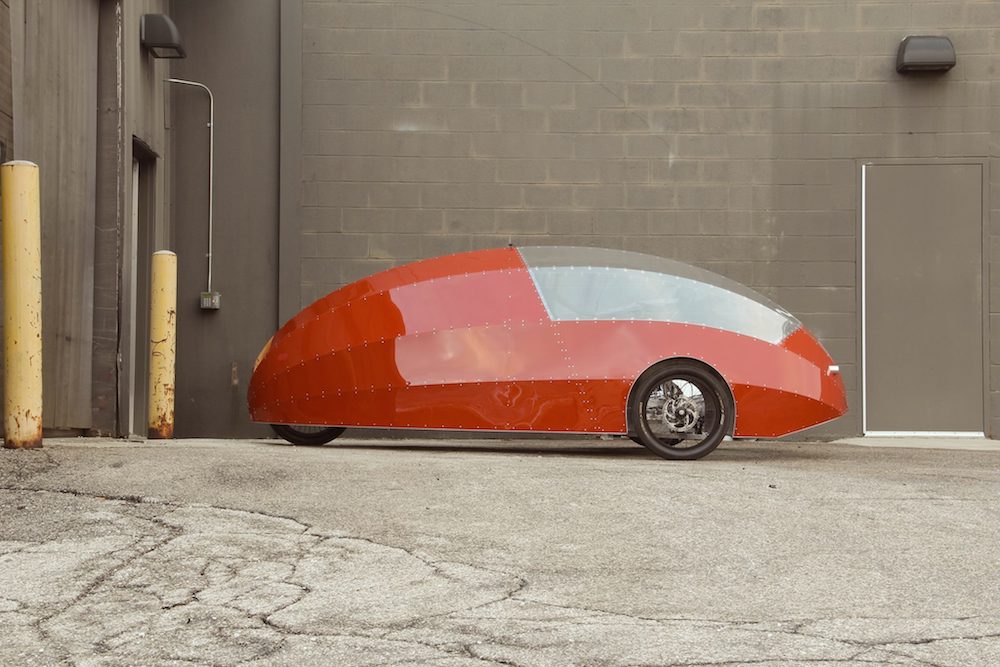
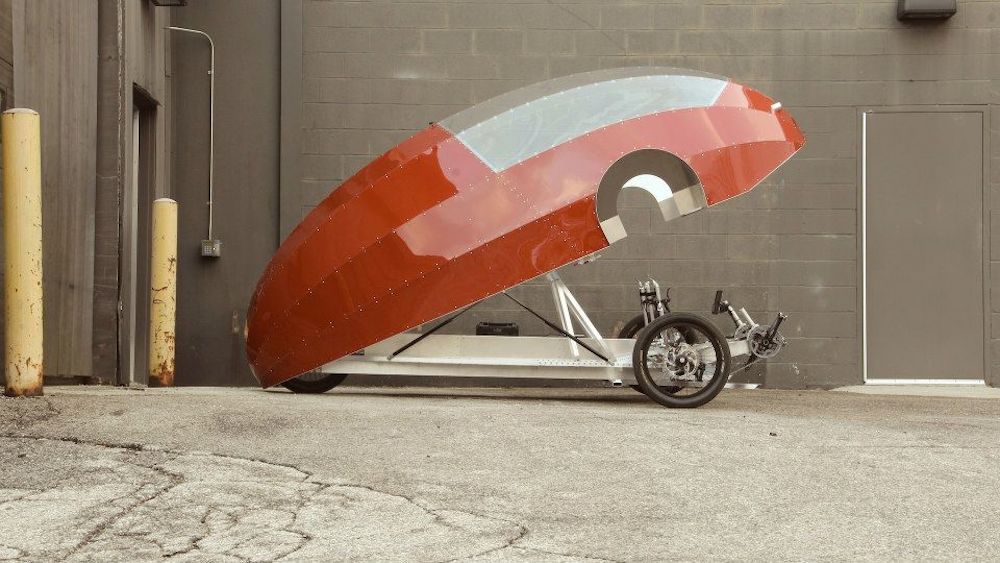
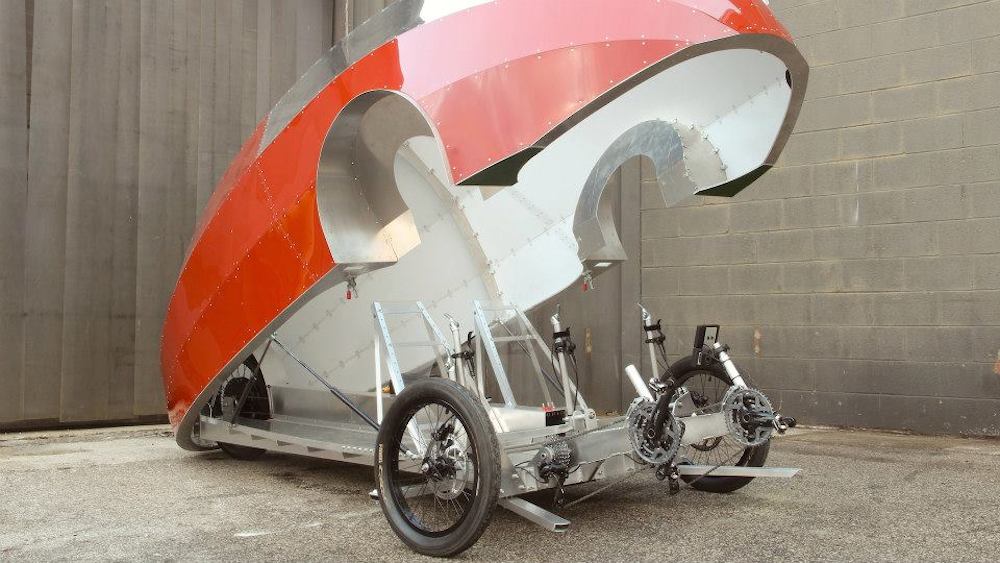
Far more interesting is the Zeppelin, a slug-shaped two-seater with pedals and a 750w electric rear motor with a 20 mile range. It only weighs 270 lbs, has a big boot for lugging stuff and can cruise at 25 mph on flat ground. The shape, unlike it’s boxy brother, looks like it would slice through the wind. It meets the federal bicycle classification and therefore requires no license, registration or insurance.

“The goal with the Zeppelin was to find an ideal point at which a bicycle and car could coexist within the same object,” according to Cameron Van Dyke, “creating a truly hybrid design.”

If you want one of these vehicles, you are probably going to have to wait. Unfortunately, unlike the Organic Transport ELF that we looked at last year, the The Future Cycles don’t appear to be for sale. We hope that changes.

Via PSFK

Bicycle-Powered Nomadic Housing

Maybe it’s the cooling temperatures, or the fact this author has been hanging out at home too much as of late, but there’s been a ton of talk about nomadic living on this site as of late. Last week, we looked at Foster Huntington, a full-time-camper-pickup-living-nomad and bon vivant. While I definitely dig his lightweight setup, one question has always troubled me about his and all petrol-fueled mobile living arrangements: what do you do in the event of a complete societal meltdown? Really, when SHTF, it’s going to be tough to move your ICE-powered home to more favorable environs if gas costs $20/gallon or is simply unavailable. (C’mon, I can’t be the only one thinking these things).
Resilient nomad housing would have to have minimal grid-dependence, which is why we dig the Taku Tanku concept by Japanese design firm Stereotank so much. It’s a trailer that’s minimal enough to be towed by foot or bicycle. If we were ever to face a Mad Max dystopian reality, we’d want this as our home way more than some 454 V8-powered behemoth.

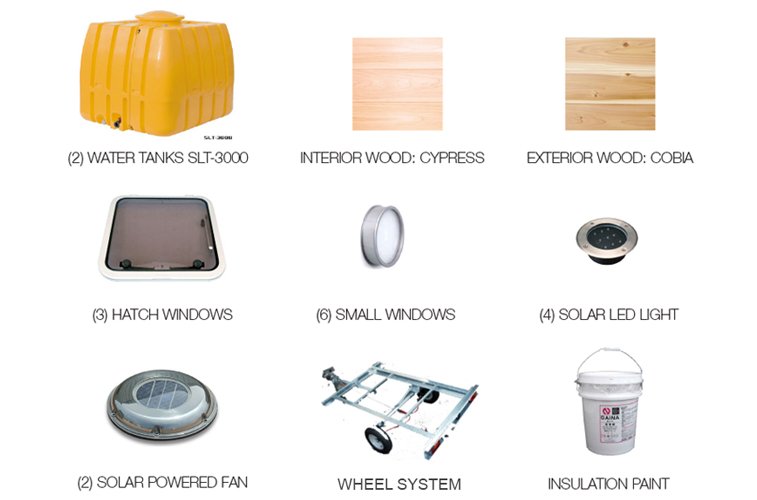
The Taku Tanku is designed to sleep 2-3 people and carry a bit of luggage. It can be made of lightweight, off-the-shelf materials; its main structure being two 3K liter water tanks. There’s really not that much more to it.

tricycle_house

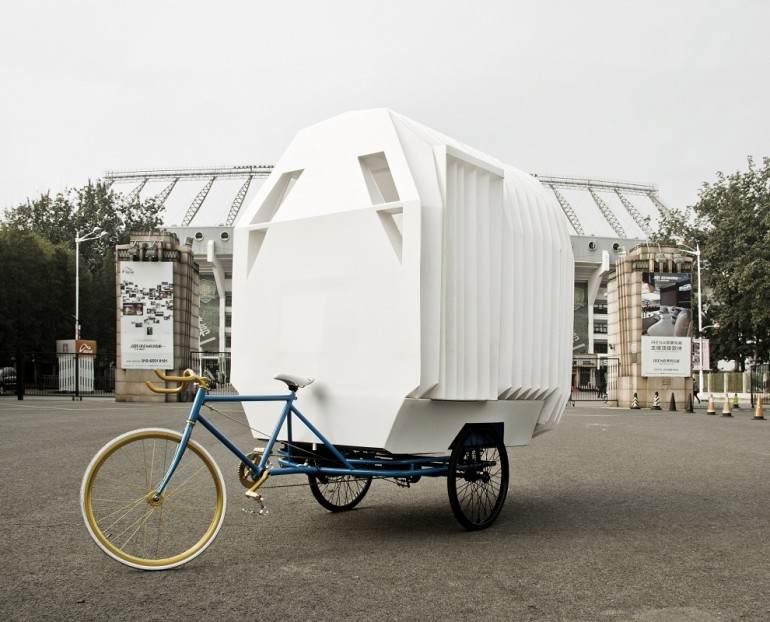
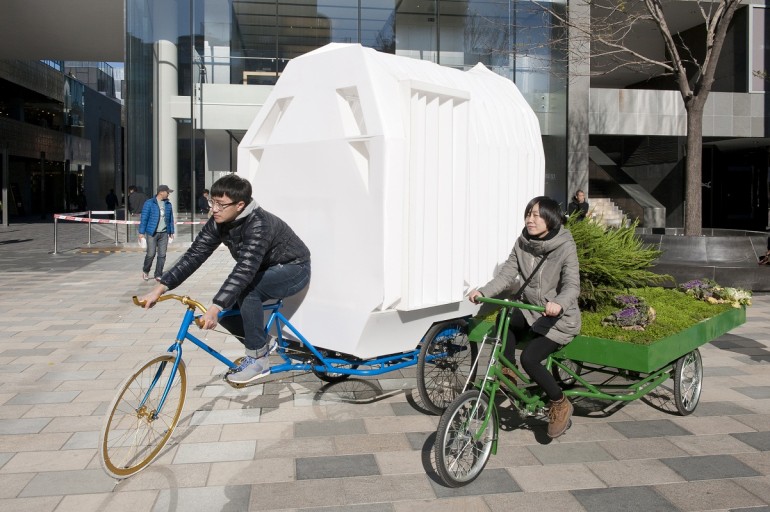
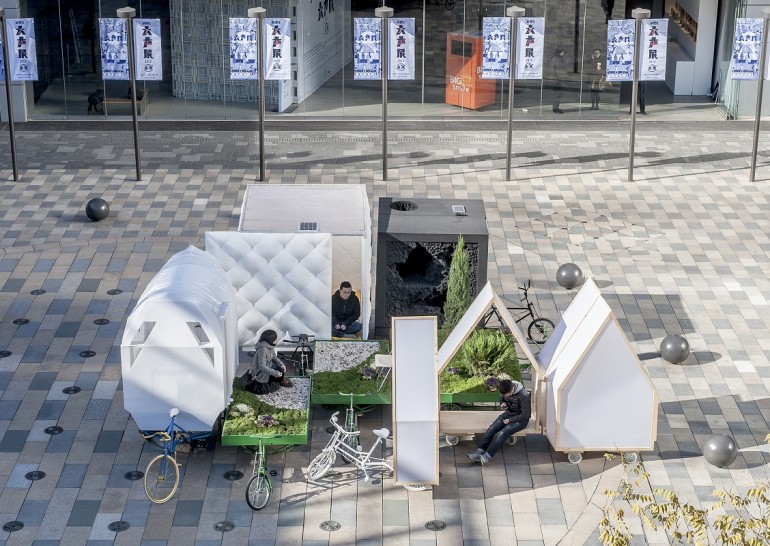
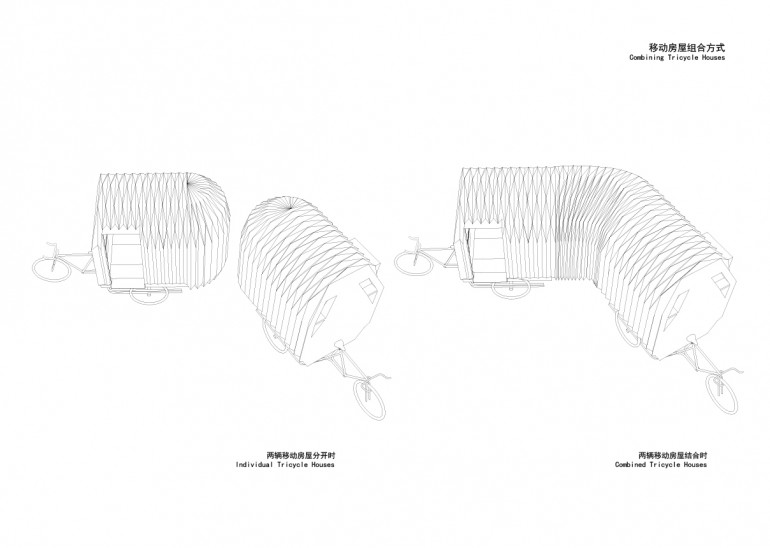
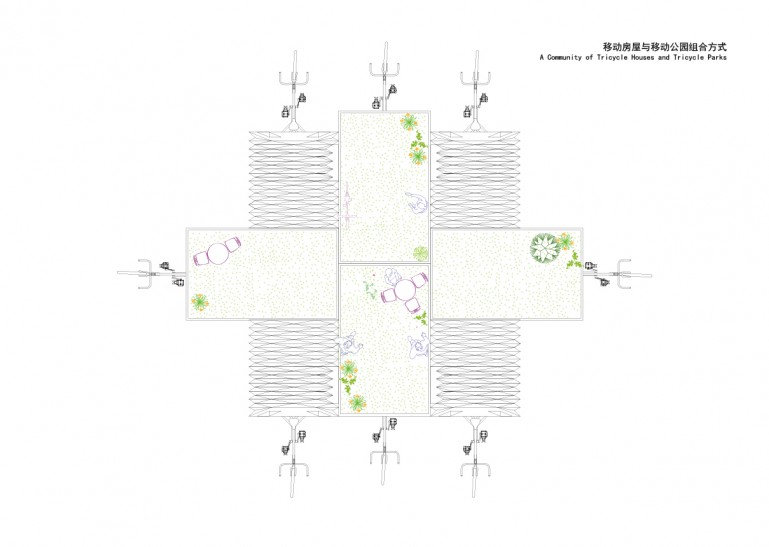
This is not the first time we’ve seen human-powered nomadic housing. The Tricycle House, was, as the name implies, a house affixed to a tricycle. Unlike Taku Tanku, a Tricycle House was built. Each house has its merits. We suspect the Tricycle House’s flexible folding, accordion structure, while lightweight, might not be as durable at Taku Tanku’s. The Tricycle House is smart because it’s designed to be used in tandem with a trike-powered garden, making sure you can tow your food source in case things get nasty. If S really did HTF, it’d be good to work through these important considerations ahead of time…just saying.

Via Gizmag


Tricycle House Makes Tiny Houses Look Decadent

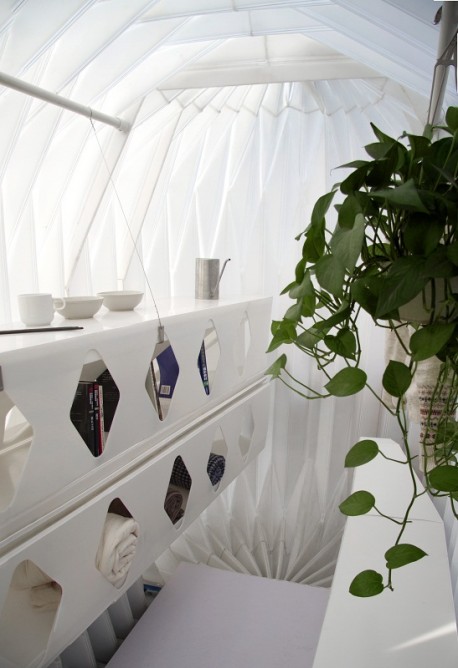
Sure, tiny houses are tiny, but they seem downright palatial compared to the Tricycle House. The project, part of the Get it Louder Exhibition in Beijing, is collaboration between People’s Architecture Office (PAO) and the People’s Industrial Design Office (PIDO). Like Tiny Houses, the house is as much a political statement as it is an architectural one, providing a response to the soaring price of Chinese real estate and government “land grabs” that have displaced many Chinese citizens. The tricycle provides the opportunity for home ownership, albeit on very small scale.

The polypropylene-constructed house is roughly 30-35 square feet and can be used as a dining room, kitchen, bedroom, workspace and bathroom. It boasts some impressive features such as a bathtub and clever folding sink and drawers. Similar to the Napoleon Complex, the house seems best used when coupled with other tricycle houses and tricycle gardens.

We’re not sure if there are any plans to develop the idea beyond concept, but a similar lightweight, off-grid housing structure would make a great edited recreational vehicle.

Via Gizmag and Treehugger

Thanks Susan