6 Bits of Dorm Room Wisdom that Can Be Applied to Any Life

For many of us, college was one of–if not the–happiest time of our lives. It was a time when meeting people was easy. The world was full of possibility. We traveled light. Everything seemed new and exciting. We were unshackled from the chains of parental guidance.

Then something happened. We moved off campus. We graduated. We got jobs, donned suits, got married, had kids, bought cars, acquired homes with yards. We suddenly had little time for friends. We got stuff–lots of stuff. And endless possibility was replaced by endless routine. We became our own restrictive parent.

While many go back to school to recreate these halcyon days (read: MFA), there are lessons we might learn from our former, freer selves–lessons that can be applied without going back to school and to lives that include careers, children and regular bathing. Here you go:

  1. We live to connect. This is surely the most important aspect of college life. Many of us made lifelong friends in college, and studies have found that humans with high degrees of social interaction live happier, longer lives. It also found the converse to be true: For example, people who live with low social interaction suffer the same health hazards as someone who smokes 15 cigarettes a day. The beauty of the college experience is that connection is in the architecture: Long hallways, small rooms and compact campuses help create collisions of connections. Many corporate campuses nowadays try to replicate this phenomena.
  2. We don’t need that much living space. The typical American dorm room is around 180 sq ft, and often that space is shared with a roommate. The amount of space humans need is very plastic. In fact, the average American takes up three times as much as space as he did 60 years ago.
  3. Privacy is overrated. It’s funny how we often think fondly of our dorm days–days sharing a tiny room, traveling down the hall to go to the bathroom and eating in large cafeterias. Sure, there were times when the lack of privacy wasn’t so great. But many of these low spots trained us how to live with others. Despite the benefits of public living, many of us strove to make our post-grad homes into fortresses of solitude. Everyone needed their own space–all resulting in more isolation and less connection. Face it, you want to be around people–even when you think you don’t.
  4. You don’t need that much stuff. Remember all of that great stuff in your dorm room: The sandwich press, your 50 state silver spoon collection, your 10 speaker surround sound system? Of course you don’t, because you didn’t have that stuff. You had a clothes hamper and a boombox you cherished, and you were just fine.
  5. Learning is good. Sure, you might have not been the most attentive student, but we bet you learned something–even if it was unconsciously picked up while you slept in class. Research is showing that we can improve mental health and even ward off degenerative disorders like Alzheimer’s Disease through learning new ideas and skills such as a language or instrument in later life.
  6. Walk more, commute less. In our college days, everything was close and we walked everywhere. A growing body of evidence suggests that commuting makes us miserable. Take a tip from the student and ditch the car wherever possible.

College Student Image via Shutterstock.com

One Man Gathers What Another One Spills

Building a home creates an enormous amount of waste. According to the EPA, home construction, remodeling and demolition projects are responsible for 25 to 30 percent of the nation’s annual municipal solid waste. Much of that waste, if one were so inclined, could be used to make other homes. Well there is one who is so inclined–and his name is Brad Kittel.

Kittel runs a company called Tiny Texas Houses, whose tagline is “Building the future with the past.” For the last six years, they’ve been making tiny houses made almost completely out of salvaged and scrap materials. Windows, framing, floorboards, sinks, tubs–everything less nails and electric equipment–has been used somewhere before.

For the moment, Tiny Texas Houses is mostly a Texas phenomenon. They have a 200K sq ft warehouse where they store materials. You can purchase a complete Texas Tiny House starting at $35K (they deliver to Texas and its neighboring states Oklahoma, Louisiana and New Mexico). As a service, they offer “salvage mining” whereby they either remove your old structure for free, or for a fee they will consult you about what’s usable from your old building (available in person and online). Unlike Tumbleweed Tiny Houses, they do not sell plans as available salvaged materials affect the layout of the homes. They run occasional workshops however.

Beyond a mere money and energy saving ploy, Kittel and Tiny Texas Houses are trying to start a movement they call Pure Salvage Living. It is about living off the grid–using a barter economy, avoiding taxes and living a simpler, smaller, more efficient, highly local life.

As he explains in the above video, all the stuff we need is already in existence. We don’t need to extract more natural resources or buy anything new or import anything from China to build our future. We can use existing (or salvaged) resources. Whether we do or not is our choice, he contends.

What do you think about Kittel’s contention? Can we–or is it realistic–to create a future made of salvaged material? Why or why not?

Would You Pay $400/Month for All of Your Transportation Needs

The Downtown Project is an ambitious project going up in Las Vegas’ old downtown area. Helmed by Tony Hsieh and the Zappos corporation–for whom the area will serve as their new corporate campus–the area is being designed to embody the ideal urban conditions to produce a global innovation capital to rival Silicon Valley. They are carefully condensing housing to be 100 people per acre–perfect for serendipitous encounters that spark innovation. They are providing a large startup fund to attract the best minds from around the globe. And now they are adding a transportation scheme that may point to how we get around in the future.

For about $400 a month, Project 100 will provide on demand transportation, matching subscribers with several different transportation alternatives depending on their needs in the moment. From Project 100’s website:

Project 100 is the code name for a complete transportation system designed to let you get rid of your car and be more connected to your neighborhood. It includes on-demand cars with drivers, shared cars you can drive yourself, bikesharing, shuttle buses and more. The experience is simple: open an app so we know where you are and tell us what zone you want to travel to. With that information we’ll give you a set of options, for example, 1 – Be picked up by a driver in a Tesla in 3 minutes, 2 – Drive yourself in a low range electric vehicle that’s 0.2 miles away, 3 – Grab a bike that’s 0.1 miles away or 4 – Hop on the party bus that will be near you in 4 minutes.

Similar to the architectural idea of using transforming spaces to provide space when you need it and not when you don’t, Project 100 wants to match your transportation need with transportation conveyance to optimize efficiency. For example, if you need to cruise on the highway, use one of their Tesla 100s; if you need to go a mile, use a bikeshare bike; if you need to barhop, use a shuttle; and so on.

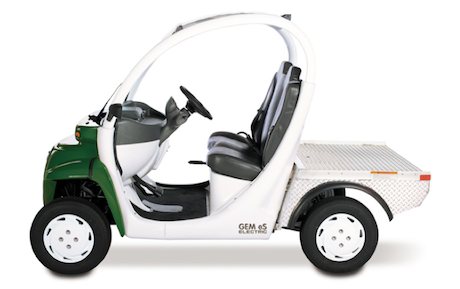
One of those transportation alternatives they allude to are “low range electric vehicles” such as the Polaris GEM (pictured below)–a tiny EV that handles quick trips to the grocery store more efficiently than the Tesla.

polaris-gem

The project has some technical challenges. They need to create an infrastructure for charging the EVs; they will provide a hub for vehicle storage and charging, but the nature of the system would make leaving the cars anywhere the ideal. There is also the substantial technology necessary to distribute vehicles so everyone in the system has what they need 100% of the time. The project wants people to get rid of their cars, and in order to do so they need a system that rivals–or perhaps bests–the convenience of traditional car ownership.

All these challenges included, we applaud The Downtown Project and Project 100. It’s an earnest effort at curbing the inefficiencies inherent in America’s current transportation landscape, where large SUVs are routinely used to pick up a half-dozen cupcakes because that’s the one vehicle its owner has immediate access to.

The limited range of the Downtown Project provides a nice laboratory to work out the inevitable kinks–as well as a forward-thinking, forgiving constituency. And $400 for all your transportation needs (insurance, fuel, etc are included), while more money than biking around the city, is pretty comparable in terms of cost to car ownership, and the system has a number of benefits car ownership does not.

via CNET

The Smartest Space in San Francisco

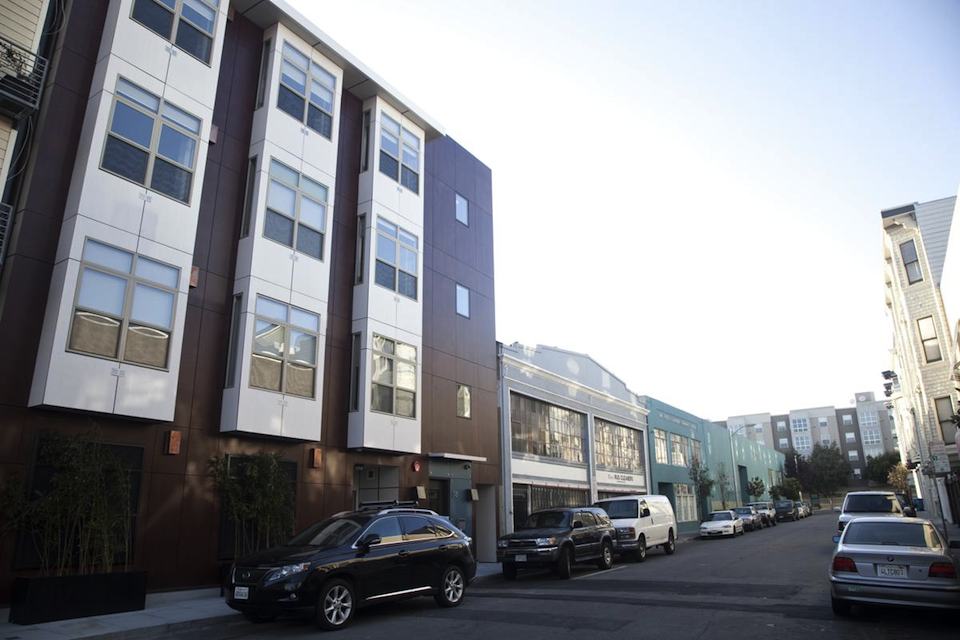
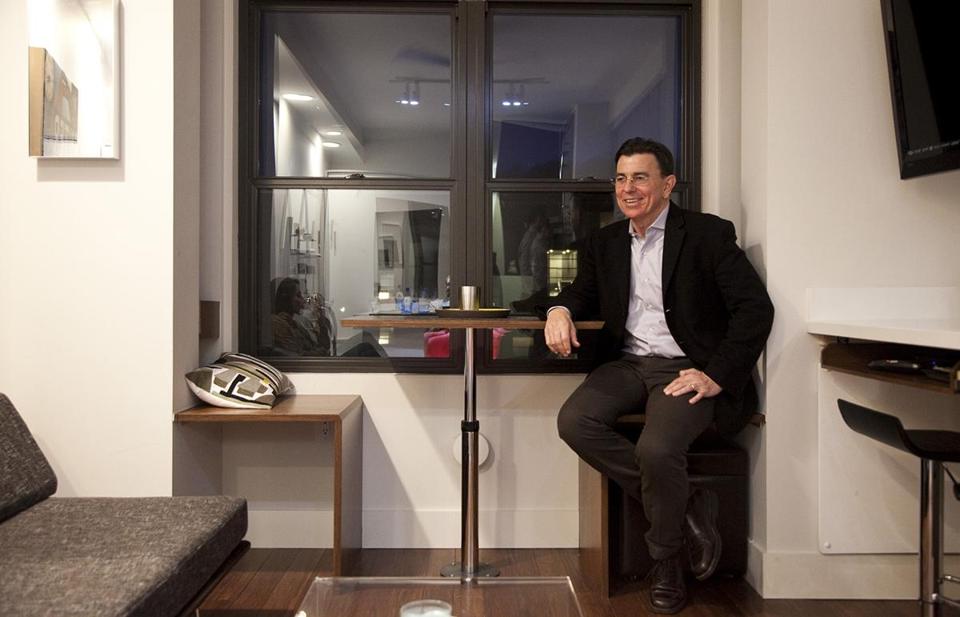
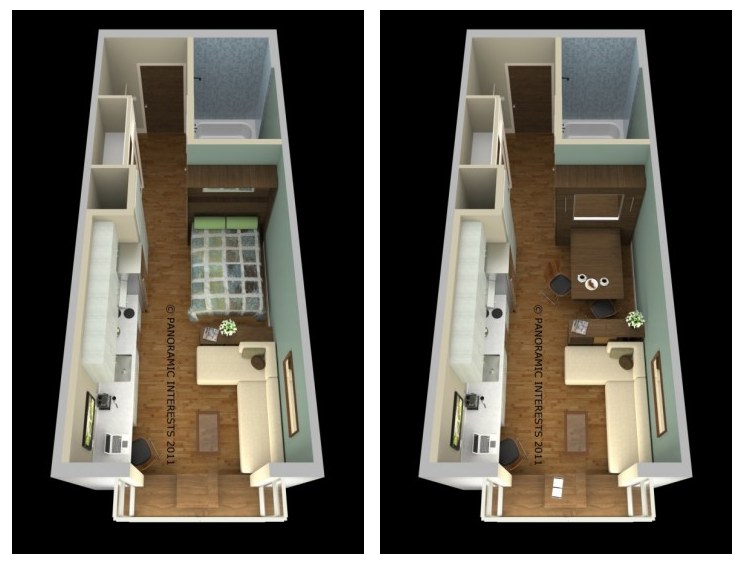
Some time ago we saw a video with Patrick Kennedy from the development company Panoramic Interests show us around their SmartSpace 166 sq ft prototype micro-apartment. We gave reports as their building at 38 Harriet St in San Francisco’s trendy SoMa district went up; it would feature 23-apartments, each measuring 295 sq ft. The building was going to be pretty exciting, incorporating many of the prototype’s interior features like transforming furniture and high quality finishes as well as an in-house car-share, solar-thermal hot water, rain water collection, LEED Platinum certification, common spaces and much more. These guys were doing it right.

Well, 38 Harriet is ready!

Unfortunately, we were unable to find any info about renting one yourself. Unfortunately, they’re all spoken for. All but one showroom apartment will be leased to The California College of the Arts and cost $1600/month, lower than the $2075 average for a San Francisco studio rental.

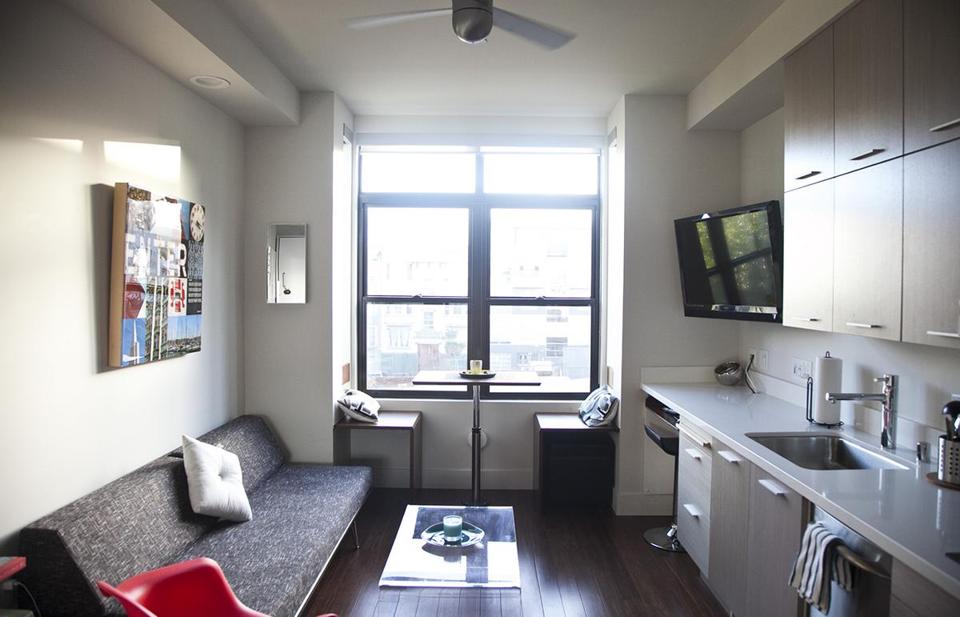
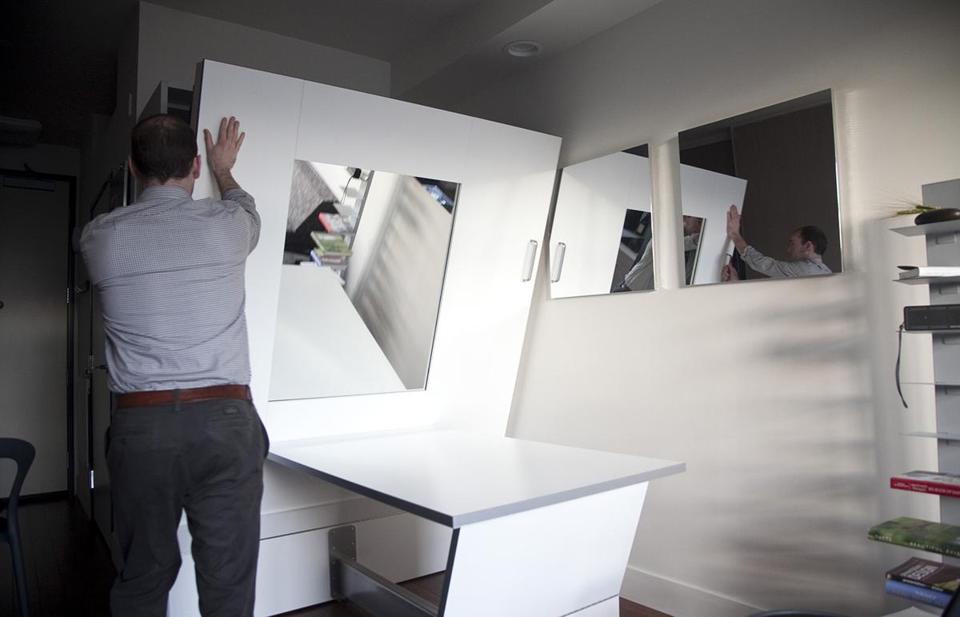
These pics show us the interior, which feature a murphy bed and a banquette with table that transforms into a window bench (a piece pulled straight from the prototype apartment).

We also came across the above video that shows some of 38 Harriet’s prefab construction process. By using offsite construction, they were able to turn an uncovered foundation into a four story building in a mere three days.

Our hats are off to Panoramic Interests for bringing one of the most innovative housing projects to life.

What do you think of 38 Harriet St? Would you live there? What do you like? What’s missing?

Photo Credit: Jan Sturmann for Boston Globe

This Mouse Eats Your Paper Clutter Whole

Okay, we’ve talked about the limitations of multifunctional design, but we have to say the IRIScan Mouse Scanner is a pretty cool and logical combo. All you do is wave the mouse over your doc and their software pieces together the swipes. When you’ve scanned the doc, you can crop the scanned image to the appropriate dimensions. Its 300 dpi resolution might be wanting for artists and designers, but for the vast majority of people who just want to scan important documents, it’s more than sufficient. At $79, it’s a good deal considering it replaces a mouse (not that you needed to replace yours, mind you) and scanner, and cuts down on bulk.

One not-so-little issue we saw with the IRIScan: It only works on Windows. We did a little searching and found the LG LSM-100, which handles both Windows and Mac, and boasts 1200 dpi scans. We saw it on Amazon for $95 (there were a few negative reviews on Amazon, but that always seems to the case no matter the product).

lg-lsm-100

Both IRIScan and the LG LSM-100 feature Optical Character Recognition (OCR) technology which recognizes text characters in 180 languages and optimizes the scans.

Few things cut clutter quicker than digitizing your documents. The only more compact solution we’ve seen are mobile device scanner apps. These mice are a great option if you want higher image quality without much extra equipment.

Designing Cities From Scratch

What makes a perfect city? Walkability? Culture? Great restaurants? Density? Architecture? Diversity? If you could make a city from scratch, how would you design it?

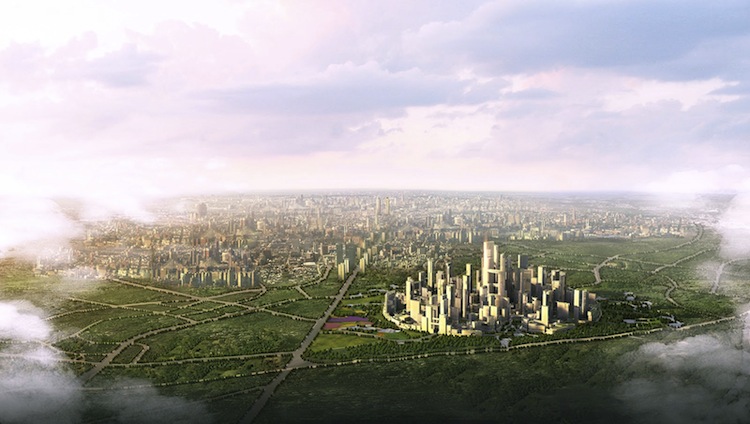
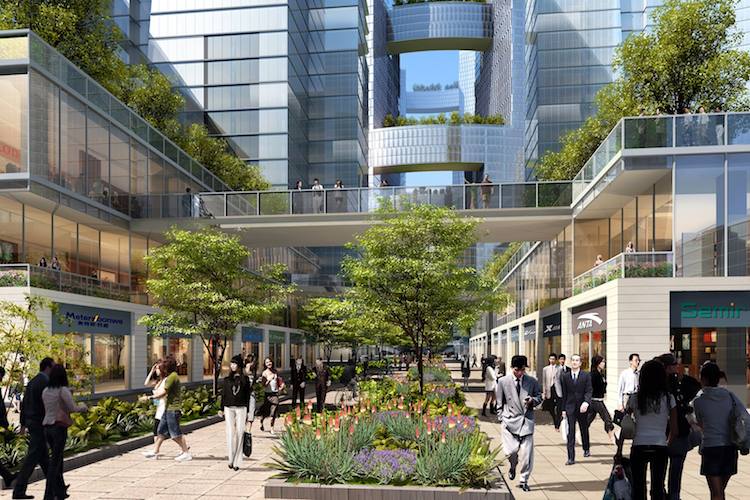
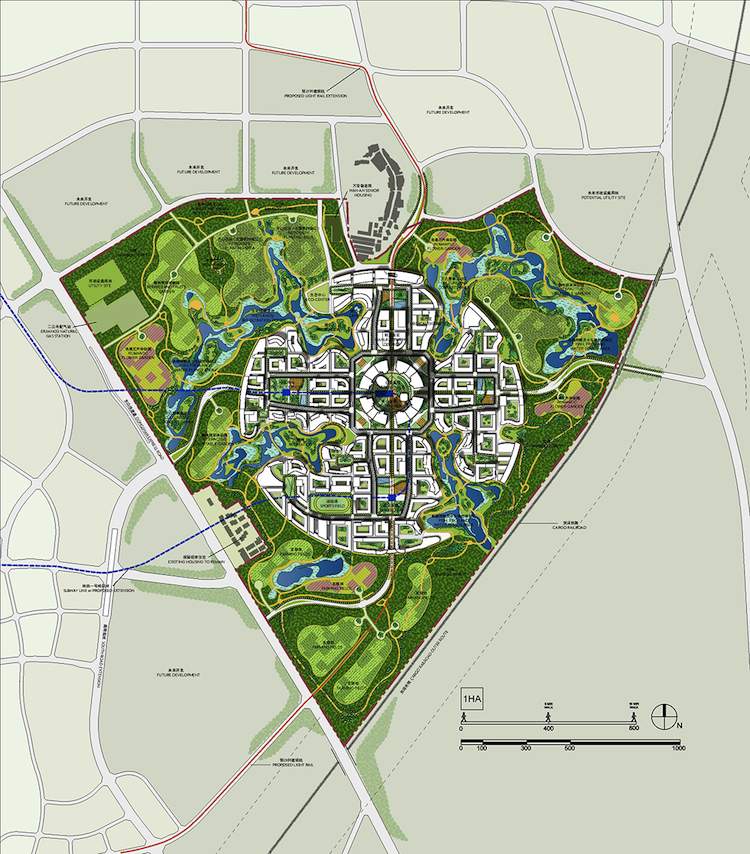
Throughout history–from St Petersburg to Brasilia to many, many more–urban planners, architects and despots have attempted to turn clear tracts of land into exemplars of urban ideals…with mixed results. One of the latest editions of this city-making craze is the Tianfu Ecological City going up outside Chengdu, China.

Chicago-based architectural firm Adrian Smith + Gordon Gill is trying to create a prototype city that is meant to solve many of the present social and environmental pressures that have resulted from China’s explosive population and economic growth. If the prototype is a success, they can plant these cities across the country. Smith and Gill say this about the city:

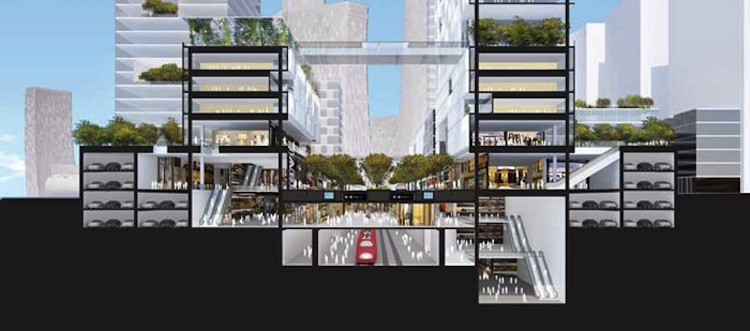
When completed in about eight years, Tianfu Ecological City will be home to about 30,000 families totaling 80,000 people [within 1.3 sq km, making it one of the densest cities on earth], many of whom will also have opportunities to work within the development. The distance from any location in the city to any other location will be walkable within about 15 minutes, all but eliminating the need for most automobiles. The city will also be connected to Chengdu and surrounding areas via mass transit to be accessed at a regional transit hub at the Tianfu Ecological City center.

And this about the environmental benefits of their ultra-dense plan:

Tianfu Ecological City will use 48% less energy and 58% less water than a conventional development of similar population. It will also produce 89% less landfill waste and generate 60% less carbon dioxide.

This all sounds great and logical: Density + height  = green + walkable + great.

This algorithm comes as no surprise from from a firm that designed the “Kingdom Tower,” which at 1km high is 567 ft higher than the current highest building. But do algorithms make good cities?

A few weeks ago we looked at some not-so-great conditions in Hong Kong–the 2nd densest city in the world, whose skyline is littered with high-rises. In the piece we quoted Treehugger.com’s Lloyd Alter as saying:

I am convinced that they are wrong, that there is a “goldilocks density” that is high enough to support a vibrant, walkable community, but not so high that you can’t walk up to your apartment when the power goes out, that needs expensive infrastructure like subways and huge underground parking garages. Dense enough to build a sense of community, but not so dense as to have everyone slip into anonymity.

Unlike Tianfu, other cities-from-scratch are going for the Goldilocks formula–not too high or dense. IKEA’s Strand East in east London (below) opts for meandering streets and medium sized buildings. Las Vegas’ Downtown Project is trying to transform the old Las Vegas strip into one of the world’s greatest innovation hubs, using 100 per people acre as the sweet spot for density.

Strand-EastBut comparing London and Las Vegas to Chengdu is not a fair. Though the former cities have their challenges (insane costs, dwindling water supplies), they pale in comparison to the latter’s (crazy population, industrial pollution).

So the question is: are the roads of utopian cities paved with good intentions? For example, many consider Brasilia’s idyllic center to be a model of Modernist misdirection, and its cohesive design is now surrounded by ring of improvised shanty towns (none designed by Oscar Niemeyer). Or Ordos, China, a utopian city that now sits completely uninhabited.

But there are also successes in master planning: Haussman’s Paris, L’Enfant’s Washington DC.

What do you think of Tianfu in particular, and cities-from-scratch in general? Is it a recipe for a successful city or another great idea whose time will never come?

This Hamster Should Win Nobel Prize in Economics

The Impossible Hamster is one of the most articulate treatises on economic growth and resource depletion we’ve ever seen.

At LifeEdited, we try to stay happily apolitical. We think living a less, but better way of life has self-evident benefits. Our lives are simpler, less expensive, more manageable and so on.

But there are global benefits as well. Not to over-simplify a complicated topic, but if every member of the world’s population started lining up his and her consumer behavior with actual needs and priorities, we might start a course-correction from the current trajectory of economic and environmental meltdown. The model of never-ending growth of consumption–whether that takes the form of consumer goods or housing or natural resources–will, in all probability, lead to a situation as dangerous as a 9 billion ton hamster.

The Difference Between Pleasure and Happiness

We at LifeEdited talk a lot about happiness. It’s in our tagline: Design your life to include more money, health and happiness with less stuff, space and energy. We see the word splattered across bestseller lists: “The Happiness Project,” “Stumbling on Happiness,” “Delivering Happiness” and so forth. People cannot seem to get enough happy. But what the heck is it? And what is the difference between pleasure and happiness? And why should we care?

To answer these questions, we looked to an expert: Buddhist monk, author of ‘The Happiest Person In The World’ and former molecular biologist, Matthieu Ricard. In a Huffington Post article entitled “Why Happiness is Not Pleasure“, he said this of happiness:

Happiness is a state of inner fulfillment, not the gratification of inexhaustible desires for outward things…genuine happiness may be influenced by circumstance, but it isn’t dependent on it. It actually gives us the inner resources to deal better with those circumstances.

Of the difference between pleasure and happiness, he says this:

Happiness is often equated with a maximization of pleasure, and some imagine that true happiness would consist of an interrupted succession of pleasurable experiences….There is no reason to deprive ourselves of the enjoyment of a magnificent landscape, of swimming in the sea or of the scent of a rose, but we must understand that the experience of pleasure is dependent upon circumstance, on a specific location or moment in time. It is unstable by nature, and the sensation it evokes can soon become neutral or even unpleasant.

In other words, pleasure is externally motivated and fleeting, while happiness is internally generated and constant.

Most of us know pleasure. It’s the sensation that drives us to eat a bag of chips even when we know it’s bad for our health; it’s the euphoric feeling of anticipation when waiting overnight to buy the new iPhone even though we know our current phone is perfectly adequate. Our pleasurable sensations are inextricable with the thing–the chips or the phone in this case. The things make us happy.

The trouble with equating pleasure with happiness is when the thing is gone, so too does our happiness. No chips, no happiness. Having last year’s phone can send us into a depression. Check out the movie “The Queen of Versailles” if you want to see the pleasure hunt play itself out to surreal proportions.

Conversely, happiness allows you to enjoy the chips, but not require them; use the phone, but realize it’s just a phone and a new one with slightly more power won’t make you happier in any meaningful way. Focusing on happiness is not better per se, but it’s more reliable.

One litmus test to distinguish pleasure from happiness is something a teacher once told me, “If something is a source of happiness, the more you do of it, the happier you will become.” Do more chips, phones, square feet or bacon (my personal fave) make us happier? Of course not. Sure, these things might be pleasurable, but after a while and in excess they lose their appeal and become “neutral or even unpleasant” as Ricard explains (any buffet-goer can testify to this).

If pleasure doesn’t make us happy, what does? One idea is that it’s experiences, not stuff that makes us happy–in other words internal states rather than objects. One theory promoted by Dr Sonja Lyubomirsky, author of “The How of Happiness” asserts there are three main factors that comprise our happiness:

  1. Set-point. This is essentially our biological level of happiness–it’s our happiness default setting. Some people might be literally hardwired to be less happy than others–or vice versa. This is thought to comprise up to 50% of our overall sense of happiness.
  2. Circumstances. Our physical circumstances do affect our happiness, but to a much smaller extent than most think (10% or so). Circumstances that can thwart happiness are things like no access to clean water, unsafe homes, etc. Circumstances that probably don’t thwart your happiness are having too large a tablet computer and too wide lapels on your blazer.
  3. Voluntary Variables. This is our behavior and thoughts. This makes up 40% of our overall happiness and can actually offset the set-point and circumstances.

The voluntary variables are what my teacher would say are the things that, when increased, promote happiness. These are behaviors and actions like generosity, kindness, love, gratitude, etc. The more we live in these states, the more we act in line with them, the happier we become.

How can LifeEdited be so bold as to say that we can help design your life to include more happiness? Full disclosure: We can’t make you happy. Sorry. But our mission to “edit” the things that don’t promote our happiness–the extraneous stuff and space–might help. No,  the best designed apartment, most awesome stacking bowl or greatest towel will never, ever make you happy, but this “less, but better” stuff might give you less to think about, affording you more mental space for the stuff–those experiences and voluntary variables–that do.

Image credit: Shutterstock.com

500 Square Feet of East Village Form and Function

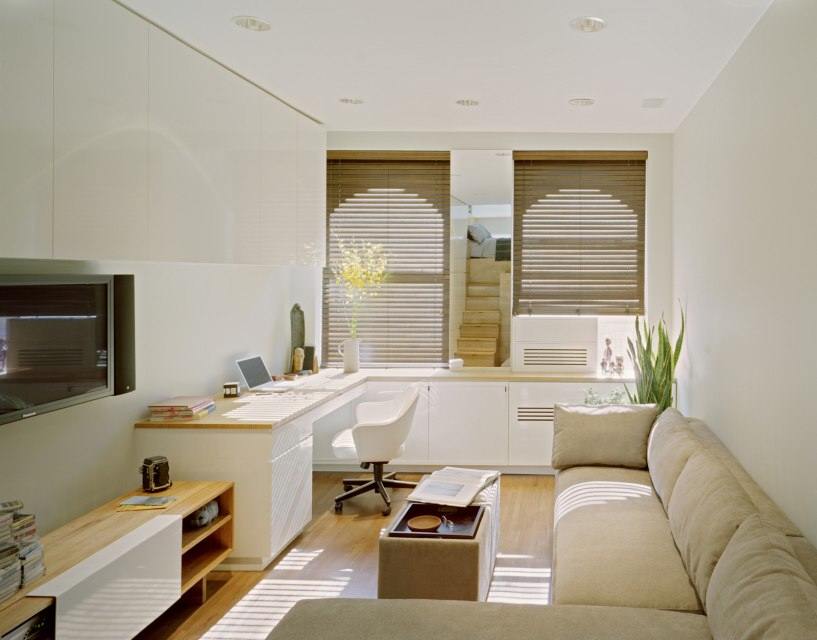
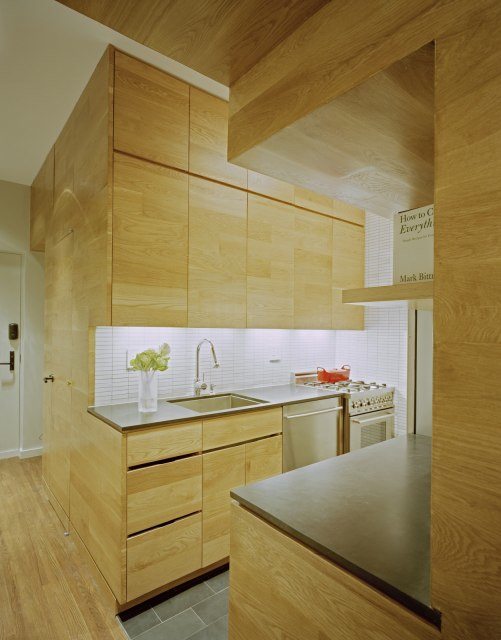
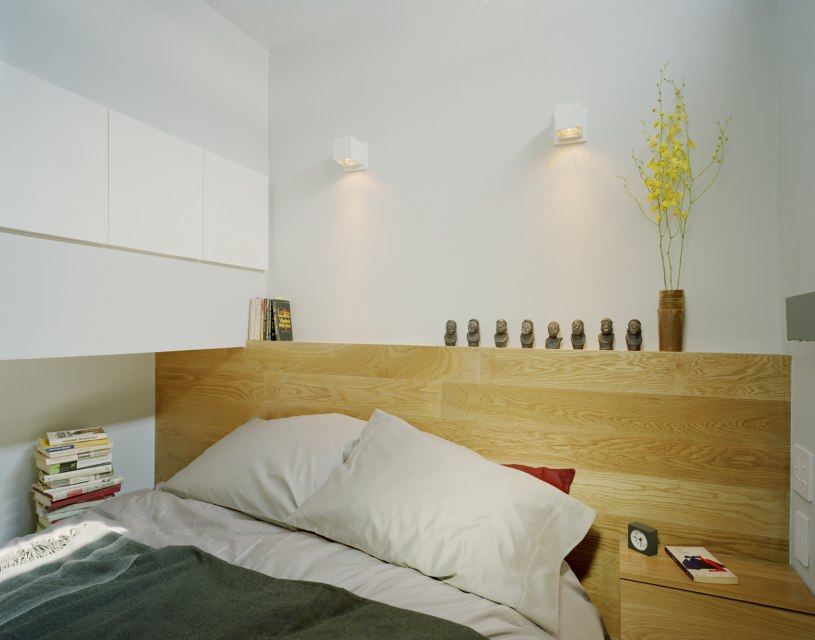
This 500 sq ft East Village apartment by Jordan Parnass Digital Architecture is a beautiful exercise in space optimization and cleanliness. The client who commissioned the apartment wanted a space where he could live and work and have storage space for his “many toys and quirky art pieces” (most of which seems to be stored away in these photos).

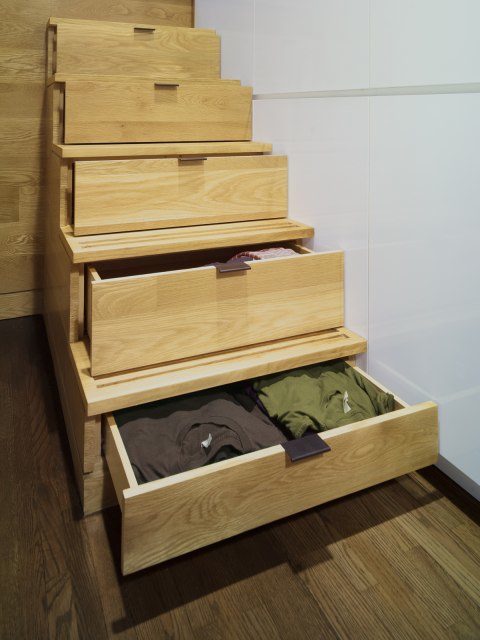
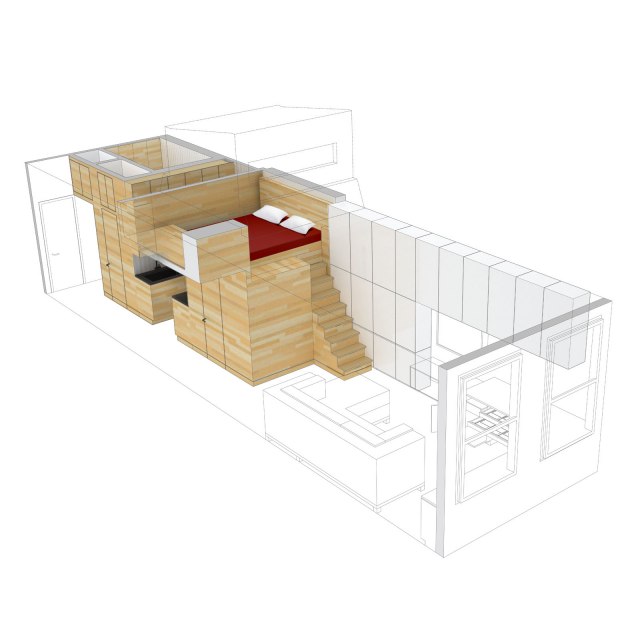
By far the most distinctive element of the apartment is its wood paneled “central service core” that houses the bathroom, kitchen, sleeping loft and ample storage. It transforms the otherwise conventional rectangular space (less the parascopic loft) into a mecca of storage and functionality.

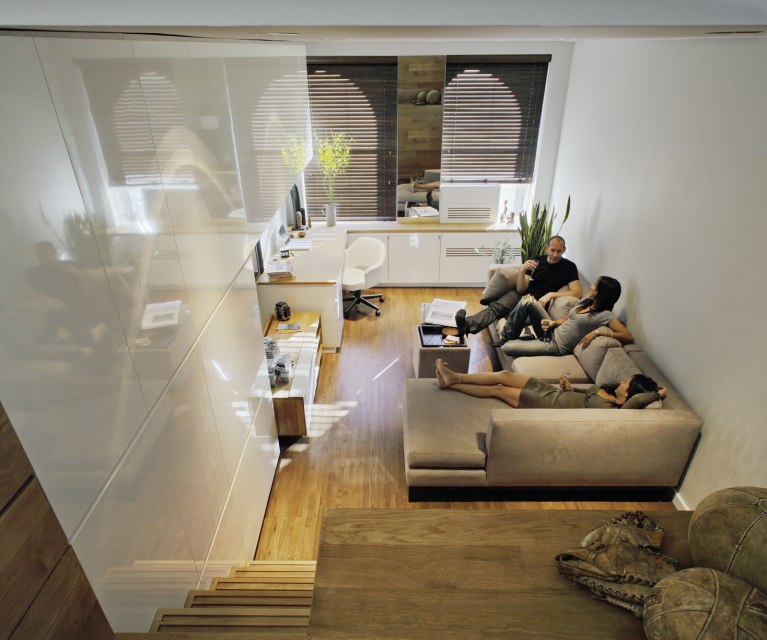
The living room area was designed to be “as flexible as possible” and features a wraparound counter workspace and ample wall storage. There is a decent sized floor space which the owner can set up in any way he/she sees fit. We applaud the choice of using the space for a big comfy-looking couch. While it uses a lot of volume, it makes the space infinitely more inviting and likely to be used.

Other flourishes we like are the materials used, which lend the space a clean, but warm feel. The complete absence of clutter–surely helped by the tons of closed-off storage–makes the space look much larger than 500 sq ft.

The apartment feels very luxe and custom and its roof portal  is quite unusual. But we could see many elements like the creative storage spaces and smart use of materials and textures being applied to projects with more modest budgets and conventionally-shaped spaces.

Photos by Frank Oudeman and Sean Karns for Jordan Parnass

Let’s Talk About Stuff Baby

Yesterday LifeEdited founder Graham Hill had an op-ed published in the NY Times. The autobiographical essay entitled “Living with Less. A Lot Less” tracked  his progression from late-20s, flush-with-dot-com-cash, consumer extraordinaire to minimalist exponent. He writes:

My success and the things it bought quickly changed from novel to normal. Soon I was numb to it all. The new Nokia phone didn’t excite me or satisfy me. It didn’t take long before I started to wonder why my theoretically upgraded life didn’t feel any better and why I felt more anxious than before.

At present, the article sits atop the NY Times most emailed and most read lists. Like the TED Talk Graham gave almost exactly two years ago–a talk that has received over 1.7M views to date–the message of living more with less is clearly on peoples’ minds.

Rather than transcribing Hill’s piece, we dug through the comments, highlighting and commenting on some of the major themes.

Desertwaterlily writes:

My son, daughter-in-law and their baby live in Brooklyn in a 700 sq. foot condo. It’s very crowded and not functional. They know it can be made functional but they don’t (as yet) have the money or resources to do anything. I agree with you about living close to the bone, but it takes more than wishing to move walls, build new working kitchens, electrical, shelving, etc. Sometimes it takes money to live a “simpler” life.

Desertwaterlily check out 8 Tips for Editing Your Life that Work for Any Budget. While it’s true moving walls cost money, there are a ton of things to simplify your life that require little or none.

Sonja writes:

I’m 82 and live on and with the barest of necessities, for the less I have, the better I feel. I regularly go through my small house wondering what else I can get rid of. Minimalism is soothing, aesthetically appealing. I sometimes fantasize about living in a cell like a monk – a cot, a table, and a window.

Knowing what I know now, if I had my life to live over, at the age of 18, instead of sitting around devising plans for a cluttered life, I would put a knapsack on my back and with my dog I would leave the house and just start walking.

Thanks Sonja for showing that this is not just a young man’s game.

MJones writes:

Most of the people responding to this article appear to have no children….I think it’s hard to live in small places with other people – children and adults – without separate sleeping rooms for them. Old people snore. Children are distracted by adult activities and truly need their own space to develop fully in western culture. A baby can sleep in the corner, but as they get older and play sports or pursue their own interests, they need space for their stuff and friends.

And Larry L also writes:

I noticed that the author does NOT have children and is NOT married. His life choice is highly unlikely to be replicated under different circumstances.

The “you-don’t-have-kids” argument comes up a lot. Neither Graham, nor anyone at LifeEdited suggest that everyone should live in 420 sq ft. Nor do we suggest the needs of a single person are the same as a family’s. Living with less might look like having ten toys instead of fifty or living in 1200 sq ft instead of 2500. And yes, this is written by someone with children.

MGM writes:

Great. If the one percenters stop buying lots of stuff and stop building lots of big homes where will that leave the rest of us? Our economy is fueled by overconsumption. The middle class cannot do it by themselves!

We’re not sure if MGM was being serious, but this argument does occur to many as a potential problem. First, we’d respond by saying that if we destroy our environment, there will be big problems for every class. And because domestic manufacturing is almost extinct, most consumer dollars flow to top heavy corporations and overseas producers; this situation has been thwarting the American middle class for decades now. What if Americans started buying less stuff they could keep for much longer at fair market value? What if our stuff was made by skilled, well paid workers (foreign or domestic)? We don’t want to overstate our economic chops, but we think it’s fair to say the current system is patently unsustainable and we are due for another model.

imadeamesss

That’s a nice article and all but I still want the Omega single auger juicer. It is a thing that I want.

Please, keep your juicer. No one is saying get rid of all your stuff. But what if we cared about everything as much as imadeamess cares about his/her juicer?

Sam93

I believe your insights resonate only with people who have money and who are capable of owning stuff. You have come a full circle with consumption and then simplification. You are still financially capable to accumulate stuff. Thus, it is no longer a thrill for you. For people who are working hard, owning stuff(e.g house, car, etc) is an indication that they have arrived at a certain stage to acquire what they wish. It is not always easy when one couldn’t afford something other people discard regularly.

Sam93 brings up a very good point. In many articles that focus on Graham, he is often charged with “easy-for-you-to-say”–that most people don’t choose less, but are forced into it.

There are certainly many people who cannot afford even basic items and no one is trying to minimize their plight. However, as Graham tried to convey, the stuff issue–as well as the inflated home one–affects those with even very small incomes. Big box stores and 99 cent stores and cheap housing, fueled by easy credit, have made torrents of stuff and space available to almost any income level.

What Sam93 says about stuff-as-status is astute. We live in a culture where consumer goods are used to demarcate success–even if they undermine our happiness and wealth. Whether the mainstream will every “choose” less–rather than being forced into it–remains to be seen, but we’re optimistic!

en D

I realized how little meaning “stuff” has when our house was on fire and my husband and I were frantically trying to save the lives of our pets. I realized later that neither of us had stopped to try to rescue a single thing: not jewelry, not computers, not even money itself. Only life mattered. That was over 15 years ago, but the message remains as vivid to me as it did that day.

Well said!

Image via Shutterstock.com

Comments via New York Times