Co-Living for the 21st Century and Beyond

As we’ve seen recently with Stage 3 in NYC, The Collective in London and the expansion of the micro-apartment movement in general, there’s a growing market for minimal, all-inclusive, affordable, community-centric housing. For the most part, these developments are aimed squarely at the lighter-living, typically-single, experience-hungry urban Millennial (sorry for all the dashes). Today, we’re checking out another player in this genre called Campus, a movement/real estate startup with 30 houses, buildings (or portions of buildings) in the Bay Area and New York City.

Campus “communities,” as they like to call their houses, bear some resemblance to living in a dorm on a college campus. They have ample communal spaces and compact private ones. Most communities feature talks, shared meals and other programming to spur relationship building and philosophical waxing.

But the similarities stop there. Campus’ raison d’etre is both more mature and evolved than anything you’re likely to find at a University of Arizona dorm. For example, all houses are connected by a set of shared values that include being:

  • Open to having new experiences and forming new relationships.
  • Respectful of other’s differences, needs, and privacy.
  • Supportive of each other’s well-being and growth.
  • Respectful to the neighbors and existing culture of the area.
  • Valuing personal freedom.
  • Recognizing that everyone has the need for private space and alone time

In other words, the antithesis of most college campus living we know about (save Evergreen State or someplace like that).

In terms of nuts-and-bolts, each room is private and lockable. Rents are month-to-month and each member can opt out at his or her discretion–i.e. you are not tied to the other community members. Rent includes common space furniture, kitchen supplies, common space cleanup and several other amenities (utilities are additional so far as we can tell). Prices depend on community location, room size and a few other variables. For example, a ~70 sq ft room in Park Slope Brooklyn cost about $1200 whereas a space twice that size in the SoMa district of SF costs the same amount.

Campus hardly sees itself as mere purveyor of fun, convenient housing for Millennials. Their mission is to “build better living environments, and…build better housing and cities that are more attuned to people’s needs,” and they have an ambitious, two-phase master plan. Phase one consummates in the formation of 5000 communities in ten cities (they announced locations in LA, Boston and DC will be popping up in the near future). Phase two goes into utopia-production, with an eventual goal of making 100 cities, each with tens-of-thousands of people (see full vision here).

In many ways, Campus is a modern, formalized (but hardly stodgy) and ambitious take of co-living. Like most things, the latest and greatest is part of a continuum of thought. But originality isn’t a condition for doing something useful and cool.

Hudson Yards: A New, New York City

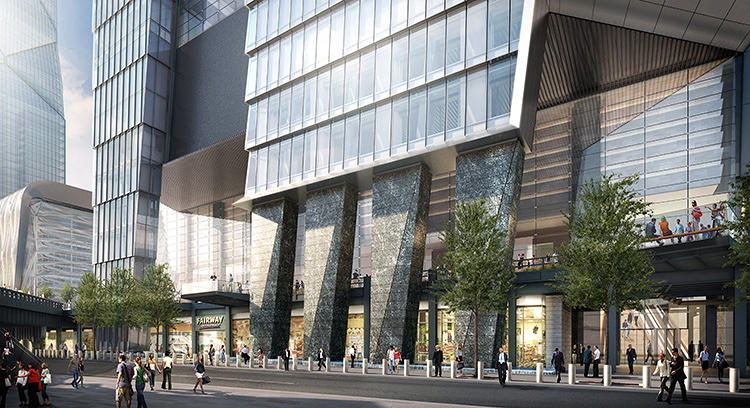
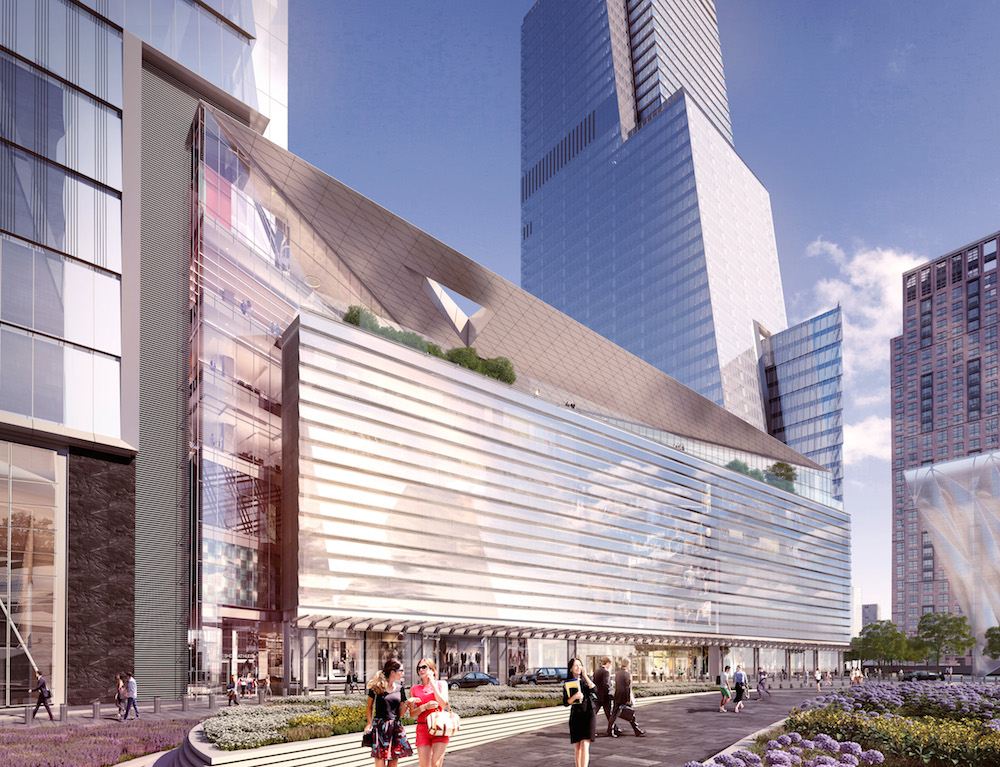
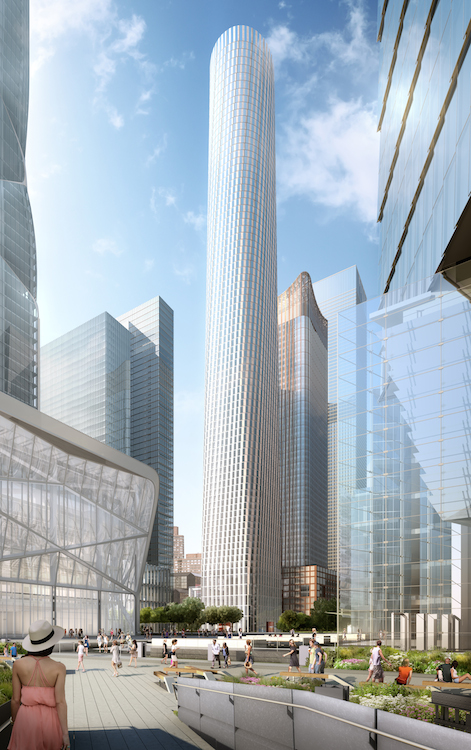
We’ve talked about building cities from scratch in the Arizona desert and China. In both cases, cities were built on top of undeveloped land. But what if someone wanted to create a city from scratch inside of an already thriving city? This is the idea behind Hudson Yards, a profoundly ambitious vision for the far west side of midtown Manhattan. The $20B project will have 17.4 million sq ft of floor space containing five office towers, more than 100 shops, 20 restaurants and approximately 5K residences. This would all be stretched over 28 acres, 14 of which would be public spaces and parks. When completed, it would be the largest private real estate development in American history. Construction is well underway, with the first building going up next year and the remainder over the next five years.

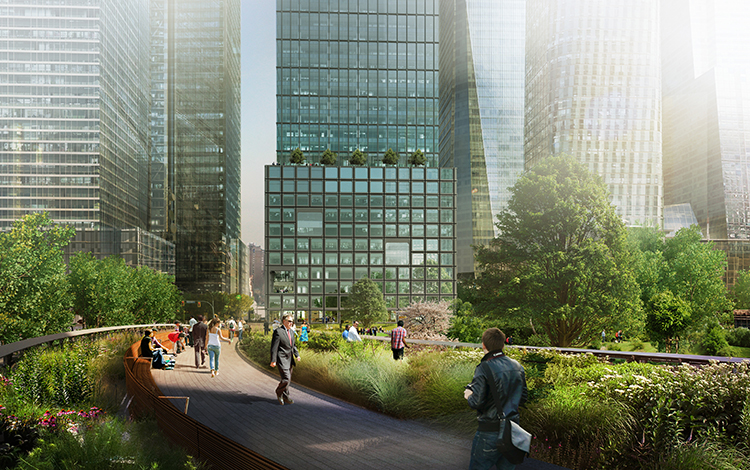
If you’ve lived in New York City for more than a year, you probably know something about Hudson Yards. The name refers to the massive train yards that reside in the area, which the development will be partially built over. Development has stalled for the last 25 years due to competing interests and bureaucracy. At various times, it was slated to be a football stadium or Olympic village. One issue has always been its location between 10th Ave and the West Side Highway, which is two long avenues away from the nearest MTA train station. That is changing with the extension of the MTA’s 7 train line, a fact that has probably helped get the project moving. Another big asset for the area is the High Line, the defunct elevated-railway-turned-park, which terminates in the area. A large swath of the Hudson Yards’ public spaces will be on a platform matching the height of the High Line; this will create a greenbelt from roughly 12th to 34th streets.

Hudson Yards is doing a little urban experimentation, opting not to emulate its host city in many ways. It will have a far less structured approach to urban planning than most of Manhattan, which is typically characterized by uniform streets and buildings with street level retail; in their place, Hudson Yards will have towers dotting copious public spaces (aka towers in a park) and a huge, seven-story shopping pavilion (aka shopping mall) with restaurants and a fancy food-court.

We do have our questions about the Hudson Yard plan. The first revolves around street life. Say what you will about NYC, but most would agree that it’s a very lively place from a human interaction perspective–much of that is a function of its streets and sidewalks, where interaction is sort of inevitable. We wonder how Hudson Yards’ big open spaces, which seem more suitable for games of frisbee than serendipitous encounters, will translate into vital street life. Likewise, the mall structure creates destination rather than incidental shopping (i.e. something the melds its way into your day-to-day life), the latter being a hallmark of NYC life. And Fast Company rightfully likened the flashy, irregular-angled architectural style as resembling Dubai’s, where many of the Hudson Yards’ architects have projects.

All that said, the renderings look pretty great, and the constant bustle of the High Line, coupled with the residential and commercial activity might serve to make the place interesting, even if it’s in a different way than other parts of the city.

We realize that most of our readers don’t have $20B burning holes in their pockets, but if you could design a city from scratch, what would it look like? What would you do different from Hudson Yards? What succeeds about their plan? Let us know in our comments section.

Via Fast Company

Nomads, Rebels and Off-Gridders: A Review of Microtopia Documentary

Beyond mere housing dimensions, one of the underlying things that interests us here at LifeEdited is the nature of home. What does home mean? How has it changed over the years? What will it look like in the future? These questions are very much at the fore in the documentary Microtopia. It’s a movie that scours the earth to find people with different visions of what home will look like in the years ahead. Director Jesper Wachtmeister of Solaris Films interviews eight different people–from architects to artists to “ordinary” people–who have come up with eight different interpretations of what home might mean in the future.

As the name implies, the common denominator amongst all the visions is small size (though it also implies a micro-utopia). There emerged three camps amongst the people interviewed: the nomads, the off-gridders and the rebels.

clothes

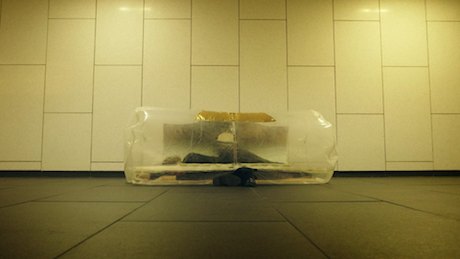
The nomads included artist Ana Rewakowicz, who presented a dwelling that is essentially a wearable cellophane bag that is inflated with a solar-powered fan; it’s just big enough to camping mattress (pictured above).

The off-gridders included John Wells, a former fashion photographer and set designer who traded it all to set up a homestead in the Texas desert. There is Richard Sowa, an Englishman living in Mexico who is trying to “heal the whole ecology of the world using trash.” Among other things, he is filling mesh bags with empty plastic bottles, tying them to shipping pallets, and floating them around the island he lives on; he then covers the pallets with sand and creates an undulating landmass.

defence

Then there are the rebels. Jay Shafer talks about tiny houses and creating an alternative for people who have been forced into housing that is larger than they want in order to sustain the economic interests that be. And Stephane Malka, a French artist who conceptualizes “parasite architecture.” He imagines cities “within the city that could create a pocket of resistance then grow.” One of his more dramatic examples is a concept that puts prefab living modules inside the Grande Arche of La Défense–it’s conceptually and aesthetically reminiscent of the Casa Futebol project we looked at last week.

crane

And there is Arstide Antonas, who kinda defies categorization. He creates tiny and fantastic dwellings such as the crane room picture above. These homes serve as frames to nature, offsetting small space with large views of the outside world.

Though the methodologies vary, the eclectic group seem to agree that the house as we know it–a paragon of stability, a place to store all of our stuff–is becoming something of an archaic ideal. Many of those interviewed point to the fact that the mountains of objects we once stored in our homes can now be put onto a harddrive. And others point to humans’ nomadic heritage; that we are an inherently mobile species and the artificial imposition of a fixed position, along with all that has come to entail (housing debt, ecological destruction) does not serve us.

With the exception of Shafer, the movie introduced me to a number of interesting characters I was not familiar with (I plan to expand on many of their work in the coming weeks). It also gave me a lot to think about. What do we as a society expect from our homes? How do our homes enable or prohibit freedom and happiness? If we were truly unbound from conventional housing ideals, if we began with our needs first and designed second, what would our homes look like?

Unfortunately, the movie is not available in the US right now (the filmmakers say it should be here in September). It is available to rent anywhere outside the US for $3.99 on Vimeo.

Love Manhattan? Then You’ll Love Yujiapu

Ah the dream of creating a perfect city–include the best, leave the rest and all you have is perfect living conditions. History is dotted with success stories: Brasilia, Arcosanti, Celebration, Florida–places that testify that making a great place to live is really a matter of connecting dots and constructing a few buildings.

Aforementioned examples notwithstanding, it’s actually tough to make a city from scratch (who’d a’thunk?). Most successful cities get that way because: 1. they are blessed with great geography (NYC, Singapore, Hong Kong, etc); 2. they evolve over time, adapting to their populations’ and eras’ particular needs; and 3. their evolution has created cultural and aesthetic diversity that makes them resilient and interesting.

But don’t let the difficulty of city-building make you think people ain’t gonna try to do it. They do and they are.

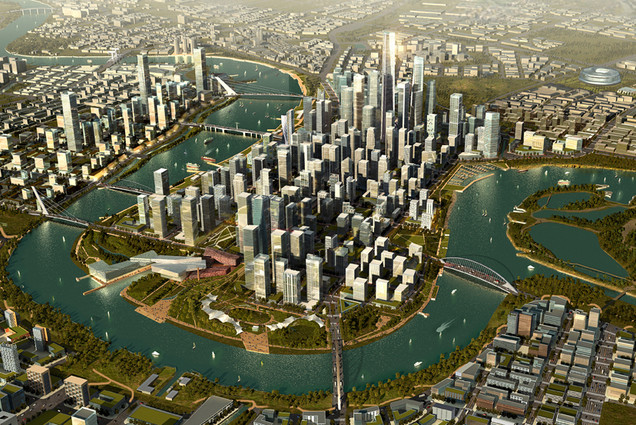
Yujiapu Financial District is one such example. It’s a city being built from scratch in China. It is being made in the likeness of Manhattan, replete with its own Rockefeller Center and One World Trade Center knockoffs. It even has a couple big NYC real estate heavyweights like Tishman Speyer and Rose Rock Group helping construction along. Located about 2.5 hours southeast of Beijing and built on a marshy former fishing village, the city is meant as a high-density haven of global finance, littered with skyscrapers placed along gridded streets…just like Manhattan.

yujiapu-street

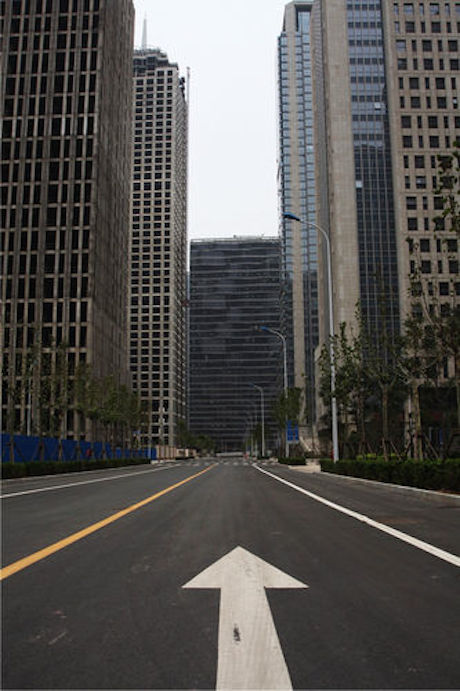
Unlike Manhattan, a city whose modern incarnation started with a small Dutch Settlement 400 years ago, Yujiapu began construction in 2008. Yujiapu’s first building opened two years later and completion is expected for 2019. Also unlike Manhattan, who boasts a population of about 1.7M people, Yujiapu is virtually deserted. And the chances of changing that and replicating Manhattan’s hustle and bustle aren’t looking good.

The city was conceived in the heyday of China’s economic boom. In particular, Yujiapu is near to Tianjin, China’s fourth largest city, whose economy seemed unstoppable ten years ago. But as China and Tianjin’s economy slowed (the latter experiencing a 7% decrease in economic growth in last four years alone), new construction, fueled by hopes of ceaseless economic growth and massive amounts of debt, no longer had occupants. Now buildings like the Country Garden Phoenix Hotel (pictured below), designed to be Asia’s largest, sit fallow along Yujiapu’s untravelled streets.

yujiapu-hotel

We at LifeEdited love our cities. We love walking and biking everywhere. We love the serendipitous encounters that seems to happen all the time along city streets. But making a great city, so far as we can tell, is not a paint-by-numbers proposition. It’s a mutual evolution of planning, place and population. Though it would seem to lack most of those things, we wish Yujiapu well–mostly because that’s a lot of resources for something that might not be used.

Via Bloomberg News and Vagabond Journey

Tabula-Rasaburg

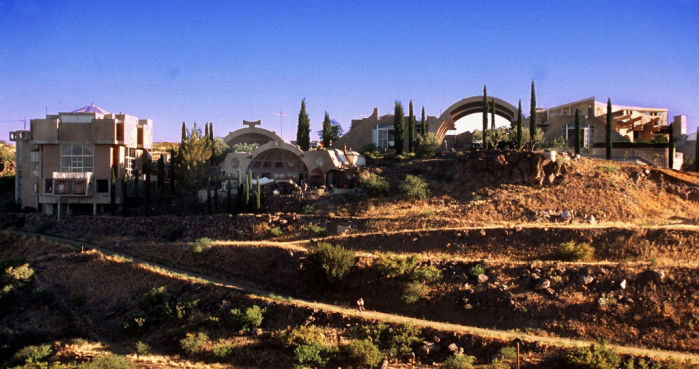
Many, if not most major cities have been around for some time. NYC dates from the 17th Century, San Francisco from the 19th, London from the Roman Empire. As such, these and other cities are burdened with the unwanted inheritances of past lives: ancient and crumbling architecture, archaic street grids, sprawled-out and mass-transit-proof city plans and so on. Arcosanti, an urban experiment built on the tabula rasa of the Arizona desert, was to be a city without a past–a city that would succeed because it was guided and designed by principles, not ghosts.

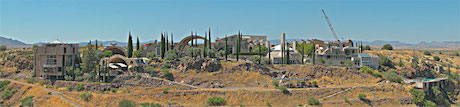
arcosanti-panorama

Arcosanti first broke ground in 1955 in a location 70 miles north of Phoenix. The project was the brainchild of Italian-American architect Paolo Soleri. It was meant to be a living embodiment of the concept he called arcology, the meeting of architecture and ecology. The city sought to adhere to design principles that would perfectly alloy the best of the city (density, social living), country (access to nature) and sustainable living (resource conservation). Here is an example of the “proximity” principle from the Arcosanti site:

Arcosanti’s design provides an efficient and lively urban environment by physically connecting a mix of activities such as living, working, learning and leisure. In this way efficient and equitable access to most of the city’s amenities and are available within minutes. Although life in such a setting will be intense and exciting, at times it could be taxing on individuals. For this reason, Arcosanti also features immediate access to open space and nature, to provide opportunities to decompress.

Other principles include things like urban scale, less consumption and elegant frugality (full list here).

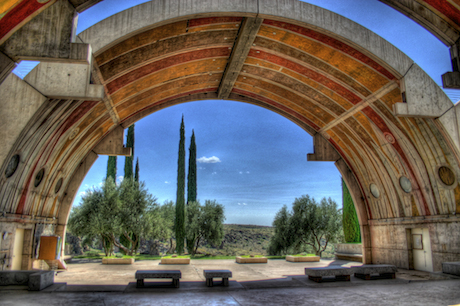
Arcosanti_vaults

The town occupies a space of 25 acres and has 13 buildings, most of which were built between 1955 and 1974. The architecture, which was to embody the principles and bring people together, is littered with common spaces that look like a Roman forum as interpreted by the set designer of Battlestar Galactica (the one from the 70s).

Over the course of its life, there have been anywhere from 50 to 150 people living there at one time, fluctuations attributable to student populations who have used the town as a research site.

The town was intended to eventually house and support 5K people. That intention, for a multitude of reasons, was never fulfilled. Some of those reasons, like a spartan, toilsome daily routine, and a cement building composition that baked in the sun and froze in the winter, were specific to Arcosanti. Others were characteristic of many total cities (e.g. Brasilia), where the autocracy of principles and a singular, exclusionary vision left little room for the cultural and formal flexibility that makes successful cities succeed.

Today, the town’s main “industry” is handmade bells. As of a couple years ago, there were 56 full-time residents. Arcosanti still hosts students and tourists (you can book one of their rooms through their website). But notions of Arcosanti as a model for the future have mostly evaporated like water in the desert (who knew making a city could be so hard?). All that said, we love a good experiment and think Arcosanti was, and to some extent isa bold one worth knowing about…if not living in.