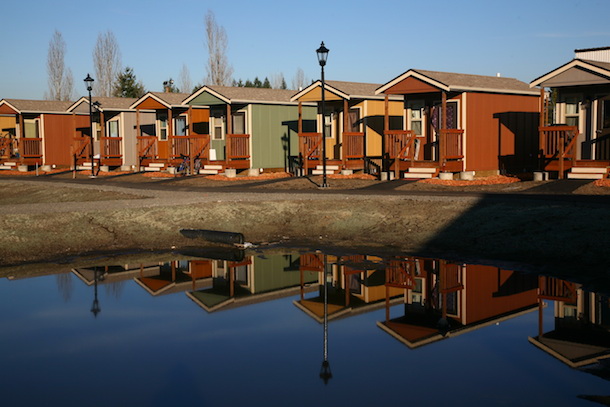
Tiny House Village Provides Big Life

If you build it, they will come..eventually. Such is the case with the perpetually displaced tiny house building typology. The popular demi-homes have a habit of falling on the wrong side of the law and habitability. They often find themselves getting moved around town because they can’t be stationed anywhere for too long, or remaining unoccupied because they fail to be considered legal housing. A new tiny house development in Olympia, Washington may have hit the nail on the head for how to use tiny houses in an ongoing, legal and logical fashion.

Quixote Village, as the development is called, is a permanent tiny house village that evolved from Camp Quixote, a floating homeless camp founded in 2007–a camp  that moved over 20 times since its founding, hopping from various faith community lands until they exceeded city ordinance time limits for campouts.

The village is made up of 30 residents from the camp, who occupy 30, 144 sq ft tiny houses, spread over 2.1 acres. The village includes a community center with laundry, communal kitchen, living and dining spaces as well as a community garden.

Each house cost $19,000, which includes materials and labor at commercial rates. The total project cost $3.05M. The project was funded and guided by a nonprofit called Panza, which is made up of the various Olympia faith organizations that supported Camp Quixote throughout its history.

Quixote Village got so much support largely because of its longevity and cohesiveness. It is self-governing and abides by two code of conduct–one established by Panza and another by itself.

quixote-community

The village planning was a collaboration between a committee and architect Garner Miller. Residents had input as well as a NY Times article reports:

The residents lobbied for a horseshoe layout rather than clusters of cottages, in order to minimize cliques. And they traded interior area for sitting porches. The social space lies outside the cottage. Or as Mr. Johnson put it, ‘If I don’t want to see anybody, I don’t have to.”

This community oriented planning reminds us of Pocket Neighborhoods, which feature homes with large porches that face a community-shared commons.

Half of the residents report zero income, and the average annual income of the villagers that do report one is $3100, most of which comes from day labor, pensions and social security. Villager are expected to give 30% of whatever income they do produce. We assume the shortfall is made up by Panza.

It might be a stretch to say we envy the Quixote Villager’s situation, but we think their setup–with its minimal, community designed housing–makes far more sense than most residential housing. And it may go to show that modest means often produce solutions that make far more sense than ones that well from unlimited means.

Via NY Times 
Family Learns to Love Discomfort

There are few critiques more oft heard about tiny house living than “you can’t do that with kids.” The logic goes that kids have lots of stuff. They need play spaces and room for their soccer balls and American Girl dolls. Most of all, parents need a reprieve from their kids–a virtual impossibility in most sub-350 sq ft spaces.

None of this is “true” however. Around the world, families–parents, kids, even a grandparent or two–share small spaces. We’re not referring to impoverished nations. Highly developed countries like England, Japan and Singapore have significantly smaller homes than the US, Canada and Australia (who have more or less the world’s portliest homes).

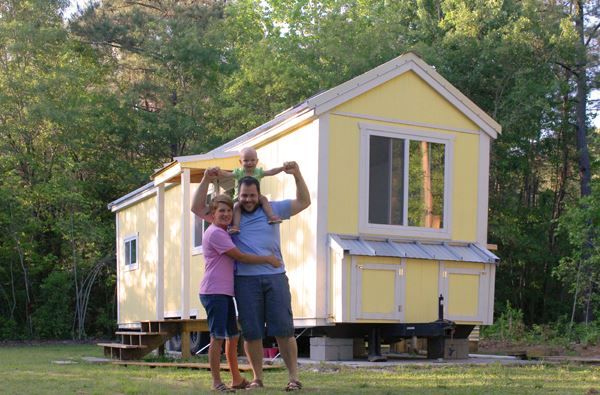
Even here in the US, people are challenging the notion that families cannot happily live in a tiny space. For (an extreme) example, Andrew and Crystal Odom share a sub 300 sq ft tiny house with their two year old daughter. In the above interview, Andrew suggests that the things most people object to about sharing small spaces with a family–no room for stuff or private space–are reasons why you should do it. He argues that in larger homes people can avoid one another and even themselves. Not so in the tiny house. You’re constantly confronted by others. Sometimes it’s really uncomfortable. Without a place to duck out, you’re forced to grow, deal and find your comfort anyway.

We appreciate Odom’s candor. He doesn’t sugarcoat the fact that there are definitely challenges in sharing such a small space. And we detect just a hint of longing in his voice for a bit of privacy. But he also seems earnest about his belief that the discomfor is making him a better person.

Of course just because it can be done doesn’t mean it should (especially when the two year old gets too big for her little bed). And there are other ways of dealing with your family and self than being crammed up against them. After all, Singapore boasts the world’s most unhappy people. Small space living induce self-actualization.

What do you think about Odom’s statements? Can the discomfort of sharing a small space be a catalyst for interpersonal and personal growth? Should we be moving toward rather than away from discomfort? Or are these the rationalizations of a dude who really likes not paying a mortgage?

Tour the iPhone of Homes

The gadget is probably the most important product design concept of the 21st Century. Whether applied to a phone, tablet, watch or whatever, the descriptor denotes a product that serves many roles and is packed with as much technology as possible. While the gadget is usually associated with personal tech, in this video clip, UK’s Channel 4 TV show “Gadget Man” applies the philosophy to home design. Plopped in the middle of downtown London, the show constructed a 12 sq meter home that displays a level of versatility usually reserved for smartphones.

Much of the tiny house’s interior slides on rails that are moved by a hand crank. Since the house has a finite amount of space, cranking out one room displaces another–for example, opening the kitchen cuts in on the living room and so on. Even going to the bathroom requires cranking and reducing the main space’s area–not particularly convenient for urgent evacuations.

In addition to interior features, the house is packed with several space saving products. There’s a pillow remote control, a rubber ducky speaker, “plates” that you hold like a ring and a Thermomix, a 12-in-1 appliance that does everything from steaming to blending to cooking and more.

Style: "Neutral"

The house idea is very cool, though we wonder if the gadgety ambitions might have exceeded its design. Unlike like a smartphone, which, thanks to Moore’s Law, can fit millions of processors in a tiny package, architectural design will always have the constraint of having a human move through the space. As such, the Gadget house requires that human to do a lot of reconfiguring just to do some pretty basic stuff. We imagine this would get tiresome really quick.

Then again, the place is clearly a concept, not intended for longterm living. And in that sense, it’s a clear success, filled with cool ideas and spreading the good word that a house is whatever you want it to be–not what it has historically been.

[thanks for the tip Graeme]

Turn On, Tune In, Get Tiny

To live in a tiny house is as much political statement as it is architectural one. Take the NOMAD tiny house–its whole raison d’etre seemed to be stopping its owner from living the highly-leveraged, consumerist lifestyle. We can now add Macy Miller to the pantheon of tiny house political heroes. Over the course of 18 months, the architect-to-be documented the construction–and constructed–her own 196 sq ft, trailer-mounted home for $11K ($2K of which was for the composting toilet). The home forced her to make revolutionary changes to her relationship with space and stuff (i.e. using a lot less of it). And her monthly operating expenses of $250 allow her to do whatever she wants with her life without the economic pressures most homeowners suffer.

The place is a refreshingly modern take on the tiny house, many of which resemble little houses that, had they been around 130 years ago, would have been located on prairies.

Miller received a lot of press in the last year. Many of the stories cited foreclosure and divorce as the motivation behind building the place. But a little digging around her blog revealed a more intentional shift. Her divorce and foreclosure happened several years before she began her tiny house. She could have paid the mortgage, but because of mismanagement by the bank, she was forced to foreclose (she subsequently won a lawsuit against them). In other words, she wasn’t forced to downsize–she wanted to.

Her blog tracks her story in great detail. The latest chapter is her baby, which is due in a few month. She blogs extensively about the many, supposedly-mandatory baby items she is doing without, both by choice and spatial necessity. Before you ask, the father (who is not the ex) will not be living in the tiny house with Miller, child and her great dane Denver (who she assures is not suffering because of the small digs); he will be involved with the child’s upbringing in case you were worried.

Like many tiny house advocates, Miller freely admits 196 sq ft will not work everyone, but seems quite adamant that it works for her–a stance that makes a lot of sense to us. See more Minimotives.com

Get Your Unreal Estate License

Many cities across the world are experiencing spikes in real estate prices. More people, competing for finite amounts of space lead to ungodly sums changing hands for small bits of urban square footage. German architect-cum-activist Van Bo Le-Mentzel has no shortage innovative solutions to this vexing issue. A while ago, he presented us with the one-square meter home. More recently, he created the Unreal Estate House, a popup housing project that supposes housing should be more right than privilege.

The Unreal Estate House is a tinier, more teutonic take on the tiny house movement raging in the United States (perhaps “simmering” is a more apt verb). Like American tiny houses, UEH is mounted to a trailer, sidestepping nasty and costly building codes, taxes and reliance on the man…and the power, water and sewage grid. It has all of a home’s amenities: bed, kitchen, bathroom and shower. More important than its spartan amenities is its cheap construction costs and availability to inhabit rent-free.

unreal-estate-house-interior

The home had its roots as a crowdfunding campaign. Le-Mentzel asked for the €3000 (~US $4100) he projected the house to cost. After funding, he put the blueprints online for anyone to construct the house themselves and set up an online registration page where anyone could rent the prototype house out for free. Le-Mentzel explains his motivation (via a solid Google translation):

The Unreal Estate House is an attempt to give people a little, but inspiring living environment without paying rent. I want to build a prototype in August 2013 and then make it available to people who want to put their time and effort in the common good rather than in a meaningless employment. Rent pressure is often the reason why we do not pursue our true passions. I want to change that. I believe that the world will be better if we can do things in our lives that we want. And that starts with the free choice of residence. We must free ourselves from the artificially generated pressure of existential angst. I am not a communist. I’m a Karma economist and am committed to a world that is worth living for everyone, not for the few.

Le-Mentzel sees the house as perfect for “immigrants from Europe, human rights activists, start-ups, adventurers, writers, digital nomads, FSJ [?] people, curators, art and cultural workers” and other “Karma workers.”

Not surprisingly, the unheated home doesn’t seem to be teeming with tenants at the moment (this deduction is based on our reading of the UEH’s archaic signup page and Google translation). In fact, the UEH is just as much (or more) activist art than viable housing. Like American tiny houses, UEH is beset with practical issues such as “where the hell do we put this?” (it seems to be floating around Berlin at the moment) and where do we put the waste water?

Even if it doesn’t offer a clear-cut solution, Le-Mentzel’s project asks a bold question: should our political battles be dealt with by changing the existing system or creatively working within it? In terms of the availability of precious urban real estate, the former strategy entails lobbying policy makers to create more affordable housing. This is great for providing certain populations nice, comfy pads, but it also leaves many unaccounted for and others subject to the vagaries of our policymakers’ whims. The latter strategy entails finding cracks in the status quo where we can live happy, financially sound lives; these cracks include, but are not limited to micro-apartments, tiny houses and co-housing. This strategy yields some unorthodox (usually small) solutions–ones many don’t believe they can live with–but might also lead to more resilient, sustainable living conditions for anyone who wants to use them.

What do you think? In the battle for valuable real estate, is the most effective strategy to fight the good fight and seek policy change and government subsidized housing, or do we surrender ourselves and find ways to live happily within the existing system?

Image credit: Benjamin Heck

The World Changing Ten Foot Cube

A new venture called NOMAD Micro Homes has designed a house that features all necessary living functions in a sleek, 10′ x 10′ package. The tiny house can be adapted for PV cells, rainwater collection and grey water treatment, giving it the capacity to go off-grid. The base model will be a mere $25K, and throwing down $3K extra will get you kitchen appliances. Vancouver-based NOMAD has a crowdfunding campaign on Indiegogo to help raise money to bring it to production.

NOMAD has big ambitions for the tiny house according to their website:

NOMAD’s goal is to reduce consumerism and focus on an affordable and sustainable housing option for the largest portion of our society: hard-working individuals who can’t make ends meet due to the high cost of living.

In the video below NOMAD founder Ian Kent describes how he sees the little home as more than a place to live. He sees it as redefining the idea of home, free from materialistic/consumer cultural constraints.

He also thinks the home’s design will inspire changes in its owner, as he told the Global News Canada:

Your consumerism would drop, because you wouldn’t be able to fit in things that people usually buy. You would become very efficient and that’s going to be a forced savings in your bank account. Plus, you are going to become a fantastic recycler and you are going to come up with new methods of recycling, because you can’t fit garbage in your unit.

Whereas the tiny houses popularized by Tumbleweed Tiny House Company are quite DIY, NOMAD will be prefabricated and flat-packing for easy shipping anywhere in the world. Its simple assembly and low price would make the tiny house format available to people who might not want to build their own homes, of which there are many.

Kirk sees this as a possible solution for many overpriced housing markets–e.g. Vancouver, which boasts some of North America’s highest property values. There might be a snag with that plan however: Vancouver has bylaws that restrict building homes under 320 sq ft according to Global News.

Therein lies the eternal question with tiny houses: where do you put them? A tiny, off grid house is very eco friendly if you source food and make your living off grid; if not, we suspect a nice studio in a city center with its minimal transportation needs will be far more efficient. And as we saw with the Occupy Madison Build and Boneyard Studios tiny houses, putting homes that are not on the grid in many cities is illegal.

That said, our hats are off to the NOMADs. Should they get their project funded, they stand to make tiny houses accessible to larger populations. NOMAD’s pre-made homes might take the movement one step further from its current place at the fringe of society. Perhaps with a growing tiny house movement, legislation and society can become more hospitable to these innovative little homes.

Swedish University Sticks Students in Wood Box

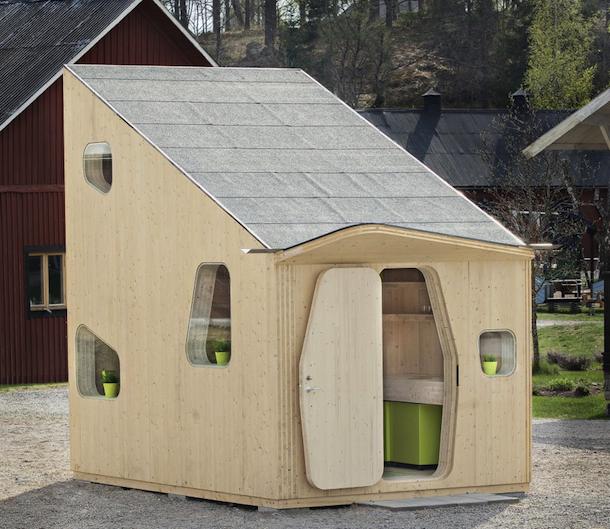
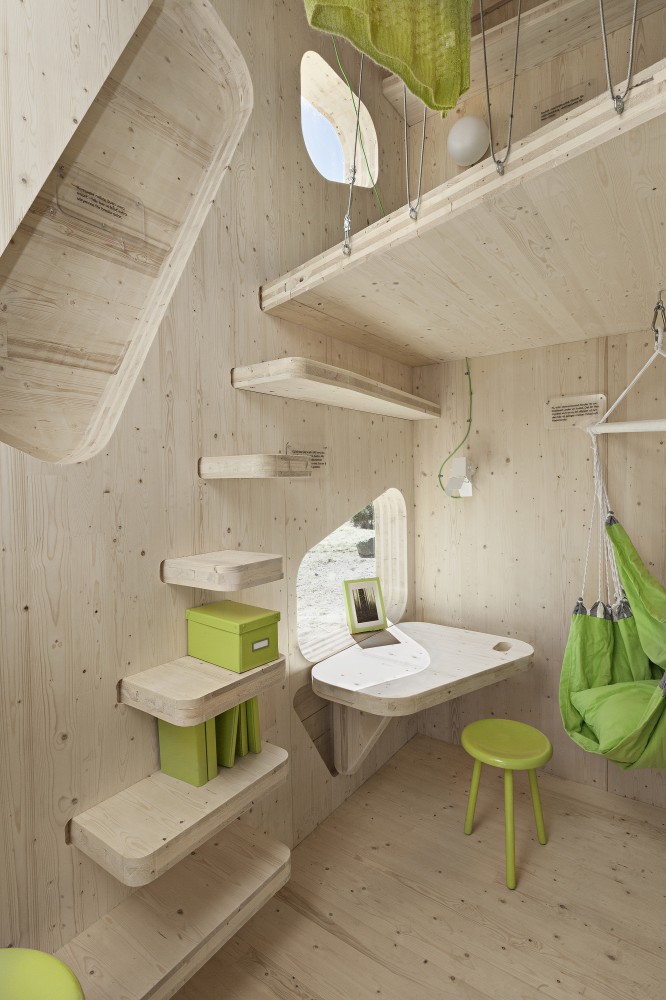
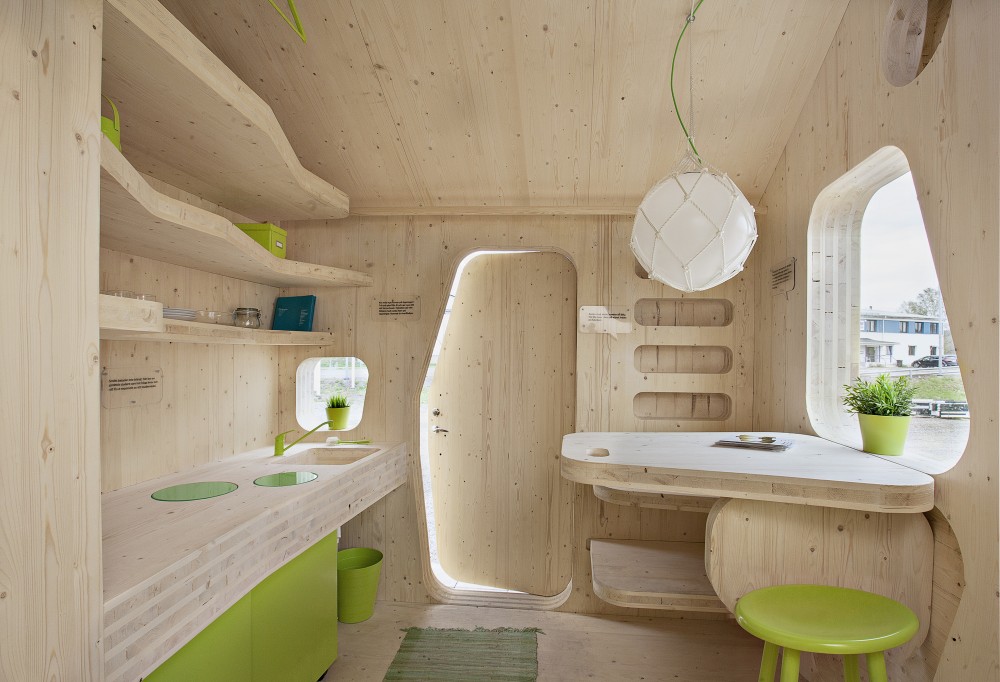
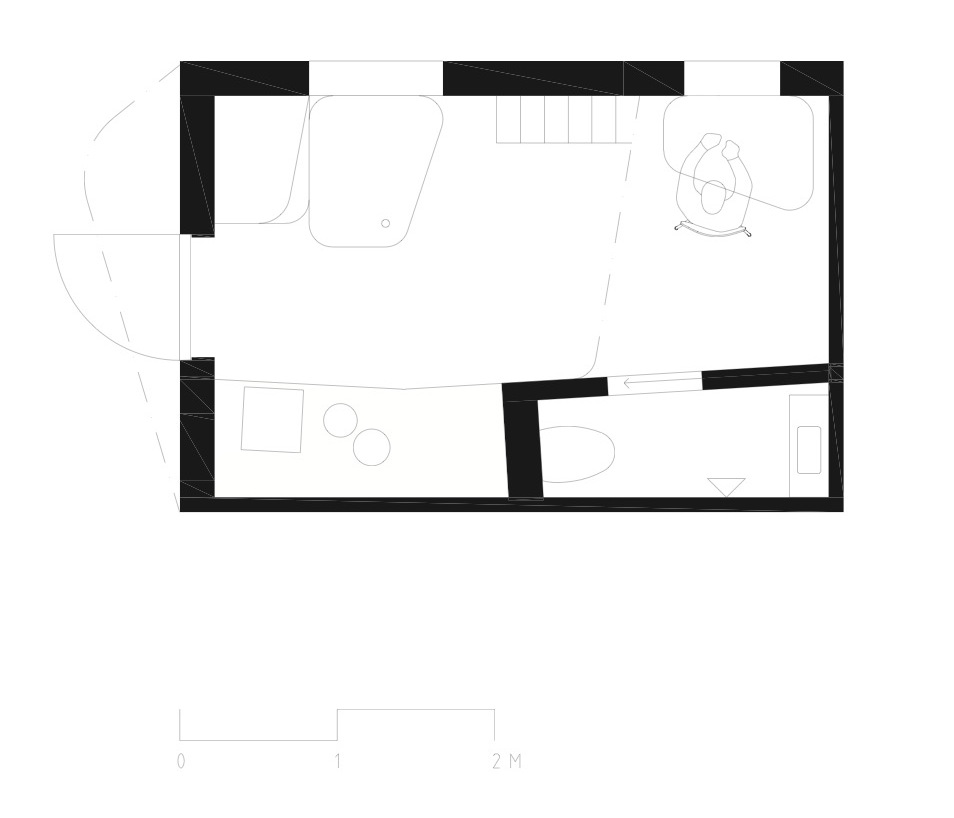
Next year at Lund University in Småland, Sweden, 22 students will get their own 10 sq meter micro-houses. The project,  whose prototype is currently on display at Virserum Art Museum, was designed by  Architects in collaboration with wood manufacturer Martinsons and real estate company AF Bostäder.

The intention of the project was to build something affordable, energy efficient and adaptable to the student body needs. Archdaily reports of its construction:

Through an efficient layout and the use of cross laminated wood as a construction material the rent is reduced by 50% and the ecological impact and carbon footprints is also significantly reduced.

The tiny units features sleeping lofts, kitchens, desks and bathrooms. We think the design looks phenomenal (no word as to whether the green accents will be part of the final product).

This is not the first time we looked at micro-housing at Lund University. Last year, we checked out their experimental 12 sq meter micro-student house. Like micro-houses in the US, the project sought to make housing without restrictive and expensive building regulations. This is a fair reason to conceive new housing structures.

But we will ask the same questions today as we did then. For many, college is one of the most important periods of socialization. Crucial to that is the shared, porous living experience. While undoubtably stylish, we wonder how these micro-houses will affect that? Will it lead to students isolating more? Of course, they could–and probably will–be located near each other, creating a sort of micro-commons, but knocking on a closed off house next door is very different than stepping through an open dorm room down the hall. With Sweden’s balmy climate, perhaps the designers thought the micro-house’s door might remain open most of the time.

Via Archdaily

A Simply Complex Urban Housing Solution

In Washington DC, a group calling itself Boneyard Studios is looking to provide an affordable, pared down solution to high cost, urban living. Similar to the Napoleon Complex by Jay Shafer’s company Four Lights, Boneyard Studios brings together several tiny houses to create ad hoc communal living that maintains a high degree of autonomy.

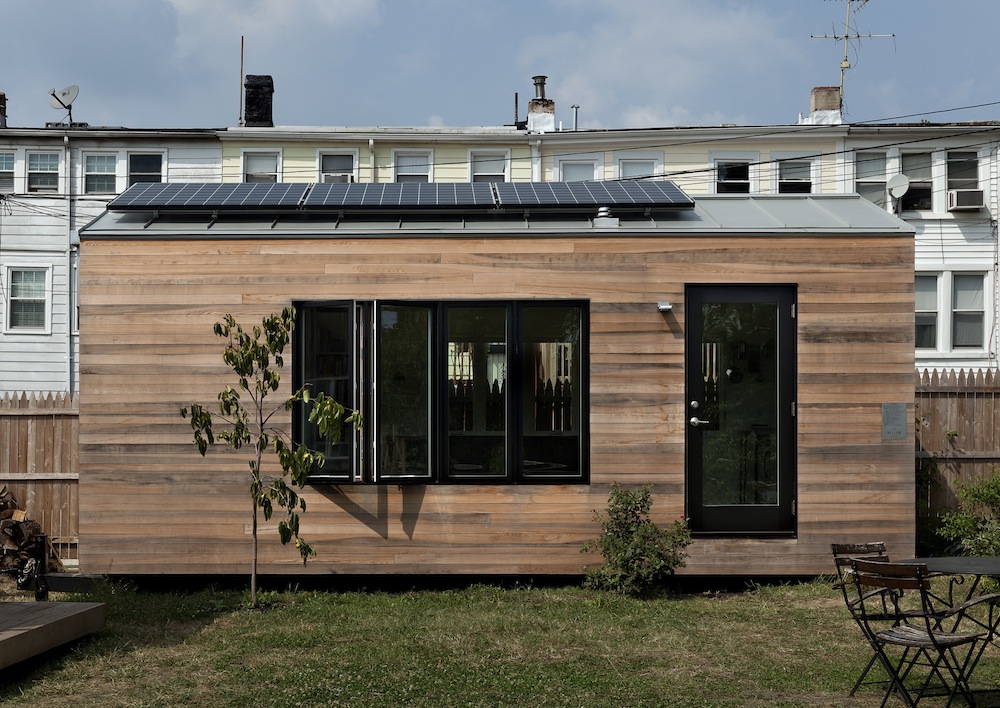
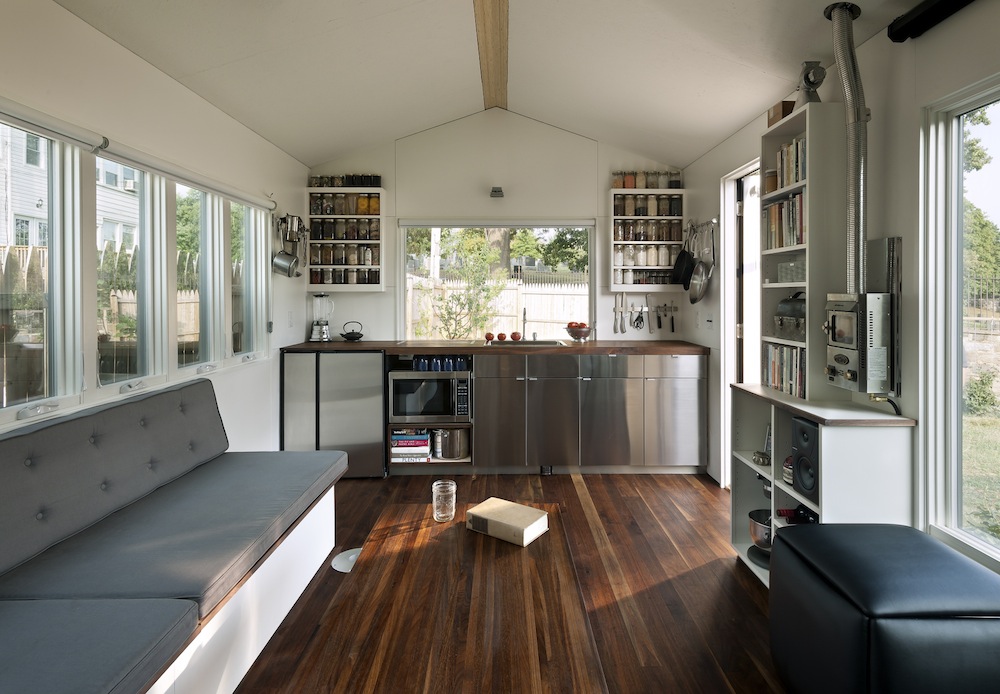
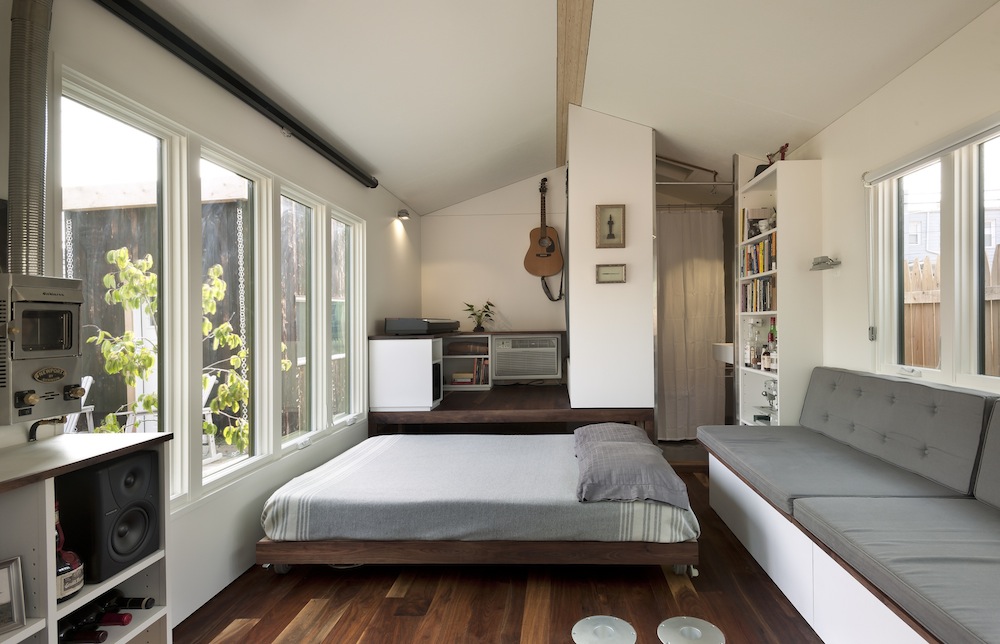
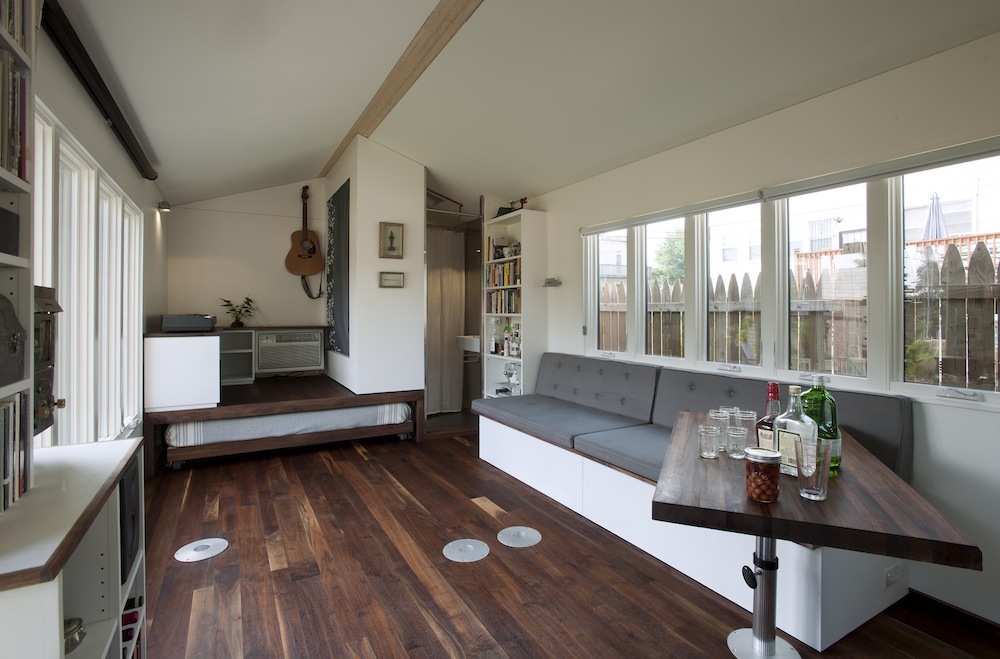
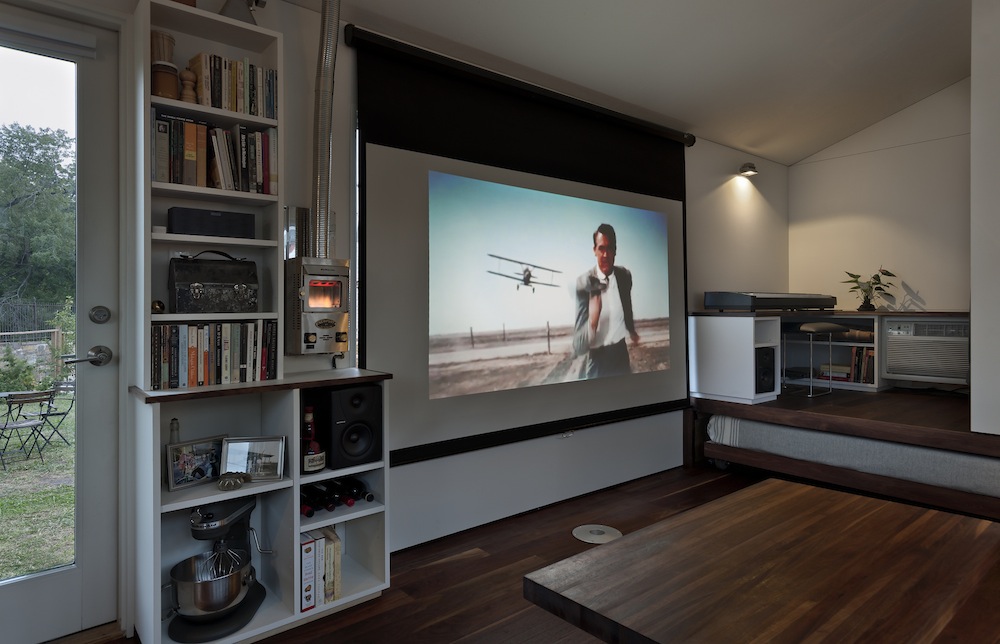
So far, BS has four tiny homes named Matchbox, Pera House, Minim House and Tumbleweed Lusby. They range from super stripped down Matchbox to the totally tricked out Minim, which won an AIA Merit Award (below). None exceed 210 square feet.

Like all great small housing ideas, it’s totally illegal. The four founders installed BS in a vacant lot hoping to attract the support of policy makers. From their site:

DC alleys could be great places to site tiny houses and this may be a possibility in the future if DC removes a code restriction that only allows habitable structures to be built on alleys with widths greater than 30 feet. Adding small units to empty alley spaces also draws on a rich DC tradition of alley dwellings and alley culture that began during the Civil War era and continued during the Great Migration, as chronicled in an excellent book, Alley Life in Washington by Jame Borchert.

While the DC alley dwelling tradition seems like a bit of scholarly gymnastics, we think the idea a good one overall. BS also represents a boon for tiny houses on the east coast, which has lagged way behind the other coast’s growth.

Tiny Solution to the Big Problem of Homelessness

Add Madison, Wisconsin to New York City and San Francisco to cities with major housing shortages. The 240K person midwestern city boasts a housing vacancy rate of 1.8%–four times lower than the national average. And like many cities with too few homes for too many people, a growing homeless population has emerged. A project called Occupy Madison Build has a possible solution for housing the 3K or so homeless Madisonians: build them tiny houses.

OM Build works much the way the UK project we looked at while back does, affording its residents the chance to develop practical building skills while simultaneously constructing their future home. Bruce Wallbaum, a board member of OM Build, told Al Jazeera America, “You [potential tiny house dwellers] go through an application process, you start work in the shop, you start earning hours toward a tiny home and eventually you reach a point where you’re in line to get a tiny home.”

OM Build faces one not-so-tiny bureaucratic challenge: Madison has a 48 hour cap on how long a trailer can be parked in the same spot. Organizers are hoping to get this code changed as well as rely on parking within one of the numerous faith organizations that have expressed approbation of the program.

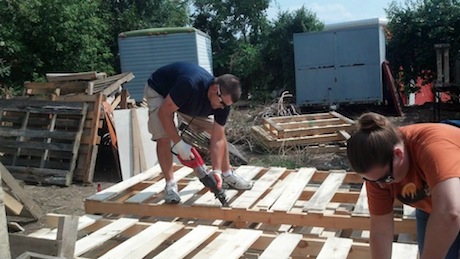
OM Build is a registered 501c nonprofit organization and all materials and labor are donated. Much of the lumber for the tiny house comes from reclaimed shipping pallets (a recent Pallet Palooza sought to dissemble enough pallets to provide lumber for the second OM Build house).

pallet-palooza

The first 98 sq ft OM Build tiny house is set to be completed any day now, with its builder/residents Chris Derrick and Betty Ybarra ready to move in. OM Build hopes to have eight more completed by the end of the year. It might not be a perfect home or a perfect plan, but it is a home and a plan. As a commenter succinctly wrote on Al Jazeera about the project, “If you don’t like it, try being homeless. Have compassion.”

Via Al Jazeera America

Take a Tiny House Vacation

You’re not a true minimalist if you don’t have a tiny house fantasy. You have it all mapped out: You’ll quit your job. Next, you’ll get rid of your current home and all your possessions except a spoon, pocket knife and a pair of convertible shorts. You’ll build your own tiny house out of scrap materials, except for that  top-of-the-line composting toilet you’ve been lusting after. You’ll set up on some kindly benefactor’s unused land. You’ll raise chickens and your own produce. You’ll make the paltry sum of money you need to survive by fishing out pennies at local fountains.

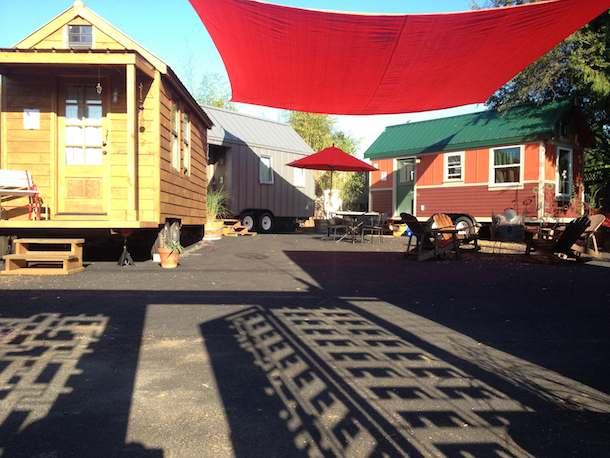
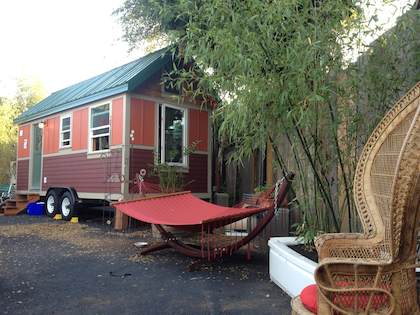
If this is your fantasy, a new hotel called Caravan in downtown Portland, OR (where else?) is giving you the opportunity to test-ride tiny house living before selling your home and kids. All of its three “rooms” are actually 100-200 sq ft tiny houses.

The rooms are not off-grid; they are outfitted with municipal electric and sewer service. And the short stay and concrete lot are not chicken-hatching or produce-raising friendly. And it’s a bit too steep to pay for with scavenged pennies: Nightly rates are $125/night, which includes your tiny house, cooking equipment, bedding and ear plugs (they warn that their central location can be noisy until 2am).

caravan-tiny-house-hammock

Two of the houses are big enough to fit 2-4 people and the other 1-2. There is a big courtyard at the center of the Caravan complex for chilling out and the occasional performance.

Like the rentable Airbnb tiny houses we looked at a while ago, Caravan gives you a low-commitment opportunity to affirm or squash your tiny house fantasy.

Find more info at Caravan’s website.