Lighten Up and Get Out of Town with this $150 DIY Bike Camper

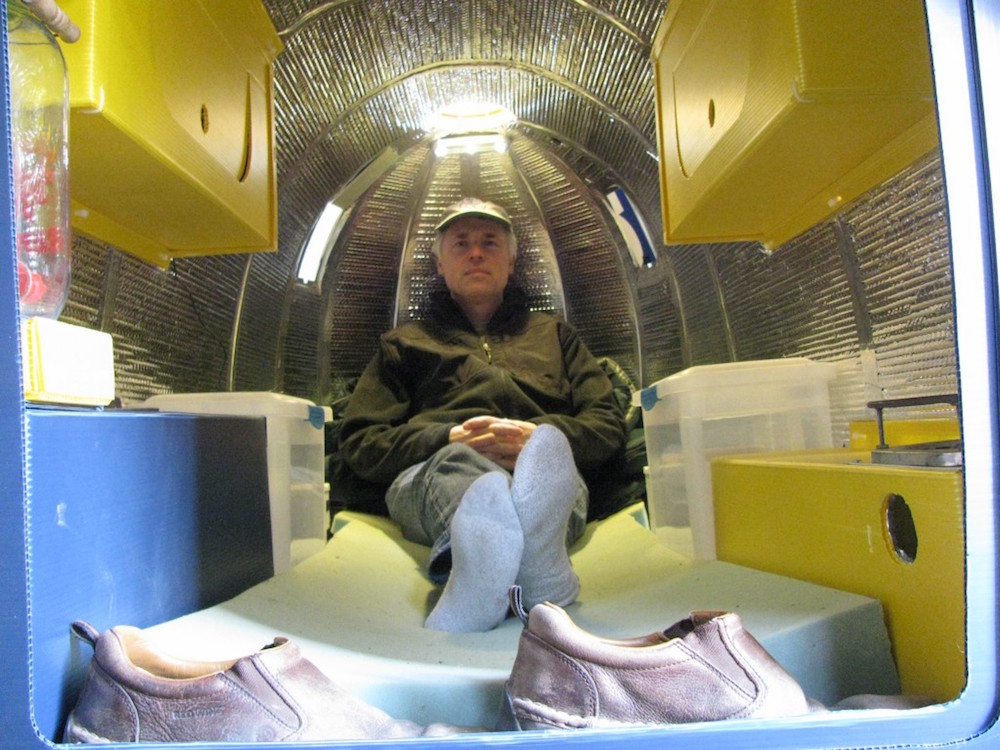
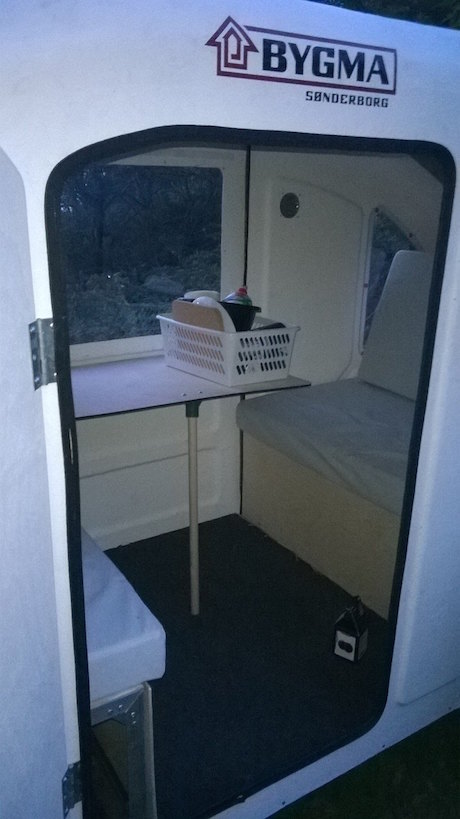
We’ve explored bicycle towed trailers in the past. In particular, the Wide Path Camper seemed like a nice execution of the idea. But as a number of readers noted, it had a couple big liabilities. First, was its weight of 100 lbs. While this is a reasonable weight for a camper, it’s a lot for a human to drag any considerable distance. The next was its high profile, which would catch the wind like nobody’s business. This Micro Airstream bike camper by maker extraordinaire Paul Elkins solves many of these problems, being lighter, sleeker and a lot cheaper than the WPC (or anything else we’ve come across for that matter).

paul-elkins-trailer paulelkins-interior

It has most everything a single tourers/nomad needs. At 45  lbs, it’s a bit heavier than a trailer, but has an insulated sleeping structure that adds a ton of functionality and removes the need for a tent. It has a low, curved profile, which will probably still catch the wind, but not so much as to prove unworkable. Best of all, Elkins offers plans to make the trailer for $150 out of materials such as zip ties and recycled campaign posters (a commodity that will abound in the coming months). Check out the above video by Fair Companies and be sure to visit Elkins other amazing DIY projects.

Startup Offers Apartments with Transcontinental Lease

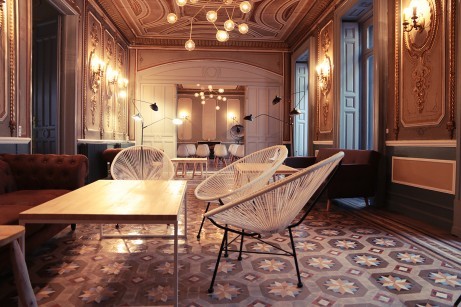
As more people ditch their offices and fixed addresses in favor of a laptop and strong wifi signal, nomadic living is having a strong resurgence (from Paleolithic times we suppose). With this growing class, the creation of housing specifically for them makes a lot of sense. There are hotels like Zoku that appeal to the nomad set, but at around €125/night for one of their lofts, the prices, while not crazy might be steep for some. Also, if you fully embrace nomadicity, you’re going to want to have more than one address (right now there’s only one in Amsterdam). This relatively affordable, flexible, transcontinental living is what Roam is all about. For one monthly rent payment, you can get a room in one of their five locations around the world.

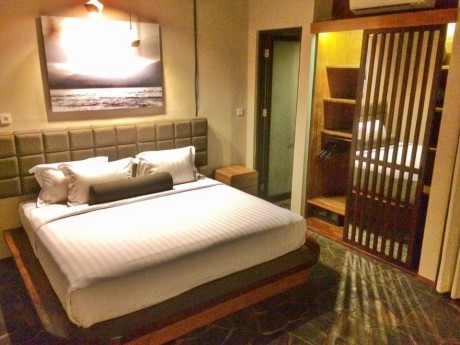
Roam charges $425 per week or $1,600 per month to access one of their co-living spaces. Right now, only location in Bali is up and running, but locations in Miami, Madrid, Buenos Aires and London are opening in the next three months. From what we can see, their furnished rooms are quite handsome and have slick communal spaces to meet fellow nomads. Of course super strong wifi signals are set up at each space.

roam-communalroam-room

Roam might sound a little like a hostel, but the rooms they show are decidedly more upscale. We also imagine it’d create more continuity as you might run into your “roommates” across the various locations. Roam seems like the perfect complement to experience-hungry, globalized, remote-working nomadic living.

1 Couple + 2 Bikes + 2 Kids + 5 Continents + 7 Years = Wow

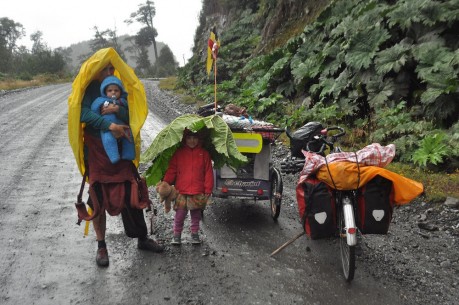
Few things will lighten your life like living on a bike. As the veteran of several long distance bike tours, I can attest how you quickly realize how little stuff you really need when you’re carrying it up a mountain pass. But living on a bike is not typically something you associate with raising children. It’s hard enough carrying your own crap, much less another human and theirs. But that’s exactly what Belgian couple Alice Goffart and Andoni Rodelgo did for seven years, traversing five continents by bike while raising two children. 

In an interview with Icebike.org, Alice describes how it all started. They set out from Belgium in 2004 en route to Berlin. After a couple months, they realized they weren’t done. They kept trucking until Alice was seven months pregnant in 2007 with their daughter Maia. They took a break, spending a few years in Belgium, saving money and getting restless. They hit the road again in 2010. Alice said this of their motivation to leave with child:

We knew we just wanted to go now. By bicycle there is no need to plan anything, that’s the beauty of that transportation (maybe it’s the beauty of being unemployed and ‘homeless’ too)…You just leave, and that’s it, you are gone. 5 km from your home you are in a totally different reality, not knowing where you will sleep, with no destination, no role in society, no-one to prove anything to, no agenda and no timetable.

Shortly after their second leg, Alice became pregnant. When she was seven months pregnant, they camped out in Bolivia until the baby was big enough to stash in a hammock in the trailer. They continued for a couple more years, returning to Belgium in 2013 when Maia started school.

mundo-04

The couple was able to afford the trip through a combination of savings and extreme thrift. They said they only spent €20K in their first three and a half years. Even with the kids, they only spent €700-800/month, which they came up with through savings and various means like selling stuff and speaking engagements. She said this about the expenses in general:

I think as soon as you give yourself a budget you adapt yourself to it. We could have spent a lot less if we needed too. We treated ourselves here and there with a hotel room in south-America where it is not too expensive…I think the best way to save money is just to really have the need to do so. Then you will find the way. We spent the same amount of money in Norway as in China. The difference was that in China we went to a restaurant here and there or a guest-room, and in Norway we bought pasta and oats in an Aldy.

While Alice is pretty gung ho about her experience, she is quick to point out that you needn’t travel to have the freewheeling traveler’s mindset, and that everyone–and their family–must do what’s right for them. For now, they’re camped out in Belgium, but they plan they to hit the road before too long.

Alice made a movie about the journey, which is showing around Europe (head to their site for more info). To read the whole interview, which goes into greater detail about the journey, head over to Icebike.org.

Breakdowns, Adventure Guaranteed

About a year ago, I wrote about Foster Huntington, a twenty-something who ditched his corporate design career to become a full time van-dwelling nomad. Inspired by Tupac Shakur’s Thug Life tattoo, Huntington created the Instagram hashtag #vanlife–a small act that inspired a movement of light-living, full and part time vandwellers (there are almost 300K Instagram pics with the hashtag).

The Atlantic made this great little documentary that provides a deeper look at the #vanlife subculture. While the doc catches up with Huntington (stationed in his bitchin treehouse), it spends most of the time interviewing Ryan Sellmeyer, aka @poseidonsbeard. Sellmeyer, his wife Christina and their two small children spend months on the road, rendezvousing with folks they meet through the Instagram hashtag #vanagonlife–a subset of the #vanlife community who drive (mostly vintage) VW Vanagons, a vehicle where regular mechanical failure is pretty much assured. Rather than an unfortunate side effect of an otherwise awesome vehicle, the breakdowns seem to be the primary appeal of the vehicle, ensuring none-too-rushed journeys and the ingenuity and camaraderie that are necessary to address said breakdowns.

Sellmeyer and Huntington’s lifestyles are nice counterpoints to the prevailing trends of bigger, faster, more efficient. These folks seem to value languor and connection for connection’s sake. It’s also a nice case where technology facilitates real connection and deeper experiences rather than inhibiting them. Do yourself a favor and spend the 12:34 minutes and watch the documentary.

Three More for the Road

Many people think about stopping their workaday lives, downsizing and lightening their loads to support more adventure and freedom. But few people go through with it. We always have (valid) excuses. The time is not quite right. We’re on the verge of a promotion and can’t quit or change our jobs now. We have kids and they will not adjust well to change. Etc.

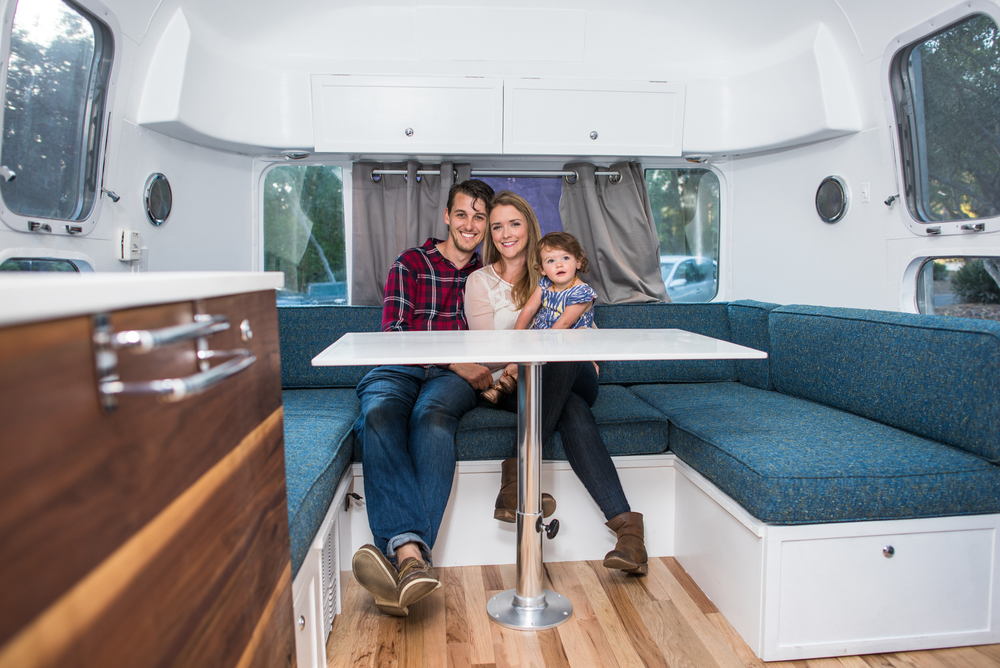
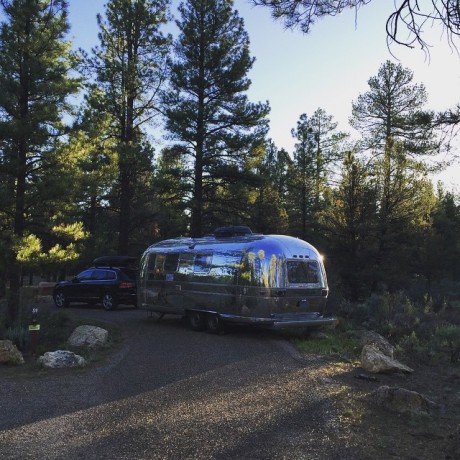
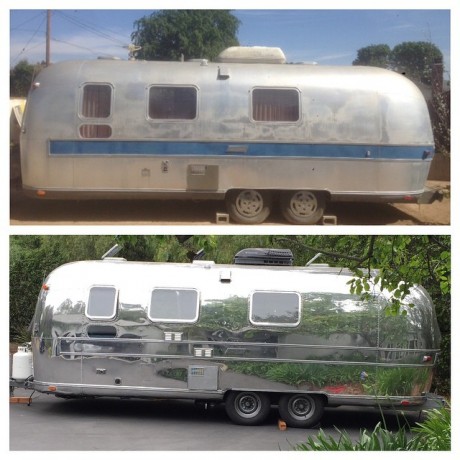
Fortunate for us, the MacMannis family are not thinkers (meant in the best possible way). Like many of us, they found themselves living a great but harried and stressful life, working too much and spending too little time together. Rather than doing more of the same, hoping things would get better, they stomped on their existential brakes. For them, putting on the brakes meant quitting their jobs, moving out of their home, ditching many of their possessions and hitting the road to live out of their 170 sq ft rehabbed 1973 Airstream–embarking on a trip of indeterminate length. We caught up with them to get a brief history of their adventure as well as find out how things are going.

DF: Tell me a bit about yourselves.

Gillian MacMannis: We are the MacMannis family–Gillian, Sean and one year old Avery June. We’ve spent the last 8 years working in technology in San Francisco. We met at work (and fell in love) shortly after moving to the Bay Area.

DF: What was life like before you hit the road?

GM: We had a great–albeit somewhat chaotic–life before we embarked on our journey. An awesome condo in Bernal Heights with a beautiful view of the city, fantastic friends, great jobs. We’ve always felt fortunate for the opportunities we’ve been given and have tried to make the most of them!

DF: What happened that prompted you to travel?

GM: We got to this point at work where we were working 60 hours a week, running around just going from one thing to the next. Being at home wasn’t relaxing or restful. Work was less fulfilling than we were accustomed to. We needed a reset; and thought some time away would help us to get back to what mattered most for our family.
rubberroadabode-airstream

Since we started dating, we have talked about taking time off between jobs to travel. We realized that would never happen naturally, so we got to the point that we thought, “we can keep making excuses about why now is not a good time, or we can just do this now.” We felt like in 30 years we might regret not doing it, but we certainly wouldn’t regret taking a few months to see the country. So we took the leap.

DF: Many people would be freaked out with such a decision. What was the decision like?

GM: Honestly, we had so much to get done before the trip that we didn’t have a lot of time to freak out about the trip itself. Everything from when to quit our jobs to where to put our stuff to how to find a trailer to where we were going. There was certainly a lot to think about, but it was actually one of the most exciting times just thinking through all the possibilities. Once we got into the Airstream renovation though, we definitely felt at times that we were in over our heads. Basically, we realized how much we didn’t know about RVing!

DF: What did you do with your house and stuff?

GM: Most of our belongings are in storage back in the Bay Area, a small fraction of it is with us on the trip and some is living with family members for the time being. We tried to purge things as we packed. The Airstream is only 170 square feet, so we really only had room for the absolute basics.

DF: What was the reaction of family and friends?

GM: All of our friends and family were really excited for us, and actually we were pretty surprised by the lack of negative reactions. We had quite a few friends who said they’d thought about doing the same thing, or who wanted to once they heard our plans! Those who had kids were even more supportive, and could identify with the desire to travel and spend more time with your kids while they are little, though some thought being in such a small space was pretty brave (stupid?).

DF: Tell me a little about your Airstream and your setup in general.

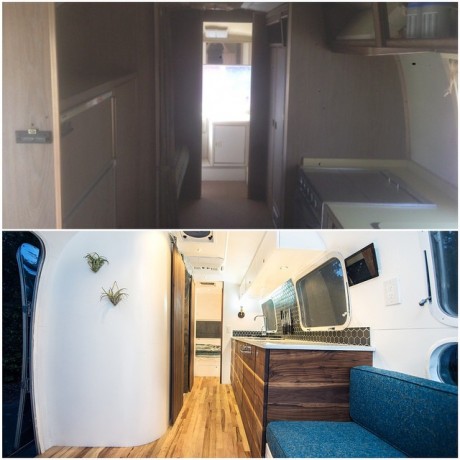
GM: We have a 25’ 1973 Airstream Trade Wind that we completely gutted and rebuilt with Townsend Travel Trailers in Santa Barbara, CA. The original floorplan was a little funky, so we moved the bedroom to the back, created a separate, galley bathroom, and built a convertible dinette in the front kitchen. Knowing we would be living in the trailer full-time, we tried to maximize both storage and floorspace.
rubberroadabode-airstream-exterior rubberroadabode-interior

DF: When did you leave? How’s it going?

GM: We left our jobs in April and moved to Santa Barbara to manage the rest of the Airstream renovation. We finally hit the road at the end of May, so we’ve been traveling now for about a month. So far it’s going well–we’ve gotten past the point of being complete novices to the RV world, and have racked up over 3500 miles already.

DF: What has been the hardest part of living like this?

GM: The hardest part has been the heat. It’s RV off-season for a reason, and we certainly didn’t make it easier on ourselves by heading south (we had family to see). We really didn’t know anything about RVing before heading out on this trip, so we were hit by a few surprises early on. Now that we are more familiar with the “quirks” of life on the road, we can plan a bit better. For example, we discovered that our refrigerator really doesn’t work well in the 90+ degree heat. So now we make sure we have a cooler of ice on hand and we can switch food items back and forth for days we are on the road.

DF: What has been the best?

GM: The best part has been the flexibility. If it’s too hot, or we feel like there is something else we want to see or do, we can just go ahead and do it. The most interesting and amazing things we have seen have been unplanned.

DF: How long do you intend to be out?

GM: We are leaving our timeline open. We expect to be on the road at least for a few more months, and we’ll decide on the road when we’re ready to start thinking about what’s next.

DF: I realize you haven’t been traveling all that long, but based on your journey so far, what words of wisdom would you give people who might feel trapped in more conventional situations?

MG: Our biggest fear was feeling “trapped” or handcuffed into a situation by overspending or overcommitment. Looking at buying a house in the Bay area and the prospect of taking on a big mortgage with the housing market as crazy as it is in SF was daunting to us and pushed us to think taking this trip wasn’t such a big risk after all. Obviously, shedding everything and moving into a small travel trailer is a bit extreme for most people. But living more mindfully, and thinking about what you bring into your life can really have an immediate impact on your happiness. This trip has really helped us to better understand what we actually need versus what we thought we needed.

Find out more about and follow the MacManisses on their blog rubberroadabode.com and on Instagram.

Woman Plunges into Deep End of Downsizing

I stood staring at three framed documents: My veterinary school diploma, the certificate that acknowledges the completion of my residency and my board certification in small animal internal medicine. What was I going to do with them? I am nearing the end of a two year process of radical downsizing, starting as a big old house person, and now living in the smallest space of my life.

In the Beginning

The process really started in 2007 when I moved from upstate New York to Seattle. The two homes I had owned were a 1890’s Queen Anne, and a 1920’s colonial. As a lover of old homes I had collected a large amount of antiques, many of which I had restored myself and those countless hours made them feel like a part of me.

I knew I would never be able to afford the same size and style of homes in Seattle, and the cost of the moving truck had to be considered. It was initially a painful process to part with things that I had put so much sweat equity into, but it started to get easier as the moving date arrived and the need to clear the house was immediate. The majority of the antiques were sold, with only a couple of pieces with strong sentimental value retained.

A New Life and a Different Perspective

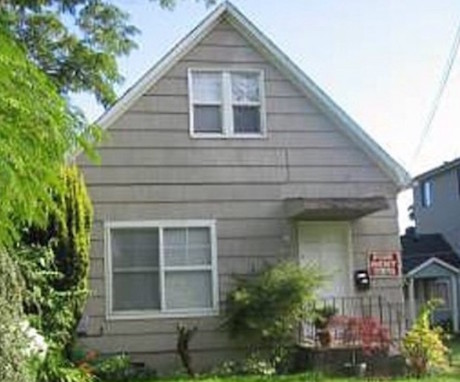
Despite liquidating rooms of furniture, I filled a rented two bedroom apartment to the brim, with barely any space to move around. Once I found a condo to buy, I purged even more items to lessen the clutter and I had created some space which felt good. I had gone from 2300 sf to 1200 sf, but was starting to realize it was still fairly large for a single person.

dana-house

Things changed in 2013 when I accepted a job that allowed me to work from home and have more free time. I also now had the freedom to choose to live wherever I wanted, which was closer to the marina. I had learned to sail since coming to Seattle and I was hooked. Moving into the city from the suburbs presented new challenges in affordability, and again a downsize was in order. There were more trips to Goodwill, items gifted to friends, shelves of CDs converted to digital music, and boxes of books donated. Parting with possessions had gotten a little easier, and living without as much clutter felt better. I was down to 1000 square feet.

I never thought that I would be buying my own little sailboat, but within a year of the move, I did.  I had been in a sailing club and chartered, which had been perfect for my needs. I loved overnight and multi-day trips, and now that I was so near the water all the time, the need to have my own was intense. The deal I made with myself was that I needed to make room in the budget for moorage, so that moorage and rent were no more than my current rent.

Apparently another downsize was in order and I found a 350 sf studio. I had some tough decisions to make. A family antique radio cabinet and an old barristers bookcase were placed with good friends. Couch, loveseat, patio and dining furniture were given away. Clothing and shoes had become very easy to pare down, but books were always far harder to let go, but I did it.

dana-books

Unplanned and the Biggest Change Yet

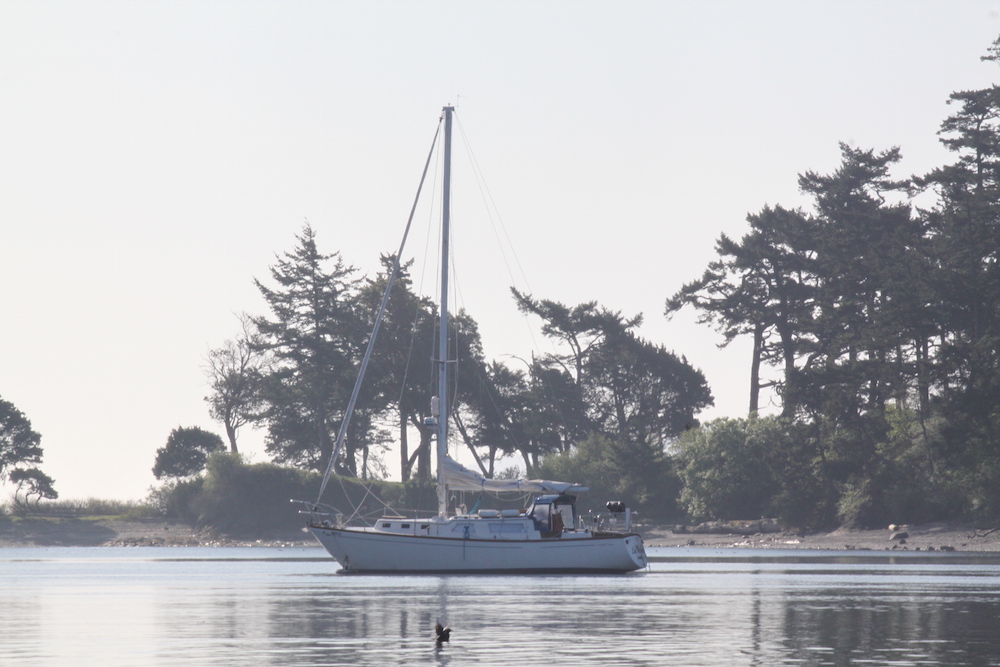
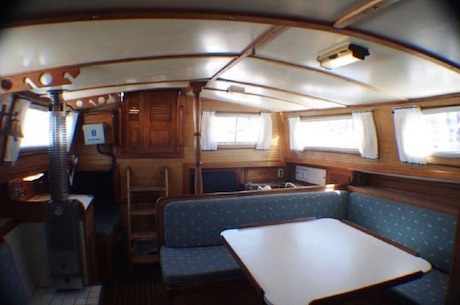
I loved my little studio, and I would have stayed there, but I liked my 32′ boat better. I found myself staying there more and more nights, and working there during the day. I didn’t want to go back to my comfortable studio. I preferred sleeping nestled in my cozy V-berth, even with the inconveniences that come with living on a boat. I was essentially living aboard, but with the safety net of a place on land which contained the last of my “stuff”. It didn’t make sense to pay for an apartment I wasn’t living in–it had to go.

dana-cabin

I am now down to less than 200 square feet with a 4′ x 4.5′ rented storage unit for boat related items, off season clothing, and some textbooks. The loss of my safety net is frightening, a little bit like a free fall, but at the same time it is exhilarating.

If I am very straight with myself, the diplomas and yearbooks serve no real purpose. When you live on a small boat, every item needs to have multiple uses and take up minimal space. Diplomas, yearbooks and old photos can be scanned.

I am more mobile and more free than I have ever been, and that is what I need to focus on. Yes, I’m walking into the unknown, but it is definitely not going to be boring.

Dana Brooks is an adventurer, veterinarian, sailor and cat-lover. You can find out more about her, her adventures, her boat and her cat at tinysails.com

It’s Your House on a Bike

We feature a number of homes that sit on internal combustion vehicles. Despite what you might think, these homes can be extremely green. First off, standard homes have fuel needs too, from heating hot water heaters to keeping stoves alight to keeping furnaces firing. Stationary homes consume gas, just not for locomotion. More importantly, there’s a dire need for efficiency when you’re moving your home around; everything that isn’t totally needed, whether it’s water for showering or an extra pair of pants, is sacrificed due to very limited space and keeping weight down so your vehicle can keep moving.

But if you’re like me (and I shouldn’t suspect, or hope, that you are) there’s the dream of the nomadic home that doesn’t rely on fossil fuels. In the past, we’ve looked at the Tricycle House as well as the Taku Tanku house–both were bicycle-powered housing options (the former somewhat plausible in its execution, the other not). We can now add a couple more HPNMs (human powered nomadic home…you heard it here first) to the mix.

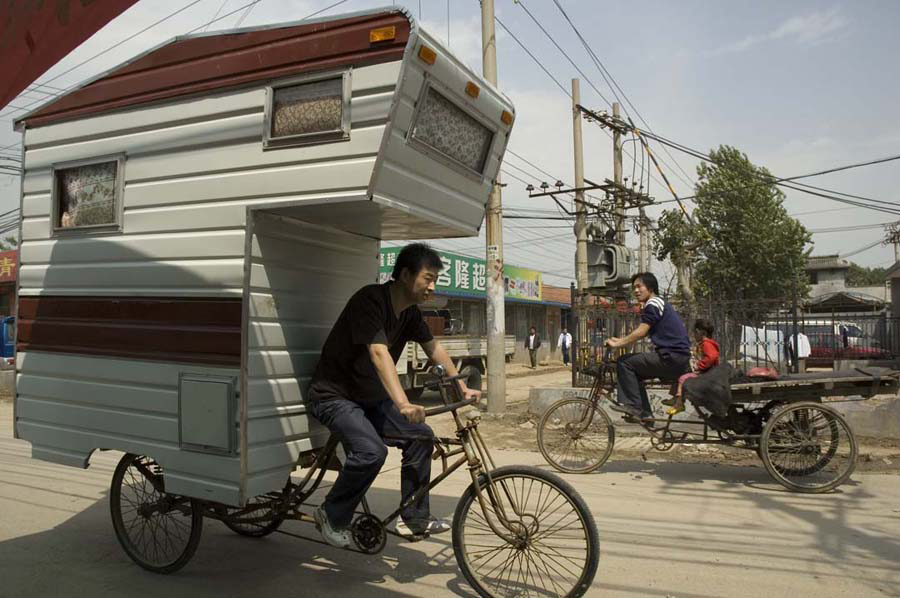
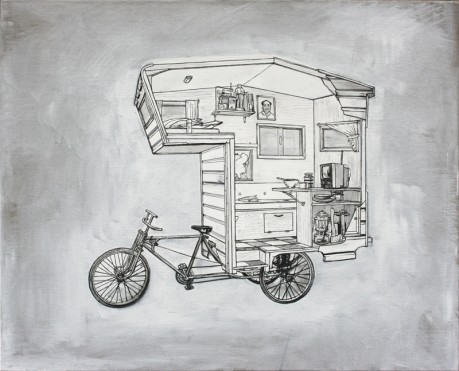
The first is the Camper Bike by artist Kevin Cyr, which resembles a 70s over-cab pickup truck camper. While there are no detailed images of the inside, a sketch shows the over cab portion containing a bed (for a medium sized cat, it appears), a dining table, a TV, some storage and a picture of Mao.

camper-bike-interior

In an interview on Icebike.org, Cyr explains the project:

The idea first came to me while I working in Beijing. I was joking with a friend that the only thing not on the back of bikes in China are houses. I had been seeing people, mostly working class men hauling goods on three wheeled bikes—rickshaws with bamboo flat beds. They were carrying huge loads of foam and plastic for recycling, furniture, and building materials. There were also a lot of food venders at open markets cooking meals on the backs of these bikes, it was very interesting. They seemed to use them in every way imaginable much in the way Americans use pick-up trucks.

He built the Camper Bike, which he describes as a sculpture, over the course of three trips over three years.

Cyr made few concessions to practicality. He used an old, rickety government issue bike as the camper’s host vehicle. The camper is mounted on a wood frame, which is significantly heavier than an aluminum or composite one–Cyr suspects the whole thing weighs a very portly 200 kgs (440 lbs). Cyr said when he climbs up to the bed area, the camper sways and feels as though it’ll fall over. He says if he were to make it again, that’d he rectify these design flaws.

WPC

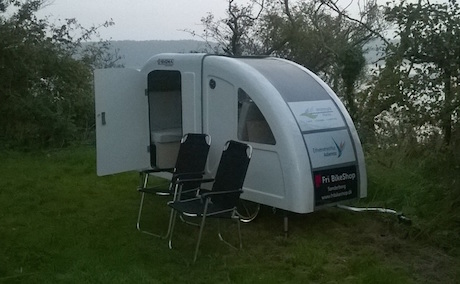
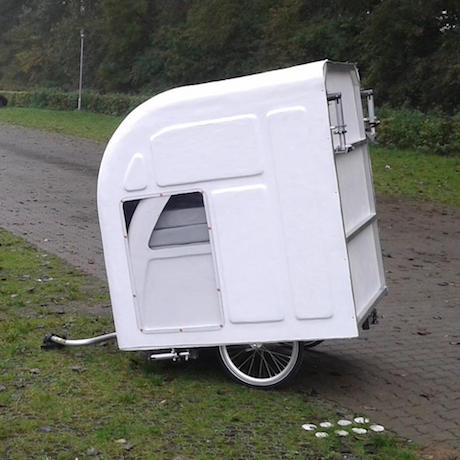
Rectification of those issues is what Dane Mads Johansen has done with his Wide Path Camper (Johansen said he was inspired by Cyr’s project). Unlike the Camper Bike, the WPC is a trailer, so you can choose which bike you want to affix it to. It also uses lightweight materials keeping weight down to a very reasonable 45 kgs (100 lbs). The camper, which has two sections that nest on top of each other when being towed, features a seating area that converts to a bed and offers around 11 cubic feet of storage (a little less than the trunk of a Honda Civic).

WPC-folded WPC-interior

Unlike every other bike-camper we’ve seen, the WPC is not vaporware. Johansen is taking pre-orders and expects to start delivering next month. The basic camper sells for €2000 ($2200 USD) and there are a number of available upgrades like a €600 solar package.

Some of you might be thinking, “Why not just load panniers or a trailer with camping gear, achieve the same result as the camper and save money and weight.” This is a nice idea, but belies the hard truths of bike touring, which often includes inclement weather and a deep desire for comfort at the end of a long day of biking (I’ve bike toured the world extensively including riding 1.5 times across US, so I feel I can speak on the matter with some authority).

At 100 lbs without gear, the WPC is still pretty heavy (my cross-country rig weighed a little over 50 lbs with full camping gear), so I think its best application is limited geography tours or a quasi-living situations–i.e. setting up at a campground or in someone’s yard where there’s access to a toilet and running water. However you use it, it’s a very cool piece of gear.

Many thanks to Mads for the tips!

Furniture Fit for the Modern Nomad

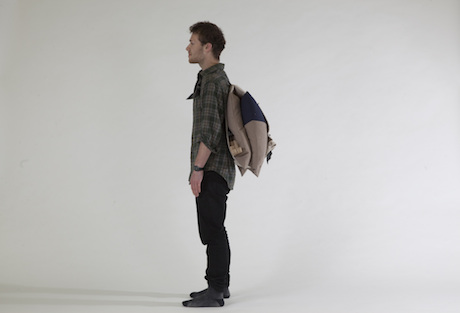
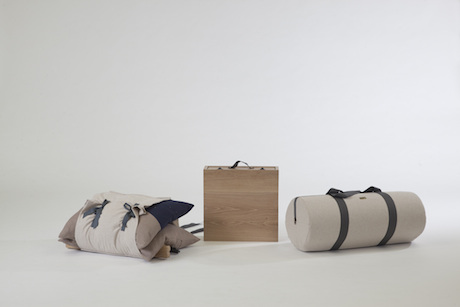
If you haven’t figured it out, we’re pretty enamored by nomadic living here at LifeEdited. It’s not that we want everyone to live a transient existence. It’s just that we think living light, possessing only necessary, cherished and used objects has its advantages whether you’re breaking camp every four days or ev ery four decades. This collection by London’s Tilly Blue Davies is a nice example of lightweight furniture that is portable enough for all but the most nomadic souls, yet elegant enough for full time use.

tilly-blue-backpack tilly-blue-travel-closedBlue Davies aptly named “Travel Collection” includes a lounge chair that becomes a backpack, side table that becomes a suitcase and a bed roll that becomes a duffel bag. It’s reminiscent of the IKEA PS 2014 collection and the TRUE ‘IN A BOX‘ collection we’ve seen before, albeit higher quality than the former and less militaristic than the latter.

Via Remodelista

Follow Up on the World Changing Ten Foot Cube

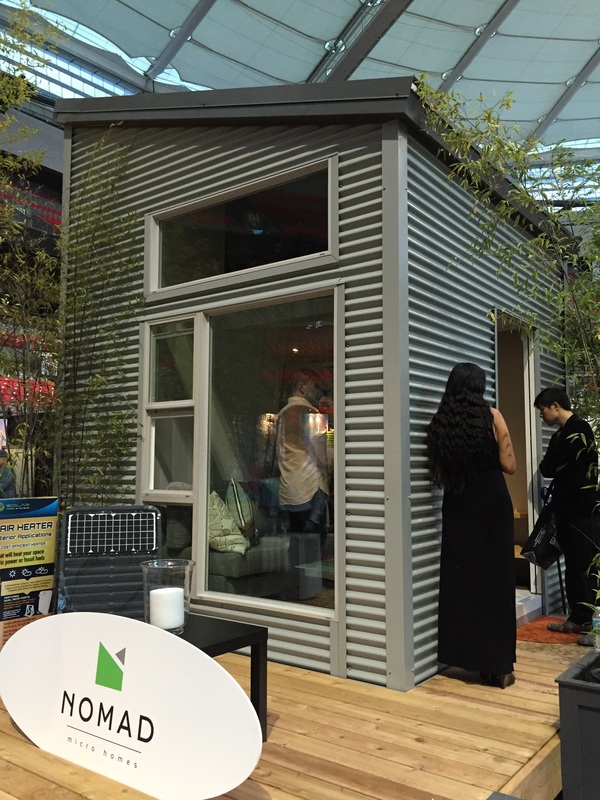
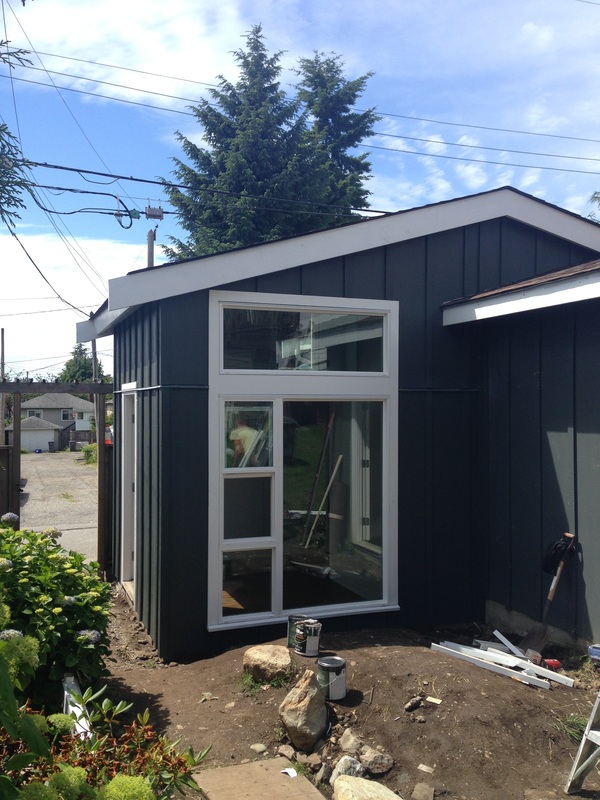
About a year ago we featured the NOMAD Micro Home, a tiny, affordable, easy-to-assemble, put-anywhere house with smart and modern architecture. Beyond its good looks, the post became one of our most popular because of its founder Ian Kent’s mission, which was to design a home that supports sustainable, affordable, and non-consumer living. The concept was a great illustration of how form can inform function and vice versa.

One year later, NOMAD is very much alive and well and taking orders for their tiny digs. Their website allows you to purchase one of four models (all prices in $CAD):

  • The $15K NOMAD Grow, which is more or less a shed using the same exterior as the home.
  • The $23K NOMAD Space, which lacks plumbing and is suitable as an attached or unattached addition to your existing home.
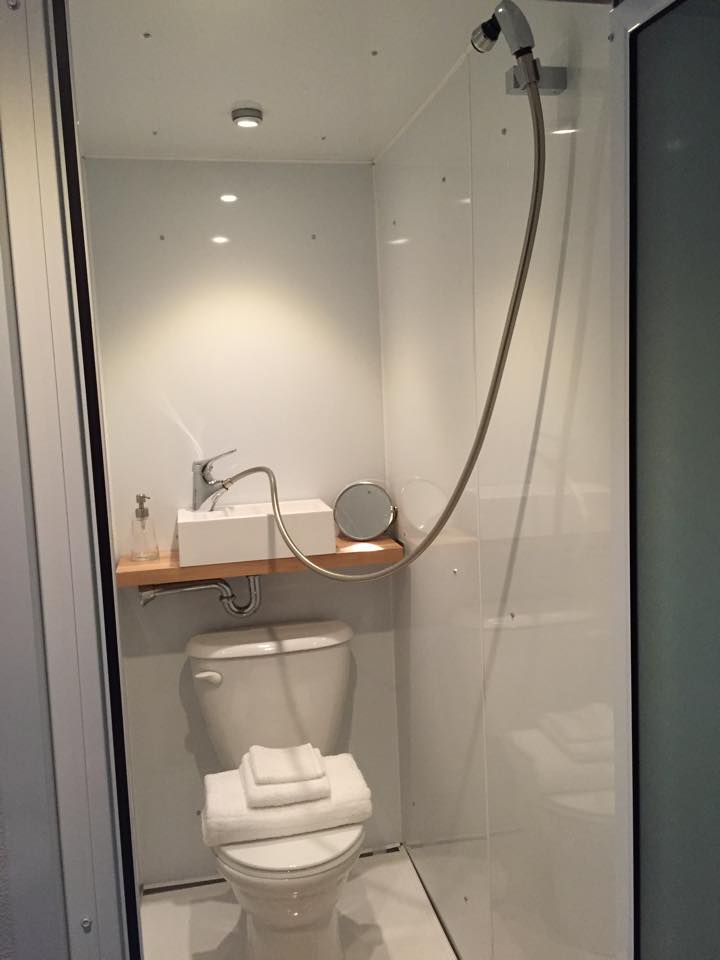
  • The $28K NOMAD Live is, as you might guess, a fully functioning home with appliances and heat.
  • The $42K NOMAD Zero, which is a fully functioning off-the-grid house with a complement of sustainable power and water harvesting add-ons.

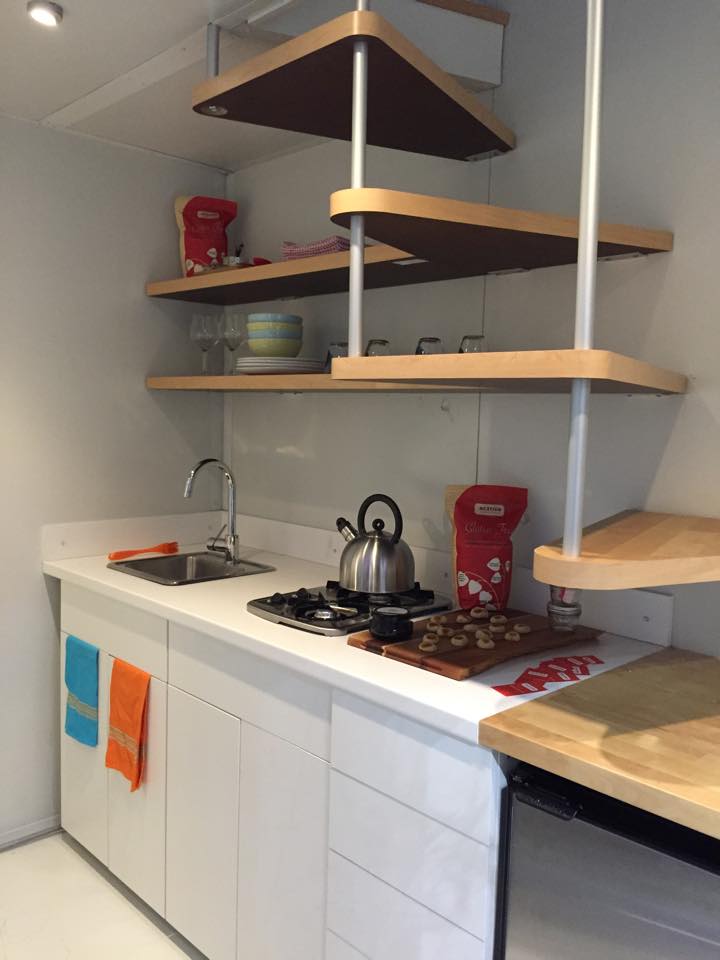
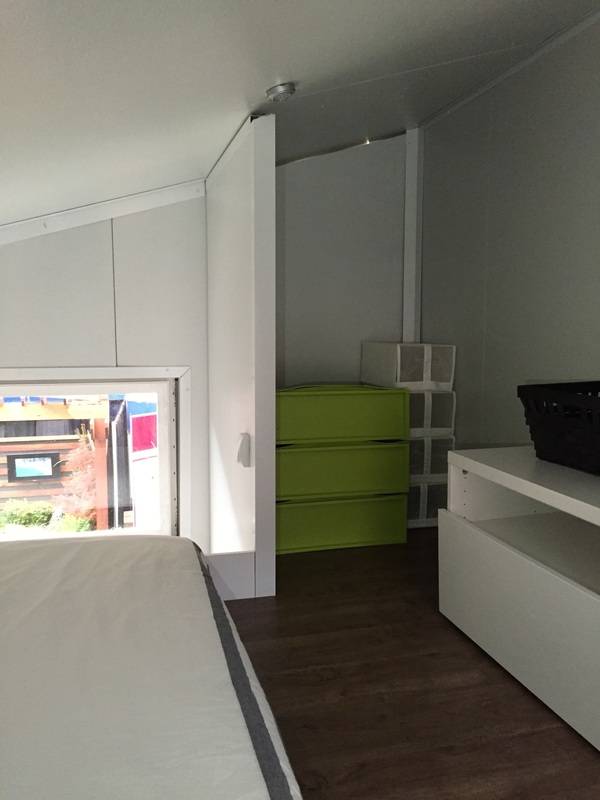
They offer countless possibilities for customization between each model, and two or more NOMADs can be easily combined to increase contiguous floor space. NOMAD offers several furniture and power add-ons à la carte as well.

Kent told us that they should be able to get your micro home ready in 60 days or less upon order. Sales have already begun near their British Columbia home; however, they designed the flat-packed NOMAD for easy shipping worldwide to the US and other global locales such as the United Kingdom and Australia where interest has been huge since they launched their concept. Inquiries are welcome through their website.

Like pretty much all tiny houses, the only thing stopping NOMAD’s mission of liberation-through-housing is restrictive housing policies–which is, unfortunately, a persistent stoppage. Though many communities in both US and Canada basically limit tiny homes to being set up as an ADU or stealthy off-grid housing, NOMAD has tackled this issue through its modular capabilities. Kent also told us that, beyond ADUs, he sees a lot of promise in recreational property and eco-resorts in the near future.

“Our main objective with NOMAD is to address affordable, accessible housing in first-world countries, and hopefully even extend the concept to some third-world nations,” Kent said.

“We also want to pave the way for a new outlook on life, being one of simplicity and respect for the environment,” he continues. “Moving away from consumerism and back to what is really important like family, passionate endeavors, community involvement and helping others, eliminating debt, prioritizing mental and physical health, and lots more.” He believes downsizing and getting rid of your mortgage is a great start.  We couldn’t agree with him more and wish NOMAD the best of luck.

This Transforming Van Got Back

Perhaps it’s just us, but when temperatures descend in the northern parts of the northern hemisphere, ideations about packing everything in and heading south tend to arise. Should one be so nomadically disposed, we think the Doubleback by UK’s Danbury Motor Caravans would be a pretty slick getaway vehicle.

Based on the Volkswagen Transporter, the van is reminiscent of Westfalia vans of yore and its modern descendants. Unlike those vehicles, with a flick of a switch, the Doubleback has a motorized tail that extends out, adding an additional 6.5′ of usable space (basically, double the standard layout). Self-leveling legs descend from the tail that can handle up to 1300 lbs of load (not that you’d ever need that much). The tail has a lightweight composite and aluminum construction that only adds another 330 lbs, which surely help keep fuel consumption reasonable. The addition of the tail adds considerable breathing room to the normally tight VW van interiors.

The van also features two swiveling captains chairs at the front, bench seating for three in the rear, a removable dining table, a kitchen and an additional drop down bed on the top of the cab, making it able to sleep up to four. The standard setup only has two buckled seats, meaning parents might have to leave their kids at home or choose the option for a third seat directly aft of the front seats (still not ideal for a family of four or larger, which we imagine this vehicle would suit well).

The Doubleback cost £55K (US$88K), and looking around Danbury’s site, we imagine you could option it out to make it a bit more. Unfortunately, it’s not available in the US.