WeLive Goes Live, Sorta

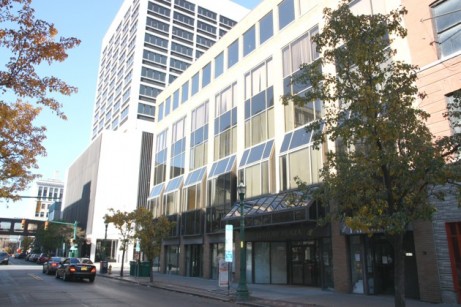
A while back we reported about WeLive, the residential arm of the coworking giant WeWork. That post gave some of the spec’s for their Crystal City project, which converted a 12 story office building outside of DC into massive complex filled with micro apartments, communal recreational and coworking spaces. Well, unbeknownst to many, WeWork was developing another project at 110 Wall Street in Manhattan’s financial district (also the site of an existing WeWork coworking space). The project will eventually house 600 folks on 20 floors. They recently announced a beta launch at the building, which will house 80 WeWork members in 45 units.

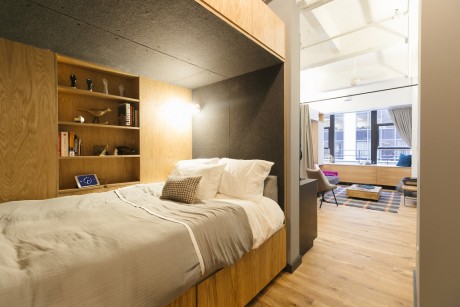
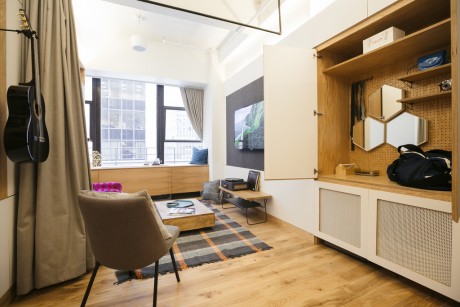
Similar to Ollie in New York, The Collective in the UK, CommonSpace in Syracuse and other such developments, WeLive (not the official name for the record) seeks to create a whole universe for its residents. The pictures released by WeWork show handsome apartments designed by ARExA Architecture, whose principal and Creative Director Darrick Borowski designed one of our favorite micro-apartments. The interior incorporates Resource Furniture space saving beds. There will be studios and one and two bedroom units. The pictured unit is a two bed studio separated by a curtain (a setup that will probably not appeal to everyone). 

Welive-second-bedroom

The private units will be supplemented by common areas on every floor. There will be social directors, who, according to Fast Company, “Will help plan Sunday-night suppers, game nights, karaoke, and fitness classes.” Additional services like wifi, cable and cleaning are also included. You could, theoretically, never have to leave the building if you so chose.

welive-dresser

The whole concept raises a somewhat thorny question: would having your coworking space share a building with your apartment be a good thing? Or might it create a somewhat insular existence, where work and and personal lives have no division, where you run into the same (somewhat homogenous) crowd day in, day out? These are somewhat academic questions–literally. What WeWork is doing is creating something akin to an academic campus, albeit with a professional twist, a model that seems to work just fine. Which is good, as WeWork sees their residential endeavors making up 21% of their revenue by 2018. 

Via Fast Company

Small, Social, Affordable Living Coming Soon to Upstate New York

I’ve written here about several all inclusive housing developments that are aimed at so called Millennials. Ollie in New York. WeLive in DC. The Collective in London. These places combine small individual living spaces with ample common spaces including lounges, movie rooms and co-working spaces–all resulting in a very social, low-fuss living experience. While these developments are exciting, their locations make them untenable for many Millennials. “Affordable” in NYC, DC and London is, for many, still god-awfully expensive. Which is why I’m excited about a new housing development called Commonspace in Syracuse, New York–it has many of the shared living qualities of the aforementioned developments, but it is located in a city where property values are still within reach for folks who aren’t pulling in $200K straight out of Wharton.

commonspace

Commonspace is an extension of CoWorks, a coworking space opened last February by fellow upstaters Troy Evans and John Talarico. Like WeLive and the Providence Arcade, Commonspace is a retrofit of an older building–in this case, a pretty unassuming five story office building. The first floor is retail, while the second floor houses CoWorks. The third floor is used as rented out office space, while the top two floors will house Commonspace, which has 21 private micro-apartments. Each unit will have its own kitchenette, bathroom and is located toward the outer edge of the building so they have their own window. Units will be no larger than 300 sq ft and will include furnishings designed to maximize the space like built-in beds that flip up to access storage underneath, floor to ceiling storage and more.

Split between the fourth and fifth floors are the common areas that include a professional kitchen, lounge, game room and screening room. Residents will also be able to access the downstairs coworking space. There will be an onsite social coordinator as well as online community network to keep people connected. Evans told me the idea was to make the building into a neighborhood.

Commonspace’s innovative housing model is not necessarily original. “People are doing this in bigger cities,” Talarico told me. But locating it in a medium sized, “second tier” city is. “We want keep people here. A lot of people [to whom Commonspace will appeal to] are remote workers. They can see how they living great lives on smaller incomes.”

Syracuse is seeing a bit of a rebirth, according to Evans. Population is starting to climb after years of stagnation and decline. And much of this growth is happening downtown, driving rents up. An average one bedroom goes for around $1400. Rents for Commonspace units, which will be furnished and include utilities and even access to the coworking space, will start around $800. This low cost coupled with a built in network of potential collaborators is ideal for people who might be starting a new venture–or want a fun place to live that doesn’t cost a fortune. 

Evans and Talarico would like to expand the idea into Rochester, Utica, Ithaca and other upstate New York cities. Evans said that they want “to keep young people part of social circle so they want to stick around.” With a combination of dynamic, social living and affordability, I think they might just achieve their goal.

They expect renovations to be complete in five to six months and preleasing has already begun. More info at Commonspace.io.

Image credit: Alana Semuels

Breather Investment Might Show that People Will Subscribe to Anything

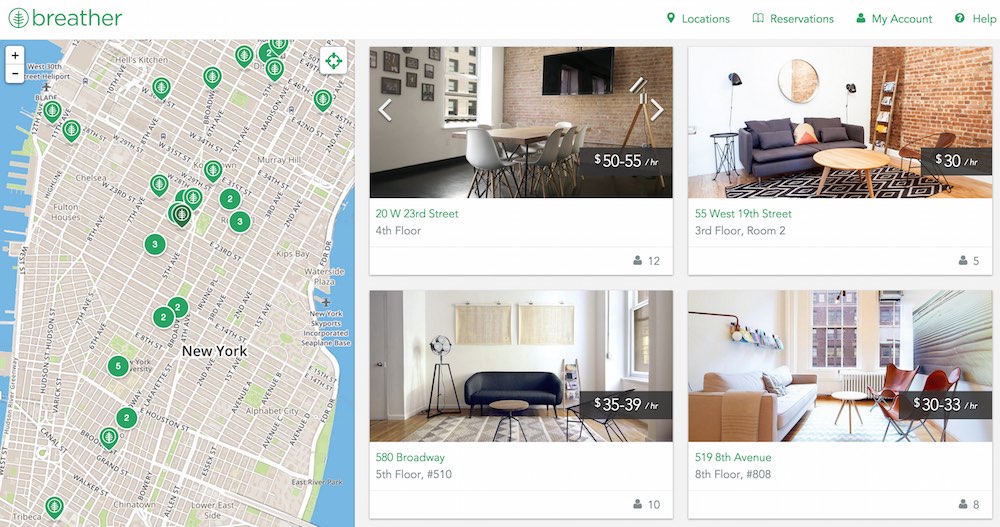
This site profiled the company Breather a couple years ago right after its launch. For lack of a more original description, Breather does for living and meeting rooms what Airbnb does for bedrooms. Via its site and app, Breather allows on-demand rentals of quiet, clean, wifi-enabled spaces in cities across North America. These aren’t places to stay for a long time; rentals are anywhere from 30 minutes to a day. These are place to work, have a quick meeting, meditate, breastfeed or simply get some quiet in an otherwise hectic day.

Today, Breather announced that it raised $20M of series B funding led by Peter Thiel’s Valar Ventures. This is a lot of money invested in a product that has no competitors or established market. Despite this–or perhaps because of this–the Breather capital influx may well be a harbinger of things to come, evidenced by its esteemed investor pool. If you’re not familiar with Peter Thiel, he cofounded PayPal with Elon Musk; he was the first outside investor in Facebook; he’s founded a number of other ventures that would be career-defining for most people to boot. He’s a man with a knack for seeing what’s next. So what does he (and a slew of other investors, it should be noted) see in Breather?

A few months back, I wrote a post called “Life as a Service (LaaS).” The concept of the post was based on the term Software as Service (SaaS)–an increasingly common model where software companies (Adobe, Microsoft, etc) charge a subscription fee for access to their software. The benefits of this type of service is that your software is forever current and you bypass many of the perils localized computing and storage. What I suggested is that this type of system can and is being applied to virtually every material need we might have, from cars to clothes to toys and more. In this model, things are accessed and subscribed to, not owned and paid for outright.

Yet I wrote the LaaS post with middling conviction, believing there were some things that would always defy shared or subscription-based ownership. You can’t very well subscribe to a living room, can you? But Breather shows that you can, and its continuation and growth are evidence of the growing catalog of things we may no longer own in the future. It also lends credence to the idea promulgated by Gunnar Branson about how real estate is being affected by Moore’s Law; through technology, we can access spaces that were once only available through ownership. Now we can use them only when we need them. Not only that, others can use the same space when they need them. This shared access has the potential to shrink our overall real estate needs, saving money, space and natural resources. It’s an exciting concept and one we look forward to seeing grow.

Insta-Offices for the Remote Worker

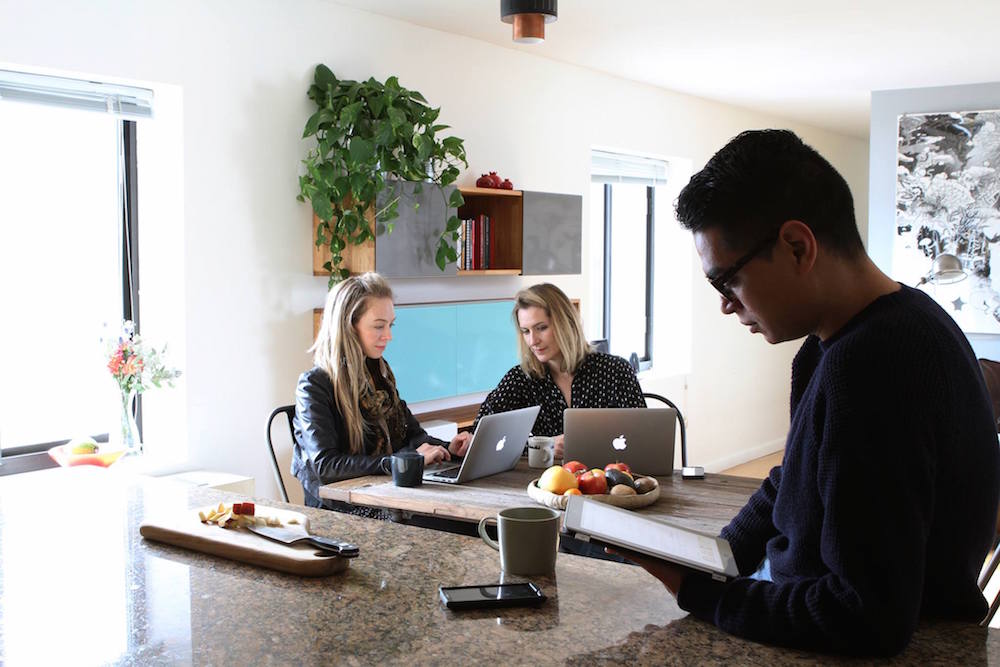
Working remotely is great because you can cut out commuting time, it makes you less bound to 9-5 workaday hours, it often allows you to work from anywhere in the world, you can spend more time with family and so on. But it can also be isolating, your home can be a minefield of distraction and even if you want to get out, you might not live near a coffee shop that’s cool with people hanging out all day after ordering a small coffee. A new venture called SpareChair is offering an alternative to work-from-home isolation and all-day Starbucks loitering, hooking you up with other remote workers to create insta-offices.

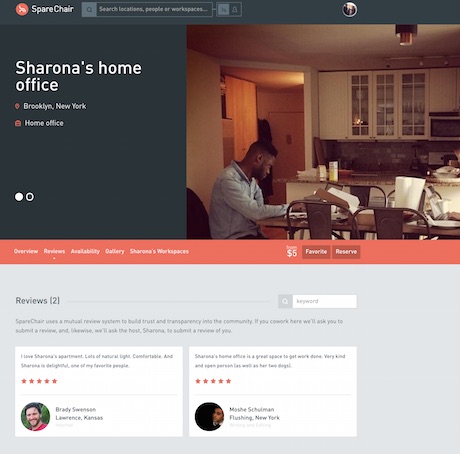
SpareChair works a lot like Airbnb, letting people open up their homes to the public for the purposes of coworking. Like Airbnb, SpareChair’s website has details about the space’s features (wifi, coffee, etc) and pictures of the space itself. There are peer reviews of both spaces and members to make sure everyone maintains a high level of quality and decorum.

spare-chair

To book a coworking session, you first make a profile with your personal info: profession, short bio, etc. Then search for a space and navigate to its page where there will be a schedule of available times and vacancies. From there, request a session (e.g. Tuesday, March 17 10am-1pm), enter payment info and check out. Like Airbnb, the site’s host has to confirm the reservation in case several people reserve at the same time or there’s an unforeseen scheduling conflict. Many of the private spaces are as cheap as $5 for an all day session and few are more than $15 (SpareChair charges a small fee). They also have numerous coworking spaces on their network; these tend to run around $30/day–still pretty cheap if this is your primary office.

SpareChair co-founder Sharona Coutts told us she started SpareChair because she needed it. “I work from home and while I like the concept of coworking spaces, I didn’t necessarily want to go into one every day, or even randomly, since you don’t necessarily get to interact with people when you’re there. Plus, at $35 a day, it can be pricey.”

SpareChair wants to be more than a space to work; they are out to create community and help people advance their careers. “We had a writer’s coworking session on Tuesday night, and our members were able to help each other work on drafts, refine ideas and focus on writing for three hours,” Coutts told us. “Because we know what field each of our members works in, we can curate specialized events like that, and we can also pair people with each other, and with the right host. So, for example, if you’re a freelance designer, you could search for hosts who are designers or design firms, and go and cowork with them for a day, week or month. It’s pretty potent networking, without the awkwardness.”

SpareChair is still in beta mode so you’ll need to request an invite, but the site is expanding quickly and already has locations in NYC, the Bay Area, Santa Cruz, LA, Chicago, Boulder CO, Nashville, Minneapolis and others. They’ve also got requests from more than 40 countries, including Brazil, Norway, the UK and Thailand. Coutts sees big things for this simple idea. “SpareChair will be the world’s biggest and most meaningful community–both online and off–of people who work from home. We are building a space for people to cowork and network, as well as to monetize under-utilized space. We haven’t paid for any marketing. Our community in the US has grown to 700 strong based solely on word of mouth and press!”

UK’s The Collective Offers Whole System Design Living

London is one of the most expensive cities in the world, and like many such cities, incomes have not kept pace with the cost of living in general and housing costs in particular. As we saw when we checked out NYC’s Stage 3 Properties, the situation is squeezing many young people out of town or into marginal housing situations. Yet these same young people are less interested in the big places that cost so much; they are less interested in accumulating stuff; they are less likely to be (or get) married and/or have kids; and they are more open to a shared living experience. As we wrote the other day, many of them just “want a clean home near all the action with a good wifi connection”–a type of housing that wouldn’t cost so much if developers deigned to make them. London’s The Collective is one developer who deigns.

The Collective is probably easier to understand as a whole system design for living rather than mere real estate developer. Yes, they have four built buildings and one underway, all featuring minimal, furnished, design-savvy micro-housing with shared social spaces and included amenities. But they also have a startup incubator and coworking space called The Elevator that closes the social-professional loop. Both arms of the company embrace and support a new breed of highly mobile, tech-savvy, entrepreneurial, experience-thirsty urban living for Millennials.

We emailed The Collective’s founder Reza Merchant a few questions about the company’s past, present and future, which includes Old Oak, their first purpose-built housing complex that is opening this November:

David Friedlander: What inspired you to start The Collective?

Reza Merchant: I was inspired by my own experiences living as a student in London, faced with the struggle of trying to find decent accommodation at an affordable price. I set up London Student Rent, a student lettings agency, during my last year at the LSE and the company then evolved into The Collective as I became more attuned to what young professionals want and need from their housing. This is basically a high quality, hassle free way of life, which also allows you to meet like-minded people around you–all at an affordable price.

DF: How do you see what you’re doing–both in terms of housing and the Elevator–as meeting and perhaps predicting the needs of Millennials in the coming decades?

RM: Millennials represent ‘Generation Rent’. Whereas our parents’ goal was to own a property, and renting (in London) had a stigma attached to it, this is no longer the case. Renting is becoming a lifestyle trend and we cater to this increasing trend by providing purpose built rental accommodations. Young professionals work long hours and use their rooms as crash pads, which is why we don’t need excessive amounts of space–as long as it’s well designed. Millennials prefer to invest in experiences versus material possessions and are much more willing to share, which is why we focus on providing a high level of social amenity space with our Shared Living product. Also, we are ‘tech junkies’ and have grown to expect everything as a service. Netflix, Uber, the list goes on, and The Collective offers living as a service. We don’t have time to, nor want to, worry about life admin. So paying one monthly bill which includes everything from room cleaning and linen change, to concierge services and all utility bills and council tax, makes life a lot easier, giving people time to focus on more important things.

The-elevator

The same goes for our Elevator workspace product, which also focuses on enhancing the end-user experience. Entrepreneurs are passionate about building their business and their work environment is vital to helping them deliver it. We focus on proving a unique workspace, which focuses not only on providing services offices but also includes all the ancillaries a start-up needs to succeed, from an engaging events programme to access to a network of mentors and investors. The so-called boundaries between work and life are becoming ever more blurred–when you do something you love then it becomes your life. Entrepreneurs are happy to spend long hours in the office, but they also need the creative buzz and inspiration from their surroundings, so we aim to accommodate this.

DF: Your focus is squarely on Millennials. Do you see your model working with other demographics?

RM: Our model has been created specifically with 21-35 year old young professionals in mind, so it is tailored to suit their needs. There are definitely elements which would suit an older demographic, but essentially once you start settling down and thinking of a family your needs change.

[divider]

We are ‘tech junkies’ and have grown to expect everything as a service. Netflix, Uber, the list goes on, and The Collective offers living as a service.

[divider]

DF: What would you say to people who accuse micro-housing as exploitive, shoving people into overpriced shoeboxes?

RM: I would say that an increasing shortage of space, coupled with an increasing population means we are forced to come up with solutions to the housing crisis. Micro-housing is not exploitive if well designed. With the right, innovative design, use of space can be maximized efficiently–it’s little things, like clever shelves to partition the kitchenette from the bed that can also be used as storage space and are also a cool piece of furniture.
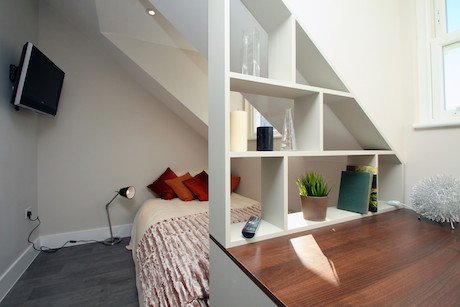
Collective-room

Also, if you can offer an all-inclusive service offering in the rent, plus a high level of social amenities, like our model does, then it’s not overpriced.

DF: How does Old Oak [pictured at top] expand on your previous endeavors?

RM: Old Oak is our first new build and the first true embodiment of our Shared Living product. Whereas our existing developments are refurbished building, this is the first time we’ve had a clean slate on which to deliver exactly what we want to. Our rent has always encompassed services including weekly room clean, weekly linen change, concierge services, 24/7 security, free Wi-Fi, plus all utility bills and council tax. However, although we also provided communal areas throughout our existing properties with Old Oak we’re taking it to the next level. The 11-storey building will have 1,000 sq ft of social amenity space on each floor: a gym, spa, rooftop terrace, cinema room, secret garden, themed private dining rooms. All are designed to facilitate interaction amongst our members, to create a real community feel within the building.

DF: What do you see as the future of both The Collective and housing in general?

RM: I see the future of The Collective as a leading lifestyle brand, which has redefined the way people live, work and play. Not just in London, but in global cities across the world. The shortage in space means that inevitably housing will become more dense, but hopefully this will just encourage more architects and developers to think outside the box and come up with innovative designs and solutions which mean that quality is not compromised. The use of technology will also shake up the housing market, both maximising space and creating the ultimate customer experience.

WeLive Marries Micro-Apartments, Coworking, Magic

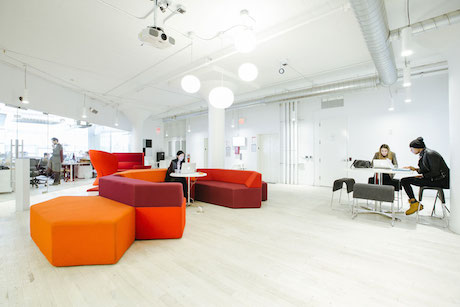
In case you didn’t know, WeWork is one of the largest coworking organizations in the US, if not the world. They have 19 buildings in three countries. When this author visited their Soho West location, I was amazed (pictured below). There were seven floors, each thoughtfully designed and decorated and booming with activity. With its mix of large, medium and small size firms as well as freelancers, all sharing one space, all feeding off one another’s energy, it truly felt like a futuristic office.

wework-soho

WeWork is now going a step beyond coworking. They have plans for WeLive, which will convert a 12 story office building into a residential building featuring 252 apartments, many of which will be smaller than 360 sq ft.

WeLive will be located in Crystal City, a neighborhood in Arlington County, VA, just south of Washington DC. WeLive would seem to be a decent fit for the area as Crystal City is already configured as a self-contained city. According to Wikipedia “Its residents can live, shop, and work without going outside, due to its extensive integration of office buildings and residential high-rise buildings using underground corridors.”

The building, built in 1965, had a couple Defense Department agency tenants up until this last spring. Prior to WeLive, it was sitting vacant, its interior considered obsolete by modern office standards. The project will gut the building, leaving the exterior mostly intact, “although it will have an experiential exterior color application that changes as one moves around the building,” according to a press release (please don’t ask us what that means).

Taking a distinctly office-y looking building and making it residential is a bold move in and of itself, but the county government seems supportive of this adaptive reuse. Arlington County Board Chair Jay Fisette said “This temporary conversion of an aging, vacant office building into an innovative live-work space is an example of how we continue to reinvent Crystal City as a more attractive, vibrant place that will attract more entrepreneurs and tech workers.” Fisette says “temporary” because WeWork, along with the real estate giant Vornado, is leasing the building for the next 20 years.

The other interesting aspect of the building is the creation of a mini universe (or maybe campus?) where work and live spaces are so close to one another. While this sort of setup is not unprecedented, it usually revolves around one company, not a variety of them. We imagine this heterogeneity will help make it a fertile place for innovative thinking.

WeWork and Vornado plan to make the WeLive building’s spaces conducive to vibrant community formation. There will be several shared two-story “neighborhoods” with expansive common areas connected by staircases. There will also commercial-grade kitchens, dining areas and shared community spaces. The building will be close to a metro stop and bike-sharing terminal, least it seem like they’re trying to have people live and work in a tiny geographic radius.

Many people talk about how their college days living in dorm rooms were some of their happiest. WeLive seems to be taking many of the elements of that life–tight geography, small rooms that push you into large social areas–and bring it to adult populations. Whether this will result in world class innovation or world class beer pong (or both) remains to be seen, but we think it’s a great experiment nonetheless and look forward to seeing how it turns out.

Lend Tools, Build Better World

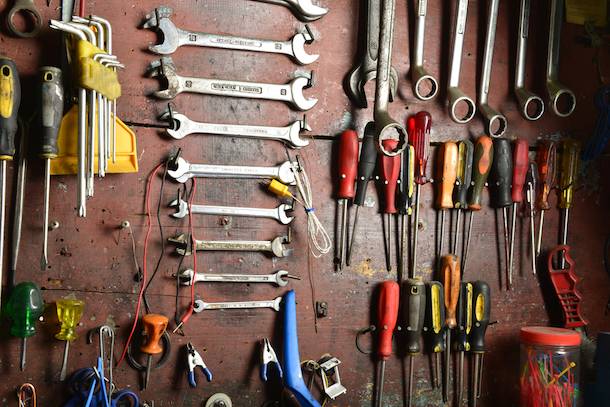
Some things seem inherently incompatible with small space living: Car collections, big game taxidermy, Richard Serra sculptures and extensive tool collections. While the former things have easy workarounds, for the DIY-disposed, the latter is often considered indispensable. Many people who need to store tools and a place to use them might find a 350 sq ft apartment insufficient for such tasks. There is a solution. Across the globe, tool lending libraries are offering builders an offsite place to source tools and in many cases use them.

West Seattle Tool Library‘s co-founder Gene Homicki told Christian Science Monitor that there are a number of significant advantages the tool lending library movement presents over private ownership. He says that due to their collaborative nature, they often become vibrant community centers (i.e. probably more so than your garage). In line with the spirit of the idea, several maker and co-working spaces have included tool lending libraries at their spaces; Homicki said many maker spaces started as tool libraries and evolved from there. At some of the libraries, people not only check out tools, but can learn how to use them as well.

Another advantage is the exploitation of unused resources. Homicki said to CSM:

We have an economy that’s uneven and sputtering at time…and we have this locked-up value that’s just sitting, whether in an attic, garage, or gathering dust in a warehouse.

These libraries get tools out of their dusty attics and tool benches into the hands of people who need them. An additional benefit is that they give access to specialty tools that you might only need once or twice–this is something even the most seasoned maker can appreciate.

One of the bigger issues of lending tools is keeping track of tools. While many libraries seem to use ad hoc systems with an administrator keeping track of a tool’s whereabouts, Homicki co-created something called myTurn. MyTurn is an online platform that gives libraries a way of tracking their assets and promoting the sharing of tools across private, public and municipally owned libraries.

If you want to find a tool library in your area visit Local Tools. If there isn’t one in your area, there are numerous resources to help you start your own such as the  How to Start a Tool Library guide and a webinar by the Center for a New American Dream.

Mechanical Workshop Tool image via Shutterstock

Via Christian Science Monitor

Your Living Room Away from Home

For those of us who work from home, the need to get out of the house is essential to maintain productivity and sanity. And while co-working sites are great, they often cost in excess of $300/month–pretty steep for people who are normally quite content at home. The café has always been the go-to destination for finding this temporary office space, but it can get kind of weird (i.e. inappropriate) hanging out there for four-plus hours after ordering your small, half-caff cup of drip.

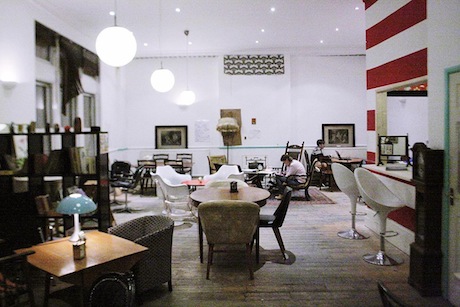
Rather than charging for a cup of coffee, London cafe Ziferblat charges customers for the thing they really want: real estate. The café charges 3p/min (~$.05) to hang out in the space, which has unlimited self-service coffee; there’s even a self-service espresso machine. There are complimentary snacks and even a kitchen where you can prepare your own food. There is also the “opportunity” to wash your own dishes whilst there, but no obligation to do so.

ziferblat-living

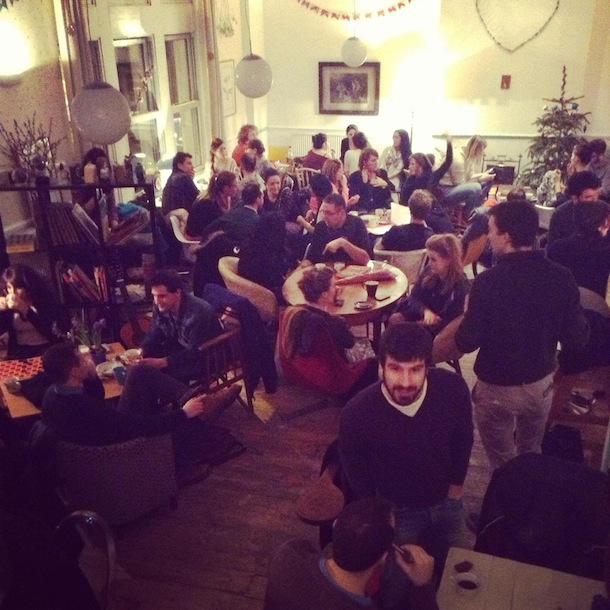
Ziferblat, a Russian concept that it is trying to go global, keeps track of customer’s tenancy with alarm clocks it gives upon arrival. There is no minimum or, we presume, maximum time limit. The space’s décor looks like a bunch of people donated furniture–in other words, it looks like a real living room, which is a good thing.

Living in a smaller space is made much easier with lots of places to escape. These places, like Ziferblat, have the added benefit of being far more social than our living rooms. We wish them the best of luck and hope their outlets come to the States and beyond very soon.

Via PSFK and The Guardian

The Power of Free Real Estate

Throughout the month of June, a group of people in San Francisco are conducting an experiment in improvisational community creation. [freespace] is a 14K sq ft blank canvas for anyone looking to present his or her talents, ideas, classes, swaps or anything else to the greater community. It is, as one of its members declares, “a big empty building filled with people who care.”

The project came to be after the founders were given a $1, one month lease for the vacant SOMA neighborhood warehouse (if you’re unfamiliar with SF real estate, this is a good deal). While we apologize profusely for the delayed announcement, there is still a lot going on for the remaining 12 days of June–yoga classes, a TEDx event, hackathons, live music, salons and much more.

One of the most endearing aspects of [freespace] is its sense of urgency. With a 30 day lifespan, there’s no dilly-dallying. They have started several projects meant to endure beyond June, including a 30 day garden, a mobile learning center for the homeless, a matchmaker-service for muralists and walls and its own bikeshare program.

To us, [freespace] exemplifies the increasingly paradoxical nature of many of the world’s leading cities. On the one hand, the cities often hold the highest concentrations of creative energy that make living there so great. On the other hand, the rising cost of these cities–both for commercial and residential real estate–make the conditions inhospitable for that creativity to flourish. People with jobs of indeterminate value (see artists) and real estate that doesn’t generate a lot of money are usually excised or marginalized by the city.

In fact, a project like [freespace] only exists due to the largesse of its donors (the city, its real estate broker and property owner)–and it’s only for a month. The [freespace]ers have launched a fundraising campaign to cover July’s $24K rent, but have only raised $3700 to date.

We wish [freespace] the best of luck and hope that similar projects arise in other cities–ones that might endure for more than a month. By providing large, low or no cost communal spaces for people to meet and create in, we imagine the creativity that makes our cities so valuable will flourish once again.

Breather: A Living Room for Nomads

Everywhere we go, we are surrounded by countless, unused rooms–furnished, climate controlled, wifi enabled rooms. If you’ve ever wandered around a city–or any place away from home–you’ve probably wanted to duck into one of these rooms to work, take a quick nap or simply have some quiet time alone. A new service called Breather is about to enable just that, providing on-demand offices, nap spaces, meditation spots or whatever type of space you might need.

breather-smartphone

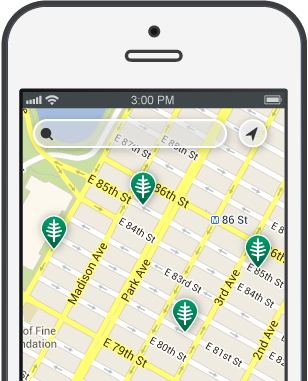
Breather works by using excess capacity real estate (mostly unused office spaces to begin). With Breather’s smartphone app, users will be able to locate these spaces and reserve on the spot. Entry to the spaces will happen via keyless locks. Each room will be held to a set of standards that either Breather or the host provides; those standards include cleanliness, quiet, high speed internet, a desk, couch and “enough room to do yoga.”

Like Airbnb and other peer-to-peer services, Breather depends on reputation to run smoothly. Hosts are rated by users to make sure spaces are well maintained. Users are rated by hosts and Breather’s cleaning crews to rate how they respect the space. In fact, Breather’s existence will depend on reputation as its network will be expanded with invitations by existing members who vouch for new ones.

“99% of most cities are completely inaccessible,” says Julien Smith, one of Breather’s founders. He explains that most cities are broken up into public or private spaces. The problem is that both public and easily-accessed private spaces like coffee shops and hotel lobbies aren’t the kind of places to relax or be productive. Moreover, the vast majority of appropriate private spaces–offices, unused residential spaces, etc–are simply off limits to the public due to logistics (i.e. letting people into a space) and liability (letting the wrong people into a space). By creating an infrastructure that allows the public to easily and safely access private spaces, he sees Breather as creating a new type of space in between private and public. “Our whole idea is to democratize the city,” he explains.

Right now, Breather is only accepting invitations for membership. One of their partners Lockitron has not yet delivered the locks necessary for Breather to operate (they are expected in the next 45 days). The first launch of Breather will happen in New York City in October. The network will grow from there to select cities.

Hourly pricing has not been set. Smith says that will depend largely on the market, e.g. an hour in Midtown Manhattan will cost more than downtown Pittsburgh.

Similar to Zipcar, which provides cars for very short drives, Breather provides a place to, um, take a breather for only as long as you need it–no need to pay for an overnight stay or whole day pass. As they say on their site, “Think of us as your second home or office, wherever and whenever you need it.”

We see Breather as another important innovation in the sharing economy. It is helping create a world where it’s possible to have access to anything we want–whether it’ a car, a kitchen, or a power drill–whenever we want it, all without personal ownership or the inefficiencies of single-owner use.

images via Breather