Creating Housing with Sharing in Its DNA

While building new is nifty and all, there’s something very appealing about adaptive reuse. This is why projects like the Providence Arcade, which took an underused indoor shopping mall and converted it to a retail/micro-residential complex, are so appealing. Why build new and use more resources if you can make something that already exists work? A couple young Spanish architects have conceived a project that thinks along these lines, making an existing housing complex more adaptable, social and sustainable than its current moribund state.

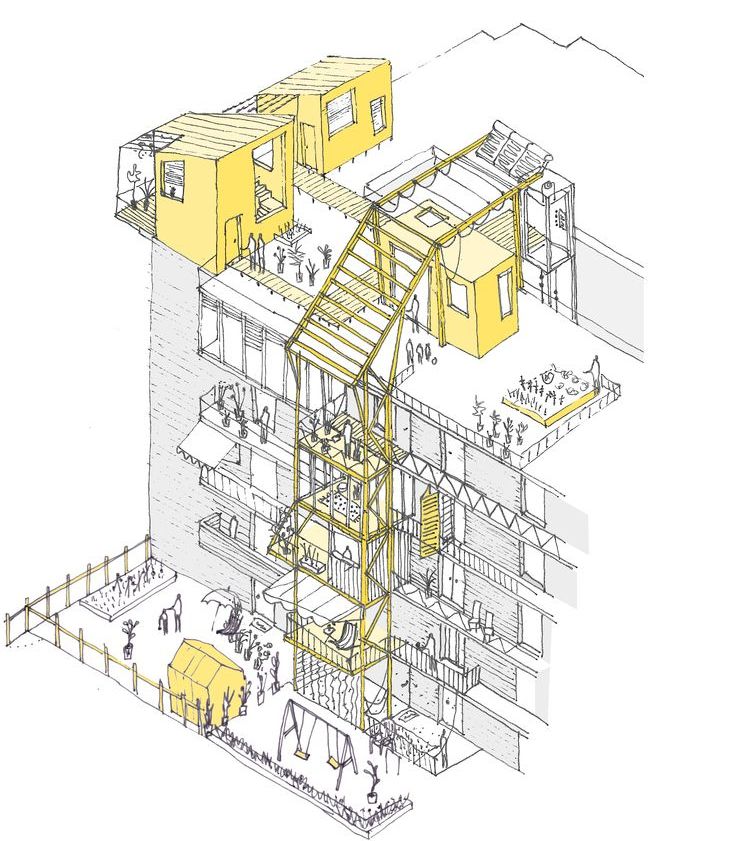
The project, dubbed “Improvistos” and conceived by María Méndez and Gonzalo Mancebo, is located in Alfafar, a suburb 4km outside the Valencia city center. Following the collapse of its timber-industry, Alfafar hit hard economic times. Houses that cost $150K decades ago are now fetching $20K, and vacancy rates are high. Méndez and Mancebo’s proposal takes the high density Barrio Orba area of Alfafar and employs the principles of co-housing, facilitating the easy exchange of human, architectural and material resources.

One particularly interesting aspect of the far-reaching plan calls for the addition of doors, staircases, corridors, common areas and satellite rooms that connect the nearly 2800 units and nearly 5K inhabitants. Mancebo told NPR “We’re trying to redefine the limit between public and private. So the way you walk on your street and where your house and your private space finishes or starts.”

This fuzzy public/private spatial distinction would create an easier flow of the area’s limited resources, be they human, architectural or material resources. For example, the plan might capitalize on the 40% unemployment rate, allowing those with time on their hands to trade that for durable goods or an extra bedroom as Méndez told NPR:

For example, you have an 80-year-old person who needs some help once or twice a week, [living alongside] a family with three children that doesn’t get enough income. So maybe [someone from] the low-income family can help the elderly person once a week, and get, in exchange, one room. It’s like an exchange system–so every house can gain or give out some space. And that can change with time.

The plan was innovative enough to win a recent international Urban Revitalization of Mass Housing competition held by the United Nations. Despite the accolade, the plan doesn’t have funding–a problem for an already economically depressed region. But the duo behind the project are talking about launching a Kickstarter campaign to raise money and having residents do some of the work themselves.

What the plan shows is that raising collective prosperity sometimes isn’t a matter of increasing the total amount of resources, but creating social and architectural infrastructures that permit the easy exchange of what we already got. Let’s hope Improvistos get the chance to prove this.

Via NPR
The House Behind House

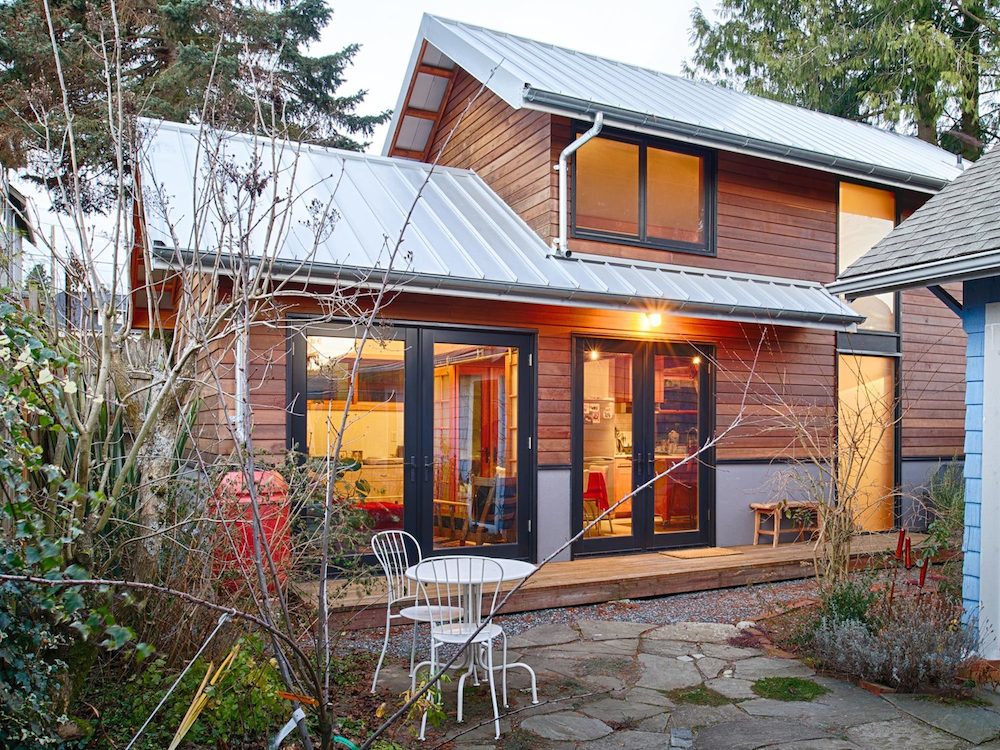
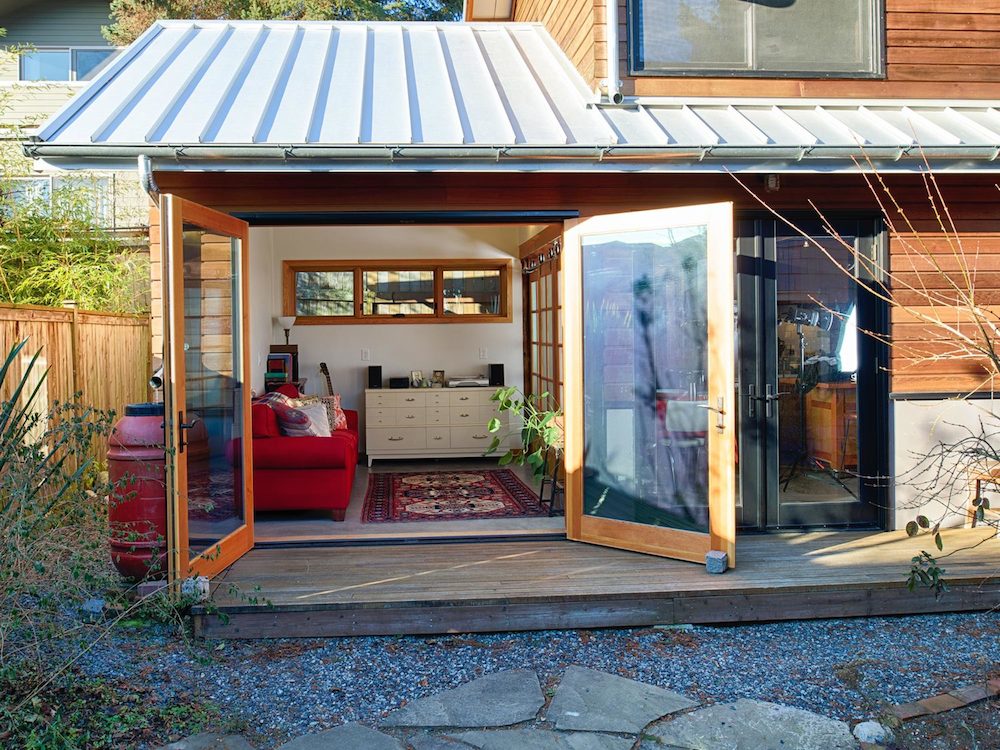
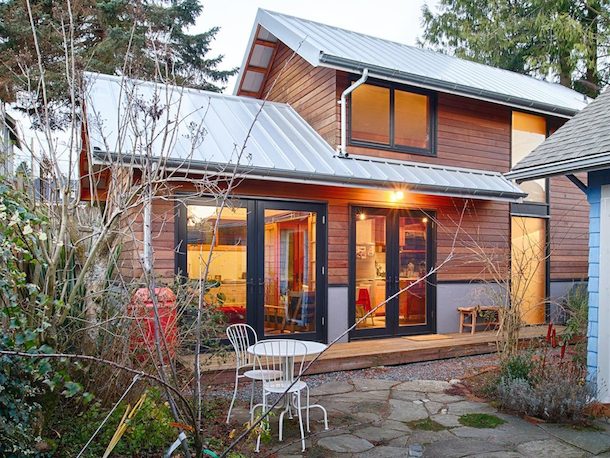
We love ADUs. They have the power to do the near-impossible: pack more housing into suburban and other low-density areas that were not designed to be dense. And given that they’re typically wedged into a backyard, they err on the compact and efficient side of design. And we love this particular 550 sq ft Seattle ADU by Cast Architecture.

The house was built in the backyard of client Kate Lichtenstein. Tim Hammer, the architect who designed the project, is a bit of an expert in designing small spaces, having spent 18 months studying high-density housing in Kobe, Japan as well as living in 550-square-foot fisherman’s shack in Ballard, WA himself. Informed by these experiences, Hammer created a space that feels light and spacious, despite the tiny footprint.

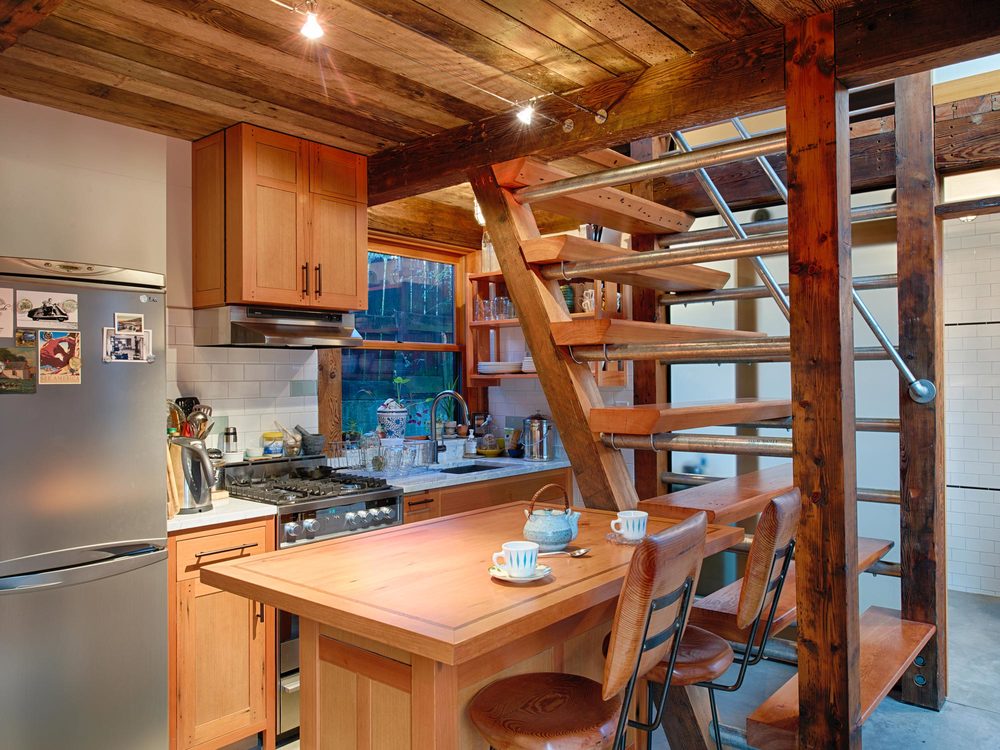
The house has great eco cred, enjoying a 5-star Built Green designation. It uses a ton of salvaged materials including stairs made of an old bowling lane. It also features LED lighting, a super-efficient boiler heater, low-VOC paints and caulks and radiant floors of fly-ash concrete (a by-product of burning coal for energy) and an exterior envelope with two inches of rigid insulation and wall cavities filled with an additional 5 ½ inches of cotton insulation from recycled blue jeans.

Lichtenstein built the place after the City of Seattle started allowing ADU construction on single-family lots in 2010. We hope more municipalities take Seattle’s lead by permitting these innovative little homes to sprout up in backyards everywhere.

Via Seattle Magazine

Keeping Up with the New, Improved Joneses

Many, if not most, of our habits are influenced–if not outright dictated–by a desire to keep up with our peers. We choose the homes we do, we consume the stuff we do, we have the careers we do and make many other choices in response to how others in our worlds are living. This is the underlying notion behind the expression “keeping up with the Joneses.” If Mr Jones gets a new luxury sedan, we are far more likely to try and keep up–or one-up–his purchase with our own sedan. But what if the Joneses were folks who used a meager amounts of energy? What if they lived in modest, super-efficient homes and used few newly-made products? What if the Joneses were exemplars of responsible, sensible and sustainable living? That’s exactly what The New Joneses project is about.

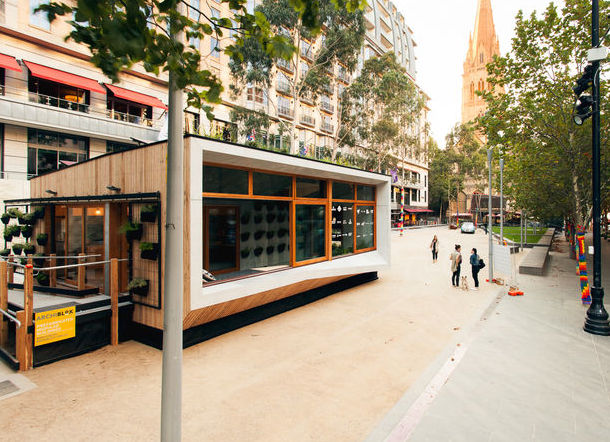
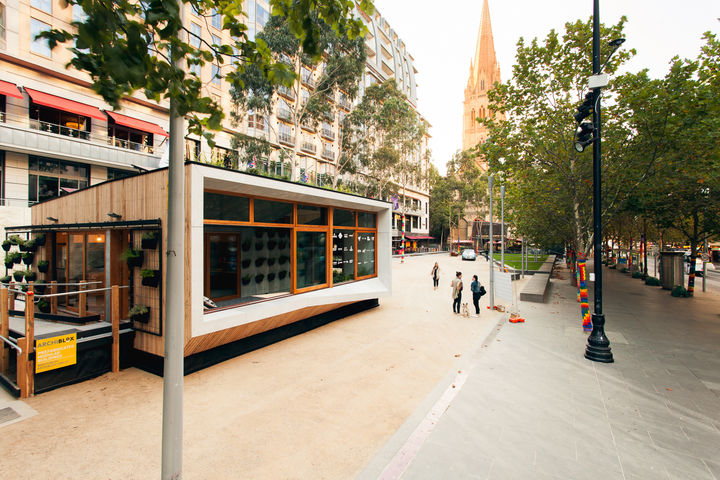
TNJ is essentially a showcase of ideas of how people can reduce their consumption and live more sustainably. The centerpieces of the project are mockup homes set up in public spaces in Melbourne, Australia. There have been three demo homes in the last few years, used for press ops, promoting various non and for profit companies to showcase their services and stuff.

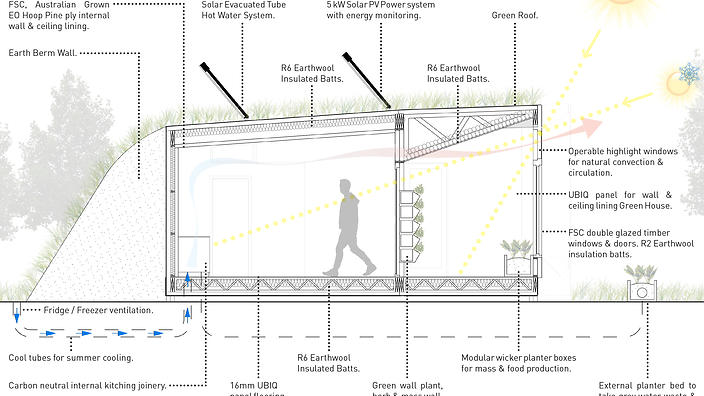
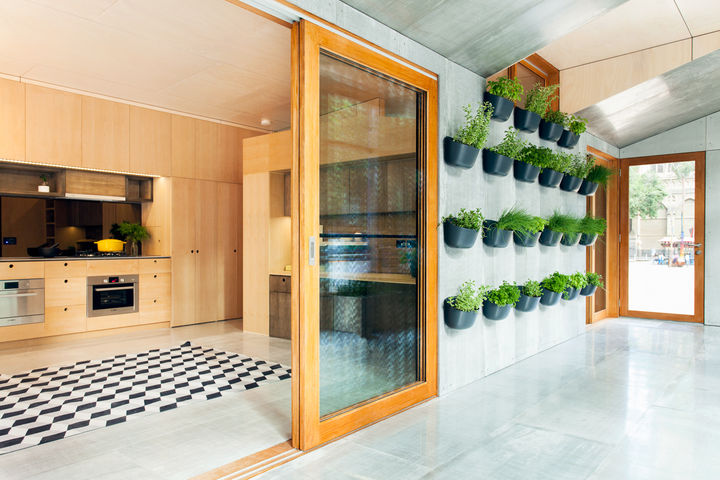
Their latest demo house is quite badass. It was designed by Archiblox Architecture. It has prefab construction and is “carbon positive,” meaning it produces more energy than it needs to run. Through the use of passive solar design, grey water and water catchment systems, PV power, green walls and roof and many other energy-saving features, the house is extremely energy efficient. According to Archiblox, over its lifespan, the building will emit 1,016 (tCO2e) tons less greenhouse gases than a standard home of similar size and function–the equivalent to taking 267 cars off the road, or planting more than 6,095 native trees.

At 828 sq ft, it’s not all that compact, particularly considering it’s a one-bedroom, but it’s not crazy large either, considering Australia boasts the largest average-sized home in the world. The layout is probably also designed to help large groups of people move through the space.

I think the best part of the project is its name. It’s a perfectly natural human tendency to want the things our peers have. But that tendency can be easily co-opted by the interests of entities–be they the interests of real estate developers peddling McMansions or some retailer selling a bunch of crap you don’t need–in ways that neither promote health nor happiness. In other words, if keeping up with the Joneses is a fairly intrinsic human behavior, we might as well choose Joneses that have our, and the planet’s, best interests in mind.

If you’re in Australia, the demo house will be on display in Melbourne’s City Square through Feb 15. Check the TNJ website for more info.

The 600 Square Foot Family

Vancouver is one of North America’s densest cities with some of  its highest property values. When the city’s residents have kids, many travel the oft-tread path from city center to the burbs for more square footage. This was the situation that Alison and Trevor Mazurek faced when they started considering having a family. They loved where they lived with tons of restaurants, cafes and shops in easy walking distance, but their 600 sq ft one bedroom did not fit the conventional view of what constituted an adequate family home.

Fortunately, the Muzereks weren’t overly concerned with convention. “The Graham Hill TED talk started the conversation between my husband and I to stay in our small space with a kid,” Alison wrote to us in an email. They decided to stay and figure out how to make their space work with their son (now 1.5 years old), getting rid of lots of unnecessary stuff and adding the right stuff. They document their process in their blog 600SQFTANDABABY.

600sqftandbaby-baby

“When we decided to stay in our 600 square foot apartment with a baby I combed the internet looking for inspiration and proof that this could actually work,” Alison wrote.  Of her motivation she wrote, “I wanted to know the daily ins-and-outs of living in a small space with kids. The best sources I found were all in New York City (your blog of course!) which is endlessly inspiring but I couldn’t find anything local for us. The trend in Vancouver is that as soon as you are expecting you start looking for a townhouse or house in a surrounding suburb. We love living in the city and everything it has to offer, especially walking everywhere. I thought if I documented our journey others might think it was possible too.” The blog, which has been going since last September, covers topics from products, design and extracurricular activities.

She said that reaction to their choice has been mixed. Many find her accounts inspiring, while others think the couple “legit crazy”–though it’s easier for them to grasp once they get into the space.

600sqftandababy-living

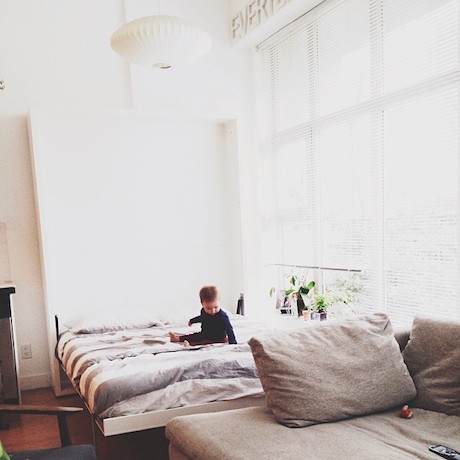
The space itself is a high-ceilinged one bedroom/one bath condo. The bedroom has been given to their son, while they sleep in what’s effectively the dining room on a Ulysse wall bed by Resource Furniture. 

Asked if they’ll stay in their small space, Alison wasn’t sure. “Right now we are living in the moment, if there is anything I have learned from being a new mom, it is to live in the moment more…We hope to have another kid in the next couple of years. So far we have no plans to leave our little apartment, and we couldn’t be happier with our decision to stay here.” She says her husband dreams of adding the Resource Furniture bunk murphy beds when they have a second kid. Either way, she reports that they are committed to “living thoughtfully with less stuff.”

When asked if she had any suggestions, Alison said that people should know that they can live in a small space with children if they want to. “It just takes a little time to think about what is most important to you and what you could live without. The best part is when you give up a few things that don’t really matter like an extra closet, stationary bed or 15th pair of shoes you will be surprised what you gain.”

Head on over to 600SQFTANDABABY to see and read more. 

The Rise of the Minimalist Celebrity

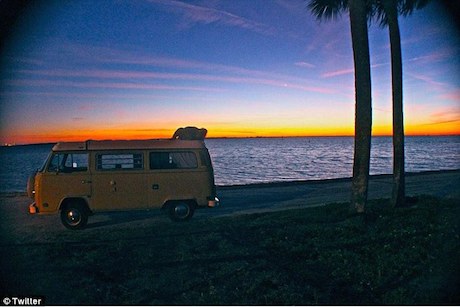
I must admit, if my 21 year old self had received $2M to play professional baseball, there might have been a chance that I’d make a few extravagant purchases: a Porsche perhaps, a fancy apartment, etc. But Daniel Norris might be a sign of a shifting perspective toward wealth in the Millennial mind. The 21 year-old left-handed pitcher was just recruited by the Toronto Blue Jays and given a $2M signing bonus. But Norris didn’t head for the nearest Bentley dealer or David Yurman to buy a diamond-encrusted catcher’s mitt. Norris went his father’s buddy to purchase his dream car and dream home: a 78′ VW Westfalia camper he calls Shaggy (it should be noted he did bling it out with some solar panels).

dan-norris-campeddan-norris-cooking

The Tennessee native was brought up with a high reverence for nature and is an avid outdoor enthusiast–climbing, mountain biking, and surfing. The van serves as his adventure launchpad.

But it’s also his seasonal home. Norris has been living out of the van on the beach during the Jays training camps in Dunedin, FL. Norris told Grind TV that living in the van was a conscious effort to keep his life simple and not let his newfound wealth corrupt his values. “In my mind there’s no need for luxury, or at least society’s sense of the word,” he told them. “I consider my life luxurious—I live on a beach with an ocean-front view, hearty meals and hot French-pressed coffee at my disposal. That’s fancy, right?”

While Norris might be an anomaly in what might otherwise still be a world dominated by the excesses available with extreme wealth, he might also be a sign of the times–with Millennials feeling increasingly weary of traditional notions of success, Norris might be the new, low-key celeb, someone who might have access to vast material resources, but feels compelled to not exploit them; someone for whom simplicity and moderation are ideals to strive for, not signs of failure.

Luggage that Works When You’re at Home

While useful when you need it, luggage can be a pain in the butt when not in use. A rolling bag’s typically-rigid rectangular volume requires a big hunk of closet space, often displacing stuff that’s in regular circulation. Luggage manufacturer Eagle Creek has come up with a very clever solution for this problem with their EC Lync system. The bag’s frame collapses and the whole thing can be put into a small stuff sack.

But wait, there’s more.

All of the four available sizes can be used as backpack as well as rolling bag–a big bonus for someone like me who often prefers carrying his luggage rather than wheeling. And the bags are light: the smallest one (2220 cubic inches) is 4 lbs 6 oz with frame and a mere 1 lb 12 oz without; the largest one (4525 cubic inces) is 5 lbs 5 oz and 2 lbs 5 oz, respectively.

The bags range from $255-300–more than a Samsonite, but less than something like a Tumi. The bags seem pretty bomber and Eagle Creek offers a lifetime “No Matter What” warranty, which is not totally no-matter-what, but should cover most reasonable and semi-unreasonable repairs. Overall, it’s not a ton of money if you’re a frequent traveler and storage space is short.

Hat tip to Bill Allen

What is the Experience Economy?

If we are to believe a recent study by the company Eventbrite, there may be an emerging paradigm shift in terms of our relationship to stuff. Eventbrite, a ticket selling and event promotion site and service, is pretty invested in knowing how people prioritize experiences. Their study, conducted by Harris, looked squarely at Millennials, a population that make up a quarter of the US population and have $1.3 trillion of annual purchasing power. What they found was that Millennials place great importance on experiences. Here’s specifically what the study had to say about the Millennial’s relation to experiences:

  • 78% would choose to spend money on a desirable experience or event over buying a desirable thing, and 55% of millennials say they’re spending more on events and live experiences than ever before.
  • 82% attended or participated in a variety of live experiences in the past year, ranging from parties, concerts, festivals, performing arts and races and themed sports—and more so than other older generations (70%).
  • 72% say they would like to increase their spending on experiences rather than physical things in the next year, pointing to a move away from materialism and a growing demand for real-life experiences.
  • 77% of millennials say some of their best memories are from an event or live experience they attended or participated in. 69% believe attending live events and experiences make them more connected to other people, the community, and the world.
  • 69% of Millennials experience FOMO [fear of missing out]. In a world where life experiences are broadcasted across social media, the fear of missing out drives millennials to show up, share and engage.
  • Americans are dedicating more income to experiences: Millennials don’t hold the exclusive: the demand for live experiences is happening across the generational board. Since 1987, the share of consumer spending on live experiences and events relative to total U.S. consumer spending increased 70%. People want to experience more, and businesses are evolving and entering the market to meet that demand.

These findings support contentions made James Wallman, author of the book “Stuffocation” (who tipped me off to the Eventbrite survey). He sees a growing weariness of stuff as well as an emergent “experientialist” economy (as opposed to our current materialist one)–all of which supported by social media and mobile tech. Perhaps the parents of Millennials wanted to be seen driving down the drag in a GTO, their children want pics of themselves seen at the Taylor Swift show on Facebook or Instagram.

Of course, Eventbrite can’t be considered a neutral source of information. Experience is their chief product and they want to people to buy–the survey supports that end.

But anecdotally, the survey checks out. As more and more of our realities get outsourced to online repositories, the social capital of yore–cars, clothes, etc–loses some of its value. There’s also a stagnant economy, growing consciousness about the impact of stuff on the planet, a newfound definition of ownership, where the ability to use something is more important than possessing it, as well as a general weariness about the merits of having a ton of stuff. All of these factors could tip our collective consciousness toward an experience economy.

What do you think? Could the experience economy make appreciable inroads into the materialist one? Or is the survey market speak–a way for one company to make a buck off their core competency? Let us know what you think in our comments section.

Silhouettes of concert crowd image via Shutterstock

Korean Designer’s Simple Solutions for Ditching the Fridge

Refrigeration for small kitchens can be tricky. Typically, you have your choice of a humongous full-size fridge or tiny dorm-room model. The former tend to be around 80″ and the latter 30″. Often people trying save space opt for the smaller one, whose size, if you cook a lot, is maxed out quickly.

In the quest to preserve perishables, the question may not be how to increase refrigeration capacity, but how to do without it. An article in Treehugger shows Korean designer Jihyun Ryou‘s systems for preserving food without refrigeration.

Many of her solutions are designed around how perishables actually behave–behavior that often runs counter to our suppositions about the need for refrigeration. For example, many fruits release ethylene when they ripen. When we put them in a refrigerator’s sealed box, it actually traps the ethylene and accelerates spoiling. Accordingly, Ryou’s apple storage system exposes apple tops to the open air so they release ethylene. The ethylene serves the other purpose of preventing sprouting in potatoes, so the bottom half of the apple faces a dark box where potatoes are stored.

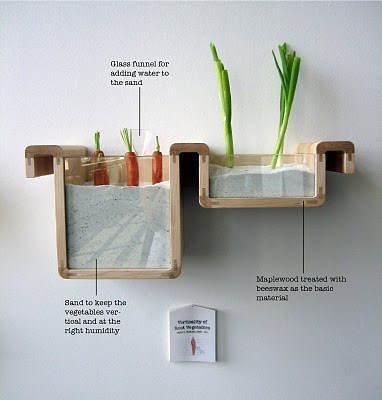
According to Ryou, “keeping roots in a vertical position allows the organism to save energy and remain fresh for a longer time”–so she puts carrots and scallions in wet sand to keep them vertical and maintain optimal moisture.

Americans are about the only people who refrigerate eggs; Ryou’s egg storage leaves them out and features a bowl to submerge eggs to test their freshness (a fresh egg will sink).

In days of yore, necessity dictated that people learn how to preserve food without refrigeration. While refrigeration is a great thing for many varieties of food, there are many instances where traditional food preservation techniques are equal or superior to refrigeration. Now Ryou gives these techniques a modern spin. She shows how a dorm fridge might suffice for even the most ardent gourmand.

Do you have other suggestions for doing without refrigeration? Let us know.

This post originally published June, 5 2012.

Via Treehugger

Image credit Jihyun Ryou

Adventures in Extreme Minimalism

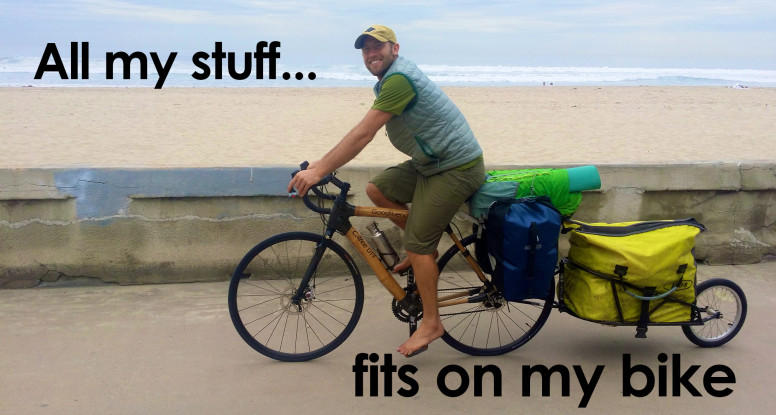
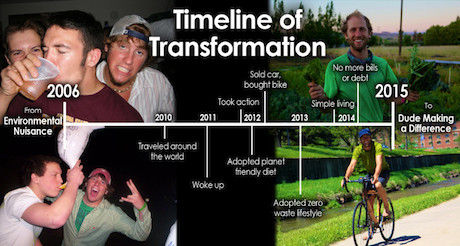
A couple weeks ago, we revisited Peter Lawrence, a man who lives with what would charitably be called a paucity of possessions. In certain ways, Rob Greenfield makes Lawrence look like a hoarder. Greenfield lives in a 50 sq ft “house” and what few possessions he has can stuffed on a bike trailer. On his website, Greenfield says he “is an American adventurer, environmental activist, and entrepreneur on a mission to entertain, educate, inspire, and give back to the world. He is teaching others about the issues associated with food, energy, water, waste, transportation, and health by displaying his style of living to the world. He is leading them towards a greater sense of happiness and freedom.” Sound good to us.

Like many who have fairly extreme-lifestyles, the mostly-nomadic, veggie-eating, non-showering, vasectomied Greenfield is a convert. From childhood to early adulthood, he says he used stuff to boost his sense of self-worth; first it was Beanie Babies then later cars and even a boat. He also writes that his life up until recently prioritized “binge drinking every weekend, looking good, and macking on pretty much every good looking girl I saw.”

Then in 2011, he says he got educated. Though he doesn’t specify what that education was, I suspect it had to do with his environmental impact on the planet. He thereafter “gave up on restrictive social norms and stigmas and embarked down a path of living for the benefit of the earth, my community, and myself.”

Rob-Greenfield-Timeline-776x415

There’s too much on Greenfield’s site do justice to his iconoclastic lifestyle. He’s at once a free-spirited hippy, biking across country in bare feet, dumpster-diving and doing good deeds; he is also a hyper-organized type A personality, publishing a detailed list of life-goals with status reports, writing a blog, producing Youtube videos and running his own online marketing firm, of which he gives 90% of the profits to environmental causes.

His last couple life events include getting rid of his cell phone (his last bill) and buying an off-grid tiny house in San Diego (more of a sleeping shed), where he plans to grow his own food and take the home completely off-grid.

On this site we often feature experimental architecture and products. Often, their main function is to show what’s possible, not present an exact model for places we will live in or products we will use. Greenfield, in many ways, presents an experimental life. Very few are setup to come and go as he does (though he’d probably argue that that’s a choice), but he shows what’s possible–how we can all simplify our lives, live with less stuff, reduce our environmental impact and (most important) be happier and more useful in the process.

Hat tip to Adolfo Mercado Solano

SkyMall, We Hardly Knew Ye

I try very hard to remove judgment from this blog. I run across many homes, buildings, projects, products, apps and other stuff that strike me as crappy, unnecessary or flat out harmful to the maintenance of human life on this planet (and likely other planets). But for the most part, I keep my opinions to myself. I act under the belief that when we focus on increasing the positive, the negative simply runs out of room to exist. That said, my heart has a special place of judgment for a certain retailer who can be seen by 88% of all domestic air passengers in the United States. For 25 years, SkyMall has been the most complete retail outlet of the unnecessary. If you don’t need it, they probably got it.

Apparently I am not alone in my distaste for the catalog. In what might represent a sign of the times–where people no longer feel compelled to impulse-buy 20″ high Bordeaux Wine Glasses or Bigfoot Tree Yeti Sculptures–SkyMall is going out of business.

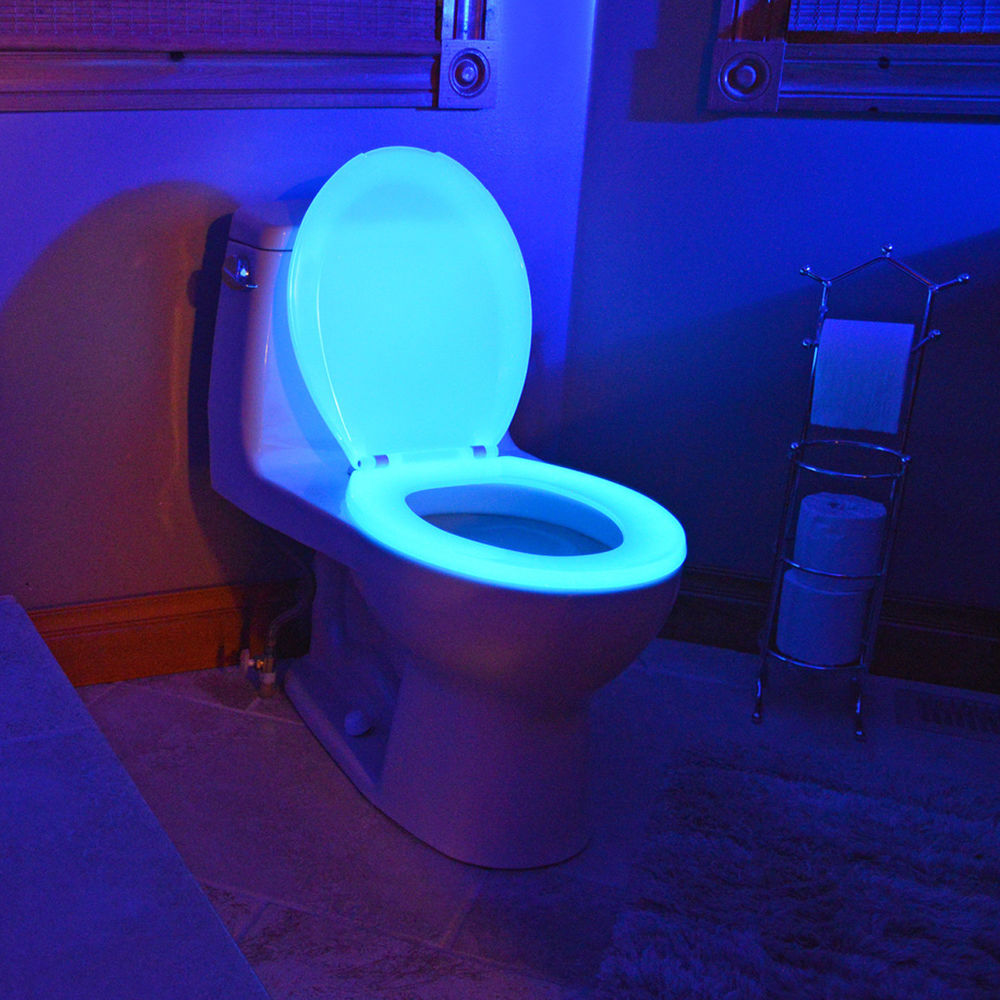
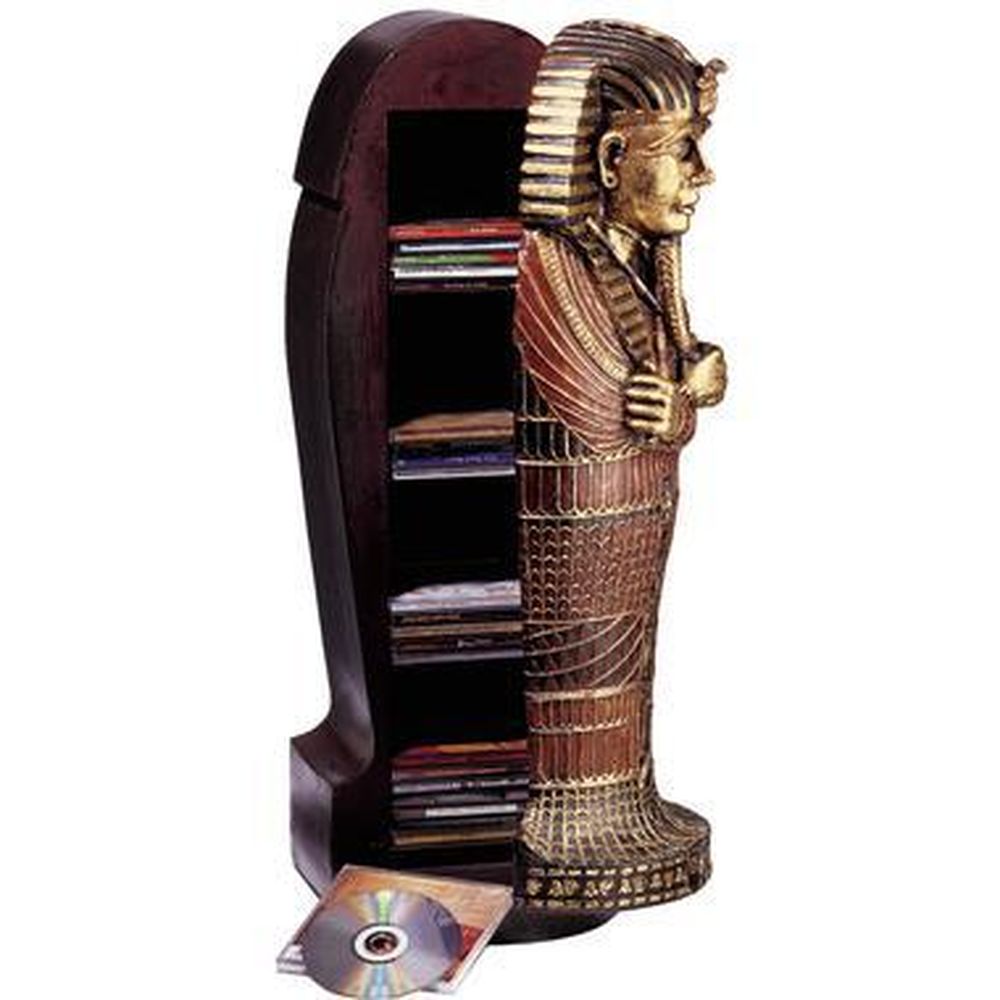
In (ahem) mourning of SkyMall’s impending passage, we thought we’d put together a few of their (ahem) essentials–stuff you can still get as they liquidate their stock. Act now (or don’t) as you will have to hunt these precious products down at tchotchke shops and late night infomercials in the (hopefully not-so-distant) future.