Build Your Own Murphy Bed for $275

One of the bigger challenges to starting your edited life is reasonably priced transforming furniture. While we believe the high quality and versatile Resource Furniture used in the first LifeEdited apartment is worth every penny, many of their large pieces are several thousand dollars, putting it outside the price range for many people.

Perhaps no piece of furniture is more important to an edited home than a transforming bed. Beds are huge space hogs, whose utility is only relevant when we’re unconscious. A queen sized bed is about 35 sq feet; why wouldn’t you want to use that space for your 16 waking hours?

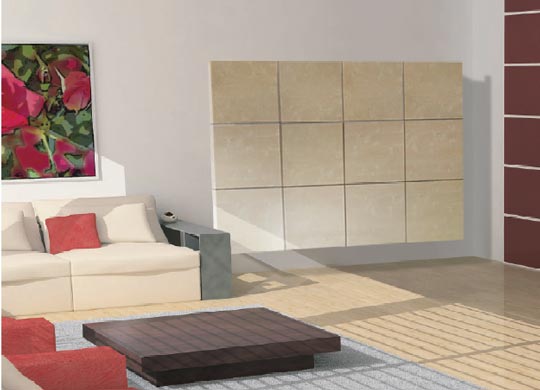
A “product” called the Moddi Murphy Bed is the least expensive entry point we’ve found for getting your bed out of the way. The site sells plans for $8, which instruct you how to take easy to find IKEA furniture and other hardware to make a twin or full sized murphy bed for $275 (most pre-builts start around $1500). The finished product–which can be modified depending on which IKEA finishes you purchase–looks pretty great too.

One of the aims of LifeEdited is providing the resources to make simpler, happier lives, no matter your budget. If you know of any other low-cost transforming furniture or hacks, please let us know.

via IKEAhackers

image from Apartment Therapy

What to Do with Your LPOIP (Little Pieces of Important Paper)

With April 15th just come and gone, you might be burrowing away 2011 receipts in a folder (or, like me, jamming their crinkled remains into a Sharpied envelope). Once you’ve filed your receipts—feeling 80% confident you got all of them and 90% sure the IRS won’t bust you—you notice other little pieces of important paper: business cards. Manually entering them into your contacts is a pain, so you make a pile and keep the ones you’re going to act on toward the top; those important ones stay on top until newer, more important cards replace them. Eventually, there’s an unintelligible, begging-to-be-tossed pile of paper.

For many of us, LPOIP (little pieces of important paper) is a big problem (figuratively speaking). We are unable to organize them well and can’t throw them away.

Enter Shoeboxed.com. The online service allows you to make digital records for receipts, business cards and several other varieties of LPOIP’s like bills and bank statements.

Users can mail, scan or use one of their iPhone or Android apps to make a record of the LPOIP. A high accuracy, OCR, human-checked scan is made and recorded on the site. The receipts are high quality enough to be accepted by the IRS and business card data is entered into a CRM file for easy uploading (note cool design or nice paper stock unfortunately).

There’s a free plan which features 5 monthly OCR/human scans; you can also use their web uploader, which requires a little manual input. Paid plans range from $10-50/month depending on the amount of documents scanned.

It’s easy to argue for holding on to some types of paper like old photos and love letters, but receipts and business cards are just pains–ones that accumulate over the years, requiring file cabinets and elaborate organization. Services like Shoeboxed allow you to save space, organize and simplify an otherwise entropic scenario.

image via Planet Receipt 

10 Mono-Function SkyMall Products for the UnEdited Life

While the world is littered with things that don’t promote living an edited life, few things are as baldly contradictory as SkyMall. The in-flight catalog presents countless ways to flip the LifeEdited credo on its head, i.e. “design your life to have less money, health and happiness with more stuff, space and energy.” Today, we are presenting 10 products that can bring confusion and clutter to even the most streamlined existence.

1. LED Blossom Tree

Love the country and energy-efficient lighting? Few things reconcile these passions–or create a bramble of wires in your crawlspace–better than this LED blossom.

2. Temple And Eye Massager

Nothing screams, “It seemed like a good idea when I was on the plane” like a remote-controlled temple and eye massager.

3. Baggy Rack

The Baggy Rack might actually be useful–about 2 or 3 times a year. And it’s one of those things you would remember to use after filling your baggies.

4. Voice Activated R2-D2

Sure, you probably have a droid, but if it’s like most, it’s pretty disobedient. According to SkyMall, this one obeys 40 voice-activated commands like “turn around,” “move forward 2 units” (most only move forward 1) and many other tasks critical to daily life. It’s also perfect for tripping over.

5. Shake N’Take Smoothie Maker

Blenders just aren’t specialized enough. Sure, they make perfectly great smoothies and shakes, but you have to pour the liquid into another container, which often takes up to 8 seconds. Nothing saves time and populates your countertop like a Shake N’Take Smoothie Maker.

6. EZ Egg Cracker

For those who like adding extra steps to the simplest of tasks, the EZ Egg Cracker is a must for your kitchen.

7. Zombie of Montclaire Moors

This thing is just weird and creepy, right?

8. Wine Glass Holder Necklace

For the multi-tasking oenophile.

9. Hovering Picture Frame

Hanging pictures has changed little since Lascaux. The Hovering Picture Frame will surely herald a new epoch in the annals of picture presentation.

10. SlumberSleeve

Do you have rock hard biceps? Do you like contorting your body to sleep on your arm? Look no further than the SlumberSleeve. Bonus: according to SkyMall’s description it acts as ankle, knee and “small neck” pillow for the double-jointed and fans of suffocation.

images from SkyMall

Why Small Fridges Make Good Cities

Rampant consumerism isn’t limited to clothes, electronics and other durable goods. Many American kitchens can look like doomsday shelters, with their pantries and freezers packed with enough food for weeks or months.

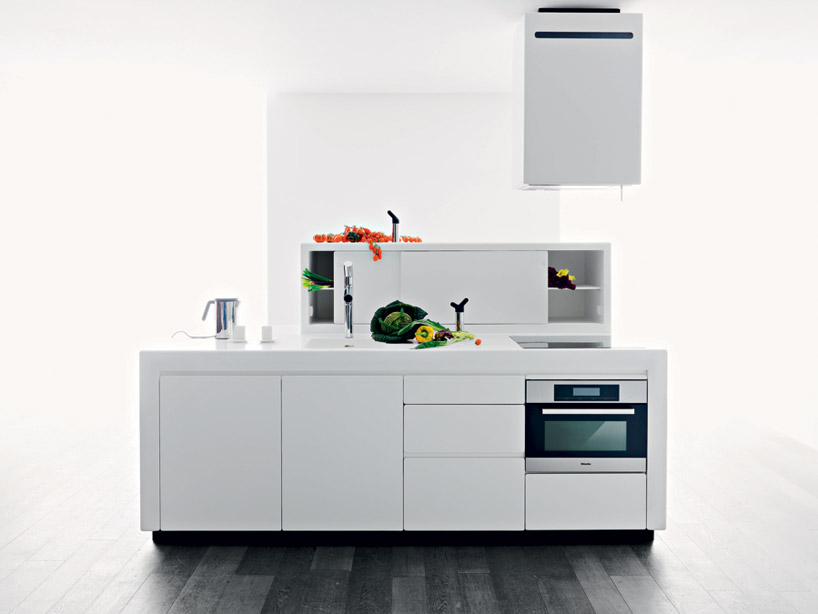
A few years ago, Canadian architect Donald Chong introduced a concept-kitchen called “Small Fridges Make Good Cities.” On his site, Chong asks a provocative question: “Can the choices we make in our own homes make a difference in our neighbourhoods?”

We tend to think our interiors as dissociated from our communities, but what if we saw the inner and outer spaces as inseparable? For example, a kitchen with a small fridge could have personal, community and even global impact from results like:

  • Frequent, small shopping trips. Chong wanted to “heighten the experience of the urban harvest where seasonality, once again, can resume its place in architecture and the city.” Chong is hearkening to a time when people ate with the season and went to the market frequently because food didn’t keep indefinitely via freezing and vacuum packing. Markets weren’t just food warehouses as they are now. They were important community spaces where people shared their lives.
  • Fresher food. I’ve heard, “If your food can go bad, it’s good for you. If your food won’t go bad, it’s bad for you.” Big caches of food that don’t go bad are, by their very nature, not fresh. Small fridges produce high turnover. Of course, the high turnover could be junk food, but as long as you’re at the market, do your body a favor and shop at the perimeter, where all the fresh food is.
  • More eating out. Many of our homes are isolated fortresses of eating and media consumption (TV, internet, etc.). While eating out every night does not make sense for many of us, going out of the house 2-3 times a week and engaging your community is a great way to support local economies and make a vibrant city.
  • Less space. This is pretty obvious, but food takes up real estate.
  • Less energy. Refrigerators account for around 15% of household energy expenditures. A small, Energy Star fridge like the Sub-Zero 700 BCi used in the first LifeEdited apartment, will help mitigate that number considerably.

Of course, many of us live in places where frequent shopping isn’t feasible. And you can get a small fridge and fill it with Hot Pockets or order greasy takeout every night.

But maybe you’re remodeling your kitchen. Consider a slimmer, European style fridge instead of an American double-wide. Or you’re moving into a small apartment with a small fridge. Consider getting to know your farmer’s market.

Do you have a small fridge? What are your experiences with it? How does it change your habits? We’d like to know.

Story via Treehugger and Donald Chong, Image via Designboom

Stack It, Nest It, Put it Away: Finding the Best Products for the Edited Home

As we approach the completion of the first LifeEdited apartment, we are faced with the question of what products do we put in it? Already claiming a good portion of the apartment’s 420 sq ft are 2 bikes, 2 kite-boards (and a bunch of kite-board gear), 10 stacking chairs, a 30″ computer monitor and several other large items.

Every product added should have maximum utility, minimal footprint and great quality. Products that are multifunctional, stack, nest and fold help achieve those ends.

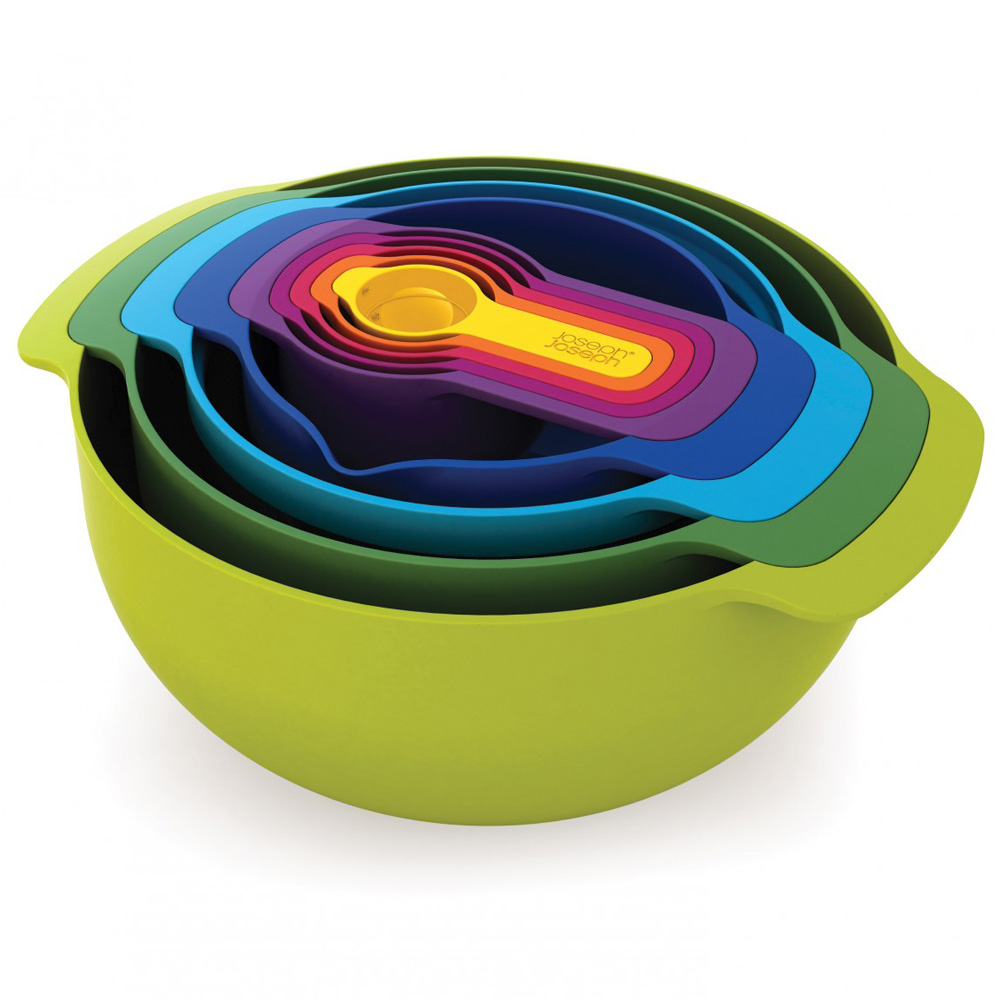
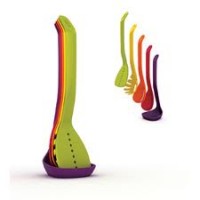
Joseph Joseph is British company that makes myriad cooking products that fulfill our objectives. Take for example their Nest™ 9 Plus, which nests bowls, a colander and measuring cups and spoons in one unit. Whereas most of us end up with mixing bowl set from one place, a colander from another, and measuring cups and spoons from yet other place, this unit designs these related things to work together, enabling significant reduction in clutter and space.

Other products include a fold-flat grater, a folding colander, nesting kitchen utensils and more.

As an added bonus, Joseph Joseph brings some needed color to our the apartment’s otherwise pale interior!


Home storage is often lost in figurative (and literal) teaspoons–gaps of space here, stuff splayed out in drawers there. Products like Joseph Joseph mind the gaps, mating like products in logical ways, making for a simpler, more compact home.

What other products would you put in the LifeEdited apartment? What multi-functional, stacking, nesting, folding or simply high quality product can you not live without? Let us know.

images via Joseph Joseph


Edited Housing Guide: A Look at 4 Compact Housing Developments in North America

While building small is big in many places around the world, it’s still pretty novel in North America. Our abundance of space and affection for cars have made our architectural disposition similar to a big yawn after Thanksgiving dinner.

New American home footprints have been north of 2K sq ft for a while, and have even spiked to 2550 sq ft in the last year because credit scarcity has limited new home ownership to the cash-flush.

But that’s not what we’re going to talk about today. We are going to talk about the little guys. These are developers at the vanguard, building small, efficient, awesome homes.

And if we missed anyone, please let us know in the comment section.

1. Cubix SF (née Cubix Yerba Buena)

If you go to San Francisco’s SoMa district and see a Rubik’s-cubey-looking building, it’s probably the Cubix SF. The 98-unit building has floorplans ranging from 250-350 sq ft. Prices are in the low-to-mid $200’s, which is about a 1/3 of the area’s median price.

The building features nice finishes (see main image above for interior pic), modern appliances, a big roofdeck and groundfloor cafe. Their focus is on creating a low purchase price for people who still want a high quality, stylish apartment in a great neighborhood.

2. Vancouver Micro Lofts

Okay, so it’s not the US, but these micro units epitomize edited living. There are 30 units, which range from 226-291 sq ft and average $850CAD/month rent, which includes cable and internet.

The tasteful decors feature folding beds and tables, big windows and small, high quality appliances. With considerably lower rents than neighborhood average, the building proved very popular and rented out almost immediately.

via cbc

3. Apodments

In Seattle, Calhoun Properties has developed 9 building featuring their Apodments™, which are more like boarding rooms than standard apartments. Buildings have shared kitchens and living rooms. Some rooms have shared bathrooms and can be as cheap as $350/month including utilities, while the majority have private bathrooms, kitchenettes and some furniture and are as cheap as $495/month including utilities.
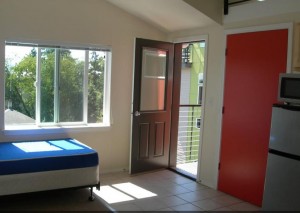
The units themselves are as small as 90 sq ft with fairly spartan decors compared to the other developments in this profile. Calhoun seems to be focused on young people who make low, hourly wages and/or don’t spend much time at home.

image via Facebook

4. Olympic Studios and Studio Lofts
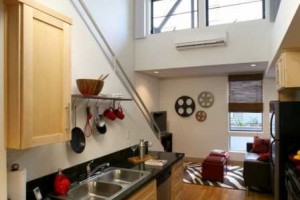
In posh Santa Monica, CA, NMS Properties offers compact living for moderate income households (<$60K/year for singles and <$68/year for couples).

The units range anywhere from 360-448 sq ft. One of the cooler features is their furniture organizer, which allows you to drag and drop furniture pieces to pre-configure your furniture to the spaces somewhat tight quarters. We particularly like the loft layout, whose high ceilings give the small footprint a cavernous feel.

image via Olympic Lofts

graph via treehugger and Builder Online

Past and Present of Transforming Furniture

Our good friends over at Resource Furniture put together this short video showing transforming furniture’s past and present. The vintage footage illustrates this type of furniture is hardly a new idea. People have been designing furniture to maximize the use of space for ages.

In fact, what’s new is NOT maximizing space. Consider that the average new American home in 1950 was 983 sq ft., and the average household had 3.37 people. According the US Census Bureau, those numbers in 2010 were 2,169 sq ft and 2.59 people. That works out to 293 and 837 sq ft/person respectively–almost 3 times as much space per person! Much of this extra square footage, we suspect, is consumed by seldom-used spaces like dining rooms, guest rooms and foyers. What if, by using transforming furniture, we make our rooms do double or triple duty? Combine dining rooms with guest rooms. Make living rooms into bedrooms. Just get rid of the foyer (the parsley sprig of architecture). How much space would we need then?

What if we started living and maximizing smaller living spaces again? They’re cheaper, greener and–for all but a few worst-case-scenarios–provide all the space we need. What ways would you do it–furniture, housewares, etc.? What ways are you doing it? Let us know what you think.

Hong Kong Apartment: 344 square feet. 24 Configurations.

We would be remiss to not sing the praises of architect Gary Chang’s “Domestic Transformer” Hong Kong apartment–probably the world’s best known transforming apartment. Its ingenious design produces function and a sense of space totally inconsistent with its tiny footprint.

The back-story is interesting too. Chang has lived in the apartment since he was 14; at that time, him, his 3 sister, 2 parents and a boarder all occupied the tiny space. That’s about 50 sq ft/person. Roughly 1/20th the space Americans currently use!

In 1988, he bought the apartment from his parents.This last renovation–1 of 4–was completed in 2008. The apartment has become an idea lab for finding efficient uses of space–a serious issue for Hong Kong, whose already ultra-dense landscape has taken on 400k more residents in the last 10 years.

One of our favorite touches is the guest bed above the soaking tub. With odd pairings like these, Chang shows what’s possible when creative use of space trumps conventional thinking.

video via Planet Green and NY Times.

Single Dress Does Triple Duty

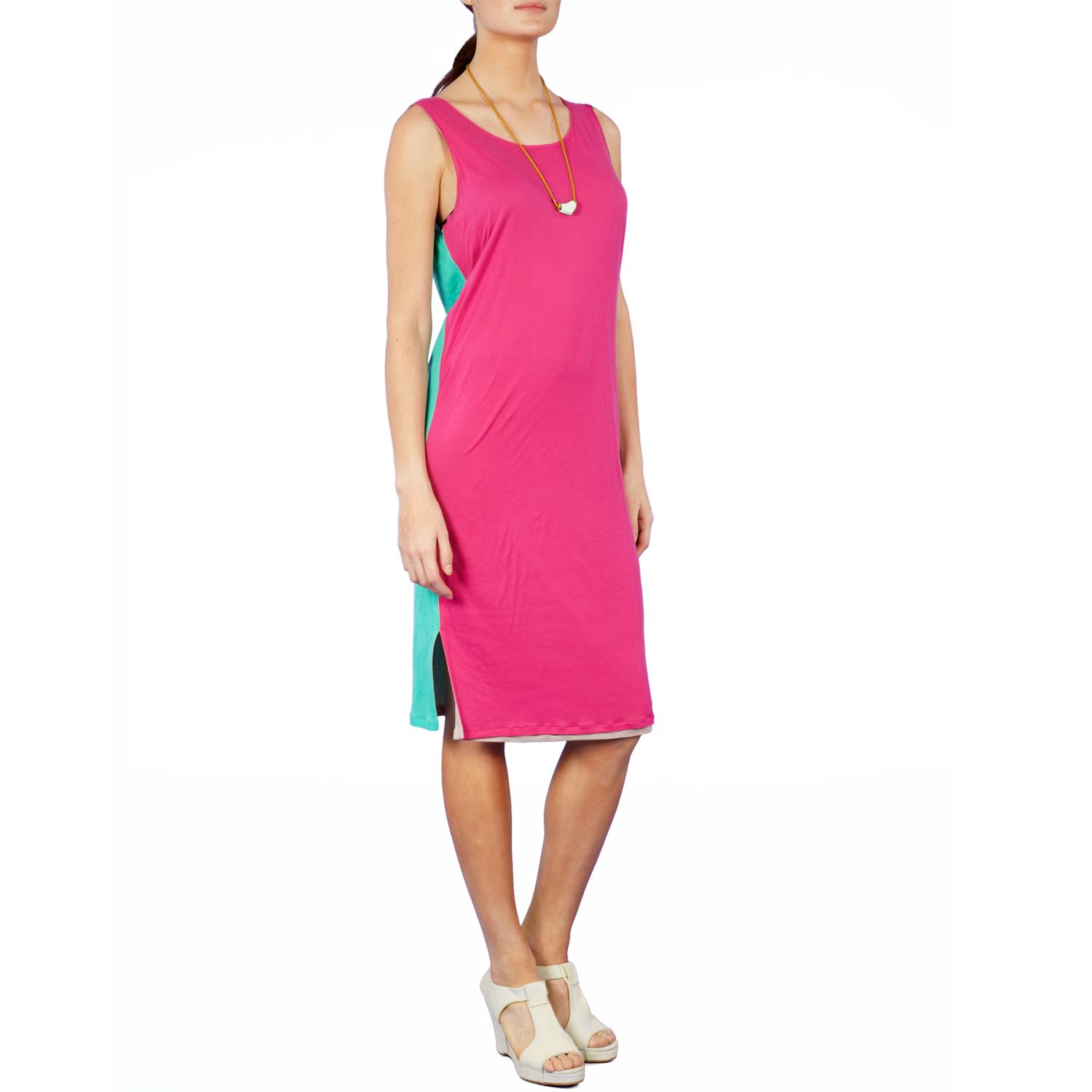
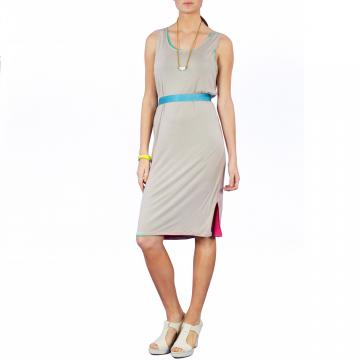
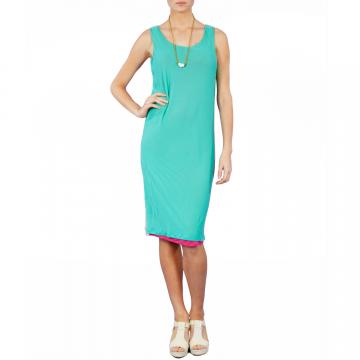
Editing life is often as much micro as macro. Sure, it’s cool to conceive of new furniture, homes and cities. But often small ideas are just as critical as big ones. Case in point is this Akan reversible dress from Loomstate 321. Its different configurations effectively give it the utility of 3 dresses, which for $228 is a great deal. It’s also made of an eco-friendly, wood-pulp-derived fabric called Tencel.

With small, smart wardrobes, we need less storage, smaller living units; there’s less laundry to do and more money in the bank.

While this pink and teal version is nice, we might suggest their more subdued white/black/blue/yellow version. Part of living an edited life is choosing things that can be as versatile as possible. The author was confronted with this situation the other day. I wanted to buy a cool pair of moss green pants from Outlier, but given that they would be my primary pants, I chose the more staid grey. I knew the pants would be in heavy rotation and realized I ran the risk of being the “guy with the green pants.”

Via Vogue and Loomstate 321.

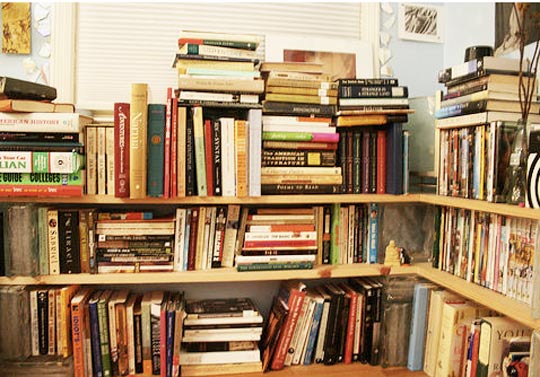
eBooks and the Bibliophiles Dilemma

This is perhaps the most taboo topic in life editing. Even extreme editors, living in their ultra-organized cubbies, often find themselves unable to get rid of these. That’s right, we’re talking about books.

We love our books–the feel of paper, the dog-eared pages, the cover art, the smell. We display them like trophies. When people come over to my house, they will know I read “The Brothers Karamazov.”

But let’s face it: books are space hogs, and few inventions help the process of editing one’s life as much as the eBook. For example, consider the basic Kindle eReader stores up to 1400 eBooks and weighs 6 oz., which is about the same size as one paperback copy of “The Great Gatsby.”

We know there are many eBook converts out there already, but for the others, who can’t quite make the leap, who are dubious of electronic ink, who love their paper-cuts and dewy thumbs, we put out a challenge: try it. 

Today we present an easy, zero-risk way of seeing if eBooks are for you.

  1. Download the Kindle app. It’s a free application that allows you to read Kindle eBooks on a variety of platforms: Android, PC, iPhone, iPad and Mac. Install it on whatever device you find yourself using the most, preferably a portable one like your phone or tablet, which better replicate a book’s utility.
  2. Download an eBook you want to read. This could be one of the millions of paid Kindle titles on Amazon, or if you don’t want to pay, download one of their 1M+ free eBooks to make this a truly zero risk experiment.
  3. Read book and see if you like it.

Mind you, this is not a perfect experiment. EBook readers like the Kindle and Nook have eye-saving electronic ink, which for many (like the author) make it possible to read for long periods of time. But others, like Graham Hill, have read many books without issue on their back-lit phone screens.

Either way, the idea is to try. Give it a shot and let us know what you think.

image via Apartment Therapy