A Tiny House that Doesn’t Look Like it Belongs in 1890s Kansas

Call us a bit jaded, but after a while many tiny houses start to look alike: tiny gable-roofed structures with eaves and a porch, lots of rustic wood, a loft bed, composting toilet. This is all fine, good and functional, but it can also feel somewhat generic and leave those whose tastes lean modern a little wanting. We ran across this tiny house on Treehugger by a Dutch outfit that calls themselves Woonpioniers. Yes, their “Porta Palace”, as they call it, is still made of wood and has a gabled roof (albeit an asymmetrical one), loft bed and composting toilet, but its sleek and clean design give it an overall effect that is very removed from Laura Ingalls and her houses on prairies.
woonpioniers-living

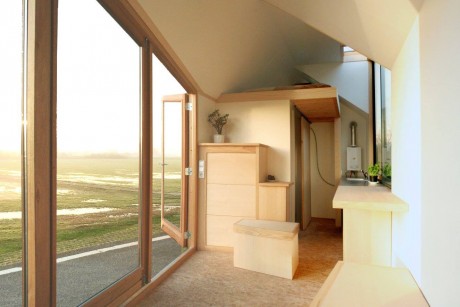
The first distinguishing trait are windows: two huge ones on either side, one of which contains a big door, making the transition from in and outdoors somewhat fuzzy. While giving it a dramatic look and tons of light, it would also pose some serious privacy issues if the Porta Palace were placed in a group setting.

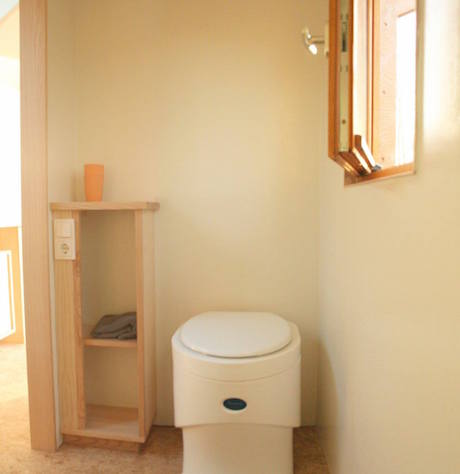
There’s not much to the space that can’t be seen: there’s a living room with integrated sofa that faces out one of the large windows; there’s a sleeping loft that’s accessed via stairs that are also storage boxes; that loft sits above a bathroom where the requisite composting toilet resides; and there’s a small (I guess that goes without saying) galley kitchen. Everything has a unified aesthetic, making it look like a pleasant place to hang out.
woonpioniers-toilet

The project seems to be an experiment in low cost, low impact living (Woon means “living,” not wood as I initially assumed) and one its architects, Jelte Glas, will conducting that experiment upon itself, living in it full time. As much as anything, the Porta Palace shows the infinite forms tiny housing can take. See more on Treehugger and the Woonpioneers website.
One-Day-to-Construct House Looks Pretty Awesome

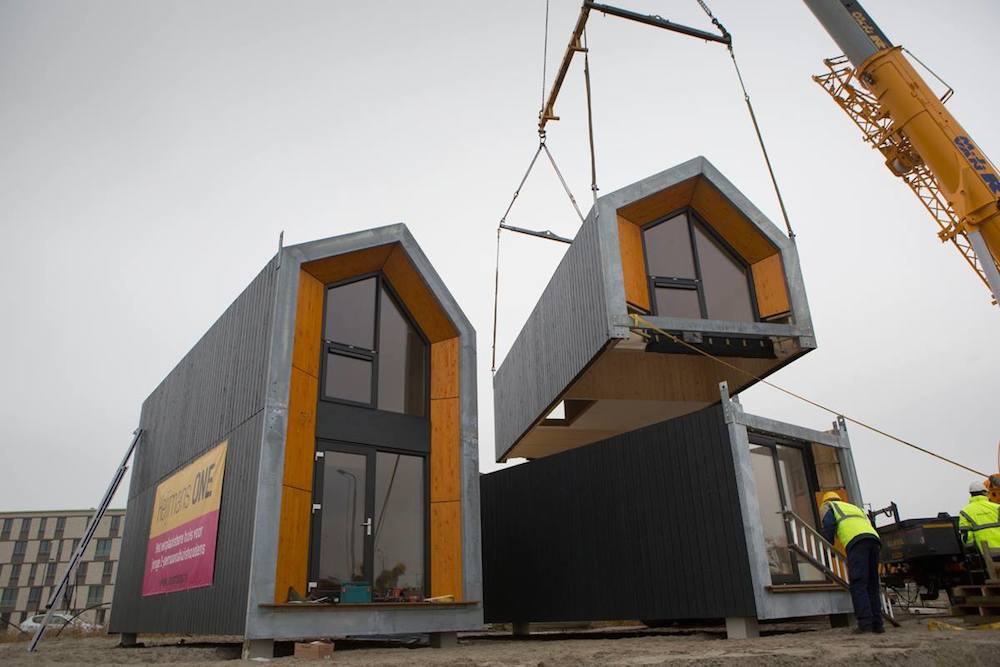
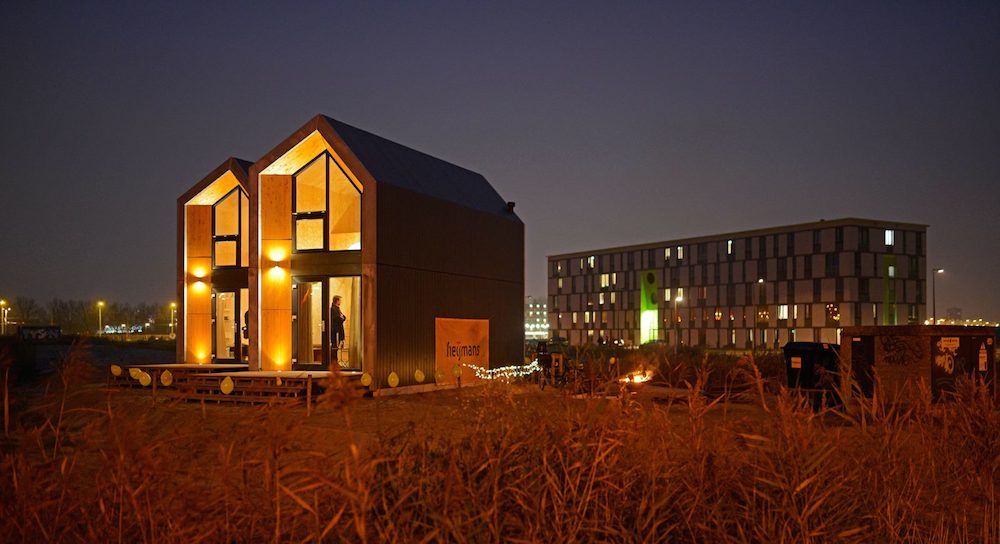
Around the world, cities are feeling increasingly pinched for space, resulting in major housing shortages. A project out of Amsterdam has a solution–well, a temporary one at least. Conceived by real estate developer Heijmans, Heijmans ONE is a dwelling that can be set up and taken down in a day. The dwellings intended homes are construction sites that have been stalled by economic crisis.

The dwellings, according to Heijmans, are specifically intended for well-educated people between 25 and 35 years old, in their first job and single–a population they say will number “no less than 700,000”; a population who, like their American counterparts, are living with their parents longer; and who “earn too much for social housing, [but] too little for the free rental sector.” By placing the Heijmans ONE in derelict construction sites on the outskirts of town–ones “where nothing has happened for years”–they believe they can offer the units for as little as €700/month (~$900). This will give these folks a foothold in the housing market as well as an attractive place to live. Heijmans would like to create clusters of the units to make insta-communities.

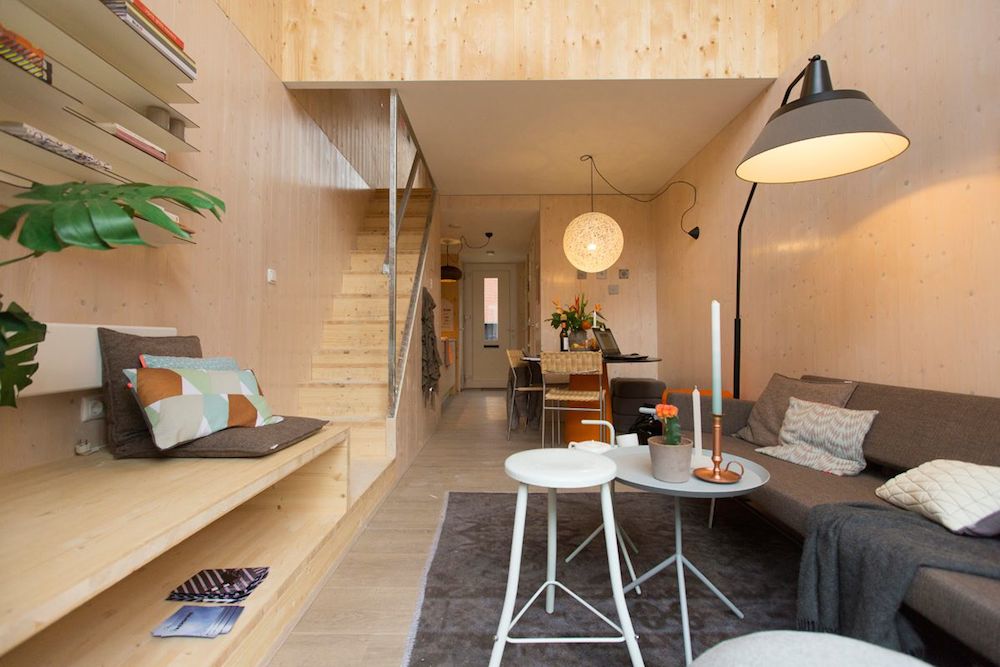
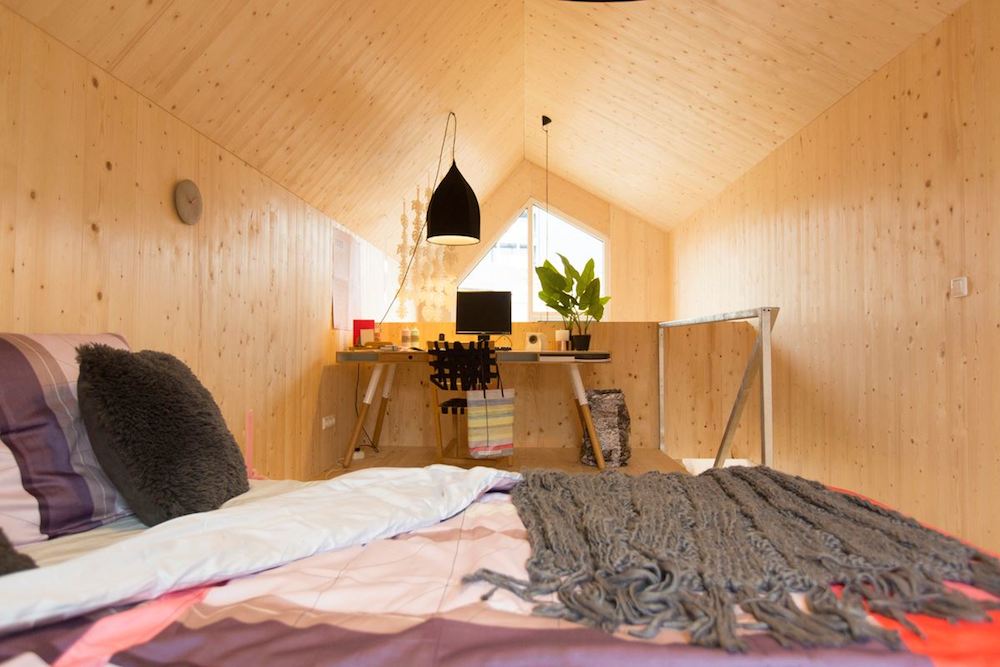
The units are basic, but nice, and certainly nicer than most infill architecture. They have real kitchens and bathrooms, a nice living room and lofted bedroom. They use solar power, but are hooked up to municipal sewer lines (Heijmans eventually wants to take them off-grid). Heijmans is currently running a test run of the dwelling, with one woman living in the unit for three months.

We’re not sure about all the economics behind the project, how feasible it is to setup camp in these derelict construction zones (we imagine there’s a ton of liability for the host) or what Millennial would really want to live on the outskirts of town, much less in a derelict construction zone or where the residents go should construction resume. But desperate times call for innovative solutions, and we applaud Heijmans for tackling a pretty big global problem and being willing to work out the kinks as they go.

Via Fastco Design

Pop Up Apartment Defies Expectations, Physics

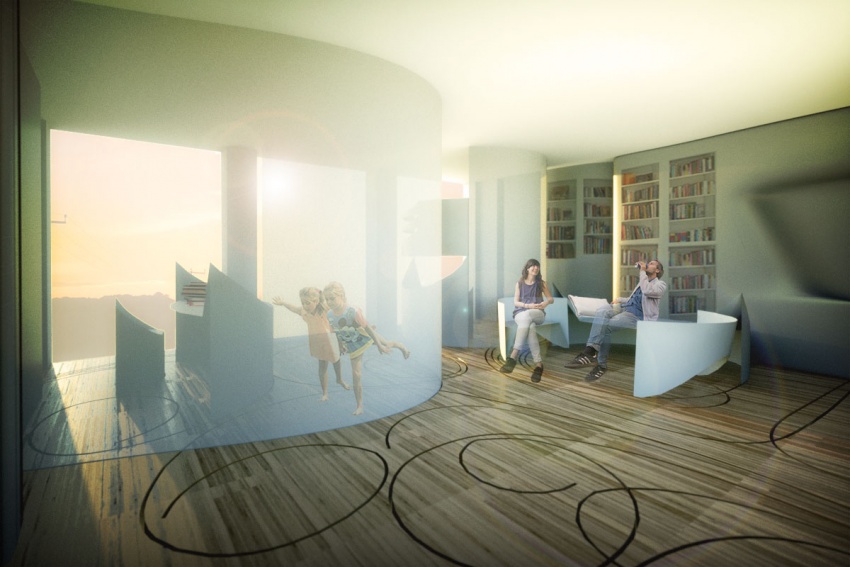
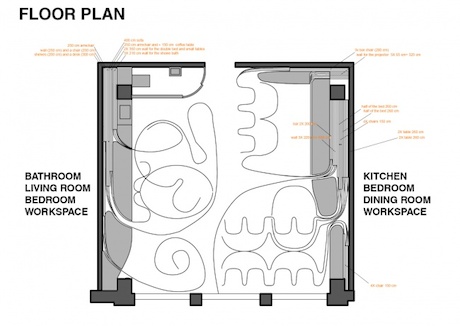
File this Dutch-university-student-designed Pop.up Apartment under the no-freaking-way category. Relying on polypropylene sheets that slide along motorized guides in the floor, the 50 sq m (538 sq ft) apartment can be configured in dozens of ways, giving it the functionality of a space twice its size. The sheets not only act as slide-out walls, but many of them bend to create much of the space’s furniture.

pop.up-apartment-floorplan

The project is the product of the Hyperbody design team at TU Delft University. The question the team sought to answer was how to fit more function into the modern city’s limited real estate. Like MIT’s CityHome, their answer is profoundly technical, replete with motors, app-controllability and lots of CNC cut panels. The team likens the space to a Swiss army knife, where only the desired tool is folded out, while the unused ones remain hidden.

I’m glad I watched the project’s four minute Youtube video. As I watched the computer modeling of the project, I thought “there’s no way this can be done in real life.” I was quite wrong. They made a full-scale, functional mockup in an empty office space.

pop.up-apartment-dining

For a simpleton like me, it’s important not to pass judgment too quick on the Pop.up Apartment. It seems too complicated by half. There are too many motors, too many things to go wrong. The curlycue  aesthetics aren’t my thing. I wonder how the plastic sheets’ resiliency will fare over time…and so on.

This is a concept and a bold one at that. And like all concepts, it’s going to be filled with many ideas that will end up on the edit-room floor. But some ideas might be useful, informing and improving on more conventional designs.

See more videos, drawings and images on the project’s website.

Via Fast Company

Urban Living Rooms and Why Privacy is Overrated

Humans tend to idealize ample private space: no one to disturb you while you read or surf the web or watch TV or take a nap. Pure peace and tranquility. The reality is something different: no one to disturb you while you read or surf the web or watch TV or take a nap. Pure boredom and inertia.

Few people are truly introverts (at least according to Myers-Briggs); this aligns nicely with living in small spaces. Because small homes lack big private spaces, we can use our “cities as living rooms.” Living outside in our cities is more space efficient and, importantly, more social than holing up in our private living rooms. When’s the last time you unexpectedly ran into a friend in your living room (and no, online encounters do not count)? But let’s face it, typical city furnishings–benches, tables, steps and the occasional lawn–are seldom as comfortable as our living room’s comfy environs. A couple projects are changing that situation one sofa at a time.

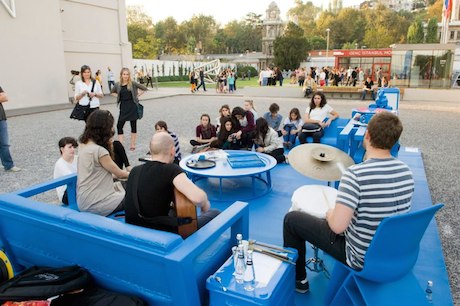
The first project is the aptly-named Urban Living Room. The project is the brainchild of artist and organizer Studio ID Eddy, Powerboat and designer Bas Kortmann. The three made a popup living room that, according to their website, “challenges the way public space is treated.” The living room, set up in busy city centers, offers both temporary repose where strangers and friends can meet; it also offers a space for performances and workshops (does your living room have that?).

urban-living-room-istanbul

The furniture serves as both a place to rest and design showcase for Dutch designers. The smurf-blue color is a way to provide visual relief from the cityscape; it is also the color of the polyurethane coating that protects the furniture from the elements. ULR tours throughout Europe. Its next stop is Barcelona. See its schedule here.

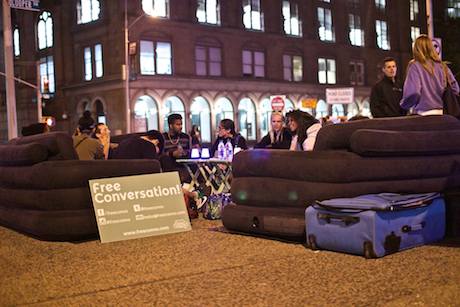
free-convo

Closer to home is “Free Conversation” which is like a living room pre-populated by a group of interesting/interested folks. We passed by FC in Washington Square Park the other day (full disclosure: my squirrely son prevented my participation). They had several comfy looking inflatable sofas set up where people were chilling and talking.

The project’s co-founders Mike Scotto and Tony Cai are a couple tech wonks who saw the need for folks to hang out and connect on a level deeper than exchanged texts messages. When people get to FC, they are asked to put down their phones and just connect. This is a great thing. Even though cities like New York are ideally set up for serendipitous meetings, the likelihood of that happening is greatly lessened when our heads are glued to our phones. FC brings back the unplanned meeting. All we have to do is stop and sit–something that is occasionally harder to do than it sounds.

Rem’s Cool Little House

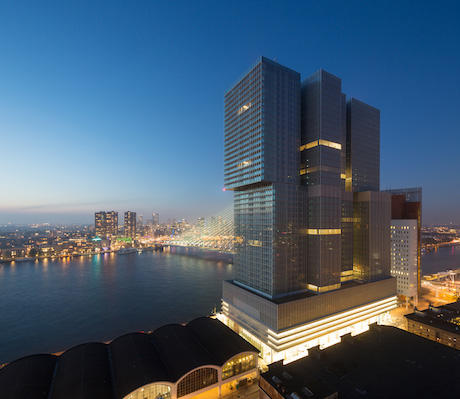
The Rem Koolhaas designed De Rotterdam is a 44-story building with three towers occupying the same footprint as a soccer stadium. 16 years in the making, it is now one of Europe’s largest buildings. The behemoth was intended to be a vertical city, incorporating work, live, leisure and hotel spaces across its vast campus.

de-rotterdam

Even though its 240 apartments are not terribly small–they range from 60 to 250 sq meters (645 to 2690 sq ft)–it didn’t stop the good folks over at Italian furniture company Clei from kitting out the spaces to make them function like much larger ones.

De_rotterdam

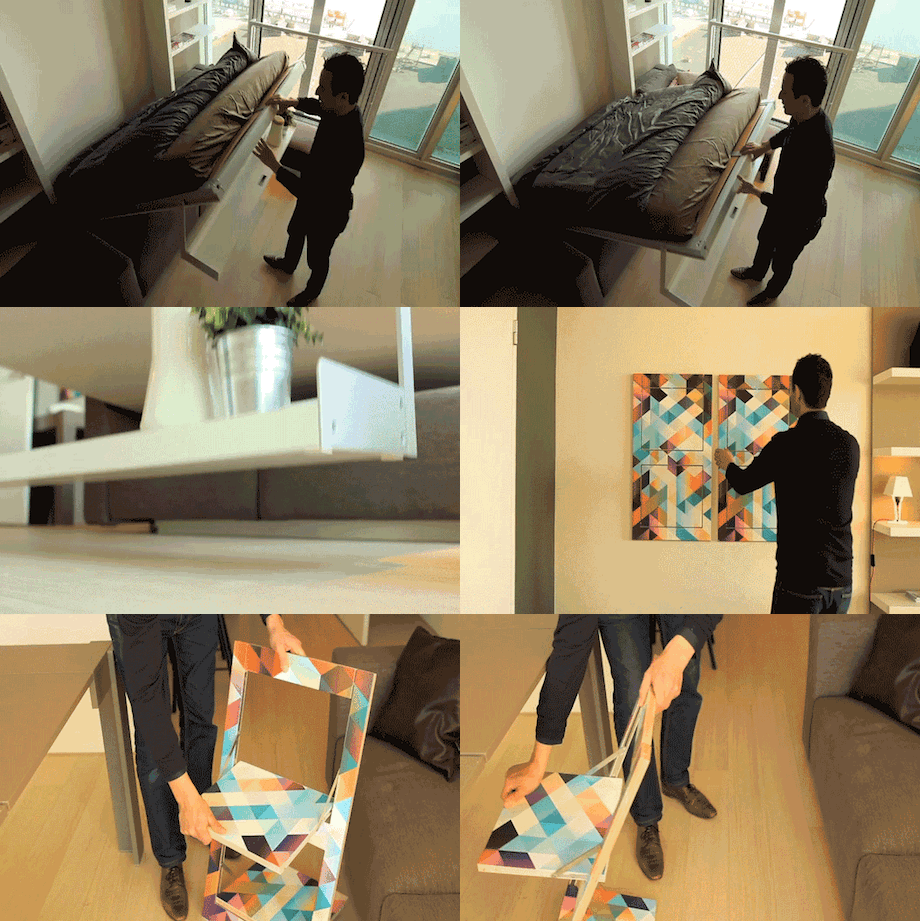
More specifically, Clei decked out one of the building’s 60 sq meters apartments. Again, it’s not the size that’s notable, but the function the furniture adds to the space. The intention was to create five room apartment from the apartment’s two (watch video at top for the full tour). There are two bedrooms, a dining room, office and kitchen (we think those are the five rooms).

We see quite a few recognizable pieces in the apartment such as the Swing sofa/bed and Goliath table, both of which are featured in the LifeEdited apartment. There are some other, less familiar objects like a foldout side table and flat-folding chairs by Fläpps–the latter piece, with its colorful pattern, doubles as wall art.

When we spoke to Resource Furniture president Ron Barth a couple months ago, he made the great point that small space design is often far less relevant than optimizing the space you do have–a well-used 700 sq ft can best an inefficiently-used 300 any day.

We also talk a lot about context: you can have the smallest, greenest home in the planet, but if you need to drive two hours to get eggs, it undermines whatever efficiencies the space might provide. Even though the De Rotterdam’s apartments aren’t that small, couple space optimization with the inherent efficiencies of a building like this and you have a compelling, sustainable living setup.

Via ArchDaily

Dutch Hotel Bares All

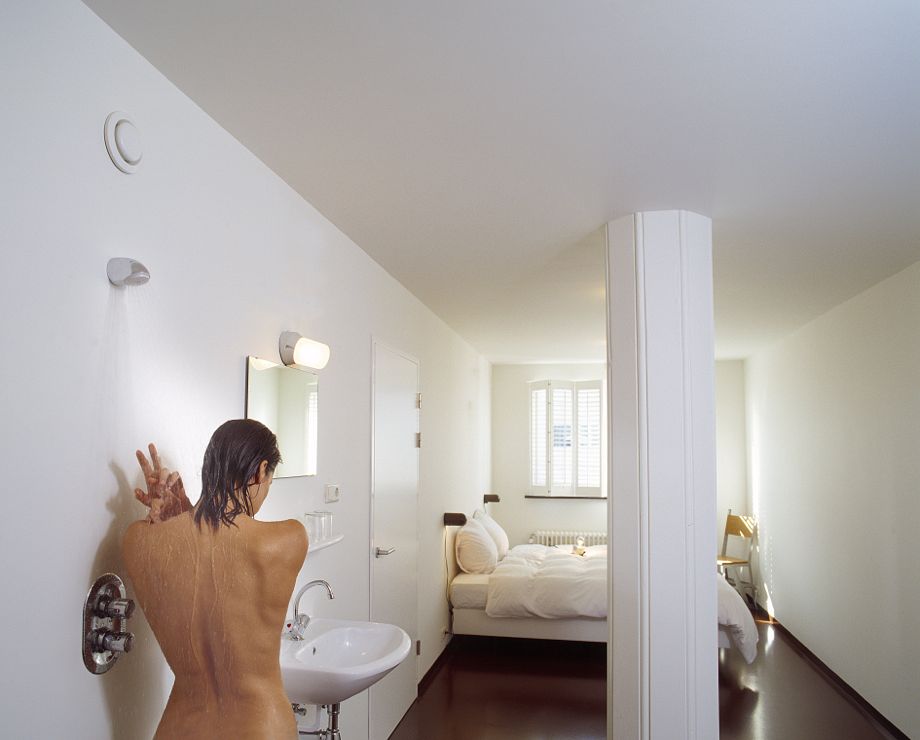
There are many rooms that are worthy of being on the cutting-room-floor of architectural orthodoxy: the formal dining room, the foyer and some might even argue the bedroom. But the bathroom? The Lloyd Hotel of Amsterdam seems to think so. Some of their room’s bath, um, “zones” break down those fascist, water-repellant borders separating sleep and suds.

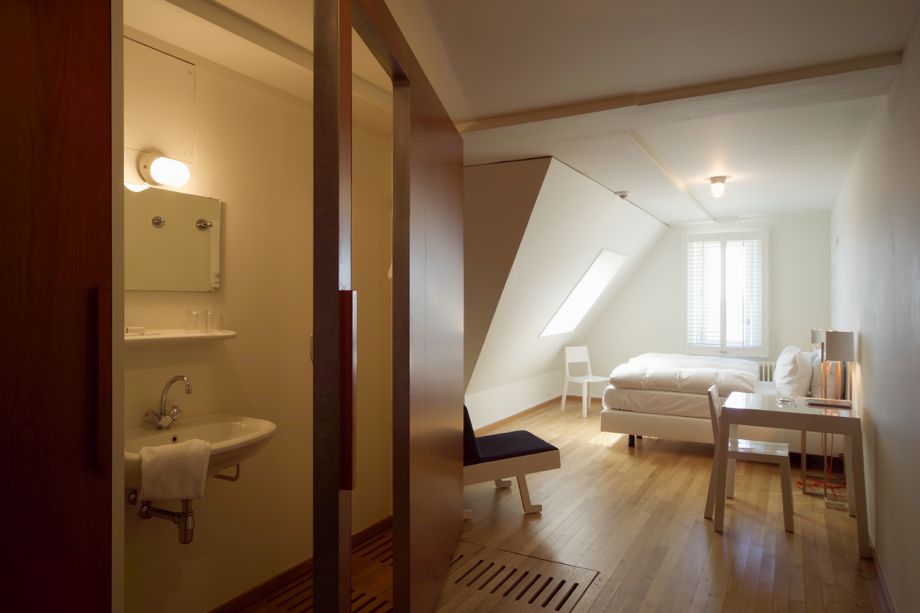
Granted, the Lloyd is a hotel, a place where the penalties of failed experiments in architecture are negligible (or easy to endure for a few days). Also, there is a modicum of privacy with some of the designs such as the pivoting bathroom divider, whose door separates the shower from the rest of the room. Others, like the open plan bathroom (pictured at top) leave nothing to the imagination, and it would seem to have the spray protection of a front row seat at a Gallagher show (squeegees are included with the room).

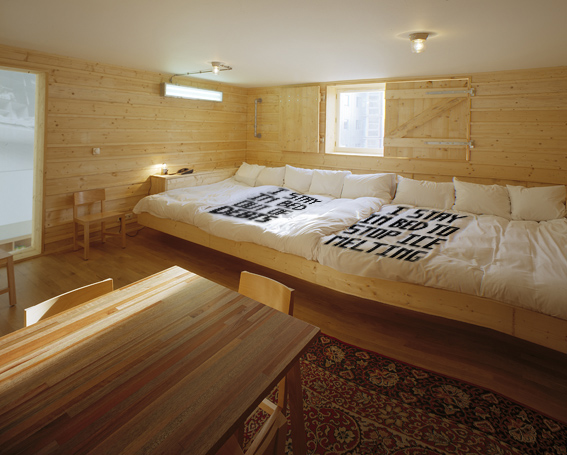
It also should be noted that the Lloyd is a haven of unconventional temporary accommodation. With some rooms featuring things like side-by-side queen beds (ready for your Eyes Wide Shut parties), it should be no surprise that your room might have a shower in the middle of the room.

Via Slate

Living in a Bicyclists Paradise

We don’t hide our ardor for bicycles. They are the most efficient form of transportation known to humans. They don’t take up a lot of room. They are relatively affordable and make us fit and happy. But we admit, they simply aren’t practical in a lot of places. Amsterdam is not one of those places. As this short movie called “Bicycle Anecdotes from Amsterdam” attests, bike culture is simply culture to Amsterdamers.

One thing we learned watching the movie is the city’s history with the car. In the 50s and 60s, regulation and urban planning were supportive of cars. But a subsequent increase in congestion and automotive fatalities–coupled with the 1973 oil embargo–led to the car’s decline and the bicycle’s ascent.

There are many reasons bicycle culture flourishes in Amsterdam. The pancake flat city has vast networks of bike lanes, bike parking and bike-friendly laws. The scenes from the movie make cars look anomalous. Dutch bikes are very utilitarian, lacking the fanfare they do in the States; they are heavy, somewhat anonymous and have an upright position that prohibits high speed. Amsterdamer children begin riding young and by adulthood are very competent riders.

There’s the suggestion in the movie that the Dutch’s adoption and subsequent rejection of the car might influence Americans, who are still pretty tethered to their cars. We think this parallel holds up to a certain extent. Amsterdam is a historic city, whose core was conceived long before cars or even bicycles. For older American cities like New York, Boston and San Francisco, which were planned prior to the advent of the car, a widespread adoption of the bicycle as primary transport seems feasible. But for other cities like Houston and Los Angeles, who came about in the age of the automobile, this adoption might prove more challenging. Like most things, necessity will be the key factor–when gas becomes prohibitively expensive, many people will discover a love of the bicycle as deep as the Dutch.

Via Treehugger