A Village in a Tower

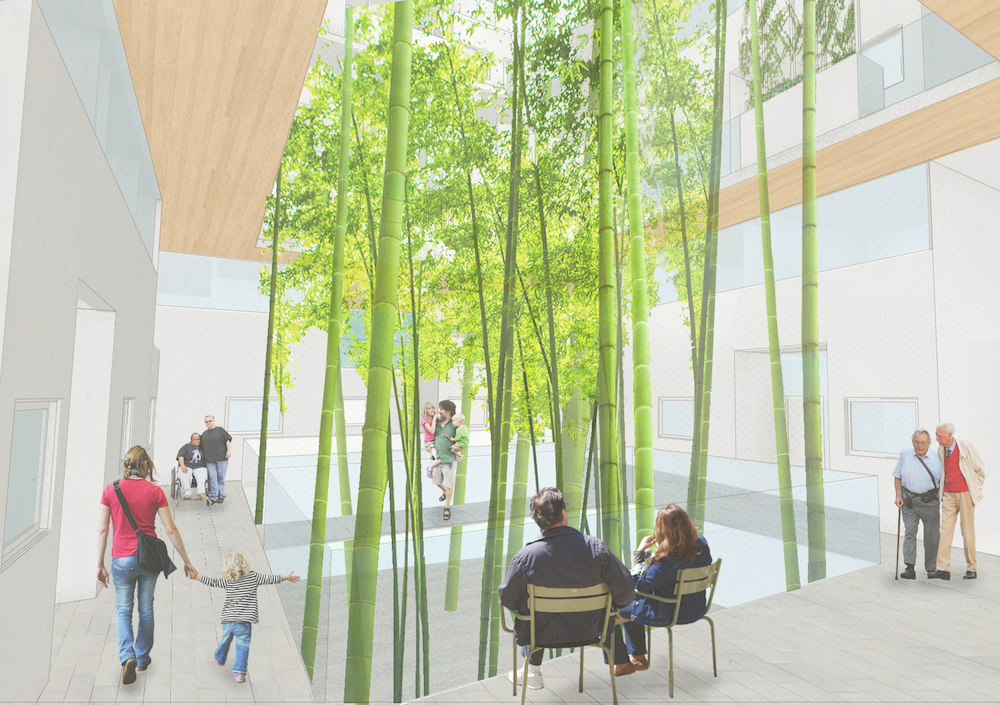
Bamboo plants in inside courtyard

Image above by Rachel Kao.

While Europeans are no strangers to communal, urban living, evidenced by things like Baugruppen, the phenomenon is still pretty rare in North America. Cohousing, the most established form or communal living this side of the pond, tends to be located in the burbs. In these communities, several single family houses band together to create a cohesive community with regular shared activities and spaces. There are some urban exceptions such as Durham Central Park Coho. But developing a building like Durham Coho is a time and resource intensive affair. Now a group out of Vancouver calling themselves “Our Urban Village” has come up with a clever middle ground approach to creating communal living in the city. Rather than developing their own building, they’re seeking to graft their community onto an existing development.

The group calls their concept “”co-housing lite”. Rather than originating the development, the group would commit to buying several units at market value (~C$700/sq ft at the moment) of an in-progress condo building. This influx of cash would give the developer investment capital as well as cost savings down the road as pre-sale and marketing expenses would be minimized. In return, the developer would build common spaces such as shared dining and guest rooms for the community. While these added features might seem like a big hit for the developer, co-founding member James Chamberlain told the Globe and Mail that developers see the expense as fairly small relative to the overall costs of developing the large buildings their interested in.
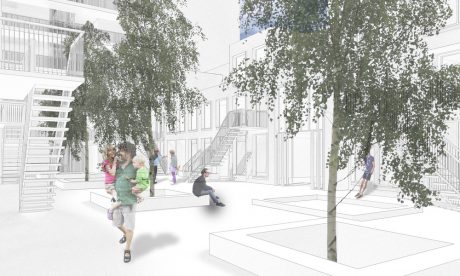
Morgan_McDonagh_Social Street

The community is being smart with design of those common spaces. Another member, Kathy Sayers, wrote that OUV “will be working with a German architect and Resource Furniture to design our common space to make 1200 square feet work for our 20-30 families instead of the average 2000-2500 square feet.” That same architect, Inge Roecker, is an associate professor at the University of British Columbia and gave her students the task of concepting the community. Ultimately, we suspect, the look of the spaces will be largely dictated by the building’s preexisting architecture. 

The group is presently courting a number of Vancouver developers. Because of their unconventional approach, Chamberlain said the ideal developer will be one with a “social conscience”.

The community wants to be multigenerational and their current membership of nine represents several demographics including singles and couples with and without kids. They’re shooting for 15-30 households total for the community. Before you become a member, OUV has a three month getting-to-know-you period to weed out people who might not be into the sometimes involved nature of cohousing. When that period is over, members pay a C$500 membership fee and are responsible for paying for their units.

While designing a building from scratch to facilitate a shared living experience is perhaps ideal, many people with jobs don’t have the time to commit to such an undertaking. Co-housing lite provides people interested in this way of life, ones who don’t want to live in single family housing, a way to create their community without the burden of being amateur real estate developers.

If you’re interested in learning more or becoming part of OUV, check out their website.

Dorm Living for Grown Ups

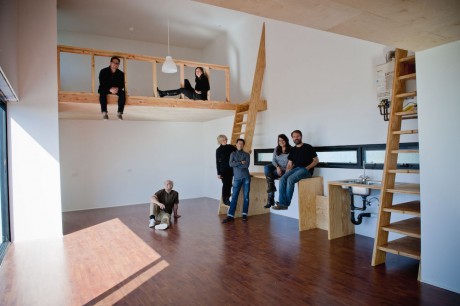
In the mid-aughts, Professor and architect Hector Perez of Woodbury University pooled together several faculty members to purchase lots of land in the Barrio Logan neighborhood in San Diego. Their hope was to create an extension to the school’s campus. But a variety of circumstances–crashing economies, the school’s decision to move to another part of town–derailed the plan. Rather than selling the land, the group decided to create something they thought would support the community. The result is a building with compact units that mix the privacy of a conventional apartment with the socially porous infrastructure of campus living.

7048hector_barriologan7022hector_barriologan

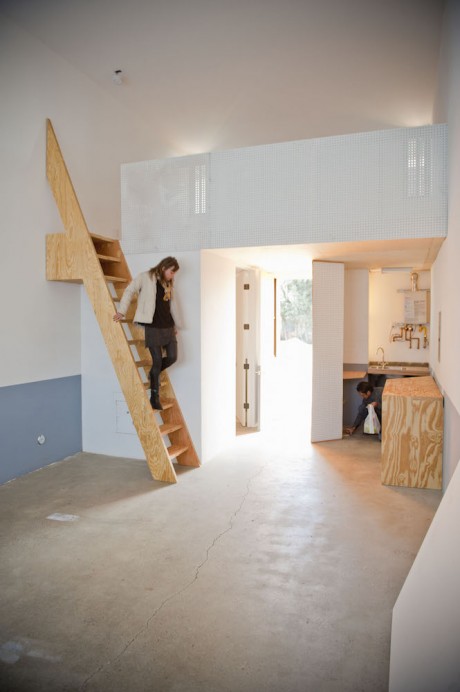
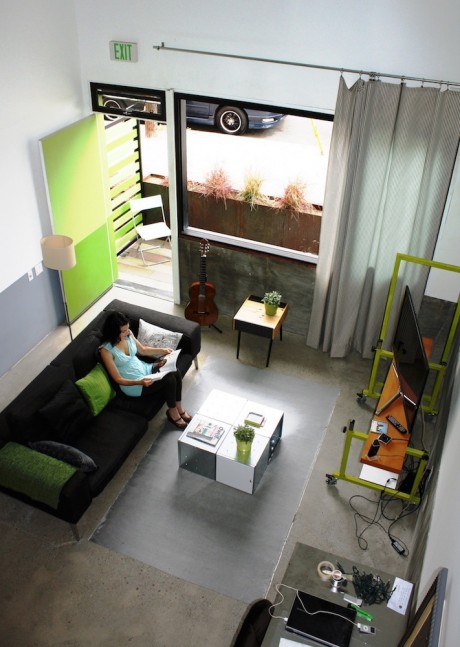
The building, dubbed La Esquina, has a total of eight live/work units making up only 4K sq ft of floorspace across two levels. The units, which are basically artist lofts with very high ceilings, range from 450 to 595 sq ft. They have a large main room that adjoins the kitchen and bathroom, above which is a sleeping/work loft. Some units feature a second loft. First floor units have street-level patios accessed by large sliding glass doors, making good use of San Diego’s weather. The upper level units have both shared terraces and their own private patio spaces.

La Esquina unit5a

The building was built for $130 a square foot, which is about $50 less than San Diego’s average cost for building multi-family homes. Perez and co achieved this by using simple, inexpensive materials such as board-formed concrete walls and plywood paneling. The interiors have a cool industrial chic look that is brightened up well by the ample windows.

IMG_0256

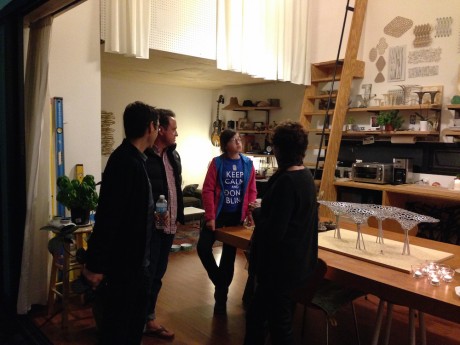
The tenants of the La Esquina are all current students, graduates, and instructors from Woodbury. According to a Dwell Magazine article about the building, tenants “meander into one another’s spaces to share meals, to collaborate, or to spontaneously gather in the afternoon,” making it ripe for creative collaborations.

IMG_9860

Many people speak of their days living in college dorms as some of their happiest. What dorms gave up in space and privacy was made up by built in social programming and conviviality. But as years progress, personalities and habits are forged, and people develop preferences as to how they want to live. The charms of shared living are supplanted by the desire for more control of their living environments. What’s great about La Esquina, from what I can see, is it retains many of the charms and infrastructural characteristics of dorm life, while providing the space and autonomy adults crave, all in a compact, efficient format. 

Growing Old Together and in Style, in the City

Last week I posted about the Cheesecake Cohousing Consortium–an 11 person senior community located in Mendocino, CA. The post proved very popular, but a number of commenters remarked about the dearth of urban housing options that perform many of the same things that Cheesecake does–namely provide affordable, compact, interdependent and social living. In researching Cheesecake, I ran across Durham Central Park Cohousing in (you guessed it) Durham, North Carolina, which seems to fit that bill.

While not a San Francisco or New York in terms of urban density, with its 245K people, Durham is a lively mid-sized city, one that has a booming social, artistic and cottage commercial industry. CP Coho is located right in the middle of town, making it easy for community members to access those assets on foot.

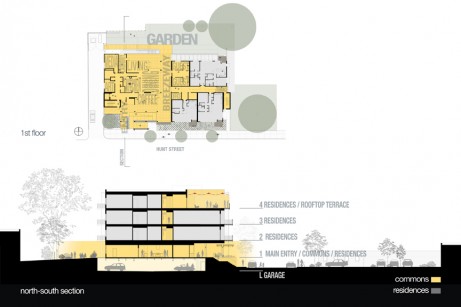
durham-coho-plan

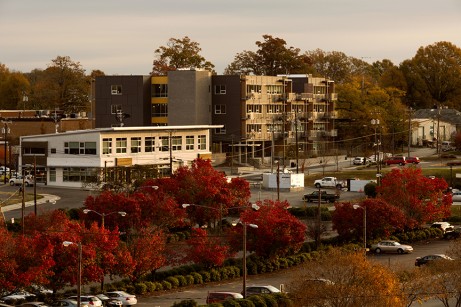
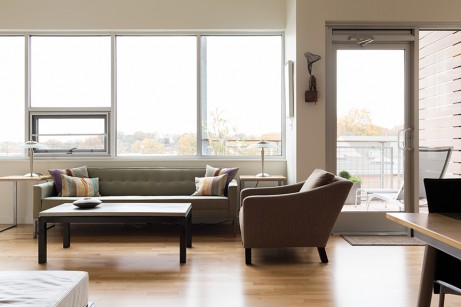
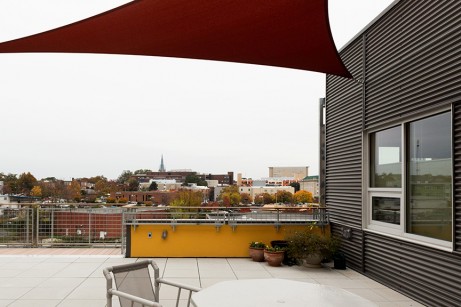
The four story building was designed by Weinstein Friedlein Architects and completed late last year. The first floor is occupied by a common dining room, kitchen, great room, meeting rooms, performance space and gardens. There are also shared guest bedrooms, enabling people to live without dedicated guest rooms in their personal apartments, which are often only used a small fraction of the year. The three upper floors contain 24 units ranging from 850 and 1700 sq ft housing a total 37 people. Each self-contained unit has its own balcony and there is a large shared patio on the roof.

November 13, 2014. Durham, North Carolina. Photographs of the Durham Central Park Cohousing Community for weinstein friedlein Architects.Durham Central Park Cohousing Community

Though not strictly a senior community, judging by pics of its members, the community is made mostly of people of fifty years and older (they do state that a family lives there with one teenager). On their website, they mention that the community is designed around the “aging in place” principle, and the building was designed with universal access to accommodate community members as they become less nimble with age.

Whereas many cohousing communities use existing structures or enlist developers to handle the design and construction of their new building, CP Coho members self-developed their building according to a Citylab article on cohousing and boomers. That said, all units are owned outright as condos. One member told Citylab that the cost of each unit was not affordable per se, but it was comparable to other market offerings. I dug around a little and found most units sold in the low to mid $400K range (I emailed the community for other monthly expenses, but haven’t heard back yet).

CP Coho has a lot going for it. Units are reasonably sized, neither too big or small. The whole building sits on a mere .58 acres, contributing to the urban density and walkability of Durham as a whole. The building itself is pretty good looking and has a number of energy-saving features like solar water heaters. Most importantly, the building has socialization built into its DNA–a critical aspect for people of any age, but particularly older adults, who are more at risk of becoming physically and socially isolated. These merits explain why the building was fully sold out before construction even began. I’ll keep looking for other great project like these (valuable research before I need to start or move into one myself).

Growing Old Together and in Style

I’ve said it once and I’ll say it again: the conversation about compact, efficient housing focuses way too much on so-called Millennials and not nearly enough on the ever-increasing numbers of older adults. Last year I reported on the joint study by the AARP and Harvard about housing this population. In short, the study said that the large houses in the burbs where many American adults currently live, are going to be increasingly difficult to afford, maintain and access (i.e. driving to and from) as folks head into their sixties, seventies and eighties. There is and will be a dire need for compact, amenity-rich, affordable and social housing for today and tomorrow’s older adults. The oddly named Cheesecake Cohousing Consortium in Mendocino, CA provides one example of what that could look like.

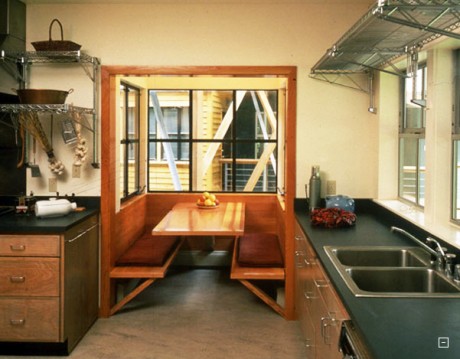
cheesecake-kitchen

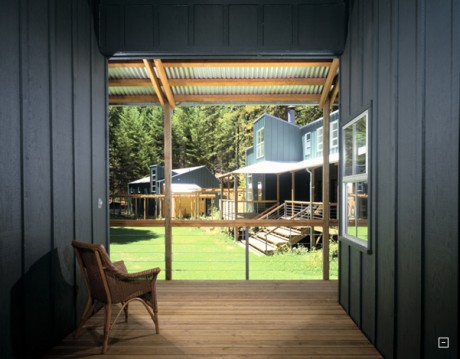
Cheesecake’s origins started in the late 80s when eight lifelong friends, in their 50s and 60s at the time, decided to build a vacation retreat that would ultimately become their retirement community. As they purchased the land and designed the space, they picked up a few more people, making a mix of single and coupled adults. The ultimate design, completed in 1993 by Fernau and Hartman Architects, features three buildings totally 5K sq ft of interior space and 3K of exterior spaces, which include verandas, dog trots, tent decks and a central pavilion.

cheesecake-porch

While the compound has private quarters for all members (kitchens and some bathrooms are shared), the community supports one another, as reported in a story by The Monthly in 2004. For example, when one community member became seriously ill, the others chipped in to perform her chores. As the woman put it, the community members “let me off the hook with love and compassion,” going on to say that she didn’t “have the words to express what that means to me” (the member has since died).

The NY Times has written about the Cheesecake Consortium a couple times: once in 1994 following its opening and then nineteen years later in 2013. In the latter article, they reported that seven of the original members are still there (the aforementioned woman being the only death). The piece doesn’t sugarcoat the experience of living together. One 84 year old member said, “When it’s good, it’s so good…And when it’s bad, it’s so bad, the angst and argument we have with each other. But we have a conviction to work it out—and we will.” 

The Times also got into the expenses of living there, reporting that “buying into the community costs about $25,000 upfront, plus a continuing $500 monthly fee and an $11 daily charge for food staples, electricity and Internet use”–a pittance of what it cost to live in most assisted living homes.

Contrary to popular notions, the AARP/Harvard report found that most older adults do not move out of their homes when they can no longer maintain them. Instead, because of the costs and burdens of moving, they stay put, often becoming increasingly isolated as well as cost and physically burdened by their upkeeps. If more sensible, transitional, social–and let’s face it, beautiful–housing like the Cheesecake Consortium were available, we imagine many older adults later years would be a bit more golden.

Competition Uses Tight Resources to Squeeze Out Big Designs

Man built most nobly when limitations were at their greatest.

Frank Lloyd Wright

You’d think that if we had access to boundless resources for our architecture, we would build the most amazing structures, incorporating the highest tech, the best quality, the utmost in efficiency and so forth. But such is not usually the case. More often unlimited resources give birth to McMansions and $100M Park Avenue duplexes–structures that hardly indicate the advancement of architectural thought, much less human evolution. The trouble is when you have no limits to external resources, you typically don’t need to rely on internal ones. In other words, excess tends to breed creative laziness. On the other hand, limited resources and the imposition of other constraints often spurs creativity. It’s a much trickier proposition to fulfill on objectives, not with anything you can imagine, but with whatever is available, which might not be much. This paradox is why we features so many interesting projects geared toward homeless populations. In these projects, limited budgets and spaces are not barriers to ingenious design, but the reasons they exist.

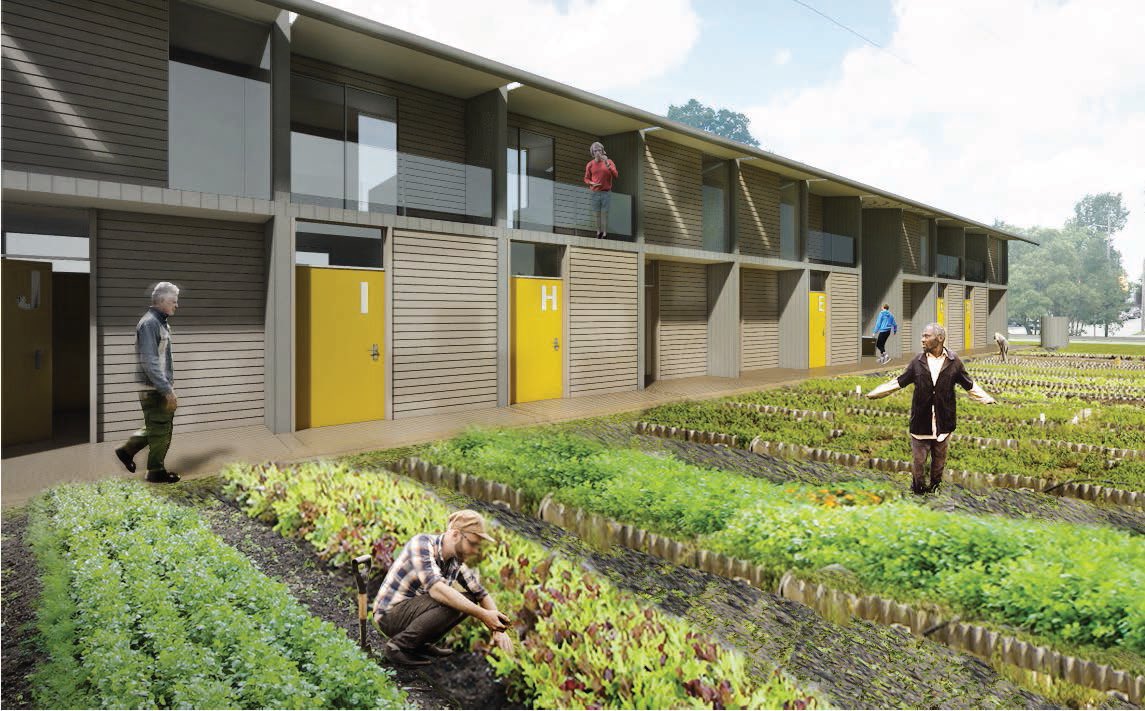
This phenomenon was demonstrated in spades with the Tiny Home Community Competition, launched by the AIA North Carolina Activate14 committee and the Raleigh/Wake Partnership to End and Prevent Homelessness. The competition sought out the best designs for a tiny house community built on a small parcel of donated land on the outskirts of Raleigh. The winning design, when built, will serve some of NC’s 11K+ homeless citizens. From the competition website:

Tiny home communities cannot eliminate poverty or homelessness, but they can create a more lively, caring, and diverse city. The goal is to generate innovative micro-housing communities that can repair and enliven our social fabric and help people transition out of homelessness.

The entrants were to meet a number of criteria such as affordability, the inclusion of a community center and garden, modular and prefabricated construction, a design that includes natural ecology and sustainable lifestyles and a design that can use leftover city land “as a resource for mending social and urban fabric.”

Winners were announced a couple weeks ago. Rather than a grand prize winner, entries were given awards based on specific merits. Merit categories were prefab construction, community engagement, affordability, aesthetic and community.

It’s worth checking out the competition winner’s page, as judges gave pointed praise and criticism for each design. Citizen Engagement Merit Award winners Heather Ferrell, Hiroshi Kaneko and Shane Gibbon’s design showed “true grit in a good sense of relationship with the neighborhood,” but while the judges liked “the concept of having the residents build it themselves,” their “experience shows that in reality it costs more to have coaches come in to teach how to build.” Affordability Merit Award winner Jeffrey Pinheiro and Derek Zero’s design “was simple, restrained, portable, well insulated with SIP, and had a very good site plan,” but some judges thought it might be “too cubicle-like to seem attractive to the residents,” and “there were a lot of questions about how to fold down a queen-sized bed without stepping outside of the unit.” Aesthetic Merit Award winners Gonzalo Carbajo, Inanc Eray, Pinar Guvenc and Marco Mattia Cristofori’s design “was the most architectural and formally organized project in the competition, and the units had great clarity,” however “the two story units increase cost and decreases accessibility.”

Despite some of the critiques–which are par for the course for such a competition–the winners showed a ton of great ideas, especially considering the lot they are to be built on occupies a mere .32 acres and units were conceived to be constructed quickly and affordably. Moreover, they are are proof positive, at least to this author’s mind, that fewer things spur innovative thinking like the imposition of constraints. Download the winner board pdf to see more details on all of the project.

H/T to Pinar Guvenc

What Would You Do If Money Weren’t An Issue?

The above question is one few of us feel the space to contemplate. Mortgage and rent, car payments, groceries, electric, gas, cell phone, internet, etc–the collective pool that we sum up as “bills” tends to keep us in a loop of work, pay, work, pay…pay funeral bill. Most people’s biggest bill is housing. One rule of thumb says that housing is about 30% of our income–a number that is higher for many. The number two expense is transportation, which is usually inextricable with housing. So it could be argued that if 40-60% of our living expenses were somehow magically paid for, we might be less inclined to take jobs that “pay the bills.” We might start doing things we love or that help people or that bring us satisfaction or all of the above. This housing-is-no-object equation is one of the main ideas behind unMonastery.

UnMonastery, as the name suggests, harkens back to monastic traditions–the monastery acting as a refuge to support a monk’s life of contemplation and service. UnMonastery has a technological and secular twist however. According to their site, they want to “recreate the best social functions of the traditional monastery: by giving the participants a collective purpose, a chance to develop deep relationships with one another and a reduced need to generate personal income so time can be dedicated entirely to serving the local community and contributing to global efforts in creating new digital tools.” UnMonastery finds as much inspiration from hackerspaces and coworking spaces as they do monasteries. The main point is that residents can eliminate or reduce living expenses as to live a life devoted to serving their community and the world, mostly, though not exclusively through digital tools.

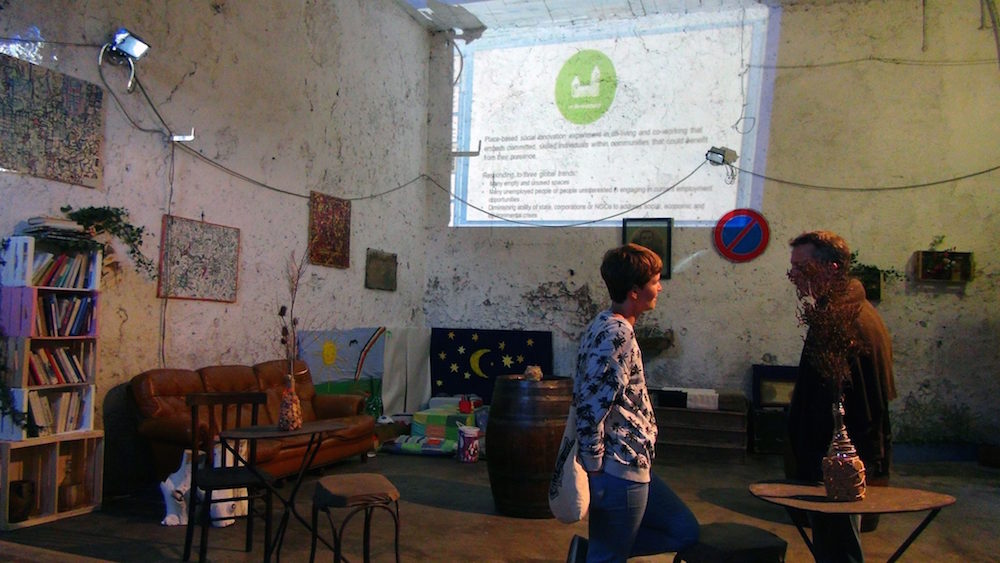
Though the unMonastery idea is not location dependent per se, they would like to build a network of communities around the world that “work together…autonomously…[and] prototype new solutions to common problems.” An initial unMonastery house was established early last year in the ancient southern Italian town of Matera (above pic is from their space); the unMonasterians set about addressing a number of local and global challenges. For reasons not entirely clear, that location was shut down. Currently, a new unMonastery is forming in Athens, a city whose citizens unMonastery claims “have a strong affinity to hacking of all sorts; be it with internet connectivity, food sharing, reactivating abandoned spaces, or just simply taking the metro.”

The modern world does not necessarily reward lives governed by purpose–unless that purpose is making money. As unMonastery posts on their website:

When it comes to work it is increasingly difficult to reconcile making money with making sense. People do work to make a living. Others do work to make meaning. But the two works are not the same work.

While unMonastery is a little too new (and unstable) to be recognized as a sign of things to come, it does point to one way things could be: a world where people are not working to live, a world where service to the greater good is valued above all else.


Creating Housing with Sharing in Its DNA

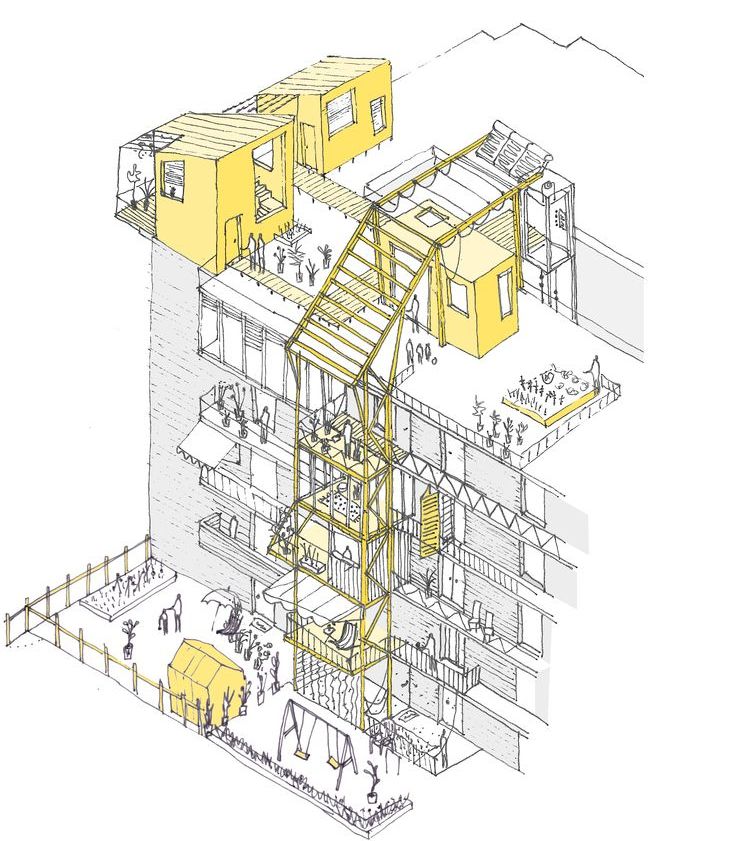
While building new is nifty and all, there’s something very appealing about adaptive reuse. This is why projects like the Providence Arcade, which took an underused indoor shopping mall and converted it to a retail/micro-residential complex, are so appealing. Why build new and use more resources if you can make something that already exists work? A couple young Spanish architects have conceived a project that thinks along these lines, making an existing housing complex more adaptable, social and sustainable than its current moribund state.

The project, dubbed “Improvistos” and conceived by María Méndez and Gonzalo Mancebo, is located in Alfafar, a suburb 4km outside the Valencia city center. Following the collapse of its timber-industry, Alfafar hit hard economic times. Houses that cost $150K decades ago are now fetching $20K, and vacancy rates are high. Méndez and Mancebo’s proposal takes the high density Barrio Orba area of Alfafar and employs the principles of co-housing, facilitating the easy exchange of human, architectural and material resources.

One particularly interesting aspect of the far-reaching plan calls for the addition of doors, staircases, corridors, common areas and satellite rooms that connect the nearly 2800 units and nearly 5K inhabitants. Mancebo told NPR “We’re trying to redefine the limit between public and private. So the way you walk on your street and where your house and your private space finishes or starts.”

This fuzzy public/private spatial distinction would create an easier flow of the area’s limited resources, be they human, architectural or material resources. For example, the plan might capitalize on the 40% unemployment rate, allowing those with time on their hands to trade that for durable goods or an extra bedroom as Méndez told NPR:

For example, you have an 80-year-old person who needs some help once or twice a week, [living alongside] a family with three children that doesn’t get enough income. So maybe [someone from] the low-income family can help the elderly person once a week, and get, in exchange, one room. It’s like an exchange system–so every house can gain or give out some space. And that can change with time.

The plan was innovative enough to win a recent international Urban Revitalization of Mass Housing competition held by the United Nations. Despite the accolade, the plan doesn’t have funding–a problem for an already economically depressed region. But the duo behind the project are talking about launching a Kickstarter campaign to raise money and having residents do some of the work themselves.

What the plan shows is that raising collective prosperity sometimes isn’t a matter of increasing the total amount of resources, but creating social and architectural infrastructures that permit the easy exchange of what we already got. Let’s hope Improvistos get the chance to prove this.

Via NPR

A Thoroughly Modern Take on Shared Housing

A big focus is put on micro-apartments when talking about compact, efficient living. There’s good reason for this we believe. By and large, the world’s populations are consolidating in the cities with limited area to build; people are increasingly more interested in living in walkable areas; household sizes are dropping; there’s a growing lifestyle trend toward simplification and having less stuff. Micros support many, if not all of those aims, fitting more homes in less area, allowing people to live in amenity-rich, walkable areas, all while being greener, cheaper and easier to maintain than many of the status quo housing options. But there’s more than one way to go small, green and thrifty, and shared housing is definitely one of them.

Shared housing involves several unrelated people sharing a house (though a couple or family could live within a shared house) and they can operate like a normal family household, splitting chores, bills, shopping, food preparation and often extras like childcare and gardening.

Shared housing has myriad benefits. It can be extremely affordable. It can provide a rich and diverse cultural experience. By virtue of its small per person footprint, it can be very green.

But living in shared housing is definitely not for everyone, as anyone who has lived with roommates knows. Without house rules and adherence to them, living conditions can devolve with great alacrity. Imagine if one or two members stopped washing dishes for a week or stopped paying bills–it would quickly create messes and engender anger in the house members who abide by the rules.

The other thing that can turn people off of shared housing is their hodgepodge aesthetic qualities. They are often an assemblage of different people’s stuff and furniture, looking more like a third grade collage than a gesamtkunstwerk. While this doesn’t bother many, for others it’s a deal-breaker. They might want the shared living experience and benefits, but with a modern sheen–exactly what Tokyo’s “Share House” provides.

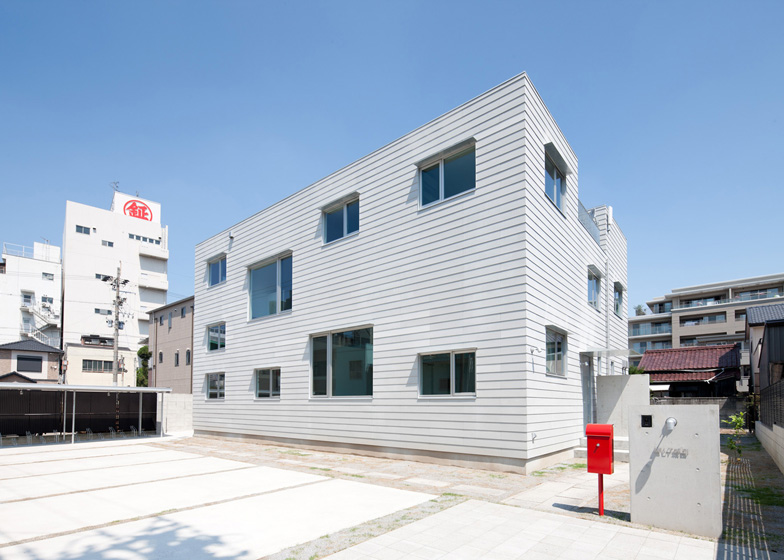
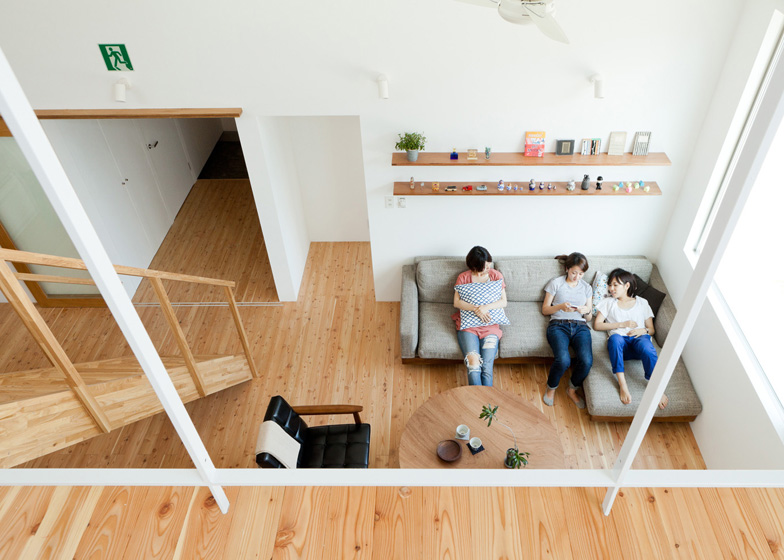
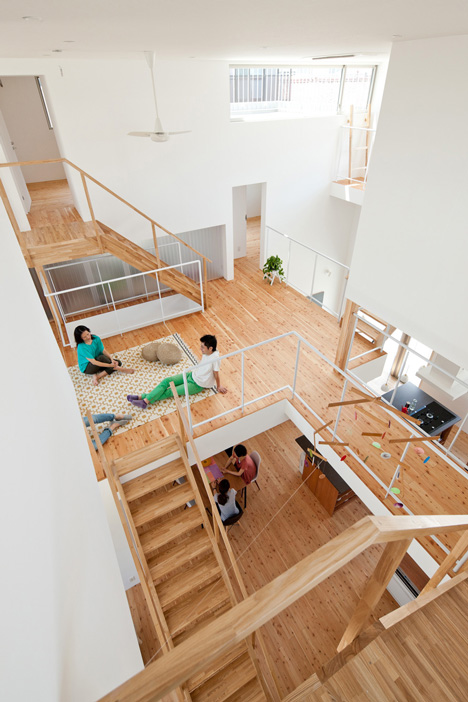
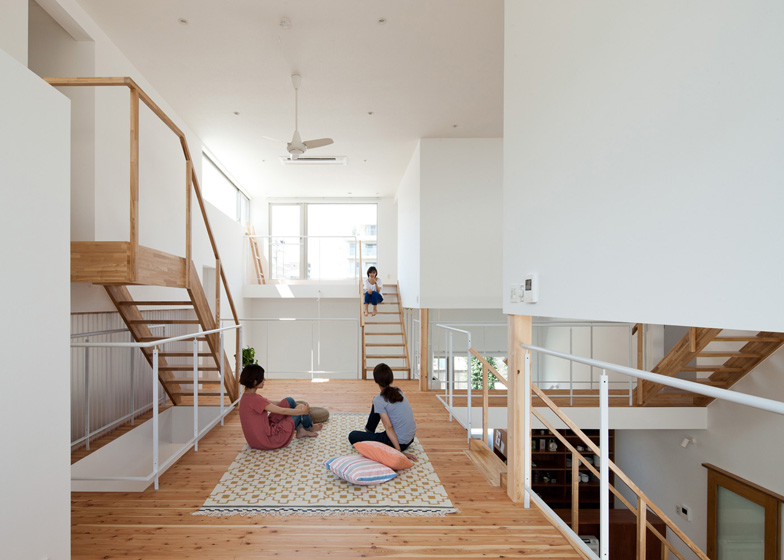
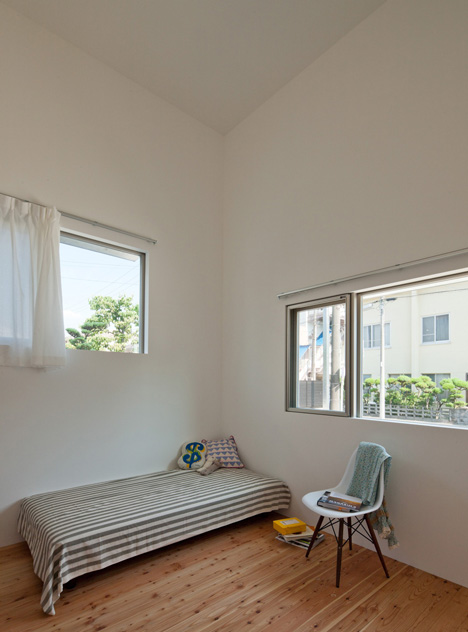
Share House was purpose-built for multiple unrelated residents. Designed by Japan’s Naruse Inokuma Architects, the 3200 sq ft home, while not small, is shared by 13 people, resulting in a mere 247 sq ft per person. The building has several separate communal spaces and 13 bedrooms, each measuring 77 sq ft. The ground floor offers a large communal area with kitchen, dining table and lounge. A floating mezzanine level and roofdeck provide two more common areas. By using a mezzanine rather than a separate floor, the space is kept open and grand with light flooding in from all directions–an architectural flourish you could not easily replicate in a micro-apartment.

The sparsely decorated space–at least in our opinion–is gorgeous. The ample use of natural wood with white walls make it feel clean and airy. At least in its pictured guise, there seems to be an agreement that residents not fill the place with a lot of their own furniture (we wonder if this was just for the photo shoot). What little furniture there is looks great and maintains a cohesive aesthetic.

Obviously, living successfully with others is far more than fancy design, and while we’re smitten with Share House’s aesthetic, we know little about its culture (living in it could be like an episode of the MTV’s The Real World). Nevertheless, it shows an alternative, and compelling, vision of what shared housing can be; a vision we believe might have wide appeal around the world.

[Note: A previous version of this article incorrectly referred to the Share House and cohousing. Cohousing refers to a intentional neighborhood made up of individuated houses that share activities, facilities and other community services. For more see the Cohousing Association of the United States]

Via Dezeen

Open Source Housing

The idea of sharing is palatable enough for things like power tools and even cars, but our homes? Like underwear and teeth retainers, homes are the kind of things that are best when they have clear lines of possessions. Not so says Embassy Networks in San Francisco. Just like ZipCar allows you to pick up a car whenever and wherever you need it, Embassy wants to create a network where you can find your home in much the same way. This is how Embassy describes their vision:

We see a nascent model of housing emerging in a new generation of community houses around the globe. It is a model based on intention, creativity, sharing, and travel. A network of houses, connected together by members who flow freely between locations.

The project is quite a bit like co-housing for hackers–a population for whom transparency and sharing are sacred virtues. All house members have public profiles with links to their Facebook, Twitter and professional pages on Embassy’s homepage. The public is invited to attend and even organize salons, concerts and other events at the space. The house has an open invitation for guests, who are encouraged to mingle with fulltime residents. This permeability and transparency would be essential should Embassy grow beyond one house (it takes one bad apple to spoil the whole system).

Right now the Embassy Network is more of an Embassy Cell with only one house in San Francisco’s Lower Haight neighborhood (pictured above). But we think the idea has a lot of promise: A huge network of homes for our more flexible, mobile generation. Similar to ZipCar, which enables you to rent cars you might not want to own, the housing network would permit you to live in places you might not want to live in fulltime. For example, you could experiment by living in Fargo, North Dakota just to try it on (for the record, Fargo is a delightful place).

White picket fences it is not (though that could be an option). But what you trade in individualization and privacy could be more than compensated by a dynamic, lightweight and inspiring living experience.

Meeting People is (Not) Easy

We talk a lot about living a life focused less on stuff and space and more on relationships and other things that truly make us happy. The epoch in most of our lives that best embodies that way of life is our college dorm days: days when rooms were small, the conversations were nocturnal and hopelessly interesting, when meeting people and making (and even retaining) friends was easy.

Fast forward a few years. The time spent wiling away hours is spent at work or recovering from work. The once-open hallways, resplendent in conversational possibility are replaced with lawns or vacant hallways in apartment buildings. Neighbors go unknown for years. College friends move to Portland, OR. All of a sudden, we find ourselves with few friends and having a hard time meeting new ones.

A recent post in Apartment Therapy based on a NY Times article called Friends of a Certain Age: Why Is It Hard to Make Friends Over 30? breaks down why meeting people is not that easy for many in the post-post-graduate set. This passage from the latter article explains some of the problem:

As external conditions change, it becomes tougher to meet the three conditions that sociologists since the 1950s have considered crucial to making close friends: proximity; repeated, unplanned interactions; and a setting that encourages people to let their guard down and confide in each other, said Rebecca G. Adams, a professor of sociology and gerontology at the University of North Carolina at Greensboro. This is why so many people meet their lifelong friends in college, she added.

There are other issues. As we get older, we tend to focus on emotional quality of relationships, versus quantity and novelty. That’s great, but what often happens–because of a move, divorce, new job, child, etc.–is the circumstances that foster deepening existing relationships evaporate. In other words, we find ourselves living away from the people we want to go deep with. Many adults find themselves isolated and with few resources to make new friends.

The Times article leaves off on a not-so-optimistic note, though it does point to a big part of the answer for ending isolation: get over yourself and get out. Isolated adults must try new things and meet new people if they want to connect.

They point to a guy who, after a recent move to New York City found himself so lonely that he’d walk his cat in Central Park to initiate conversations. To deal with his isolation, he started a site called The New York Social Network that hooks fellow social New Yorkers around activities. Activity-based social networks are distinct from networks like Facebook, who provide social narrative more than social directives.

Apartment Therapy suggests a few other, non-romantic online resources for meeting friends:

  • Girlfriend Network is a pretty self-explanatory site. It hooks up women looking to connect as friends.
  • Companion Tree connects people looking for friends. Connections are based on your specified interests.
  • Meetup.com is the granddaddy–and probably still the most robust–activity-based social networking.

We would add, Front Porch Forum, which we’ve covered in the past. There is also Nextdoor.com. Both of which connect people based on proximity–still one of the most effective bases of connection.

Google and Yahoo groups are good too as they tend to coalescence real networks.

Take caution though: none of these resources will work if you don’t use them. Meeting people takes effort and a little bit of humility–the willingness to admit we want companionship and taking actions aligned with that desire.

Are you older than 30 and have successfully made and kept new friends? We’d love to hear what you did in our comments section.

image credit: wikipedia