LifeEdited’s Top Posts of 2015

As the year draws nigh and vacations loom, we thought we’d look at 2015’s most trafficked posts published this year (“Build Your Own Murphy Bed for $275,” published shortly after this blog started in 2012, was and continues to be our all time most trafficked post). Without further ado, here they are:

5. Vogue Magazine Features Story of Couple Giving Up Their Stuff

Coming in at number five is this post about Prerna and Parag Gupta, a couple of techies who sold all their stuff to travel the world. Aside from the inherent ballsiness of the couple’s story was the fact that it was featured in Vogue–a magazine that’s not normally associated with minimal living.

4. The 600 Square Foot Family

The fourth most trafficked post was about the Muzereks, a Vancouver family who decided a small condo in a walkable area was a better fit for their values than big place in the burbs.

3. 2 Bedrooms, 4 Kids, 1 Mom, Lots of Ideas
buitoni

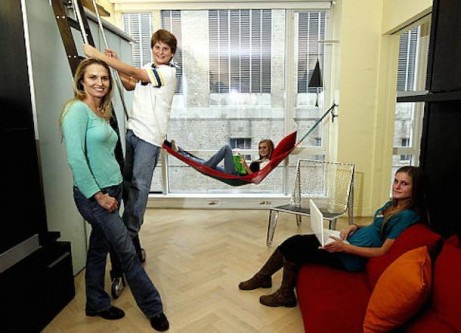
Keeping on the theme of urban families, this post took a look at Kip Longinotti-Buitoni, a single mom who left the burbs and set up camp for her four kids in a relatively small Manhattan condo, helped greatly by an array of transforming furniture. 

2. The Rise of the Minimalist Millionaire

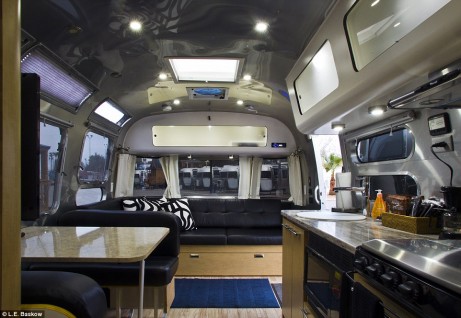
This short post showed off the Airstream trailer that Zappos.com founder Tony Hsieh calls home. We think it falls along the line of the mainstream-ification of minimalism…something we think is a very good thing.

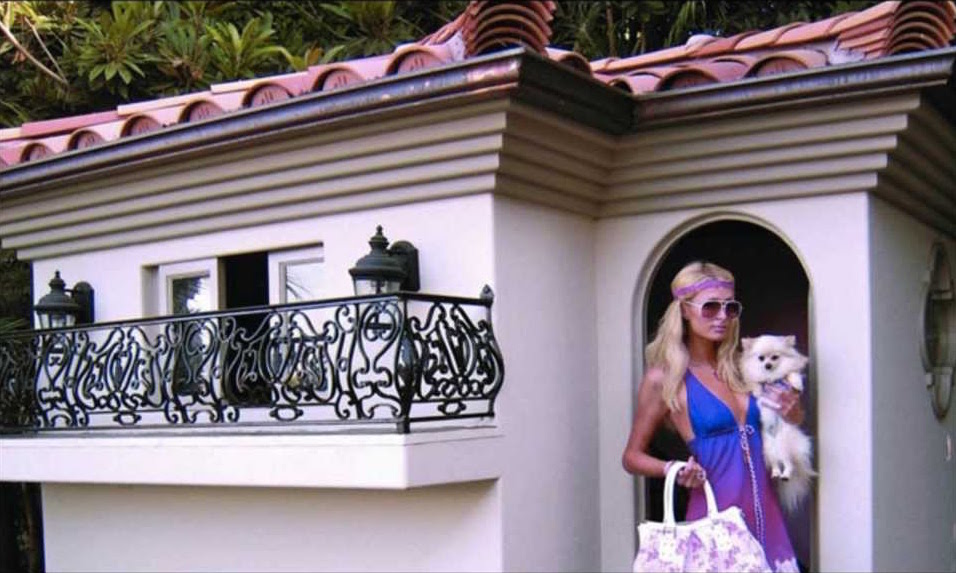
1. Paris Hilton Discovers Minimalism, Moves into Tiny House

This post about the alleged conversion of conspicuous consumption’s poster child proves that nothing gets traffic like celebrities…and humor.

Honorable Mentions

Frankly, the above list surprises us a little bit, but Google analytics doesn’t lie. Based on Facebook likes, you guys thought these posts were pretty interesting as well. 

3. Growing Old Together and in Style

This post about the “Cheesecake Cohousing Consortium” shows that small, communal living isn’t just about Millennials living in the middle of the city.

2. A Very Big Idea in Tiny House Living
simply-home

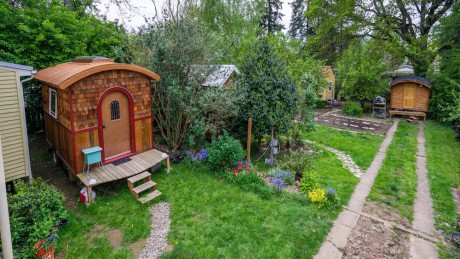
This story about a single family home with four tiny houses set up in its backyard is one of our favorites. It shows how density and community can be made inside America’s single family home-centric infrastructure.

1. The Rise of the Minimalist Celebrity

dan-norris

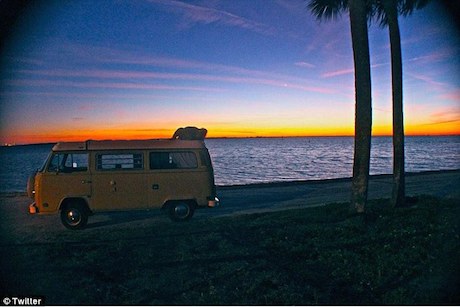
Alright, out titles aren’t that original sometimes, but this post about major league baseballer Daniel Norris seemed to strike a chord with readers. If you don’t recall, Norris intentionally chose to live simply out of his old VW bus, eschewing the bling that so often accompanies twenty-somethings with a few million dollars burning holes in their pockets.


These NFL Players Tackle People, Conspicuous Consumption

Forget what you think you know about NFL players and their glitzy lifestyles with mountains of bling, big houses and fast cars. There is a new breed of player, one who is an exemplar of restraint, modesty and frugality…well, if you base the character of the league on two of its roughly 1700 members. Like the story I reported on a few months back about Daniel Norris–the rookie Baseball phenom who chooses to spend much of the year living very minimally in a VW bus–there are a couple (perhaps outlying) NFL players who are showing another, more sensible way of handling fame and fortune.

The first is John Urschel, a 6’3”, 308 lb offensive lineman who signed a $2.3M rookie deal with the Baltimore Ravens. If Urschel’s name sounds familiar and you’re not an NFL fan, it might be because he co-authored the well-known paper, “A Cascadic Multigrid Algorithm for Computing the Fiedler Vector of Graph Laplacians.” You see besides being a talented player, Urschel is a gifted mathematician with bachelor and master’s degrees from Penn State. This faculty with numbers might be something that gives him a leg up in devising a sensible financial plan.

john-urshel-car

When other players happen upon their newfound wealth, they tend to gravitate toward extravagance. Not Urschel. Rather than blowing all his cash, he’s living on $25K a year. Rather than getting his own pimp crib, he got a roommate. Rather than buying a car with eight cylinders or more, he got a profoundly practical Nissan Versa hatchback–a used one no less.  

Ryan Broyles

Like Urschel, Ryan Broyles is living la vida modesta. In 2012, the Detroit Lions wide receiver signed a contract for $3.6M over four years (NB: I realize wide receivers don’t tend to tackle). Rather than being a prompt for shopping sprees, Broyles put himself and wife on a $60K annual budget. Rather than decking out his house with fancy furniture, he made his own. Rather than buying Maseratis, he and his wife bought Mazdas.

Ryan-broyles

Like Urschel, Broyles seems to grasp the tenuous nature of life in the NFL, where injury or team cuts can strike at any moment. In fact, Broyles has the majority of his money in investments, retirement savings and securing [his] post-football monetary future,” according to ESPN. While one could consider these players restraint as self-interest, few players–as Broyles well knows–exercise such restraint. Many a fortune has evaporated as quickly as it came into existence.

I like to think that these guys as well as Norris, Zappos.com’s Tony Hsieh and Paris Hilton (well, maybe not her) are showing a new type of celebrity–one that celebrates responsible consumption, folks who buy what they need, not everything they want.

It’s All About the Benjamin

There’s a subject in many of the posts I write about that is present but not always called out by name. The subject is money. Time and again, we read stories about people editing their lives, not just because they want to create a smaller carbon footprint and have less to clean and manage. These are very valid reasons, but let’s face it, most people downsize and simplify because it’s cheaper. When life is cheaper, when the base of Maslow’s hierarchy of needs is satisfied, people are less concerned about making money, leaving them time to think about loftier pursuits than paying the bills. Canadian Ben Hayward is an awesome example of such a downsizer. For the last year, Ben has been living frugally out of his “Hobbit Mobile” traveling around Europe, training and competing to pursue his dream of being an Olympic kayaker.    

Before his current journey, Ben was already an accomplished athlete. He’s ranked Canada’s #1 solo whitewater kayaker; he’s occupied a spot on the national team for the last nine years; and he’s amassed 47 gold medals in national games. Yet he wanted to go even further and compete in the 2016 Olympics in Rio. In order to be better prepared, he realized he had to go live in Europe where the best training opportunities existed.

While the Canadian government offers a small stipend to their team members, it wasn’t enough to pay for the myriad expenses that come along with training and traveling–hotels, food, race entry, coaches, etc. Most people in his position accept that they will go into debt to pursue their dreams–something Ben told me he was willing to accept as well if it came down to it.

DSC04632

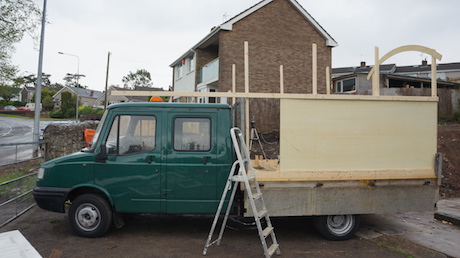
But Ben had another solution. As if his resume weren’t impressive enough for his 25 years, Ben is one year away from completing his architectural undergraduate degree. In thinking about how he could live cheaply in Europe, he conceived an idea to build his own traveling home that could also exploit his architectural chops. With the help of friend Adam, he conceived the Hobbit Mobile, a tiny house on wheels, which would allow him to live simply and frugally while he traveled and trained all across Europe.

Rather than spending his entire $5K nest egg on the van, Ben decided to crowdfund the construction of the Hobbit Mobile. In his “Van Starter” campaign, Ben managed to raise $16K, paying for the van’s entire construction (you can still contribute to his pursuits).

IMG_6030

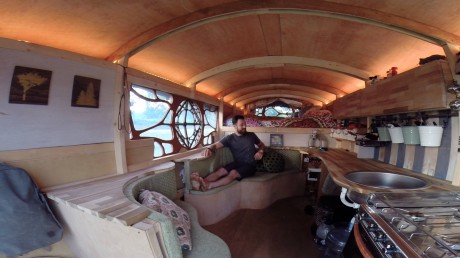
The van is built on a durable commercial vehicle frame and has what Ben called “Wallace and Gromit” (and Shire) style to it. There’s a lounge area, a lofted bed and a kitchen to prepare the 5-6K calories of food he consumes in a given day. With passenger space for six and room for 11 boats (gear is stashed inside the boats), he’s been the occasional taxi and/or hotel for his teammates. The house has solar arrays for power and there’s a copper cauldron for storing water, which also has a heating element at its base for generating hot water. Ben uses the bathrooms that are present at all of the training facilities where he camps.

ben-hayward-interior-2

All of this not only allows him to keep expenses minimal, but it simplifies his life. He said that because he knows where he’s going to eat and sleep, the van affords him a lot of mental space that his teammates who are constantly making room and board arrangements might not enjoy.

Ben told me there are numerous other benefits of living in the van. “In a normal house, it’s so easy to plug stuff into a wall and pay later,” he told me. “It’s been really cool to be self-sufficient and be connected with power useage, prioritizing what I need to use power for.” He also says that he loves spending so much time outside. “Living in a small space makes you go outdoors, which I believe is better for the human psyche. Living in a conventional house, it’s so easy to spend most of your life trapped inside.”

Because his overhead is so low, Ben can make ends meet with his stipend and a few sponsorships. He has strung together some impressive results recently, entering the finals at the World Cup in Spain last week and earning a bronze medal at the Pan-Am Games a month ago. But he’s mostly focused on training for the World Championships, an Olympic qualifying event, that goes down in about a month.

“From an external view, it seems like a poor lifestyle,” he says of the rather spartan way he lives. “But the quality of my life is very high,” he assured me. Though not everyone would choose to live as he does, he believes the downsized, minimal way of life is hardly limited to single, male, Olympic caliber kayakers. By paring down to the necessities, keeping expenses low, spending lots of time outdoors, the life that you would dream of living might not be as far out of reach as we think.

Keep up with Ben on his website and Instagram.

The Rise of the Minimalist Millionaire

Aside from its inherent space and energy efficiency, compact living–or rather the high density living that often accompanies it–has been credited as being a catalyst for innovation. In his book Triumph of the City, Harvard economist Ed Glaeser found that when a city doubles in size, productivity and innovation per resident increases by 15%. His thesis was that because people are constantly in collision with one another, sharing and expanding ideas, cities make fertile environments for innovation. More specifically, he said the ideal condition for innovation was 100 people per acre. One person who took Glaeser’s idea quite seriously was Zappos.com founder Tony Hsieh. He took it so seriously that a few years ago he helped spur the Downtown Project. With the help of various Glaeser-inspired urban interventions, he sought to transform Las Vegas’ haggard old downtown area into one of the world’s leading innovation centers.

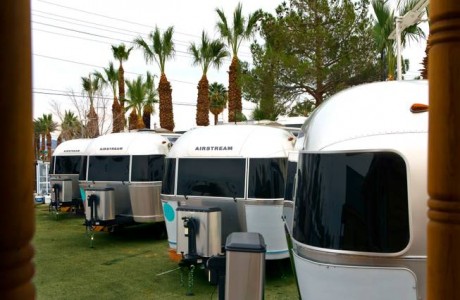
Airstream

One way the Downtown Project went about achieving their 100 person per acre ideal was to convert a vacant lot into an Airstream trailer park, mostly using them as “crash pads” for visiting coders.

No one can accuse Hsieh of lacking conviction in his beliefs. Not only has he put $350M of his own money into the revitalization project, but he is living in one of the thirty trailers–sharing the 200 sq ft space with his pet Alpaca. Like the MacMannis’ Airstream we looked at the other week, Hsieh isn’t exactly slumming it. The trailers are all recently renovated and nicely appointed. Nonetheless, for a man with a net worth of $840M, this is a very modest home. While some could charge him and other people of means as tourists in the realm of small space, minimalist living, I think they are showing something else. The merits of small, simple living are something anyone, rich or poor, can benefit from. Consequently, we are seeing more people who can have all they want choosing to live with what they need.

Photo: L.E. Baskow

Paris Hilton Discovers Minimalism, Moves into Tiny House

In what is surely a sign of things to come, Paris Hilton, once the poster girl of conspicuous consumption, has adopted a minimalist lifestyle and has given up a 12k sq ft Malibu mansion for a tiny house in Eugene, Oregon.

“I just couldn’t keep up any more,” she told the Eugene Register-Guard, likely referring to her former BFF Kim Kardashian and her ilk. “The house, the cars, the clothes, the parties…it just became too much.” Hilton gave away most of her possessions and sought to find the peace of mind she had whilst on set of “The Simple Life.”

By far her boldest move was her change of residence. Her new home is a mere 180 sq ft. It features propane heat and a composting toilet. There are remnants of her past glam style like the house’s pink exterior, but make no mistake, Hilton is committed to living differently. 

“There’s no going back. I couldn’t be happier,” Hilton told the Register-Guard. “It’s weird. Somehow, by knowing where everything is, I know where I am. There’s obviously a corollary between one’s physical and psychic spaces. If the former is contained and orderly, so is the latter. I just couldn’t get that when I was living in such a big place. There was too much physical, and hence psychic, noise.”

Hilton has big plans for the little place including adding photovoltaic power and a water catchment system. She’s also been studying permaculture and would eventually like to create a totally self-sustaining tiny house community.

“Me and Jay [Shafer of Four Lights Tiny House Company] have been talking a lot lately,” she continued. “Between his technical knowhow and my star power, we think we can really change the world for the better. If people can see that someone like me can adopt this way of life, then they can see than anyone can. It’s like I say, every global change starts with a personal one.”

The Rise of the Minimalist Celebrity

I must admit, if my 21 year old self had received $2M to play professional baseball, there might have been a chance that I’d make a few extravagant purchases: a Porsche perhaps, a fancy apartment, etc. But Daniel Norris might be a sign of a shifting perspective toward wealth in the Millennial mind. The 21 year-old left-handed pitcher was just recruited by the Toronto Blue Jays and given a $2M signing bonus. But Norris didn’t head for the nearest Bentley dealer or David Yurman to buy a diamond-encrusted catcher’s mitt. Norris went his father’s buddy to purchase his dream car and dream home: a 78′ VW Westfalia camper he calls Shaggy (it should be noted he did bling it out with some solar panels).

dan-norris-campeddan-norris-cooking

The Tennessee native was brought up with a high reverence for nature and is an avid outdoor enthusiast–climbing, mountain biking, and surfing. The van serves as his adventure launchpad.

But it’s also his seasonal home. Norris has been living out of the van on the beach during the Jays training camps in Dunedin, FL. Norris told Grind TV that living in the van was a conscious effort to keep his life simple and not let his newfound wealth corrupt his values. “In my mind there’s no need for luxury, or at least society’s sense of the word,” he told them. “I consider my life luxurious—I live on a beach with an ocean-front view, hearty meals and hot French-pressed coffee at my disposal. That’s fancy, right?”

While Norris might be an anomaly in what might otherwise still be a world dominated by the excesses available with extreme wealth, he might also be a sign of the times–with Millennials feeling increasingly weary of traditional notions of success, Norris might be the new, low-key celeb, someone who might have access to vast material resources, but feels compelled to not exploit them; someone for whom simplicity and moderation are ideals to strive for, not signs of failure.