Smart, Small Studios Hit Canadian Campus

More than most North American cities, Vancouver has experienced a surge in housing costs. Apartments are up nearly 20% from a year ago, with the average price around C$450K (a modest uptick compared to single family houses, which jumped 28%, landing at C$1.83M). Needless to say, these kind of economic conditions are hostile to folks like students who might lack flush offshore bank accounts. As such, the University of British Columbia Vancouver is having an affordable housing crisis. The average monthly rent for student housing is C$1,000, but that’s if you can get it. UBC has a 6,000 deep waiting list. To alleviate some of this housing shortage, the school is now rolling out their Nano pilot housing program, which entails 140 sq ft, fully self contained units that will add a much needed bump in volume of campus housing and rent for a reasonable C$700.

nano_01

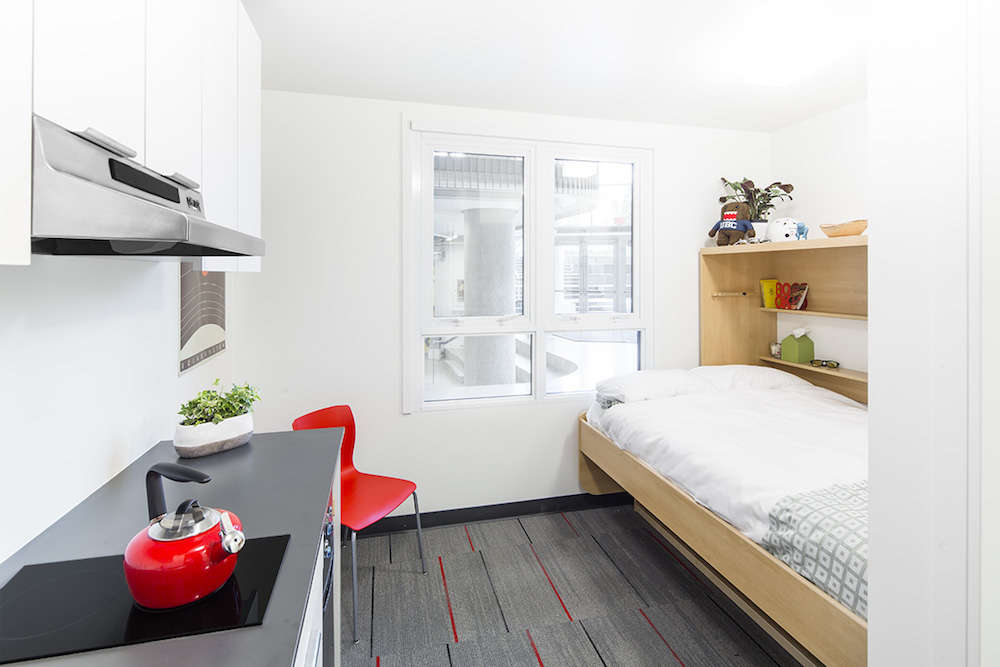
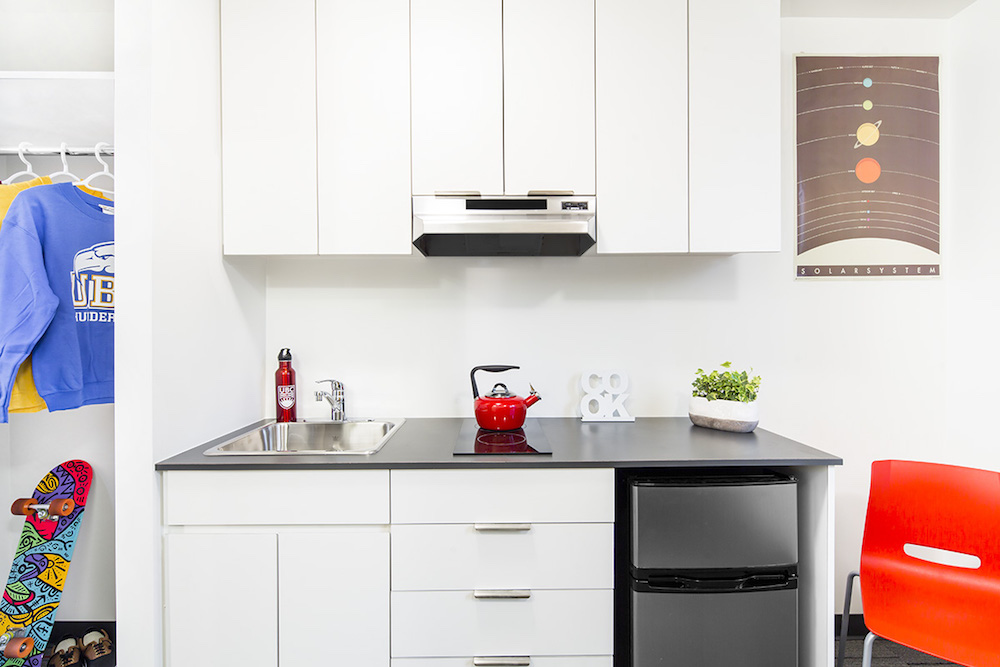
UBC is rolling out 70 Nano units in their Gage South Student Residence, which is slated to open in 2019. A demo unit is being displayed at the school’s student center through next month.

nano_05nano_06

There’s nothing revolutionary about its design per se. It has a double bed that folds up to become a desk when not in use, a small kitchenette with cooktop, fridge and sink and a fairly commodious bathroom. There’s lots of white and light colors and windows that make the place seem pretty spacious relative to its actual dimensions.

While student housing isn’t a particularly guilty offender when it comes to making housing too large, the Nano studio addresses a need for a particular demographic, i.e. students who might be too mature for dorms with shared bedrooms, yet lack the need and expense of a larger, conventional off campus apartment. More than anything, the Nano brings us a little bit closer to destigmatizing tiny apartments, showing that they can be very livable and serve many populations who would otherwise be forced into unaffordable and/or substandard housing.

Via Inhabitat  

Would You Buy This Off-Grid, Bunker-Style, Shipping Container Home for $46K?

Ottawan Joseph Dupuis built this mostly-off-grid, 355 sq ft shipping container home and is now selling it for a cool $46,500 ($58K CAD). While this doesn’t fall into the super cheap price tier, especially as it lacks a toilet and you’re still going to have to find land. But the house’s price seems quite justifiable if you’re in the market for something relatively apocalypse-proof.

dupuis-shipping-container-exterior-doors-closed

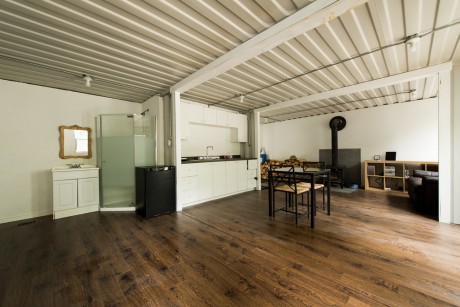
First off, the shipping container shell (actually, there are three attached together), designed to sit exposed to the elements whilst making ocean-crossings, can stand up to all but the fiercest storms (or zombies). The container doors lock over the windows, making it even more bulletproof.

dupuis-shipping-container-interior-stove

Next, the whole thing is completely insulated for any violent shifts in weather. There’s a propane tank that fuels both in-floor radiant heat and the hot water heater. Apparently, it’s an energy miser. Dupuis, who lived in the house for two years, said he spent a mere $35 on heating for one whole winter. There’s also a wood burning stove for the Thoreauvian set.

dupuis-shipping-container-kitchen-bath

Electricity comes from nine 235 watt solar panels that charge a 27 volt battery bank. Water is municipal and feeds a shower and sink. As mentioned there is no toilet as that would have required a septic permit, which Dupuis was disinclined to get. The house will come with a rough-in for a composting toilet (I didn’t know composting toilets needed rough-ins).Needless to say, the house is designed to be easily dismantled and shipped, which Dupuis is happy to arrange.

What do you think? Is this an off-grid dream home at a fair price or a not-so-inexpensive, slightly-too-rough-and-ready backwoods bunker?

Photo credit: Japhet Alvarez / Via Facebook: s7vnth

Via Huffington Post

The 600 Square Foot Family

Vancouver is one of North America’s densest cities with some of  its highest property values. When the city’s residents have kids, many travel the oft-tread path from city center to the burbs for more square footage. This was the situation that Alison and Trevor Mazurek faced when they started considering having a family. They loved where they lived with tons of restaurants, cafes and shops in easy walking distance, but their 600 sq ft one bedroom did not fit the conventional view of what constituted an adequate family home.

Fortunately, the Muzereks weren’t overly concerned with convention. “The Graham Hill TED talk started the conversation between my husband and I to stay in our small space with a kid,” Alison wrote to us in an email. They decided to stay and figure out how to make their space work with their son (now 1.5 years old), getting rid of lots of unnecessary stuff and adding the right stuff. They document their process in their blog 600SQFTANDABABY.

600sqftandbaby-baby

“When we decided to stay in our 600 square foot apartment with a baby I combed the internet looking for inspiration and proof that this could actually work,” Alison wrote.  Of her motivation she wrote, “I wanted to know the daily ins-and-outs of living in a small space with kids. The best sources I found were all in New York City (your blog of course!) which is endlessly inspiring but I couldn’t find anything local for us. The trend in Vancouver is that as soon as you are expecting you start looking for a townhouse or house in a surrounding suburb. We love living in the city and everything it has to offer, especially walking everywhere. I thought if I documented our journey others might think it was possible too.” The blog, which has been going since last September, covers topics from products, design and extracurricular activities.

She said that reaction to their choice has been mixed. Many find her accounts inspiring, while others think the couple “legit crazy”–though it’s easier for them to grasp once they get into the space.

600sqftandababy-living

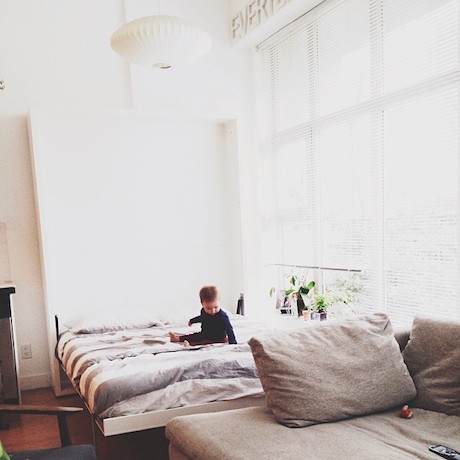
The space itself is a high-ceilinged one bedroom/one bath condo. The bedroom has been given to their son, while they sleep in what’s effectively the dining room on a Ulysse wall bed by Resource Furniture. 

Asked if they’ll stay in their small space, Alison wasn’t sure. “Right now we are living in the moment, if there is anything I have learned from being a new mom, it is to live in the moment more…We hope to have another kid in the next couple of years. So far we have no plans to leave our little apartment, and we couldn’t be happier with our decision to stay here.” She says her husband dreams of adding the Resource Furniture bunk murphy beds when they have a second kid. Either way, she reports that they are committed to “living thoughtfully with less stuff.”

When asked if she had any suggestions, Alison said that people should know that they can live in a small space with children if they want to. “It just takes a little time to think about what is most important to you and what you could live without. The best part is when you give up a few things that don’t really matter like an extra closet, stationary bed or 15th pair of shoes you will be surprised what you gain.”

Head on over to 600SQFTANDABABY to see and read more. 

Plug and Play Architecture

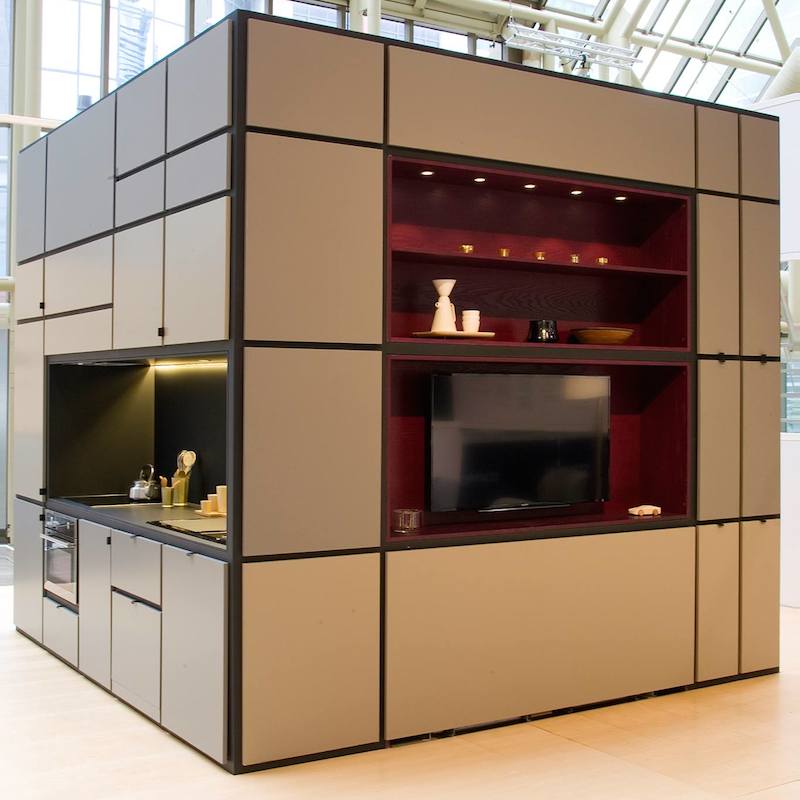
Toronto’s Urban Capital is proving to be one of the more innovative real estate developers in North America. Their Smart House is a great looking luxury micro apartment, they’ve collaborated with LifeEdited on their River City 3 tower and they just released something they call the Cubitat. Similar to concepts like the MIT CityHome, Cubitat is an all-in-one module that can be inserted into a bare space, providing instant architecture and furnishings.

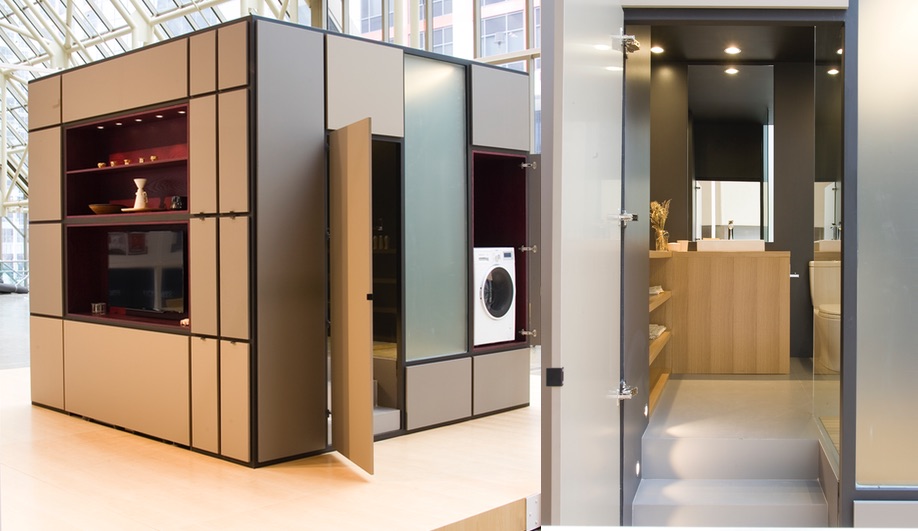
Working with Italian product designer Luca Nichetto, Urban Captial made the Cubitat for Toronto’s 2015 Interior Design Show. The sleek 10’x10’x10′ unit includes a kitchen, bathroom, bedroom, lounge and storage.

As we mentioned the other day in looking at the My Micro NY project, prefabricated manufacturing achieves a number of efficiencies one-off building cannot. What Cubitat does is bring that efficiency FF&E (furniture, fixtures, and equipment), oftentimes the most costly aspects of construction. Theoretically, something like the Cubitat could be made assembly-line style, installed into a bare space, hooked up to plumbing stacks, electric lines and you’d have a very livable, usable space.

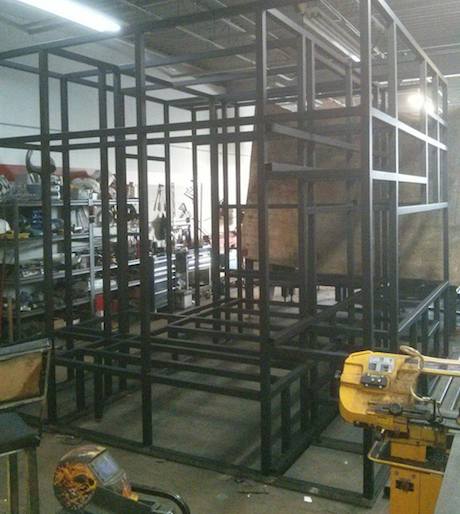
cubitat-structure

Pictures from Urban capital show that the Cubitat is made of a 9K lb welded steel structure. We assume the finished product could be dissembled or they see installation happening during building construction, as the 100 sq ft door needed to slide the Cubitat into its home aren’t very common.

Images via Urban Capital, story via Treehugger

Apartments Elegantly Mix Old, New, Obtuse Explanation

Unfortunate for LifeEdited readers, there is no Google translator function to convert Architectese into English. Hence, when architects say that they want to “create legible and vibrant neighborhoods through densification of orphan sites and a concern for the City as a repository of cultural memory,” I am a bit perplexed. There are some cognates in there that relate to colloquial English, but for the most part, I don’t know what this means in time and space.

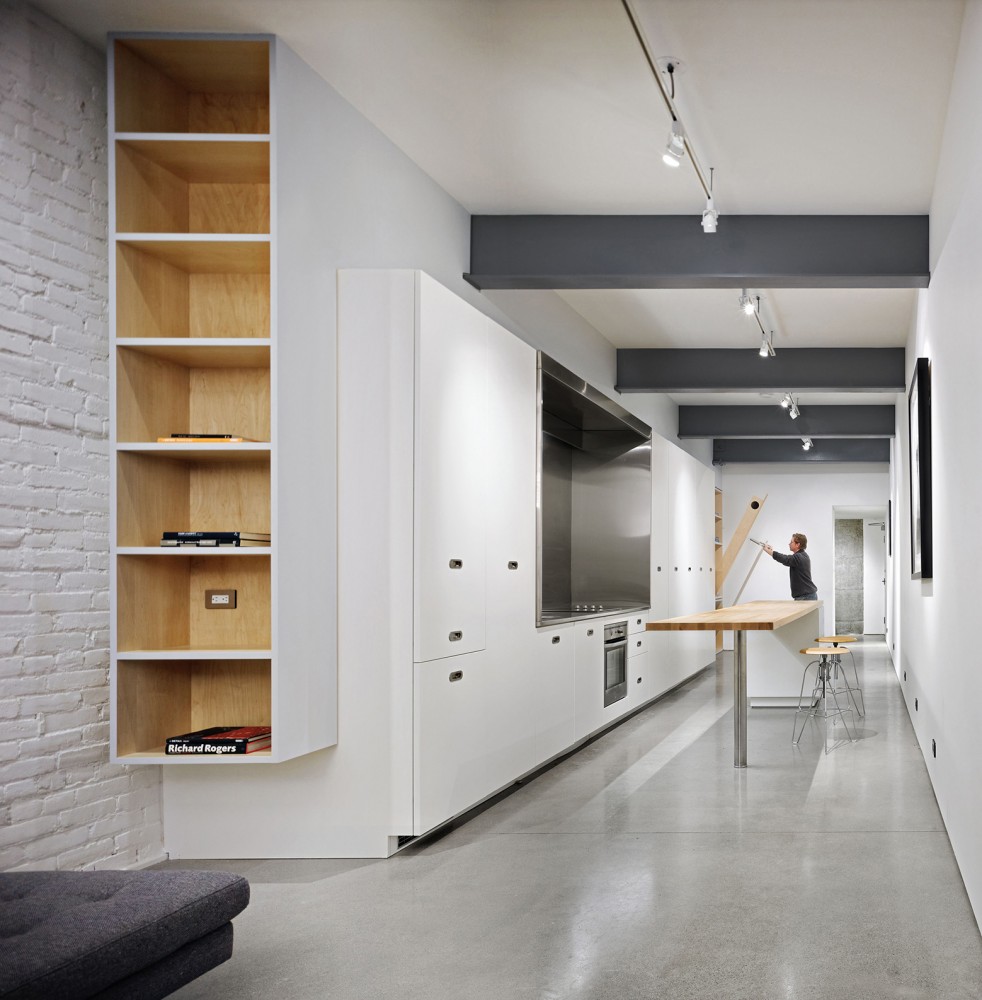
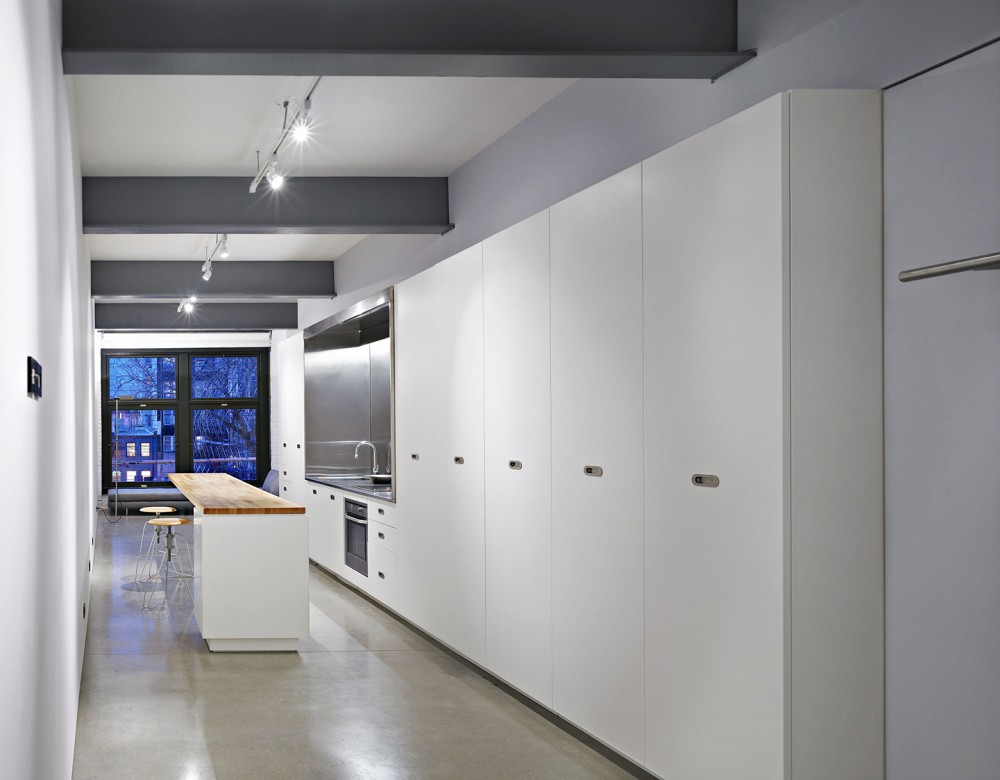
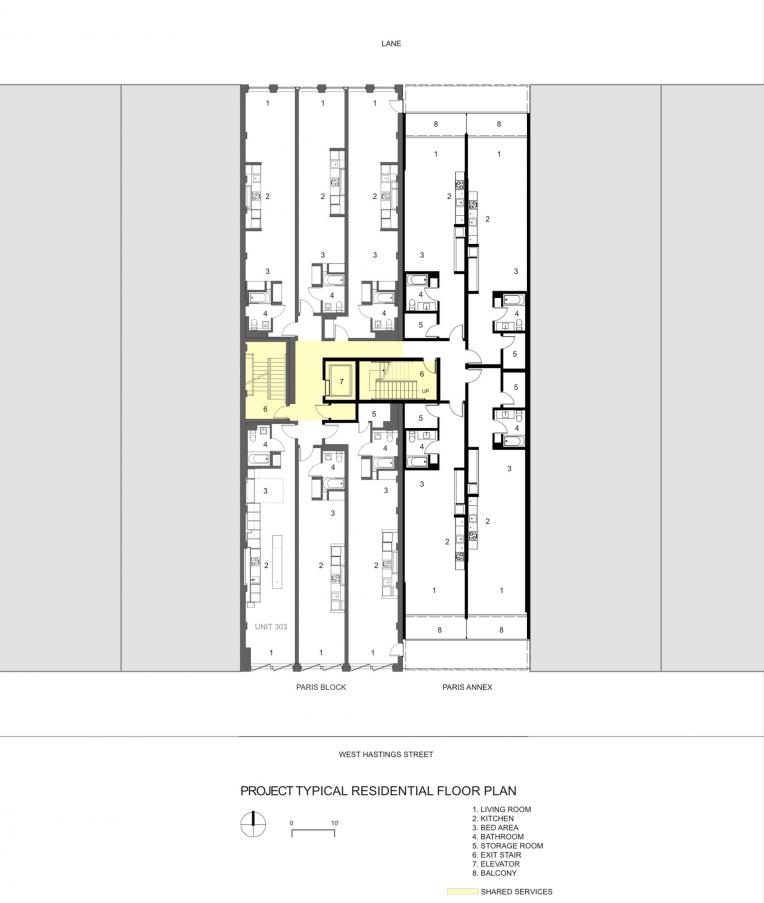
But hey, I don’t speak much French, and I still appreciate Bizet’s Carmen. And just because I don’t fully understand the commentary Vancouver’s Gair Williamson Architect + Ankenman Marchand Architects give for their Paris Block/Paris Annex apartments, it doesn’t diminish my appreciation for the project. The long and narrow apartments, which fuse an old warehouse with a new structure, look pretty cool to me.

One of the more novel aspects of the project is its use of a shared core between old and new structures, making the project both cheaper to construct and allowing the two buildings’ 46 units to have shared amenities.

Most of the units have a cool, modern look and are filled with light. Of note is unit 303, which was designed as “a prototype for inner city living.” Its 702 sq ft hold a library, study, tons of storage, commercial kitchen, bedroom/gallery, and lounge with a 12’ dining bar. The space is meant as a live-work art studio; when the bed folds away, the street level space turns into a gallery and event venue, creating a fuzzy line between public and private spaces similar to the Songpa Micro House by SsD Architects.

If you speak Architectese, head over to ArchDaily for more info and images.

The Three Biggest Objections to Small Living

Smart House, a new condo building featuring micro-apartments in downtown Toronto, is hitting the market this month. The 25-story building has units that range from 288 to 778 sq ft, with an average size of 465. Prices range from mid $200s to mid $500s. According to a press release, the spaces have optional furnishings including:

A bed that folds into the wall and becomes a sofa. Or a desk. Kitchen counter space that expands and retracts. Dining tables built into islands. Niche shelving in what would otherwise be wasted pipe space. Integrated cabinetry and smart appliances. Moveable partitions. Storage conjured all over. 

The developers Urban Capital say Smart House is for “people who hate clutter. Those who crave privacy when they’re not on the town. Toronto-lovers who know what it means to have the hippest stores, cafés and bars outside their door with Bay Street around the corner.”

We think building a centrally-located, craftily-designed, amenity-packed micro-apartment development in a city with a tight housing market deserves the “smart” moniker. They might not be for everyone, but they may be for many.

Not all Torontonians think they’re so smart however. Many have cried out against their expense and size. Comments from a National Post article say things like “I guess Torontonians have a choice between living like animals in a cage and living like human beings elsewhere,” and “What [sic] did they decide to build this out of the boxes that your refrigerator came in?” These were far from isolated sentiments.

Controversy seems to be a built-in feature with micro-apartments. In Seattle, people say that they are bringing transient populations to established neighborhoods. In San Francisco, they say micro-apartments will displace families. In Boston, they say they’re too small. In Vancouver, they say micro-apartments are displacing homeless populations. In Toronto and NYC, it’s the expense. Each city seems to have its own regional objection.

It would be too easy to make a blanket dismissal of the complaints; many have more than a grain of truth. Like any commercial venture, micro apartment development will be beset by profiteering, advertising jargon, questionable code compliance, build quality, aesthetics and so on.

But a number of complaints simply seem driven by logic that’s incongruent with many peoples’ social or economic realities. We thought we’d address the three most common objections we hear:

Objection #1: They’re too expensive for their size.

Most of the objections to micro-apartment costs revolve around relative costs, e.g. “the place down the block sells for $500/sq ft and you’re trying to pawn off this tiny place for $750.” This is fair to an extent, but it misses a big consideration: absolute costs. Let’s take Toronto as an example. Say one of the 288 sq ft apartments costs $250K; that’s $868/sq ft. Now let’s say a comparable boutique condo in the area costs $700/sq ft, but the smallest unit available is 600 sq ft, i.e. $420K total or $170K more expensive than the micro unit. This is likely to be prohibitively expensive for a lot of people, many of whom don’t care about or need the extra space.

Same goes for rent: in Seattle, people rent micro-apartments for their absolute costs, not relative ones. Relatively speaking, these units are higher priced per square foot to other rentals in the area, but no matter the size, there are few (perhaps no) furnished, utilities-included, private, centrally-located apartments you can rent for $800/month. The swelling ranks of Seattle’s micro-apartment renters attest to what’s important to most people: low total cost of housing and location.

It should also be noted that micro apartments have a higher ratio of costly square footage (i.e. bathrooms and kitchens) to cheaper square footage (living rooms, bedrooms). This makes their construction costs higher on a per unit basis than larger apartments.

Objection #2: They’re too small.

People often have sticker shock when it comes to square footage. If someone were to say that two people share 600 sq ft, few would be amazed, but one person in 275 is crazy small. Listen, if you’re a collector or pack rat or have a family of four, micro-apartments might not be right for you. Different strokes for different folks. But many people around the world are living contentedly in tiny spaces. In Japan, it’s not uncommon for singles to live in apartments as small as 100 sq ft.

Design also plays a role. A small space can be a cage or a great launching pad for your life. By lifting some of the restrictions on building small, we imagine we’re going to get less of the former and more of the latter.

The main point is square footage is not an objective issue, it’s a cultural one. Whether someone chooses to live that way is up to him or her.

Objection #3: Micro-apartments are for transients
household-sizes

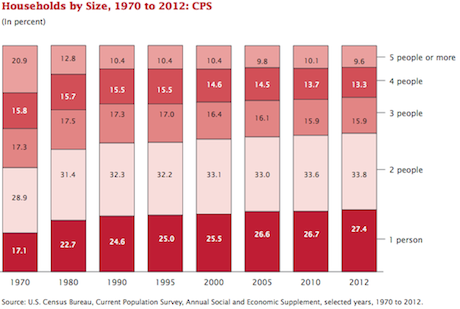
Listen, many couples and even families can live in small spaces. But here’s the deal: micro-apartments (sub 300 sq ft) aren’t for transients, they’re usually for single people who want to live alone. More and more people are choosing to live that way. According to NYU professor Eric Klinenburg, 40% of households in cities like Atlanta, Denver, Seattle, San Francisco and Minneapolis contain a single occupant. In Manhattan and Washington, that percentage is closer to 65%. In the US and Canada, 27% of the population lives alone (numbers that are only increasing), yet in the US only around 12% of homes are one-bedroom or smaller. Micro apartments, in many ways, are a dwelling style more in line with today’s demographics.

Ultimately, whether someone lives in a small place is his or her decision. As the species evolves and becomes more of a cultural mainstay, we imagine public opinion will evolve too. What do you think on this topic? Please share your thoughts in our comments section.