Absurd Rents Lead Man to Think Outside Box, Live in One

We always feel a little bittersweet when we run across people living affordably and microscopically in extremely expensive cities. On the one hand, it’s a testament to human ingenuity and we love gawking at their cleverness. On the other hand, it’s a bummer that people can’t simply afford a decent little place in a major city without selling multiple vital organs. As one of–and perhaps the most expensive American city to live in–few places are as bittersweet as San Francisco. And few people are as bittersweet as 25 year old freelance illustrator Peter Berkowitz, who lives in a plywood box set up in a friend’s living room.

perterberk-interior

The box measures 8’ L x 3.5’ W and 4.5’ tall. It has a bed, storage and even a desk that folds out from the, um, wall. Though probably not up to code, it does have a skylight, window and door. As far as plywood box bedrooms go, it’s a nice one. But it’s most important feature is its price: $400/month (+$1300 construction costs). In a city where the average rent is north of $3700, this is a true deal.

Of course we believe people should have the right to live how and where they want to–that is, within certain parameters of safety and livability. Berkowitz is no victim here. He writes in his blog:

Yes, living in a pod is silly. But the silliness is endemic to San Francisco’s absurdly high housing prices – the pod is just a solution that works for me. Many people have apartments with the space/ capacity to house another person but choose not to because there isn’t an attractive way to do so. Temporary partitions offer poor privacy, especially in terms of sound.  They also tend to ruin whatever room they’re in – you’re less likely to use your living room if it doubles as a bedroom.

There you have it. 

SF Startup Filling in Urban Cracks with Office Space

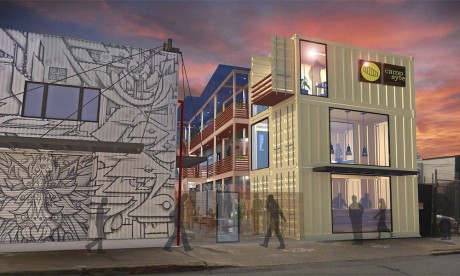
The small space conversation is generally in reference to housing size. Yes housing is the single largest category of a person’s spatial use, but it’s not the only one. In particular, our work environments can significantly increase our square foot counts and contribute to sprawl and large carbon footprints. San Francisco startup Campsyte has created a compact, modular, easy-install office solution that might help make more edited offices.  

campsyte-building

Similar to KASITA and other prefab housing solutions we’ve seen, Campsyte quickly sets up on unused or underused lots. Using shipping container modules, Campsyte can deploy insta-offices fully equipped with utilities, internet, furnishings, janitorial and coffee/drink service, all of which are included in rent. Campsyte CMO Allen Wong explained to SF Gate that they can set up offices in lots that landowners might not be able to afford to develop, adding income streams that would not otherwise exist. The rapid deployment, cheap construction and development costs are then passed on to the renter. And unlike conventional offices, which often require five year leases, Campsyte has short term leasing, perfect for startups.

A great deal of sprawl can be linked to the migration of office spaces away from city centers. By filling up urban land gaps, Campsyte promises to provide affordable office space and sprawl repellent. 

Cool San Francisco Transforming Loft

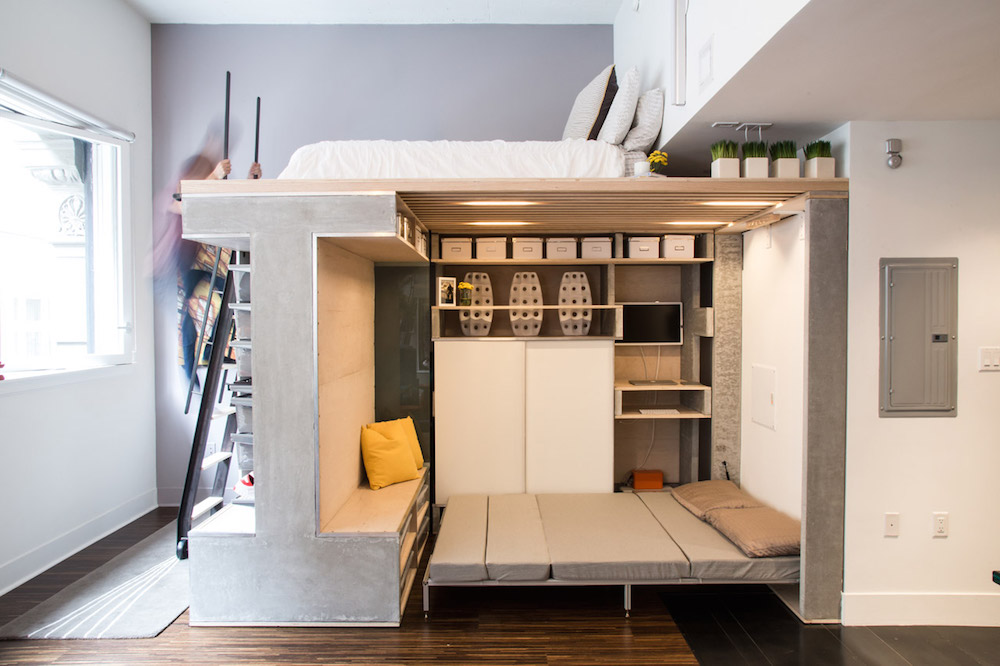
A reader of ours turned us onto this cool 500 sq ft San Francisco loft recently featured on Design Milk. The space was designed by Charles Irby and Peter Suen and centers around a prefabricated module that houses nearly all of the apartment’s storage and furniture. Inside the module is an area that contains storage, a work station, a bench and a dining table that flips down from the wall. There is also a very cool murphy bed that, when folded into the wall, has a dry-erase board on its base.

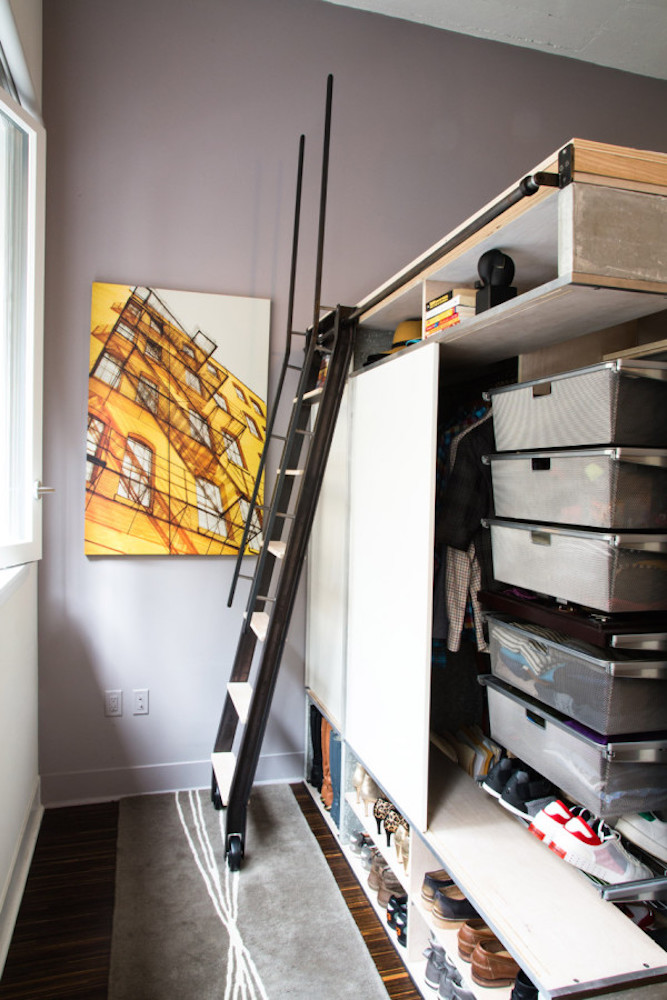
On top of the module is a loft bed effectively making the place capable of sleeping four friendly people. The loft is accessed via a ladder which sits on the far end of the module where there is ample, open storage. For those without neck problems, the top of the loft doubles as a screening area for a projector and screen viewable on an opposing wall. To see more images, head over to Design Milk

HT to Steve S

Where’s the Best Place in North America to Live an Edited Life?

An article in Curbed yesterday gave a construction update of My Micro NY, the celebrated winner of the adAPT NYC micro-apartment pilot program competition that will be ready this summer. Make no mistake, My Micro is a significant step in the right direction for giving more housing options to New Yorkers. It also might be providing evidence for why the city should lift its absurd 400 sq ft building code minimum size requirement. But as I mentioned a couple months ago, My Micro has a total of 55 units–22 of which will be set aside for formerly homeless Veterans and low-and middle-income families (I imagine it’s gonna be a tight fit for the families). The rest of the 260-360 sq ft, unfurnished units will be market rate, which in NYC means $2-3K rent–a lot of dough for a tiny apartment. The fact is its immediate impact in providing affordable housing for New Yorkers is, charitably speaking, insignificant.

The problem isn’t the My Micro developers or architects or the micro-apartment concept–it’s the city itself. The average price of a studio in Manhattan is around $2500. Want to save money in Brooklyn? Fuggedaboutit. You’ll pay $2100. And both of these numbers factor in many outer-borough neighborhoods, where prices are considerably cheaper than average. The more central, walkable neighborhoods frequently exceed these averages by large sums. To illustrate how out of control NYC housing has become, an affordable housing development in Williamsburg, Brooklyn had a lottery for its 38 available units. 70,000 application were received.

The reason I bring up New York is because in many ways it should be the ideal city to live an edited life. It is one of the most experience and relationship-rich cities in the world–who needs stuff with all these interesting folks and culture around? There are countless public spaces to augment small personal spaces. It is one of the most walkable cities in the world. It has a peerless public transit system and an increasingly awesome network of bike lanes. But in reality, it can be a brutal place to exist (an Onion article explains it well). If you have to work 60 hours a week just to afford a place to live, it’s tough to live a sane, edited life.

Lest I unfairly single New York out, it should be said that many of the most walkable, culturally diverse cities in North America have become, or are quickly becoming, out of reach to all but a select few. New York, San Francisco and Vancouver are the most obvious places where this is happening, but other cities like Boston, DC, Seattle and Toronto are seeing similar housing costs explosions.

Many proponents of space travel believe that we have a better chance of colonizing Mars than we do repairing earth. In much the same way, might it be easier to evacuate the New Yorks and San Franciscos than it is to expect things to get better?

Obviously, the aforementioned cities aren’t the end all be all in terms of places to live. Walkscore.com published an interesting list last year of affordable, walkable cities. The list errs on the chilly side, with Buffalo, Rochester and Chicago making up three of the four top spots. But the 12 cities do give some not-so-obvious suggestions for interesting place to set up camp. In fact, Buffalo was the subject of a recent Gothamist article called “Millennials are Moving to Buffalo and Living Like Kings,” giving further credence to Walkscore’s number one designation.

But we thought we’d reach out to our readers to ask them where they think the best place to live an edited life is. Here are the general characteristics that this place might possess:

  • Easy to live without a car. Walkable, bikeable, public-transportable. Few things save money and simplify life like ditching the car, but in many places, that’s just not feasible.
  • Stable economy. Places with decent job prospects.
  • Affordable. This does not mean cheap. It means that the housing costs are relatively low in relationship to median incomes. Detroit might have dirt cheap housing, but median household income is half the national’s.
  • Rich public life. Parks, events, street life. The things that make a city great.
  • Bonus points: decent weather (no endless subzero winters nor sweltering summers) and resilient (ideally places not in the middle of an epic drought, not being ravaged by forest fires or lava flows, etc).

What do you think? If you were to create an edited life, where would be the ideal place you’d do it? Is it where you live? Why? Is it someplace else? Why? Let us know your thoughts in our comments section.

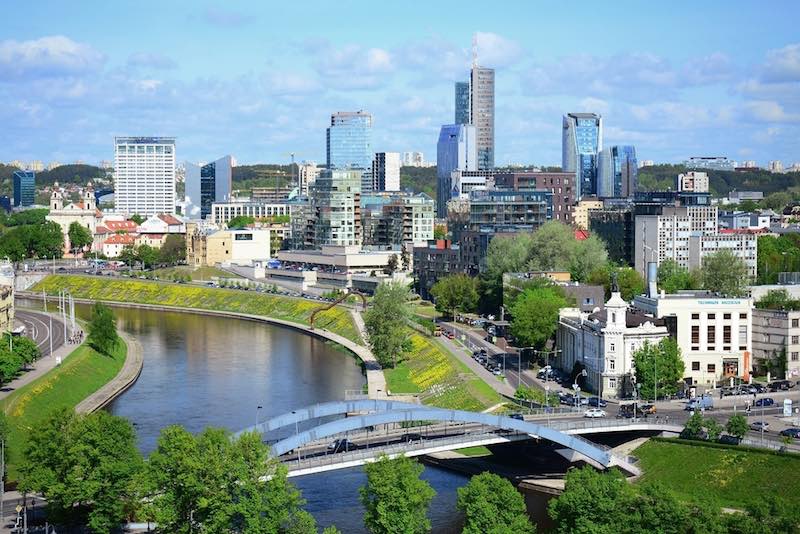
Image credit Bokstaz / Shutterstock.com

Co-Living for the 21st Century and Beyond

As we’ve seen recently with Stage 3 in NYC, The Collective in London and the expansion of the micro-apartment movement in general, there’s a growing market for minimal, all-inclusive, affordable, community-centric housing. For the most part, these developments are aimed squarely at the lighter-living, typically-single, experience-hungry urban Millennial (sorry for all the dashes). Today, we’re checking out another player in this genre called Campus, a movement/real estate startup with 30 houses, buildings (or portions of buildings) in the Bay Area and New York City.

Campus “communities,” as they like to call their houses, bear some resemblance to living in a dorm on a college campus. They have ample communal spaces and compact private ones. Most communities feature talks, shared meals and other programming to spur relationship building and philosophical waxing.

But the similarities stop there. Campus’ raison d’etre is both more mature and evolved than anything you’re likely to find at a University of Arizona dorm. For example, all houses are connected by a set of shared values that include being:

  • Open to having new experiences and forming new relationships.
  • Respectful of other’s differences, needs, and privacy.
  • Supportive of each other’s well-being and growth.
  • Respectful to the neighbors and existing culture of the area.
  • Valuing personal freedom.
  • Recognizing that everyone has the need for private space and alone time

In other words, the antithesis of most college campus living we know about (save Evergreen State or someplace like that).

In terms of nuts-and-bolts, each room is private and lockable. Rents are month-to-month and each member can opt out at his or her discretion–i.e. you are not tied to the other community members. Rent includes common space furniture, kitchen supplies, common space cleanup and several other amenities (utilities are additional so far as we can tell). Prices depend on community location, room size and a few other variables. For example, a ~70 sq ft room in Park Slope Brooklyn cost about $1200 whereas a space twice that size in the SoMa district of SF costs the same amount.

Campus hardly sees itself as mere purveyor of fun, convenient housing for Millennials. Their mission is to “build better living environments, and…build better housing and cities that are more attuned to people’s needs,” and they have an ambitious, two-phase master plan. Phase one consummates in the formation of 5000 communities in ten cities (they announced locations in LA, Boston and DC will be popping up in the near future). Phase two goes into utopia-production, with an eventual goal of making 100 cities, each with tens-of-thousands of people (see full vision here).

In many ways, Campus is a modern, formalized (but hardly stodgy) and ambitious take of co-living. Like most things, the latest and greatest is part of a continuum of thought. But originality isn’t a condition for doing something useful and cool.

The Second Smartest Space in San Francisco

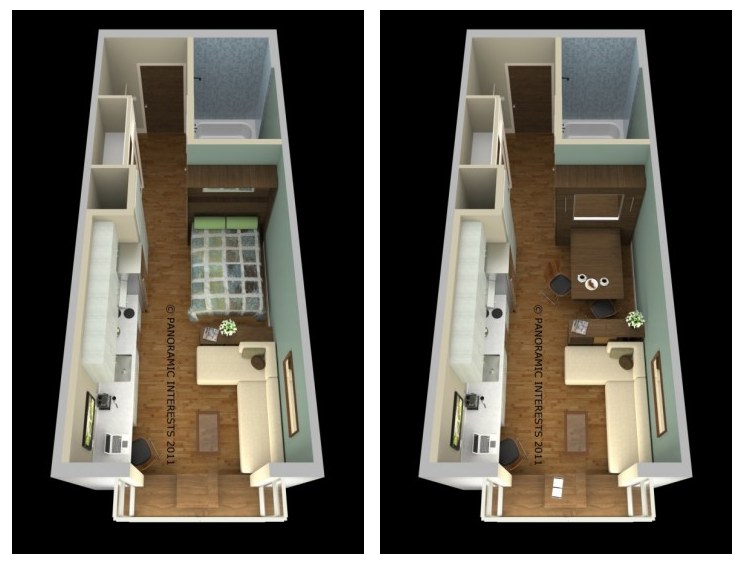
A while ago we checked out San Francisco’s SMARTSPACE Harriet (i.e. the first smartest space in San Francisco), a four story, 23-unit building made up of prefab micro-apartments. SMARTSPACE Harriet was and is significant as it, along with Vancouver’s Micro Lofts, was one of the first true micro-apartment buildings in the modern sense of the term. The vigorously designed 295 sq ft apartments employed numerous transforming elements that made them perform like much larger spaces. The inclusion of things like a building car-share, communal spaces and solar hot water made them all the sweeter. Now (well, for a while actually) SMARTSPACE developer Panoramic Interests is building on its initial project. “The Panoramic” is a 160 unit, 11-story building going up in San Francisco’s SoMa District and it represents a lot of big ideas in small building and living.

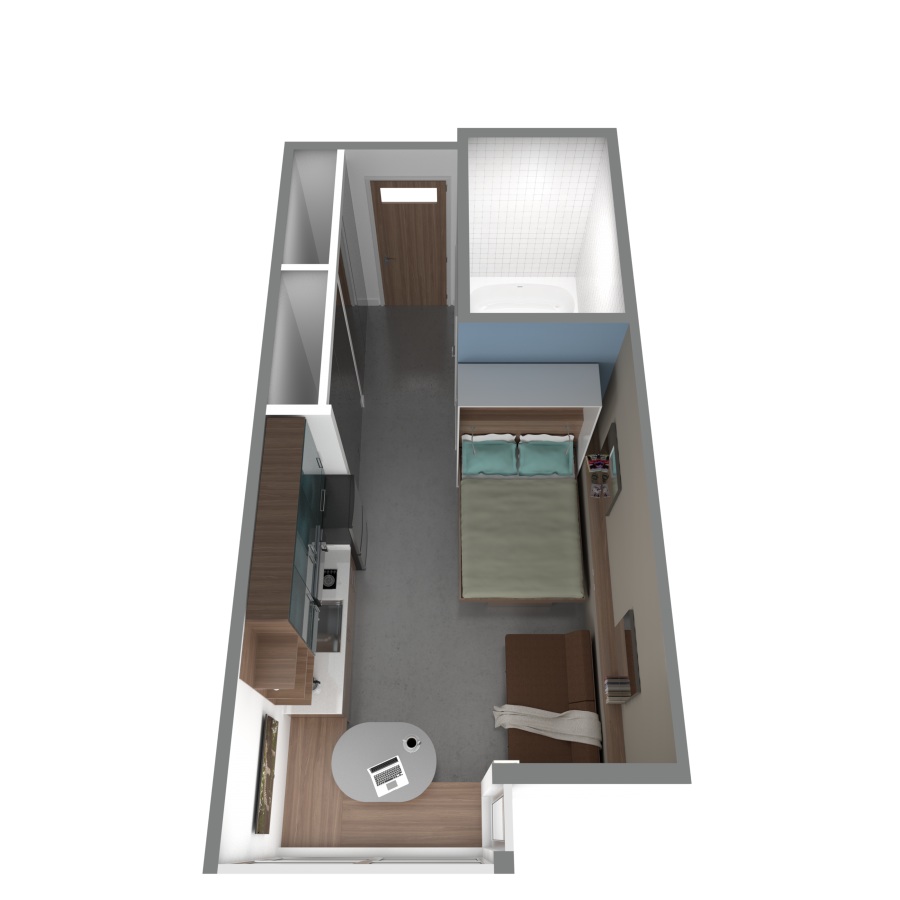
The building will feature 120 micro-studios, which will range in size from 274-295 sq ft. They will come mostly furnished, either configured with two twin beds or a queen-sized murphy bed/table. There will also be 40 micro-suites on the corners of all the floors; these two bedroom units will range from 605-630 sq ft and not include beds. All units will have features like floor-to-ceiling storage, soaking tubs, extra soundproofing, LED lighting, ample light and ventilation system. All units will have tables that lower from table height to coffee table height, and 60 of the micro-studios will have tablebeds–dining room table/queen beds–as well.

We spoke with Panoramic Interest’s Patrick Kennedy about the building. He was particularly enthused about the micro-suites, which will be less expensive than the studio apartments. “Many people coming out of college can’t afford the micro-apartments and in fact they’re not interested in living alone.” He doesn’t think that most Millennials are interested in the old bathroom-down-the-hall residential hotels like the YMCA that used to be the affordable housing option in the city. “The micro-suites are an attempt to provide entry level housing in a great location for people not making $100k year.”

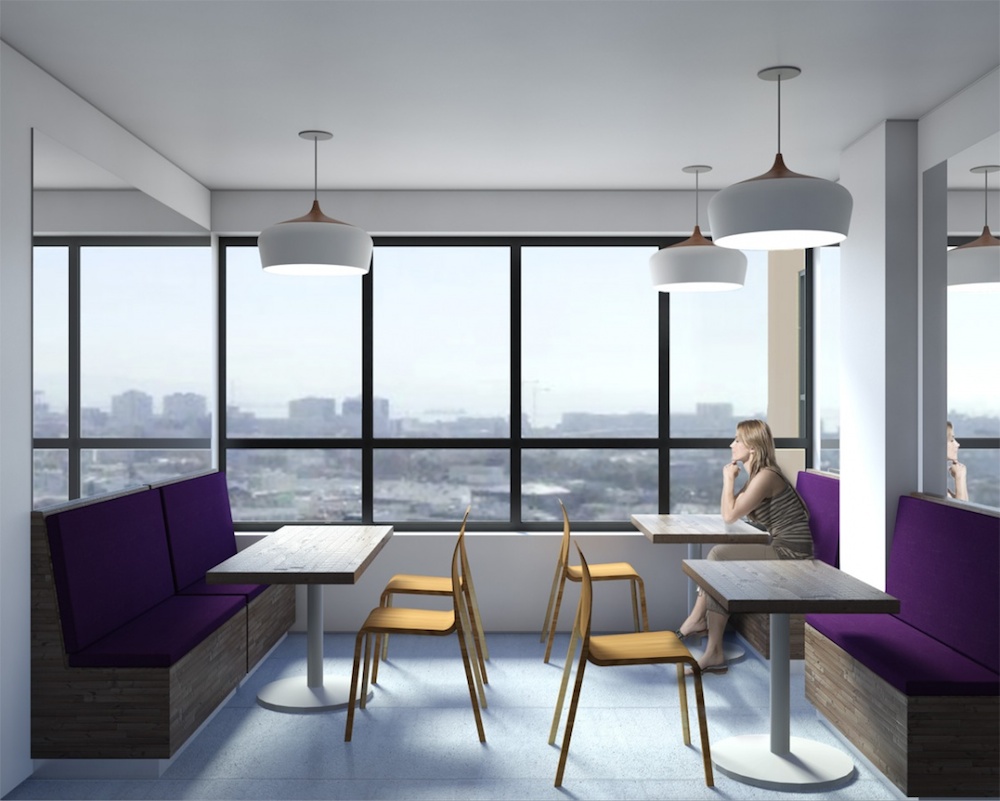
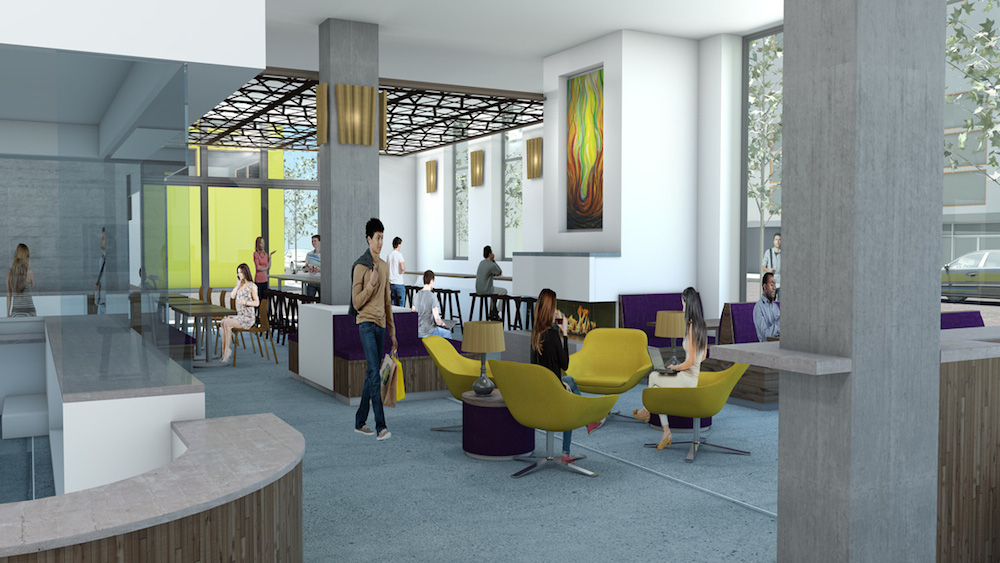
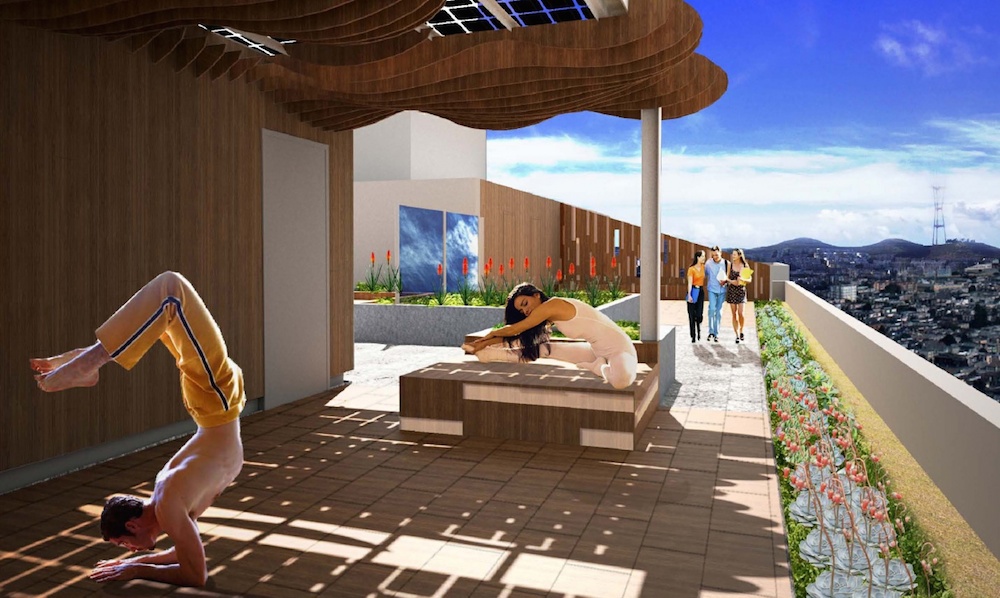
The building will have many other features: generous “social spaces” with ample seating and a fireplace; smaller lounges on each floor; a landscaped roof deck with views of the bay and San Bruno Mountains; 200 mbs internet throughout; an onsite City Carshare (The Panoramic has no zoning requirement to provide parking); and a 200 bike storage area and repair station. The location scores a 97 on Walk Score and Bike Score (Walk Score’s bike-friendly rating). It’s two blocks from the Civic Center BART station.

Kennedy sees the generous social space as a big asset and an improvement on the Harriet St development. “The [SMARTSPACE] Harriet was on a 3700 sq ft lot so there wasn’t much room for social spaces. The Panoramic has 8K sq ft of dedicated social space, which provides opportunities for creative collisions, spontaneous interactions and all the things that make cities interesting.”

In terms of pricing, Kennedy says he can’t comment just yet. More information will be available closer to the expected June 2015 completion. He believes the apartments should be 30% less than market comparables.

The first five residential floors are being leased to the California College of the Arts as student housing (the twin bed layouts were designed for this purpose). The other floors will go to market. Kennedy mostly sees these apartments as an entry point for people new to the very competitive San Francisco housing market, but he also thinks they will appeal to other demographics.

Kennedy says that normal civilians and non-millionaires are being priced out of San Francisco. “I see micro-apartments as a very important part of cities for Millennials, singles and older people looking for well-designed, central housing they can afford. I’m especially curious to see if older people will be interested in renting [at The Panoramic]. I think they will.” And though he says The Panoramic’s location is not great for families, he thinks the micro-suites like his would work well for small and young families.

In many ways, micro-apartments are only as compelling as the contexts in which they reside. Unlike the dominant big-house building paradigm, which proposes everyone live in a self-sufficient fortress, micro-apartments depend on interdependence–small private spaces are made livable by having big, shared ones; a home gym is traded for a communal one; a small dining room might be easier to bear with 100 restaurants within ten minute walk of your apartment; and so forth.

At least on the surface, The Panoramic checks many of the boxes for both great micro-apartment design as well as a context that supports the less is more lifestyle. We’ll keep you posted as the building develops.

Open Source Housing

The idea of sharing is palatable enough for things like power tools and even cars, but our homes? Like underwear and teeth retainers, homes are the kind of things that are best when they have clear lines of possessions. Not so says Embassy Networks in San Francisco. Just like ZipCar allows you to pick up a car whenever and wherever you need it, Embassy wants to create a network where you can find your home in much the same way. This is how Embassy describes their vision:

We see a nascent model of housing emerging in a new generation of community houses around the globe. It is a model based on intention, creativity, sharing, and travel. A network of houses, connected together by members who flow freely between locations.

The project is quite a bit like co-housing for hackers–a population for whom transparency and sharing are sacred virtues. All house members have public profiles with links to their Facebook, Twitter and professional pages on Embassy’s homepage. The public is invited to attend and even organize salons, concerts and other events at the space. The house has an open invitation for guests, who are encouraged to mingle with fulltime residents. This permeability and transparency would be essential should Embassy grow beyond one house (it takes one bad apple to spoil the whole system).

Right now the Embassy Network is more of an Embassy Cell with only one house in San Francisco’s Lower Haight neighborhood (pictured above). But we think the idea has a lot of promise: A huge network of homes for our more flexible, mobile generation. Similar to ZipCar, which enables you to rent cars you might not want to own, the housing network would permit you to live in places you might not want to live in fulltime. For example, you could experiment by living in Fargo, North Dakota just to try it on (for the record, Fargo is a delightful place).

White picket fences it is not (though that could be an option). But what you trade in individualization and privacy could be more than compensated by a dynamic, lightweight and inspiring living experience.

The Power of Free Real Estate

Throughout the month of June, a group of people in San Francisco are conducting an experiment in improvisational community creation. [freespace] is a 14K sq ft blank canvas for anyone looking to present his or her talents, ideas, classes, swaps or anything else to the greater community. It is, as one of its members declares, “a big empty building filled with people who care.”

The project came to be after the founders were given a $1, one month lease for the vacant SOMA neighborhood warehouse (if you’re unfamiliar with SF real estate, this is a good deal). While we apologize profusely for the delayed announcement, there is still a lot going on for the remaining 12 days of June–yoga classes, a TEDx event, hackathons, live music, salons and much more.

One of the most endearing aspects of [freespace] is its sense of urgency. With a 30 day lifespan, there’s no dilly-dallying. They have started several projects meant to endure beyond June, including a 30 day garden, a mobile learning center for the homeless, a matchmaker-service for muralists and walls and its own bikeshare program.

To us, [freespace] exemplifies the increasingly paradoxical nature of many of the world’s leading cities. On the one hand, the cities often hold the highest concentrations of creative energy that make living there so great. On the other hand, the rising cost of these cities–both for commercial and residential real estate–make the conditions inhospitable for that creativity to flourish. People with jobs of indeterminate value (see artists) and real estate that doesn’t generate a lot of money are usually excised or marginalized by the city.

In fact, a project like [freespace] only exists due to the largesse of its donors (the city, its real estate broker and property owner)–and it’s only for a month. The [freespace]ers have launched a fundraising campaign to cover July’s $24K rent, but have only raised $3700 to date.

We wish [freespace] the best of luck and hope that similar projects arise in other cities–ones that might endure for more than a month. By providing large, low or no cost communal spaces for people to meet and create in, we imagine the creativity that makes our cities so valuable will flourish once again.

The Smartest Space in San Francisco

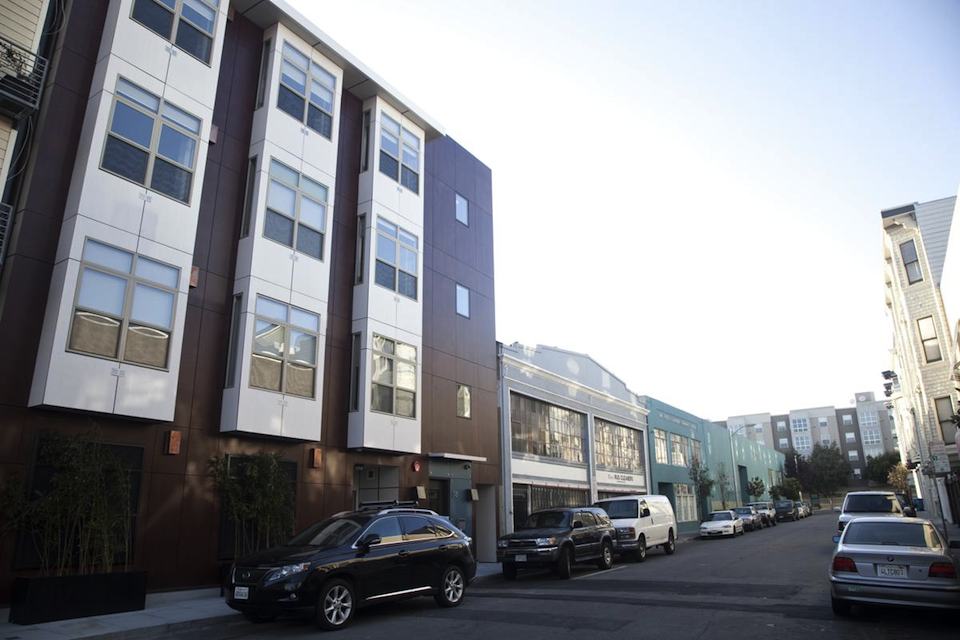
Some time ago we saw a video with Patrick Kennedy from the development company Panoramic Interests show us around their SmartSpace 166 sq ft prototype micro-apartment. We gave reports as their building at 38 Harriet St in San Francisco’s trendy SoMa district went up; it would feature 23-apartments, each measuring 295 sq ft. The building was going to be pretty exciting, incorporating many of the prototype’s interior features like transforming furniture and high quality finishes as well as an in-house car-share, solar-thermal hot water, rain water collection, LEED Platinum certification, common spaces and much more. These guys were doing it right.

Well, 38 Harriet is ready!

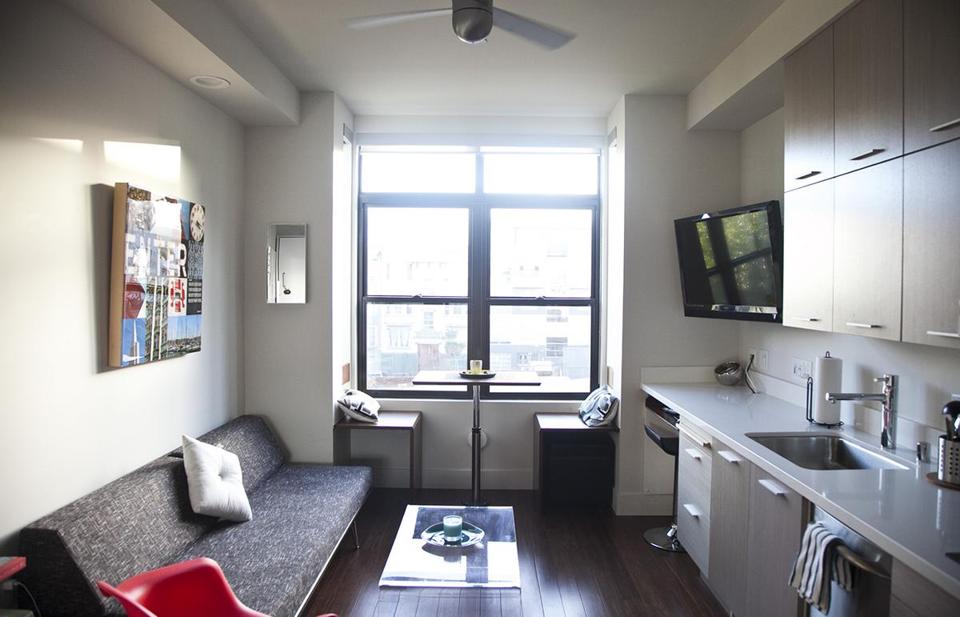
Unfortunately, we were unable to find any info about renting one yourself. Unfortunately, they’re all spoken for. All but one showroom apartment will be leased to The California College of the Arts and cost $1600/month, lower than the $2075 average for a San Francisco studio rental.

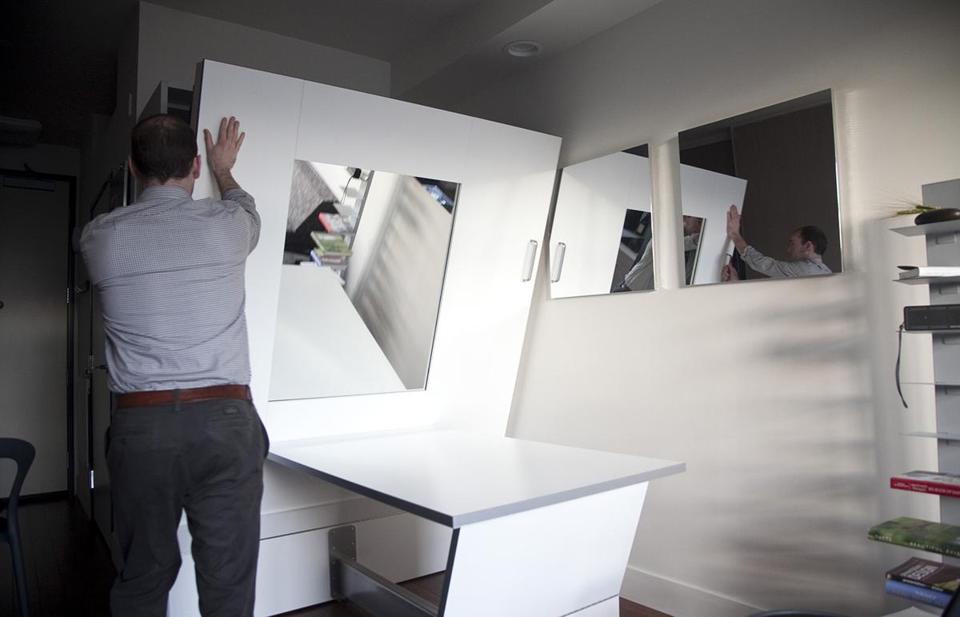
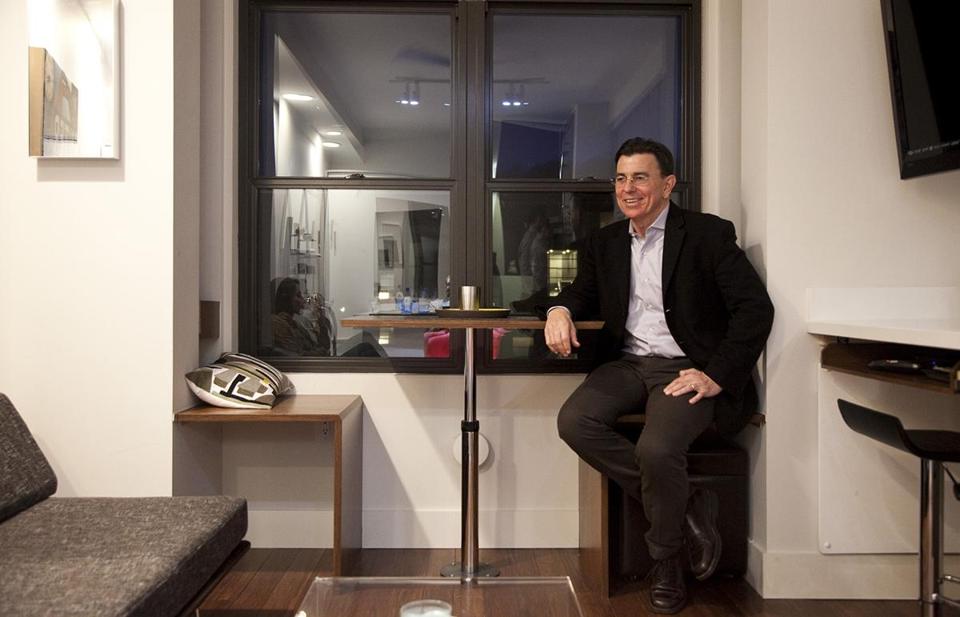
These pics show us the interior, which feature a murphy bed and a banquette with table that transforms into a window bench (a piece pulled straight from the prototype apartment).

We also came across the above video that shows some of 38 Harriet’s prefab construction process. By using offsite construction, they were able to turn an uncovered foundation into a four story building in a mere three days.

Our hats are off to Panoramic Interests for bringing one of the most innovative housing projects to life.

What do you think of 38 Harriet St? Would you live there? What do you like? What’s missing?

Photo Credit: Jan Sturmann for Boston Globe

Fit Your Next Car into Your Phone

DriveNow is a car-sharing program launched by BMW and European car rental company Sixt that allows you to locate and rent the nearest car within a given city’s limits via its website or mobile app. What sets DriveNow apart from other car-share services is you don’t need a reservation and you can park and leave the car anywhere you want rather than returning it to a home garage. You could rent a car for 20 mins to drive to work, end your rental, stay at work for eight hours, and rent another DriveNow car to go home.

This flexibility contrasts to services like ZipCar, which require you to make a reservation for a set amount of time and return your car to a specific garage (penalties fees are applied if you don’t return the car by the end of your period).

The service is BMW’s attempt to future-proof itself from the changing nature of car usage and ownership. With car ownership decreasing and urban-living on the increase, having a car that does 150 mph on the autobahn and is parked in your suburban garage will become increasingly irrelevant. Tomorrow’s driver will need a car that can handle 25 mph around town and be easily parked.

bmw-i3

DriveNow is also connected with BMW’s upcoming i3 electric vehicle (pictured above), which is the company’s first EV geared specifically to city living. In the future, DriveNow will be connected to charging stations around a city for low-emission temporary urban transit.

Here’s the rub: DriveNow is almost exclusively in Germany, with locations in Munich, Berlin, Dusseldorf and Cologne. Currently, their fleets are internal combustion engines, which enables the flexibility of returns (i.e. you can park on the street rather than finding a charging station). Rates are €29 cents/minute for driving and €10 cents/min for parking. These rates include parking and gas; fuel levels are visible when you book your car. DriveNow also includes on their maps proximity to bike share stations.

They have one US location in the Bay Area, whose fleet is made up of BMW’s ActiveE, an all electric version of their 1 Series car. Because of the need to charge, you need to return the cars to one of the designated garages, though not necessarily the one where you picked the car up. All stations are located near BART stations. Rates are $12 for the first half hour then $.32 each additional minute and $90 for the day. There is a one time $39 registration fee.

Ideally, a service like DriveNow would be brand-agnostic–i.e. not attached to a particular carmaker. But we find the idea of on-demand, restriction-free car sharing pretty exciting. Imagine being able to rent any car parked on the street whenever you want. While the per drive expense is surely much greater than car ownership, the lack of overhead and flexibility seems well worth it. And with bigger fleets and costs spread out over more members, the per drive cost would likely go down while available cars increase.

via Metropolis Magazine