Look Good In and Feel Good About Your Fashion

Most of us are at least vaguely aware of what drives the excessive demand and supply of clothing. Constantly changing fashion trends drive demand, compelling people to exchange perfectly good clothes in favor of newer, slightly different, perfectly good clothes. In her book, Overdressed: The Shockingly High Cost of Cheap Fashion, Elizabeth Cline wrote that Spanish retailer Zara pioneered the practice of introducing new styles to its stores twice per week. Other stores like H&M and Forever21 quickly followed suit, often bringing in daily shipments of new styles. According to Cline at the time of writing, UK based retailer Topshop introduced a shocking 400 styles a week on its website–a practice that is meant to “deliberately make the customer feel off-trend after the first wear” according to the Huffington Post. Supply for this practice is made possible by deferred payments of our clothing’s real costs. That trendy new $18 shirt doesn’t include the price of living wages in safe conditions or responsible fabric sourcing. Instead, much of today’s mass-produced clothes are made by people working long hours in unsafe conditions for very low wages; they are almost always cheaply constructed with pesticide-laden cotton or other environmentally-destructive materials. In an ideal world, our clothes would be classically designed and well made, withstanding the often arbitrary fluctuations of fashion trends; we would feel good about, who, how and where our clothes were made. They are clothes that would enable us to have less, but better wardrobes. That’s the idea behind a new web-shop called Zady.

Zady carries a range of women and men’s clothing and shoes as well as accessories, jewelry and housewares. The raison d’etre for Zady is establishing what they call “The New Standard”–where retailers consider the environmental and human toll of the products they sell. They are trying to achieve as much supply-chain transparency as possible, allowing you to see–and presumably feel good about–every step of a product’s manufacturing process, from where raw materials are sourced to who and where your garments are assembled to every step in between.

zady-fashion

This new standard carries over to the style of clothes they offer. Their products, which are sourced from various manufacturers, embody the “slow fashion” ethic–classic designs in muted colors that are basically the antithesis of fast, trendy, cheaply priced and made clothes large retailers churn out. These are clothes that are designed to be worn frequently and for a long time–increasing longevity being the easiest way to reduce clothing’s impact on the planet.

Zady’s clothes are beautiful, but they don’t come cheap. Shirts are often more than $100 and sweaters routinely cost $300. The problem isn’t that their clothes are expensive–it’s that we’ve become so accustomed to not spending anything on clothing. This has hardly always been the case. According to a survey by the Bureau of Labor Statistics, in 1950, when most clothes were still made domestically, Americans spent 12% of their incomes on clothing. In 2003, we spent 4% despite the fact that the volume of clothes we purchased skyrocketed. Zady reports that there has been a fourfold increase in clothing production in the last 20 years alone.
zady-new-standard

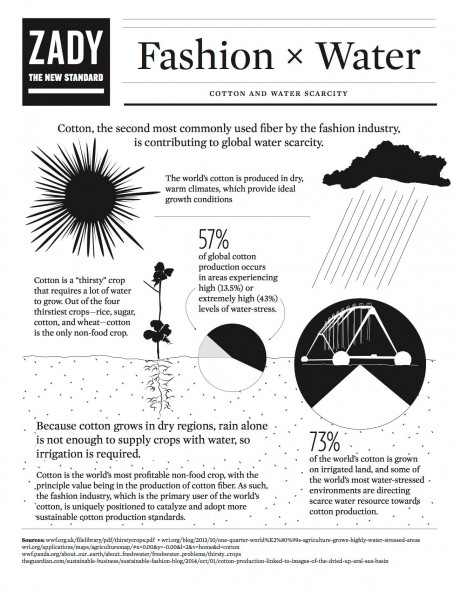
Zady is challenging us to think about our clothing purchases a lot more rigorously. Their site includes tons of (pretty damning) information about the costs of modern clothing production: how 99% of cotton is grown with chemicals and uses 25% of the world’s insecticides, how 250 million children, some as young as 5 years old, work in the fiber and apparel industry around the world, and so on. In light of these pretty awful facts (and there are many more), it’s probably time we started paying the real costs of clothes. Fortunately, Zady helps us do that while looking pretty sharp at the same time.

Via Treehugger

Fashion Week, Edited

If you live in New York City or are interested in fashion, you might be aware that this week is New York Fashion Week (NYFW for the cognoscenti). It’s a weeklong celebration of the fashion trends that will make your current clothes look inexplicably outdated in the not so distant future. The practice of continually refreshing and overhauling one’s fashion is, for many, one of the leading causes of accumulating way too much stuff. As I oft-quote, one expert estimates that only 20% of most wardrobes are actively worn. The rest is just filler–likely casualties of changing fashion.

Let me hazard to say that I am not a fashion basher. As much as I continually extol the virtues of having a few well-selected garments, I am pretty fussy about what those garments looks like. I am particular about the color, fit and function of my clothes. I believe fashion is one of the most practical mediums in which one can express him or herself.

But let’s face it, fashion has a super dark side. As mentioned, many people find themselves with way too many clothes, leading to stuffed closets and emptied bank accounts–all done in the name of staying au courant. And then there are the considerable environmental and human right tolls paid in order to keep our clothes cheap and plentiful (follow this innocent looking link if you are interested in knowing more about what I’m alluding to).

As with everything, less, but better wins the day. Those of us living above or below the tropics can’t very well live without clothes, but we can create wardrobes filled with necessary clothes that are worn and cherished. In honor of NYFW and looking spiffy all year long, here are a few posts from the past fashions that will help you create your edited wardrobe.

  • Project 333. Courtney Carver is like the minimalist Anna Wintour. But instead of yay or naying particular fashions, she challenges people–women and men–to put more thought into their wardrobes by selecting 33 items to wear for three months. What’s great about her approach is that it’s pared down, but no so much that you can’t achieve variety.
  • Outlier Tailored Performance. I know, I’m a bit of a fanboy, but this company is a great example of how you can sell folks (ok, mostly men) great-looking, responsibly manufactured and sourced clothes that allow you to do more with less.
  • Shapeshifting fashion. For those who might want to spice up their minimalist wardrobes, companies like MORF create clothing that allows several looks with the one garment.
  • Rent and shared clothing. If you are simply not someone who can wear the same thing too long, consider renting or swapping your clothes. It’s way friendlier to your pocketbook, the planet and will give your closets some breathing room.
  • Fall deeper in love with your existing clothes. Just like friends and family, sometimes we take great, but familiar things for granted. Patagonia’s Well Worn campaign urges us to fall back in love with the things we have. Love them, wear them, fix them if needed. Sometimes the fashion we seek is the fashion we already have.
  • Wear a uniform. Yep, I’m a broken record, because uniforms are so awesome! They’re the autopay system of fashion–select one and forget about it. There’s something so liberating about not thinking about what you have to wear on any given day.

Sam Aronov / Shutterstock.com

Do-It-All, Technical Clothing, Now for Women!

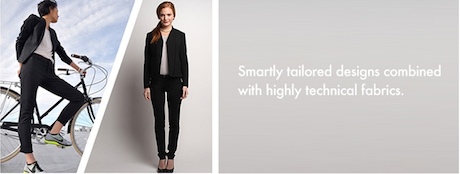
It’s not a big secret that women buy and spend more on clothing than men–$708 versus $420 annually according to Bureau of Economic Analysis (and I’ll bet those numbers are conservative). But in the realm of technical, fashion-forward, do-it-all clothing, it’s mostly a man’s world. Even though awesome clothing manufacturers like Outlier Tailored Performance do have several women’s garments, their focus seems mostly on the male market. This niche clothing market seems to be treated like “gear” as much as it is “fashion.” A new venture called Pivotte Studio is trying to change all of this, making simply-designed, technical, multi-function clothing specifically for women.

Of their line’s motivation, Pivotte’s website says, “Stylish clothing can’t handle life on-the-go. Fashionable women’s clothing is too delicate, restrictive, and high-maintenance. On the other hand, activewear is not work-appropriate.” Accordingly, they are making stylish, durable, low-maintenance pants, tanks, jackets, dresses and a cardigan. The designs are classic, well-tailored and come in neutral colors, making them appropriate for a wide variety of casual and formal occasions. All garments are made in NYC and constructed of high quality materials like merino wool and the stain-and-water-resistant, non-wrinkling, four-way-stretch Schoeller Prestige Fabric–making them both durable and low-maintenance. These are garments worthy of a uniform.

pivotte-tailored

Right now Pivotte is raising money on Kickstarter. With 18 days left, they have raised over $21K of their $30K goal. Various levels of contributions will get you different garments: $65 for a tank, $190 for pants and so forth. Like Outlier, these prices are not cheap, but considering their quality and versatility, and their ability to replace several less versatile/stylish items, the math might not be as bad as is seems.

Scratch Fashion Itch without Breaking Bank or Planet

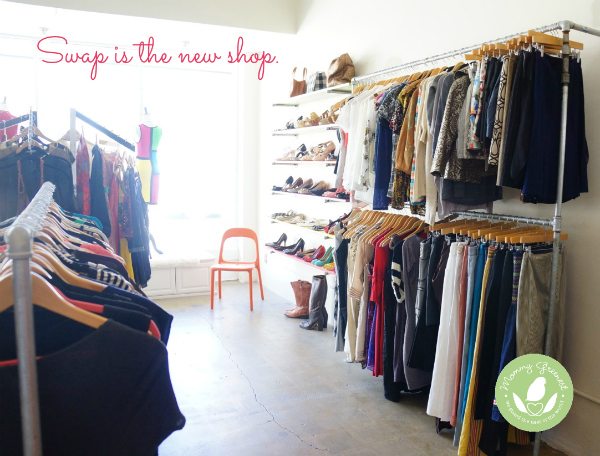
The average American woman spends $60 and creates six pounds of waste on clothes every month. With around 160M American women, that’s $10B and 1B tons every month (American men spend a relatively measly $35). One of the reasons there is such a high demand for clothes is novelty. Many people–and it’s probably fair to say particularly woman–enjoy wearing clothes that are au courant even if the old ones are still in good shape. A new shop in Los Angeles called Give + Take Swap Boutique has made a way for women to scratch their fashion itch without the big price-tag or heavy environmental toll.

It’s probably easiest to think of Give + Take as an offsite closet filled with clean, new-to-you designer garments, accessories and shoes. By paying a $35 monthly fee ($30 if paid ahead of time), you get access to the closet. Members bring in their nice but unused or unloved items and each is assigned a point value based on its retail value. Here’s how they explain it:

A dress that’s worth $100 would “cost” 6 points at Give + Take. If you brought in the dress, you’d get 6 points of credit in the store. If you want to take home the dress, you’d need 6 points to do that. You can accumulate points for larger items—i.e. bring in two $50 dresses and swap them out for a $100 pair of shoes.

After you swap the clothes, you own them–i.e. you’re not renting. Assuming they’re still in decent shape after your use (which could be for a day), you can swap them again.

One of the boutique’s partners Rachel Sarnoff told us, “Usually women come to us with bags of clothes that have been sitting in the back of their closets. They rack up a lot of points with those clothes, and then continue to swap more clothes in and out.”

Sarnoff said there are all varieties of sizes available. And even though there is only one Santa Monica location, some women have flown across the country to swap their clothes. Rather than having an ongoing membership, they bring in their unused clothes, pay for a $40 day pass and swap to their heart’s content–a scenario we could see as being way cheaper than a conventional shopping spree.

The so-called “sharing economy” has taken off for big ticket items like cars and hotel rooms, but not so much for the smaller stuff. Most of the time it’s cheaper to buy a power drill than it is to geo-locate, pickup and return a shared one.

But fashion could be different. Unlike power drills, novelty is prized in fashion (unless you have some weird power drill fetish). Having access to a big selection of new clothes could be a big draw. Second, as we mentioned above, the dollar amounts add up. According to Mint.com, between 2010-2011, Los Angelenos spent $243/month or 21% of their income on clothes (Manhattanites spent $362, which is the same percentage of their income). These are big numbers over time, especially for stuff that’s often not worn much after a few initial uses. We won’t even delve into the environmental and human rights implications of the fashion industry. The Give + Take boutique offers the novelty without breaking the bank or bringing countless under-used garments into the world.

If you’ve ever been there, let us know what you thought in our comments section.

Wedding Dress Rental: One Special Day Needn’t Stuff Your Closet Forever

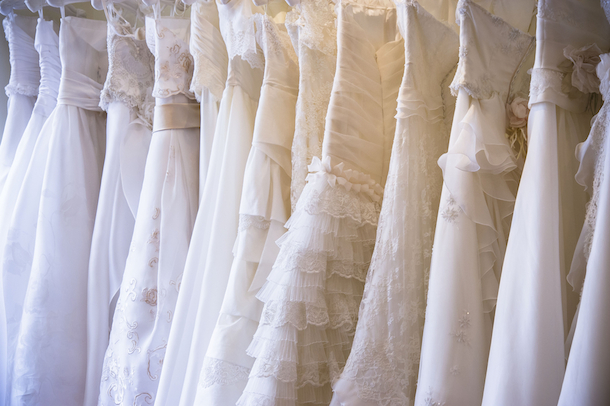
What’s white, covered with lace, used once and has an average cost of $1211? If your answer was the American wedding dress, you’d be correct. While we have nothing against the institution of marriage, the marital-industrial complex has become so powerful, so inflated, that many couples have become convinced they need to spend an average of $28K on their weddings according to a 2012 survey by The Knot and The Wedding Channel. While some expenses, like the $12K for venue, might be tough to save on, the wedding dress–a bulky, single-purpose, single-use, non-transferable hunk of lace, silk and taffeta–is a perfect place for cost-cutting.

wedding-spending

The Japanese–as they are wont to do–have a solution: rent your wedding dress. According to Rocket News 24 of Japan, the practice has become quite popular. The cost of the dress is actually worked into the overall cost of the wedding venue, many of which keep a bank of dresses at their disposal. The dresses are not necessarily cheap, costing as much as 150,000 yen ($1,450), though that’s for a high end dress that’d probably cost ten times that amount–a bargain if you’re into that kinda thing.

The practice, while not common, is done in the US. We visited Rent the Runway and they had a few options, all top designers and under $200 for a rental (though most looked like white evening dresses rather than traditional wedding dresses…not that that’s a bad thing). If you’re in LA, One Night Affair does high end wedding dress rentals. In fact, it seems like the best bet is to do a local, not national, search for rental places.

There is also Little Borrowed Dress, which specializes in bridesmaid dresses. They offer sets of dresses in a set number of styles and fabrics (12 and 18), in cuts that are “designed to fit and flatter all body types.”

Rather than cheaping out (not that cheaping out is a bad thing), renting a wedding dress, at least in Japan, is a reflection of care, as Rocket News states:

Some Japanese women we spoke to said that the very reason they want to rent their wedding dress is because of how important the ceremony is. Obviously, if we’re talking about the exact same item, it’s cheaper to rent than it is to buy. Just as there are companies that rent high-end sports cars to drivers who could never afford to buy one, choosing to rent a wedding dress gives the bride access to designers and quality far beyond what she could purchase at that price point.

Makes sense to us. And the ability to return the dress when you’re done–not carting it from house to house, storing it in a plastic bag, never to be worn again (a practice all too common in the American home)–is a big bonus.

Wedding image via Shutterstock

The Fungibility of Fashion

Fungible: Exchangeable or replaceable, in whole or in part, for another of like nature or kind.

Fashion: A: a prevailing custom, usage, or style; B: the prevailing style (as in dress) during a particular time.

Americans love their clothes–the average family spends $1700 annually on them, according to the Bureau of Labor Statistics. Girls and women average $663 dollars a year and men and boys $382. While these numbers are lower than years past, our affordable duds depend on cheap, often exploitive labor practices and lax environmental safeguards from the countries that provide them. According to the World Wildlife Foundation, “2.4% of the world’s crop land is planted with cotton and yet it accounts for 24% and 11% of the global sales of insecticide and pesticides respectively.”

But the expense and questionable origins of our clothes might be easier to overlook if we only bought what we needed. Such is not the case. A recent Wall Street Journal article claimed that most people only wear about 20% of the clothes in their closet (the percentage of unworn clothes is greater with women than men). If the utilitarian part of our wardrobe is only 20% of the total, what drives us to buy that other 80%?

Fashion–that ever-changing, impossible-to-pin-down look–is often what drives our decision to buy stuff we don’t need or quickly tire of. Granted, many of us follow fashion by professional necessity. But many times our desire to be fashionable is driven by a need to look good and, by extension, feel good. We might feel emboldened by our new, fashionable outfit…until that outfit is unfashionable.

There’s a reason people say they are “slaves to fashion”–they feel bound to keep hitting a moving target. Just when we think we hit the mark, it’s moved.

If you’re interested in escaping the shackles of fashion or just want to save money and natural resources, we have a couple suggestions:

  1. Try a uniform of mostly classic cut, muted clothing. We’ve covered that topic at length here before. Uniforms save time, space and money.
  2. Realize that confidence makes the outfit, not the other way around. We have seen few better treatises on this point than Mackelmore and Ryan Lewis’ “Thrift Shop” (G-rated video above). They show that both a $50 Prada t-shirt or a $5 thrift shop polyester button down can make you look and feel great when your right attitude is right. If either work, your pocketbook and planet might prefer you choose the button down.