Transforming Space You Might be Able to Make Yourself

Question: What would happen if you combined the LifeEdited apartment and Gary Chang’s transforming Hong Kong apartment and made the fusion out of plywood and common hardware store materials?

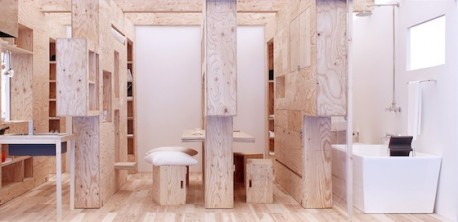
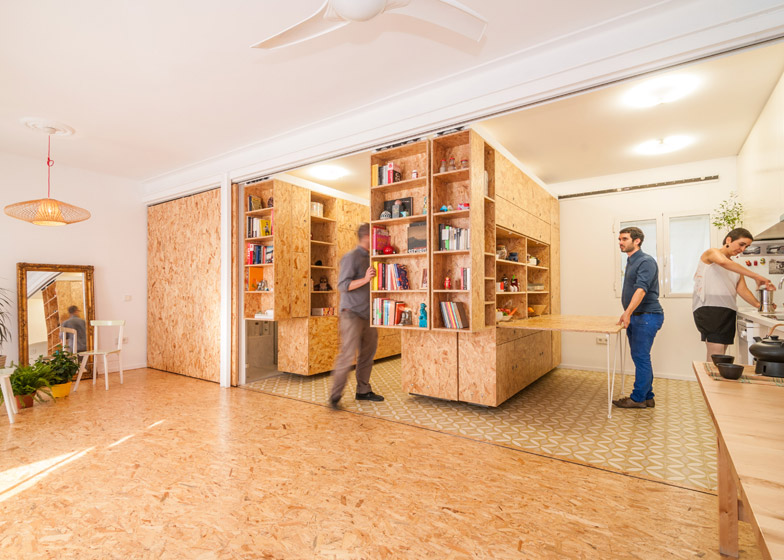
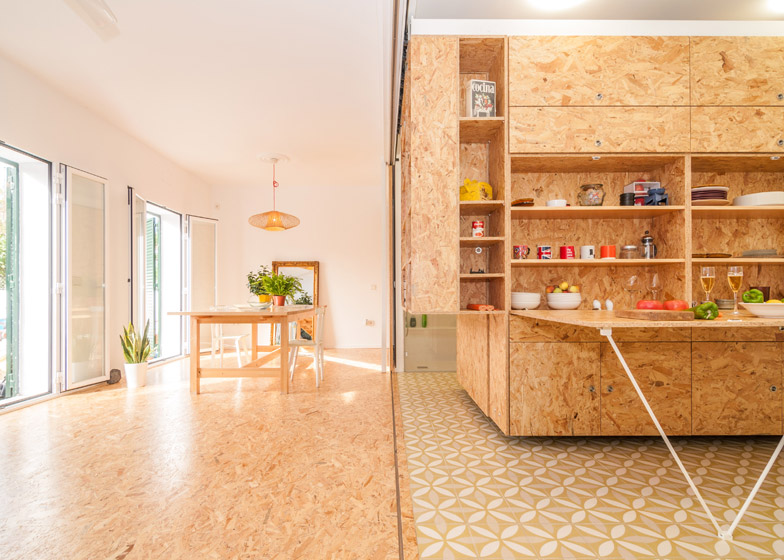
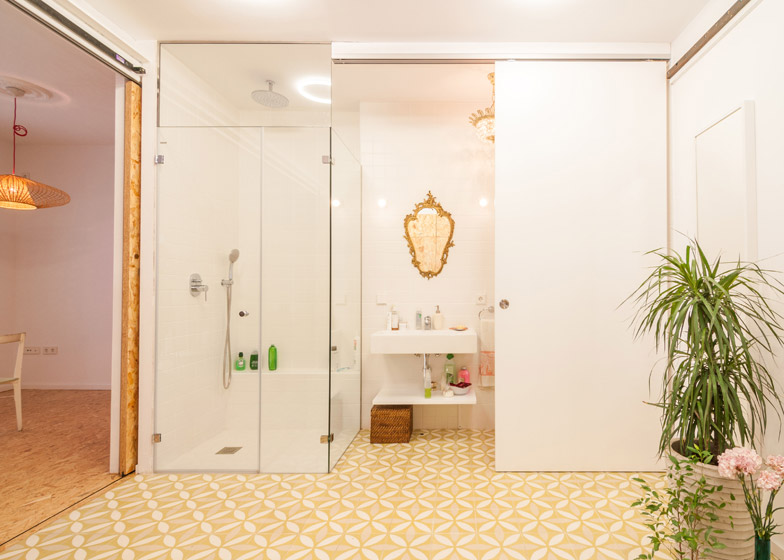
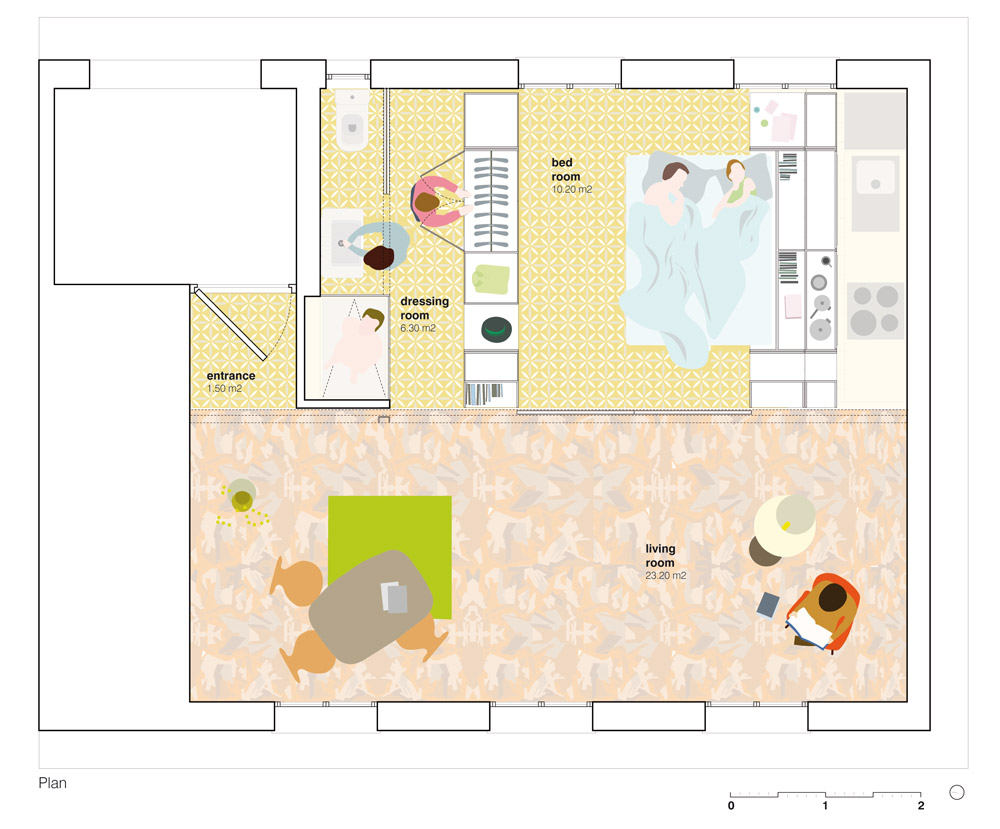
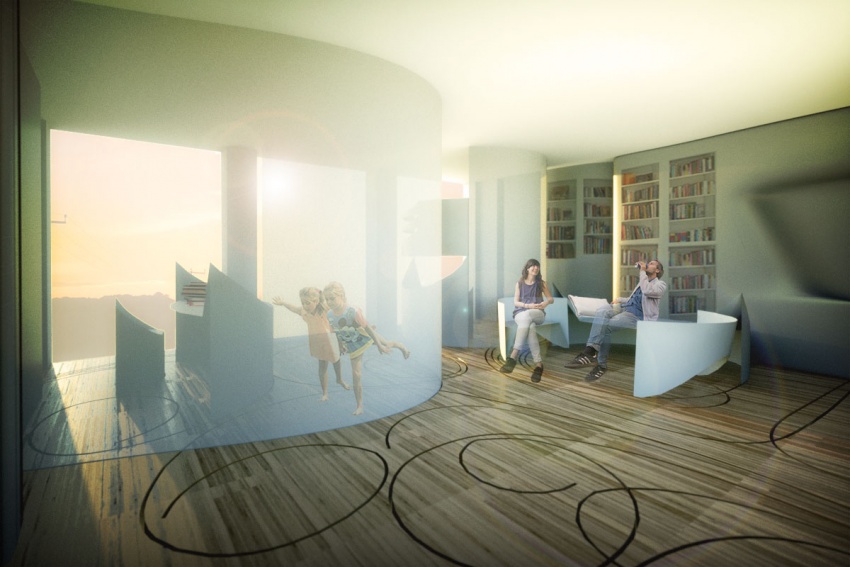
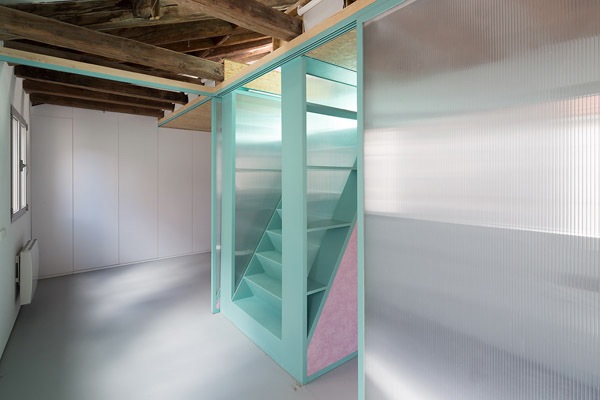
Answer: Studio_01‘s barcode room. The space was a winner of a design competition and was on display at Tokyo’s Designer Week 2012.

Studio_01 explains the concept:

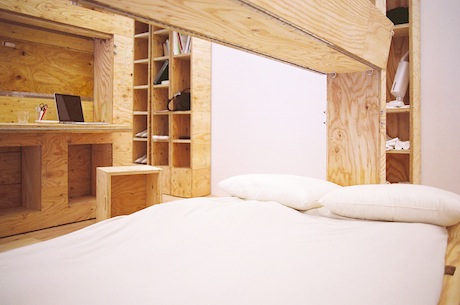
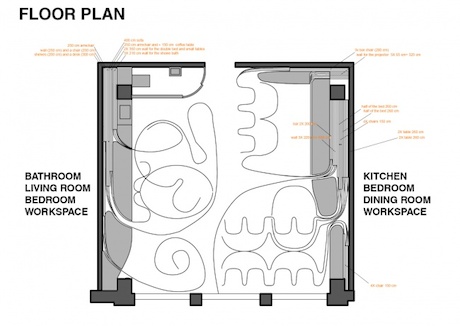
barcode room is a concept studio apartment composed of product furniture-walls which move freely from side to side, permitting the resident to customize the size of space to fit a variety of uses. Placing functional elements such as storage and furniture into these walls, only to be pulled out when in use, also allows for more of the floor area to be used by the inhabitant and guests, thus creating a space where one is able to both comfortably live and entertain a different number of guests easily.

We like how all of the furniture is incorporated into the walls and how there are different settings that furniture can be used; like the main table that doubles as a desk when one side is elevated.

The most important thing it demonstrates is the fact that space-saving, transforming furniture need not be complicated or costly.

via Treehugger

image credit studio_01

5 Pieces of Weird Transforming Furniture

Transforming furniture can be extremely useful in one’s quest to do more with less. It has the ability to make a room do double or triple duty, allowing you to live in a space much smaller than you might have suspected. But it’s not safe to assume that all transforming design is created equally. Some of it is downright weird, redundant or kinda useless. Here are a few examples of furniture that works overtime, doing jobs no one needs done:

The Sensei Chair by Claudio Sibille 

Sensei-transforming-chairs-that-become-a-table

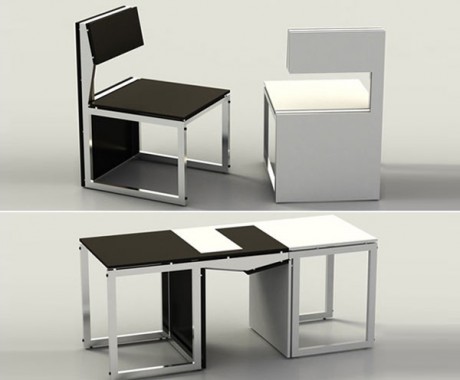
What’s weird: When you face these chairs down, they make a low coffee table. But I would think the times you really need a low coffee table and extra surfaces is when you have guests over–a time when you also need extra chairs.

Clapperboard Series of Shelves from Elsa

folding-shelves

What’s weird: The shelves of these sleek cabinets conveniently stow away when not in use. But what happens to the stuff that they once held? It’s put on the floor? On another shelf? On the table? Me no understand.

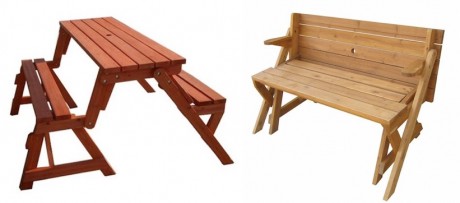
Interchangeable Picnic Table and Garden Bench

 picnic

What’s weird: Several readers have passed this clever design on to me and I’ve contemplated writing about it in a non-weird context. But something about it doesn’t quite add up. Yes, a bench and picnic table are sufficiently discrete pieces of furniture, but I don’t know if they’re that different as to justify the complexity this piece entails–adding hinges and movable parts has to make the thing more prone to breaking. A picnic table can be used as a bench. In fact, when you sit with your back to the table, it can even have back support. Oh, and the picnic table supports four people.

Sofa Pool Table

sofa6

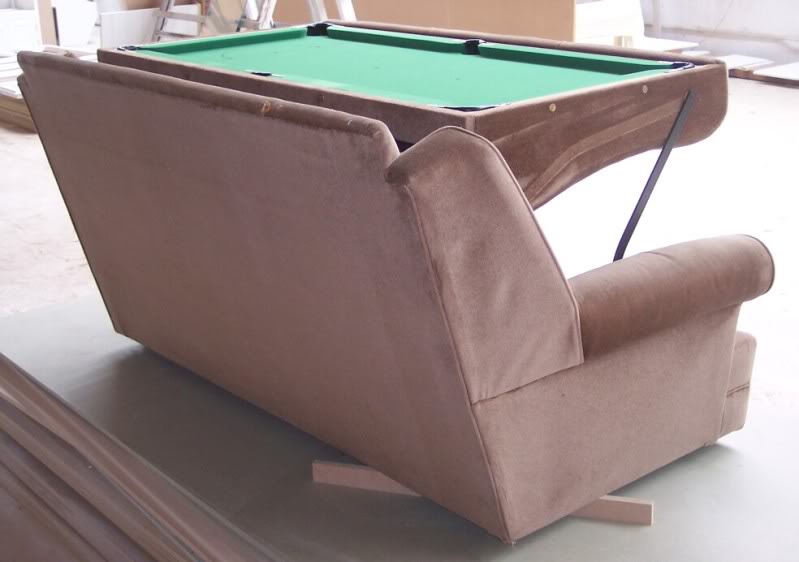
Back in college I used to play quite a bit of pool (or billiards is you prefer). I can say with reasonable confidence that this is probably the last table I would have wanted to play on. Besides its tiny size, there’s a huge lip at the sofa’s back, making some shots difficult. And the odds of the pool-table surface having a slate underneath (what gives most tables their solidity) is highly unlikely. Also, the sofa is pretty ugly.

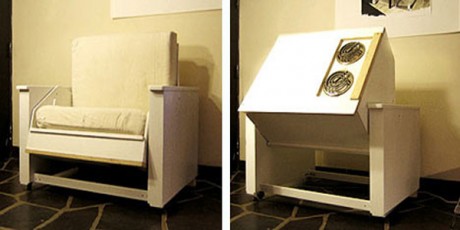
Range/Sofa Thingy by Someone

stovechair_new_sad8h

If you’ve ever been torn whether to have a cooktop or a boxy, uncomfortable-looking chair in your living room, you may no longer have to decide. This transforming range/lounge chair does it all with a simple roll of a chair. I suspect however few people are so torn, making this contraption the answer to a question never asked.

Decompress (and Compress) at this Small Spanish Apartment

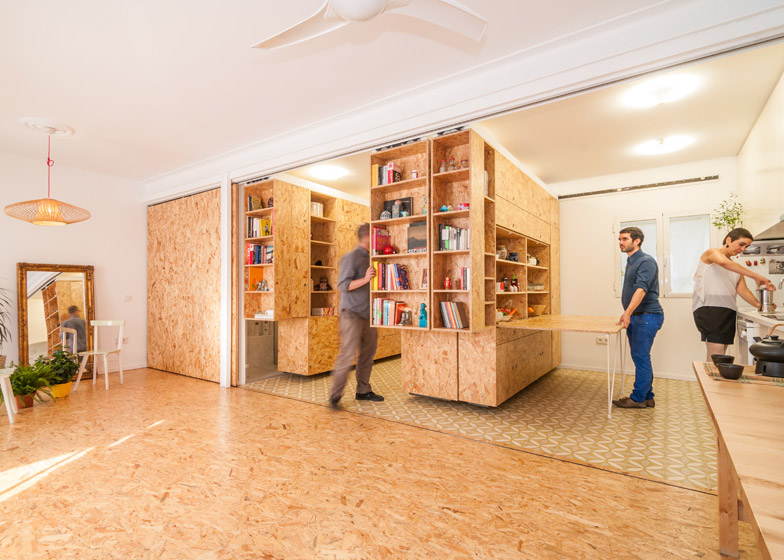
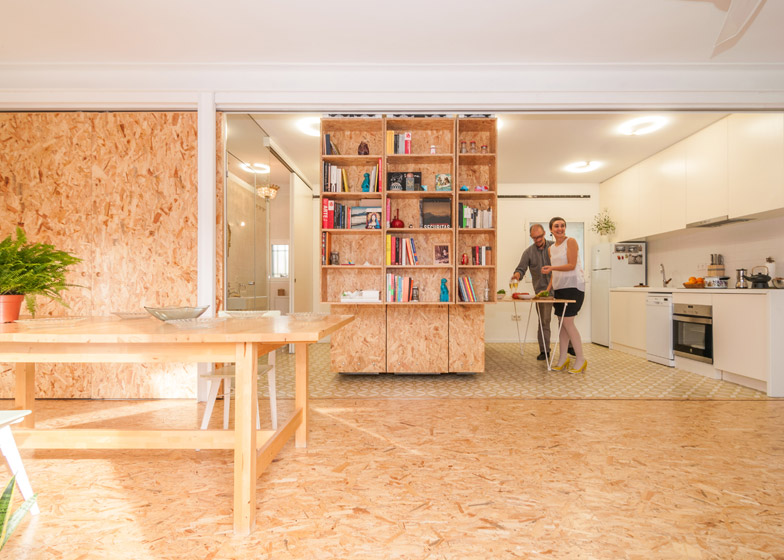
Moveable walls are a familiar and useful tool in maximizing the function of a small space. We incorporated it into the LifeEdited Apartment, Gary Cheng did it, Clei Furniture used it in their Elastic Living concept, it was there in the Environmental Grantmakers Association office, and the Barcode room by studio_01 had a nice rough-hewn take on the idea. Now we see it again with Spanish architects PKMN’s “All I Own” apartment.

The architects have a number of things to say about the 540 sf apartment about the relationship of interior space to stuff–how her stuff, contained in the three ‘floating’ chipboard volumes move with her throughout the day. Rather than commenting on that, we’ll let you check it out on PKMN’s website.

What interests us most is execution and costs. Though there’s no mention of it on their site, we suspect budget was a big factor in designing and building this space. They used ample chipboard on both the moving walls and floor of the non-transforming space. Chipboard, achieves a cool look at a small price. We do have some questions about its weight and durability, particularly in pieces that are moving so often.

And rather than using an expensive, built-in steel carriage for the walls to slide on, they use two wall-mounted tracks on each end of the walls coupled with casters that slide on the tile floor. We suspect the tracks act mainly as guides, while the casters take the brunt of the walls’ considerable heft.

We appreciate the flexibility of the space, particularly the ability to stash away the kitchen and bedroom. The ample storage allows the space to keep its clean and clutter free appearance. And it’s pretty impressive how compressed the bathroom is, though we wonder why you would ever close off access by putting a wall in front of it.

Via Dezeen

Furniture System is the Center of Entertainment

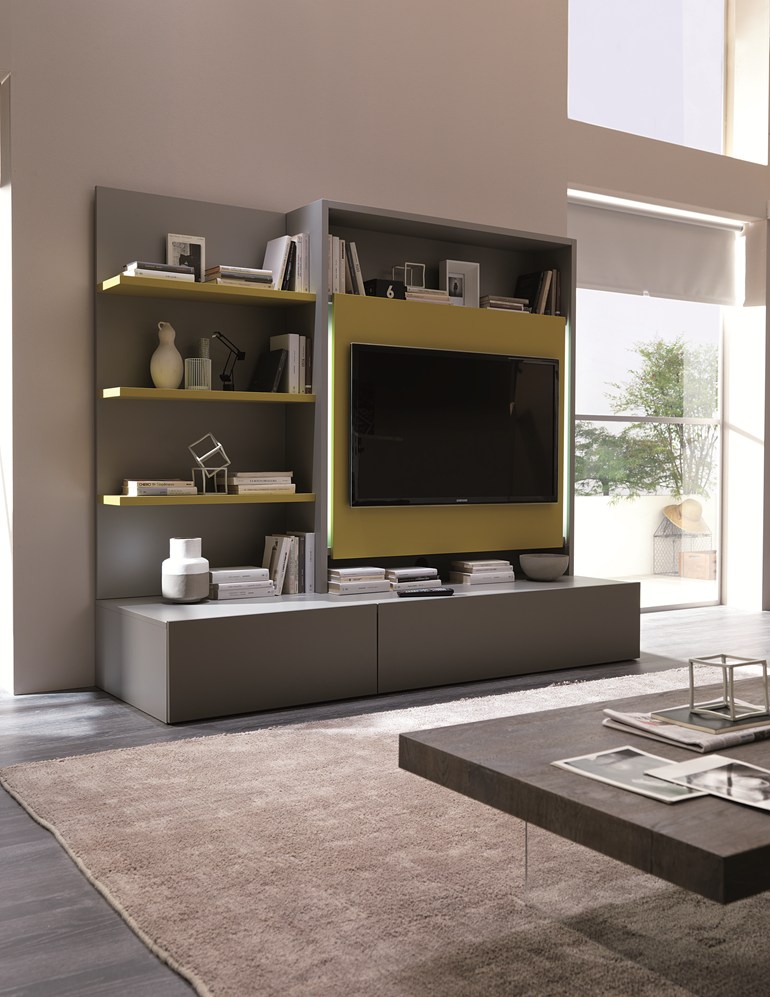
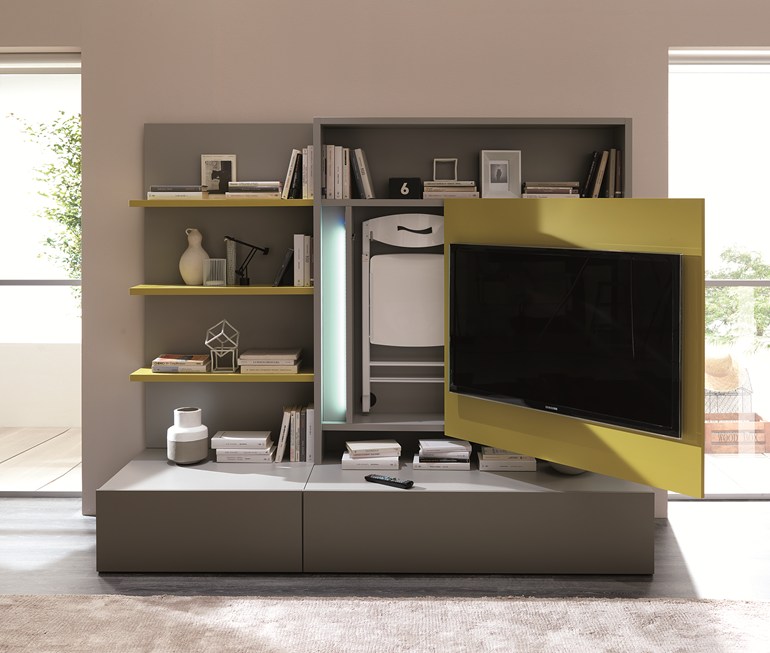
For better of worse, dining has gotten pretty casual in our modern times, with many people taking their meals on a couch, at a small kitchen table or, if we have one, counter. Paying for and maintaining a dedicated dining room whose main function is to be on standby for the occasional dinner party doesn’t make much financial sense. But having the capacity to properly entertain is pretty sweet, which is why the Smart Living TV wall system by Ozzio Design is pretty sweet. Concealed inside the entertainment center are chambers that hold a collapsing dining table and six folding chairs.

The front panel holds a large TV, which swings out of the way to access the chairs. This makes the system ideal for folks for whom the TV is a room’s centerpiece (not a judgment statement, just a fact).

The system is available in the US through Resource Furniture. The TV rack/storage element can be ordered without the side shelving for $5,300 in a lacquer finish. The “Mini Long” table starts at $2,040, and a set of 6 Nobys chairs starts at $960. Grand total: $10,950.

We know some our readers are going to get in a tizzy about the cost. That’s fine. But hear us out post-tizzy. A dedicated dining room is easily 100 sq ft. In cities like San Francisco and New York, price per square foot for an apartment purchase regularly exceeds $1000–i.e. $100K. But let’s say you live in a city like Washington DC, where one and two bedrooms only cost around $500 per square foot. That’s still $50K. Not to mention, any reasonably high quality entertainment center, dining table and chairs is going to run you at least a couple grand. Depending on your priorities and means, this math is way easier to justify than paying for a room that’s used a couple times a month.

Pop Up Apartment Defies Expectations, Physics

File this Dutch-university-student-designed Pop.up Apartment under the no-freaking-way category. Relying on polypropylene sheets that slide along motorized guides in the floor, the 50 sq m (538 sq ft) apartment can be configured in dozens of ways, giving it the functionality of a space twice its size. The sheets not only act as slide-out walls, but many of them bend to create much of the space’s furniture.

pop.up-apartment-floorplan

The project is the product of the Hyperbody design team at TU Delft University. The question the team sought to answer was how to fit more function into the modern city’s limited real estate. Like MIT’s CityHome, their answer is profoundly technical, replete with motors, app-controllability and lots of CNC cut panels. The team likens the space to a Swiss army knife, where only the desired tool is folded out, while the unused ones remain hidden.

I’m glad I watched the project’s four minute Youtube video. As I watched the computer modeling of the project, I thought “there’s no way this can be done in real life.” I was quite wrong. They made a full-scale, functional mockup in an empty office space.

pop.up-apartment-dining

For a simpleton like me, it’s important not to pass judgment too quick on the Pop.up Apartment. It seems too complicated by half. There are too many motors, too many things to go wrong. The curlycue  aesthetics aren’t my thing. I wonder how the plastic sheets’ resiliency will fare over time…and so on.

This is a concept and a bold one at that. And like all concepts, it’s going to be filled with many ideas that will end up on the edit-room floor. But some ideas might be useful, informing and improving on more conventional designs.

See more videos, drawings and images on the project’s website.

Via Fast Company

Flat-Pack Furniture Fuses Form and Function

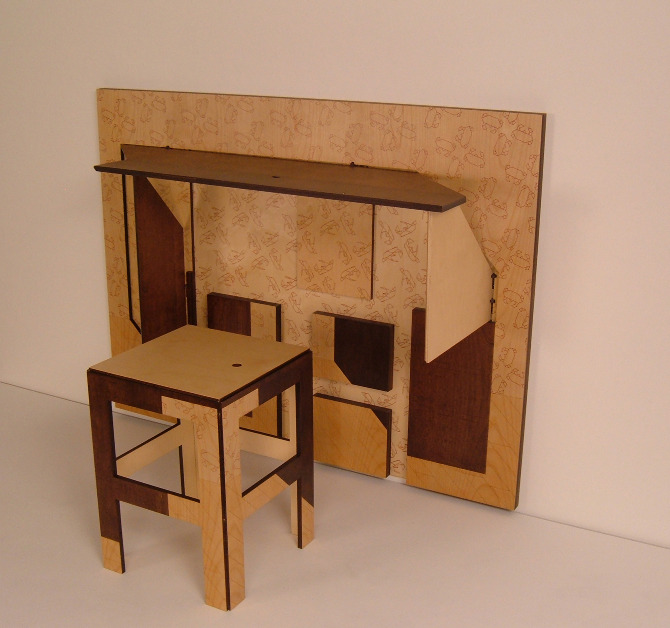
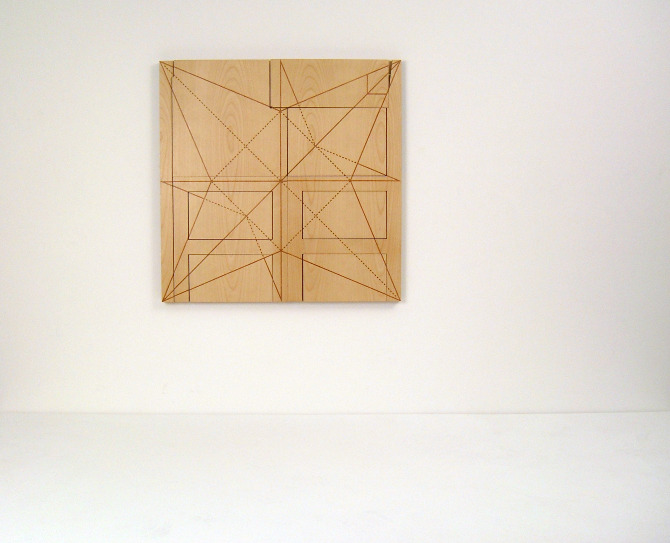
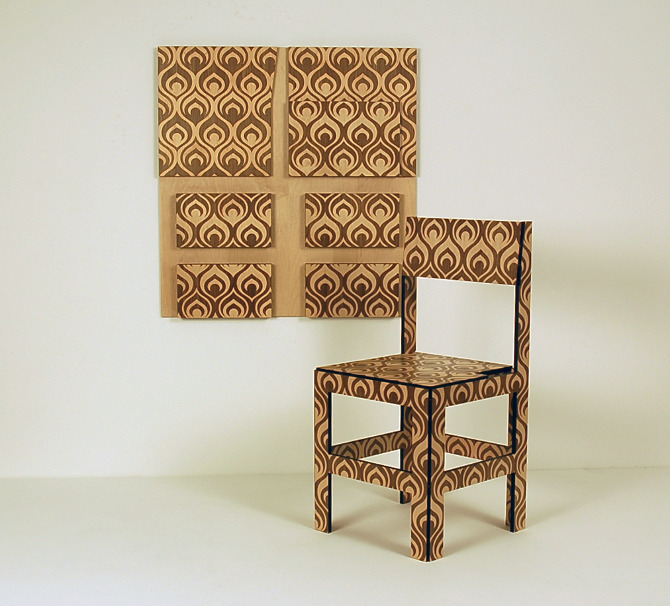
Artist and fabricator Christy Oates is a master at blurring the lines between decoration and furniture. Her origami-inspired pieces have the detail and beauty of traditional wood-working, while her manufacturing processes–which include computer-aided design (CAD) and laser-cut, CNC machines–are decidedly new school. Check above video to see how they are made.

She makes tables, desks, chairs and even lamps that hang flush with the wall. She designed them for small spaces, knowing that even pieces of art can do double duty. See more of her work and get more info at her website: www.christyoates.com

Architecture for Swingers

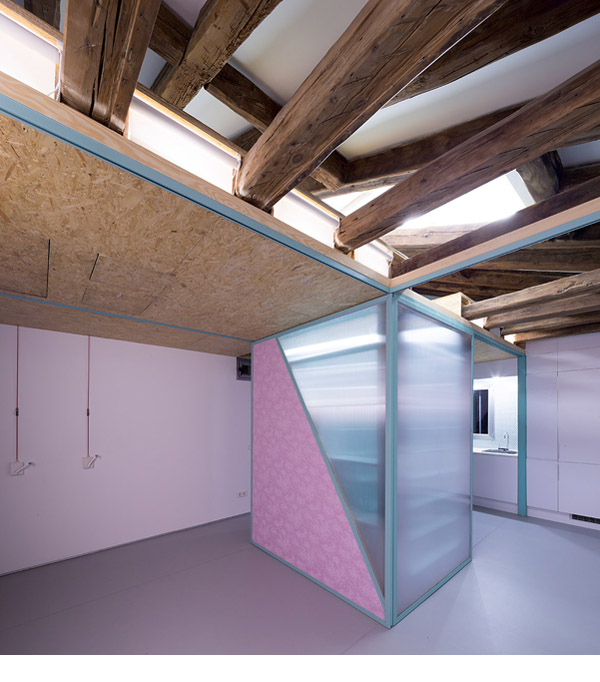
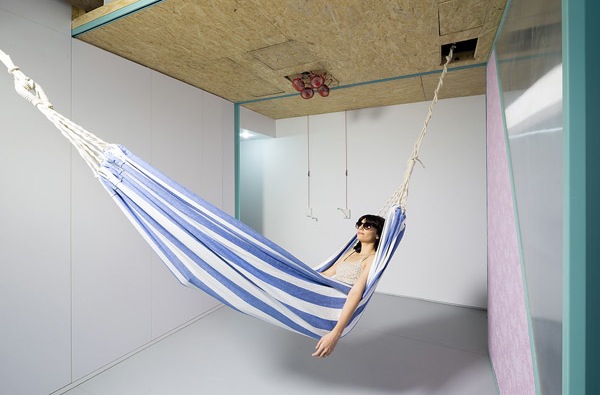
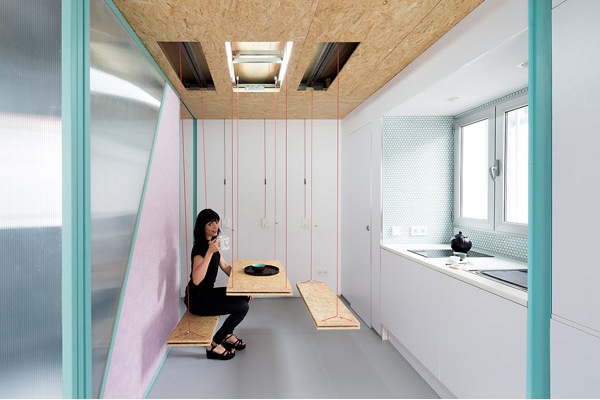
This Didomestic apartment by Madrid’s Elii Architects has been making the blog rounds lately. There’s a lot going on in the 620 sq ft converted attic. Much of the apartment’s furnishings can fully concealed in floor and ceiling cavities. On the first floor, there is a dining table, benches, storage lockers, hammock, fans, hammock and disco ball that descend from the ceiling via pulleyed ropes attached to hand cranks. On that same floor, there are sliding pink partitions that allow the space to have several different configurations. On the second floor, there is a seating cushion and vanity that pop up from the floor as well as a sunken tub.

Elii says of the concept: “Every house is a theatre. Your house can be a dance floor one day and a tea room the next.” Check out this video to see the place move.

We see lots of theater (and disco) in the Didomestic. What we don’t see as much of is house. We wonder how the space would actually be used. We suspect the dining table and benches would be unusable because of insufficient support (there’s a reason the models are stock-still while sitting at it). We don’t imagine anything useful would fit in the overhead storage. The floor-based seating would only be suitable for the most limber. The swing, while novel, is a piece of furnishing unlikely to make its way into the interior design cannon. The lack of essentials like a sofa, while making the space “versatile”, also make it somewhat useless on a practical level.

Of course the space isn’t necessarily going to look the way it does in the photos. After the owners add their sectional couch and Hummel collection, the place might feel quite homey.

We love experimental spaces like these, as they push the boundaries of what people think possible. We do think that making some concessions to end-user functionality isn’t always a bad thing.

Via Design Boom

Do More Nesting in Your Nest

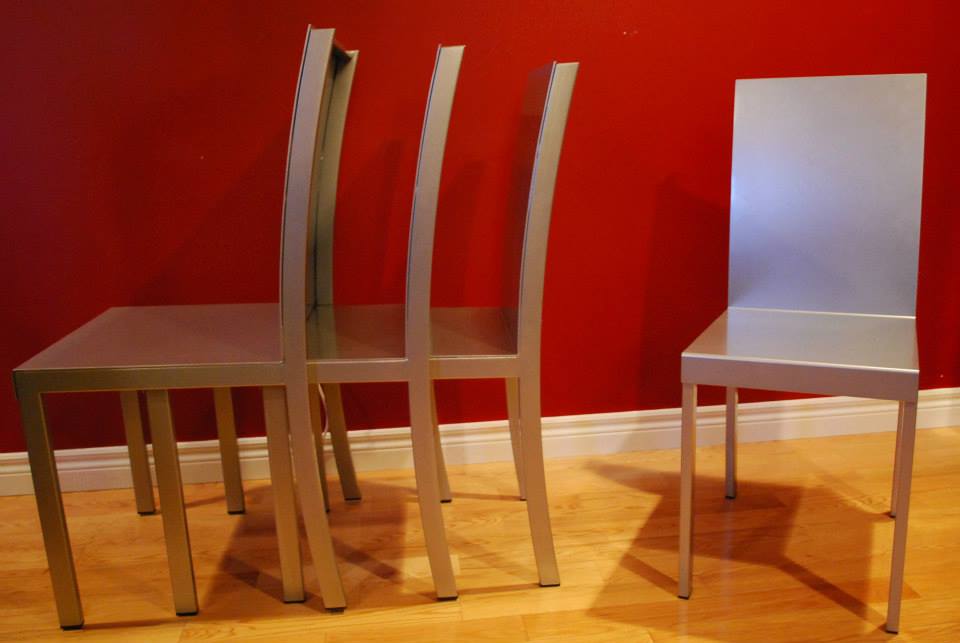
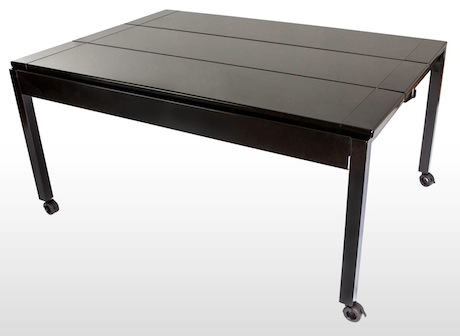
Nester is a Canadian company that makes adaptable, transformable furniture that would work well in small homes. The two pieces on offer are the Kameleon table and the Repeater chair. The former is a table that transforms from 15″ x 61″ console, and is expandable to a 61″ x 42″, 78″ x 42″ or 96″ x 42″ table, depending on the number of internally stored leaves that are inserted. The Repeater is a four-in-one nesting chair system. The chairs fit together like matryoshka dolls, with larger chairs concealing the smaller ones below.

The Kameleon reminds us of a more utilitarian version of the Goliath table by Resource Furniture, as it permits an expansive dining surface for the occasions you need such a thing. While a little smaller in its expanded length than the Goliath (96″ vs 115″), its internal leafs cut down on storage space.

nester-kameleon

The Repeater’s stealth concealment of four chairs is pretty nifty. With the smallest chair appearing to have more than adequate width for an adult (albeit a slim one), there seems little functional sacrifice to this setup.

nester-repeater-stacked

Perhaps the biggest check against Nester products is something Lloyd Alter brought up on Treehugger, which is the material choices. The Kameleon is made of powder coated aluminum and steel (a wood top will be available soon) and the Repeater is all powder-coated aluminum. These industrial-strength surfaces would make them quite durable, but tactilely cold and, in the case of the chair, possibly slippery (we look forward to checking them out at ICFF). We might also make the Kameleon a bit skinnier in its expanded form, as 42″ is pretty wide for a dining table (though this might not be feasible from an engineering standpoint).

Both the Kameleon and Repeater are available for sale direct from Nester, starting at C$1295 and $899, respectively. See more details on their website.

Via Treehugger

We Talk to Ron Barth of Resource Furniture

We throw the name Resource Furniture around this site with a high degree of frequency. The New York City-based retailer–who also has seven other outlets around the world–has one of, if not the largest collection of transforming furniture on the planet. More than purveyors of Murphy beds, RF has found its niche selling high end, quality transforming furniture, worthy of keeping for many years.

We took a moment to speak with RF’s president and co-founder, Ron Barth about how they came to be, what they do and why they do it.

David Friedlander: Tell us about how Resource Furniture came to be?

Ron Barth: Steve [Spett, co-founder] and I used to work at the Pace Collection on New York’s Upper East Side. We both left at the same time in 2000 and decided to start our own furniture company. Rather than having a physical collection, we wanted to start a catalog showroom. Our experience at Pace showed that people were often willing to buy furniture based on pictures. We wanted to offer European furniture with great quality, design and value. We scoured Europe, going to shops, testing furniture, turning cabinets upside down–making sure we were dealing with great manufacturers. After several trips over a yearlong period, we accumulated 460 catalogs, 98% of which were from Italy. We rented an office space with an 11’x16’ conference room where people could go through the catalogs and pick the furniture they wanted. In 2003, we got a showroom at our current location [969 3rd Ave] so we could have some floor samples.

[divider]

In a bigger space, there’s no imperative to edit your life. I recently went through some stuff in my home…There were beanie babies. What was I holding onto them for? Investment purposes? 

[divider]

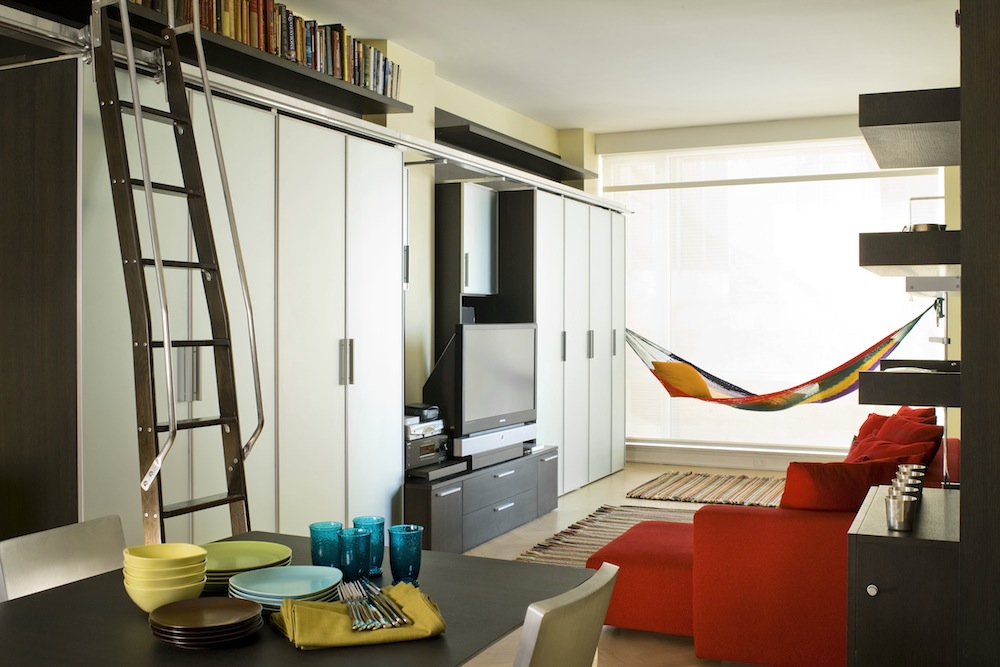
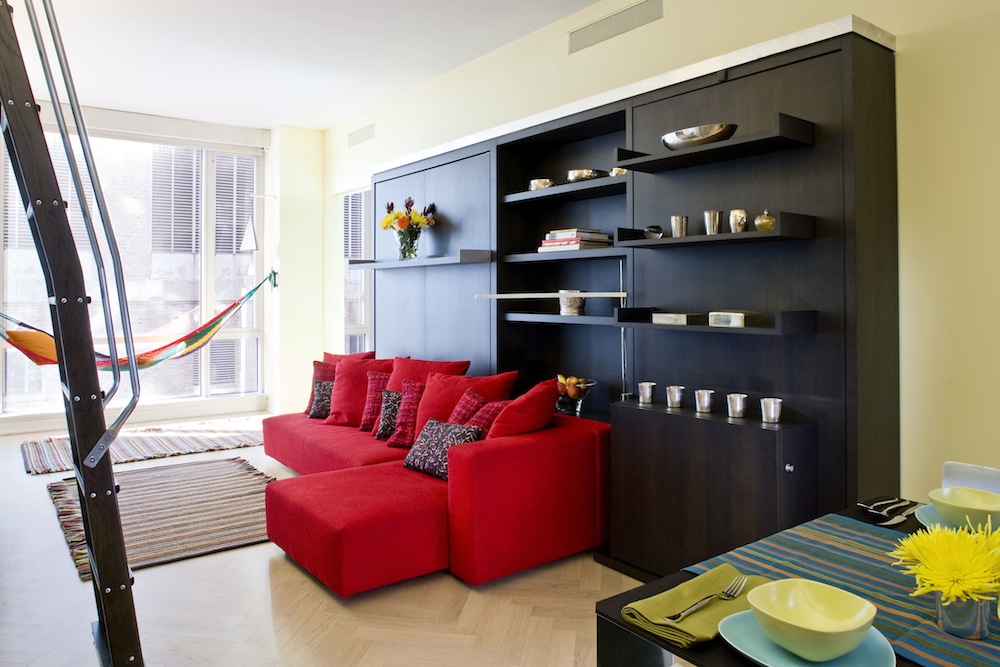
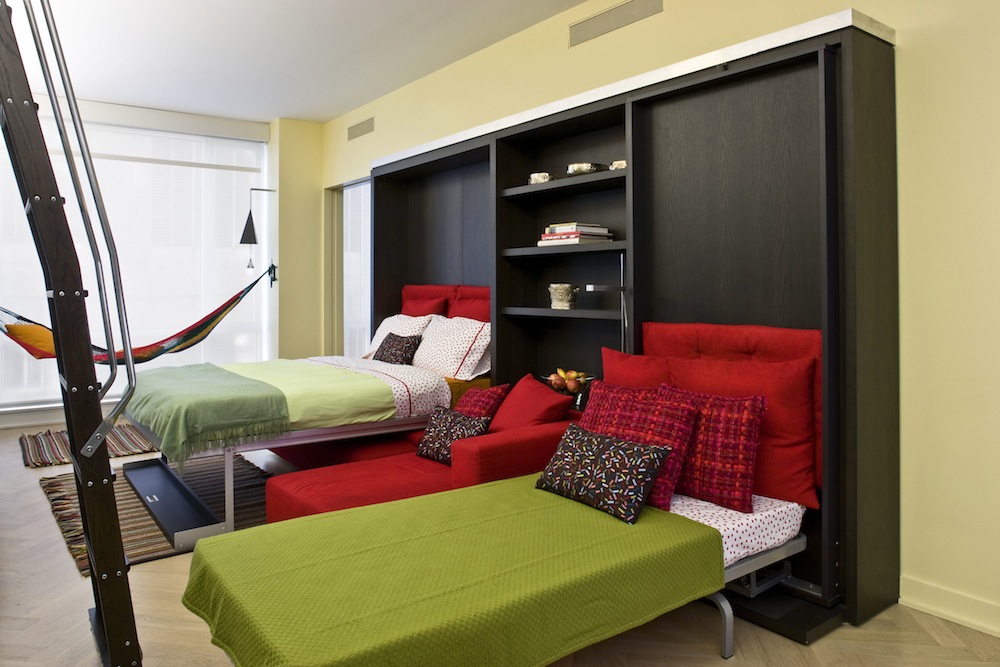
We really found our niche in transforming design in 2007. Timothy Nanni of Construct Architecture Studio commissioned us to make a two bedroom apartment in New York work for a single mother and her four children [pictured below]. We furnished the entire apartment with Clei furniture [the manufacturer of many RF’s furniture]. The project went off without a hitch. Steve and I realized we had a real business here. We ordered floor samples and installed them; bought some ad space in the NY Times and the rest is history.

Most high end furniture doesn’t take space efficiency into account because the people who can afford it usually have huge homes. We’ve been successful because we offer something unique: quality furniture with high design that optimizes any space it’s put in.

DF: Who buys your furniture?

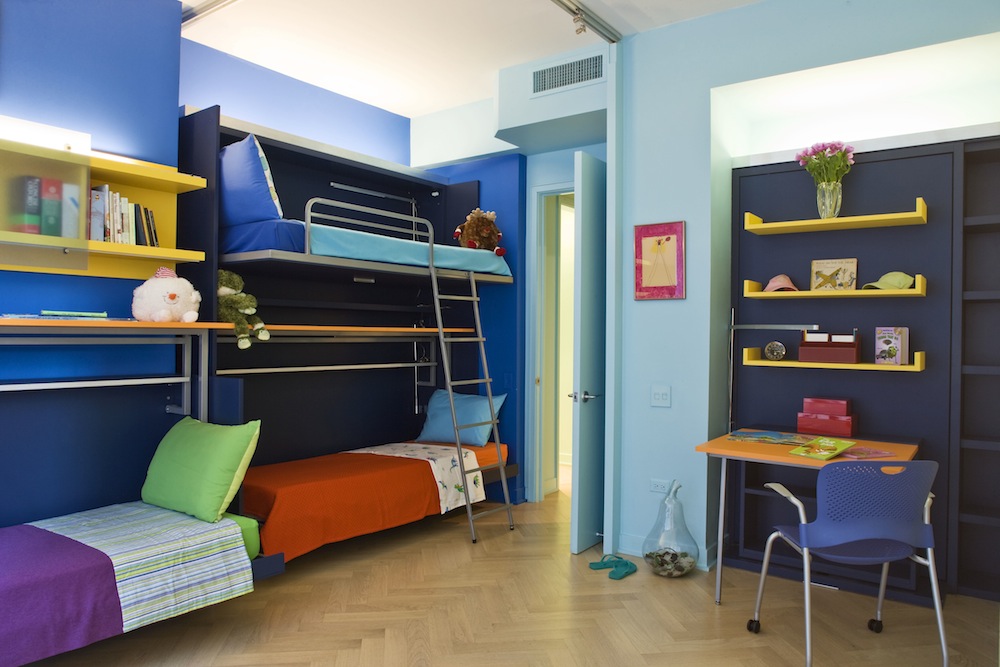
RB: We have all types of clients. We do a lot of kids rooms. Many people, especially in New York City, don’t want to or can’t afford to move from their one or two bedroom apartments when they have a kid or two. Our furniture makes it possible for a smaller space to function like a larger one. For example, we can fit a bunk-bed, desk and sofa into a 10’ x 12’ room. There are people looking for second bedrooms that can be used as something else like an office. We get people looking to make their studio apartments into functional living spaces–not just big bedrooms. We get a lot of renters. Conservatively speaking, you can save $500/month by renting a studio versus a one bedroom. That’s $12K over two years and you have furniture that can come with you to your next place. We also get people decking out vacation homes. We have fit sleeping for eight in a 300 sq ft room. All types.

DF: What do you think are the most important aspects of designing a small space?

RB: The first thing I’d say is the smaller the space, the better the quality has to be. A small space really accentuates imperfections, so I think it’s important that tolerances and precision of craftsmanship be high. Our furniture is simple and high quality, so it doesn’t lend itself to sensory overload. When furniture is of poor quality, particularly in a small space, it’s tough to feel centered.

The next thing is to focus on the function you need the space to perform. If someone works 18 hours a day and just crashes out in their bed at night, they may just need a bed and a roof. But if you work from a one bedroom home, have a spouse and child, you’re going to need something more. We have 40 different bed products with all varieties of functionality: twin beds with desks, queen beds with sofas, full-sized beds with dining tables and so on. However you need your home to function, we can help achieve that in less space than most conventional furniture would permit.

DF: What do you see as the biggest advantages to living in small spaces?

RB: There are a number of advantages. In a bigger space, there’s no imperative to edit your life. I recently went through some stuff in my home and because we have a little extra space were holding on to things that we just don’t use. There were beanie babies. What was I holding onto them for? Investment purposes? Many people re-sign leases and stay at homes larger than they need in order to avoid confrontation with their stuff. All this stuff begins to own you, rather than you owning the stuff.

When you live in a small space you don’t accumate this kind of junk. You’re careful about what you buy, you get rid of stuff you don’t need, you don’t have that pair of shoes you don’t use.

The other thing is many people who live in small spaces often have more interesting lives. When you live in a small space with less stuff, your life becomes more about what you’re interested in rather than what you own. What are you working on, studying, who do you socialize with–these become the focal points of your life, not the things you collect or the size of your TV.

I also think it’s easier to feel centered in a smaller space. We all know what it’s like to find that perfect corner where we cozy up with a great book. Can you do that on a bench in a three story foyer of your McMansion? Of course not. There’s no center in a space like that.

Of course there’s the practical stuff: less stuff, cleaning, cheaper to rent, buy, heat, cool, pay taxes on, etc.

DF: What are the biggest disadvantages?

RB: Sometimes, people just run out of space and don’t know how to fit their lives into their existing spaces. Sometimes this is a legitimate thing. But I’ll say that people “outgrow” their spaces as the result of not having the furniture they need. If they really tried to make their spaces work efficiently, working with the kind of furniture Resource Furniture sells, more people would find their current spaces are more than sufficient–in fact, they might be downsizing more.

DF: Tell us about one of your favorite projects?

RB: A man from Kooskia ID [middle of nowhere] calls me up and says he needs to buy furniture for his house. He says he has five children and they’re running out of room in their four bedroom house. I tell him that furnishing an entire house will cost a lot of money. He said he figured it was–it was made in Italy and there are no prices on the website. These were not the hallmarks of discount furniture stores. I suggested he might be better off moving to a larger home. How much could a five bedroom house cost Kooskia, ID?

He replied that a five bedroom house would cost about $100K more. But that was the least of it. One of his children had a disability, so moving would likely mean that he’d have to change schools or increase the commute to his school. In fact, the entire family’s routine, which worked quite well, would be disrupted if they moved. Then there’s finding this new home. He and his wife worked. They’re “free time” was spent making sure the kids were fed and their homework was done. When were they going to look for a house? Two of his kids were 15 and 16. They’d no longer need the extra bedrooms in a few years. Moreover, a bigger house would have higher taxes, greater utilities costs and require more maintenance. I got the picture.

He bought an entire house’s worth of furniture–$44K total plus another $7K to ship to Kooskia. He said that was cheaper than real estate commissions, closing costs and moving would have been for buying a new house and selling his old house. He put all of the furniture in the garage and did a room a weekend. We never met in person and that was the last I heard of him.

I’m actually not a fan of pigeon-holing the idea of “small space design.” I think it’s about finding a space that’s appropriate for you, your budget and needs. For this guy, that was a four bedroom house. When you find that space, through smart design and use of furniture, make it work as efficiently as it can. That’s the business Resource Furniture is in.

The Wonderful World of Paul Menand

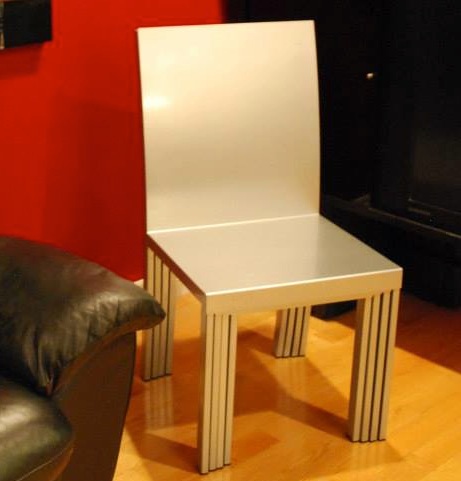
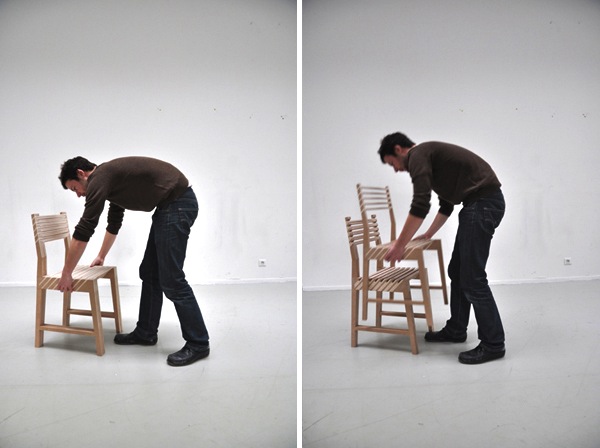
Paul Menand is a French industrial designer who works with common materials to make furniture that is anything but. Of particular note are his Triplette Chair and the Modest Stool (Chaise Triplette and Tabouret Modeste en française). Upon first glance, both appear to be a solitary pieces of furniture–a chair and stool, respectively. Through precise CNC machining of interlocking parts, the solitary piece comes apart becomes three chairs and three stools.

modest-stool

Static images don’t do the furniture justice, so check out these short videos showing the furniture in action.
As far as we know, Menand’s designs are still prototypes and not for sale. With their delicate structures, we wonder about their durability. Questions like “can you sit on it?” aside, we appreciate his ingenious and elegant designs and imagine they could be the basis for practical, space-saving furniture.

See more at www.paulmenand.fr