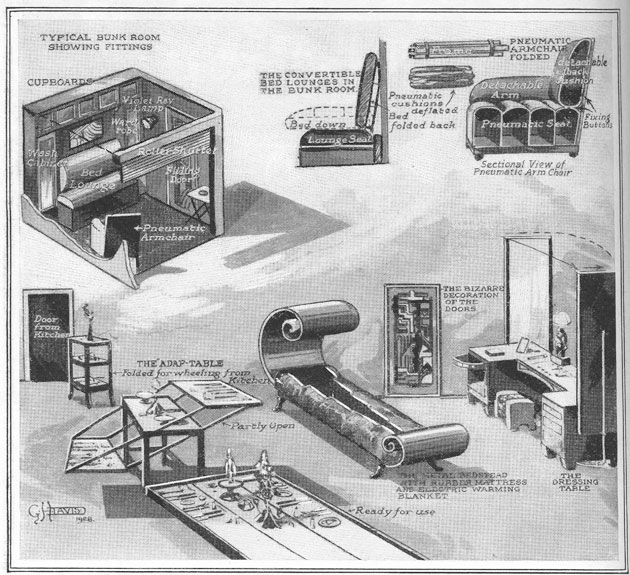
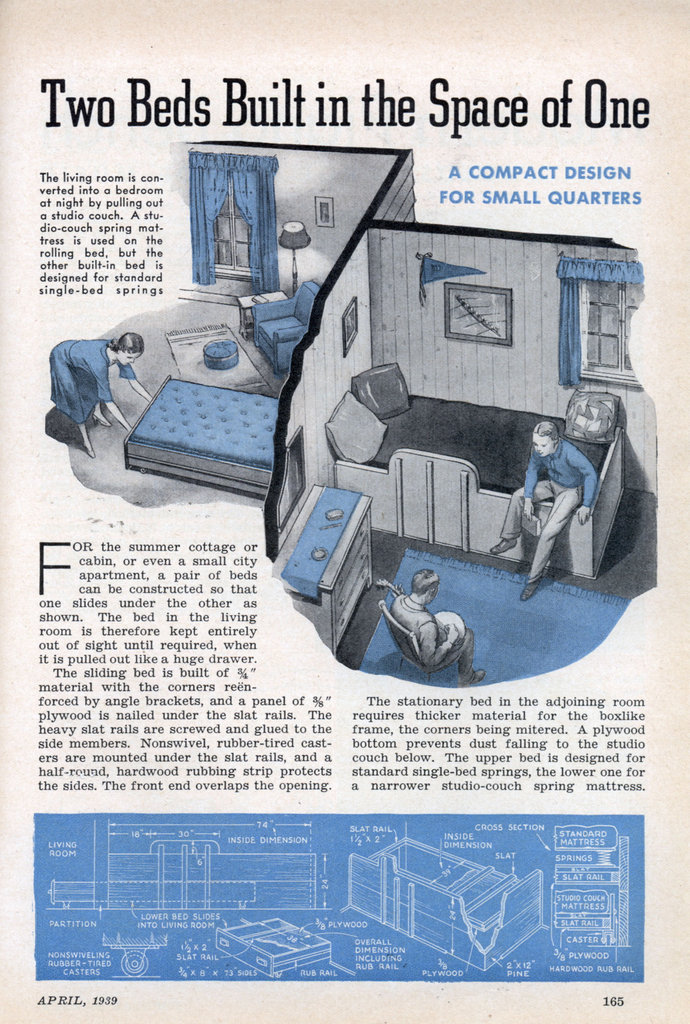
If you think space saving furniture, multifunctional design and tiny transforming spaces are a new idea, think again. As long as humans have tread the planet, they’ve been looking for ways to make their homes more space efficient and products more versatile. We went through the awesome website to Modern Mechanix and found several ingenious–and questionable–space saving designs dating all the way back to 1915.
While we love high end transforming furniture, we know a good deal of it falls way outside of our average reader’s furniture allowance for the year…or decade. Fear not. For those of us on more modest budgets, there are options–options greatly expanded in proportion to our facility with power tools.
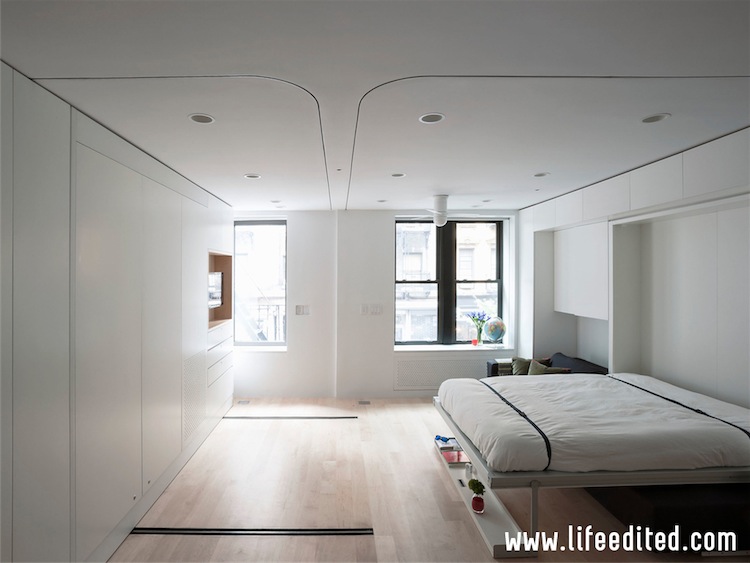
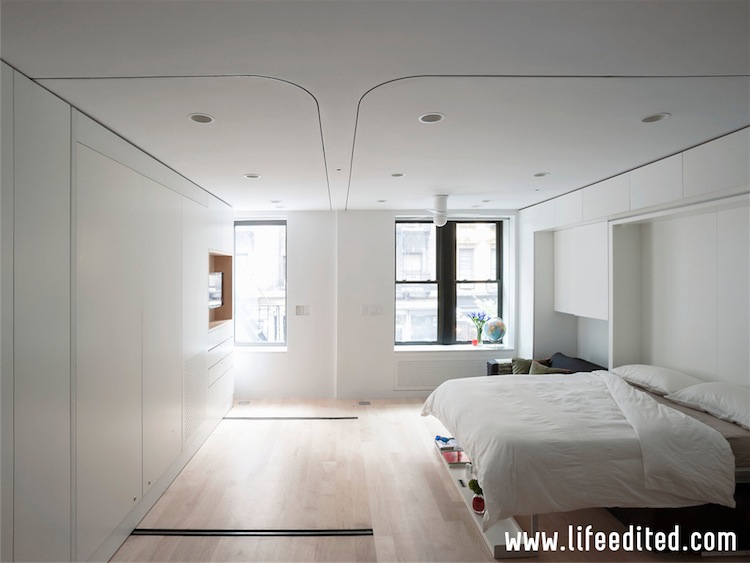
A while back we looked at the DIY $275 Murphy bed. While we’re big fans of the Murphy bed design in general, it does have one drawback: The frontside must be clear before lowering. This requires that you either keep the coast clear–i.e. don’t put anything in front–or you have furniture that can easily be slid out of the way; this drawback negates some of the space saving benefits. A bed like the Resource Furniture Swing used in the LifeEdited Apartment, whose couch works in concert with the bed mechanism, better optimizes space owing to its utilization of the frontside. But again, starting around $9K, we know it’s not for everyone.
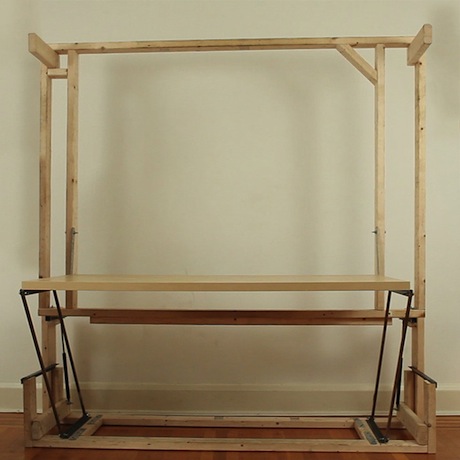
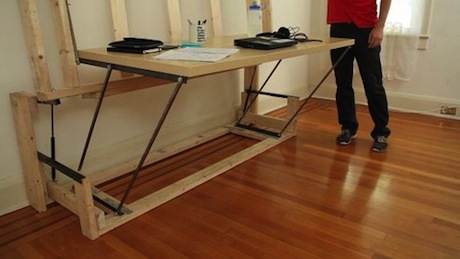
The good folks over at Treehugger turned us on to a DIY Murphy bed/desk called the UrbanDesk, ideal for people looking to save space and money. While it features a desk and some storage on its frontside rather than a couch, it still achieves the goal of milking as much space as possible in a very small footprint.
The project began as a Kickstarter project, but failed to meet its fundraising goal. Graham Phakos, the guy behind the project, said he’d post plans for anyone to build it. As yet, he has not, though we are going to petition him alongside Lloyd Alter at Treehugger to fulfill on his promise (we’ll keep you posted).
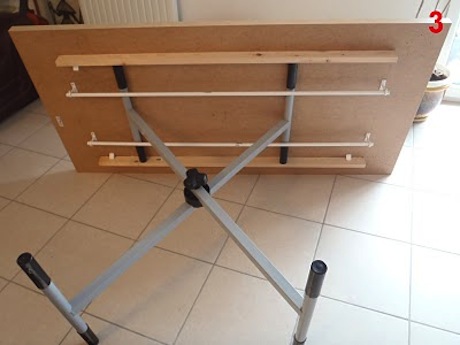
Beside a transforming bed, tables offer a great opportunity for space saving. We found this DIY convertible table on IKEA Hackers. Using an IKEA table top (they recommend a VIKA AMON, which appears to be discontinued, though there are several alternatives, from $10-100), a common trestle or keyboard stand (about $30 on Amazon) and a few other inexpensive items, you can create a table that converts from coffee to dining table in a pinch. Find full instructions on IKEA Hackers.
Whether you’re on a tight budget or a renter who doesn’t want to throw a ton of money into a temporary living situation or you just like making stuff, there are many options for making a transforming space that don’t break the bank.
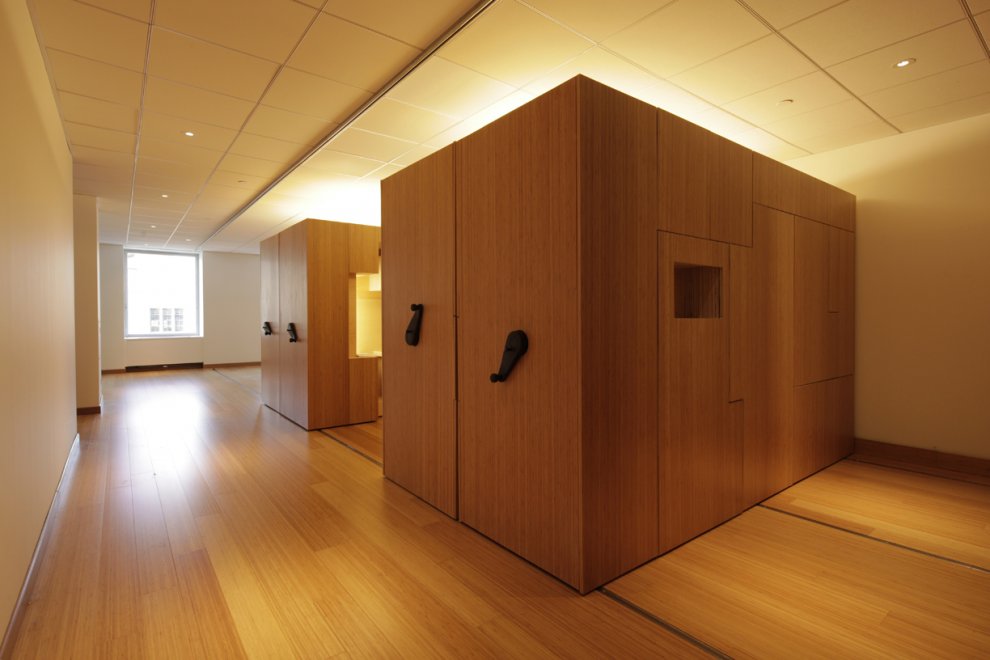
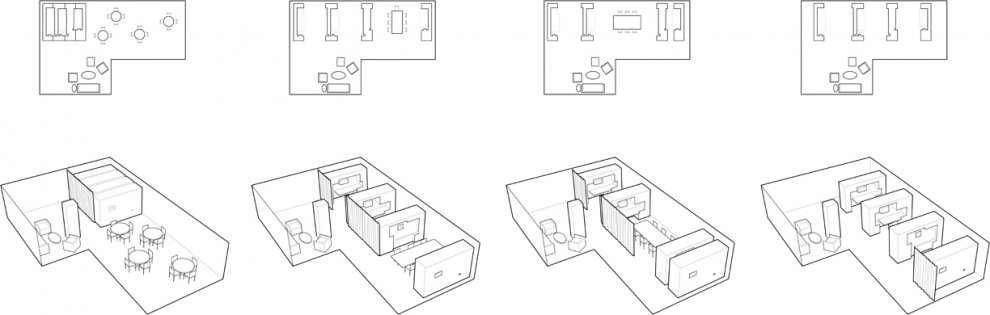
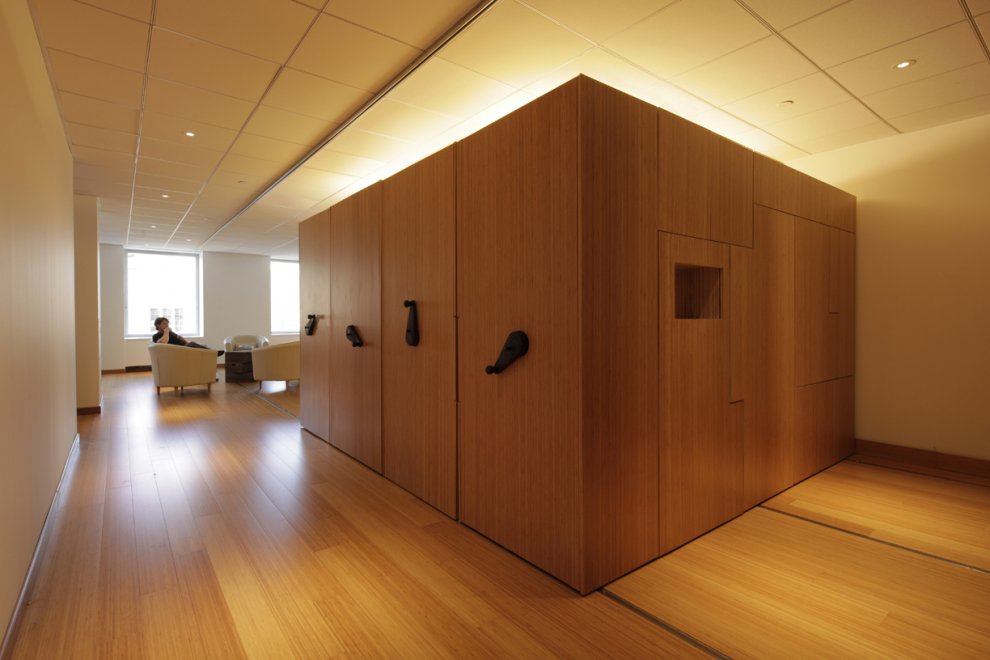
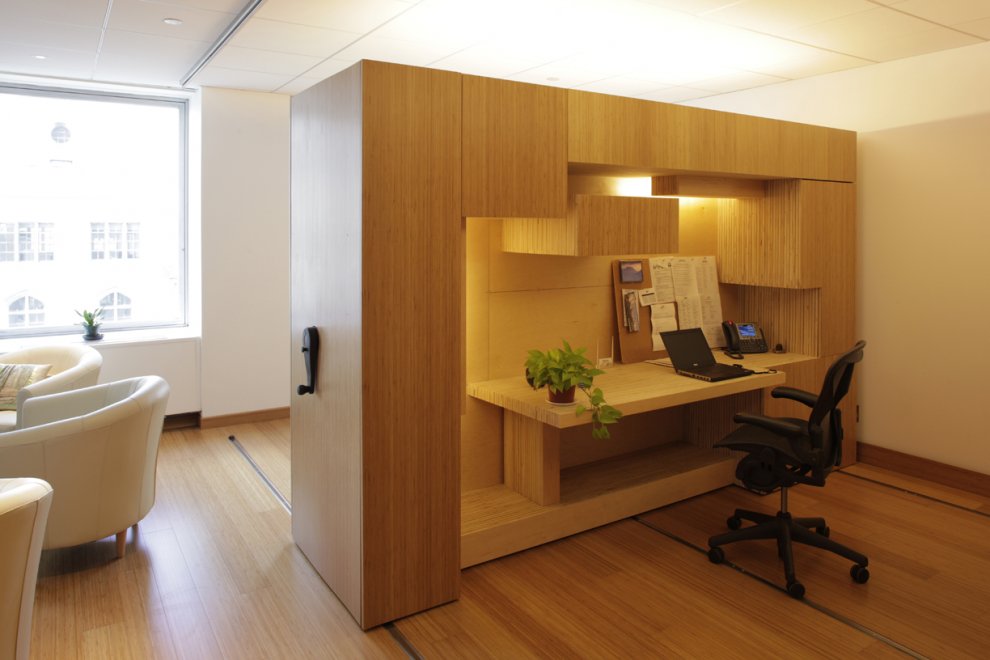
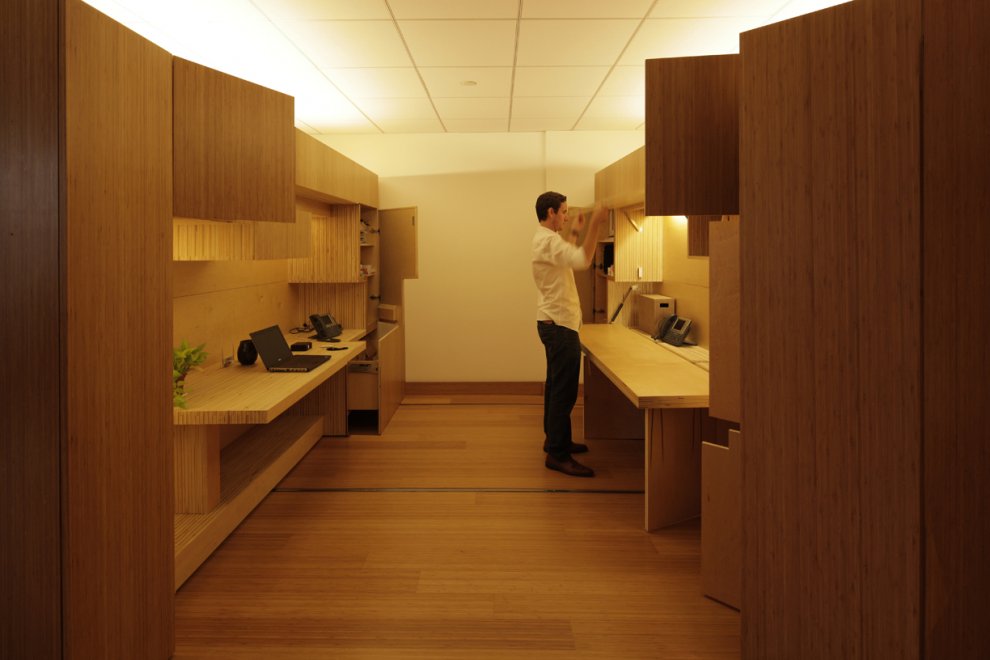
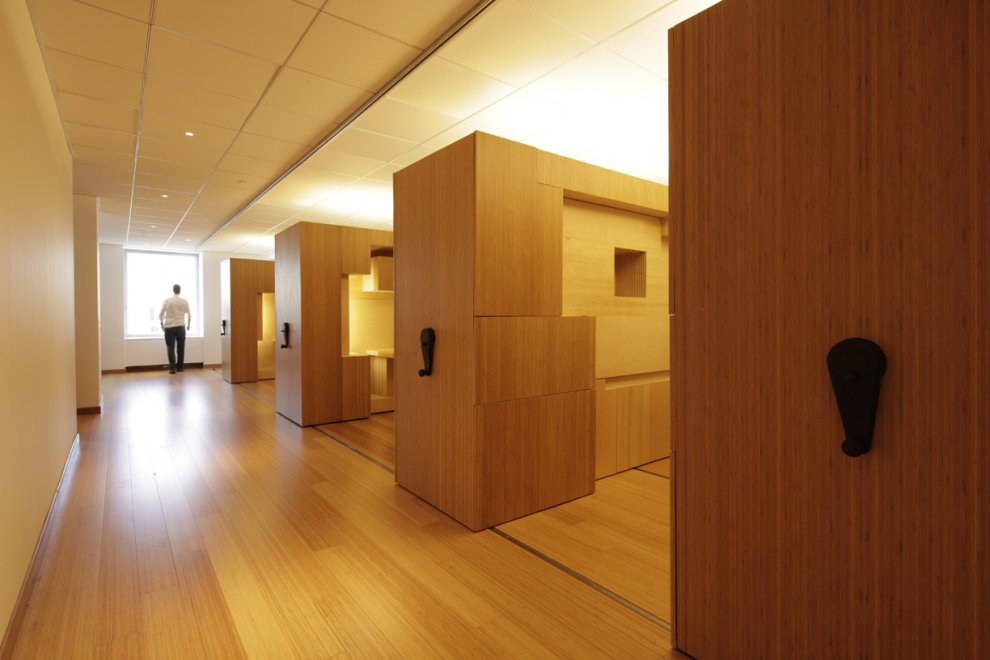
The office’s four interlocking walls house seven work stations and ample storage. When opened, they can be configured as workstations or even a boardroom. When compressed, they create an open floorplan for events and various other purposes. You can compress some of the walls and extend others to create a highly dynamic space.
The walls have an innovative way of working together. From Taylor and Miller:
When occupying the space between two partitions, one can see that the inward faces of each has been excavated with the same shape. In other words, what is a storage box protruding on one side is a recessed storage cubby hole on the other. In this manner, the partitions are bound together spatially; the relationship between them becoming stronger and stronger as they are compressed together… until finally they are collapsed completely concealing the carved space within.
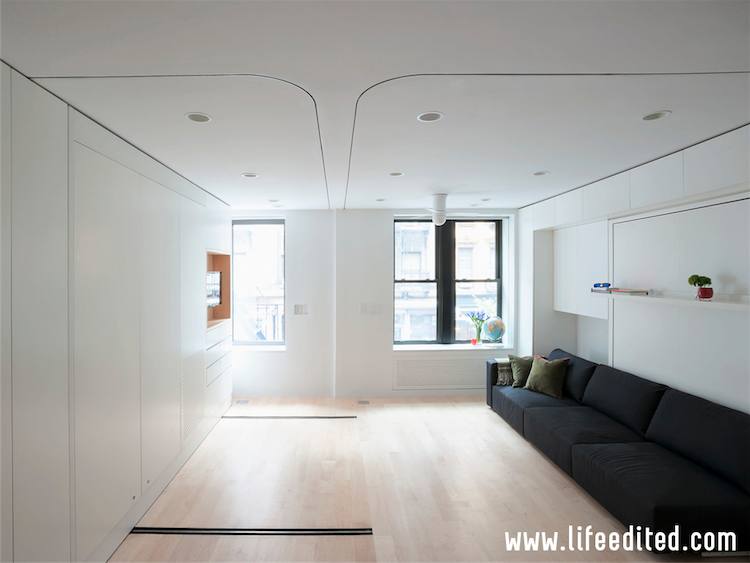
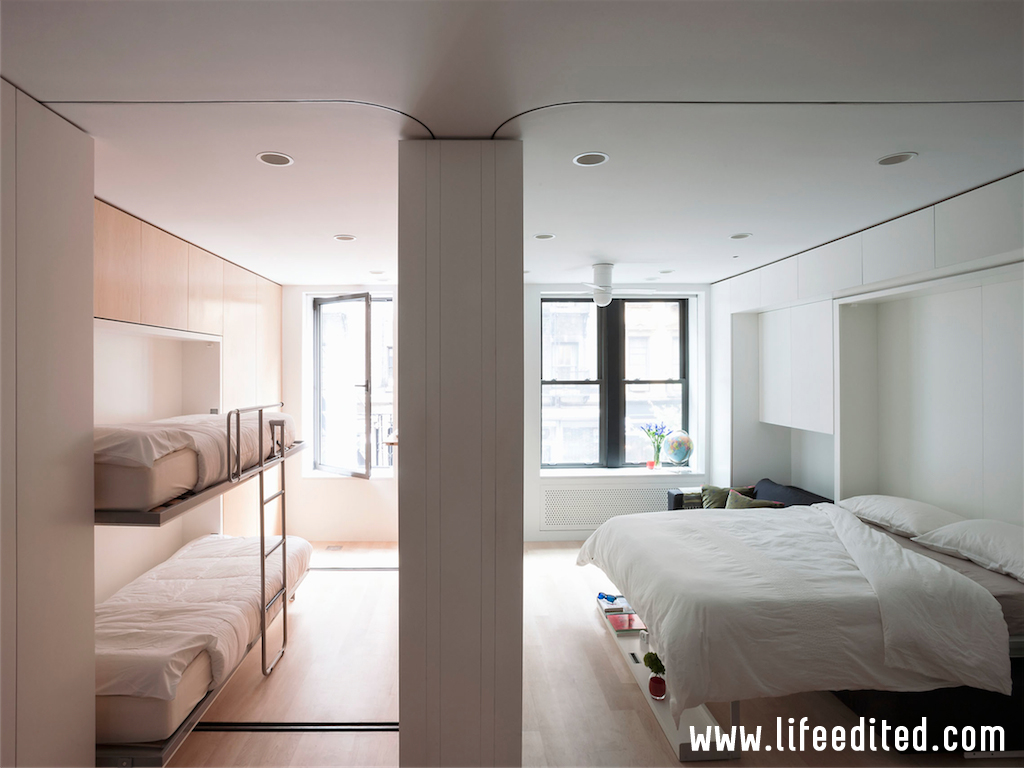
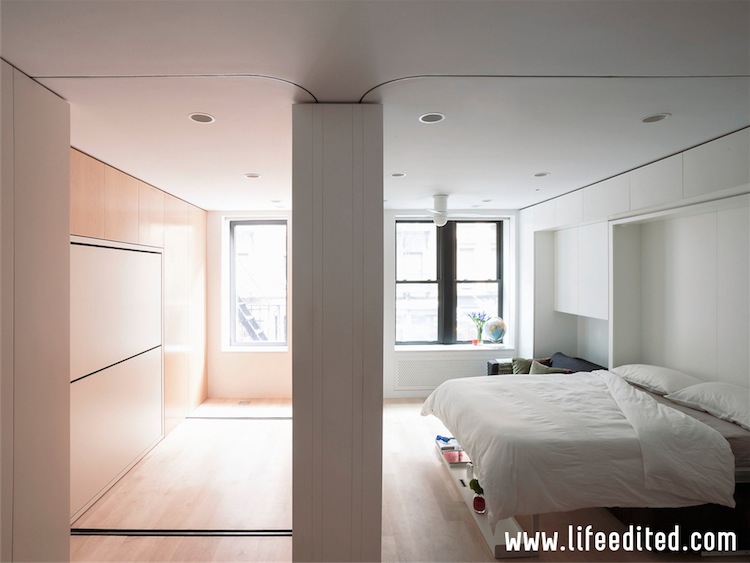
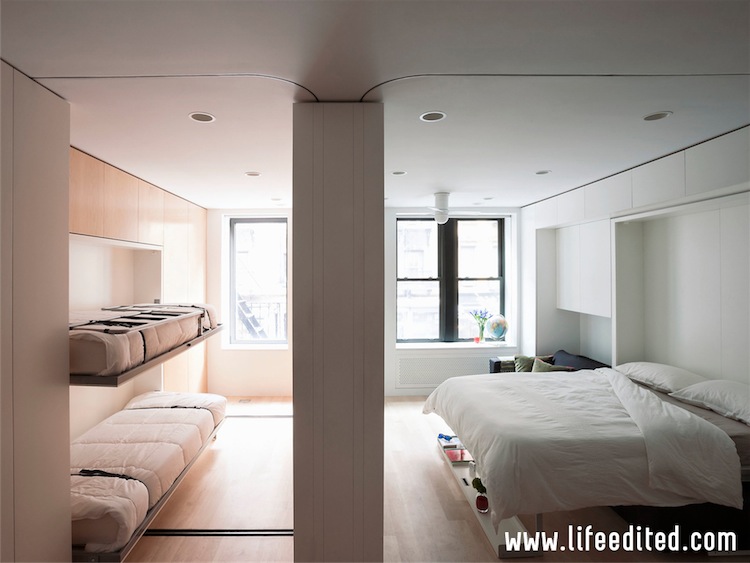
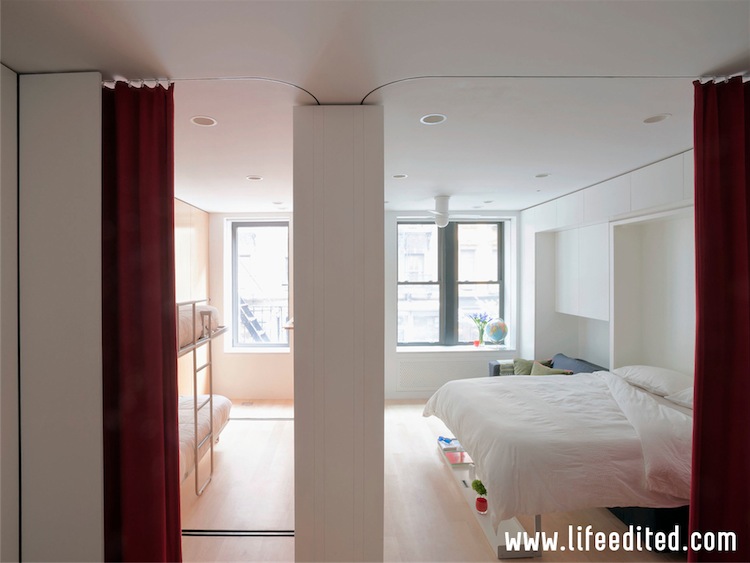
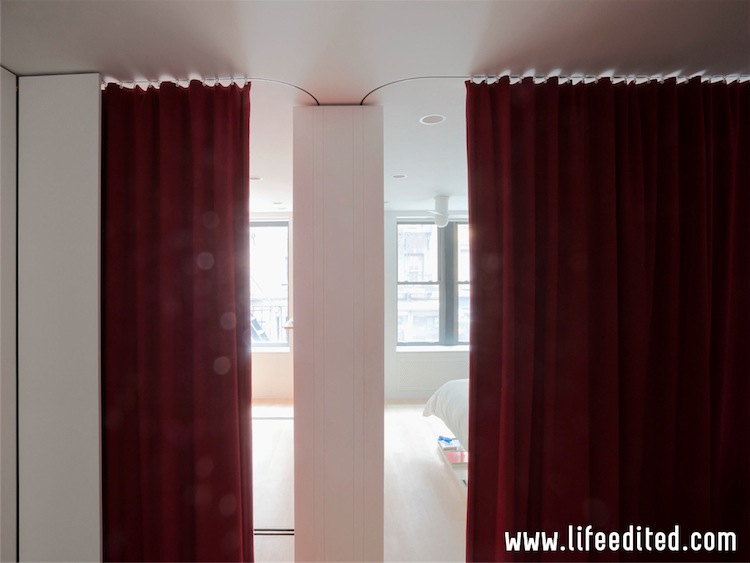
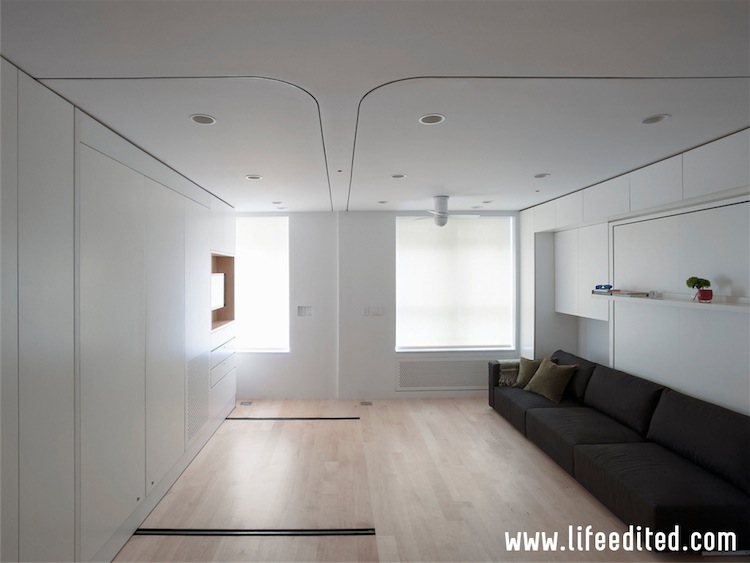
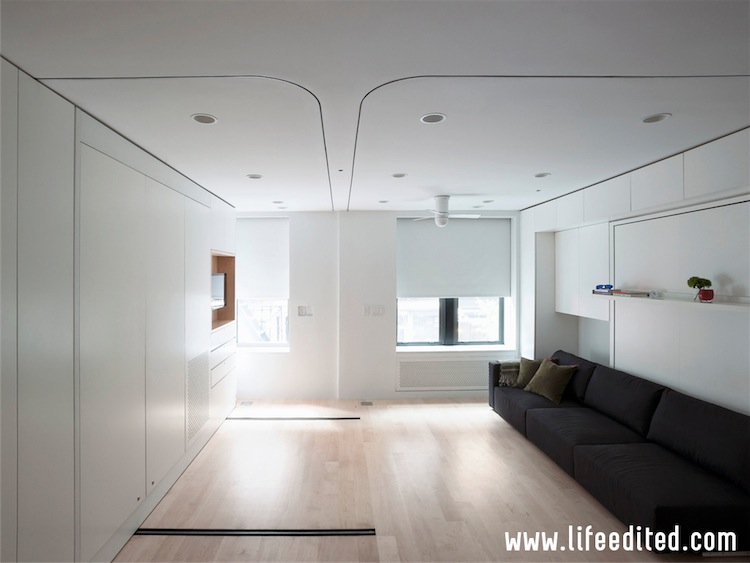
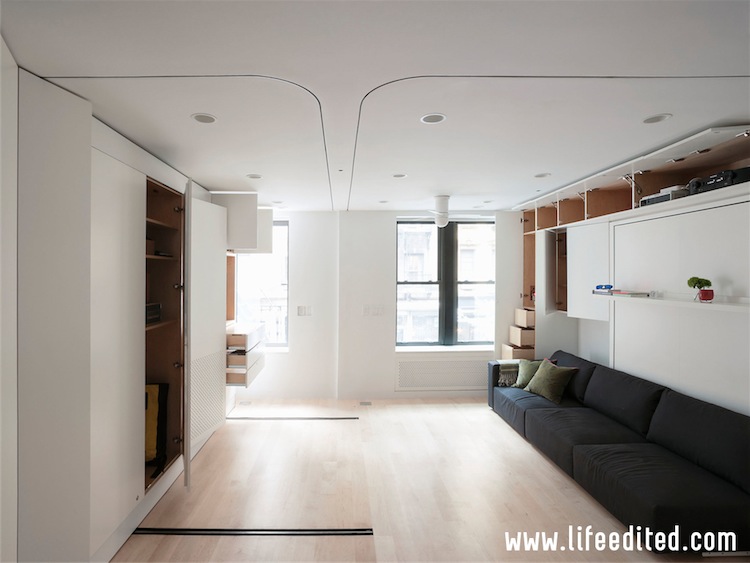
The design is very similar to the LifeEdited Apartment‘s moving wall, which rests on a track and carriage manufactured by Modern Office Systems, whose primary business is large file storage systems. Taylor and Miller sourced their track from Pipp Mobile. Our unit cost about $4500 for just the track and carriage (i.e. not including the cabinet above). Additional reinforcements had to be made to the floors to support the concentrated weight of the wall. While this is a fair amount of labor and money, they’re invaluable in small spaces, where access to all the space all the time makes a huge difference. Why have a guest room 365 days a year when you only use it 20 nights? Why have a boardroom all the time when you only use it a few times a week for an hour or two? The financial and environmental costs of maintaining unused spaces quickly makes a compelling argument for incorporating more systems like these in our interior designs.
In the coming months, we will be highlighting products and services we use in the LifeEdited apartment. Today, we’re looking at the Swing Sofa/Bed from Resource Furniture.
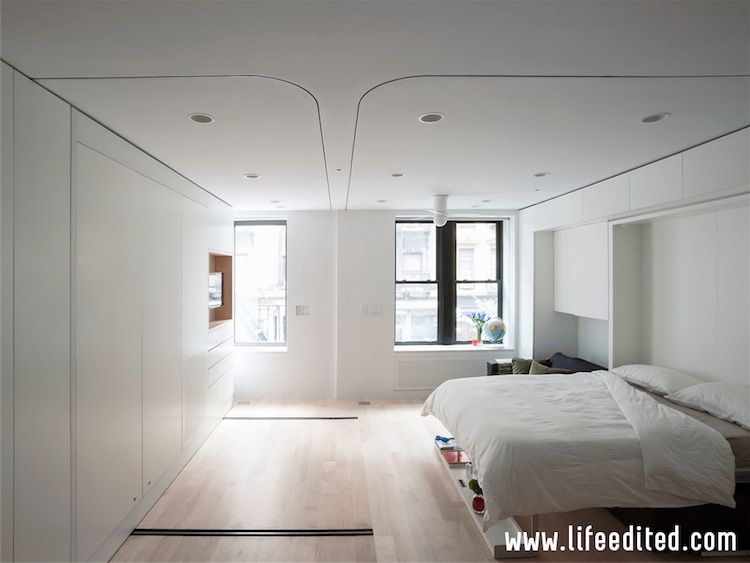
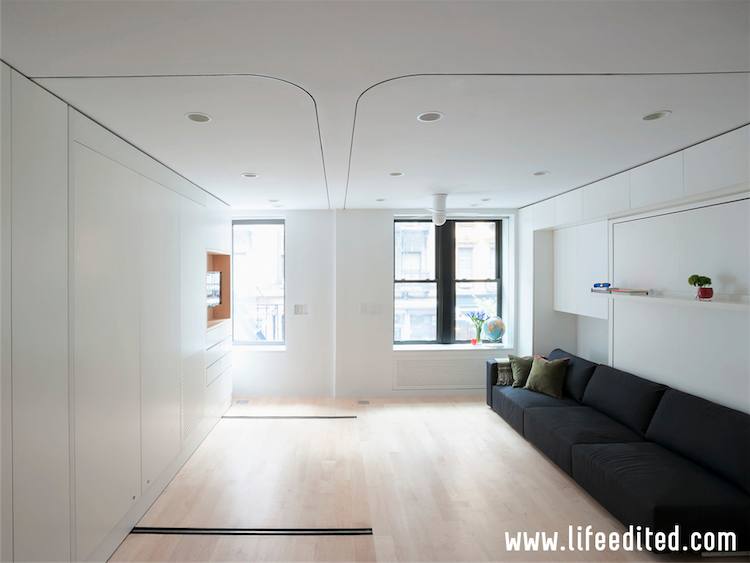
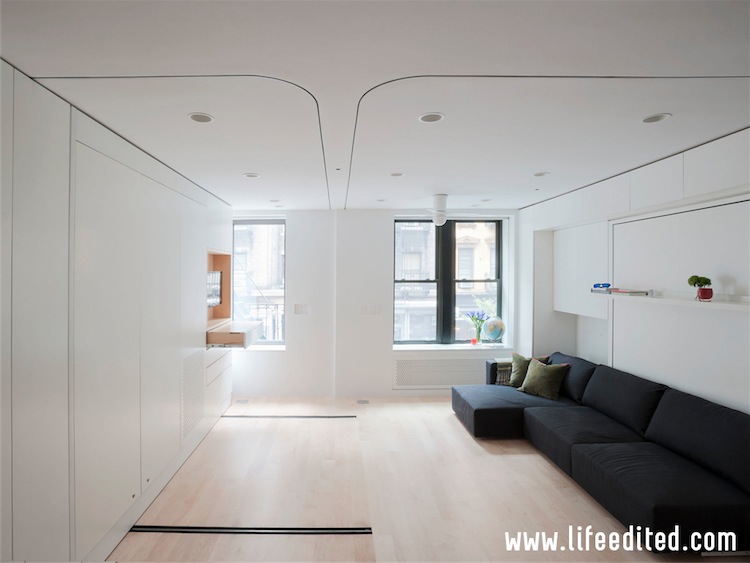
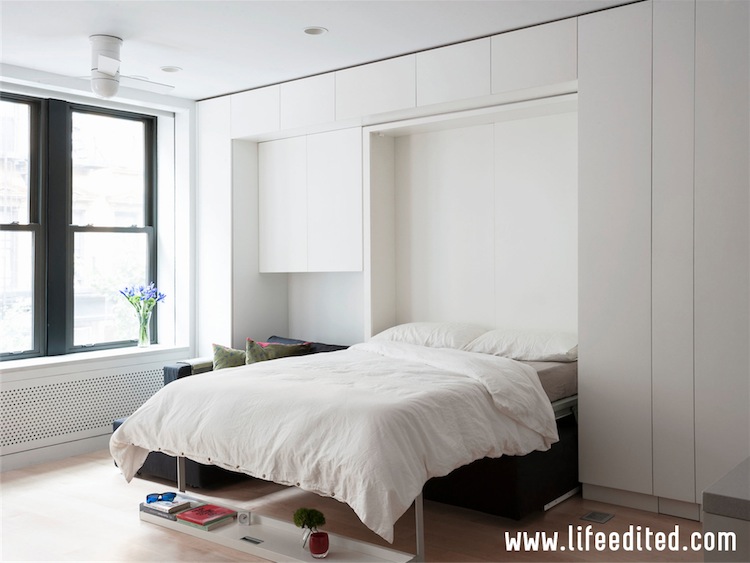
The Swing sofa/bed from Resource Furniture is probably the most important piece of furniture in the LifeEdited Apartment as the master bed and couch are arguably the two most important pieces of furniture in any home. It serves the vital function of easily converting our comfortable living room into a comfortable bedroom.
Standard Murphy beds require their front-sides to be clear before lowering their beds. The Swing utilizes this valuable frontal real estate because its bed, when lowered, is higher than the full-sized couch that sits flush with the frontside of the unit. This exploitation of all available space is crucial for small homes, where every unfilled gap cuts into valuable square footage.
The Swing is designed and manufactured by Clei in Italy. Here are some of its key features:
Easy, one-handed lowering of the bed.
An available chaise lounge, which can be attached to either side of the sofa. With the chaise, the sofa is 9′ 2″ wide.
The chaise version has an upper shelf that provides and additional 6′ of storage (note: The LifeEdited version does not include this feature).
An aluminum bedframe with steam-bent beech wood slat supports.
A bookshelf that holds up to 25 lbs and stays level when the bed is pulled down.
Storage under the sofa seat for bedding or other items.
A self-standing/self-supporting structure that requires no attachment to the walls or floor. It is a ‘wall-bed’ that makes its own wall and can be used as a room divider.
Available in more than 40 finishes, melamine, lacquer and wood veneers. Available in 30 CARB 2 compliant (California Air Resources Board) finishes.
Available headboard cushions that provide cushioning and eliminate the gap between mattress and backboard, ideal for reading or watching TV in bed.
Available in 100 different fabrics options.
Available LED interior lighting.
Amazingly, the entire depth of the system when open for sleeping is only 6.5” longer than a standard mattress.
Prices for the non-chaise version start at $9100 and $12,850 with chaise. Bank on an extra $800 or so for a mattress. No this is not cheap, but this is a quality piece of furniture you will have for years. Furthermore, consider the Swing could eliminate the need for a dedicated bedroom. How much does an extra bedroom cost? In a city like New York City, real estate can easily fetch between $500-$1000/sq ft. Let’s say a very small bedroom is 70 sq ft–in other words, 35K-70K!
The difference between a studio rental and a one bedroom, or between a one bedroom and two bedroom can easily be $1K/month difference. The Swing could pay for itself in a year and you’d have a great piece of furniture to take with you to your next place.
Looked at in either of these lights, the math becomes quite different.
In the 1984 Italian comedy “Il Ragazzo di Campagna” (The Country Boy), the movie’s protagonist moves into an amazing tiny apartment that, upon initial inspection, looks like a closet, but as the realtor in the scene above reveals, is actually a studio apartment with hidden kitchen, bathroom, entertainment center and bedroom.
The apartment–based on a rudimentary translation done with Spanish/Italian cognates–is meant to show the exploitive and rapacious nature of urban real estate, similar to the King’s Cross video we looked at a while back. While there’s a lot of that going on for sure, we actually find it a cool demonstration of an apartment that does everything in very tight quarters. Could probably use a window or two.
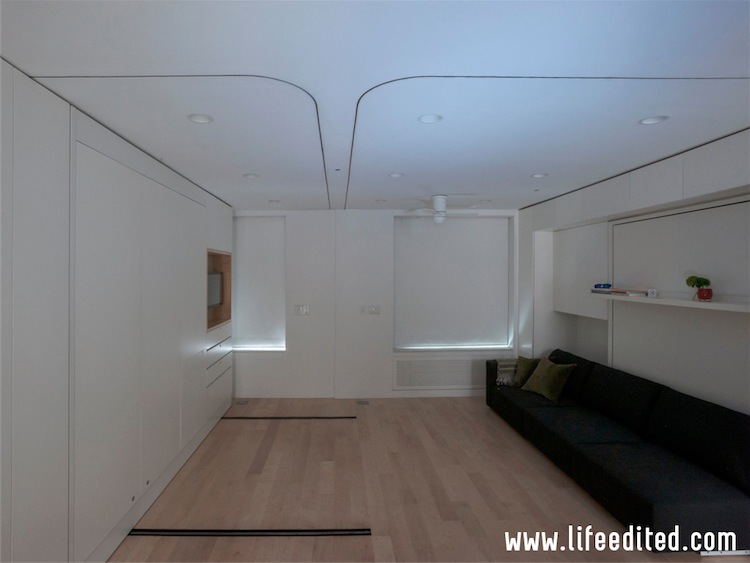
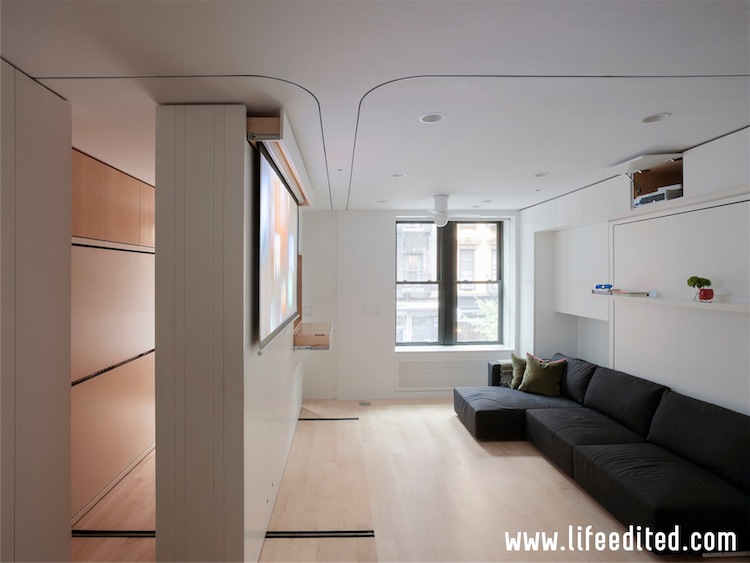
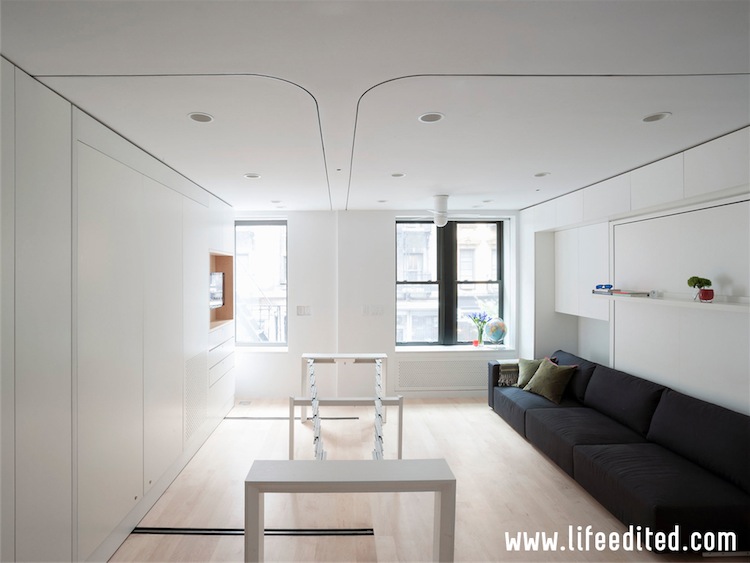
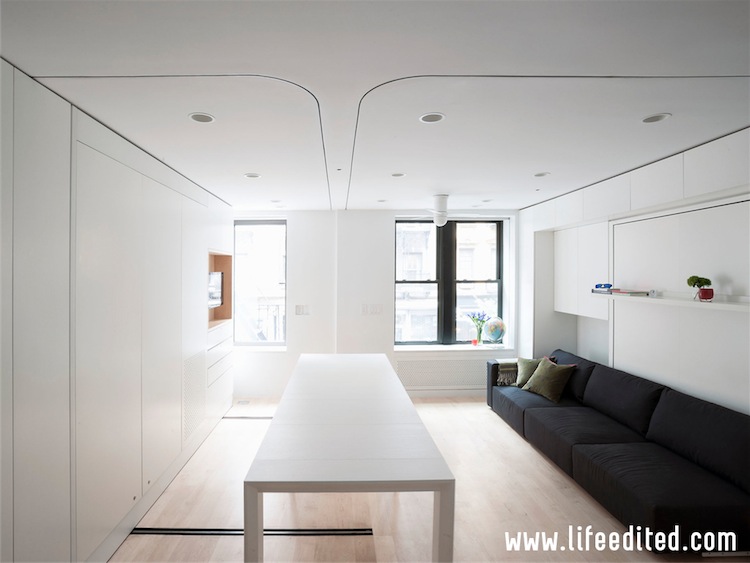
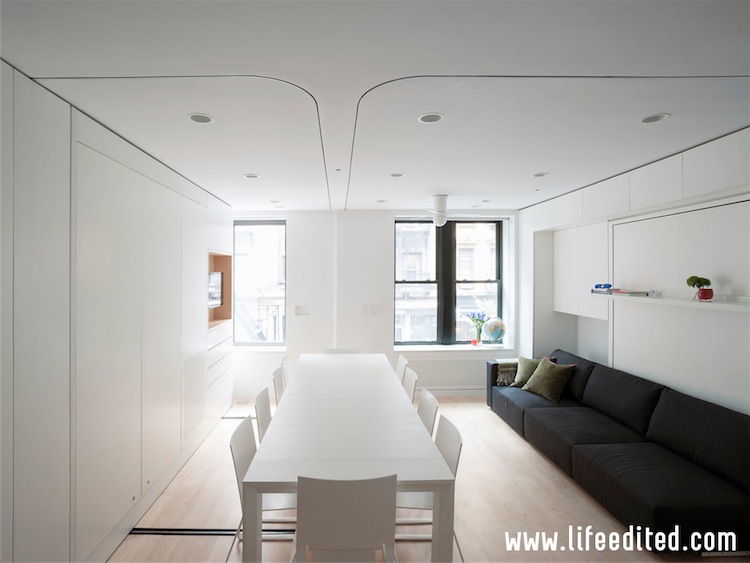
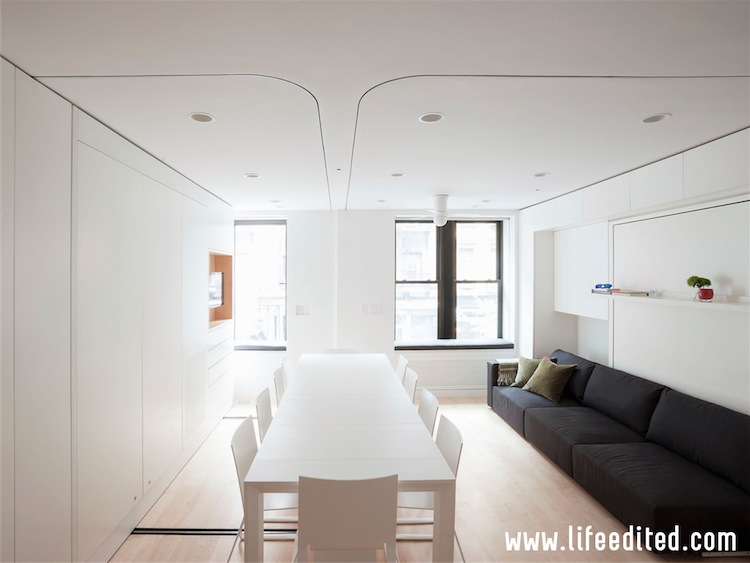
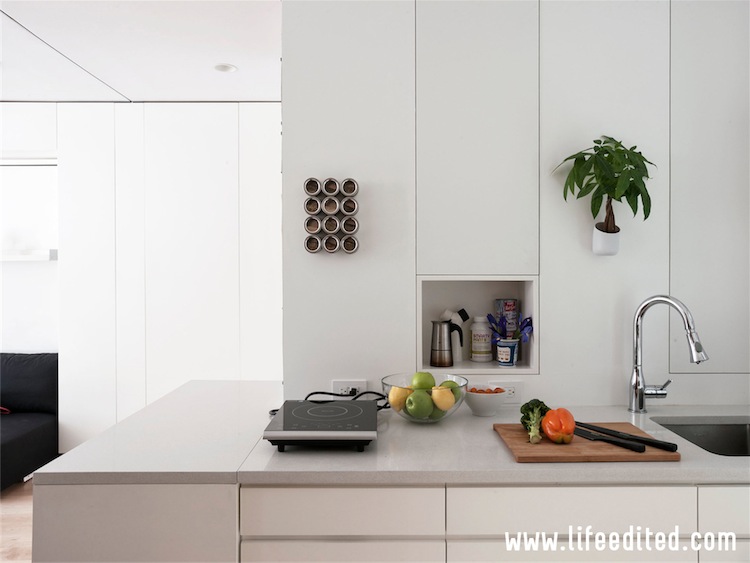
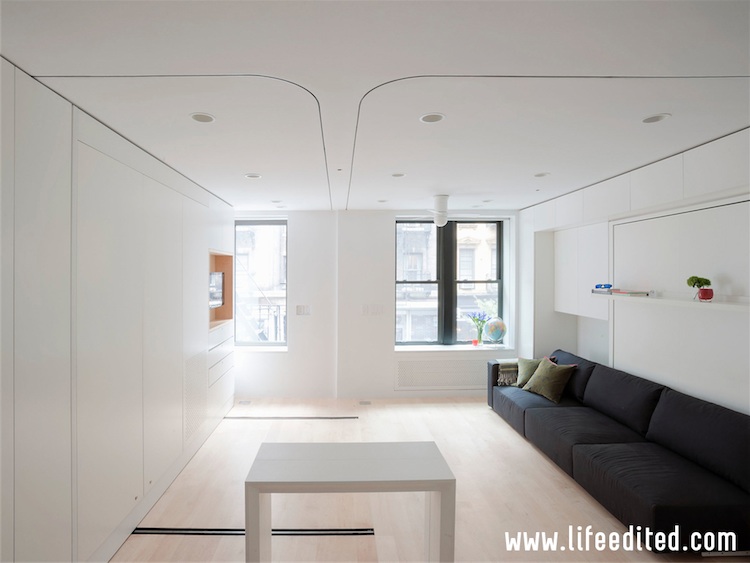
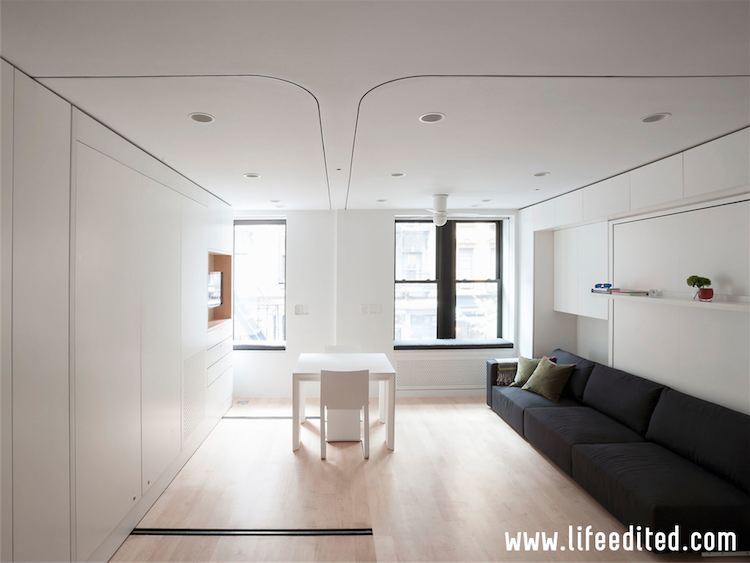
A couple months ago, we had photographer Matthew Williams snap an official set of photos of the apartment owned by LifeEdited’s founder Graham Hill. Enjoy!
click on thumbnails to see slideshow
For bloggers and journalists, feel free to download a zip of the set here. Please credit Matthew Williams for LifeEdited.
In the coming months, we will be highlighting products and services we use in the LifeEdited apartment. Today, we’re looking at the Resource Furniture Goliath Table.
Of all the pieces of furniture in the LifeEdited apartment, none get more oohs and ahs than the Goliath Table. The table, made in Italy by Ozzio and distributed in the US by Resource Furniture, transforms from a 17″ deep console without leafs to 115″ dining room table with.
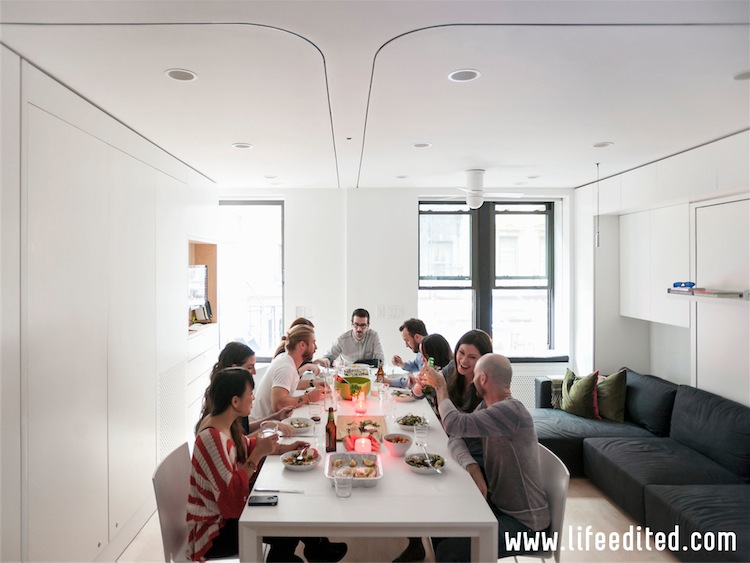
Depending on how many of the five leafs you add, you can make the table appropriate for seating two, four, etc. In the cozy 420 LifeEdited space, it’s a critical piece of furniture, allowing us to easily host dinner parties for ten plus people.
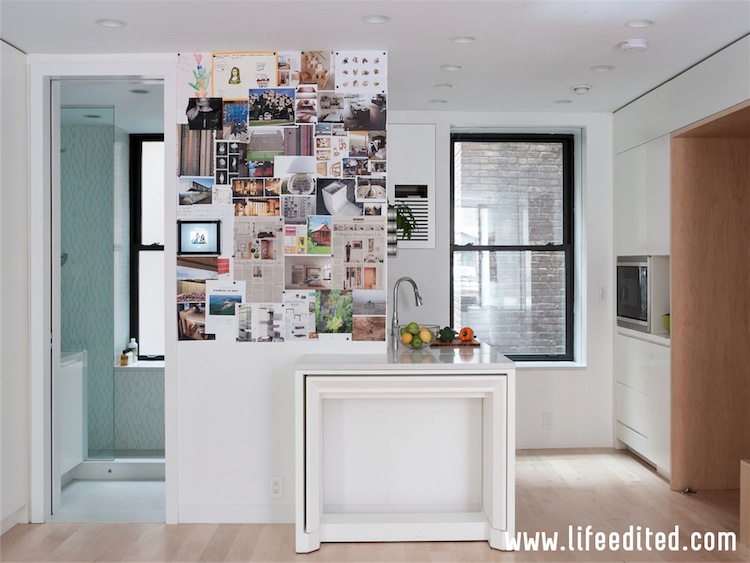
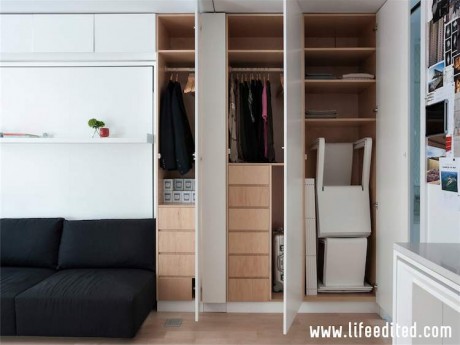
When not in use, we store the table under a breakfast bar made especially for the Goliath.
The table is available in a number of durable finishes. Visit Resource Furniture’s website for full details. While the starting price of $3950 might strike many as a lot of money, consider that this table can effectively turn any room into a real dining room. Think about the cost of eliminating 50-100 sq ft from your home. How much would that save?
Perhaps you’d use it to turn your dining room into something you might use more like a home office. Likewise, the table’s high quality construction make it something you can keep for many years. Looked at this way, we think the Goliath a great investment (it’s sure to impress your dinner guests too).
We’ve looked at pictures of Robert and Rosa Garneau’s NYC transforming apartment in the past, but thanks to this video from Fair Companies, we get to see the apartment come to life. Of particular interest is seeing the movement of the 500 lb sliding wall, the pre-programmed, automated hydraulic table and the amazing amount of storage the apartment contains.
All of the furnishings were custom built for the apartment. Most of it contains storage; many pieces disappear and/or are modular (the video takes you through the whole space).
Customization like this raises an interesting question about these types of transforming spaces: Because all the pieces work in concert with one another, how do people who might want a home like this adapt their existing inventory of furniture to that space? Is that even possible?
Or is it better to start from scratch as the Garneau’s did? If the Garneau’s were able to squeeze approximately 40% more utility from their space because of their furnishings, might the extra investment be worth it?
Let’s take a look. Robert Garneau said he spent about $234K in renovations. NYC real estate costs around $800-$1000/square, so a 40% larger space (i.e. 910 sq ft), would be $208K-$260K more than the Garneau’s place (we know…it’s crazy). At that price it’s about a wash between the additional space and renovation costs. To make a truly fair comparison, we should add additional furnishings for the larger space, renovations and higher upkeep and maintenance costs. Also, consider you could probably go half as elaborate as the Garneau’s and have similar utility. Suddenly the math gets a lot more competitive.
What do you think? Would you be willing to start from scratch to have a small, transforming space that does everything you need? Do you think spaces like these with lots of custom, built-in furnishings could go mainstream? Or do you think they will remain curiosities–homes for eccentrics and architects, but no one else? Let us know in our comments section.
Few things derail your editing schemes like children. Clothes often need to be changed multiple times a day. They grow out of those same clothes every few months. Most of their toys have a six month half-life. Then there are innumerable accessories from cribs to strollers to baby bathtubs that thwart the most earnest minimalist aspirations.
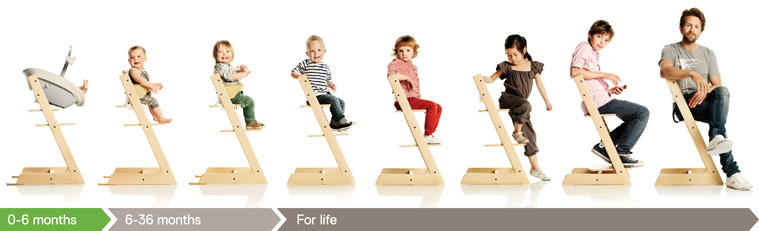
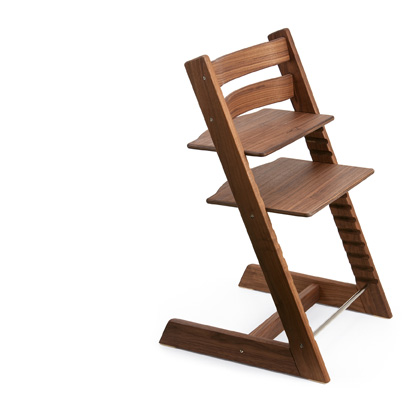
Given all of this, if you’re a parent and there are products that reduce the amount of stuff your child requires, you should probably get them. The Stokke Tripp Trapp high chair is such an item. Its simple, classic design allows it to be useful from infancy to adulthood.
The inverted seven shaped base has slots that accommodate either a seat or footrests. As your child grows, you lower the seat and footrests in the slots to the appropriate height. You can even remove the footrest and use it as an adult height chair, making this a great piece of furniture for people like grandparents who frequently have children visitors, but for whom a dedicated high chair takes up too much space.
The seats start around $200 and go up depending on the material. Oak and walnut version are available that are quite a bit more expensive; these options are worth considering as this could easily be an item kept for many years.
Do you have other tips for minimizing kid clutter? Let us know in our comments section.
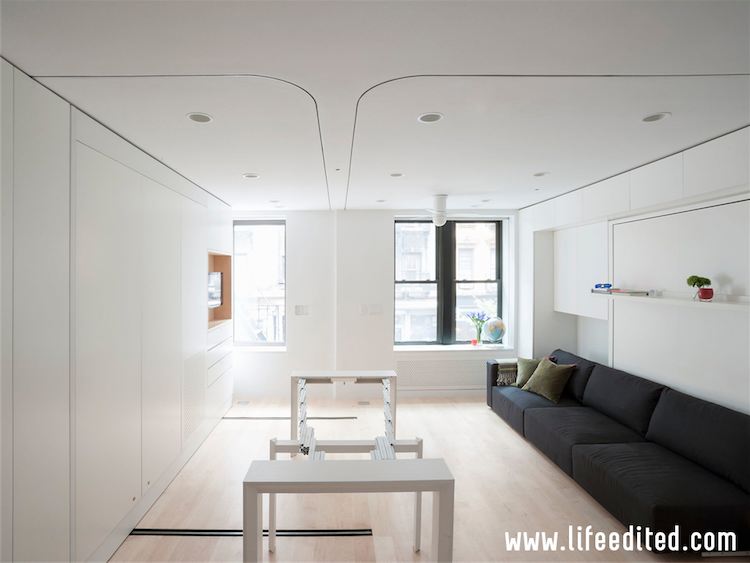
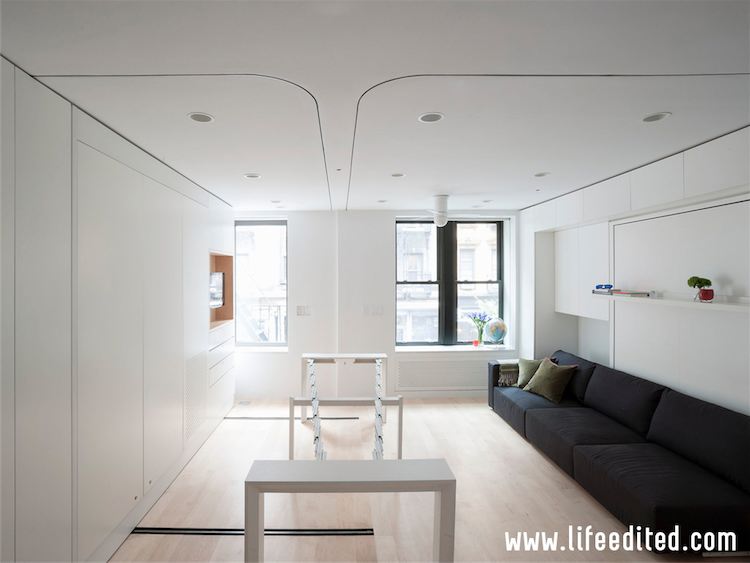
If you live in a small space–or just don’t want to clutter up your big one–you might find yourself choosing between a coffee or dining table. Having both just takes up too much room. In an effort to sidestep this either/or situation, Resource Furniture and Duffy London offer tables that are as competent at hosting dinner parties as they are having afternoon tea service–or, the US equivalent, eating in front of the TV.
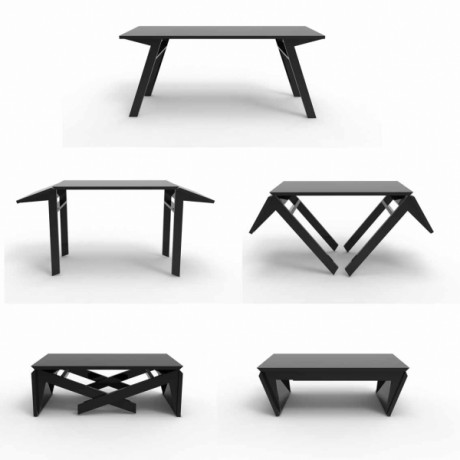
Duffy London’s Transforming Coffee Table MK1 (pictured below) has legs that fold underneath its base for a very simple conversion. When the legs are in the elevated position, built-in leafs, which double as legs when in coffee table mode, add additional length to the dining room table surface.
The table is offered in a variety of finishes and three sizes–Mini, Large and X-Large. All three are 13″ high in coffee table mode and 30″ in dining. The two smaller versions are 29″ wide in coffee mode and 50″ and 57″ when extended; the X-large goes from 39″ to 67″ wide. Duffy’s website lists the prices at £395/$638, £445/$718 and £595/$961 respectively. Unlike a lot of cool Euro furniture we’ve found, they offer US shipping at £175/$282.
The Passo goes from a 10.5″ high coffee table to 30.75″ dining table. It’s 30″ deep and width goes from 48″ closed to 78″ when its built-in leafs are folded out from under the tabletop.
Resource Furniture Passo Table
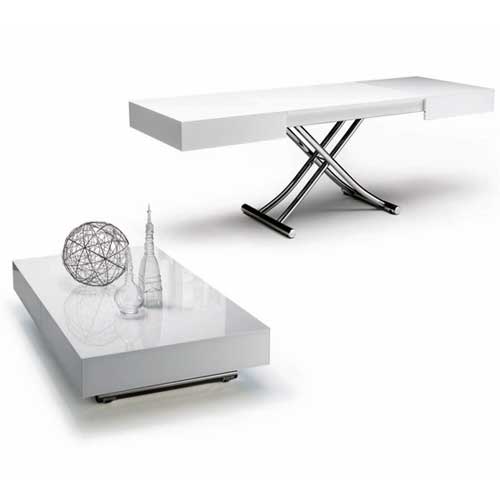
The Box table (pictured at top of post) is similar to the Passo, though the leafs project from the ends of the table versus folding out from underneath. Fully extended, the Box is 87″ wide–sufficiently large for dinner parties for 8-10 people. Like the Passo, you can extend one, both or neither leaf, giving a ton of flexibility for its usage. For example, you could have a long coffee table or short dining table.
We’ve had a chance to use both of Resource’s tables and they work great. They are high quality, easy to raise, transform and moving around the house. Both are available in a variety of finishes and start around $3500.
These tables are great investments for many, combing great design, materials and saving space functionality. That said, we understand they are out of many people’s price brackets. If you know of high quality, lower price alternatives, let us know.