Living Well in the Margins

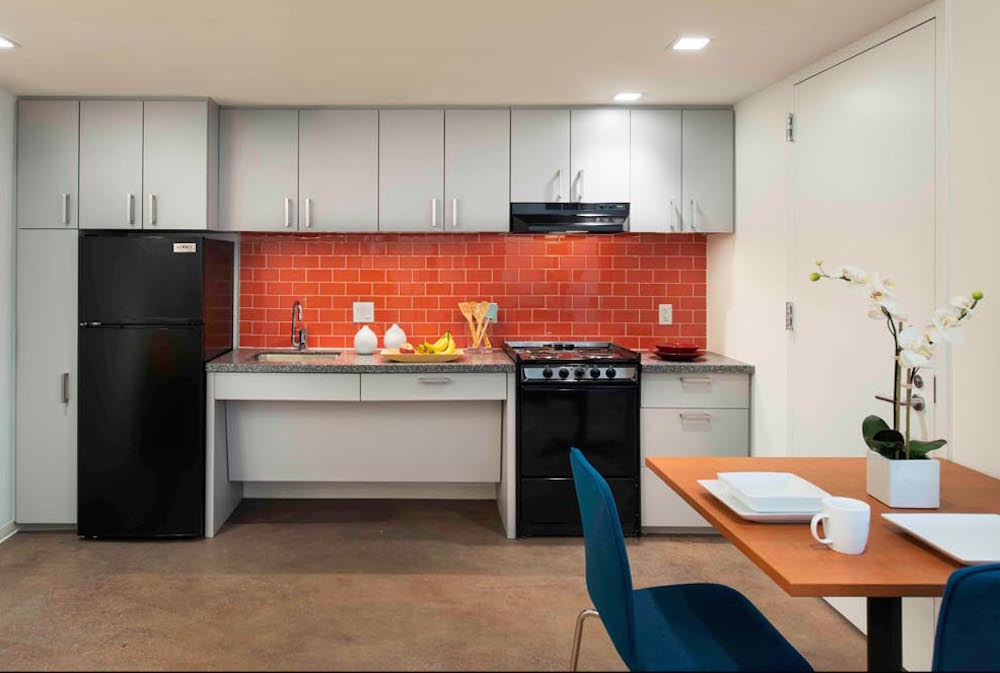
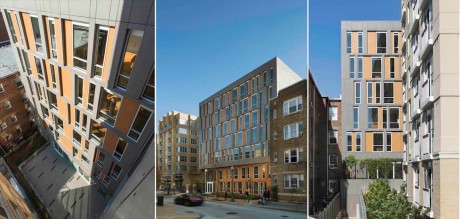
In most any area, it’s generally best to look to the margins, not the center, for innovative thinking. Small space architecture is no different. Conventional architecture is too often big and boring, victim of zoning restrictions and/or design driven by the interests of developers rather than residents. One place to find consistently interesting “marginal” architecture is supportive housing–a type of government-funded housing for populations that need, ahem, extra support. Supportive housing usually enjoys less restrictive building code restrictions than conventional housing and because it’s not for sale, it is not necessarily bound to imitate what everyone else is doing in the market, often resulting in innovative, community-centric, compact architecture. La Casa Permanent Supportive Housing in Washington DC is a great example of such a beast. It’s an attractive, smartly-designed apartment building that happens to be supportive housing serving homeless men.
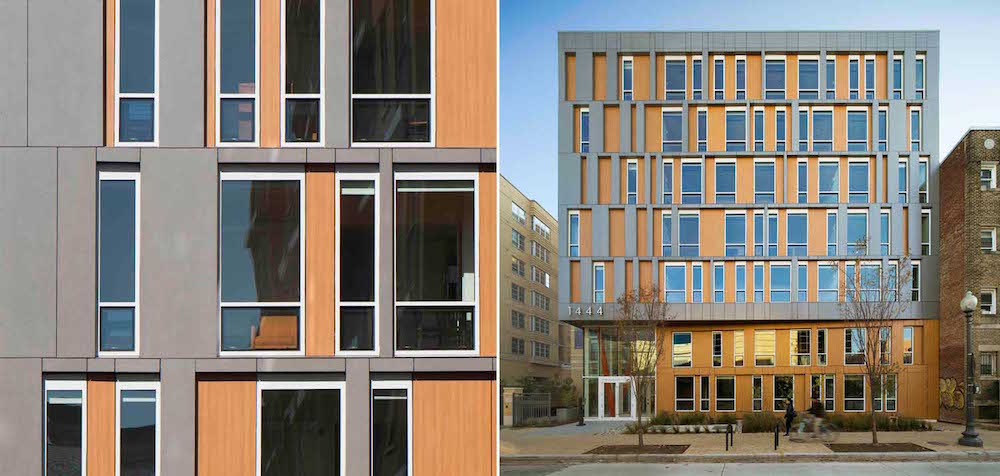
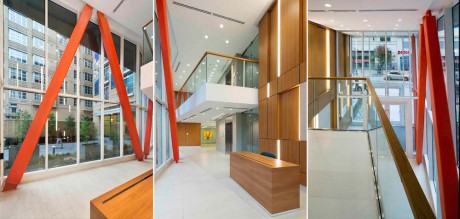
The seven story La Casa was jointly designed by LEO A DALY and Studio Twenty Seven Architecture for the DC Department of Human Services. According to LAD’s website, they were challenged “to create a ‘home’ rather than an institution, and to ‘meet or exceed’ the quality of the adjacent market-rate apartments.” With bright, clean and smart interiors, their challenge appears to have been met.

The building will house 40 chronically homeless men, all of whom will have their own furnished efficiency apartments with kitchens and bathrooms. The units are designed to create a sense of home and permanency, rather than serving as a stopover in some institution in a never ending cycle of homelessness. It will employ the “housing first” service model. Whereas many supportive housing communities require sobriety or other conditions for eligibility, housing first has no such conditions, acting under the belief that when housing and counseling services are in place, it can provide the security and dignity that will act as gateways for an improved life.
La-Casa-4-Desktop

Even the design was meant to be rehabilitative. Jim Spearman, La Casa’s project architect at Studio Twenty Seven Architecture, said “From the exterior, large and individualized windows on the façade identify particular spaces to which occupants can point and exclaim, ‘That is where I live!’”
La-Casa-12-Desktop

Beside the efficiency apartments, there is a welcoming lobby on the ground floor, support offices and a mail area. There is also a community room on the second floor that opens onto an outdoor terrace. “A green roof contributes to the design’s LEED-Gold certification,” according to LAD, and “Security is provided by a combination of security officers, remotely monitored cameras, and secured door access.”

La Casa recently won the American Institute of Architects (AIA) 2015 Housing Award in the Specialized Housing category. The project is great because it’s not just a nice place for someone accustomed to living on the streets–it’s a great place for anyone to live.

Images via Studio Twentyseven Architecture
Mansions for All!

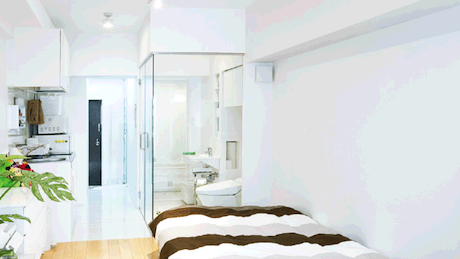
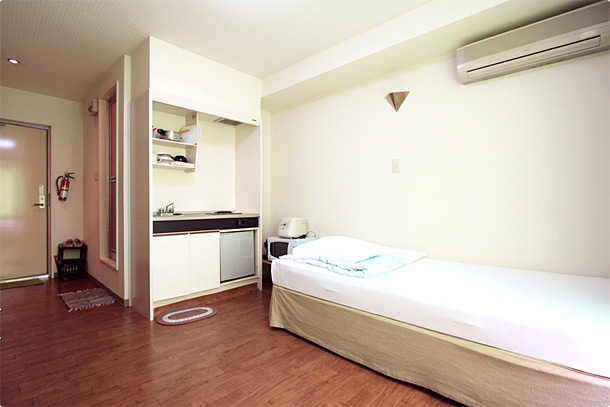
Inspired by yesterday’s post about residential hotels, we thought we’d look at how other nations handle clean, safe and affordable housing for single folks. In Japan, there is something called called the “wan rūmu manshon” or “one room mansion” (get it?). It’s a very small studio (~100 sq ft) with a bed, bathroom and kitchenette. They’re not fancy or architecturally that interesting. We found some with nifty glass-wall bathrooms (another living room?), but for the most part, they’re small, simple rooms to crash in. They’re designed for singles who don’t need, want or can’t afford anything more.

wan-rumu-manshon

Japan has 870 people per square mile, making it the 39th densest nation in the world (US has 84 people per square mile and is the 180th densest). Because of these geographic circumstances, Japan doesn’t have the space for one-size-fits-all housing. Single people use the space they need, which is less than couples. Couples use the space they need, which is less than a family, and so on.

The US’s surplus of land has led to many of us to occupy spaces well beyond our needs: singles live in two and three bedroom homes, empty-nesters have 4K sq ft homes and so on. The result is more money spent, more places to store stuff, more sprawl, more energy expended, more surfaces to mop, dust and upkeep. Perhaps it’s time we start using what we need, rather than what’s available. Perhaps it’s time we start building tiny mansions for everyone.

A version of this post first appeared on this site on April 24, 2012

A Case for Bringing Back the Residential Hotel

Up until its condominium conversion in 2005, Barbizon 63 was a paragon of compact, efficient living in New York City. For most of its life, the building was used as a women’s “residential hotel.” Located on Manhattan’s upper east side, the 23 story building contained 700 tiny units. In the 70s, you could rent a room at the Barbizon 63 for around $160/week (in 2014 dollars). That rent included a furnished single room, bathroom down the hall along with in-house lounges, a gym with swimming pool and a communal dining hall. It provided cheap, safe and clean lodging for women starting out in the city. The names of past residents is a who’s who list of 20th century artistic icons: Grace Kelly, Lauren Bacall, Joan(s) Crawford and Didion, Liza Minnelli and even Ricky Gervais after they opened their doors to men in 1981.

The Barbizon Hotel New York

For all intents and purposes, Barbizon 63 was an SRO–a housing type that fell out of favor in the late 70s and 80s. Following a sustained economic downturn in NYC, SROs often become ersatz homeless shelters. Most of the buildings were  eventually converted to standard hotels and later condominiums. As for Barbizon 63, after undergoing a few iterations of hotels, it eventually went condo in 2002. Today, there are 70 units in the building (along with 16 rent-controlled holdovers). The average per sq ft listing price of a condo is about $2600. One three bedroom unit for sale has combined monthly charges of $6200.

Barbizon 63 is far from alone. Across the city, most residential hotels and SROs were converted to luxury hotels or condos. The Salvation Army on Gramercy Park shared a similar fate to Barbizon 63. It once contained 300 units that rented for about $112/week. A condo conversion a few years ago brought the building unit number down to 17. The average per sq ft listing price is a little more than $4K. The building’s smallest unit–a two-bedroom–was listed for $9.8M (in contract) and has about $10K/month of monthly charges.

The above video is by architect Jonathan Kirschenfeld from the 2011 Making Room Conference. He points to these two buildings, among others, and how the demise of the SRO led to the advent of supportive housing–a designation only available to people with special needs.

The fate of these buildings is the fate of New York and many other cities: new wealth creates a high demand for housing, which in turn eliminates affordable housing options and pushes the lower-income folks further and further from the centers of cities.

It’s hard to begrudge developers for capitalizing on market conditions. If a small population is willing to pay a premium for large homes in prestigious locations–often in buildings that had once stood derelict or underused–it’s their job to be accommodating. But these economic realities often yield unfortunate cultural consequences. Many creative folks whose talents might not have the market value of an investment banker are forced to migrate. Alternately, these same people are railroaded into work that pays the bills rather than nourishing the soul. Slowly but surely, a city’s cultural vibrancy is lost.

While we won’t suggest we know the answer to this vexing situation, we will say there’s a real need for housing like SROs, efficiencies, residential hotels, or their modern equivalent, the micro-apartments. Cheap, safe, temporary, often small, housing is a vital component to giving people–young and old–access to cities that are normally economically out of reach.

It’s a bummer what’s going on in Seattle and other places that are opposing micro-housing. Many people–especially young people at the beginning of their careers–just want a place to cheap, clean place to sleep in a decent location. They don’t need fiver burner stoves, walk in closets or in many cases, their own bathrooms. Granted, Seattle’s micro-housing isn’t usually as comely as the stately Barbizon 63 or Salvation Army buildings. But perhaps if micro-housing were to enter the canon of necessary urban housing typology, its architecture might start improving in turn.

But the revolt against micro-housing is often as much cultural as architectural. People are often afraid of the itinerant character of the micro-housing dweller. It’d be great if people started recognizing that that character, is not a threat to property values, but an invaluable component to a city’s cultural diversity.

Park Your Life in These Repurposed Garages

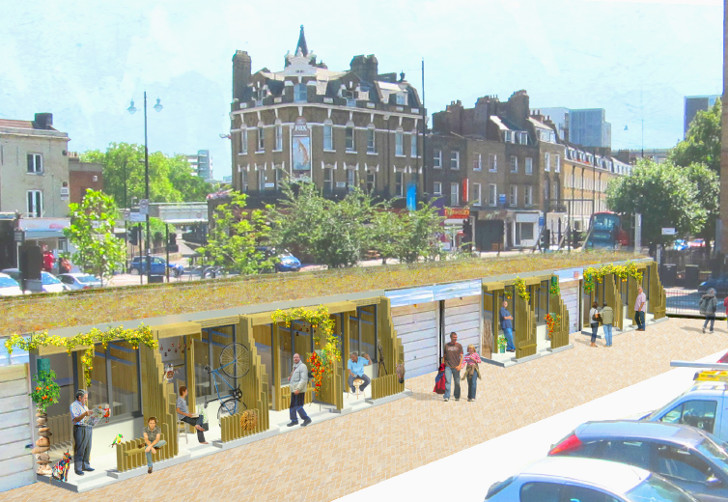
A design by architectural firm Levitt Bernstein that converts unused garages on London housing developments into popup homes was the winner of the Building Trust International’s HOME competition, which sought to provide “residents most at risk in developed cities with a safe place to live.”

The Levitt Bernstein units are part of a larger project they call HAWSE (Homes through Apprenticeships With Skills for Employment). The homes provide shelter for their occupants as well as trade skills as they are involved with the assembly of the unit. The house provides low cost housing (£11/week) for a year or two before the occupant moves on to other developments and the structure is demolished. We’re not sure why they wouldn’t remain as ongoing housing, though it likely has to do the fact they’re using someone else’s property.

The units are a mere 118 sq ft and feature their own bedroom, bathroom and living/dining area. We particularly like the wall-through sink between the bathroom and kitchenette. Each fifth garage will have a communal laundry, additional kitchen equipment and a dining area.

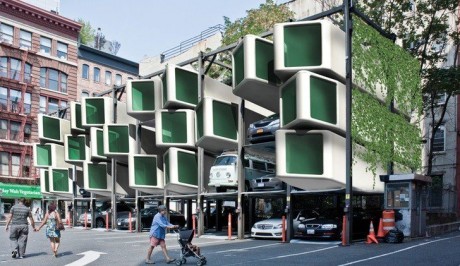
HAWSE is meant to use under-used spaces in expensive, high density areas, in this case East London. We’ve seen other garage-cum-homes with the same mission intended for New York City, but this one seems much more thought out. The other designs, particularly the upLIFT design (below), proposed using highly used, revenue-generating parking spaces as housing for the homeless, which seems like a tough sell. Focusing on using under-used spaces like HAWSE makes a lot more sense.

Uplift-concept

There was some controversy (possibly manufactured) reported in the London Evening Standard. An architect called pop-up housing “morally bankrupt” and not addressing the causes of homelessness. We think it’s a pretty great idea and a creative way to make increasingly expensive cities accessible to diverse populations.

What do you think? Is this smart design or a bandaid on larger social and economic woes?

Windy City Goes Micro with FLATS Chicago

Chicago adds its name to the growing list of cities that are building large-scale micro-unit developments with FLATS Chicago. The project is quite an undertaking. The development company, Cedar Street Co, has acquired seven buildings, representing 1200 apartments that will be converted into luxury apartments in the city’s rough-and-tumble Uptown and Edgewater neighborhoods.

Unit size will average around 350 square feet and be as small as 275. Amenities will include things like free wifi, washer/dryers in each unit, bike-shares, common spaces, rooftop pools and sports clubs. Projected rents range from $800 a month for a studio to at least $1,400 a month for a two-bedroom.

Rendering of Interior of FLATS Chicago

Jay Michael, one of Cedar Street’s partners, told Time Out Chicago that he wants to “sell singles on what he calls ‘FLATS life’: Common spaces are ‘an extension of your space’ where you can meet neighbors or entertain friends,” and that they are “targeting recent college grads who are ready to live alone,” who “for the same rent they’d pay for their half of a two-bedroom condo…can live solo at FLATS.”

Sounds good to us.

But there’s a catch: the buildings in question are dilapidated SRO’s, many of which, until recently, were occupied by impoverished residents. Though the developers want to make their units financially “approachable” to the existing tenants, the rents will likely be out of reach for most, and construction will inevitably displace them, even if that displacement is only for the length of the renovation.

While not obliged to do so, Cedar Street is working with transition coordinator Sherri Kranz to find housing for old tenants, many of whom have been in the apartments for more than 10 years. In one building alone, Wilson Tower, she’s working to find 60 people new homes–a challenge for people accustomed to paying as little as $475/month rent. She’s turning to city housing and nonprofits, though it sounds like sometimes the best she can do is get people on waiting lists. [Note: the SRO’s in question are not the “supportive housing” we talked about the other day, but rather privately held buildings.]

It’s the perennial gentrification conundrum. On one side are the under-served populations the buildings house. However, these building are, in Kranz’s words, “slums”–ones that in short time will be closed due to disrepair, making them a not-so-sustainable housing solution.

On the other side, the FLATS apartments will presumably serve large populations of city-dwellers, young and old alike, who are priced out of traditional apartments in more expensive neighborhoods.

Granted, there’s a big difference between having to get a roommate and being homeless, but it doesn’t negate the need for this type of clean, smart and affordable apartment.

Do you have any thoughts on these competing interests? Have you seen them successfully reconciled? Let us know in our comments section.

via Time Out Chicago

SRO’s at the Cutting Edge of Small Space Movement

In the 70’s and 80’s, single room occupancy (SRO) housing became synonymous with drugs, crime, totalitarian architecture and poor building quality. While the circumstances that lead people to SRO’s are still less than ideal (many are for the homeless population or very low income residents), a few architects are looking at what the buildings look like and what it means to live in them, designing innovative and supportive spaces for the populations they house.

Many SRO’s like the ones featured here enjoy a pass on restrictive building codes, allowing smaller unit sizes and larger communal areas than their conventional residential counterparts. Perhaps these developments presaged the upcoming micro-unit movement we’ve been talking so much about.

Harold and Margot Schiff Residence, Chicago IL

photo by Doug Snower

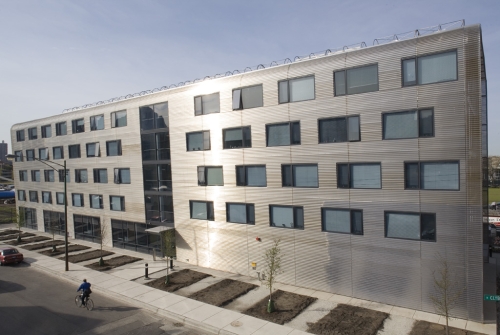
This building (also known as Near North Apartments or Mercy SRO) was designed by Murphy/Jahn Architecture, famous for O’Hare’s United terminal and Bangkok’s Suvarnabhumi Airport among many other large, notable projects. Charles Hoch, professor of urban planning at the University of Illinois told the NY Times that the design is a “stigma-smasher.”

The 96-unit building, built in 2007, borrows on “the cachet of Mr. Jahn to send a message to the larger society and that message is that homeless people have value, they have a role to play in society,” according to Hoch.

It is LEED silver certified, has solar panels and wind turbines that generate 15% of the buildings power and a grey-water recycling system (the first of its kind in Chicago). The ground floor features a large community space and the four top floors feature bright and airy units whose average size is 300 sq ft. Many of them feature views of downtown Chicago.

Bronx Park East, Bronx, NY

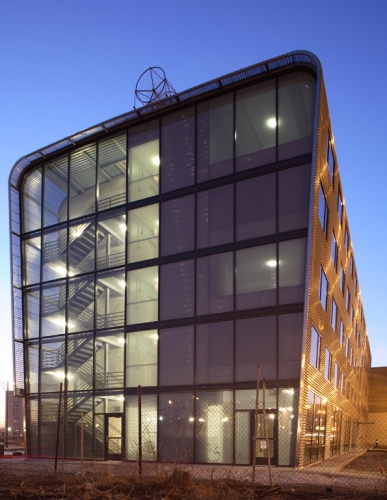
Before adAPT NYC, there was this SRO development by Jonathan Kirschenfeld, whose firm has done several similar sustainable “supportive housing” developments. The building, built in 2009, features triple-height street-side windows and 68 well-lit units with kitchenettes and private bathrooms. Units measure 285 sq ft, as supportive housing bypasses residential code that New York City spaces be 400 sq ft and up.

The development features a courtyard with a garden, a gymnasium and a double-height-windowed common room. Mr Kirschenfeld sees these kinds of spaces as integral to the intention of the space as he remarked to the NY Times: “Isn’t the idea here to improve mental health? Isn’t good architecture part of that?”

Another interesting aspect of Bronx East is its footprint, which utilizes an irregular lot.

Both of these developments show that innovation can come from unlikely sources and that good architecture and design need not be the domain of the rich.

If you know of similar innovative supportive housing, let us know.