A Small Space Kitchen that is Not an Eyesore

Kitchens in small apartments can be pretty sucky. For one, because the apartments are often geared toward budget-minded buyers and renters, yellowing and delaminating formica tends to be the building material of choice. Then there are oversized appliances. Since smart, small American apartments are as common as plain-speaking architects, few companies make–or export–good small appliances. As a result, these small spaces are often outfitted with full sized ovens, ranges, sinks and dishwashers. You end up with an otherwise nice space marred by a blemish of a kitchen.

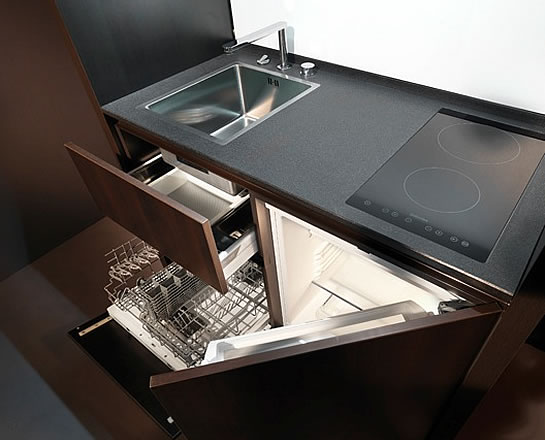
French firm Kitchoo might have an answer for this dilemma. They make elegant, high-quality, small-space-appropriate, all-in-one modular kitchens.
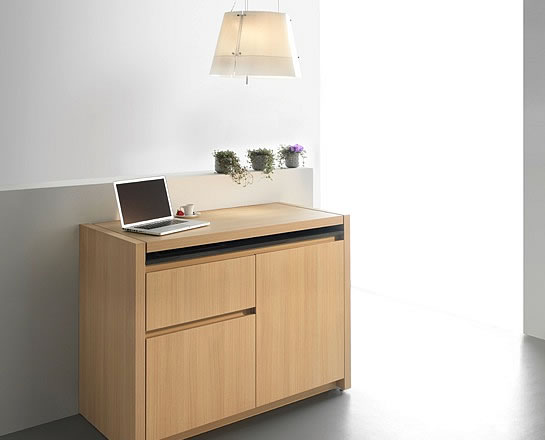
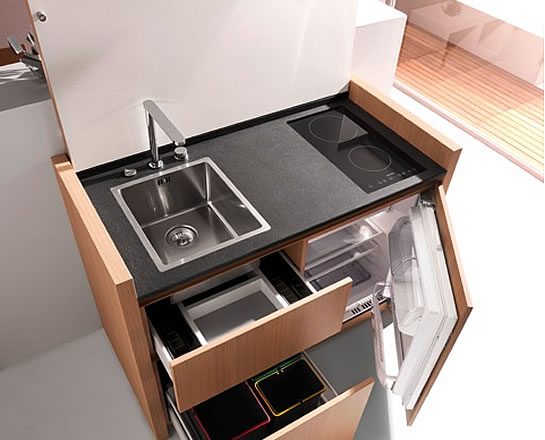
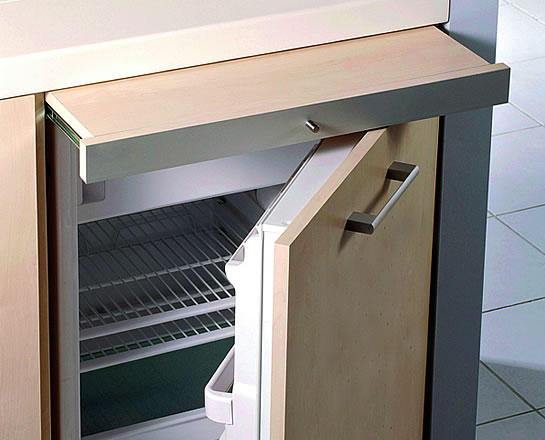
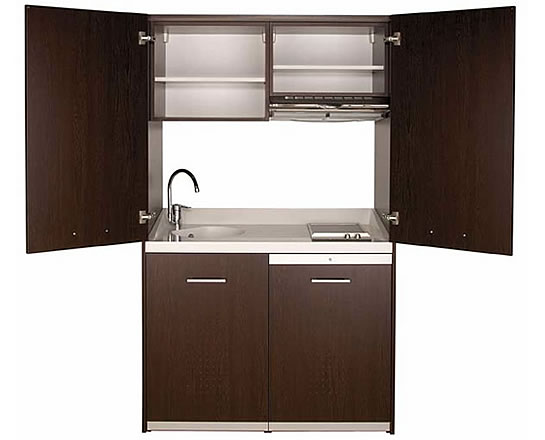
They make two series of kitchens: The K and M series. The K series is the sleeker and more expensive of the two. The K1 is 51″ w x 25″ d (the K1) include two induction burners, a fridge/freezer, a sink with telescoping faucet, a cutlery drawer and optional dishwasher. The K2 has a top shelf that holds an oven and additional storage. All construction materials and appliances are eco-friendly. Prices begin at 5,505 € ($7400).

What’s special about the K series is that when the sink is hidden, it does not look like a kitchen. This is actually quite important for a small space, where it’s valuable to have every piece of real estate able to double duty. The K kitchen could literally be a desk during the day.

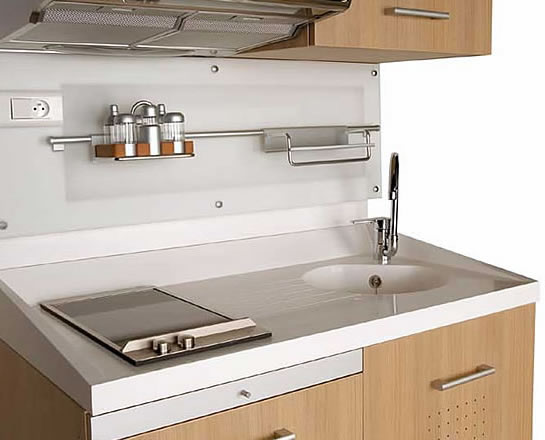
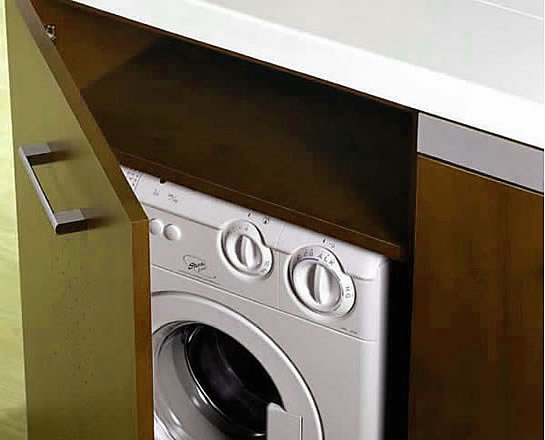
The M series is Kitchoo’s more pedestrian version. The sink faucets do not telescope and rather than the M’s flush induction burners, the M features slightly raised electric cooktops. Besides being less expensive (prices start at 3,833 €/$5143) the M series seems a bit more practical. It features pull out countertops that can double as a table, more storage and, coolest of all, an optional mini washing machine. The M3 (5,500 €/$7379) is the biggest M series and would really be suitable for someone who frequently cooks.

While these prices are a bit on the steep side, compared to the costs of custom kitchens, which easily exceed $10K, it’s not so bad. Granted, this will appeal to buyers more than renters.

Unfortunately (and we realize we’ve been saying this a lot lately), Kitchoo kitchens are only available in Europe. We reached out to them and they told us that they are planning on coming to the States in the near future. We will keep you posted.

We’re hoping with the growing popularity of the micro-apartments and tiny homes, products like Kitchoo and the smart, small appliances they feature, will become more available to American markets.

Chair Marries High Design with Space Efficient Design

In the coming months, we will be highlighting products and services we use in the LifeEdited apartment. Today, we’re looking at the Eco chair by Voxia.

One of the main design criteria for the LifeEdited apartment was the capability to host dinner parties for ten. We chose the Resource Furniture Goliath Table as its ability to expand from 17″-115″ was hard to beat. Seating was more difficult. Though there are many great folding chair options, we wanted something that looked a bit more permanent, so we narrowed our search to stacking chairs. At the time, lifeedited.com wasn’t much to look at, so we had our friends at Treehugger do a roundup of stacking chairs.

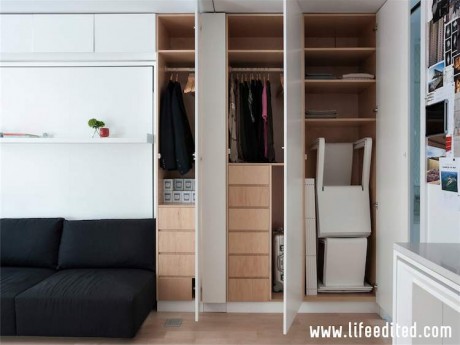
While there were a number of great options, none were as aesthetically or functionally appealing as the Eco by Voxia. It matched the look of the apartment perfectly. Most important, the chairs stacked extremely tight. The surface is a mere 9mm thick; with protective pads 13mm. There is a negligible gap between chairs when stacked. This tight fit allowed us to fit all ten chairs in one cabinet.

bild6

LifeEdited-South-Wall-Storage

The chair is one piece of compression molded beech plywood, which the company claims uses 1/8 the amount of wood of most conventional chairs.

The chairs are quite comfortable. Though we must say that the seat portion, which is about 15″ wide, favors the slimmer set.

Unfortunately, the Swedish chairs do not have a US distributor just yet. Pricing ranges from about $350 for the beech finish version to $426 for painted versions (pricing is approximate as there is no official US price list). While this was actually middle-of-the-pack pricing for a number of the designer chairs we looked at, it’s admittedly a good chunk of change.

What is unique about the Eco chair is that it marries high design with space-saving features. The current paradigm suggests that if you want high design, you probably have a big home and don’t need to worry about space efficiency. We’d love to see more exquisite furniture like this for a new breed of home where efficiency and high design go hand in hand.

See the Future in Ancient Japanese Architecture

While there’s a time and place for innovative space-saving solutions, sometimes the way forward requires a little looking back. A perfect example of this is the traditional Japanese home, a space-saving layout that works as well today as it did 400 years ago.

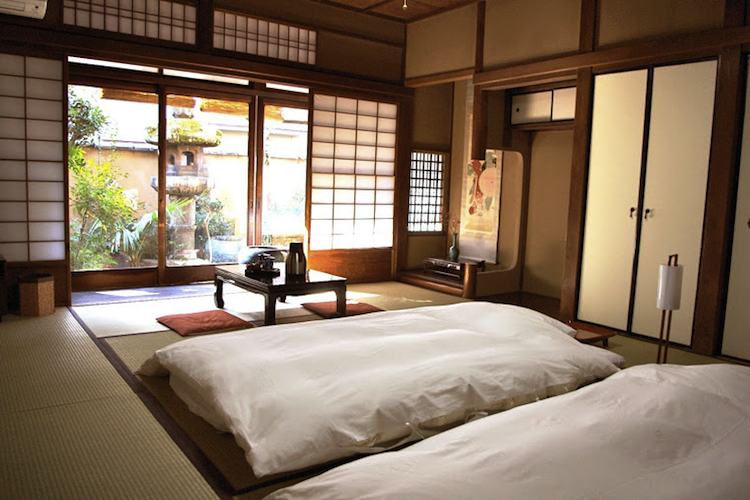
Unlike western homes, which typically have designated rooms for specific purposes (e.g. living, dining and family rooms), traditional Japanese homes center around a large living space called a washitsu that serves as any and all rooms (excepting the kitchen, toilet and genkan). Many modern Japanese homes still include a washitsu, though they are now accompanied by several western-style rooms as well.

Subdivision of the main room is achieved with shōji, translucent paper walls, or fusuma, thicker, impermeable walls, both of which move along wood rails on the floor and ceiling. Opening and closing these walls can dramatically alter the size and utility of the room.

This versatility of the room is made possible by lightweight portable furniture such as futon beds, zabuton seating cushions or tatami chairs for seating and low tables. All furniture can be stowed in a large closet area called an oshiire.

One of the most brilliant aspects of the traditional Japanese architecture is its standardization. Layouts are based on the tatami, an 18 sq ft mat, traditionally made of rice straw. The fusuma are the same size as the tatami. Imagine a home that required no custom pieces? Where everything was standardized and easily replaced?

There are definitely some downsides to the traditional Japanese home. Privacy probably being the first one. Fusuma and shōji are really glorified paper walls and provide little in the way of audio isolation. Historically, rooms were shared by the whole family, which might not suit everyone. Western knees and backs are not necessarily conditioned to sitting cross-legged or getting up and down from a 6″ high bed either.

All that said, it wouldn’t be hard to imagine adapting many of the traditional Japanese architectural elements to western preferences: More robust sliding walls, a platform for your futon, folding chairs rather than zabutons and so on.

Have you lived in a traditional Japanese home? What were the advantages/disadvantages? We’d love to hear your experiences in our comments section below.

8 Tips for Making Your Own Micro Apartment

With all the hoopla around the adAPT NYC competition and other micro-apartments around the country, it’s clear there’s a demand for smart, small apartments. In fact, people write us daily asking if we have apartments available to rent or buy.

While LifeEdited is working with development teams to get you your micro-apartments with the greatest haste (be sure to sign up for our list), many of the developments are years away. This leaves the question: What do I do now if I want a micro-apartment?

If you’re interested in living in a micro-apartment–either converting your existing place or starting fresh–here are some suggestions we think are critical to living a big life in a small apartment.

  1. Pick a good address. We think small spaces work best when you use your city or town as your living room. With amenities like restaurants, entertainment and parks at arm’s length, a good address will provide a living room you actually want to hang out in. Central locations are more walkable and have better public transport, allowing you to live car-free or get by with a car-share. Check out Walkscore.com to see how a neighborhood stacks up in terms of walkability and amenities. Yes, a good location will cost more, but you can save money by being car free and choosing a smaller apartment.
  2. Size matters. While there is no magic number for square footage, the micro-apartment designation is about 250-400 sq ft for singles; 300-600 for couples; 500 + for families (separate rooms are generally a good idea for a peaceable family). In most cities and towns, there are plenty of apartments these sizes.
  3. Get in good shape. In general, square and rectangular spaces are ideal. They feel bigger than odd-shaped spaces and are easier for fitting modular furniture.
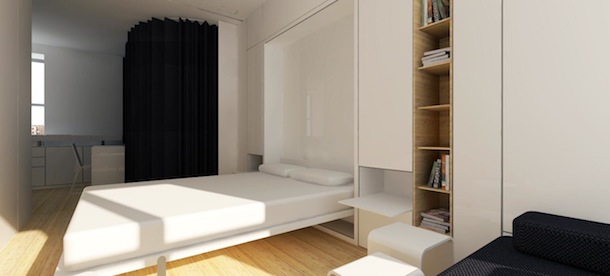
  4. Get a Murphy Bed. It’s the single easiest way of creating space without sacrificing function. A queen size bed is about 35 sq ft.–i.e. 10% of a 350 sq ft space; a 10% used exclusively while unconscious. We use the Swing sofa/bed by Resource Furniture; the sofa on the frontside provides even more space-saving as most Murphy beds have unused front sides. Starting at over $10K, the Swing is not for everyone. Resource Furniture has many less expensive models and there are a number of decent Murphy beds that can be purchased for around $3K. We were recently turned onto Murphy Bed Center, who has models starting at $1699. If you’re a DIY type, build your own for $275.
  5. Get high…with storage. Almost all of the adAPT NYC submissions included floor-to-ceiling storage. Having high storage utilizes unused vertical space and frees up floor space, making an apartment seem larger. On the high end, Resource Furniture offers modular storage units to fit with their furniture. On the low-end, the IKEA Pax system can be had for less than $1K and is almost 8′ high.
  6. One table is enough. A while back we looked at tables that serve as both coffee and dining tables. While these table are a little on the pricey side, only needing one table frees up quite a bit of floor space and provides two important surfaces.
  7. Sit and stow. Having chairs available for guests is important, but when we’re home alone or with our partners, we only need one or two chairs out at a time. The rest of the time, extra chairs just take up space, which is not a luxury the micro-apartment dweller can afford. If you don’t know what chair to get, here are 10 folding chairs to fit almost any budget.
  8. Get a comfy couch. A micro-apartment requires that every object be highly useable. While that stiff, low profile couch might take up little space and look super cool, if it’s not comfy, you’re not going to want to sit in it. Get a comfortable couch you’ll want to sit in day-in-day-out. If it’s big enough to sleep guests, all the better.

Anything we missed? Let us know in our comments section.

This Furniture Fits Together Like Matroshka Dolls

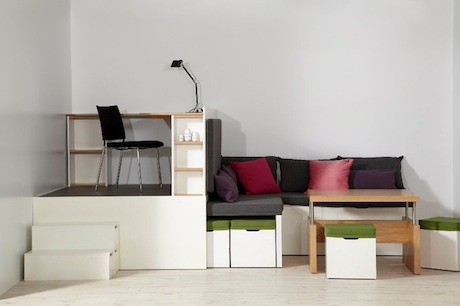
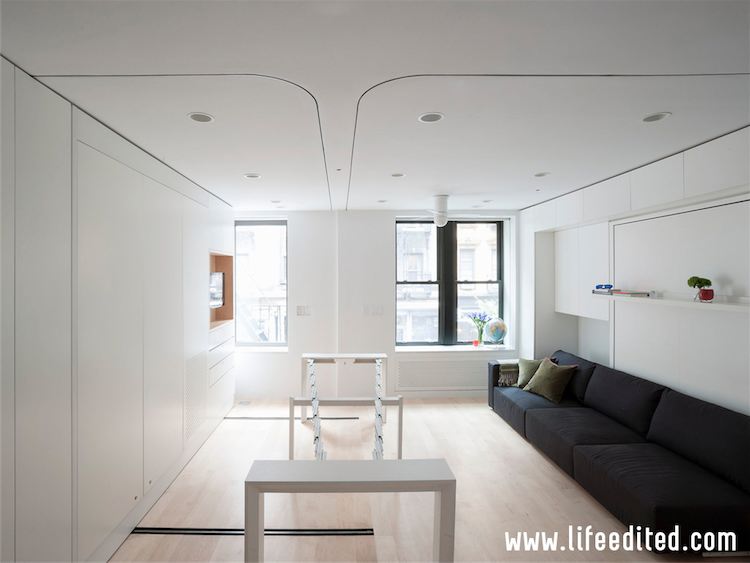
Matroshka are the stacking Russian dolls, where one doll fits inside the other. Swedish outfit Matroshka Furniture seeks to achieve a similar space-saving trick with its line of modular furniture. Like the dolls, every component of their furniture unit fits perfectly together.  The 161 sq ft (15 sq m) unit includes a desk, a lounge, a dining area, seating for 12, a bed and ample storage.

matroshka-1

We particularly like the table that appears to be on hydraulic lift, converting from coffee to dining height.

One of these units could be a one-stop-shop for optimizing your living space. We don’t have any pricing information right now. According to Matroshka, they are looking for a US partner; we’ll keep you posted.

matroshka-2

matroshka-3 matroshka-4

Comfortably Seat Ten in Your Micro Apartment

In the coming months, we will be highlighting products and services we use in the LifeEdited apartment. Today, we’re looking at the Resource Furniture Goliath Table.  

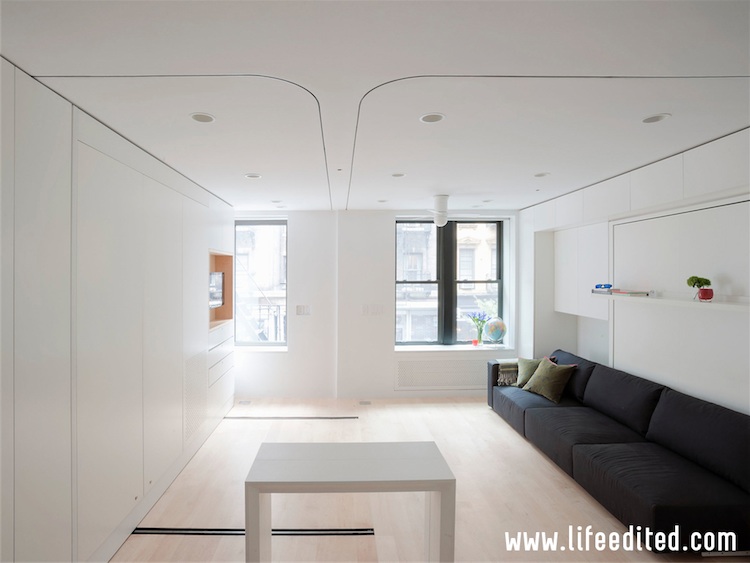
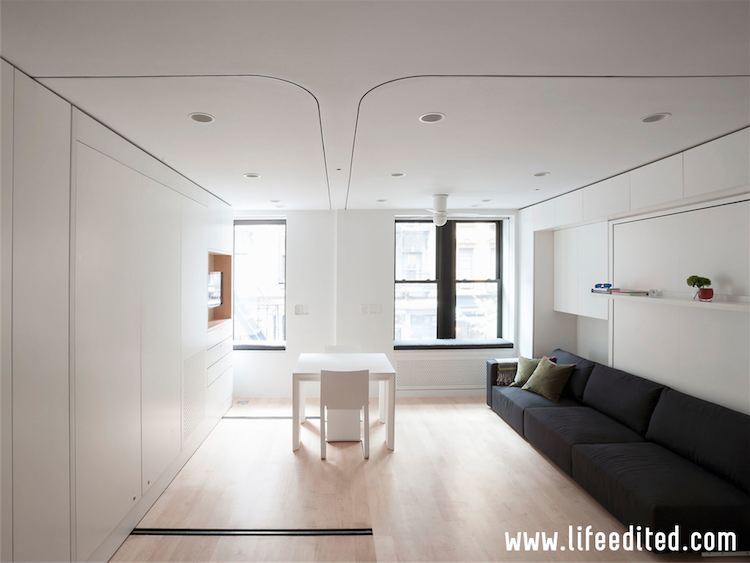
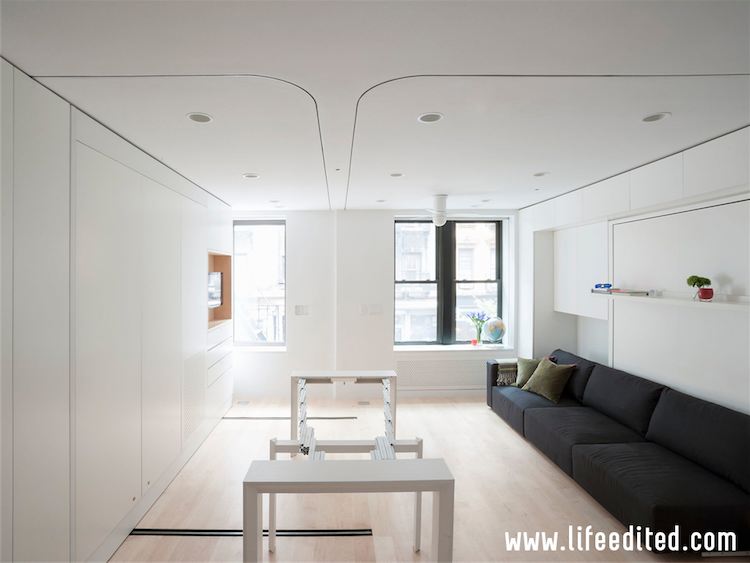
Of all the pieces of furniture in the LifeEdited apartment, none get more oohs and ahs than the Goliath Table. The table, made in Italy by Ozzio and distributed in the US by Resource Furniture, transforms from a 17″ deep console without leafs to 115″ dining room table with.

Depending on how many of the five leafs you add, you can make the table appropriate for seating two, four, etc. In the cozy 420 LifeEdited space, it’s a critical piece of furniture, allowing us to easily host dinner parties for ten plus people.

When not in use, we store the table under a breakfast bar made especially for the Goliath.

The table is available in a number of durable finishes. Visit Resource Furniture’s website for full details. While the starting price of $3950 might strike many as a lot of money, consider that this table can effectively turn any room into a real dining room. Think about the cost of eliminating 50-100 sq ft from your home. How much would that save?

Perhaps you’d use it to turn your dining room into something you might use more like a home office. Likewise, the table’s high quality construction make it something you can keep for many years. Looked at this way, we think the Goliath a great investment (it’s sure to impress your dinner guests too).

Origami Makes Editing Your Outdoor Gear a Little Easier

One of the great appeals of living a pared-down, less distracted life is that it affords the time and mental space to engage in recreational activities. But there’s a catch for the minimalist recreational enthusiast: Unless you’re a runner, you’re activity of choice probably requires a bunch of gear. LifeEdited founder Graham Hill is a kiteboarder with a board, harnesses, etc. This author is a road and mountain biker and must negotiate two bikes and a ton of gear like tools, thermal bib knickers and so on. Storing all this stuff while trying to keep a pared down life can be a real challenge.

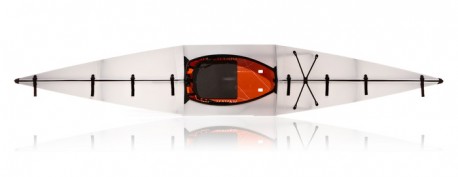
While we don’t have definitive answers for kiteboarders and cyclists (though the ThinBike technology might help slim your rides), there is good news for the edited kayaker. By incorporating origami principles, the Oru Kayak takes one of the most space-intensive outdoor sports and makes storage very manageable.

The 12 foot, 25 lb kayak folds up into a 33″ X 29″ X 10″ travel case. The kayak is rated to 260 lb load and can withstand at least 20K folds.

The Oru Kayak is available in spring 2013 for $800 through Kickstarter.

If you have any suggestions for storing your outdoor equipment, let us know.

Skinny Living in Spain

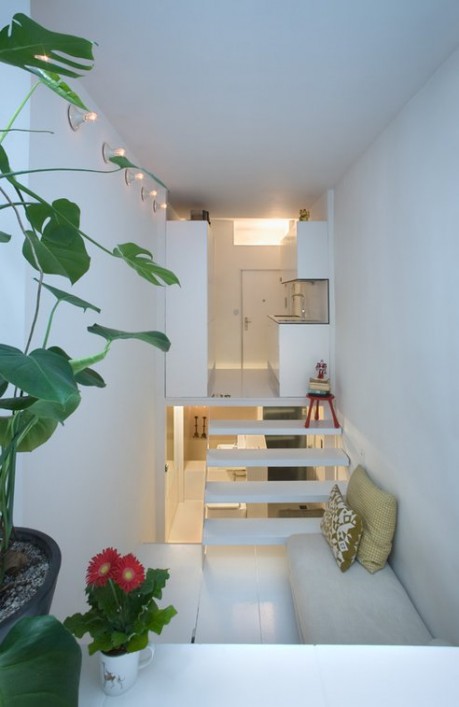
Compared to Europe’s narrowest house that we looked at a couple weeks ago, this home by MYCC Studio in Madrid feels downright palatial. The whole apartment is only 200 square feet and measures 6′ 10″ wide, with an 8′ 6″ office area. The design takes advantage of the large amount of vertical space, with rooms layered on top of one another.

We think the apartment is pretty gorgeous and has great division of spaces considering how small it is. It’s not exactly an ideal home for collectors and people with lots of furniture. And as it lacks a door to the bathroom, it’s not for the camera shy.

via Treehugger

image credit: © MYCC/ Elena Almagro

Get Ripped, Clear Clutter and Boogie Down

Many of us still lug around our CD collections despite the fact we stream our music or listen to MP3’s. We can’t bear to rid ourselves of these little mirrored disks that store music, memories and money. So we burrow them in the recesses of our closets or proudly display the jewelboxes in our living rooms–vestiges of days when visitors could size you up based on your Kraftwerk collection.

Though media storage is a valid form of decoration, the fact is most of us can carry our music library in our pockets nowadays. And while many of us have intentions galore for converting our CD collections into digital formats, the gap between intention and action is often a vast one.

Enter RipDigital. The service takes your old CD’s and converts them into one of three digital compression formats: 192kbps, 320kbps or Apple Lossless (ALAC) and FLAC formatting–basically good, great and audiophile qualities. Prices are $.99, $1.29 and $1.49 per disk respectively.

Send your CD’s to RipDigital and they will send the files back on a DVD or your device like an iPod or external harddrive. They also sell hardrives ($134-274) and iPods ($269-439).

If the prices sound high, consider that an iTunes song runs you around $.99. For a couple hundred bucks, you could convert a pretty sizable collection, adding tons of music you already like to your library as well as saving space and clearing clutter.

We realize that digitally compressed music, for some very discerning ears, doesn’t quite have the richness of CD’s (or vinyl, some would say). For these people–e.g. Gary Chang whose tiny house includes a wall of CD’s–keeping their CD’s and vinyl makes sense. The rest of us, who don’t do anything with our CD collections, we must concede that music that is not listened to has really low fidelity.

image via flickr/misterjt

Four Tools to Replace Common Items with Your Smartphone or Tablet

50% of Americans own smartphones and 20% have tablets. While most, if not all, of the smart-phoners are the tablet owners as well, any way you look at it, that’s a lot portable technology.

Given that so many people have these devices, why not exploit them to their full potential? Beyond obtuse apps for blueprint design and augmented reality games, there are a number of apps that turn your smartphone or tablet into common household items, saving space and money. Here are a few:

  1. Scanner. After our post the other day about essential items, a couple commentors suggested using an app for scanning rather than a clunky machine. Camscanner and Scanner Pro allow you to take photos or screenshots on your smartphone/tablet and turn them into jpgs or PDF files (Scanner Pro is iOS only).
  2. Books. No matter where your eBook collection is (Kindle, Nook, iBooks), there is an app that allows you to read your from any smartphone or tablet. While the idea of reading on your phone’s tiny screen might seem strange at first, it’s quite easy to get used to and the convenience of always having a book on hand can’t be beat.
  3. Universal remote control. For $60 or so, products like UnityRemote by Gear4 (iOS) or Beacon by Griffith Technology (Android and iOS) will turn your smartphone and tablet into a universal remote for your entertainment system. Beyond consolidating devices, the more intuitive interfaces of smartphones and tablets make set up and use simpler than standard universal remotes. The one downside is you probably want to keep one of those devices by your entertainment system at all times. This might argue for having your device as a supplemental remote or having a dedicated device such as an old iPhone or iPod Touch; this is also a good place to send media from for Airplay-enabled stereo systems.
  4. Flashlight. Most of us keep one of these around for the odd hurricane. Then we look for the flashlight when that emergency arrives and find its batteries are dead. Since most of us have our phones on us and charged at all times, they make perfect flashlights for emergencies and occasional use. There are a number of flashlight apps for iOS and Android that use the screen and/or camera flash as a flashlight. Most include strobe lights for side-of-the-road breakdowns or impromptu discos.

What other apps replace common household items? Let us know in the comments section.