Tiny Apartment Merges Transforming Design with Organic Style

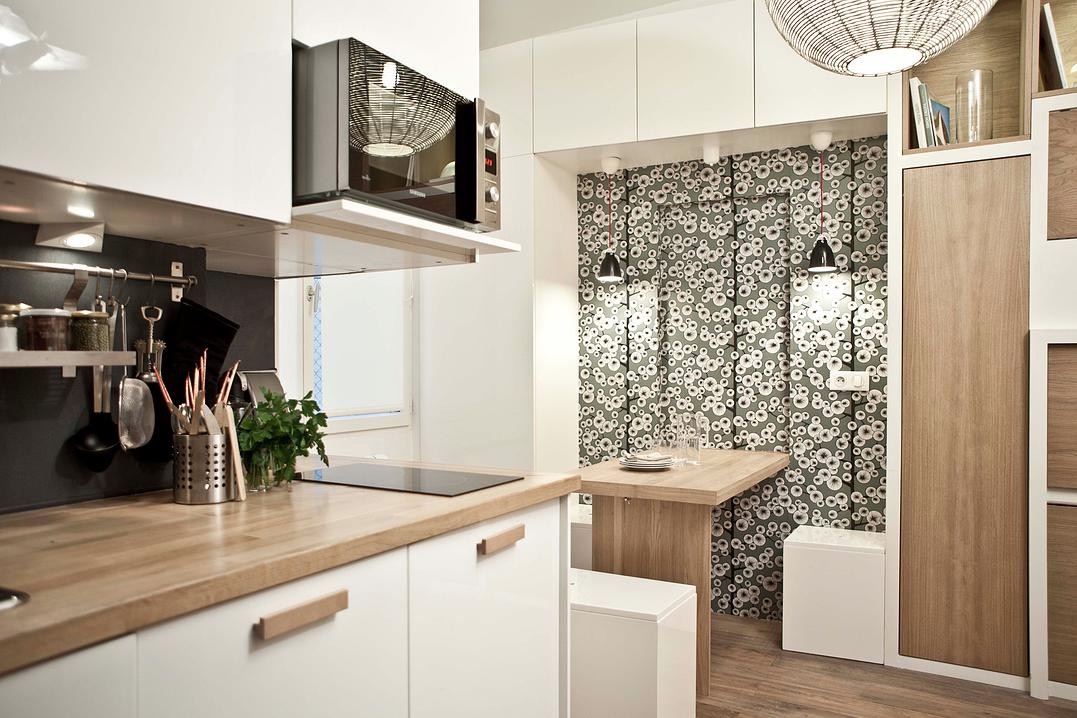
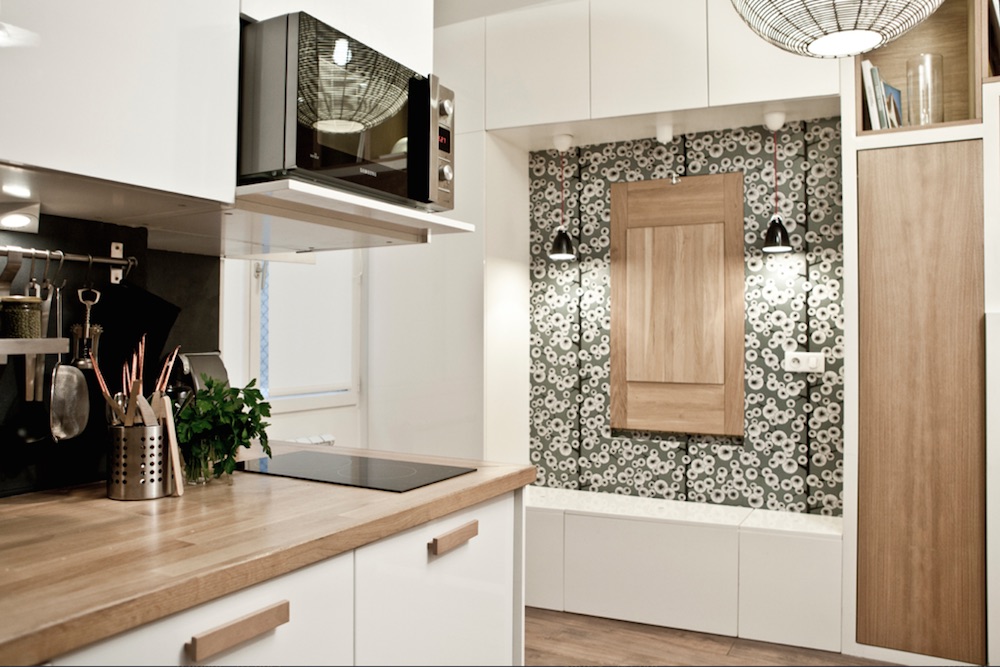
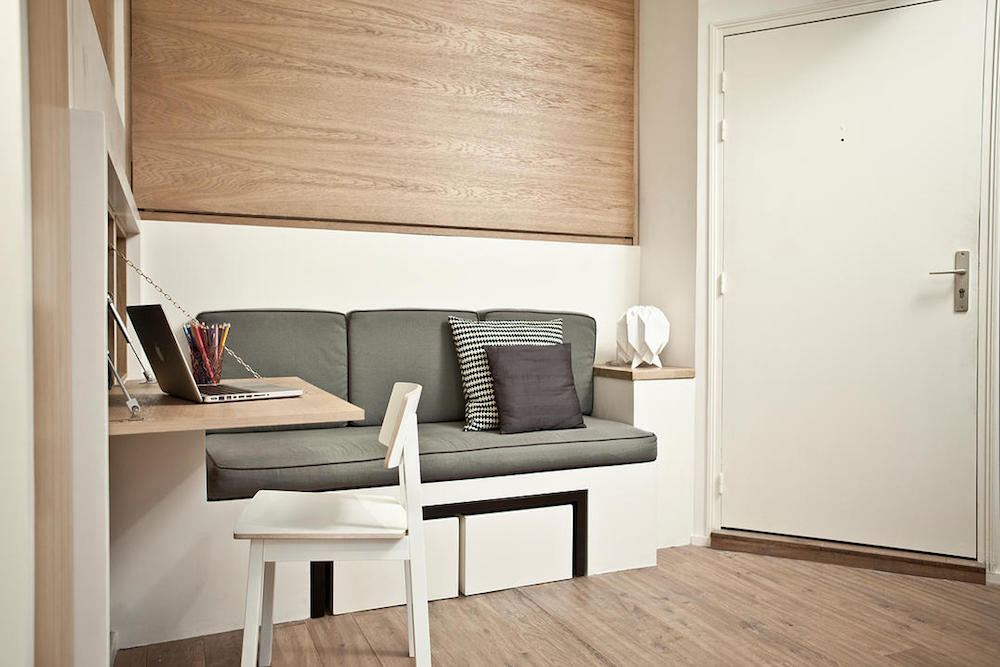
There’s a tendency for tiny transforming apartments to feel like they’ve been designed by Optimus Prime. Often when you add furniture that folds into the wall, it’s hard for an interior to not have a futuristic, modern vibe. Which is why interior decorator Geraldine Laferte’s tiny “Duhesme” apartment is so successful–it merges transforming furniture with a warm, organic style.

The Parisian apartment measures a mere 193 sq ft, yet features a dining area, kitchen, lounge, desk, bed and bathroom. Laferte uses a mixture of warm woods and muted wallpaper to keep the place feeling anything but cold and futuristic. The transforming elements include a wall bed that sits above a built in sofa and there’s a small dining area with a table that folds into the wall when not in use; three cube-shaped stools serve as seating. The whole space is lined with floor to ceiling cabinetry to maximize storage.

Only Thing Tiny Apartment Lacks is Clever Description

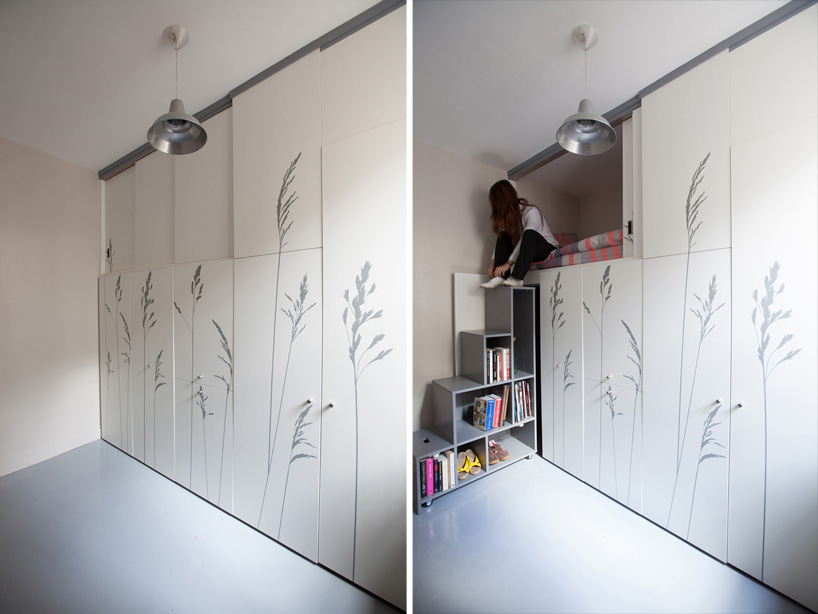
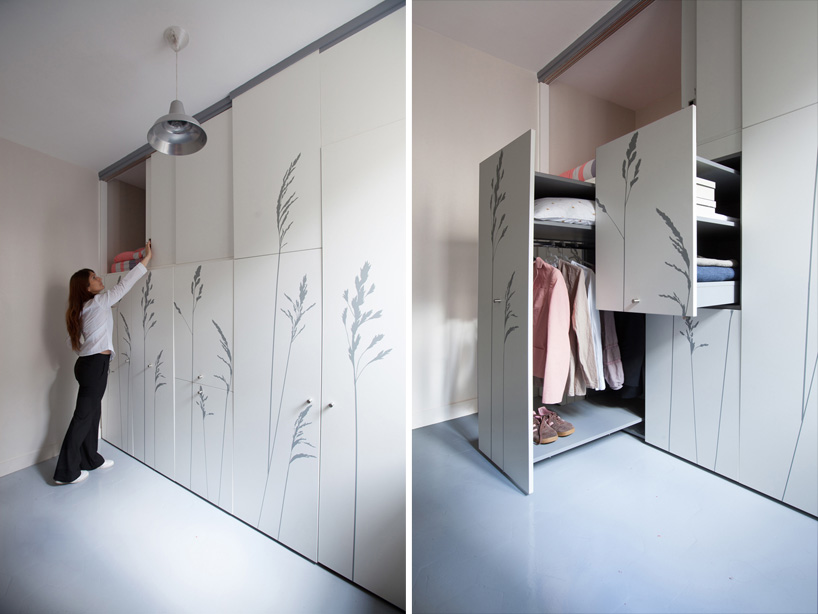
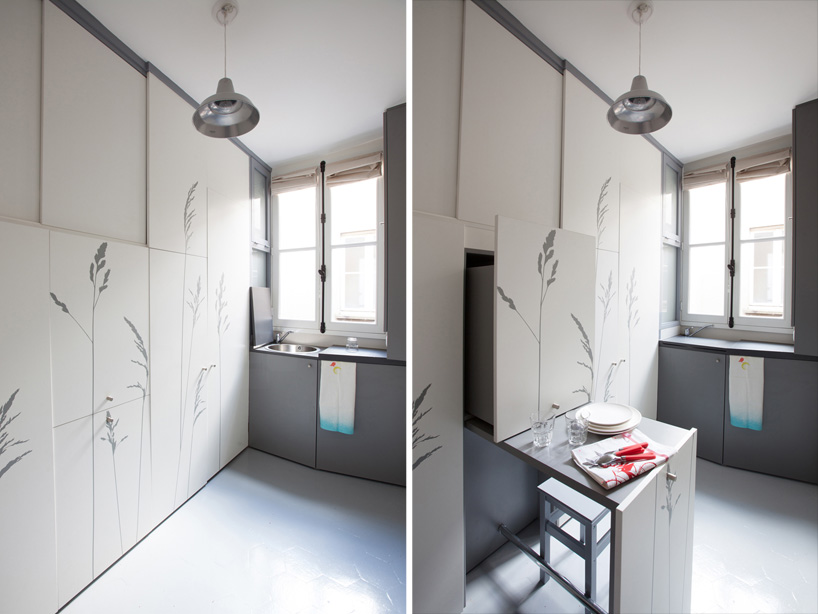
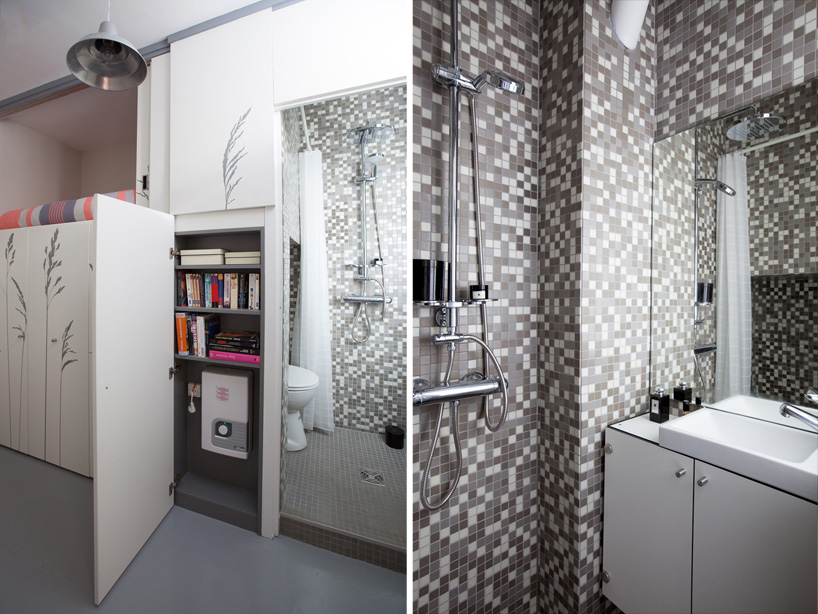
Okay, it might not be as small as last week’s 75 sq ft Roman sliver of an apartment, but at a mere 86 sq ft, this Parisian flat still qualifies as ultra-tiny. Amazingly, like its continental cousin, the place is full featured, including sleeping, cooking, bathing and storage capabilities.

The space is located in a classic Haussmann building and was originally used as a maid’s quarter–a type of flat known for its small, spartan qualities. The client wanted to ready the space for an au pair. Kitoko Studio designed the space so all of its functions stow away in a volume of floor-to-ceiling cabinetry. A single bed is hidden inside an upper cabinet and accessed via a stepped cabinet that slides out from underneath. A dining table/desk with stools hooked underneath pulls out of another cabinet. A wardrobe and storage shelves slides out from another. There is also a wet shower and small kitchen with pullout cooktop, microwave and sink.

kitoko-studio-tiny-apartment-paris-floorplan

The clever and clean approach to the apartment’d design give it way more utility and style than such a small space would normally possess. And while the skinny nature of the apartment has an overall claustrophobic feel in my opinion (hey, it is 86 sq ft), I could see this as a completely reasonable place to live for a while, especially if your life is not centered at home.

Via Designboom

Five People, Nine Cubes, Lots of Wood

By LifeEdited standards, 872 sq ft (81 sq m) isn’t small, but when it’s housing a family of five, it’s pretty impressive. That was the space Brachard de Tourdonnet Architects were tasked with making work for one French family. Besides normal home functionality, the clients wanted the home to be like “life in a caravan in which everything is functional and integrated,” according to the architect’s website. What they devised was a space portioned into nine cubes, each measuring 97 sq ft, a ton of built-in furniture and walls and doors that can be opened to create larger spaces or closed off for private ones as needs and family affection (or lack thereof) demand.

We’d guess the ceilings are about 12′ high–tall enough for two of the cubes to be divided vertically such that there are sleeping lofts for the kids. Narrow hallways and glass walls allow light to pass from the south-facing window bank to the back of the house where there are no windows.

The architects do not indicate what type of wood is used for the main structure, but there’s a lot of it. What we know about custom millwork like this makes us guess this place cost a fortune to build. That said, we don’t know the particular economics of the space. It may have been much cheaper to renovate then move to a larger apartment.

The coolest feature of the apartment is that it provides at least one door for every member of the family. In other words, if everyone is feeling antisocial and sick of one another (a not so rare occurrence in many families), everyone has a place they can call their own. For five people to do that in a space less than 900 sq ft is impressive indeed.

Via Living in Shoebox

Très Chic Parisian Micro Digs

While Japan might be the nation most associated with micro living, the French hold their own in terms packing big design in small spaces. Case in point are BioApparts I and II, a pair of Parisian micro-apartments designed by Karawitz Architecture. BioAppart I is 193 sq ft and BioAppart II is 172 sq ft; they were designed for client Esther Baumann and meant as prototypes for a replicable rental properties.

As the “bio” prefix implies, there was a heavy emphasis placed on making the apartments as earth-and-human-friendly as possible. Here’s are some of the features Karawitz included in BioAppart I:

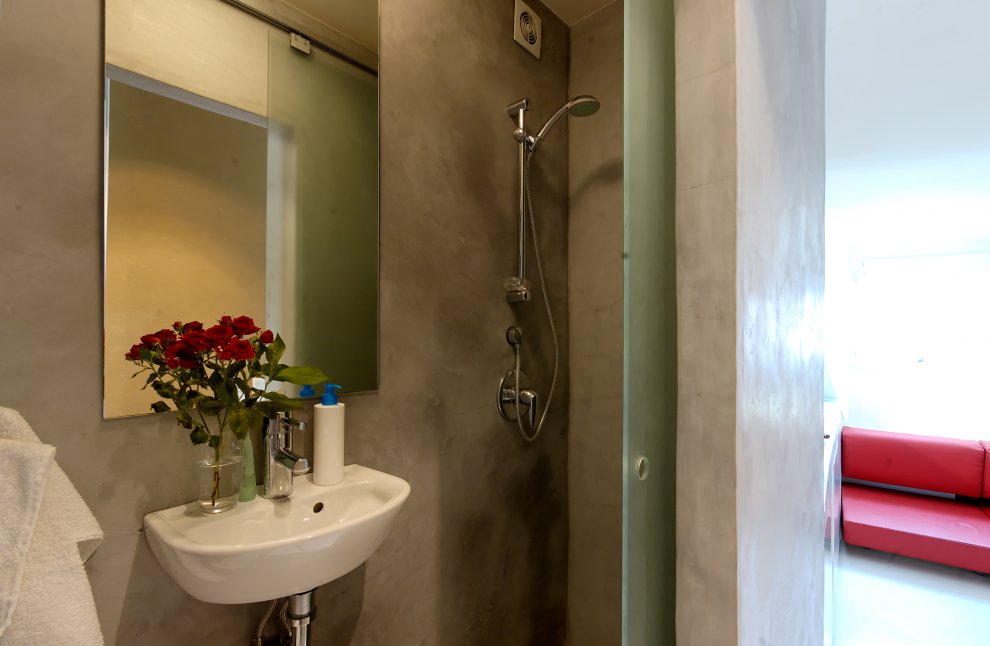
[The] cabling is “shielded” for the elimination of magnetic fields, lights and taps are energy saving. The attic is insulated with hemp, the remaining walls and the ceiling are painted with emission-free bio-friendly paint. All the furniture is of solid timber construction, with birchwood veneers. The bathroom and kitchen are finished in cement stucco, based on the Moroccan “tadelakt” technique, in order to provide a surface finish which is waterproof. The little most of the Bioappart: a “living” wall with a clay finish that absorbs or releases humidity according to the hygrometry of the room, it can also diffuse essential oils.

Both apartments feature very high quality looking finishes and elegant, minimalist designs. One of the great things about small spaces is that even when you opt for high quality materials, the reduction of area needed to remodel keeps costs manageable. The price of a full renovation on BioAppart I was reported to be $57K.

If you like the BioApparts and you’re in Paris, it looks like you can rent them out. Though we couldn’t find either BioApparts I or II, Baumann appears to have a few other places for rent around Paris that look pretty swell too.

Photos by: Mischa Witzmann

Would You Live in an Idea?

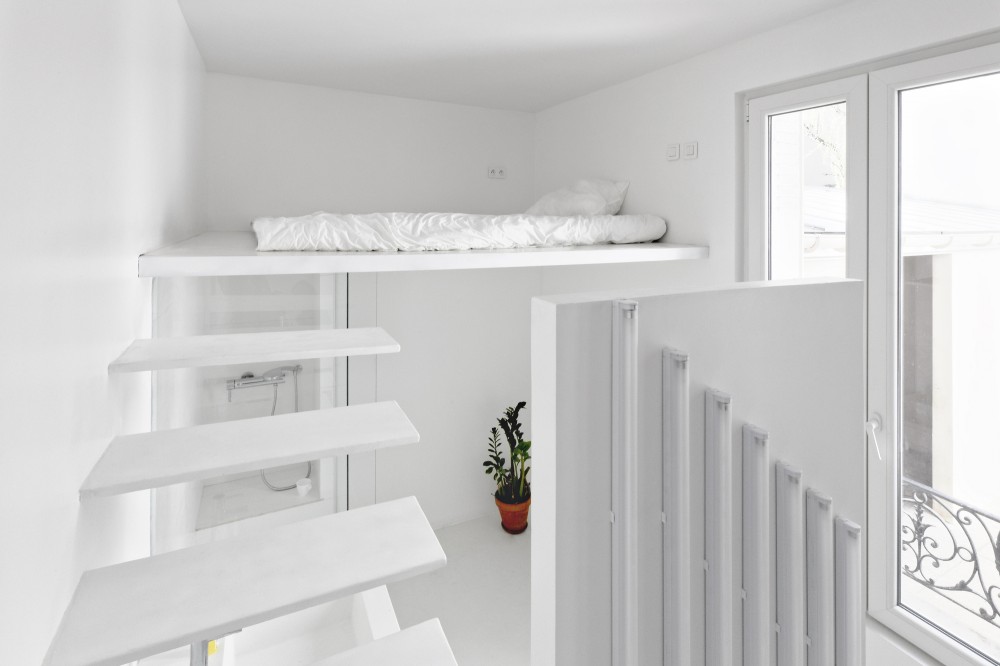
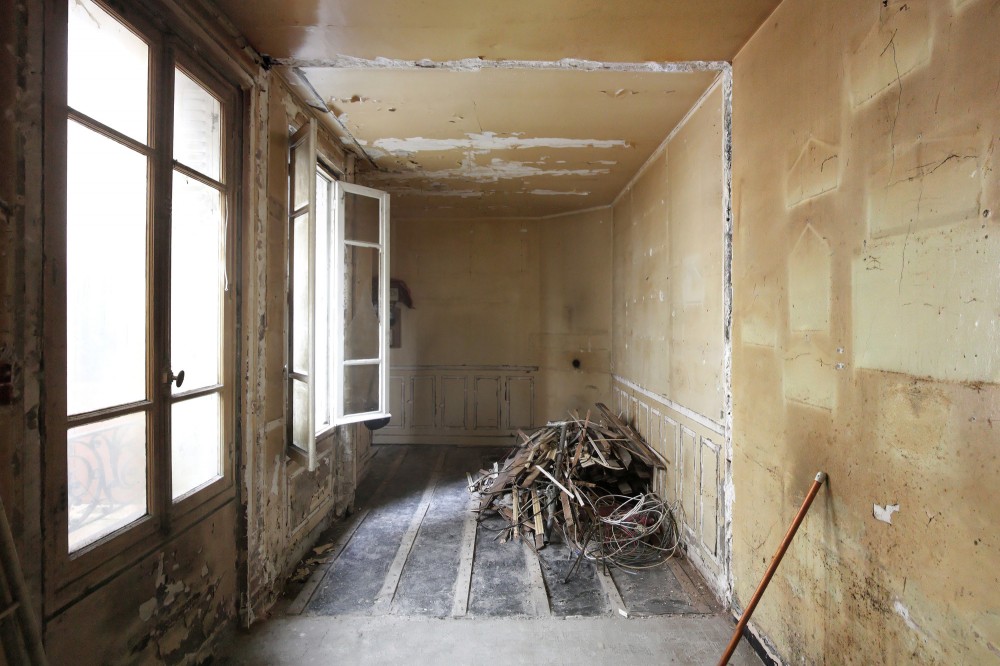
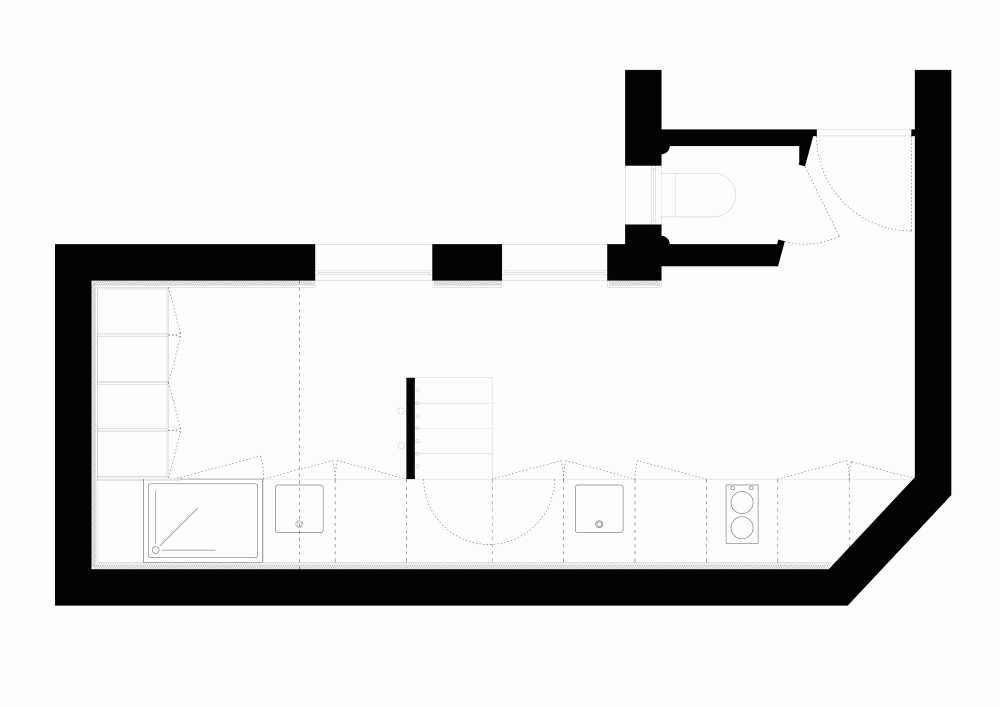
We ran across this stunning little Parisian apartment in Arch Daily. The level of detail and design that architecture firm Betillon Dorval-Bory brings to the 215 sq ft (20 sqm) space is remarkable. Yet there is more to this tiny space than meets the eye (or rather your eye brings more to the space).

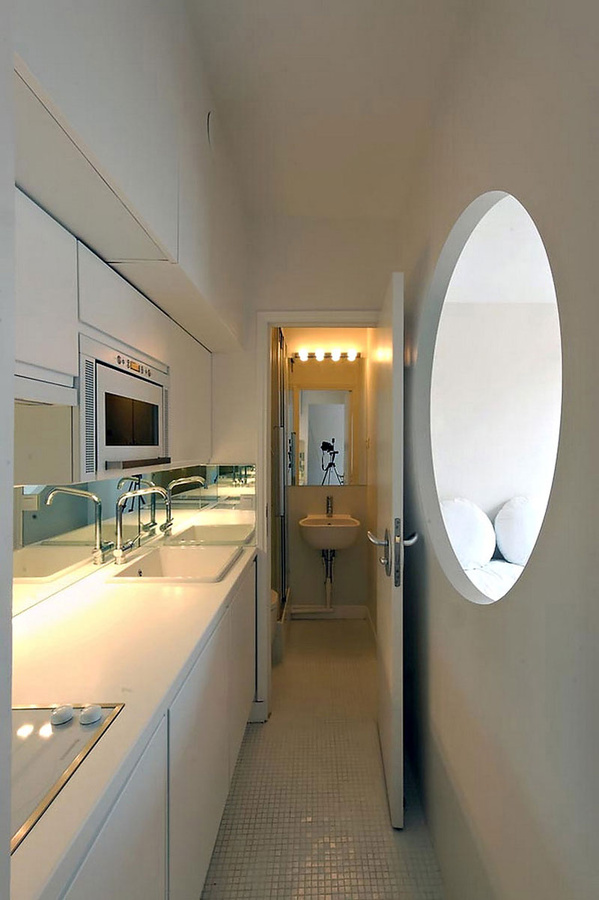
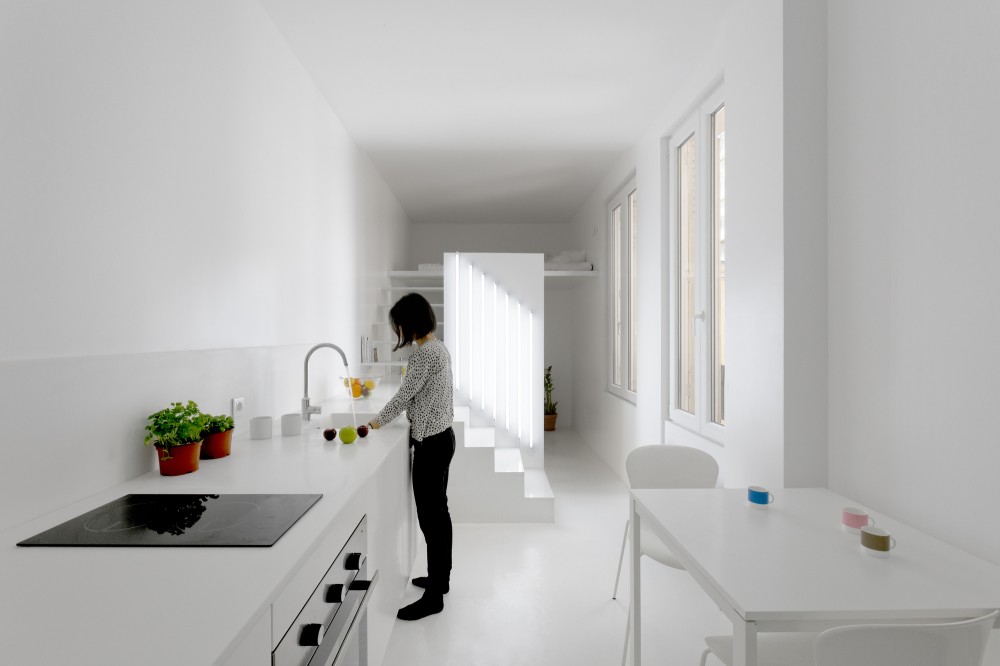
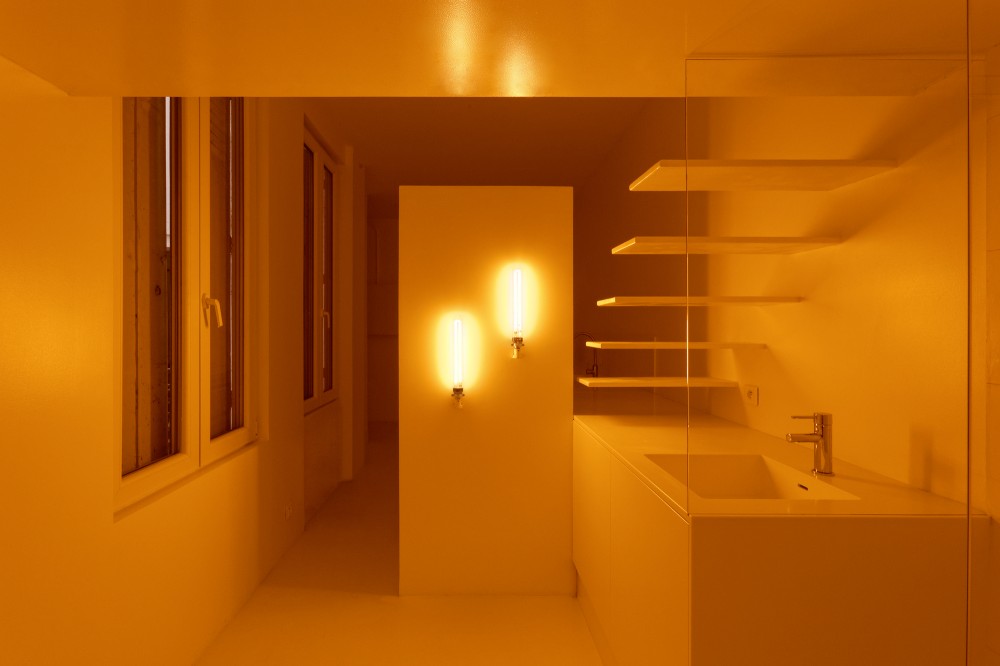
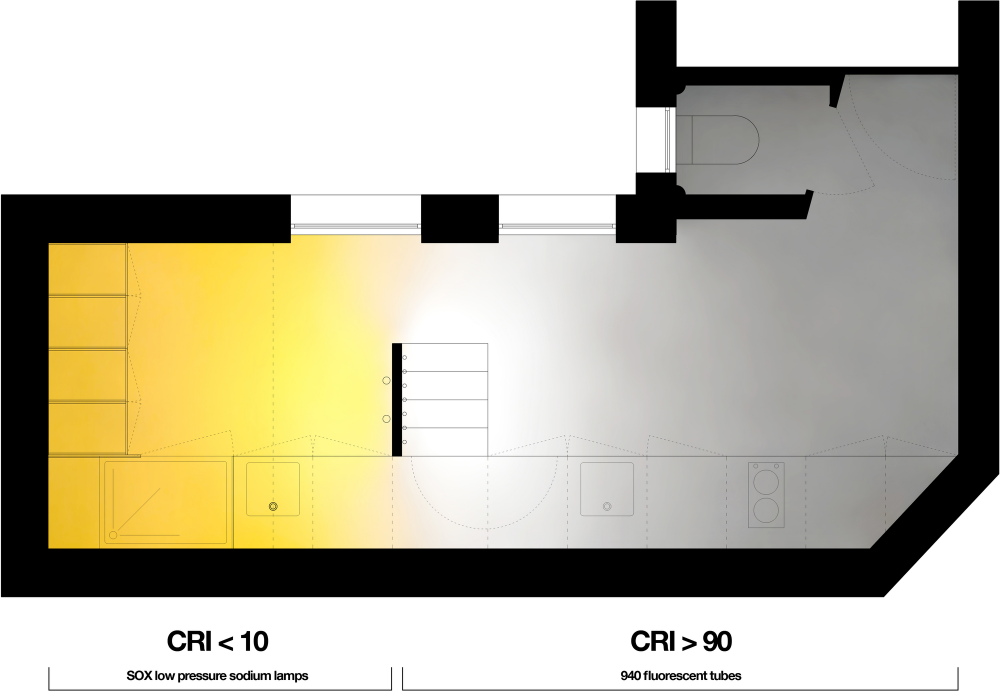
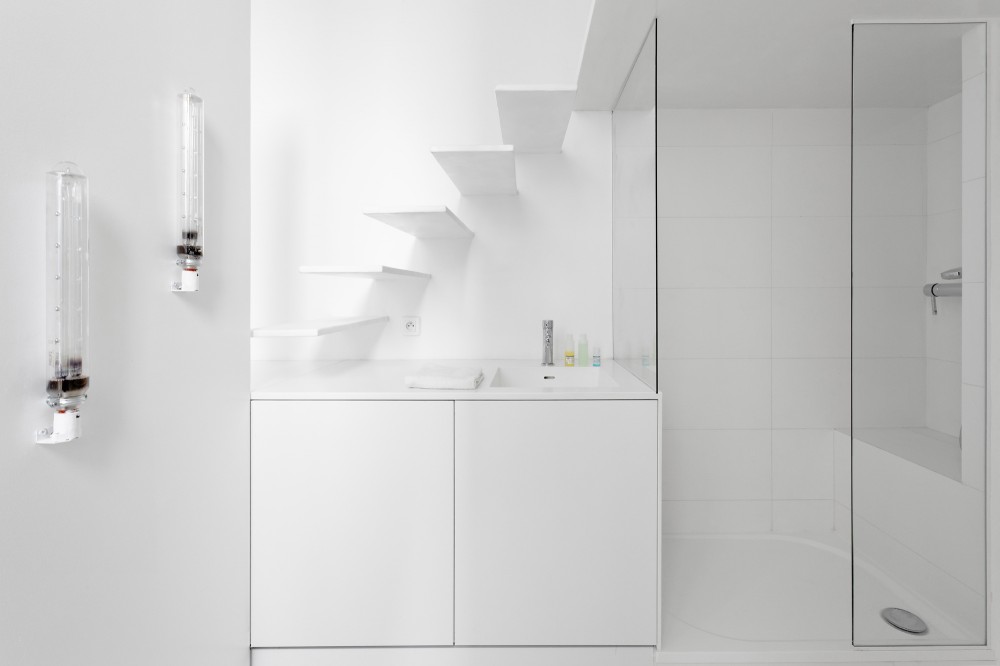
The apartment, dubbed “Appartement Spectral”, is a study in light. In order to compensate for a dearth of natural light (a point we’re not sure we’d agree on), BDB decided to play around with different types of artificial lights. One side of the apartment is lit by low-pressure sodium lights and the other florescent. Each type of light has a different color rendering index (CRI). “The CRI of a light describes its ability to reflect accurate color of a surface,” according to BDB.

The low-pressure sodium lights, which are the same orange lights you see illuminating cities when you’re in an airplane, have a very low CRI, which means everything ends up monochromatic and the same orangey hue of the light. These lights are relegated to the bathing and sleeping areas where BDB thought distinguishing color was not as critical.

The florescent lights have a very high CRI and thereby render all reflected colors near perfectly. These lights were placed in the living and kitchen areas where color distinction is more useful.

In terms of how the sparse interior and light play off one another, BDB says this:

The apartment is designed in a simple and neutral expression, without color or particular detail, annihilating any architectural expressiveness or narrative to leave only the logic of composition generated by light.

The apartment is pretty gorgeous in our opinion, but we do wonder what it would be like to live in. In terms of sterility, this place makes the LifeEdited apartment look like a music festival porta-potty–it’s whiter than white. And as interesting as the theory is behind the lighting, we’re not sure how it makes the space more livable necessarily.

Of course our questions are a bit silly. This is not an apartment for just anyone. This is a tiny aesthetic wonderland and, for the right esthete, this would make a perfect home.

via Arch Daily

Photo credit: Betillon Dorval-Bory

Former Bordeaux Garage Makes Chic Micro Maison

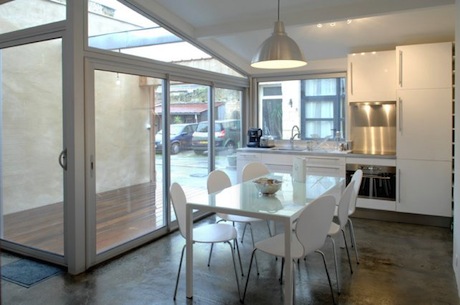
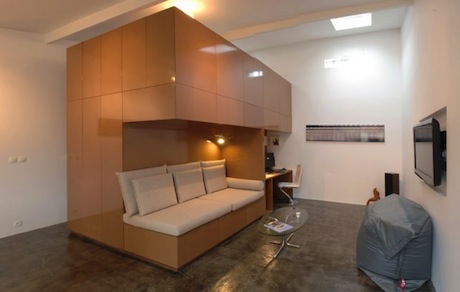
Photographer Jérémie Buchholtz wanted to buy a home in Bordeaux, but there was a dearth of desirable properties in his modest price range. When he found an unused, corrugated-steel-sided 485 sq ft back-alley garage for €80K, he decided to call on friend and architect Matthieu de Marien to see what they could do. Together, they converted the sorry garage into a gorgeous retreat with tons of light and function and even its own 129 sq ft private patio.

passage-buhan-kitchen

passage-buhan-interior

Like the East Village loft by Jordan Parnass or the Spiritual Mode living thingy, the Bordeaux space relies on a freestanding structure that houses the bathroom, sleeping loft and storage rather than containing these things in walled-off rooms and closets. These structures are ideal for raw, open spaces, and like they mention in the video, they keep all the functional parts of the house compact, creating an open feel in the rest of the small space. They also make good use vertical space–important here because they could not build higher than one story due to building code preserving the historic integrity of the neighborhood.

Creative adaptation of existing structures is a vitally important topic in looking at the future of architecture. While it’s cool to build amazing new houses, most of the homes of the future are already here; some, like this one, have been around for hundreds of years.

Via Fair Companies

images via Matthieu de Marien

A Small Space Kitchen that is Not an Eyesore

Kitchens in small apartments can be pretty sucky. For one, because the apartments are often geared toward budget-minded buyers and renters, yellowing and delaminating formica tends to be the building material of choice. Then there are oversized appliances. Since smart, small American apartments are as common as plain-speaking architects, few companies make–or export–good small appliances. As a result, these small spaces are often outfitted with full sized ovens, ranges, sinks and dishwashers. You end up with an otherwise nice space marred by a blemish of a kitchen.

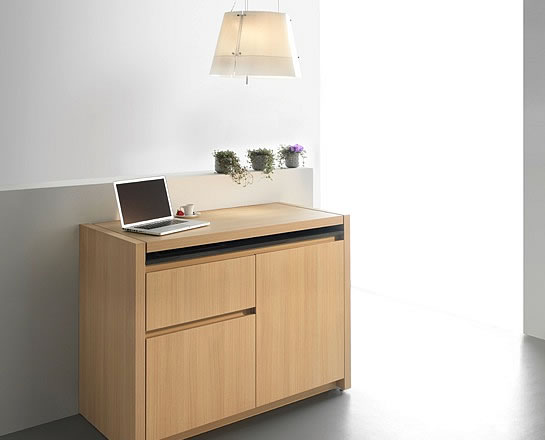
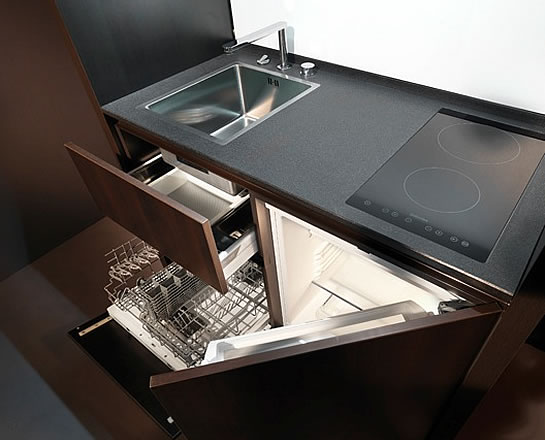
French firm Kitchoo might have an answer for this dilemma. They make elegant, high-quality, small-space-appropriate, all-in-one modular kitchens.

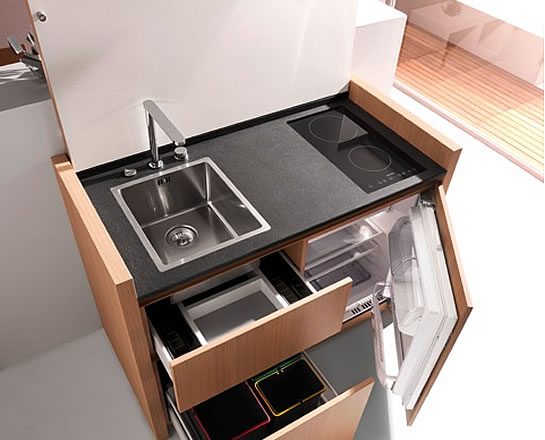
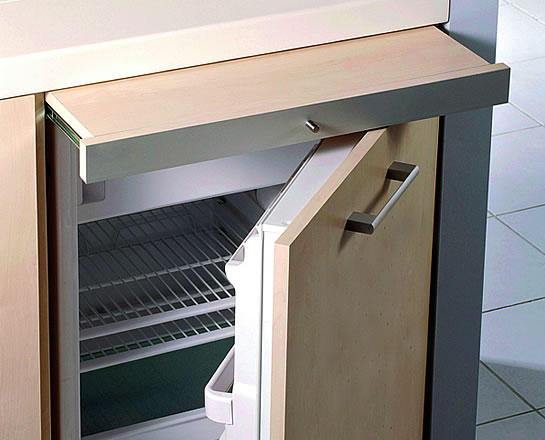
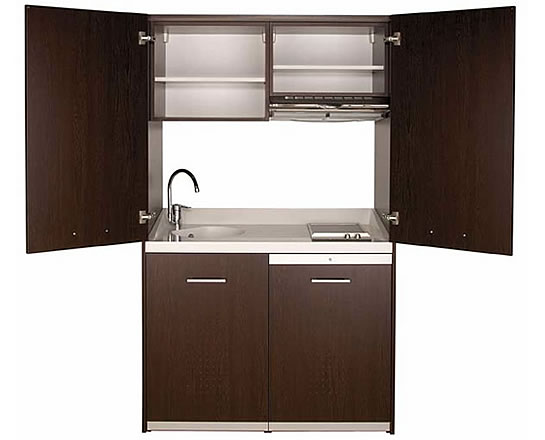
They make two series of kitchens: The K and M series. The K series is the sleeker and more expensive of the two. The K1 is 51″ w x 25″ d (the K1) include two induction burners, a fridge/freezer, a sink with telescoping faucet, a cutlery drawer and optional dishwasher. The K2 has a top shelf that holds an oven and additional storage. All construction materials and appliances are eco-friendly. Prices begin at 5,505 € ($7400).

What’s special about the K series is that when the sink is hidden, it does not look like a kitchen. This is actually quite important for a small space, where it’s valuable to have every piece of real estate able to double duty. The K kitchen could literally be a desk during the day.

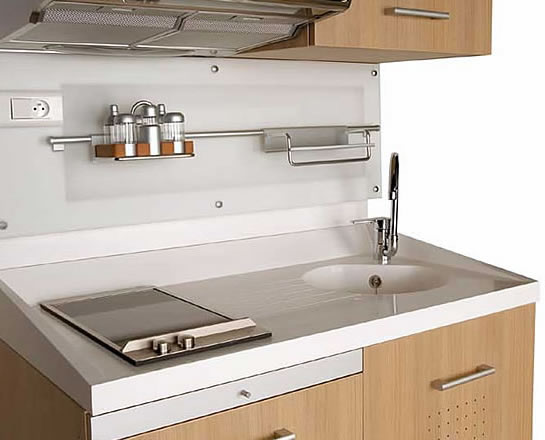
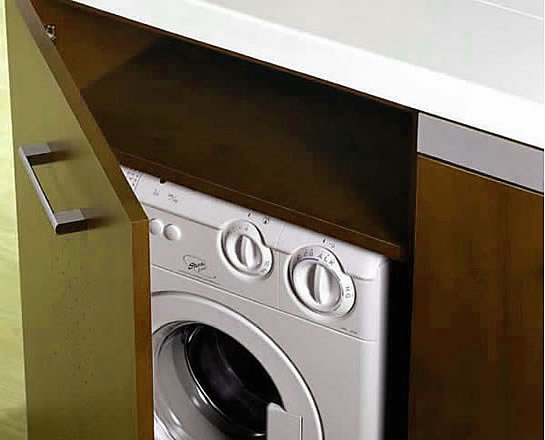
The M series is Kitchoo’s more pedestrian version. The sink faucets do not telescope and rather than the M’s flush induction burners, the M features slightly raised electric cooktops. Besides being less expensive (prices start at 3,833 €/$5143) the M series seems a bit more practical. It features pull out countertops that can double as a table, more storage and, coolest of all, an optional mini washing machine. The M3 (5,500 €/$7379) is the biggest M series and would really be suitable for someone who frequently cooks.

While these prices are a bit on the steep side, compared to the costs of custom kitchens, which easily exceed $10K, it’s not so bad. Granted, this will appeal to buyers more than renters.

Unfortunately (and we realize we’ve been saying this a lot lately), Kitchoo kitchens are only available in Europe. We reached out to them and they told us that they are planning on coming to the States in the near future. We will keep you posted.

We’re hoping with the growing popularity of the micro-apartments and tiny homes, products like Kitchoo and the smart, small appliances they feature, will become more available to American markets.

Parisian Apartment Presents Micro Luxury Living

We’ve looked at some pretty small apartments in the past, and while it can be inspiring to see folks occupying such a small footprint, it’s not always an aesthetic treat. Wired Magazine recently looked at a Parisian apartment that is both compact and comely.

Thibaut Ménard’s 130 sq ft Montparnasse apartment is micro-luxury at its best. Architects Marc Baillargeon and  Julie Nabucet built the space–once a master bedroom in a Haussmann multi-story building–with the detail normally reserved for larger, luxury units. They also included a number of innovative small-space solutions like a staircase storage unit that rolls away to create more space; a sliding bed that, when pulled out halfway, serves as a couch; and a split-level layout that stores the bed and gives the space more dimension.
Oftentimes, tiny spaces are associated with worst-case-scenarios; the story goes that someone was so down on his/her luck that he/she had to move into a 130 sq ft apartment. Ménard’s apartment and many others are presenting small living as an active choice, where spaces are optimally designed, not cobbled together with whatever is lying around.

If you know of other tiny homes with big design, let us know.

Images and story via Wired