147 Tips to Avoid Wasting Time Online That’ll Blow Your Mind

There you are, doing something worthwhile online–researching, reading the news, connecting with people on Facebook. Then you see a link. “This kitten has a special trick that’ll leave you speechless.” You click through to a web page with a Youtube video of a kitten smoking a cigarette and doing shots of Jaegermeister. You chuckle. You try hard to return to what you were doing. You add four minutes to your life’s clock of time ill used.

We don’t want to suggest that recreational activity–online or otherwise–is intrinsically time misspent, but if we saw our lives as balance sheets divided between time spent on activity that enriches and activity that distracts, chances are much of the viral media that’s out there is basically a waste of time.

A study released last year reported that Americans aged 18-64 who use social networks spend an average of 3.2 hours per day on those networks. While there is surely a portion of that time used to good effect, there is surely another (very large) portion that is spent clicking through to sites that add almost no value to our lives. If you’re interested in having more time for the important stuff, we suggest to look out for and, whenever possible, avoid online media with these attributes:

  1. Titles that use the following adjectives: richest, hottest, best, worst. These are almost always the things that lead to a lot of head-scratching and asking, “where did the time go?” and “what did I gain from learning that?”
  2. Virtually any list exceeding 15 items. Sure, every now and again there’s a useful list that’s longer than 15 (e.g. 100 cities with highest quality of life), but more often than not, these lists are a complete waste of time. In fact, most are designed to generate pageviews. Oftentimes, each item on the list has its own discreet page. The more pages you click on, the more ads the site will expose you to, the more revenue they generate. By all means, get drawn into good content, but beware of endless, superfluous lists.
  3. Virtually anything about celebrities. Unless you’re Kanye West, there’s very little probability that the comings and goings of Kim Kardashian having any bearing on your life.
  4. Stuff about the decade you were born in. 20 Things you’ll appreciated if you were born in the…90s, 80s, 70s, etc.” Yes, like millions of others, I used to listen to Wham and cuff my jeans. This is not critical information to my wellbeing. It’s not even that interesting or funny upon reflection.
  5. Titles that say “Must see.” Think about it, does a respected and venerated journalistic outlet like the NY Times–a place that delivers impactful, high quality, dare we say “must see” content–use the words “must see”? Okay, maybe they would in today’s click-happy media landscape., but really important stuff rarely needs to convince you of its import.
  6. Titles that end with “what happens next will blow your mind.” Okay, maybe it will blow your mind, but it will not, in all probability enlarge it.
  7. Titles with “Your won’t believe…” Again, unbelievability and usefulness are not synonymous.
  8. Titles that start with “Things you didn’t know about…” You probably didn’t know about these things because they weren’t that important.

How would you increase this list? Let us know in our comments section.


How to Create a Healthy Relationship with Technology

Aside from publishing this site and our real estate arm, one of the chief things LifeEdited does is spread the less is more gospel at various conferences. This last weekend we–specifically Graham Hill with my assistance–presented at the Revitalize Conference organized by the good folks over at Mind, Body, Green. The name of our talk was “Signs You Have an Unhealthy Relationship With Technology.” While there’s undoubtably a crisis of excess affecting consumer goods and architecture, those things are well-matched by the attention crisis. We live in a world where people are glued to glowing LCD screens for many of their waking hours–some of those hours are used to good effect, many are not. The talk was an investigation into this relationship between humans and personal technology as well as a brainstorming session for possible ways through some of the more problematic aspects of that relationship.

We touched on the marvels technology has wrought (mostly portable and information tech–smartphones, tablets and to some extent computers). It has given us the ability to access vast amounts of information instantaneously; the ability to fit tens-of-millions of songs or books in our pockets; the ability for unprecedented levels of connectivity, which has changed the face of social activism a la Arab Spring, the Occupy movement and others.

But in line with the talk’s title, we spent a good deal of time elucidating some of the more problematic aspects of technology use. A bunch of this we covered a few weeks ago with the post “Distracted, Dangerous and Dumb: Why it Might Be Time to Check Our Cellphone Use,” which explained how our technophilia is making us bad students, thinkers, friends, lovers, community members and parents. Expanding on that, here are few more things we found about the deleterious effects of our overuse of technology:

  1. Portable tech is making us really, really, horrendously awful drivers. This can’t be overstated. According to the National Highway Traffic Safety Administration (NHTSA), sending or receiving a text takes a driver’s eyes from the road for an average of 4.6 seconds, the equivalent–when traveling at 55 mph–of driving the length of an entire football field while blindfolded. They say driving and texting is six times more dangerous than driving while intoxicated.
  2. It’s even making us bad walkers. Experts say distracted walking results in more injuries per mile than distracted driving. Reports of injuries to distracted walkers treated at ERs have more than quadrupled in the past seven years and are almost certainly underreported. There has been a spike in pedestrians killed and injured in traffic accidents in that time as well (though there is no reliable data on how many were distracted by electronics).
  3. It’s making us nervous nellies. Americans check their phones, on average, 150/day according to study conducted by Nokia.
  4. Our technophilia is crap for the environment. The average American generates 65 lbs of e-waste every year–a yellow labrador’s weight in electronic waste–much of which does not get recycled.
  5. It might be bad for our health. The International Agency for Research on Cancer (IARC), an agency of the World Health Organization, downgraded radiation from mobile phones from a category 3, which means “no conclusive evidence” of causing cancer, to category 2b–a “possible human carcinogen”–a designation shared with diesel exhaust, chloroform, jet fuel, lead and DDT.

When we got all the nasty stuff out of the way, we started seeking solutions. We explained that technology is not bad any more than a chef’s knife is bad–it can be wielded by Mario Batali or Norman Bates for very different purposes.

The thing that became evident is that in many ways technology use is in its infancy. For most of humankind, we have had incremental introductions of technology. In Europe, the lowly table fork took about 700 years between its first notable appearance and widespread adoption. Smartphones have been around for about ten years, yet 56% of Americans already have them–a number that’s only expected to increase. We haven’t had time as a culture to develop rules and etiquette around their usage. So we proposed a few strategies that might start fostering a happy, healthy, balanced relationship with technology:

  1. Regularly going tech free. This is an obvious, though seldom followed, suggestion. We suggested not only turning off your phone, but actually getting away from it–charge it away from your bed at night, keep it off the dining table, etc. Stay away from tech an hour before sleep and upon awakening. Also, we suggested taking a tech sabbath once a week or more. We also suggested going analog for certain things; sure, it’s pretty awesome that smartphones can do so much, but if checking the time on our phones sets us off on four hour Facebook binges, maybe it’s time to get a wristwatch. Likewise, we might play Scrabble rather than Angry Birds, talking to someone face to face instead of chatting online. Sometimes the old ways are the best ways.
  2. Build your defenses. All of us have moments of weakness. If we’re straight about that, we can effectively defend ourselves from common dangers technology poses to our wellbeing. We suggested batching emails, calls and texts, choosing a time or two a day when we knock out all of our correspondences, rather than having a distracting drip feed of correspondences throughout the day. We suggested disabling push notifications–those (generally) useless reminders that come up on our smartphones telling us that Joe thought the new episode of Orange is the New Black was interesting. We suggested using the Airplane mode on our phones liberally. Most of us non-surgeons have few true emergencies. It’s okay to be offline for a while.
  3. Honor yourself and others. When we check our phones incessantly, what we are communicating to the world, in the words of Renny Gleeson, is that “you are not as important as anything that could come to me through this device.” When he said “you,” he meant the people we spend time with, but this could also mean ourselves. By continually checking our phones, we are communicating that our phones and whatever bits of information they transmit take priority over the present moment–whether that present moment is spent alone or with others. If we value our lives, if we value our friendships, if we value our surroundings, we suggested that we might all start acting that way, honoring these things with our “payment” of attention and putting the damn phone down. We suggested getting reacquainted with the art of being “in-between”–those gaps between activities that used to be filled with no activity but are now filled with information. It’s been said that 75% of Americans report using their phones on the toilet. We suggested practicing going tech-free waiting in line, sitting in a cab or taking a poop. Lastly, we suggested leading by example. If we want our kids to be less tech-addicted, if we want our friends to pay better attention, we must do it first.

We also pointed out that these are not fantasitc goals. There are many people living with no or minimal technology, some notable like Jim Jarmusch, Warren Buffett, Louis CK and Alain de Bottom. The latter figure announced to his 443K Twitter followers that they should delete their Twitter accounts. Our closing thought was the reasoning de Botton gave to the Washington Post about his newfound relationship with Twitter. It’s a sentiment we think is applicable to most tech use. He said:

Twitter is of course a wonderful thing, but it is also the most appalling distraction ever invented. It sounds so harmless…[but] It denies us that precious non-specific time in which you can daydream, unpack your anxieties and have a conversation with your deeper self.

…We need long train journeys on which we have no wireless signal and nothing to read, where our carriage is mostly empty, where the views are expansive and where the only sounds are those made by the wheels as they click against the rails. We need plane journeys when we have a window seat and nothing else to focus on for two or three hours but the tops of clouds and our own thoughts.

We need relief from the Twitter-fueled impression that we are living in an age of unparalleled importance, with our wars, our debts, our riots, our missing children, our after-premiere parties, our IPOs and our rogue missiles. We need, on occasion, to be able to go to a quieter place, where that particular conference and this particular epidemic, that new phone and this shocking wildfire, will lose a little of their power to affect us – and where even the most intractable problems will seem to dissolve against a backdrop of the stars above us. FULL TEXT HERE

We couldn’t agree more.

How Minimalist Décor Might Make You Smarter

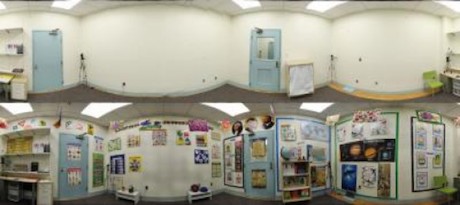
Enter many children’s classrooms and chances are you will be visually assaulted: walls are lined with construction paper turkeys, world maps, posters advocating the consumption of celery and so forth. While this visual maelstrom might strike most of us as a normal and age appropriate aesthetic, it might not be the one that’s conducive to learning. A recent Carnegie Mellon University study suggests that a visually busy classroom might hinder a child’s ability to retain information and stay focused.

The study involved two rooms: one that resembles a normal classroom, replete with posters, artwork and other visual ephemera; the other room was devoid of those things. Researchers observed 24 kindergarteners over the course of two weeks, during which time the students were presented with six new lessons. Half of those lessons were taught in the normal classroom and the other in the undecorated room.

CMU

Rather than providing a rich learning environment, the heavily decorated room provided rich distraction as evidenced by the study’s findings. According to a Science Daily article on the study:

Children learned in both classroom types, [but] they learned more when the room was not heavily decorated. Specifically, children’s accuracy on the test questions was higher in the sparse classroom (55 percent correct) than in the decorated classroom (42 percent correct).

And:

When the researchers tallied all of the time children spent off-task in both types of classrooms, the rate of off-task behavior was higher in the decorated classroom (38.6 percent time spent off-task) than in the sparse classroom (28.4 percent time spent off-task).

The likely reason for this performance falloff is simple: the stuff on the walls didn’t have anything to do with the new lessons. That map of Europe doesn’t help a kid when she’s learning arithmetic. As such, the irrelevant visual information diverted the student’s attention from the lesson at hand.

We don’t want to wax too conjecturally about this study’s findings, but it does seem to attest to the finite nature of the human attention span. We can only pay attention to one thing at a time, and in this case, a child’s attention to a poster displaced her attention to a new lesson. This might be valuable information in thinking about how our spaces’ décors relate to their intended purposes. Do those piles of papers on our desks prevent us from focusing on our work? Does that clutter in the corner of our living rooms prevent us from relaxing? Whether going about our affairs or decorating our homes, this study suggests that the things that aren’t adding to the things we are trying to do are likely detracting from them.

Nursery School Classroom image via Shutterstock

Upgrade to the Latest Stationary Phone

We came across an interesting story by Lane Wood, a San Franciscan who, after taking an impromptu dip in a lake, accidentally drowned his iPhone 5. Rather than immediately replace the uninsured phone, Lane decided to try a month phone free–no small feat for this hyper-connected freelancer.

Though Lane did go without his phone, he didn’t go offline. He still had his computer and carried around an iPad mini rather than his phone. He used Skype, iMessage, Google+ Hangouts and other tech to keep connected. He scheduled important calls for when he knew he’d be available.

The iPad may strike some as a big cheat, but he described how pulling the tablet out to text or web-browse was far more conspicuous than the constant sneak peeks he had previously given his phone. He also pointed to the fact that he couldn’t throw the iPad in his pocket, where his phone used to sit waiting to distract.

He writes at length about his phone’s vibrate mode, which he called “the secret killer of mental clarity.” For many of us (such as this author), we think we’re being pretty considerate leaving our phones on vibrate. But even though they are inaudible to all but us, Lane accurately described how his previous insistence to heed the vibration was almost as insidious as an audible ring. The constant “temper tantrum” of a phone’s vibrator begs us to divert our attention from the present moment to see who’s trying to contact us (it’s never that important, is it?). Lane replaced the persistent pocket vibration for the blissful unawareness of incoming texts, emails and calls on his iPad stowed in his bag.

He also noted that he used the iPad for taking photos. Once again, pulling out the ungainly device made him more judicious about what was and was not photo-worthy.

Lane’s experiment is more interesting to us because he didn’t go totally offline; that proposition is a bit extreme for most of us. What his experiment does is call into question the necessity for cell phones at all. Many of wake up near our tablets. We commute to be in front of our work computers. Maybe we travel with mobile hotspots. We come home and are near our computers once again. Every one of these pieces of tech have the ability to make and receive calls, texts and emails (through Skype, Google Voice, iMessage, Facetime, etc). What if we thought used these non-phone-devices as our “landline” phones?

We won’t minimize the need for some of us to have cellphones. They’re necessary hardware for many professions. But for the rest, what are the real consequences of being unreachable for a few hours a day?

Also, from a historic standpoint, Lane’s experiment is really no different than the way we all lived 30 years ago–a dark age when we had to be at home or at work to make and receive calls, when we made plans in advance, when our every waking moment wasn’t subject to a cellular invasion. Remember, James Joyce wrote Ulysses without a cellphone and Stanley Kubrick directed “2001: A Space Odyssey” without one too (we assume). Life wasn’t so bad or unproductive back then.

All this said, Lane did buy a new phone, calling his experiment a “disruption for [his] family, friends and clients.” This author, despite the questions Lane evokes, feels no urge to ditch my phone.

For those of us not ready to lose our phone, Lane did offer a few “discipline hacks” to curb MPU (mindless phone use) without giving up your phone:

  1. Turn your screen brightness all the way up when you go out at night. You will be very painfully aware of the fact that you’re using a phone and it will drain your battery. These consequences will help you use your phone only when necessary, and your friends will be more likely to call you out for having your phone out.
  2. Experiment with using Do Not Disturb functionality and turn your notifications off. Don’t reward your phone for throwing tantrums.
  3. Make an agreement with family and friends to call each other out for MPU.

What do you think? Would you, do you live without a cellphone? Would you, could you use your computer and/or tablet as your landline? Let us know what you think in our comments section below.

Screaming angry woman image via Shutterstock

National Day of Unplugging is Coming Up. Are You Up to Celebrate?

March 1st is National Unplugging Day, a day to power off phones, computers and any other device that needs plugging in and a strong connection. The project is the brainchild of Sabbath Manifesto who promote the idea of a, gulp, weekly technological break or Sabbath.

We know that for some this idea does not sound too monumental. You rarely check your phone, inbox and love the feel of paper on your fingers. For some of us though–and this author includes himself in this category–the actual implications of unplugging are daunting: We only have cell phones, our work centers around our computers, we read on eReaders, our media is streamed. To detach ourselves for even a day sounds like a big deal.

There is a growing body of evidence that our hyper-connected world is taking a toll on our happiness. Last year, a Standford University study found that young girls who are heavy multimedia users are less happy and less socially comfortable than their offline peers. There is other evidence to suggest technology use is making us a more distracted society. One survey reported in the Wall Street Journal found that 60% of workers spend over an hour of every workday on technological distractions. (Note: There are also studies with positive correlations between technology and happiness).

Either way, if you’re in the camp who: A. are regular users of technology, and B. think that cutting back on heavy use of technology might not be a bad thing, then laying off technology for one day a year shouldn’t sound like a stretch. When that day is through, you can evaluate if a weekly Sabbath is in your future.

If you’re not sure what you’ll do, you can check out Sabath Manifesto’s Ten Principles, which are no-tech pastimes to fill the hours otherwise texting, tweeting and so forth. They are:

  1. Avoid technology.
  2. Connect with loved ones.
  3. Nurture your health.
  4. Get outside.
  5. Avoid commerce.
  6. Light candles.
  7. Drink wine.
  8. Eat bread.
  9. Find silence.
  10. Give back.

In other words, this is not a day to go to the movies and shopping (we’re sure these principles can be adapte for gluten-intolerant and non-drinking folks).

The fact of the matter–despite what we might think–is that the world will not fall apart if we’re offline for a day–especially if we give our wives/husbands, bosses a heads up. What do you say? We’re in. Are you?

If you’re already observing a tech Sabbath, we’d love to hear how it’s going. 

6 Simple Meditation Tips that Might Just Save Your Job

Many of us have many great intentions to meditate regularly, but we regularly find many great reasons why we cannot to do it–we’re tired, we haven’t had our coffee, we’re expecting a call. The biggest reason, of course, is there simply is not enough time. There are a million important things to do and sitting and doing nothing is not one of those things. We’ll intend to meditate tomorrow.

An article by Peter Bregman in the Harvard Business Review suggests that meditating and doing nothing might, paradoxically, be the best tool for getting stuff done.

Externally, meditation looks quite peaceful; we sit nice and still and quiet. Internally, however, meditation can be a mental war-zone: We are besieged by thoughts and impulses to do everything but sit still.

It is in the resistance to act on those thoughts and impulses where focus is forged. That focus can be applied throughout our day, whether that means resisting a trip to the kitchen, not checking your email every five seconds or foregoing that half-hour kitten video-watching spree.

Think about your day. How much would you get done without distraction? How much shorter could your day be if not protracted by distraction? If you believed you could get more done or that you could cut an hour or two off your day, wouldn’t you sit still for 20 minutes in the morning?

Editing your life is not just about editing possessions that don’t support your happiness, it’s about editing behavior that doesn’t support your happiness. And few things sharpen your behavior-editing skills as meditation.

Now that you know your livelihood depends on doing nothing, here are a few suggestions as to where to start:

  1. Meditate first thing in morning. Meditation is like airplane departures: The later the day gets, the less likely it is to happen. Do it first. Think of it as your mental shower.
  2. Don’t skip days. Excuses and reasons tend to have puppies when you skip days.
  3. Focus on your breath. While there are mantra-based meditations, counting meditations and Buddhist meditations on death and precious human life, paying attention to your breath is by far the easiest entry point for meditation (you can always make meditation more complicated later). If you find yourself lost in distraction, just return to your breath; it’s always there. If your breath is not there, do not continue to meditate. Call 911.
  4. Relax your body. Scan your body starting at the crown of your head, going through each and every part of your body down to the tips of your toenails. Bring attention to every inch of your body, breathe into them and let the breath open and relax them.
  5. Sit up straight. This author uses a zafu and zabuton and would highly recommend these meditation cushions, but not everyone has the back or knees to sit cross-legged. An upright chair works fine. Focus on your spine being straight. It makes a difference.
  6. Start where you’re at. Bregman sits for 20 minutes, but perhaps that’s too much. Oftentimes, I can only eek out 5 minutes. It’s at least 5 minutes better than nothing. I set a timer on my phone with a gentle ringtone to get me out of meditation.

Image Source-Getty Images

Bottoming Out on Digital Media? Try a Digital Detox

Yes, it has come to this: “Digital Detoxes”–offline stays for those of us bottoming out on information overload. While we’ve looked at tools for combating the attention span crisis in the past, for many of us, the temptation to go online makes these tools insufficient for quelling information overload.

It seems evident that the pervasiveness of online use is reaching a saturation point.

  • A 2009 study found the average American spends 13 hours/week on the internet, not including email; 14% exceed 24 hours/week. Numbers that are surely getting bigger.
  • A Google study found that 72 percent of those surveyed use their smartphones while consuming other media and that 1/3 are on their smartphones while watching TV.

In one way shape or form, most of us are looking at glowing boxes for a good portion of our waking hours, including our vacations.

Young Island at St Vincent’s

A tour company called Black Tomato offers a nine day digital detox in the remote Caribbean islands of St Vincent’s and the Grenadines for $3800 (includes airfare from London and accommodations). The company strips you of your devices and offers a life coach to help you with the detoxification process.

Less remote, less financially taxing, is The Digital Detox, which offers personal and corporate retreats in Ukiah, California. For $450-950 for three, all-inclusive nights, guests surrender all of their devices, including watches. Days are spent hanging out at the hot springs, eating vegetarian cuisine and doing yoga. Instead of chronically their trip on their phones, are encouraged to journal.

In an interview with Buzzfeed, The Digital Detox founder Levi Felix “When people go on vacation and have the intention of unplugging, studies show that they spend 30% of the time working or on some kind of tech anyways” He even said that “people find themselves going on a camping trip, grabbing their phone and going on old emails,” even when there’s zero cell coverage.

In other words, it’s not enough to go off-grid. Many of us need our devices pried from out hands to get completely offline.

What do you think? Does being online represent freedom or repression? Is being online all the time–even on vacation–necessarily a bad thing?

Is Pinterest Making You Miserable?

A recent article in Canada’s Globe and Mail suggests North Americans are increasingly going on never-ending online searches for the perfect bedroom mirror and losing sleep over the colour of front doors. In other words, they are décor-obsessed. This phenomenon, they believe, might be ignited and fueled by TV makeover shows and online tools such as Pinterest, a site whose meteoric growth–3rd most trafficked site after Facebook and Twitter, with 20M new users in last year alone–is mainly attributable to home décor pinning. Pinterests boards of beautiful objects and interiors may inspire, but they might also remind you how deficient your home is.

The article goes on to blame blogs like DesignSponge, Remodelista and Apartment Therapy. The latter blog, one of our personal faves, put the subject out to its readers in a post called “Decorating Your Home: Hobby or Unhealthy Obsession.” Most comments resolutely declared their decorating habits were not problematic. They agreed that their desire to decorate was an issue of creating a great living environment, not an obsesssion. However, one comment astutely remarked, “I don’t think we are the right people to comment on this article, given that we are all here :)” [his emoticon, not ours].

This décor-dysmorphia may be the symptom of a larger societal issue–one the article suggests is more acute in women. The article reports:

The more social pressures women face, ‘the more likely they are to actively try to control the things they can, like the body or the home,’ says Joyce Davidson, an associate professor at Queen’s University who has studied how women express themselves through their home environments.

The evidence bolstering the G & M piece is anecdotal at best, but the thesis is logical: the more we see of great stuff and architecture, the more we realize our stuff sucks. If we have self-esteem issues (be honest), we’re going to try and get better stuff to bolster our feelings about ourselves. That works until that stuff is sucky too. This pattern is typically called a hedonic treadmill.

Of course this phenomenon, as people noted in both G & M and Apt Therapy’s comments, is not limited to home décor or women. The same thing could be said about gadgets, cars and food. It’s just that the recent growth of Pinterest makes it an easy target.

What do you think? Are home makeover shows, sites like Pinterest and blogs useful (or at least benign) tools for inspiration? Or are they shaking our self-worth, producing obsession through comparison and manufactured discontent? Let us know your thoughts?

Tiny House Family and the Edited Rural Life

When the recession hit in 2008,  the restaurant Hari and Karl Berzins started went under. A year later, they were forced to sell their 3 bedroom, 1500 sq ft house. They were broke, raising a couple kids and forced to take whatever jobs their then Florida home had to offer.

Thinking of ways out of their predicament, they came across the book “Mortgage Free” by Rob Roy; the book promotes the idea of–you guessed it–being mortgage free by buying the best piece of land you can find, setting up a temporary dwelling, then building the home you want on your timetable–all in cash. They found plans from the Tiny House Blog for what their temporary abode would look like.

Karl set about building their 320 sq ft home (a figure that includes a sleeping loft). Like most tiny homes, it began on a trailer bed to avoid building regulations. He started the project in Florida, then moved it to a 3 acre plot of land in the woods of the Blue Ridge Mountains about a year ago. The total cost of the home itself was $12K, greatly offset by scavenged materials.

image via Inhabitat

The couple has been chronicling their journey for the last year in their blog Tiny House Family. They report a higher quality of life. They are back in the black. Both Mama and Papa (their handles on the site) have taken work they love and supports their lives, versus work to pay the bills. The kids are even digging it too (according to the parents).

They have just finalized plans for their next house, a 16′ x 24′ model that will provide considerably more room and room to expand. I get the sense that the extra space is a welcome addition.

LifeEdited tends to focus on the urban side of small space living. City-dwellers usually have smaller physical footprints, use less energy, drive less, have more human interactions and so on.

But what about rural living? [We’ll leave suburbs/exurbs out of the equation for now] On the one hand, it tends to be more spread out geographically, requires more driving, more resources in general and has less unplanned social contact. On the other hand, it can be quite low impact; people like the Berzins grow much of their own produce and use very few resources we can see. Rural homes, while typically larger than a city’s, do not have to be, as evidenced by the Berzins (at least their initial home). Rural human interactions, while not as frequent as the city’s, can often be more intimate and meaningful. Perhaps most important is rural living tends to be free of frenetic urban energy, allowing its residents to lead simpler, calmer lives.

While there is not a city/country binary, it is interesting to see people trying to achieve the same ends–a calmer life, lower overhead, more quality interaction–through very different means. Leaving aside things like jobs, family ties and other considerations, does one environment support this lifestyle better than the other?

What do you think about urban versus rural edited living? Does living in remote locations oppose the less-is-more way of life? Or might the country mouse teach the city mouse a lot about living a simpler way of life? We’d love to hear your thoughts.

Is Bribery Necessary for Us to Pay Attention?

Let’s get one thing clear: multitasking is a myth. The human mind cannot–will not–pay attention to more than one thing at a time. What most of us consider multitasking is switching back and forth between multiple stimuli. And the more we switch, the more we compromise our ability to switch. Got it?

The harm of multitasking seems obvious with things like driving and texting or walking and texting or…pretty much any movement and texting. But dining has always been a refuge for the so-called multitasker: we talk on the phone and eat, read and eat, watch TV and eat and, increasing, text and eat. But just because we do it, doesn’t mean it’s a good idea. We compromise our gastronomic experience and the social experience by not paying attention to our dining-mates.

A Los Angeles restaurant called Eva is dealing with this issue in a novel way: they are offering 5% off your bill if you check your device at the door. In an interview with KPCC radio, chef and owner Mark Gold explains his reasoning for the offer:

For us, it’s really not about people disrupting other guests. Eva is home, and we want to create that environment of home, and we want people to connect again. It’s about two people sitting together and just connecting, without the distraction of a phone, and we’re trying to create an ambience where you come in and really enjoy the experience and the food and the company.

In other words, Gold isn’t trying to save fellow diners from secondhand cellphone conversations; he’s trying save cellphone users from themselves, getting them to pay attention to their food and the company they keep. Gold says about half the patrons take the discount.

What about you? Would you take the discount or hold onto your phone? Do you have ways to keep yourself mindful at the dinner table and elsewhere? Let us know in the comments section.

Update: Eva has closed for reasons unknown, though we hope it wasn’t because people couldn’t text and eat. 

via PSFK

image credit: Siegel/Daily News