Make Your Kitchen Flow Like a Faucet

Part of living an edited life is making choices in your home that make sense–putting stuff in its right place near where it can be accessed and is used. Few places is this more true than in the kitchen, and especially true in small kitchens. Justin Klosky from OCD Experience gives practical tips on how you can optimize kitchen logic and organization. 

Kitchen Flow…Yo Yo Yo

Like a good song, there needs to be flow and rhythm, which can also be applied to the way you organize your kitchen. When organizing your kitchen think of it in terms of efficiency first then organization. Dishes should be stored in cabinets near the dish washer while pots and pans should be close to the stove. The more efficient your kitchen is setup the more effective you will be when cooking in it. Like the garage the kitchen can become very overwhelming if you don’t grab hold of it, so we gravitate towards organizational products that you can see through which will make things look and feel cleaner. Items like these Square Pop Canisters are great for organizing and storing cereals, pastas and nosh foods. You should also take the time to label these canisters which will make the first glance your last glance. For smaller items that can get out of control we suggest investing into these tea bags storage containers to eliminate the tea boxes and the possibility of tea bags ending up everywhere. Akro bins are your best bet for canned goods, and almost anything else you want to bring order to as they come in all sizes. It also brings clarity into your kitchen when you can see everything you are looking for.

Kitchen Flow Tip: The most important tip when organizing your kitchen is flow. The more you can flow in your kitchen the more fun you will have in it and the more love you will be able to bring to your food. The most used items should be a few steps or arm’s length away.

Streamline Your Closet with Seasonal Switch Over

In the coming weeks, organizational expert Justin Klosky of O.C.D. Experience (Organize and Create Discipline) will be giving practical tips for simplifying and streamlining your life. 

Wardrobe Switching and Reorganization

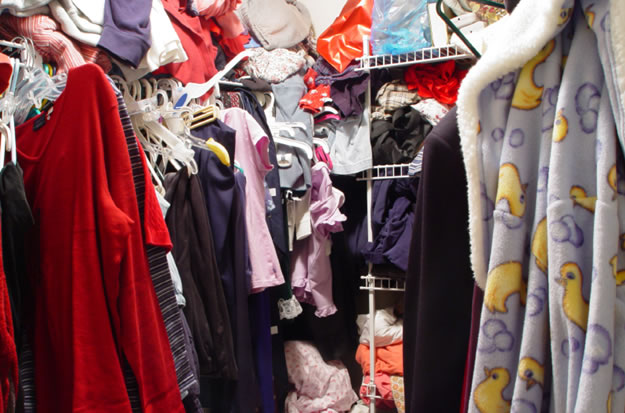
If you live with a closet that may not be big enough to house all of your clothing then reorganizing your closet a few times a year might be familiar to you. The simplest way to do this is:

Organize: Remove everything that you won’t be wearing on a weekly/monthly basis. You can keep a handful of lighter sweaters for those chilly nights, but for the most part remove items and store them in Polypropylene Corrugated Textile and Fabric Boxes. I like these containers because you can still see your clothing in case you need to grab something in storage and they let your clothing breathe!

Create: Always, make a master list of what will be going into these containers and store your clothes with their friends. All like items stick together. Use canvas bins for harder to reach areas of your closet. This is always good for belts, scarves and sweaters to prevent a mess from occurring while picking items out. These items can stay put year round and will just need basic maintenance through the year to maintain organization.

Discipline: through the year discipline yourself to keep the closet from getting out of control. Put away your clothing immediately, toss dirty laundry in the hamper when you’re done wearing the item and always keep an eye out for items that you know you are not wearing and donate throughout the year.

O.C.D. Experience Switch Tip: during the seasonal switch go through your wardrobe and let go of items that have been worn out, have stains or holes in them or just don’t fit you anymore, period. If you have a hard time doing this bring in a trusted friend who you don’t mind being honest with you. Also, if your hangers aren’t uniform, now is the best time to switch them to the Slimline Hangers.

4 Things You Can Do to Save the American Home from Dystopian Future

In 1950 the average size for new homes was 983 sq ft; the average household had 3.37 occupants. In 2010 the average size of new homes was 2,392 sq ft with 2.59 occupants. 317% more space.

According to Nielsen, in Q4 of 2010, the average American watched 34:39 hrs of TV per week. Put another way, that’s 1.5 months per year of continuous TV watching annually.

The outstanding domestic debt of the Household and Home Mortgage Sector in 1950 was $411B (adjusted for inflation). Currently, that same figure is $9.7 trillion. While the population has doubled and home ownership and college attendance have increased, this is still an increase of over 23-times.

Something’s wrong in America.

A new report by UCLA-affiliated social scientists called “Life at Home in the Twenty-first Century: 32 Families Open their Doors” takes a deep look at the lives behind the statistics, entering 32 Los Angeles homes to see how Americans really live. Here are some of their findings:

  • 3 out of 4 of the families garages cannot fit cars because of excessive stockpiling from stores like Costco.
  • 50 of the 64 parents reported not stepping outside in the course of a week.
  • Managing possessions has lead to increased stress hormones in mothers.
  • Most families rely primarily on “convenience foods” even though they only save 11 mins over homemade meals.
  • The majority of leisure time, as the Nielsen statistic suggests, is spent in front of the TV or computer.

A complimentary piece in the Boston Globe that followed Boston families and their consumption patterns suggests that  some of the most pleasurable moments today’s Americans experience is when they are getting rid of the stuff. “I felt so light,” a woman remarked about filling a dumpster with her old stuff following a move.

So what do we do?

Just as we didn’t get into this mess quickly, we might not get out of it so quickly, but there are a few things all of us can do, right now:

  • Challenge the status quo. Many of us have a sense of resignation about over-consumption–as if it’s inevitable that everyone has the latest Macbook or every little girl has a Dora the Explorer Adventure Hut. It’s not true. I use a first generation iPhone that was handed down from my mom. Sure, people snicker, but the phone works fine. We have choices, and though it might mean enduring some screaming, parents can make smart choices for their children. Nothing is inevitable.
  • Think before you buy. From the biggest to the smallest purchase, we should constantly ask ourselves if our purchases are contributing or detracting from our enjoyment of life.
  • Change you behavior. Get rid of clutter, rent stuff instead of buying it, digitize, downsize.
  • Take time to appreciate life every day. Share your meals, get outside, spend time with family and friends, read a book, pay attention to things not coming from a glowing box.

Image credit: Rick Bowmer/AP

Via Boston Globe

How to Use Limits for More Space, Time and Ease

Ever notice how the amount of stuff and activity you have to deal with is directly proportionate to amount of space you give it?  E.g. if you have 1K sq ft to fill, you fill it. If you have 2 weeks to do something, you use that (even if you could have done it in two days). Today’s guest post is by productivity coach Ari Meisel, who provides a methodology whereby you can leverage that phenomenon to bring more ease, space and time to your life. 

About two years ago I created The Art of Less Doing. I teach people how to optimize, automate, and outsource everything in their lives in order to be more effective. Doing more with less has always been a passion of mine and I’m constantly looking for ways to streamline and improve my processes. A long time ago I started imposing artificial and sometimes oppressively restrictive limits on myself just to see if I could make it work, this is the refinement of that process.

In the fundamentals of Less Doing when I talk about Organization I say that in my system it is simply a matter of setting appropriate limits. That limit becomes your benchmark for how the rest of your productivity system is working. Using the limit as your goal and working to do whatever you need to in order for that to happen is an excellent exercise. What would you have to do in order to:

  • Never have more than 10 emails in your inbox?
  • Read a book every week?
  • Travel the world and run your life with nothing more than your iPhone?
  • Have a 30 page binder that holds all the paper in your life?
  • Spend $100 on food every month?

The list goes on and on because there are literally hundreds of examples like this. This is NOT the same as setting a goal and working backwards to figure out what steps you need to get there. This is about setting (possibly unreasonable) restrictions on yourself to force you to become more streamlined, and thus more efficient and mobile. In the end less is more.

I’ll give you a really concrete one. A couple of years ago I had a closet in my house full of old electronic junk. In all honesty it was probably all garbage but I couldn’t bring myself to get rid of any of it. Even worse, every time I’d get a new gadget or upgrade a computer, more stuff would go in the closet. In this day and age nobody needs 30 of those 6 foot long telephone cords that come with new phones. So I decided to do something drastic, I got a medium-sized box (about 2 feet by 1 foot by 1 foot) and decided this would be the limit of my electronic debris. Now what would it take for me to make that happen. I donated a bunch of it to a charity that uses circuit boards and related items for arts and crafts projects. I dumped a bunch of stuff off at an e-waste recycling day. I downloaded digital copies of any paper manuals. And finally I was left with just enough stuff to put in the box. Furthermore, going forward, any time I want to put something new in the box, I have to take 2 things out. Since I did this little “cleansing” experiment, I have added two items to the box, and thus removed four.

I started to realize I could apply this to other things in my life and business. Email was a big one as it is for many people. I thought, as I looked at my hundred plus message inbox, if I never had more than 10 emails at a time. What would it take to accomplish this? Make sure to check out my article on Mashable about Dealing with Email Overload for a great start. I needed a better filing system; rather than have hundreds of folders I have one, the optional folder, and everything that is not essential is automatically filtered into that folder. I have autoresponders setup, my virtual assistant deals with certain things, and I got into the practice of answering emails quickly and moving on.

I only use the bookmarks bar in Chrome which holds about 12 saved URLs. I used to have hundreds with folders and sub folders. There were tons of dead links and things I never looked at anymore. If I ever want to add a new bookmark, I either have to think really hard about whether or not I need it or about the one I need to delete to make room for it. In fact, I try to keep as much as possible web-based as it is. If I come across a cool program that requires I download and install it, I’ll look for a web-based alternative or I will figure out another way to accomplish the functionality of that program that doesn’t require an installation. Seem extreme? As a result I have two programs installed on my Mac, Chrome and Dropbox. I am able to accomplish everything I need in life and business via web-based applications whether it’s Google Docs for document creation and management or SignNow for getting contracts signed. It also means that if my computer were to blow up for some reason, I could literally be up and running on a complete stranger’s computer in a matter of seconds without any disturbance to my flow. In this case, the limit is that everything I do must be web based, then I find the systems and setups that fit that guideline.

Over the years I accumulated a lot of paper. Just as I explain in the fundamental on Creating an External Brain, I want people to overuse and overshare when it comes to note and record keeping, you never know when something will be useful. I used to do that with paper and as a result had three filing cabinets, each one six feet wide with double drawers. We are talking about thousands of pieces of paper, hundreds of business cards, and even full-sized architectural plans. I decided that a single file folder that could hold about thirty pieces of paper was acceptable to me. It was quite an undertaking but after scanning hundreds of pieces of paper including seven years of taxes, digitizing business cards and putting them in my contacts, and getting the architectural plans shrunk and scanned into pdfs, I finally shredded and recycled a very satisfying mountain of paper and have never looked back.

Here’s a big one, it was one thing not to install things on my computer but once I became almost completely cloud based I realized I could take things a step further. What if I could run my whole life from my iPad. That day I put my laptop away and started figuring out what apps I would need in order to function. I need FTP access, VPN service, the ability to edit pdfs, the ability to look at CAD files for architectural drawings, Skype, etc…all of it could be accomplished by apps and if not I could email my assistant and have her do it. For the next six months I never opened my laptop again. The only hiccup came with typing but after temporarily using bluetooth to pair my Mac keyboard with the iPad and seeing how well it worked, I got a portable keyboard…problem solved. Of course, the job of trimming the fat is never done. Two months ago I wanted to see if I could do it with just my iPhone. It wasn’t as challenging as I thought and I have now gone on two five-day trips with no laptop, no iPad, and without needing to use a hotel or friends computer. I can operate my business and my life, with full function, using nothing more than my iPhone and THAT means that I am COMPLETELY mobile.

What limits can you set in order to be more effective, and what would you have to add, learn, eliminate, or arrange to make that happen?

image credit: Guardian UK

What Do Freedom and Independence Mean to You?

Freedom’s just another word for nothing left to lose.

Kris Kristofferson

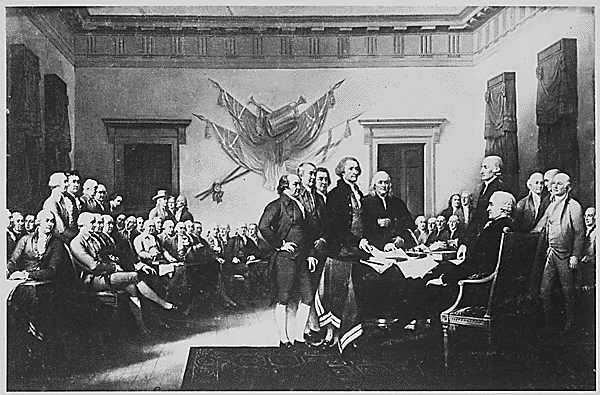
In the context of 1776 colonial America, freedom and independence meant being free and independent from the tyranny of taxation without representation, illegal search and seizure and other nasty imperialistic institutions (for the sake of economy, we won’t go into the myriad contradictions of our founding fathers).

Today, there are new forces inhibiting our freedom and independence: Bills we cannot keep up with. Mountains of debt. Constant streams of emails, texts, and hyperlinks begging for our attention. Bloated homes we can neither afford nor maintain. Cultural expectations we can never seem to meet.

At LifeEdited, we promote freedom and independence from unimportant stuff.  When we eliminate (or “edit”) that stuff out, the important stuff–relationships, passions, health, great design–naturally moves in.

To get some other perspectives, we asked a few of our friends what freedom and independence meant to them.

From Francine Jay–aka “Miss Minimalist“–we got this response:

To me, freedom is traveling lightly through life. Each extraneous thing I eliminate—be it an unused item, unnecessary purchase, or unfulfilling task—feels like a weight lifted from my shoulders. Paring life down to the essentials is positively liberating!

Joshua Fields Millburn, one of the 2 guys behind “The Minimalists” gave this appropriately minimalist response:

Intentional awareness.

Ari Meisel, a productivity coach and practictioner of “The Art of Less Doing” says this about freedom and independence:

The ability to head half way around the world tomorrow, with no planning, and not knowing if I’ll have Internet access or not and having confidence that my life and business will run itself without interruption.

What about you? What constitutes freedom and independence to you? We’d love your thoughts. Please share below or on our Facebook page. And have a great holiday!

2 Lists To Live By

How often have you checked your inbox or the web only to realize it totally short-circuited an important task you were engaged in? How often have incoming calls, texts and/or emails undermined your level of presence with the people you were spending face-time with? How often has your desire to do everything left you too confused to do anything?

If the above problems beset you, strategic adviser Peter Bregman has a simple way to keep on track and avoid distractions. He suggests making and abiding by two lists; he recommends checking them throughout the day. The lists are broken down into two simple categories:

  1. Your Focus List (the road ahead)
  2. Your Ignore List (the distractions)

Though he doesn’t use the phrase, Bregman is describing life as opportunity cost. In order to have certain things (the road ahead), we need to turn down or ignore many others (the distractions). In order to be present with one person, you have to ignore many others. In order to do one thing really well, you have to not do infinite other things. There is a reason no one talks about Picasso’s novels–he chose to be a painter.

What’s unique about his suggestion is the use of active ignorance. It’s not enough to find out what’s important–we have to actively avoid the things–be they communications, tasks, pursuits, purchases, etc–that aren’t aligned with what’s important.

Bregman’s suggestions run counter to our culture that promotes all information all the time. But he’s emphatic about the importance of saying no and the heavy toll of unlimited inclusion. He writes:

Never before has it been so important to say “No.” No, I’m not going to read that article. No, I’m not going to read that email. No, I’m not going to take that phone call. No, I’m not going to sit through that meeting.

It’s hard to do because maybe, just maybe, that next piece of information will be the key to our success. But our success actually hinges on the opposite: on our willingness to risk missing some information. Because trying to focus on it all is a risk in itself. We’ll exhaust ourselves. We’ll get confused, nervous, and irritable. Read full essay here.

We live in an age of amazing tools that enable us to do and have more than ever possible. But our unlimited options often come at the detriment of singular focus and peace of mind. Suggestions such as Bregman’s offer sage advice on how to use these new tools wisely so we can do what’s important while staying sane.

How do you keep on task and combat distraction? Let us know.

Via Life Hacker

Image credit: EE Comics

Get the Email Monkey Off Your Back Today

For many of us, our fiercest opponent in the battle to reclaim our attention span is email. It’s the first thing we check in the morning and the last at night. It sidetracks us throughout our day, thwarting our intentions to complete the task at hand–writing a blog post, for example.

Escaping the email trap can be hard. Many of us have trained our family, friends and co-workers to expect instantaneous responses. If we typically respond lightning quick to emails, not doing so is often grounds for them to call an ambulance.

Many of us will use the excuse that our jobs depend on email. For a very small percentage of people like customer service representatives and EMT’s, this may be true (though I would sooner call an EMT). For most of us though, this is an excuse. Realistically, lag of a few hours on our email response will is not a make-or-break thing. And the benefit of fully paying attention to our tasks will more than outweigh the delay.

Another possible reason we check is neurochemical. Psychology professor Christopher Chabris said this in a NY Times article about the affect of email on our brains:

What the Internet does is stimulate our reward systems over and over with tiny bursts of information (tweets, status updates, e-mails) that act like primary rewards but can be delivered in more varied and less predictable sequences. These are experiences our brains did not evolve to prefer, but like drugs of abuse, they happen to be even better suited than the primary reinforcers to activating the reward system. So if you find yourself stopping every 30 seconds to check your Twitter feed, your brain has no more been rewired than if you find yourself taking a break for ice cream rather than celery. Picking the more rewarding stimulus is something our brains can do perfectly well with the wiring they start out with.

In other words, checking email usually excites our reward systems more than the task at hand. So our environments and our brains push us to be slaves to our inbox.

There are ways out.

Author and LifeEdited judge Tim Ferriss gives some valuable advice for shaking the email monkey. He promotes using an autoresponder to train yourself and others to not constantly check email and rather “batch” it, which means  handling email at an appointed time rather that having it as something peppered throughout the day, pulling at our attention.

Here is a sample transcript he posted on his blog 5 years ago. His message is as, or more, relevant today when smartphone saturation is nearing 100%:

Hi all…

In an effort to increase productivity and efficiency I am beginning a new personal email policy. I’ve recently realized I spend more time shuffling through my inbox and less time focused on the task at hand. It has become an unnecessary distraction that ultimately creates longer lead times on my ever-growing ‘to do’ list.

Going forward I will only be checking/responding to email at 11a and 4p on weekdays. I will try and respond to email in a timely manner without neglecting the needs of our clients and brand identity.

If you need an immediate time-sensitive response… please don’t hesitate to call me. Phones are more fun anyways.

Hopefully this new approach to email management will result in shorter lead times with more focused & creative work on my part. Cheers & here’s to life outside of my inbox!

Tim claims the response from his clients was cheery. This may or may not be the case for many of us. Like anything, it might take some time to train ourselves and others to not constantly send and receive. Anecdotally, a friend of mine regularly uses an autoresponder and I definitely think hard before emailing him.

What is hopeful, as Chabris suggests, is that our need to constantly check email is no more fixed than picking “ice cream rather than celery.” It has been conditioned through practice. It can be unconditioned through practice.

How do you keep the email monkey off your back? Let us know your tips and tools in our comment section.

8 Tips for Editing Your Life that Work for Any Budget

Yesterday we featured a story about a $275 DIY murphy bed to show that an edited life is by no means for people rich enough to choose less (rather than having less imposed upon them).

Let’s be clear: excess is far from a rich man/woman’s dilemma. Watch an episode or 2 of Hoarders for proof. Cheap housing and consumer goods have made virtually every socioeconomic bracket victims of excess…and crippling debt. The average American household carries $16K of credit card debt!

And sure, we love great architecture and product design–much of which has a steep buy-in cost–but there are infinite things you can do for little or no money to start living an edited life. Here are 8:

  1. Edit your possessions. Go through your closets, drawers, file cabinets. A good rule of thumb is if you haven’t used something in the last year, you probably won’t use it in the next. Toss it, recycle it or, better yet, give it away, get a receipt and use it as a tax break. Is your stuff too expensive to give away? Sell it and make some money.
  2. When you do buy, buy high quality stuff you like and will use. Okay, so this might sound a bit contradictory, but sometimes the way to save money is to spend it. How many times have you skimped on a purchase, buying the inferior thing you don’t like because the high quality one you did was twice as expensive? Then the inferior things breaks, doesn’t get used or becomes the unwanted child of your possessions. If something is 2x as expensive and lasts 4x as long (or is used 4x as much), that’s half the price of the cheaper thing.
  3. Get rid of your books. Few things take up space like books, and eReaders have come a long way, and dropped way down in price; e.g. Kindles start at $79 and have thousands of free titles. Want something cheaper, download a free Kindle app that allows you to read on your phone or computer.
  4. Get rid of paper. Switch all of your bills and statements to online only (put them on autopay if possible). Scan receipts. Work on completely digitizing every form of receipt, bill, statement, etc. This save paper and clears clutter for no additional cost.
  5. Take a walk. We don’t think about cars taking space, but they do–a Honda Civic sedan takes up 85 sq ft. of it. Cars’ collective footprints increase the size of our homes and cities. This is not to mention the ongoing money and stress of things like gas, insurance, upkeep, etc. Few things simplify your life–and save money–like ditching your car. While we know it’s not feasible for many to do this, if you’re moving, consider a place where you can walk, bike or use public transport to the various activities in your life: work, groceries, etc. Your health, planet and pocketbook will thank you.
  6. Get some budget transforming furniture. Sure, it’d be great to have an unlimited budget for furniture, but few of us have that option. There are countless folding tables, sleeper sofas, folding chairs and affordable DIY options that can add tons of utility to a small footprint.
  7. Try a sharing system. Maybe you’re having a baby, try a toy-sharing system. Maybe you need to use a car once or twice a month, use a Zipcar. Maybe you have wedding to go to, rent your dress or tux. Why pay full-time salaries and overhead charges for the stuff you only need to perform part-time duty?
  8. Consider moving into a smaller home. When moving, think about what you really need and trim at least 20%. The amount of stuff we have is not a fixed thing–it expands and contracts depending on the amount of room it has to occupy. Smaller spaces are cheaper to buy and rent, easier to maintain and have built-in safeguards against accumulating too much stuff, and when laid out right, can have all the utility of a much larger space.

image from fopple.com

What to Do with Your LPOIP (Little Pieces of Important Paper)

With April 15th just come and gone, you might be burrowing away 2011 receipts in a folder (or, like me, jamming their crinkled remains into a Sharpied envelope). Once you’ve filed your receipts—feeling 80% confident you got all of them and 90% sure the IRS won’t bust you—you notice other little pieces of important paper: business cards. Manually entering them into your contacts is a pain, so you make a pile and keep the ones you’re going to act on toward the top; those important ones stay on top until newer, more important cards replace them. Eventually, there’s an unintelligible, begging-to-be-tossed pile of paper.

For many of us, LPOIP (little pieces of important paper) is a big problem (figuratively speaking). We are unable to organize them well and can’t throw them away.

Enter Shoeboxed.com. The online service allows you to make digital records for receipts, business cards and several other varieties of LPOIP’s like bills and bank statements.

Users can mail, scan or use one of their iPhone or Android apps to make a record of the LPOIP. A high accuracy, OCR, human-checked scan is made and recorded on the site. The receipts are high quality enough to be accepted by the IRS and business card data is entered into a CRM file for easy uploading (note cool design or nice paper stock unfortunately).

There’s a free plan which features 5 monthly OCR/human scans; you can also use their web uploader, which requires a little manual input. Paid plans range from $10-50/month depending on the amount of documents scanned.

It’s easy to argue for holding on to some types of paper like old photos and love letters, but receipts and business cards are just pains–ones that accumulate over the years, requiring file cabinets and elaborate organization. Services like Shoeboxed allow you to save space, organize and simplify an otherwise entropic scenario.

image via Planet Receipt 

15 Practical Tips for Creating a Simpler, Happier Life

Beyond great architecture and multi-functional product design, LifeEdited is about living simple, happy lives. The architecture, products and behaviors we promote are in service of that goal.

We think this list from the Health Realizations newsletter provides a nice starting point for simplifying and happy-ifying your life. Not surprisingly, much of the list involves editing out things that don’t support our happiness.

Check it out and let us know what you think. Anything missing? Agree/disagree?

  1. Decide what’s most important to you, then center your life around those items (this probably means cutting out other activities to make room for those that count the most).
  2. Turn off all communication devices at a set time each night. This includes your cell phone, computer, pager, and fax. Better yet, try to reduce your daily use of these communication tools.
  3. Learn to say no. This is not selfish, it’s about survival … and living your life the way YOU want to.
  4. Resign from any and all organizations and commitments that don’t make you happy.
  5. Set up as much of your life as possible on autopilot. For instance, set up your bills to be paid automatically online, have your paycheck direct deposited, and hire a pet sitter to come and walk your dog everyday at lunchtime.
  6. Delegate. If you can’t figure out how to do it on autopilot, think about who might be able to complete certain tasks that you do now. Then delegate everything and anything you can.
  7. Get rid of clutter. Clutter will make your life feel more complicated than it needs to, while a clutter-free space is one where you can truly feel at peace.
  8. Stop buying more stuff. Not only will you have to figure out how to pay for the “stuff,” but you’ll have to figure out a place to put it (in your now clutter-free home). You’re likely better off not buying it to begin with most of the time.
  9. Do your grocery shopping once a week only, or better yet join a food coop that delivers once a week. You’ll get healthy foods for your family in one stop.
  10. When you do your cooking, cook more than you need for one meal. Freeze the leftovers for a quick meal when you’re short on time, or use them later in the week.
  11. Redesign your day. What takes up the most time in your day? The least? Carefully evaluate how you spend your daily time, then reorganize it so you have time for what’s most important to you.
  12. Take your time when you eat. Eating slowly helps you appreciate your food and take a break from a busy day (not to mention it’s a good way to help you lose weight).
  13. Live in the moment. Help your mind to slow down by appreciating every moment as it comes, even if you’re doing something you’d rather not be. By living in the moment, you only think about what’s going on right now, not what you’ll be doing in 10 minutes or what needs to get done by 5:00.
  14. Spend time alone and with family. Many people feel cheated in life in that they don’t have time to just read a book, enjoy a hobby or simply contemplate life. Likewise, many would enjoy more time to spend together with their family. Make time for both in your life, even if it means saying no to something else.
  15. Do one thing at a time. When you try to do too many things at once, you’ll find nothing gets done very quickly or well. By focusing on just one thing — one goal, one dream, one task at work, one child’s question, one conversation — the task will get done with more thoroughness and less stress on your part.

via Health Realizations newsletter