Optimize Your Emailing with Keyboard Shortcuts

Many of us spend a good portion of our days dealing with email. Whether we relish or loathe the task, we can all agree that it makes sense to figure out how to do go through your inbox as efficiently as possible. We’ve looked at ways of optimizing your Gmail account, but today we’re looking at something a bit more basic: The keyboard shortcut.

Every on and offline mail service (Gmail, Yahoo, Hotmail, Outlook, Apple Mail etc.) has them, but many of us don’t use them. Just like when you discovered ctrl/Apple + c, v and x (you have discovered those, right?), a little know how can result in a ton of time saved over the years.

Rather than cover every mail service, we’re going to give a few keyboard shortcuts for Gmail, which is still the mail service of choice for the majority of us. (We’ve put links to other mail services below).

  • Enable keyboard shortcuts on Gmail by going to settings (the little gear in upper right corner). On the “General” tab, scroll down to “Keyboard shortcuts”. Turn keyboard shortcuts on and save settings at bottom of screen.
  • Shift + c to compose message in new window.
  • / puts your cursor in search box. This is especially useful for those of us who keep documents in our inbox.
  • Shift + c to reply. Shift + a to reply all.
  • Shift + 3 to delete a message.
  • gi Takes you to your inbox.
  • ? shows a keyboard shortcut cheatsheet.
  • Yahoo, Hotmail, AOLOutlook, Apple Mail (may vary between OS versions).

We like to say that the hours of our days are often lost in teaspoons, not gallons. While not revolutionary for many of us, sometimes mini timesavers like these keyboard shortcuts help us do the things we’re doing faster so we can get on to more important things.

What simple but important email timesavers do you use? Let us know in our comments section.

image credit Shutterstock.com

8 Tips for Making Your Own Micro Apartment

With all the hoopla around the adAPT NYC competition and other micro-apartments around the country, it’s clear there’s a demand for smart, small apartments. In fact, people write us daily asking if we have apartments available to rent or buy.

While LifeEdited is working with development teams to get you your micro-apartments with the greatest haste (be sure to sign up for our list), many of the developments are years away. This leaves the question: What do I do now if I want a micro-apartment?

If you’re interested in living in a micro-apartment–either converting your existing place or starting fresh–here are some suggestions we think are critical to living a big life in a small apartment.

  1. Pick a good address. We think small spaces work best when you use your city or town as your living room. With amenities like restaurants, entertainment and parks at arm’s length, a good address will provide a living room you actually want to hang out in. Central locations are more walkable and have better public transport, allowing you to live car-free or get by with a car-share. Check out Walkscore.com to see how a neighborhood stacks up in terms of walkability and amenities. Yes, a good location will cost more, but you can save money by being car free and choosing a smaller apartment.
  2. Size matters. While there is no magic number for square footage, the micro-apartment designation is about 250-400 sq ft for singles; 300-600 for couples; 500 + for families (separate rooms are generally a good idea for a peaceable family). In most cities and towns, there are plenty of apartments these sizes.
  3. Get in good shape. In general, square and rectangular spaces are ideal. They feel bigger than odd-shaped spaces and are easier for fitting modular furniture.
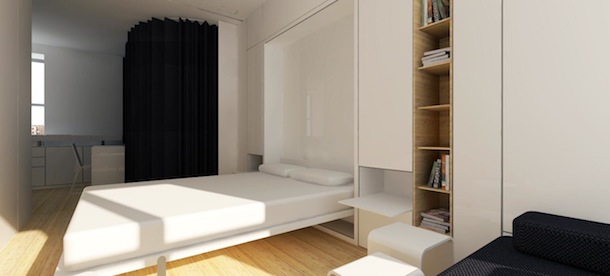
  4. Get a Murphy Bed. It’s the single easiest way of creating space without sacrificing function. A queen size bed is about 35 sq ft.–i.e. 10% of a 350 sq ft space; a 10% used exclusively while unconscious. We use the Swing sofa/bed by Resource Furniture; the sofa on the frontside provides even more space-saving as most Murphy beds have unused front sides. Starting at over $10K, the Swing is not for everyone. Resource Furniture has many less expensive models and there are a number of decent Murphy beds that can be purchased for around $3K. We were recently turned onto Murphy Bed Center, who has models starting at $1699. If you’re a DIY type, build your own for $275.
  5. Get high…with storage. Almost all of the adAPT NYC submissions included floor-to-ceiling storage. Having high storage utilizes unused vertical space and frees up floor space, making an apartment seem larger. On the high end, Resource Furniture offers modular storage units to fit with their furniture. On the low-end, the IKEA Pax system can be had for less than $1K and is almost 8′ high.
  6. One table is enough. A while back we looked at tables that serve as both coffee and dining tables. While these table are a little on the pricey side, only needing one table frees up quite a bit of floor space and provides two important surfaces.
  7. Sit and stow. Having chairs available for guests is important, but when we’re home alone or with our partners, we only need one or two chairs out at a time. The rest of the time, extra chairs just take up space, which is not a luxury the micro-apartment dweller can afford. If you don’t know what chair to get, here are 10 folding chairs to fit almost any budget.
  8. Get a comfy couch. A micro-apartment requires that every object be highly useable. While that stiff, low profile couch might take up little space and look super cool, if it’s not comfy, you’re not going to want to sit in it. Get a comfortable couch you’ll want to sit in day-in-day-out. If it’s big enough to sleep guests, all the better.

Anything we missed? Let us know in our comments section.

10 Quick and Cheap Life Hacks to De-Clutter and Simplify Your Life

These ten quick and cheap life hacks prove that simplifying life, saving space and de-cluttering is not sole domain downsizing your house, elaborate Italian furniture and hi tech apps. Sometimes all you need is some paperclips and lots of old toilet paper tubes. And who knew there was actually a way to fold a fitted sheet? Find another 90 suggestions at Muxedo Task.

2.

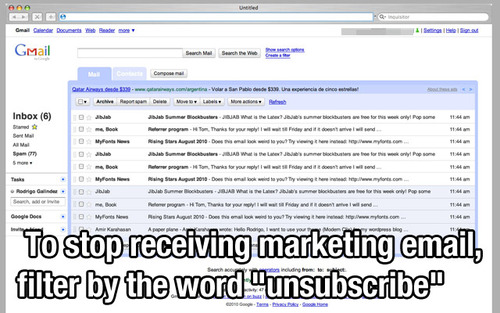
life-hack-unsubscribe

3.

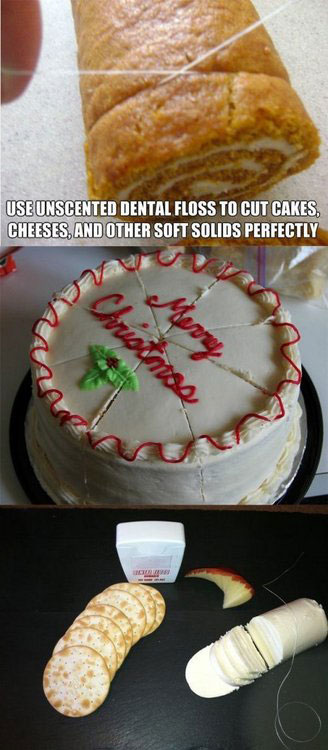
life-hacks-how-to-make-your-life-easier-dental-floss

4.

life-hacks-how-to-make-your-life-easier-dustpan

5.

life-hacks-how-to-make-your-life-easier-paper-clips

6.

life-hacks-how-to-make-your-life-easier-pic-lent-item

7.

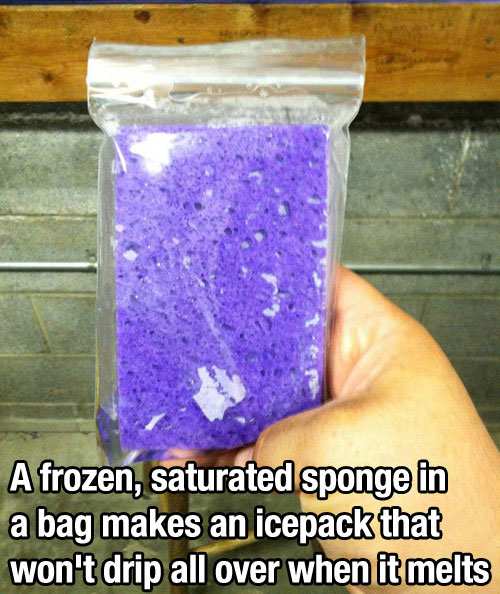
life-hacks-how-to-make-your-life-easier-sponge

8.

life-hacks-how-to-make-your-life-easier-toilet-paper-rolls

9.

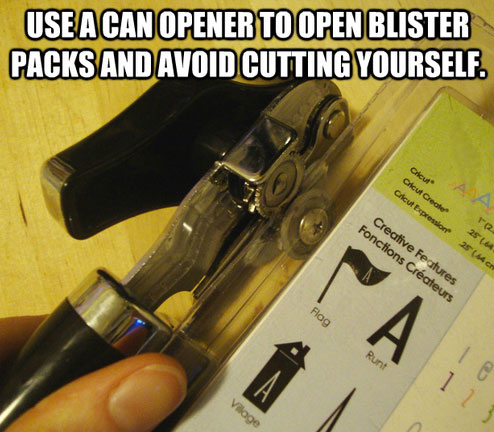
life-hacks-how-to-make-your-life-easier-can-opener

10.


life-hacks-how-to-make-your-life-easier-fitted-sheet

Via Twisted Sifter

Edit Your Workout with a Tabata Burpee Set

While there are some of us that relish working out–the chance to flex muscles, purge pores with sweat, gulp down air–there is surely an equal or greater number of us who do not enjoy it–who do it to keep weight off, keep some muscle tone, to offset an otherwise sedentary lifestyle. For the latter category, the question becomes how do you do as much good for your body as efficiently as possible? There is a one word answer for that question. It’s burpee.

A burpee is a single exercise that involves a squat, leg thrust, pushup and jump. Watch the video above to see it performed. It works every upper and lower muscle you have in one continuous–and grueling–calisthenic motion.

No equipment or gym required.

Think you’re not strong enough. Think again. There are a million variations to cut intensity: Do bent leg pushups, use a chair to reduce the depth of squat, do your pushup against a table, don’t jump…you could literally make a nonagenarian adapted  burpee (see one example of modified burpee below). There are also a million ways to add intensity.

One of the ways to truly maximize your burpee experience is to use the Tabata method. Tabata, named after Olympic trainer Izumi Tabata, is a form of high intensity interval training (HIIT), that requires 20 seconds of maximal effort, followed by ten seconds rest. You repeat this exercise/rest set eight times. Four minutes and you’re done.

One study (Gibala et al) showed that 2.5 hours of HIIT training had the same muscular and endurance benefits of 10.5 hours of specific endurance training. Another study reports that HIIT exercise is better at burning fat than aerobic exercises. (Note that HIIT can be performed with virtually any exercise and Tabata is just one form of HIIT.)

All of this runs counter to our aerobic-centric exercise world, where gyms are lined with elliptical machines and treadmills. Don’t get us wrong, aerobic exercise is great, and walking is still probably exercise supreme. But if you want to get stronger and leaner faster, nothing beats HIIT like Tabata. And if you want a complete exercise, few things outside of waterpolo do it like the burpee.

A proper warmup like a brisk walk, jog or jumping rope is highly recommended when doing HIIT to avoid injury. If you have health concerns, consult an expert. And consider adding something like a Tabata burpee set to your existing routine (maybe swap it for a cardio session) rather than replacing it altogether. See how it goes.

10 Tips for Creating a Small Apartment You’ll Love to Live In

Today’s guest post is from Karen Krizanovich, a small-space dweller living in London. She recently shared her experience and philosophy in the The Times UK. Today, she gives pointers for how to create a no-fuss, reasonably-priced small apartment (aka apartment) you’ll love to live in. 

Yes, I would love to live in the Hong Kong apartment designed by Gary Chang, the architect who transformed 344 sq ft into 24 different living spaces. Unfortunately, my flat doesn’t have that kind of scope and neither do I. Still, I can adopt similar principles learned from my friend architect Professor Miriam Neet, LifeEdited and other resources to live in a streamlined, no-fuss, no-muss and non-neurotic fashion. I’ve found the following tips to be indispensable for making a small home you truly want to live in.

  1. Live in your place a few months before making complicated or permanent non-essential changes. Think you know everything already how you live–what’s important, what’s not? You’ll be wrong at least 25% of the time. Be patient. You won’t regret it.
  2. Be a simpleton. We all love innovative, automated designs. But what happens when they break? Who’ll fix it? What if the electricity goes off? What about the batteries? As much as I’d love to own, say, electric curtain rails, I know I’m asking for trouble. Remember that guy with the cool thing that didn’t work? Don’t be him.
  3. Follow your gut. I never liked the way my kitchen cupboard doors shut (stupid spring devices). I said I’d give them a try but, deep in my soul, I knew they’d irk me. And they still do. Little annoying things like this are accentuated in a small space and erode the comfort of your home. Fix things immediately that don’t feel right.
  4. With things you love, buy to last. Plan to repair them when needed. Like a great pair of shoes, your home should be serviceable, look great and fit perfectly.
  5. When the space is small, bad design really grates. Everything has to be just right. Settling for ugly solutions will do temporarily, but always keep on the lookout for the right one.
  6. Buy a cheaper version to roadtest. I’ve bought five different chairs and none of them really worked in the space. Now I’m testing an inexpensive version of another design. If it works, I’ll buy the expensive one eventually.
  7. Ask yourself what you really need. I don’t need a coffee grinder. I barely need a blender and I sure as heck don’t need a blender that is also a soup maker. Keep gadgetry to a basic level–and keep them off the kitchen counter. Clutter is your small flat’s supreme enemy.
  8. Make your home user-friendly. Like training a horse, you don’t want someone to get on and have to learn new techniques. You want anyone to be able to ride your horse right away. Same with your apartment. Keep things basic and obvious. I don’t care for murphy beds or complicated heating systems. Toilets should flush, not do tricks. You don’t want a flat that makes you or other occupants feel stupid.
  9. Love your neighbourhood. One of the big advantages of living in a small flat is that you can afford to live in a neighbourhood that would otherwise be out of reach. Know why you’re there and what’s great about it. That way, even if your apartment transformation is taking a long long time, you’ll remember the bigger picture.
  10. Decide a good want. When you’re considering buying something, imagine your day-to-day life with it. If something really makes you happy–if it is a delight to use, to look at, to own, then it’s probably worth it. If you can live without it, try to do that.

Tip of the Day: Lose the Shoes When You Roost

Here’s an exercise: Take some dog feces, antifreeze, herbicides, gasoline, motor oil and most any other common toxic substance you can think of, mix it all together, then rub it all over your home’s floors. While this might sound a bit dramatic, it’s exactly what happens when we wear our shoes in our homes.

The outside world, while filled with great people and opportunities, is a cesspool. And our shoes are the main point of contact with this wondrous cesspool, so it only makes sense that when we get home, we should take our shoes off.

Few single actions are as effective at keeping our homes sanitary as well as dirt, dust and stain free as taking shoes off every time we enter our home. It also has the benefit of preserving the finish of our floors.

Many countries, particularly in Asia, seem to get this. Most every Japanese home includes something called a Genkan (pictured above), which is an area by the front door where you keep your shoes. It is recessed so dirt and debris is quarantined to this front area.

So you know all of this, but you still don’t do it. Here are a few tips to lose the shoes forever:

  • Don’t make exceptions. This is the most important tip in maintaining a shoe-free home. Even if you’re popping in for a second, even if it’s your rambunctious nephew or new friend, get your shoes off.
  • Put a sign at the door asking guests to take their shoes off. Sometimes asking others is the hardest part of maintaining this rule. A sign lets people know the policy is universal, not personal. Put it in a few different languages if you have a lot of foreigner guests.
  • Have a place to remove your shoes such as a bench. Make it easy for people to get their shoes off.
  • Have a place to store shoes such as a rack or cubby holes. 
  • Keep slippers or some other type of footwear used only indoors. They’ll keep you feet warm, and protect your floors from bare feet, which often are dirtier than socks or slippers [Note: make a no-exception policy about slippers as well–they are only for indoors. No runs to the mailbox, etc.]. While slippers for guests might not be feasible, a few pair of nice, clean socks are.

What are your experiences or tips with keeping (or not) a shoe-free home? Let us know in our comments section.

Get Happy Spending Money…Just Not on Yourself or Buying Stuff

Face it, consciously or not, many of us think that more money and stuff will make us happy. We want more money so we can get that iPhone5 or the Kindle Paperwhite or super cool off-grid tiny house or whatever.

Our logic is “As soon as I have enough money, I’ll get_____ and I will be able to _____ and then I will be happy.” So we work extra hard, make more dough (or go into hock) so we can set up our tents outside the Apple Store or go onto Amazon or call the Realtor and fix that iPhone5/Kindle Paperwhite/tiny house deficit. We get that thing and it’s like instant nirvana. Problems solved. Bliss for this lifetime and countless others.

Not exactly. A Harvard/University of British Columbia study shows that spending money on ourselves (antisocial spending) is a far less direct route to nirvana than spending money on others (prosocial).

In one of the study’s experiments, they gave Canadian university students $5 and $20  (US $100/400) to either spend on themselves or others. The students who spent money on themselves reported no increase in their happiness, whereas the prosocial spenders reported an increase. Of note, they found that the amount–i.e. $5 or $20–was less important than the act of giving.

They replicated the experiment in Uganda to make sure that this was not a phenomena limited to affluent Canadian students. It wasn’t. The Ugandans validated the previous findings.

Two of the authors of the study, Elizabeth Dunn and Michael Norton, wrote an editorial in the NY Times saying this:

…typical spending tendencies — buying more, and buying for ourselves — are ineffective at turning money into happiness. A decade of research has demonstrated that if you insist on spending money on yourself, you should shift from buying stuff (TVs and cars) to experiences (trips and special evenings out). Our own recent research shows that in addition to buying more experiences, you’re better served in many cases by simply buying less — and buying for others.

Keep in mind that a positive correlation between money and happiness has been found. But that correlation primarily relates to basic levels of material security; once those levels are exceeded–generally regarded as about $75K/year per household in the US–the increase in happiness with income becomes negligible. Above this level, how the money is spent–pro or antisocially–becomes the main driver in money’s capacity to increase its spender’s happiness.

About Dunn and Norton’s latter point–experiences versus possessions–another study found this:

Experiential purchases tend to make people happier than material purchases…We found that participants were less satisfied with their material purchases because they were more likely to ruminate about unchosen options…that participants tended to maximize when selecting material goods and satisfice when selecting experiences…that participants examined unchosen material purchases more than unchosen experiential purchases…and that, relative to experiences, participants’ satisfaction with their material possessions was undermined more by comparisons to other available options …and to the purchases of other individuals.

In other words, camping outside the Apple store is more likely to make you happy than buying the phone inside it.

While it’s not not spelled out explicitly by either research team, one can surmise that buying experiences for others is a great way of making yourself–and the recipient–happy. It also avoids clogging your friends closets with unwanted gifts ;-).

Beyond giving stuff and experiences, Michael Norton in his TEDx talk (above), shows a strong correlation between happiness and those who give to charities. He suggests Donorschoose.org, which lists projects and needs of low-income schools and their teachers as a possible recipient of that charity. You can help build wells in Africa with Graham Hill’s Charity: Water campaign (it’s his birthday today!). The author gave money to Wikipedia this morning and is already feeling better about himself.

What is your experience with spending money antisocially versus prosocially? On stuff versus experiences? Where do you give? Give us your thoughts (prosocial behavior) in our comments section. It’ll make you happy!

Turn Your Power-Drill Into Multi-Purpose Kitchen Tool

This video from LifeHacker shows what one power-drill and a bit of imagination can do, turning your drill into a blender, beater, scrubber, pepper grinder and Parmesan shredder–all with very minimal modifications. We imagine there are other culinary uses for a power-drill like a handheld blender, food processor or frother.

What this exercise shows is that items we thought were only good for a few purposes–e.g. boring holes, tightening/loosening bolts–can do many.

Granted, using a power-drill this way necessitates keeping it a bit cleaner than you might otherwise (a plastic bag over the drill would probably suffice), but keeping your tools clean is not a bad idea anyway, and getting rid of several single-purpose kitchen tools saves space and money.

Do you have any similar hacks–or MacGyver tips as LifeHacker refers to them? Let us know what they are via email (howdy at lifeedited dot com) or in our comment section.

Make it Pretty or Make it Disappear: 5 Tips for Tiny Living

We ran across this video from Daily Beast interviewing couple James Casey and Erin Boyle in their 240 sq ft Brooklyn Heights, New York apartment.

Even by Hong Kong standards, 240 sq ft–or 120 per person–is pretty damn small. Fittingly, the couple gave some advice for making the tiny space manageable.

  1. Creative storage. They use existing and nice objects for storage.
  2. Minimize waste. They minimize what comes in and out of the apartment.
  3. Go mini. Household supplies like their trash can and broom are on the small size.
  4. De-clutter. Even in a 240 sq ft space, the couple had a miscellaneous bin, but that bin was kept in a nice old wine box kept underneath their couch.
  5. Adaptability. They pointed to a couple Peshtemal Turkish towels that dry quickly (important when there are only two out at a time) and are pretty enough to be displayed.

Summed up, I’d say their advice is don’t have a lot of stuff and what stuff you do have make it nice, pretty or able to get out of sight.

The best part of the video is the practical demonstration that living an edited life requires no special equipment (there is not one piece of transforming furniture) or enormous budget.

Do you live in a tiny space? What advice would you add?

Via Daily Beast

Statistics That Will Scare You Sit-Less

After yesterday’s folding chair buying guide, we thought we’d change course and ask about the necessity–or sanity–for sitting at all. Study after study are showing that sitting–“The great leveler” as The Simpsons Mr Burns put it–is a killer. According to a recent study published in the journal BMJ Open, people who sit less than 3 hours a day will live an extra 2 years!

Here are a few other figures:

  • From the Wall Street Journal, “A 2010 study by the American Cancer Society found that women who sat more than six hours a day were 37% more likely to die prematurely than women who sat for less than three hours, while the early-death rate for men was 18% higher.”
  • From the the Atlantic: A sample size of 222,497 Australians by the Sax Institute found that people who sat more than 11 hours a day had a 40% higher risk of dying in the next three years than people who sat less than four hours a day. This was after adjusting for factors such as age, weight, physical activity and general health status, all of which affect the death risk. It also found a clear dose-response effect: the more people sat, the higher their risk of death.

These are just a few figures of the many, well-documented indictments against sitting. And no, vigorous exercise for a half or full hour a day is not sufficient to offset 23-23 1/2 hours of sedentary living.

So what can we do?

  • The first and most obvious thing is stand more. Many of us have desk jobs, so this is easier said than done.  Everything helps. Stand up regularly. Stretch. Go for walks in the middle of your day. Smoke a cigarette (joking, of course). Make up excuses to interrupt long stretches of sitting.
  • Consider a standing desk. You can test one by propping something on your existing desk or buy a proper one. If you’re at your desk for 6-8 hours/day, a standing desk could be the single-most effective way of curbing your sit-time. Hey Donny Rumsfeld does it.
  • Cut back on TV consumption. The average American watches 5 hours of TV…daily! (no figure for recreational computer time, but we’re sure it’s on the rise). Go for a walk, cook, exercise–anything that involves standing and/or movement.
image credit: Disney/Pixar and Wikipedia